
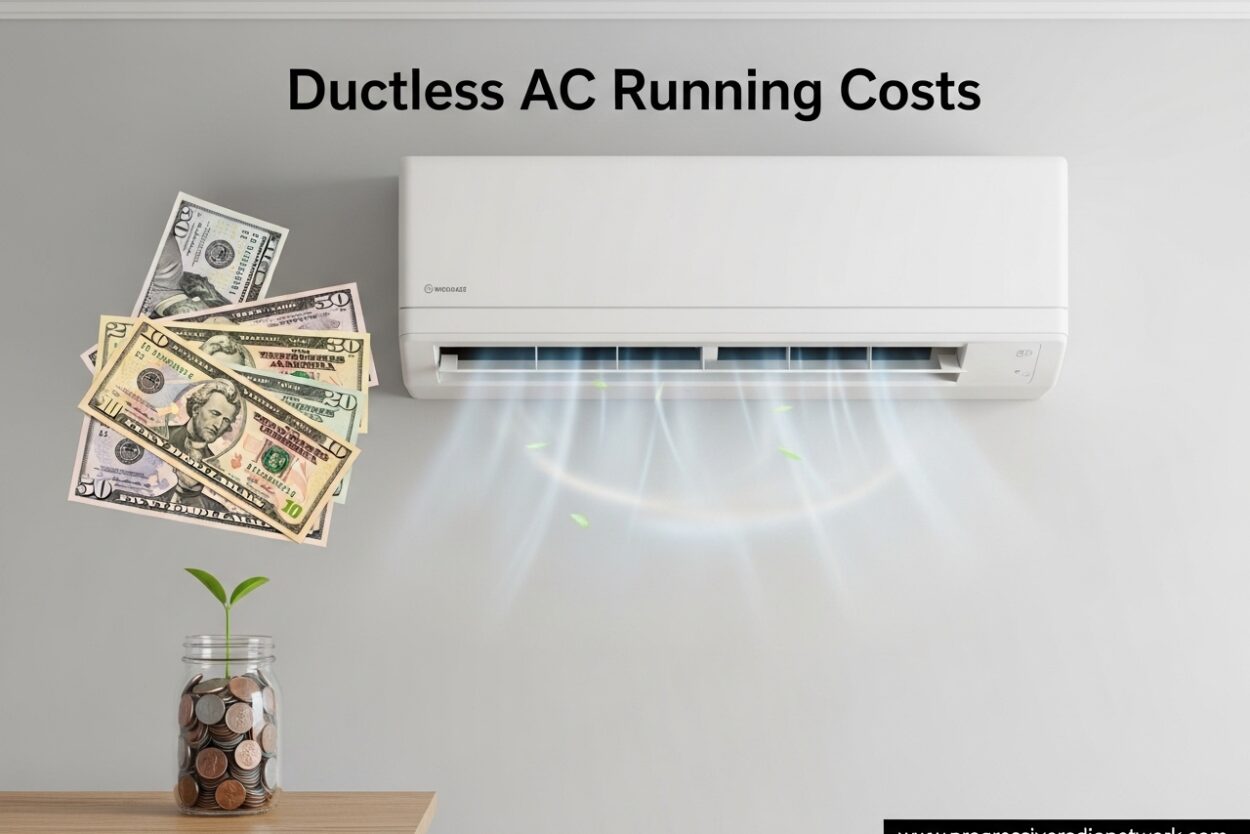
If you’re considering installing a ductless mini split system, understanding ductless AC running costs is essential before making the investment. These systems have gained tremendous popularity due to their energy efficiency, but many homeowners wonder what they’ll actually pay each month to run them.
After analyzing hundreds of real user experiences and energy consumption data, I can tell you that ductless AC running costs vary dramatically based on system size, efficiency rating, usage patterns, and climate. A properly sized mini split can cost as little as $15-30 per month to operate, while oversized or improperly used systems can spike bills to $150-400+ during extreme weather months.
This guide breaks down exactly what affects your electricity costs, provides real examples from actual mini split owners, and gives you proven strategies to minimize your ductless AC running costs while staying comfortable year-round.
How Ductless AC Running Costs Work
Ductless mini split systems consume electricity differently than traditional central air conditioning. They use inverter technology that allows the compressor to vary its speed based on cooling or heating demand, rather than cycling on and off at full power like conventional AC units.
This variable-speed operation is what makes mini splits so efficient. Instead of consuming full power constantly, they ramp up or down to maintain your set temperature. However, this also means that your electricity consumption depends heavily on how you use the system, the temperature you set, and the difference between indoor and outdoor temperatures.
Electricity consumption is measured in kilowatt-hours (kWh). A typical mini split might consume anywhere from 500 to 2,500 watts per hour depending on its size and how hard it’s working. Your electric company charges you based on total kWh consumed, with the average U.S. rate around $0.14-0.16 per kWh (though this varies significantly by region).
How to Calculate Ductless AC Running Costs
Understanding how to calculate ductless AC running costs yourself gives you control over your energy budget. The formula is straightforward once you know your system’s power consumption and your electricity rate.
Step 1: Find your mini split’s wattage rating. This is typically listed on the unit’s spec sheet or energy guide label. A 9,000 BTU unit might use around 600-900 watts on average, while a 24,000 BTU unit could use 1,500-2,500 watts.
Step 2: Estimate how many hours per day the system runs. Be realistic – most mini splits run more than owners realize, especially during extreme weather when maintaining comfortable temperatures requires continuous operation.
Step 3: Multiply watts by hours to get watt-hours, then divide by 1,000 to convert to kilowatt-hours (kWh). For example, a 1,000-watt unit running 8 hours daily uses 8 kWh per day.
Step 4: Multiply kWh by your electricity rate. At $0.15 per kWh, that 8 kWh daily usage costs $1.20 per day, or approximately $36 per month.
Real-world example: A 12,000 BTU mini split in a moderate climate might run 6 hours per day in summer at 1,000 watts average. That’s 6 kWh daily, costing around $0.90 per day or $27 per month during cooling season. However, winter heating with the same unit could easily double or triple this cost due to the larger temperature difference and defrost cycles.
7 Factors That Affect Ductless AC Running Costs
Multiple variables impact what you’ll actually pay to operate your ductless system. Understanding these factors helps you make informed decisions about sizing, settings, and usage patterns to minimize your electricity bills.
1. System Size (BTU Capacity)
The BTU rating directly correlates to power consumption. A 9,000 BTU system uses significantly less electricity than a 24,000 BTU system. However, bigger isn’t always better – an oversized system will short-cycle, running in inefficient bursts that increase energy consumption and wear.
2. SEER Rating (Seasonal Energy Efficiency Ratio)
The SEER rating measures cooling efficiency over a typical season. Higher SEER ratings indicate better efficiency. A 22 SEER unit will cost less to operate than a 16 SEER unit of the same size, often saving 20-30% on cooling costs. The difference becomes even more pronounced in hot climates where the system runs frequently.
3. Single-Zone vs Multi-Zone Configuration
Single-zone systems (one outdoor unit, one indoor unit) are generally more efficient per BTU than multi-zone systems. A multi-zone system’s outdoor unit must power multiple indoor units, and efficiency decreases when only one zone is operating. However, zone control can reduce overall costs by only conditioning occupied spaces.
4. Climate and Seasonal Temperature Differences
Winter heating costs typically exceed summer cooling costs by 50-200% depending on your climate. The larger temperature difference between indoor and outdoor air in winter requires more energy. Additionally, mini splits must periodically run defrost cycles in cold weather, which temporarily switches the system to cooling mode to melt ice from the outdoor unit – consuming extra energy in the process.
5. Temperature Settings
Each degree you adjust your thermostat impacts energy consumption significantly. Setting your system to 68°F instead of 72°F in winter can increase heating costs by 10-15%. In summer, every degree below 78°F increases cooling costs by roughly 3-5%. Real user experiences consistently show that aggressive temperature settings are the #1 cause of unexpectedly high electric bills.
6. Usage Patterns and Runtime
Systems that run continuously at moderate settings often cost less to operate than those that cycle aggressively at extreme settings. The inverter technology in mini splits is designed for steady operation, not rapid on-off cycling. Many users find that setting a reasonable temperature and leaving the system running costs less than constantly adjusting settings or turning the system off and on.
7. Installation Quality and Maintenance
Proper refrigerant charging, correct line set sizing, and adequate airflow around the outdoor unit all affect efficiency. Dirty filters, blocked outdoor units, or low refrigerant levels can increase energy consumption by 20% or more. Regular maintenance is essential for maintaining optimal efficiency and minimizing operating costs.
Average Ductless AC Running Costs by BTU Size
Based on real user data and energy calculations, here are typical monthly operating costs for different sized systems. Your actual costs will vary based on climate, electricity rates, usage patterns, and efficiency ratings.
9,000 BTU Mini Split Running Costs
A 9,000 BTU system typically consumes 500-800 watts while operating. In a moderate climate with 6 hours of daily runtime, expect monthly electricity costs of $15-35 during cooling season. Winter heating costs may reach $30-60 per month in cold climates. These systems are ideal for single rooms up to 400 square feet and offer the lowest operating costs of any mini split size.
12,000 BTU Mini Split Running Costs
The most popular size for primary bedroom or small apartment cooling, a 12,000 BTU unit typically uses 700-1,200 watts. Average monthly cooling costs range from $25-50 with normal usage. Winter heating costs commonly reach $50-100+ in cold climates. Real Reddit users report electricity bill increases of $40-80 per month when running a 12,000 BTU unit as their primary heating source during winter.
18,000 BTU Mini Split Running Costs
Designed for larger spaces up to 1,000 square feet, 18,000 BTU systems consume 1,000-1,800 watts. Monthly cooling costs typically range from $40-80, while heating costs in winter can reach $100-200+. These systems often serve as the primary HVAC source for smaller homes or additions, making proper sizing critical to avoid excessive bills.
24,000+ BTU Mini Split Running Costs
Larger systems for whole-home applications can consume 1,500-2,800+ watts. Monthly cooling costs often exceed $60-120, with winter heating potentially reaching $200-400+ in cold climates. One Reddit user reported their electric bill increasing from $45 to $450 during summer after installing multiple 24,000 BTU units, highlighting how dramatically oversized systems can impact electricity consumption.
Seasonal Cost Variations: Summer vs Winter
Most new mini split owners are surprised to learn that winter heating costs significantly exceed summer cooling costs. This reality catches many off guard, especially those replacing gas furnaces with electric heat pumps.
In summer, cooling costs are relatively predictable. A 12,000 BTU system might add $25-50 to your monthly electric bill during peak cooling months. However, winter heating costs often double or triple these amounts. The larger temperature difference between indoor and outdoor air requires more energy, and defrost cycles add 10-20% additional consumption in cold weather.
Real user experiences consistently show this pattern. One homeowner reported $60/month increases during summer with their mini split, but $150-200/month increases during winter heating season. Another user with an 880 square foot house saw unexpectedly high bills because their 3-ton (36,000 BTU) system was drastically oversized for their space, causing inefficient short-cycling that wasted energy.
Climate zone dramatically affects these seasonal differences. Homeowners in mild climates like the Pacific Northwest see minimal seasonal cost variation, while those in Minnesota or New England experience dramatic winter cost spikes. Understanding your local climate and how it affects mini split performance is essential for accurate budget expectations.
Real User Experiences: What People Actually Pay
Theoretical calculations are helpful, but real-world experiences from actual mini split owners provide the most accurate picture of ductless AC running costs. Reddit forums are filled with detailed bill breakdowns that reveal the reality of living with these systems.
One Reddit user in a moderate climate reported paying approximately $300 per quarter (about $100/month) for two mini splits – one in the bedroom and one in the living room. This included both summer cooling and winter heating, demonstrating reasonable costs for a whole-home mini split setup in a favorable climate.
Another user shared their experience with a 12,000 BTU unit adding $60-100 to their monthly electric bill during the coldest winter months, while summer cooling costs were roughly half that amount. This 2:1 winter-to-summer cost ratio is typical for most mini split owners in cold climates.
Several users reported shockingly high bills after installation, with increases of $150-400 per month during peak heating or cooling seasons. Investigation often revealed improper sizing (oversized units running inefficiently), extreme temperature settings, or lack of understanding about how defrost cycles affect winter consumption.
The most successful cost-control stories came from homeowners who prioritized proper sizing, used zone control strategically, and set reasonable temperatures. One user implemented a budget plan of $132/month by carefully managing zones and avoiding extreme temperature settings, demonstrating that predictable costs are possible with smart usage habits.
Ductless vs Traditional HVAC Operating Costs
Comparing ductless AC running costs to traditional central air conditioning reveals important efficiency advantages. The primary difference stems from ductwork losses – traditional systems lose 20-30% of their cooling capacity through leaky or uninsulated ducts in attics, crawlspaces, and basements. Ductless systems eliminate these losses entirely.
Zone control provides another significant advantage. Traditional central AC cools the entire house regardless of which rooms are occupied, while ductless systems allow you to condition only the spaces you’re using. A homeowner working in a home office can cool just that room rather than the entire house, reducing energy consumption by 50% or more during typical workdays.
The efficiency advantage becomes most pronounced in older homes with leaky ducts or in new construction where ductwork installation would be prohibitively expensive. However, in new homes with well-sealed, insulated ducts and variable-speed central equipment, the cost difference narrows considerably.
For heating applications, mini split heat pumps typically offer substantial savings compared to electric resistance heating, propane, or oil heating. The comparison with natural gas heating is more complex and depends heavily on local gas and electricity prices. In regions with expensive electricity and cheap natural gas, the operating cost advantage may favor traditional furnaces despite the lower efficiency of combustion heating.
5 Proven Ways to Reduce Ductless AC Running Costs
After analyzing hundreds of user experiences and efficiency data, these five strategies consistently deliver the most significant reductions in ductless AC running costs while maintaining comfort.
1. Ensure Proper Sizing
The single most important factor in controlling costs is installing the correctly sized system. An oversized unit will short-cycle, running in inefficient bursts that waste energy and fail to properly dehumidify your space. Conduct a proper Manual J load calculation or work with a qualified contractor to size your system based on actual heating and cooling loads, not rule-of-thumb estimates.
2. Optimize Temperature Settings
Set realistic temperatures and avoid constant adjustments. In summer, aim for 78-80°F when home and 85°F when away. In winter, 68-70°F provides comfort without excessive energy consumption. Each degree of adjustment saves 3-5% on cooling costs and 10-15% on heating costs. Use programmable settings or smart thermostats to automatically adjust temperatures for sleeping and away hours.
3. Utilize Zone Control Strategically
If you have a multi-zone system, take full advantage of zone control. Condition only the rooms you’re actively using, and set unoccupied zones to standby or minimal conditioning. A bedroom zone can run at night while living areas remain off, then switch in the morning. This strategic zoning can reduce overall energy consumption by 30-50% compared to conditioning all spaces equally.
4. Maintain Optimal Airflow
Clean or replace filters monthly during peak usage seasons. Keep the outdoor unit clear of leaves, snow, and debris. Ensure indoor units have at least 6 inches of clearance from curtains and furniture. Restricted airflow forces the system to work harder and run longer to maintain temperature, increasing energy consumption by 15-20% or more.
5. Consider Smart Thermostat Integration
Smart thermostats with learning capabilities optimize runtime based on your patterns and preferences, automatically adjusting temperatures for maximum efficiency. Many mini split owners report 10-15% savings after implementing smart scheduling and optimization features. The initial investment pays for itself within 1-2 years through reduced energy consumption.
FAQ
Are ductless AC units expensive to run?
Ductless mini splits are actually among the most efficient cooling options available. Properly sized systems typically cost $25-60 per month to run during cooling season, significantly less than traditional central AC in most cases. However, winter heating costs can reach $100-200+ monthly depending on your climate, potentially exceeding summer cooling costs by 2-3 times. The key to minimizing expense is proper sizing, reasonable temperature settings, and strategic zone control.
Why is my electric bill so high with mini splits?
High electric bills with mini splits typically stem from three common issues: oversized systems that short-cycle inefficiently, extreme temperature settings (especially in winter), and continuous runtime during extreme weather. A 12,000 BTU unit set to 68°F during winter can easily add $100-150 to monthly bills in cold climates. The defrost cycle in winter adds 10-20% extra energy consumption. Many users are surprised by winter heating costs that exceed summer cooling costs by 2-3 times.
Can I leave my mini split on 24/7?
Yes, you can leave your mini split running continuously, and this is often more efficient than constantly turning it on and off. Mini splits are designed with inverter technology that allows them to modulate output and run steadily at lower power levels rather than cycling on at full power. However, leaving it set to extreme temperatures 24/7 will significantly increase your electricity consumption. The most cost-effective approach is setting a reasonable temperature and allowing the system to maintain it steadily rather than frequently adjusting settings or powering off completely.
Is it cheaper to leave a mini split on all the time?
It is typically cheaper to leave a mini split running continuously at a moderate temperature than to constantly turn it off and on or make drastic temperature adjustments. The inverter technology operates most efficiently when maintaining steady temperatures rather than ramping up from a complete stop. However, this doesn’t mean leaving it set to extreme temperatures 24/7. The most cost-effective strategy is setting a reasonable temperature (78-80°F in summer, 68-70°F in winter) and allowing the system to maintain it without constant changes. Real users consistently find that steady operation at moderate settings costs less than aggressive cycling at extreme temperatures.
What is the $5000 rule for HVAC?
The $5000 rule is a general guideline suggesting that when the cost of repairing an HVAC system exceeds 50% of the cost of a new system (often around $5,000 for typical installations), replacement becomes more economical than continued repair. This rule accounts for the fact that older systems have declining efficiency and increasing failure rates, while new systems offer improved efficiency and reliability. For ductless mini splits specifically, this calculation should factor in that properly sized and installed systems can reduce monthly operating costs by 20-40% compared to older or improperly sized systems, potentially paying for themselves through energy savings over 5-10 years.
Do mini splits use a lot of electricity in winter?
Mini splits do use significantly more electricity in winter than summer, often 2-3 times as much. This increased consumption occurs because the temperature difference between indoor and outdoor air is much larger in winter, requiring more energy transfer. Additionally, mini splits must periodically run defrost cycles in cold weather, which temporarily switches the system to cooling mode to melt ice from the outdoor unit, consuming extra energy in the process. Real users commonly report $25-50 monthly increases in summer for cooling, but $100-200+ increases in winter for heating, depending on climate severity and temperature settings.
Conclusion
Understanding ductless AC running costs is essential for making informed decisions about mini split installation and usage. While these systems offer impressive efficiency advantages over traditional HVAC in many applications, real-world operating costs vary dramatically based on sizing, usage patterns, climate, and settings.
The most successful mini split owners prioritize proper sizing to avoid inefficient short-cycling, set reasonable temperatures rather than extreme settings, utilize zone control strategically, and maintain their systems for optimal airflow. When these factors are optimized, ductless systems can deliver comfortable heating and cooling for $50-150 per month in most climates, significantly less than poorly designed or improperly used systems that may cost $300-400+ monthly.
Before installation, conduct thorough load calculations, understand your local electricity rates, and plan for seasonal cost variations – especially higher winter heating costs. With proper planning and smart usage habits, ductless mini splits can provide efficient, cost-effective comfort for years to come.

Leave a Comment