
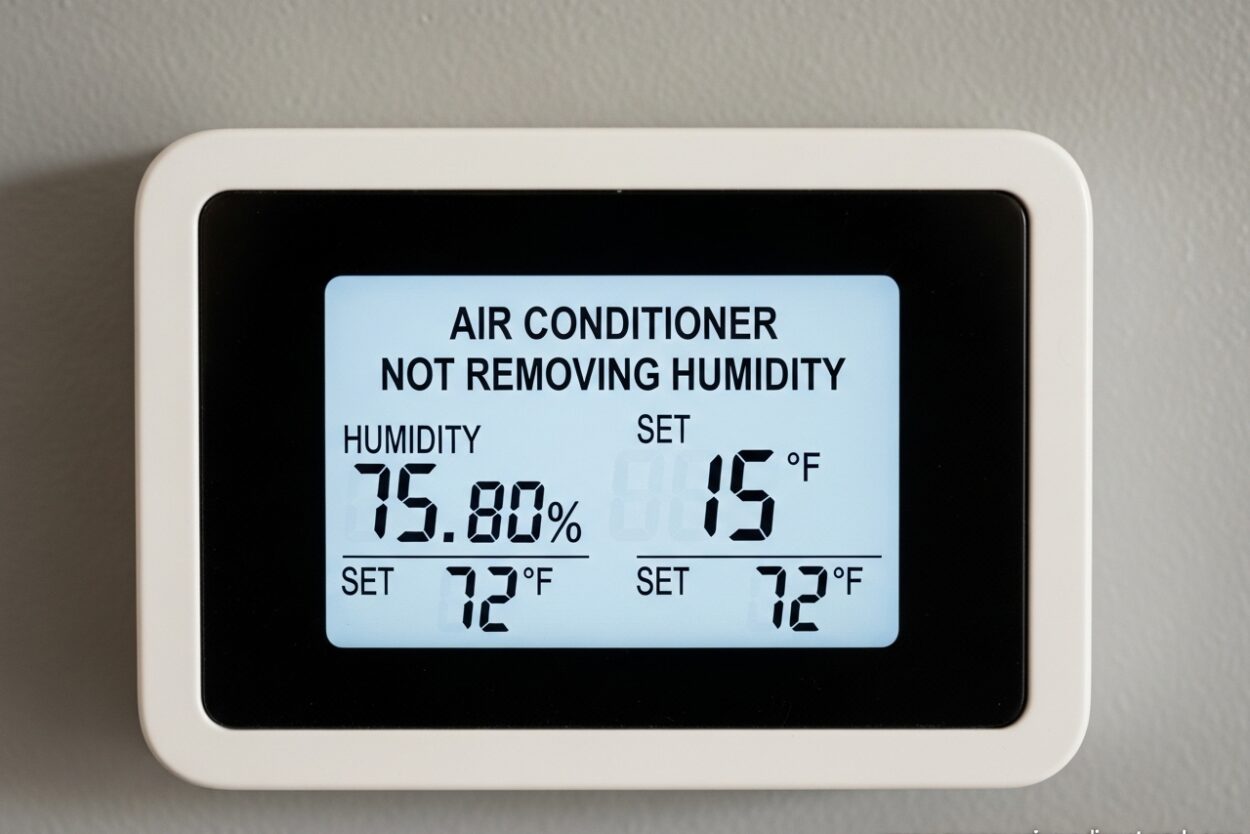
Walking into a cool room that still feels sticky and uncomfortable is one of the most frustrating HVAC problems homeowners face. Your air conditioner is running, the temperature drops, but something feels wrong. The air feels heavy, clammy, and just plain unpleasant. This is the classic sign of an air conditioner not removing humidity properly.
I’ve seen this issue countless times, and it affects homeowners across every climate. Your AC was designed to do two jobs: cool your air AND remove excess moisture. When it only does one of those jobs effectively, you end up with a cool but humid home that feels uncomfortable and can even cause health problems.
In this guide, I’ll explain exactly why your air conditioner not removing humidity is happening, walk you through the most common causes, and give you practical solutions to fix the problem. Some fixes you can handle yourself, while others require professional help. Let’s get your home feeling comfortable again.
How Your AC Removes Humidity
Before we dive into problems, it helps to understand how your air conditioner not removing humidity works in the first place. The process is actually pretty simple.
Warm air from your home gets pulled into your AC system and passes over cold evaporator coils. As the warm air hits these cold coils, two things happen simultaneously. First, the air temperature drops. Second, moisture in the air condenses on the coils, similar to how water droplets form on a cold soda can on a hot day.
This condensed water drips off the coils into a drain pan and flows out through your condensate drain line. The result is cooler, drier air circulated back into your home. This entire process happens continuously while your AC runs.
The key here is that your AC needs to run long enough to extract meaningful moisture from the air. If something interrupts this process or reduces efficiency, you end up with the air conditioner not removing humidity issue we’re discussing.
Why Is My Air Conditioner Not Removing Humidity?
There are several reasons why your AC might be cooling but not removing humidity effectively. Based on my experience troubleshooting hundreds of systems, these are the most common culprits:
- Incorrect thermostat fan setting – Fan set to “ON” instead of “AUTO”
- Dirty evaporator coils – Dust and debris prevent moisture extraction
- Clogged air filters – Restricted airflow reduces dehumidification
- Low refrigerant levels – Leaks reduce cooling coil efficiency
- Oversized AC unit – Short cycling prevents proper moisture removal
- Leaky ductwork – Humid air gets pulled in from attics or crawlspaces
- Clogged condensate drain – Water can’t drain properly, shutting down dehumidification
Most of these issues have clear solutions, which we’ll cover in detail. The important thing is identifying which problem is affecting your specific situation.
Thermostat Fan Settings: The Most Common Culprit
The single most common reason I see for an air conditioner not removing humidity is incorrect thermostat fan settings. This is also the easiest problem to fix yourself.
Your thermostat has two fan settings: “ON” and “AUTO.” When set to ON, the fan runs continuously, 24/7, regardless of whether your AC is actively cooling. When set to AUTO, the fan only runs when the AC is in a cooling cycle.
Here’s why this matters for humidity. When your AC finishes a cooling cycle, the evaporator coils are still cold and covered in condensed water. If the fan keeps running (ON setting), it blows air over these wet coils, re-evaporating the moisture back into your home. You basically undo all the dehumidification work your AC just did.
The fix is simple. Check your thermostat and make sure the fan setting is on AUTO, not ON. This small change can dramatically improve humidity levels within a day or two. I’ve seen this single adjustment solve humidity issues for countless homeowners.
Dirty Evaporator Coils and Clogged Filters
Your evaporator coils are the workhorse of your AC’s dehumidification system. When warm, humid air passes over these cold coils, moisture condenses and drips away. But when coils get covered in dust, dirt, and debris, they can’t efficiently extract moisture from the air.
I’ve opened many AC units to find coils so dirty they were barely visible through the grime. This layer of insulation prevents proper heat transfer and reduces the coil’s ability to condense water vapor. The result is an air conditioner not removing humidity effectively.
Similarly, clogged air filters restrict airflow across these coils. Your AC needs consistent airflow to work properly. When filters are dirty, less air reaches the coils, reducing both cooling capacity and moisture removal efficiency.
The solution involves regular maintenance. Change your air filters every 1-3 months depending on usage and air quality. For evaporator coils, annual professional cleaning is ideal. If you’re comfortable doing DIY maintenance, you can clean coils yourself using a no-rinse coil cleaner spray and a soft brush.
Low Refrigerant Levels
Your AC’s refrigerant is what makes the entire cooling and dehumidification process possible. It absorbs heat from your indoor air and releases it outside. When refrigerant levels drop due to a leak, your evaporator coils can’t get cold enough to effectively condense moisture.
Signs of low refrigerant include reduced cooling capacity, ice forming on refrigerant lines, and yes, an air conditioner not removing humidity. You might notice your AC runs longer than usual without reaching your target temperature.
Unlike some other issues on this list, low refrigerant is NOT a DIY fix. Refrigerant handling requires EPA certification and specialized equipment. If you suspect a refrigerant leak, you need to call a professional HVAC technician.
The technician will locate and repair the leak, then recharge your system with the correct amount of refrigerant. This typically costs between $200-600 depending on the severity of the leak and your AC’s refrigerant type. Once repaired, you should notice both better cooling and improved humidity control.
Oversized AC Unit Problems
Bigger isn’t always better when it comes to air conditioning. An oversized AC unit is a major cause of air conditioner not removing humidity complaints.
Here’s the problem: an oversized AC cools your home very quickly, sometimes in just 5-10 minutes. It then shuts off before it has time to properly dehumidify the air. This constant short cycling means your AC never runs long enough to extract meaningful moisture.
Proper dehumidification requires your AC to run for longer cycles, typically 15-20 minutes minimum. During extended run times, air makes multiple passes over the cold coils, gradually removing more and more moisture with each pass.
Solutions for oversized units vary. In some cases, installing a variable-speed thermostat can help by slowing the fan to improve moisture removal. Some homeowners add a whole-house dehumidifier to work alongside their AC. In severe cases, replacing the AC with a properly sized unit might be the best long-term solution.
Other Common Causes
Beyond the major issues already discussed, several other problems can cause your air conditioner not removing humidity effectively. These are worth checking if you’ve already addressed the more common causes.
Leaky ductwork is a frequent culprit, especially in older homes. When your ducts have holes or loose connections, they can pull in hot, humid air from attics, crawlspaces, or wall cavities. This humid air then gets distributed throughout your home, overwhelming your AC’s ability to remove moisture. Having your ducts sealed by a professional can significantly improve both efficiency and humidity control.
Poor ventilation issues can also contribute. If your home lacks proper exhaust fans in bathrooms and kitchens, moisture from showers and cooking builds up indoors. Your AC has to work overtime to remove this excess moisture. Installing and using exhaust fans can dramatically reduce the load on your AC system.
Clogged condensate drain lines prevent water from draining away from your AC. When the drain line backs up, water accumulates in the drain pan. Many AC systems will shut down completely when this happens, while others continue running but can’t remove additional moisture. Cleaning the drain line with a wet/dry vacuum or calling a professional for thorough cleaning typically resolves this issue.
Window AC units have unique challenges. Unlike central systems, window ACs don’t have balanced ventilation. They can create negative pressure that pulls humid air in through cracks and gaps. Ensuring your window AC is properly sealed and using supplemental dehumidification in very humid climates can help.
Solutions to Fix AC Humidity Problems
Now that we’ve covered the causes, let’s talk about solutions. Depending on your specific situation, you might be able to fix the problem yourself or need professional help.
Immediate DIY fixes you can try today:
- Check your thermostat fan setting – ensure it’s on AUTO, not ON
- Replace your air filter if it’s been more than 3 months
- Clear any debris around your outdoor condenser unit
- Use exhaust fans when showering or cooking
- Keep windows and doors closed during humid weather
Medium-term solutions:
- Clean your evaporator coils (DIY with coil cleaner or professional service)
- Have your ductwork inspected and sealed if needed
- Install a programmable or smart thermostat with humidity control features
- Add a standalone dehumidifier in problem areas like basements
- Improve home sealing around windows and doors
Long-term upgrades to consider:
- Install a whole-house dehumidifier integrated with your HVAC system
- Upgrade to a variable-speed AC system for better humidity control
- Replace an oversized AC with a properly sized unit
- Add a thermal expansion valve (TXV) for improved metering
- Consider a two-stage or modulating AC system
Many homeowners find that a combination of these solutions works best. Start with the simple DIY fixes, then consider professional help or upgrades if problems persist.
When to Call a Professional
While many humidity issues have DIY solutions, some situations definitely require professional expertise. Here are clear signs it’s time to call an HVAC technician:
- Refrigerant issues – If you suspect low refrigerant (ice on lines, hissing sounds, reduced cooling), this requires professional service
- Electrical problems – Any issues with wiring, capacitors, or electrical components should be handled by licensed technicians
- Compressor problems – If your outdoor unit’s compressor is failing, this is a major repair requiring professional diagnosis
- Persistent issues – If you’ve tried basic fixes and humidity problems continue after 1-2 weeks, professional assessment is warranted
- System age – If your AC is over 10-15 years old and having humidity issues, replacement might be more cost-effective than repeated repairs
A professional HVAC technician can perform a thorough assessment of your entire system. This typically includes checking refrigerant levels, inspecting coils, measuring airflow, testing thermostat operation, and evaluating overall system performance. Expect to pay $75-150 for a diagnostic service call, with repairs quoted separately.
Health Impacts of High Indoor Humidity
Beyond comfort, an air conditioner not removing humidity can have real health consequences for you and your family. High indoor humidity creates an environment where certain health hazards thrive.
Mold and mildew are the most serious concern. When indoor humidity consistently exceeds 60%, mold spores can begin growing on walls, ceilings, carpets, and in hidden spaces like behind drywall. Exposure to mold can trigger allergic reactions, asthma attacks, and respiratory infections. Some mold species produce mycotoxins that can cause more serious health problems with prolonged exposure.
Dust mites thrive in humid environments. These microscopic creatures are a major allergen for many people and can trigger year-round allergy symptoms. Dust mites die off when humidity drops below 50%, making proper humidity control crucial for allergy sufferers.
For people with COPD (Chronic Obstructive Pulmonary Disease), high humidity can be particularly problematic. Humidity levels above 60% can make breathing more difficult and increase the risk of respiratory infections. The ideal indoor humidity range for COPD patients is typically 35-50%. If your air conditioner not removing humidity is causing levels above 60%, this could seriously impact respiratory health.
Sinus issues and headaches are also commonly reported in high-humidity environments. Excess moisture can irritate sinus passages and create pressure that leads to headaches and facial pain. Many people find relief when humidity is properly controlled.
The ideal indoor humidity level for most homes is between 30-50%. You can measure this with an inexpensive hygrometer from any hardware store. If your home consistently reads above 55%, addressing your AC humidity issues should be a priority for both comfort and health.
Frequently Asked Questions
Why is my AC not removing enough humidity?
Your AC may not be removing enough humidity due to incorrect thermostat fan settings (set to ON instead of AUTO), dirty evaporator coils, clogged air filters, low refrigerant levels, or an oversized unit that short cycles. The most common cause is the fan setting – when set to ON, it re-evaporates moisture back into your home. Check this setting first, then inspect filters and coils before calling a professional.
What humidity level is bad for COPD?
Humidity levels above 60% are generally considered problematic for COPD patients. High humidity makes air feel heavier and harder to breathe, increases the risk of respiratory infections, and can trigger COPD exacerbations. The ideal indoor humidity range for people with COPD is typically 35-50%. If your home consistently exceeds 60%, consider adding a dehumidifier and addressing any AC issues preventing proper moisture removal.
What is the 3 minute rule for air conditioners?
The 3 minute rule refers to waiting at least 3-5 minutes before restarting your AC after it shuts off. This prevents compressor damage from trying to start while pressure is still equalizing throughout the system. Most modern ACs have built-in delays that enforce this rule automatically. Never rapidly cycle your AC on and off – this can cause serious compressor damage and reduce system lifespan.
Can AC cause sinus issues?
Yes, AC can contribute to sinus problems in several ways. If humidity is too high (above 60%), it can irritate sinus passages and create pressure headaches. Conversely, AC that removes too much humidity (below 30%) can dry out sinus membranes and cause irritation. The key is maintaining balanced humidity between 30-50%. Additionally, dirty AC filters and coils can circulate allergens and irritants that worsen sinus issues. Regular maintenance and proper humidity levels typically resolve these problems.
How long should AC run to remove humidity?
For effective dehumidification, your AC should run in cycles of at least 15-20 minutes. Shorter cycles don’t allow enough time for air to make multiple passes over the cold coils, which is necessary for effective moisture removal. If your AC is only running for 5-10 minutes at a time (short cycling), it will cool your home but won’t remove humidity effectively. This is often caused by an oversized unit or thermostat issues.
Does air conditioning increase or decrease humidity?
Air conditioning should decrease humidity when working properly. The cooling process naturally removes moisture from air as it condenses on cold evaporator coils. However, certain problems can cause AC to increase humidity or fail to reduce it effectively. These include running the fan in ON mode (which re-evaporates moisture), oversized units that short cycle, or systems with low refrigerant. When functioning correctly, AC is one of the most effective tools for controlling indoor humidity.
Conclusion
Dealing with an air conditioner not removing humidity is frustrating, but it’s a problem with solutions. Most of the time, the issue comes down to one of several common causes: incorrect fan settings, dirty coils or filters, low refrigerant, or an oversized unit. Start with the simple fixes – check your thermostat setting, replace your filter, and ensure nothing is blocking airflow.
If basic troubleshooting doesn’t solve the problem, don’t hesitate to call a professional. HVAC technicians have the tools and expertise to diagnose complex issues like refrigerant leaks, ductwork problems, or system sizing issues. Addressing humidity problems promptly improves both your comfort and your home’s air quality.
Remember, your air conditioner was designed to do more than just cool your home – it’s also your primary tool for humidity control. When it’s working properly, you get cool, dry air that feels comfortable and healthy. With the right maintenance and repairs, you can get your system back to doing both jobs effectively.


Leave a Comment