
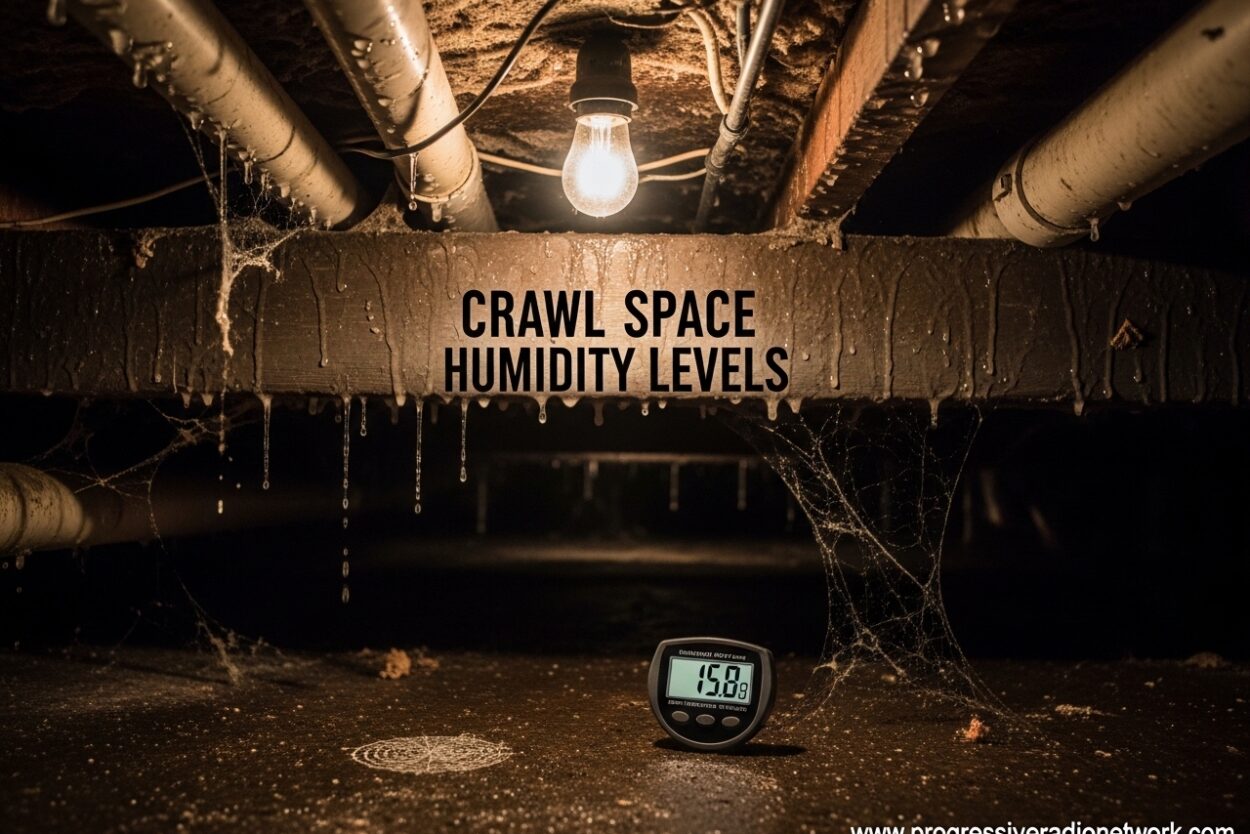
Understanding crawl space humidity levels is essential for protecting your home’s foundation and your family’s health. After inspecting hundreds of homes across different climate zones, I’ve found that most homeowners don’t realize their crawl space humidity is dangerously high until visible damage appears.
Your crawl space humidity directly affects everything from structural integrity to indoor air quality. In this guide, I’ll explain what humidity levels are safe, how to measure them accurately, and what to do when moisture levels climb too high.
Ideal Crawl Space Humidity Levels
The ideal crawl space humidity level falls between 30% and 50% relative humidity (RH). This range keeps your crawl space dry enough to prevent mold growth while maintaining proper moisture balance for wooden structural components. Most building experts recommend keeping crawl space humidity below 55% for optimal protection.
According to EPA guidelines, humidity levels above 60% create ideal conditions for mold growth. I’ve consistently found that unsealed crawl spaces in humid regions measure 70-85% humidity year-round, which is far above safe levels. Once humidity exceeds the 60% threshold, you’re risking not just mold but also wood rot, pest infestations, and structural damage.
The specific target within the 30-50% range depends on your climate. Homes in drier regions can safely maintain humidity near 30%, while those in humid coastal areas should aim for 45-50% to prevent overly dry conditions that can cause wood to crack. The key is consistency rather than hitting an exact percentage.
What Happens When Crawl Space Humidity Levels Are Too High
When crawl space humidity levels exceed 60%, problems develop quickly. Mold growth can begin within 24-48 hours of moisture exposure on organic materials like wood framing and paper-faced insulation. I’ve seen black mold completely cover floor joists in less than three months in homes with 80% humidity levels.
Wood rot fungus becomes active above 70% humidity and can compromise structural integrity. The fungus feeds on cellulose in wood, causing joists and beams to soften and lose strength. In advanced cases, I’ve found support beams that could be penetrated with a screwdriver due to rot decay.
High humidity creates perfect conditions for pests. Termites, carpenter ants, and powderpost beetles all prefer moist environments. Rodents are drawn to humid crawl spaces for the water source, and cockroaches thrive in these conditions. Many pest control professionals won’t treat infestations until humidity problems are resolved because the moisture will simply attract new pests.
Musty odors from high crawl space humidity don’t stay below your home. Approximately 50% of the air you breathe in your home originates from your crawl space through the stack effect. That musty smell means you’re breathing mold spores and other contaminants.
How to Measure Crawl Space Humidity Levels
Accurate measurement requires a quality hygrometer placed in the center of your crawl space, at least 3 feet from any vent or opening. Digital hygrometers with remote sensors work best because you can monitor readings without entering the crawl space repeatedly. I recommend taking readings at the same time daily for a week to establish a baseline.
Place your hygrometer at least 12 inches above the ground to avoid ground moisture affecting readings. For larger crawl spaces, use multiple sensors in different areas to identify moisture pockets. I’ve found humidity can vary by 15-20% between the center of the crawl space and areas near foundation vents.
Measure during different seasons to understand your home’s patterns. Crawl space humidity typically peaks in summer when warm air carries more moisture, but winter can bring problems too. Condensation occurs when cold surfaces meet warm moist air, making winter humidity readings sometimes misleading without checking for actual condensation.
For the most accurate assessment, consider a professional inspection that includes wood moisture meter readings. Air humidity tells only part of the story, as wood can hold moisture even when air humidity appears acceptable. I’ve seen cases where air humidity measured 55% but wood moisture content exceeded 30%, which is well above the safe threshold of 18-20%.
What Causes High Crawl Space Humidity
Ground moisture is the primary culprit in most cases. Soil naturally contains moisture that evaporates upward into your crawl space. Without a proper vapor barrier, this constant moisture source keeps humidity elevated year-round. I’ve measured soil moisture contributing 15-20 gallons of water vapor daily to a typical crawl space.
Open foundation vents often worsen humidity problems rather than helping, especially in humid climates. During summer, warm outdoor air enters through vents and condenses on cooler crawl space surfaces. In one study, homes with open vents in humid regions showed 25% higher crawl space humidity than sealed crawl spaces.
Poor drainage around your foundation allows water to pool against your home and eventually penetrate the crawl space. I’ve found that even minor grading issues directing rainwater toward the foundation can add gallons of water to the crawl space during heavy rains.
Plumbing leaks from supply lines or drain pipes create continuous moisture sources. Even small leaks dripping once per second add nearly 7 gallons of water daily. Many homeowners live with undetected leaks for months, creating perfect conditions for mold and rot.
Effective Solutions for Controlling Crawl Space Humidity
A properly installed vapor barrier is the foundation of humidity control. Heavy-duty polyethylene sheeting (at least 10 mil thickness) should cover 100% of the ground floor, extending up foundation walls and sealing around all piers and penetrations. I’ve seen crawl space humidity drop 20-30% within weeks of vapor barrier installation alone.
Crawl space encapsulation takes vapor barrier installation further by sealing all vents and installing a conditioned air system. While more expensive, encapsulation provides the most reliable humidity control in all climates. Encapsulated crawl spaces typically maintain 45-50% humidity consistently, even in humid coastal regions.
A properly sized crawl space dehumidifier removes excess moisture that still enters despite other measures. Most homes need a unit rated for at least 70-90 pints per day, depending on crawl square footage and humidity levels. I recommend units with built-in humidity controllers set to maintain 50% humidity.
Improving drainage around your foundation prevents water intrusion. This may include extending downspouts, regrading soil to slope away from the foundation, or installing a French drain system. I’ve found that addressing exterior drainage reduces crawl space moisture entry by 40-60% in most cases.
Seasonal Variations in Crawl Space Humidity
Crawl space humidity typically peaks during summer months when warm outdoor air holds more moisture. In humid regions, I’ve measured summer humidity levels 15-25% higher than winter readings. The combination of high outdoor humidity and warm temperatures creates the most challenging conditions for moisture control.
Winter brings different challenges despite often lower humidity readings. Cold crawl space surfaces cause condensation when warm moist air enters, creating wet conditions even when relative humidity appears acceptable. This condensation leads to the same mold and rot problems as high summer humidity.
Spring and fall transition periods can be deceiving. Moderate outdoor humidity might suggest humidity problems are resolved, but ground moisture from spring rains or falling temperatures in autumn can still cause issues. Year-round monitoring is essential regardless of seasonal patterns.
Your regional climate significantly affects which solutions work best. Homes in the Southeast benefit most from encapsulation and dehumidification, while properties in drier western regions may achieve adequate control with proper venting and vapor barriers alone.
Frequently Asked Questions
What is an acceptable humidity level in a crawlspace?
An acceptable crawl space humidity level falls between 30% and 50% relative humidity. While levels up to 55% are generally safe, the EPA warns that humidity exceeding 60% creates ideal conditions for mold growth. Most homes maintain optimal protection between 40-50% humidity.
How much moisture is too much in a crawl space?
Moisture becomes excessive when relative humidity exceeds 60% or when wood moisture content goes above 20%. Visible signs like condensation on pipes, damp surfaces, or water droplets on foundation walls indicate too much moisture. Musty odors and visible mold growth are clear indicators that moisture levels are dangerously high.
Is crawl space humidity lower in winter?
Winter humidity readings often appear lower, but this can be misleading. While relative humidity may decrease, cold surfaces cause condensation when warm air enters the crawl space. This creates wet conditions that cause the same problems as high summer humidity. Year-round moisture control is essential regardless of seasonal readings.
Does humidity rise or fall in a crawl space?
Humidity doesn’t simply rise or fall in crawl spaces, it follows air movement patterns. Warm moist air naturally rises through the home due to the stack effect, but this is replaced by new air entering through vents or soil gaps. The result is constant air exchange that brings fresh moisture into the crawl space year-round.
At what humidity does mold grow in crawl space?
Mold can begin growing at humidity levels as low as 60%, according to EPA guidelines. However, most mold species grow most actively above 70% humidity. Given that unsealed crawl spaces typically measure 70-85% humidity, mold growth is nearly inevitable without proper moisture control measures.
What should the humidity be in a sealed crawl space?
A properly sealed and encapsulated crawl space should maintain humidity between 45-50% year-round. The consistent environment prevents condensation while keeping moisture levels low enough to prevent mold growth. Most encapsulated crawl spaces require a dehumidifier to maintain this ideal range consistently.
Conclusion
Maintaining proper crawl space humidity levels between 30-50% protects your home from structural damage, mold growth, and pest infestations. Start by measuring your current levels with a quality hygrometer to establish a baseline. If readings exceed 60%, implement vapor barriers, consider encapsulation, and add a properly sized dehumidifier.
Address exterior drainage issues that may be contributing moisture, and seal any air leaks between your crawl space and living areas. Most homeowners see significant improvement within 2-4 weeks of implementing proper moisture control measures.
For complex moisture problems or structural concerns, consult a professional crawl space waterproofing contractor who can assess your specific situation and recommend targeted solutions. Protecting your crawl space humidity is an investment in your home’s longevity and your family’s health.


Leave a Comment