
If you have spent any time in mechanical keyboard communities, you have likely stumbled into the heated PBT vs ABS keycaps debate. Enthusiasts argue endlessly about which material reigns supreme, with passionate defenders on both sides claiming their preferred keycap type offers the superior typing experience.
After building and typing on dozens of keyboards over the past three years, I have developed strong opinions about this topic. The truth is that both materials have distinct advantages and drawbacks depending on your priorities. Whether you prioritize durability, sound profile, or aesthetics will ultimately determine which keycap material suits your needs best.
This guide breaks down everything you need to know about acrylonitrile butadiene styrene and polybutylene terephthalate keycaps. We will explore their chemical properties, compare how they feel and sound, and help you decide which material deserves a place on your keyboards for coders or gaming setup.
Quick Comparison: ABS vs PBT at a Glance
Before diving into the technical details, here is a side-by-side comparison of how these keycap materials stack up across the most important categories:
| Feature | ABS Keycaps | PBT Keycaps |
|---|---|---|
| Texture | Smooth, glossy finish | Textured, matte finish |
| Durability | Develops shine in 6-12 months | Resistant to shine and wear |
| Sound | Higher pitch, sharper | Deeper, more “thocky” |
| Color Options | Vibrant, unlimited colors | Limited, muted palette |
| Price | $20-50 for quality sets | $40-100+ for quality sets |
| Legend Durability | Varies by printing method | Dye-sub legends last longest |
PBT generally wins on durability and texture while ABS takes the crown for color variety and affordability. The sound profile comes down to personal preference, with many enthusiasts preferring the deeper tone of PBT.
What is ABS? Understanding Acrylonitrile Butadiene Styrene
ABS stands for acrylonitrile butadiene styrene, a common thermoplastic polymer found in countless everyday products. Lego bricks, automotive interior parts, and yes, most stock keyboard keycaps all use this versatile material. Manufacturers love ABS because it melts at lower temperatures during injection molding, making it easier and cheaper to produce.
The chemical composition of ABS gives it distinct properties that define the typing experience. The acrylonitrile component provides strength and chemical resistance, butadiene adds toughness and impact resistance, while styrene contributes the glossy finish and rigidity. This combination results in keycaps that feel smooth to the touch and can be produced in virtually any color imaginable.
Most keyboards you find at electronics retailers come with ABS keycaps pre-installed. Gaming keyboards from major brands like Razer, Corsair, and Logitech typically ship with ABS caps because manufacturers can achieve vibrant colors that complement RGB lighting effects. The smooth surface also appeals to gamers who want their fingers to glide effortlessly between keys during intense gaming sessions.
Why ABS Keycaps Shine Over Time
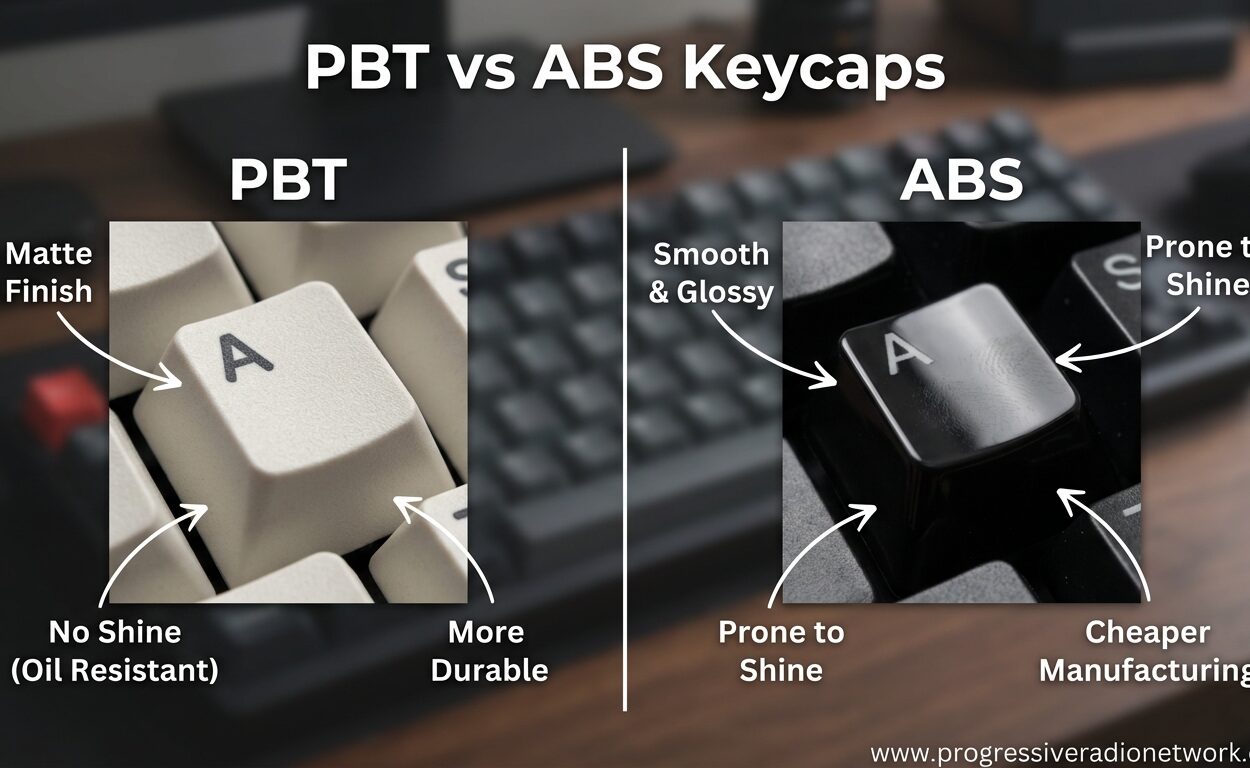
The biggest complaint about ABS keycaps is their tendency to develop an oily shine on frequently used keys. This happens because ABS is a relatively soft plastic that reacts with the natural oils from your fingertips. Within six to twelve months of daily use, keys like E, A, S, D, and the spacebar start looking noticeably different from less-used keys.
While some users find this shine unsightly, others consider it character that tells the story of their keyboard journey. The shine does not affect functionality, but it does change the appearance of your keyboard significantly. Once ABS shines, there is no practical way to restore the original matte texture.
ABS Manufacturing and Double-Shot Legends
ABS works exceptionally well with double-shot molding, a manufacturing process where the legend and keycap are molded as two separate plastic pieces fused together. This creates legends that will never wear off because they are physically part of the keycap rather than printed on top.
High-end ABS keycap sets from manufacturers like GMK have earned cult status in the mechanical keyboard community precisely because of this manufacturing capability. GMK sets cost significantly more than budget PBT options but deliver unmatched color accuracy and crisp, durable legends that justify the premium for many enthusiasts.
What is PBT? Understanding Polybutylene Terephthalate
PBT stands for polybutylene terephthalate, a high-performance thermoplastic polymer prized for its durability and dimensional stability. Originally developed for automotive and electronics applications, PBT has found its way into premium keycap manufacturing thanks to its superior resistance to heat, chemicals, and wear compared to ABS.
The molecular structure of PBT creates a more rigid, crystalline material that maintains its properties over time. Unlike ABS, PBT resists the oils from your fingers, meaning the textured surface stays consistent even after years of heavy typing. This resistance to degradation makes PBT the preferred choice for anyone who views their keyboard as a long-term investment.
Manufacturers must work with PBT at higher temperatures during the injection molding process, which increases production costs and complexity. This partially explains why PBT keycaps command higher prices. The material also shrinks more as it cools, requiring precise mold design to achieve accurate dimensions.
The Signature PBT Texture
Walk into any keyboard enthusiast meetup and you will hear people raving about the “grippy” feel of PBT keycaps. The natural texture of polybutylene terephthalate creates a matte, slightly rough surface that provides more friction against your fingertips than smooth ABS. Many typists find this texture more satisfying and confidence-inspiring during long writing sessions.
This textured surface does more than just feel good. It provides better tactile feedback during typing, helping you maintain consistent finger positioning without looking down at the keyboard. The texture also hides fingerprints and smudges better than glossy ABS surfaces, keeping your keyboard looking cleaner between wipe-downs.
Dye-Sublimation and PBT
PBT keycaps work beautifully with dye-sublimation printing, a process that permanently infuses dye into the plastic itself. During dye-sub manufacturing, heat transfers dye from a printed sheet into the PBT material, creating legends that become part of the keycap rather than sitting on top.
Because the dye penetrates the plastic, dye-sub legends cannot wear off through normal use. This makes dye-sub PBT keycaps the gold standard for durability, especially on heavily used keys. The process works best on lighter colored keycaps since you cannot dye dark plastic with lighter colored legends.
Durability Comparison: Which Material Lasts Longer?
When comparing PBT vs ABS keycaps for longevity, PBT emerges as the clear winner. The difference becomes apparent after several months of daily use when ABS keycaps begin showing signs of wear while PBT keycaps look nearly identical to the day you installed them.
ABS keycaps typically develop visible shine on high-contact surfaces within six months to a year of regular use. Gamers who spend hours daily on their keyboards might notice shine even sooner. This cosmetic degradation does not impact functionality but significantly changes how your keyboard looks. Some premium thick ABS sets resist shine longer than thin stock caps, but eventually all ABS succumbs to this fate.
PBT keycaps resist this shine effect almost entirely. Even after years of daily typing, quality PBT sets maintain their original matte texture. The material simply does not react with skin oils the way ABS does. This makes PBT the obvious choice for anyone who wants their keyboard to maintain a consistent appearance over time.
Legend Longevity Across Materials
Legend durability depends more on the printing method than the base material. Double-shot legends, available in both ABS and PBT, last essentially forever since they are molded as part of the keycap. Laser-etched legends on either material will outlast the keycap itself. Pad-printed legends, commonly found on cheap keycap sets regardless of material, tend to wear off within months.
Dye-sublimated legends on PBT offer the best combination of durability and cost. The dye becomes part of the plastic, so it cannot chip, fade, or wear away. For this reason, many enthusiasts consider dye-sub PBT the most practical choice for daily driver keyboards.
Feel and Texture: How Each Material Feels Under Your Fingers
The tactile experience of typing differs significantly between these materials. ABS keycaps feel smooth and slightly slick, allowing your fingers to slide easily across the keyboard surface. Some describe the sensation as similar to typing on polished stone or smooth plastic.
PBT keycaps deliver a more textured, almost sandy feel that provides friction against your fingertips. This grippier surface helps prevent finger slippage during rapid typing. Many users report that the PBT texture feels more substantial and premium compared to the sometimes hollow-feeling smoothness of ABS.
Gaming vs Typing Preferences
Gamers often prefer ABS keycaps because the smooth surface allows for quick finger transitions between keys. When milliseconds matter in competitive play, having your fingers glide effortlessly can provide a subtle advantage. The lighter weight of ABS keycaps also produces a snappier feel that some gamers prefer.
Typists and programmers tend to gravitate toward PBT for the textured feel that provides better finger feedback. The slightly rougher surface helps you develop muscle memory for key positions since your fingers register more tactile information with each press. Long typing sessions on PBT often feel less fatiguing because the texture helps maintain consistent finger placement.
Sound Profile: Is ABS or PBT More Thocky?
Sound represents one of the most subjective differences between these materials. Generally speaking, ABS keycaps produce a higher-pitched, sharper sound when bottoming out, while PBT keycaps create a deeper, duller “thock” that many enthusiasts find more satisfying.
This acoustic difference comes from material density and thickness. PBT is denser than ABS, which helps absorb some of the higher frequencies produced when a keycap hits the switch housing. The result is a sound profile with less treble and more bass character.
Thickness Matters More Than Material
While material choice affects sound, wall thickness actually plays a larger role in determining acoustics. Thick ABS keycaps can sound surprisingly deep and thocky, while thin PBT keycaps might sound thin and tinny. When shopping for keycaps, look for thickness specifications rather than assuming PBT always sounds better than ABS.
The switch type you use also heavily influences the overall sound profile. Linear switches will sound different with the same keycaps than tactile or clicky switches. Your keyboard case material, plate type, and even desk surface all contribute to the final sound you hear.
The Thock Debate
Keyboard enthusiasts obsess over achieving the perfect “thock” sound, a deep, muted tone that signifies a premium typing experience. While PBT generally produces thockier results than ABS, the pursuit of this sound has driven some to more exotic materials like ceramic or resin keycaps. For most users, quality thick PBT provides an excellent balance of thock and practicality without the premium price of specialty materials.
Aesthetics and Colors: Visual Differences
ABS dominates when it comes to color options and vibrancy. The material accepts dyes readily and can be produced in virtually any shade imaginable. This makes ABS the go-to choice for custom colorways, themed sets, and keyboards where visual impact matters most.
PBT offers a more limited color palette with generally muted, pastel tones. Bright, saturated colors are harder to achieve with PBT due to its different chemical properties and higher manufacturing temperatures. However, PBT’s natural matte finish provides a sophisticated, understated aesthetic that many find more professional and pleasing than glossy ABS.
RGB Lighting Compatibility
Gamers who want their keyboard to light up a dark room should strongly consider ABS keycaps. The material transmits and reflects RGB lighting more effectively than PBT, creating brighter, more vibrant illumination effects. PBT’s opacity and texture diffuse light differently, often resulting in softer, less intense shine-through.
If you have invested in a keyboard with per-key RGB lighting, you are doing yourself a disservice by covering those LEDs with PBT keycaps. The lighting effects that manufacturers spend considerable engineering resources developing simply look better with ABS.
Yellowing and UV Resistance
One aesthetic concern with ABS is its tendency to yellow when exposed to UV light over extended periods. White and light-colored ABS keycaps left near windows or under harsh lighting may develop a cream or beige tint within a few years. This yellowing is purely cosmetic but can frustrate users who want their white keyboards to stay white.
PBT offers superior UV resistance and will not yellow significantly even after years of sun exposure. This stability makes PBT the better choice for white or light-colored keycap sets that you plan to keep looking pristine for the long haul.
Price and Value: Cost Comparison
Budget ABS keycap sets start around $15-25 for basic replacements, while quality ABS sets from reputable manufacturers range from $30-60. Premium GMK ABS sets represent the high end at $100-200+ for limited edition colorways. Most stock keyboards include ABS keycaps because manufacturers can source them cheaply without sacrificing acceptable quality.
Entry-level PBT sets typically cost $40-60, with premium options from brands like Drop, Akko, or Keychron ranging from $70-120. High-end thick PBT sets from manufacturers like EnjoyPBT or GMK’s PBT offerings can exceed $150. The higher manufacturing difficulty and material costs drive these price premiums.
Long-Term Value Analysis
When calculating value, consider the lifespan of your investment. A $60 PBT set that maintains its appearance for five years costs about $12 per year. A $30 ABS set that shines and degrades within two years effectively costs $15 per year plus the frustration of deteriorating aesthetics.
For keyboards you plan to use daily for years, PBT offers better long-term value despite the higher upfront cost. For secondary keyboards, gaming setups where you prioritize RGB, or situations where you enjoy swapping keycap sets frequently, budget ABS makes more financial sense.
Which is Better? The Verdict by Use Case
Declaring one material universally better than the other oversimplifies a nuanced decision. The right choice depends entirely on your specific priorities, typing habits, and aesthetic preferences. Here is my breakdown of which material wins for different scenarios based on my experience testing both extensively.
Choose PBT if: You type for hours daily and want your keyboard to look consistent for years. The durability, texture, and sound profile of PBT make it ideal for office work, programming, writing, and any situation where longevity matters more than flashy aesthetics. Fast typing keyboards benefit particularly from PBT’s grippy texture that helps maintain consistent finger positioning at speed.
Choose ABS if: You prioritize RGB lighting effects, want access to unique colorways, or prefer a smooth feel for gaming. The vibrant colors and light-transmitting properties of ABS make it perfect for showpiece keyboards and gaming keyboards where visual impact enhances the experience.
Consider Premium ABS: If you want the best of both worlds, high-end thick ABS sets from GMK offer exceptional quality with vibrant colors and durable double-shot legends. These sets cost significantly more than standard ABS but deliver an experience that rivals or exceeds many PBT options.
Frequently Asked Questions
Is PBT better than ABS keycaps?
PBT is generally better for durability and longevity, resisting shine and maintaining texture for years. ABS offers better color variety and RGB compatibility. For daily typing and long-term use, PBT wins. For gaming and aesthetics, ABS may be preferable.
Should I get ABS or PBT?
Get PBT if you prioritize durability, matte texture, and a deeper typing sound. Get ABS if you want vibrant colors, RGB shine-through, or a smoother feel for gaming. Your specific use case determines the better choice.
What is the best material for keyboard keycaps?
The best material depends on your needs. PBT offers superior durability and texture for typists. ABS provides better color options and RGB performance for gamers. Premium thick ABS from GMK combines quality with aesthetics for enthusiasts.
Is ABS or PBT more thocky?
PBT is generally more thocky due to its higher density, which absorbs higher frequencies and produces deeper sounds. However, thick ABS keycaps can also sound thocky. Thickness matters as much as material for sound profile.
Do ABS or PBT keycaps sound better?
Sound preference is subjective. PBT typically produces deeper, more muted sounds that enthusiasts describe as thocky. ABS tends toward higher-pitched, sharper tones. Try both materials with your specific switches to determine which sound you prefer.
Do ABS keycaps get shiny?
Yes, ABS keycaps develop an oily shine on frequently used keys within 6-12 months of daily use. This happens because ABS reacts with natural skin oils. The shine is cosmetic only and does not affect functionality, but cannot be reversed.
Conclusion
The PBT vs ABS keycaps debate will continue raging in keyboard communities, but the reality is more nuanced than simple superiority. PBT delivers unmatched durability, a satisfying textured feel, and a deeper sound profile that appeals to typists and enthusiasts who view their keyboards as long-term investments. ABS offers unmatched color variety, superior RGB performance, and a smooth feel that gamers often prefer.
Your ideal keycap material depends on how you use your keyboard. Daily typists and programmers should lean toward PBT for its longevity and consistent feel. Gamers and RGB enthusiasts might prefer ABS for its visual flexibility. Those seeking the absolute best experience should consider premium thick ABS sets from GMK that combine quality manufacturing with stunning aesthetics.
Whichever material you choose, remember that thickness, manufacturing quality, and switch compatibility all matter as much as the base material itself. A thick ABS set will outlast thin PBT, and double-shot legends trump material choice for legend durability. Invest in quality keycaps from reputable manufacturers regardless of whether you go with PBT or ABS, and your typing experience will benefit for years to come.
Leave a Comment