
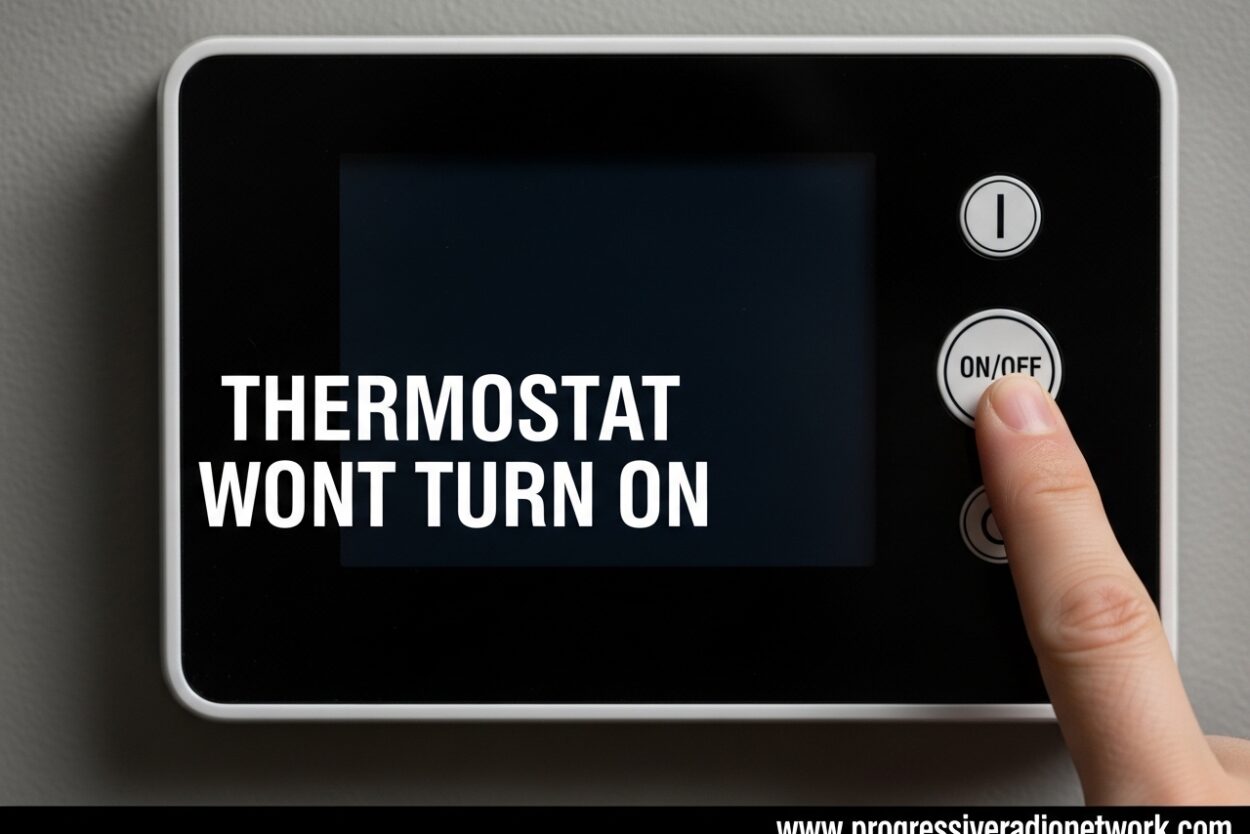
You walk inside expecting comfort, but instead find yourself staring at a blank thermostat screen. I’ve been there, and I know how frustrating it feels when your thermostat won’t turn on—especially during extreme weather. The good news is that most thermostat problems are simple fixes you can handle yourself.
A thermostat that won’t turn on typically points to one of a few common issues: dead batteries, tripped breakers, or a blown fuse in your furnace. In my experience helping homeowners troubleshoot HVAC systems, about 70% of these problems resolve with basic checks you can complete in under 15 minutes.
Safety First: Before diving into troubleshooting, remember that electrical work carries risks. If you’re uncomfortable with any step or notice burning smells, scorch marks, or sparking, call a professional immediately.
Common Causes Why Your Thermostat Won’t Turn On
Understanding why your thermostat stopped working helps you fix it faster. Based on service calls and homeowner reports, these are the most common culprits.
Dead or Low Batteries
This is the number one reason thermostats won’t turn on, accounting for nearly half of all service calls I’ve seen. Most programmable and smart thermostats use AA or AAA batteries that typically last 1-2 years.
When batteries die, your thermostat screen goes blank completely. Some models show a low battery warning beforehand, but many don’t give any notice before shutting down. I recommend checking your batteries annually, ideally before heating or cooling season begins.
Pro tip: Write the battery replacement date on the batteries with a permanent marker. This helps you track battery life and avoid surprise shutdowns.
Incorrect Thermostat Settings
Sometimes your thermostat is working fine—it’s just set incorrectly. I’ve seen homeowners panic thinking their system failed, only to find the thermostat was switched to “Off” or set to an unrealistic temperature.
Check these settings first:
- System switch: Make sure it’s set to Heat or Cool, not Off
- Temperature setting: Is it set higher than room temperature (for heating) or lower (for cooling)?
- Program settings: Some programmable thermostats override manual settings during scheduled periods
- Hold or vacation mode: These can prevent normal operation
Tripped Circuit Breaker or Power Issues
Your HVAC system needs electricity to run, and that power flows through your electrical panel. A tripped breaker cuts power to your furnace or air handler, which means your thermostat can’t communicate with the system.
Locate your electrical panel (usually in the garage, basement, or utility room) and look for breakers labeled “Furnace,” “HVAC,” “Air Handler,” or “Heat Pump.” If any are in the middle position or flipped to “Off,” reset them by flipping fully off, then back on.
Why do breakers trip? Usually from electrical surges, system overloads, or moisture issues. If your breaker trips repeatedly after resetting, don’t keep forcing it—this indicates a bigger problem needing professional attention.
Dirty or Clogged Air Filter
This might surprise you, but a severely clogged air filter can cause your thermostat to appear unresponsive. Here’s what happens: when airflow is restricted, your furnace or heat pump can overheat and trigger a safety shutdown.
Your thermostat might click and attempt to start the system, but the safety mechanism prevents operation. This protects your equipment from damage but leaves you thinking the thermostat is broken.
I recommend checking your filter monthly during peak heating and cooling seasons. If you can’t see light through it when held up to a lamp, it’s time for a replacement. Most 1-inch filters cost $5-15 and should be changed every 1-3 months.
Wiring Problems or Loose Connections
Your thermostat connects to your HVAC system through low-voltage wires (usually 24 volts). If these connections come loose, corrode, or break, communication stops completely.
Loose wires often happen after recent thermostat installation or wall work. Corrosion builds up over time, especially in humid environments. And sometimes pests chew through wires—rodents love the insulation.
Signs of wiring issues include intermittent operation, a blank screen despite fresh batteries, or a thermostat that works sometimes but not consistently. If you’re comfortable removing your thermostat from the wall plate, check that all wires are firmly secured and not frayed.
Blown Fuse in the Furnace
Many furnaces have a small fuse (typically 3-5 amp) on the control board that protects the low-voltage system. When this fuse blows, your thermostat loses power completely even though your furnace still has electricity.
Why does this fuse blow? Common causes include shorted wires, improper thermostat installation, or a failing transformer. According to HVAC technicians I’ve worked with, blown furnace fuses account for about 15% of thermostat power loss cases.
Locating this fuse requires opening your furnace’s access panel. It’s usually a small automotive-style fuse plugged into the control board. Replacing it is simple, but if the new fuse blows immediately, you have a short circuit that needs professional diagnosis.
Faulty Thermostat Unit
Sometimes the problem is the thermostat itself. Like any electronic device, thermostats can fail. Internal components burn out, screens go bad, or circuit boards corrode over time.
The average thermostat lasts about 10 years, though some fail sooner and others last decades. Signs of thermostat failure include flickering screens, unresponsive buttons, incorrect temperature readings, or a unit that feels unusually warm to the touch.
If you’ve ruled out all other causes and your thermostat is over 10 years old, replacement might be your best option. Modern smart thermostats offer improved efficiency, remote control, and better diagnostics—plus they start around $100.
Step-by-Step Troubleshooting Guide
Follow this checklist in order to systematically diagnose why your thermostat won’t turn on. I’ve designed this process to start with the easiest fixes before moving to more complex issues.
Step 1: Check the batteries
Remove your thermostat from the wall plate and locate the battery compartment. Replace batteries with fresh ones, even if current ones test okay—sometimes weak batteries cause issues. Wait 2-3 minutes for the thermostat to power up. If the screen lights up, you’re done.
Step 2: Verify thermostat settings
Ensure the system switch is set to Heat or Cool (not Off or Auto). Check that the set temperature is 3-5 degrees different from room temperature. Look for any Hold, Away, or Vacation modes that might be active. If everything looks correct, try setting the temperature 10 degrees higher (or lower for cooling) to test if the system responds.
Step 3: Check the circuit breaker
Find your electrical panel and locate breakers labeled for your HVAC system. Reset any tripped breakers by flipping them fully off, waiting 30 seconds, then flipping back on. Listen for your furnace or air handler powering up. If the breaker trips again immediately, stop and call a professional.
Step 4: Locate and check the emergency switch
Many homes have an emergency shutoff switch for the furnace, often located near the unit, on a basement stairwell wall, or in a utility room. It looks like a standard light switch and is typically red. Ensure it’s in the “On” position—I’ve seen many homeowners accidentally flip this switch while storing items.
Step 5: Inspect the air filter
Remove your air filter and hold it up to a light source. If you can’t see light through it, replace it. While you’re checking, look at your furnace’s sight glass (if equipped) for any error codes or fault lights that might indicate a safety shutdown from restricted airflow.
Step 6: Check furnace power and fuse
Verify your furnace has power by looking for an indicator light on the control board (visible through the access panel). If there’s no light, check that the furnace’s dedicated power switch is on. If the furnace has power but your thermostat remains blank, the internal fuse might be blown.
Step 7: Inspect thermostat wiring
Carefully remove your thermostat from the wall plate. Check that all wires are securely attached and none are loose or disconnected. Look for corrosion on the terminals or wire ends. If you find loose wires, reconnect them firmly. If wires appear corroded or damaged, this likely needs professional repair.
Step 8: Test the thermostat
If you have a multimeter and know how to use it safely, test for 24VAC between the R and C terminals on the furnace control board. If voltage is present but your thermostat still won’t power on, the thermostat itself is likely faulty. If no voltage exists, the problem is with your furnace’s transformer or control board.
Smart Thermostat Specific Issues
Smart thermostats like Nest, Ecobee, and Honeywell have unique requirements that can cause power issues. Understanding these differences saves time and frustration.
The C-Wire (Common Wire) Problem
Most smart thermostats require a C-wire (common wire) to provide continuous power for WiFi and display features. Many older homes don’t have this wire, which causes problems when upgrading from a basic thermostat.
Without a C-wire, smart thermostats try to steal power from the heating wires, which can cause intermittent operation, battery drain, or system failures. Symptoms include a thermostat that works sometimes but not consistently, or one that goes blank when the heating or cooling runs.
Solutions include installing a C-wire (best but requires fishing wire through walls), using an add-a-wire kit, or choosing a smart thermostat designed for no-C-wire installations. The latter is the easiest fix for most homeowners.
WiFi and Power Sharing Issues
Smart thermostats lose power when WiFi disconnects and the battery is too weak to maintain operation. This creates a frustrating cycle where the thermostat can’t reconnect because it has no power, and can’t charge because it can’t reconnect.
If your smart thermostat loses power after WiFi drops, check that the base plate is securely connected and has adequate power. Some models have a rechargeable battery that drains during extended WiFi outages. Ensuring stable WiFi and proper C-wire power prevents this issue.
Thermostat Won’t Turn On: When to Call a Professional
Some thermostat problems require professional expertise. I’ve seen homeowners turn simple issues into expensive repairs by attempting electrical work beyond their skill level.
Call a technician if:
- Your circuit breaker trips repeatedly after resetting
- You smell burning or see scorch marks near your furnace or thermostat
- Multiple HVAC components fail simultaneously
- You’re uncomfortable working with electrical wiring
- The furnace fuse blows immediately after replacement
- You suspect damaged wiring but can’t safely access it
Professional repair typically costs:
- Diagnostic visit: $80-150
- Thermostat replacement: $150-350 (parts plus labor)
- Wiring repair: $150-400 depending on complexity
- Transformer replacement: $150-300
- Control board replacement: $300-600
These are general ranges—actual costs vary by location, system type, and problem complexity. Getting multiple quotes for significant repairs is always smart.
Preventive Maintenance to Avoid Future Problems
Most thermostat failures are preventable with basic maintenance. I recommend these simple habits to keep your HVAC system reliable year-round.
Change batteries annually: Pick a memorable date each year (like daylight saving time) to replace thermostat batteries, even if they seem fine. This prevents unexpected failures and gives you peace of mind.
Replace air filters regularly: Set a calendar reminder for every 1-3 months depending on filter type and household factors like pets and allergies. Clean filters prevent overheating and safety shutdowns.
Test your system seasonally: Before heating and cooling seasons begin, test your thermostat by setting the temperature well above or below the current room temperature. This ensures everything works when you need it most.
Keep the area clean: Dust around your thermostat and furnace prevents overheating and improves airflow. Avoid storing items near your furnace that could block ventilation or accidentally hit the emergency switch.
Schedule annual maintenance: Professional HVAC tune-ups cost $100-200 but catch small problems before they become emergencies. Technicians test thermostat operation, check electrical connections, and verify overall system health.
Seasonal Troubleshooting Checklist
Different seasons bring different thermostat challenges. Here’s what to watch for throughout the year.
Fall (before heating season):
- Test thermostat by switching to heat mode
- Replace batteries if more than a year old
- Check that emergency switch is accessible and clearly labeled
- Clear area around furnace and vents
Winter:
- Keep thermostat away from direct sunlight or heat sources that cause false readings
- Check air filter monthly during heavy use
- Never let temperature drop below 55°F to prevent frozen pipes
- Watch for short cycling—frequent on/off cycles indicate problems
Spring (before cooling season):
- Test cooling mode early before peak heat arrives
- Clear debris from outdoor unit (if you have a heat pump or AC)
- Check condensate drain for clogs
- Consider upgrading to a programmable or smart thermostat if you haven’t already
Summer:
- Monitor humidity levels—excess moisture indicates AC problems
- Don’t set thermostat too low (below 68°F) which can freeze the system
- Check air filter every month during heavy cooling use
- Listen for unusual sounds that indicate developing problems
Frequently Asked Questions
How do you fix a thermostat that won’t turn on?
Start with the easiest fixes: replace the batteries, verify the system switch is set to Heat or Cool (not Off), and check that the circuit breaker hasn’t tripped. Then examine the air filter and look for any loose wiring connections. If these steps don’t resolve the issue, the problem may be a blown fuse in the furnace or a faulty thermostat that needs replacement.
Why did my thermostat suddenly stop working?
Sudden thermostat failure usually points to power issues. The most common causes are dead batteries, a tripped circuit breaker, a blown fuse in the furnace control board, or a loose wire connection. Sometimes power surges or storms can damage internal components. If everything was working fine and then suddenly stopped, check your electrical panel first, then the batteries.
Why is my thermostat not turning the heating on?
Your thermostat might have power but still not activate heating for several reasons. The system switch could be set incorrectly, the temperature might be set too low, or the furnace’s safety switch might be tripped due to a clogged air filter. Check that the setting is 3-5 degrees above room temperature and that the emergency switch near your furnace is on. If the thermostat clicks but the furnace doesn’t start, the problem is likely with the furnace itself.
Why is there no power coming to my thermostat?
No power usually means dead batteries, a tripped breaker, or a blown fuse in the furnace. First, replace the batteries even if they test okay—weak batteries sometimes work intermittently. Then check your electrical panel for tripped breakers labeled HVAC, furnace, or air handler. If those are fine, the furnace’s internal fuse (3-5 amp) on the control board might be blown, or the transformer could be failed.
What is the most common cause of a thermostat failure?
Dead or low batteries are by far the most common cause, responsible for nearly half of all thermostat service calls. The second most common cause is a tripped circuit breaker, often triggered by power surges or system overloads. Third is a blown fuse in the furnace control board, which cuts power to the thermostat while leaving the furnace with main power.
What’s the average lifespan of a thermostat?
Most thermostats last 10-15 years, though some mechanical models can last 20+ years. Smart thermostats typically have shorter lifespans (5-10 years) due to more complex electronics. If your thermostat is over 10 years old and experiencing issues, replacement is often more cost-effective than repair, especially since modern models offer improved efficiency and features.
Is there a reset button on a thermostat?
Many digital and smart thermostats have reset options, but not a physical reset button. On most models, you can reset by removing the thermostat from the wall plate for 30 seconds, pressing a small reset button near the battery compartment, or navigating to a reset menu in the settings. Check your manual for specific instructions, as the reset process varies by brand and model.
How to tell if your thermostat is malfunctioning?
Signs of thermostat failure include flickering or dim displays, unresponsive buttons, incorrect temperature readings, or the unit feeling unusually warm. If your HVAC system runs but doesn’t reach the set temperature, or if it short cycles (turns on and off frequently), the thermostat might be sending incorrect signals. If you’ve ruled out batteries, breakers, and wiring issues, the thermostat itself likely needs replacement.
Conclusion
When your thermostat won’t turn on, the problem is usually simpler than it seems. Start with fresh batteries, check your circuit breaker, and verify your settings—these three steps resolve the majority of cases. If those don’t work, move on to checking the air filter, emergency switch, and furnace fuse before considering more serious wiring or equipment failures.
Remember that safety comes first. If you’re uncomfortable with any troubleshooting step or notice warning signs like burning smells or repeated breaker trips, calling a professional is the smart choice. The average service call costs far less than repairing damage from DIY electrical work gone wrong.
Regular maintenance prevents most thermostat problems before they start. Change your batteries annually, replace filters every 1-3 months, and test your system before peak heating and cooling seasons. These simple habits keep your HVAC running reliably and help you avoid the frustration of a thermostat that won’t turn on when you need it most.
Leave a Comment