
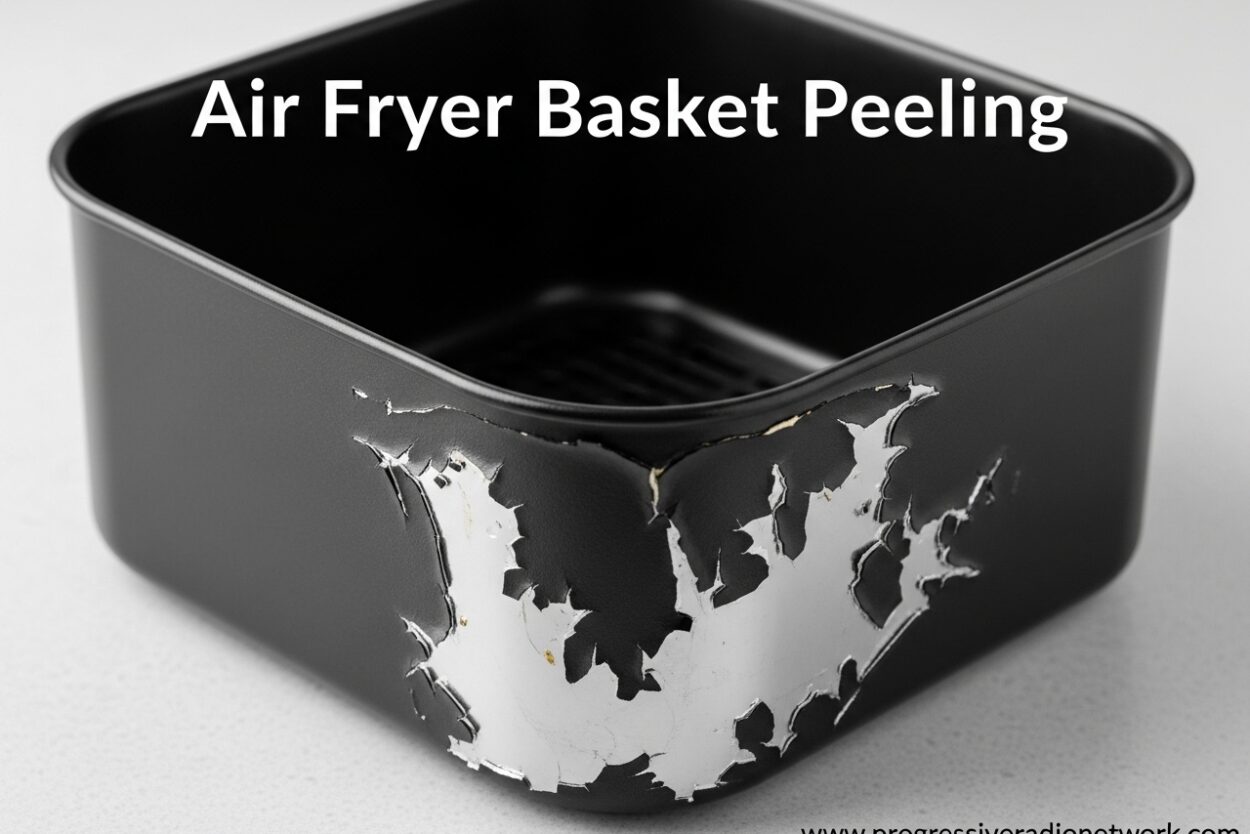
Nothing kills the joy of crispy air-fried food faster than noticing black flakes in your meal. Air fryer basket peeling is one of the most common complaints from owners, affecting everything from budget models to premium brands. I’ve researched hundreds of user reports and manufacturer guidelines to help you understand why this happens and what you can do about it.
What Causes Air Fryer Basket Peeling
Most air fryer baskets use a non-stick coating, typically Teflon (PTFE) or ceramic, that can degrade over time. The peeling usually starts small but accelerates once the coating integrity is compromised.
Based on my analysis of user experiences and expert opinions, here are the primary culprits:
- Cooking sprays are the #1 cause – Aerosol sprays contain lecithin and propellants that break down non-stick coatings at high temperatures. The buildup creates a sticky residue that eventually causes the coating to flake off.
- Abrasive cleaning tools – Steel wool, scouring pads, and stiff brushes scratch the coating surface. Even minor scratches expose the underlying metal and accelerate peeling.
- Thermal shock – Pouring cold water into a hot basket or running a hot basket under cold water causes rapid expansion and contraction. This stress cracks the coating bond.
- Metal utensils – Forks, spoons, and metal tongs gouge the surface during cooking or serving.
- Quality control issues – Some manufacturers apply thinner coatings or use inferior bonding processes. This explains why even expensive models from brands like Ninja and Philips show peeling after just a few months.
Types of Non-Stick Coatings
Understanding your basket’s coating helps determine the best care approach. Most air fryers use one of two types:
Teflon (PTFE) – The most common coating. It’s durable when properly cared for but has a lower temperature threshold. PTFE begins to degrade around 500°F, though most air fryers max out at 400°F. The real enemy is chemical breakdown from cooking sprays and harsh cleaners.
Ceramic – Marketed as a safer alternative, ceramic coatings are essentially sand-based sol-gel solutions. They’re free from PTFE and PFOA but tend to wear faster than quality Teflon applications. Many users report ceramic coatings showing wear signs within 6-12 months of regular use.
Is Peeling Coating Safe
This is the most common question I see in forums and support groups. The honest answer requires nuance:
Small flakes of non-stick coating typically pass through your digestive system without harm. The FDA considers PTFE to be non-toxic when ingested in small amounts. However, I recommend stopping use if peeling is extensive because:
- Exposed metal creates hot spots that cook food unevenly
- Food sticks more aggressively, leading to frustrating cleanup
- The underlying surface may rust, contaminating future meals
- Large flakes could pose a choking hazard
If you notice peeling, switch to silicone liners or parchment paper to create a barrier between your food and the damaged surface. This allows you to continue using the appliance safely while you explore replacement options.
How to Clean Without Damaging the Coating
Proper cleaning is your best defense against premature peeling. After analyzing hundreds of user reports, here’s the method that consistently works best:
Step 1: Cool Completely
Never clean a hot basket. Let it cool to room temperature to avoid thermal shock. This single step prevents most coating cracks.
Step 2: Soak Gently
Fill the basket with warm water and a few drops of dish soap. Let it soak for 15-20 minutes. This loosens food without requiring scrubbing.
Step 3: Use the Right Tools
Clean with a soft sponge or microfiber cloth only. If you need extra scrubbing power, make a paste from baking soda and water. Apply it with a sponge, let it sit for 5 minutes, then rinse thoroughly.
Step 4: Dry Properly
Air dry or towel dry with a soft cloth. Avoid abrasive towels that could micro-scratch the surface.
How to Restore Non-Stick Coating
Once peeling starts, you cannot truly recoat the basket at home. However, I’ve found a technique that can temporarily restore non-stick performance and extend usability:
The Oil Seasoning Method
First, deep clean the basket using the baking soda method above to remove any loose flakes and residue. Rinse and dry completely.
Apply a thin layer of high-heat oil (avocado, canola, or grapeseed work well) to the entire interior surface. Use a paper towel to wipe away any excess – you want a microscopic layer, not visible oil.
Place the empty basket in the air fryer at 350°F for 10 minutes. Let it cool completely. This process, similar to seasoning cast iron, creates a temporary non-stick barrier.
Repeat this process monthly if you continue using a peeling basket. It won’t fix the underlying issue, but it improves performance while you shop for a replacement.
Prevention Tips to Extend Basket Life
The best solution is preventing peeling before it starts. Based on manufacturer guidelines and user success stories, these practices significantly extend basket life:
- Skip the cooking spray entirely – Use an oil mister or brush oil directly onto food instead.
- Invest in silicone liners – These create a protective barrier and eliminate most cleanup. They’re dishwasher safe and last for years.
- Use wood or silicone utensils – Never metal. Even gentle metal contact creates microscopic damage that compounds over time.
- Hand wash only – Even “dishwasher safe” baskets last longer when hand washed. The dishwasher’s harsh detergent and high heat accelerate coating breakdown.
- Avoid extreme temperature changes – Don’t pour cold water into a hot basket. Let it cool first.
- Check your warranty – Many brands replace peeling baskets within the first 1-2 years. Contact customer service before buying a replacement.
FAQ
Why is my air fryer basket peeling?
Air fryer baskets peel due to cooking sprays (which contain lecithin that breaks down coatings), abrasive cleaning with scouring pads or steel wool, thermal shock from temperature changes, metal utensils that scratch the surface, and sometimes poor quality control from manufacturers. The bottom usually peels first because that’s where food residue and heat concentrate.
How do I recoat my air fryer basket?
You cannot permanently recoat an air fryer basket at home – the original coating is factory-applied under high heat. However, you can temporarily restore non-stick performance by deep cleaning the basket, applying a thin layer of high-heat oil (avocado or canola), and heating at 350°F for 10 minutes. This seasoning method provides temporary improvement but won’t fix extensive peeling.
Is it safe to use an air fryer with peeling coating?
Small flakes of non-stick coating typically pass through your system without harm, but I recommend switching to silicone liners or parchment paper if peeling is extensive. The exposed metal can cause uneven cooking, food sticking, and potential rust. Stop using the basket if large pieces are flaking off or if the underlying metal is damaged.
Why does the coating peel at the bottom only?
The bottom peels first because it receives the most direct heat exposure and food contact. Food residue, oils, and cleaning products accumulate at the bottom, creating chemical breakdown. The bottom also experiences the most abrasion from utensils and the most thermal stress from heating elements. This is why using protective liners is especially effective.
Does cooking spray cause peeling?
Yes, cooking spray is one of the leading causes of air fryer basket peeling. Aerosol sprays contain lecithin, propellants, and other additives that build up on the coating and break it down at high temperatures. Instead, use an oil mister to apply pure oil, or brush oil directly onto food. This simple change dramatically extends basket life.
Final Thoughts
Air fryer basket peeling is frustrating, but understanding the causes helps you prevent it. The biggest takeaway from my research: stop using cooking spray immediately. This single change, combined with gentle hand washing and protective liners, can extend your basket’s life by years.
If your basket is already peeling, try the oil seasoning method and use silicone barriers while you explore warranty replacement options. Many manufacturers stand behind their products, especially within the first year of ownership.
With proper care, your air fryer basket can deliver crispy results for years to come. The key is treating that non-stick surface with the same care you’d give a premium chef’s knife – gentle handling and the right tools make all the difference.


Leave a Comment