
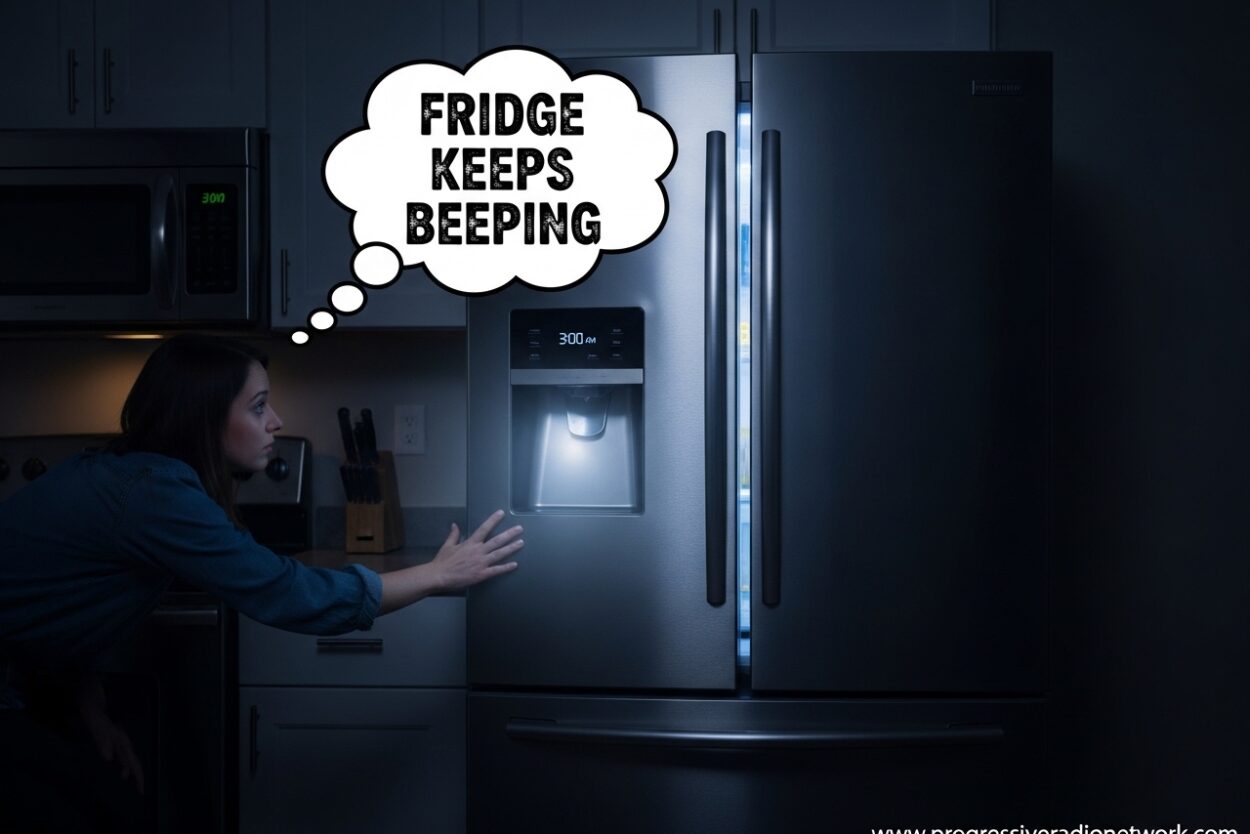
That constant chirping from your refrigerator isn’t just annoying—it’s a warning signal you shouldn’t ignore. When your fridge keeps beeping, something needs attention before your food spoils or you face a costly repair.
I’ve dealt with my fair share of beeping appliances over the years, and refrigerators are particularly frustrating because the problem isn’t always obvious. The door looks closed, but the alarm keeps sounding. Or worse, you wake up at 2 AM to a continuous beep because the temperature spiked while you were sleeping.
In this guide, I’ll walk you through every common cause of refrigerator beeping and exactly how to fix each one. You’ll learn when it’s a simple DIY fix and when you need to call a professional. Most importantly, you’ll finally get some peace and quiet.
Why Your Fridge Keeps Beeping: The Direct Answer
Refrigerators beep for two primary reasons: the door alarm thinks the door is open, or the internal temperature has risen above safe levels. That’s it. Every beep you hear stems from one of these two problems.
Modern refrigerators have sophisticated sensors monitoring door position and internal temperature 24/7. When something triggers these alarms, the audible alert is designed to prevent food spoilage and alert you to potential problems before they become disasters.
The tricky part? Both alarms can trigger even when everything looks fine visually. A worn door gasket might seal when you push it closed but pop open minutes later. Or the temperature sensor might be malfunctioning while your food is actually staying cold.
Door Seal and Gasket Problems: The #1 Culprit
By far the most common reason a fridge keeps beeping with the door closed is a damaged or worn door gasket. This rubber seal runs around the entire door frame and creates the airtight seal that keeps cold air inside.
Over time, gaskets develop cracks, tears, or simply lose their elasticity. When this happens, cold air escapes and warm air enters. Your fridge works harder to compensate, and eventually the temperature rises enough to trigger the high-temperature alarm. Even worse, the door sensor might detect that the door isn’t fully sealed, activating the door ajar alarm.
Here’s how to check your gasket: Close the door on a dollar bill so it’s half in and half out. Pull gently on the bill. If it slides out easily with no resistance, your seal is compromised. Test this around the entire door frame—problems often develop in specific corners first.
Cleaning the gasket with warm soapy water sometimes helps if the problem is just dirt and grime preventing a proper seal. But if the rubber is cracked, brittle, or warped, replacement is your only option. The good news? This is a straightforward DIY repair that costs between $50-150 for most models.
Overloading and Door Closure Issues
Sometimes the gasket is perfectly fine, but something is physically preventing the door from closing completely. I’ve seen this countless times—overstuffed fridge shelves, misaligned bins, or even a stray water bottle rolling against the door.
The door switch that triggers the alarm is surprisingly sensitive. Even a gap of just a few millimeters can register as “door open” to the sensor. This often happens when:
You’ve recently loaded groceries and items shifted
Door bins are overloaded with heavy containers
A shelf or drawer isn’t seated properly in its track
Something fell behind the crisper drawers and is blocking the door
The solution is simple but methodical. Remove everything from the door and check that it closes properly. Then reload items one shelf or bin at a time, testing the door after each addition. You’ll quickly identify what’s causing the interference.
Temperature Alarm: What It Means
The high-temperature alarm is more serious than the door alarm because it indicates your refrigerator isn’t maintaining safe food storage temperatures. This alarm typically sounds when the internal temperature rises above 40-45°F for an extended period.
Several factors can trigger this alarm:
Power outages, even brief ones
Door left open too long
Malfunctioning thermostat or sensor
Compressor problems
Dirty condenser coils restricting airflow
After a power outage, your fridge will beep as temperatures rise inside. Most models continue alarming until temperatures return to safe levels—this can take several hours depending on how full the fridge is and how long the power was out.
Dirty condenser coils are another silent culprit. These coils (usually on the back or bottom of your fridge) release heat from the refrigeration process. When coated in dust and pet hair, they can’t efficiently dissipate heat, causing your compressor to work harder and potentially fail to cool properly.
Thermostat and Sensor Malfunctions
Modern refrigerators rely on electronic control boards and multiple temperature sensors to maintain precise conditions. When these components fail, your fridge might beep constantly even though everything appears to be working fine.
A faulty thermostat can send incorrect temperature readings to the control board, triggering false alarms. The temperature sensor itself might malfunction, reporting unsafe conditions when the actual temperature is perfectly fine. In some cases, the main control board develops issues that cause erratic behavior including persistent beeping.
Diagnosing these problems requires some troubleshooting. Start by checking if the digital display shows an error code—many models display specific codes that indicate which component has failed. If no error appears but the beeping continues with no obvious cause, a technician can test the thermostat and sensors with specialized equipment.
These repairs typically cost between $200-500 depending on the parts needed and your refrigerator model. While expensive, they’re often worth it compared to the cost of a new refrigerator.
Compressor and Evaporator Coil Issues
When your refrigerator beeps due to compressor or evaporator coil problems, you’re facing the most serious repair scenarios. The compressor is the heart of your refrigerator’s cooling system, and when it fails, the entire unit stops cooling effectively.
Signs of compressor failure include:
Loud clicking or buzzing sounds from the fridge
Fridge runs constantly but doesn’t cool properly
Warm interior despite the compressor running continuously
Burnt smell coming from the back of the refrigerator
Evaporator coil issues often manifest as frost buildup inside the freezer compartment, reduced cooling efficiency, and eventual temperature rises that trigger alarms. These problems typically indicate refrigerant leaks or defrost system failures.
Both compressor and evaporator coil repairs are expensive—often $500-1000 or more. At this price point, you should consider the age of your refrigerator. If it’s over 10-12 years old, replacement might be more cost-effective than repair.
How to Reset Your Refrigerator
Sometimes your fridge keeps beeping because it simply needs a reset. Power fluctuations, sensor glitches, or control board hiccups can cause false alarms that disappear after a proper reset.
Here’s the standard reset procedure for most refrigerators:
Step 1: Unplug the refrigerator from the wall outlet
Step 2: Wait 5-10 minutes for the capacitors to fully discharge
Step 3: Plug the refrigerator back in
Step 4: Wait another 5 minutes for the system to initialize
Step 5: Check if the beeping has stopped
Some models have a dedicated reset button or sequence. Check your owner’s manual for model-specific instructions. Samsung fridges often require pressing specific buttons simultaneously, while LG models might have a reset button inside the fridge compartment.
After resetting, monitor your refrigerator for 24 hours. If the beeping returns, you’re dealing with an actual problem that needs further troubleshooting or professional repair.
When to Call a Professional
Not every beeping refrigerator requires professional service, but some situations definitely warrant calling a technician. You should contact a professional if:
The compressor makes loud or unusual noises
You see error codes on the display panel
The fridge isn’t cooling at all despite being plugged in
You’ve tried all troubleshooting steps with no success
Your refrigerator is under warranty (DIY repairs can void it)
Professional refrigerator repair typically costs $150-650 depending on the problem. Technicians charge $75-150 just for the diagnostic visit, which is often applied toward the repair cost if you proceed with their service.
When calling for service, be prepared to describe: the beep pattern (continuous vs intermittent), any error codes displayed, how long the problem has been occurring, and what troubleshooting steps you’ve already attempted. This information helps the technician diagnose the issue more efficiently.
Temporary Alarm Disable: Use Caution
I understand the temptation to simply disable that annoying alarm, especially when it keeps beeping at night. Most refrigerators allow you to temporarily mute the door alarm by pressing and holding the alarm button or accessing the settings menu.
However, I strongly recommend against permanently disabling any refrigerator alarm. These alerts exist to protect your food and prevent costly problems. A muted alarm means you won’t know if your fridge stops cooling in the middle of the night, potentially leading to complete food loss by morning.
Think of the beep as your refrigerator’s way of crying for help. Instead of silencing it, identify why it’s distressed and address the underlying issue. Your wallet and your groceries will thank you.
Preventive Maintenance: Stop Future Beeping
Once you’ve resolved the current beeping issue, take these preventive steps to avoid future problems:
Clean door gaskets monthly with warm soapy water
Vacuum condenser coils every 6-12 months
Don’t overload door bins or shelves
Check door seals regularly with the dollar bill test
Keep the refrigerator level using adjustable feet
Avoid placing hot food directly into the fridge
Don’t block interior vents with food items
Simple maintenance prevents most beeping issues. A five-minute monthly inspection can save you hours of troubleshooting and hundreds in repair costs down the road.
Frequently Asked Questions
How can I stop my fridge from beeping?
First, check if the door is fully closed and nothing is blocking it. Clean the door gasket with warm soapy water and check for damage. If the door is fine, unplug the fridge for 5-10 minutes to reset it. If beeping continues after reset, check for error codes and consider calling a technician.
What are the signs of a dying refrigerator?
Warning signs include loud noises from the compressor, food spoiling faster than usual, excessive condensation inside, the fridge running constantly, temperature fluctuations, and water leaks on the floor. If your refrigerator is over 10-12 years old and showing these signs, replacement may be more cost-effective than repair.
Is a noisy fridge a fire hazard?
Most refrigerator noises are not fire hazards. However, loud clicking, buzzing, or humming from the back could indicate compressor failure. A burning smell or smoke definitely requires unplugging immediately and calling a technician. Normal operating sounds include clicking when the compressor cycles on and off, and occasional defrost noises.
How do you reset a refrigerator?
Unplug the refrigerator from the wall outlet and wait 5-10 minutes for all capacitors to discharge. Plug it back in and wait another 5 minutes for initialization. Some models have specific reset procedures—check your manual. Never reset by simply flipping the breaker, as this can damage the control board.
Why does my fridge beep even when the door is closed?
This usually means the door gasket is worn or damaged, preventing an airtight seal. Test with a dollar bill—close the door on it and pull gently. If it slides out easily, replace the gasket. Other causes include misaligned doors, overloaded shelves preventing full closure, or a faulty door switch.
Final Thoughts
A fridge that keeps beeping is more than just an annoyance—it’s your appliance telling you something needs attention. Most often, the solution is simple: clean or replace a worn door gasket, reorganize overstuffed shelves, or perform a basic reset. But sometimes, that persistent beep indicates a more serious problem requiring professional repair.
I’ve found that addressing beeping quickly saves both money and groceries. A $50 gasket replacement beats losing $200 worth of food and facing an emergency repair bill any day. Regular preventive maintenance takes just minutes but can extend your refrigerator’s life by years.
The next time your fridge starts beeping, work through these troubleshooting steps systematically. You’ll likely solve the problem yourself and save the cost of a service call. And if you do need a professional, at least you’ll understand what’s wrong and can make an informed decision about repair versus replacement.
Your refrigerator works hard 24/7 to keep your food fresh. That occasional beep is just its way of asking for a little attention. Listen to it, address the issue, and enjoy the peace and quiet that follows.


Leave a Comment