
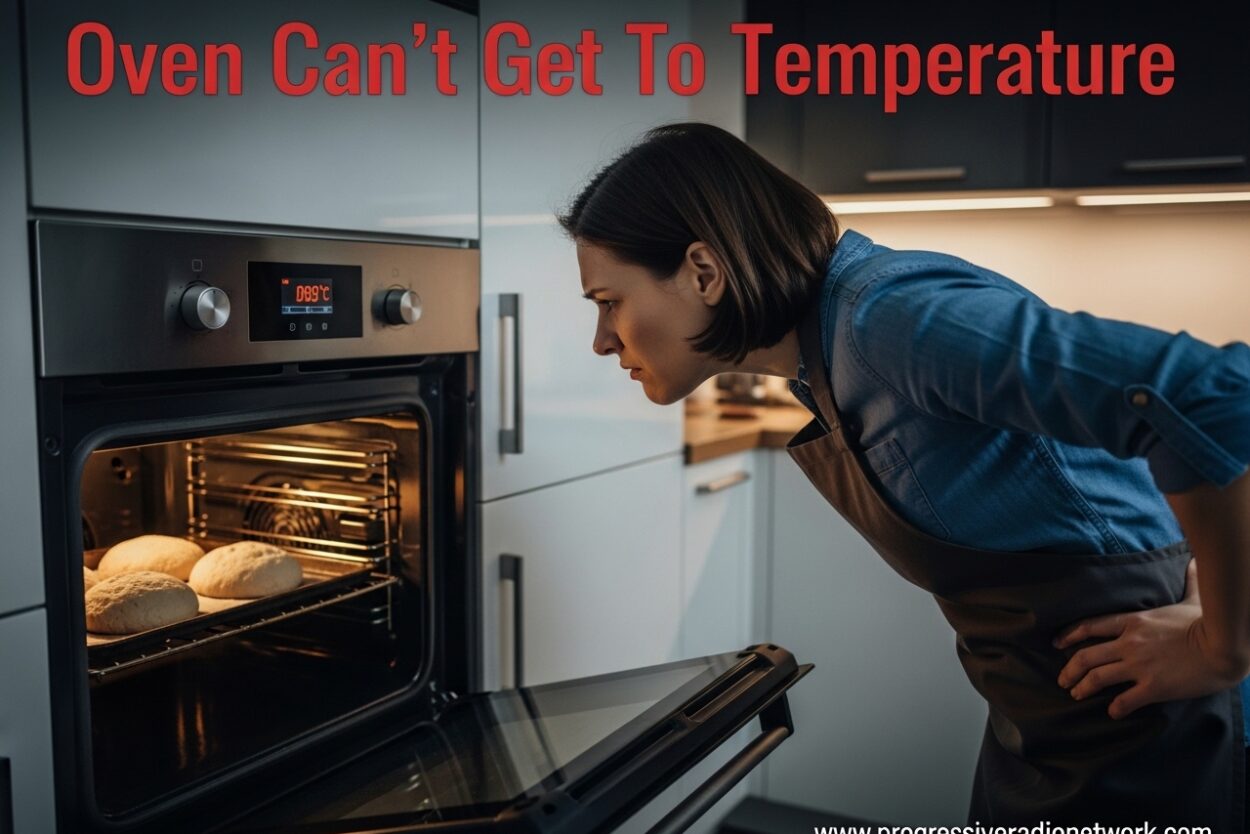
When your oven won’t reach temperature, it can ruin meals and leave you frustrated. I’ve dealt with this issue multiple times over the years, and I’ll walk you through everything you need to know about diagnosing and fixing oven temperature problems in 2026.
Oven not reaching temperature is one of the most common appliance issues homeowners face. Whether you have an electric oven that stops at 350°F or a gas oven that won’t heat past 100 degrees, understanding the root cause is the first step toward a solution.
Signs Your Oven Isn’t Reaching Temperature
Before diving into repairs, it’s important to confirm you actually have an oven temperature problem. I’ve seen many people think their oven is broken when it just needs more time to preheat properly.
Common signs your oven isn’t getting hot enough include food taking longer to cook than recipes specify, undercooked baked goods, or your oven displaying a temperature that doesn’t match the actual heat inside. Some ovens show they’ve reached 400°F when they’re actually only at 325°F.
One clear indicator I’ve noticed: when your oven consistently stops heating at a specific temperature like 235°F or 350°F and won’t go higher regardless of how long you wait. This pattern usually points to a specific component failure rather than a general heating issue.
Why Won’t My Oven Reach Temperature Setting?
There are several reasons why your oven might not be reaching the temperature you set. Based on my research and personal experience, the most common culprits include a faulty heating element, malfunctioning temperature sensor, thermostat calibration issues, or problems with the gas ignitor in gas models.
Electric ovens typically use two heating elements – a bake element at the bottom and a broil element at the top. If either fails, your oven may struggle to reach higher temperatures. Gas ovens rely on an ignitor and burner system, where a weak ignitor can prevent proper ignition even if it’s still clicking.
The temperature sensor, which regulates oven heat, can also cause issues. I’ve seen cases where a dirty or misaligned sensor gives false readings, causing the oven to shut off prematurely. Sometimes the sensor itself fails and needs replacement.
Temperature Sensor Problems and Solutions
The temperature sensor is arguably the most critical component for accurate oven heating. This long, thin metal tube protruding from the back of your oven measures the internal temperature and tells the control board when to turn the heating elements on or off.
I’ve found that sensor issues often start subtly. Your oven might be off by 20-30 degrees at first, then gradually get worse. Eventually, the oven may stop heating entirely or only reach a low temperature plateau around 235-350°F.
Before replacing the sensor, try cleaning it first. I’ve rescued several ovens by simply removing built-up grease and food residue from the sensor. Use a damp cloth with mild soap, then dry thoroughly. Also check that the sensor isn’t touching the oven wall, which can cause false readings.
Testing the sensor requires a multimeter. At room temperature (around 70°F), the sensor should read approximately 1,000-1,100 ohms. If your reading is significantly different, the sensor needs replacement.
Electric Oven Heating Element Issues
Electric oven heating elements are surprisingly durable, but they do fail eventually. I’ve seen bake elements last anywhere from 5 to 15 years depending on usage. The bake element does the heavy lifting for most cooking, while the broil element handles high-heat tasks.
A failing bake element can be deceptive. I’ve encountered situations where the element still glows red but doesn’t generate enough heat. This happens because the internal resistance has increased, reducing power output. Your oven might reach only 350°F instead of 450°F, or take much longer to preheat.
Visible signs of element failure include blisters, cracks, or burned spots on the element surface. Sometimes you’ll see a bright spot where the element has thinned out. If the element doesn’t glow at all when the oven is on, it’s definitely failed.
Testing the element is straightforward with a multimeter. A functioning bake element should show 15-25 ohms of resistance. If your reading is infinite (open circuit) or significantly outside this range, replacement is necessary.
Gas Oven Ignitor and Burner Problems
Gas ovens have different heating issues than electric models. The most common problem I’ve encountered is a weak ignitor. Even though it might still glow and click, a failing ignitor may not draw enough current to open the gas valve properly.
I’ve seen many frustrated homeowners whose gas oven clicks repeatedly but never fully ignites. The ignitor glows dimly, but there’s no flame. This happens because the ignitor has weakened over time and can’t generate the milliamps needed to signal the gas valve to open.
Another gas-specific issue involves the burner itself. Food debris can clog the burner ports, preventing even flame distribution. I’ve found this particularly common in ovens that haven’t been cleaned regularly. The flame might be weak in certain areas or not ignite at all.
Safety is crucial with gas ovens. If you smell gas at any point, turn off the oven immediately, ventilate the area, and call a professional. Gas line repairs aren’t DIY projects.
Thermostat and Calibration Issues
Sometimes your oven components work fine, but the temperature control is off. Oven thermostats can drift over time, causing your oven to run hotter or colder than the displayed temperature. I’ve worked with ovens that were consistently 50 degrees off from the set temperature.
Many modern ovens have a calibration offset feature that allows you to adjust the temperature. This is worth trying before replacing parts. Check your owner’s manual for the specific calibration procedure for your model.
The process usually involves pressing a combination of buttons to enter calibration mode, then adjusting the temperature up or down in small increments. I recommend making adjustments in 5-10 degree increments, then testing with an oven thermometer before further adjustments.
Older ovens with mechanical thermostats may need actual thermostat replacement if they can’t be calibrated. This is more involved and might require professional installation depending on your comfort level with appliance repair.
How to Test Your Oven Temperature Accurately
Before assuming your oven has a problem, I always recommend verifying the actual temperature. Oven displays aren’t always accurate, and some variance is normal. An inexpensive oven thermometer is one of the best tools for diagnosing temperature issues.
Place the thermometer in the center of the oven rack for the most accurate reading. Preheat your oven to 350°F and let it cycle for at least 20 minutes after it indicates it’s reached temperature. This gives the oven time to stabilize and complete several heating cycles.
Check the thermometer reading and compare it to your oven’s display. A difference of 10-15 degrees is considered acceptable. Anything beyond 25 degrees warrants attention. I’ve found that ovens typically run cooler than displayed, but some run hotter.
Test at multiple temperatures if you’re experiencing inconsistent results. I usually check at 350°F and 425°F, as these represent common baking and roasting temperatures. Document your readings to help identify patterns.
When to Call a Professional
While many oven temperature issues can be resolved DIY, some situations require professional expertise. Gas line problems, complex electrical issues, and control board failures are best handled by qualified technicians.
I recommend calling a professional if you’re uncomfortable working with gas or electricity, if multiple components have failed simultaneously, or if the oven is relatively new and still under warranty. Attempting repairs on a warranty-covered appliance could void your coverage.
Professional oven repair typically costs between $150-400 depending on the issue and your location. Replacing a temperature sensor or heating element is on the lower end, while control board replacement is more expensive. Get multiple quotes if possible, as prices can vary significantly.
Consider the age of your oven when deciding between repair and replacement. If your oven is over 12-15 years old and needs a major repair, replacement might be more cost-effective in the long run. Newer models also offer better energy efficiency.
Preventive Maintenance Tips
Regular maintenance can prevent many oven temperature problems. I’ve found that simple cleaning and inspection routines extend oven life and maintain accurate heating. Clean your oven regularly, paying special attention to the temperature sensor area.
Avoid using the self-cleaning feature too frequently, as the extreme temperatures can stress components. I limit self-cleaning to once or twice per year and use manual cleaning for routine maintenance. The self-clean cycle can shorten the lifespan of heating elements and electronic components.
Check door seals annually for cracks or deterioration. A damaged gasket allows heat to escape, making your oven work harder and potentially affecting temperature accuracy. Replacing a door seal is usually straightforward and inexpensive.
Ventilation matters too. Ensure your oven’s vents aren’t blocked by cookware or foil. Proper airflow is essential for temperature regulation and prevents overheating of sensitive components.
FAQ
Why won’t my oven reach my temperature setting?
The most common reasons include a faulty heating element, malfunctioning temperature sensor, thermostat calibration issues, or a weak ignitor in gas ovens. These components can fail over time or become dirty/misaligned, preventing the oven from reaching desired temperatures.
Why is my oven taking so long to get to temperature?
Slow preheating often indicates a failing heating element or weak ignitor. Other causes include a dirty temperature sensor, poor door seal allowing heat escape, or voltage issues. An oven taking more than 15-20 minutes to preheat to 350°F typically has an underlying problem.
What are common signs of oven failure?
Common signs include inconsistent cooking results, oven not heating past 350°F, longer preheat times, temperature display not matching actual heat, visible damage to heating elements, or the ignitor glowing but not igniting in gas models.
How to tell if an oven thermostat is broken?
Test your oven with an accurate oven thermometer. If the actual temperature differs from the display by more than 25 degrees, the thermostat may be faulty. Other signs include temperature fluctuation during cooking or the oven never reaching the set temperature.
Can I fix my oven myself if it won’t heat?
Simple fixes like cleaning the temperature sensor or recalibrating the thermostat are safe DIY tasks. However, gas line repairs, control board replacement, and complex electrical work should be left to professionals. Always disconnect power before attempting any repairs.
How much does it cost to repair an oven that won’t reach temperature?
Professional oven repair typically costs $150-400 depending on the issue. Temperature sensor replacement runs $100-200, heating element replacement $150-300, and control board repair $250-400. DIY parts cost $30-100 but require technical skill.
Conclusion
Dealing with an oven that won’t reach temperature is frustrating, but most issues have straightforward solutions. Start by verifying the actual temperature with an oven thermometer, then check the most common culprits: heating elements, temperature sensors, and thermostat calibration.
For electric ovens, the bake element is often the problem. For gas models, the ignitor is frequently at fault. Simple maintenance like cleaning the temperature sensor can resolve many issues without expensive repairs.
Know your limits with DIY repairs. Gas appliances and complex electrical systems require professional expertise. When in doubt, call a qualified technician – it’s better to pay for professional service than risk safety or cause further damage.
Regular preventive maintenance will keep your oven heating accurately for years. Clean it regularly, check door seals, and avoid overusing the self-cleaning feature. With proper care, your oven should provide reliable service well beyond 2026.




Leave a Comment