
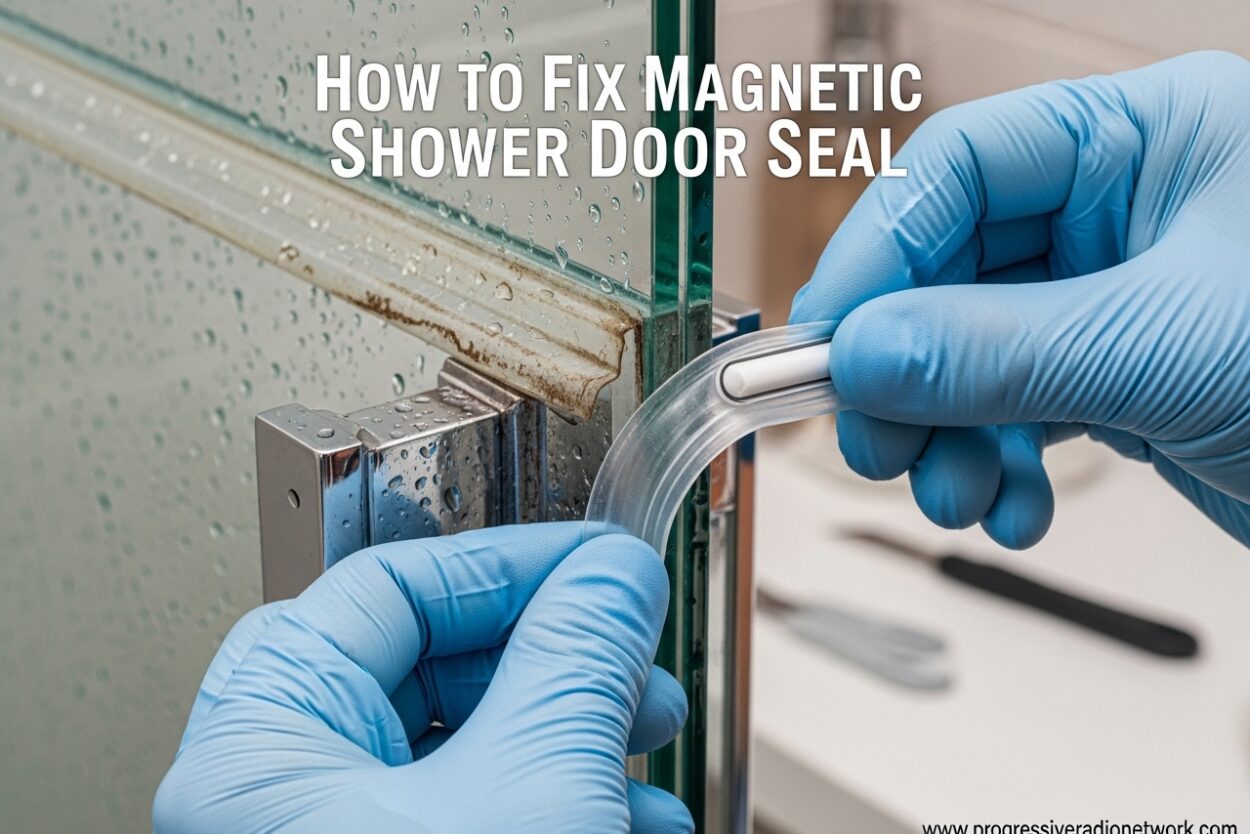
Nothing’s more frustrating than a shower door that won’t stay closed. You push it, it snaps shut for a second, then pops open again. Water pools on your bathroom floor. You’re constantly mopping up after every shower. I’ve been there, and I know how annoying it gets.
The good news is that most magnetic shower door seal problems are easy to fix yourself. In this guide, I’ll show you exactly how to fix magnetic shower door seal issues without spending a fortune on professional repairs.
Why Is My Magnetic Shower Door Seal Not Closing?
Before we dive into the fixes, let’s quickly identify what’s going wrong with your door. Magnetic shower door seals fail for six main reasons, and pinpointing yours will save you time and money.
Quick Fix Checklist
| Symptom | Cause | Quick Fix |
|---|---|---|
| Door bounces open or feels like it’s pushing back | Polarity mismatch (magnets repelling) | Flip one magnet strip 180 degrees |
| Gap at top or bottom when closed | Misaligned door or hinges | Adjust hinge screws or use self-correcting seal |
| Weak magnetic pull, door falls open easily | Limescale buildup or worn magnets | Clean with white vinegar or replace seal |
| Seal keeps pulling out of the groove | Too strong magnets or worn channel | Use silicone adhesive or deeper channel seal |
| Bottom seal clashes with vertical strip | Incompatible seal sizes | Trim bottom seal or swap to slim profile |
| New seal doesn’t fit properly | Wrong glass thickness or channel depth | Measure glass and buy correct spec seal |
6 Reasons Why Magnetic Shower Door Seals Fail
Now let’s dive deeper into each problem. I’ll explain what’s happening and exactly how to fix it.
1. Polarity Issues – The 50/50 Trap
This is the number one reason magnetic shower doors won’t stay closed. When you install magnetic strips, there’s a 50% chance you’ll get the polarity wrong. The magnets repel instead of attract.
You’ll know this is your problem if the door feels like it’s pushing back against you. When you try to close it, there’s resistance. It might briefly stay shut before bouncing open with a pop.
The fix is simple: flip one of the magnetic strips 180 degrees. Remove the strip from its groove, turn it upside down, and push it back in. Test the door. If it still doesn’t work, flip the other strip instead. One of these combinations will work.
2. Misalignment – The Wonky Door
Over time, shower doors can settle out of alignment. The hinges might loosen slightly, or the weight of the glass pulls the frame downward. This creates gaps between the magnetic strips, so they can’t make proper contact.
Check your alignment by closing the door slowly. Watch where the strips meet. If there’s a gap at the top or bottom, or if one strip sits higher than the other, you’ve got an alignment issue.
For minor misalignment, try tightening the hinge screws. Use a screwdriver to adjust each hinge incrementally until the door sits level. If the door has been sagging for years, the hinges might need professional realignment.
3. Limescale Buildup – The Magnet Killer
If you live in a hard water area, limescale is your magnetic seal’s worst enemy. The mineral deposits coat the magnets and reduce their strength significantly. Over time, the seal becomes weak and unreliable.
I’ve seen seals covered in a white crusty layer that barely hold the door closed. The good news is that this is often reversible with a thorough cleaning.
Mix equal parts white vinegar and warm water. Apply it to the magnetic strips with a sponge or cloth. Let it sit for 10-15 minutes to dissolve the limescale. Scrub gently with a soft brush, then rinse with clean water. Dry thoroughly and test the door. You might be surprised at how much stronger the magnets feel after a good clean.
4. The Universal Seal Trap
Here’s a mistake I see constantly: people buying universal magnetic seals that don’t match their shower door specifications. Not all seals are created equal, and using the wrong one will cause endless frustration.
You need to match two critical measurements: your glass thickness and your U-channel depth. Glass thickness typically ranges from 4mm to 10mm. The U-channel is the groove that holds the seal, and depths vary between manufacturers.
Before buying a replacement, measure your glass with a caliper or ruler. Check the channel depth on your existing seal. If you’re unsure, remove the old seal and take it to a hardware store for proper matching. A seal that’s too loose won’t stay in the groove, while one that’s too tight won’t fit at all.
5. The Bottom Seal Clash
Your shower door probably has two types of seals: the vertical magnetic strips and a bottom sweep that seals against the shower tray. Sometimes these two seals fight each other instead of working together.
If your bottom seal is too thick, it might prevent the door from closing fully. This leaves a gap between the magnetic strips, weakening the seal. You’ll notice the door doesn’t click shut properly, or there’s visible space when closed.
The solution is to trim the bottom seal slightly or switch to a slimmer profile. Use a sharp utility knife to remove a few millimeters from the bottom seal, then test the door. Go slowly, you can always trim more but you can’t add it back.
6. Worn Groove and Magnet Fatigue
Magnetic seals don’t last forever. After years of use, the U-channel groove can wear down and become loose. At the same time, the magnets inside can lose their strength through constant opening and closing.
If your seal pulls out easily or the magnets feel weak even after cleaning, it’s probably time for a replacement. This is especially true if your shower door is more than 5-7 years old.
Replacement seals cost a fraction of what you’d pay a professional. Just make sure to match your specifications correctly. I’ll walk you through the replacement process in the next section.
How to Fix Magnetic Shower Door Seal – Step-by-Step
Now that you’ve identified the problem, here’s how to fix it. I’ll cover the most common repairs, from quick adjustments to full replacement.
Tools You’ll Need
- Screwdriver (Phillips and flathead)
- White vinegar
- Soft cleaning brush
- Measuring tape or caliper
- Utility knife (for trimming seals)
- Silicone adhesive (optional, for stubborn cases)
Fixing Polarity Issues
Step 1: Close the shower door and note the resistance. If it feels like it’s pushing back, you’ve confirmed a polarity problem.
Step 2: Open the door and locate the magnetic strip on the fixed panel. Gently pull it out of the U-channel groove. It should come out with moderate pressure.
Step 3: Flip the strip 180 degrees (turn it upside down). Push it back into the groove, making sure it’s fully seated.
Step 4: Test the door. Close it gently and see if it snaps shut with a satisfying click. If it still doesn’t work, remove the strip from the door panel instead and flip that one.
Step 5: Once the door closes properly, you’ve found the correct polarity. The magnets should now attract instead of repel.
Cleaning Limescale Buildup
Step 1: Mix a solution of equal parts white vinegar and warm water in a spray bottle or bowl.
Step 2: Open the shower door fully to expose both magnetic strips.
Step 3: Apply the vinegar solution generously to the magnetic surfaces. Let it sit for at least 10-15 minutes. The acid will dissolve the mineral deposits.
Step 4: Scrub the strips with a soft brush or sponge. Pay special attention to any white, crusty buildup. Don’t use abrasive pads that could scratch the surface.
Step 5: Rinse thoroughly with clean water. Dry the strips completely with a cloth.
Step 6: Test the door. You should notice significantly stronger magnetic pull. If it’s still weak, consider a full replacement.
Replacing a Worn Magnetic Seal
Step 1: Measure your glass thickness carefully. Use a caliper if possible, or measure with a ruler at multiple points to ensure accuracy.
Step 2: Measure the length of your current seal from top to bottom. Most standard shower doors use seals between 1800mm and 2000mm.
Step 3: Purchase a replacement seal that matches your specifications. Check both glass thickness and channel depth. Universal seals often don’t fit properly, so get the right size.
Step 4: Remove the old seal by pulling it out of the groove. Clean any debris or old adhesive from the channel.
Step 5: Test the polarity before final installation. Hold the new strips in position and check that they attract each other.
Step 6: Push the seals fully into their grooves, starting from the top and working down. Make sure they’re seated evenly along the entire length.
Step 7: Close the door and check for full contact along the seal. Adjust as needed until the door snaps shut securely.
When to Use Silicone Adhesive
Sometimes a seal won’t stay in its groove, especially if the channel has worn down over time. In this case, a small amount of silicone adhesive can help.
Apply a thin bead of clear silicone adhesive to the back of the seal before inserting it into the groove. Press firmly and wipe away any excess. Let it cure for 24 hours before using the shower heavily.
This is particularly useful for RV shower doors, which experience more vibration and movement than residential doors.
When to Call a Professional
Most magnetic seal problems are DIY-friendly, but sometimes you need expert help. Call a professional if:
- The door frame itself is warped or damaged
- Hinges are broken or severely corroded
- The glass is cracked or chipped
- You’ve tried all the fixes and nothing works
- The door is extremely heavy and you’re uncomfortable working with it
Professional shower door repairs typically cost between £200-800 depending on the issue. By comparison, a DIY seal replacement costs under £50 and takes less than an hour.
Frequently Asked Questions
Why is my magnetic shower door seal not closing?
The most common reason is polarity issues – when the magnetic strips are installed repelling instead of attracting. Other causes include misalignment, limescale buildup reducing magnet strength, worn seals that no longer fit properly, or incompatible seal sizes. Test by flipping one strip 180 degrees to see if that solves the problem.
Can you replace the magnetic strip on a shower door?
Yes, magnetic strips are designed to be replaceable. Pull the old strip out of the U-channel groove, measure your glass thickness and channel depth, then buy a matching replacement. Most seals cost under £30 and install in minutes without tools. Just ensure you match the polarity correctly when installing the new strips.
What are common problems with door magnet stoppers?
Common problems include polarity mismatch causing repulsion instead of attraction, limescale buildup in hard water areas reducing magnetic strength, worn groove channels causing seals to fall out, misaligned doors leaving gaps between strips, incompatible seal sizes clashing with each other, and magnet fatigue after 5-7 years of use.
How to fix door magnetic catch?
Start by checking polarity – flip one strip 180 degrees and test. If that doesn’t work, clean limescale with vinegar solution. For weak seals that pull out of the groove, try a small amount of silicone adhesive. If the magnets are worn out after years of use, replace the entire seal with one matching your glass thickness.
Should I use silicone adhesive to hold my shower door seal?
Only use silicone adhesive if the seal won’t stay in its groove due to wear. Apply a thin bead of clear silicone to the back of the seal before inserting it. Wipe away excess and let cure for 24 hours. Don’t rely on adhesive alone – the seal should fit snugly in the channel.
How much does professional shower door repair cost?
Professional shower door repairs typically range from £200 to £800 depending on the issue. Simple seal replacements might cost £200-300, while hinge adjustments or realignment can cost £400-600. Complete door replacements run £800+. DIY seal fixes cost under £50 and take less than an hour.
Conclusion
Fixing a magnetic shower door seal is usually straightforward once you know what’s wrong. Start with the easiest fixes: check polarity, clean off limescale, and adjust the hinges. If those don’t work, replacement seals are inexpensive and easy to install yourself.
The key is to match your specifications correctly and test the polarity before final installation. With the right seal and proper technique, your shower door will snap shut securely and keep your bathroom dry for years to come.



Leave a Comment