
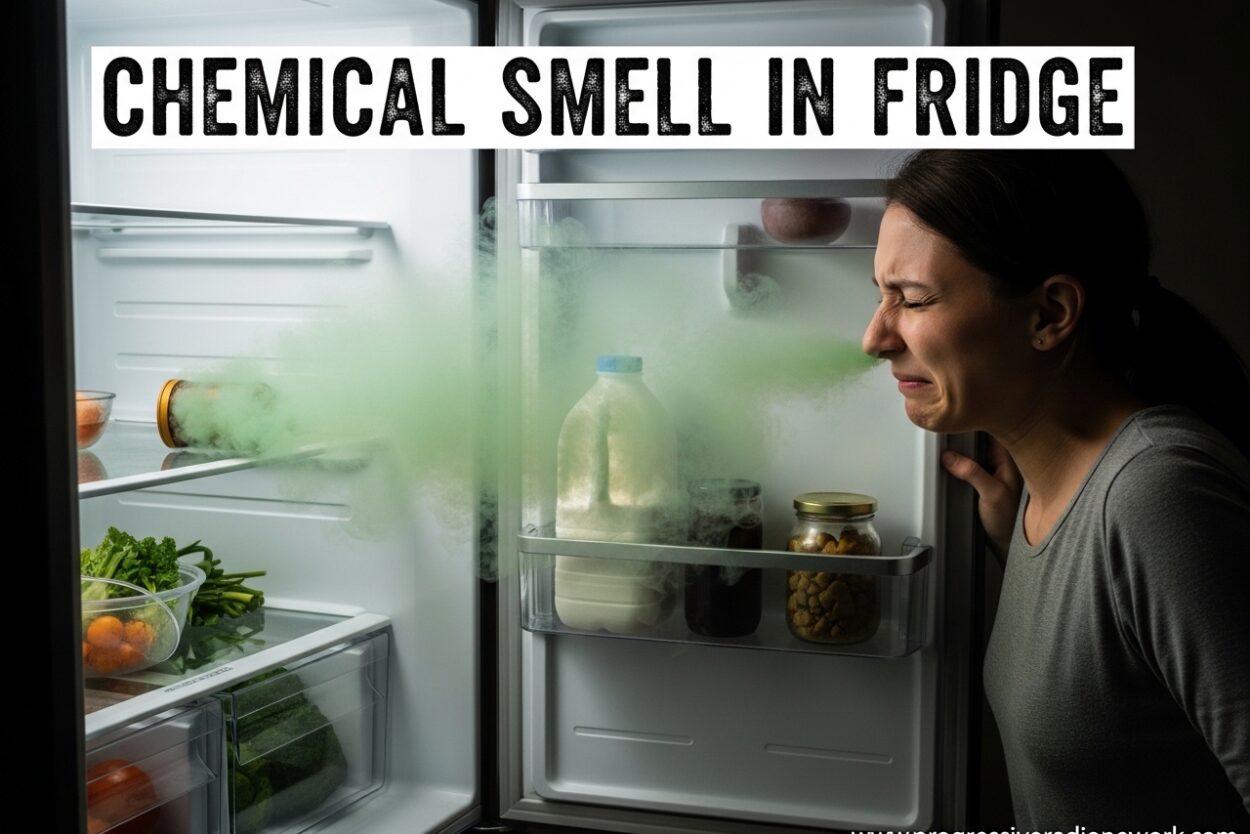
That chemical smell coming from your refrigerator is concerning, and you’re right to pay attention to it. Whether it’s a sweet, ammonia-like odor or something reminiscent of nail polish remover, unusual smells from your fridge signal something needs attention. I’ve researched this thoroughly and consulted appliance repair experts to help you identify what’s causing that chemical smell in your fridge and what you should do about it. This guide is updated for 2026.
What Does a Chemical Smell in Your Fridge Mean?
A chemical smell in your refrigerator means something is off-gassing, leaking, or breaking down inside the appliance. The specific type of chemical odor you notice can help pinpoint the cause. Sweet, chloroform-like smells often indicate a refrigerant leak, while ammonia or nail polish remover scents typically point to other issues like contaminated water filters or absorbed household chemicals. That sharp, formaldehyde-like smell some users report? That’s often caused by melting spray foam insulation in certain refrigerator models.
Refrigerant/Freon Leak: Most Urgent Cause
A refrigerant or Freon leak is the most serious cause of chemical smells in refrigerators. Modern refrigerators use sealed systems pressurized with refrigerant gas to cool your food. When this system develops a leak, the escaping gas can produce a distinctive sweet chemical odor similar to ether or chloroform. If you notice this smell along with your fridge not cooling properly, you likely have a refrigerant leak on your hands.
Common Freon leak symptoms include a sweet chemical smell that gets stronger when you open the freezer compartment, the refrigerator running continuously without reaching proper temperature, and ice buildup on the back wall inside the freezer. Some users also report a hissing sound coming from the back of the unit.
Here’s the critical safety warning: If you suspect a Freon leak, don’t ignore it. While modern refrigerants like R600a (isobutane) are less toxic than older types, any refrigerant leak indicates a serious problem that requires professional repair. Immediately move any perishable food to a cooler with ice, unplug the refrigerator, and contact an appliance repair technician. Refrigerant leaks cannot be safely fixed as a DIY project – these are pressurized systems that require specialized tools and training to repair properly.
Melting Spray Foam Insulation (Formaldehyde)
One cause that doesn’t get enough attention is melting spray foam insulation releasing formaldehyde fumes. This issue gained attention on appliance repair forums when users discovered that spray foam insulation in icemaker doors can melt due to heater malfunctions, releasing formaldehyde gas with its characteristic pungent, chemical odor. This problem has been reported in various refrigerator brands, particularly in models with through-the-door ice dispensers.
The formaldehyde smell is distinctive – sharp, irritating to eyes and throat, and unlike typical food odors. If you notice this smell specifically when your icemaker is running or immediately after dispensing ice, the insulation in the door may be the culprit. This is a repair issue that requires professional attention, as the door assembly typically needs to be replaced to fully address the problem.
Off-Gassing from New Refrigerator or Plastic Parts
If you just bought a new refrigerator, that chemical smell is likely normal off-gassing from plastic components, insulation materials, and manufacturing residues. New appliances release volatile organic compounds (VOCs) as they settle in – this is especially common in the first few weeks of use. The smell typically ranges from a sharp plastic odor to a sweet chemical scent.
New fridge off-gassing usually resolves within 2-4 weeks with proper ventilation. To speed up the process, clean the interior thoroughly with a vinegar solution, leave the door open when possible (when safe and supervised), and place bowls of baking soda or activated charcoal inside to absorb odors. If the smell persists beyond a month or gets stronger, contact the manufacturer as this could indicate a defect.
Contaminated Water Filter
For refrigerators with water dispensers and ice makers, a contaminated water filter is a frequent cause of chemical smells. Water filters that have exceeded their lifespan can accumulate bacteria and mold, producing musty or chemical odors that affect both your water and ice. The filter can also absorb and release chemicals from the water supply itself.
If you notice the smell specifically when dispensing water or ice, the water filter is likely the source. Most manufacturers recommend replacing filters every 6 months, but this varies based on water quality and usage. A simple filter replacement often eliminates the problem immediately. Be sure to flush the water system for several minutes after installing a new filter to remove any trapped air or carbon particles.
Dirty Condenser Coils or Drip Pan
The condenser coils and drip pan underneath your refrigerator can harbor mold, bacteria, and accumulated debris that produce chemical odors. The drip pan collects condensation and defrost water – when it gets dirty or stagnant, it can smell like chemicals, sewage, or rotten food. These smells can circulate back into the fresh food compartment through the air circulation system.
Cleaning under your refrigerator is an often-overlooked maintenance task. Remove the kick plate at the bottom front and vacuum any dust buildup on the condenser coils. Locate the drip pan (usually behind the kick plate or at the back), empty it, and clean it thoroughly with hot soapy water. This simple maintenance task can eliminate mysterious odors and improve your refrigerator’s efficiency.
Absorbed Household Odors
Refrigerators can absorb strong household chemicals and odors through their ventilation systems. If you’ve recently painted, used strong cleaning products, stored chemicals nearby, or had your home treated for pests, your refrigerator may have absorbed these fumes. The porous plastic interior and rubber door seals act like sponges for airborne chemicals.
Common absorbed odors include paint smells, cleaning product fumes, nail polish remover, and even pesticides. If the chemical smell coincided with household activities or seems to come from everywhere rather than a specific spot inside the fridge, absorbed odors are likely the cause. Thorough cleaning with baking soda and activated charcoal, plus improving kitchen ventilation, usually resolves this issue over time.
Non-Food Items Stored in Fridge
It seems obvious, but many people store non-food items in their refrigerators without realizing the odor consequences. Cleaning products, batteries, chemicals, and even certain cosmetics can release fumes that permeate the entire refrigerator. I’ve seen cases where someone stored nail polish or paint supplies in the fridge without considering how the cold temperatures might affect the containers or how odors would circulate.
Check your refrigerator for any non-food items and remove them. Even products in sealed containers can off-gas in the cold environment. Keep chemicals and cleaning products in a separate, well-ventilated area away from food storage spaces.
Spoiled Food or Hidden Spills
Sometimes the simplest explanation is correct – spoiled food or hidden spills can produce surprisingly chemical odors as they decompose. Foods breaking down can release ammonia, sulfur compounds, and other chemicals that smell nothing like food. The worst part? The source is often hidden behind other items, under drawers, or in hard-to-see corners.
Completely empty your refrigerator and inspect every item. Check expiration dates, look for leaking containers, and examine the underside of shelves and drawers. Pay special attention to meat juices that may have dripped into crevices, rotting produce in crisper drawers, and expired condiments that may have separated or fermented. A thorough cleaning with hot water and vinegar usually eliminates food-related odors once the source is found and removed.
How to Get Rid of Chemical Smell in Your Fridge
Once you’ve identified and addressed the source of the chemical smell, follow these steps to thoroughly eliminate odors and restore your refrigerator to a fresh, clean state:
Step 1: Remove all contents
Take everything out of your refrigerator and freezer. Discard any expired or questionable food. Store remaining items in a cooler with ice to keep them safe while you clean. This is also a good opportunity to wipe down containers that may have absorbed odors.
Step 2: Deep clean with vinegar solution
Mix equal parts white vinegar and hot water in a spray bottle. Remove all shelves, drawers, and removable parts. Wash these in the sink with hot soapy water. Spray the vinegar solution inside the refrigerator, paying special attention to corners, crevices, and the rubber door gasket. Let it sit for 10-15 minutes before wiping clean with a damp cloth. Vinegar is a natural odor neutralizer that cuts through chemical smells.
Step 3: Clean the drip pan and coils
Unplug your refrigerator and remove the kick plate at the bottom front. Vacuum dust from the condenser coils. Locate and remove the drip pan, empty it, and wash it thoroughly with hot soapy water. Let everything dry completely before reassembling.
Step 4: Replace water filter
If your refrigerator has a water filter, replace it regardless of its age. Old filters can harbor bacteria and chemicals that affect water and ice quality. Flush the new filter by dispensing water for 3-5 minutes before using.
Step 5: Use natural deodorizers
Place several bowls of baking soda throughout the refrigerator and freezer – one per shelf is ideal. You can also use activated charcoal, coffee grounds, or crumpled newspaper. These natural odor absorbers will pull remaining chemical smells from the air. Leave them in place for 24-48 hours with the refrigerator running but empty.
Step 6: Air out completely
After cleaning, leave the refrigerator door open for several hours (when safe and supervised) to allow fresh air circulation. This helps remove any lingering chemical fumes and speeds up the drying process. Once you restock, continue using baking soda as a preventative measure – an open box in the back corner will help maintain freshness.
When to Call a Professional
Situations requiring professional appliance repair include any suspected Freon or refrigerant leak, persistent chemical smells that return after thorough cleaning, ice maker or dispenser issues that might indicate melting insulation, any electrical burning smell, and refrigerators under warranty where DIY repairs might void coverage.
Professional repair costs vary significantly based on the problem. A simple water filter replacement might cost $30-50. Refrigerant leak repairs typically range from $150-300 if the leak is accessible, but can exceed $1000 if the evaporator coil needs replacement. If your refrigerator is over 10 years old and a major repair like the compressor or sealed system fails, replacement might be more cost-effective than repair.
For brand-specific issues, Samsung and Frigidaire models have had documented problems with chemical smells related to door insulation and ice maker components. Whirlpool models occasionally experience issues with contaminated air filters and drip pan problems. If you own one of these brands, mention your specific model number when calling a repair technician – they may be familiar with known issues.
Frequently Asked Questions
Why would my refrigerator smell like chemicals?
Refrigerators smell like chemicals due to refrigerant leaks, off-gassing plastic parts, contaminated water filters, absorbed household odors, or spoiled food. The specific smell type helps identify the cause – sweet chemical odors indicate Freon leaks while ammonia or nail polish smells point to other sources like water filters or household chemicals.
How to tell if a fridge is leaking Freon?
Freon leak signs include sweet chemical smell similar to chloroform, refrigerator not cooling properly, ice buildup on freezer back wall, fridge running continuously without reaching temperature, and hissing sounds from the back. If you notice these symptoms, unplug the unit and call a professional – Freon leaks require specialized repair.
Is it safe to eat food from a fridge with a Freon leak?
No. While modern refrigerants are less toxic than older types, food exposed to Freon leaks should be discarded. Refrigerant can contaminate food packaging and may have health effects if consumed. When in doubt, throw it out – your health isn’t worth the risk.
What does a Freon leak in a refrigerator smell like?
Freon leaks produce a sweet chemical odor often described as similar to chloroform, ether, or nail polish remover. The smell is distinctive from food odors and typically stronger near the freezer compartment. If you notice this unusual sweet chemical smell, investigate immediately as it indicates a potentially serious issue.
Why does my fridge smell like formaldehyde?
Formaldehyde smells in refrigerators often come from melting spray foam insulation, particularly in icemaker doors. This occurs when heating elements malfunction and melt the foam insulation, releasing formaldehyde gas. This is a known issue in certain refrigerator models and requires professional repair involving door assembly replacement.
Is a chemical smell in the refrigerator dangerous?
Some chemical smells are dangerous while others are merely unpleasant. Freon leaks require professional attention but modern refrigerants have relatively low toxicity. Formaldehyde from melting insulation is a respiratory irritant requiring immediate action. Absorbed household chemicals and spoiled food pose less danger but still need prompt removal and cleaning.
How long does new fridge off-gassing last?
New refrigerator off-gassing typically lasts 2-4 weeks with proper ventilation. The chemical smell comes from plastic components, insulation, and manufacturing residues releasing volatile organic compounds. To reduce odors, clean thoroughly with vinegar, keep the door open when safe, and use baking soda to absorb remaining smells. If odors persist beyond a month, contact the manufacturer.
Conclusion
A chemical smell in your fridge is worth investigating immediately. Some causes like Freon leaks or melting insulation require professional attention, while others like spoiled food or dirty components can be resolved with thorough cleaning. By identifying the type of chemical odor and following the appropriate steps, you can eliminate the smell and ensure your refrigerator is safe for storing food. If you’re unsure about the cause or the smell persists after cleaning, don’t hesitate to contact a professional appliance repair technician – your safety is worth the investment.



Leave a Comment