
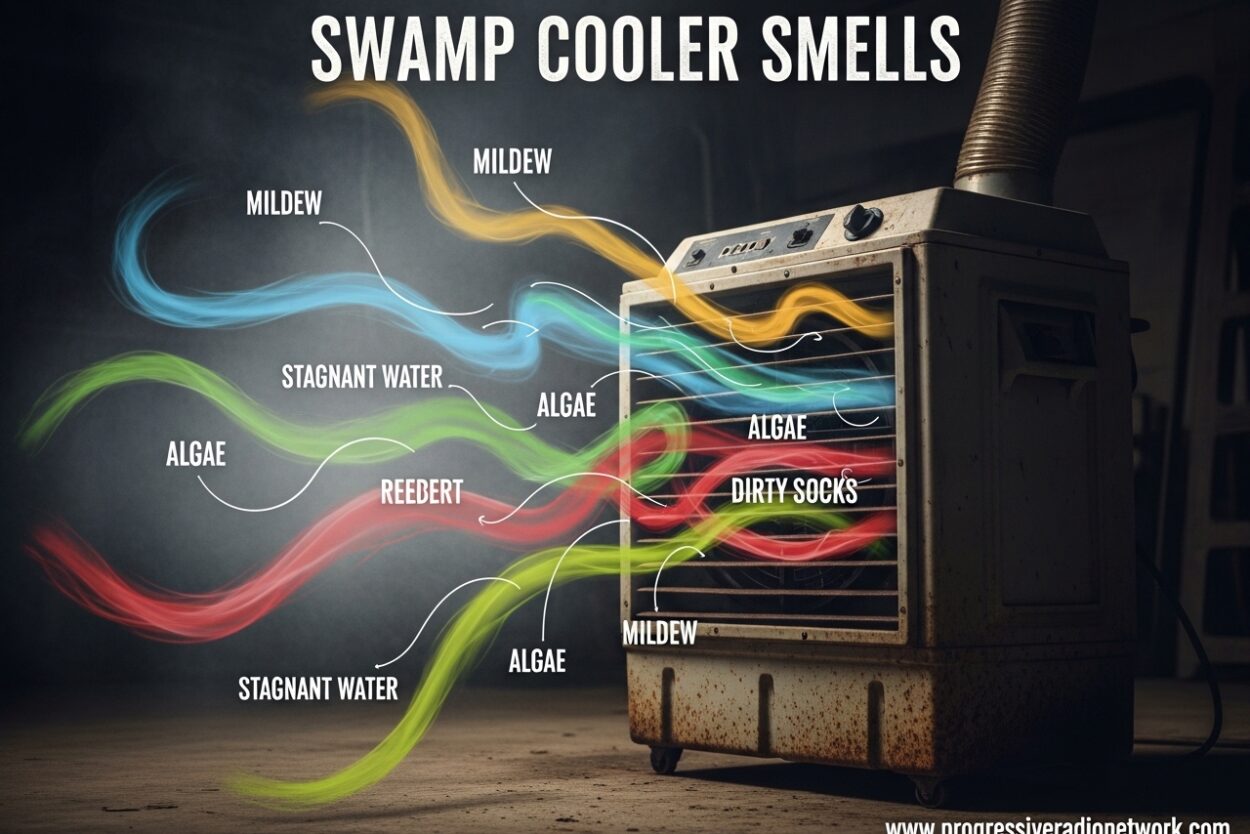
That unmistakable odor coming from your swamp cooler isn’t just unpleasant – it’s a sign something needs attention. I’ve dealt with swamp cooler smells for years, and I can tell you that most odors come down to a few common culprits you can fix yourself.
What Causes Swamp Cooler Smells
Swamp cooler smells typically develop when bacteria, mold, or mildew grow in the constantly moist environment of your evaporative cooler. The warm water and cooling pads create the perfect breeding ground for microorganisms that produce those distinctive fishy, musty, or urine-like odors.
Left untreated, these smells won’t just make your home smell bad. The bacteria and mold spores circulating through your air can aggravate allergies and respiratory issues, especially for anyone with asthma or sensitivity to airborne particles.
Common Types of Swamp Cooler Odors
Different smells point to different problems. I’ve identified four main odor types that swamp cooler owners encounter, and each has its own cause and solution.
Fishy Smell
The dreaded fishy smell is the most common complaint among swamp cooler owners. This odor comes from bacteria thriving in the stagnant water of your reservoir. When organic matter accumulates and water sits, bacteria multiply rapidly, producing that distinctive fishy odor that spreads throughout your home.
Musty or Moldy Odor
Musty smells indicate mold or mildew growth on your cooling pads. This happens when pads stay constantly wet without proper drying time, or when old pads have accumulated years of organic material. The musty odor means spores are actively growing and circulating through your ductwork.
Urine-Like Smell
Surprisingly, many new swamp cooler owners report urine-like odors. This often comes from the glue used in manufacturing new pads. The chemicals in the adhesive release a strong ammonia-like smell when first saturated with water, typically lasting 2-4 weeks before fading completely.
Wet Dog Smell
That wet dog odor comes from a combination of bacteria and mineral buildup on the pads. Hard water deposits trap organic matter and create a breeding ground for bacteria, producing that distinctive damp, musty smell reminiscent of a wet dog.
Why Swamp Cooler Smells Develop
Understanding the root causes helps prevent swamp cooler smells from returning. I’ve found three main factors contribute to odor problems in almost every case I’ve encountered.
Stagnant Water Bacteria
The water reservoir in your swamp cooler is a perfect environment for bacterial growth. When water sits for days without circulation or treatment, bacteria multiply exponentially. The pump only circulates water through the pads, but the reservoir itself remains largely stagnant, creating ideal conditions for odor-producing bacteria.
Mold and Mildew Growth
Cooling pads that never fully dry out become mold factories. The constant moisture, combined with dust, pollen, and organic debris trapped in the pad material, creates perfect conditions for mold colonies. These colonies release spores that travel through your ductwork and into your living space.
Hard Water Mineral Deposits
Hard water leaves mineral deposits that accumulate on pads and in the reservoir. These deposits create rough surfaces where bacteria can attach and grow. Over time, the mineral buildup reduces pad effectiveness and traps more organic material, accelerating odor problems.
How to Get Rid of Swamp Cooler Smell
Getting rid of swamp cooler odor requires a thorough cleaning. I’ve developed this step-by-step process over years of treating swamp coolers, and it addresses all the major odor sources at once.
Step 1: Turn Off and Disconnect Power
Safety first. Turn off your swamp cooler at the thermostat, then flip the breaker. If you have a rooftop unit, use extra caution when accessing the unit. Never work on electrical components while power is connected.
Step 2: Drain the Reservoir Completely
Locate the drain plug at the bottom of the reservoir and remove it. Let all water drain out completely. This removes most of the contaminated water and exposes the worst of the buildup for cleaning. Use a wet/dry vacuum to remove any remaining standing water.
Step 3: Remove and Inspect Cooling Pads
Take out the cooling pads and inspect them carefully. If pads are heavily coated with mineral deposits, crumbling, or more than 2-3 years old, replacement is your best option. If they’re still in decent shape, you can clean them instead.
Step 4: Scrub the Reservoir
Mix a solution of one part white vinegar to four parts hot water. Use a stiff brush to scrub the entire reservoir, paying special attention to corners and crevices where bacteria hide. The vinegar kills bacteria and helps dissolve mineral deposits. Rinse thoroughly with clean water.
Step 5: Clean or Replace Pads
For cleaning pads, spray them thoroughly with the vinegar solution and let sit for 15 minutes. Rinse with a hose until water runs clear. If replacing, choose high-quality aspen or synthetic pads designed for your unit model.
Step 6: Reassemble and Refill with Fresh Water
Put everything back together, close the drain plug securely, and refill the reservoir with fresh water. Add your chosen deodorizing treatment, turn the power back on, and run the cooler for a few minutes before opening your windows to check for any remaining odor.
DIY Swamp Cooler Deodorizer Solutions
Several household items work effectively as swamp cooler deodorizers. I’ve tested these methods extensively, and they can save you money compared to commercial products.
Vinegar Solution
Vinegar is the most effective DIY option for swamp cooler smells. Mix one cup of white vinegar with four cups of water and add it directly to your reservoir. The acidity kills bacteria and neutralizes odors without harmful chemicals. Use this solution monthly as preventive maintenance.
Baking Soda Paste
For stubborn odors in the reservoir, make a paste with baking soda and water. Apply it to heavily stained areas and let sit for 30 minutes before scrubbing. Baking soda neutralizes acidic odors and helps lift mineral deposits.
Fabric Softener Method
This community favorite works surprisingly well. Soak new cooling pads in a solution of water and a small amount of fabric softener before installing them. The coating helps prevent bacterial growth and leaves a fresh scent. Use sparingly – too much can leave a sticky residue.
Chlorine Tablet Option
Adding a chlorine toilet tablet to the reservoir weekly can significantly reduce bacterial growth. However, be aware this will make your air smell slightly like chlorine. This method works well but isn’t ideal if you’re sensitive to chlorine odors.
Commercial Swamp Cooler Cleaner and Deodorizer Options
Commercial products can be effective when DIY solutions aren’t enough. I’ve found these options work best for stubborn odor problems.
Swamp Cooler Deodorizer Tablets
These tablets dissolve slowly in the reservoir, continuously releasing bacteria-killing chemicals. Most contain chlorine or bromine compounds specifically formulated for evaporative coolers. They’re convenient but require regular replacement.
Algaecide Treatments
Algaecide prevents algae and bacterial growth in the water. Available in liquid or tablet form, these products work best when used preventatively rather than as a treatment for existing odors. Add them monthly during the cooling season.
Enzymatic Cleaners
Enzyme-based cleaners break down organic matter that feeds bacteria. These are particularly effective for removing the source of odors rather than just masking them. They’re safe for all components and environmentally friendly.
New Swamp Cooler Pad Smell Issues
New swamp cooler pads often smell worse than old ones, but this is usually temporary. I frequently hear from frustrated swamp cooler owners who just replaced their pads only to experience stronger odors than before.
The culprit is the adhesive used to bond pad materials together. When first saturated, this glue releases chemicals that produce a strong ammonia or urine-like odor. The good news? This smell typically fades within 2-4 weeks of regular use as the adhesive fully cures and the chemicals dissipate.
If the smell persists beyond a month, contact the manufacturer – some pad batches have defective adhesive that takes longer to off-gas. In the meantime, increased ventilation and running the cooler more frequently can help speed the process.
How to Prevent Swamp Cooler Smells
Prevention is much easier than treatment. I’ve learned that maintaining a regular maintenance schedule prevents most swamp cooler odor problems before they start.
Monthly Maintenance During Season
Once a month during cooling season, drain and refill the reservoir with fresh water. Add your preferred deodorizing treatment. This prevents the stagnant conditions bacteria need to thrive. A few minutes monthly saves hours of deep cleaning later.
Annual Pad Replacement
Replace cooling pads annually, even if they still look okay. The internal structure accumulates bacteria and minerals that you can’t see or clean away. Mark your calendar for the start of each cooling season to make this routine.
Proper Winterization
At the end of each season, winterize properly to prevent spring odors. Drain the reservoir completely, clean thoroughly, remove and dry the pads, and leave the unit open to air dry. This prevents mold growth during the off-season and ensures a fresh start next year.
Water Quality Considerations
Hard water accelerates mineral buildup and bacterial growth. If you have extremely hard water, consider using distilled water for refills or installing a water softener. The small cost is worth it for the extended life of your pads and reduced odor problems.
Proper Pad Drying Time
Allow pads to dry completely between uses when possible. Running the pump without the fan for 10 minutes after turning off the cooler helps drain excess water from pads, reducing the constant moisture that bacteria need.
Frequently Asked Questions
How to get rid of smell from swamp cooler?
Drain the reservoir completely and scrub with a vinegar solution (1 part vinegar to 4 parts hot water). Remove and clean or replace cooling pads. Refill with fresh water and add a deodorizing treatment. Monthly maintenance prevents odors from returning.
Why is my brand new swamp cooler giving off a fishy smell?
New swamp cooler pads often smell due to the adhesive used in manufacturing. The glue releases ammonia-like chemicals when first saturated with water. This smell is temporary and typically fades within 2-4 weeks of regular use as the adhesive cures completely.
Can you run vinegar through a swamp cooler?
Yes, vinegar is safe and effective for swamp coolers. Mix one cup of white vinegar with four cups of water and add it to the reservoir. Run the cooler for 15-20 minutes to circulate the solution through the system, then drain and refill with fresh water.
What can I put in my swamp cooler to make it smell better?
Several options work well: white vinegar solution (kills bacteria), fabric softener (soak pads before installing), chlorine tablets (prevents bacterial growth), or commercial deodorizer tablets specifically made for evaporative coolers.
Are swamp cooler smells dangerous?
Swamp cooler smells indicate bacteria, mold, or mildew growth which can pose health risks. The spores and bacteria circulating through your air can aggravate allergies, asthma, and respiratory conditions. Those with compromised immune systems or respiratory issues should address odors promptly.
How often should I replace swamp cooler pads?
Replace swamp cooler pads annually at the start of each cooling season. Even if pads appear intact, they accumulate bacteria and minerals internally that cause odors and reduce efficiency. Mark your calendar to make this routine maintenance.
Conclusion
Swamp cooler smells don’t have to be a recurring problem. With regular monthly maintenance, annual pad replacement, and proper winterization, you can keep your evaporative cooler smelling fresh all season long.
Remember that persistent odors after thorough cleaning may indicate a deeper problem. If you’ve tried everything and still can’t eliminate the smell, it might be time to call a professional. Sometimes internal components like the pump or distribution tubes harbor hidden bacteria that require professional cleaning or replacement.
Most swamp cooler smells are manageable with the right approach. Start with the vinegar cleaning method, establish a regular maintenance schedule, and enjoy cool, fresh air from your evaporative cooler all summer long.


Leave a Comment