
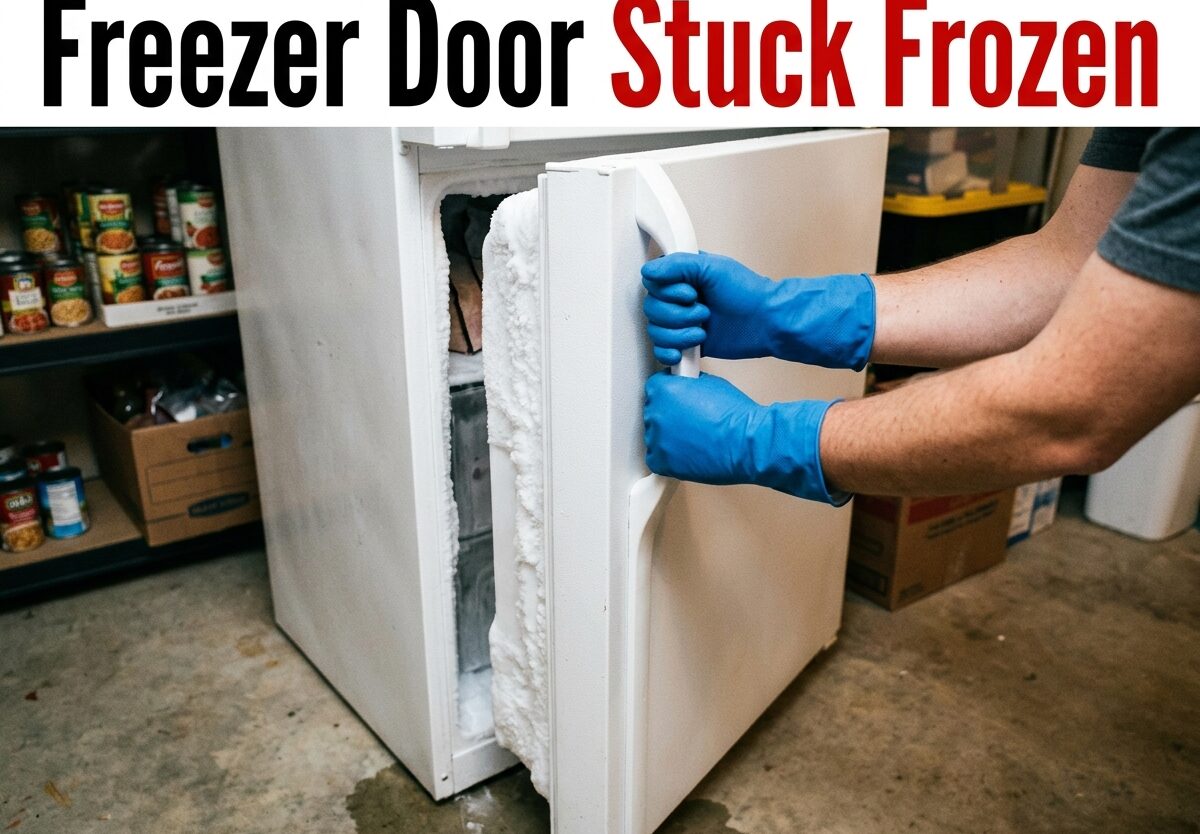
You go to grab something from the freezer, and the door won’t budge. It’s completely stuck frozen shut. This frustrating problem happens to almost everyone at some point, and understanding why it occurs can help you prevent it in the future.
A freezer door stuck frozen is usually caused by a vacuum seal effect that creates negative pressure inside the freezer compartment. When warm, moist air enters your freezer and rapidly cools, it contracts and creates lower air pressure. The stronger your door seal, the stronger this suction effect becomes. This is actually a sign that your freezer seals are working properly, though it can be incredibly inconvenient.
Why Your Freezer Door Gets Stuck
The vacuum seal effect is the primary culprit behind freezer doors that refuse to open. Here’s what happens: when you open your freezer door, warm air from your kitchen enters the compartment. When you close the door, that warm air rapidly cools and contracts, creating negative pressure inside. The door gasket forms an airtight seal, and the pressure difference makes the door difficult to open.
This effect is most noticeable in newer freezers with tight seals and after the defrost cycle completes. The defrost cycle warms the freezer slightly, then it cools back down rapidly, creating even stronger negative pressure. High humidity in your home can make this problem worse because more moisture enters the freezer when you open the door.
Sometimes the issue isn’t just vacuum pressure. Ice buildup around the door gasket, frozen defrost drains, or damaged door seals can also cause your freezer door to become stuck. Understanding which problem you’re dealing with helps you choose the right solution.
Quick Fixes to Open a Frozen Freezer Door
Method 1: Wait 60 Seconds
The simplest solution is often the most effective. Just wait. The vacuum seal will naturally equalize over time as small amounts of air leak in around the gasket. After about 60 seconds, try opening the door again with steady, even pressure.
Method 2: Break the Seal Gently
Use your fingers to gently pull back the door gasket at one corner. This breaks the vacuum seal by allowing air to enter the freezer compartment. Once you hear a slight whooshing sound, the pressure has equalized and the door should open normally. Be careful not to damage the gasket while doing this.
Method 3: Warm Water Technique
Dip a cloth in warm (not hot) water and run it along the door seal where the gasket meets the freezer frame. The warmth helps melt any ice buildup and can also help equalize the pressure faster. Avoid using boiling water as it can damage the gasket material and create thermal stress on the freezer door.
Method 4: Hair Dryer Method
Set a hair dryer to low heat and blow warm air around the door seal for 2-3 minutes. Keep the dryer at least 6 inches away from the gasket to prevent damage. This method works well when ice has formed along the seal, but be careful not to overheat the gasket material or melt any plastic components.
Method 5: Unplug and Defrost
For stubborn cases where the door has been frozen shut for hours, you may need to unplug the freezer and let it defrost completely. This can take 24-48 hours depending on how much ice has built up. Prop the door open slightly once it becomes movable to prevent refreezing. This is also a good opportunity to clean the freezer and check the defrost drain for clogs.
What NOT to Do
Never force the door open. Using excessive force can damage the door hinges, tear the gasket, or even break the door handle. I’ve seen people use tools to pry frozen doors open, but this almost always causes damage that costs far more to repair than the inconvenience of waiting for the freezer to defrost naturally.
Avoid using sharp objects like knives or screwdrivers to chip away ice. You can easily puncture the freezer liner, damage the evaporator coils, or create leaks that will require professional repair. If your freezer door has been stuck for more than a few hours, it’s better to unplug the unit and let it defrost properly than to risk permanent damage.
Preventing Freezer Door Sticking
Regular maintenance can prevent most freezer door sticking issues. Clean your door gasket monthly with warm soapy water to remove food residue and debris that can prevent proper sealing. Inspect the gasket for cracks, tears, or areas where it has become compressed and no longer springs back to its original shape.
Apply a thin layer of petroleum jelly to the door gasket every few months. This keeps the rubber flexible and helps maintain a proper seal without creating excessive vacuum pressure. Use a clean cloth to apply a small amount of jelly along the entire length of the gasket, then wipe away any excess.
Check that your freezer is level. An unlevel freezer can cause the door to bind or not seal properly, which ironically can lead to both air leaks and vacuum seal problems. Use a bubble level on top of the freezer and adjust the leveling legs as needed.
Keep humidity levels in your home moderate, especially near the freezer. High humidity means more moisture enters the freezer when you open the door, leading to more frost buildup and stronger vacuum effects. If you live in a humid climate, consider using a dehumidifier near your refrigerator-freezer.
Brand-Specific Tips
Whirlpool Freezer Drawer Issues
Whirlpool bottom-freezer models are prone to ice buildup in the drawer rails. If your Whirlpool freezer drawer is frozen shut, check the drain hole at the back of the freezer compartment. A clogged drain causes water to pool and refreeze in the drawer track. Clean the drain with a pipe cleaner or turkey baster filled with warm water.
Samsung Bottom Freezer Problems
Samsung refrigerators sometimes experience door sticking due to a faulty door cam or worn door hinge. If your Samsung freezer door is stuck and the quick fixes don’t work, inspect the door hinge assembly for wear. Some Samsung models also have a vacuum breaker device that can fail, requiring professional replacement.
Frigidaire Seal Maintenance
Frigidaire freezers use a magnetic door seal that can lose strength over time. Test your seal by closing the door on a dollar bill and pulling it out. If it slides out easily, your seal may need replacement. Frigidaire also recommends checking the door closer cam, which helps properly align the door when closing.
Frequently Asked Questions
How to unstick a frozen freezer door?
Start by waiting 60 seconds for pressure to equalize. If that doesn’t work, gently pull back the door gasket at one corner to break the vacuum seal. For stubborn cases, use warm water on a cloth around the seal or unplug the freezer and let it defrost for 24-48 hours.
How long will a freezer stay frozen if you don’t open the door?
A full freezer will stay frozen for approximately 48 hours if the door remains closed. A half-full freezer will stay frozen for about 24 hours. This is why it’s important to keep your freezer reasonably full if you experience frequent power outages.
How to lubricate a freezer door?
Apply a thin layer of petroleum jelly to the door gasket using a clean cloth. Spread it evenly along the entire seal, then wipe away any excess. This keeps the rubber flexible and helps maintain proper sealing without excessive vacuum pressure. Repeat this every 2-3 months.
How to defrost a freezer in 10 minutes?
While a complete defrost takes 24-48 hours, you can speed up the process significantly by placing bowls of boiling water inside the freezer and closing the door. The steam helps melt ice quickly. Change the water every 5-10 minutes and use towels to soak up melting ice. Never use sharp tools to chip away ice.
Conclusion
A freezer door stuck frozen is a common annoyance that happens to almost everyone. The vacuum seal effect that causes this problem is actually a sign that your freezer is working properly, though it can be frustrating when you need quick access to your frozen foods. By understanding why this happens and using the gentle methods outlined above, you can safely open your freezer without causing damage.
Regular maintenance like cleaning the door gasket, applying petroleum jelly, and checking that your freezer is level can prevent most sticking issues. If you continue to experience problems despite these measures, it may be time to have a professional inspect your door seal, defrost system, or other components that could be contributing to the issue.
Remember: patience is your best tool when dealing with a stuck freezer door. Taking a few minutes to properly address the problem is always better than forcing the door and causing expensive damage that could have been avoided.

Leave a Comment