
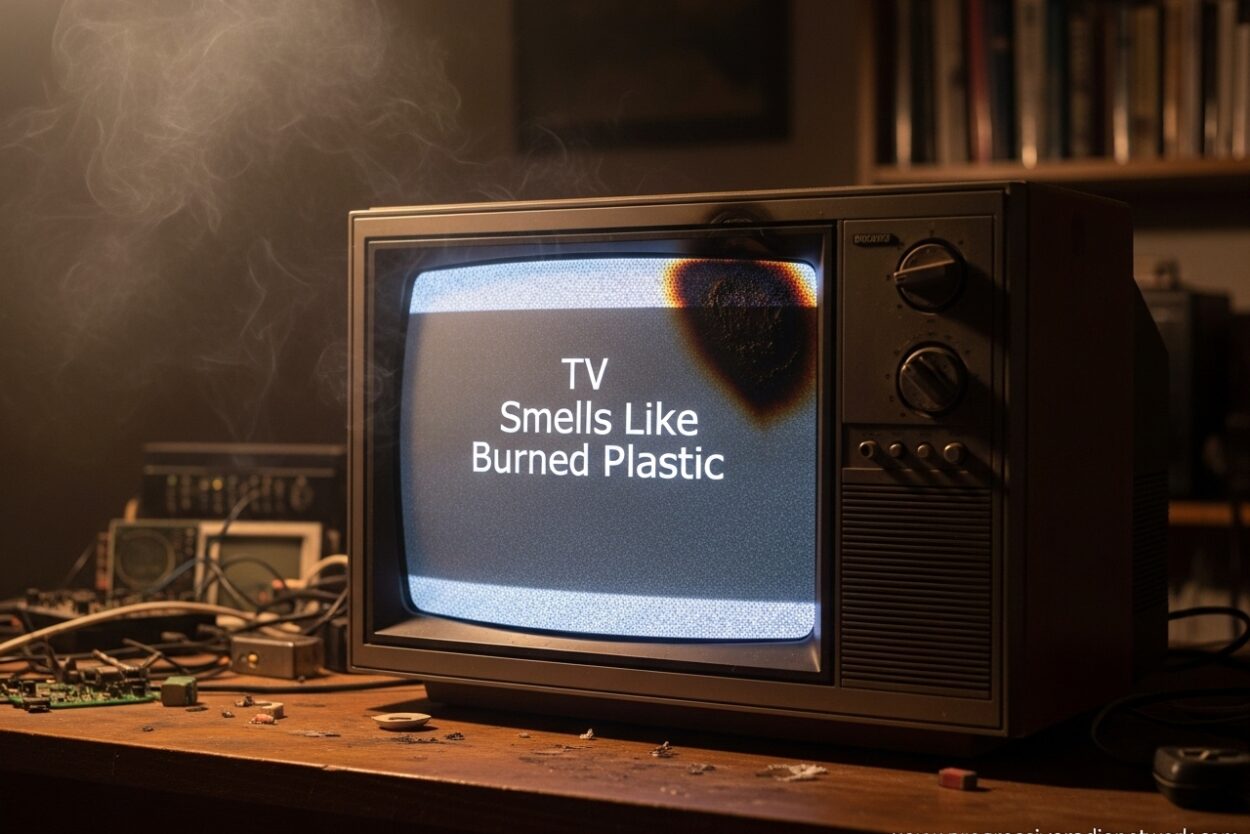
That unmistakable burning plastic smell coming from your television sends a wave of concern through any homeowner. I’ve been there, and I know how alarming it can be to suddenly catch that acrid chemical odor wafting from your entertainment center. Before you panic, let me walk you through what’s happening, when it’s dangerous, and exactly what you should do next.
A TV that smells like burned plastic can indicate anything from normal new electronics off-gassing to serious electrical failures that pose fire risks. After researching hundreds of user cases and consulting with electronics repair specialists, I’ll help you quickly assess your situation and take the right action. Your safety comes first, and by the end of this guide, you’ll know whether your TV just needs some ventilation adjustment or if it’s time to unplug it permanently.
Why Does My TV Smell Like Burned Plastic?
The burning plastic smell from your TV typically originates from one of several sources, each with different levels of severity. Understanding which one you’re dealing with helps determine your next steps.
Capacitor failure ranks as the most common serious cause. When capacitors on your TV’s power board or mainboard fail, they can leak electrolyte fluid that heats up and creates that unmistakable burning plastic odor. This usually happens in TVs over 3-5 years old and often accompanies other symptoms like picture issues, sound problems, or the TV not turning on properly.
Dust accumulation creates another frequent source of burning smells, especially in older TVs. Dust settles inside your television around heat-generating components, and when it gets hot enough, it essentially burns off, releasing an odor similar to burning plastic or hair. This tends to happen after long viewing sessions or when the TV hasn’t been cleaned in years.
New TV off-gassing represents a normal and harmless cause. Brand-new televisions release volatile organic compounds (VOCs) from manufacturing materials, adhesives, and plastic coatings during their first few weeks of operation. Sony and other manufacturers officially state this is normal and typically resolves within 2-3 weeks with regular use.
Overheating components like transformers, LED backlights, or voltage regulators can produce burning plastic smells when they malfunction. These problems often stem from blocked ventilation, running the TV for extended periods, or internal component failures that cause parts to run hotter than designed.
Electrical arcing creates the most dangerous burning plastic smell and indicates an active electrical problem. When electricity jumps between connections it should not, it superheats plastic insulation and components, creating both an acrid smell and potential fire hazard. This requires immediate action.
Is a Burning Plastic Smell From Your TV Dangerous?
The danger level depends entirely on the source of the smell. Let me break down what’s safe, what’s concerning, and what’s an emergency.
Harmless situations: New TVs emitting slight chemical or plastic odors during the first few weeks typically represent normal off-gassing. If your TV is brand new, the smell dissipates over time, and you notice no other issues, this falls within normal operating parameters according to major manufacturers.
Potentially concerning: Persistent burning plastic smells from older TVs, especially if accompanied by picture degradation, sound issues, or the TV running hotter than normal, suggest component failure. While not immediate fire hazards, these problems worsen over time and require professional assessment.
Dangerous – Act Immediately: If you notice any of these signs, unplug your TV right away: visible smoke, sparks, the smell getting stronger over time, the TV shutting off unexpectedly, or any discoloration/melting on the TV casing. These symptoms indicate active electrical problems that could lead to fire.
Regarding health implications, burning plastic fumes contain potentially toxic compounds including styrene, benzene, and formaldehyde depending on the materials involved. Short-term exposure may cause headaches, dizziness, or respiratory irritation. Long-term exposure to burning electronics fumes carries more serious health risks, making prompt identification and resolution important.
TV Smells Burned Plastic: Immediate Safety Steps
When you first notice that burning plastic smell, follow these steps immediately to ensure your safety and gather information about the problem.
Step 1: Turn off and unplug immediately. Don’t wait to finish your show or record something. Hit the power button and remove the plug from the wall outlet. This eliminates electrical current flow and prevents any potential short circuits or overheating from continuing.
Step 2: Check for visible signs of trouble. Look closely at your TV for any smoke, sparks, or glowing areas. Examine the vents, back panel, and power cord area for discoloration, melting, or burn marks. If you see any of these signs, do not plug the TV back in – it needs professional repair or replacement.
Step 3: Assess the environment. Check that your TV has proper ventilation. Ensure at least 4 inches of clearance on all sides, and verify nothing is blocking the rear vents. Note the room temperature – hot rooms contribute to TV overheating. Also check if the smell seems to come from the TV itself or perhaps from another device nearby like a cable box, soundbar, or gaming console.
Step 4: Wait and monitor. Leave the TV unplugged for at least 30 minutes. During this time, the smell should dissipate if it was caused by temporary overheating. While waiting, check if any other household devices show problems – sometimes burning smells transfer through power strips or shared electrical circuits.
Step 5: Test cautiously. After the waiting period, if you saw no visible damage, plug the TV back in and turn it on from a safe distance. Stay alert for the smell returning. If it doesn’t return within 15-20 minutes of normal operation, you might have experienced a temporary issue. If the smell comes back, especially quickly, keep the TV off and call a professional.
How to Diagnose the Source of the Smell
Pinpointing the source helps determine whether you’re dealing with a minor issue or something requiring professional repair. Here’s how to diagnose without opening your TV (which I don’t recommend unless you’re trained in electronics repair).
New TV diagnosis: If your television is less than one month old and the smell is mild and chemical-like rather than acrid burning, it’s likely normal off-gassing. This should improve with each use and typically resolves completely within 2-4 weeks. If the smell is strong or persists beyond a month, contact the manufacturer – it could indicate a defect.
Older TV diagnosis: For televisions over 2-3 years old, burning plastic smells usually indicate component failure. Note when the smell occurs – if it happens immediately upon turning on, it suggests power board issues. If it develops after hours of use, overheating or dust buildup might be the cause. Pay attention to whether certain activities trigger it, like gaming or watching 4K content that generates more heat.
Location-based diagnosis: Try to identify where specifically the smell originates. Rear vent smells typically indicate power supply or mainboard issues. Smells from the bottom suggest speaker problems or dust accumulation on lower components. Side smells might point to ventilation or LED backlight issues in edge-lit displays.
Symptom correlation: Connect any other issues you’ve noticed with the smell. Picture problems like flickering, dimming, or colored lines alongside burning odors suggest serious panel or board failures. Sound issues combined with smells might indicate speaker problems or audio component failures. Random shutdowns with burning smells point directly to overheating protection activating due to component failure.
Common Causes and Severity Levels
Understanding the severity of different causes helps you make informed decisions about repairs versus replacement and whether immediate action is necessary.
Low severity – Normal off-gassing: New TVs, especially larger models with more plastic components, emit chemical odors during the first few weeks as manufacturing materials cure and release VOCs. This is completely normal according to Sony, LG, Samsung, and other major manufacturers. The smell should gradually decrease over 2-4 weeks and disappears completely with proper ventilation and regular use.
Medium severity – Dust buildup: TVs used for several years without cleaning accumulate dust inside around heat-generating components. When this dust heats up, it produces a smell similar to burning hair or plastic. This issue is relatively simple to address through professional cleaning, and preventive measures like keeping the area clean and ensuring proper ventilation can prevent recurrence.
High severity – Component failure: Failed capacitors, damaged power boards, or malfunctioning LED backlights create persistent burning plastic smells that indicate serious internal problems. These issues typically worsen over time and can lead to complete TV failure. Professional repair costs often range from $150-400 depending on the TV size and specific problem, which may not make economic sense for older or smaller sets.
Critical severity – Electrical arcing: When electricity jumps between improper connections, it superheats materials and creates both strong burning plastic smells and potential fire hazards. This dangerous condition requires immediately unplugging the TV and not using it again until professionally repaired or replaced. Arcing often produces visible signs like burn marks or discoloration on the TV exterior or power cord.
Repair vs Replace: Making the Right Choice
Once you’ve identified the likely cause, deciding whether to repair or replace comes down to several factors including your TV’s age, the repair cost, and the severity of the problem.
Age considerations: TVs under 2 years old often qualify for warranty service, making repair the obvious choice. Units 3-5 years old might justify repair depending on the original cost and problem severity. Televisions over 6-7 years old usually make more financial sense to replace rather than repair, especially given the technology improvements and energy efficiency gains in newer models.
Repair cost estimates: Minor issues like power board problems typically cost $150-250 to repair professionally. More serious problems like panel failures can cost $400-600, which often exceeds the value of older TVs. Always get a detailed quote before approving repairs – some issues like simple capacitor replacements might cost under $100, while comprehensive board replacements approach replacement cost.
Replacement factors: Consider replacement if your TV is over 5 years old, the repair exceeds 50% of a new TV’s cost, or you’ve been considering upgrading anyway. Modern TVs offer significantly better picture quality, smart features, and energy efficiency than models from just 5 years ago, making replacement more attractive when significant problems develop.
Brand-specific notes: Samsung TVs from 2016-2019 had known capacitor issues that sometimes caused burning smells – check if your model qualifies for their extended warranty programs. LG OLED owners experiencing burning smells should contact LG immediately due to known panel issues. Vizio and other budget brands often have higher failure rates in power boards, making replacement more economical than repair for models over 3 years old.
Prevention Tips to Avoid Future Issues
Once you’ve resolved your current burning plastic smell issue, these preventive measures help avoid recurrence and extend your TV’s lifespan.
Proper ventilation setup: Ensure at least 4 inches of clearance on all sides of your TV, with special attention to rear vents. Avoid enclosed cabinets without active ventilation. If you must place your TV in a cabinet, install small exhaust fans or keep the doors open during operation. Never cover vents with decorative items or place the TV directly against walls.
Regular cleaning routine: Dust your TV weekly with a microfiber cloth, paying special attention to vents. Use compressed air to clear dust from vents every 2-3 months. Keep the area around your TV clean and dust-free. Consider air purifiers in dusty environments to reduce overall particle accumulation in electronics.
Surge protection: Quality surge protectors prevent electrical damage from power fluctuations that can stress components. Replace surge protectors every 2-3 years or after significant power events. Consider whole-home surge protection for comprehensive coverage of all electronics.
Usage management: Avoid leaving your TV on 24/7. Most modern TVs have screen savers and sleep modes – enable these features. Give your TV breaks during marathon viewing sessions. Consider using a smart plug to schedule automatic power cycles, which also helps with software updates and memory management.
FAQ
Why does my TV smell like burning plastic?
Your TV likely smells like burning plastic due to capacitor failure, dust accumulation burning off, overheating components, or for new TVs, normal off-gassing of manufacturing materials. The most common serious cause is failed capacitors on the power board or mainboard that leak electrolyte fluid and create burning odors when heated.
Is it safe to use a TV that smells like burning plastic?
No – if your TV smells like burning plastic, unplug it immediately until you identify the cause. While new TVs may have harmless off-gassing smells, burning odors from older TVs typically indicate component failure that poses fire risks. Never continue using a TV with persistent burning smells, especially if accompanied by picture issues, shutdowns, or visible smoke.
How long does new TV smell last?
New TV smells typically last 2-4 weeks with regular use and proper ventilation. The chemical odor comes from manufacturing materials releasing volatile organic compounds (VOCs) – a normal process called off-gassing. If the smell persists beyond one month or seems unusually strong, contact the manufacturer as this could indicate a defect rather than normal curing.
Can a TV catch fire from smelling like burning plastic?
Yes – a burning plastic smell can indicate electrical problems like arcing or component failure that may lead to fire. While not every burning smell means imminent fire, it’s a warning sign that requires immediate attention. Unplug the TV if you notice the smell getting stronger, see smoke or sparks, or experience random shutdowns.
What causes a burning plastic smell from a TV?
Burning plastic smells originate from overheated electrical components, failed capacitors leaking fluid, dust accumulation burning off, or plastic insulation melting from electrical arcing. New TVs may also emit chemical odors from manufacturing off-gassing. Location of the smell (vents, back, bottom) helps identify which component is causing the issue.
Should I unplug my TV if it smells like burning?
Yes – immediately unplug your TV if you smell burning plastic or electronics. Remove the plug from the wall outlet, not just turn off the TV. Do not use the TV again until you’ve identified the cause and either confirmed it’s safe (like new TV off-gassing) or had it professionally repaired. Electrical fires can start even when the TV appears turned off.
How much does it cost to fix a TV with burning smell?
TV repair costs for burning smell issues range from $150-400 depending on the problem. Simple power board repairs cost around $150-250, while panel replacements can reach $400-600. Always get a quote first – for TVs over 5 years old, replacement often makes more financial sense than repair, especially given improvements in newer models.
Is the burning plastic smell from a TV toxic?
Burning plastic fumes from TVs can contain toxic compounds including styrene, benzene, and formaldehyde depending on which materials are overheating. Short-term exposure may cause headaches, dizziness, or respiratory irritation. While brief exposure isn’t usually dangerous, identify and fix the source promptly to avoid potential health risks from continued exposure.
Conclusion
A burning plastic smell from your TV demands attention, but not all situations require panic. New TVs emitting mild chemical odors typically represent normal off-gassing that resolves within weeks. However, persistent burning smells from older TVs often indicate component failure that requires professional assessment and repair to ensure safety.
Remember these key points: always unplug immediately if you notice smoke, sparks, or intensifying smells. Don’t continue using a TV with persistent burning odors hoping it will resolve on its own – electrical problems worsen over time. For TVs over 5 years old with serious issues, replacement often makes more financial sense than repair.
Your safety matters more than any television. If you’re uncertain about the cause or uncomfortable assessing the situation yourself, contact a professional technician or the manufacturer’s support line. Most manufacturers offer diagnostic services and can help determine whether your TV needs repair, replacement, or simply more ventilation during the break-in period.





Leave a Comment