
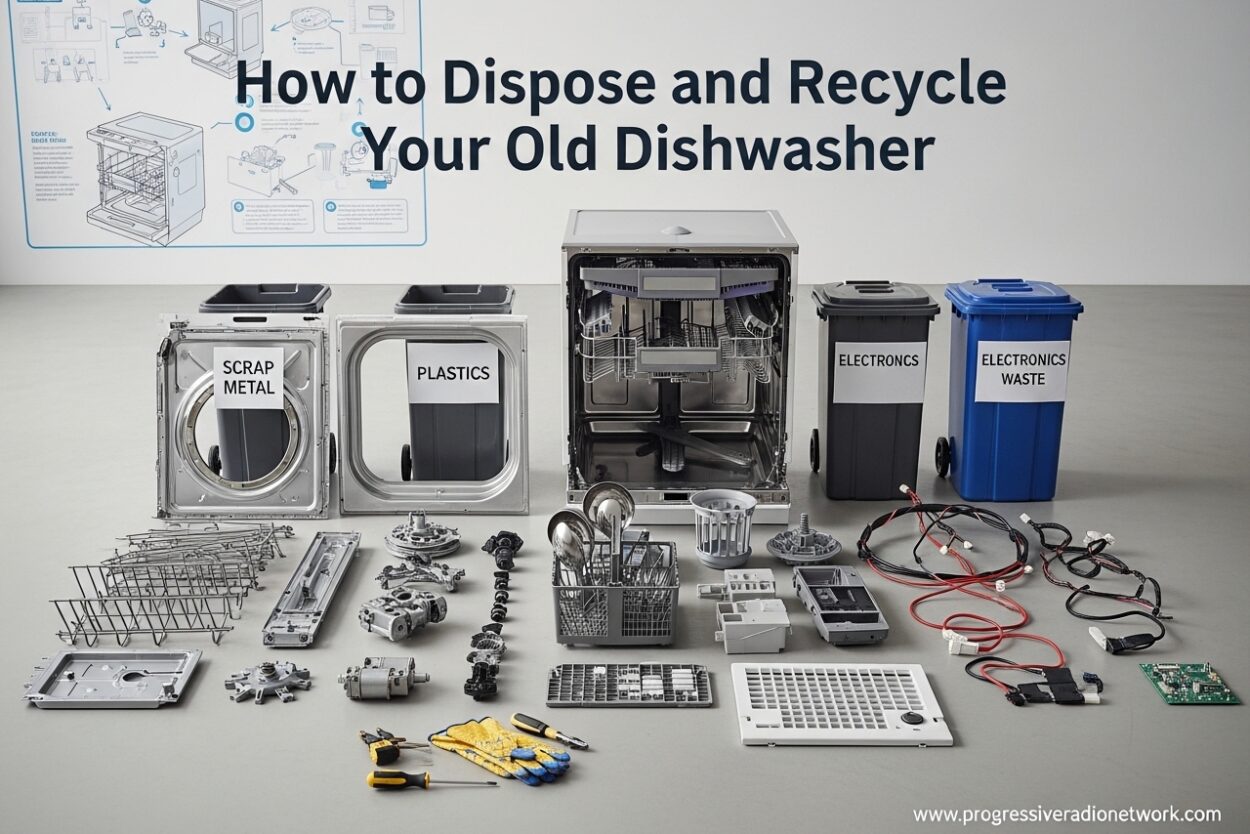
Replacing your dishwasher is exciting until you’re staring at a 100-pound appliance you need to get rid of. I’ve been there—standing in my kitchen with a shiny new dishwasher installed, wondering what to do with the old one taking up space. Proper dishwasher disposal isn’t just about clearing space; it’s about environmental responsibility and following local regulations. This guide covers every option for how to dispose and recycle your dishwasher, from free municipal pickup to selling it for cash.
Assess Your Dishwasher Condition First
Before choosing a disposal method, determine if your dishwasher still works. A functioning appliance has more options than a broken one. I recommend testing the basic cycles first—run a quick wash cycle and check for leaks, unusual noises, or cleaning performance.
Consider the age of your dishwasher too. Models over 10 years old might not be worth donating, but they still contain valuable scrap metal. Energy Star-certified units from the last decade are more appealing to donation centers and potential buyers.
Ask yourself if repair is worth the investment. A $300 repair bill on a 15-year-old machine rarely makes financial sense. When repair costs exceed 50% of a new dishwasher’s price, replacement is usually the smarter choice.
How to Prepare Your Dishwasher for Disposal
Proper preparation makes any disposal method easier and safer. I learned this the hard way after water spilled everywhere during my first dishwasher removal attempt. Follow these steps before your pickup or drop-off:
Step 1: Turn off the water supply. Locate the shut-off valve under your sink and turn it clockwise until tight. This prevents flooding when you disconnect the water line.
Step 2: Disconnect the water line. Use an adjustable wrench to loosen the supply line connection. Have a towel or small bucket ready—some water will drain out. I keep a shallow baking pan under the connection to catch spills.
Step 3: Unplug the power. Most dishwashers plug into an outlet under the sink. If yours is hardwired, turn off the breaker at your electrical panel first. Never attempt electrical work without confirming the power is off.
Step 4: Remove the drain line. This connects to your garbage disposal or drain pipe. Loosen the clamp with pliers and pull it free. You might encounter some standing water here, so keep that towel handy.
Step 5: Clean the interior. Wipe down the inside and remove any racks or utensil holders. Donation centers appreciate clean appliances, and it prevents odors during transport.
Donation Options for Working Dishwashers
If your dishwasher still cleans dishes well, donation is the most rewarding disposal option. Your old appliance could help a family in need while providing you with a tax deduction. I’ve donated several appliances over the years, and the process is straightforward once you know where to go.
Habitat for Humanity ReStore is my top recommendation for appliance donations. They accept working dishwashers less than 10 years old and offer free pickup in many areas. Call your local ReStore first—requirements vary by location. The best part? You’ll receive a tax receipt for the appliance’s fair market value.
The Salvation Army and Goodwill are other established donation options. Both offer pickup services for large appliances, though scheduling can take 1-2 weeks. I’ve found that calling early in the week usually yields better availability.
Local charities and homeless shelters often need appliances for their housing programs. Women’s shelters, veteran’s organizations, and religious charities frequently accept working appliances. Call ahead to confirm they currently accept dishwashers—storage space can be limited.
Selling Your Used Dishwasher
Why not make some money from your old dishwasher? If it’s under 7 years old and in good working condition, selling is a viable option. I’ve sold three used appliances over the years, typically recovering 15-25% of the original purchase price.
Facebook Marketplace is the easiest platform for local appliance sales. Take clear photos showing the interior and exterior, mention the brand and model number, and be honest about any cosmetic issues. I always include a video demonstrating the dishwasher running—a 30-second clip builds trust and answers most questions upfront.
Craigslist still works for appliance sales, though I’ve found it less user-friendly than Facebook. List your dishwasher in the “appliances” section with detailed specifications. Set your price at 20-30% below retail for similar models to attract quick buyers.
Pricing depends on age and condition. A 3-year-old Bosch might sell for $200-300, while a 10-year-old basic model might only fetch $50-75. Check completed listings to see what similar dishwashers are actually selling for, not just what people are asking.
When buyers come to pick up, have a helper present. Never let strangers enter your home alone. I usually bring the dishwasher to the garage or ground floor before the buyer arrives—it saves awkward carrying conversations and is safer for everyone involved.
Local Recycling Programs and Municipal Options
Municipal recycling programs are the most common disposal method for broken dishwashers. Most cities offer bulk waste collection for large appliances, though scheduling and fees vary widely. I’ve used municipal pickup in three different cities, and each had a different process.
Start by calling your local waste management department or checking their website. Many municipalities offer one free bulky item pickup per year. Schedule your pickup at least 2 weeks in advance—slots fill up quickly, especially at month-end when people are moving.
Some cities require you to bring the appliance to a transfer station or recycling center. This DIY option saves money but requires a truck and some heavy lifting. I’ve done this twice—bring a friend and some moving straps. The process usually takes 30-60 minutes including driving time.
Local recycling centers often accept dishwashers for a small fee, typically $10-20 per appliance. Call ahead to confirm they accept large appliances—some centers only handle electronics or scrap metal. Earth911.com has a helpful recycling locator that shows facilities in your area.
Curbside pickup is available in some municipalities but increasingly rare due to safety and environmental regulations. Never leave a dishwasher on the curb without checking local rules first—illegal dumping fines can exceed $200 in many areas.
Retailer and Manufacturer Take-Back Programs
When you buy a new dishwasher, take advantage of retailer haul-away programs. It’s the most convenient disposal option, though not the cheapest. I’ve used this service twice and appreciated not dealing with the old appliance at all.
Best Buy offers comprehensive appliance recycling, including dishwashers. The program costs $29.99 for standalone haul-away or is free when you purchase a new appliance with delivery. Best Buy partners with certified recyclers who properly dismantle appliances and recover hazardous materials. I’ve used this service three times and always found it reliable.
Home Depot and Lowe’s both offer haul-away services when you purchase a new dishwasher. Expect to pay $15-30 for this convenience. The delivery team will uninstall your old unit and haul it away the same day they deliver your new one.
Some manufacturers have their own take-back programs. Whirlpool’s Refresh and Recycle program partners with local recyclers in many areas. Check your manufacturer’s website for specific programs—some offer rebates or discounts on new appliances when you recycle old ones.
Utility companies sometimes offer appliance recycling incentives. Many power providers give $25-75 rebates for recycling old, inefficient appliances when you replace them with Energy Star models. Check your utility company’s website before choosing a disposal method—free recycling plus a rebate is hard to beat.
Professional Junk Removal Services
Sometimes you just want someone else to handle everything. Professional junk removal services provide the ultimate convenience—they’ll disconnect, haul away, and properly dispose of your dishwasher with zero effort from you. I recommend this option for anyone with mobility issues or tight schedules.
1-800-GOT-JUNK is the largest national junk removal service. They’ll remove a single dishwasher or a whole kitchen’s worth of appliances. Pricing starts around $100-150 for one appliance, but they often run discounts for first-time customers. The process is simple: schedule online, they give you a 2-hour window, show up, and haul everything away.
Junk King is another reputable national service with competitive pricing. I’ve found them slightly cheaper than 1-800-GOT-JUNK, averaging $80-120 for a single appliance. They emphasize recycling—up to 60% of what they collect gets recycled or donated instead of landfilled.
Local junk haulers offer the best prices if you want to support small businesses. Search “appliance removal near me” to find local options. I’ve found great deals from independent operators—typically $50-100 for dishwasher removal. Just verify they’re licensed and insured, and ask where they take the appliances.
Scrap Metal Recycling
Dishwashers contain valuable scrap metal—mostly steel, plus copper in motors and wiring. If you’re willing to do some dismantling, scrap yards will pay you for the materials. I’ve scrapped two dishwashers and netted $15-25 each time, plus the satisfaction of recycling 100% of the appliance.
Most scrap yards accept whole dishwashers, but they’ll pay more if you separate the materials. The motor alone contains copper windings worth $5-10. The stainless steel tub has value too, especially if it’s high-grade 304 stainless. Basic steel makes up the bulk of the weight but commands the lowest price.
Current scrap prices fluctuate with commodity markets. As of 2026, steel scrap sells for $150-250 per ton, copper for $3-4 per pound, and stainless steel for $0.50-0.80 per pound. A typical dishwasher weighs 50-100 pounds, so don’t expect to get rich—but getting paid to recycle feels pretty good.
Call ahead to confirm your scrap yard accepts appliances. Some facilities don’t take “white goods” due to processing requirements. Others require you to remove certain components like plastic or insulation. Ask about their specific requirements before loading up your truck.
Environmental Impact of Proper Dishwasher Disposal
Why does dishwasher disposal matter so much? The environmental impact of improper appliance disposal is significant. I’ve researched this extensively, and the numbers are compelling.
Dishwashers contain approximately 75-85% steel by weight, plus copper, aluminum, and plastic. When recycled, these materials reduce the need for virgin mining and manufacturing. Recycling one dishwasher saves approximately 200 pounds of CO2 emissions compared to landfilling—the equivalent of driving 220 miles.
Landfilled appliances pose environmental risks too. Dishwashers contain electronic components, flame retardants, and sometimes mercury switches that can leach into groundwater. Modern landfills have liners to contain contamination, but recycling remains the safer option.
Metal recovery is the biggest environmental benefit. Recycled steel requires 60% less energy than virgin steel production. Copper recycling uses 85% less energy than mining new copper. Every dishwasher recycled represents significant resource conservation and emissions reduction.
Proper disposal also supports the circular economy. Recycled metals become new products, reducing demand for raw materials. Some recovered materials from your dishwasher might end up in new appliances, construction materials, or even vehicles. It’s a closed loop that keeps resources in use instead of buried in the ground.
Choosing the Right Disposal Method for You
Every situation is different. Here’s a quick comparison to help you decide:
Free options: Municipal bulk pickup (if available), curb-side “free” sign, selling for scrap metal. These require the most effort but cost nothing.
Low-cost options: Recycling center drop-off ($10-20), donation pickup (free but may require scheduling flexibility), selling online (time investment but potential profit).
Convenient options: Retailer haul-away ($15-30), professional junk removal ($80-150). You’re paying for convenience and proper handling.
Best for working dishwashers: Donation (tax deduction), selling (cash return), or giving away to friends/family.
Best for broken dishwashers: Municipal recycling, scrap yards, or professional removal if you can’t transport it yourself.
Frequently Asked Questions About Dishwasher Disposal
How do I get rid of my old dishwasher?
What do you do with an old dishwasher?
Can I put a dishwasher on the curb for trash pickup?
Does Best Buy recycle old dishwashers?
How much does it cost to dispose of a dishwasher?
Who picks up old appliances for free?
Can I sell my dishwasher for scrap metal?
How do I disconnect my dishwasher for disposal?
Is it worth repairing an old dishwasher before replacing?
What items can I salvage from my old dishwasher?
Final Thoughts
Proper dishwasher disposal doesn’t have to be complicated. Start by assessing your appliance’s condition, then choose the method that fits your situation—donation for working units, recycling for broken ones, and professional removal when you need convenience. Whatever option you choose, you’re keeping hazardous materials out of landfills and supporting responsible recycling.
I’ve disposed of six dishwashers over the years through various methods, and each situation was different. My advice? Call your local waste management department first—they often have the cheapest or free options you might not know about. If your dishwasher still works, try selling or donating before recycling—you might help someone in need while saving the appliance from premature recycling.
Remember that proper disposal is about more than just clearing space. You’re conserving resources, reducing emissions, and keeping harmful materials out of the environment. Whether you choose to donate, sell, recycle, or hire professionals, you’re making a responsible choice that benefits everyone.





Leave a Comment