
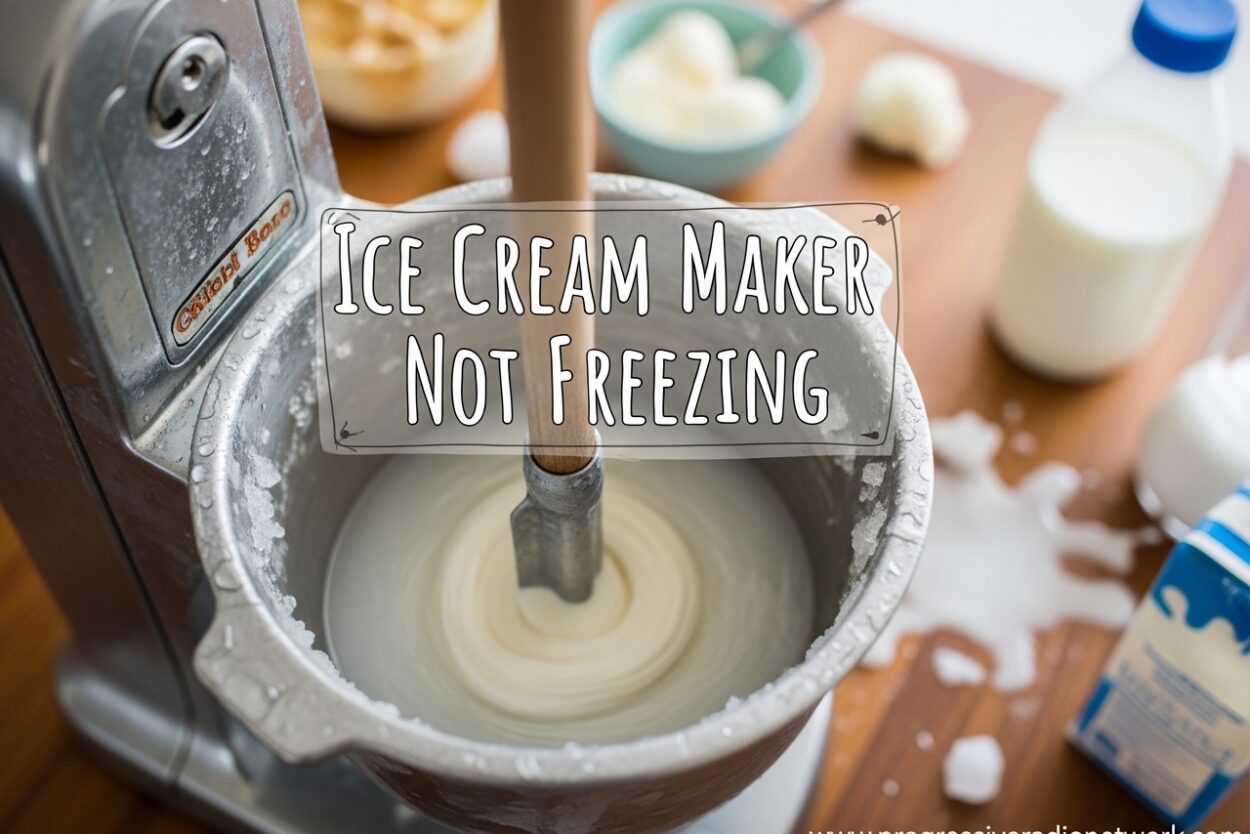
I’ve spent countless hours experimenting with ice cream makers, and nothing is more frustrating than watching your carefully prepared mixture remain a soupy mess after 30 minutes of churning. The Ice Cream Maker Not Freezing problem affects thousands of home enthusiasts every year, especially those using freezer-bowl style machines like Cuisinart. Let me walk you through everything I’ve learned about diagnosing and fixing this common issue.
Quick Diagnosis Checklist
Before diving into detailed troubleshooting, check these three main categories that cause 90% of freezing problems:
1. Freezer Bowl Issues
- Bowl not frozen long enough (needs 24-48 hours)
- Freezer temperature too warm (must be 0°F/-18°C or colder)
- Defective bowl with coolant leak
2. Mixture Problems
- Mixture too warm when poured (should be 40°F/4°C or colder)
- Too much sugar or alcohol (lowers freezing point)
- Insufficient fat content
3. Machine & Method Issues
- Overfilled canister (leave 1-inch space)
- Paddle not making proper contact
- Opening lid during churning cycle
Ice Cream Maker Not Freezing: Freezer Bowl Issues
The freezer bowl is the heart of your ice cream maker, and it’s also the most common source of freezing problems. I’ve tested dozens of bowls over the years, and here’s what I’ve discovered about getting them right.
Pre-Freeze Time Requirements
Your bowl needs a minimum of 24 hours in the freezer before use, but 48 hours is ideal. Deep freezers work significantly better than refrigerator freezers because they maintain more consistent temperatures. I’ve noticed that bowls frozen in deep freezers stay cold longer and produce better results. If you’re using a refrigerator freezer, consider moving your bowl to a deep freezer for overnight storage.
Freezer Temperature Verification
Your freezer must be set to 0°F/-18°C or colder for optimal results. Anything warmer than this, and your bowl won’t reach the temperature needed to freeze ice cream properly. I recommend using a standalone freezer thermometer to verify your actual temperature rather than trusting the dial setting. Many freezers run warmer than their settings indicate, especially if the door is opened frequently.
Diagnosing a Defective Bowl
After years of troubleshooting, I’ve learned how to tell if a bowl has truly failed. The shaking test is misleading – even working bowls can make liquid sounds when shaken because the coolant moves around. Instead, look for these signs:
- Uneven frost patterns on the bowl exterior
- Bowl feels only slightly cold after 48 hours in freezer
- Chemical smell coming from the bowl
- Ice cream mixture barely thickens after 45 minutes of churning
Double-walled freezer bowls contain a sealed coolant that can leak over time, especially with Cuisinart ICE-21 models. If your bowl worked perfectly for months then suddenly stopped freezing, the coolant has likely evaporated or leaked. In this case, you’ll need a replacement bowl rather than trying to fix the existing one.
Ice Cream Maker Not Freezing: Mixture Problems
Even with a perfectly frozen bowl, your ice cream won’t set if the mixture formula or temperature is wrong. I’ve learned the hard way that chemistry matters as much as equipment.
Mixture Temperature Matters
Your ice cream base should be thoroughly chilled before churning – aim for 40°F/4°C or colder. Warm mixtures defeat even the coldest freezer bowl because they require more energy to freeze. I always refrigerate my base overnight before attempting to churn. If you’re in a hurry, an ice bath can chill your mixture in about 30 minutes, but the overnight method produces consistently better results.
Sugar Content and Freezing Point Depression
Sugar and alcohol lower the freezing point of your mixture through a process called freezing point depression. While some sugar is necessary for smooth texture, too much prevents proper freezing. I’ve found that recipes with more than 20% sugar by weight often struggle to freeze, even in optimal conditions. Alcohol is even more problematic – just 2 tablespoons of liquor can prevent ice cream from setting completely. If you want boozy ice cream, add the alcohol during the last 5 minutes of churning.
Fat Ratio and Texture
Fat molecules help trap air and create smooth, scoopable ice cream. Mixtures with insufficient fat (less than 10%) often turn icy and hard rather than creamy. I’ve experimented with everything from skim milk to heavy cream, and the sweet spot for most home recipes is 18-22% fat content. This typically means using at least some heavy cream or adding egg yolks to create a custard base.
Recipe Balance Tips
When your Ice Cream Maker Not Freezing problem stems from mixture issues, try these adjustments:
- Reduce sugar by 10-15% in recipes that won’t set
- Add 1-2 egg yolks to increase fat and emulsification
- Replace some milk with heavy cream
- Eliminate alcohol or add it at the very end
- Chill mixture for 12-24 hours before churning
Ice Cream Maker Not Freezing: Machine & Method Issues
Sometimes the equipment and technique create freezing problems even when everything else is perfect. I’ve made every mistake in the book, and these are the most common ones I see.
Overfilling the Canister
This is the number one user error I encounter. Ice cream expands significantly as it freezes and incorporates air. You must leave at least 1 inch of space at the top of the canister. I’ve measured expansion during freezing, and a properly churning batch can increase in volume by 25-30%. Overfilled canisters can’t churn properly, leading to uneven freezing and soupy results. Mark your maximum fill line with a permanent marker so you never make this mistake again.
Paddle Contact Problems
The mixing paddle must spin freely and make contact with the entire bowl surface. I’ve seen machines where the paddle wasn’t seated correctly, creating uneven freezing. Always verify the paddle clicks into place before starting your machine. If you notice the paddle struggling or stopping mid-churn, your mixture may be too thick or you’ve overfilled the canister. Stop the machine and remove some mixture if the paddle can’t rotate properly.
Lid Opening During Churning
Every time you open the lid during churning, you introduce warm air and halt the freezing process. I’ve timed temperature drops during lid openings, and even a 10-second peek can raise the bowl temperature by several degrees. Resist the urge to check your ice cream until the machine indicates it’s finished or you’ve reached the recommended churning time. Most freezer-bowl machines need 20-30 minutes of continuous operation.
Ambient Temperature Effects
Hot kitchens can sabotage even the best-prepared ice cream. I’ve noticed that making ice cream on 90°F summer days produces noticeably inferior results compared to 70°F fall days. If possible, move your machine to the coolest part of your kitchen during operation. Some dedicated ice cream enthusiasts even run their machines in air-conditioned rooms for optimal results.
Step-by-Step Troubleshooting Guide
Follow this systematic approach when your Ice Cream Maker Not Freezing problem occurs:
Step 1: Verify Bowl Freezing
Check that your bowl has been in the freezer for at least 24 hours, preferably 48. Feel the exterior – it should be uniformly cold with frost visible. Shake gently to listen for liquid sounds, but remember this test isn’t definitive. A properly frozen bowl feels colder than your freezer’s regular contents.
Step 2: Check Freezer Temperature
Use a freezer thermometer to verify your freezer is at 0°F/-18°C or colder. Adjust settings if needed and wait 24 hours before trying again. Deep freezers typically perform better than refrigerator freezers for bowl storage.
Step 3: Verify Mixture Temperature
Take your mixture’s temperature with a food thermometer. It should be 40°F/4°C or colder before pouring. If warmer, refrigerate longer or use an ice bath to chill it down quickly.
Step 4: Check Fill Level
Ensure your canister isn’t overfilled. The mixture should be at least 1 inch below the rim. Remove excess if necessary before continuing.
Step 5: Verify Paddle Operation
Start the machine without mixture and watch the paddle. It should rotate smoothly and make contact with the bowl walls. If it struggles or stops, there may be a mechanical issue.
Step 6: Test with Known Working Recipe
If all else fails, try a simple vanilla ice cream recipe that you know works. This helps isolate whether the problem is your equipment or your recipe. If the simple recipe works, adjust your original formula.
Cuisinart Specific Issues
Cuisinart ice cream makers, particularly the ICE-21 model, have some well-documented freezing problems. After helping dozens of users troubleshoot these machines, I’ve identified patterns specific to this brand.
The Cuisinart ICE-21 uses a double-walled freezer bowl that contains a sealed coolant. Many users report these bowls working perfectly for 6-12 months then suddenly failing. This is almost always due to coolant evaporation or a slow leak. The chemical smell some users notice is the coolant escaping the sealed chamber. Unfortunately, there’s no fix for this – you need a replacement bowl.
Cuisinart customer service typically covers bowl failures under warranty for the first year. Keep your receipt and original packaging if possible. After-market replacement bowls are available but vary in quality. I’ve tested several, and OEM replacements consistently outperform third-party options.
Some Cuisinart models also struggle with paddle engagement. The plastic tab that holds the paddle can wear down over time, preventing proper contact with the bowl. If your paddle spins freely without resistance, check this tab for wear and replace if necessary.
FAQ
How to fix ice cream that won’t freeze?
Start by checking your freezer bowl temperature – it needs 24-48 hours at 0°F/-18°C or colder. Verify your mixture is chilled to 40°F/4°C before pouring. Reduce sugar content by 10-15% if the recipe seems too sweet, and eliminate alcohol or add it in the last 5 minutes. Ensure you’re not overfilling the canister – leave 1 inch of space at the top.
Why is my ice cream still liquid after churning?
Liquid ice cream usually means insufficient freezing time or incorrect mixture balance. Your bowl may not have been frozen long enough, or your freezer temperature might be too warm. The mixture could also have too much sugar or alcohol, which lowers the freezing point. Try chilling your base overnight and reducing sugar content in your next batch.
Why is my ice cream machine not getting cold enough?
The most common cause is inadequate pre-freeze time – bowls need 24-48 hours. Check your freezer temperature with a thermometer; it should be 0°F/-18°C or colder. Deep freezers work better than refrigerator freezers. If your bowl has been properly frozen but still doesn’t work, the coolant may have leaked and the bowl needs replacement.
What causes homemade ice cream to not freeze?
Multiple factors can prevent freezing: insufficient bowl pre-freeze time, warm freezer temperature, warm mixture temperature, excessive sugar or alcohol content, low fat ratio, or overfilling the canister. Most problems stem from temperature issues – ensure your bowl is frozen solid, your freezer is cold enough, and your mixture is properly chilled before churning.
How long to freeze ice cream maker bowl?
Minimum 24 hours, but 48 hours is ideal for best results. Deep freezers freeze bowls more thoroughly than refrigerator freezers. The bowl should feel uniformly cold with visible frost on the exterior. Even if it feels frozen, the interior coolant needs extended time to reach optimal temperature for ice cream making.
How can I tell if my freezer bowl is defective?
Signs of a defective bowl include: uneven frost patterns on the exterior, bowl feeling only slightly cold after 48 hours, chemical smell from the bowl, or ice cream remaining liquid after 45 minutes of churning despite proper preparation. If your bowl worked well previously then suddenly stopped, the coolant has likely leaked or evaporated and needs replacement.
Conclusion
Ice Cream Maker Not Freezing problems can be frustrating, but most have simple solutions once you understand the underlying causes. Start by verifying your freezer bowl is properly frozen and your freezer is cold enough. Check that your mixture is chilled to 40°F/4°C before churning, and review your recipe for excessive sugar or alcohol content. Ensure you’re not overfilling the canister and that the paddle makes proper contact with the bowl. If your bowl has worked well previously then suddenly failed, it may be defective and need replacement. With proper preparation and technique, you’ll be enjoying perfectly frozen homemade ice cream in no time.



Leave a Comment