
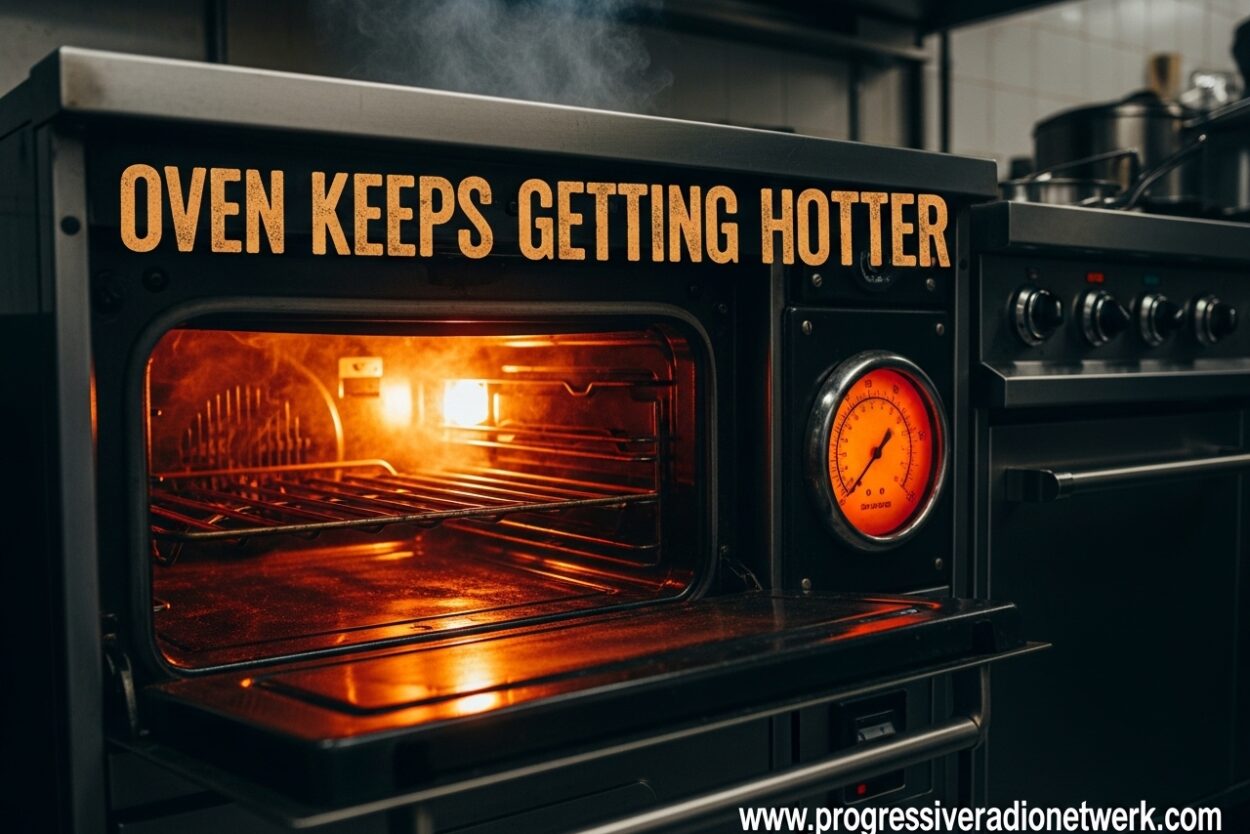
You set your oven to 350°F, but your cookies come out burned. The roast that should take two hours is done in half the time. If your oven keeps getting hotter than the temperature you set, you’re dealing with a frustrating and potentially dangerous problem.
An oven that overheats typically points to a few specific components: a faulty temperature sensor, broken thermostat, or malfunctioning control board. I’ve researched the most common causes and solutions to help you diagnose why your oven keeps getting hotter and what you can do about it.
Signs Your Oven Keeps Getting Hotter
Before you start troubleshooting, confirm that your oven is actually overheating. Look for these clear signs that something is wrong with your oven’s temperature regulation.
Food burns on the outside while remaining undercooked inside. This classic symptom indicates your oven is running significantly hotter than the set temperature. You might notice cookies spreading too thin and burning at the edges, or casseroles developing a dark crust well before the recommended cooking time elapses.
Baked goods turn out dry and crumbly. Excessive heat causes rapid moisture loss, leaving cakes, breads, and pastries with an unpleasant texture. If your sourdough develops an overly thick crust or your muffins feel like sandpaper, your oven temperature may be climbing too high.
The oven exterior becomes dangerously hot to touch. While some exterior heat is normal, an overheating oven often generates excessive external temperatures. If you can’t rest your hand on the door for more than a second, or if surrounding cabinets feel unusually warm, your oven is running too hot.
You smell burning odors during normal cooking. An overheating oven can cause food to burn or spill onto heating elements, creating persistent burning smells. If you notice burning scents even when cooking at moderate temperatures, investigate your oven’s temperature accuracy.
Cooking times are consistently shorter than recipes specify. If every dish finishes 15-25% faster than expected, your oven is likely operating above the set temperature. This pattern suggests a systematic problem rather than a one-time occurrence.
How to Test Your Oven Temperature
Before replacing parts, verify that your oven is actually overheating. The display temperature might not match the actual temperature inside the oven cavity.
Purchase an independent oven thermometer. These inexpensive tools (typically $10-20) provide accurate temperature readings that aren’t affected by your oven’s internal sensors. Place the thermometer in the center of the oven rack for the most reliable reading.
Preheat your oven to 350°F and let it cycle at least three times. Most ovens cycle on and off to maintain temperature, so wait for the heating element to turn off and on three times. This usually takes 20-30 minutes after the preheat indicator signals completion.
Check the thermometer reading after cycling completes. A properly functioning oven should read within 15 degrees of the set temperature. If your thermometer shows 375°F or higher when set to 350°F, your oven is definitely overheating.
Test multiple positions in your oven. Hot spots and cold spots are common, so check temperature readings at the front, back, and center of the oven. This helps identify if the entire oven is overheating or if specific areas have more severe temperature issues.
Document your findings. Take photos of the thermometer at different settings and record the differences. This information proves valuable if you need to call a professional repair technician.
Broken Temperature Sensor
The temperature sensor (also called the oven thermostat probe) is the most common culprit when an oven keeps getting hotter. This slender metal rod protruding from the oven’s back wall monitors internal temperature and signals the control board when to turn heating elements on or off.
A faulty sensor can send incorrect temperature readings, causing your oven to continue heating beyond the set point. When the sensor fails, it might indicate the oven is cooler than actual temperature, triggering continuous heating cycles.
Test the temperature sensor with a multimeter. At room temperature (70-75°F), the sensor should read approximately 1,080-1,100 ohms. At 350°F, it should read around 1,650 ohms. If your readings fall outside these ranges, the sensor needs replacement.
Replace a faulty temperature sensor yourself if you’re comfortable with basic repairs. The part typically costs $30-60 and requires only a screwdriver for installation. Disconnect power, remove the mounting screws, disconnect the wires, and install the new sensor.
Consider professional help if you’re unsure about electrical work. While replacing a temperature sensor is relatively straightforward, any repair involving electrical components carries risk. A professional technician can diagnose and replace the sensor in under an hour.
Faulty Thermostat Issues
The thermostat controls your oven’s temperature by regulating power to heating elements. When a thermostat fails, it can cause your oven to continue heating indefinitely or cycle at incorrect intervals.
Thermostat problems manifest in different ways depending on your oven type. Older mechanical ovens use a thermostat capillary tube and switch, while modern electronic ovens rely on the control board to interpret temperature signals. Both types can fail and cause overheating.
A loose or damaged thermostat knob can cause temperature inaccuracy. If the knob slips on its shaft, the temperature setting might not match the actual position. Check if the knob feels secure when turning and if the temperature markings align correctly.
Test your thermostat by comparing different temperature settings. Set your oven to 300°F, then 400°F, using your oven thermometer to verify actual temperatures. If the difference between settings is inconsistent (not 100 degrees apart), your thermostat may need recalibration or replacement.
Thermostat replacement costs vary significantly. Mechanical thermostats typically cost $100-200 plus installation, while electronic control boards (which incorporate thermostat functions) can cost $300-600. Factor this expense against your oven’s age and value when deciding whether to repair or replace.
Damaged Heating Elements
Heating elements provide the heat that cooks your food. When these elements malfunction, they can cause your oven to overheat by producing more heat than the thermostat can regulate.
The bake element (at the bottom) and broil element (at the top) should cycle on and off to maintain temperature. If an element stays continuously powered, your oven will exceed the set temperature. Visually inspect elements while the oven operates to see if they cycle off periodically.
Look for visible damage to heating elements. Blisters, bubbles, or breaks in the element indicate failure. A damaged element might draw too much power or fail to respond properly to thermostat signals, causing overheating issues.
Test heating elements with a multimeter for continuity. A functional element should show 15-25 ohms of resistance. Infinite resistance (no reading) indicates a break in the element, while extremely low resistance suggests shorting that could cause overheating.
Replacing a heating element is a manageable DIY project. Elements typically cost $30-80 and require only basic tools. Disconnect power, remove mounting screws, disconnect wires, and install the replacement. This repair typically takes less than 30 minutes.
Blocked Oven Vent
Your oven requires proper ventilation to release hot air and moisture. Blocked vents trap heat inside the oven cavity, causing temperatures to climb beyond the set point.
Locate your oven’s vent. Most ovens vent through the rear of the cooktop, though some models vent through the front door or side panels. Check your owner’s manual if you’re unsure about your vent location.
Clean the vent thoroughly if blocked by debris or grease buildup. Use a vacuum attachment or stiff brush to remove accumulated material. For stubborn grease buildup, use a degreaser specifically designed for kitchen appliances.
Ensure nothing obstructs the vent opening. Cookware, oven mitts, or kitchen towels placed near vents can restrict airflow. Maintain at least two inches of clearance around all vent openings to allow proper air circulation.
Check the vent damper if your oven has one. Some models include adjustable dampers that control airflow. Make sure the damper is fully open and moves freely. A stuck or partially closed damper can significantly reduce ventilation efficiency.
Faulty Cooling Fan
Many modern ovens include cooling fans that regulate temperature by circulating air and cooling external components. When these fans fail, your oven may overheat due to inadequate air circulation.
Cooling fans typically operate during and after baking cycles. If you never hear your fan running or notice it stops prematurely, the fan motor or control switch may have failed. This can cause heat buildup in the oven cavity and external cabinet.
Convection ovens rely heavily on fan operation. A failed convection fan causes hot spots and uneven heating, which can mimic overheating symptoms. Test your convection fan by setting the oven to convection mode and listening for fan operation.
Test the cooling fan manually if accessible. With the oven disconnected from power, try spinning the fan blade by hand. It should rotate freely without resistance or wobbling. Resistance suggests bearing problems, while wobbling indicates a bent shaft or damaged blade.
Cooling fan replacement typically requires professional service. The fan is often integrated with other components and requires disassembly of the oven cabinet. Expect to pay $150-300 for parts and labor depending on your oven model.
Control Board Problems
The electronic control board serves as your oven’s brain, processing temperature signals and controlling heating elements. When this component fails, your oven may continue heating even after reaching the set temperature.
Relay failure is a common control board issue. The control board uses relays to switch heating elements on and off. When a relay welds closed, the heating element stays continuously powered, causing severe overheating. This explains why some ovens remain hot even when turned off.
If your oven keeps getting hotter and won’t turn off, unplug it immediately. A stuck relay poses a significant fire hazard and can cause temperatures to reach dangerous levels (500-600°F or higher). Do not attempt to use the oven until repaired.
Control board repair vs replacement depends on damage extent. Some electronic issues can be repaired by replacing individual components, but complete board replacement is often more reliable. Control boards typically cost $200-600 plus installation.
Consider oven replacement if the control board fails on an older model. Control board replacement costs often approach half the price of a new oven. If your oven is over 10 years old, investing in a replacement appliance might be more economical than repairing expensive electronic components.
Oven Calibration Issues
Over time, ovens can drift from their calibrated temperature settings. This gradual shift causes your oven to run hotter or cooler than the displayed temperature.
Temperature drift occurs naturally as components age. Sensors become less accurate, thermostats lose precision, and heating elements change performance characteristics. Regular recalibration helps maintain consistent cooking results.
Calibrate your oven using the built-in calibration feature. Many digital ovens allow you to adjust temperature offset through the settings menu. Check your owner’s manual for specific calibration procedures, which typically involve pressing button combinations to access calibration mode.
Manual calibration works for ovens without digital adjustment. Determine the temperature difference using your oven thermometer, then mentally adjust your recipe temperatures. For example, if your oven runs 25 degrees hot, set the temperature 25 degrees lower than the recipe specifies.
Document your oven’s temperature variance. Create a simple chart showing set temperature versus actual temperature at different settings. This information helps you adjust recipes consistently and provides valuable data if you need professional service.
Gas vs Electric Oven Overheating
While overheating symptoms appear similar, gas and electric ovens have different components that can cause temperature regulation problems.
Gas oven overheating typically stems from the thermostat or gas valve issues. The infinite switch controls gas flow in many gas ovens, and when it fails, the burner may stay fully on. Gas valve problems can also cause continuous burner operation, leading to excessive temperatures.
Electric oven overheating usually involves heating elements or electronic controls. Electric ovens rely on precise regulation of heating elements, which can fail due to element damage, sensor problems, or control board issues. The absence of combustion makes diagnosis somewhat simpler but doesn’t reduce repair complexity.
Safety considerations differ significantly between gas and electric. Gas oven problems can cause carbon monoxide buildup or gas leaks, requiring immediate professional attention. Electric oven issues typically involve fire hazards from excessive heat, which while serious, don’t pose toxic gas risks.
Gas oven repairs generally require professional service. Working with gas lines and combustion components demands specialized knowledge and tools. Unless you have specific training in gas appliance repair, hire a certified technician for gas oven problems.
When to Call a Professional
While some oven overheating issues have simple DIY fixes, others require professional expertise. Knowing when to call a technician saves time, money, and potential safety hazards.
Gas oven problems always warrant professional service. Gas leaks, improper combustion, and ventilation issues pose serious safety risks. Certified technicians have the training and equipment to diagnose and repair gas ovens safely.
Control board replacement typically requires professional installation. While DIY enthusiasts might attempt this repair, the complexity of electronic diagnosis and the cost of mistakes make professional service worthwhile. A misinstalled control board can cause further damage or create fire hazards.
Consider repair versus replacement based on oven age and repair cost. If your oven is under 5 years old and the repair costs less than half the price of a new unit, repair makes sense. For older ovens requiring expensive repairs (control board, multiple components), replacement might be more economical.
Immediate professional service is needed if your oven won’t turn off or reaches dangerous temperatures. These symptoms indicate serious component failure that poses fire risks. Unplug the oven immediately and avoid using it until repaired.
FAQ
Why is my oven still hot even though its off?
What are 10 common causes of overheating?
1. Broken temperature sensor providing incorrect readings 2. Faulty thermostat failing to regulate heating cycles 3. Damaged heating elements staying continuously powered 4. Blocked oven vent preventing proper heat release 5. Faulty cooling fan not circulating air properly 6. Control board relay failure keeping elements on 7. Loose or damaged thermostat knob causing incorrect settings 8. Oven calibration drift over time 9. Malfunctioning selector switch in some models 10. Door seal damage allowing heat buildup
What are common signs of oven failure?
Common oven failure signs include temperature inaccuracy (running too hot or cold), uneven cooking results, burning food at normal temperatures, the oven not heating at all, unusual noises during operation, visible damage to heating elements, error codes on digital displays, the oven not turning off, burning smells during normal use, and exterior surfaces becoming unusually hot. If you notice multiple symptoms, professional diagnosis is recommended.
Why does my oven heat up over 100 degrees higher than set?
An oven exceeding the set temperature by over 100 degrees typically indicates a serious component failure. The most common causes include a completely failed temperature sensor, a welded-shut relay on the control board, or a thermostat that no longer responds to temperature signals. This level of overheating is dangerous and can cause fire hazards. Stop using the oven immediately and unplug it. The repair will likely require professional service, possibly involving control board or sensor replacement.
Conclusion
If your oven keeps getting hotter than the set temperature, start by verifying the problem with an independent oven thermometer. A simple calibration or blocked vent might be the culprit, but persistent overheating often indicates component failure requiring repair or replacement.
Temperature sensors and thermostats cause most overheating issues, while control board problems present the most serious symptoms. Address overheating promptly – not only will your cooking results improve, but you’ll also avoid potential safety hazards from excessive heat buildup.
When in doubt, consult a professional technician, especially for gas ovens or control board issues. Proper diagnosis ensures you fix the actual problem rather than replacing components unnecessarily, saving both time and money in the long run.
Leave a Comment