
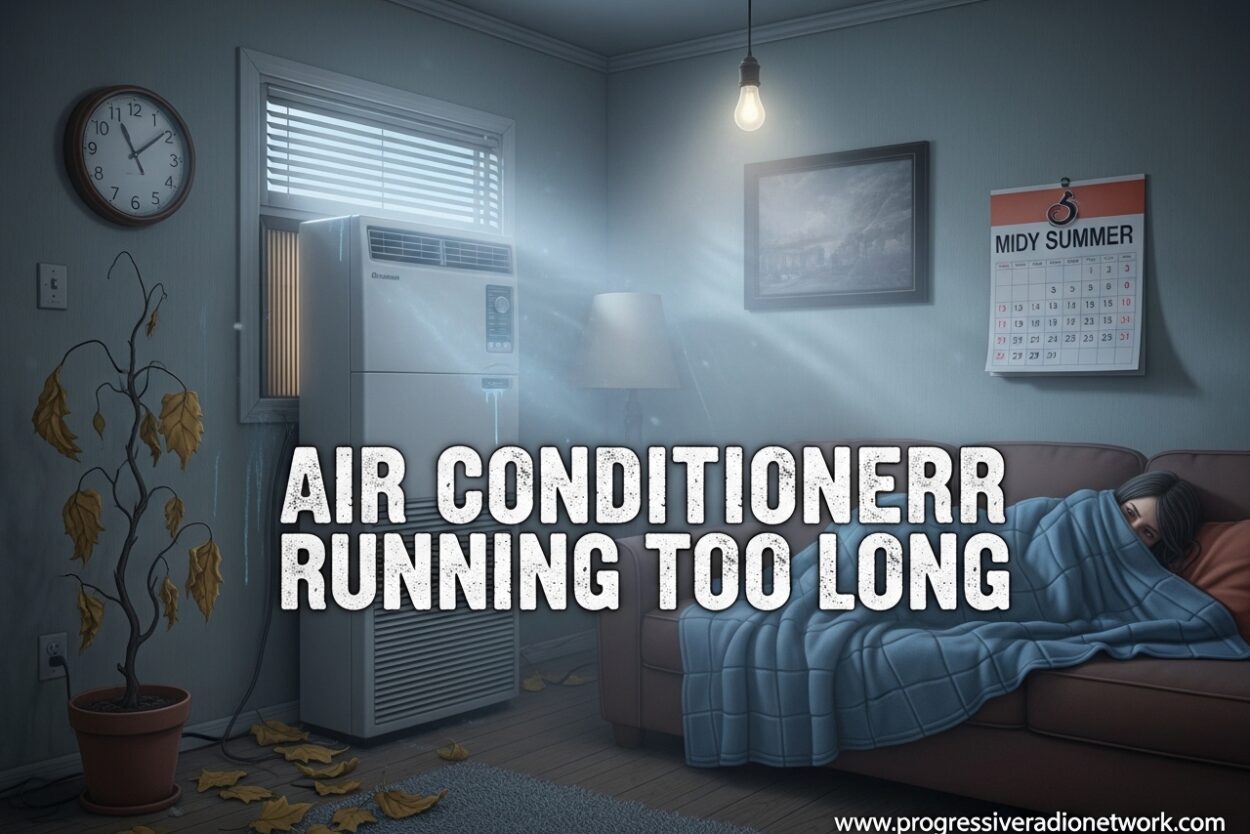
Is your air conditioner running too long and never shutting off? You’re not alone. This is one of the most common complaints homeowners face during summer months. The short answer: sometimes long AC cycles are completely normal, but other times they signal a problem that needs attention.
When your AC runs for extended periods, it impacts your energy bills and puts unnecessary wear on your system. Understanding the difference between normal operation and a malfunctioning system can save you money and prevent costly repairs. Let me walk you through everything you need to know about why your air conditioner might be running too long and what you can do about it.
Is It Normal for Your AC to Run All the Time?
Not exactly. Under normal conditions, your AC should cycle on and off periodically throughout the day. A typical cooling cycle lasts 15-20 minutes, happening 2-3 times per hour. However, on extremely hot days (90°F+), it’s normal for your AC to run longer and more frequently to maintain your desired temperature.
What’s NOT normal is running continuously for hours without ever reaching the set temperature, or cycling on and off every few minutes (short cycling). Both extremes indicate a problem. I’ve seen homeowners waste hundreds of dollars monthly because their AC runs 24/7 due to fixable issues.
The energy cost difference is significant. A properly functioning AC might cost $100-150/month to run during summer. A unit with problems running continuously can easily cost $250-400/month. That’s wasted money going right out the window—or rather, through your walls and ceiling.
Dirty or Clogged Air Filters
This is the number one cause of extended AC run times, and it’s completely preventable. When your air filter gets clogged with dust, pet dander, and debris, it restricts airflow to your system. Your AC has to work harder and run longer to circulate the same amount of air.
I’ve personally seen filters so clogged they were literally sucked into the ductwork. The homeowners couldn’t understand why their electric bills had doubled and the house still felt stuffy. One filter change later, and their AC was cycling normally again.
Check your filter every month during cooling season. Hold it up to a light source—if you can’t see light through it, it’s time to replace it. Most filters need changing every 1-3 months depending on pets, allergies, and local air quality. This simple $10-20 fix can reduce your AC run time by 20-30%.
Incorrect Thermostat Settings
Your thermostat settings directly impact how long your AC runs. The most common mistake I see is setting the temperature too low. Each degree below 78°F increases energy consumption by 3-8%. Setting your thermostat to 68°F when it’s 95°F outside will make your AC run nearly continuously.
Another issue is the fan setting. If your fan is set to “ON” instead of “AUTO,” the fan runs continuously even when the compressor cycles off. This creates the illusion that your AC never stops. In AUTO mode, both the compressor and fan turn off together when cooling is complete.
Consider a programmable or smart thermostat if you don’t have one. These can automatically adjust temperatures based on your schedule, preventing unnecessary runtime when you’re away or asleep. Many homeowners report 15-23% savings after installing a smart thermostat.
Low Refrigerant Levels
Your AC doesn’t “use up” refrigerant like a car uses gas. It circulates the same amount repeatedly. Low refrigerant means there’s a leak somewhere in the system. Without enough refrigerant, your AC can’t absorb heat effectively, causing it to run much longer without reaching the desired temperature.
Signs of low refrigerant include: warm air from vents, ice forming on refrigerant lines, hissing sounds, and the AC running constantly without cooling properly. If you suspect low refrigerant, this isn’t a DIY fix. Refrigerant handling requires EPA certification and specialized equipment.
A refrigerant recharge typically costs $150-400 depending on the refrigerant type and how much is needed. However, simply adding refrigerant without fixing the leak is temporary at best. A reputable technician will locate and repair the leak before recharging the system.
Dirty Condenser Coils
Your outdoor condenser unit needs to breathe freely to release the heat absorbed from your home. When condenser coils get coated in dirt, grass clippings, cottonwood seeds, or other debris, heat transfer becomes inefficient. Your AC runs longer trying to dissipate the same amount of heat.
I regularly see condenser units completely buried in landscaping or surrounded by fallen leaves. Some homeowners even try to hide the unit with decorative covers, which is a terrible idea. Your condenser needs at least 2-3 feet of clearance on all sides for proper airflow.
Cleaning condenser coils is a manageable DIY task. Turn off power to the unit, remove any debris from the fins, and gently spray with a garden hose (no pressure washer!). For a deeper clean, use a commercial coil cleaner available at home improvement stores. Professional cleaning costs $75-150 if you prefer not to tackle it yourself.
Leaky Ductwork
According to Energy Star, the average home loses 20-30% of conditioned air through leaks in the ductwork. That means your AC is working overtime to cool spaces you never see—attics, crawlspaces, and wall cavities. Meanwhile, your living spaces stay warm because the cooled air never reaches them.
Signs of leaky ducts include: uneven cooling between rooms, high energy bills, stuffy rooms despite constant AC operation, and visible duct connections that have disconnected. If your home was built before 2000, ductwork issues are especially common due to older materials and installation practices.
Sealing accessible duct leaks with mastic sealant or metal tape (NOT duct tape—it doesn’t last) can improve efficiency by 20% or more. For extensive ductwork problems hidden behind walls, professional sealing runs $1,000-3,000 but pays for itself in 3-5 years through energy savings.
Wrong Sized AC Unit
Bigger isn’t better when it comes to air conditioning. An oversized AC cools your home quickly but shuts off before properly dehumidifying the air. This leads to a cold but clammy feeling and frequent short cycling that damages equipment. An undersized AC runs continuously because it simply lacks the capacity to cool your space.
Proper AC sizing involves calculating the cooling load based on your home’s square footage, insulation, windows, orientation, and local climate. The calculation should follow ACCA Manual J standards. Unfortunately, many contractors still use outdated rules of thumb that result in improperly sized equipment.
If your AC was correctly sized but you’ve made significant changes to your home—adding rooms, finishing a basement, or upgrading insulation—your original sizing may no longer be appropriate. The only real fix for a severely undersized unit is replacement, though sometimes adding zone cooling can help with specific problem areas.
Poor Home Insulation
Your AC can only do so much. If your home has poor insulation, air leaks, or excessive solar heat gain, cooled air escapes and heat enters faster than your AC can compensate. This is especially true for older homes, homes with vaulted ceilings, and rooms with large west-facing windows.
Common insulation problems include: insufficient attic insulation (should be R-38 to R-49 in most climates), gaps around windows and doors, uninsulated ductwork in unconditioned spaces, and lack of radiant barriers in hot climates. Even newer homes can have insulation defects from poor installation.
Adding attic insulation is often the most cost-effective improvement, with ROI of 2-3 years through energy savings. Sealing air leaks with caulk and weatherstripping costs little but makes a noticeable difference. Solar screens or reflective window film can dramatically reduce heat gain through windows without sacrificing natural light.
DIY Troubleshooting Steps
Before calling a professional, try these simple fixes:
Step 1: Change your air filter. This takes 2 minutes and costs $10-20. Check it monthly and replace when dirty. This single fix resolves 30-40% of extended runtime issues.
Step 2: Check your thermostat settings. Ensure it’s set to COOL mode, AUTO fan, and a reasonable temperature (78°F recommended). Replace batteries if the display is dim or unresponsive.
Step 3: Clear around your outdoor unit. Remove any debris, vegetation, or items within 2-3 feet of the condenser. Gently clean the coil fins with a garden hose.
Step 4: Check your air vents. Ensure all supply and return vents are open and unblocked by furniture, curtains, or rugs. Closed vents create pressure imbalances that reduce efficiency.
Step 5: Inspect your refrigerant lines. Look for ice buildup on the copper lines connecting your indoor and outdoor units. Ice indicates low refrigerant or restricted airflow—both requiring professional attention.
When to Call a Professional
Some AC issues require specialized knowledge and equipment. Call a licensed HVAC technician if you notice: refrigerant leaks (indicated by ice on lines or hissing sounds), electrical problems (tripped breakers, burning smells), compressor failure (outside unit won’t turn on), or persistent issues after trying the DIY steps above.
Annual professional maintenance costs $75-150 but can extend your AC’s lifespan by years, prevent costly breakdowns, and maintain 10-15% better efficiency. Most manufacturers require proof of annual maintenance to honor warranty claims anyway.
Is it okay for my air conditioner to run continuously?
What is the 3 minute rule for air conditioners?
Can AC cause sinus issues?
How long should AC run on a hot day?
Why does my AC run all day but never reaches temperature?
Conclusion
An air conditioner running too long is often a symptom of fixable problems. Start with the simple solutions—change your filter, check your thermostat, clear around your outdoor unit. These basic steps resolve most issues and cost very little. For persistent problems, professional diagnosis pays for itself through restored efficiency and prevented breakdowns.
Remember that your AC running too long not only increases your energy bills but also shortens equipment lifespan. The average AC unit lasts 15-20 years with proper maintenance, but only 8-12 years when constantly overworked. Addressing runtime issues promptly saves you money both now and in the long run.
Schedule annual professional maintenance before cooling season begins. This technician visit can catch small problems before they become big ones, clean components you can’t access yourself, and ensure your system is ready to handle the heat efficiently. Your wallet and your comfort will both thank you.


Leave a Comment