
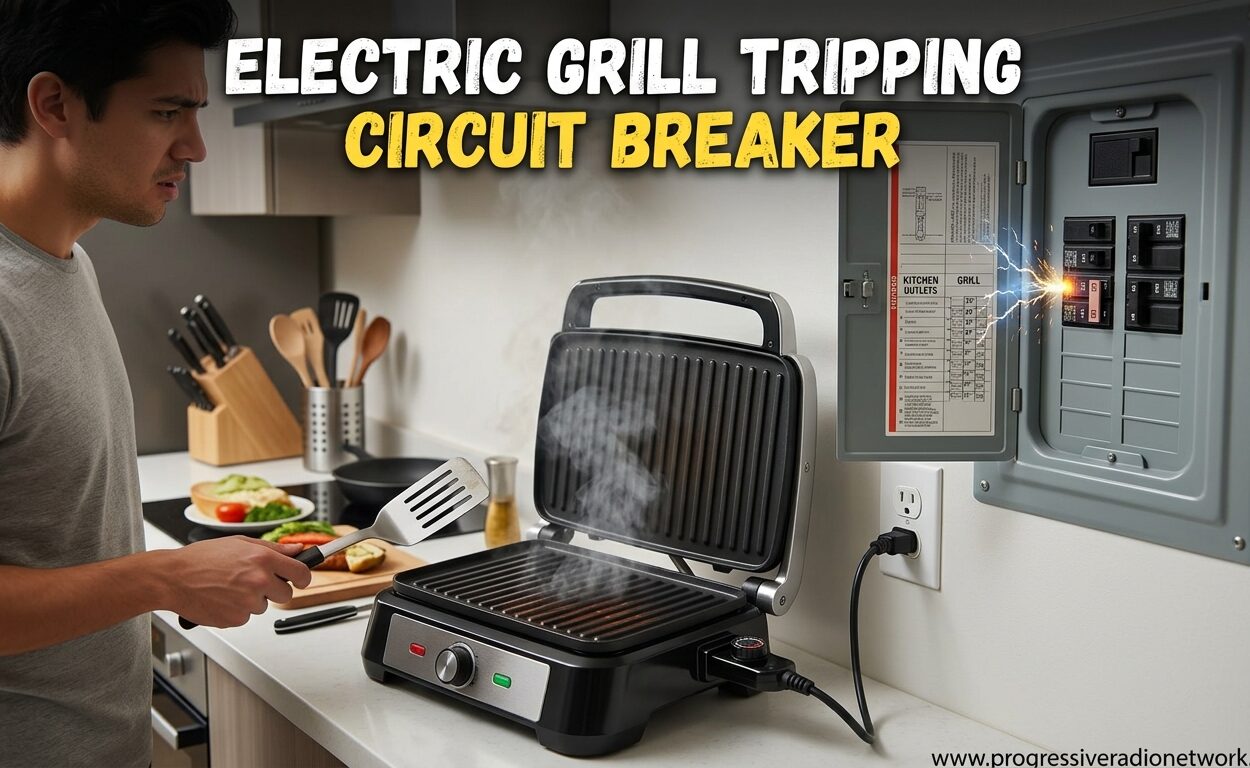
Your electric grill keeps shutting down mid-cookout, and you’re staring at a tripped breaker again. It’s frustrating, especially when you have guests waiting for food. I’ve dealt with this issue myself, and I’ll walk you through exactly why it happens and how to fix it safely.
Electric grill tripping circuit breaker issues are almost always caused by one of five problems: overloaded circuits, short circuits in the heating element, ground faults, faulty GFCI outlets, or an aging breaker itself. The timing of when your grill trips gives you important clues about which problem you’re facing.
In this guide, I’ll show you how to diagnose the issue based on your specific symptoms, walk you through safe troubleshooting steps, and help you decide when it’s time to call a professional electrician. Your safety comes first, so let’s tackle this systematically.
Understanding Circuit Breakers and Electric Grills
Before we dive into troubleshooting, it helps to understand what’s actually happening when your breaker trips. A circuit breaker is a safety device designed to protect your home’s electrical system from damage caused by excessive current flow.
When your electric grill trips the breaker, it’s not necessarily a malfunction. The breaker is doing its job by interrupting power flow when something isn’t right. This prevents overheating wires, potential electrical fires, and damage to your appliances.
Electric grills are high-power appliances. Most indoor models draw between 1,200 and 1,800 watts, while larger outdoor electric grills can pull 2,000 watts or more. On a standard 120-volt circuit, that translates to 10-17 amps of current draw. Most home circuits are rated for 15 or 20 amps total.
The math matters here. If your grill draws 14 amps and you have a few other devices on the same circuit sharing a few amps, you’ll exceed the 15-amp limit and trip the breaker. This is why understanding amp draw and circuit capacity is so important for troubleshooting.
Common Causes of Electric Grill Circuit Breaker Trips
Based on real user reports and electrical forum discussions, five causes account for nearly all electric grill breaker issues. Let’s break down each one so you can identify what’s happening in your situation.
Overloaded Circuit (Most Common Cause)
An overloaded circuit happens when the total electrical demand exceeds what the circuit can safely provide. This is the number one reason electric grills trip breakers, especially for outdoor grills plugged into patio or garage outlets.
The classic scenario: you have your electric grill running, plus a beverage cooler, some outdoor string lights, and maybe a phone charger or portable speaker all on the same circuit. Individually these devices seem harmless, but together they push the circuit past its limit.
Circuit overload typically trips the breaker within 1-5 minutes of turning on the grill, especially if the grill cycles to high heat and draws maximum power. The timing clue here is important. Immediate trips usually indicate a short circuit, while delayed trips suggest overload.
Short Circuit in Heating Element
Heating element failures are the second most common cause. Over time, the heating coil inside your grill can develop cracks or breaks in the insulation. When electricity jumps across these gaps, it creates a short circuit that draws excessive current instantly.
A short circuit usually causes an immediate trip, often within seconds of turning on the grill. You might notice the grill never heats up at all before the breaker trips. This is different from overload, which typically allows some operation before tripping.
Heating element shorts can develop from normal wear and tear, moisture exposure, or physical damage. Outdoor grills are particularly susceptible to moisture-related element issues. I’ve seen this happen frequently with grills stored outdoors without proper covers.
Ground Fault and GFCI Issues
Ground faults occur when electricity escapes its intended path and flows to ground through an unintended route, such as the grill’s metal casing. This is extremely dangerous and could shock anyone touching the grill.
GFCI (Ground Fault Circuit Interrupter) outlets are designed to detect these faults and shut off power instantly. Many outdoor electrical installations require GFCI protection for safety. However, GFCI outlets can fail over time, becoming overly sensitive or malfunctioning.
Forum users frequently report “double whammy” scenarios where both the GFCI outlet and the circuit breaker needed replacement. If you have an outdoor outlet, the GFCI itself might be the problem, not your grill.
Faulty or Aging Circuit Breaker
Breakers don’t last forever. After 15-20 years of repeated tripping, a breaker can become weak and trip prematurely. The thermal component inside the breaker degrades over time, causing it to trip at lower current levels than it should.
If your grill worked fine for years and suddenly starts tripping the breaker, consider the breaker’s age. Breakers in older homes with outdated electrical panels are more prone to this issue. A bad breaker connection in the panel can also generate heat that triggers nearby breakers.
Power Cord Damage
Inspect your grill’s power cord carefully. Cords can become damaged from being stepped on, pinched in doors, or chewed by pets. Even small cuts or fraying can expose wires and cause short circuits or ground faults.
Pay special attention to where the cord enters the grill housing. This stress point is where damage often occurs. If your cord shows any signs of wear, replace it immediately rather than attempting repairs.
Electric Grill Tripping Circuit Breaker: Step-by-Step Troubleshooting
Now that you understand the potential causes, let’s walk through a systematic troubleshooting process. The timing of your breaker trips provides crucial diagnostic information, so pay attention to exactly when the trip occurs.
Diagnostic Clue: Timing of the Trip
Before you start testing, note when your breaker trips:
Immediate trip (0-5 seconds): Likely a short circuit in the heating element or severe ground fault. The grill probably won’t heat up at all.
Delayed trip (10-30 seconds): Often indicates circuit overload or GFCI sensitivity. The grill begins heating but can’t sustain power draw.
Random timing: Could indicate an intermittent connection, failing breaker, or moisture-related issue that varies with conditions.
Step 1: Check Circuit Load
Start by eliminating overload as the cause. Turn off and unplug everything else on the circuit you’re using for the grill. This includes other outlets in the same room, lights on the same circuit, and any devices in adjacent areas that might share the circuit.
Plug the grill directly into a wall outlet (not an extension cord) and test it. If the grill runs without tripping, you’ve confirmed an overloaded circuit was the problem. The solution is to avoid running other devices while using the grill, or have an electrician install a dedicated circuit.
Step 2: Test a Different Outlet
Try the grill in a different location, ideally on a different circuit if possible. This helps determine if the problem is with the grill or the original outlet/circuit.
If the grill works fine elsewhere, you’ve isolated the issue to your original outlet or circuit. This could indicate a faulty GFCI outlet, wiring problem, or overloaded circuit. The outlet itself may need replacement by an electrician.
Forum users frequently report that moving their grill to a different outlet resolved the issue entirely, revealing a bad GFCI as the culprit.
Step 3: Inspect the Power Cord
Examine the entire length of the power cord for any visible damage. Look for cuts, fraying, kinks, or exposed wires. Pay special attention to the plug ends and where the cord enters the grill housing.
If you find any damage, stop using the grill immediately. A damaged cord is both a fire hazard and a shock risk. Replacement cords are available for most grill models, or you can have an electrician install a new one.
Step 4: Test the Heating Element
Testing the heating element requires a multimeter, which is an inexpensive tool available at any hardware store. Set your multimeter to measure resistance (ohms) and disconnect the grill from power.
Access the heating element according to your grill’s manual, then touch the multimeter probes to the element’s terminals. A good element typically shows resistance between 10-50 ohms, depending on the grill model. If you get infinite resistance (no continuity) or very low resistance (near zero), the element is faulty and needs replacement.
If you’re not comfortable using a multimeter, this is a good time to call a professional or contact the manufacturer’s support line.
Step 5: Evaluate GFCI Outlet Performance
If you’re using an outdoor GFCI outlet, press the “test” button on the outlet itself. The reset button should pop out, and power should cut off. Then press “reset” to restore power. If the GFCI doesn’t respond properly, it’s faulty and needs replacement.
Some users report that their GFCI trips even when nothing is plugged in. This confirms a bad GFCI, not a grill problem. Consider having an electrician replace the outlet with a high-quality GFCI rated for outdoor use.
Circuit Requirements: Do You Need a Dedicated Circuit?
Many electric grill manufacturers recommend a dedicated circuit, but is it really necessary? Let’s look at the electrical requirements and when you should consider installing one.
15-Amp vs 20-Amp Circuits
Most homes have a mix of 15-amp and 20-amp circuits. You can identify them by looking at the breaker itself (15-amp breakers are typically white, 20-amp are yellow or red) or by checking the outlet configuration (20-amp outlets have a horizontal slot forming a T-shape).
A 15-amp circuit can safely provide 1,800 watts (15 amps x 120 volts), while a 20-amp circuit provides 2,400 watts. If your grill is rated for 1,500 watts or higher, a 15-amp circuit leaves very little headroom for other devices.
The issue becomes clear when you do the math. A grill drawing 14.6 amps on a 15-amp circuit leaves only 0.4 amps for everything else. Even a small 60-watt light bulb adds 0.5 amps, pushing you over the limit.
Calculating Your Grill’s Power Needs
Find your grill’s wattage rating in the manual or on the label. Divide watts by 120 volts to get the amp draw. For example, a 1,800-watt grill draws 15 amps. On a 15-amp circuit, this is problematic.
Manufacturers sometimes rate their grills optimistically. Real-world testing by users shows that actual amp draw can be 10-15% higher than the rated specs, especially as heating elements age and resistance changes.
When a Dedicated Circuit is Required
Consider a dedicated circuit if: your grill draws more than 1,500 watts, you regularly trip breakers even with nothing else running, or you plan to use the grill frequently. A dedicated 20-amp circuit is ideal for any electric grill rated above 1,200 watts.
The cost of installing a dedicated circuit varies widely but typically ranges from $200-500 depending on your location and how difficult the installation is. For serious grill enthusiasts, it’s a worthwhile investment in safety and convenience.
Brand-Specific Troubleshooting Notes
Different grill brands have unique characteristics and known issues. Based on user reports, here are some brand-specific considerations.
Weber Electric Grills
Weber electric grills are generally well-built, but the Q series models have a known issue with GFCI compatibility. Some Weber models are sensitive to GFCI outlets and may trip even when functioning properly. Weber customer support is generally helpful and can provide specific guidance for your model.
Char-Broil Electric Grills
Char-Broil’s TRU-Infrared electric models draw significant power, often 1,500-1,800 watts. Users report these grills require a dedicated circuit for reliable operation. The heating elements are replaceable, making them repairable rather than requiring full grill replacement.
Ninja Grills
The Ninja Woodfire outdoor grill draws approximately 14.6 amps according to manufacturer specs. This leaves almost no margin on a 15-amp circuit. Many users report needing a 20-amp circuit or experiencing constant trips. The grill’s high power output is a feature, but it demands adequate electrical supply.
George Foreman and Indoor Grills
Smaller indoor grills like George Foreman models typically draw 1,000-1,200 watts and usually work fine on shared circuits. However, using them on kitchen circuits with major appliances (refrigerator, microwave) can still cause trips. Pay attention to what else is running on your kitchen circuit.
Electrical Safety Warnings
Before attempting any troubleshooting, review these critical safety guidelines. Electricity can be deadly, and no meal is worth risking your safety.
When to Stop Troubleshooting
Stop immediately and call a professional if: you smell burning or see smoke, the breaker feels hot to the touch, you see visible damage to wiring or outlets, or you’re uncomfortable with any step in the process.
Never bypass a breaker or attempt to override safety features. These protections exist for a reason, and disabling them creates serious fire and shock hazards.
Fire Hazard Indicators
Warning signs of serious electrical problems include: frequent breaker trips even with reduced load, discoloration around outlets, buzzing sounds from the electrical panel, or flickering lights when the grill runs. These symptoms indicate problems that require professional evaluation.
Shock Prevention
Always ensure your hands are dry when handling electrical components. Use insulated tools when working on electrical systems. Never stand in water or on wet surfaces when plugging or unplugging your grill. If your grill is outdoors, ensure all connections are protected from moisture.
When to Call a Professional Electrician
Some electrical issues are beyond DIY repair. Here’s when you should call a licensed electrician rather than attempting further troubleshooting yourself.
Signs of Serious Electrical Issues
Call an electrician if: multiple breakers trip simultaneously, you have an older home with a fuse box rather than circuit breakers, your electrical panel makes unusual sounds, or breakers trip immediately upon reset. These symptoms can indicate serious problems that require professional assessment.
Breaker Replacement Considerations
If you suspect a faulty breaker, have an electrician evaluate and replace it. Breaker replacement requires working inside an electrical panel with live power components, which is dangerous for untrained individuals. An electrician can also assess whether your panel has adequate capacity for your needs.
Wiring Problems Beyond DIY
Signs of wiring issues include: outlets that don’t work, intermittent power problems, burning smells, or visible wire damage. These problems require professional diagnosis and repair. Attempting to repair home wiring without proper training creates serious safety risks.
Prevention Tips to Avoid Future Breaker Trips
Once you’ve resolved your immediate issue, these preventive measures will help avoid future problems and extend your grill’s lifespan.
Regular Maintenance Checklist
Inspect your power cord before each use for any damage. Clean the heating element regularly according to your manual’s instructions. Check for and remove any grease buildup that could cause shorts. Store your grill in a dry, protected area when not in use.
For outdoor grills, invest in a quality cover to protect against moisture. Water ingress is a leading cause of electrical issues in outdoor appliances.
Proper Storage Practices
Always allow your grill to cool completely before covering or storing. Store in a dry location away from chemicals or solvents that could damage electrical components. Coil the power cord loosely rather than wrapping it tightly, which can cause internal wire damage over time.
Circuit Management Tips
Know which outlets share circuits in your home. Turn off unnecessary devices while using your grill. Consider using a timer to remind yourself not to run other high-draw appliances while grilling. If you grill frequently, the investment in a dedicated circuit pays for itself in convenience and peace of mind.
FAQ
Why does my electric grill keep tripping the breaker?
Electric grills typically trip breakers due to overloaded circuits (drawing more amps than available), short circuits in the heating element, ground faults, faulty GFCI outlets, or an aging circuit breaker. The most common cause is running the grill on a circuit shared with other appliances, exceeding the 15-20 amp capacity.
How many amps does an electric grill use?
Most electric grills draw between 10-17 amps depending on size and wattage. Indoor grills typically use 8-12 amps (1,000-1,500 watts), while larger outdoor electric grills can draw 12-17 amps (1,500-2,000+ watts). Always check your grill’s specifications and ensure your circuit can handle the amp draw plus other devices.
Do electric grills need a dedicated circuit?
Not all electric grills require a dedicated circuit, but it’s recommended for any grill drawing over 1,500 watts. Smaller indoor grills (under 1,200 watts) typically work fine on shared circuits. Larger outdoor grills, especially those rated 1,500+ watts, often trip breakers on shared circuits and benefit from a dedicated 20-amp circuit.
How do you fix an appliance that trips the power?
Start by unplugging other devices on the circuit to eliminate overload. Test the appliance in a different outlet to isolate the issue. Inspect the power cord for damage. Check GFCI outlets by pressing the test button. If problems persist, the heating element may need testing with a multimeter, or the breaker itself may be faulty and need professional replacement.
Is it a fire hazard if the breaker keeps tripping?
A properly functioning breaker tripping is actually protecting you from fire hazards by interrupting dangerous current flow. However, the underlying issue causing repeated trips should be addressed. Ignoring chronic trips can lead to damaged wiring, overheated connections, and potential fire risks. Never bypass a breaker that trips frequently.
Can a bad GFCI cause breaker to trip?
Yes, a faulty GFCI outlet can cause nuisance tripping even when the grill is functioning properly. GFCI outlets have a finite lifespan and can become overly sensitive or fail completely. If your grill works fine in non-GFCI outlets, the GFCI itself may need replacement. Outdoor GFCI outlets are particularly prone to failure due to weather exposure.
Why does my grill trip after 10-30 seconds?
A delayed trip of 10-30 seconds typically indicates circuit overload rather than an immediate short circuit. The grill begins heating and draws maximum power, eventually exceeding the circuit’s capacity. This timing pattern suggests the grill’s amp draw is too close to the circuit’s limit, especially when other devices share the circuit. Try moving the grill to a dedicated circuit or reducing other electrical loads.
Conclusion
Dealing with an electric grill tripping circuit breaker can be frustrating, but it’s almost always solvable once you identify the root cause. Most cases stem from overloaded circuits or aging GFCI outlets, both of which are straightforward to address with the right approach.
Remember that circuit breakers trip to protect you. They’re warning signs, not nuisances to be ignored. Whether your solution is as simple as unplugging other devices or as involved as installing a dedicated circuit, addressing the issue properly ensures safe grilling for years to come.
If you’re ever unsure about any step in the troubleshooting process, there’s no shame in calling a professional electrician. Electrical safety isn’t worth risking for the sake of DIY pride. Your grill will be there when the power is sorted out properly.
Leave a Comment