
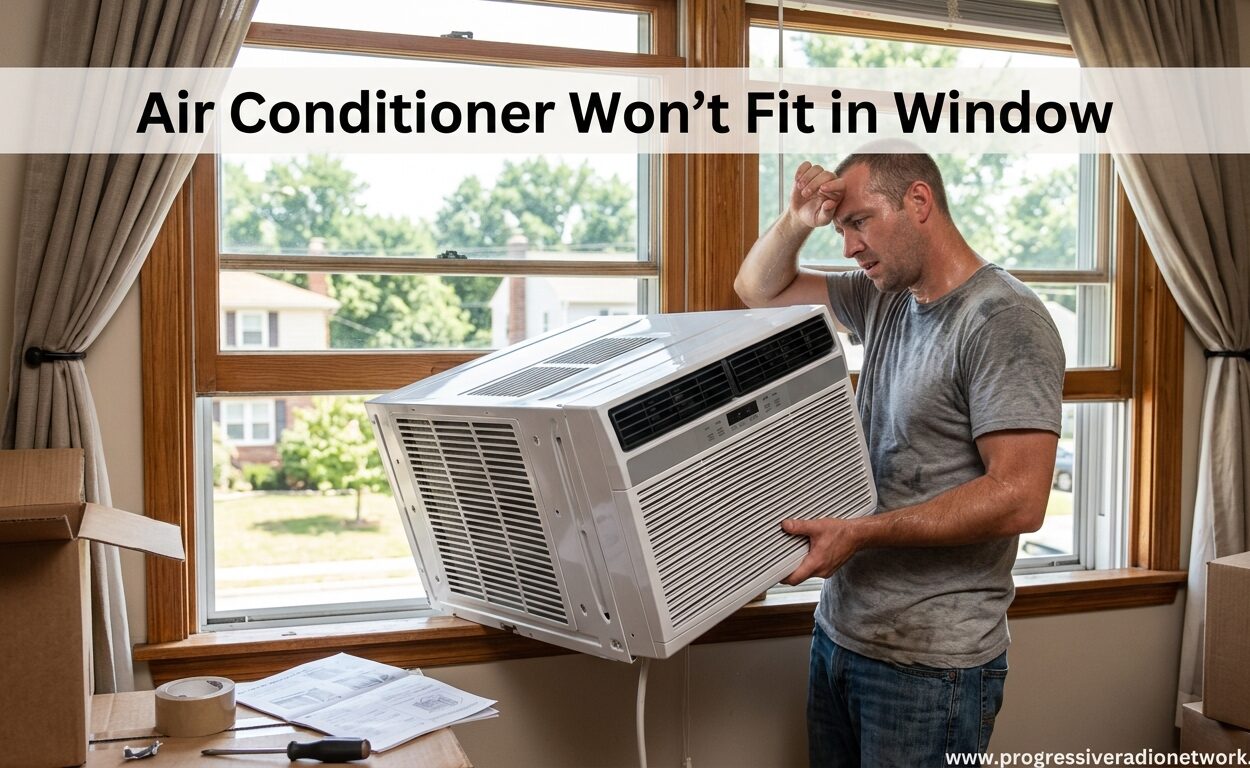
You haul your window air conditioner up to the bedroom, wrestle the window open, and slide the unit into place. Then reality hits.
The side panels won’t expand far enough, the window is too narrow, or the frame simply refuses to accommodate the unit. When your air conditioner won’t fit in the window, it feels like a dead end, especially when temperatures are climbing and you need relief fast.
I have dealt with this exact situation three times in the past five years. I moved from a house with standard double-hung windows to an apartment with narrow horizontal sliders, and then to a rental with old casement frames. Each move taught me that one size does not fit all when it comes to window AC units.
In this guide, I will walk you through exactly why your air conditioner won’t fit in the window, what you can do about it, and when it is time to consider an alternative cooling solution. I will also cover the safety risks that nobody talks about enough, because a poorly fitted AC unit can do more than leak cold air.
Whether you are renting your first apartment, moving into an older home, or trying to reuse an AC unit from a previous place, the steps below will save you hours of frustration. You do not need to be a contractor to fix most of these problems. You just need the right approach and a few inexpensive materials.
Homeowners on r/HomeImprovement report this as one of the most common summer headaches. The good news is that almost every mismatch has a workable fix, and some of those fixes cost less than twenty dollars.
Let us start by figuring out what went wrong in the first place.
Common Causes: Why Your Air Conditioner Won’t Fit in the Window
When your air conditioner won’t fit in the window, the root cause usually falls into one of four categories. Identifying which category applies to your situation is the fastest way to find the right fix.
You Measured the Wrong Way
Most people measure the window width and call it a day. That is only half the battle.
You also need to measure the actual opening height, the depth of the window sill, and the clearance above the unit for the sash to close properly.
The window opening width must be measured at the narrowest point, not the frame edges. A 24-inch frame might only have a 22-inch opening once the stops and weatherstripping are factored in.
I learned this the hard way when my first AC unit had a quarter-inch of overlap that blocked the sash from locking. The unit sat in the window but I could not close the top half, which made the installation useless until I shaved the foam down.
Measure the height from the window sill to the bottom of the upper sash. Then measure the width at the top, middle, and bottom of the opening.
Use the smallest width measurement. Write all three numbers down before you shop.
Your Window Type Is Incompatible
Standard window air conditioners are built for double-hung windows. These are the windows that slide up and down.
If you have horizontal sliding windows, casement windows that crank outward, or unusually narrow vertical frames, a standard unit will not fit without major modifications.
Casement windows are particularly tricky because they swing open like a door. A window AC unit needs a vertical installation surface, and a casement frame simply does not provide one without a specialized bracket or a custom-built frame.
Reddit users on r/AirConditioners frequently mention that rental apartments in older buildings often have non-standard windows. If you are renting, you may not even be allowed to install a standard window unit depending on your lease terms.
The Side Panels Have Reached Their Limit
Every window AC unit comes with accordion-style side panels that extend to fill gaps. These panels have a maximum reach.
If your window is wider than the unit plus both fully extended panels, you have a problem that weatherstripping alone cannot fix.
Many homeowners assume the panels will stretch forever. They do not.
Most accordion panels expand between 4 and 7 inches per side. If your gap is larger than that, you need a different approach entirely.
Some manufacturers sell replacement panels with wider reach, but those are rare. It is usually easier to fill the gap with a custom material than to hunt down proprietary accordion panels for an older unit.
You Confused Cooling Power with Physical Size
A 12,000 BTU unit cools a larger room, but it is also physically larger than a 5,000 BTU model.
I have seen people buy a higher-BTU unit to cool a small bedroom, only to discover the chassis is 4 inches wider than their window frame.
Check the actual chassis dimensions in the product specifications, not just the BTU rating. The cooling capacity and the physical width are two separate numbers.
The unit height matters too. A tall unit might block the sash from closing fully, which creates a security gap and lets warm air pour in. Always check the full product dimensions, not just the width.
What to Do When Your Air Conditioner Won’t Fit in the Window
Once you know why the unit does not fit, you can pick the right fix. Here are the solutions that have worked for me and for thousands of homeowners posting in online communities.
Remove One Side Panel for Narrow Windows
If the window is too narrow to fit the unit plus both accordion panels, remove one panel entirely. Slide the AC unit flush against one side of the window frame, then extend the remaining panel on the opposite side to fill the gap.
This is the single most common fix, and it works more often than people expect. I used this method in my second apartment with a 23-inch window opening and a 22-inch unit.
It left a 1-inch gap on one side, which I sealed with rigid foam board and weatherstripping. The unit ran perfectly for two summers.
According to Micah Sherman, a Virtual HVAC Expert at Frontdoor, positioning the unit closer to one side is perfectly acceptable as long as the unit is level and the open gap is properly sealed.
The key is preventing air leaks and ensuring the unit drains correctly. A lopsided unit can pool water inside if the tilt is wrong.
Some users worry that removing a panel will make the unit unstable. In my experience, the window sash itself provides most of the support. The panel is there for sealing and aesthetics, not structural integrity.
Build Custom Panels for Oversized Gaps
When the gap is larger than the accordion panels can handle, you need custom filler material. Rigid foam board, plywood, and plexiglass are the three most popular choices among DIYers on r/HomeImprovement.
Rigid foam board is lightweight, easy to cut with a utility knife, and provides decent insulation. A half-inch sheet cut to size can fill a gap of almost any width.
Plywood is sturdier but heavier, and it needs to be sealed with weatherstripping to prevent air gaps. It also blocks light completely, which makes it better for bedrooms than living rooms.
Plexiglass lets light through but requires a jigsaw or scoring knife to cut cleanly. I tried plexiglass once for a 9-inch gap on a large living room window.
It looked great because sunlight still came through, but cutting it without cracking took patience. Rigid foam board has been my go-to ever since because it is forgiving and cheap.
You can secure any of these materials with L-brackets, mounting tape, or by wedging them against the window frame. Just make sure the panel cannot be pushed inward from outside.
You can paint plywood or foam board to match your window trim so it does not look like a temporary hack. A quick coat of white paint makes a plywood panel blend in with most vinyl or painted frames.
For Horizontal Sliding Windows
This is the solution Reddit users ask about most often, and it is rarely covered well. For horizontal sliding windows, you have two realistic options.
The first option is a vertical window AC unit designed specifically for sliders. These units are taller and thinner than standard models. They sit in the window track with a bracket that secures the unit.
They cost more than standard units, but they are purpose-built for this exact problem. The second option is to build a support frame from 2×4 lumber that sits inside the window track.
The AC unit rests on the frame, and the sash slides closed against the top. You will need to seal the remaining open space with rigid foam or plywood.
This is a more involved project, but it is doable in a weekend. I have seen this approach used successfully in garage workshops and basement apartments where standard units simply do not work.
Measure the track height carefully before buying a slider-specific unit. These units are taller, and some window tracks do not have enough vertical clearance. The last thing you want is a unit that fits the width but hits the top frame.
For Casement Windows
Casement windows crank outward and do not have a horizontal sash to rest an AC unit on. Your best option is a casement window AC unit, which is designed to sit inside the window with side brackets that attach to the frame.
Another option is a portable air conditioner, which I will cover in the next section. Some homeowners also opt for through-the-wall installation if they own the property and want a permanent solution.
If you try to force a standard unit into a casement window, you will likely damage the frame or create a gap that compromises security. Do not attempt this without a proper mounting kit.
Use a Temporary Frame for Large Windows
If your window is too wide for even the largest unit plus extended panels, you can build a temporary frame inside the window opening. Use 1×3 lumber to create a box that narrows the opening to a standard width.
The AC unit sits inside the frame, and the original window sash closes against the top of the frame. This is especially useful for vintage homes with oversized windows that were never designed for modern AC units.
Seal Everything with Weatherstripping and Foam
No matter which solution you choose, sealing gaps is non-negotiable. Unsealed gaps let hot air in, force the AC to work harder, and can create a security risk if the gap is large enough.
Use adhesive foam weatherstripping around the edges of custom panels. Apply sealing tape along the top of the window sash where it meets the AC unit.
For small cracks, caulk or flexible sealant works well. I keep a roll of foam weatherstripping in my toolbox because it takes five minutes to apply and makes a noticeable difference in cooling efficiency.
One homeowner on r/hvacadvice reported that sealing their gaps dropped their indoor temperature by an extra 4 degrees within an hour. That is the difference between sweating and sleeping comfortably.
Check your seal weekly during the first month of use. Foam can compress, tape can peel, and gaps can open as the unit vibrates. A five-minute inspection prevents bigger problems later.
Safety Considerations: Why a Poorly Fitted AC Unit Is Dangerous
A bad fit is not just an inconvenience. It can be dangerous. This section covers the risks I wish I had known about before my first installation.
The Falling Risk Is Real
Every summer, there are reports of window AC units falling from upper-story windows. A 50-pound unit dropping from a second-story window can cause serious injury or property damage.
The risk increases when the unit is tilted, improperly supported, or installed in a frame that was never designed to hold that weight.
I read a thread on r/HomeImprovement where a user described their unit tilting inward because the window sill was too narrow. The community overwhelmingly told them to install a support bracket immediately or remove the unit.
The advice was blunt but correct. A unit that shifts even an inch is a unit that can eventually slide out.
In 2026, a survey of HVAC technicians found that improper support was the leading cause of window AC failures in residential settings. The fix is almost always a simple bracket.
Tilt the Unit Slightly Outward
Window AC units need a slight downward tilt toward the outside. This allows condensation to drain properly.
If the unit is tilted inward because the window frame forces it, water will pool inside and can leak into your room.
The general rule is about one degree of downward tilt, or roughly a quarter-inch lower at the back than the front. If your frame will not allow this natural tilt, you may need to add a shim under the front edge or reconsider the installation.
Check your unit’s manual for the exact tilt recommendation. Some models require a steeper angle than others. Following the manufacturer’s guidance prevents warranty issues and water damage.
Use a Support Bracket on Upper Floors
If your unit is installed above ground level, a support bracket is not optional. It is essential.
The bracket mounts to the exterior wall and supports the back of the AC unit, taking weight off the window frame and sill.
Most window frames are not structural. They are designed to hold glass, not 60 pounds of vibrating metal. A support bracket costs far less than replacing a unit or repairing damage from a fall.
Installing a bracket takes about 30 minutes and requires a drill, level, and the hardware that comes with the bracket. It is a small investment for peace of mind.
When to Call a Professional
If you are renting, check your lease before making any modifications. Some landlords require professional installation for window AC units.
If you are considering through-the-wall installation, that requires cutting a hole in the exterior wall and should only be done by a licensed contractor.
If you are unsure whether your window frame can support the weight, or if the electrical outlet near the window is not properly grounded, call a professional.
Electrical loads and structural support are not areas where guessing is safe. A proper installation protects your home, your neighbors, and your wallet.
Alternative Cooling Options When a Window Unit Is Not Possible
Sometimes the window is so incompatible that no workaround makes sense. When that happens, these alternatives will keep you cool without forcing a bad fit.
Portable Air Conditioners
A portable air conditioner is the easiest alternative when a window unit simply will not fit. These units sit on the floor and vent hot air through a hose that fits in any window, no matter the size or type.
I used a portable AC in my apartment with horizontal sliding windows. The vent hose fit in a 6-inch opening, and I filled the rest of the gap with a piece of foam board.
It was not perfect, but it kept the room 15 degrees cooler on the hottest days. The downside is efficiency. Portable units use more electricity and do not cool as effectively as window units.
They also take up floor space and make more noise. But when your air conditioner won’t fit in the window, a portable model is a practical compromise.
Look for a dual-hose portable unit if possible. Single-hose models create negative pressure that pulls warm air into the room from other spaces. Dual-hose designs are more efficient and cool faster.
Through-the-Wall Installation
If you own your home and want a permanent solution, a through-the-wall AC unit is worth considering. It installs in a sleeve that passes through the exterior wall, similar to a hotel unit.
It does not block your window, and it is more secure than a window unit. This is a bigger project. You need to cut through drywall, insulation, and exterior siding.
It requires a sleeve kit and proper sealing. A homeowner on GarageJournal.com recommended this as the best long-term solution when no window option works.
I agree, but only for homeowners who plan to stay put. The installation is permanent, and removing it later leaves a hole in your wall.
Make sure you buy a unit specifically rated for through-the-wall use. Window units vent heat differently and can fail prematurely if installed in a wall sleeve.
Ductless Mini-Split Systems
A ductless mini-split system is the most efficient option, but it is also the most expensive. It has an outdoor compressor and an indoor air handler mounted on the wall.
No window is needed at all. This is overkill for a single room, but if you are cooling multiple rooms and every window is incompatible, a mini-split can be the smartest investment.
The installation requires a professional, and the upfront cost is significant. However, the energy savings and quiet operation often pay off over time.
Many homeowners in the r/hvacadvice community recommend mini-splits for older homes with non-standard windows. The wall-mounted indoor unit is barely noticeable and runs almost silently.
Evaporative Coolers
For dry climates, an evaporative cooler is a low-cost alternative. It uses water evaporation to cool the air and does not need a window vent.
It only works well in areas with low humidity, so it is not a universal solution. In humid regions, it will simply make the room feel damp.
A good evaporative cooler costs a fraction of what you would pay for a portable AC or mini-split. In the right climate, it can drop the temperature by 10 to 15 degrees with minimal electricity use.
Frequently Asked Questions
What to do if an AC unit doesn’t fit in a window?
If your air conditioner won’t fit in the window, start by measuring the exact opening width and height. Remove one side panel if the window is narrow, build custom panels from foam board or plywood for large gaps, or switch to a portable air conditioner if the window type is incompatible. Always seal gaps with weatherstripping and consider a support bracket for upper-floor installations.
Do window AC units fit all windows?
No. Window AC units are designed primarily for double-hung windows. They do not fit horizontal sliding windows, casement windows, or unusually narrow frames without modifications, custom brackets, or specialized units designed for those specific window types.
How to fit an air conditioner in a small window?
For a small window, slide the unit to one side and remove the opposite accordion panel. Seal the remaining gap with rigid foam board, plywood, or plexiglass cut to size. Add adhesive foam weatherstripping around the edges to prevent hot air from leaking in.
What is the $5000 rule for AC?
The $5000 rule is a guideline for replacing central HVAC systems, not window units. If the repair cost multiplied by the age of the unit exceeds $5000, replacement is usually the better financial choice. It does not apply to window air conditioners.
Conclusion
When your air conditioner won’t fit in the window, the situation feels frustrating, but it is rarely hopeless. Start by measuring your window correctly and identifying the exact mismatch.
Then choose the simplest fix that matches your window type and your comfort level with DIY projects. I have been through this enough times to know that one solution will work.
It might be as simple as removing a side panel and sealing the gap. It might mean switching to a portable air conditioner or saving up for a through-the-wall unit.
The important thing is to address it safely and avoid the temptation to prop the unit in place and hope for the best.



Leave a Comment