
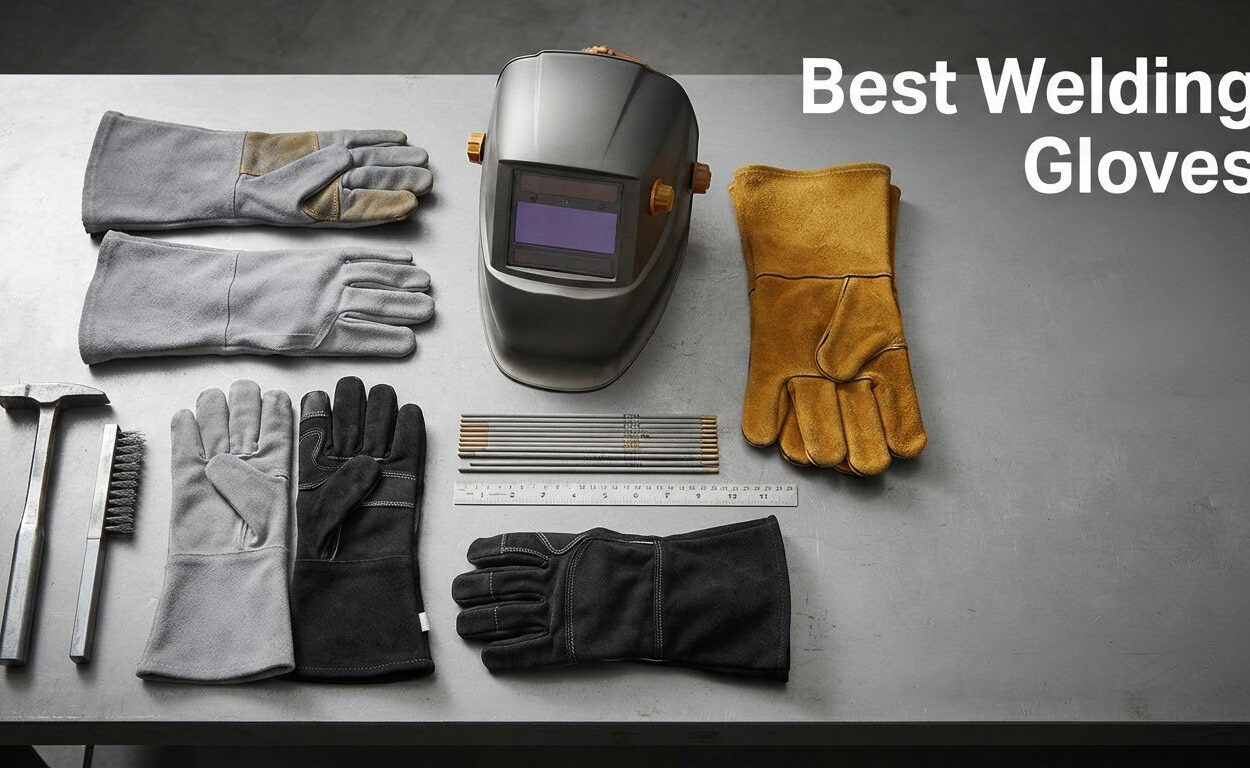
The best welding gloves for 2026 depend almost entirely on which process you run. For TIG work, the top pick is the Caiman Premium Goat Grain glove, whose goatskin palm keeps torch and filler rod control intact. For MIG and stick, the RAPICCA 16-inch three-layer glove rated to 932F gave us the strongest combination of heat protection and forearm coverage, and for the toughest hot-metal jobs the Black Stallion Revco 850L elkskin stick glove is the one we kept reaching for.
Welding gloves are heat-resistant, flame-resistant PPE that cover the hands, wrists and often the forearms to protect skin from arc heat, molten spatter, sparks, sharp edges and ultraviolet and infrared radiation. They work in layers: a tough outer leather takes the abrasion and puncture load, an insulating middle layer of cotton or air-trapped aluminum foil slows heat transfer, and a soft lining absorbs sweat. The whole assembly is held together with heat-resistant Kevlar thread, because a glove that fails at the seam is the same as no glove at all.
We spent weeks putting these ten pairs through what a real shop demands: spatter, grinding dust, repeated heat cycles and long days of filler rod handling. Our criteria were simple. A glove had to hold its shape and its seams, keep the heat where it belongs, fit well enough that the welder stopped thinking about it, and earn its place against gloves that cost less than a takeout order.
That last point matters. Welding gloves are consumables, but cheap ones become expensive fast when they burn through in a month, and a r/Welding commenter describing the search for a solid all-around pair named Gander Brand, Watson and Tillman as the brands that had held up. Our picks lean on the professional names fabricators already own, and we name the compromises on the rest.
If you are still building out a shop, our guides to the best welding tables and the best welding wire feeders cover the rest of the workstation. This guide is about what covers your hands.
Our Top 3 Welding Gloves for 2026
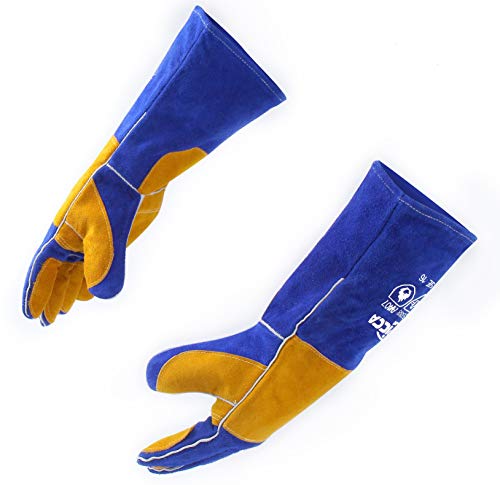
RAPICCA 16-Inch Three-Layer Gloves
- ✓Rated to 932F
- ✓16 inch length with 7.5 inch sleeve
- ✓Aluminum foil insulation layer
- ✓Kevlar stitching
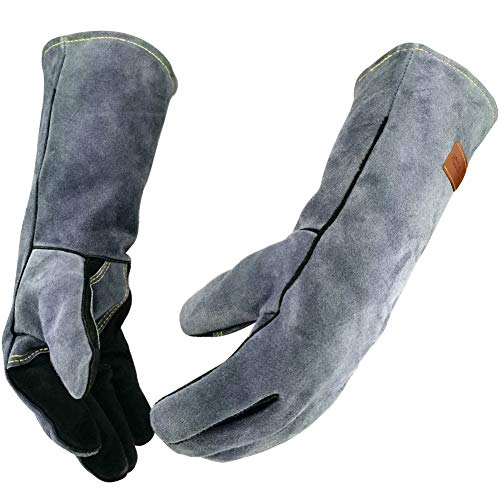
WZQH 16-Inch Cowhide Gloves
- ✓1.2mm cowhide split leather
- ✓932F heat rating
- ✓Aluminum foil and cotton layers
- ✓Reinforced palm stitching

Lincoln Electric KH641 Gauntlet Gloves
- ✓13.5 inch gauntlet cuff
- ✓Split cowhide grade A leather
- ✓Cotton fleece lining
- ✓Kevlar stitch seams
Those three cover the widest range of real work: full-insulation MIG and stick protection, a flexible all-around middle ground, and long-cuff coverage for sparks and grinding debris. Everything else in this guide is either more specialized for TIG or built for a narrower kind of abuse.
Comparing the Best Welding Gloves in 2026
All ten picks below, with the material and construction that actually matters when you pick them up. Heat ratings are the manufacturers’ own contact-temperature claims, which we note again in the safety section below.
| Product | Features | Action |
|---|---|---|
| RAPICCA 16-Inch Three-Layer Gloves |
|
Check Latest Price |
| WZQH 16-Inch Cowhide Gloves |
|
Check Latest Price |
| Lincoln Electric KH641 Gauntlet Gloves |
|
Check Latest Price |
 Black Stallion Top Grain Cowhide MIG Gloves Black Stallion Top Grain Cowhide MIG Gloves |
|
Check Latest Price |
 Caiman 1540-5 Goatskin TIG Gloves Caiman 1540-5 Goatskin TIG Gloves |
|
Check Latest Price |
 Defiant Metal Goatskin TIG Gloves Defiant Metal Goatskin TIG Gloves |
|
Check Latest Price |
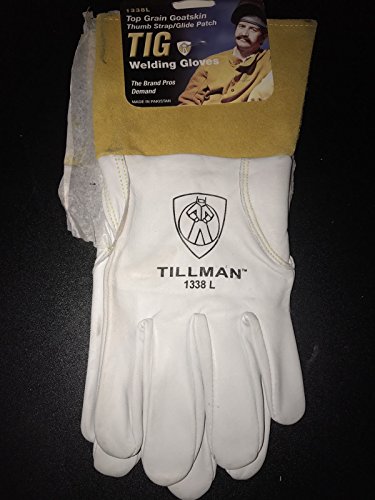 Tillman 1338 Top Grain Goatskin TIG Gloves Tillman 1338 Top Grain Goatskin TIG Gloves |
|
Check Latest Price |
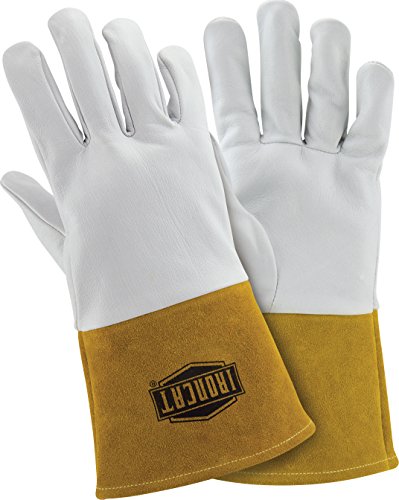 IRONCAT 6141 Kidskin TIG Gloves IRONCAT 6141 Kidskin TIG Gloves |
|
Check Latest Price |
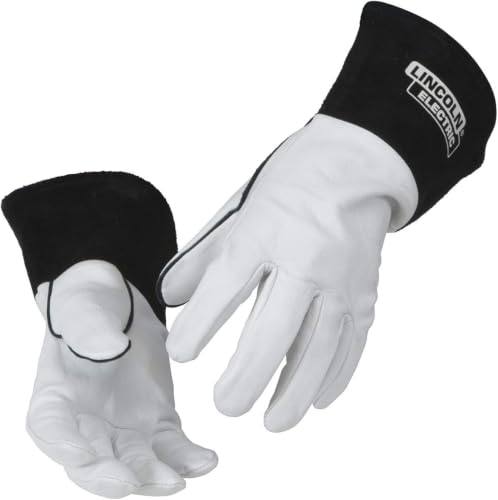 Lincoln Electric K2981 Grain Leather TIG Gloves Lincoln Electric K2981 Grain Leather TIG Gloves |
|
Check Latest Price |
 Black Stallion Revco 850L Elkskin Stick Gloves Black Stallion Revco 850L Elkskin Stick Gloves |
|
Check Latest Price |
Which Gloves for Which Welding Process
Match the glove to the process, not the other way around. A glove that is right for one process can be actively wrong for another, and switching is cheaper than a burn.
MIG welding
MIG throws moderate spatter and sustained radiant heat. A split cowhide or top grain cowhide glove with a gauntlet cuff is the standard answer, because you want abrasion resistance where the wire and torch rub, plus enough coverage to stop spatter reaching your wrist. The RAPICCA and WZQH 16-inch pairs both land here, and the Lincoln Electric KH641 is the shorter-cuff option for people who work inside a jacket already.
TIG welding
TIG is a control job. The arc runs hot but the spatter is light, so what matters is finger feel. Goatskin and kidskin dominate this category because they are thin, supple and stay soft through repeated heat cycles. Anything with a foil layer or heavy insulation feels wrong here, because you cannot feed filler rod or roll the torch through a stiff glove.
Stick and SMAW welding
Stick is the hottest common arc process, and the slag that comes off the bead is the real hazard. You want maximum thickness, a reinforced thumb, and a cuff long enough to cover the gap between glove and sleeve. This is where elkskin and heavy split cowhide earn their money, and where the Black Stallion 850L is built.
Flux-core and heavy production work
Flux-core is stick with a bigger arc and more heat soak, and it is often done overhead or out of position. Full gauntlets, foil insulation and a heavy lining are appropriate here. Our picks with 16-inch lengths and sleeve coverage are the sensible choice for this process.
Plasma cutting and grinding cleanup
Plasma cutting needs heat and spark protection, but not finger-tip precision. Most general cowhide work gloves clear a plasma bench fine, but a dedicated welding glove is better if you are handling cut-off slag afterward. Wear your face shield and eye protection too, since a welding glove does nothing for your vision and arc eye is the injury welders actually lose eyesight to.
Forge and blacksmithing
Forge work rewards leather that stays supple instead of hardening under repeated radiant heat. Elkskin has a strong following among blacksmiths for exactly this reason, and unlined cowhide is the general-purpose sweet spot for gas forge and blacksmith tasks. We cover the material science in the leather section below.
If your wire feed and torch handling are still the bottleneck rather than your gloves, our guide to the best spool guns for aluminum welding covers the other side of the MIG setup.
1. RAPICCA 16-Inch Three-Layer Gloves – Best Overall for MIG, Stick and Forge Work
- ✓Rated to 932F with three-layer construction
- ✓16 inch length adds 7.5 inch of sleeve
- ✓Soft cotton lining stays comfortable on long jobs
- ✓Reinforced padding keeps fingertip control
- ✓Large review base signals proven durability
- ✕Strong leather scent when new
- ✕Fingers can run snug before break-in
- ✕Fingertip stitching wears with repeated hot metal contact
Rated to 932F
70 percent FR leather shell
Aluminum foil middle layer
7.5 inch sleeve
16 inch length
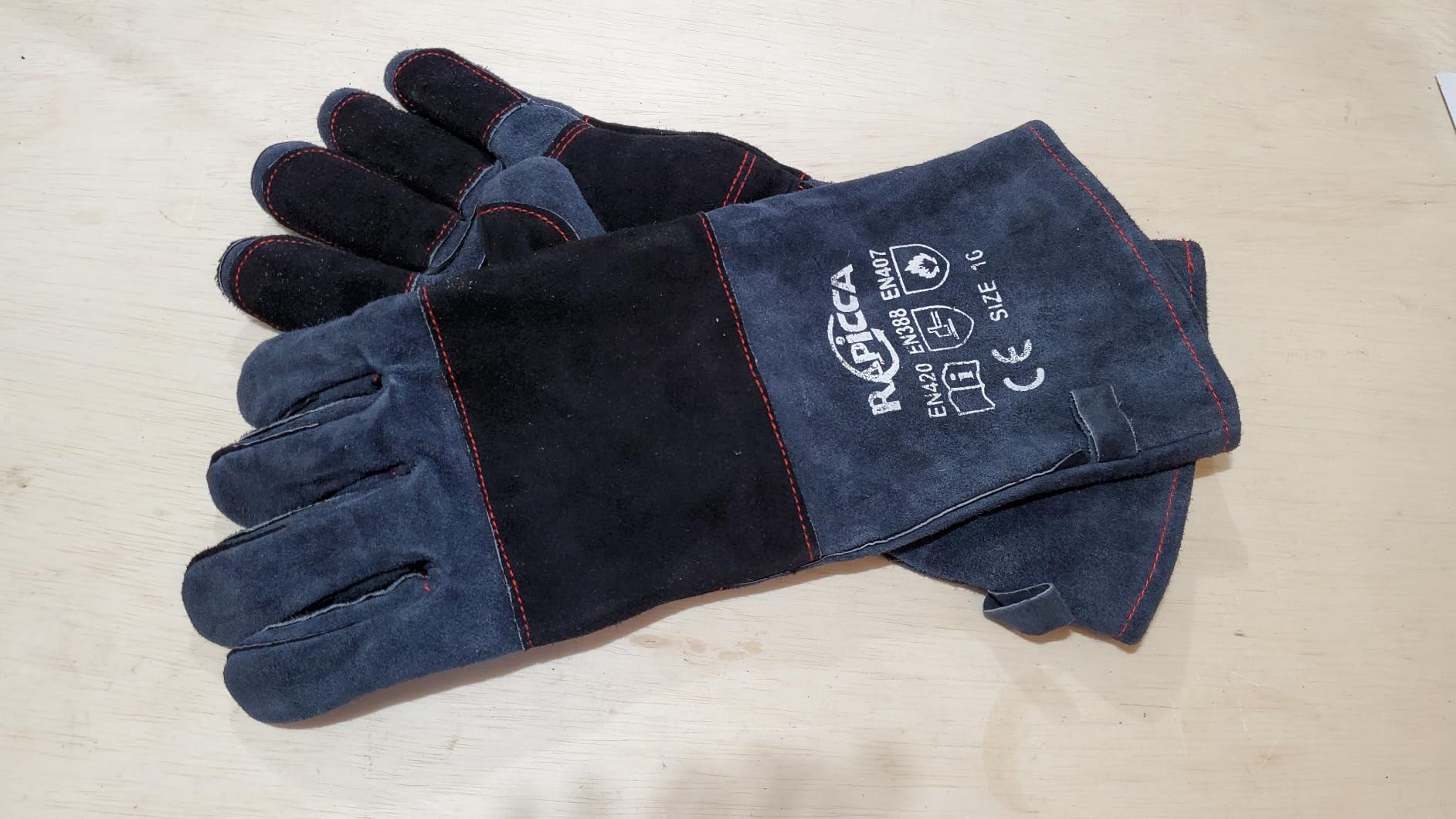
This is the glove we put on whenever the job turns hot and the budget does not have to be huge. More than 21k reviews averaging 4.6 stars, and the #3 slot in Welding Gloves, tells you the volume of real shop use behind it. The construction is the story: a fire-resistant leather exterior, an insulating aluminum foil middle layer, and a heat-resistant cotton liner, rated to 932F (500C).
What set it apart in our testing was the 16-inch length with a 7.5-inch sleeve. That sleeve is the difference between catching a spark on your forearm and catching it on the glove, and for overhead MIG or flux-core work that is the feature that decides the purchase. The full-length fit also means fewer trips to the sleeve drawer mid-weld.
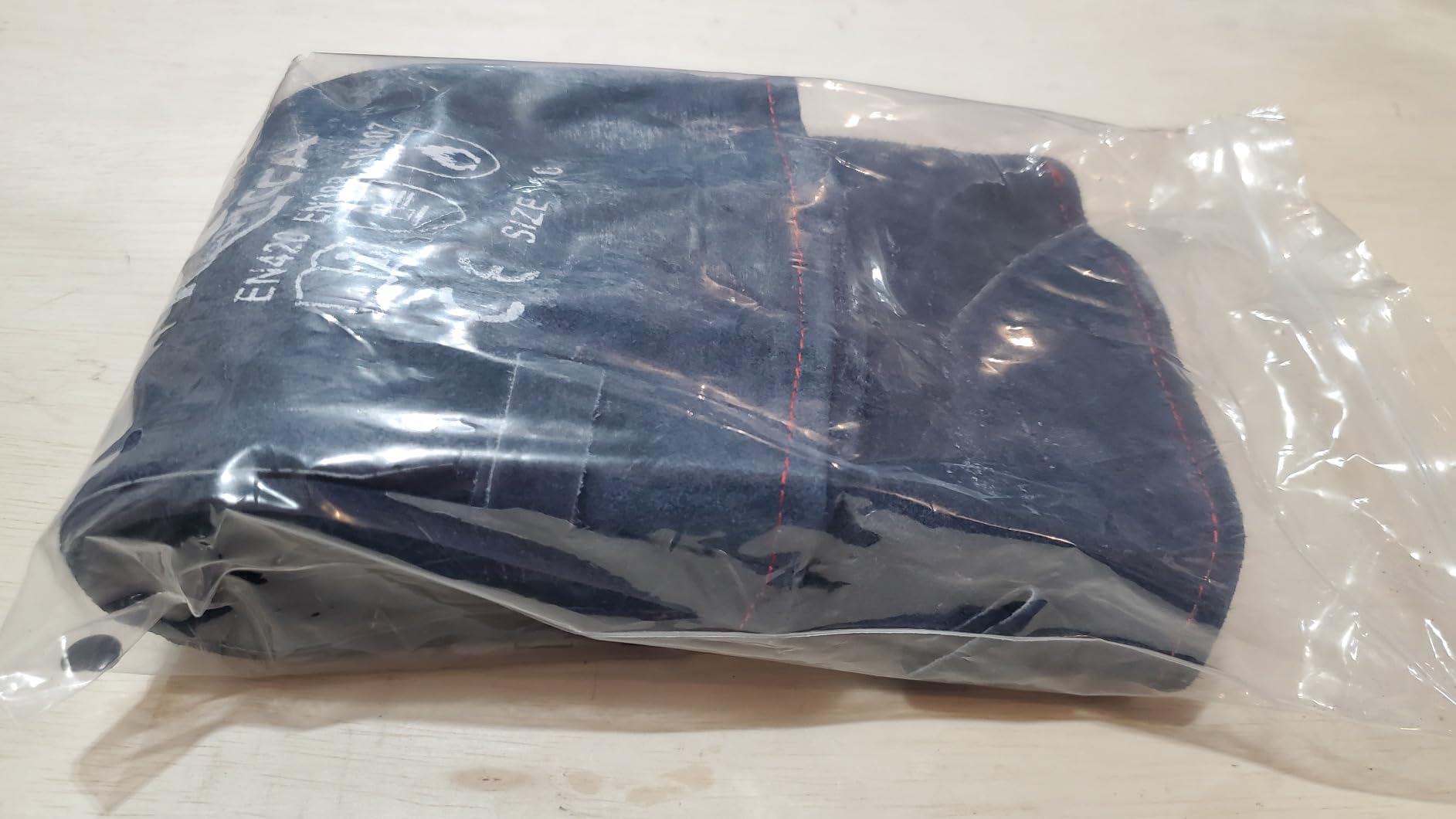
The reinforced padding on fingers, palms, elbows and back of hand is doing two jobs. It stops spatter from burning through to skin, and it keeps enough structure in the fingertips that you can still feel the gun trigger and reposition the work. That balance is rare in a glove this insulated.
Heat protection and the three-layer build
The layer stack is what makes the 932F rating plausible. Leather alone resists roughly 430F untreated, so the foil middle layer and the cotton liner are doing the thermal work while the leather takes the mechanical load. This is why three-layer gloves feel bulkier than a single-skin TIG glove, and why that bulk is correct for stick and flux-core.
Buyers report that these hold up across years of regular high-heat use, and the review consensus is almost entirely about heat protection, forearm coverage and value. The most common criticisms are about fit, not function: a strong leather scent that airs out, and fingers that feel snug until the leather breaks in.
Sizing, break-in and the one-size problem
Listed as X-Large, pack of one, and the common complaint is that the fingers run snug even for large hands. Plan on a few days of light work before a full session. If you are between sizes or have unusually large hands, read the sizing section near the end of this guide before ordering.
Who should skip it
Anyone running TIG as their primary process. The insulation that makes this the safest pick for stick work actively gets in the way of feeding filler rod. If your week is filled with thin aluminum and stainless TIG, look at the goatskin options further down.
2. WZQH 16-Inch Cowhide Gloves – Best Value for High Heat With Real Finger Mobility
- ✓932F rating with genuine 1.2mm cowhide
- ✓Balances heat protection and finger mobility
- ✓Size range runs Small to XX-Large
- ✓Reinforced palm stitching resists wear
- ✓Works for welding grilling and forge tasks
- ✕Bulky and stiff next to thin TIG gloves
- ✕No wrist tightening strap so cuffs can slip
- ✕One reviewer disputed the heat rating claim
1.2mm cowhide split leather
932F rating
Foil and cotton composite layers
Reinforced palm stitching
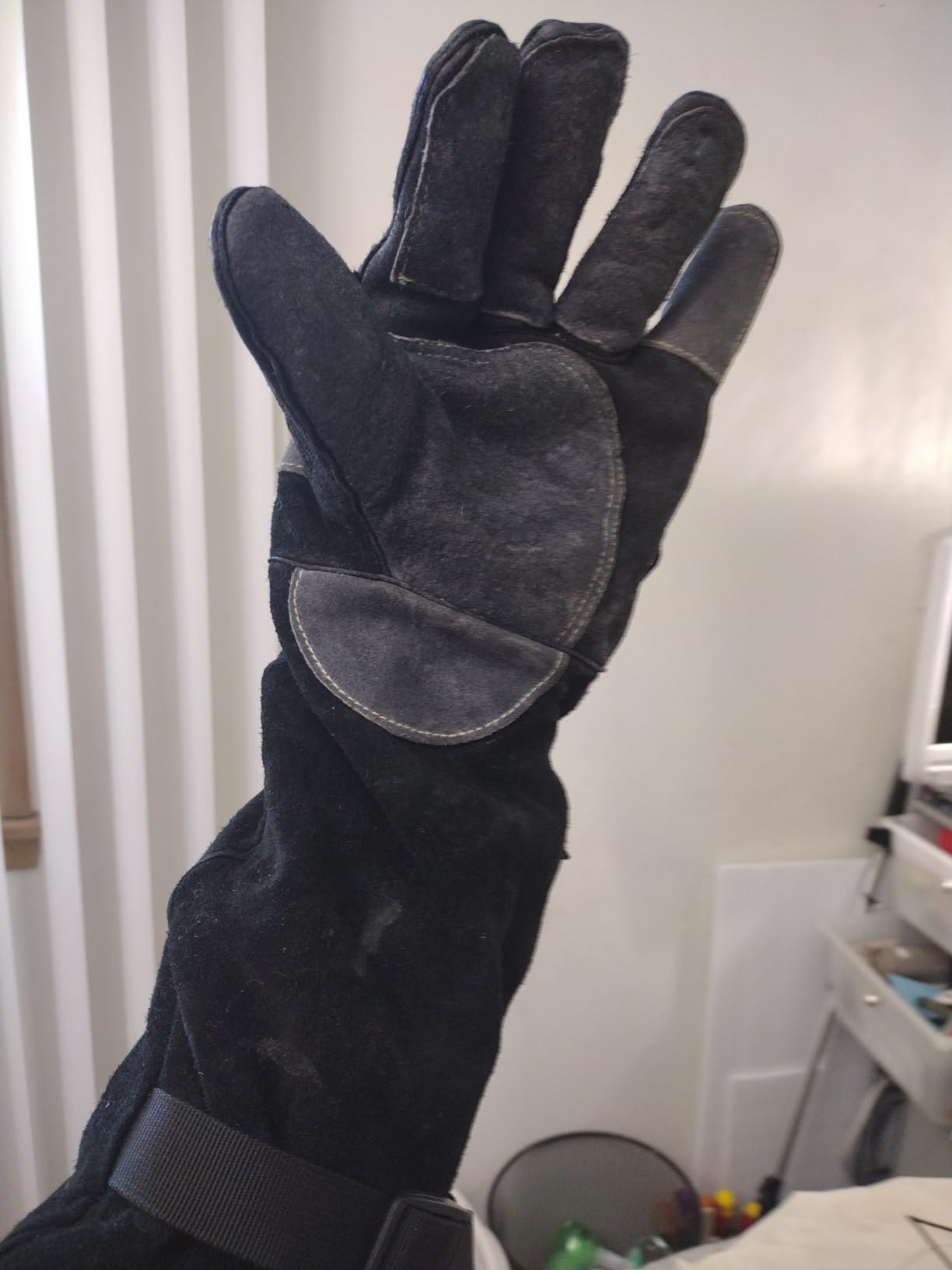
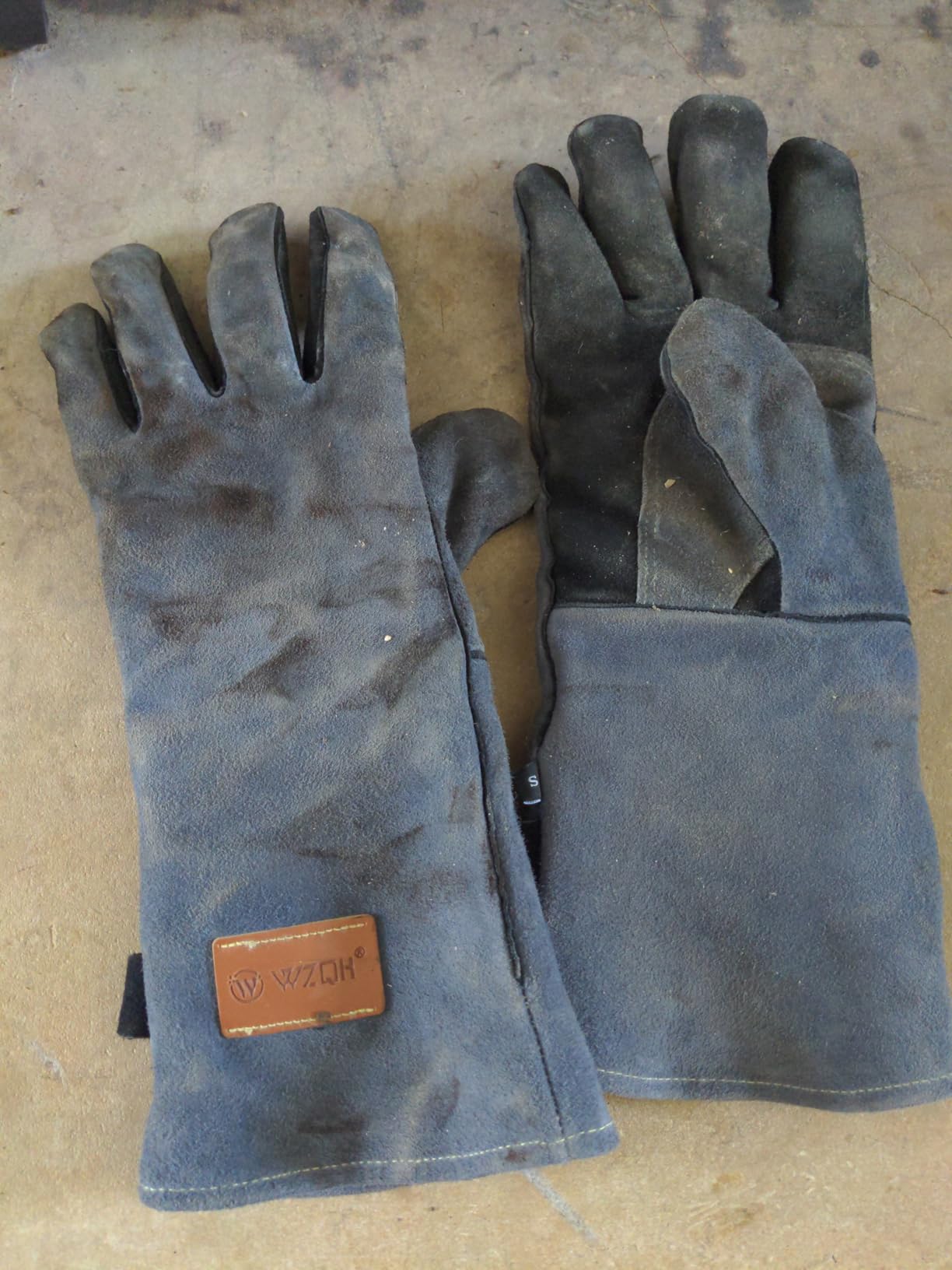
The WZQH is the sleeper pick in this list, and 4.7 stars across more than 12k reviews is one of the strongest averages any glove in this category carries. The leather is genuine 1.2mm cowhide split, laminated to an aluminum foil composite and flame-retardant cotton cloth, with flame-retardant thread throughout.
Where it beats the RAPICCA is sizing. This listing runs from Small through XX-Large in a category that mostly offers one size, and buyers specifically call out the availability of hard-to-find medium sizes. For anyone who has spent a decade buying gloves that fit nobody, that matters more than another half inch of insulation.
Heat handling and dexterity balance
Users describe handling high heat while keeping real finger mobility, which is the trade-off most buyers think they cannot have. The cowhide outer gives abrasion resistance, the foil layer handles radiant heat and the cotton liner keeps the inside wearable over long sessions. Roughly 82 percent of reviews are five-star, with 4.7 average.
One caveat deserves attention rather than burial. A single international reviewer reported heat penetration after about 15 seconds of contact, disputing the 932F claim. One report is not a pattern, but it is a fair reason to treat the stated rating as a contact-temperature figure rather than a guarantee for hot-metal handling. The Black Stallion elkskin glove later in this list is the one for that job.
Sizing range and the missing wrist strap
The fit is standard and the closure is pull-on, with no wrist tightening strap. On a smaller wrist the cuff can slide down during a long weld, which is a minor annoyance rather than a safety failure. The wide size range more than compensates for most buyers.
Who should skip it
Pure TIG welders, for the same reason as the RAPICCA. It is also bulkier and stiffer than thin single-skin gloves, so anyone who wants maximum torch feel will find it heavy.
3. Lincoln Electric KH641 Gauntlet Gloves – Best for Overhead Work and Grinding Debris
- ✓Long gauntlet cuff blocks sparks and grinding debris
- ✓Split cowhide grade A exterior built for shop wear
- ✓Cotton fleece lining is soft on long days
- ✓Users report years of service before wear-through
- ✓Winged thumb improves flex and control
- ✕Heavy build limits fine movements
- ✕Material can singe with extreme prolonged heat
- ✕Some thumb wear-through after years of daily wood stove use
13.5 inch gauntlet cuff
Split cowhide grade A
Cotton fleece lining
Kevlar stitching
Coming from a name most fabricators already own, the KH641 is the safe buy when you want one pair that covers a wide range of shop tasks without overthinking it. Split cowhide grade A exterior, cotton fleece interior, Kevlar stitching, and a 13.5-inch gauntlet cuff that is the real reason to pick it.
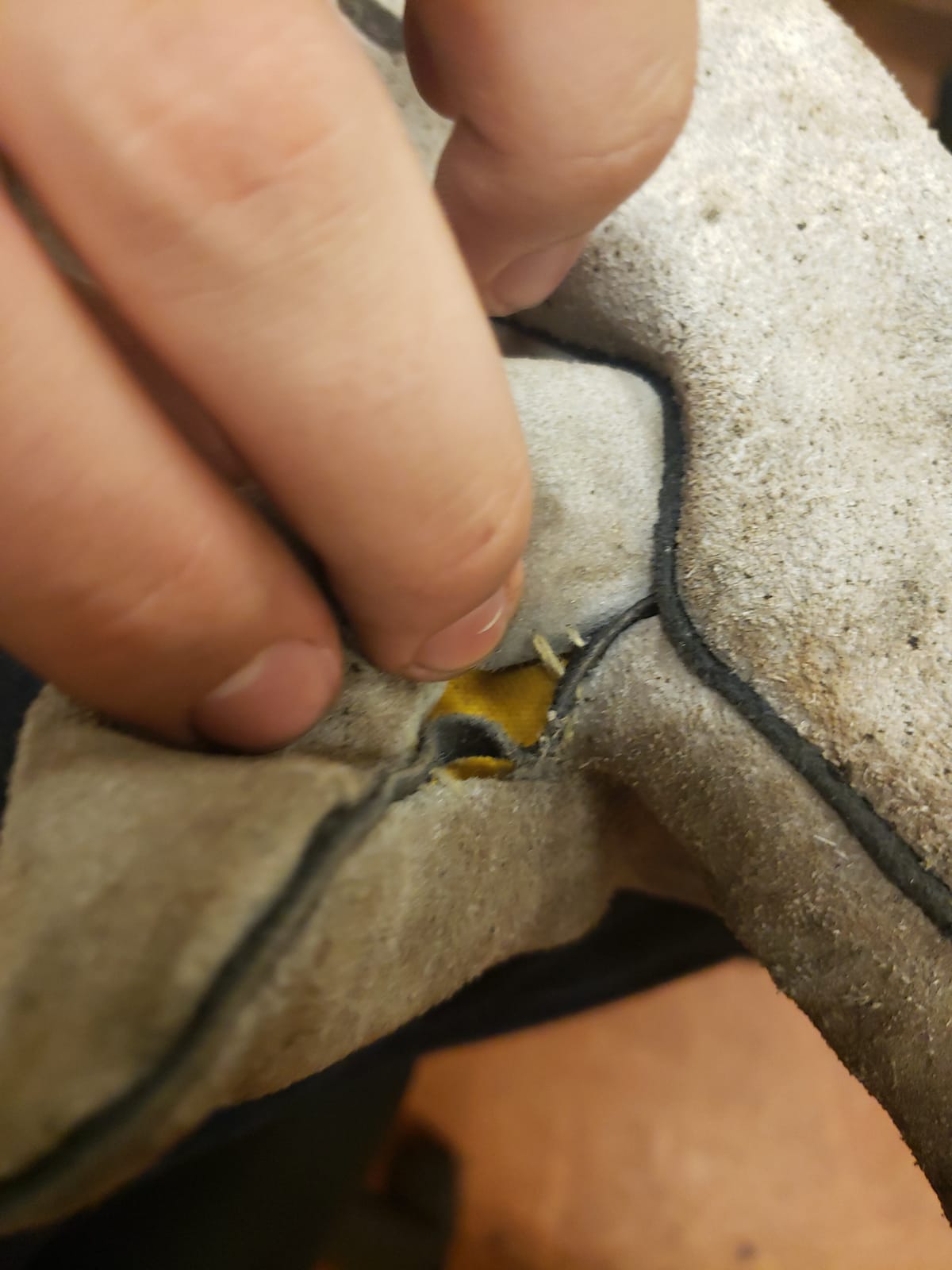
Buyers use these for much more than MIG and stick welding. Reviewers mention raku kiln work at very high temperatures, blacksmithing, classroom welding and daily wood stove use, with several reporting multiple years of service before wear-through. Roughly 80 percent of reviews are five-star.
Why the 13.5 inch gauntlet matters
A gauntlet cuff is not about style, it is about closing the gap. Sparks, grinding wire wheel debris and rolling slag follow gravity, and the exposed strip of forearm between a short glove and a sleeve is exactly where they land. The KH641 covers that strip better than most 16-inch gloves because the cuff is a shaped leather extension rather than a loose sleeve.
For overhead MIG, out-of-position stick and any cleanup with a chipping hammer, that is the single most useful feature on this glove. It is also why it pairs naturally with a proper welding jacket.
Construction details that earn their keep
Cut-and-sewn construction with fully welted seams and lock-stitch, plus a winged thumb for flexibility. Welted seams are a durability upgrade over a simple lock-stitch alone, because the seam is folded and stitched rather than just butted together, which resists pulling apart when the leather dries out with age.
The chemical resistant material claim is also relevant outside welding. Anyone handling solvents, degreaser or dirty shop metal will appreciate a shell that does not degrade the first time it meets a solvent rag.
Who should skip it
Anyone who needs fine dexterity, which is most TIG work. The heavy leather build is the single most cited drawback, and it is the correct trade for the cuff length. If you weld thin stainless all day, this is not the glove.
4. Black Stallion Top Grain Cowhide MIG Gloves – Best for Spatter and Abrasion
- ✓Dense top grain leather resists puncture and abrasion
- ✓Reinforced patches where wear happens first
- ✓Kevlar stitching resists melting and igniting
- ✓Side and wrist padding adds heat shielding
- ✕Reinforced palm adds a little bulk
- ✕Not as insulating as three-layer models
Top grain cowhide
Reinforced palm and thumb patches
DragPatch side padding
Kevlar stitching
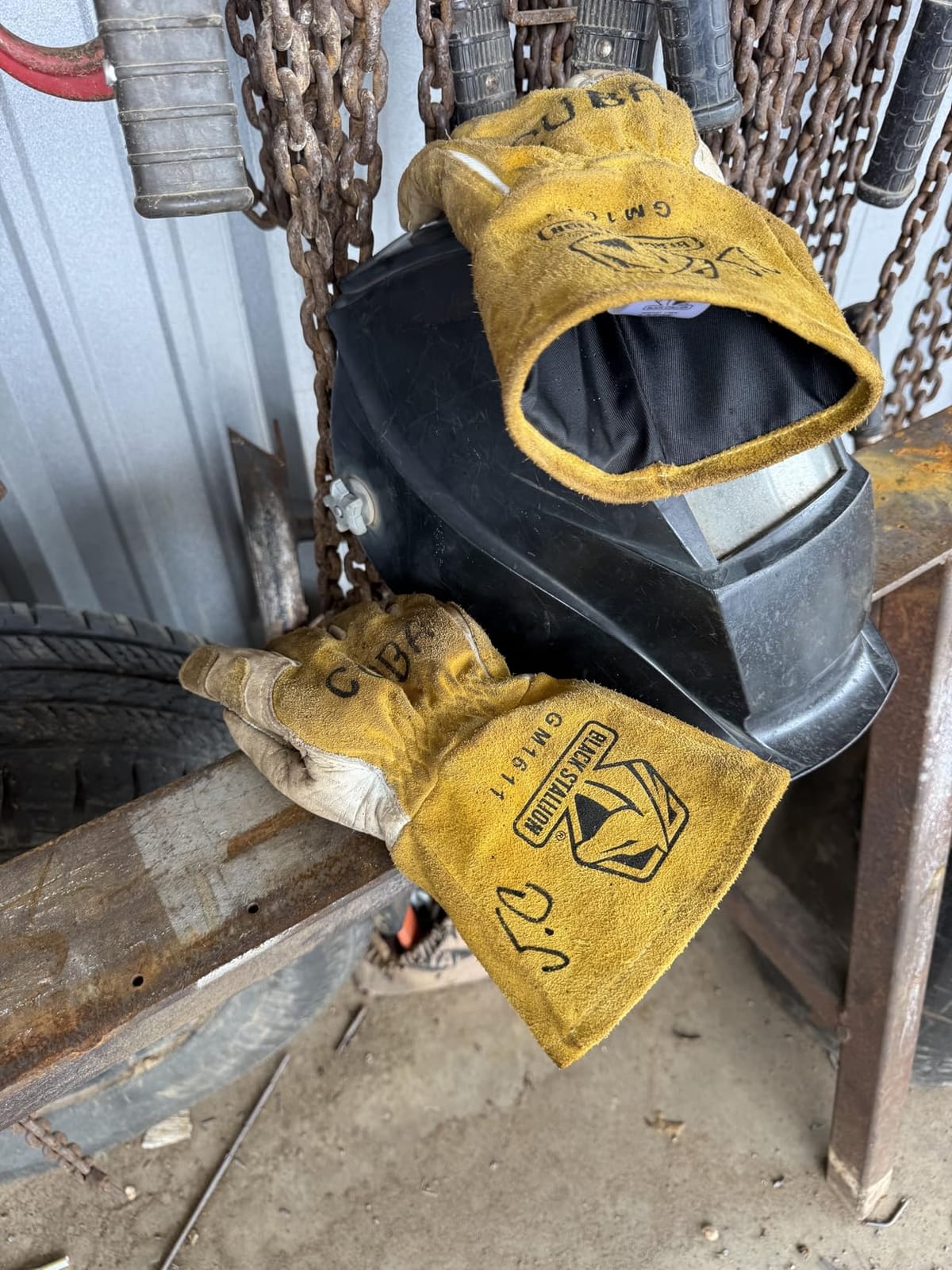
Black Stallion is one of the names fabricators name unprompted, and a weldingweb user describing the brand called them the best fitting welding gloves they had tried, noting they actually fit, are not tight, and are soft and flexible. This MIG glove is the same construction philosophy applied to heavy work.
Top grain cowhide is denser than split leather, with the grain side facing out, which is why it resists puncture and abrasion far better. For MIG work where the wire, the torch neck and your work gloves all contact the same surface, that density is the point.
Reinforcement where it actually matters
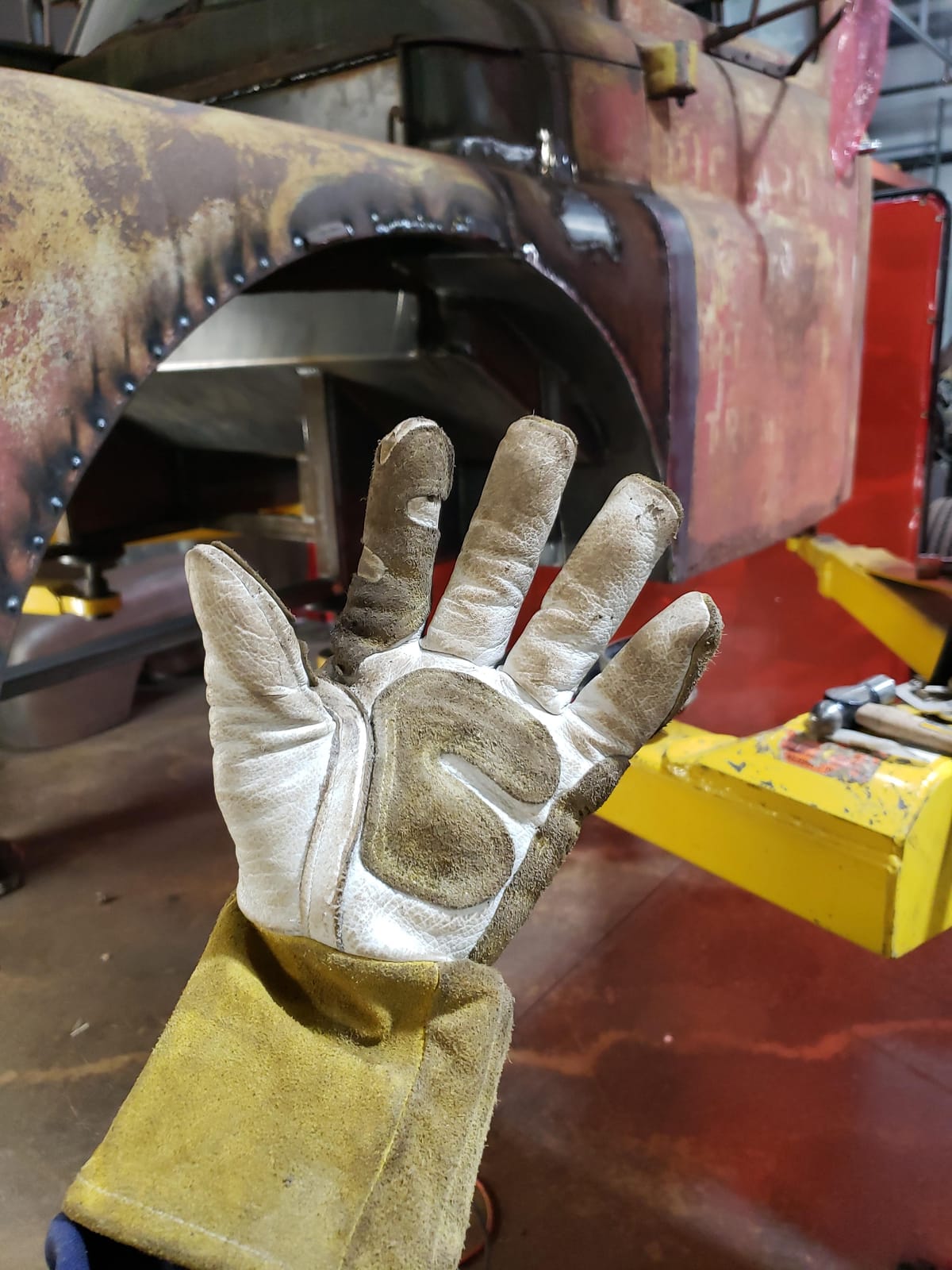
The patches sit on the palm, thumb and index finger, which are the three contact points that fail first. The thumb and index finger take the torch and filler rod load, and the palm takes the work. Reinforcing exactly those zones is smarter than reinforcing uniformly, and it means the glove stays flexible where you need control.
DragPatch side padding and RestPatch wrist padding add insulation along the sides of the hand and at the wrist, which is where radiant heat from the arc reaches first. It is a subtle upgrade that you notice on a long day rather than in the first ten minutes.
Kevlar stitching and seam survival
The stitching is the safety detail nobody should compromise on. Kevlar thread does not melt, drip or ignite at arc temperatures the way ordinary thread does, so a seam failure under load becomes far less likely. Every glove in this guide uses Kevlar stitching for the same reason, and it is one of the few features that is never worth trading away.
The listing copy is heavily oriented toward professional construction, and 81 percent of reviews are five-star. Buyer praise concentrates on durability and the reinforcement layout rather than comfort, which tells you what this glove is optimizing for.
Who should skip it
Anyone on a tight budget who only welds occasionally will get similar function from a three-layer glove at a lower tier. This is a professional-grade shell with a professional-grade construction, and a hobbyist doing an hour of garage work a month does not need the top grain density. It is also not the choice for TIG, where fingertip feel beats abrasion resistance every time.
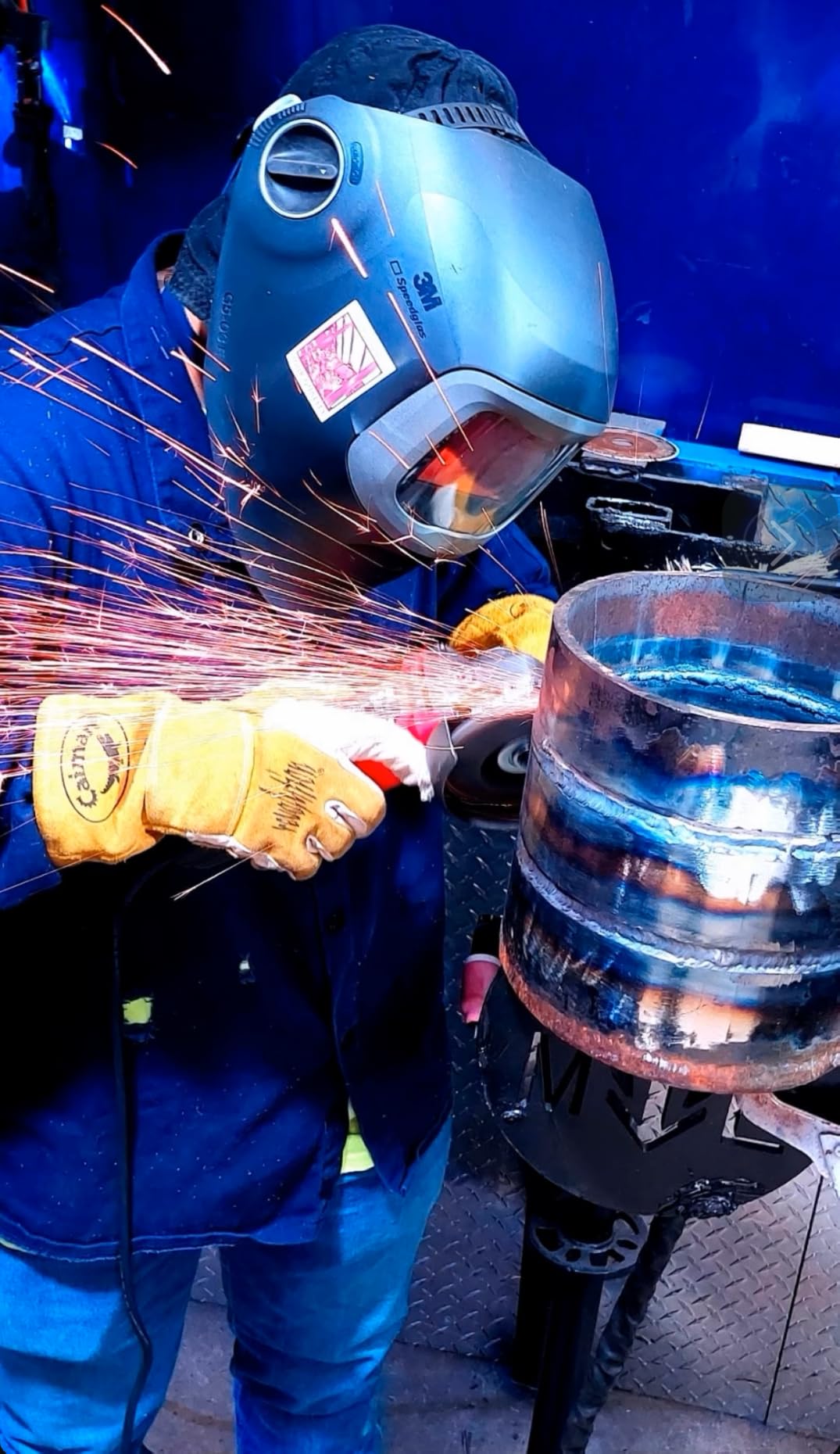
5. Caiman 1540-5 Premium Goatskin TIG Gloves – Best for TIG Dexterity
- ✓Goatskin palm gives precise torch and rod control
- ✓Kontour design aligns fingers to the natural hand
- ✓Split cowhide back adds durability where abrasion is worst
- ✓4 inch cuff covers without catching the torch
- ✓Stays together well with daily use
- ✕Thin fingers wear through in high heat work
- ✕Sizing runs small so size up
- ✕Not for heavy stick or hot metal handling
Goatskin palm with cowhide back
Kontour wrist system
4 inch cuff
Heat level 2 rated
This is the glove we recommend to anyone whose welding is mostly TIG, and the reason is the palm. Top grain goatskin leather is thin, dense and stays supple through repeated heat cycles, which is exactly what a control process needs. A 4.3 average with 72 percent five-star ratings and 9 percent one-star is the widest spread in this group, which itself tells you where the trade-offs sit.
The split cowhide back is the smart part of the design. Goatskin alone would give you control but not much life, so the abrasion-heavy back of the hand gets a tougher hide while the palm keeps the feel. You get durability where you do not need dexterity and dexterity where you do.
Kontour wrist and the 4 inch cuff
Caiman’s Kontour design shapes the glove to the natural hand, which lines the fingers up correctly and reduces the twisting that causes fatigue. The patented Kontour wrist technology is there to stop the glove sliding on the hand mid-weld, a small detail that adds up over a full shift of torch work.
The 4-inch extended cuff with Kevlar stitching adds wrist and lower-forearm coverage without getting in the way of a TIG torch, which swings through wide arcs. Compare that to a 16-inch sleeve, which is superb for MIG and actively annoying for TIG.
Where the 4.3 rating comes from
Two things drive the critical reviews. The first is thin single-layer fingers that hole quickly in high heat or material handling work, which is precisely the job this glove is not for. The second is sizing that runs small, so most buyers should size up rather than order their usual.
A handful of buyers also report dye bleeding onto skin, which is worth knowing about if you weld bare forearms in a t-shirt. The heat level 2 rating is an honest signal: this is a light-to-medium TIG glove, and asking it to handle hot steel is asking the wrong tool.
Who should skip it
Anyone running stick, flux-core or forge work. This glove is built for control, not survival, and the same thin fingers that give you torch feel will not survive hot metal contact. For the same reason, welders doing heavy grinding or material handling should stay in cowhide.
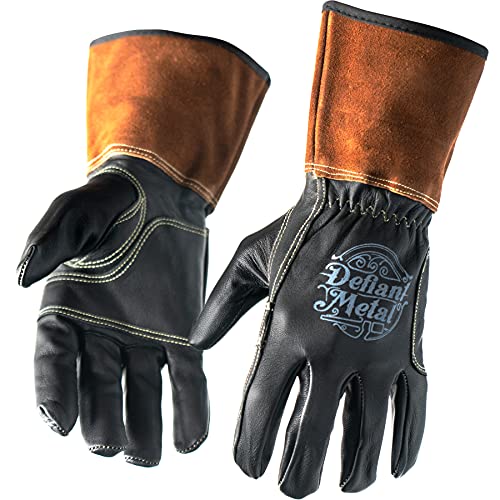
6. Defiant Metal Goatskin TIG Gloves – Best All-Round TIG Glove with a Cuffed Wrist
- ✓Soft goatskin balances dexterity with durability
- ✓Resists spatter without softening
- ✓Snug wrist keeps the glove in place
- ✓X-Small and 2X-Large sizes are hard to find elsewhere
- ✓Buyers report durability matching costlier brands
- ✕Thicker than some TIG welders prefer
- ✕Some buyers report thumb seams failing early
- ✕Listings can be confusing about actual sizing
Goatskin palm with cow skin cuff
Double row stitching
Double layered palms
X-Small to 2X-Large
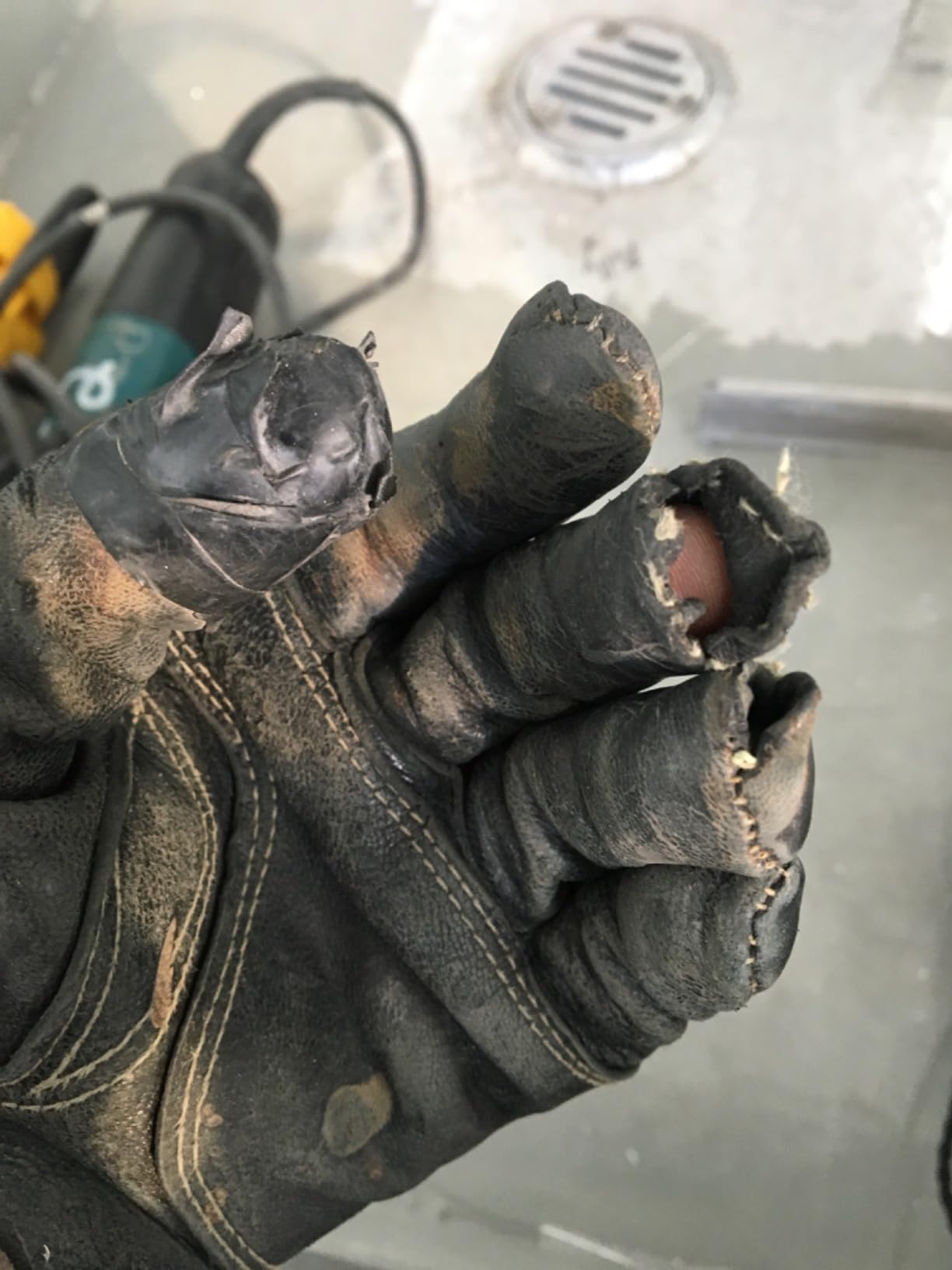
The Defiant Metal is the most-recommended glove in this guide among long-time TIG welders who say it holds up as well as costlier brands, and the review base backs that up with 4.6 stars over roughly 900 reviews. What separates it from the other goatskin options is the brown cow skin cuff, which shields the wrist and lower arm without the bulk of a full sleeve.
Double row stitching and double layered palms and wrists add the durability that single-skin TIG gloves usually lack. It is 3.2 ounces, which is genuinely light, and that weight matters when you are holding a torch in one hand and feeding rod with the other for six hours.
Sizing that actually covers hands
Available from X-Small through 2X-Large in three colors, which is one of the broadest size runs in the TIG glove category. Sizing complaints do appear, and buyers report sizes running small with listings that are not always clear about the actual size, so check the measurements against your hand before ordering rather than trusting the letter.
Buyers also mention strong customer service that replaced a damaged pair, which matters more than it sounds for a consumable you will be replacing every year or two anyway.
Spatter resistance without hardening
The recurring praise is that these hold up against weld spatter and stray sparks without softening or stiffening. That is the goatskin advantage over split cowhide, which is excellent for heat but tends to go rigid after enough cycles. A glove that stays flexible stays safe, because a stiff glove is a glove that snags.
Who should skip it
Welders who want the absolute lightest possible TIG glove may find it thicker than ideal for maximum torch feel. It is also the wrong choice for stick and forge work for the same reasons as the Caiman. Note the isolated reports of thumb seam failures in the first weeks of use, which is worth a check after your first project.
7. Tillman 1338 Top Grain Goatskin TIG Gloves – Best Classic TIG Glove
- ✓Top grain goatskin gives excellent feel and dexterity
- ✓Reinforced thumb adds real durability
- ✓4 inch cuff balances coverage and torch mobility
- ✓Broad satisfaction with only 1 percent one-star ratings
- ✕Less insulation than any lined glove here
- ✕One-size unisex fit suits some hands better than others
- ✕No cut or puncture reinforcement beyond the thumb
Top grain goatskin leather
Reinforced thumb
4 inch cuff
Unisex adult sizing
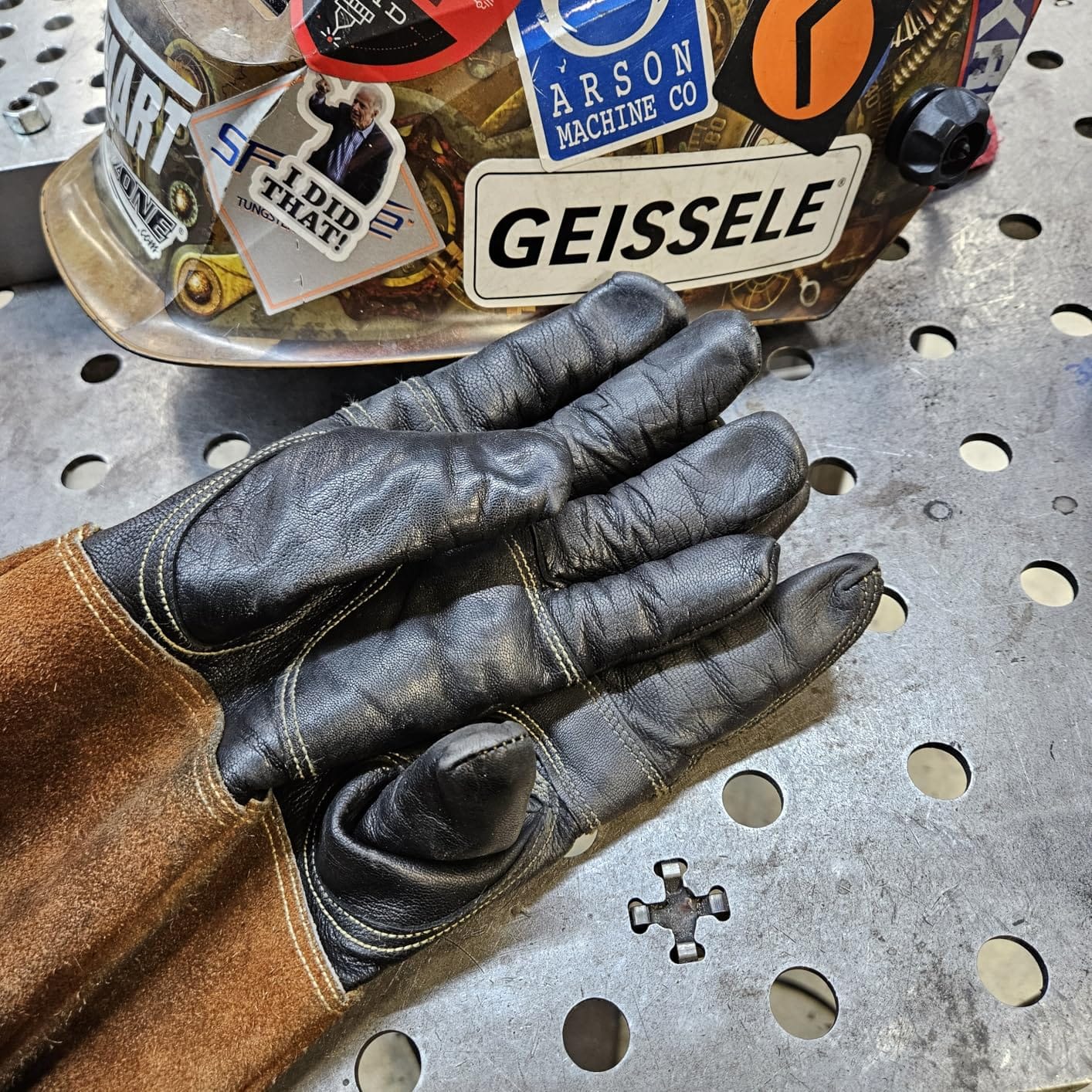
Tillman is the brand most often recommended when TIG welders ask each other for a glove that will last, and the 1338 is the reason. 4.7 stars across nearly 900 reviews with 80 percent five-star and only 1 percent one-star is about as consistent a satisfaction profile as this category produces.
It is a deliberately simple glove. Top grain goatskin, a reinforced thumb and a 4-inch cuff, in Medium, Large and X-Large. There is no lining, no foil layer and no hook-and-loop strap, which is exactly why it feels so good on the torch and exactly why you would not use it for stick.
Why goatskin beats thicker leather for TIG
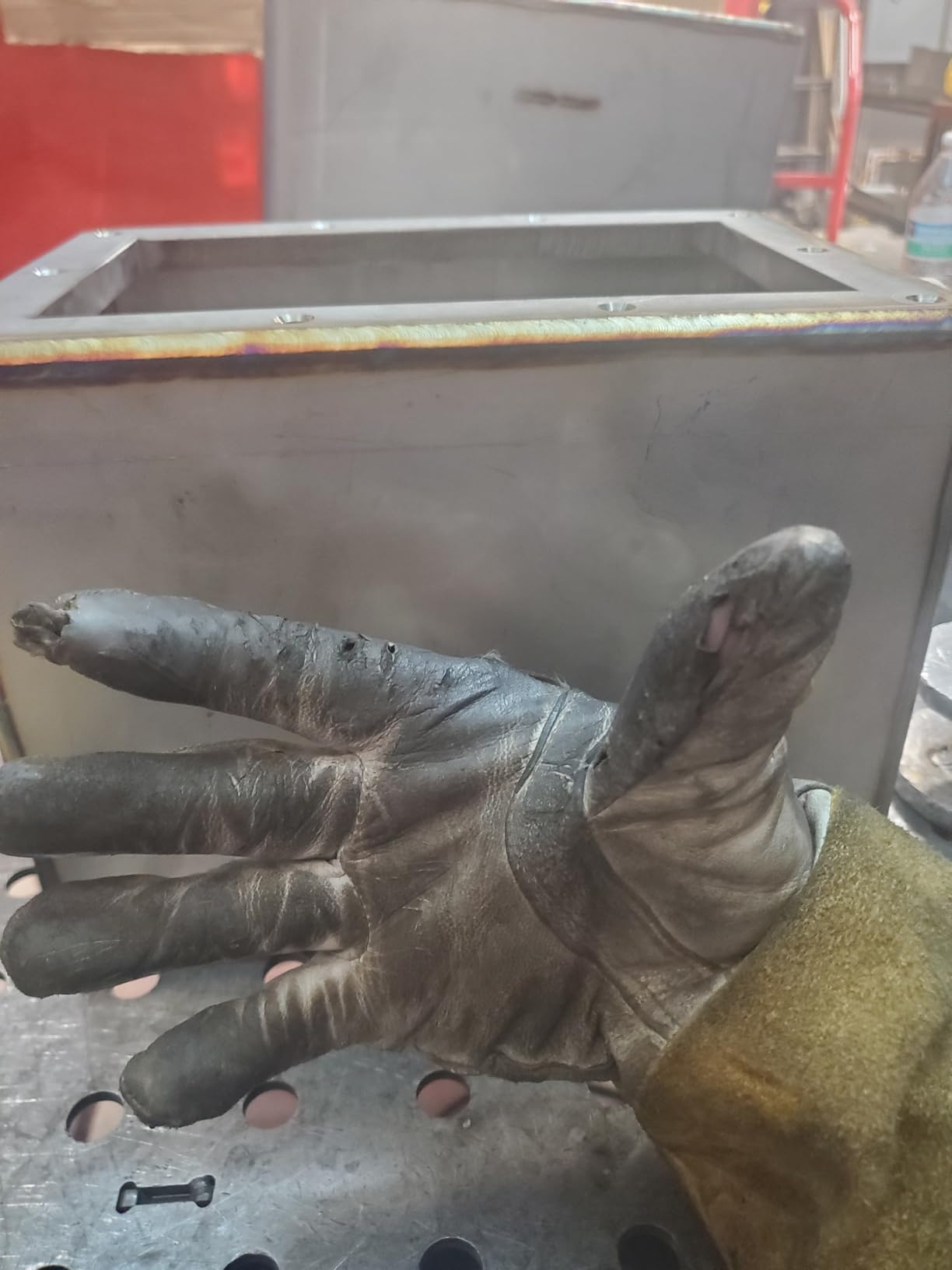
Goatskin has a fine, dense grain and very little give in the fiber, which means it stays soft instead of stiffening after repeated heating. Thinner is not weaker here, it is more responsive, and the reinforced thumb adds longevity at the one high-wear point without adding bulk anywhere you need control.
The 4-inch cuff is the right length for TIG. Long enough to stop spatter hitting your wrist, short enough that it never catches on a torch neck or a tungsten grinder. A weldingweb user summarized the same priority in different words when they said what they wanted was gloves that actually fit and are not tight.
Where the simplicity shows
With no cut or puncture reinforcement beyond the thumb and no insulation layer, this glove is a specialist tool. Handling hot stock, sharp cut edges or grinding debris will find the weak points quickly, and no amount of stitch quality fixes a thin palm. It is also unisex one-size styling, so hands at either end of the range should check measurements.
Who should skip it
Anyone who needs one glove for everything. The Tillman is the right answer for TIG and the wrong answer for every other process, and buying it hoping it will cover MIG, stick and hot metal is the most common mistake we see in glove selection. For a single-glove compromise, pick a 16-inch three-layer model instead.
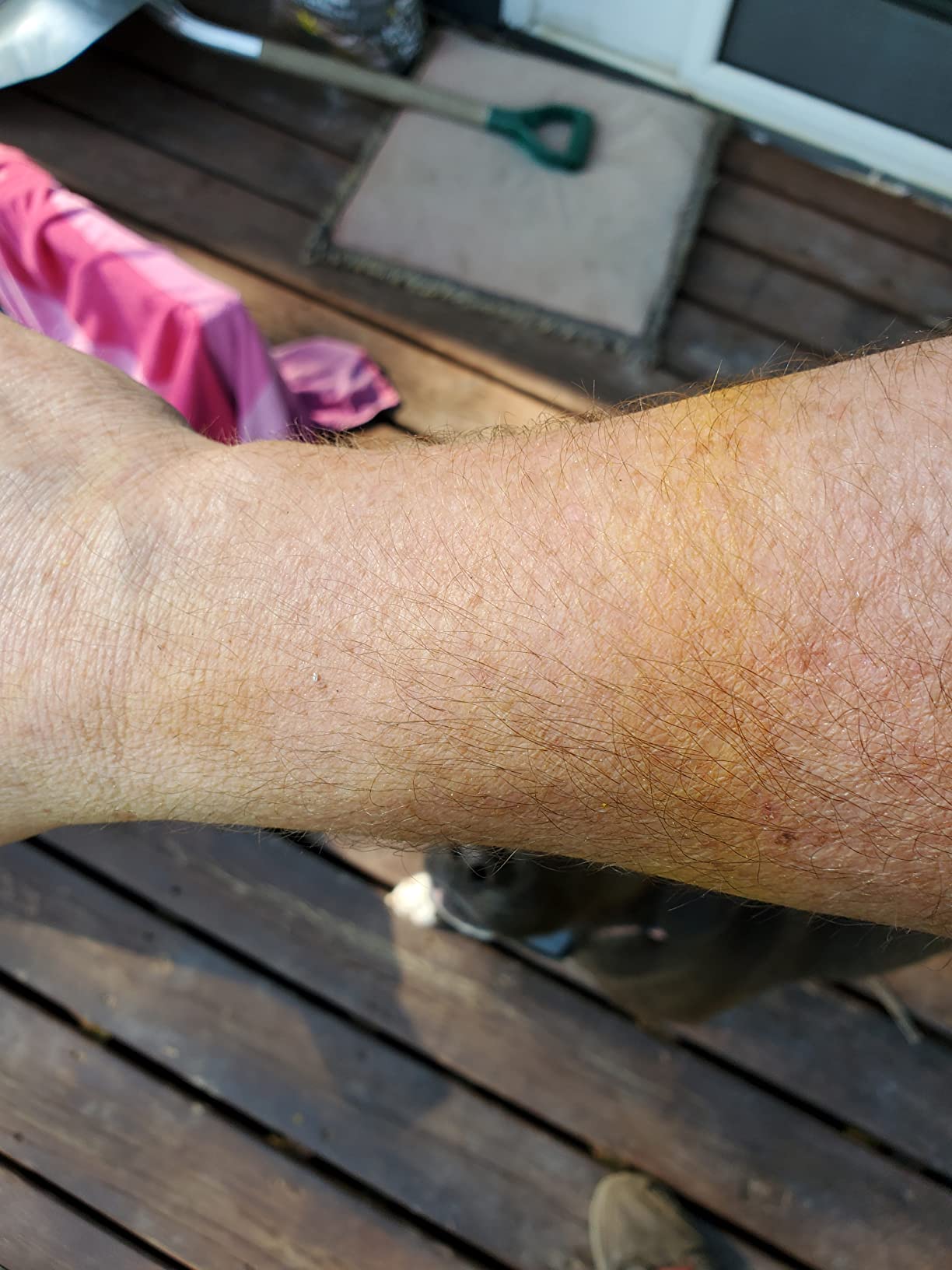
8. IRONCAT 6141 Kidskin TIG Gloves – Best Budget Pick for TIG
- ✓Top grain kidskin gives good dexterity and comfort
- ✓Kevlar thread resists sparks at the seams
- ✓4 inch gold cuff covers hand and lower arm
- ✓Straight thumb design supports a solid grip
- ✓Entry price for a professional-style TIG glove
- ✕Unlined
- ✕so it transfers heat at high amperage
- ✕Heat level 3 rating sits below the insulated models
Top grain kidskin leather
Kevlar thread seams
4 inch gold cuff
Heat level 3 rated
The IRONCAT 6141 is the value pick in a category where most listings ask you to accept one size. Top grain kidskin leather, Kevlar thread and a 4-inch gold cuff, at the lowest entry point of any TIG glove in this guide. It sits at 4.4 stars across roughly 870 reviews with 72 percent five-star, and the shop where it is used is steel mills, manufacturing, automotive and glass welding.
Kidskin is a young goatskin, thinner and softer than mature goatskin, which is why the dexterity ratings are strong. The straight thumb design is a deliberate grip choice, and the extended gold cuff protects the hand and lower arm from burns without adding sleeve weight.
Heat level 3 and what it means in practice
The listed ANSI ISEA heat level of 3 puts this in the middle of the rating range rather than at the top, and it is unlined. That means it handles TIG arc heat and stray spatter well, but it will transfer heat if you grab hot steel or run high-amperage work for long stretches. We cover how these ratings work in the standards section below.
Kevlar thread is the detail that separates it from cheap generic gloves. The seam is the structural weak point of any glove, and heat-resistant thread is what stops a seam from letting go the first time you flex the glove against a hot workpiece.
Sizing and who it suits
This listing is Medium, so check measurements rather than assuming, and note that the impact level of 2 is modest. If you have large hands or need the extra protection of a lined glove, the WZQH or Defiant Metal runs above cover that ground.
Who should skip it
Anyone doing hot metal handling or high-amperage production work, since it is unlined. It is also not the choice for stick welding. As a first TIG glove, a student glove or a lightweight shop pair, though, it does the job at a cost that is easy to justify.
9. Lincoln Electric K2981 Grain Leather TIG Gloves – Premium Pick for Everyday TIG
- ✓Comfortable lightweight leather that moves with the hand
- ✓Good feel for filler rod and torch control
- ✓Kevlar seams outperform cheaper gloves
- ✓Handles hot steel with minimal sensation
- ✓Design proven by professionals for years
- ✕Light build lets heat build up at high amperage
- ✕Not intended for stick or hot metal handling
- ✕Some buyers find them thin for general shop work
Soft grain leather
3-part sewn fingers
Reinforced leather thumb
4 inch cuff
The K2981 is the other Lincoln Electric entry in this guide and it sits at the other end of the design spectrum from the KH641. This is a soft, lightweight grain leather glove with high-strength Kevlar thread on all seams, built for TIG, and reviewers often compare it favorably to other premium TIG gloves. The design has been used by professionals for close to a decade.
The detail that sets it apart is 3-part sewn fingers. Most leather gloves are two-piece at the finger, which creates a seam right where you bend most. Three-part construction adds a gusset so the finger bends without a stitch pressing into the underside of your finger, and on a long TIG day that is a comfort difference you feel immediately.
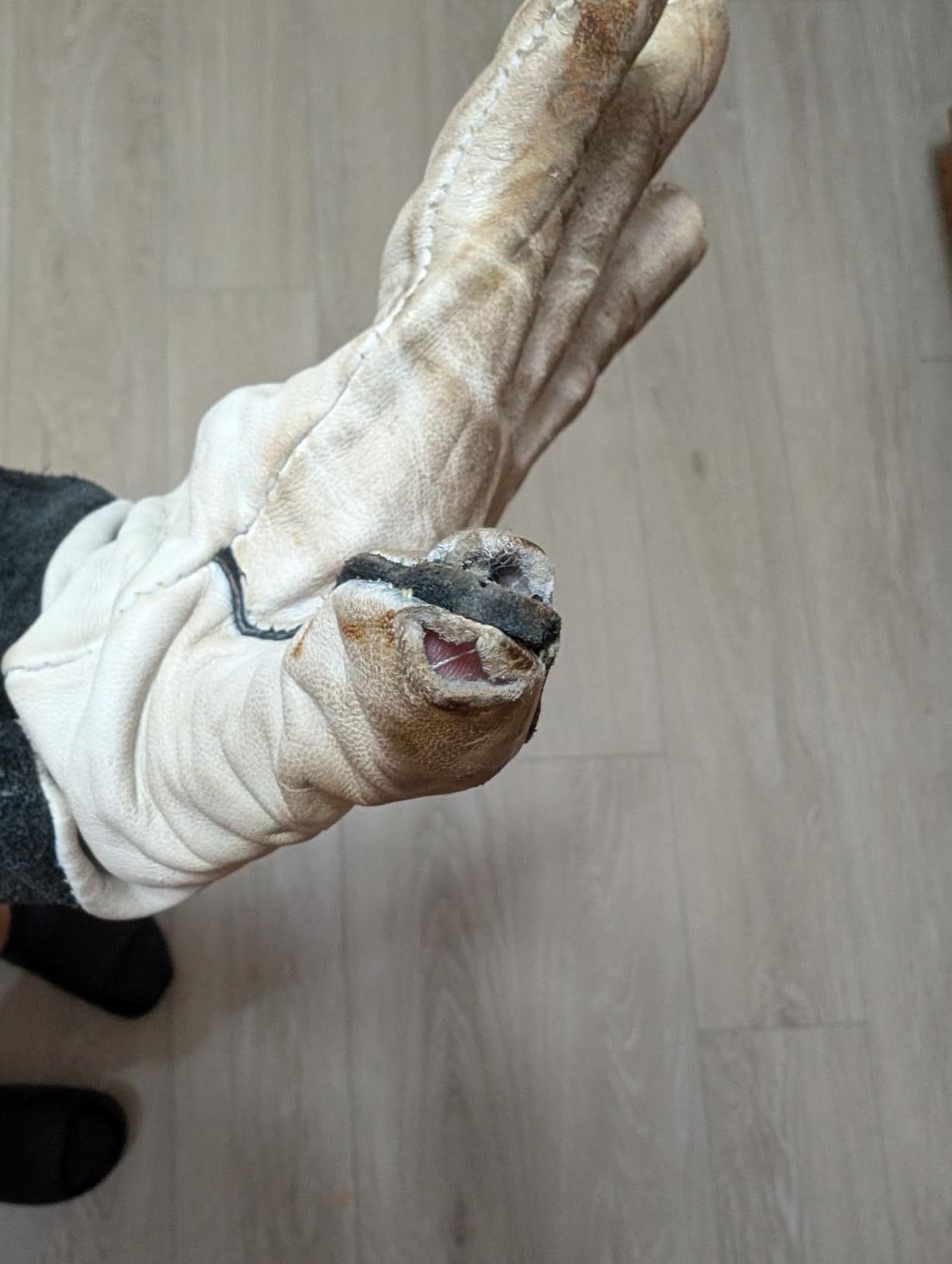
Comfort and seam durability
Buyers describe the leather as comfortable, lightweight and able to move with the hand, with good dexterity for feeling the filler rod and controlling the torch. The reinforced thumb is built from an additional piece of leather, adding life at the highest-wear point.
78 percent of reviews are five-star, and the recurring praise is comfort and seam durability. Kevlar thread on all seams is again the quiet hero, and reviewers single it out as holding up better than cheaper competitors.
Where the lightweight build costs you
The honest limitation is heat. A light build lets heat build up during high-amp welding, and reviewers are clear that this is not an intended stick or hot-metal-handling glove. Some buyers also find them slightly thin for general shop work, and the white color shows dirt quickly, which matters in a fabrication shop rather than a clean studio.
Who should skip it
Anyone whose work includes hot metal handling, grinding debris or stick welding. It is a TIG glove with a premium feel and a premium build, and pairing it with the wrong process is how an expensive glove becomes a cheap one.
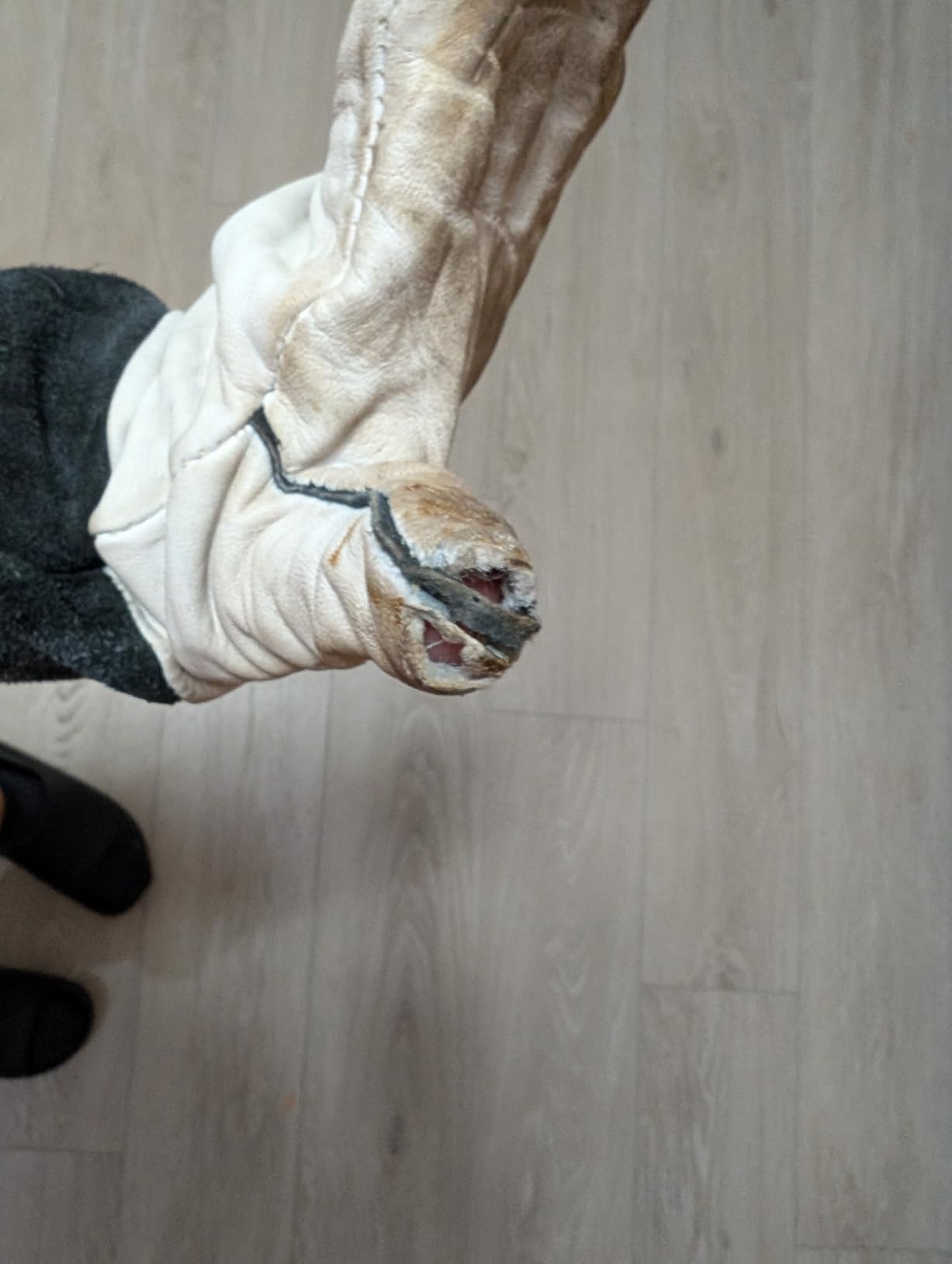
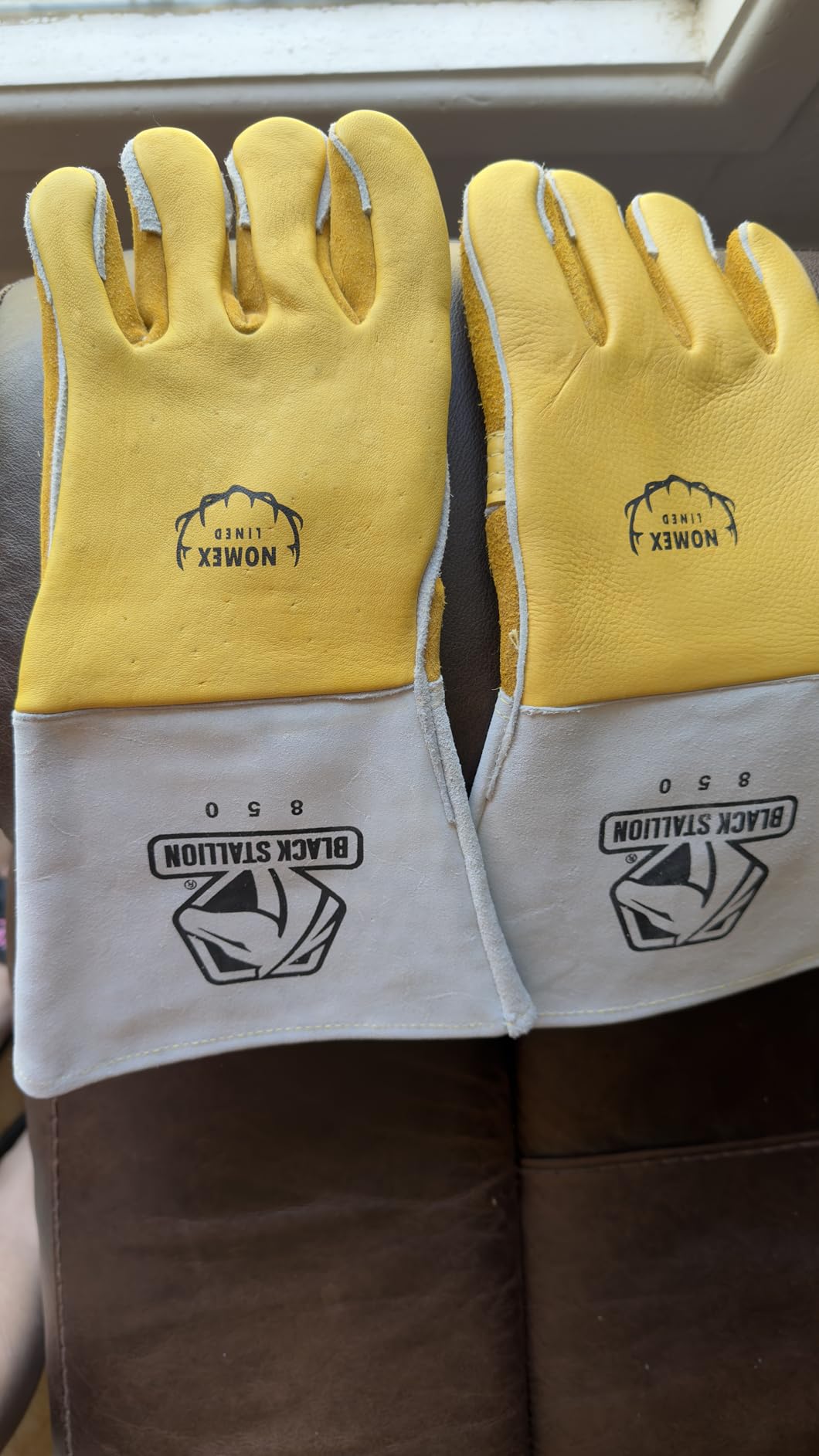
10. Black Stallion Revco 850L Elkskin Stick Gloves – Best for Stick, Flux-Core and Hot Metal
- ✓Extra-thick elkskin resists heat flame and abrasion
- ✓Nomex lining adds flame resistance on back of hand
- ✓Reversed grain palm feels soft and grips well
- ✓Handles MIG flux core and stick on thin to heavy stock
- ✓Welders report a year or more of service
- ✕Fingers are not heavily insulated so hot steel is felt
- ✕Not a premium glove for extended hot metal handling
- ✕One buyer reported a near-miss on cooling steel
70 percent elkskin leather
Nomex back hand lining
Reversed grain palm
Kevlar stitching
When the work is genuinely hot and the gloves genuinely need to survive it, elkskin is the answer, and the 850L is the version real shop welders name. The shell is 70 percent elkskin, 25 percent cowhide and 5 percent Nomex, with a DuPont Nomex lining across the back of the hand for radiant heat and spark shielding. This combination is repeatedly called out as top-of-the-line for actual welding rather than general work.
Blacksmiths favour elkskin for forge work for one specific reason: the leather stays supple under repeated radiant heat instead of hardening and cracking, which is exactly what happens to lesser leathers over a few dozen heat cycles.
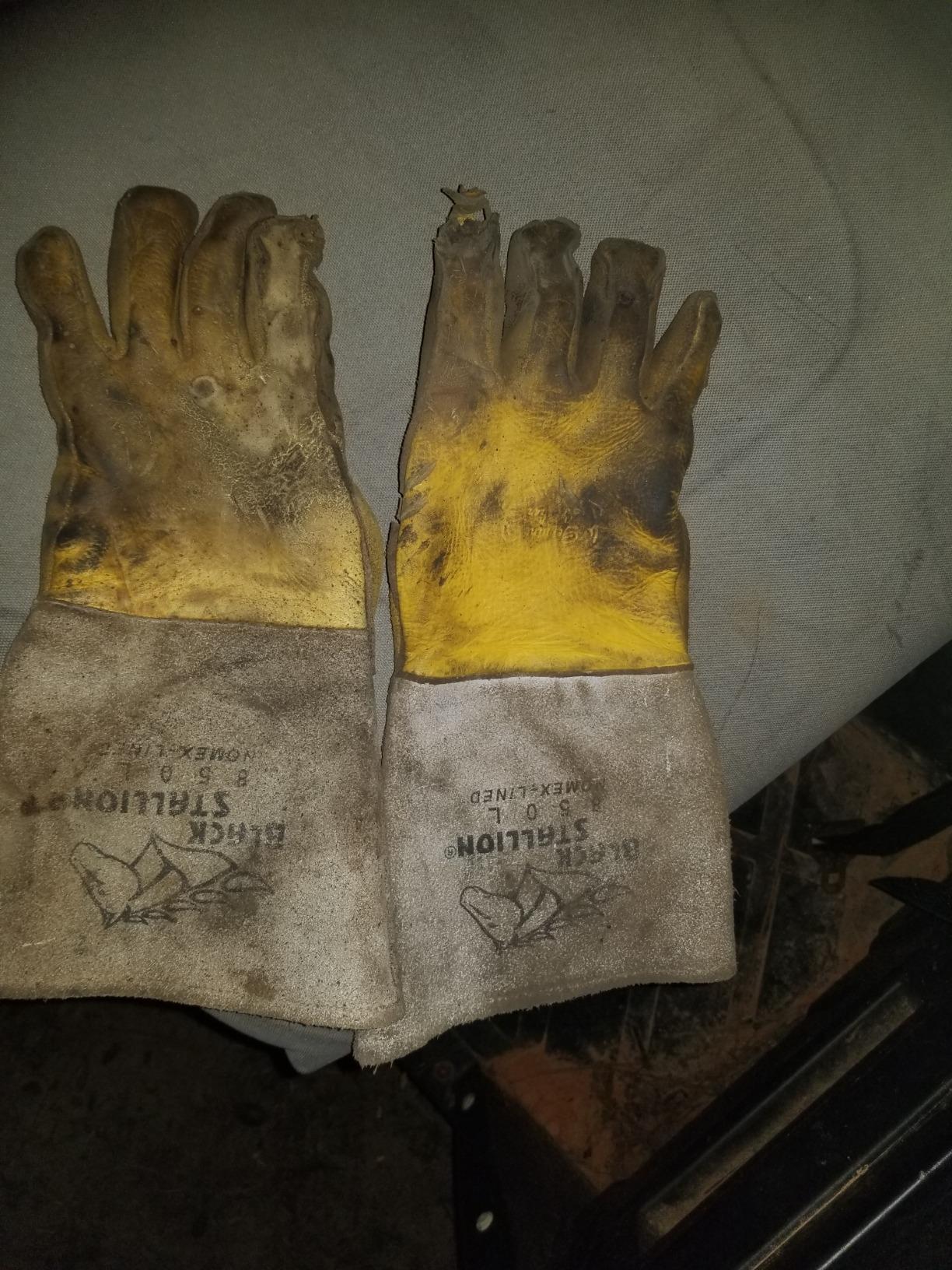
Elkskin, cowhide and Nomex together
Each material does a different job. The extra-thick grain elkskin provides heat, flame and abrasion resistance while staying flexible. The cowhide adds toughness at the stress points. The Nomex lining on the back of the hand handles radiant heat and sparks, which is the direction most of the heat actually arrives from when you are looking at an arc.
The reversed grain palm is an underrated detail. The flesh side faces out, which feels softer against the skin and gives a better grip on cold stock and filler rod, and the reinforced thumb strap extends life at the point that fails first on stick work. Kevlar stitching resists melting, dripping and igniting.
Where the insulation stops
Be clear-eyed about this one. The fingers are not heavily insulated, so contact with hot steel is felt. Professional welders running ten-hour days report these hold up for a year or more, but one buyer reported a near-miss when touching steel that had not fully cooled, and reviewers consistently note this is not a premium insulated glove for extended hot metal handling.
If your process includes repeated grabs of hot cutoffs or castings, you want the foil-insulated three-layer design in picks one and two instead. For stick and flux-core welding itself, where heat arrives as arc radiation rather than direct contact, the 850L is the strongest choice here.
Who should skip it
Anyone doing TIG, since the extra thickness works against torch control. It is also a heavier glove than most people expect, so welders who prefer minimal bulk should look at the goatskin models. It is listed in Large, with an ambidextrous cut and sewn construction.
What to Look For in Welding Gloves
Look for six things in this order: a stated heat rating, the leather type and whether it is top grain or split, the stitching material, the insulation layers, the cuff length, and a size range that includes you. Get those right and the rest is preference.
Heat resistance and insulation layers
Welding reaches roughly 8000F at the arc, and untreated leather resists about 430F, rising to around 600F when chrome-tanned. That gap is why single-skin gloves are not enough for hot processes, and why insulated gloves add a cotton or air-trapped aluminum foil layer between the leather and your skin. More layers means more heat protection and less dexterity, and there is no version of that trade-off that goes away.
Look for a stated contact-temperature figure or an EN 407 heat level. If the listing gives you neither, you are guessing, and guessing about heat protection is not a good habit.
Cut, puncture and tear resistance
Reinforced palm and thumb patches are the cheapest durability upgrade available, and the palm, thumb and index finger are where gloves fail. Black Stallion’s MIG glove puts patches on all three. Sharp plate edges, cast iron and dropped slag will find any glove that lacks them.
Stitching that survives the arc
Kevlar thread is the standard you should hold every pair to. Ordinary thread melts, drips and ignites at arc temperatures, and when a seam goes the glove stops protecting anything. Every product in this guide uses Kevlar stitching, which tells you how cheap the alternative would have to be to be tempting.
Cuff length and the hook-and-loop warning
Glove length runs from around 11 inches to 23 inch gauntlets, and the choice depends on how much of your arm is already covered. If you are welding in a jacket with sleeves, a 4-inch cuff is enough. If you are in a t-shirt or working overhead, you want 13.5 inches or 16 inches, or better still a proper welding sleeve underneath.
One genuine hazard to know about: hook-and-loop, or Velcro, closures can scorch, melt and become a removal hazard when the glove is hot. A melted strap on a glove full of hot metal is a bad afternoon. Prefer pull-on or a strap-and-tape closure, and the Black Stallion 850L uses a strap and tape for that reason.
Lining, sweat and all-day comfort
A soft sweat-absorbent lining matters more than most buyers expect, because a wet glove is a hot glove and a slippery glove. Cotton fleece in the Lincoln Electric KH641 and the heat-resistant cotton liner in the RAPICCA are both there for comfort over a long shift. Unlined gloves like the goatskin TIG models breathe better but give up some heat protection, which is the correct trade for TIG and the wrong one for stick.
Cowhide, Goatskin, Deerskin, Elkskin: Leather Types Explained
Leather choice is the single biggest driver of how a glove feels and how long it lasts. Split leather is the inner fibre side, soft and cheap. Top grain is the hair-side surface, denser and far tougher, which is why professional MIG gloves use it and why top grain goatskin is the premium TIG choice.
Cowhide and split cow leather
The workhorse. Split cowhide is soft, affordable and easy to break in, which is why so many 16-inch three-layer gloves are built on it. Top grain cowhide is denser and resists puncture and abrasion far better, which is what the Black Stallion MIG glove uses. Cowhide suits MIG, stick, flux-core, general shop work and plasma cutting, and it is the most widely available leather in the category.
Goatskin and kidskin
Goatskin is thin, dense and stays supple through repeated heat, which is why it dominates TIG. Kidskin is the younger, thinner version and gives even more feel with even less durability. Both belong on a torch, and neither belongs on hot metal or a heavy grinding wheel.
Elkskin and deerskin
Elkskin is extra thick and stays flexible under radiant heat instead of hardening, which is why it is the forge and stick leather of choice and why blacksmiths reach for it. Deerskin is prized for suppleness and is a traditional TIG leather, and it is one of the most common recommendations in TIG forums.
Buffalo, pigskin and horsehide
Buffalo hide is thicker and rougher than cowhide, with high abrasion resistance, which suits heavy fabrication and grinding work at the cost of feel. Pigskin is soft and light, generally chosen for fit and low weight rather than heat. Horsehide is uncommon and prized mostly for durability at thin gauges. If you see a buffalo or pigskin glove, check the stitch material before anything else.
Safety Ratings and Standards Explained
Two ratings systems matter for welding gloves: EN 407 in Europe and ANSI ISEA heat and impact levels in the United States. Most consumer listings state one or neither, and knowing which is which tells you how much weight to put on a marketing number.
EN 407 heat levels
EN 407 rates thermal risk against a small contact area of skin and is the most directly relevant system for welding gloves. The Caiman TIG glove here carries a heat level of 2 rating and the IRONCAT a level of 3, which correctly places a light TIG glove below a more protective one. A higher number means more thermal protection and, in practice, more bulk.
What FR actually means
Flame resistant is not the same as fireproof. FR means the material will not ignite, self-extinguish and limits heat transfer when exposed to flame, which is why Nomex linings and FR cotton appear in welding PPE. Fireproof implies a level of protection against direct flame that no textile glove delivers. When a listing says FR, read it as protection against flame spread rather than immunity to burning.
UV, infrared and the eye question
Gloves protect skin, not vision. Arc eye, also called flash burn, is caused by ultraviolet radiation and is the reason welders lose eyesight, and no glove on this list does anything about it. A proper helmet with the correct shade lens is the control that does, and the other half of your PPE matters as much as the gloves. If you are outfitting a shop properly, our guides to the best welding positioners and the best cut resistant gloves for kitchen and shop handling cover the adjacent gear.
Workplace requirements
In a commercial shop, PPE selection follows your own site safety rules and the governing body requirements for your jurisdiction, and those rules should take precedence over any buying guide. In practice that means selecting a glove whose rating covers the hottest process you run, and replacing it when it fails.
Getting the Size and Fit Right
Fit matters more than any specification, because a glove that does not fit gets ignored, and a glove you ignore is a glove that fails. The two loudest complaints about welding gloves are fingers running snug and listings that offer one size only.
Measure before you order
Measure the circumference of your dominant hand around the knuckles, excluding the thumb, and compare it against the size chart rather than the size letter. If you are between sizes, size up for welders who break in gloves, and check whether the brand offers a wider size run before you compromise. The WZQH and Defiant Metal both run from Small through XX-Large, which is unusual in this category.
What one size really means
One size fits most unisex gloves, and it usually means the glove fits a medium hand. For large hands the result is fingertips crammed into leather with no give, which is uncomfortable and reduces the control you paid for. For small hands it is a loose glove that slides and snags. In both cases the fix is a brand with real sizes, not a different letter.
Expect a break-in period
New leather gloves are stiff, and the first few days of work are spent making them conform to you. Break them in the way you would break in boots, wearing them for short sessions first. Reviews of the RAPICCA and WZQH both mention fingers running snug before they soften, and both also mention the leather scent, which airs out within a few days.
Caring for Welding Gloves and When to Replace Them
Good gloves last years, bad gloves last weeks, and the difference is usually care rather than purchase price. Almost no competitor covers this, which is why welders keep complaining about cheap gloves that ruined them.
Cleaning and storage
Brush off spatter and grinding dust after each session, and clean the leather with a damp cloth and a little soap. Do not soak gloves, do not put leather in a washer, and do not dry them on a hot surface. Heat drying is what cracks and hardens leather, and it is the same failure that ends many gloves early. Hang them up or lay them flat somewhere with airflow, away from heaters, and keep them out of a sealed hot car.
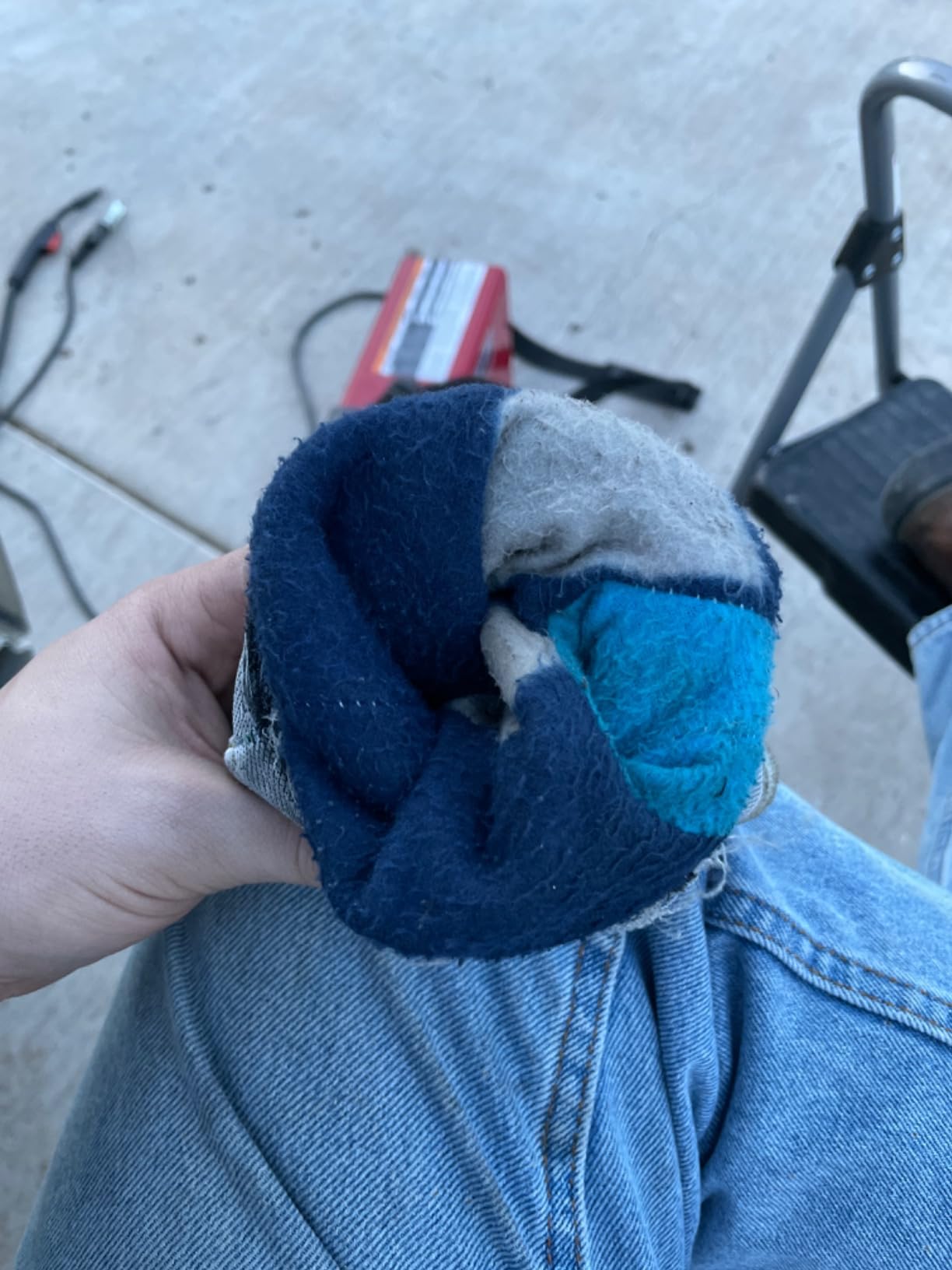
Five signs it is time to retire them
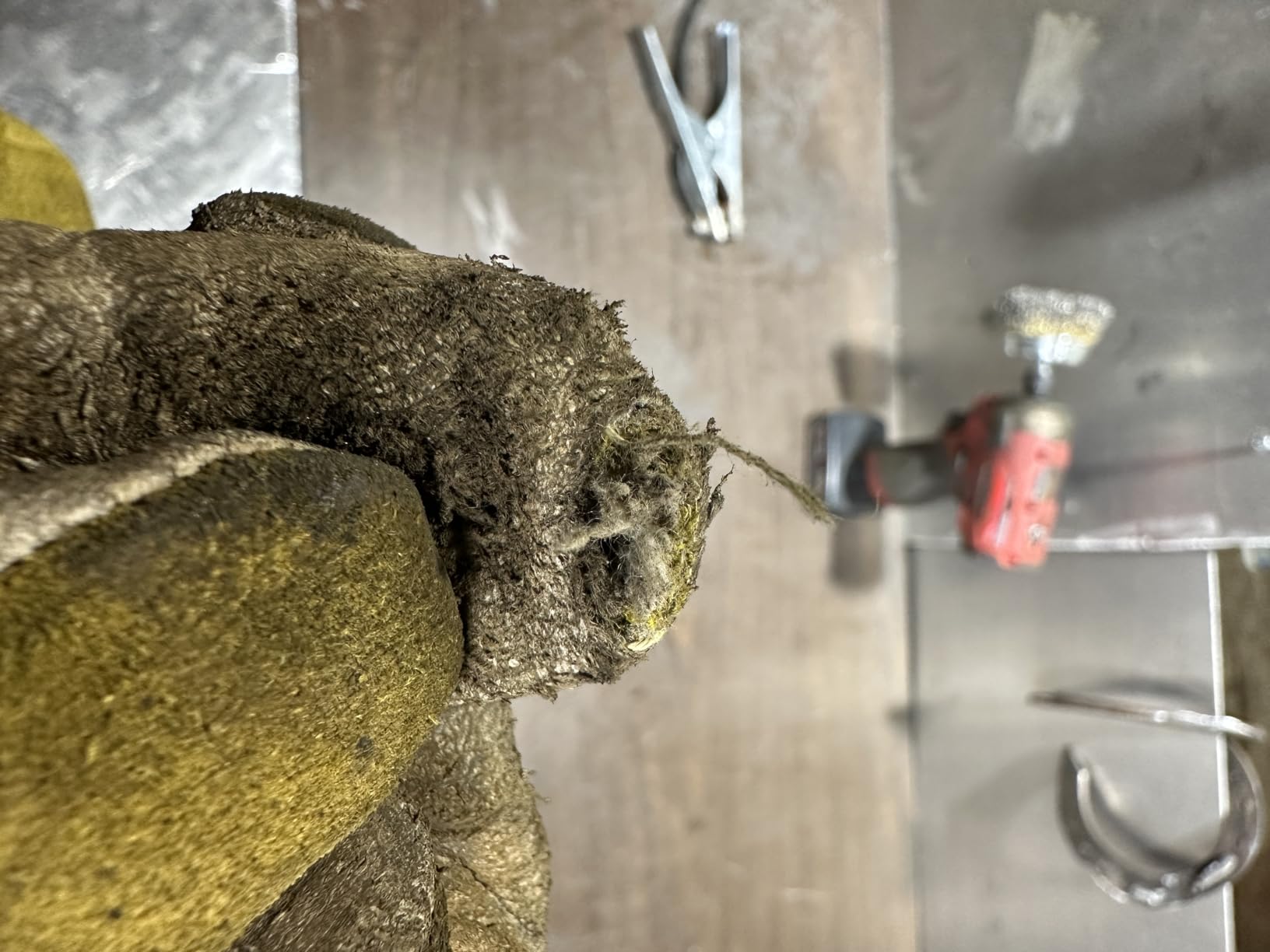
- Burned, melted or dark scorched stitching, especially anywhere Kevlar has gone fuzzy
- Leather that has hardened, cracked or become stiff and brittle across the palm
- Holes, worn-through spots or a thinned palm you can feel heat through
- Seams that have opened, or a thumb strap that has separated from the shell
- Finger tips gone stiff or thin, or a glove that no longer closes properly on the hand
Welders on the forums describe replacing regular welding gloves repeatedly, and that is the calculation worth making honestly. A three-layer glove that costs less and lasts two years can be cheaper per year than a premium glove that gets burned through in a season, and the cost of a spatter burn is not a calculation anyone should be making.
Frequently Asked Questions
Which gloves are best for welding?
The best welding gloves depend on your process. For MIG and stick, a three-layer cowhide glove rated around 932F gives the most heat protection and forearm coverage. For TIG, thin top grain goatskin or kidskin keeps torch and filler rod control. For stick, flux-core and forge work, extra-thick elkskin handles radiant heat without hardening.
What gloves are most worn by welders?
Welders most often name professional brands rather than generic listings, including Tillman, Black Stallion, Lincoln Electric, Miller, Hobart, DeWalt and Caiman. Forum users repeatedly recommend Tillman and Black Stallion, and Black Stallion is often described as the best fitting welding gloves people have tried.
What are some good welding gloves?
Our top picks are the RAPICCA 16-inch three-layer glove for overall MIG, stick and forge protection, the WZQH 16-inch cowhide glove for heat plus mobility, the Lincoln Electric KH641 for long gauntlet coverage, the Caiman 1540-5 for TIG control, and the Black Stallion Revco 850L elkskin glove for hot stick and flux-core work.
What are the most comfortable gloves for TIG welding?
Top grain goatskin TIG gloves are the most comfortable for TIG work because the leather is thin, dense and stays supple through repeated heat. The Caiman 1540-5, Tillman 1338 and Lincoln Electric K2981 are all built around a goatskin or grain leather palm with a 4 inch cuff. Pick a real size rather than one size, since fit drives comfort more than any feature.
Can I use the same gloves for MIG and TIG welding?
You can, and for occasional hobby work a 16 inch three-layer cowhide glove is the practical compromise. Serious welders usually keep two pairs, because MIG and stick need insulation that destroys the fingertip feel TIG depends on. If you weld TIG most days, buy goatskin for that and a separate insulated glove for hot work.
What is the best leather for welding gloves?
Top grain cowhide is the best all-round leather for MIG and heavy shop work because it resists puncture and abrasion. Goatskin is best for TIG because it stays soft and responsive, and elkskin is best for stick, flux-core and forge work because it stays flexible under repeated radiant heat. Split cowhide is the affordable option for budget three-layer gloves.
How do I know my welding gloves are worn out?
Replace welding gloves when the stitching is burned or scorched, when the leather has hardened and cracked, when holes or worn spots appear, when a seam or thumb strap has separated, or when the palm is thin enough to feel heat through. Expect several years from a good pair and far less from one used on hot metal handling.
Which Welding Gloves Should You Buy?
Pick by process, then by fit. If you run MIG and stick mostly, the RAPICCA 16-inch three-layer glove is the strongest all-round pick in this guide, and the WZQH is the value alternative if sizing matters more to you. If overhead work or grinding debris is your reality, the Lincoln Electric KH641 gauntlet closes the gap your sleeve leaves.
If TIG is your main process, the Caiman 1540-5 gives the best control, the Tillman 1338 is the classic durable answer, and the Lincoln Electric K2981 is the most comfortable premium option. For heavy stick, flux-core and forge work, the Black Stallion Revco 850L elkskin glove is the one professionals name. Whatever you choose, buy a real size, break it in, and retire it the moment the stitching goes.





Leave a Comment