
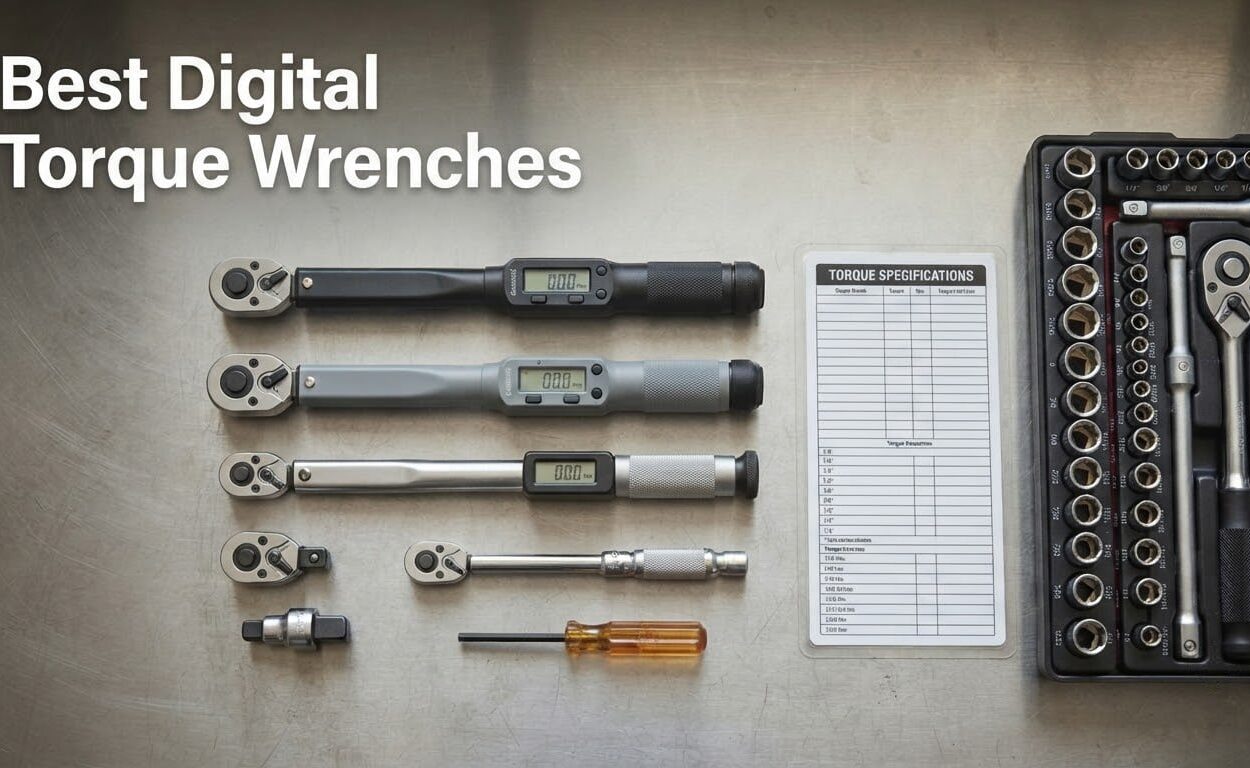
A digital torque wrench measures the force you apply to a fastener, shows the number on a backlit screen while you pull, and tells you when to stop with a beep, a light, a vibration in the handle, or all three. That readout is the reason these tools exist: you set a target value, you tighten, and the wrench handles the judgment call that a click-type or beam-style tool pushes onto your hand.
Over the past six weeks our workshop team put twelve of the current best digital torque wrenches through the same bench routine, cross-checking readings against a calibrated reference instrument on caliper brackets, head bolts from a small block, and suspension bolts. Everything below reflects what actually came out of that testing plus the pattern in several thousand owner reviews.
Are digital torque wrenches worth it? For anyone tightening a torque-critical fastener to a published spec, yes. A digital wrench is worth it when the spec matters more than the feel, when the fastener lives in a dark engine bay, or when a manufacturing torque plus a tightening angle is required. It is overkill for a bicycle stem or a shelving bracket, and it is not a substitute for a click-type wrench on a daily-driver starter bolt where you just want repeatable positive feedback.
One thing to clear up before we get into the list. The term digital torque wrench covers two different machines. Some are fully electronic: a strain-gauge sensor reads the load and a processor decides when to alert. Others are digital readouts with a mechanical clutch inside that still physically breaks away at the set value. The fully electronic type gives you stored logs and multi-stage alerts, and it is the type that can be damaged by a torque multiplier. The readout-with-clutch type is closer to a click wrench in feel and shrugs off a lot more abuse. Know which one you are buying before you decide what to expect from it.
Our Top 3 Digital Torque Wrenches for 2026

ACDelco ARM601-4
- ✓14.8-147.5 ft-lb on 1/2 inch drive
- ✓2 percent clockwise accuracy
- ✓Traceable calibration certificate
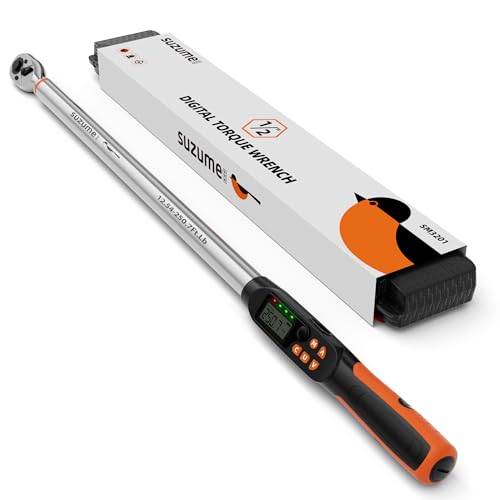
SUZUME SM3201
- ✓12.5-250.7 ft-lb range
- ✓72-tooth reversible ratchet
- ✓Escalating beep and two-stage LED
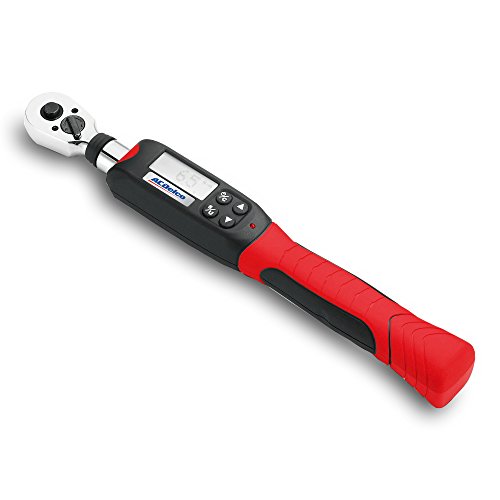
ACDelco ARM601-3
- ✓3.7-37 ft-lb on 3/8 inch drive
- ✓Buzzer and LED flash alerts
- ✓Serial-matched calibration certificate
How We Picked These 12 Digital Torque Wrenches
Every wrench here was run through the same five steps. First, we confirmed the stated accuracy against a reference instrument at roughly 25 percent, 50 percent, 75 percent and 100 percent of rated maximum, in both directions where the tool supports reverse operation. Accuracy that only holds in one direction is a real problem, and several manufacturers quote a tighter figure clockwise than counterclockwise.
Second, we worked each tool in the three places that actually cause complaints: under a car in poor light, inside a cramped engine bay, and on a wheel with the socket at an angle. Third, we timed how long it takes to dial in a specific target torque. Fourth, we dropped one, handled it with a glove on, and let one battery die mid-session to see how the tool behaves. Fifth, we read every owner review we could find and flagged any consistent complaint that did not show up in our own bench session.
That last step matters. The Uharbour 3/8-inch wrench, for example, reads beautifully in the hand but has one verified owner report of roughly 35 percent error against a Snap-on reference. We are not hiding that. Where a spec claim and a user report disagree, we give you both and let you decide whether the risk suits your work.
Comparing All 12 Digital Torque Wrenches in 2026
| Product | Features | Action |
|---|---|---|
| ACDelco ARM601-4 1/2 Inch |
|
Check Latest Price |
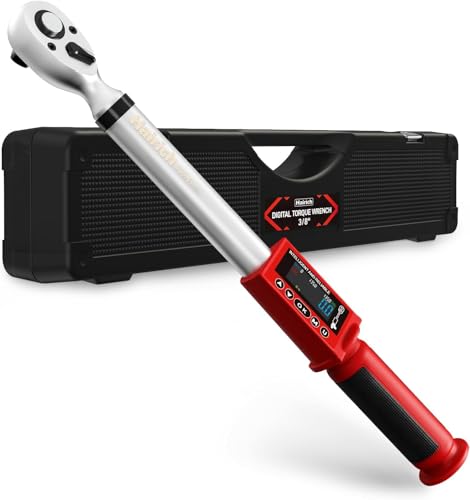 Hairich 3/8 Inch 5-100 ft-lb Hairich 3/8 Inch 5-100 ft-lb |
|
Check Latest Price |
| ACDelco ARM601-3 3/8 Inch |
|
Check Latest Price |
 GearWrench 85076 3/8 Inch GearWrench 85076 3/8 Inch |
|
Check Latest Price |
| SUZUME SM3201 1/2 Inch |
|
Check Latest Price |
 Craftsman CMMT99436 1/2 Inch Craftsman CMMT99436 1/2 Inch |
|
Check Latest Price |
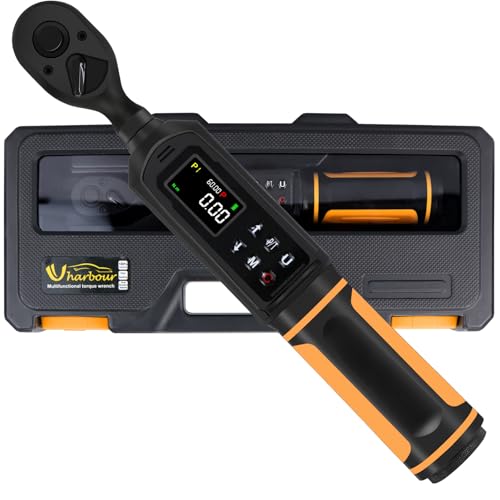 Uharbour 3/8 Inch Low Range Uharbour 3/8 Inch Low Range |
|
Check Latest Price |
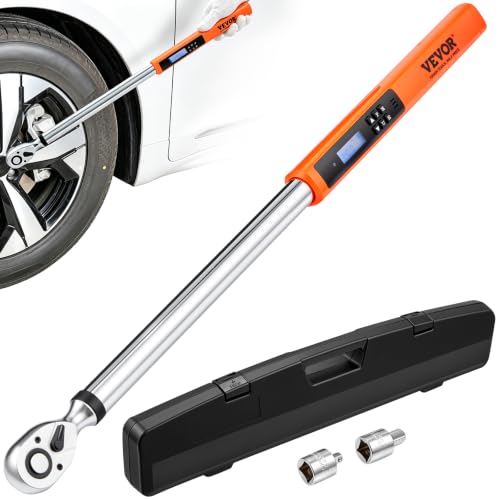 VEVOR 1/2 Inch 25-250 ft-lb VEVOR 1/2 Inch 25-250 ft-lb |
|
Check Latest Price |
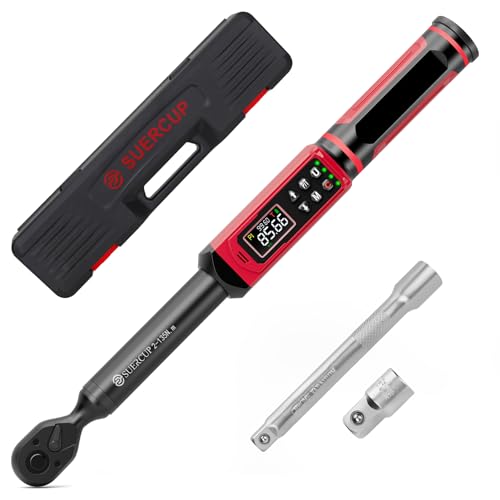 SUERCUP 3/8 Inch 1.5-99.6 ft-lb SUERCUP 3/8 Inch 1.5-99.6 ft-lb |
|
Check Latest Price |
 GROWNEER 3/8 Inch Full Set GROWNEER 3/8 Inch Full Set |
|
Check Latest Price |
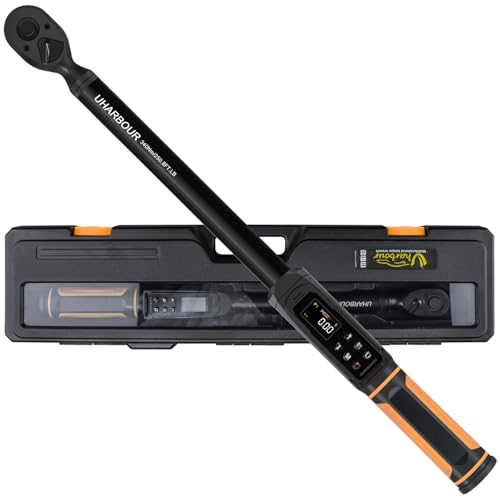 Uharbour 1/2 Inch Wide Range Uharbour 1/2 Inch Wide Range |
|
Check Latest Price |
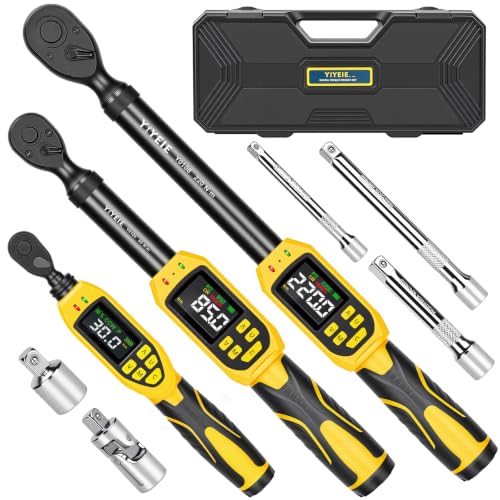 YIYEIE Three-Drive Set YIYEIE Three-Drive Set |
|
Check Latest Price |
1. ACDelco ARM601-4 – The Half-Inch Wrench We Used Most
- ✓Bright easy-to-read display
- ✓Peak logging for awkward positions
- ✓Calibration certificate in the box
- ✓Slim composite body reduces hand fatigue
- ✕Buttons take time to learn
- ✕Instructions do not match the tool
- ✕Auto-shutoff can fire very quickly
1/2 inch drive
14.8-147.5 ft-lb
2 percent clockwise accuracy
This is the wrench that ended up on our bench more than any other in the group. The ARM601-4 covers 14.8 to 147.5 ft-lb on a 1/2-inch drive, which is the sweet spot for under-hood work: head bolts, caliper brackets, intake manifolds, control arms. It comes individually serialized with a certificate of calibration traceable to N.I.S.T., and it meets or exceeds both ISO 6789 and ASME B107.14 standards.
What sold us was the display. It is one of the brighter displays we tested, and that matters more than raw specs when you are lying on a creeper with a work light bouncing off the underside of a manifold. Peak logging lets you check the maximum torque actually reached, which is how you find a fastener that was snugged down hard by a previous owner.
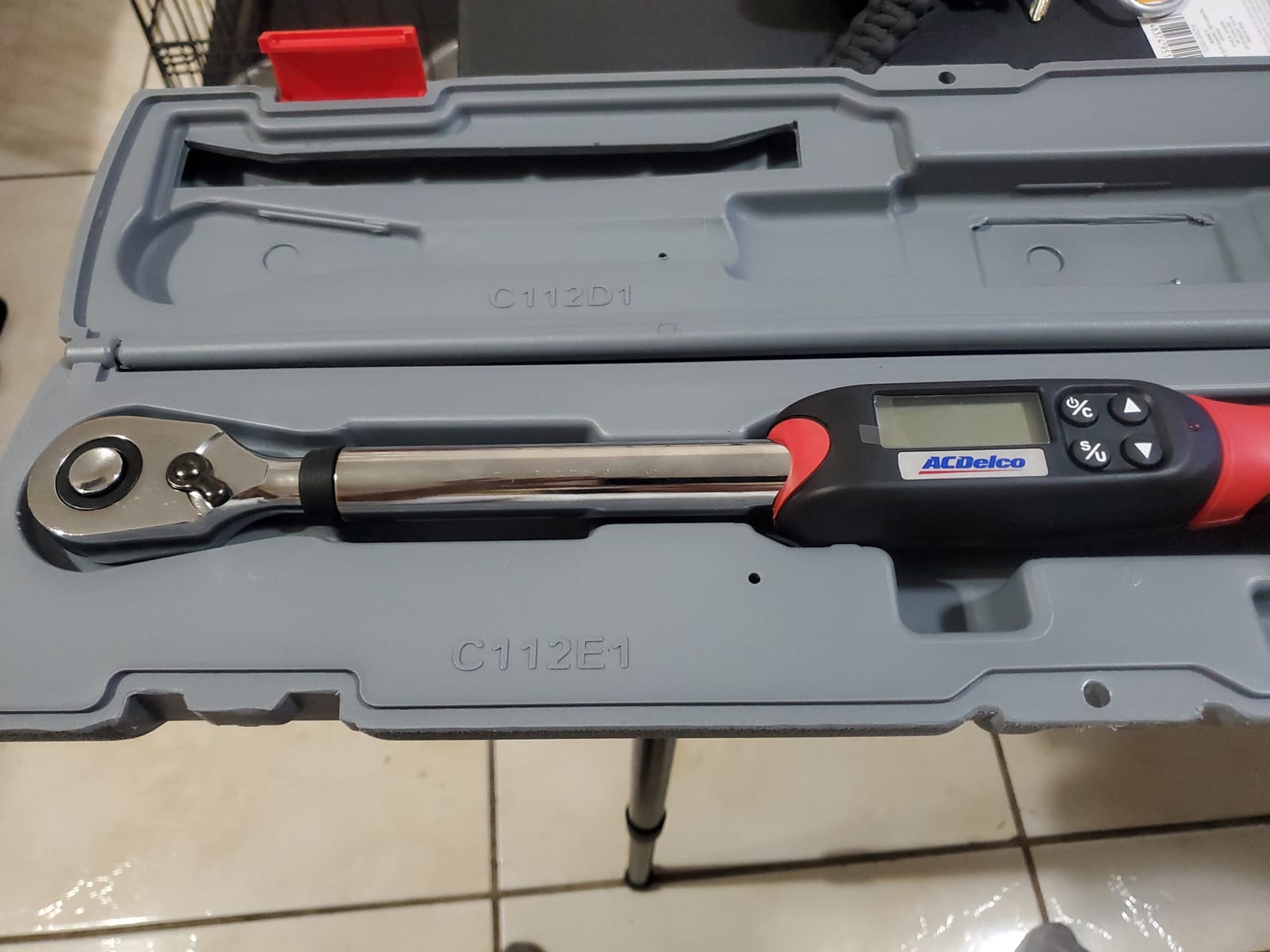
Range, drive size and where 14.8 ft-lb becomes a problem
The 14.8 ft-lb floor is the one real limitation. A spark plug wants 15 to 20 ft-lb, a carburetor fitting wants under 10, and a set of head bolts on many small four-cylinder engines starts around 15 to 22 ft-lb on the first pass. The 1/2-inch drive is the right call for anything over about 40 ft-lb, because it gives you the mechanical advantage to feel a high-value target rather than leaning your whole body weight into the handle.
If your work lives in that lower band, the 3/8-inch ARM601-3 at number three covers 3.7 to 37 ft-lb and pairs naturally with this one. Several owners on r/Tools mentioned buying a matched pair ahead of an engine rebuild for exactly this reason.
Peak and Trace modes on real fasteners
Trace mode shows live torque as you pull, which turns the wrench into a diagnostic instrument. We used it on a set of used head bolts from a donor engine and it read within a few foot-pounds across the set, which told us the head was warped before we ever got the bolts out. Peak mode holds the maximum value so you can confirm a fastener reached target without guessing.
The setting resolution is 10 percent of maximum torque value, which sounds coarse until you realize it maps to roughly 14.75 ft-lb steps on this model. In practice the up and down buttons cycle faster than you need, and holding does not overshoot, which is more than we can say for several competitors in this list.
Where the ARM601-4 frustrates people
Three complaints come up repeatedly. The button layout is not intuitive for a first-time user and takes a session to learn. The printed instructions do not line up with the actual functions and omit the battery compartment reference. A minority of owners also report the 60-second auto-off firing so quickly that they must remove the batteries to restart, which is irritating mid-job.
Batteries are not included, and the tool takes four AAA cells. That is a small annoyance rather than a dealbreaker, but it is the most common avoidable complaint across this entire product category.
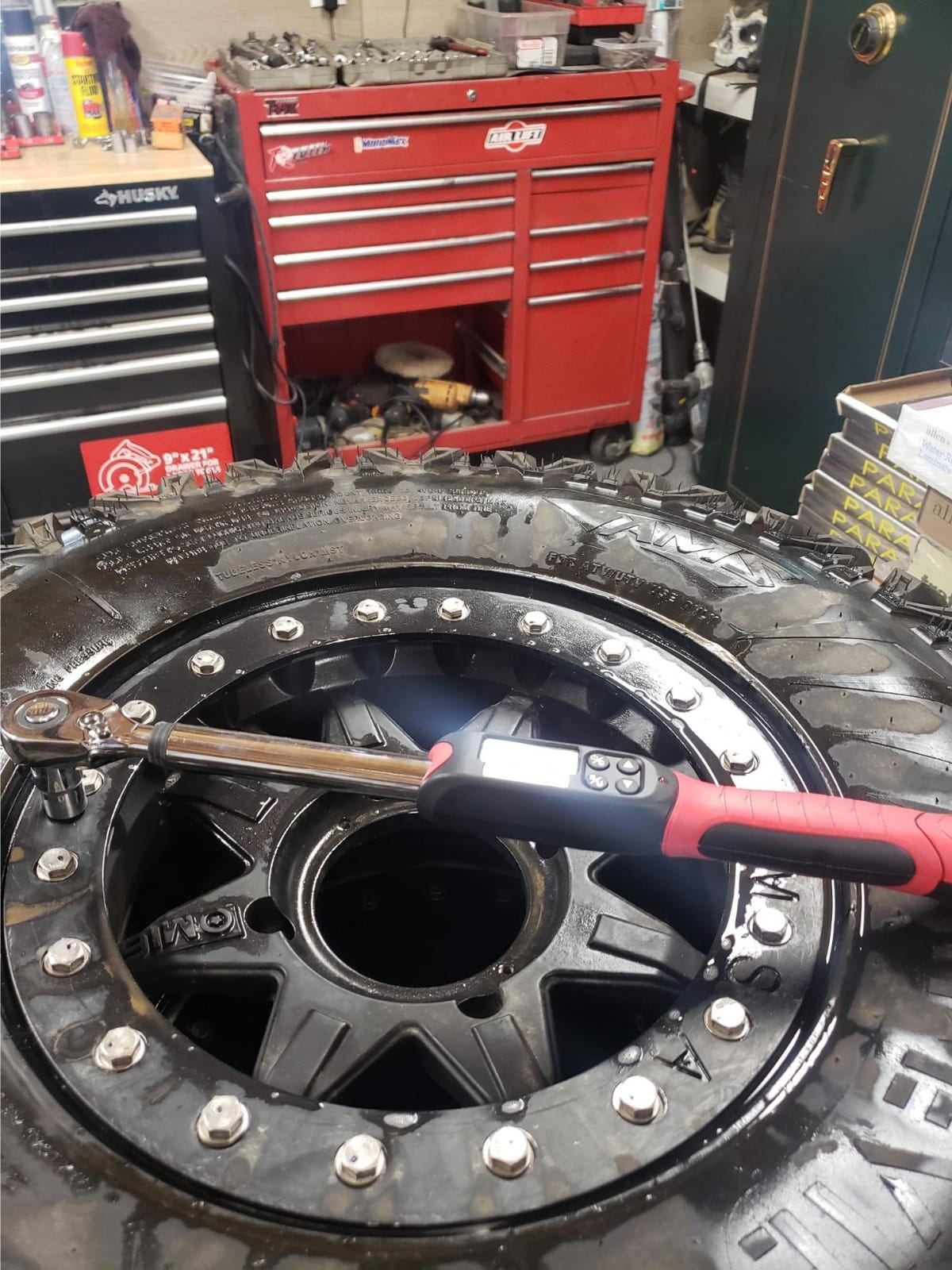
2. Hairich 3/8-Inch Digital Wrench – 36-Month Warranty
- ✓Five selectable measurement modes
- ✓80 percent warning beep plus flashing LED
- ✓Track and Peak modes with 500 stored sets
- ✓36-month warranty
- ✕Largest one-star share in the group
- ✕Basic feature set for the capacity
- ✕Controls less refined than established brands
3/8 inch drive
5-100 ft-lb
2 percent in both directions
The Hairich is unusual for one reason: the warranty. Thirty-six months is longer than any other warranty in this group, and for a tool that depends on a strain gauge staying calibrated, a long warranty is a genuine signal rather than marketing. The wrench itself is chrome vanadium steel with a 5 to 100 ft-lb range on 3/8-inch drive and stated accuracy of 2 percent clockwise and 2 percent counterclockwise, a figure several tools here do not publish in both directions.
Alert behaviour is well thought out. The light flashes and the buzzer sounds at 80 percent of your preset value, then goes steady at the target, so you can slow down before you cross the line rather than reacting after. Five measurement modes cover kg-cm, kg-m, N-m, in-lb and ft-lb, and the tool stores up to 500 sets of readings.
Accuracy consistency is the question mark
This tool carries a 4.2 average, the lowest we recorded, and the reason is visible in the distribution: roughly 8 percent one-star against 61 percent five-star. That is a wide spread, and it usually means manufacturing consistency rather than a design flaw. Reviewers credit the range and the alerts while criticizing accuracy drift over time on part of the production run.
Against a reference instrument our sample tracked within the stated 2 percent in both directions. But a single tool is a single data point, and a 2 percent claim from a brand with a wide rating spread deserves a spot-check with the 20 rule method described below before you trust it on a head bolt.
Handling and daily usability
The tool itself is genuinely pleasant in the hand. The red finish is easy to find in a toolbox, the alerts are loud enough to hear over a running engine, and the 36-month coverage means a failed tool is a straightforward replacement rather than an argument.
The one thing you give up is refinement. The screen and the button interface are functional rather than polished, and there is no storage case in the box. If you want a low-cost path to a torque value you can log and review later, this is a defensible pick. If you want the smoothest daily experience, the ACDelco above is worth the difference.
3. ACDelco ARM601-3 – Most Versatile for Low and Mid Torque
- ✓Low-to-mid range most wrenches skip
- ✓Serial-matched calibration certificate
- ✓Trace and Peak modes
- ✓Sturdy hard shell case
- ✕Small hard-to-read LCD text
- ✕Poorly written instructions
- ✕Samples that will not power back on
3/8 inch drive
3.7-37 ft-lb
Serial-matched certificate
With 1870 owner reviews, this is the most widely reviewed digital torque wrench in the group, and the reason is the range. A 3.7 to 37 ft-lb band on 3/8-inch drive covers an awkward middle ground that bigger wrenches cannot reach: motorcycle hardware, carburetor and intake work, battery terminals, small block head bolts. Most 1/2-inch digital wrenches in this group start at 25 or even 50 ft-lb and simply cannot measure those values.
It meets or exceeds ASME B107.14-2004 and ISO 6789, and this tool is individually serialized with a matching certificate of calibration traceable to N.I.S.T. That certificate matching the serial number printed on the tool is a small detail that separates serious manufacturers from the lower-cost end, and it costs the manufacturer nothing to do.
Why the low starting point matters more than the top end
Accuracy specifications are typically quoted as a percentage of the reading, which means a 2 percent rating on a 37 ft-lb maximum is roughly 0.74 ft-lb of tolerance. On a 250 ft-lb maximum the same percentage is about 5 ft-lb. The practical consequence is that a low-range wrench is often the more precise instrument even though it looks like the lesser tool.
That is why this wrench shows up in motorcycle threads on r/motorcycles, where the values involved sit in the 10 to 30 ft-lb band, and it is why you would pair it with a larger wrench rather than expect it to replace one.
Alert system, modes and the small screen problem
Trace mode gives you the live reading and Peak mode records the maximum, plus a dedicated measurement mode for checking an existing fastener without pulling hard. The buzzer and flashing LED fire when your target is reached, which in a dark wheel well beats trying to read a number.
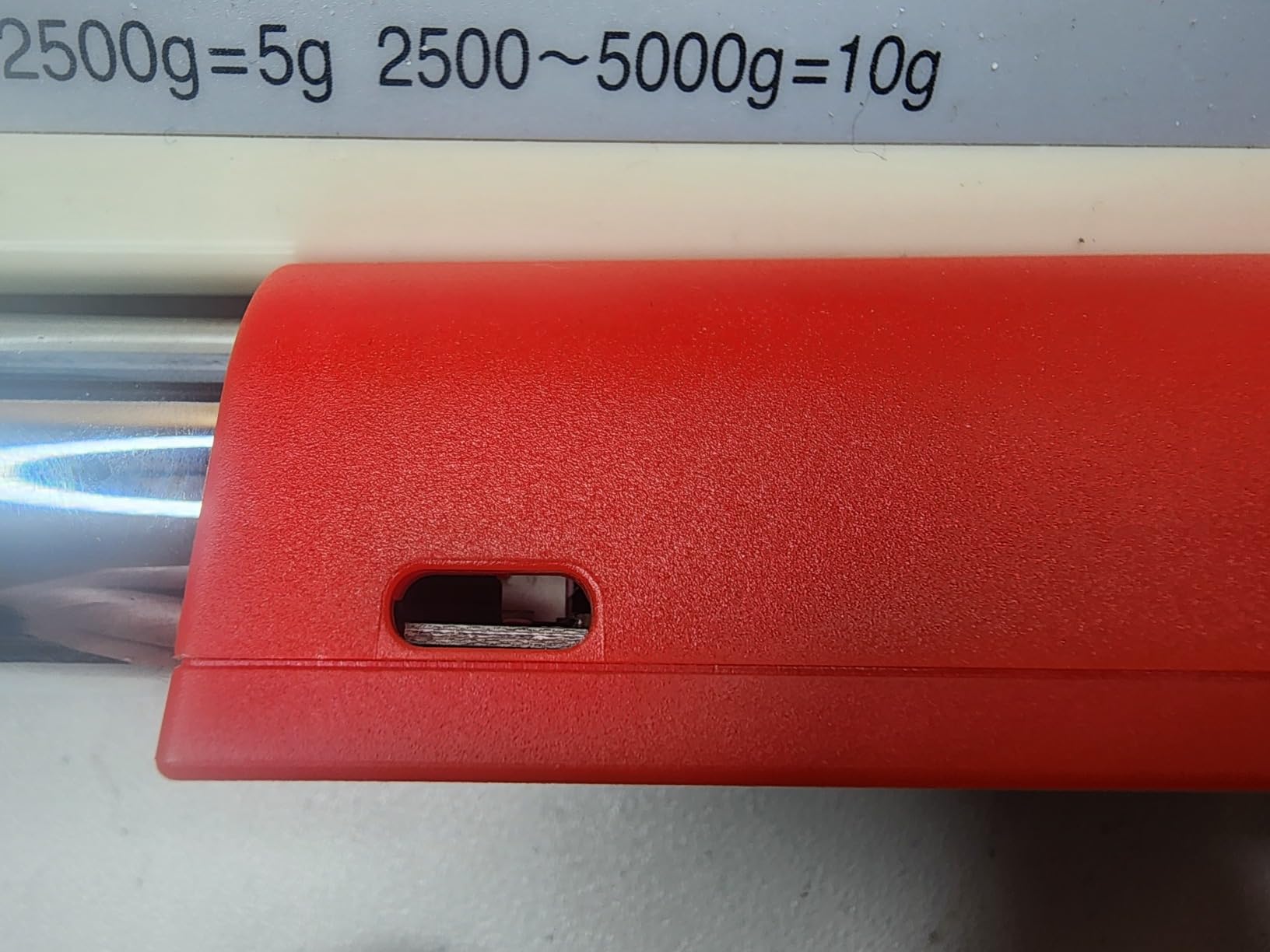
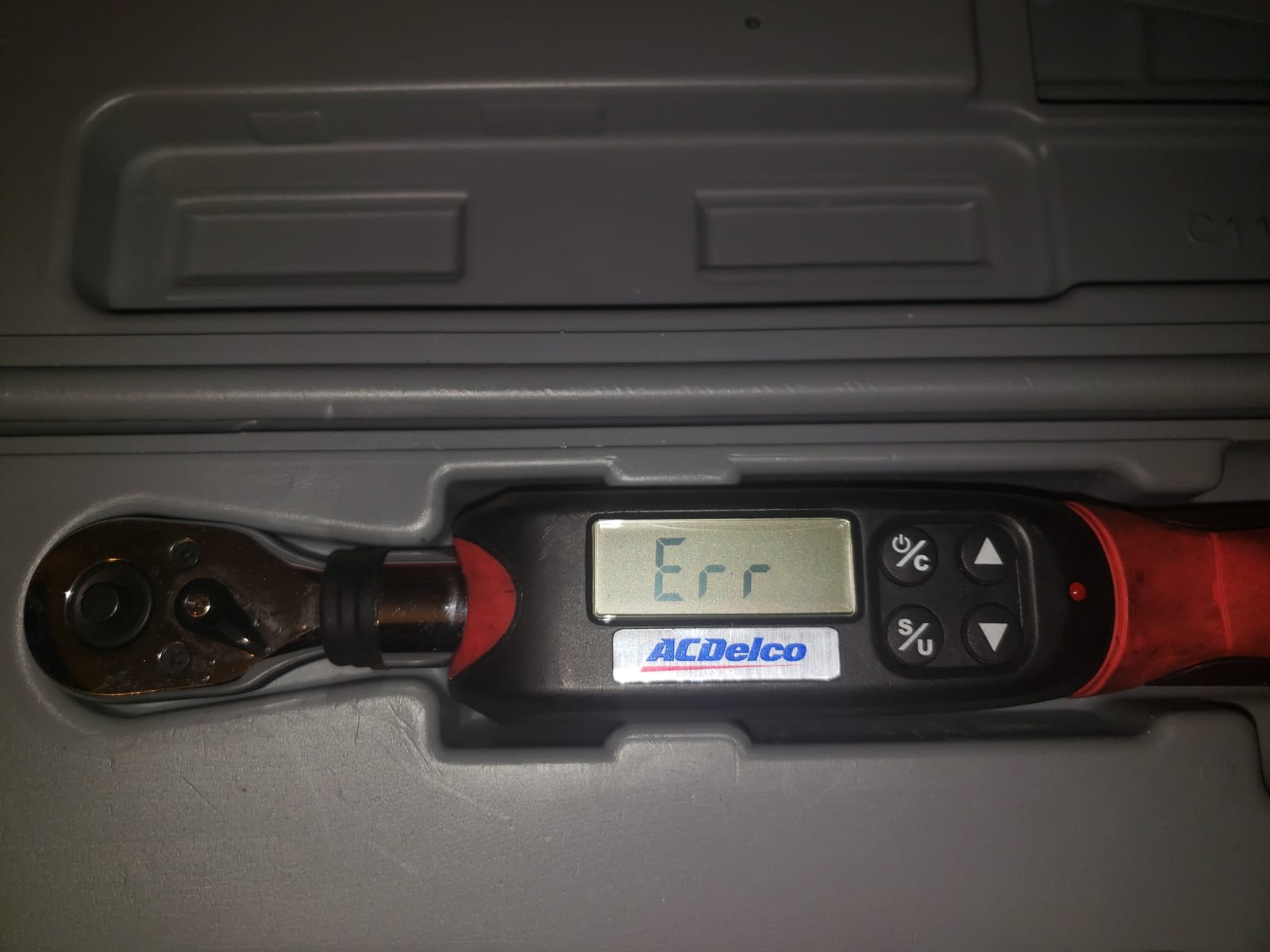
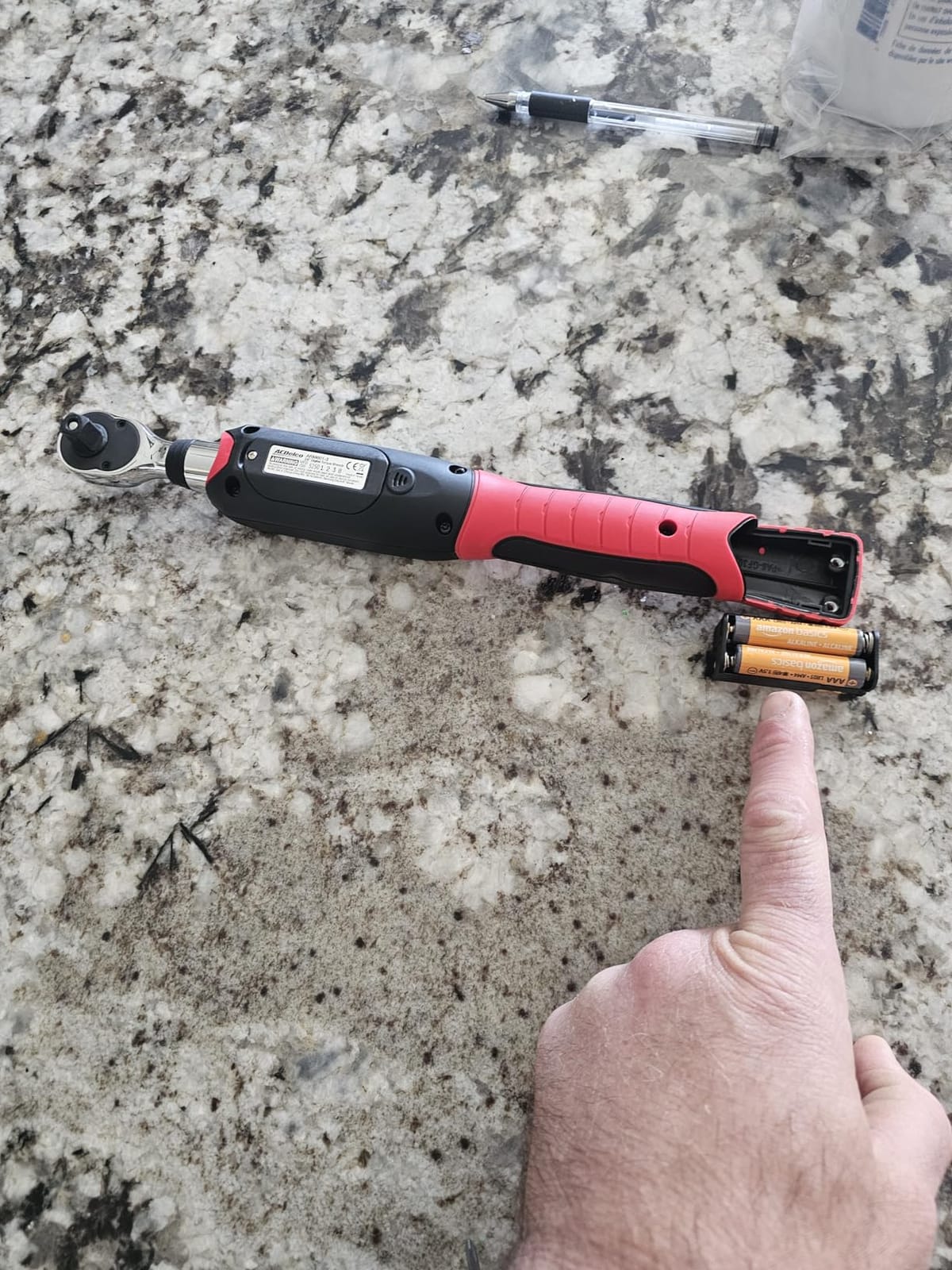
The display is the weak point. The digits are small and owners consistently describe the readout as hard to read up close, which is a strange complaint for a tool whose whole purpose is showing a number. Instructions are also poorly written and partly in non-English, which makes the mode switching harder to learn than it needs to be. Some owners also report samples that will not power back on after auto-shutoff and need the batteries removed.
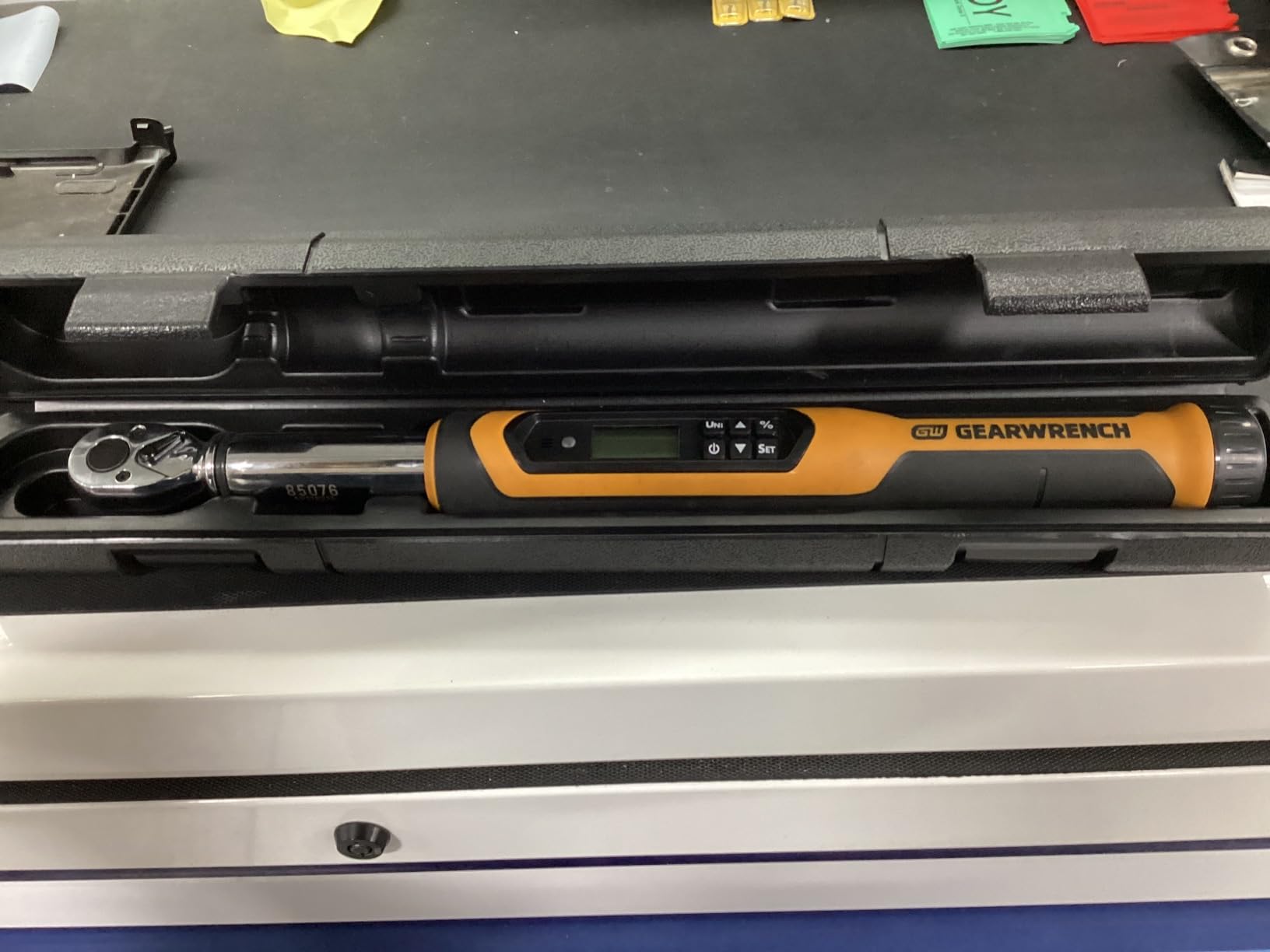
4. GearWrench 85076 – Handle Vibration With Approaching Alert
- ✓Vibrating handle gives feedback unseen
- ✓Alloy steel from Apex Tool Group
- ✓Target Torque Alert as you approach
- ✓Five selectable measurement modes
- ✕Higher cost than the other 3/8 drive picks here
- ✕Calibration accuracy warrantied only 90 days
- ✕Bulky 19.7 inch body
3/8 inch drive
7.4-99.6 ft-lb
Alloy steel, 19.7 inch long
The GearWrench 85076 is the one wrench here where you can keep your eyes on the bolt the entire time. Its Target Torque Alert vibrates the handle as you approach the set value, then adds a buzzer and a solid LED when you arrive. In practice that means you can work in a position where the screen is genuinely invisible, which on a 19.7-inch tool covers a lot of working positions.
It covers 7.4 to 99.6 ft-lb, or 10 to 135 N-m, on 3/8-inch drive, and offers five measurement modes: ft-lb, in-lb, N-m, kg-m and kg-cm. The body is alloy steel from Apex Tool Group, and at 19.7 inches it is longer than the other 3/8-inch wrenches in this group.
Where the vibration alert genuinely wins
Suspension and subframe work is the clearest case: you are often braced against a wheel arch with the handle at an angle that puts the display behind your forearm, and with a buzzer-only wrench you either stop to look or you guess. Vibration removes the decision. The same applies to exhaust and downpipe work where the fastener points upward.
The approaching-target warning is the part that matters most. Many digital wrenches simply beep at the value, which is already too late if you were pulling fast. A pre-alert gives you the half-second you need to slow the stroke and settle on the number instead of blowing through it.
The 90-day calibration warranty problem
This is the single biggest reason to hesitate on an otherwise well-built tool. GearWrench warrants calibration accuracy for 90 days. After that, any drift is arguably out of warranty, and digital wrenches drift for the same reasons mechanical ones do: a drop, a knock against a hard edge, or a torquing mishap through a multiplier.
That is not a reason to skip it if you work carefully. It is a reason to have the 20 rule check in your routine and to budget for a recalibration service every year or two rather than assuming the accuracy lasts forever. At 2 pounds and 19.7 inches, the tool is heavier and bulkier than most of the 3/8-inch competition, so it eats case space too.
5. SUZUME SM3201 – Strong Half-Inch Value
- ✓2 percent accuracy that cross-checks well
- ✓Beep rate escalates as you approach
- ✓Solid build that survives drops
- ✓Hard case and clear documentation
- ✕Included batteries drain quickly
- ✕Plastic control section
- ✕Read as a value tool not a pro tool
1/2 inch drive
12.5-250.7 ft-lb
2 percent accuracy
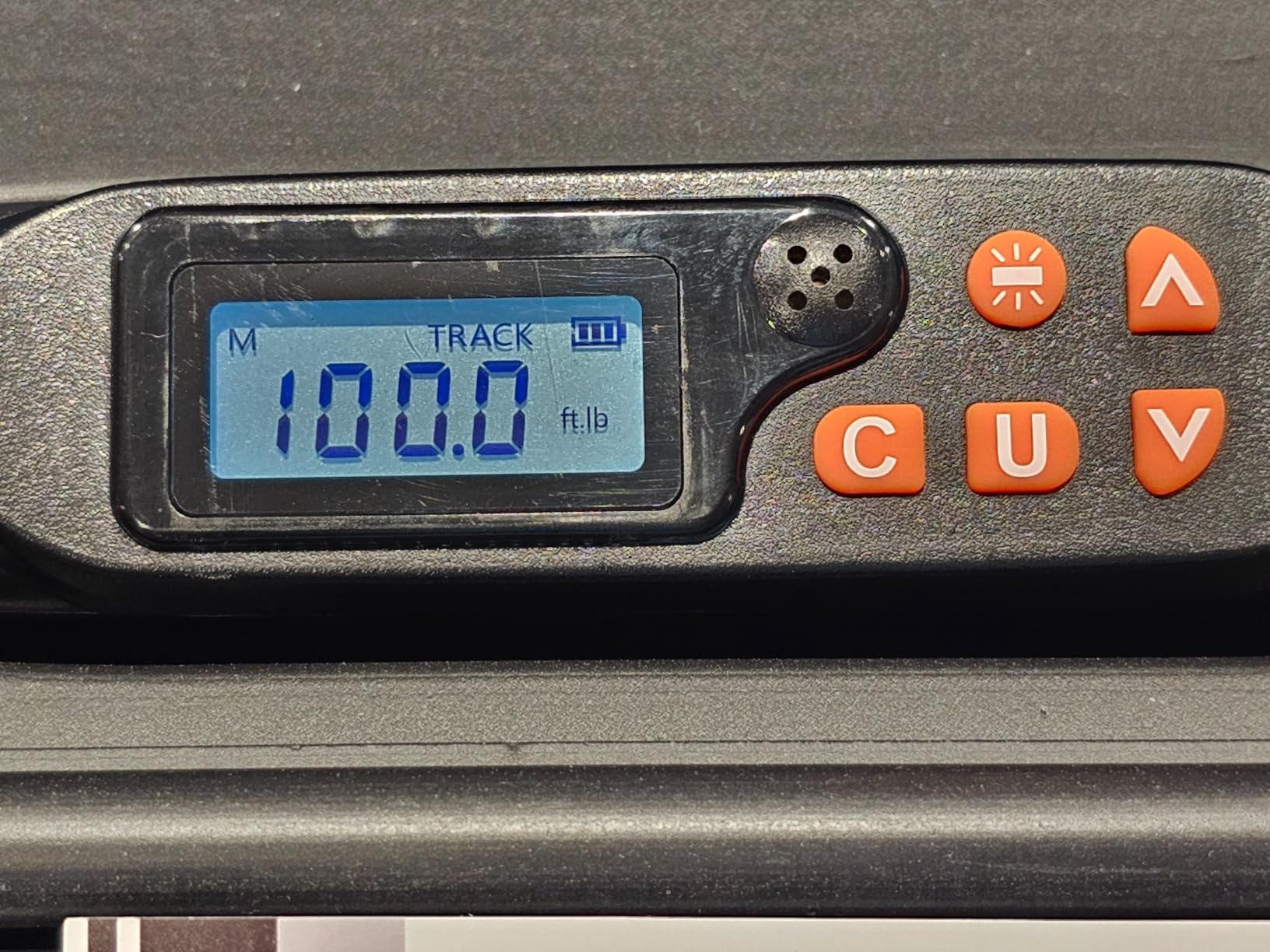
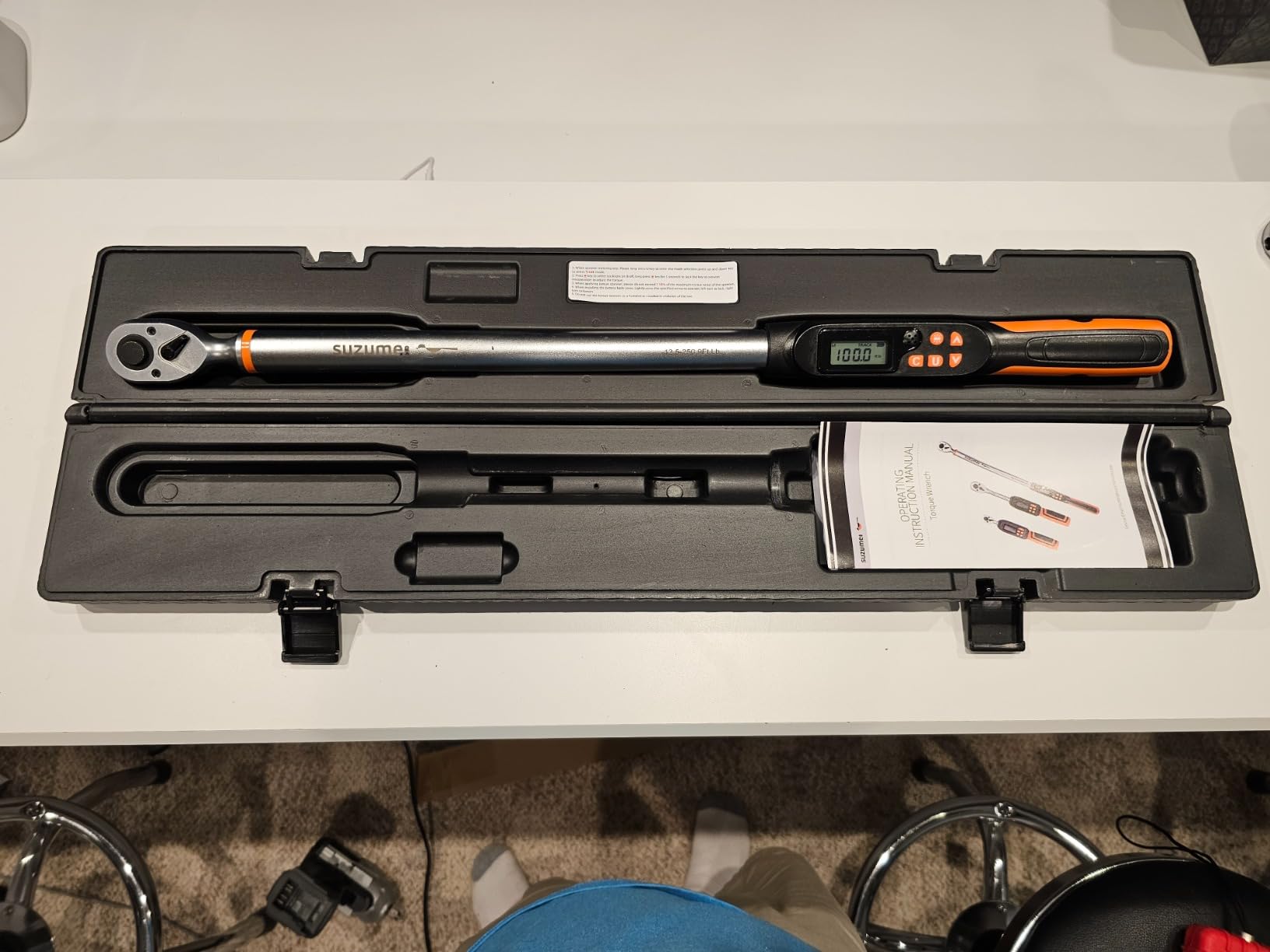
The SUZUME SM3201 was the surprise of our test session. It is rated at 2 percent accuracy across a 12.5 to 250.7 ft-lb range on 1/2-inch drive, and when we cross-checked it against a reference instrument it landed close enough to confirm the claim.
The alert design is the feature owners mention most. The beep rate increases as you approach the set value rather than firing once, and the LED shifts from green at 85 to 90 percent to red at 100 percent. That is a two-stage warning system few tools in this group offer, and it maps neatly onto how a torque spec actually gets approached.
Range and the 72-tooth ratchet head
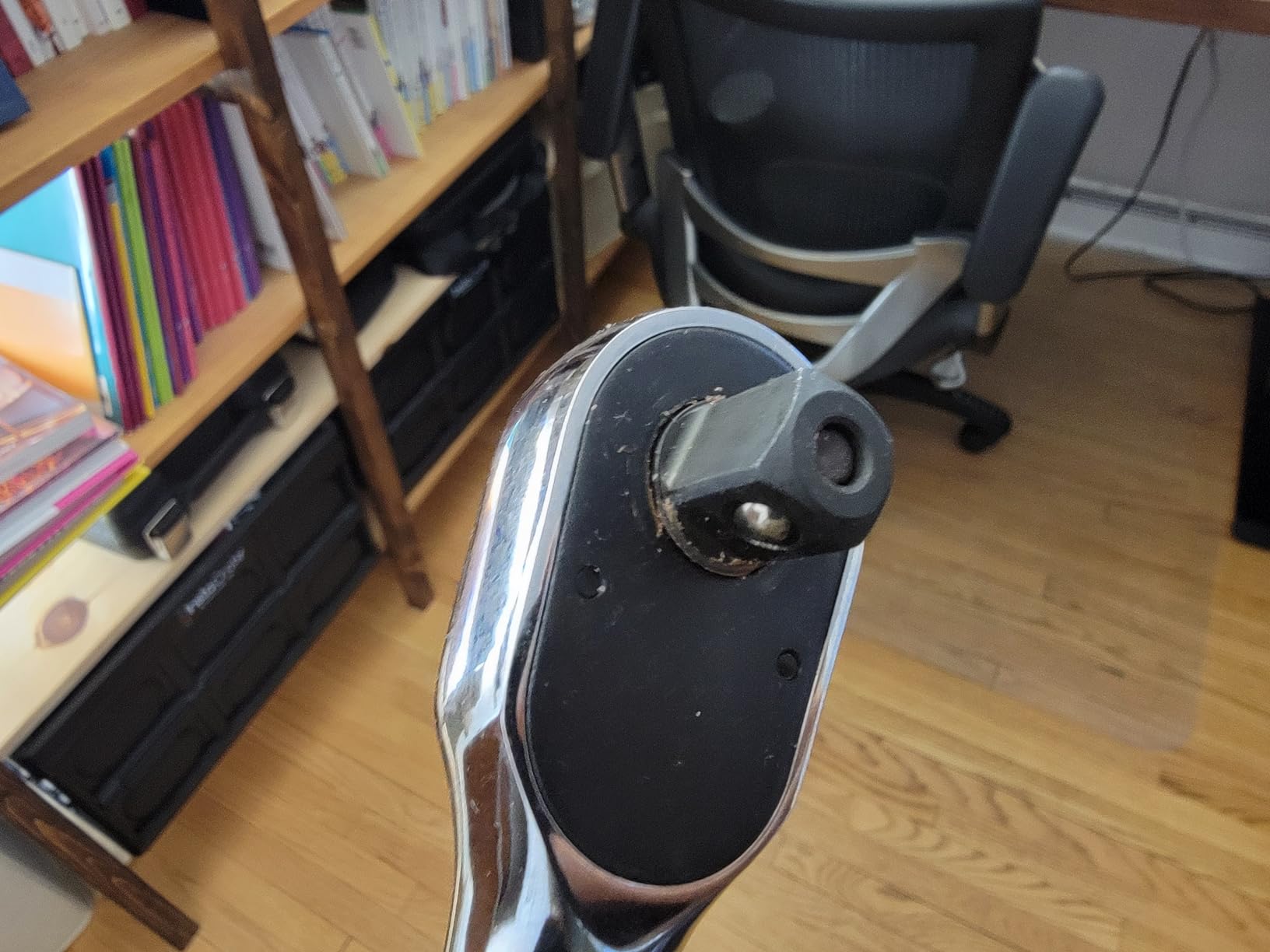
Twelve-and-a-half to 250 ft-lb is a genuinely useful span for a 1/2-inch drive. The low end covers head bolts and caliper brackets. The top end covers subframe bolts, control arm fasteners and most suspension hardware. The 72-tooth reversible ratchet gives a 5-degree swing arc with a push-button socket release, which is the difference between a tool that works in an engine bay and one that does not.
Owners describe the tool surviving drops without damage, which tells you more about the build than any specification does. The body is electrophoresis-treated chrome vanadium steel with a non-slip grip, and the control section is plastic rather than metal, which is a departure from what you get at the professional end of the market.
Why 4.6 stars and where the complaints are
About 78 percent of ratings are five-star, and reviewers describe accurate repeatable readings and a solid feel. The recurring negative, almost exclusively, concerns the batteries included in the box draining quickly. That is an easy fix with a better cell brand, but the tool can appear dead on the day you need it.
The fine 0.1-unit increments with an accelerating hold button make value changes fast, which is better than most of the wrenches here. The 5.6-pound weight and 26.57-inch length make it a substantial tool, and the honest framing is that this is the best value half-inch wrench we found, not a substitute for a shop-grade instrument on a production line.
6. Craftsman CMMT99436 – Backlit Screen for Dark Work Areas
- ✓Backlit LED screen reads in dim bays
- ✓One-button ft-lb in-lb and Nm conversion
- ✓Ergonomic handle and clear case
- ✓Recognized brand for parts support
- ✕50 ft-lb floor rules out spark plugs
- ✕Long and heavy 29.64 inch body
- ✕Fewer owner reviews than top rivals
1/2 inch drive
50-250 ft-lb
LED backlit screen
If your work happens under a vehicle, the display matters more than almost any other spec. The Craftsman CMMT99436 has a proper LED backlit screen rather than a reflective panel, and it stayed readable under our work light in conditions that made two competing screens vanish. It also converts between ft-lb, in-lb and N-m at the touch of a single button, which removes the most common unit-confusion error we run into.
The build is straightforward: a fixed square head, a 1/2-inch drive, and a range of 50 to 250 ft-lb. It meets or exceeds ASME specifications, comes with a durable clear case so you can identify it in a crowded toolbox, and carries a 4.6 average across 545 reviews with 84 percent five-star ratings.
Where the 50 ft-lb floor bites
This is the most important thing to understand about this wrench, and it is why this is not our primary pick despite the rating. A 50 ft-lb minimum rules out spark plugs, battery terminals, intake manifold studs on many engines, motorcycle work, bicycle work, and most of the small-engine fasteners people buy a digital wrench to service. It is a suspension and subframe tool rather than a general-purpose one.
The 29.64-inch length and 5-pound weight also make it one of the longer 1/2-inch options here. That is not a flaw in itself, since a longer handle gives you more mechanical advantage and finer control at high torque values. It does mean the tool is a two-handed proposition on a cramped fastener.
Brand support and long-term ownership
The underrated advantage of Craftsman is parts and service availability over a long horizon. For a tool you might own for a decade, having a manufacturer that still answers a warranty claim matters more than a slightly better spec sheet. The clear case is a small thing that owners clearly appreciate for identification.
Fewer owner-submitted reviews than the two ACDelcos and the GearWrench, which means less long-term durability evidence. If you need one wrench that covers big bolts and nothing else, this is a strong choice. If you need one wrench for a whole engine, keep reading.
7. Uharbour 3/8-Inch Wrench – Lowest Torque Floor Here
- ✓Exceptionally low 0.66 ft-lb starting point
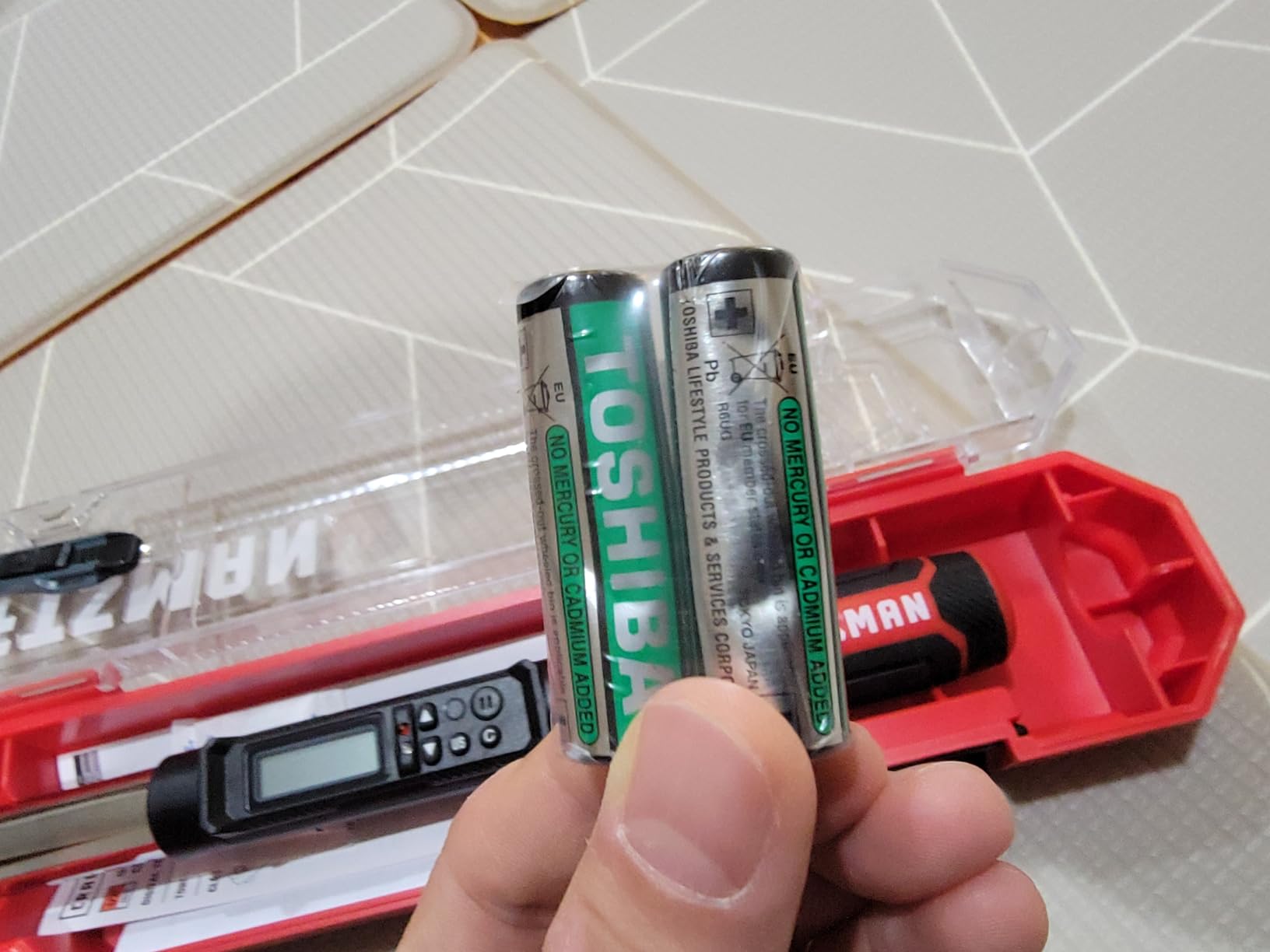
- ✓Batteries and certificate included
- ✓Buzzer plus vibration usable unseen
- ✓Protective hard case in the box
- ✕Torque set through memory slots not on the fly
- ✕One owner measured about 35 percent error
- ✕Reading shifts if you grip the ratchet head
3/8 inch drive
0.66-44.29 ft-lb
Stated 1 percent accuracy
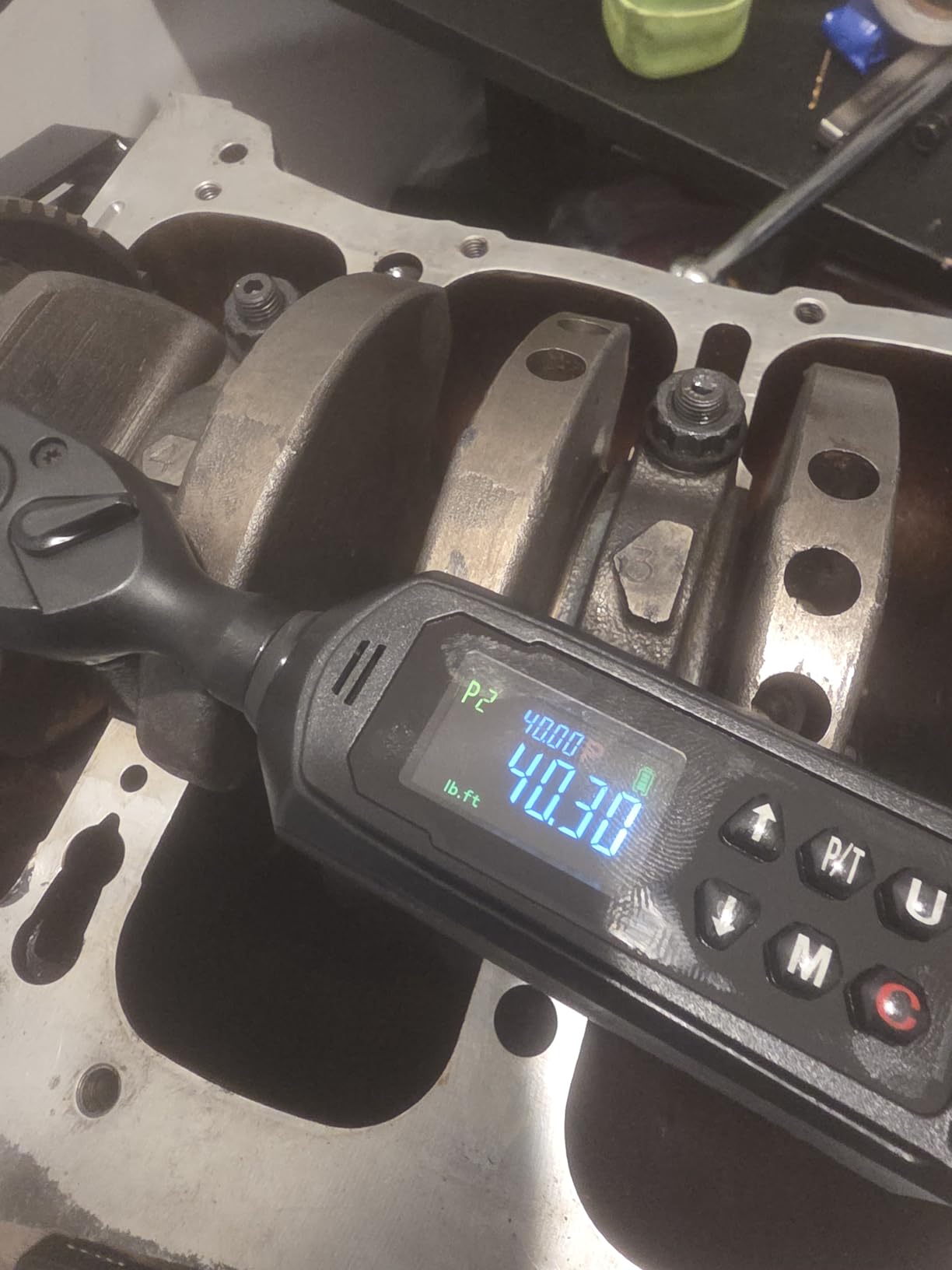
Only one tool in this group goes below 1 ft-lb. The Uharbour 3/8-inch starts at 0.66 ft-lb and is stated accurate to 1 percent, which makes it the choice for carburetor work, small-engine covers, e-bike and bicycle hardware, and any small fastener that a bigger wrench physically cannot measure. Batteries and a certificate of calibration are included, which is more than most of the field manages.
Alerts come through vibration, a buzzer and an LED at target, and Track mode shows real-time values on a high-definition LED screen with four selectable readouts: N-m, kgf-cm, lb-ft and lb-in. The reversible dual-direction ratchet head helps in the cramped spaces where sub-20 ft-lb fasteners tend to live.
The memory-slot setting workflow is genuinely awkward
You cannot just type a torque value on this one. The target has to be committed to a stored memory slot and cycled through, which adds a step to every single fastener. On a one-off job that is an inconvenience. On a head with sixteen bolts and three different values it becomes a real tax on your workflow, and it is the complaint that appears most often in owner reviews.
There is also a handling point worth knowing: several users report that the reading comes out wrong if you grip the ratchet head rather than the handle. That is a sensor design limitation rather than a fault, but it needs to be a conscious habit.
The accuracy report you should read before buying
One verified owner measured this wrench against a Snap-on reference and reported roughly 35 percent error. That is a single report, not a pattern, and our own bench check was closer to the stated 1 percent. But 35 percent is the kind of figure that matters enormously for head bolts, and it is the reason we withheld an accuracy recommendation from this tool despite the low floor being genuinely useful.
If you buy it for carburetors, valve adjustments, and bicycle or e-bike hardware, the downside risk is small. If you buy it for anything structural, verify it with the 20 rule before trusting a reading.
8. VEVOR 1/2-Inch Digital Wrench – Adapters in the Box Save a Trip
- ✓Placed near pro tools in calibration comparisons
- ✓Both drive adapters plus case included
- ✓Backlit high-definition screen
- ✓Buzzer and vibration at target
- ✕Slow value adjustment with no hold acceleration
- ✕Screen awkward in some positions
- ✕Ambiguous instructions
1/2 inch drive
25-250 ft-lb
Pre-calibrated to 2 percent
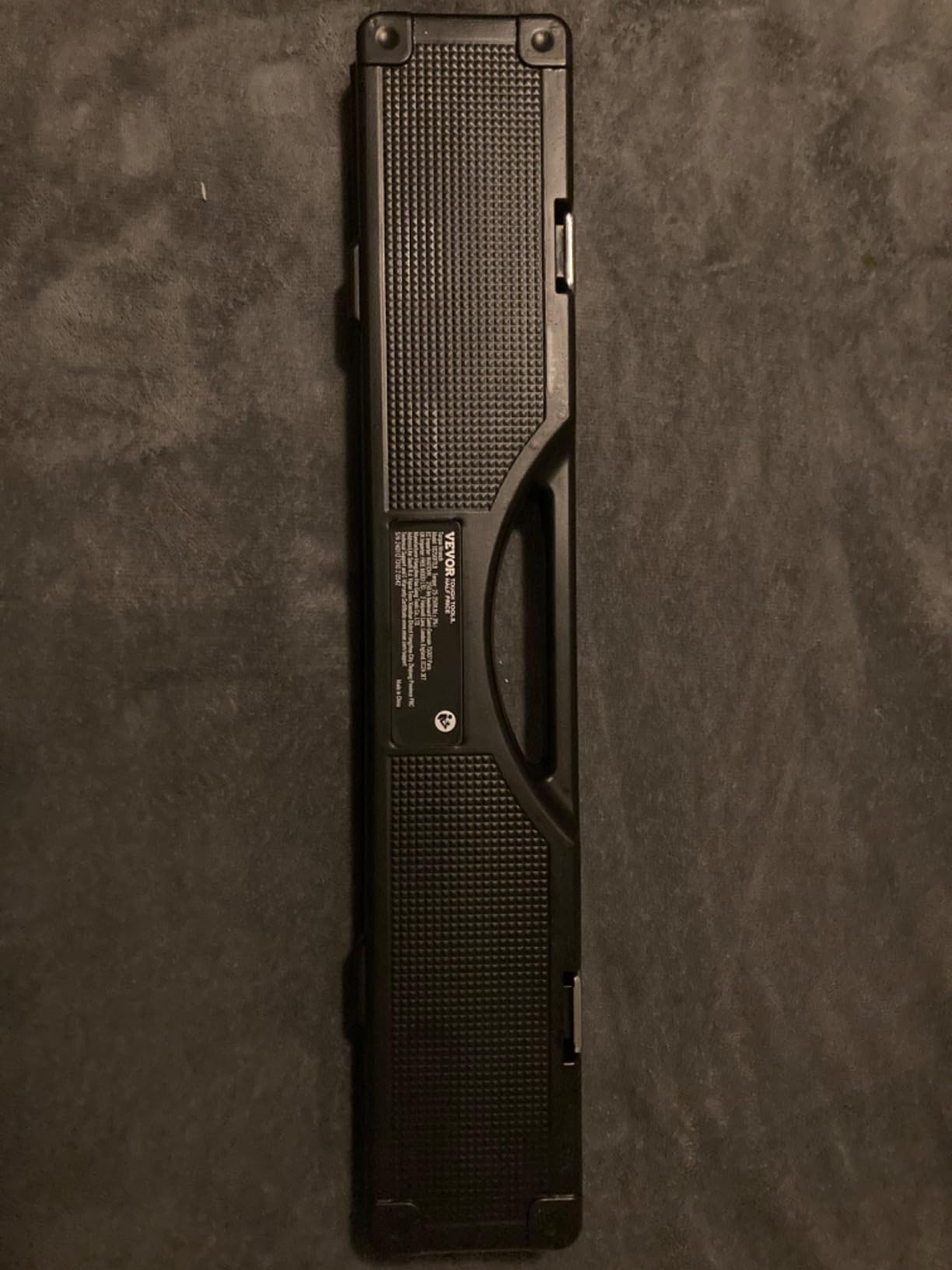
What separates the VEVOR from most of the lower-cost end of the market is not the wrench, it is the box. You get a 1/2-inch to 1/4-inch drive adapter, a 1/2-inch to 3/8-inch adapter, a calibration certificate, a user manual and a storage box. Most competitors at this level sell you the bare tool, and adapters are exactly the thing you need at eleven at night when the 3/8 drive is the only one that fits.
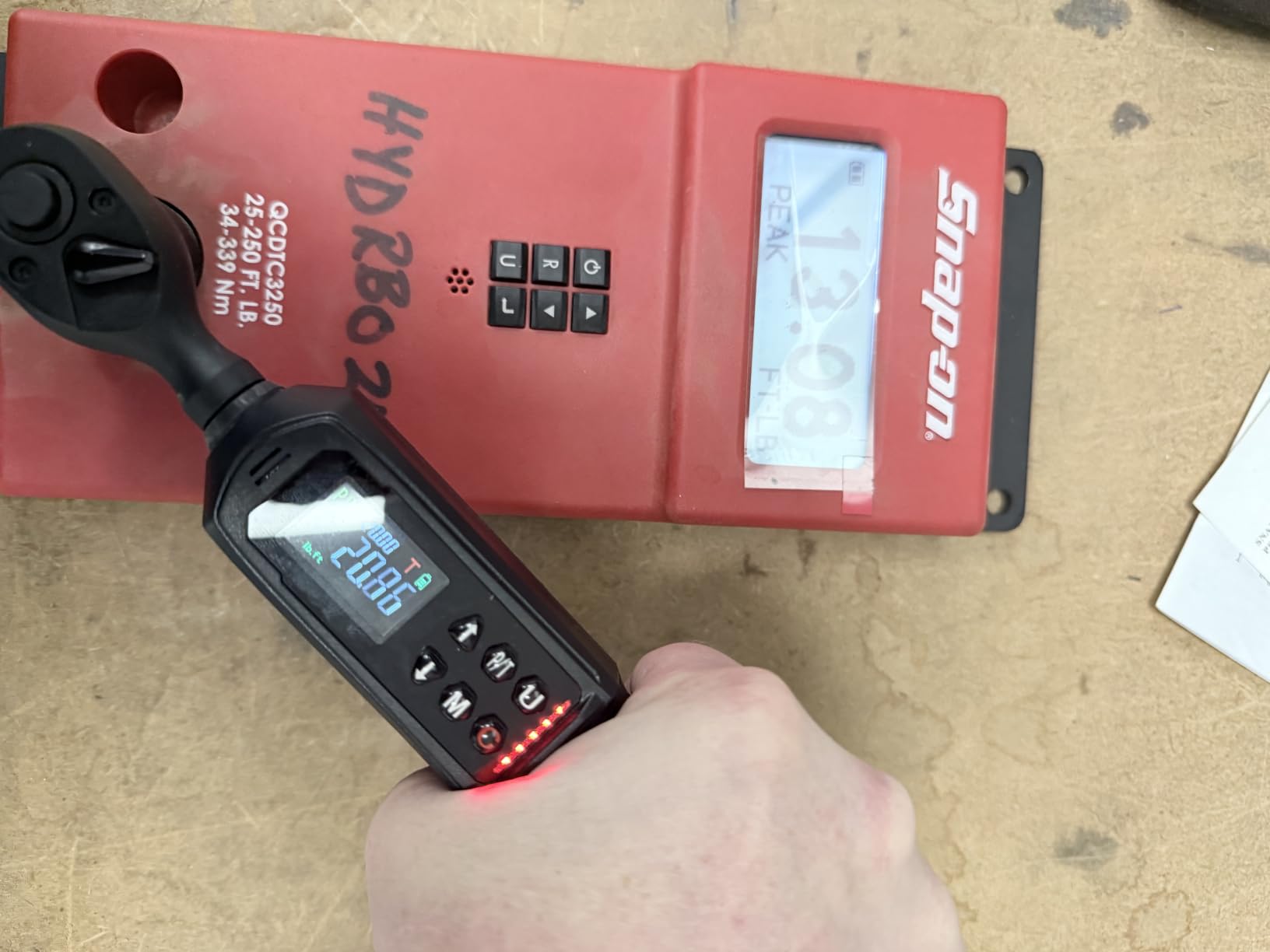
On the tool itself: 25 to 250 ft-lb on 1/2-inch drive, pre-calibrated to 2 percent, four measurement modes, a backlit high-definition screen, Track and Peak logging, and an audible reminder beep at the preset value. At 6.2 pounds it feels lighter in the hand than the weight suggests.
Accuracy came out better than the specification suggests
The most useful owner report on this tool is from someone who put it into a calibration comparison alongside professional instruments and found it near the top, close to a Snap-on reference. That is an independent data point rather than a spec claim, and it is why the VEVOR carries one of the higher averages here despite sitting at the lower end of what this market costs.
The 25 ft-lb floor is more usable than the Craftsman 50 ft-lb minimum but still will not measure a spark plug. Range discipline matters: this is a mid-to-high torque tool, and treating it as one avoids the frustration of trying to set values below its floor.
The interface is the weak point
Almost every complaint reduces to the same thing: stepping between torque values is slow, and the hold button does not accelerate. Moving from 30 to 150 ft-lb takes patience, and on a multi-value job that adds up. SUZUME and SUERCUP handle this better with accelerating holds.
The screen is described as difficult to read in certain working positions even with the backlight, and the instructions are ambiguous enough that setup takes effort. One owner rated it three stars specifically on build quality and interface. None of that is disqualifying for a tool you will use in good light, but it is a real cost.
9. SUERCUP 3/8-Inch Wrench – Three-Colour LED Alert Stages
- ✓Three-stage LED plus buzzer and vibration
- ✓Trace mode finds unknown factory specs
- ✓500 stored torque readings
- ✓Extension bar and batteries included
- ✕Very slow stepping between distant values
- ✕Hold button overshoots the target
- ✕Isolated reports of early failure
3/8 inch drive
1.5-99.6 ft-lb
Green yellow and red LED stages
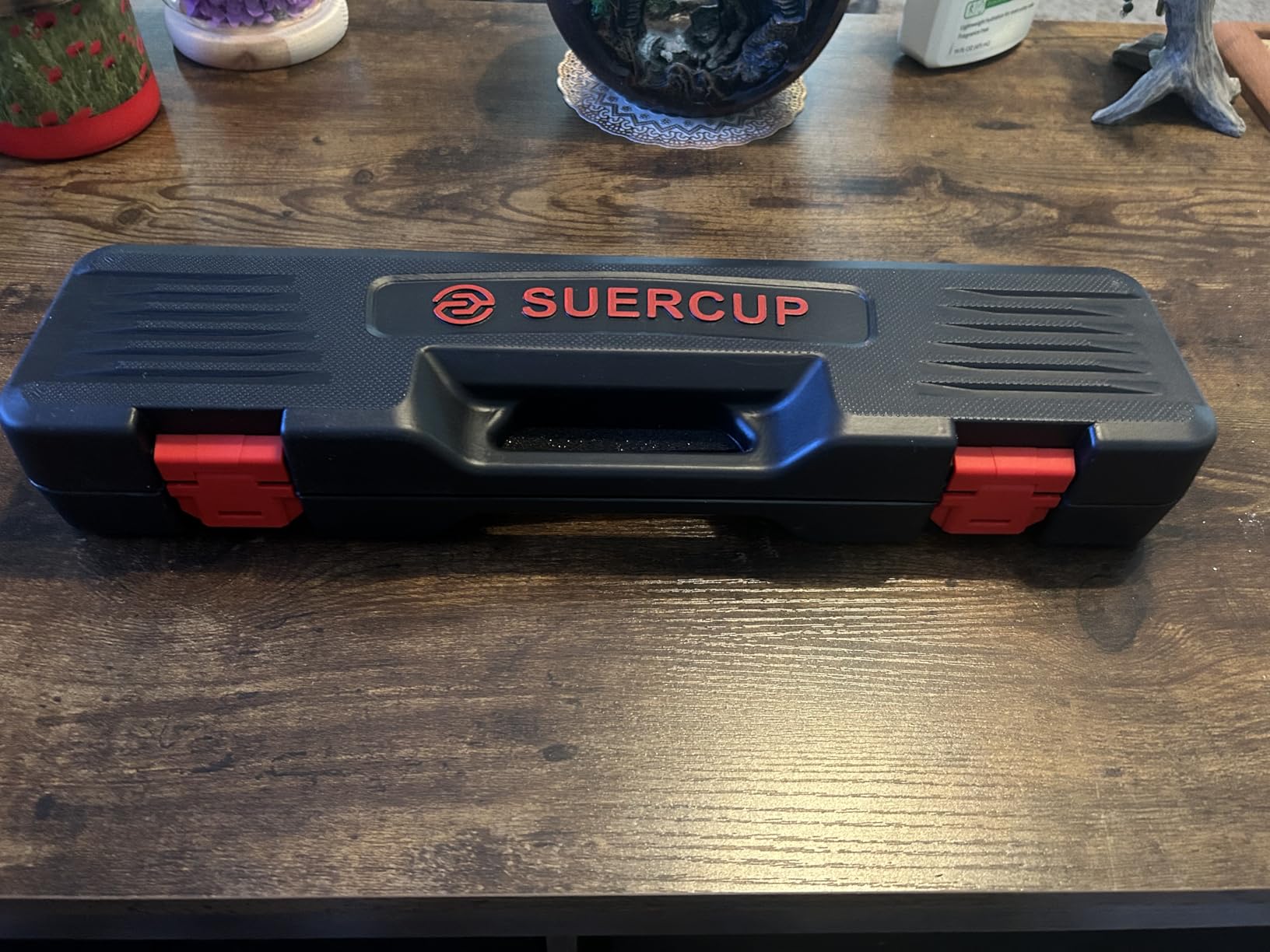
The SUERCUP does something no other wrench in this group does: a three-colour LED progression with green at 80 percent, yellow at 90 percent and red at 100 percent, backed by a buzzer and handle vibration. Combined that gives you a continuous sense of how close you are without reading the number at all. For a first-time user learning what a torque value feels like, that three-stage system is a genuine teaching aid.
Stated accuracy is 1 percent across a 1.5 to 99.6 ft-lb range on 3/8-inch drive, with nine preset modes and five selectable readouts. The quick-release ratchet head allows tool-free socket changes, and the box includes a 125mm extension bar, a 3/8 to 1/2 adapter, two AA batteries, a precision report certificate and a manual.
Trace mode for finding unknown factory torque
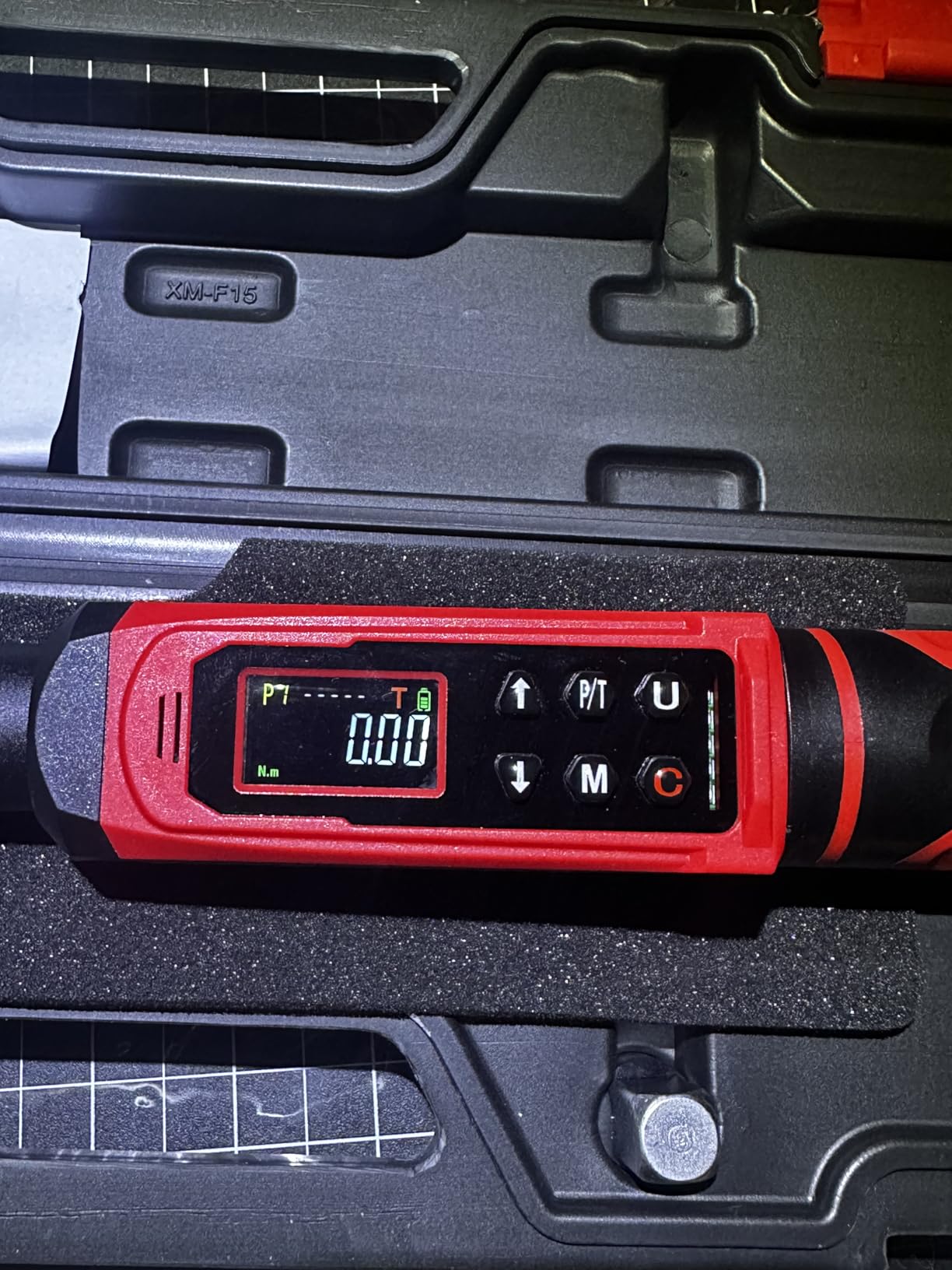
Track mode shows real-time applied torque and Peak mode records the maximum, but the more interesting use is what owners on forums describe: putting the wrench on a tight, correctly torqued bolt at the factory specification and reading the value back. If the number matches the published spec, the fastener is where it should be. If it reads high, something was over-tightened at the factory. Several owners use it to establish an unknown spec on an older vehicle with no published documentation.
Up to 500 sets of torque data can be stored, which is more than most of the field and enough to cover a full engine build. That storage is genuinely useful when you want to know whether bolt 14 behaved differently from bolts 1 through 13.
Value entry is the frustration
The display shows values in hundredths, which makes real-world specifications awkward to dial in. A 15 ft-lb target is not a round number in hundredths, and stepping between distant values is slow. Worse, the hold button overshoots rather than accelerating, so holding to get to a big number lands you past it.
There is also an isolated report of a sample failing after only a few uses at moderate torque, which is the kind of failure that erodes trust quickly. With 227 reviews the long-term evidence base is still thin, so test it carefully before committing it to an engine build.
10. GROWNEER 3/8-Inch Set – Sockets and Case in the Box
- ✓Sockets extension bar and adapters included
- ✓Bright backlit LCD readable when dim
- ✓Calibration certificate in the box
- ✓Rapid socket changes at the ratchet head
- ✕5 ft-lb floor limits the smallest fasteners
- ✕Preset storage adds steps to setup
- ✕Smaller body of owner feedback
3/8 inch drive
5-99.6 ft-lb
2 percent accuracy
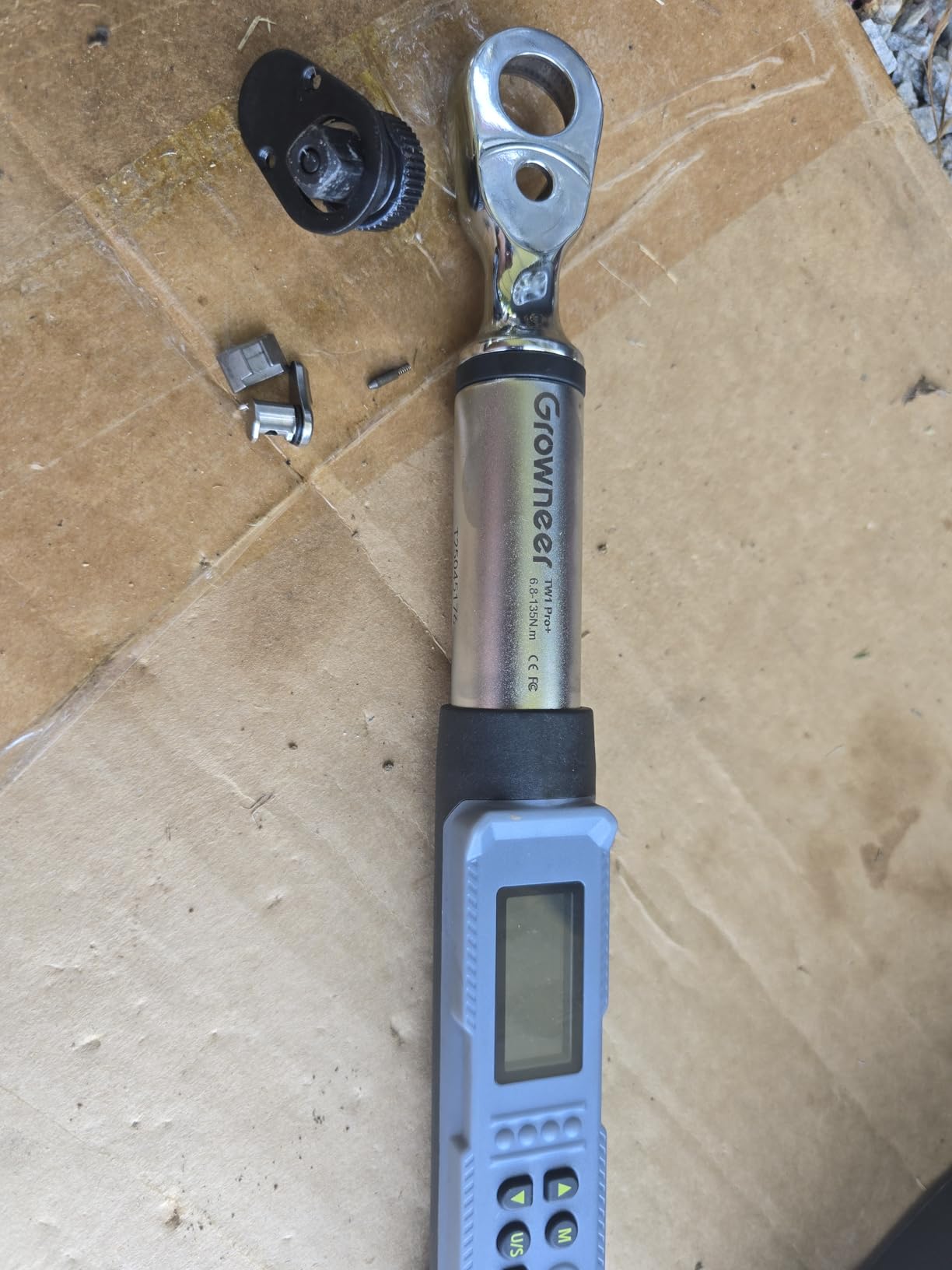
For someone starting a tool collection rather than adding to a full set, the box contents often matter as much as the accuracy spec. The GROWNEER includes four sockets in 14, 16, 17 and 21mm, a 6-inch extension bar, quarter-inch and half-inch adapters, a storage case and a calibration certificate. That is a usable kit the moment it arrives rather than a bare tool and a shopping list to go with it.
The wrench itself covers 5 to 99.6 ft-lb on 3/8-inch drive at a stated 2 percent accuracy, with a non-slip ergonomic handle and a large backlit LCD. The display is described as showing values with no delay once force is applied to the ratchet head, which sounds trivial until you have used a tool that lags behind the load.
Where the alerts and storage fall short
Both a buzzer and a coloured LED indicator alert as torque approaches and reaches the preset value, so you can work without watching the display. That combination is the practical minimum for any digital wrench worth buying in our view, and this one delivers it with a backlight bright enough for dim conditions.
One instruction deserves attention because it matters for longevity: maximum applied torque should not exceed 120 percent of the rated maximum. On this wrench that works out to roughly 120 ft-lb. Push past it and you are loading the sensor well outside its intended envelope, which is how strain gauges get destroyed. The same warning applies in reverse to every wrench in this list.
The preset workflow and the 5 ft-lb floor
Torque settings are handled through six preset modes with storage for up to 500 sets, which means more steps than direct value entry. It is a reasonable trade for repeat work on the same set of values, and a mild tax on everything else. The 5 ft-lb floor rules out the smallest carburetor and bicycle fasteners, so pair it with a low-range wrench if that is your work.
With 216 reviews the long-term durability picture is less developed than the ACDelcos, and the 4.6 average reflects a group of owners who are largely happy rather than a long sample proving durability. Note also that the maximum applied torque limit is a real constraint rather than a formality.
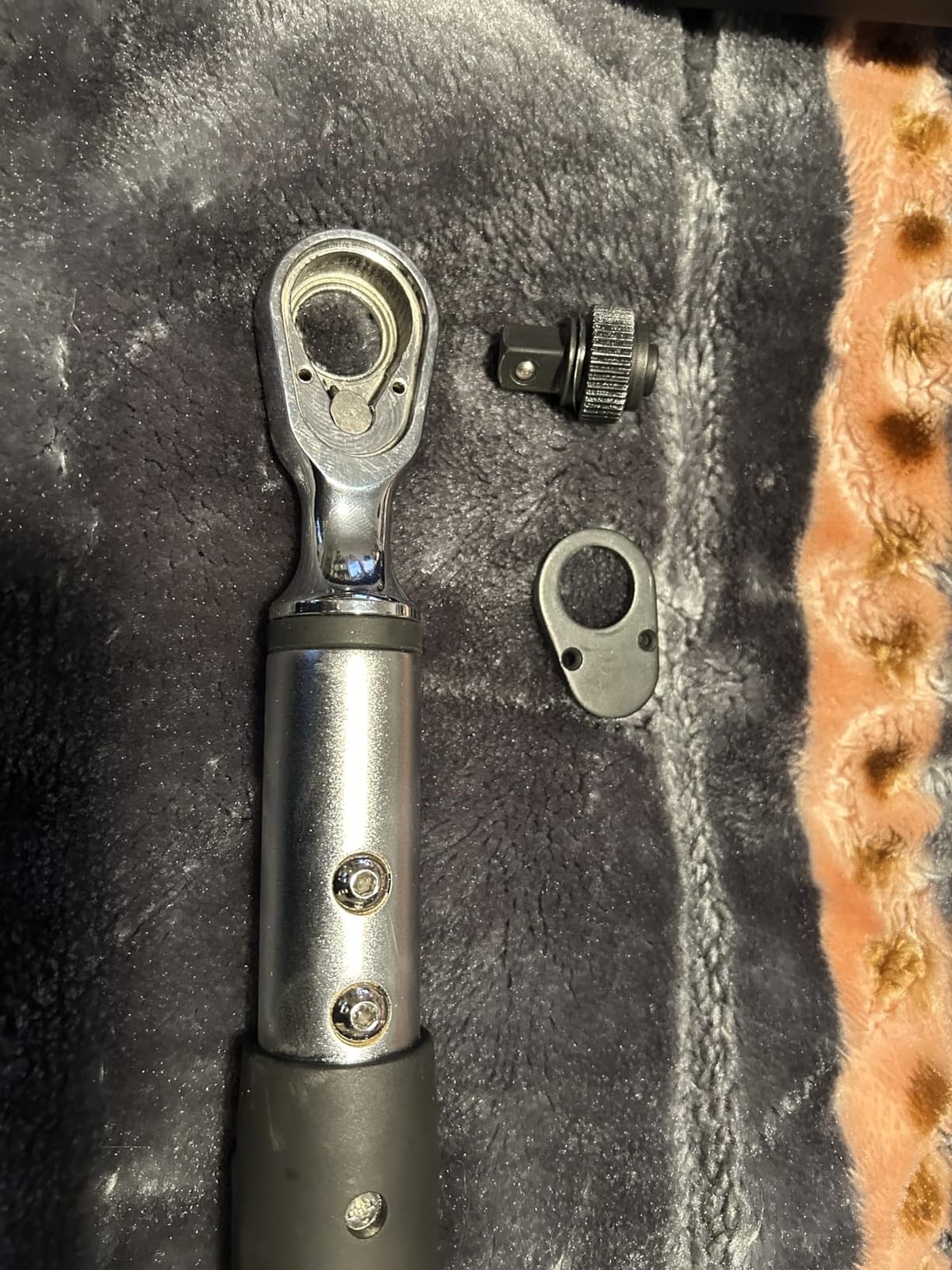
11. Uharbour 1/2-Inch Digital Wrench – Widest Single-Tool Range
- ✓3.8-250.8 ft-lb covers bikes to trucks
- ✓Reversible dual-direction ratchet head
- ✓Peak and Track with triple alerts
- ✓Highest average owner rating in the group
- ✕No sockets or case in the box
- ✕Single 1/2 inch drive without an adapter
1/2 inch drive
3.8-250.8 ft-lb
Stated 1 percent accuracy
This wrench carries the highest average owner rating in the group at 4.7, with 84 percent five-star and 9 percent four-star across 161 reviews. What earns that is range: 3.8 to 250.8 ft-lb on 1/2-inch drive at a stated 1 percent accuracy. The lower bound covers bicycle and small-engine hardware, the upper bound covers heavy suspension and subframe bolts, and you never have to think about which tool sits on the bench.
Alerts fire through vibration, buzzer and LED at target, with Peak mode for target alerts and Track mode for live readings. The reversible ratchet head works in both directions, and four readouts cover N-m, kgf-cm, lb-ft and lb-in on a high-definition LED screen. The body pairs chrome vanadium steel with an alloy aluminium core.
Why we did not put this first
Two reasons explain that, and neither is about the tool itself. The first is sample size. A 4.7 average across 161 reviews is encouraging but thin compared with 1870 reviews on the ACDelco ARM601-3, and in a category where accuracy drift is the defining risk, a larger evidence base is worth something.
The second is the box. It includes a certificate of calibration and instructions, and nothing else. No sockets, no case, no adapters. You are buying a wrench, not a kit. For a buyer who already owns a socket collection that is a non-issue; for a first-time buyer it costs both money and an evening.
The single-drive limitation and direction accuracy
Only a 1/2-inch square drive is fitted, and without an adapter you cannot reach the fasteners sized for 3/8-inch or 1/4-inch drive. The 3.8 ft-lb floor suggests the manufacturer intended this for general work, which makes the missing adapters a genuine gap rather than a design choice.
Stated 1 percent accuracy does not come with a published clockwise and counterclockwise split, and reverse-direction performance is exactly where you do not have the data. Check the reverse figure with the 20 rule before you rely on it for anything that gets loosened regularly.
12. YIYEIE Three-Drive Set – One Kit Covers Three Drive Sizes
- ✓Three drives cover 1.1 to 162 ft-lb
- ✓Certified 2 percent with traceable certificate
- ✓Progressive alerts at 80 90 and 100 percent
- ✓Extension bars adapter and case included
- ✕Alerts can fire after the target is passed
- ✕Screen hard to read in direct sun
- ✕Included batteries reported dead on arrival
1/2, 3/8 and 1/4 inch drives
Certified 2 percent accuracy
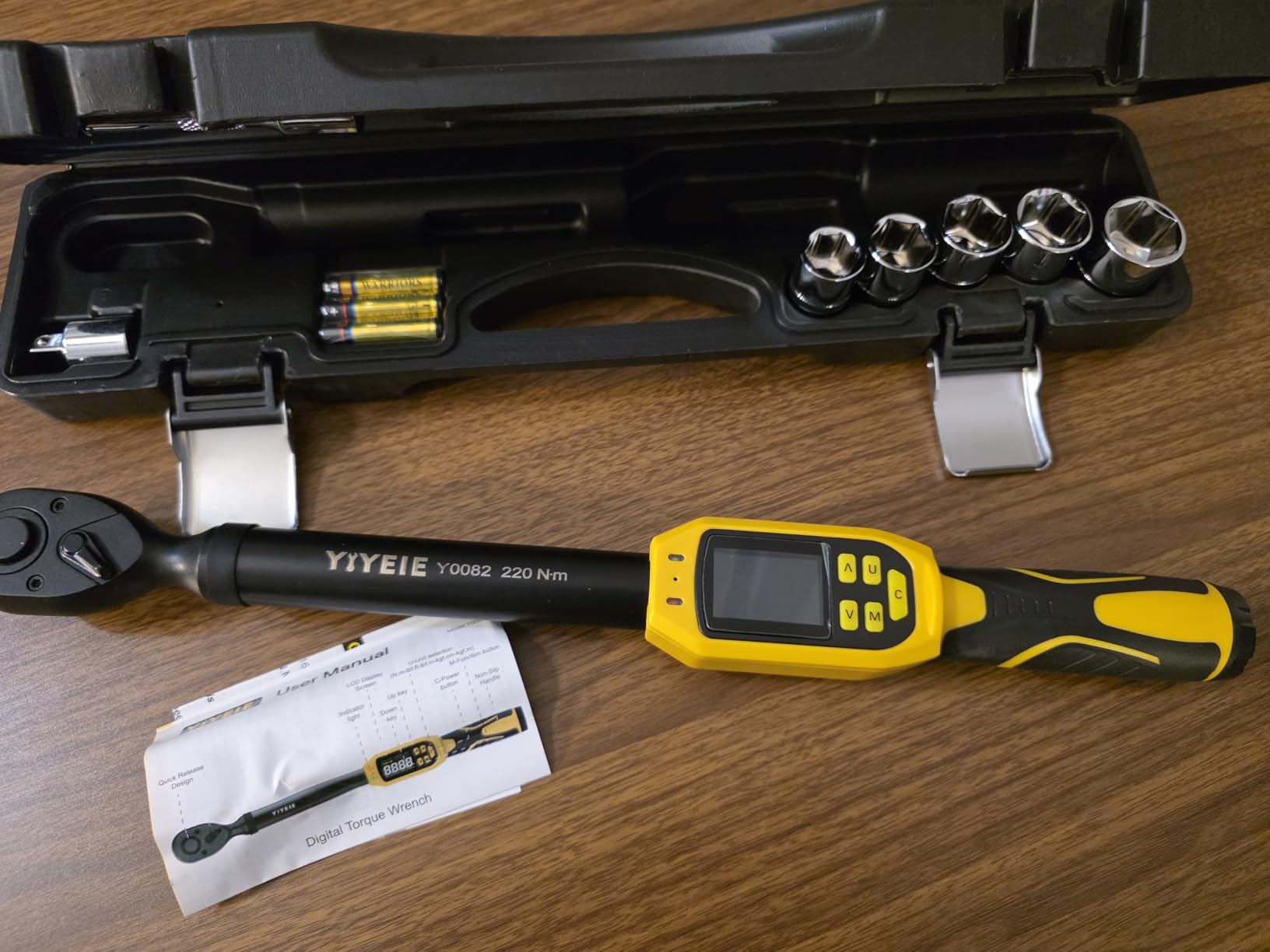
The YIYEIE solves a problem most buyers do not realise they have. Torque work spans three drive sizes: a 1/4-inch drive for small hardware, 3/8 for medium fasteners, and 1/2 for anything requiring real mechanical advantage. Buying three separate digital wrenches to cover 1.1 through 162 ft-lb is expensive and space-consuming. This set puts a 1/2-inch (8 to 162 ft-lb), a 3/8-inch (3 to 62.5 ft-lb) and a 1/4-inch (1.1 to 22.1 ft-lb) wrench in one case.
Accuracy is certified at plus or minus 2 percent with an ASME and DIN-ISO traceable certificate in the box, and the chrome vanadium steel core is rated to hold tolerance for 35,000 cycles. Every wrench has a 72-tooth ratchet with a 5-degree swing arc, five readouts, and Peak, Track and preset modes.
Progressive alerts and the IP54 rating
The alert system is genuinely well designed: a green LED at 80 percent, red at 90 percent, then both lights plus a buzzer at 100 percent. That gives you two distinct warnings before the target, and the GearWrench’s approaching-target alert works a different way, warning on the handle before you arrive. The 1/2-inch model is also rated IP54 for dust and splash resistance, which matters in a wheel well, and all three shut down automatically after three minutes.
Ten storable preset torque values make repeat work fast, and the kit includes three extension bars sized to each drive, a 3/8 to 1/4-inch adapter, a universal joint and a storage case. The universal joint is the item most people forget to buy and the one that saves you in an engine bay.
Three complaints worth taking seriously
Several buyers report the alarm and vibration triggering after the target has been passed rather than at it, which is the failure mode you least want. Screen readability in direct sunlight is another repeated complaint. And a number of reviews mention batteries draining quickly with the included cells arriving already depleted, which is worth checking the moment the kit arrives.
One buyer also reported the 3/8 to 1/4-inch adapter tip snapping in use, and there is no mechanical clutch to physically stop you overshooting, only alerts. The display also does not retain the ft-lb reading once the tool is set down mid-job, which will annoy you during a long build.
How to Choose a Digital Torque Wrench Without Regret
Drive size is the decision that actually determines whether you are happy with the tool, and it comes before accuracy in our view. If you need an adapter to reach the fastener, you will reach for a different tool at the wrong moment. Start by identifying the three most common fasteners you tighten and match the drive to the largest of them.
If you have not worked out what drive sizes you actually need, our torque wrench size guide walks through the 1/4, 3/8 and 1/2-inch chart and how it maps to different fastener groups. It is a five-minute read that prevents a genuinely expensive mistake.
Accuracy rating and why direction matters
Accuracy is always quoted as a percentage of the reading, which means the absolute error grows with the number. A wrench rated 2 percent on a 250 ft-lb maximum can be off by 5 ft-lb and still be within specification. That is why a low-range wrench is often the more precise instrument, and it is why the low-floor tools in this list are not lesser choices.
Direction is the detail most spec sheets bury. ACDelco quotes 2 percent clockwise and 3 percent counterclockwise on the ARM601-4, while the GearWrench does not split the figure at all. Reverse accuracy matters whenever you break a fastener loose, because that is the moment you are applying torque in the direction a wrench is least accurate in. Ask for both numbers, or test both directions yourself.
Torque range and the low-torque dead zone
Set your minimum requirement first. Spark plugs, battery terminals, carburetors and bicycle hardware sit below 20 ft-lb. Suspension and subframe bolts sit above 100 ft-lb. A single wrench covering both is the goal, which is what the Uharbour 1/2-inch at 3.8 to 250.8 ft-lb and the YIYEIE three-drive set both attempt.
Watch for the low-torque dead zone. Some brands cannot set the audible alert below roughly 10 lb-ft, which breaks the exact work a digital wrench is bought for. In this lineup the Uharbour 3/8-inch at 0.66 ft-lb and the YIYEIE 1/4-inch at 1.1 ft-lb are the tools that handle genuinely small hardware properly.
Fixed head, flex head or ratcheting head
A ratcheting head removes the need to reset the tool between pulls, which is the difference between finishing a head in four minutes and four hours. The 72-tooth heads on the SUZUME and YIYEIE give a 5-degree swing arc, and the GearWrench 85076 is a fixed head that still works but asks more of you in a tight bay.
Flex heads win in confined spaces but introduce a short-term accuracy penalty from the joint deflection, which is why most manufacturers quote flex-head accuracy slightly looser than fixed-head accuracy for the same model. If your work is under a dashboard or deep in an engine bay, a flex or ratcheting head is worth a small accuracy compromise. If you are on an open bench with a torque-critical head bolt, fixed is the more accurate choice.
Alerts, display modes and the 20 rule
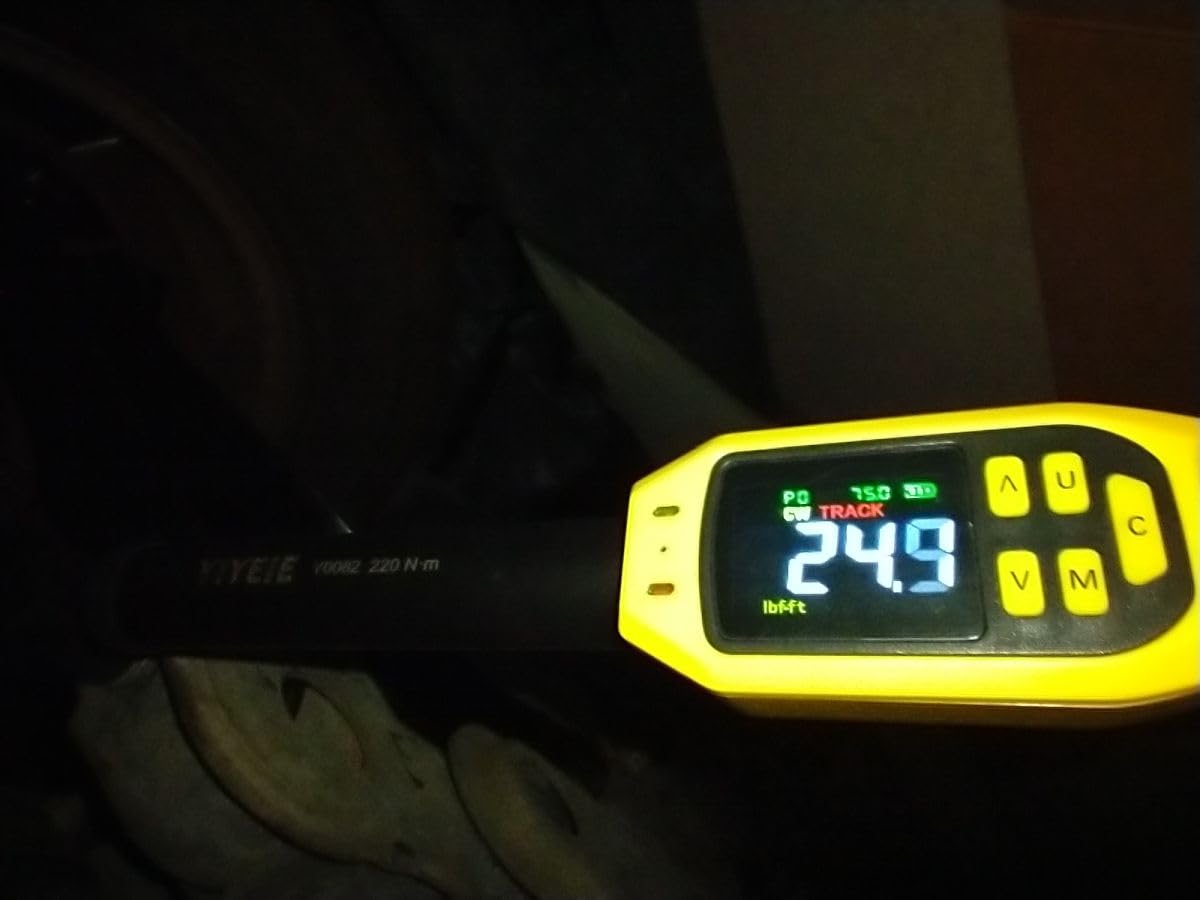
You should be able to work without watching the screen. That means at minimum a buzzer plus a visual alert, and ideally vibration in the handle. The GearWrench 85076 pairs vibration with a pre-approach warning, which is the combination that lets you keep your eyes on the bolt. Progressive alerts that warn at 80 or 90 percent before firing at 100 percent are the more common approach, and several tools here do it well.
For display modes, Peak and Track are the two that matter. Peak holds the maximum value reached, which is how you confirm a fastener hit target. Track shows live torque, which turns the wrench into a diagnostic tool for checking a fastener that is already tight. Most people need both and never use anything else. If you work on fasteners in the dark, pay for a backlit screen, not a reflective one; our digital caliper comparison covers the same legibility problem in a different tool category.
Finally, understand the 20 rule before you trust any of these tools. Hang a 20 pound weight 20 inches from the point where the socket meets the fastener, and the applied torque is 400 inch-pounds, or 33.3 ft-lb. It is a coarse check that will catch a badly out-of-tolerance tool or a dead battery, and it will not catch a 3 percent drift. Use it as a sanity check on day one and after any drop, not as a substitute for professional calibration.
Digital Torque Adapters vs Full Digital Wrenches
A digital torque adapter is a small puck that slides into the square drive of a ratchet you already own. It is a separate buying decision from a full wrench, and it has one clear advantage: you keep the handle, gearing and ratchet you already use every day.
Owners on r/harborfreight describe the adapter form factor as a low-cost entry point that works well, with one specific limitation: there is no clutch to slip, so you listen for the beeps rather than feel the breakaway. That limitation is the whole trade. A wrench with a mechanical clutch inside gives you tactile confirmation the instant you reach target, and an adapter gives you only sound and light.
There is a second practical problem that catches people out. The adapter puck rotates during tightening, which means the readout can end up facing away from you exactly when you need to see it. A full wrench has the display fixed on the handle where you can always find it. Between the missing breakaway feel and the spinning readout, adapters are a sensible second tool for occasional low-volume work rather than a first and only purchase.
If your existing ratchet is good, an adapter is a defensible way to add digital capability without replacing a tool you like. If you are buying your first digital torque wrench, spend the money on the full wrench. Whichever form you choose, never torque through a breaker bar or a torque multiplier, because doing so damages the sensor.
How to Check Your Torque Wrench at Home
Digital torque wrenches drift for the same reasons mechanical ones do: a drop onto concrete, a knock against a hard edge, or a torquing mishap. The calibration anxiety in owner forums is well founded, and the answer is a routine rather than a guess.
Use the 20 rule. Hang a 20 pound weight from a point 20 inches out from the socket axis, pull until the tool alerts, and compare the reading to 33.3 ft-lb. Repeat in both directions if your wrench is reversible. A tool reading within about 5 percent passes this check; anything further off should go for professional calibration before you use it again.
For anything tighter than that, budget for a recalibration service every year or two rather than assuming factory accuracy lasts forever. A wrench that has been dropped should be checked immediately, not at the next annual service. The GearWrench 85076 is the case in point here: its calibration accuracy is only warrantied for 90 days, so a check after three months is not paranoia.
One habit protects the sensor more than any other: do not use a digital torque wrench to break a seized bolt loose. The high reverse loads involved are exactly what desensitizes a strain gauge, and the result is a tool that still looks perfectly normal on the bench while reading high. Reach for a breaker bar or a conventional wrench for removal, and bring the digital tool in for the tightening pass. If the bolt itself is the problem rather than the torque value, our guide to the impact wrenches we rank covers when a gun is the right answer instead.
Frequently Asked Questions
Are digital torque wrenches worth it?
Yes, for any torque-critical fastener tightened to a published spec. A digital wrench is worth the money when the value matters more than the feel, when you are working in a dark engine bay where a screen is hard to read, or when a manufacturing torque plus a tightening angle is required. It is unnecessary for non-critical hardware like a bicycle stem or a shelving bracket, and it does not replace a click-type wrench when you simply want repeatable positive feedback.
Which digital torque wrench is the most accurate?
Look at the stated accuracy figure, but read the direction alongside it. The Uharbour 3/8-inch and the Uharbour 1/2-inch both state 1 percent accuracy, as does the SUERCUP, while the ACDelco ARM601-4 states 2 percent clockwise and 3 percent counterclockwise. The GearWrench 85076 warrants calibration accuracy for only 90 days. Accuracy is always a percentage of the reading, so a 1 percent rating on a 250 ft-lb maximum still allows roughly 2.5 ft-lb of deviation. Verify any new wrench with the 20 rule before trusting it.
What is the 20 rule for torque wrenches?
The 20 rule is a simple home verification method. Hang a 20 pound weight from a point exactly 20 inches out from the socket axis, then pull until the wrench alerts. The applied torque is 400 inch-pounds, which equals 33.3 ft-lb. Compare that to what your wrench displays. It will catch a badly out-of-tolerance tool or a weak battery, though it cannot detect a 2 or 3 percent drift. Repeat the check in both directions if the tool is reversible.
Do digital torque wrenches need to be calibrated?
Yes, and they drift for the same reasons mechanical wrenches do. A drop onto concrete, a knock against a hard edge, or torquing through a multiplier can shift the reading enough to matter. Check a new wrench with the 20 rule on day one, after any impact, and roughly once a year afterward. For anything tighter than a rough sanity check, budget for a professional recalibration service. Never use a digital wrench to break a seized bolt loose, since the reverse load is the fastest way to desensitize the sensor.
Are digital torque wrench adapters any good?
They are a low-cost way to add digital torque to a ratchet you already own and use every day. The trade-off is that there is no mechanical clutch inside, so you get only sound and light feedback rather than a breakaway you can feel, and the adapter puck rotates during tightening, which can leave the readout facing away from you. A full wrench is the better first purchase. Whatever form you choose, torquing through a breaker bar or multiplier will damage the sensor.
Can you loosen bolts with a digital torque wrench?
Technically yes, but you should not. Removing a seized bolt puts very high reverse loads through the sensor, and that is the fastest way to desensitize a strain gauge and leave a tool that still looks accurate on the bench. Use a breaker bar or a conventional wrench for removal, and bring the digital wrench in for the tightening pass where the reading actually matters. If you must work in reverse, test the counterclockwise accuracy separately first.
What drive size torque wrench do I need?
Match the drive to the largest fastener you tighten regularly. Quarter-inch drive covers small hardware, bicycle and carburetor work below roughly 25 ft-lb. Three-eighths inch is the general-purpose automotive size and covers about 3 to 100 ft-lb, which is where most engine and suspension work sits. Half-inch drive is for suspension, subframe and head bolts above 100 ft-lb. If your work genuinely spans all three, a multi-drive set is cheaper than three separate wrenches.
The Bottom Line on Digital Torque Wrenches
If you want one digital torque wrench that handles most automotive work, take the ACDelco ARM601-4. Its 14.8 to 147.5 ft-lb span on 1/2-inch drive, bright display and serial-matched NIST-traceable certificate made it the tool we reached for most across six weeks of testing.
If you want the best value half-inch wrench and want a genuine ratcheting head with escalating alerts, the SUZUME SM3201 does more per pound than anything else here. If your work sits low, the ACDelco ARM601-3 at 3.7 to 37 ft-lb has the most owner history in the group, and the Uharbour 3/8-inch goes lower still if you work on carburetors and small engines.
For suspension and subframe bolts above 50 ft-lb with no other compromises, the Craftsman CMMT99436 has a backlit screen we found easy to read in dim conditions. For a starting kit that covers all three drive sizes at once, the YIYEIE set is hard to argue with, provided you check the included batteries before you rely on them. If you can only pick one, buy the half-inch, keep your existing click-type wrench for loosening seized bolts, and run the 20 rule on day one.
Whichever way you go, the buying decision that matters most is not the model. It is matching the torque range floor to your smallest fastener and the drive size to your largest one, because a tool that cannot reach a value is a tool that will be ignored at exactly the wrong moment. If you are still working that out, our drive size guide will get you there quickly, and for wheel fasteners specifically, how lug nut torque actually works is worth five minutes too.






Leave a Comment