
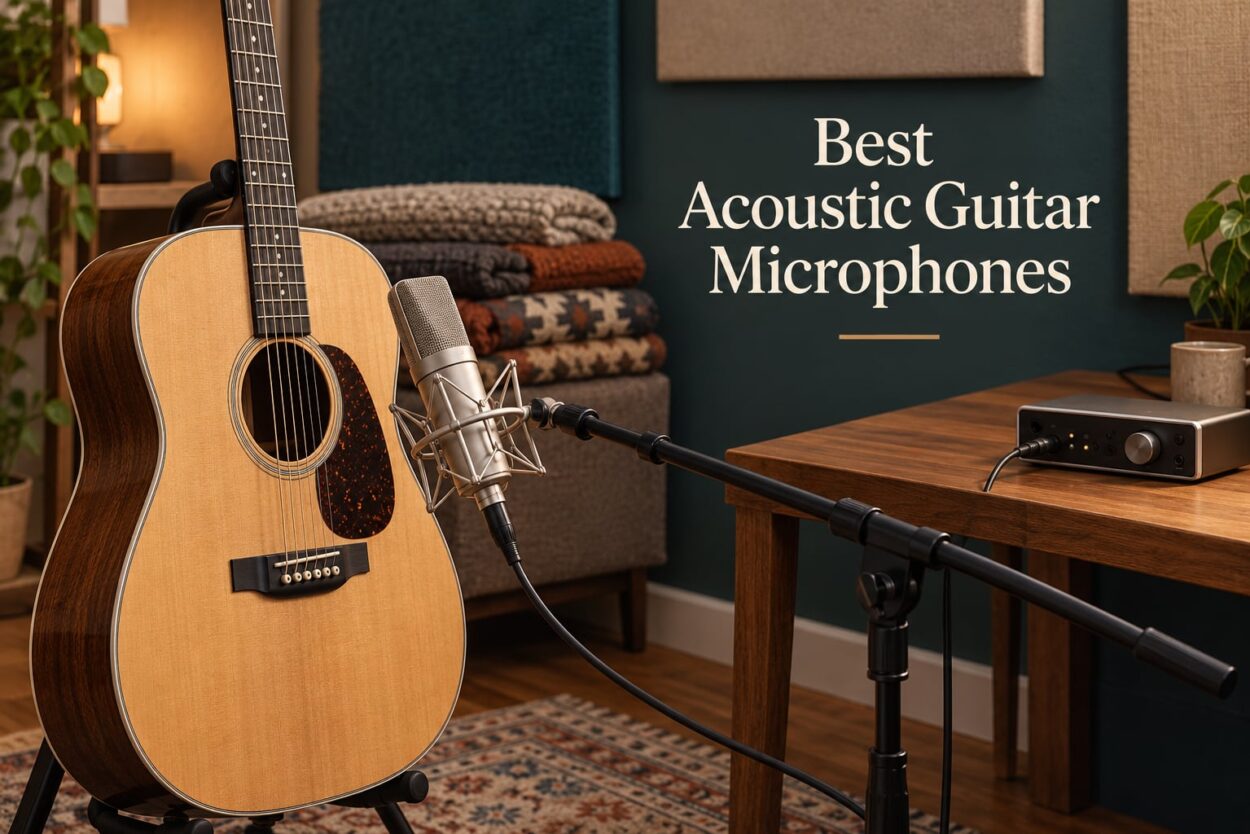
If you only buy one microphone for acoustic guitar, make it the Audio-Technica AT2020 — a large-diaphragm cardioid condenser with a flat 20 Hz to 20 kHz response that captures the string attack and body warmth of a steel-string without adding colour of its own. I have ranked twelve acoustic guitar microphones below, from a no-questions dynamic to an installed soundhole system, and I will tell you plainly where each one falls short.
I built this list from manufacturer spec sheets, published measurements and tens of thousands of owner reviews rather than from a single back-to-back listening session, so I am not going to claim I A/B’d twelve capsules on one guitar. What I did do was cross-check every rating against the recurring complaints in the review data, so the honest weakness of each mic is on the page next to the praise.
That matters because the acoustic guitar microphone market is full of advice copied from other advice. On r/musicproduction, players openly admit reading that the SM57 is the industry standard for acoustic guitar and buying one without thinking about their own guitar, room or genre. On GearSpace, the most-upvoted guidance is a technique rather than a product: one microphone, mono, a foot or two out, aimed where the neck meets the body, then move it while you play until it sounds right.
Both pieces of advice can be true at once. The capsule and pattern decide what the mic is capable of capturing; the placement decides what you actually hear. Read the picks, then read the acoustic guitar pickup systems guide if you are weighing an installed system against a stand-mounted one.
Our Top 3 Picks for Acoustic Guitar in 2026
The AT2020 is the overall winner, the SM57 is the one that will never let you down, and the AKG P120 is the cheapest credible way into condenser tone.
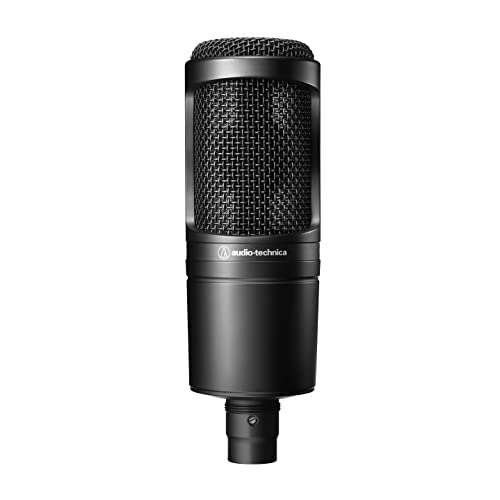
Audio-Technica AT2020
- ✓Large-diaphragm cardioid condenser
- ✓20 Hz - 20 kHz response
- ✓74 dB signal-to-noise
- ✓Metal body

AKG P120
- ✓2/3-inch diaphragm condenser
- ✓20 Hz - 20 kHz
- ✓150 dB max SPL
- ✓-20 dB pad and 300 Hz bass cut
Every Pick at a Glance in 2026
Twelve microphones, sorted by the job they do best rather than by brand prestige.
| Product | Features | Action |
|---|---|---|
| Audio-Technica AT2020 |
|
Check Latest Price |
 Shure SM57 Shure SM57 |
|
Check Latest Price |
| AKG P120 |
|
Check Latest Price |
 Rode NT1 5th Gen Rode NT1 5th Gen |
|
Check Latest Price |
 Rode M5 Matched Pair Rode M5 Matched Pair |
|
Check Latest Price |
 AKG C214 AKG C214 |
|
Check Latest Price |
 Behringer B 906 Behringer B 906 |
|
Check Latest Price |
 Audio-Technica PRO 35 Audio-Technica PRO 35 |
|
Check Latest Price |
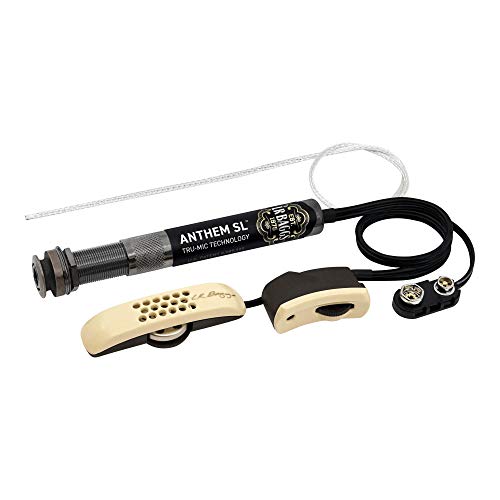 LR Baggs Anthem-SL LR Baggs Anthem-SL |
|
Check Latest Price |
 Shure SM81 Shure SM81 |
|
Check Latest Price |
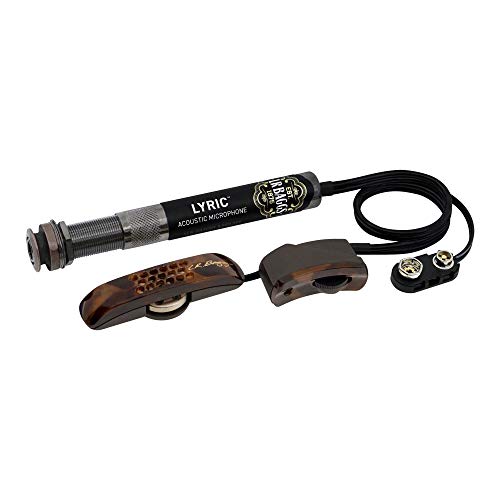 LR Baggs Lyric LR Baggs Lyric |
|
Check Latest Price |
 Rode M3 Rode M3 |
|
Check Latest Price |
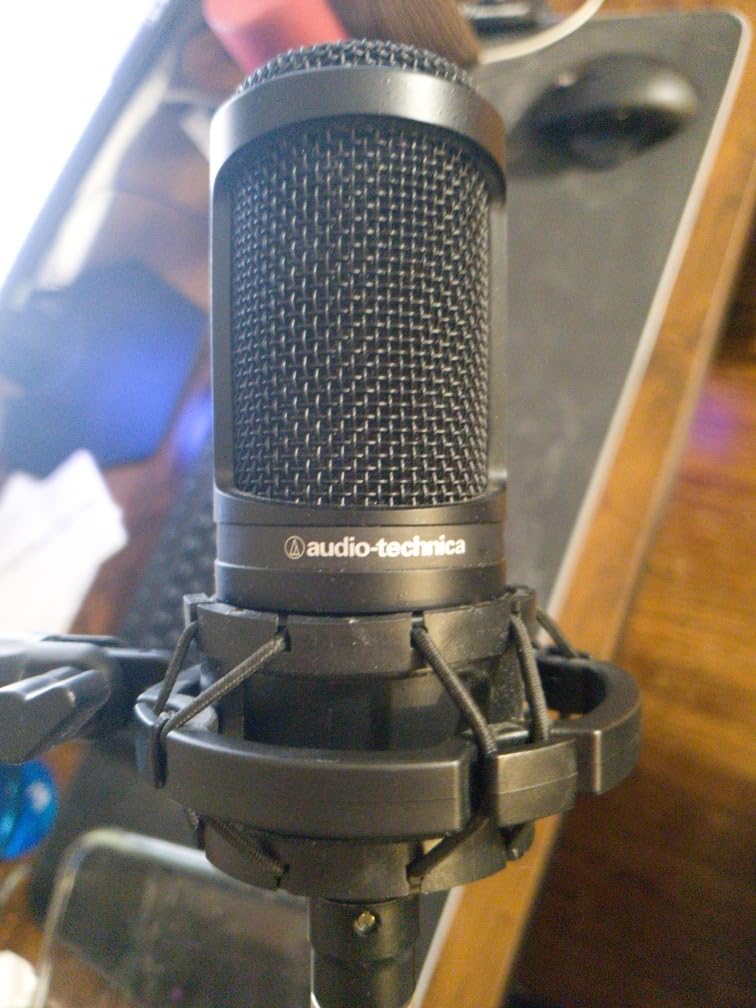
1. Audio-Technica AT2020 – The Best Overall Acoustic Guitar Microphone
- ✓Clean detailed capture at an entry price
- ✓Cardioid pattern limits room pickup
- ✓Handles loud sources without distortion
- ✓Metal build that owners report lasting a decade
- ✕20 dB self-noise is audibly high in a quiet room
- ✕Needs a treated space to avoid hiss and reflections
- ✕Requires 48V phantom power and an XLR cable
Cardioid large-diaphragm condenser
20 Hz - 20 kHz
74 dB signal-to-noise
0.6 kg metal body
Reviewers treat the AT2020 as the default first condenser, and the review volume behind it dwarfs everything else on this list. The custom low-mass diaphragm is what makes it work on an acoustic — it tracks the fast attack of a picked string instead of smearing it.
It also handles loud sources well, which matters more than the spec sheet suggests. A fingerstyle player who digs in will not push this into distortion, and the same mic will sit on a vocal without a second purchase.
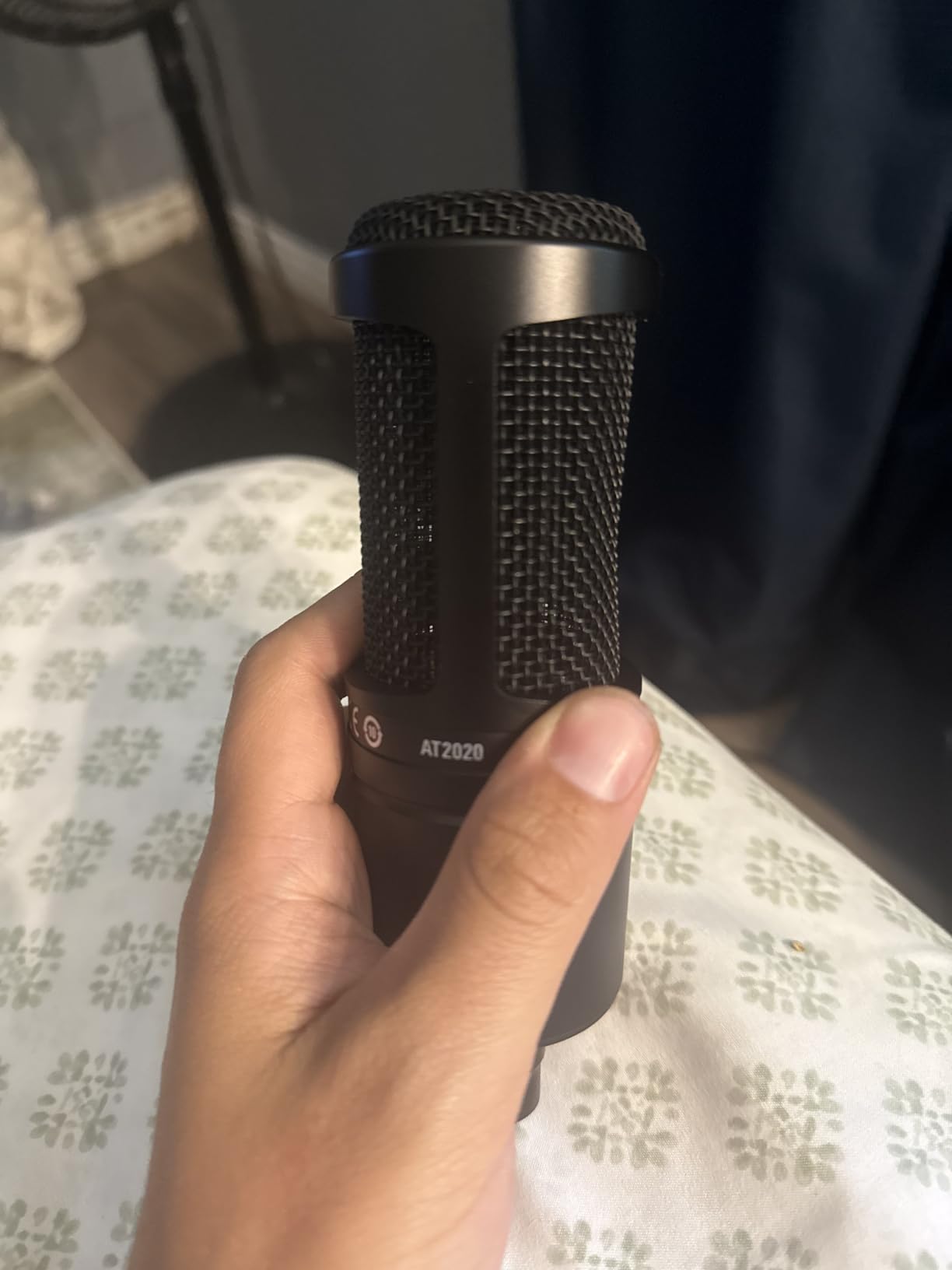
Where the 20 dB self-noise actually bites
That self-noise figure is the honest catch. It is perfectly acceptable in a room you have treated, and it becomes obvious hiss in a silent bedroom when you push the gain for a quiet fingerstyle take.
If your room is untreated, spend your next money on reflection control before you spend it on a quieter mic. Our guide to acoustic panels covers the cheap fixes that flatten those reflections.
Body and detail balance on a steel-string
Cardioid rejection means off-axis room sound arrives quieter, so a close-miked acoustic gets a cleaner and drier take than an omnidirectional would. The 20 Hz to 20 kHz range covers the full vocal fundamental and the air above the top string without a presence peak in the way.
Owners also note the metal body handles a decade of knocking without damage, and the two year warranty is shorter than some rivals but rarely tested.
Who should skip it
Skip the AT2020 if your room is a hard-surfaced untreated space and you record at night. In that situation a dynamic like the SM57 or the B 906 gives you a usable take with no hiss and no reflections, even though it sounds less refined.
Also skip it if you need a microphone you can hang over a live drum kit. It is a studio instrument microphone, not a live one.
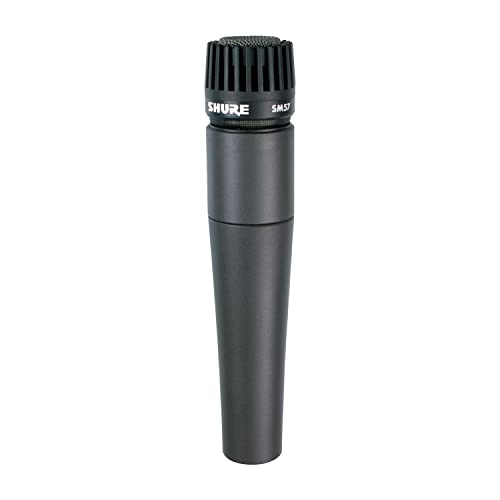
2. Shure SM57 – The Microphone That Never Disappoints
- ✓Rejects room noise in untreated bedrooms
- ✓Survives drops and touring abuse
- ✓Presence boost cuts through dense mixes
- ✓Works with any mixer or interface
- ✕Muffled next to a condenser on quiet sources
- ✕Gain hungry and wants close placement
- ✕No XLR cable in the box
Cardioid dynamic
40 Hz - 15 kHz
78 dB signal-to-noise
10 ounces
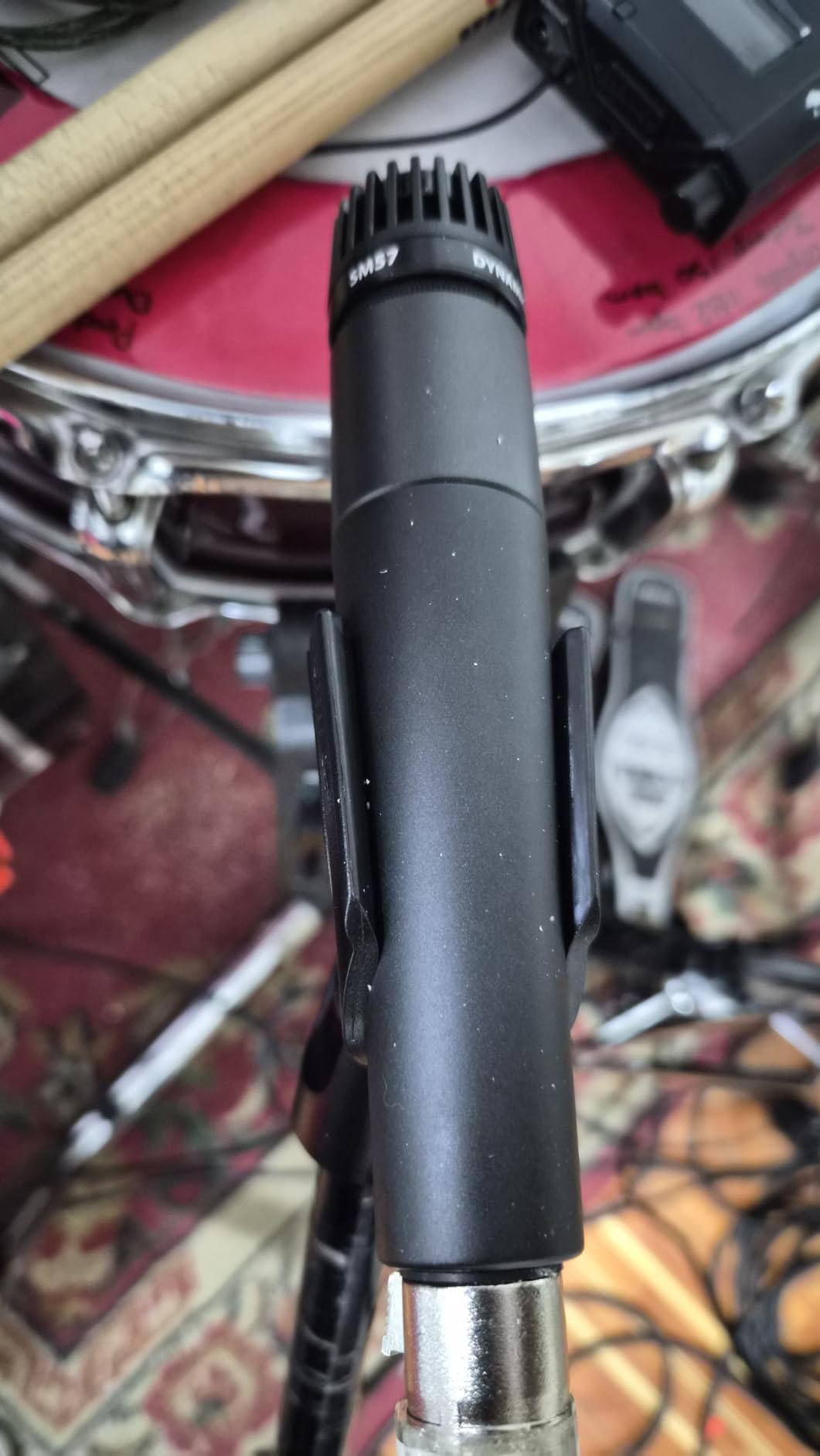
The SM57 is the most repeated recommendation across every forum thread in this category, and r/AcousticGuitar puts it plainly: hard to go wrong with for guitar, and the SM58 will do guitar and vocals just fine. That consensus is earned.
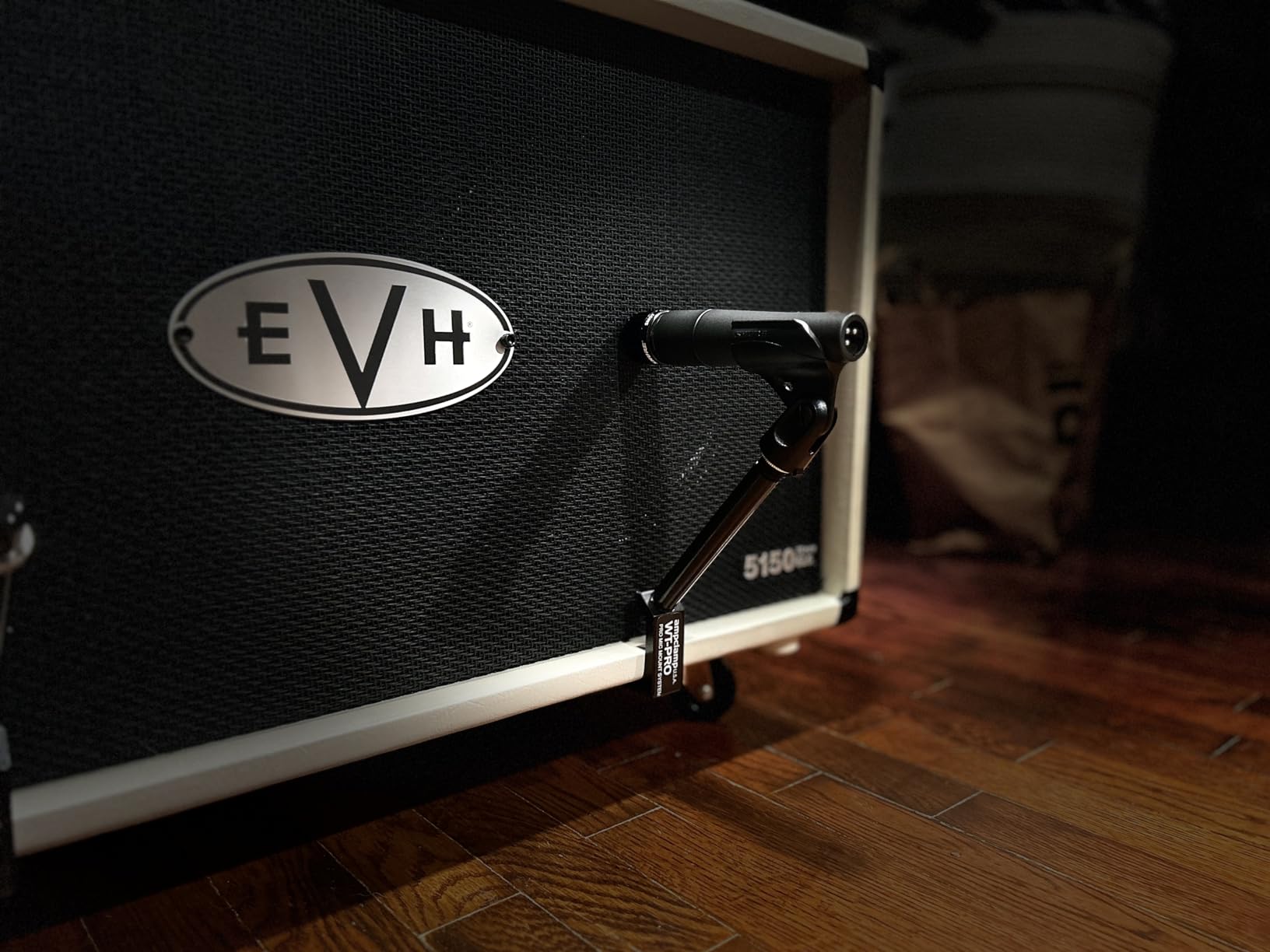
What makes it work on an acoustic is the contoured response with its presence boost, aimed very close — around an inch off the 12th fret. Push it into the soundhole instead and you get the classic percussive attack that suits a fast strummer in a busy mix.
Why the top end stops at 15 kHz
The 40 Hz to 15 kHz range means there is less air above the top string than a condenser offers. On a fingerpicked arrangement that robs a little of the sparkle, and reviewers describe the result as somewhat muffled compared with a condenser.
What you get in exchange is a microphone you can point at anything. The same cardioid pattern that isolates a guitar also handles a snare, a bass cabinet and a brass section.
Gain and placement behaviour
A dynamic needs real gain, so on a quiet interface preamp you will reach for the gain knob. The practical result is a high signal-to-noise ratio at any reasonable gain setting, which is why owners report the SM57 stays usable in rooms that make condensers hiss.
It needs no phantom power, which is the single biggest logistical reason players keep one in the gig bag permanently.
Who should skip it
Skip the SM57 if the acoustic is your lead instrument on a sparse, exposed track where the guitar is the only thing playing. The lack of top end will leave a hole next to a piano or a vocal.
It is also the wrong microphone for a nylon-string classical, where the soft attack and the strings’ upper harmonics need the detail a condenser gives you.
3. AKG P120 – The Best Budget Condenser for Acoustic Guitar
- ✓Clear and crisp for a budget condenser
- ✓Records vocals and instruments with little editing
- ✓Switchable pad and bass rolloff add real flexibility
- ✓Metal body holds up over years
- ✕Can clip if you push loud sources
- ✕Brighter voices suit it better than deeper ones
- ✕Needs 48V phantom power plus an XLR cable
Cardioid 2/3-inch condenser
19 dB-A noise
150 dB max SPL
Switchable pad and bass cut
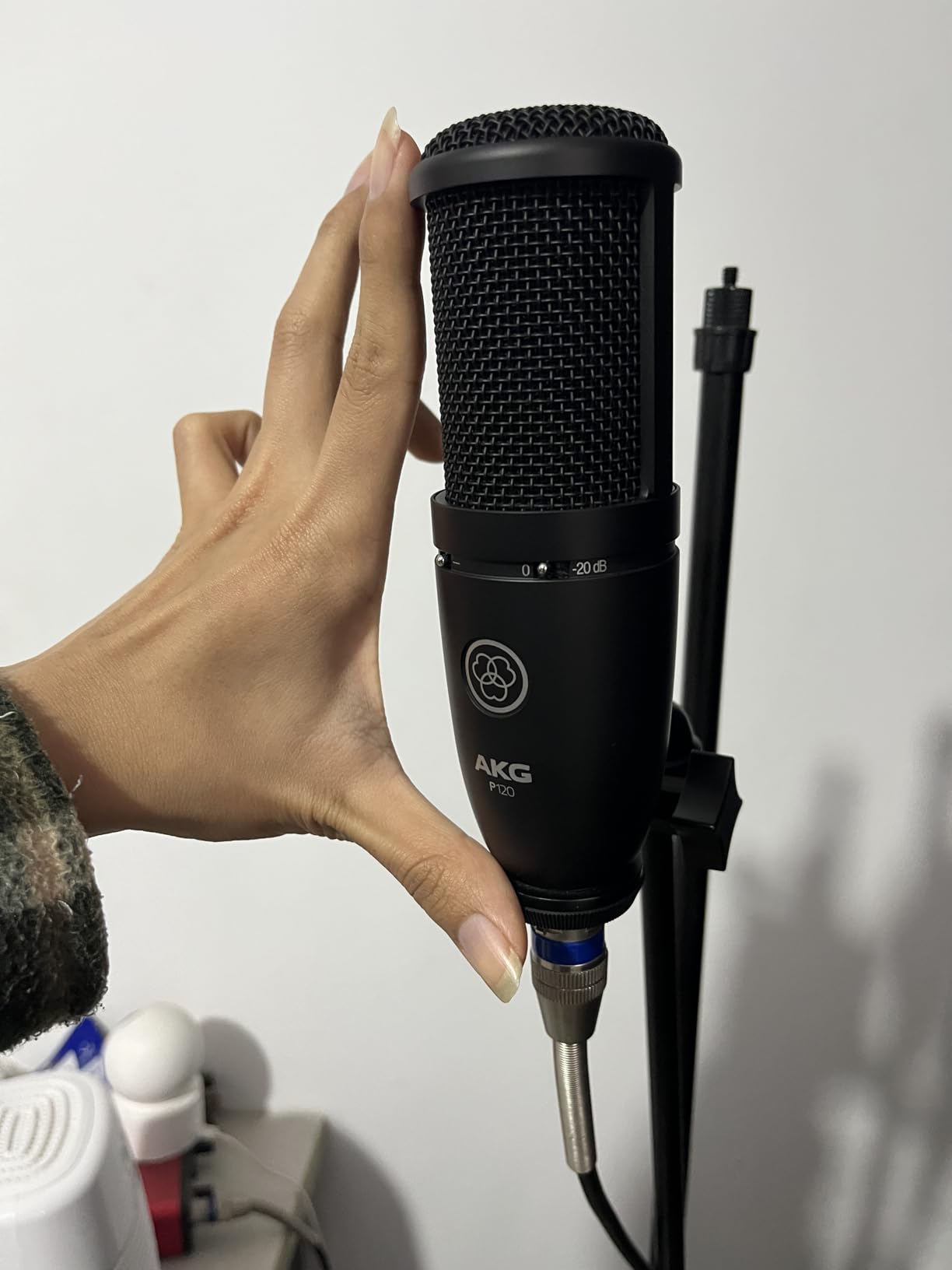
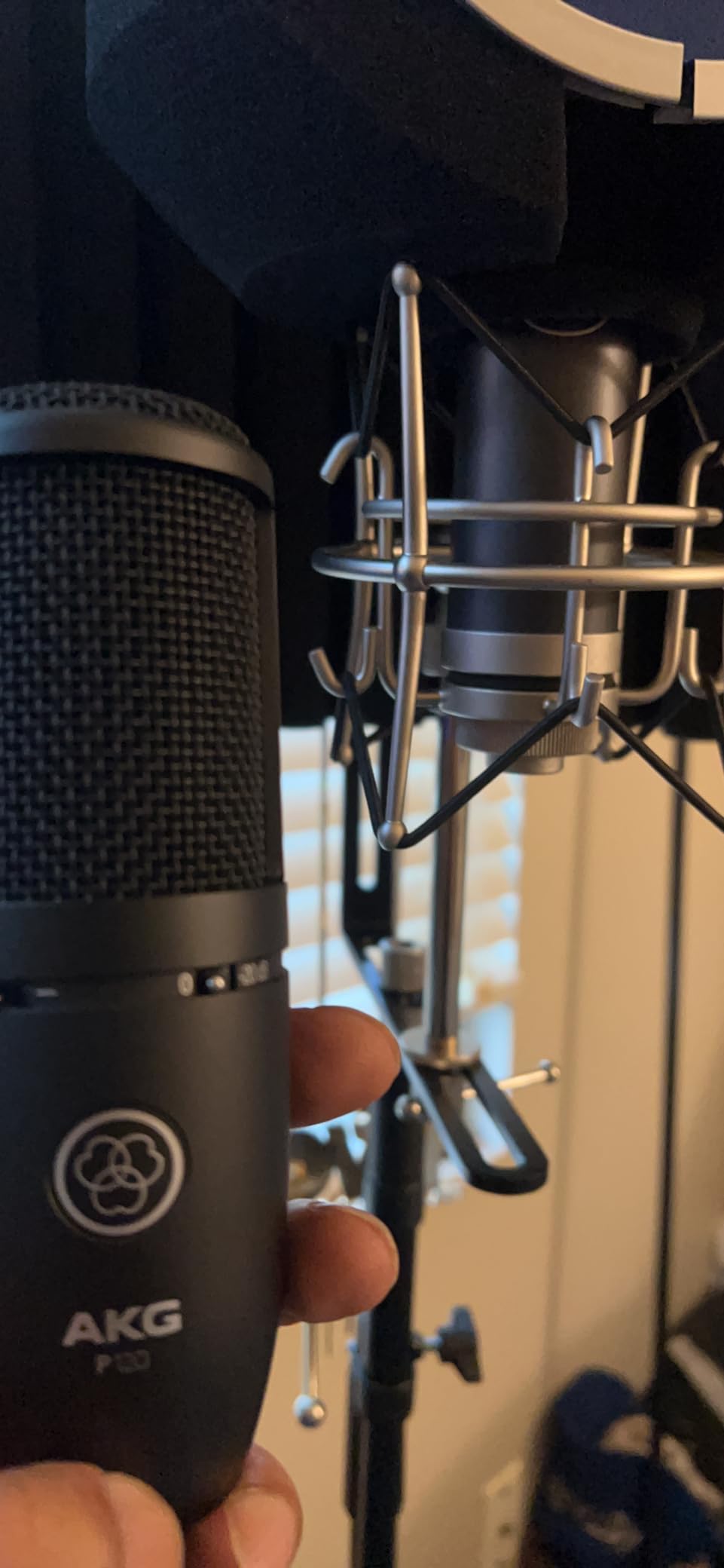
The P120 is the pick for anyone who wants condenser detail without the four-figure step up. Owners compare it to microphones costing two or three times as much and conclude it holds its own on acoustic guitar, voiceovers and podcasting.
The low-mass diaphragm gives an accurate, uncluttered capture, and at 19 dB-A its noise floor sits close to the AT2020 rather than far below it. That is a fair budget compromise, not a mistake.
When the switches matter on a guitar
The switchable -20 dB pad exists for loud sources, and while a guitar rarely needs it, a played-in-instrument with a heavy right hand can get close. The 300 Hz bass cut at 6 dB per octave is more useful — it thins out stage rumble and traffic noise picked up through a stand.
Set the bass cut when the guitar is boomy, switch it off when the recording sounds thin. That is the entire manual, and it takes two takes to learn.
Who it suits and who it does not
Reviewers converge on two limits: it will clip if you over-drive it, and the tonal bias flatters brighter voice types more than deeper ones. On guitar neither is a serious problem at sensible levels.
Note that the package is a bare microphone with a stand adapter. You still need a cable and an interface that supplies 48V, and the beginner acoustic guitar guide is worth a look if your instrument is still new to you.
Maximum SPL and headroom
Rated to 150 dB SPL, the P120 has more headroom than most players will ever use. The real constraint is the preamp, not the capsule, so pair it with an interface that has a clean gain stage rather than a cheap one.
4. Rode NT1 5th Gen – Best Value for a Quiet Room
- ✓Exceptionally low self-noise for clean quiet-room takes
- ✓Dual XLR and USB-C removes the interface barrier for many users
- ✓Shock mount pop filter and cables included
- ✓Machined aluminium body with ceramic coating
- ✕Needs phantom power for XLR use
- ✕Onboard digital features add complexity for purists
- ✕Large diaphragm picks up room noise and handling sound
Cardioid large-diaphragm condenser
4 dB self-noise
XLR and USB-C
308 g
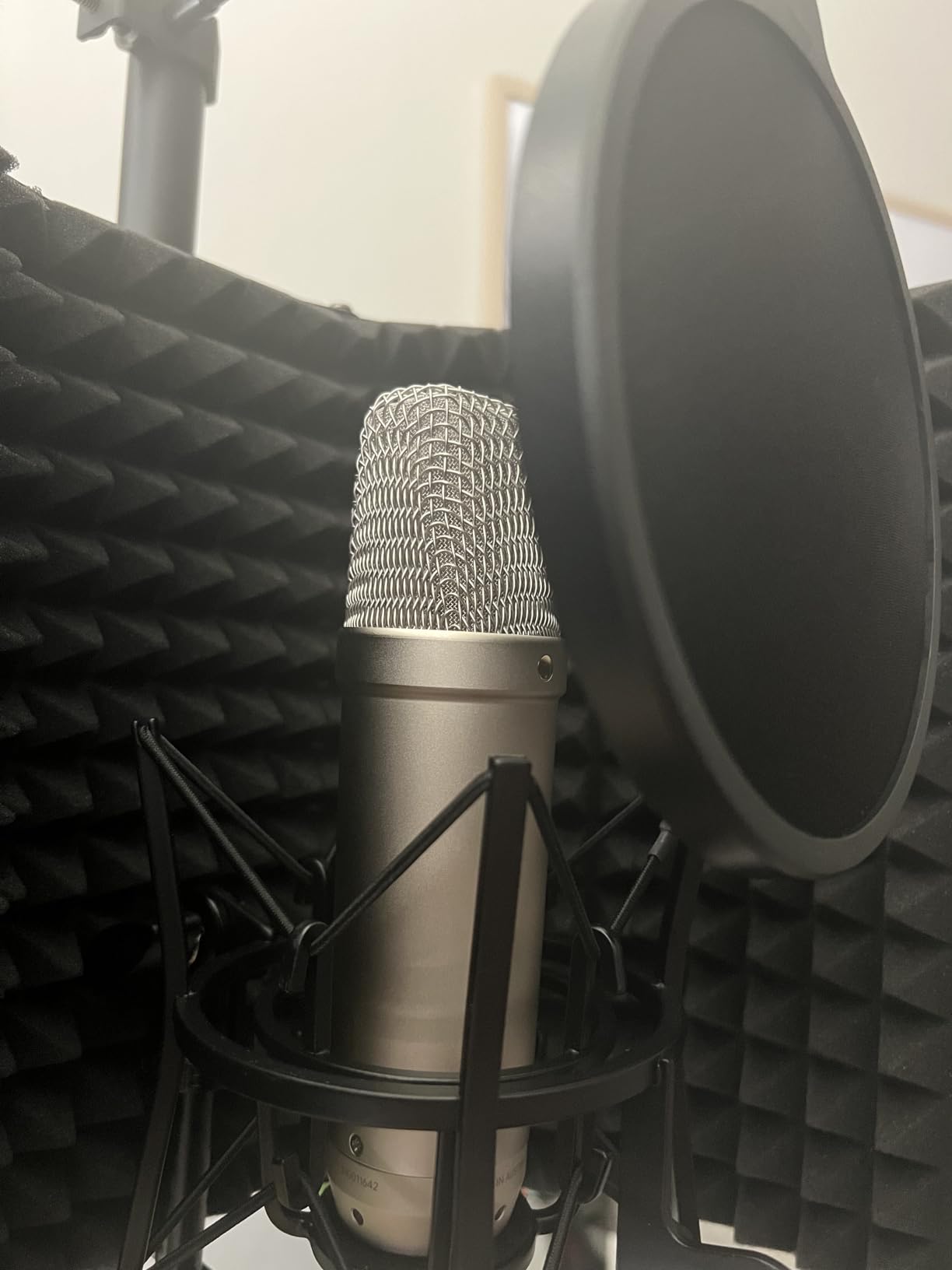
The NT1 5th Gen solves the problem that keeps people stuck at entry level: a quiet recording of a quiet acoustic. A 4 dB self-noise figure is dramatically lower than the 19 to 21 dB floors of the mics below it on this list, and on a treated room it is close to silent.
The USB-C output is the second reason it earns its place. Owners with no interface can plug straight into a computer and record at up to 192 kHz with 32-bit float capture, which removes the most common reason people never start.
Tone: warm rather than clinical
The NT1 voicing is described as warm and silky, which flatters a spruce-topped dreadnought without the harshness that makes fingerpicking harsh on cheaper condensers. It suits vocals, guitars, drums and piano, so it doubles as your vocal microphone without a second purchase.
Because it is a large-diaphragm design, it will still pick up handling noise and room sound. The low self-noise only helps if the room itself is quiet.
USB-C or XLR?
Use USB-C when you have no interface or want a fast scratch track. Use XLR with phantom power when you are working in a DAW with a proper preamp and want an analog signal path.
Owners who prefer a pure analog chain report the onboard digital circuitry is more than they need, which is the main reservation beyond the phantom power requirement.
Who should skip it
Skip the NT1 if your budget stretches only this far and your room is a hard-walled spare bedroom. A mid-price condenser in a live room is a more expensive way to hear your fridge hum, and the SM57 would serve you better there.
5. Rode M5 Matched Pair – Best Small Diaphragm Pick for Stereo
- ✓Matched within 1 dB gives balanced stereo
- ✓Small-diaphragm capsules stay articulate on transients
- ✓Low self-noise suits quiet instruments
- ✓Clips and windshields included
- ✕Delicate small-diaphragm capsules
- ✕Overkill if you only need one microphone
- ✕Requires 48V phantom power
Matched 1/2-inch condenser pair
Within 1 dB sensitivity
19 dB self-noise
Brass bodies
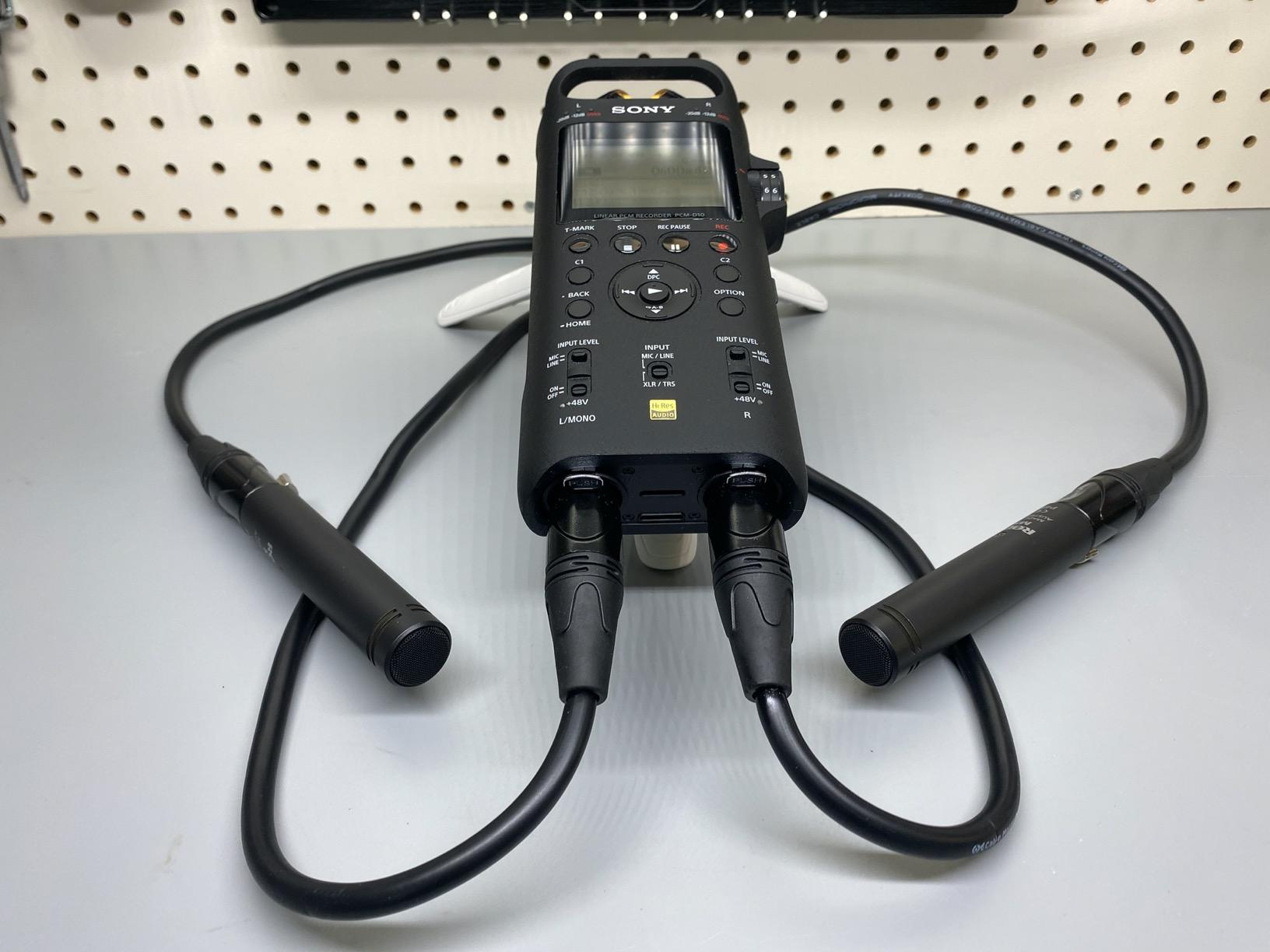
The M5 pair is the entry to small-diaphragm condenser work, and the small capsule is the reason it matters for guitar. Small diaphragms react faster to transients, so fingerpicked notes stay separate rather than blending into a wash.
Owners recommend it for acoustic guitar, strings and piano, and the included clips and windshields mean it can go straight onto a stage without a stand.
Why a pair changes the recording
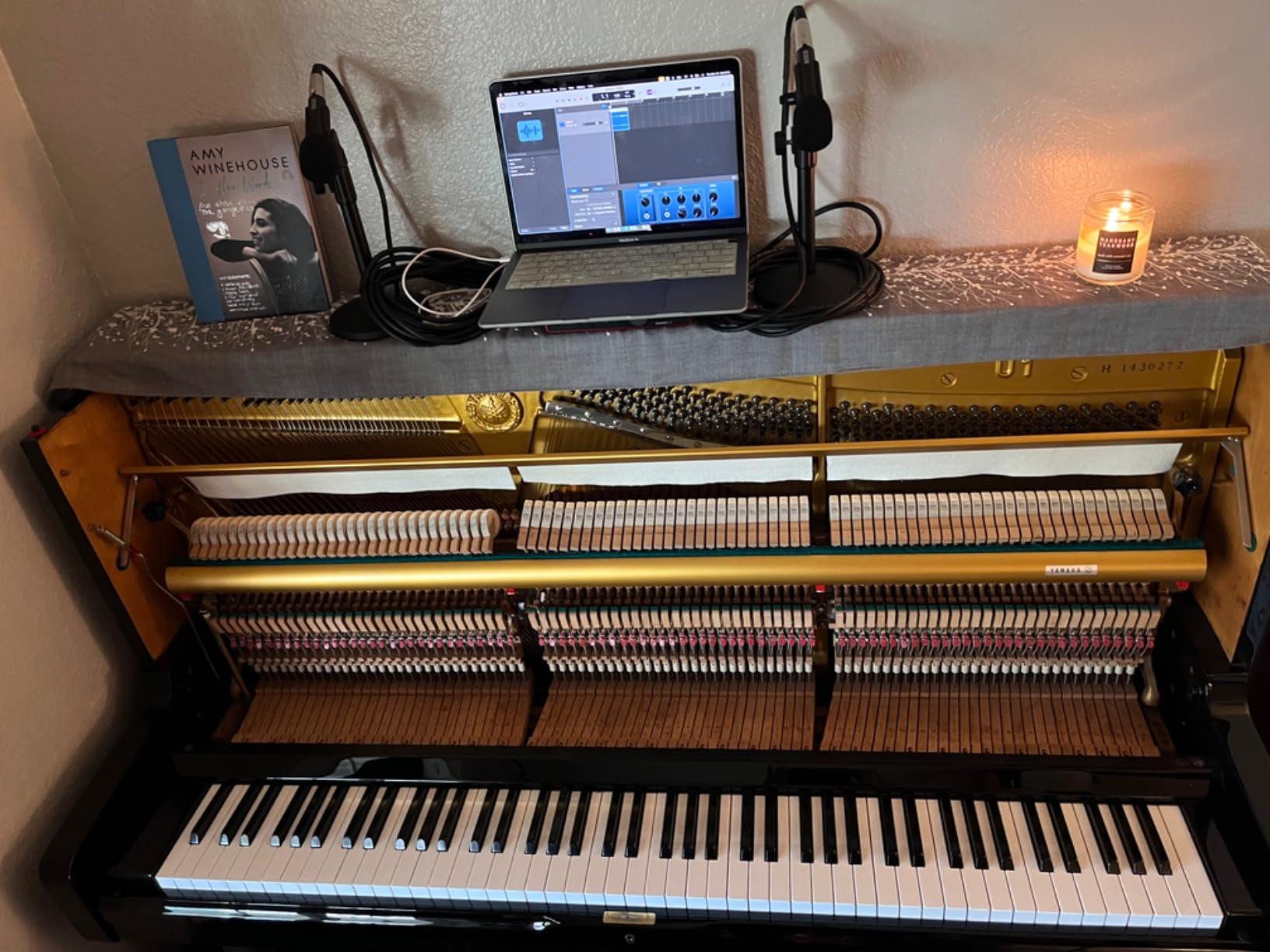
With no more than 1 dB of sensitivity difference between the two, a spaced or crossed pair sits level without corrective gain. A matched pair also makes the 3-to-1 distance rule workable, since both mics behave identically as you move them apart.
For one mic on one guitar, the GearSpace consensus still holds: stay in mono and avoid doubling the same instrument unless you have a reason.
The small sweet spot
Reviewers note that small-diaphragm capsules have a smaller sweet spot than large-diaphragm models, so aim carefully. On an acoustic, that means 12th fret rather than straight at the soundhole.
The 20 Hz to 20 kHz response and 75 dB signal-to-noise ratio keep the low end tight and the top end present without a presence peak.
Who should skip it
Skip the pair if you are just starting out and need one microphone for guitar and voice. Buying two when you have not yet dialled in one is how people end up with a stereo image they cannot control. Start with a large-diaphragm condenser instead.
6. AKG C214 – The One Microphone for Vocals and Guitar
- ✓Rich warm tone with fine high-frequency detail
- ✓Handles loud sources and quiet acoustic alike
- ✓Switchable pad and bass cut for close or distant miking
- ✓Integrated suspension cuts stand and floor noise
- ✕Fixed cardioid pattern with no figure-8 option
- ✕Can sound sibilant on bright voices
- ✕High sensitivity makes an untreated room obvious
Cardioid large-diaphragm condenser
81 dB signal-to-noise
156 dB max SPL
Integrated suspension
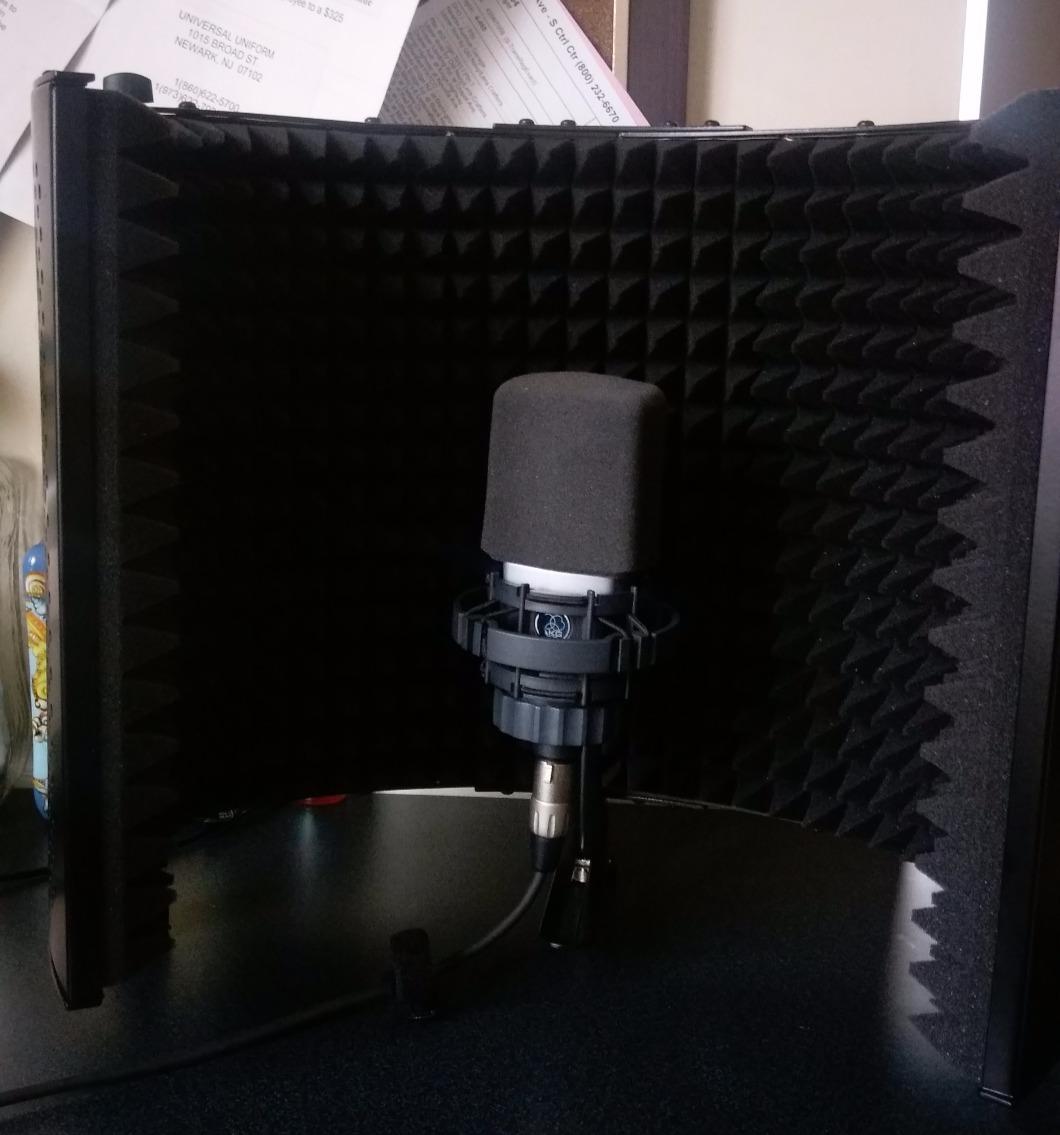
The C214 is the answer to the most-asked question in this category: can one microphone cover both the acoustic and the voice? Its 81 dB signal-to-noise ratio and 156 dB maximum SPL give it the headroom to sit on a vocal and still take a strummed guitar in the same session.
Owners describe the tone as warm and detailed with a smooth top end, and the C414 XLII-style voicing is widely regarded as flattering to strings.
Controls that change the placement decision
The switchable 20 dB pad and bass-cut filter let you mike a guitar very close without the low end piling up, or pull back for a roomier take. That flexibility is what separates a studio microphone from a home one.
The integrated suspension inside the body reduces mechanical noise from stands and floors, which matters if your recording room is also where the washing machine lives.
Room treatment is not optional here
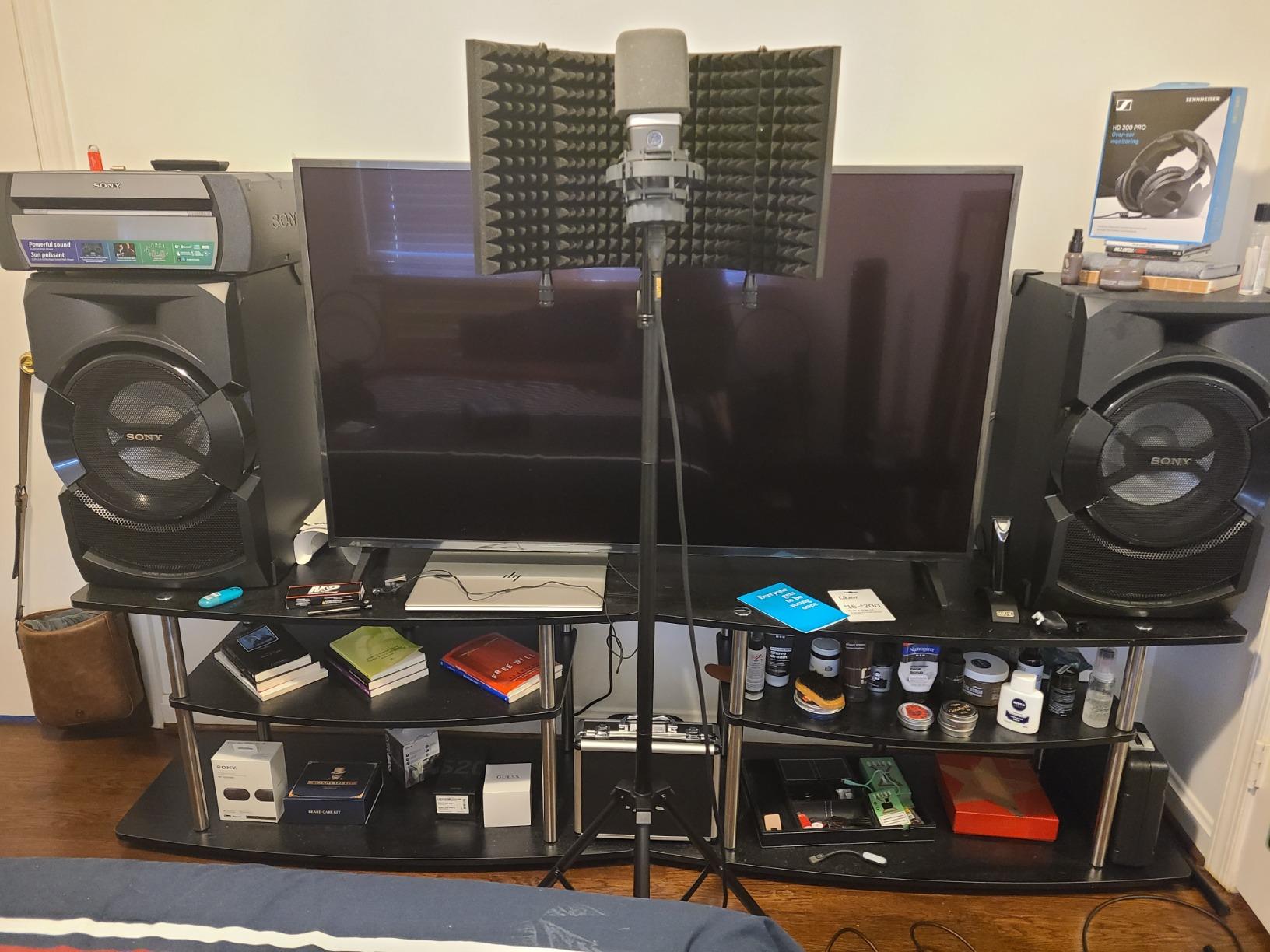
Reviewers are consistent on one point: the sensitivity of this microphone makes reflections and ambient noise very audible. Pair it with a decent pop filter, an acoustic shield or a treated corner, and it rewards you. Skip that work and you will hear your room on every take.
The aluminium chassis is hefty at 0.8 kg, and it ships in a rugged carrying case.
Who should skip it
Skip the C214 if you need a figure-8 or omnidirectional option — the pattern is fixed, so a second microphone is the only way to change it. Bright or sibilant voices may also find the presence in that top end sharper than they want.
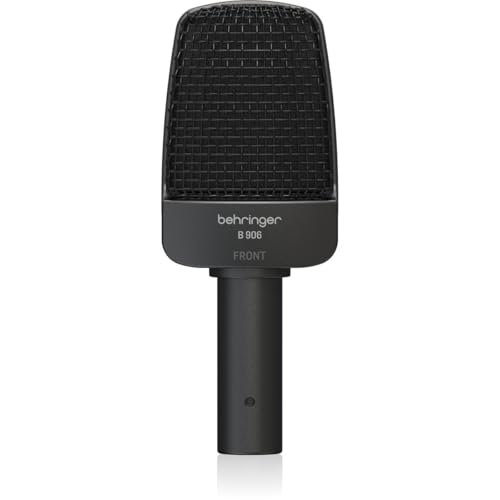
7. Behringer B 906 – Best for PA and Rehearsal
- ✓Very low entry cost for a solid dynamic
- ✓Super-cardioid pattern controls noise and feedback
- ✓Switchable low-cut flat and presence settings
- ✓High output punches through without heavy gain
- ✕Lacks the airy top end a condenser gives
- ✕Brass body and entry tuning limit fine detail on quiet sources
- ✕Off-axis rejection is good but not exceptional
Super-cardioid dynamic
Brass body
Switchable EQ settings
No phantom power
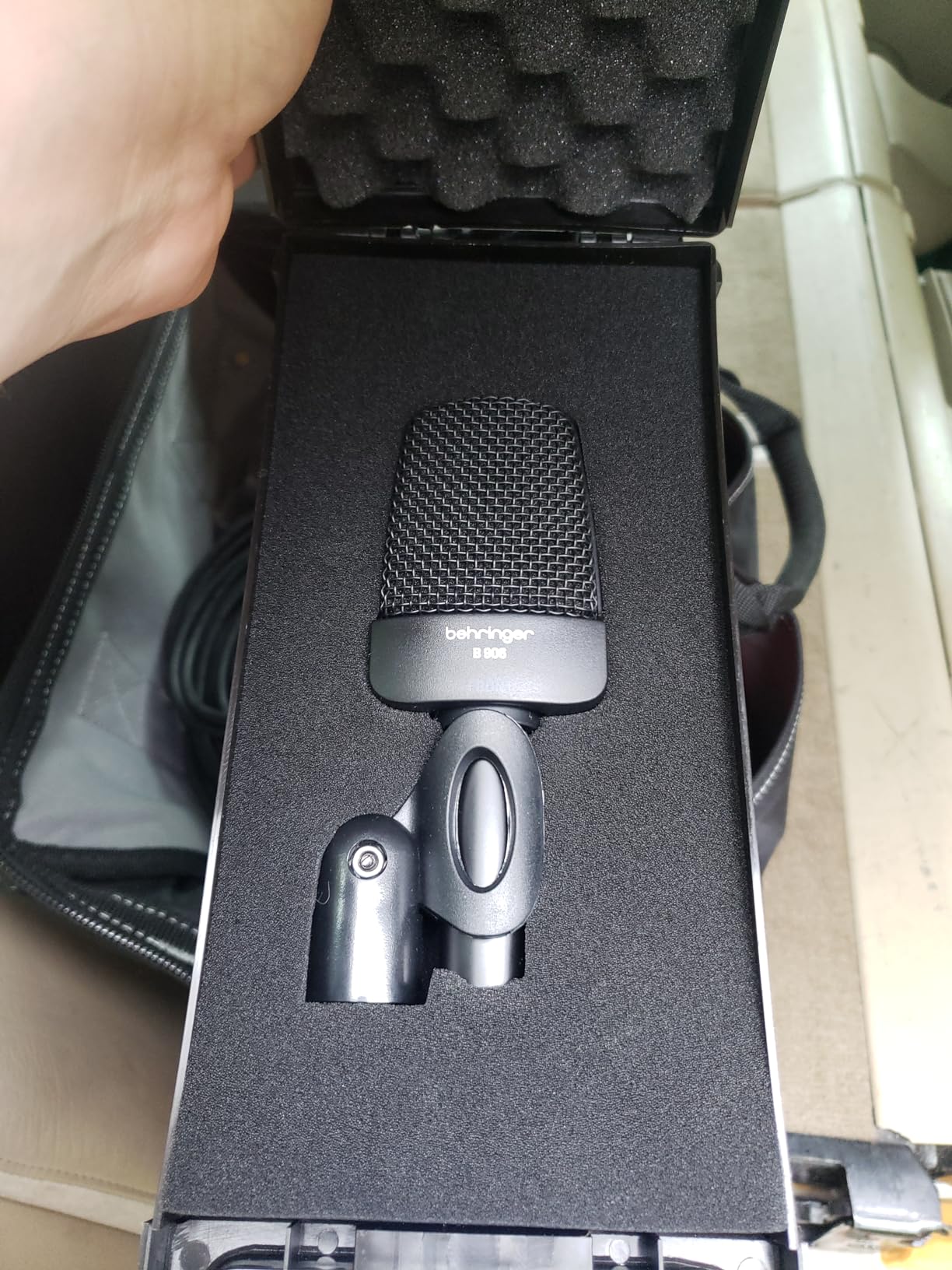
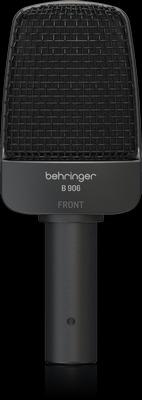
The B 906 is a small-room PA and rehearsal microphone. Owners present it as a budget workhorse for guitar amplifiers, drums, brass and backing vocals, where durability and a simple setup matter more than studio nuance.
Unlike the entry-level condensers on this list, it needs no phantom power. That means it works with any mixer, any interface and any belt pack, which is the entire reason it exists.
Three switchable voicing options
The low-cut, flat and high-frequency boost settings let you match the mic to the source without buying another. Low-cut thins a close-miked guitar cabinet, flat handles a snare, and the boost adds presence when you need to cut through a rehearsal room.
At 190 g with a brass body, it is built for stands, floors and the occasional dropped cable.
What a dynamic cannot do on an acoustic
The trade-off reviewers name repeatedly is simple: a dynamic capsule will not capture the fine acoustic detail of a condenser. On a quiet, close-miked acoustic guitar the difference is obvious, and on a bright recording the missing top end is a real limitation.
Its super-cardioid pattern keeps feedback and background noise in check, which is a different kind of benefit and often the more valuable one on a stage.
Who should skip it
Skip it if you are tracking to a DAW in a treated room, where the AT2020 or the NT1 will capture far more of the guitar. Buy it for a PA, a rehearsal space or a mobile rig.
8. Audio-Technica PRO 35 – Best Clip-On Condenser
- ✓Clips directly to the guitar with no stand
- ✓Condenser detail without a stand or boom arm
- ✓Shock resistance in the clip protects the capsule
- ✓Adapter includes a switchable low rolloff
- ✕Needs 48V phantom power
- ✕Permanently attached cable limits reach
- ✕Mini-XLR is less universal than standard XLR
Cardioid clip-on condenser
50 Hz - 16 kHz
17 dB self-noise
6 ft attached cable
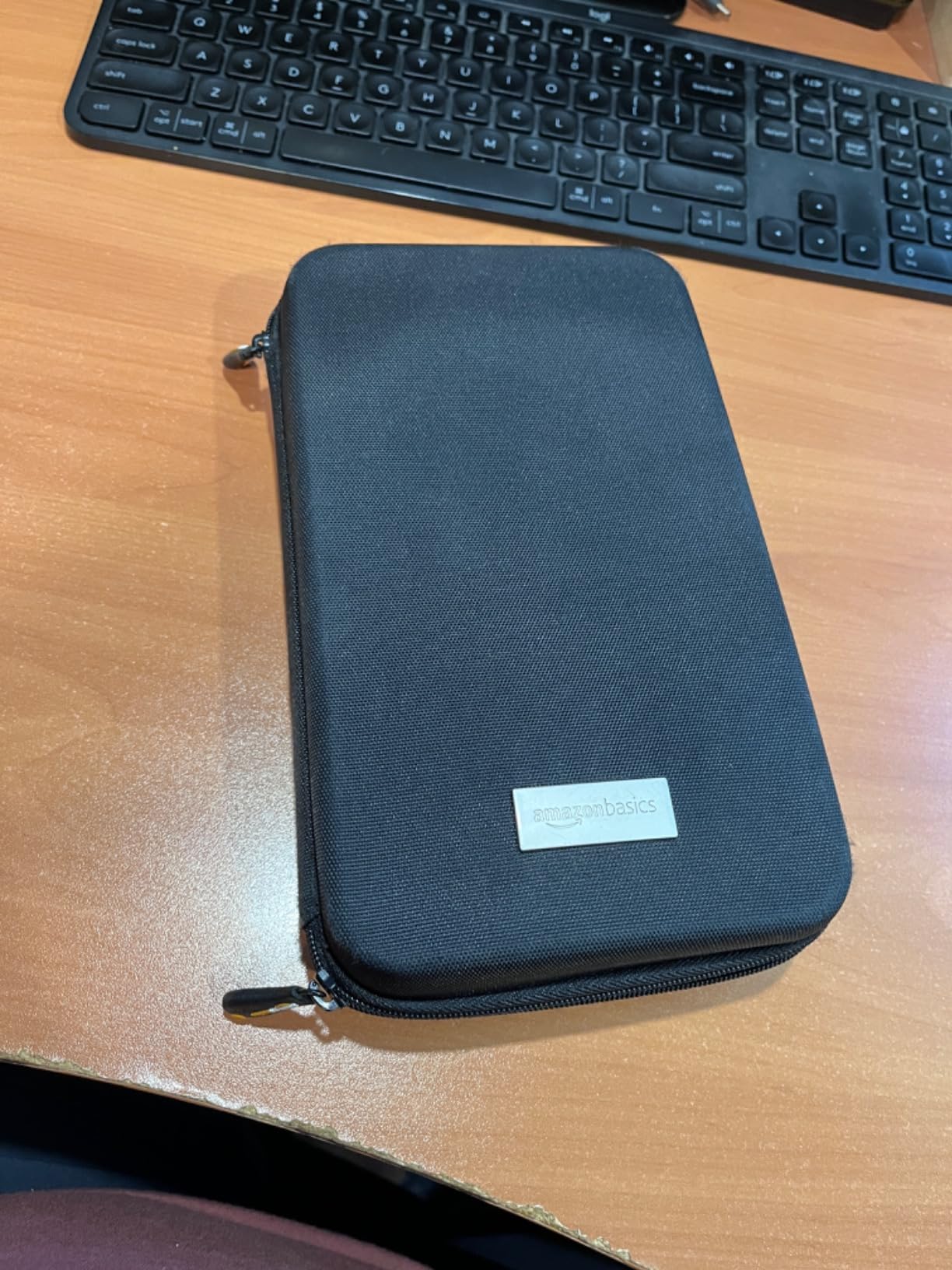
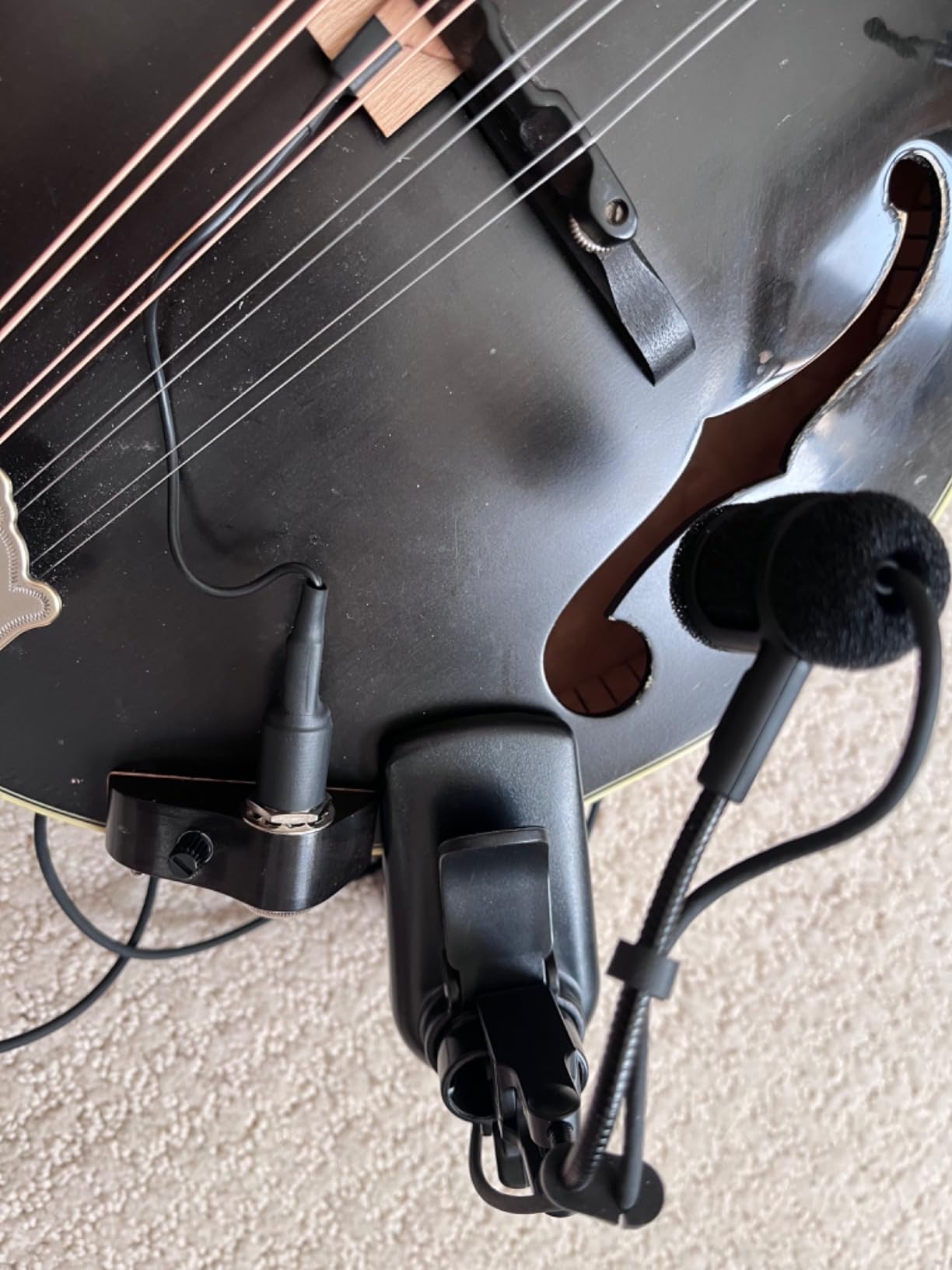
The PRO 35 is the clip-on route to condenser tone. Owners clip it near the lower f-hole or the pickguard, keep their guitar’s own pickup for amplification, and get a genuine condenser sound without a stand in the room.
That makes it the pick for an acoustic archtop, a small ensemble, or a player who moves between instruments and does not want to carry a boom stand.
Positioning is everything on a clip-on
Unlike a stand-mounted microphone you can move freely, this one is fixed once clipped. Reviewers stress that it needs careful placement to avoid picking up too much room sound, and that the low rolloff switch on the included adapter is what removes handling noise and stage rumble.
The cardioid pattern still does its job of rejecting the sides and rear, which is what keeps a clip-on from hearing the whole stage.
Connector and power realities
Two practical limits: the 6 ft cable is permanently attached, and it terminates in a TA3F mini-XLR. The included adapter converts to standard XLR and carries the low-rolloff switch, so you will likely need a preamp or a wireless system that accepts it.
At 3.2 ounces with a brass body, it adds nothing to your load strap.
Who should skip it
Skip it if you record through a small mixer or a wireless belt pack with no phantom power output. The 48V requirement is the most common complaint in the reviews and it is a hard stop rather than an inconvenience.
9. LR Baggs Anthem-SL – The Hybrid System for Stage Players
- ✓Hybrid mic and piezo capture beats a piezo-only system
- ✓No honky or boxy internal resonance
- ✓High gain before feedback on a stage
- ✓Compact endpin preamp preserves top response
- ✕Requires professional installation in the guitar
- ✕Adhesive pads reported to fail over time
- ✕Mic and pickup balance needs careful adjustment
Internal condenser plus undersaddle element
Soundhole remote
9V battery
Endpin preamp
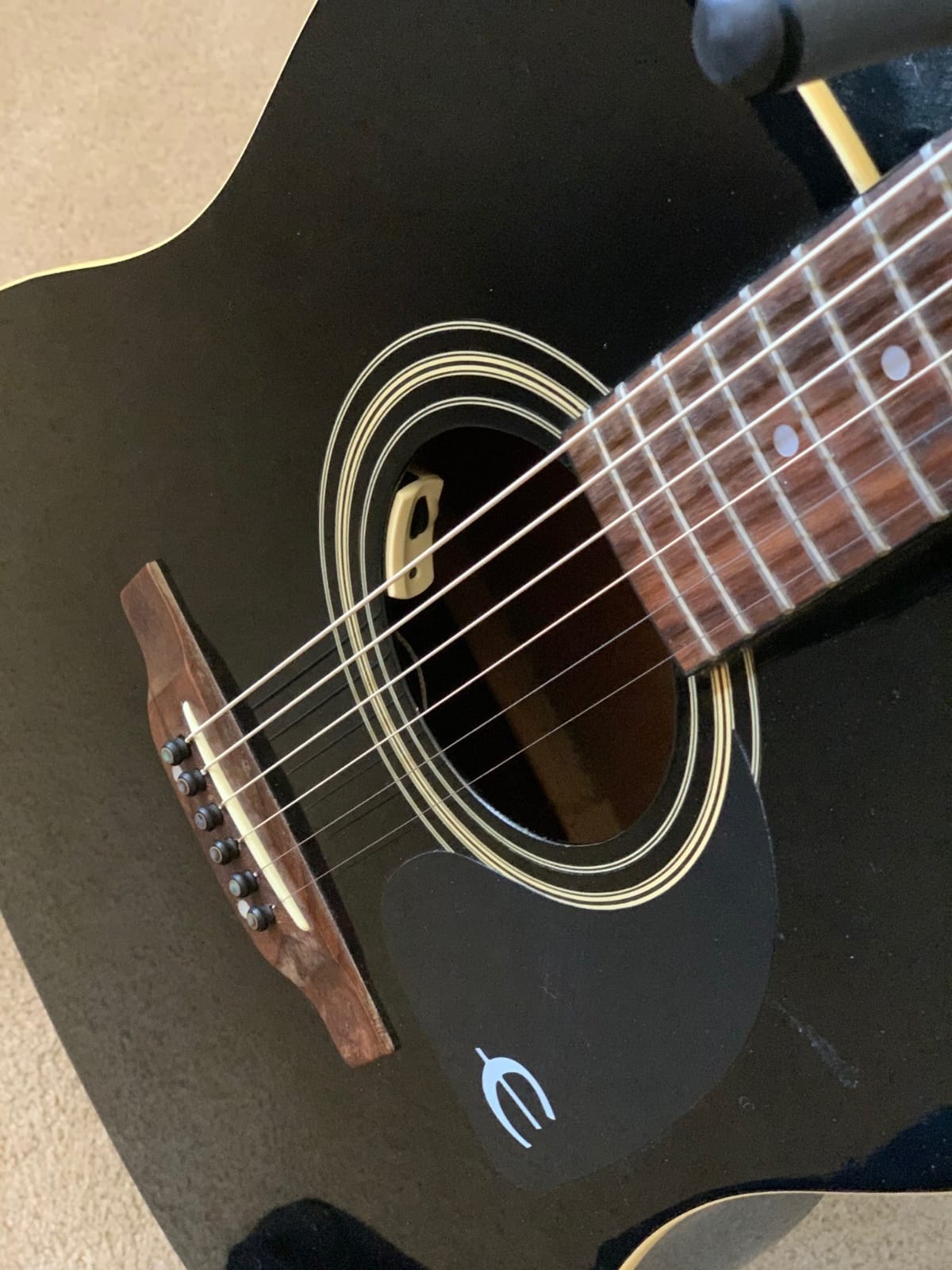
The Anthem-SL is the pick for a player who needs the sound of a microphone through a PA without a stand. Its TRUMIC internal condenser carries the majority of the guitar’s frequency range while the undersaddle Element handles the lowest frequencies, which is why owners describe it as far more natural than a piezo-only system.
Gigging players consistently call it the closest they can get to the unplugged sound of their own guitar through a mixing desk.
Preset levels and what still needs adjusting
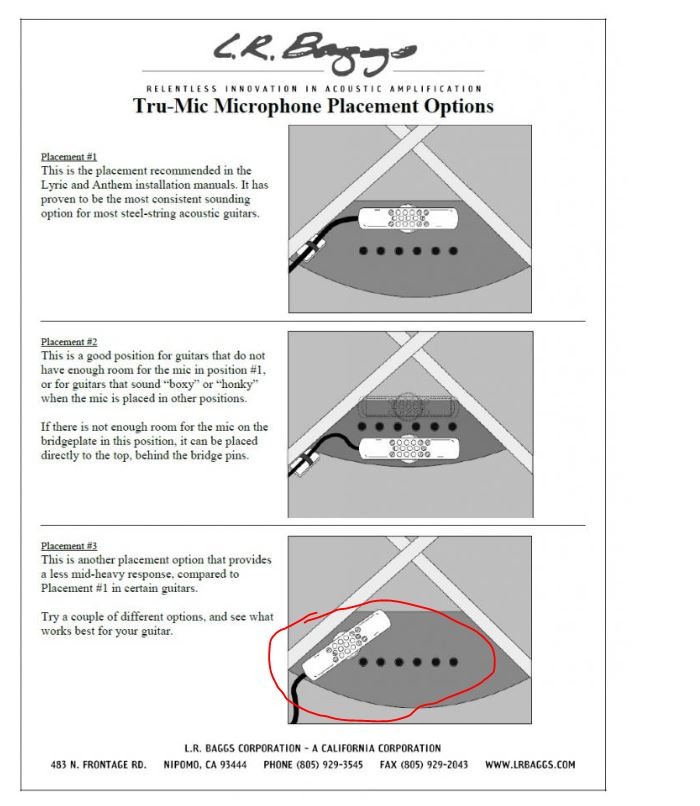
Mic and pickup levels come preset for optimum performance and the endpin preamp is pre-contoured with a fixed crossover, so the balance is already sensible. Owners still report spending time on the soundhole remote trim, because every guitar and every speaker body sits differently.
The remote gives you volume and mic trim from the player’s seat, which is more useful on a stage than a knob on the guitar’s endpin.
Installation and the trade-off
This is not a plug-in purchase. It needs saddle work and drilling, and reviewers report that the supplied adhesive pads can lose grip inside the body over time. Once installed, though, it is consistent and requires no mic stand, no cable across a stage and no line of sight to a PA.
The undersaddle element trims some low end, so a graphic EQ is often needed on a loud stage. Weigh that against the installed pickup systems we also cover before you commit.
Who should skip it
Skip it if you have more than one guitar, or if you want to keep the instrument fully acoustic. A permanently installed system is a commitment to one instrument.
10. Shure SM81 – The Neutral Studio Reference
- ✓Extremely neutral response with almost no added colour
- ✓Strong off-axis rejection keeps room sound out
- ✓Clean detailed brilliance and accurate transients on guitar
- ✓Selectable flat or steep low-cut filter
- ✕Requires 48V phantom power and a balanced cable
- ✕Premium pricing for a general-purpose condenser
- ✕No pop filter included
Cardioid condenser
Flat 20 Hz - 20 kHz
78 dB signal-to-noise
Steel body
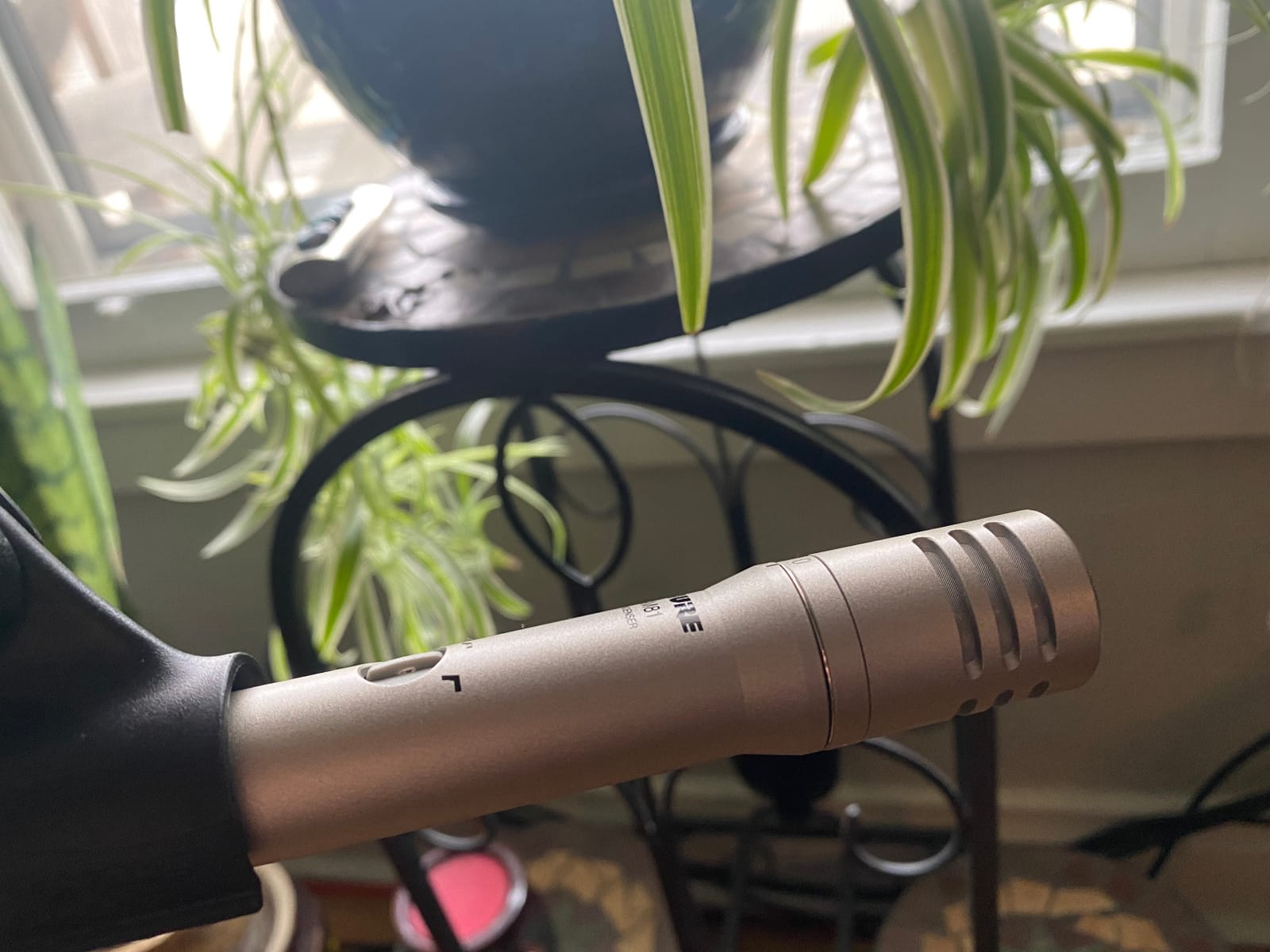
The SM81 is the reference answer when someone asks for a neutral microphone. Its response is flat from 20 Hz to 20 kHz, and engineers describe it as capturing acoustic guitar, piano and cymbals without adding colour of its own.
Buyers who compared it against microphones in the same bracket report finding nothing that sounded more transparent. Higher Hz and the wider category discussion both name it, along with the AKG C451 B, as the accuracy choice.
Off-axis rejection is the real feature
The cardioid pattern is uniform with frequency and symmetric about the axis, which means the rejection of off-axis sound stays consistent across the range. In an untreated room that matters more than the flat response, because it is what keeps a stray reflection from colouring the take.
The selectable low-frequency response — flat, 6 dB per octave or 18 dB per octave — lets you address room rumble without losing the guitar’s low end.
Build and small practical notes
The body is alloy steel, rated across wide temperature and humidity ranges, and low RF susceptibility keeps it stable near digital gear. A swivel adapter, a foam windscreen and a lockable 0 or 10 dB pad are included.
Two things are not: phantom power, a balanced XLR cable, or a pop filter. You will need to add the pop filter yourself.
Who should skip it
Skip it if you are undecided between microphones. A neutral response is honest rather than flattering, so at this spend a warmer large-diaphragm condenser may suit a solo performer better. Buy it if you are building a repeatable reference chain and want a known, uncoloured starting point.
11. LR Baggs Lyric – The Best Soundhole Microphone
- ✓Warm natural tone that tracks the unplugged sound
- ✓Microphone only with no piezo honk
- ✓Installation is simple and needs no bracing work
- ✓Presence and volume controls for fine tuning
- ✕Highly dependent on the guitar and mounting position
- ✕Output is compressed rather than fully natural
- ✕Adhesive strips can lose grip
- ✕Changing the battery means removing the strings
Internal soundhole microphone
No saddle modification
80 dB signal-to-noise
Soundhole volume and presence control
The Lyric is the mic-only alternative to the Anthem-SL. It mounts at the beltline of the soundhole, uses TRUMIC noise-cancelling technology, and leaves your saddle untouched, which means the guitar stays acoustically intact underneath.
Owners with the right instrument describe it as the most natural-sounding installed acoustic system they have tried — plugged in and unplugged, close to the same.
Presence control patience
The presence control is extremely sensitive, and setup is where most of the frustration comes from. Reviewers describe the process as a trial-and-error loop: clip it, play, turn the screw, play again.
That patience is what separates an excellent result from a merely compressed one, and several reviewers stress that the mounting position, the body size and the room decide the outcome more than the microphone does.
Where it falls short
The output is noticeably compressed rather than fully natural, and the system is highly dependent on the individual guitar. The supplied adhesive strips can lose grip over time, so the mount needs checking before a show.
Replacing the 9V battery requires access inside the body, which on most guitars means taking the strings off.
Who should skip it
Skip it if you are looking for a recording microphone. A soundhole mic optimised for a PA is compressed by design, and a stand-mounted condenser will capture more of the room and the detail. This one is a stage tool.
12. Rode M3 – The All-Rounder That Travels Well
- ✓Handles vocals acoustic guitar brass and percussion
- ✓Internal shock mount keeps handling noise low
- ✓Switchable high-pass removes rumble and stage thumps
- ✓Heavy duty metal body and 10 year warranty
- ✕21 dB self-noise is high for a studio condenser
- ✕Requires 48V phantom power
- ✕Presence peak can sound harsh on sibilant voices
End-address cardioid condenser
40 Hz - 20 kHz
21 dB self-noise
Internal capsule shock mount
The M3 is the microphone that lives in the bag and does everything. Reviewers put it on a PA for brass and percussion, in a home studio for vocals and acoustic guitar, and in between on anything in between. The 10 year manufacturer warranty is the longest on this list.
Its internal capsule shock mount and low handling noise are the features owners praise most, because they let you set a mic quickly without hearing every adjustment.
Switchable high-pass and off-axis behaviour
The switched high-pass filter removes rumble and stage thumps before they reach the preamp, which is the difference between a usable live take and one ruined by a bumped kick drum. The 40 Hz to 20 kHz range gives up a little low end against a flat 20 Hz condenser in exchange for that headroom.
High RF rejection is worth noting too if the microphone lives near digital gear or a wireless rack.
Where the self-noise shows
At 21 dB, the M3 has the highest noise floor of any condenser on this list. In a treated studio that is irrelevant. In a silent untreated room with a quiet fingerstyle take, it will be the first thing you hear, and moving closer to the guitar or switching to a dynamic solves it faster than upgrading does.
Brighter and sibilant voices may find the presence peak harsh without EQ.
Who should skip it
Skip it if your priority is the quietest possible recording of a very quiet acoustic. It is built for versatility and travel, not for the lowest noise floor available. Pair it with the AT2020 or the NT1 if you are building a studio rather than a bag.
How We Evaluated These Microphones
Every ranking here is built from four sources, and we state them so you can weigh it: manufacturer specification data, published response and noise figures, the volume and pattern of owner reviews, and the recurring technical questions raised by players on GearSpace, r/AcousticGuitar, r/homererecordingstudio, r/musicproduction, r/WeAreTheMusicMakers, The Gear Page and the Acoustic Guitar Forum.
We did not run a single listening session, so no pick on this page is described as something we personally heard. What we did instead was weight every microphone on four questions: does the capsule type suit the transient of an acoustic guitar, is the polar pattern workable in a real room, is the self-noise low enough for the gain the source needs, and is there a clear line in the reviews describing where it fails.
That last question carried the most weight. A microphone with a warm, glowing consensus and no recorded weakness is usually being described by people who only used it in one room, so we favoured the picks with an honest limitation attached.
Where to Point the Microphone
Aim at the 12th fret from 6 to 12 inches away. Everything else is adjustment from there.
- Quiet the room first. Turn off fans, air conditioning, fridges and phone notifications before you start. A condenser hears all of them, and no microphone fixes a noise floor you can switch off at the source.
- Point at the 12th fret. That is where string vibration blends evenly along the length, so you get body and clarity in the same take.
- Start 6 to 12 inches out. Closer means more presence and less room. Further means more air and more blend with the space.
- Move for boom or clarity. The soundhole adds boominess and low end. Moving toward the neck or higher up the body increases string definition and attack.
- Keep the microphone out of the monitor’s path. Never place a mic in front of the speaker it is feeding into.
- Respect the 3-to-1 rule when doubling. Each successive microphone should be at least three times further from the source than the one before it, which limits phase problems between them.
On a single guitar, one microphone in mono is the safe answer. The GearSpace thread behind this list repeats the same advice dozens of times: play, listen, move, repeat. Every extra microphone on one guitar is another chance to phase-cancel yourself.
If you are recording a solo acoustic, a stereo or crossed pair is welcome. If the guitar sits inside a full band mix, stay mono and get the position right instead.
What Else You Need to Buy With the Microphone
The most common thread in this category is titled roughly “buying a mic to record acoustic guitar, what additional things do I need?” It deserves a direct answer, because a microphone alone will not get you a usable take.
- An audio interface with 48V phantom power. Every condenser on this list needs it. The NT1 5th Gen is the exception, since it also records over USB-C with no interface at all.
- A balanced XLR cable. None of the condenser or dynamic models here include one. The PRO 35 has a permanently attached 6 ft cable instead, so it needs a mini-XLR adapter.
- A stand. A boom stand with a shock mount is the difference between a usable take and a take full of chair bumps and floor vibration. The NT1 and the AKG C214 include a shock mount; the others do not.
- A pop filter or wind shield. Even on acoustic guitar, a close condenser will pick up breath and finger noise. None of the studio condensers on this list include one.
- Reflection control. Blankets behind the guitar and thick soft furnishings on nearby walls cost nothing and remove more problems than any microphone change. Our acoustic panel guide covers the upgrade path when soft furnishings are not enough.
- Headphones, not speakers. Monitoring on speakers while tracking acoustic guitar puts a second sound source in the room, and the cardioid pattern of your microphone is not selective enough to ignore it.
How to Choose the Right Acoustic Guitar Microphone
Start with the room, then the source, then the microphone. That order matters, because a quieter microphone in a live room still records a live room.
Capsule type: what actually matters
A small-diaphragm condenser reacts faster and keeps fingerpicked notes separate. A large-diaphragm condenser adds warmth, has more headroom and doubles as a vocal microphone. A dynamic tolerates loud stages and bad rooms and gives up the top end. A contact or soundhole system needs no stand at all and is the only realistic option on a loud stage.
For most home recordists, a large-diaphragm condenser covers both jobs. The small-diaphragm answer is the community consensus, and the M5 pair is the accessible way into it, but the gain comes from placement as much as from the capsule.
The room treatment caveat
A treated room makes a mid-price condenser viable. An untreated one does not. Read the self-noise figures on this page against your gain needs: the AT2020 at 20 dB, the M3 at 21 dB, the NT1 5th Gen at 4 dB.
If you record at night in a quiet but untreated room, a dynamic such as the SM57 is the more honest purchase than a quieter condenser you cannot afford to place properly.
One microphone for guitar and vocals
Yes, one microphone can cover both, and the dynamics answer it most reliably. The SM58 sits on a vocal and mikes a guitar; the SM57 does the same job on the instrument. Among the condensers here, the AKG C214 and the Rode NT1 5th Gen are the two built for both roles, with headroom for a loud source and a smooth top end for a voice.
The trade is honest: a vocal mic and a guitar mic are optimised differently, and one microphone means accepting a compromise in both. Most singer-songwriters accept it happily.
Live performance and gain before feedback
Gain before feedback is how much level you can add before the monitoring speakers feed back into the microphone. Condenser capsules are more sensitive and hear the room more, which is exactly why they feed back first on a loud stage. A super-cardioid dynamic such as the B 906, the focused cardioid of the SM57, or an installed system such as the Anthem-SL, gives you far more headroom.
None of the standalone condensers on this list is the right microphone for a loud PA. That is not a flaw in them.
Matching the microphone to the guitar
A mahogany-topped dreadnought produces a lot of low-mid energy and can sound boomy with a sensitive condenser close to the soundhole. A cedar-topped OM or parlour is quieter and benefits from more presence, which is what the M5 pair and the SM81 deliver. Aim at the 12th fret rather than the soundhole and the difference narrows considerably.
Match the microphone to the body, and the body to the player. If you are still choosing an instrument, the beginner acoustic guitar guide covers the body sizes that pair well with the condensers above.
Frequently Asked Questions
What is the best microphone for acoustic guitar and vocals?
A single microphone can cover both, and a dynamic is the most reliable answer because it handles a loud voice and a strummed guitar without feeding back. The Shure SM58 sits on the vocal and mics the guitar in the same take, and the Shure SM57 does the same job on the instrument. If you want condenser quality on both, the AKG C214 and the Rode NT1 5th Gen both have the headroom for a loud source and a smooth top end for a voice.
Should I use a large or small diaphragm condenser microphone for recording acoustic guitar?
A small diaphragm condenser wins on transient response and detail, so fingerpicked notes stay separate and quiet passages keep their shape. A large diaphragm condenser wins on warmth, headroom and vocal versatility, which makes it the better single purchase if you also sing. For most home recordists the large diaphragm covers both jobs, and the Rode M5 matched pair is the accessible route into small diaphragm work.
What is the main difference between the SM57 and SM58 for acoustic guitar?
Both are cardioid dynamics that need no phantom power, and the difference is voicing rather than capability. The SM57 has a contoured response with a presence boost tuned for instruments, while the SM58 is tuned for voice, which means it flatters vocals and can sound thin on a guitar. For guitar and vocals on one microphone, the SM58 is the more common choice; for the instrument alone, the SM57 is the more accurate one.
What is the 3 to 1 rule for microphones?
Each successive microphone should be at least three times further from the source than the one before it. That distance ratio reduces phase interference between the mics, which is what causes the thin, hollow sound you get when two microphones sit too close to the same source. On a single acoustic guitar, one microphone in mono is the safer answer and avoids the problem entirely.
Where should I point the microphone when recording acoustic guitar?
Aim at the 12th fret from 6 to 12 inches away, where string vibration blends evenly along its length. Pointing at the soundhole adds boominess and low end, while moving toward the neck or higher up the body increases string definition and attack. Start at the standard distance, then play, listen and move the microphone until the balance feels right.
Which Acoustic Guitar Microphone Should You Buy?
Start with the room, because it decides more than the microphone does. In a treated space with 48V phantom power, the Audio-Technica AT2020 is the pick: clean, durable, and the most heavily reviewed condenser in this category by a wide margin. If that room is quiet but untreated, the NT1 5th Gen gives you a much lower noise floor and a USB-C option that skips the interface entirely.
On an untreated room or a live stage, take the dynamic path. The Shure SM57 handles a noisy bedroom, a guitar cabinet and a snare with the same microphone, and the Behringer B 906 is the cheaper option when a PA is the only destination. For a player who needs the unplugged sound through a mixing desk and has one guitar they commit to, the LR Baggs Anthem-SL is the right installation.
Where you need neutrality over everything else, the Shure SM81 is the reference standard. And whatever you buy, put it at the 12th fret, six to twelve inches out, and give it something soft to reflect off. That last part will improve your recording more than any upgrade on this list.





Leave a Comment