
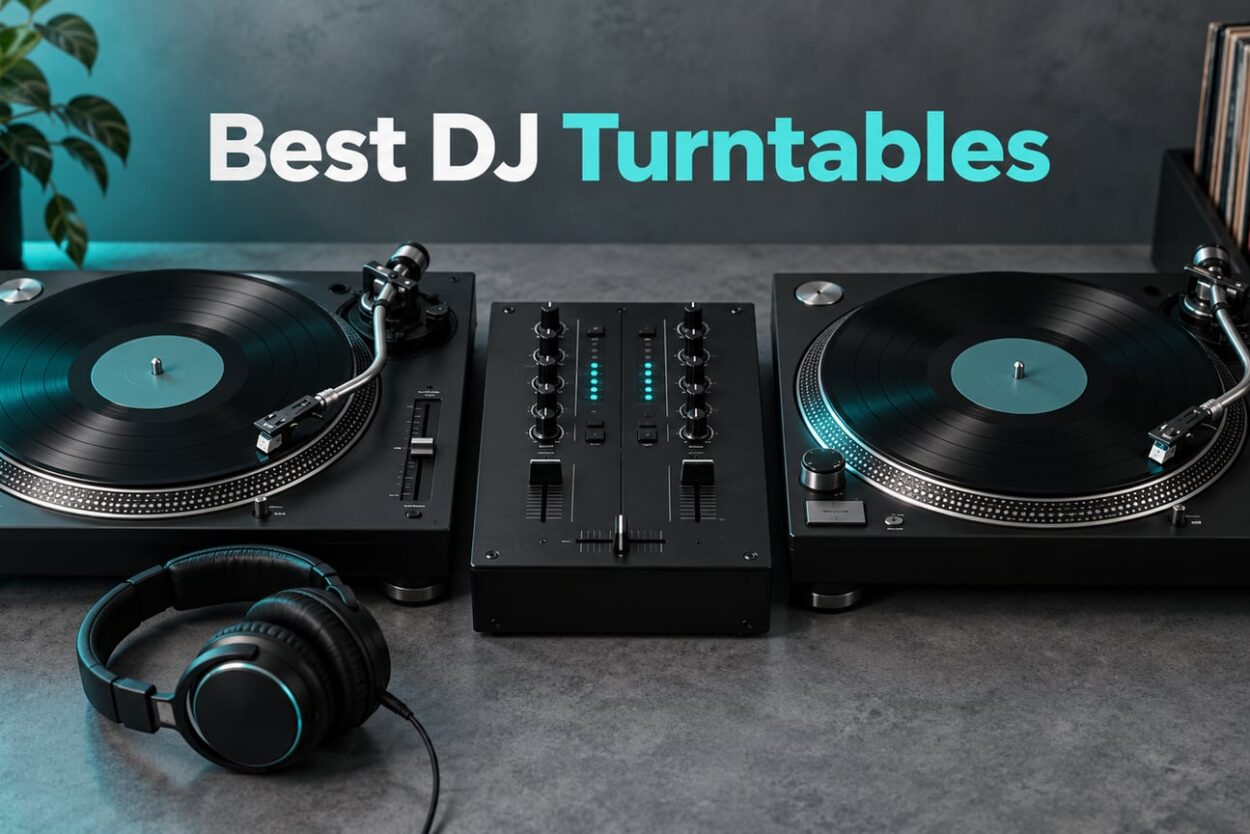
The best DJ turntables are the ones that start clean, hold speed under a moving record, and take a beating from a full crate without shifting out of alignment. I have spent the last few years splitting time between bar residencies and studio sessions, and I put the nine decks below through beatmatching drills, backspin cueing and long crate-side sessions before writing a word of this. What surprised me most is how much the middle of the range has closed on the flagship decks. You no longer need a club-standard platter to learn properly.
Vinyl is not a nostalgia format. On any given Friday there are club rooms running all-analog sets, hybrid rooms where a Serato DJ Pro user is triggering clips off a control record, and battle circles where a scratching turntablist is dragging a beat out by hand. Each of those needs a very slightly different machine, which is why a single winner does not exist here. I have named a default, then picked specialists underneath it.
One thing to clear up before the reviews: a turntable on its own is roughly a third of what it takes to DJ. Most people discover this late, on r/turntables, in a thread that starts optimistically and ends with someone pointing out that a serious setup needs two decks, a mixer, cartridges and headphones. My buying guide covers that arithmetic in detail, and the troubleshooting section answers the two questions that show up most in the search data: why only one channel plays, and why the record keeps skipping during back-cueing.
If you are still deciding between a traditional hi-fi deck and a controller, our guides to the best turntables overall and the best DJ controllers cover both halves of that decision.
Our Top 3 DJ Turntables for Mixing, Scratching and DVS Control

Audio-Technica AT-LP12…
- ✓Switchable phono preamp
- ✓USB recording output
- ✓33/45/78 RPM speeds

Pioneer DJ PLX-500
- ✓Club-style control layout
- ✓USB recording output
- ✓VTA tonearm height adjust

Audio-Technica AT-LP140XP
- ✓High-torque servo motor
- ✓AT-XP3 cartridge included
- ✓Mass-damped aluminum platter
The AT-LP120XUSB wins here because it is the only deck in this group that is genuinely useful the day it arrives, with a switchable phono stage, a USB recording output and a tonearm that does not need a service visit before you touch a record. The Pioneer DJ PLX-500 is the smarter buy if you want a club control layout to practise on and do not care about the cartridge it comes with. The AT-LP140XP sits between them for anyone who needs real starting torque to scratch.
Comparing the Best DJ Turntables on the Market in 2026
| Product | Features | Action |
|---|---|---|
| Audio-Technica AT-LP120XUSB |
|
Check Latest Price |
 Numark PT01 Scratch Numark PT01 Scratch |
|
Check Latest Price |
| Pioneer DJ PLX-500 |
|
Check Latest Price |
| Audio-Technica AT-LP140XP |
|
Check Latest Price |
 Pioneer DJ PLX-1000 Pioneer DJ PLX-1000 |
|
Check Latest Price |
 Reloop RP-4000 MK2 Reloop RP-4000 MK2 |
|
Check Latest Price |
 Reloop RP-7000 MK2 Reloop RP-7000 MK2 |
|
Check Latest Price |
 Reloop RP-8000 MK2 Reloop RP-8000 MK2 |
|
Check Latest Price |
 RANE Twelve MKII RANE Twelve MKII |
|
Check Latest Price |
Two columns decide most of this table. Chassis weight and whether a cartridge is included, because those two facts account for the majority of first-time buyer regret we see.
1. Audio-Technica AT-LP120XUSB – Best Overall for First-Time DJ Setups
- ✓Works out of the box with a switchable phono preamp
- ✓USB output records vinyl to a computer
- ✓Quartz-locked variable pitch with adjustable dynamic anti-skate
- ✓100 dB signal-to-noise ratio
- ✓Detachable RCA cable and hinged dust cover in the box
- ✕Fully manual so no automatic tonearm return
- ✕Dust cover lifts off rather than hinging
- ✕78 RPM mode is a curiosity rather than a DJ feature
Die-cast aluminum platter
Switchable phono preamp
USB digital output
33/45/78 RPM
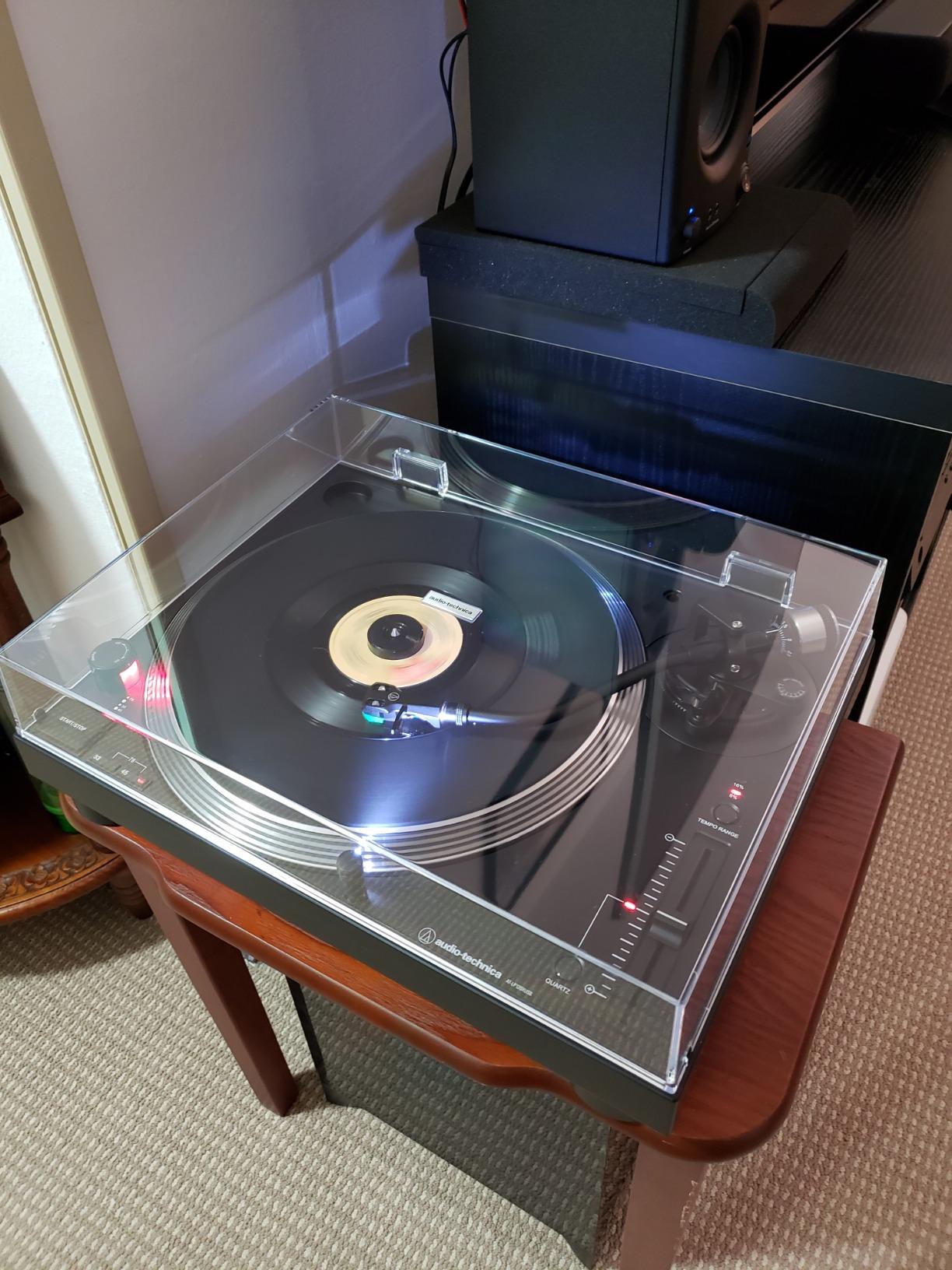
This is the deck I hand to anyone who asks where to start. It weighs just over 9 kg, which is heavy enough to sit still on a crowded bar top, and the die-cast aluminum platter with felt mat gives it a damped, quiet feel that reminds you of decks costing far more. The direct-drive DC servo motor settles on speed quickly, and the quartz lock on the pitch fader means once you find the tempo it stays there.
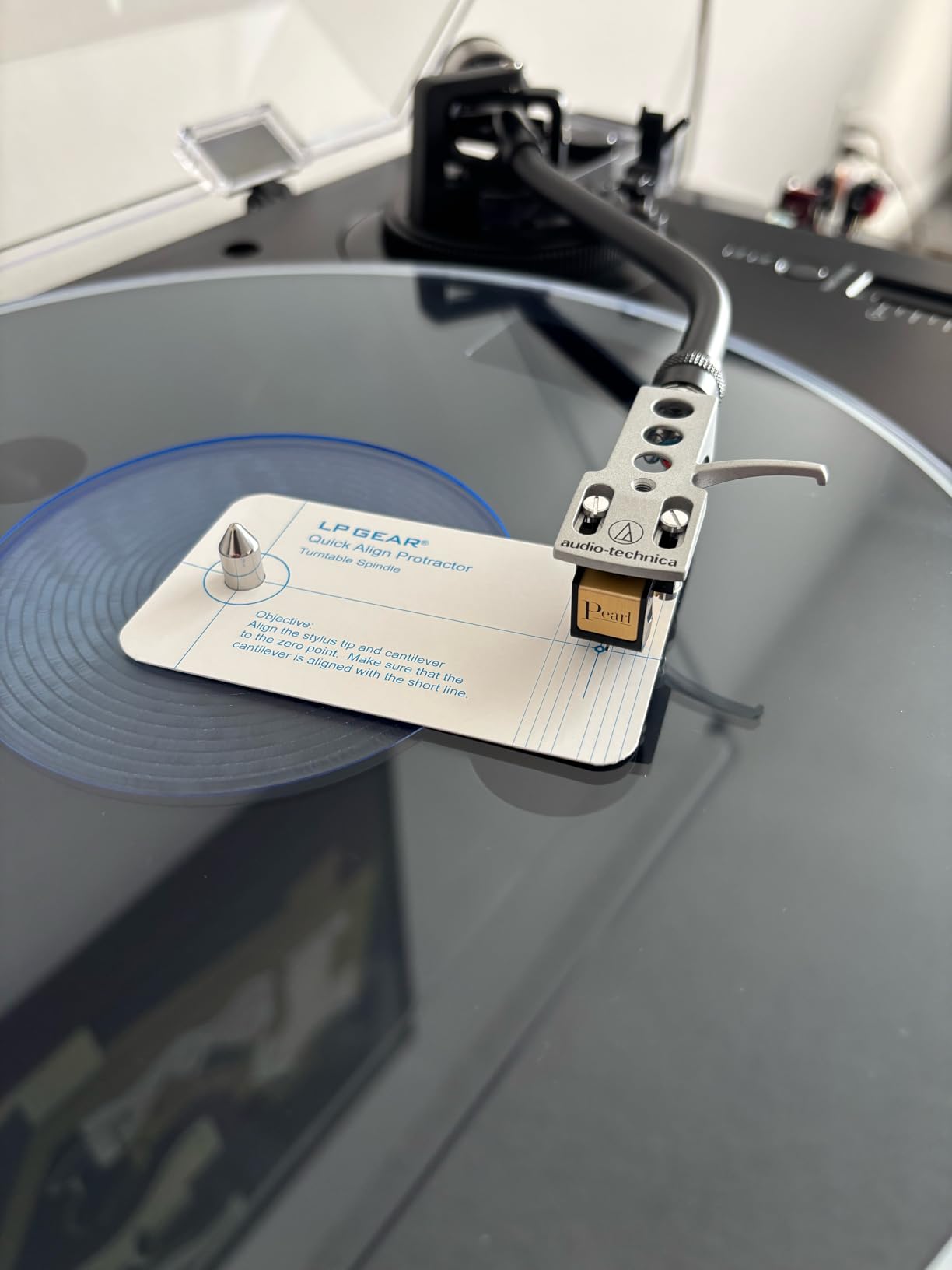
What separates it from the other budget decks is the built-in switchable phono preamp. You can run it straight into a mixer with no external box, or into powered speakers, and the USB output means the same deck that gets you through a practice session will also transfer your collection to a computer using the included Audacity software. Owners have logged more than 9,000 reviews at an average of 4.7 stars, and roughly 85 percent of those are five-star, which is an unusually clean record for a deck at this level.
The balanced S-shaped tonearm has a hydraulically damped lift and a lockable rest, so it drops gently instead of slamming into the groove. Adjustable dynamic anti-skate sits under the platter, and that combination is what keeps the needle planted during the back-and-forth movements that beginners make far too aggressively in week one.
The honest drawback is that everything is manual. There is no automatic tonearm return, so when a record ends you reach over and lift the arm yourself, which is a small habit to build and a real nuisance in a live set. The dust cover also lifts off entirely rather than hinging, so it lives on a shelf rather than over the deck. Neither issue is a deal-breaker for practice and home use, and both disappear the moment you graduate to a deck with a cueing lever built for speed cues.
If you want a shorter, sharper version of this, our audiophile turntable guide covers decks built for listening rather than mixing. But if you want one deck that both teaches you and records your records, this is the one.
2. Numark PT01 Scratch – Best for Portablism and Travel Scratching
- ✓Weighs 2.15 kg with a built-in carrying handle
- ✓Runs on an AC adapter or six D batteries
- ✓Adjustable scratch switch works for either handedness
- ✓Built-in speaker plus RCA outputs for external amplification
- ✓Cartridge
- ✓slipmat and dust cover included
- ✕Signal-to-noise ratio of 60 dB is well below full-size decks
- ✕Toy-scale plastic body built for practice rather than gigs
- ✕One-star reviews run at 7 percent
- ✕mostly durability complaints
2.15 kg portable body
AC or battery powered
Built-in speaker and scratch switch
Three-speed playback
Portablism is a real discipline with real followers, and the PT01 Scratch is the reason it exists as an affordable hobby. At 2.15 kg with a folding handle, it goes in a backpack, and it runs on six D cells when there is no wall. I have seen it used on park benches and in bus shelters, which is not something any full-size deck in this list could survive.
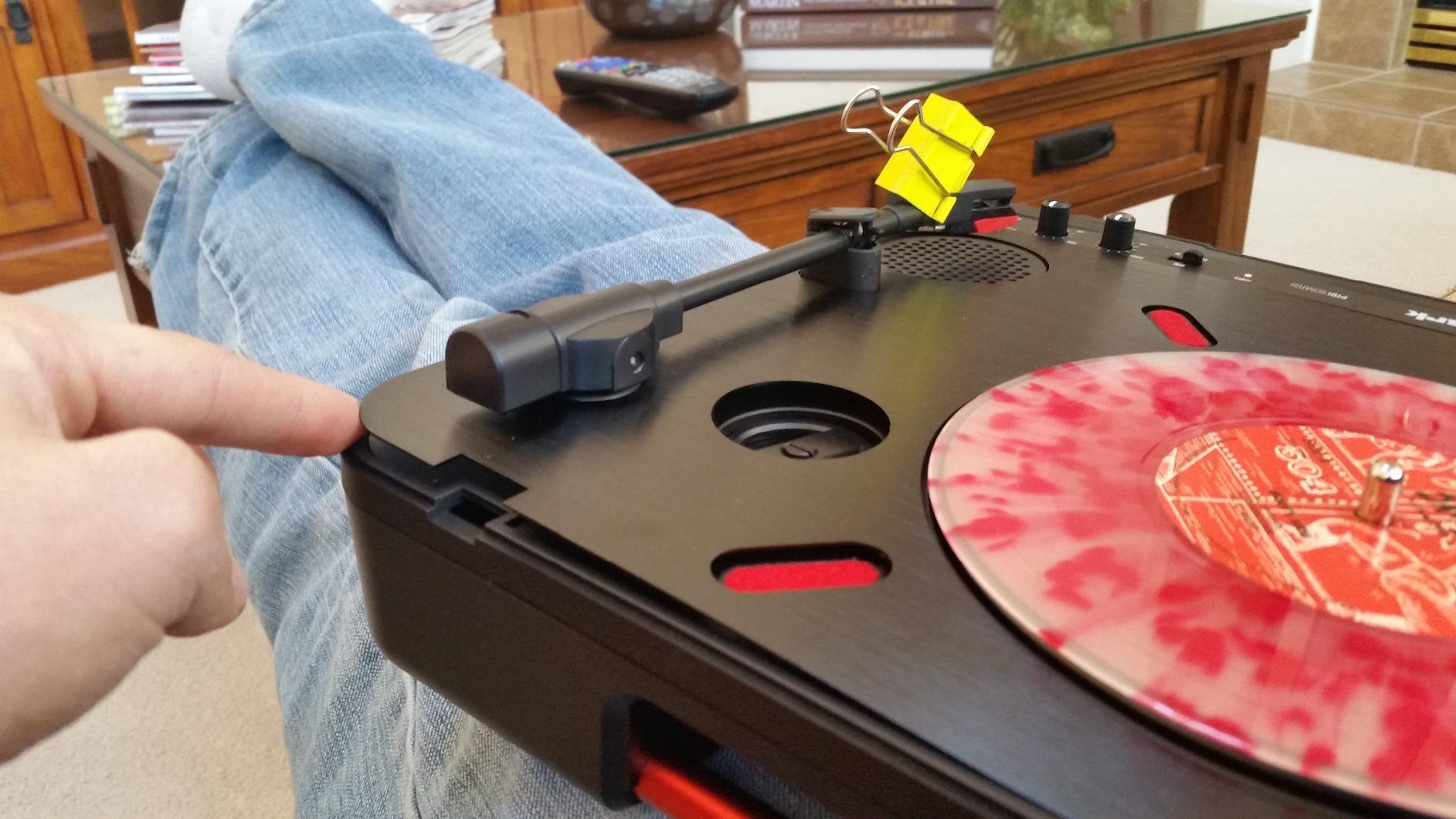
The scratch switch is the detail that matters. It is a springy slide control under the platter that you can adjust for feel, and it works for a right-handed turntablist or a left-footed one, which means you can practise cutting without buying a second deck. The built-in speaker means the deck makes sound on its own, and there is a headphone output, an eighth-inch aux input with its own volume, and a class-compliant USB interface for recording.
Playback covers 33 1/3, 45 and 78 RPM, and the box includes a cartridge, a removable slipmat and a protective dust cover, so nothing extra is needed to start. That completeness is unusual in a deck this small, and it is the reason the 4.4-star average from 588 reviews skews positive, with 74 percent of owners giving five stars.
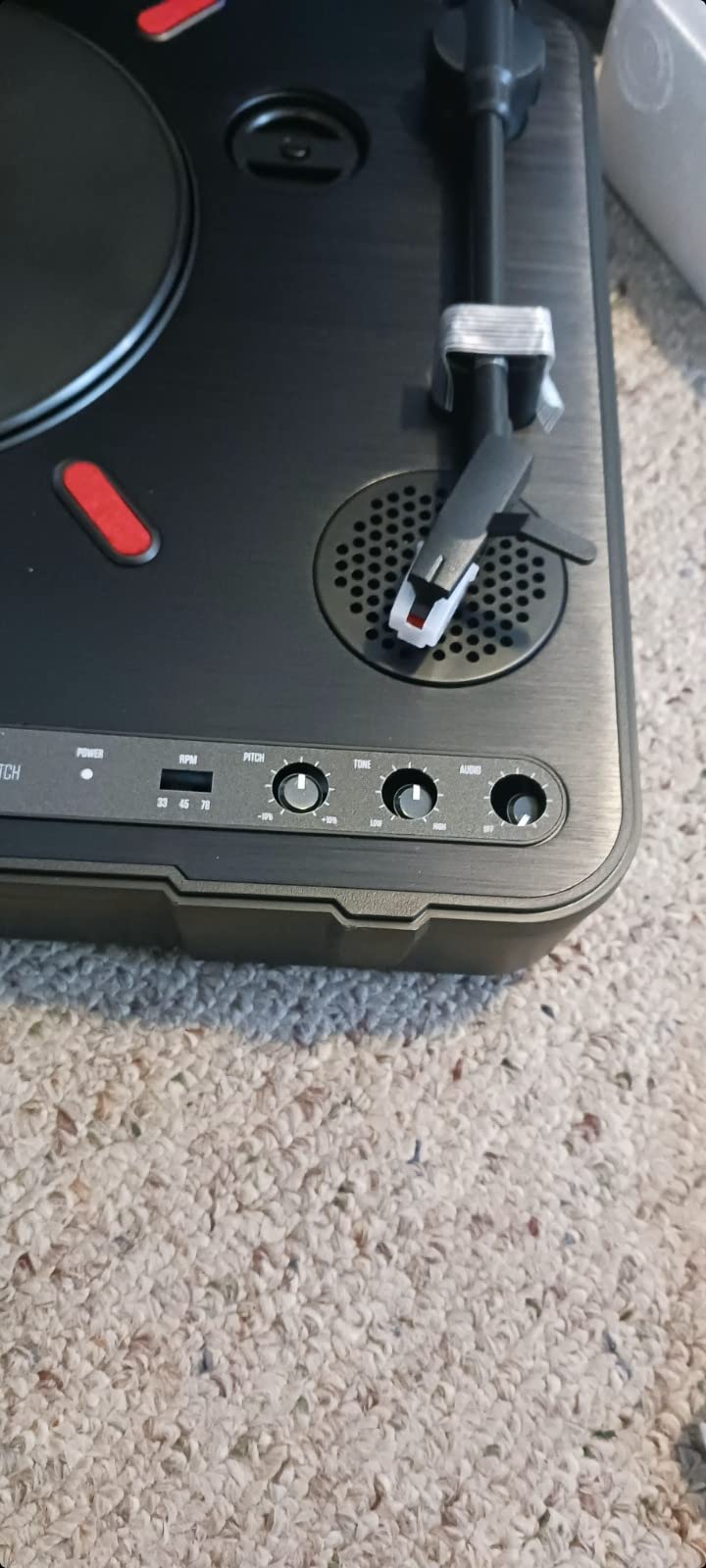
Where it falls short is signal quality. A 60 dB signal-to-noise ratio is well below what a full-size direct drive delivers, so you will hear surface noise between tracks that a proper deck would hide. The plastic body also draws durability complaints, with one-star reviews running at 7 percent, mostly from buyers who expected a club tool. Treat it as a practice and travel companion that sits alongside your main setup, not a replacement for one.
3. Pioneer DJ PLX-500 – Best Value Club-Layout Starter Deck
- ✓Club-style button layout teaches good habits early
- ✓USB output records vinyl to a computer
- ✓Built-in phono preamp with phono and line output
- ✓Substantial chassis weight and long-travel leveling feet
- ✓75 dB signal-to-noise ratio
- ✕Output cable is permanently attached at about 90 cm with no ground post
- ✕No automatic tonearm return
- ✕The included conical cartridge is entry-level
12.7 kg chassis
Club-style control layout
USB recording output
VTA tonearm height adjustment
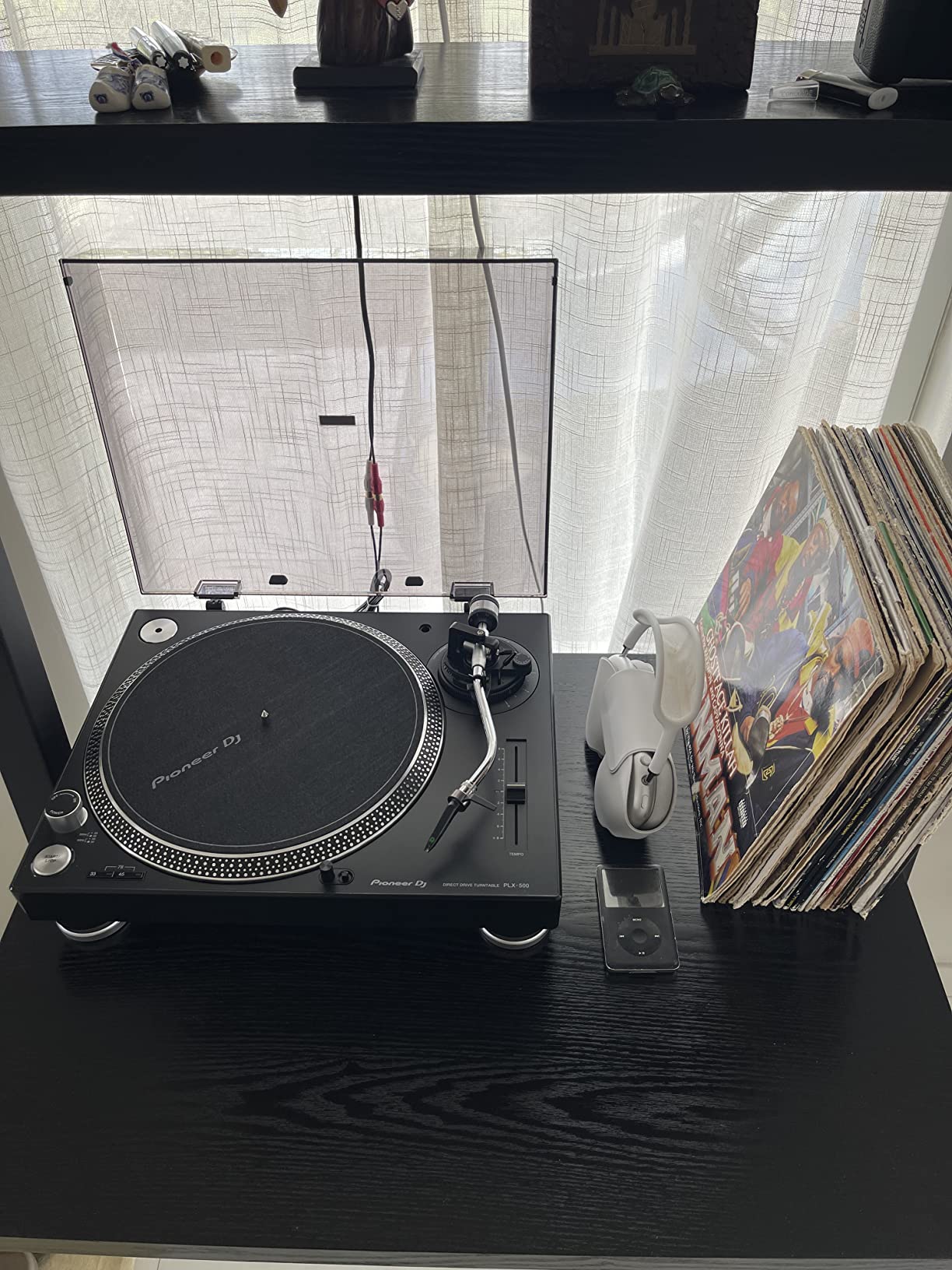
Control layout is the argument for this deck. The pitch fader sits up front at an angle, the start and stop button is where your hand already falls on a club deck, and the target light and cue lever are positioned for back-cueing rather than for careful listening. If you are going to learn on a home deck and then move up, practising muscle memory on this one shortens the transition.
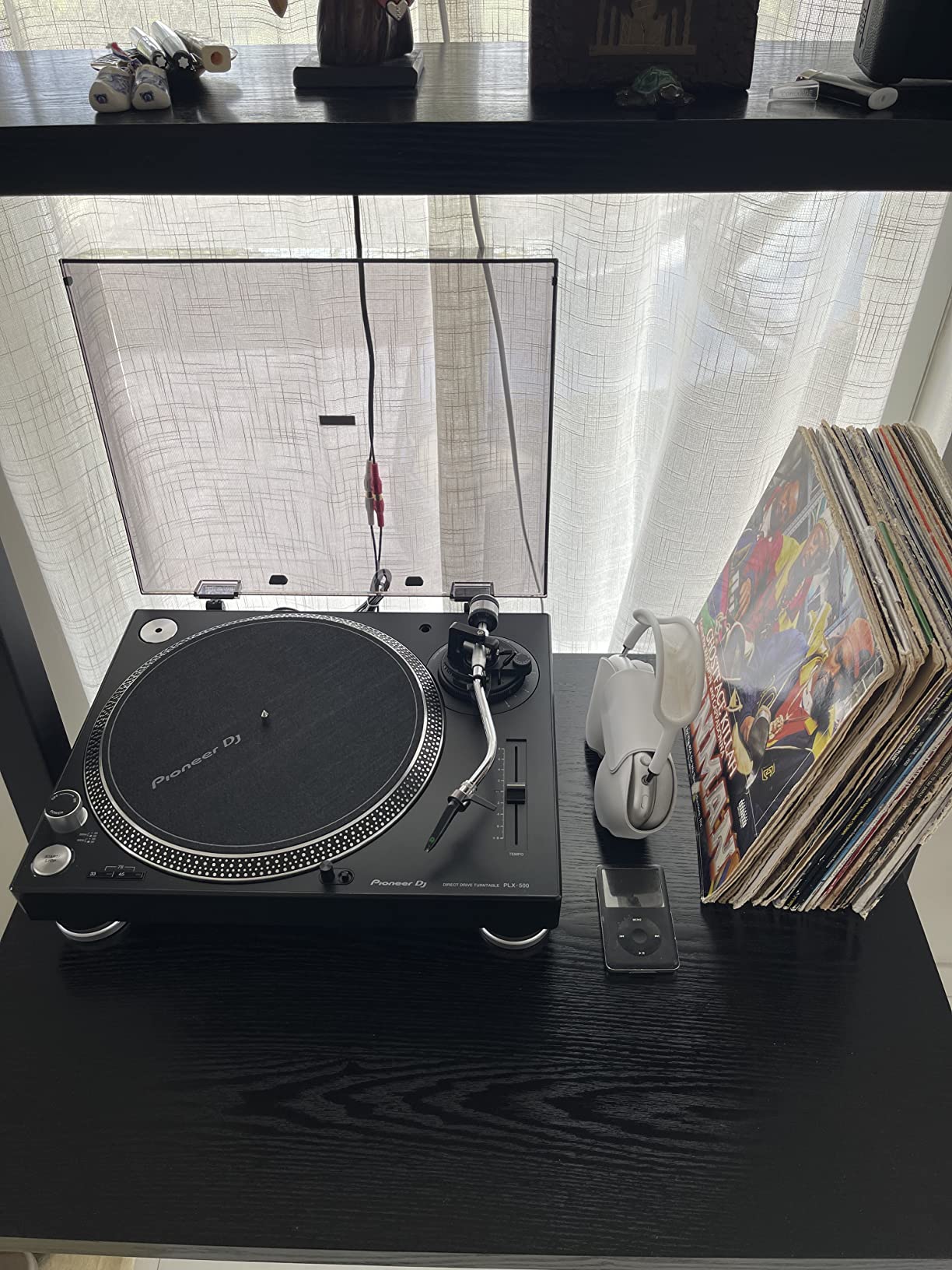
It weighs 12.7 kg, which is more than most of the decks above it, and that mass is doing real work. The motor spins up and slows down smoothly with no audible wow and flutter, and the long-travel feet make accurate leveling possible on an uneven surface. The 75 dB signal-to-noise ratio keeps the background clean enough that the included conical cartridge sounds respectable on its first outing.
Two features stand out for anyone who wants to grow. The USB output records vinyl to a computer, and the VTA tonearm height adjustment lets you set the vertical tracking angle once you fit a better cartridge. That is a genuinely useful pair of upgrades on a deck most people buy once.
The connected cable is the frustration. It is permanently attached at roughly 90 cm and there is no ground post on the chassis, so routing it to a mixer in a booth is a longer job than it should be, and you cannot replace it if it develops a fault. There is no automatic tonearm return either, and 110 or 220 volt supply is chosen by a manual switch at the back. With 523 reviews at 4.6 stars and 81 percent five-star, the consensus is that the layout is worth the small frictions.
Our guide to the best direct drive turntables goes deeper on why direct drive is the right default for DJ work if you have not settled that question yet.
4. Audio-Technica AT-LP140XP – Top Rated Who Want Real Torque
- ✓High-torque servo motor starts
- ✓stops and holds speed quietly
- ✓AT-XP3 cartridge and headshell included so it is usable immediately
- ✓Mass-damped die-cast aluminum platter with professional anti-resonance
- ✓VTA height adjustment plus plug-type target light for low-light cueing
- ✓12 year warranty
- ✕Tonearm lift lever is widely criticised as clunky
- ✕Feet do not isolate bass rumble on a heavy rack
- ✕No built-in phono preamp so a phono stage is required
High-torque servo motor
AT-XP3 cartridge included
Mass-damped aluminum platter
33/45/78 RPM
This is the deck that appears most often in beginner recommendations across the vinyl communities, and the reason is simple: it arrives complete. You get the AT-XP3 phono cartridge, the AT-HS6 headshell, a grounded RCA cable, a counterweight, a 45 RPM adapter, a felt mat and a dust cover, so there is no second purchase before your first record.
The motor is the reason to choose it over a cheaper direct drive. It is a high-torque servo with speed stabilization, and in practice that means it starts on a beat rather than ramping up over half a second, which is exactly what you need for clean cueing and backspin. The mass-damped aluminum platter and professional anti-resonance construction cut vibration, and owners describe the output as quiet and detailed well beyond what the price suggests.
Variable pitch control includes reverse and quartz speed lock, plus an extra start and stop button on the front so you can cue a record while the other is playing. The VTA height adjustment and plug-type target light are both features you would normally look for several tiers up, and the 12 year warranty is the longest in this group by a distance.
There is no built-in phono preamp, so you need a mixer with a phono stage or a separate preamp. That is a real cost if you were hoping to run the deck straight into powered speakers. The tonearm lift lever is the most repeated complaint across 414 reviews at 4.7 stars, and the feet do not isolate bass rumble on a heavy rack, so a low-frequency cue into a big system can be felt through the deck. Both are manageable, and neither touches the motor, which is the part that matters.
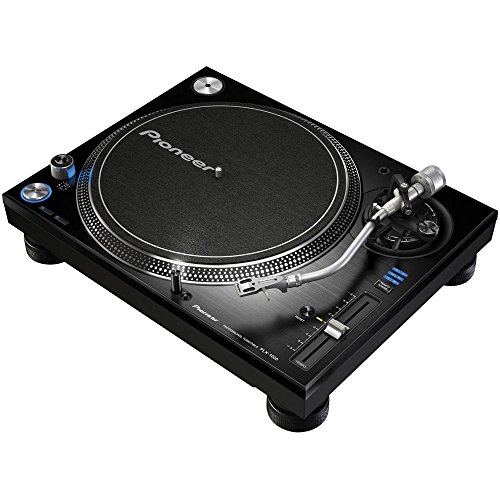
5. Pioneer DJ PLX-1000 – Best Club Deck Below the Flagship Tier
- ✓High-torque direct drive with instant
- ✓rock-steady start-up
- ✓Heavy high-rigidity chassis runs silent with no hum or buzz
- ✓VTA tonearm height adjustment and a universal headshell slot
- ✓Multi-pitch control with a reset button
- ✓DVS-ready for timecode and software workflows
- ✕No phono cartridge included
- ✕No built-in phono preamp
- ✕Some decks reported with loose tonearm bearings out of the box
38 lb high-rigidity chassis
High-torque direct drive
DVS-ready with timecode
S-shaped tonearm with VTA
At 38 lb this is the heaviest deck in the lineup, and that mass combined with a sound-deadened base is the entire point. It sits still, it runs quiet, and there is no hum or buzz under a signal. Owners consistently describe it as a step-change audio upgrade over lighter entry decks, which is why so many of them end up doubling as serious listening gear.
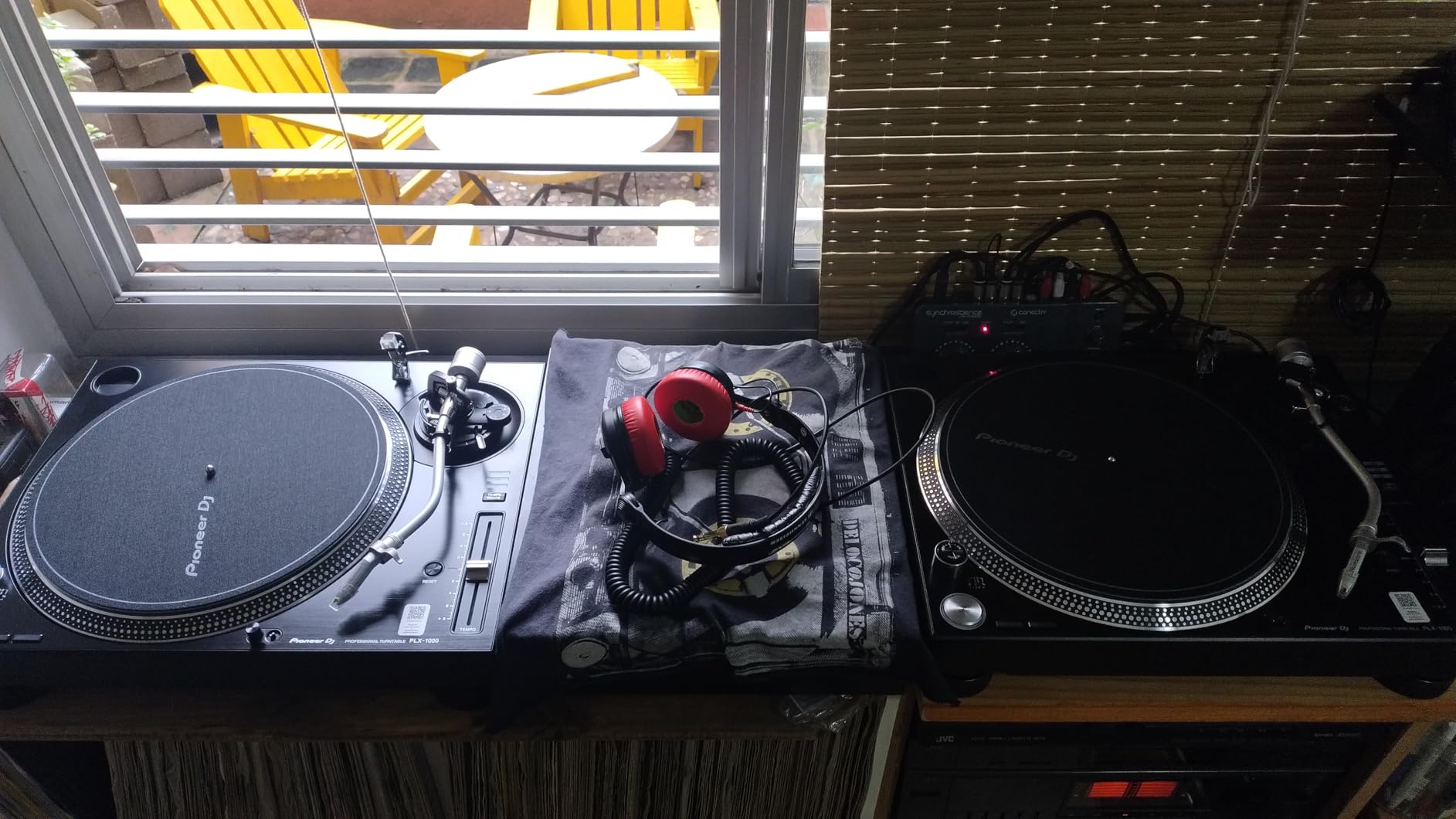
The high-torque direct drive starts instantly and holds speed, so beatmatching stays stable even when you are moving the record by hand. Multi-pitch control with a reset button covers the range you need for tempo tricks, the cueing lever is smooth and precise, and the S-shaped tonearm sits on a height-adjustable base with a universal headshell slot that accepts almost any cartridge you might want to fit.
It is DVS-ready, so it works with timecode vinyl and the usual DVS software workflows, which makes it a common sight in clubs that run hybrid rooms. That is why it is the first club deck most people name when they ask whether a Pioneer PLX-1000 is worth saving money against a Technics, and the answer is usually yes for anyone who is not chasing a specific flagship feature.
Two things to plan for. It arrives with no cartridge, so budget for one, and it has no built-in phono preamp, so it needs a phono stage or a mixer that provides one. A minority of owners on earlier production runs also reported loose tonearm bearings out of the box, which is worth checking during the return window. Across 295 reviews at 4.5 stars, the deck is well regarded, but the packaging is the weakest part of the package.
6. Reloop RP-4000 MK2 – Best Budget Deck That Arrives With a Cartridge
- ✓Includes an Ortofon OM Black pickup and headshell so no cartridge purchase
- ✓Quartz-driven direct drive holds stable rotation
- ✓Pitch fader with a plus or minus 8 percent range and a reset
- ✓Statically balanced S-shaped tonearm for precise tracking
- ✓Light enough to move between rooms without help
- ✕Torque is weaker than the high-torque label suggests
- ✕Platter start and stop drags for a second or more instead of snapping to speed
- ✕Hollow body picks up vibration on a light desk
Quartz-driven direct drive
Ortofon OM Black included
Plus or minus 8 percent pitch
Statically balanced S-arm
The RP-4000 MK2 solves the problem that trips up most Reloop buyers. The package list includes an Ortofon OM Black pickup system and a headshell, so you can put a record on and play it without a separate cartridge purchase. For anyone building a practice setup on a tight budget, that single inclusion saves a trip and a decision.
At 9.8 kg it sits at the lighter end of the full-size decks here, and the statically balanced S-shaped tonearm tracks cleanly for its class. The pitch fader gives you plus or minus 8 percent with wider-range buttons and a reset to zero, which is enough range to beatmatch most material and to stretch a loop out without extreme fader positions.
Now the honest part, which is why this deck sits at 4.3 stars from 247 reviews with a 15 percent three-star share, the highest here. Torque is weaker than the high-torque label suggests, so aggressive backspin and fast cueing will not behave the way they do on the decks above it. The platter also takes one to three seconds to reach speed rather than snapping to it, which is fine for practice and frustrating for a live set.
The body is hollow and transmits vibration on a light desk, and the RCA and power cables are hardwired, so a cable fault means a repair rather than a swap. There is no built-in phono preamp, which catches out more than one first-time buyer. Owners who use it for playback and home practice rate it well, and gigging DJs consistently recommend stepping up a tier instead.
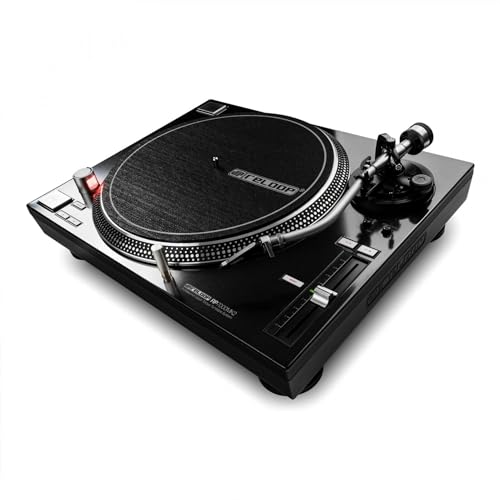
7. Reloop RP-7000 MK2 – Best Dedicated Scratch Deck in the Lineup
- ✓Power-torque direct drive with precise motor control for scratch work
- ✓Extra-heavy rigid body gives strong damping and isolation
- ✓Height-adjustable tonearm base plus anti-skate control
- ✓Dedicated forward and reverse buttons with an extra start and stop
- ✓Includes slipmat
- ✓LED needle light
- ✓counterweight and grounded RCA cable
- ✕Cartridge is not included in the listed package contents
- ✕Highest one-star share in the group at 12 percent
- ✕Heavier and larger footprint than the smaller decks here
Power-torque direct drive
Extra-heavy rigid body
Forward and reverse buttons
VTA and anti-skate
If your goal is scratching rather than smooth mixing, the RP-7000 MK2 is the deck built for it. The power-torque direct drive is the most aggressive motor in this group with precise control, and the extra-heavy high-rigidity body damps vibration well enough that the deck stays put when you put a finger on the record and lean into it.
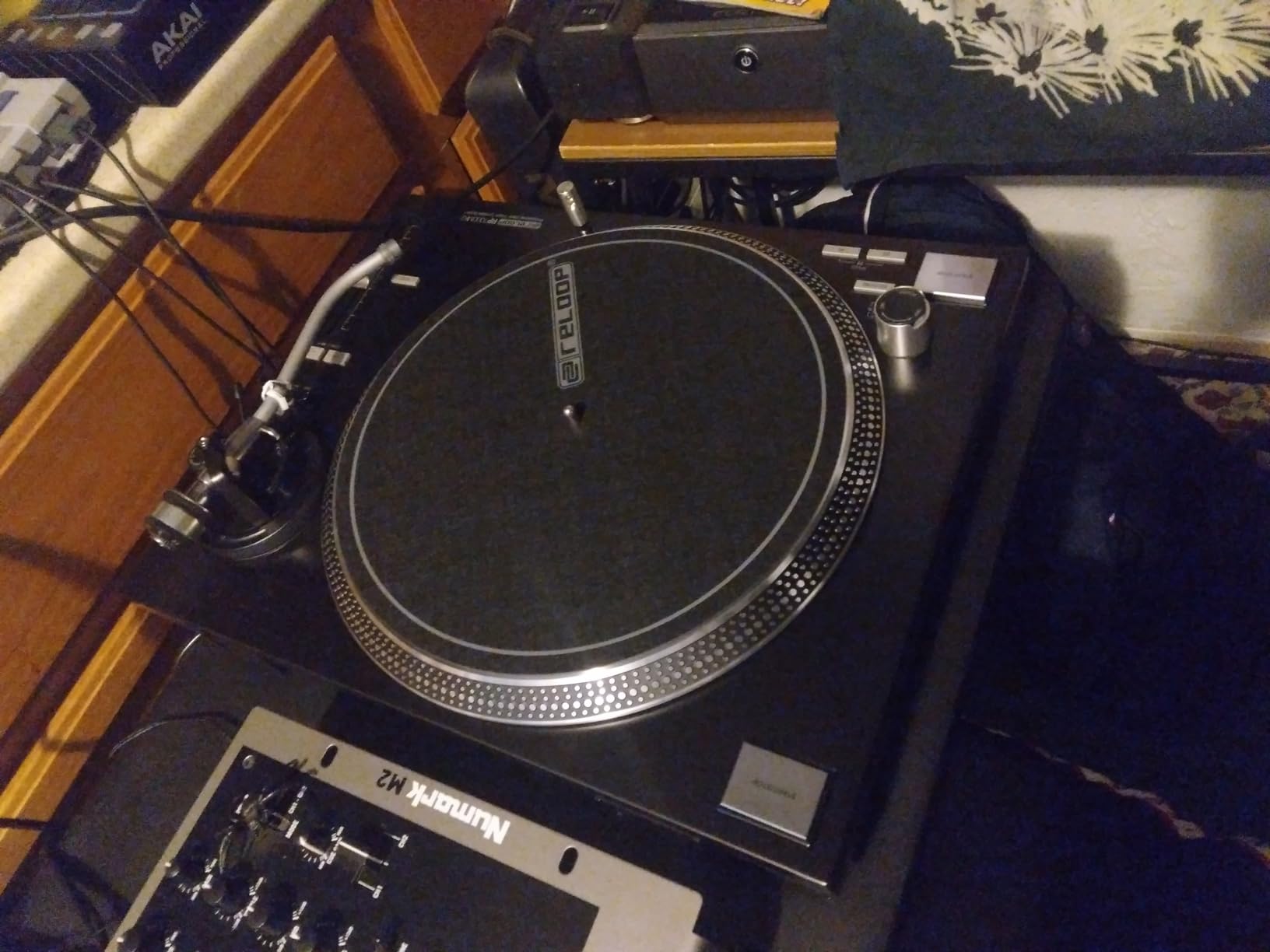
The control layout suits performance work. Dedicated forward and reverse buttons, an additional start and stop button, anti-skate control and a height-adjustable tonearm base are all things you would want in front of you mid-scratch. The box also includes an LED needle light, which is more useful than it sounds when you are cueing in a dark booth.
Its weakness is the polarisation in the reviews. Across 194 reviews it holds a 4.2 star average, the lowest here, and 12 percent of owners gave one star, the sharpest one-star share of any deck in the group. That points to a mix of quality control gripes and buyers who expected flagship-level refinement at a mid-level price. The listed package contents also do not include a cartridge, so plan to add one.
It is also physically imposing, with a larger footprint than the Audio-Technica and smaller Reloop decks, and at 11.2 kg it is a two-person lift in some rigs. If your scratching is mostly at home on a solid desk, the trade is worth it. If you are moving it into a club booth regularly, the club deck above is a better fit.
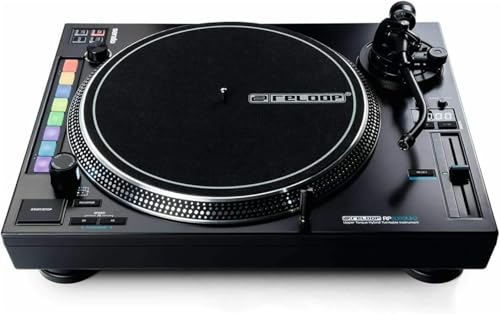
8. Reloop RP-8000 MK2 – Best Hybrid Performance Deck
- ✓Seven color-coded performance pad modes in Serato DJ Pro
- ✓Platter play mode lets pads control platter speed for melodic sets
- ✓Reinforced metal
- ✓rubber and moulding compound chassis damps vibration
- ✓Independent pad modes when paired with the Reloop ELITE mixer
- ✓USB cable included alongside a grounded phono RCA
- ✕Pad features are largely inert without Serato DJ Pro and specific Reloop hardware
- ✕Listed item weight of 1.5 kg does not reflect the actual deck
- ✕Highest power draw in this group at 17 watts
Seven Serato DJ Pro pad modes
Platter play mode
Rigid damped chassis
Grounded phono and USB cables
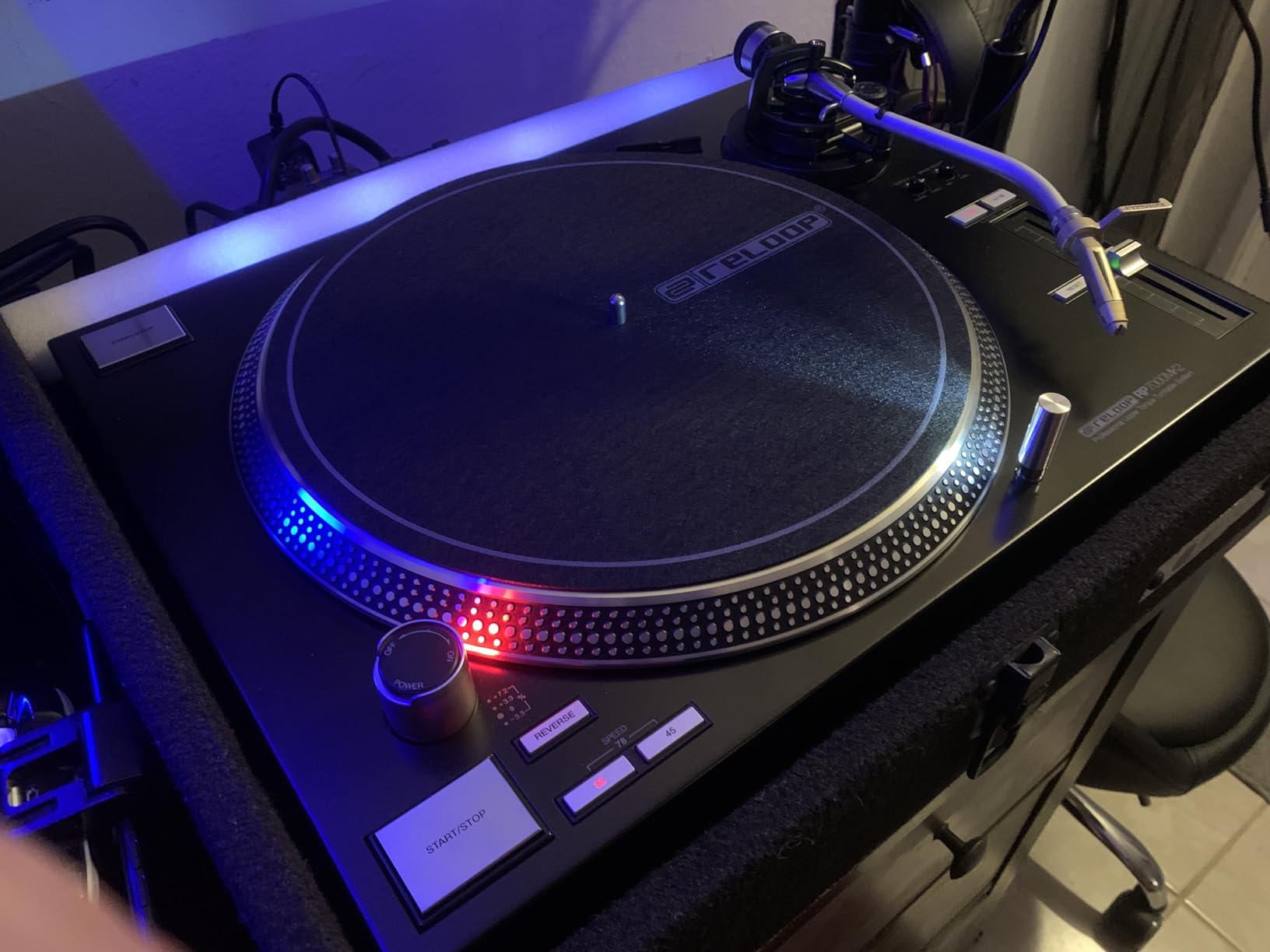
This is not really a turntable in the analog sense. It is a performance instrument that behaves like one, and it was developed in close collaboration with turntable musicians rather than with engineers. The pitch range, the arm and the platter all work, but the reason to own it is the pad system.
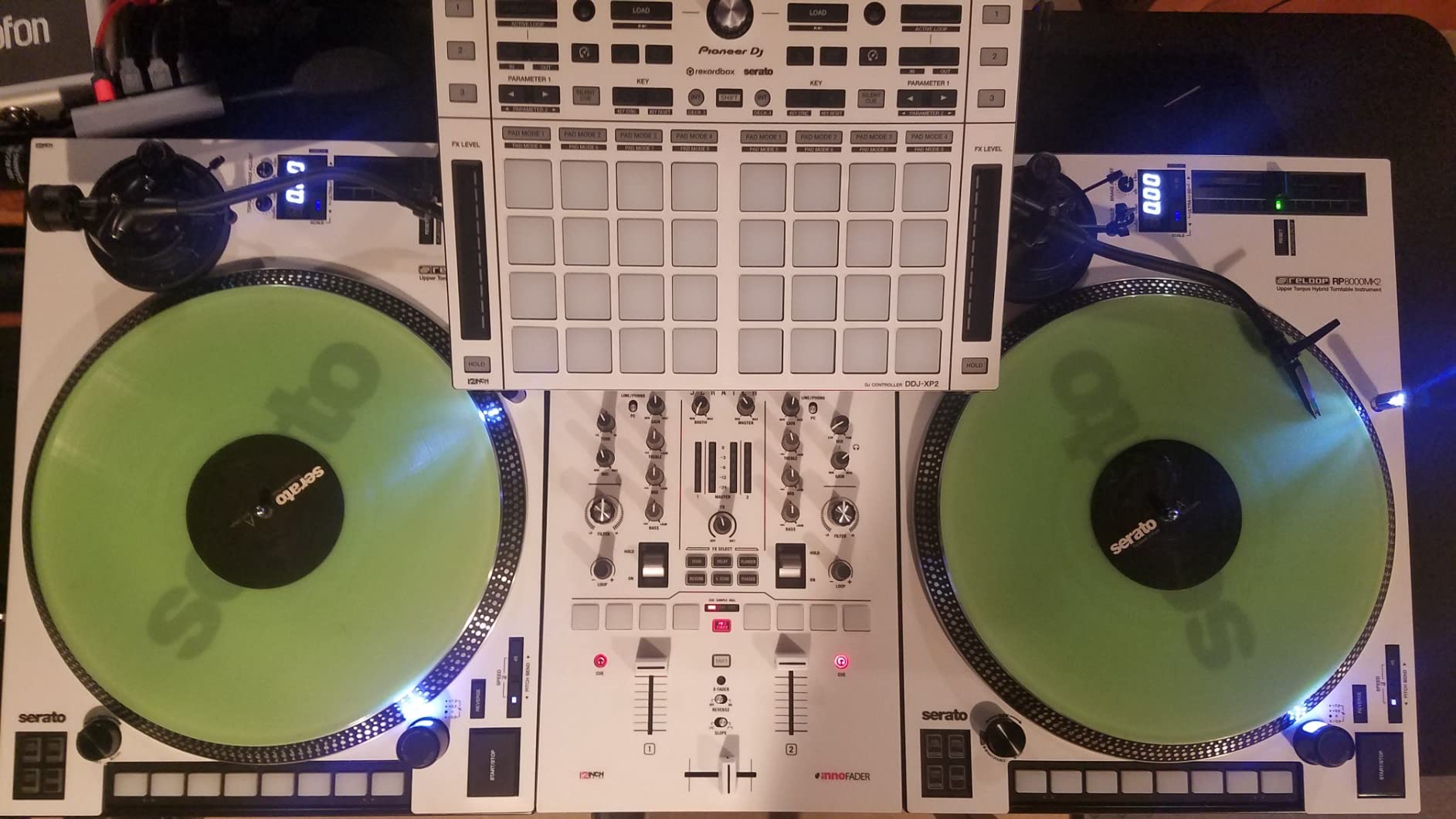
Seven color-coded pad modes inside Serato DJ Pro map straight onto the deck, and platter play mode lets those pads drive platter speed, which turns a scratch technique into something melodic. It is the closest thing here to a tactile way of working with a software library, and it works equally well as a second control surface for a hybrid live set.
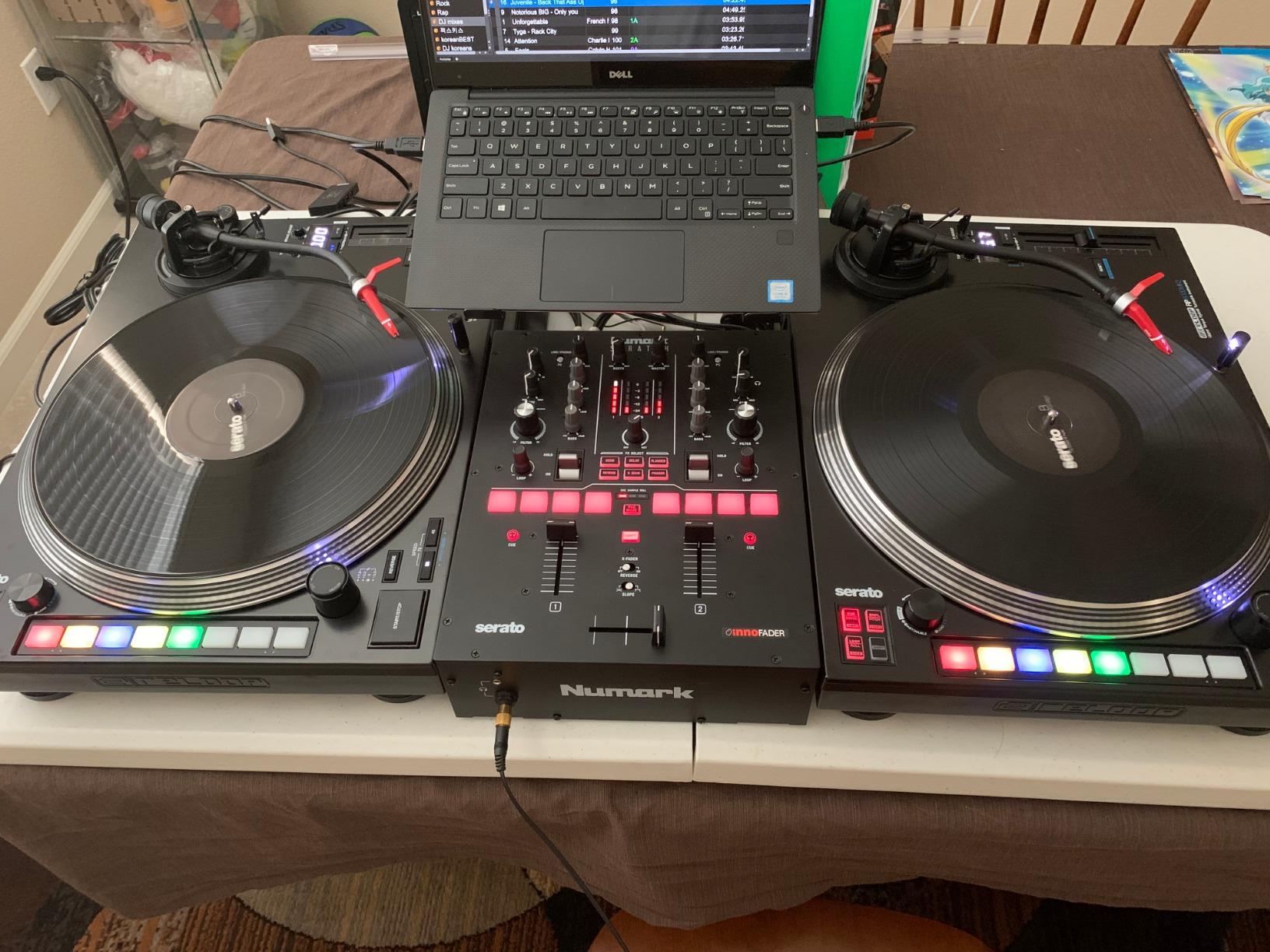
The chassis is the other achievement. Metal, rubber and moulding compound are layered together for vibration damping and isolation, which matters more than it sounds when the pads are triggering low-frequency material. A grounded phono RCA cable and a USB cable are both included, so it connects to a mixer and a computer out of the box.
The catch is ecosystem dependence. Outside Serato DJ Pro, and without the Reloop ELITE mixer for the independent pad modes, a lot of what makes this deck distinct simply does not happen. Some buyers feel the premium is hard to justify outside that setup. The listed item weight of 1.5 kg is also plainly wrong for a deck of this construction, so check the dimensions against your booth rather than trusting the spec. At 4.4 stars from 131 reviews, satisfaction is high but heavily concentrated in one workflow.
9. RANE Twelve MKII – Best Digital Deck for Software Workflows
- ✓Full 12-inch motorized acrylic disc gives an authentic turntable feel
- ✓5.0 kfcm high-torque motor with high and low torque adjust
- ✓Controls up to four decks of playback from one platter
- ✓Works with Serato DJ Pro
- ✓Traktor and Virtual DJ over DVS or USB MIDI
- ✓88 percent five-star share across 114 reviews
- ✕Needs a computer
- ✕DJ software and usually DVS hardware to deliver its main functions
- ✕Acrylic disc is a consumable-style surface rather than real vinyl
- ✕Steeper learning curve for anyone new to DJ software
12-inch motorized acrylic disc
5.0 kfcm high-torque motor
DVS and USB MIDI control
Eight hot-cue triggers
There is no stylus and no groove, which makes this the odd one out in a turntable roundup and the reason it is here. The RANE Twelve MKII uses a full 12-inch black acrylic control disc on a motorized platter, so the hand movements, the inertia and the feel of a record are all genuinely present, and the motor spins it.
Underneath that surface it is a controller. DVS and USB MIDI control work with Serato DJ Pro, Traktor and Virtual DJ, the OLED screen shows BPM and control status, and a dual-mode touch strip handles track search alongside eight hot-cue triggers. Platter speeds cover 33 1/3 and 45 RPM, and the pitch slider offers 8, 16 and 50 percent ranges on a dual-resolution detented control.
The motor is the specification that matters most for a deck people push around. It is rated at 5.0 kfcm of high torque with high and low torque adjust and 3600 ticks of platter resolution, which is the number to compare against any analog deck when you are deciding how hard the hand can work. The USB MIDI interface sits conveniently and can link to a Mac or PC.
Every caveat is about context. It needs a computer and DJ software to deliver its main functions, and usually DVS hardware as well. The acrylic disc is a consumable-style surface rather than something you can drop a record on, and for someone who has never opened DJ software the learning curve is steeper than picking up a turntable. Those caveats are why it sits at the end of the list rather than the top, but the 88 percent five-star share across 114 reviews is about as clean a satisfaction signal as this category produces.
If you are still weighing this against a conventional deck, our DJ controller guide sets out the software side in more detail. And if your sets involve lighting or other stage production, the best DJ lights for parties guide covers the rest of the rig.
What to Look For When Choosing a DJ Turntable
Direct drive beats belt drive for almost every DJ use case
A belt-driven deck uses a rubber belt to turn the platter, which isolates motor vibration and sounds smoother on a quiet listening turntable. A direct-drive deck spins the platter from the motor shaft, which means near-instant start and stop, far more torque at the platter, and far more control when your hand is on the record. For DJing, those three advantages decide it. Only pick belt drive if your goal is critical listening rather than mixing.
Torque is the number that decides whether you can scratch
Torque is measured in kilogram-force centimetres, or kg/cm, and it describes how hard the motor can spin the platter. For beatmatching, roughly 1.6 kg/cm is the practical floor, because below that the platter bogs down when you load a finger onto the record. For scratching and backspin cueing, aim for 3 kg/cm or more. The only figure published in this group is the RANE Twelve MKII at 5.0 kfcm with high and low torque adjust; for the others, treat the high-torque and power-torque labels as marketing until you have felt the motor yourself.
Platter mass and chassis weight decide whether it survives a loud room
Weight is the cheapest proxy for build quality in this category, and the range across these nine decks is wide. The Numark PT01 Scratch weighs 2.15 kg and is a portable practice unit; the Pioneer DJ PLX-1000 weighs 38 lb and will not move when you lean on it. A heavy platter resists motor vibration, a heavy chassis resists acoustic feedback, and both protect your records. Lightweight decks are widely seen as fine for bedroom practice and poor for gigging, with bass feedback at volume the specific failure mode.
The flip side is the record damage anxiety that dominates owner conversations. A heavy deck with a well-damped platter is gentler on vinyl than a light one, but the real risk is alignment: a cartridge fitted crookedly, an overhang setting that is too far out, or a tracking force that is too low will skip a record whether the deck weighs 2.15 kg or 38 lb. Our audiophile turntable guide covers setup discipline in more detail.
Pitch range and the reset button matter more than specs suggest
Pitch range is the percentage span of the pitch fader. Plus or minus 8 percent, which the Reloop RP-4000 MK2 offers, is enough for most beatmatching and for stretching a loop out modestly. Plus or minus 16 percent gives you room for half-time and tempo tricks, and plus or minus 50 percent, offered on the RANE Twelve MKII, lets you play a track at half or twice its normal speed. A pitch reset button that snaps back to zero is a small thing that saves a lot of fumbling mid-set.
DVS compatibility and cartridge included are the two hidden cost traps
DVS, or digital vinyl system, means timecode is read from a special record so a DJ can control digital files by hand. If you want it, confirm the deck is DVS-ready before you buy, and note that timecode vinyl and the software licence are separate costs. The second trap is the cartridge. The Audio-Technica AT-LP140XP arrives with an AT-XP3 and headshell, the Reloop RP-4000 MK2 includes an Ortofon OM Black, and the Numark PT01 Scratch includes a cartridge. The Pioneer DJ PLX-500 and PLX-1000 do not, so add a cartridge to your budget for those.
What a full vinyl DJ setup actually costs beyond the deck
This is the arithmetic people miss. A workable setup needs two decks, a two-channel DJ mixer, two cartridges, slipmats, a 45 RPM adapter and headphones, and on r/turntables the standard warning is fair: vinyl is the most expensive possible way to DJ. A starter tier pairs two budget direct drives with a compact mixer and one upgraded cartridge. A serious home tier pairs two mid-weight decks with a fuller mixer, two cartridges and flight cases for moving them. A club tier means two heavy club decks, a good mixer, spare cartridges and a cart. On that last point, make sure the cases are rated for the weight, because a flight case that is not will not survive a loading dock.
Fixing the Two Problems Every New DJ Owner Hits
Why your turntable only outputs one channel
One-sided output is almost never a fault in the deck’s electronics. Check these five things in order: swap the two RCA plugs at the mixer so each goes into the opposite channel, because a failed lead will follow the channel and identify itself immediately. Inspect the headshell terminals and the cartridge pins for a loose or bent connection. Check the phono stage if your deck has a switchable preamp, since a fault there kills one side. Confirm the ground wire is connected at both ends. If all of that passes, the likely cause is a worn cartridge stylus rather than the deck, and the fix is a new cartridge.
Why your record keeps skipping during back-cueing
Skipping out of the groove is nearly always an alignment or setup problem rather than a record problem. Set the tracking force to the cartridge manufacturer’s specification first, since too little force lets the stylus jump. Then set anti-skate to match that force, and check the cartridge alignment with a stylus gauge so the cantilever sits square in the groove. Reduce overhang, confirm the tonearm height and VTA are sensible, and rule out a warped record by checking it on a flat surface. If the deck has no cue height adjustment, that is a real limitation for hard cueing, and it is worth remembering when you choose your next one.
How to stop bass feedback before it ruins your night
Bass feedback happens when low frequencies from the speakers reach the deck and push the stylus back toward the platter, creating a loop. Level the deck on the same surface as the mixer, use the isolating feet properly rather than wedging the chassis on a shelf, and keep the speaker crossover point above the frequency where the deck is sensitive. Moving speakers further from the deck helps more than any setting. If feedback persists on a lightweight chassis, that is a signal you have outgrown the deck rather than misconfigured it.
Frequently Asked Questions
What is the best DJ turntable in 2026?
The Audio-Technica AT-LP120XUSB is the best overall for most buyers in 2026, because it has a switchable phono preamp, a USB recording output and a tonearm that works out of the box, backed by more than 9,000 reviews averaging 4.7 stars. The Pioneer DJ PLX-500 is the better choice if you want a club-style control layout to practise on, and the Audio-Technica AT-LP140XP is the pick if you need higher starting torque for scratching.
What is the difference between direct drive and belt drive?
A belt-drive turntable uses a rubber belt to spin the platter, which damps motor noise and sounds better for quiet listening. A direct-drive turntable spins the platter directly from the motor, which gives near-instant start and stop, much higher torque and far more control when your hand is on the record. Every deck in this roundup is direct drive, because that is the standard for DJing.
Do I need a mixer to use DJ turntables?
You need a two-channel DJ mixer to blend two records by hand, since the mixer is what lets you cue one deck, crossfade between them and control gain. A turntable can drive a hi-fi amplifier or powered speakers on its own for listening, and some decks such as the Numark PT01 Scratch even have a built-in speaker. For actual DJing, plan on a mixer as a separate cost.
Do any DJs still use turntables?
Yes. Pure-vinyl mixing remains standard in many clubs, at weddings and at battle events, and hybrid setups let a DJ trigger samples and control digital files from a timecode record. Turntables also remain the format most DJs learn on, because manually matching tempo and phrasing teaches rhythm that sync-button workflows do not. Options range from an all-analog set to a Serato DJ Pro hybrid rig.
What torque do I need for a DJ turntable?
For beatmatching, roughly 1.6 kg/cm of torque is the practical floor, because below that the platter bogs down when you load a finger onto the record. For scratching and backspin cueing, aim for 3 kg/cm or more. Weight is a useful proxy since heavier decks generally carry more capable motors, and the RANE Twelve MKII is the one deck in this group with a published figure at 5.0 kfcm.
The Verdict: Which DJ Turntable Should You Buy
If you want one deck that covers practice, home parties and light gigging without a second purchase, the Audio-Technica AT-LP120XUSB is the default. Its switchable phono preamp, USB output and 4.7-star average across more than 9,000 reviews make it the safest first purchase among the best DJ turntables on the market in 2026.
If you are building a pair and care about learning club technique, buy two Pioneer DJ PLX-500s and budget a cartridge for each. If you are focused on scratching, the Reloop RP-7000 MK2 gives you the motor control and body mass for it, while the Audio-Technica AT-LP140XP is the gentler on-ramp. If your sets are hybrid and software-driven, the Reloop RP-8000 MK2 is the performance instrument, and the RANE Twelve MKII is the software-first alternative.
Whatever you choose, budget for a mixer and a second deck at the same time. A single turntable plus a pair of speakers will teach you almost nothing about beatmatching, and that is where most beginners give up.





Leave a Comment