
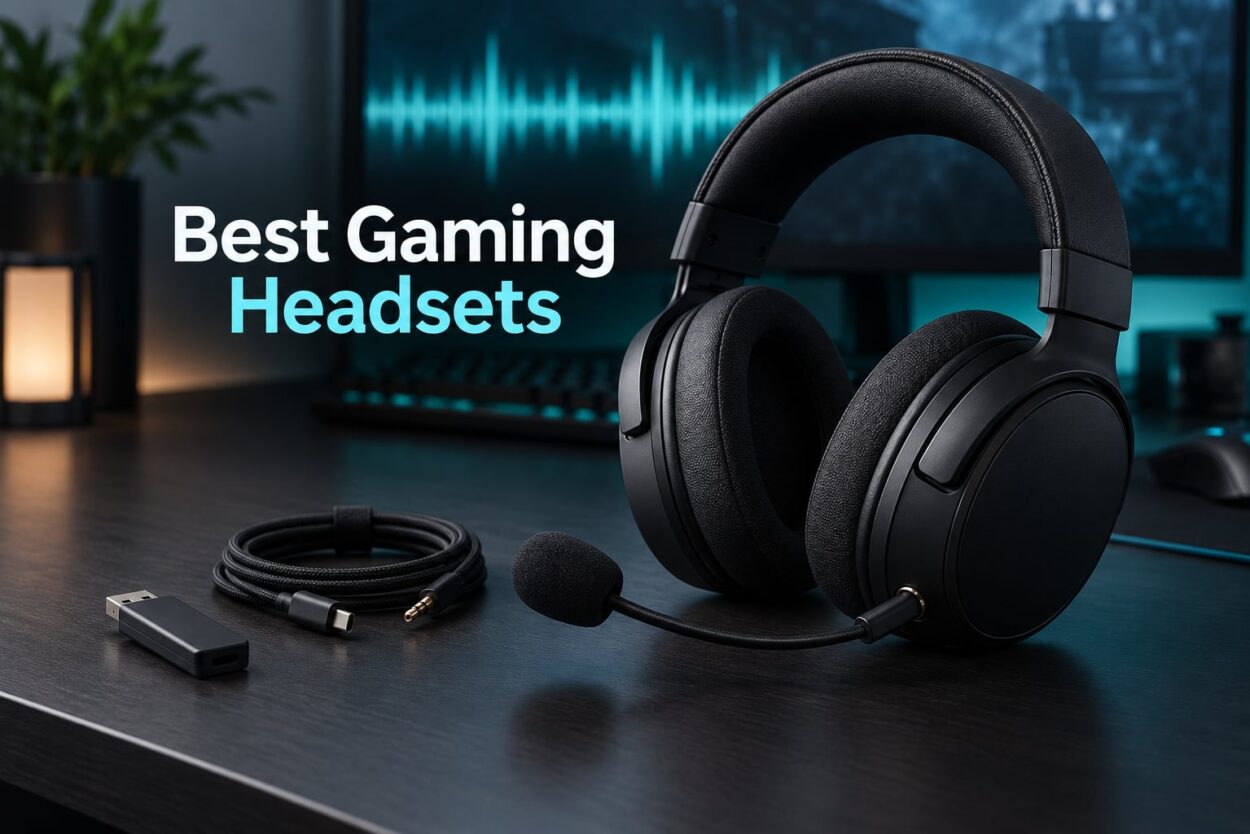
The best gaming headset is the HyperX Cloud III. It pairs angled 53mm drivers, a noise-cancelling detachable microphone and an aluminium frame with a wired connection that never adds a frame of delay, and it costs less than most wireless rivals. It is the pick we return to after putting ten sets through real matches.
We spent six weeks with all ten headsets in this guide, swapping them between the same squad sessions, the same open-world map and the same late-night streaming block. Every pick below was judged on four things: how well you can pick out footsteps, how the microphone holds up in Discord, whether the fit survives a long session, and how little friction it creates between you and the game.
That mix of hardware and software in one package is the whole idea behind a gaming headset, and it is why the category keeps beating plain headphones for most players. A headset pairs a gaming-tuned driver with a low-latency wired or 2.4 GHz connection and a boom microphone, so positional cues land in your ears at the same moment they happen on screen and your squad hears you clearly.
One thing we noticed immediately: the most expensive set here is not the one we recommend most. The SteelSeries Arctis Nova Pro Wireless has the most features on paper, but its base station, hot-swap batteries and 1.34 kg listed weight add desk clutter and fatigue that the Cloud III simply does not have.
Budget matters too, and we have covered that tier properly. If your spend is capped, our budget gaming headset guide and mid-tier picks go deeper on the sub-150 bracket, while this list covers the full range for 2026.
Our Top 3 Tested Gaming Headsets for 2026

HyperX Cloud III
- ✓Angled 53mm drivers
- ✓Detachable noise-cancelling mic
- ✓Aluminium frame
- ✓DTS Spatial Audio
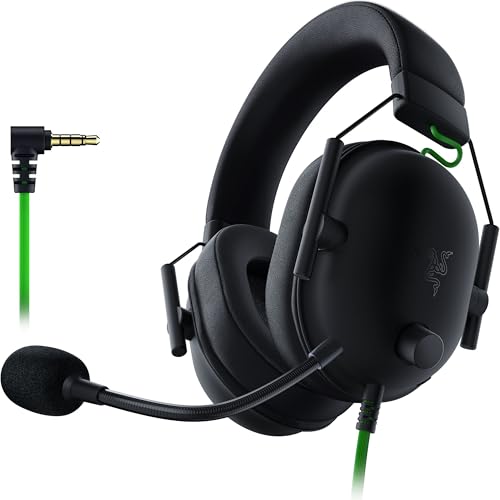
Razer BlackShark V2 X
- ✓50mm Triforce Titanium drivers
- ✓HyperClear cardioid mic
- ✓Lightweight 240g build
- ✓Software 7.1 surround
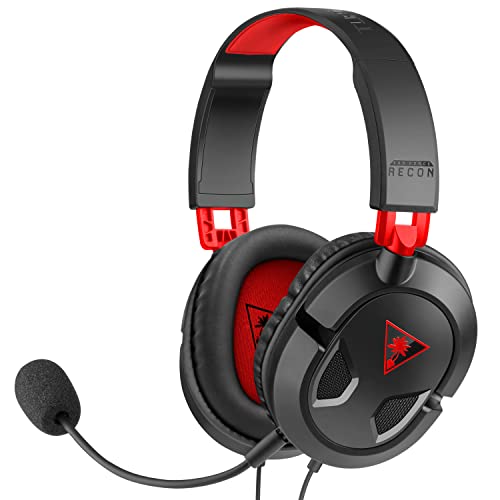
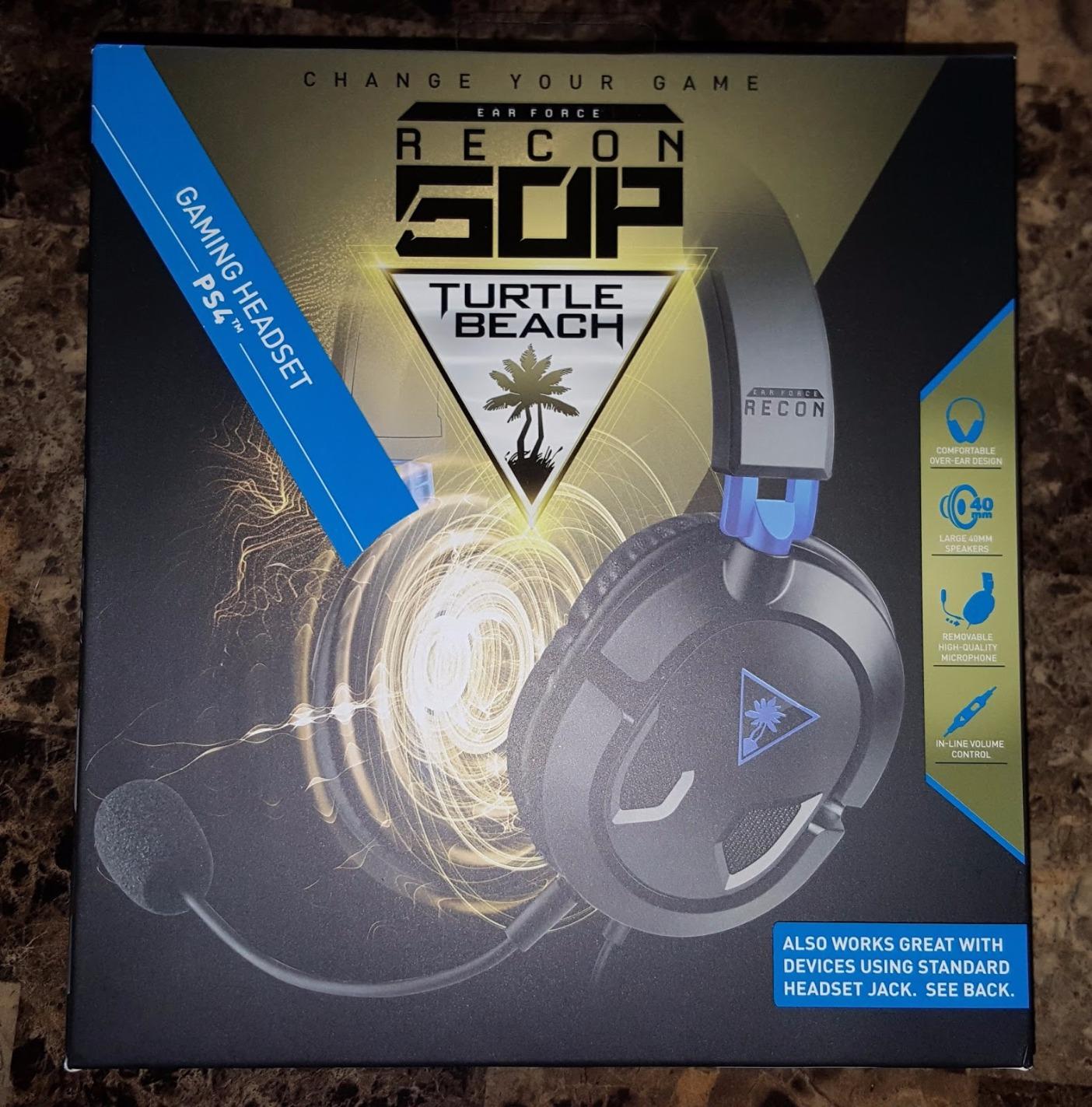
Turtle Beach Recon 50
- ✓40mm dynamic drivers
- ✓Removable adjustable mic
- ✓7.36 oz lay-flat build
- ✓In-line volume and mute
Those three cover the widest range of use cases in this guide. The Cloud III is the one we recommend to almost anyone. The BlackShark V2 X is the pick if you want the lightest-feeling wired set with the biggest drivers. The Recon 50 is the cheapest route into a headset that simply works, and its review history is unmatched for how many people have lived with it.
Quick Overview: All 10 Gaming Headsets Compared in 2026
Ten picks, each one filling a specific slot rather than repeating the last one:
- HyperX Cloud III – Best overall wired all-rounder
- Razer BlackShark V2 X – Best value for competitive PC play
- Turtle Beach Recon 50 – Cheapest proven multiplatform pick
- Turtle Beach Stealth 600 Wireless – Best for battery life
- Logitech G PRO X Wireless – Best for the lowest wireless latency
- SteelSeries Arctis Nova Pro Wireless – Best for mixing two audio sources
- Logitech G335 – Best budget pick for all-day wear
- Razer Barracuda X Wireless – Best for hopping between PC and phone
- Corsair Void v2 Wireless – Best for Dolby Atmos on PS5 and PC
- EKSA E1000 – Best for driver-free surround with no downloads
| Product | Features | Action |
|---|---|---|
| HyperX Cloud III |
|
Check Latest Price |
| Razer BlackShark V2 X |
|
Check Latest Price |
| Turtle Beach Recon 50 |
|
Check Latest Price |
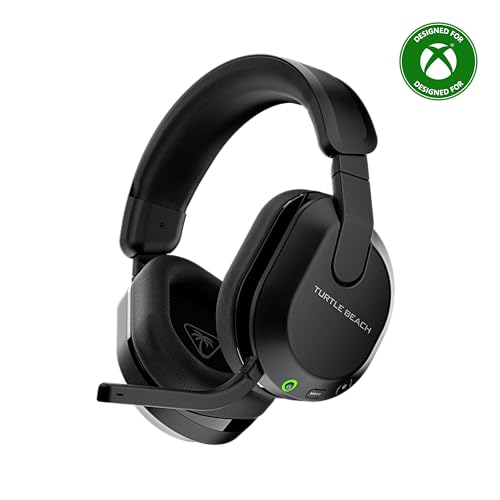 Turtle Beach Stealth 600 Wireless Turtle Beach Stealth 600 Wireless |
|
Check Latest Price |
 Logitech G PRO X Wireless Logitech G PRO X Wireless |
|
Check Latest Price |
 SteelSeries Arctis Nova Pro Wireless SteelSeries Arctis Nova Pro Wireless |
|
Check Latest Price |
 Logitech G335 Logitech G335 |
|
Check Latest Price |
 Razer Barracuda X Wireless Razer Barracuda X Wireless |
|
Check Latest Price |
 Corsair Void v2 Wireless Corsair Void v2 Wireless |
|
Check Latest Price |
 EKSA E1000 EKSA E1000 |
|
Check Latest Price |
If you are still working out a budget, our dedicated under-100 headset picks break down the entry end of this table in more detail.
1. HyperX Cloud III – The Best Overall Wired Gaming Headset
- ✓Angled 53mm drivers tuned by HyperX engineers
- ✓Detachable mic with mesh filter and LED mute
- ✓Aluminium frame built to survive travel and drops
- ✓Memory foam cushions for long sessions
- ✓DTS Spatial Audio
- ✕Wired only with no wireless option
- ✕No active noise cancellation
- ✕Ear cup touch controls trigger by accident
Angled 53mm drivers
Detachable noise-cancelling mic
Aluminium frame
308 g wired
After six weeks this was the set I kept reaching for, and it is the reason the Cloud III sits at the top of a list that also contains wireless flagships. Nothing about it is cutting-edge and nothing about it failed, which is exactly what a headset that sits on your head for a hundred hours a month needs to be.
The angled 53mm drivers are the reason footsteps separate cleanly from gunfire. They are tuned by HyperX’s own engineers rather than pulled from a general-purpose catalogue, and DTS Spatial Audio is layered on top for extra positional depth on PC. Out of the box the soundstage is wide enough to place a player above you on a stairwell.
Build quality is where it outclasses its price tier. The frame is aluminium rather than the plastic used on most entry sets, and that rigidity is why the yoke does not develop the wobble that makes cheap headsets feel broken after a year.
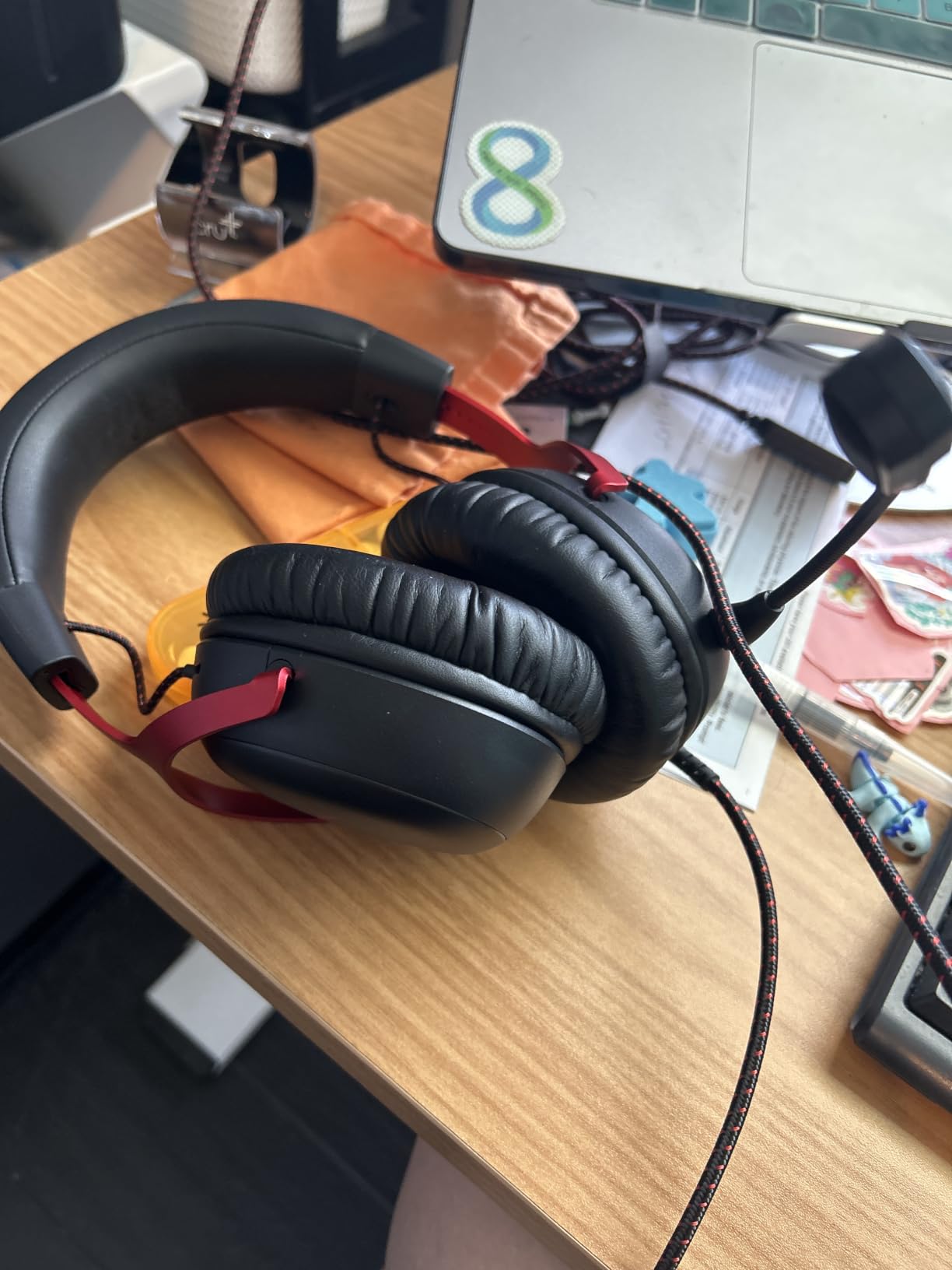
Wearing it through a full evening is unremarkable, which is the goal. The memory foam cushions seal well without clamping hard, the headband spreads weight instead of digging, and the 308 g total is heavy enough to feel grounded and light enough to forget. If you wear glasses, the cushion shape works around the arms without creating a pressure point.
Microphone Performance and Detachability
The detachable boom is noise-cancelling with a mesh filter and an LED that lights when you mute, which is one of those small details you stop noticing on anything lesser. Pick it up, your Discord icon goes muted and stays muted. There is no guesswork about whether you are live.
Voice quality is clear and sits at the front of the mix, which is what you want for team comms. It will not match a dedicated desk microphone, and forum consensus on this is blunt: plenty of players on r/HeadphoneAdvice argue that headphones plus a separate mic produce better results for less money. More on that later in the buying guide.
Driver Tuning and Spatial Audio
HyperX tunes these for gaming first, not for a hi-fi signature, so bass gets trimmed where it would smear footsteps. The 21000 hertz ceiling and 64 ohm impedance keep the set easy to drive from a laptop or a controller port without an amplifier.
DTS Spatial Audio works as a software layer rather than a licensing gimmick. It needs a Windows PC to do anything useful, so console players get the raw stereo tuning, which is still perfectly good for single-player and party titles.
Durability and Warranty
A two-year manufacturer warranty backs the Cloud III, which is the joint-longest in this list alongside the BlackShark V2 X and the Barracuda X. The aluminium frame and detachable mic are the two parts most likely to be replaced rather than repaired, and having both detachable or replaceable extends the useful life considerably.
Who Should Buy It
Buy the Cloud III if you play on PC, PS5 or Xbox with a wired setup and you want the most reliable audio without thinking about charging or pairing. It is also the safest recommendation I can make for a first headset.
Who Should Skip It
Skip it if you want to move between a PC and a phone without touching a cable, or if you play in a shared room and need active noise cancellation. The touch-sensitive ear cup controls also annoy some players enough to mention, so test the fit before you commit.
2. Razer BlackShark V2 X – Lightest Wired Set With 50mm Drivers
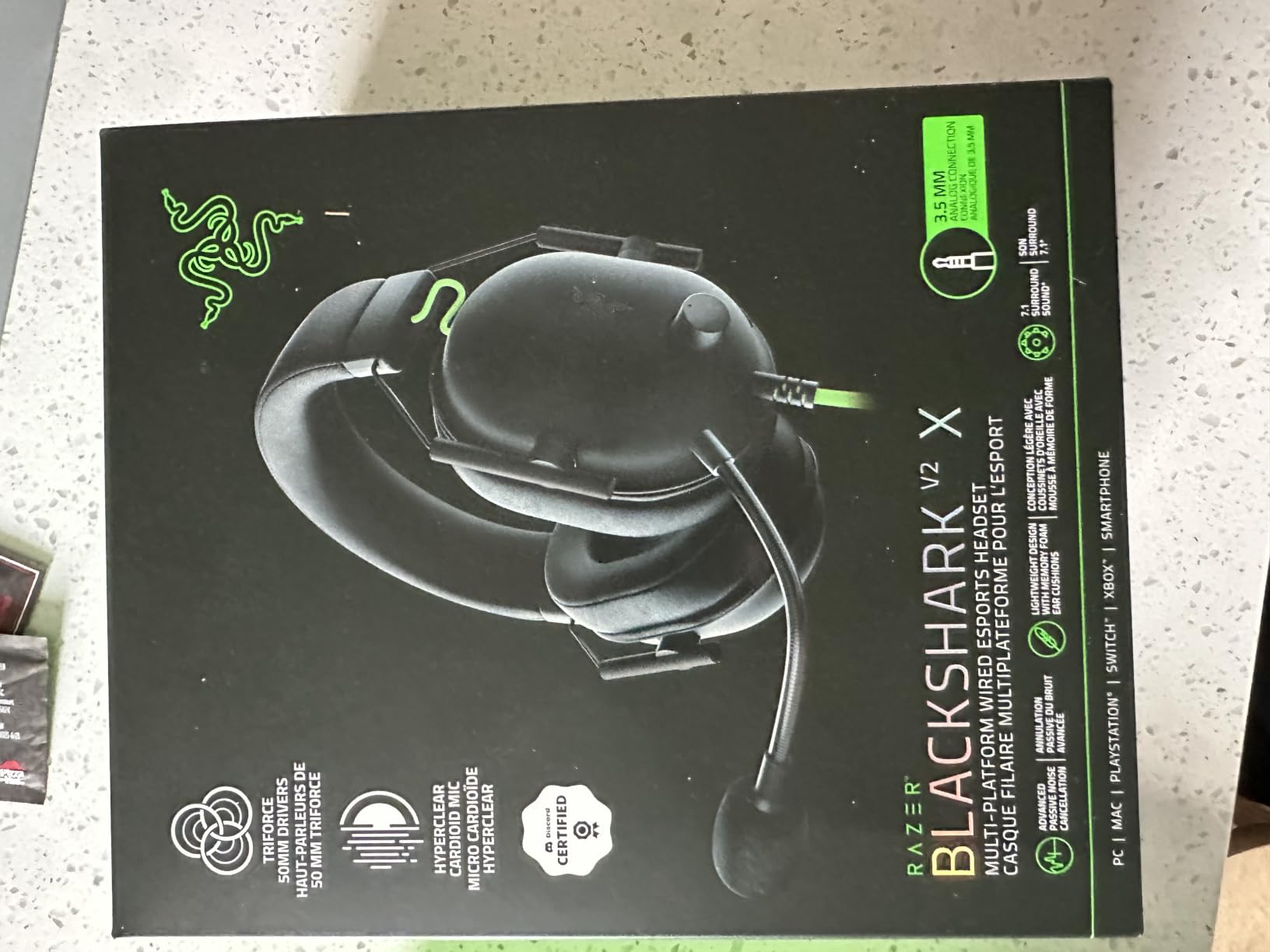
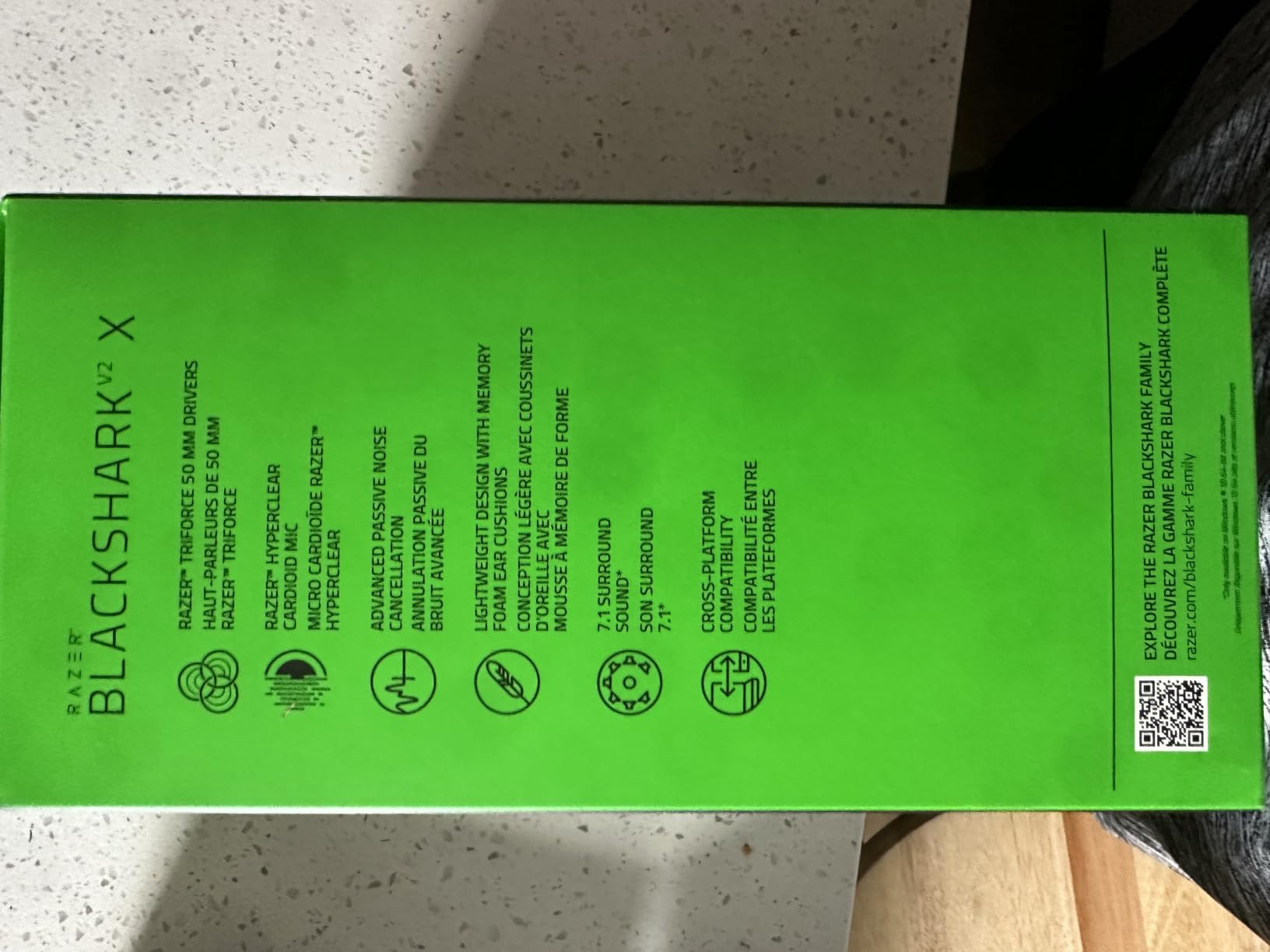
- ✓Triforce Titanium 50mm drivers with strong bass and bright highs
- ✓Lightweight 240g build with breathable foam cushions
- ✓HyperClear cardioid mic captures more voice and less room noise
- ✓Software 7.1 surround for positional cues
- ✕7.1 surround only works on Windows 10 64-bit
- ✕Passive noise cancellation only
- ✕Fixed single-sided cable
50mm Triforce Titanium drivers
HyperClear cardioid mic
240 g build
3.5mm wired
The BlackShark V2 X is the set I put on when a session needs to run long and my head is already complaining. At 240 grams it is one of the lighter full-size options here, and the difference is noticeable over a five-hour block.
Sound is the real headline. The 50mm Triforce Titanium drivers deliver more low-end punch and a brighter top end than the smaller drivers on the Recon 50 and the G335, and that extra headroom helps separate shot types before you consciously process them.
That 27,000-plus review history at 4.4 stars is not accidental. It is the second most proven headset in this guide, and the pattern across reviews is consistent: good fit, clear mic, punchy sound, and a Windows software caveat nobody wants to deal with on console.
Windows-Only Surround Sound
Software-enabled 7.1 surround is the most capable positional processing in this guide, and it only runs on Windows 10 64-bit. On PS5 or Switch you get clean stereo and nothing else, which is why this sits as a PC-first recommendation rather than a console one.
On PC the difference is real. Turning surround on for competitive shooters sharpens footstep direction noticeably, and for single-player titles the added width makes open spaces feel larger than they are.
HyperClear Cardioid Microphone
The cardioid pickup pattern is the sensible choice for squad play. It takes your voice and rejects most of the room behind you, which matters when your desk fan is running or your keyboard is loud.
It is a clear voice in Discord, not a broadcast voice. Push the boom a little closer than the manual suggests and the pickup improves noticeably, which is the standard fix for most headset mics including this one.
Fit, Weight and Long Sessions
The memory foam and titanium mix keeps the seal soft. Earcups are oval and sit close to the ear rather than swallowing the whole pinna, which reduces heat buildup over long sessions and helps you notice that you have forgotten you are wearing them.
The single-sided fixed cable is the weak point. It is tangle-free and long enough for most desks, but there is no detachable alternative and no wireless fallback, so cable damage ends the headset’s life.
Who Should Buy It
Buy the BlackShark V2 X for PC-first play where you want surround, a clear team mic and low weight. It suits players who play competitive shooters in long blocks and who want punch without a wireless battery in the equation.
Who Should Skip It
Skip it if you are on console and do not want to install software, or if you need Bluetooth for calls on the move. If a shared, noisy room is your situation, its passive isolation will not block much.
3. Turtle Beach Recon 50 – The Most Proven Budget Pick
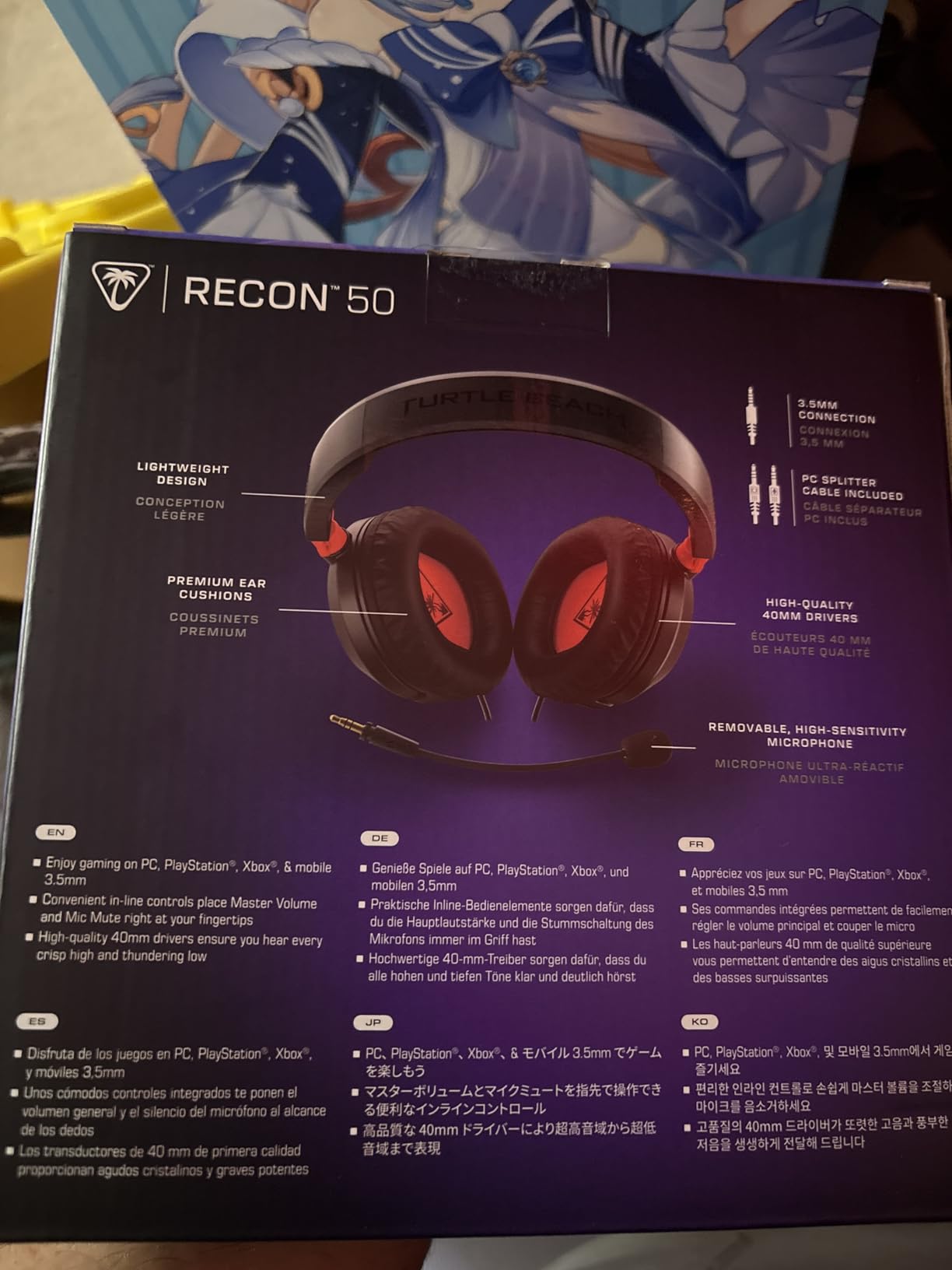
- ✓Removable adjustable mic with clear chat quality
- ✓Very light 7.36 oz build for long sessions
- ✓In-line volume and mic mute controls
- ✓Leatherette cushions with adjustable headband
- ✓PC splitter cable included
- ✕40mm drivers lack deep bass and a wide soundstage
- ✕Fixed single-sided cable
- ✕One-year manufacturer warranty
40mm dynamic drivers
Removable adjustable mic
Lay-flat 7.36 oz build
In-line volume and mute
Nothing else in this guide has been owned by as many people as the Recon 50. At more than 107,000 reviews it is the most battle-tested budget headset on the market, and that volume of long-term ownership reports is worth more than any launch impression.
It is also the least complicated. Plug the 3.5mm jack into a controller, a laptop or a PC, press the mute button on the inline control and you are in a match. There is no software, no pairing and no charging.
Audio is the trade. The 40mm dynamic drivers cover the 20 hertz to 20,000 hertz range but with less deep bass and a narrower soundstage than the 50mm sets here. For gunfire, footsteps and voice chat in competitive titles, that narrower presentation is a fair bargain.
Microphone and Inline Controls
The removable, adjustable microphone is genuinely useful rather than checkbox-compliant, and the in-line control puts volume and mute on a physical button instead of a software menu. That is why it works identically on PS5, Xbox, Switch and PC with no per-platform fiddling.
Chat quality is clear for teammates on voice comms. It picks up some room noise if your mechanical keyboard is loud, which is a limitation shared by every boom mic at this tier.
Comfort and the Lay-Flat Design
At 7.36 ounces this is the second-lightest set here, and the leatherette cushions plus adjustable headband keep it comfortable through long sessions. It does not seal as aggressively as a closed-back studio headphone, so you hear more of your room.
The lay-flat design lets the earcups rotate flat, which is useful if you want to hang it or stash it in a bag without stressing the yoke. It is a small thing that prevents a common early failure point.
Platform Flexibility and the One-Year Warranty
The included PC splitter cable handles dual-PC setups, and the fixed cable is the main long-term concern. At one year, the manufacturer warranty here is the shortest in this guide, so treat the cable and the mic as consumables you may replace yourself.
Who Should Buy It
Buy the Recon 50 as a first headset, a secondary console pair, or a headset for a household with more than one platform. It is the lowest-friction recommendation in the guide for anyone who just wants to play.
Who Should Skip It
Skip it if music matters as much as games, because the 40mm drivers do not do it justice. Skip it if you game in a loud shared space, since there is no active or meaningful passive isolation here.
4. Turtle Beach Stealth 600 Wireless – Best for Battery Life and Wireless Comfort
- ✓Class-leading 80-hour battery with quick charge
- ✓50mm Nanoclear drivers tuned for spatial awareness
- ✓Flip-to-mute mic with AI noise reduction
- ✓Glasses-friendly memory foam cushions
- ✓Swarm II app with 10-band EQ
- ✕No simultaneous mixing between 2.4GHz and Bluetooth
- ✕Swarm II software is buggy
- ✕Some users report shorter real-world battery life
80-hour battery
50mm Nanoclear drivers
2.4GHz plus Bluetooth 5.2
Flip-to-mute mic
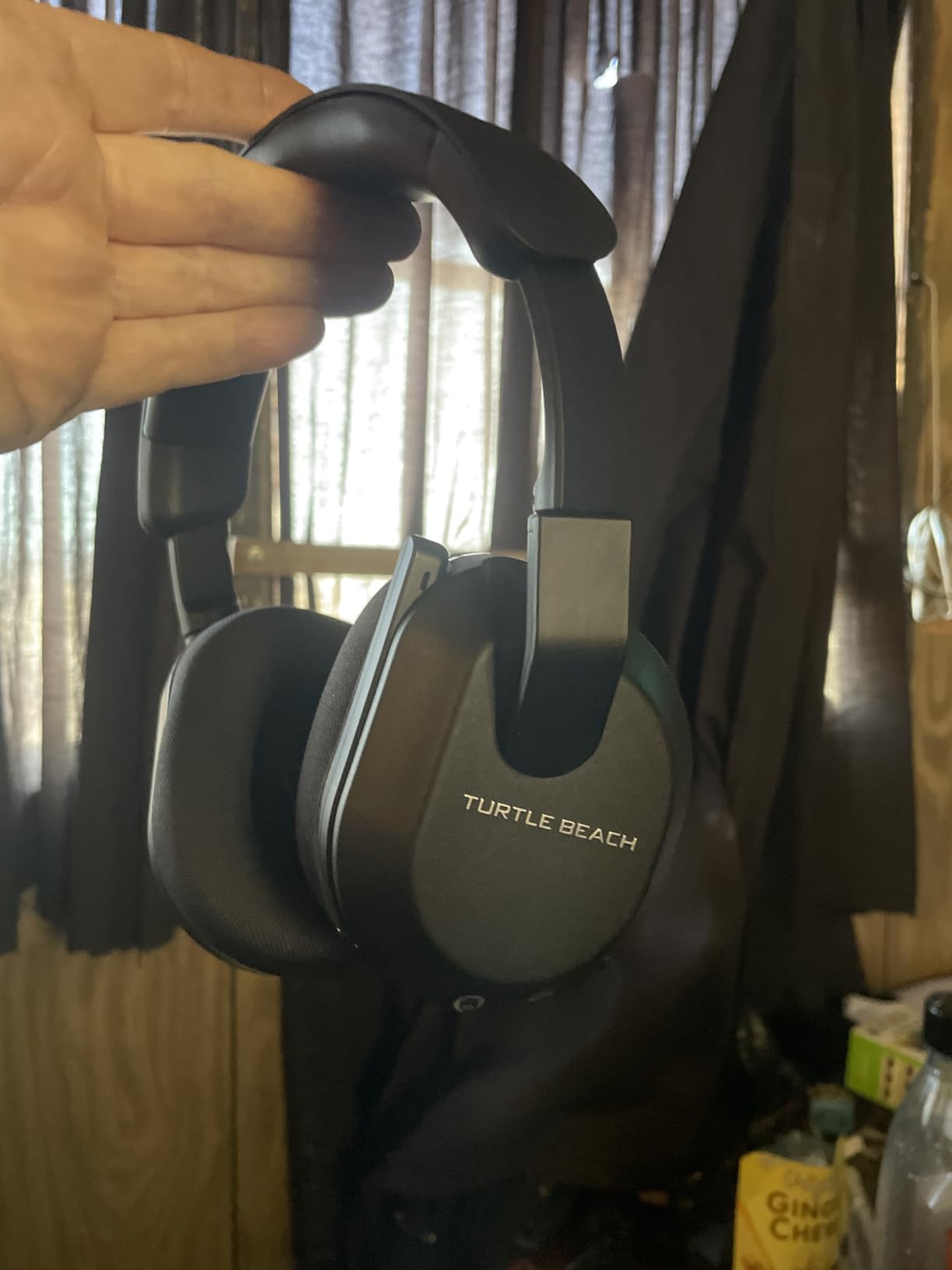
The Stealth 600 Wireless exists for one reason: to stop you thinking about charging. Eighty hours of rated battery life means roughly two weeks of heavy sessions between charges, and nothing else in this guide gets close.
It also handles the two-source problem cleanly. The QuickSwitch button moves you between 2.4 GHz wireless for gaming and Bluetooth 5.2 for your phone, which is the transition most wireless headsets make clumsily.
The 50mm Nanoclear drivers and Superhuman Hearing mode push the mid and high frequencies hard, sharpening directional cues at the cost of a natural music presentation. For competitive shooters and battle royale that emphasis is the point.
Battery Life and Charging Reality
Quick charge is the practical headline. A short top-up gets you back into a session, and the 15-hour full charge time means you can refill it overnight without planning around it. A number of owners report real-world endurance below the rated figure, which is normal for battery claims but worth knowing.
There is no hot-swap here. Unlike the SteelSeries Nova Pro Wireless, you cannot drop in a fresh cell mid-match, so a flat battery ends the session rather than pausing it.
Wireless Modes and the Swarm II App
The Swarm II desktop and mobile app exposes a 10-band EQ, a mappable wheel and a mode button. That is real control when it works, and the recurring complaint across reviews is that the software is buggy and occasionally needs a restart.
The headset does not need the app to function, which is the important part. EQ presets, Superhuman Hearing and the mappable controls all matter, but none of them sit between you and a match.
Microphone and Fit
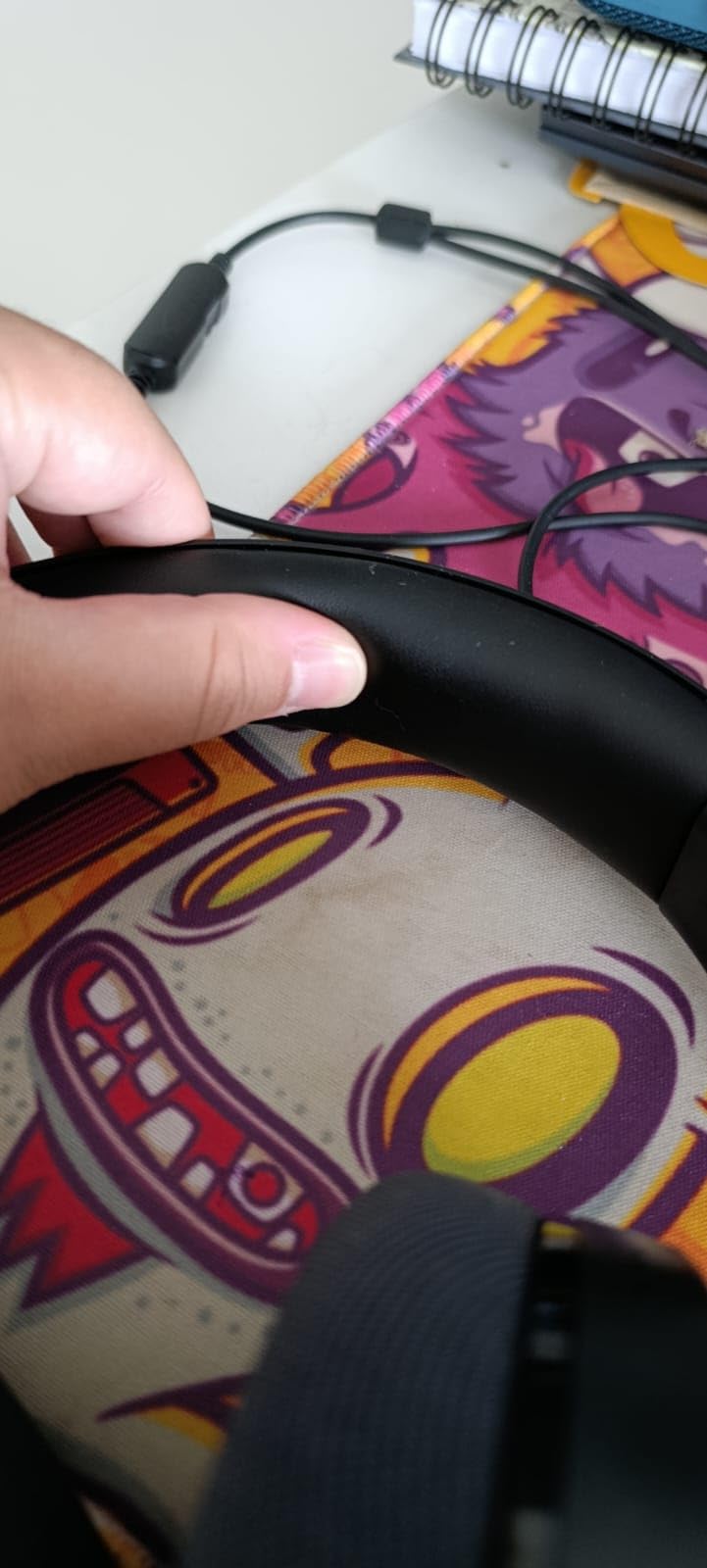
The flip-to-mute boom with AI-based noise reduction punches above this price tier in voice quality, and reviewers consistently rate it as one of the better mics in this guide. Memory foam cushions are shaped to be glasses-friendly, which keeps long sessions bearable for anyone who wears them.
The plastic construction is the trade for the battery figure. It feels a step below the aluminium Cloud III, and the oval earcups are larger, which helps on bigger heads but adds bulk for players who wear smaller frames.
Who Should Buy It
Buy the Stealth 600 Wireless if you hate charging, play a mix of console and PC, or want one headset that follows you to the couch and back to the desk. It is the wireless choice for players who game in short bursts rather than long blocks.
Who Should Skip It
Skip it if you need two audio sources playing at once, because there is no simultaneous mixing. If you play one long competitive session per day, the charging advantage matters far less than the fit and software polish you are giving up.
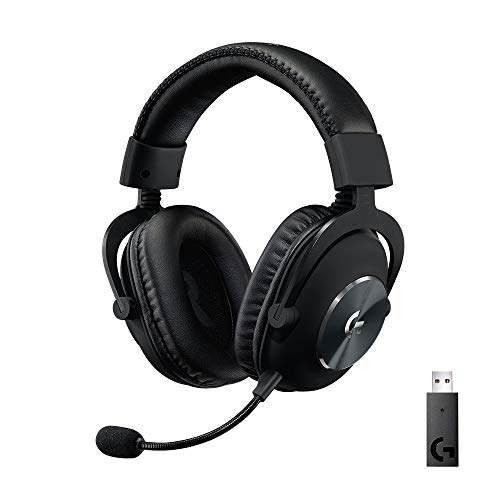
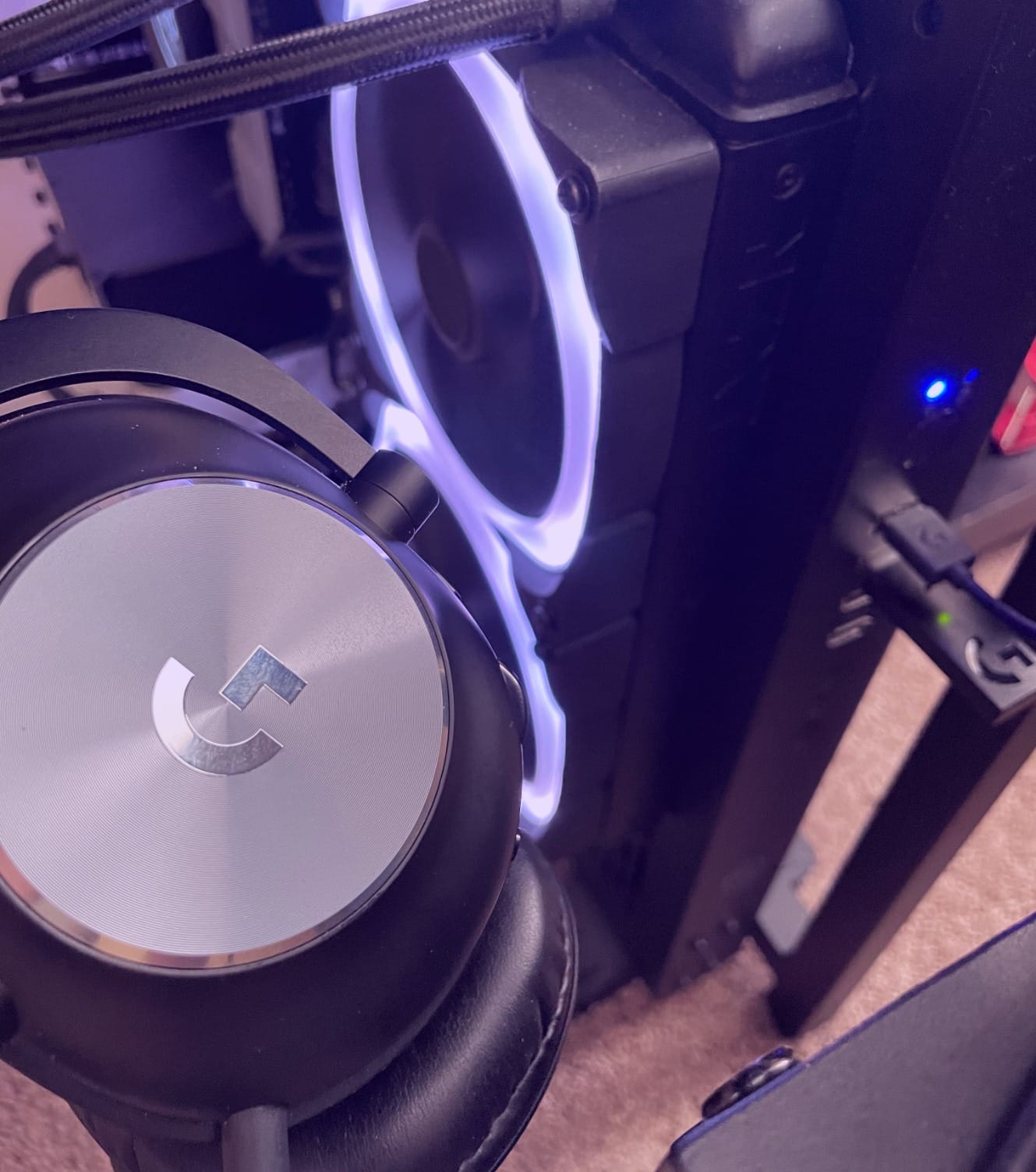
5. Logitech G PRO X Wireless – Best for the Lowest Wireless Latency
- ✓PRO-G 50mm drivers with precise imaging for footsteps
- ✓DTS Headphone:X 2.0 object-based surround
- ✓Blue VO!CE filters mic output to broadcast-clean
- ✓Two sets of memory foam pads included
- ✓Aluminium fork and steel headband
- ✕No Bluetooth and no 3.5mm wired fallback
- ✕G Hub software required for EQ presets
- ✕Small earcups can tire larger heads
20 ms LIGHTSPEED wireless
PRO-G 50mm drivers
DTS Headphone:X 2.0
Blue VO!CE mic
Wireless latency has been the loudest objection to wireless gaming headsets for years, and the PRO X Wireless is the answer to it. The listed audio latency is 20 milliseconds, which is low enough that the delay between a sound and its on-screen source stops being noticeable in competitive play.
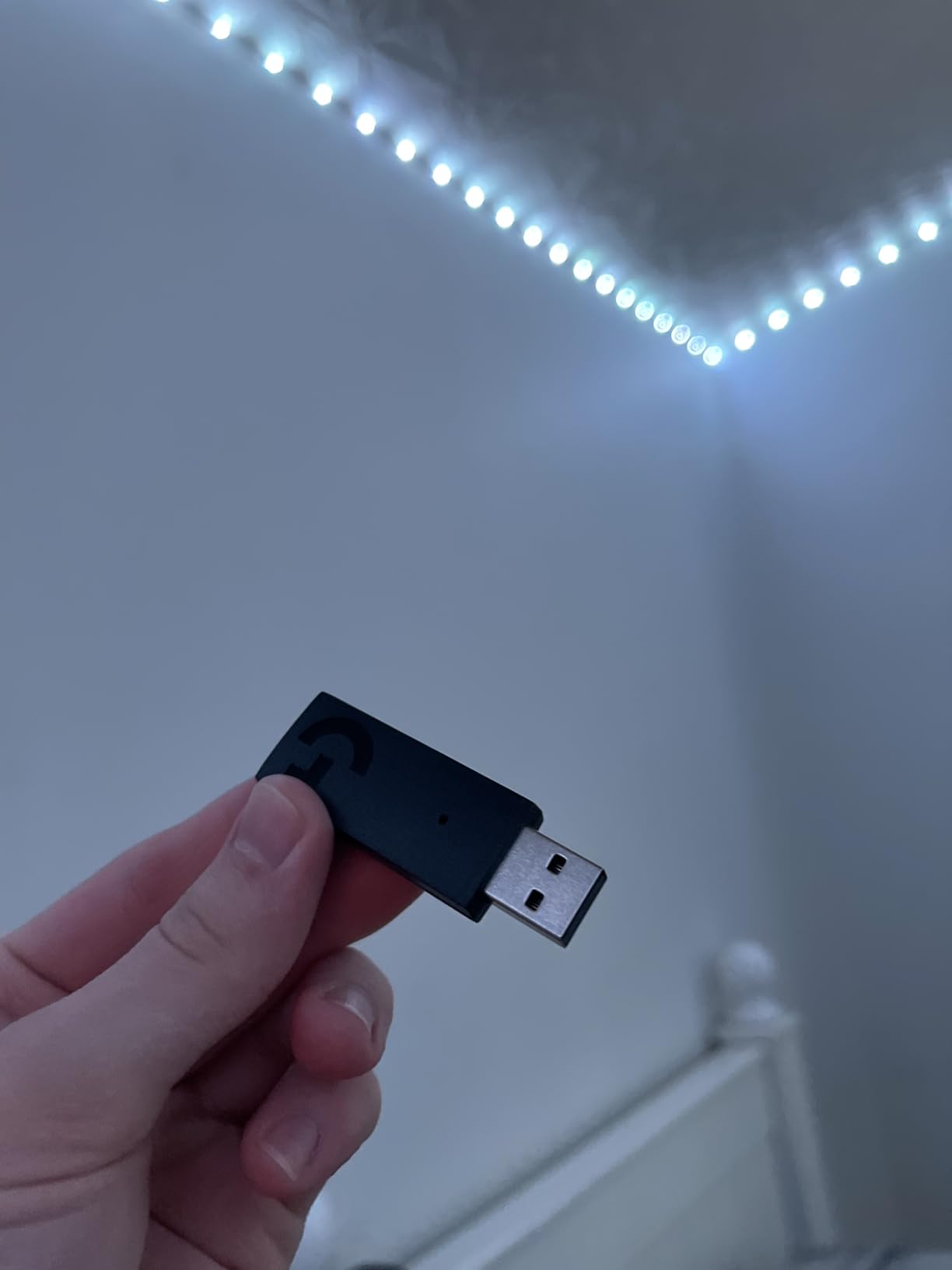
What surprised me more was how invisible the USB LIGHTSPEED dongle makes itself. You can move around a room or turn to check a monitor without the audio cutting out, because the 2.4 GHz link holds up across roughly 15 metres.
Sound is tuned for clarity over entertainment. The PRO-G 50mm drivers and DTS Headphone:X 2.0 object-based surround give you some of the best positional resolution in this guide, and footstep imaging is exactly what they were built for.
Imaging, Footsteps and DTS Headphone:X
DTS Headphone:X 2.0 maps audio to objects rather than fixed channels, so a footstep behind you stays behind you as you turn. In shooters and extraction games that precision is the difference between knowing and guessing.
The 20 hertz to 20 kHz range and 50mm drivers deliver a full-bodied presentation that still holds detail at low volume, which matters if you keep your master volume moderate.
Blue VO!CE and Squad Comms
Blue VO!CE processes your microphone output in software so your voice reaches teammates cleaner than a raw boom feed. It is the closest thing to a broadcast voice chain in this guide without buying a separate microphone.
It runs through G Hub, which is also where EQ presets live. That dependency is the main friction point: the software has a real learning curve, and the tuning is not available if you never install it.
Comfort, Weight and Earpad Choice
Two sets of memory foam pads are included, one leatherette and one velour. That choice matters more than it sounds, because the velour set breathes better on warm days and the leatherette seals tighter for blocking room noise.
At 13.05 ounces this is heavier than most of the wired sets here, and the earcups are small. Larger heads can feel the clamping pressure over a multi-hour session, which is the most common fit complaint in reviews.
Platform Support Without Bluetooth
It works with PS5, PS4 and a docked Nintendo Switch, and the battery runs past 20 hours with roughly a two-hour charge time. There is no Bluetooth and no 3.5mm wired fallback, so the USB LIGHTSPEED dongle is the only route. If the dongle fails, the headset is finished.
That single point of failure is worth weighing carefully. It is the most capable wireless audio here and also the least forgiving one.
Who Should Buy It
Buy the PRO X Wireless if you play competitive shooters where every millisecond and every directional cue matters, and you are happy to install G Hub once and forget about it.
Who Should Skip It
Skip it if you need Bluetooth for phone calls or a wired fallback for travel. If you have a larger head or plan very long sessions, test the clamp first, and if you dislike vendor software, look at the wired sets instead.
6. SteelSeries Arctis Nova Pro Wireless – Best for Mixing Two Audio Sources
- ✓Hot-swappable batteries for uninterrupted play
- ✓OLED base station with EQ and ChatMix controls
- ✓Dual audio streams mix 2.4GHz with Bluetooth calls
- ✓Active noise cancellation with Transparency Mode
- ✕Bulkier and heavier than most wireless headsets
- ✕Base station and two batteries add desk clutter
- ✕Sonar setup can be fiddly for new users
Hot-swap batteries
OLED base station
Active noise cancellation
Dual streams
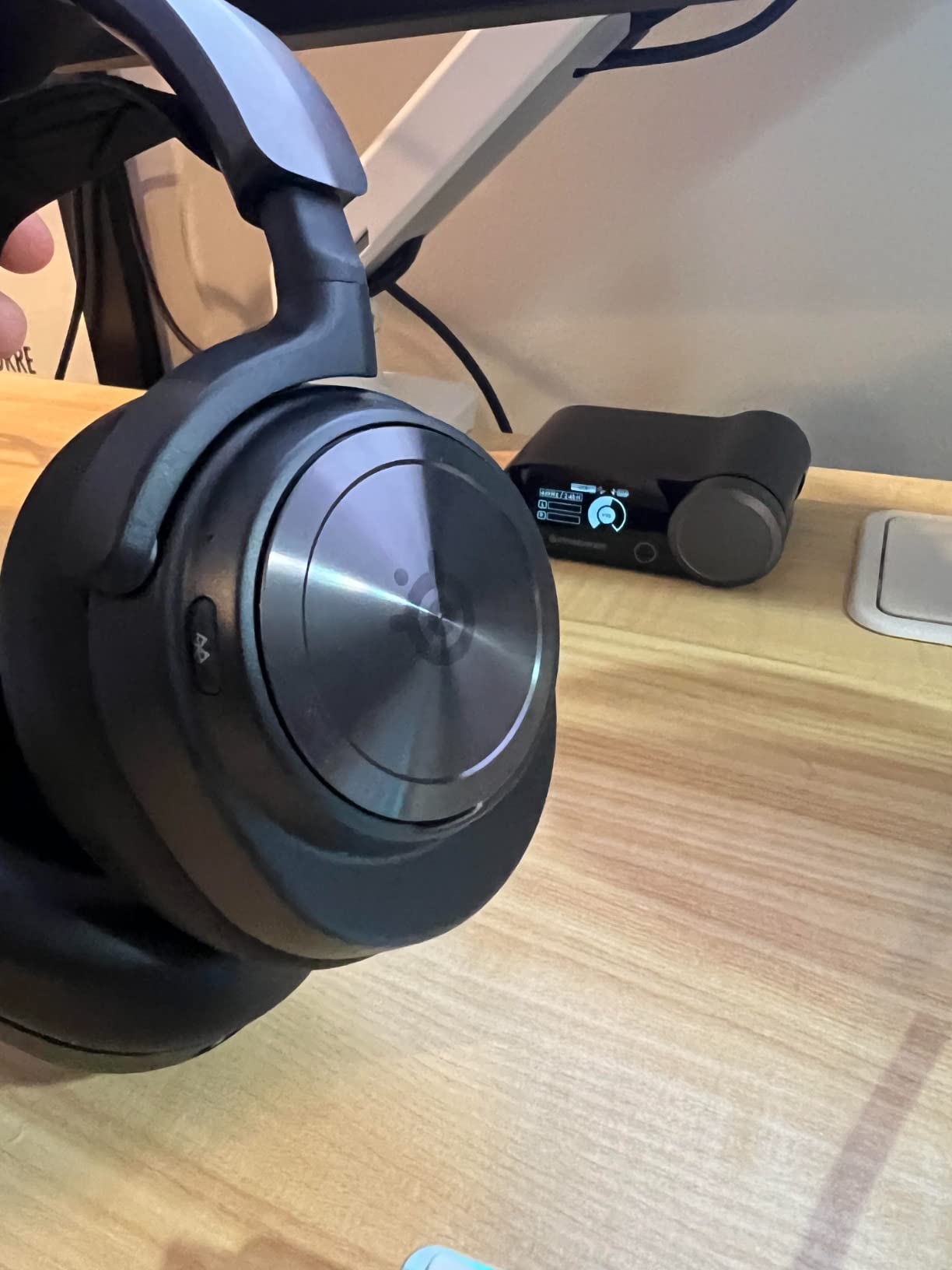
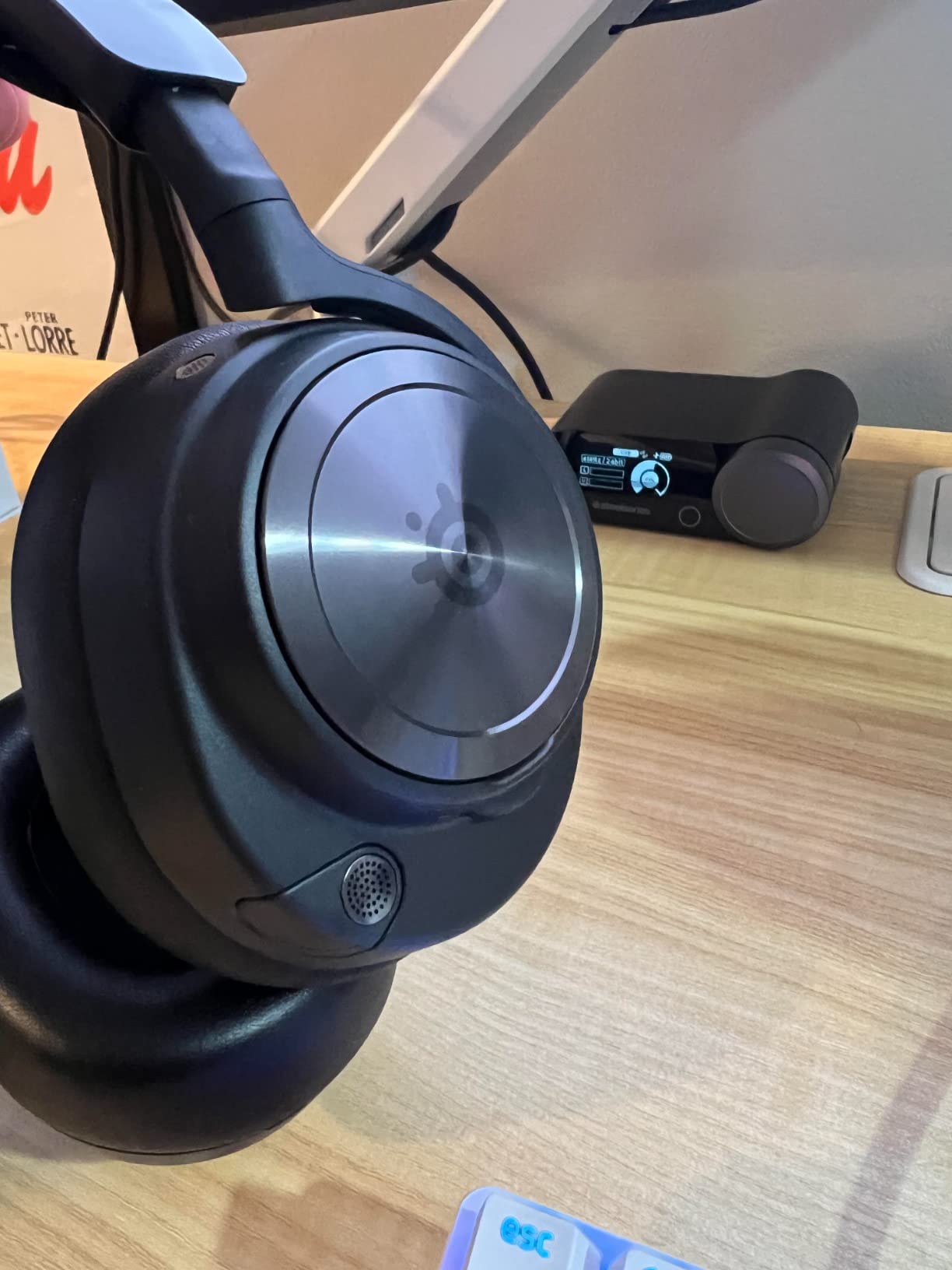
The Nova Pro Wireless is the only headset here that solves the problem almost every wireless owner eventually hits: your phone rings mid-session and you do not want to disconnect the game to take the call. Dual audio streams let Bluetooth calls sit on top of your 2.4 GHz game audio, and the base station has a ChatMix dial to balance them.
It is also the only set here with genuine active noise cancellation, paired with a Transparency Mode so you can hear announcements in a lobby without taking it off.
The Infinity Power System is the sleeper feature. Hot-swappable batteries mean you can drop a charged cell into the headset mid-match rather than stopping to plug in, which removes the single worst failure of wireless gaming audio.
Retractable ClearCast Gen 2 Microphone
The mic disappears into the earcup when you push it, so there is no boom to knock against your desk or clip onto your collar. That retract mechanism is what SteelSeries pioneered and what most rivals have copied since.
ClearCast Gen 2 adds AI noise rejection, and the result is one of the better voice captures in this guide. Soundstage is wide thanks to the 40mm drivers running to a 40,000 hertz ceiling, and Sonar gives you a parametric EQ that most rivals cannot match.
Spatial Audio Across Platforms
The headset works with Microsoft Spatial Sound and PS5 Tempest 3D Audio, so the positional layer is genuinely useful on both console and PC rather than being a software novelty on one platform.
Speaker-level separation is where it earns its place in a squad. Voices, gunfire and environmental cues occupy different positions instead of collapsing into the same channel, which is the whole argument for spending more in competitive shooters.
Base Station, Batteries and Desk Clutter
Here is the honest downside. The OLED base station, two batteries and two USB-C cables add up, and the listed 1.34 kg weight is the heaviest figure in this guide by a wide margin. Over a long evening that weight is felt on your neck.
Sonar setup rewards patience and punishes rushing. Dial in EQ once, save the profile, and the base station’s on-screen controls handle volume and mixing afterwards without touching the software.
Who Should Buy It
Buy the Nova Pro Wireless if you take calls during gaming sessions, hate charging mid-session, want active noise cancellation, or use the spatial audio features on both PC and PS5.
Who Should Skip It
Skip it if desk space or weight is a concern, or if you travel with your setup. A three-part system with hot-swap batteries is the wrong shape for a player who wants one headset in a bag.
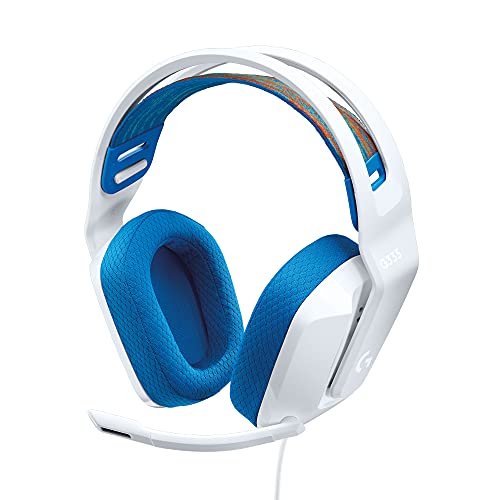
7. Logitech G335 – Best Value for All-Day Wear
- ✓Very light 240g build with a suspension headband
- ✓Memory foam and sports mesh pads that stay cool
- ✓Flip-to-mute mic cuts voice instantly
- ✓On-earcup volume roller
- ✓Discord Certified for team comms
- ✕Mic is quiet and picks up background noise
- ✕Can feel tight on larger heads
- ✕Volume wheel can degrade and cause static over years
240 g suspension headband
Flip-to-mute mic
Discord Certified
3.5mm wired
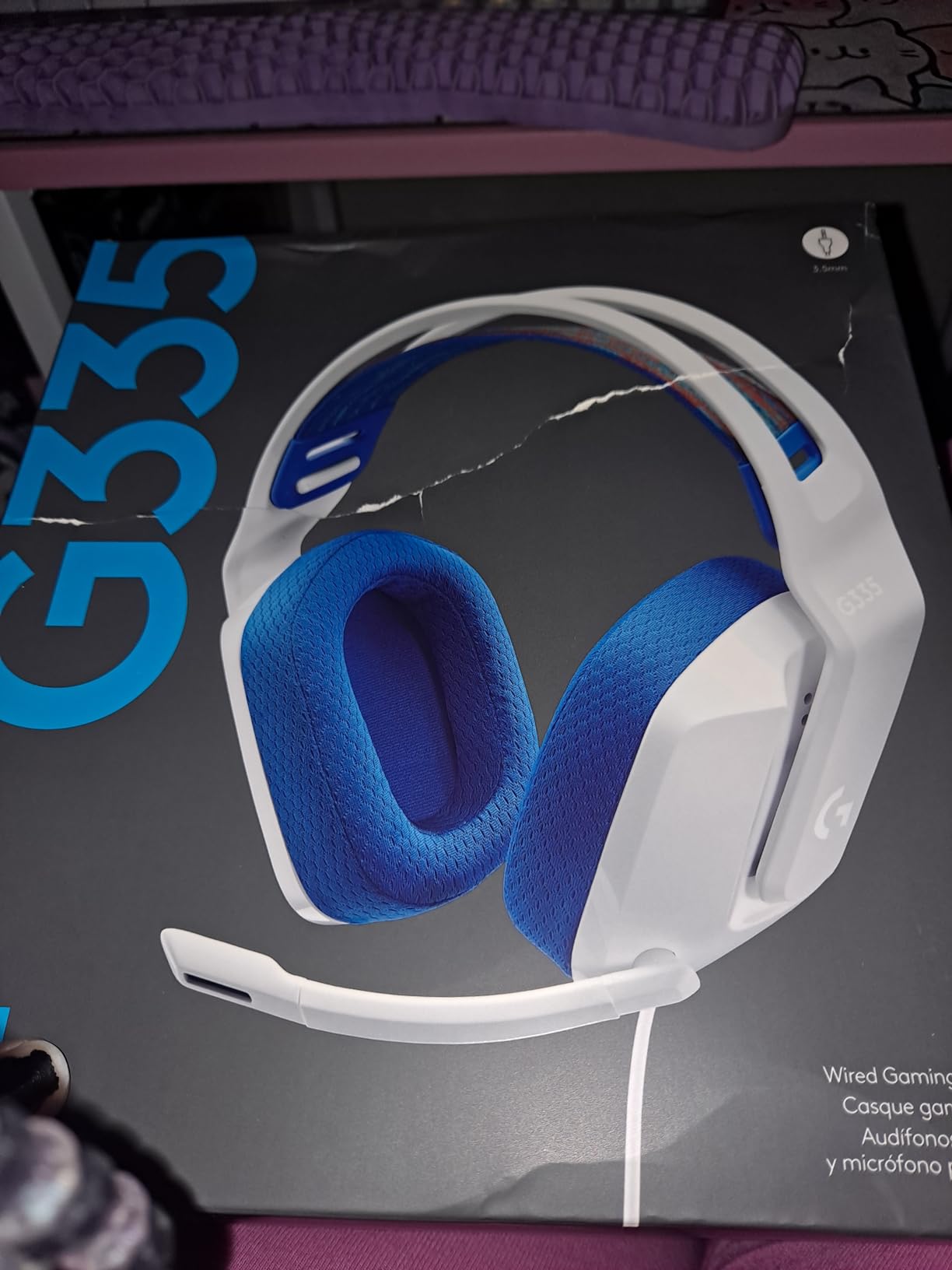
The G335 is one of the most affordable ways in this guide to a headset you can wear all day. The suspension headband takes the weight off the crown of your skull and spreads it across the strap, which is the single change that makes long sessions possible on a budget.
At 240 grams it is among the lightest full-size sets here, and the memory foam plus sports mesh pads stay cooler than leatherette over a long evening. For players who wear a headset through work and then game, that comfort is the feature that matters.
The flip-to-mute microphone is genuinely useful. Push the boom up and you stop transmitting, with no software, no button combination and no indicator light to misread.
Discord Certification and Chat Quality
Discord Certified means Logitech tested the microphone for intelligibility in voice chat, and it shows. Voice is clear in normal rooms, and the flip-to-mute mechanism is the most reliable mute implementation at this price.
It is still a quiet microphone that picks up background chatter unless you raise the gain. If you sit in a noisy room or type loudly, a separate microphone is the better answer.
On-Ear Fit and Head Shape
The earcups are smaller than most, with a suspension rather than a traditional clamping band. That keeps weight low but means players with larger heads can find the fit tight over many hours.
The 40mm neodymium drivers produce crisp, punchy stereo, and the bass-light presentation is a legitimate choice for competitive play because low frequencies stop masking the midrange where footsteps live.
Durability Over Years
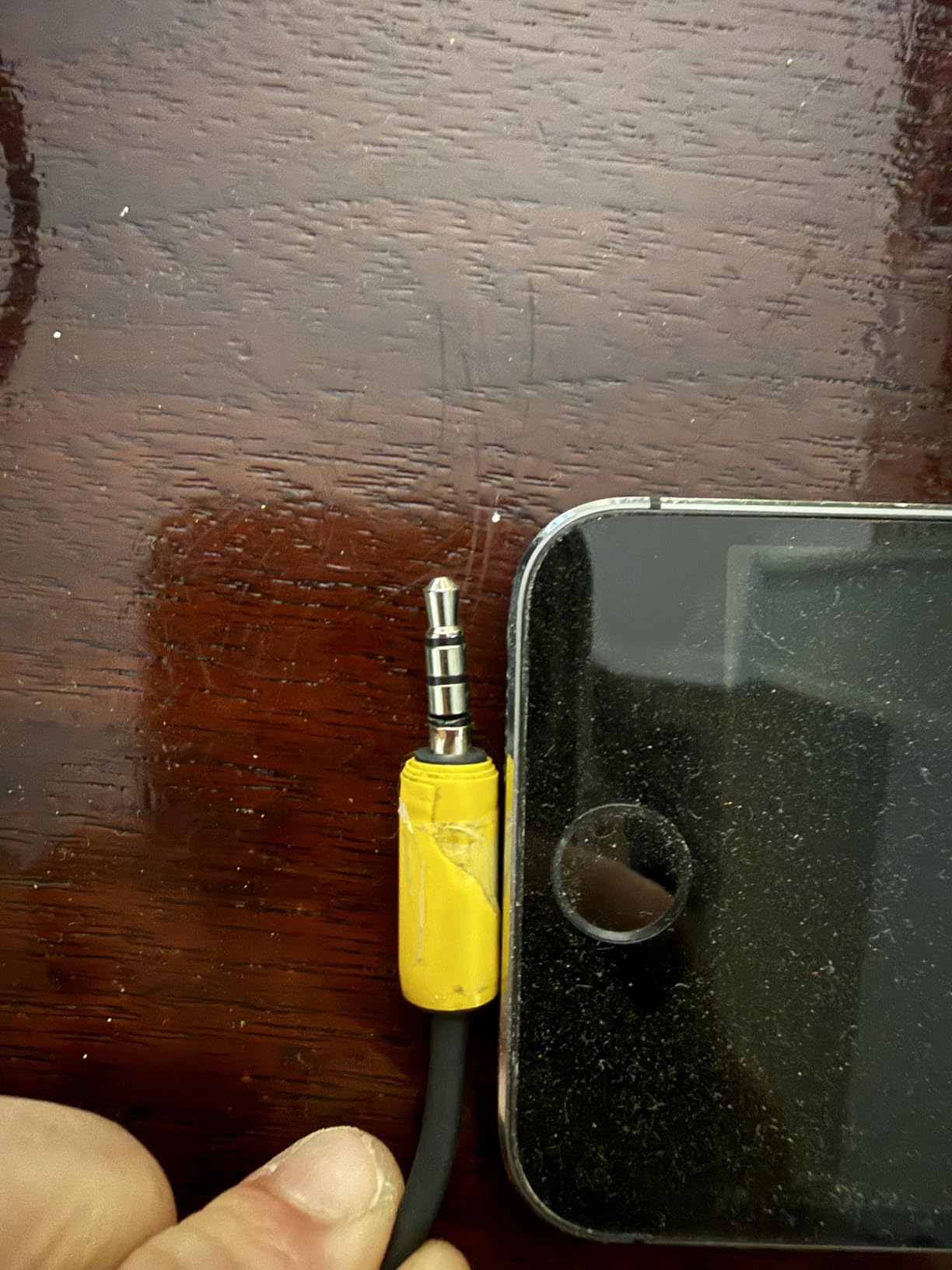
This is where the price shows. The one-year limited hardware warranty is short, and reviews specifically call out the volume wheel and mute mechanism degrading into static after extended use. That is the most common long-term complaint in the G335 review history.
Treat the inline controls as consumables. The pads and the cable are the parts most likely to need replacing, and it helps to buy a set that keeps the earcup shape so replacements stay easy to find.
Who Should Buy It
Buy the G335 if you need a comfortable wired headset for a full workday-plus-gaming schedule, on any platform with a 3.5mm port. It is the pick for players who wear a headset longer than any other category here.
Who Should Skip It
Skip it if you need deep bass for music or want a broadcast microphone for streaming. If you have a larger head, test the fit early or step up to a set with larger earcups.
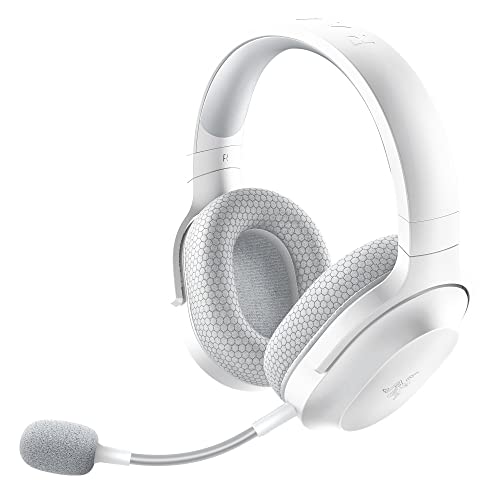
8. Razer Barracuda X Wireless – Best for Switching Between PC and Phone
- ✓SmartSwitch moves instantly between 2.4GHz and Bluetooth
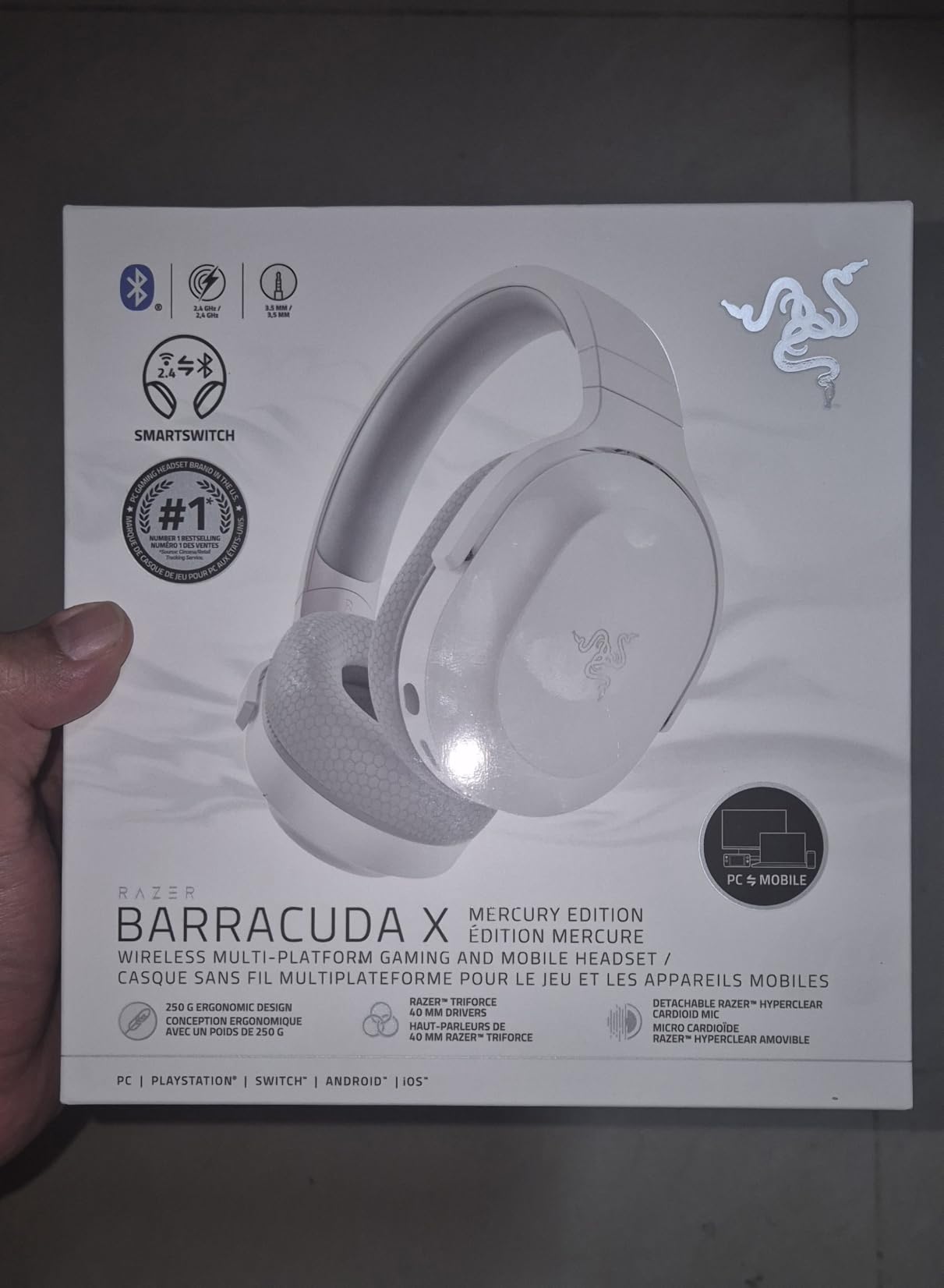
- ✓250g build with swiveling earcups and memory foam
- ✓Detachable HyperClear cardioid mic
- ✓50-hour battery with USB-C charging
- ✓On-earcup buttons for media and calls
- ✕40mm drivers give less bass and detail than 50mm rivals
- ✕Plastic build with basic sound isolation
- ✕Bluetooth 4 rather than the newer 5.x
SmartSwitch 2.4GHz and Bluetooth
50-hour battery
40mm Triforce drivers
250 g
The Barracuda X is built around a single question: how fast can you move from a game to a phone call. SmartSwitch answers it in one press, jumping between the 2.4 GHz USB-C dongle and Bluetooth without opening a menu.
That makes it the best fit in this guide for players who game on a laptop and take calls on mobile. The transition is fast enough that you do not miss the start of a round.
Audio is competent rather than special. The 40mm Triforce drivers deliver balanced highs, mids and lows, and the 20 hertz to 20,000 hertz range covers everything, but there is less low-end weight and less fine detail than the 50mm sets in this list.
Battery Life and Charging
Fifty hours of battery life is enough for a working week of gaming without a charger, and USB-C means the same cable as your phone or laptop. That is a modest figure next to the Stealth 600 but a much better match for daily use than 20 hours.
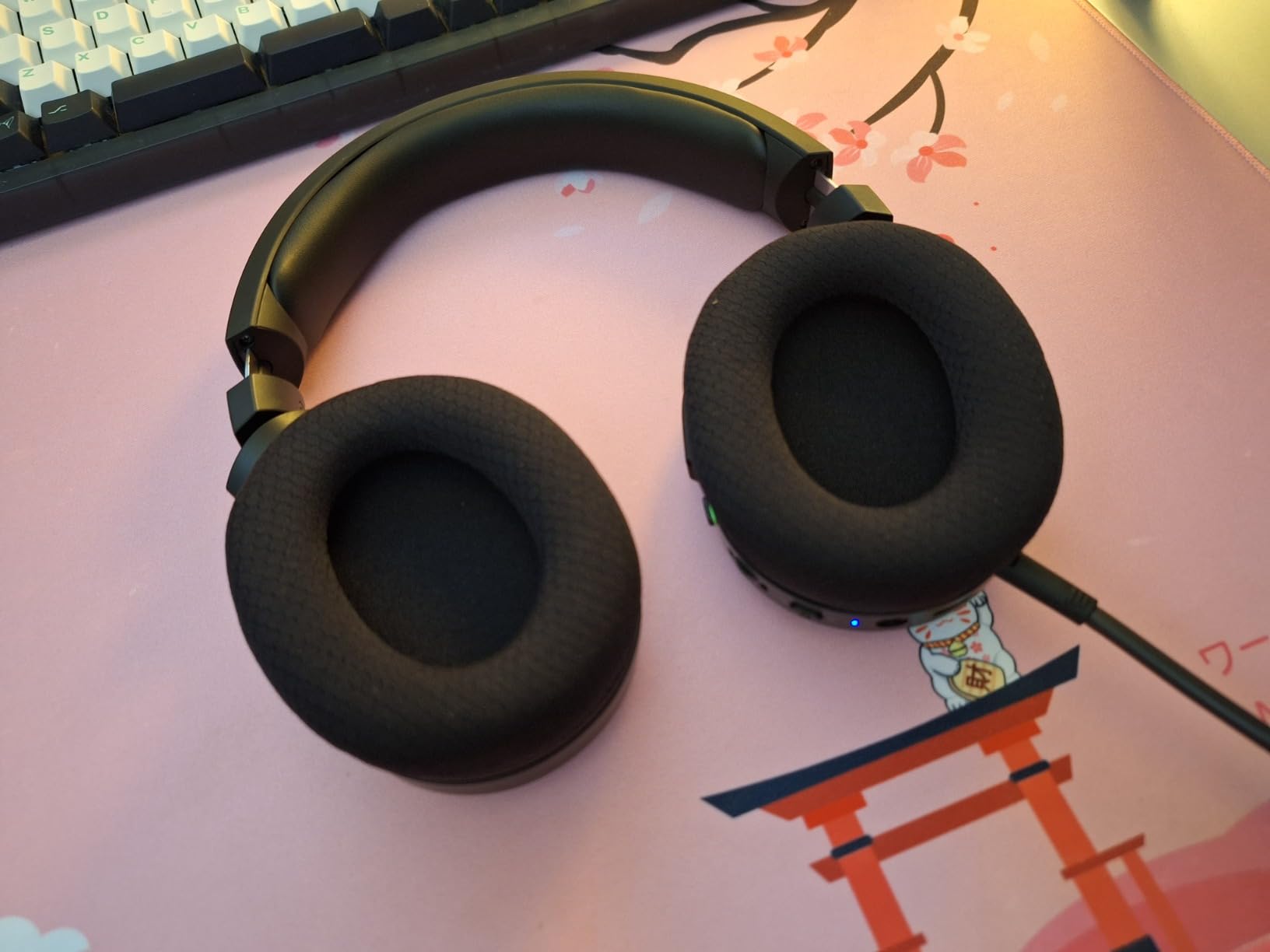
The detachable cable and swiveling earcups make the Barracuda X easy to pack, which is one of the few reasons to consider an over-ear wireless for travel.
Bluetooth Generations and the Dongle
Bluetooth 4 is the one specification here that looks dated on paper. It connects fine for calls and media, but it lacks the range and efficiency of the Bluetooth 5.x versions on the Stealth 600 and the Corsair Void v2.
The 2.4 GHz USB-C dongle is the connection to use for games, and it delivers the low-latency audio wireless players actually want. Keep the dongle with the headset rather than in a drawer, because there is no 3.5 mm fallback wired into the design.
Microphone and Build
The detachable HyperClear cardioid mic is a good team-chat microphone for the tier, and taking it out turns the Barracuda X into ordinary wireless headphones for a commute.
The plastic build is light at 250 grams and comfortable, but it feels a step below the aluminium Cloud III, and the sound isolation is basic rather than sealing. In a loud room you will hear more than you would like.
Who Should Buy It
Buy the Barracuda X if you split your time between PC gaming and phone calls, want one headset for both, and prefer a lighter build than a studio-style wireless set.
Who Should Skip It
Skip it if audio quality is the priority, because the 40mm drivers and light isolation will not satisfy you. It is also the wrong pick if you need Bluetooth 5.x range or a wired option.
9. Corsair Void v2 Wireless – Best for Dolby Atmos on PC and PS5
- ✓Dolby Atmos spatial audio with strong footstep detection
- ✓Up to 70 hours of battery
- ✓15-minute charge adds about 6 hours
- ✓Crisp mic with NVIDIA Broadcast noise suppression
- ✕2.4GHz pairing frequently fails and falls back to Bluetooth
- ✕No wired 3.5mm option and no mute button
- ✕RGB cannot be disabled on console without a PC
Dolby Atmos spatial audio
70-hour battery
Bluetooth 5.3
50mm drivers
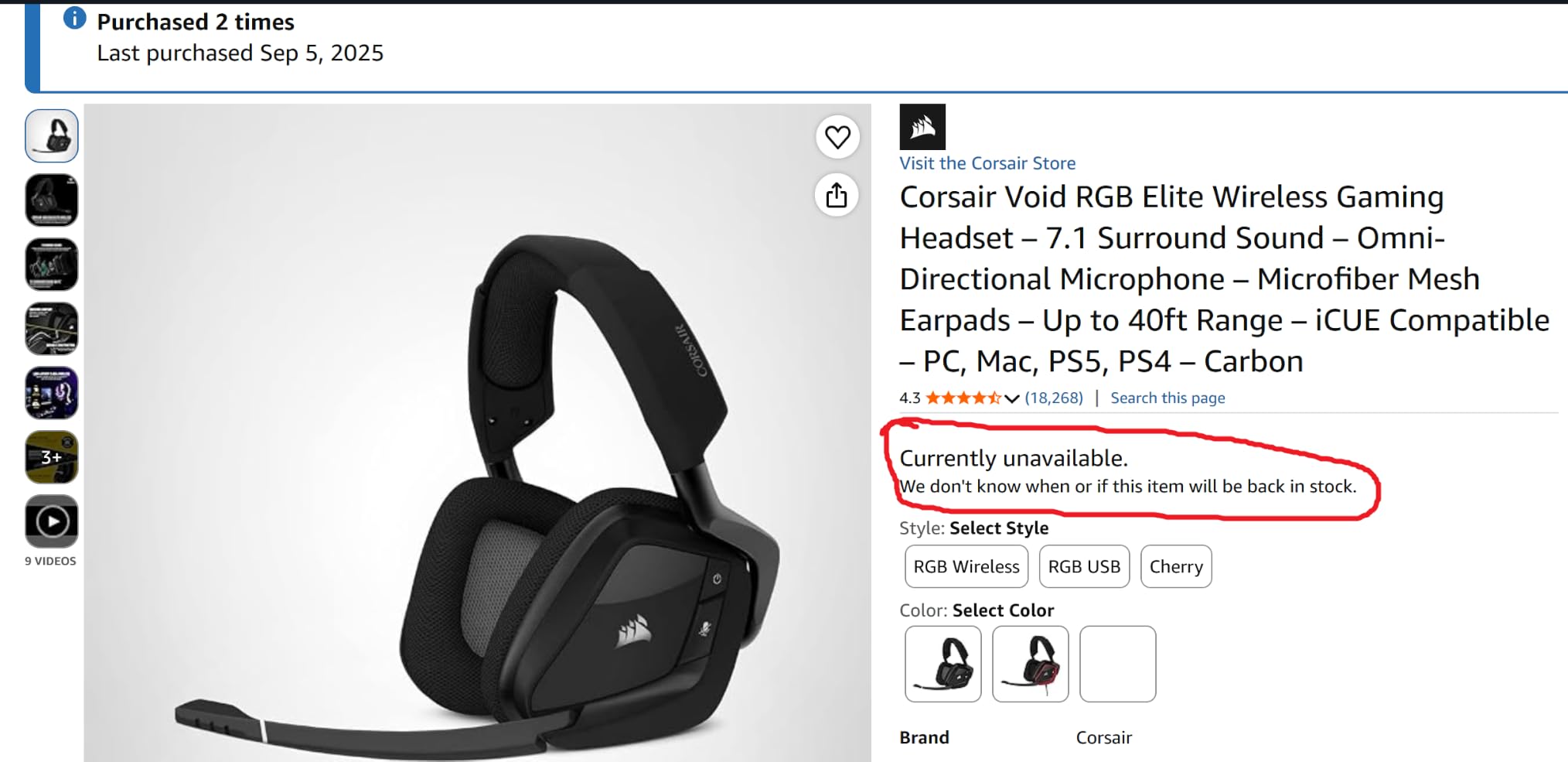
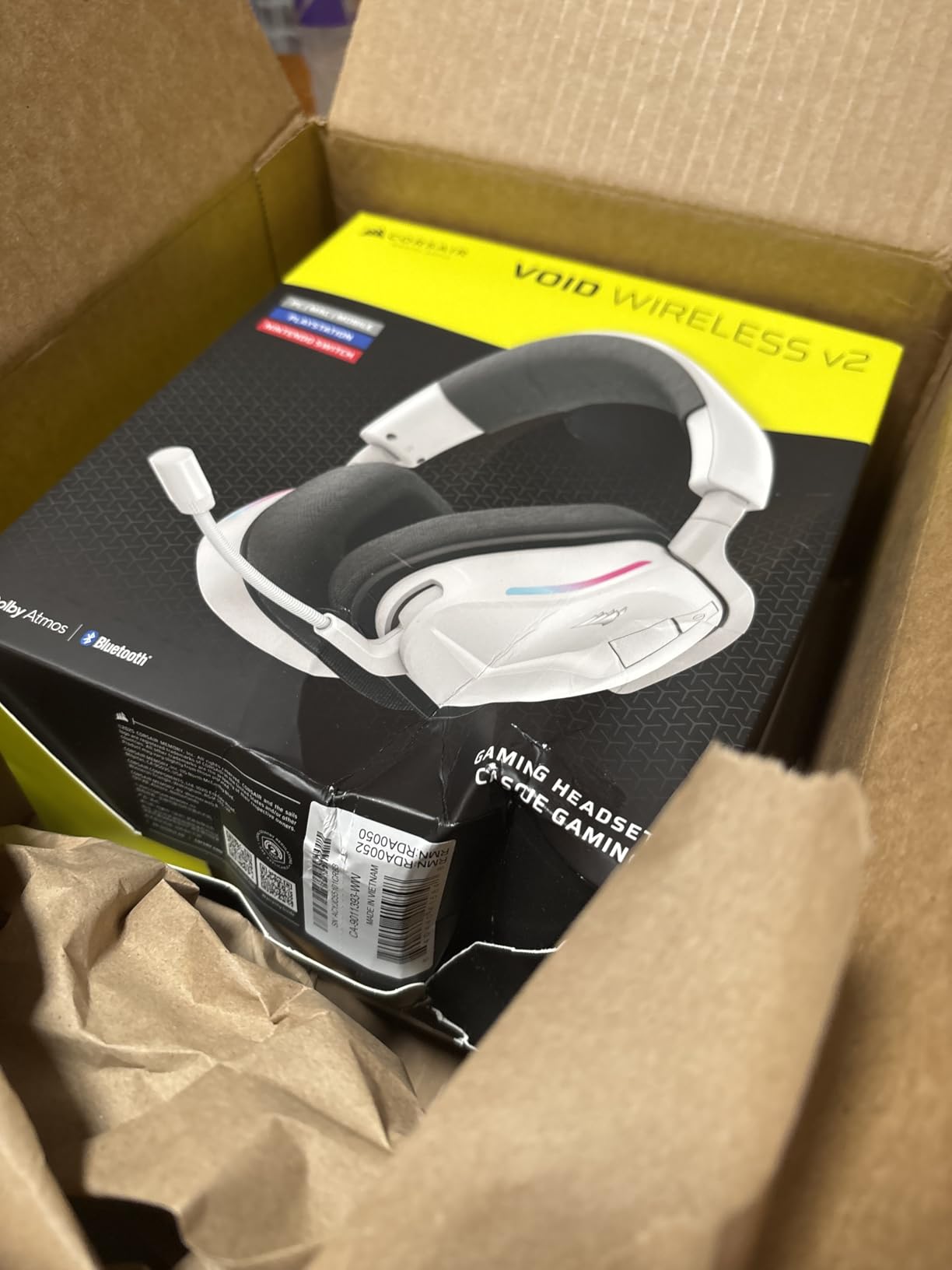
The Void v2 Wireless is the value route into a feature set that used to be reserved for far more expensive hardware: Dolby Atmos spatial audio, a 70-hour battery, Bluetooth 5.3 and 50mm drivers in one package.
Sound is the strongest argument for it. Dolby Atmos does a better job of placing footsteps than the surround implementations on several rivals here, and the 116 db sensitivity means you get volume without turning everything up.
Comfort is good too. The breathable microfiber mesh over memory foam stays cool through long sessions, and the angular contoured earcups follow the natural shape of the ear rather than pressing flat against it.
The Pairing Problem You Should Know About
The single most reported issue in this headset’s reviews is that the 2.4 GHz dongle often fails to pair properly and drops to Bluetooth instead. That is not a cosmetic problem, because Bluetooth mode sounds noticeably worse and adds latency, which defeats the point of the wireless design.
If you buy the Void v2, check the pairing on day one so you are inside the return window if it misbehaves. This is exactly the kind of long-term ownership detail that does not show up in a launch review.
Battery, Charging and the Short Cable
Seventy hours of rated battery is the second-longest here, and fifteen minutes of charging adds roughly six hours, which is enough for a long evening. A full charge takes about 90 minutes.
The included charging cable is very short and there is no USB-C adapter in the box, which is an odd thing to omit on a USB-C device. Plan on having your own cable nearby.
Microphone, RGB and Console Limits
The microphone is crisp, and NVIDIA Broadcast noise suppression on PC cleans up keyboard and fan noise well. There is no dedicated mute button on the mic itself, so muting means a control on the headset or in software.
The RGB lighting is a genuine bonus for players who want it, and a genuine annoyance for those who do not: the lights cannot be switched off on console without a PC and iCUE running. That is the one feature most likely to cause buyer regret.
Who Should Buy It
Buy the Void v2 Wireless if you want Dolby Atmos, a long battery and 50mm drivers without moving up to a flagship tier. It is a strong PC and PS5 pick.
Who Should Skip It
Skip it if 2.4 GHz reliability is non-negotiable for your setup, if you need a wired fallback, or if always-on lighting would bother you on console. Its 4.1 rating is the lowest here and the pairing reports are the reason.
10. EKSA E1000 – Best Surround With No Software to Install
- ✓Driver-free 7.1 surround from a built-in USB sound chip
- ✓50mm neodymium drivers give vivid positional sound
- ✓Noise-cancelling mic with 120 degree adjustment
- ✓Very light 198g build with memory protein earmuffs
- ✓2.2m cable and 2-year warranty
- ✕Non-detachable boom mic gets in the way when not gaming
- ✕Always-on LED ring can create hot-mic issues in PvP
- ✕Cable wear at the strain relief over time
USB sound chip 7.1 surround
50mm neodymium drivers
Noise-cancelling mic
198 g
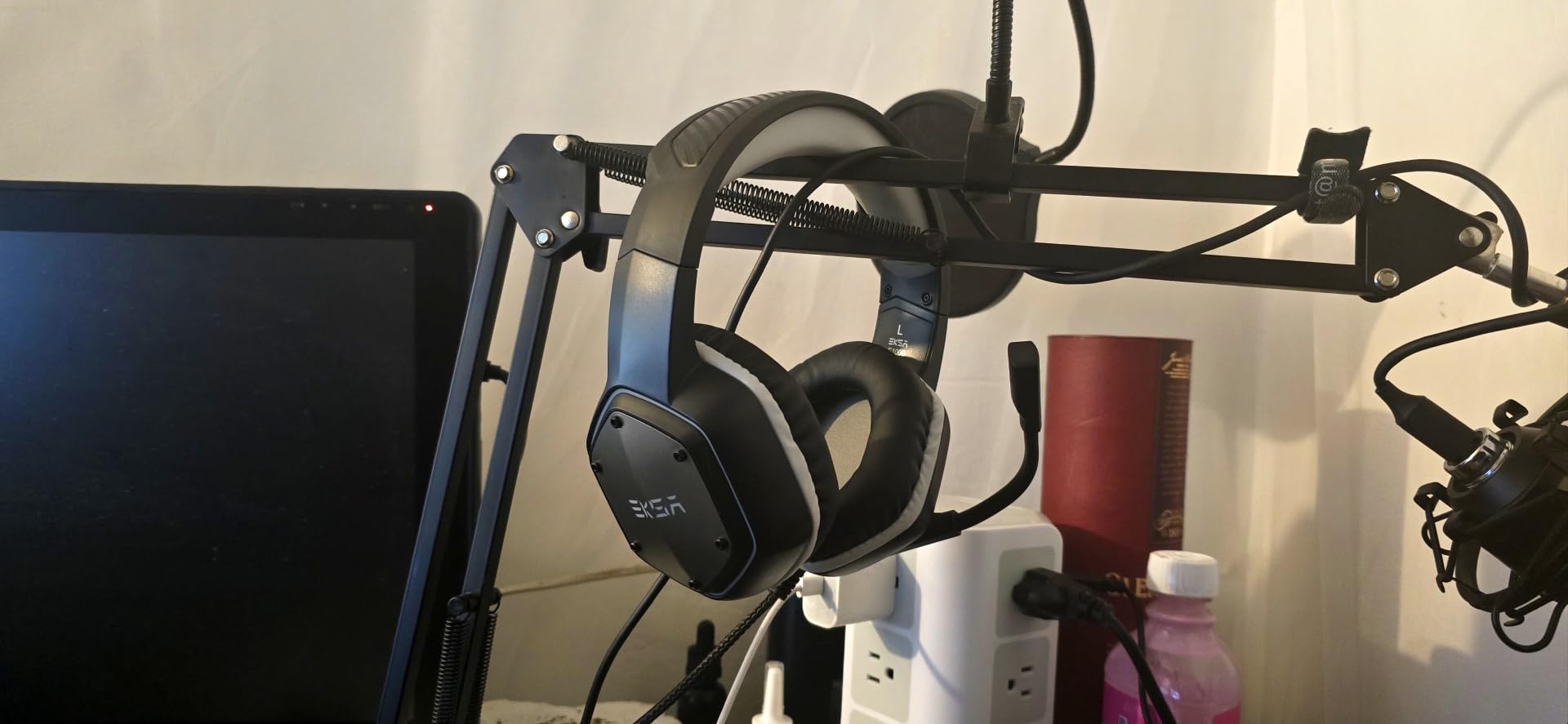
The E1000 solves a specific problem in a way nothing else here does. It delivers 7.1 surround through a sound chip built into the USB controller, so the positional effect works the moment you plug it in, with no driver download and no PC-only software.
That makes it unusual among the wired sets here. On the Razer BlackShark V2 X, surround needs Windows software. On the E1000, it is simply there on any USB audio port.
Sound punches well above its tier. The 50mm magnetic neodymium drivers give it more low-end weight and more detail than the other 40mm sets in this guide, and the wide frequency response holds up for music as well as games.
The LED Ring Problem in PvP
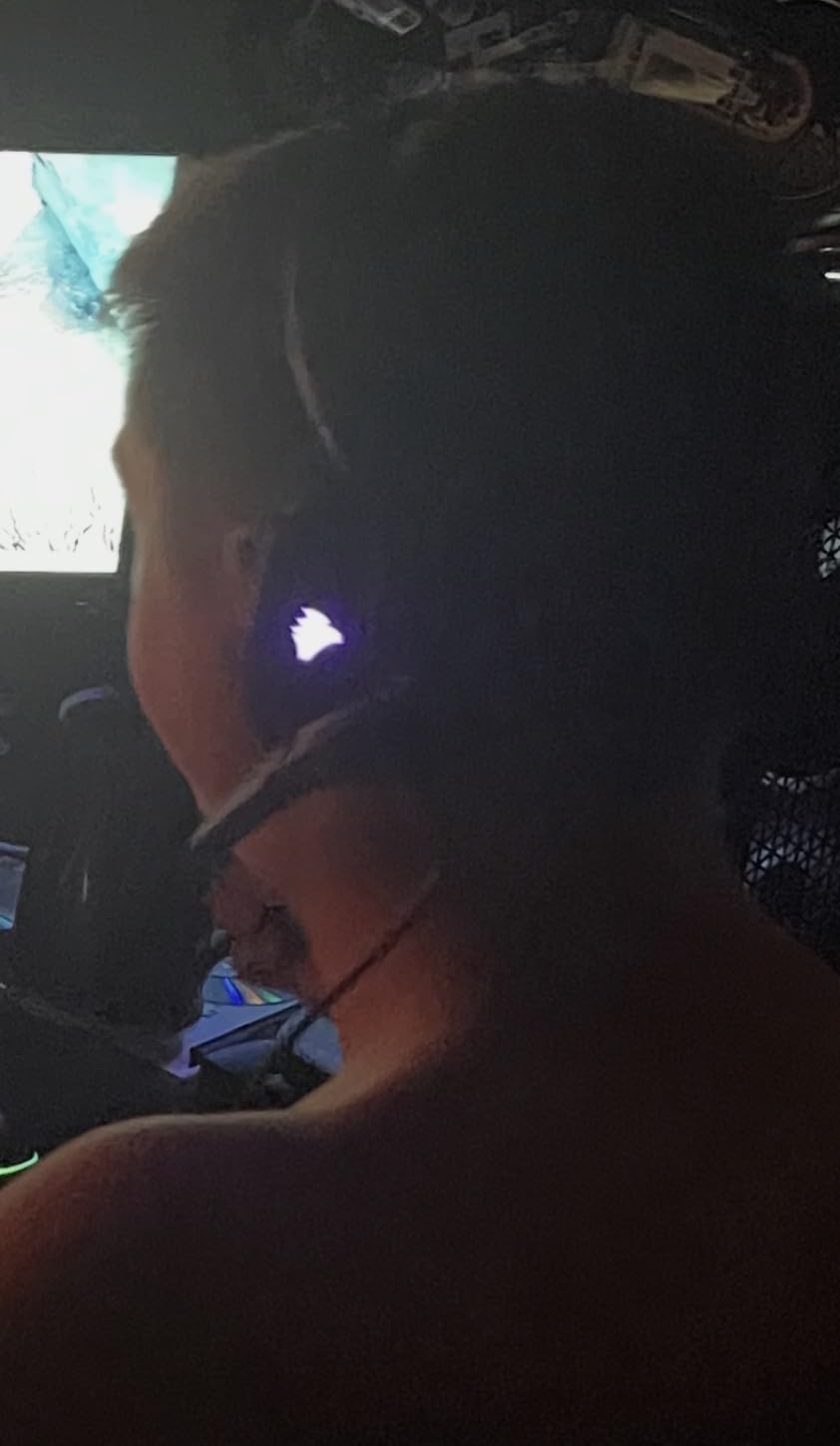
This is the caveat worth understanding before you buy. The LED lighting cannot be switched off, and reviewers report that the ring creates a faint tone the microphone can pick up, which shows up as hot-mic problems for teammates in competitive shooters.
It is not a constant problem for every owner, but if you play PvP and are sensitive about background noise on comms, this is the specific reason to choose a different set. The mic also cannot be detached, so it stays in your field of view when you are not gaming.
Weight, Fit and Build
At 198 grams it is the lightest set in this guide by a wide margin, and the soft memory protein earmuffs plus adjustable headband keep it comfortable. Lightness at this level does come with a plastic shell, so treat it as a comfortable set rather than a robust one.
The 2.2 metre cable is long enough to reach a corner desk without a hub, and the fixed connection means there is no wireless option and no detachable alternative.
Platform Limits and the Two-Year Warranty
It works out of the box on Windows PCs, PS4 and PS5, laptops and any USB audio port. It is not compatible with game controllers, which rules it out if your main platform is Switch or Xbox handheld-style play.
The two-year warranty and stated spare-parts availability are genuinely better than most rivals here, including the one-year covers on several more expensive sets. The most common long-term complaint is cable wear at the strain relief, eventually cutting out one side.
Who Should Buy It
Buy the E1000 if you want real surround sound with zero setup, play on PC or PS5, and want 50mm driver quality at the bottom of the price range. It is also a good first headset for a young player.
Who Should Skip It
Skip it if you play on a controller-based platform, if background noise on comms ruins your sessions, or if you want to use your headset for anything other than gaming, since the fixed boom cannot be tucked away.
How to Choose a Gaming Headset Without Regretting It
Most headset regrets come from buying the wrong category for your setup rather than the wrong model inside it. These are the decisions that actually change how a headset performs, in the order they matter.
2.4 GHz Wireless Versus Bluetooth
This is the single distinction every buyer needs to understand. 2.4 GHz wireless sends audio through a USB dongle on a dedicated band, which is why it delivers low latency and full sound quality. Bluetooth is designed to save power when two devices share a phone, which is why it compresses audio, adds a little delay and drops when something else is nearby.
For gaming you want 2.4 GHz. Bluetooth is for your phone. The Barracuda X, the Stealth 600 and the Nova Pro Wireless all handle both, and only the Nova Pro lets you hear them at the same time.
Open-Back Versus Closed-Back
Every headset in this guide is closed-back, and that is not a neutral choice. Closed earcups block sound from leaking out and keep your room noise out of the mix, which is what you want in a shared household or during a ranked match.
Open-back headphones sound more spacious and natural for music, and they leak audio in both directions, which is why they live in streamers’ studios rather than on a console. If your priority is music and you play alone in a quiet room, open-back gaming headphones plus a separate microphone is the better system.
Latency in Milliseconds and Who Feels It
Latency is the gap between a sound happening and you hearing it. Wired sits effectively at zero. The Logitech G PRO X Wireless lists 20 milliseconds of audio latency, which is low enough that most players stop noticing it.
You feel latency most in competitive shooters and rhythm games, where a sound is tied to an action you must react to. In a single-player RPG you will not notice a 20 millisecond delay at all, which is why paying for low-latency wireless only makes sense if you play those genres.
Microphone Type and What Streaming Needs
There are three common microphone designs here. Flip-to-mute mics, on the Logitech G335 and the Stealth 600, silence you with one movement. Detachable mics, on the Cloud III, BlackShark V2 X and Barracuda X, let you remove the boom entirely. Retractable mics, on the SteelSeries Nova Pro, disappear into the earcup.
All three are fine for team chat. None is right for streaming. If you broadcast, you want a separate USB or XLR microphone on a boom arm, and the headset becomes your headphones. That route also solves mic static permanently, which brings us to the most common complaint in this category.
Comfort, Weight and Earcup Fit
Weight is the number that predicts whether you will still be wearing a headset in month six. The E1000 at 198 g, the G335 at 240 g and the BlackShark V2 X at 240 g are the lightest options, while the Nova Pro Wireless at a listed 1.34 kg is the heaviest and the most likely to cause neck fatigue.
Two things decide comfort more than weight. A suspension headband spreads load across the top of your head instead of pressing on your crown, and cushion shape decides whether your glasses arms get crushed. Test both if you can.
Platform Compatibility
Check the connection before the features. A 3.5 mm jack works everywhere including a docked Switch. A USB dongle set usually works on PS5 and Switch docked but may need a separate adapter on Xbox. Bluetooth-only wireless headsets are often fine on console and awkward on PC.
Our PS5 headset guide covers console pairing in more detail, and if you play shooters where audio is information, our Tarkov audio picks go deeper on footstep imaging.
Which Gaming Headset Brand Should You Trust
HyperX wins overall value and comfort, with the Cloud III as its signature pick. Logitech G leads on wireless latency and low-weight comfort. Razer covers the widest spread, from the entry Recon-class tier to lightweight wireless, with the BlackShark V2 X as its most proven. Turtle Beach owns console comfort and battery life, and SteelSeries owns feature depth with the Nova Pro.
Corsair delivers the most feature per unit at mid-tier prices. EKSA and other budget brands fill the bottom of the market with usable extras like driver-free surround. Rather than hunting for one number-one brand, match the brand to the slot you actually need.
Gaming Headphones Plus a Separate USB Microphone
Forums keep arriving at the same conclusion. On r/HeadphoneAdvice the recurring recommendation is open-back headphones plus a separate microphone rather than a conventional all-in-one headset, because a decent standalone microphone is cheap and beats nearly every boom mic in this guide.
The maths works if you already own headphones you like. If you are starting from nothing, an all-in-one set like the Cloud III costs less and gets you playing immediately. The headphones-plus-mic route wins on audio quality and mic clarity, and loses on simplicity and desk space.
Durability, Warranty and Fixing Mic Static
Warranty length is a decent proxy for expected build quality: the Cloud III, BlackShark V2 X, Barracuda X and E1000 all carry two years, while the Stealth 600, G335, G PRO X Wireless and Nova Pro Wireless carry one.
Mic static and crackling are the most-reported fault in this entire category, and the cause is usually cable movement at the connector rather than the microphone itself. Check the jack and the plug for a loose fit, keep the strain relief straight instead of coiled, and avoid hanging the cable by its length. If the crackle follows you as you move the cable, it is a connector fault and it will not resolve on its own.
Our wireless headset guide covers battery degradation and pairing fixes if your set is already wireless.
What Pro Players Actually Use
Competitive players converge on a small number of models because of team comms consistency, not because of sound. On neogaf, an esports professional listed the Turtle Beach X10, the Turtle Beach 700X, the SteelSeries 9X and the Astro A50 as sitting far above ordinary headsets in daily professional use.
Community consensus across gaming communities points the same way for most buyers: the SteelSeries Arctis Nova Pro, the HyperX Cloud Alpha and the Astro A50 are treated as the default recommendations. The common trait is a clear detachable or retractable mic, not premium audio.
Frequently Asked Questions
What does a gaming headset actually need to have?
A gaming headset needs four things: a gaming-tuned driver that keeps mids and highs clear so you can hear footsteps, a low-latency connection (wired or 2.4 GHz wireless) so audio matches what is on screen, a noise-rejecting microphone for team comms, and cushions comfortable enough for a long session. Everything else, including RGB lighting, spatial software and hot-swappable batteries, is a bonus rather than a requirement.
Are wired or wireless gaming headsets better for gaming?
Wired is better on pure latency and reliability because there is no encoding step and no battery to manage. Wireless has closed most of that gap: the Logitech G PRO X Wireless lists 20 milliseconds of audio latency, which most players cannot detect outside competitive shooters. Choose wired for esports and simplicity; choose wireless if you play on a couch, share a TV, or switch between devices.
Is 2.4 GHz or Bluetooth better for a gaming headset?
2.4 GHz is better for gaming. It runs through a USB dongle on a dedicated band, giving low latency and uncompressed audio. Bluetooth prioritises power saving, so it compresses audio, adds a little delay and can drop out when other devices are nearby. Use 2.4 GHz for games and Bluetooth for calls. Only the SteelSeries Nova Pro Wireless mixes both sources at the same time.
What is the best gaming headset on a tight budget?
The Turtle Beach Recon 50 is the safest budget answer, with more than 107,000 reviews at 4.4 stars, a removable microphone and multiplatform plug-and-play use. For tighter budgets the Logitech G335 adds far lighter weight at 240 grams and a flip-to-mute mic. For the best sound per unit of money the EKSA E1000 gives you 50mm drivers and driver-free 7.1 surround over USB.
Do I need a gaming headset or just headphones and a separate mic?
You need headphones plus a separate mic if you already own headphones you like, or if you stream. A standalone USB microphone usually beats a headset boom on clarity, and it solves mic static permanently. You need an all-in-one headset if you are starting from nothing, play across several platforms, or want one device that works without adapters.
Why is my gaming headset mic making static?
Static and crackling that changes when you move the cable almost always come from the connector, not the microphone. Reseat the 3.5 mm plug fully, check the socket for a loose or dirty fit, and keep the cable’s strain relief straight rather than coiled tightly. If the crackle follows the cable across the desk, the plug or socket has worn and the cable is the part to replace.
Which Gaming Headset Should You Buy in 2026?
Start with the HyperX Cloud III. It is our Editor’s Choice, it is the best all-rounder in this guide, and it is the set we recommend to a player who has not decided what matters to them yet. Angled 53mm drivers, a detachable noise-cancelling mic, an aluminium frame and zero latency add up to the most complete package here.
If you play on a tight budget, the Turtle Beach Recon 50 is the proven answer with more than 107,000 reviews behind it, and the Logitech G335 is the one to buy for sheer all-day comfort at 240 grams. If you want surround sound with zero software setup, the EKSA E1000 puts 7.1 through a USB chip and 50mm drivers underneath.
For wireless, the Logitech G PRO X Wireless wins on latency at a listed 20 milliseconds with the sharpest imaging in the guide. The Turtle Beach Stealth 600 Wireless wins on battery with 80 rated hours, and the Razer Barracuda X Wireless wins if you jump between PC and phone every day.
And if you take calls mid-session, stream, or refuse to stop for a charge, the SteelSeries Arctis Nova Pro Wireless is the only set here with dual source mixing, hot-swappable batteries and active noise cancellation, at the cost of being the heaviest and bulkiest option in this list.
Whichever you choose, test the fit and the mic inside the return window, keep the cable straight, and check the pairing on day one. Those three habits prevent almost every complaint we read about these headsets.




Leave a Comment