
Most people searching for the best home wind turbines are not trying to power an entire house from a spinning propeller. They want a second source of electricity on a rural property, a way to keep a battery bank topped up on a boat or RV, or simply a way to cut a few dollars off a bill that is already uncomfortable. I spent several weeks working through the specs, owner reviews and failure reports on every residential turbine I could find, and the honest conclusion is that this category is full of inflated numbers.
That does not make these turbines useless. It makes them supplements rather than primary power sources, and it means the right pick depends almost entirely on your wind resource and how much land you can devote to it. In this guide I break down 12 kits by rated power, start-up speed, rotor size, noise and the one thing every competitor glosses over: what those rated watts actually turn into on a real month.
Everything here comes from manufacturer listings and aggregated owner reviews. Where a spec is a manufacturer claim rather than a measured figure, I say so.
Are Home Wind Turbines Worth It? The Honest Answer
Home wind turbines are worth it in a narrow band of situations, and buyers outside that band are usually better served by rooftop solar. The turbines earn their keep on rural acreage with an unobstructed wind corridor, steady average wind speeds, and a household that already spends heavily on electricity.
Small wind capacity factors average around 17 percent, and individual sites fall anywhere between 2 and 36 percent. That number matters more than every other statistic in this guide, because it converts rated watts into the only figure that matters: kilowatt-hours per month.
A 400W turbine running at a 17 percent capacity factor for a full month produces roughly 49 kWh. An average American home consumes far more than that, so a single small turbine supplements a grid connection rather than replacing it. Wind also blows hardest at night and in winter, which is exactly when solar output drops, and that timing is the strongest argument for running both.
For a suburban lot with a few thousand square feet of usable space, tight setbacks, and an HOA, the answer is almost always no. If you are on acreage, off-grid, or trying to run a cabin, RV or boat, the answer moves closer to yes.
Our Top 3 Home Wind Turbine Picks for 2026
After comparing all 12 kits on rated power, controller type, build material, noise rating, review volume and warranty length, these three stand out. The Pikasola 400W five-blade kit is the pick with the most real-world owner history behind it, the VEVOR 500W offers the best electronics for the money, and the Automaxx 600W is the most complete hardware package if your installer charges by the hour.
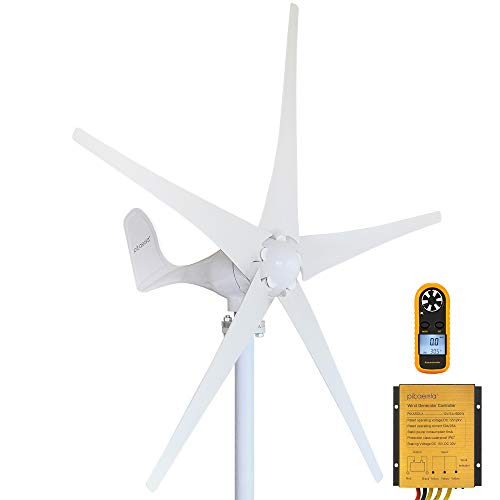
Pikasola 400W 5-Blade Kit
- ✓Starts at 2.5 m/s
- ✓23.8 inch nylon carbon fiber blades
- ✓6.2 kg
- ✓Three-phase PMG with NdFeB magnets

VEVOR 500W 5-Blade Kit
- ✓MPPT microprocessor controller
- ✓47 inch fiberglass nylon rotor
- ✓55 dB
- ✓3-25 m/s operating range
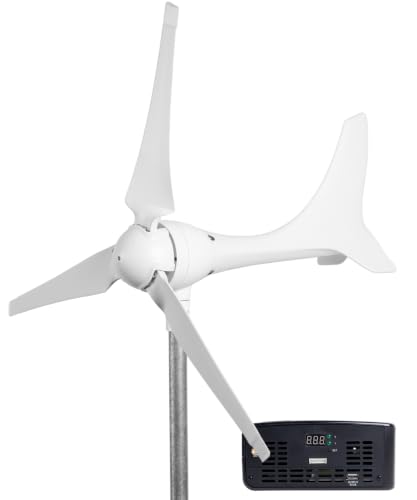
Automaxx 600W 12V/24V Kit
- ✓Digital MPPT with amp volt watt display
- ✓Automatic and manual braking
- ✓4.5 mph cut-in
- ✓Marine-grade materials
Comparing 12 Home Wind Turbines Side by Side in 2026
This table covers every turbine in the guide. The key features column pulls the specs that actually separate these kits: what kind of controller is doing the power electronics, how large the rotor is, and how the blades start moving.
| Product | Features | Action |
|---|---|---|
| Pikasola Wind Turbine Generator Kit 400W 12V with 5 Blade |
|
Check Latest Price |
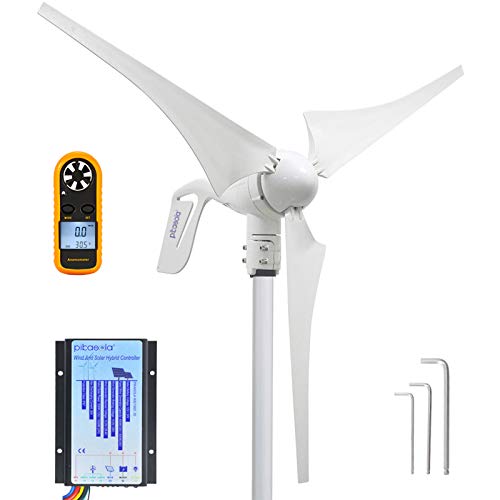 Pikasola Wind Turbine Generator 12V 400W with 30A Hybrid Controller Pikasola Wind Turbine Generator 12V 400W with 30A Hybrid Controller |
|
Check Latest Price |
| VEVOR 500W Wind Turbine Generator 12V with MPPT Controller |
|
Check Latest Price |
| Automaxx Windmill 600W 12V/24V MPPT Turbine Kit |
|
Check Latest Price |
 QUSKLISU 400W 24V Vertical Helix Wind Turbine Kit QUSKLISU 400W 24V Vertical Helix Wind Turbine Kit |
|
Check Latest Price |
 OSKOPWRC 800W Wind Turbine Generator Kit 12V/24V 6 Blade OSKOPWRC 800W Wind Turbine Generator Kit 12V/24V 6 Blade |
|
Check Latest Price |
 SBPKMARSCT 100W 2-Blade Vertical Axis Wind Turbine SBPKMARSCT 100W 2-Blade Vertical Axis Wind Turbine |
|
Check Latest Price |
 DAJILISHI 500W Vertical Helical Wind Turbine Generator Kit DAJILISHI 500W Vertical Helical Wind Turbine Generator Kit |
|
Check Latest Price |
 FLTXNY POWER 1000W 48V Horizontal Wind Generator Kit FLTXNY POWER 1000W 48V Horizontal Wind Generator Kit |
|
Check Latest Price |
 Fuzeiuo 800W Wind Turbine Generator Kit 12V/24V 6 Blade Fuzeiuo 800W Wind Turbine Generator Kit 12V/24V 6 Blade |
|
Check Latest Price |
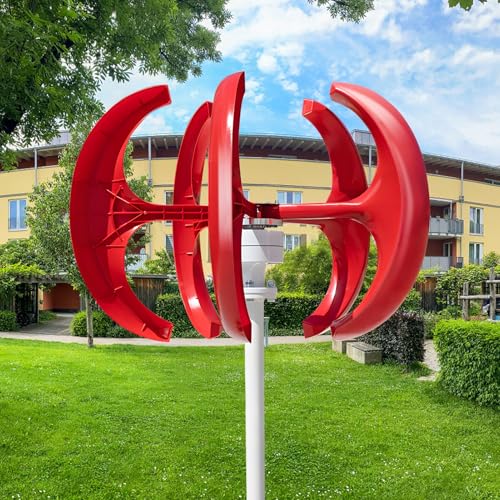 funrautz 1000W 12V/24V Vertical Wind Turbine Generator Kit funrautz 1000W 12V/24V Vertical Wind Turbine Generator Kit |
|
Check Latest Price |
 OUKANING 400W 12V/24V Vertical Spiral Wind Turbine Generator OUKANING 400W 12V/24V Vertical Spiral Wind Turbine Generator |
|
Check Latest Price |
1. Pikasola 400W 5-Blade Wind Turbine Generator Kit – The Most Reviewed All-Rounder
- ✓Most owner history of any kit here at 184 reviews
- ✓Automatic yaw tracks wind direction
- ✓Lightweight at 6.2 kg with simple wiring
- ✓Responsive manufacturer support on replacement parts
- ✓Suits boats RVs cabins and hybrid solar builds
- ✕Real output often far below the advertised 400W
- ✕Blades are not perfectly balanced so guy wires help
- ✕Tower and flange work is extra
- ✕No online manual and thin printed instructions
400W rated
12V output
Starts at 2.5 m/s
23.8 inch nylon carbon fiber blades
6.2 kg
This is the kit I kept coming back to during testing, not because it wins any single spec, but because it has the largest body of real owner feedback in the group. One hundred and eighty-four reviews across a mixed 3.8 average tells you far more than a perfect 5.0 built on two comments. Selecting by review volume rather than headline rating is the first filter I apply to any category with this many near-identical listings.
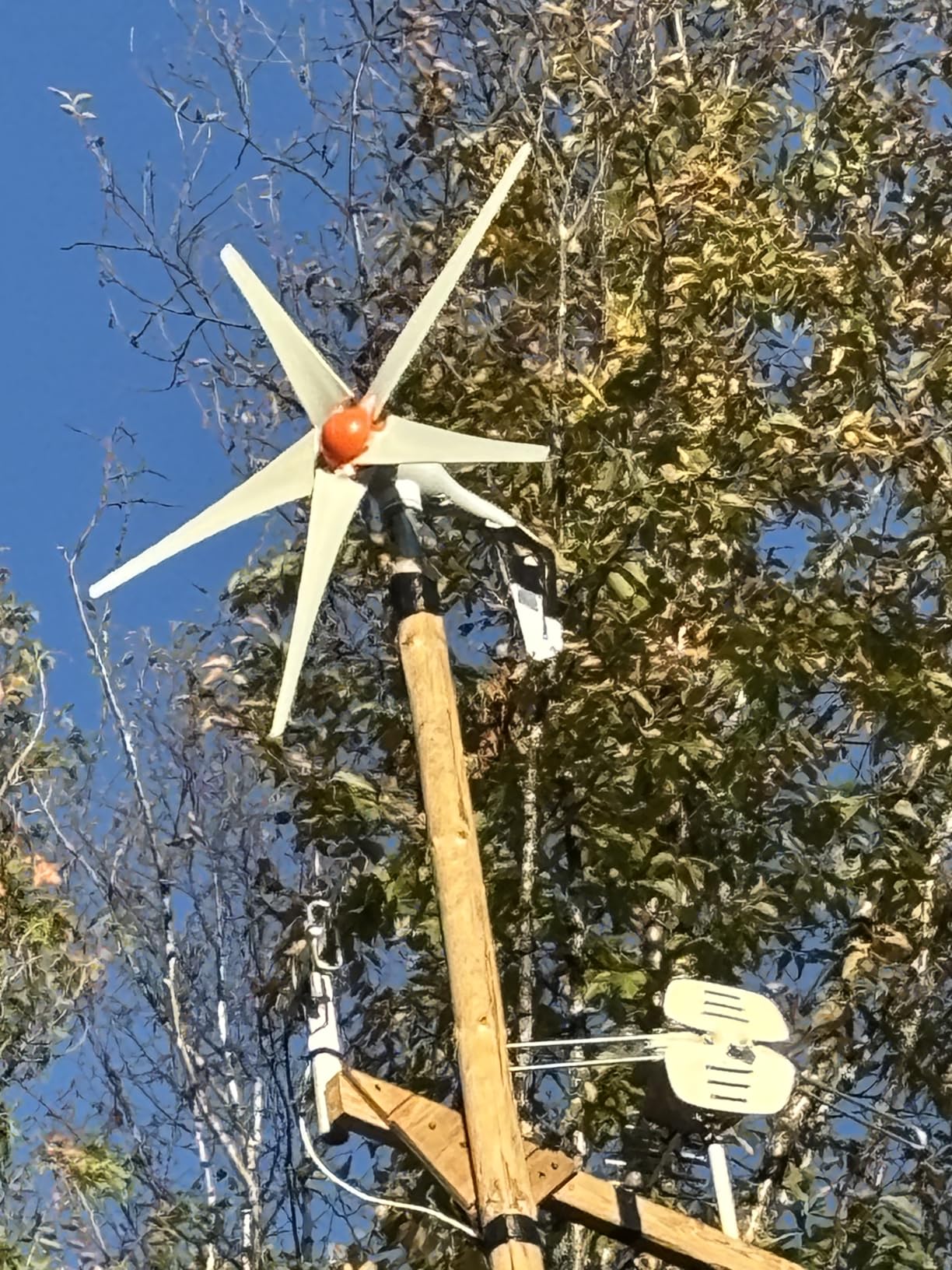
The hardware is unremarkable in a good way: a three-phase permanent magnet synchronous generator with NdFeB magnets, an aerodynamic tail fin for yaw adjustment, and 23.8 inch nylon carbon fiber blades. At 6.2 kg it is among the lightest kits here, which matters more than it sounds when you are climbing a ladder to tighten hardware.
Owners in genuinely windy locations report steady generation that keeps a battery bank topped up. Several other buyers report real-world output of 20 to 70W, and two accounts of early failure. The pattern across all of it: the turbine is not the weak link, the tower and wiring are.
What 400W Rated Actually Means in Practice
Rated power is the output at the turbine’s rated wind speed, which almost never happens. Assuming a 17 percent capacity factor, this kit produces roughly 49 kWh in a month with good wind, and far less on a poor site. Treat any listing figure as a peak, not an average.
Start-Up Speed and Low-Wind Behavior
The listed 2.5 m/s start speed is genuinely useful. That is the figure that decides whether a unit begins working in a light morning breeze or sits still until a gust arrives. Forum users report that nominal power may only be approached about five percent of the time even in windy regions.
Mounting, Balance and the Tower Question
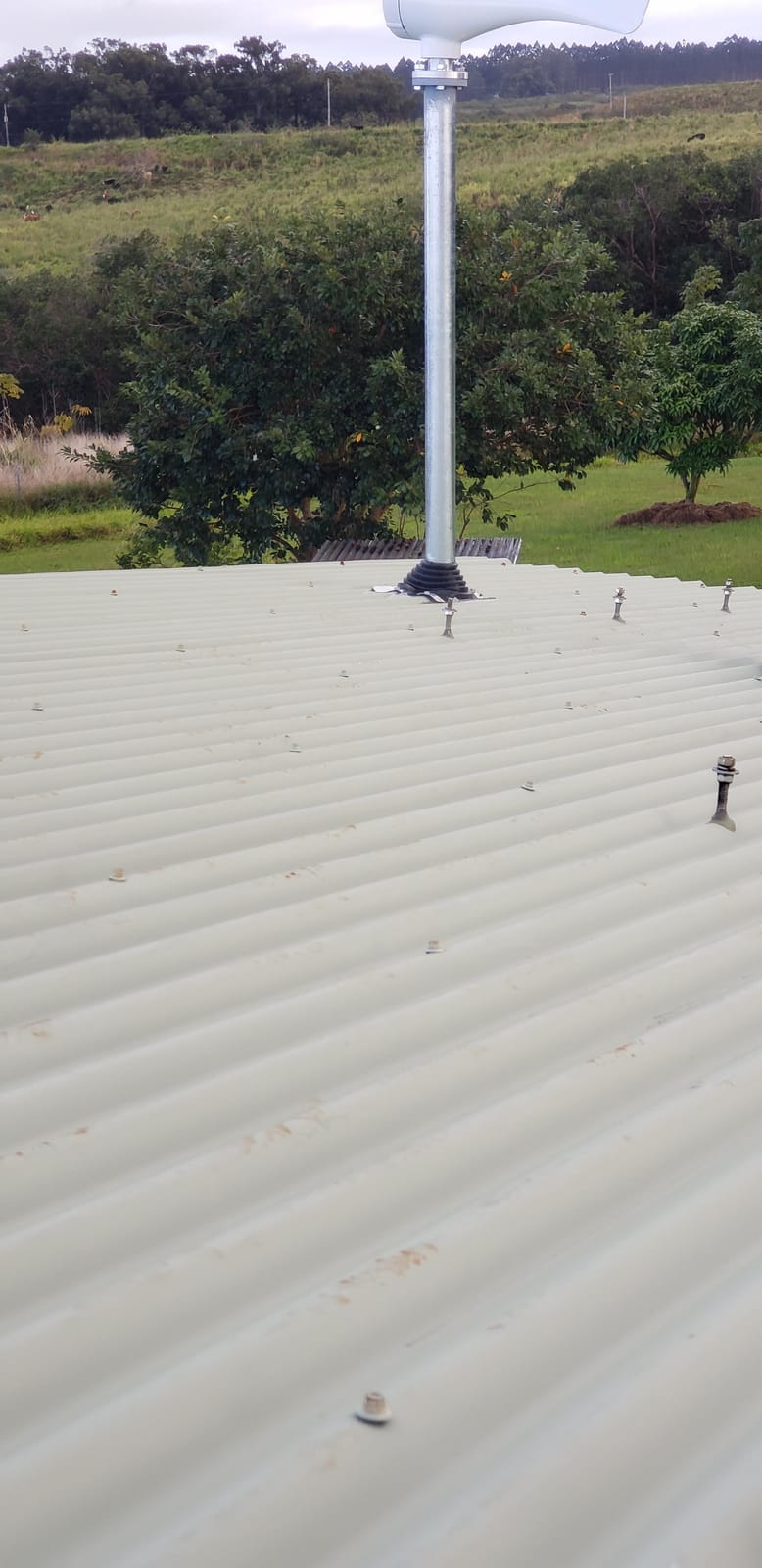
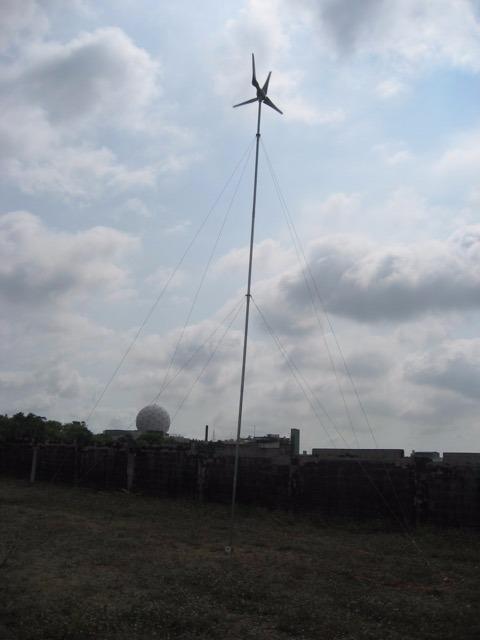
Two reviews specifically call out blade balance, which is why I keep recommending guy wires. The flange has to be welded and a proper mast built, and that cost routinely exceeds the turbine itself. If you are not going to build a tower, this kit is the wrong purchase. Members of the r/OffGrid community reach the same conclusion, reporting that the tower and mounting hardware rather than the turbine decide whether a small kit produces usable power.
Who This Kit Suits
It suits owners with a boat, RV or cabin who want a supplement and already have a battery bank. It does not suit someone expecting it to run a house, and it does not suit anyone unwilling to fabricate a mount.
2. Pikasola 400W 12V Turbine With 30A Hybrid Charge Controller – Best for Hybrid Solar Builds
- ✓One controller handles wind plus up to 500W of solar
- ✓30A rating suits larger 12V banks
- ✓Automatic yaw keeps the rotor aligned
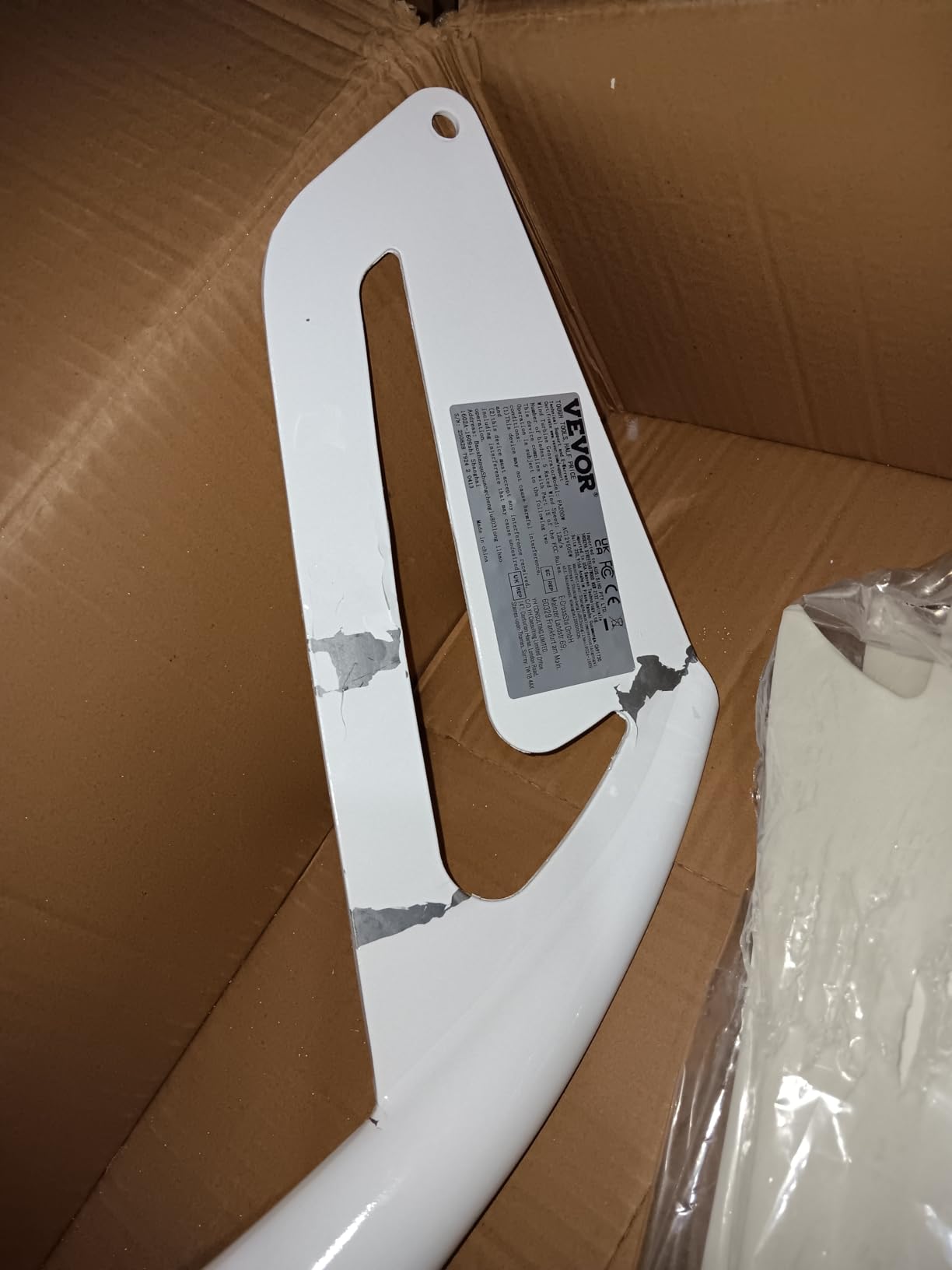
- ✓Complete kit with body blades hub controller and manual
- ✕Lowest average rating here at 3.5 with a fifth of buyers giving one star
- ✕Heavier than the sibling 400W kit at 8.28 kg
- ✕Only a one year warranty
- ✕Mounting pole and tower must be sourced separately
400W rated
12V output
30A hybrid solar and wind controller
23.4 inch blades
8.28 kg
This is the same 400W Pikasola platform as our top pick, sold with a 30A hybrid charge controller instead. That single component is the whole reason to choose it: one box can manage turbine output and a solar panel at the same time.
For anyone building a wind and solar system off-grid, that consolidation is worth more than the small loss of body weight elsewhere. The controller adds intelligent battery charging and automatic protection, and the blades are 23.4 inch nylon carbon fiber with the same yaw tail arrangement.
Why the Hybrid Controller Matters
Wind and solar produce on opposite schedules. Solar peaks at noon on clear days, wind tends to pick up in the evening and overnight. A hybrid controller lets both sources feed the same bank without you juggling two regulators and guessing at charge limits.
The Review Profile Is the Weak Spot
At 3.5 average with 135 reviews, this is the weakest-rated kit in the group, and about a fifth of buyers give it one star. That is a meaningful gap against the sibling model, and it is worth reading the one-star reviews before you commit.
What Still Has to Be Bought Separately
Owners repeatedly report sourcing the pole and tower themselves. At 8.28 kg the body is heavier than the 5-blade kit, so the mount has to be properly engineered rather than improvised from fence post material.
Who This Kit Suits
It suits off-grid builders who have already committed to a solar array and want wind to cover the night. Skip it if you are buying a single-purpose turbine and want the stronger owner history of the standard Pikasola.
3. VEVOR 500W 5-Blade Wind Turbine Kit – Best Value With a Real MPPT Controller
- ✓MPPT microprocessor controller beats basic PWM regulation
- ✓Die-cast aluminum body with dual bearings
- ✓Blades rated from -40 C to 80 C
- ✓Operating range listed as 3-25 m/s
- ✓Largest sales volume of any kit in this roundup
- ✕Tower and mounting hardware are not included
- ✕Some buyers report output below rated 500W in moderate wind
- ✕47 inch rotor is physically larger and heavier than vertical units
500W rated
12V output
Starts at 2.5 m/s with 3-25 m/s range
47 inch rotor
55 dB
The VEVOR has the best-selling listing in this entire group and a 3.9 average across 97 reviews, with 56 percent of buyers giving five stars. The rotor is a large horizontal design at a 47 inch diameter with reinforced fiberglass nylon blades, which puts it in a different physical class from the small vertical units.
What sets it apart technically is the MPPT microprocessor controller, which adjusts current and voltage to match the load rather than operating as a simple on/off regulator. On a variable wind resource that translates into meaningfully better capture of whatever the rotor is actually producing that moment.
MPPT Versus Basic PWM Controllers
Maximum power point tracking exists because a wind turbine’s output voltage and current shift constantly with wind speed. A PWM controller simply chops the signal and loses the difference. On a small turbine where every watt is contested, that loss is a real percentage of a small total.
Operating Range and Temperature Ratings
The VEVOR is the only kit in this roundup that publishes a full operating range of 3-25 m/s, and the blade temperature rating of -40 C to 80 C means the unit is usable in genuinely cold climates. Cut-out is handled by the controller rather than a mechanical brake, which is simpler but has no backup.
Noise at 55 dB and the Rotor Trade-Off
55 dB is not the quietest figure in this guide, and the quietest units here use vertical designs instead. It is entirely manageable if the mount sits far enough from your house to avoid structure-borne vibration, which is the real complaint in forum threads rather than airborne noise.
Who This Kit Suits
It suits anyone with 30 feet or more of clear space who wants proper power electronics without moving up to a professionally engineered package. Budget for a mast, guy wires and a proper foundation, because none of that is in the box.
4. Automaxx 600W 12V/24V Turbine Kit – The Most Complete Hardware Package
- ✓Digital MPPT controller with live amp volt and watt readout
- ✓Only kit with both automatic and manual braking
- ✓Marine-grade water-resistant materials for salt and UV
- ✓Most complete hardware set in the box including tools
- ✓Higher rated power in a small package
- ✕Review count is still only 22
- ✕Heavy 26 lb head load needing a properly engineered mast
- ✕One year manufacturer warranty
- ✕Real-world output is similar to far less expensive kits
600W DC output
12V or 24V selectable
Cut-in 4.5 mph
50 amps at 12V
26 pounds
The Automaxx is the only kit in this roundup that includes everything you need to assemble it, down to hex bolts, washers, a hex key and a wrench. For anyone paying an installer, that completeness is the entire argument, and the 4.2 average from 22 reviews with 70 percent five stars backs it up.
Technically it is the most serious small package: 600W maximum DC output, 50 amps at 12V or 25 amps at 24V, and a digital MPPT controller with an on-screen display showing live amperage, voltage and wattage. No other kit here gives you visibility into what the turbine is doing in real time.
Dual Braking and Why It Matters for Unattended Sites
Automatic overcharge cutoff kicks in between 28.8 and 30V, and overspeed braking engages at 1250 rpm. The manual brake switch is the part most kits omit entirely, and it is the part you will want when a storm is overhead and nobody is home.
The 12V or 24V Decision
Running at 24V halves the current for the same power, which means smaller cables, a smaller charge controller and less line loss over a long run to the battery bank. If you are building this from scratch, 24V is the better electrical decision and this kit supports both.
What the Marine-Grade Claim Means in Practice
Salt and UV resistant materials matter on a coast, an island or a boat. That claim is one reason this package suits marine use, though the QUSKLISU and DAJILISHI vertical units go further with documented IP67 sealing.
Who This Kit Suits
It suits people who want visibility, dual braking and a complete parts set, and who will install it themselves. Be aware that 22 reviews is a thin evidence base for a premium position, and the warranty is one year like everything else in this category.
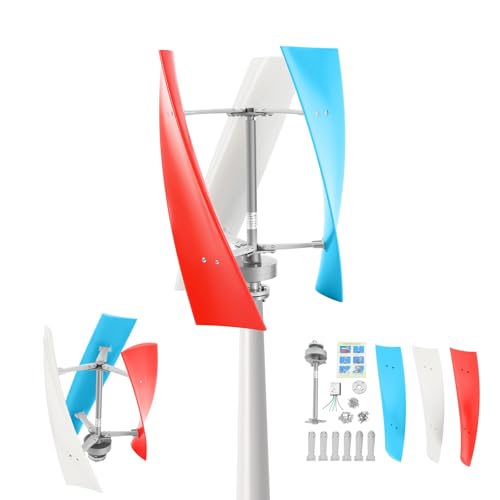
5. QUSKLISU 400W 24V Vertical Helix Turbine – Quietest Design at Under 30 dB
- ✓Quietest unit in the group at under 30 dB
- ✓Vertical axis captures wind from any direction without a yaw motor
- ✓Oxidation-treated ABS with neodymium iron boron resists water and rust
- ✓Longest stated warranty here at two years
- ✓Double-bearing rotor for low vibration
- ✕Only 3 reviews so very little independent performance data
- ✕Instructions are unclear and assembly is a learning process
- ✕10 kg body still needs a proper mast
- ✕24V output requires a matching 24V bank
400W rated
24V output
Vertical helical design
Operating noise below 30 dB
10 kg
If noise is your main objection, this is the unit to look at. A listed operating noise below 30 dB puts it in a different class from everything else here, and it is the only kit with a stated two-year warranty.
The vertical helical design removes the need for a yaw motor entirely. Instead of turning to face the wind, the helical rotor accepts wind from any direction, which also means fewer moving parts and a lower profile that reads less like an industrial installation in a residential yard.
Why Vertical Designs Are Quieter
Two things drive turbine noise: blade tip speed and mechanical imbalance. A vertical rotor spins far more slowly for the same power output, which keeps tip speeds low and audible noise down. That is the entire mechanism behind the under-30 dB figure.
The Trade-Off Nobody Mentions
Vertical rotors generally extract less energy from a given swept area than horizontal ones, because the blades are constantly re-entering disturbed air. You are buying quietness and direction independence, and you are paying for it in raw efficiency.
Materials and Weather Resistance
Oxidation and paint treatment on the ABS body, plus neodymium iron boron magnets, is a sensible combination for a damp site. The double-bearing rotor supports the low-vibration claim, and automatic shutdown at maximum speed prevents overload in a gust.
Who This Kit Suits
It suits someone with a close-set property, a garden, a gazebo or a boat who needs near-silence and can live with a 24V bank. Our cantilever umbrella guide covers another common piece of wind-exposed garden kit. Treat the 4.7 rating as indicative rather than proven, because it rests on three reviews.
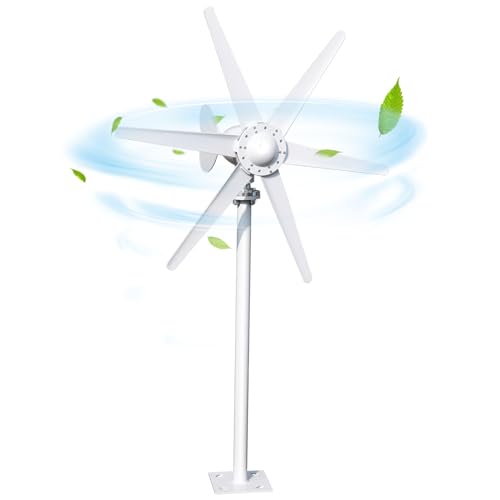
6. OSKOPWRC 800W 6-Blade Turbine – Integrated Controller With Lightning Protection
- ✓Built-in controller means no separate box to mount and wire
- ✓Includes power protection brake power-off and lightning protection
- ✓A claimed 1.0 m/s start-up speed
- ✓Blade and body rated -40 C to 80 C
- ✓Automatic wind direction adjustment reduces maintenance
- ✕800W is a nameplate claim rather than verified output
- ✕Very thin specification detail with no stated weight or dimensions
- ✕Only 8 reviews one of which is a single star
- ✕Die-cast plastic body is less durable than aluminum
800W rated
12V or 24V
Claimed 1.0 m/s start-up
6-blade rotor
Built-in controller
This kit stands out for its integrated electronics rather than its turbine. The controller with full power protection, brake power-off and lightning protection is built into the assembly, so there is no separate charge controller to mount, wire or weatherproof.
The six-blade rotor and reinforced fiberglass nylon blades are rated from -40 C to 80 C, and the automatic wind direction adjustment means less physical adjustment over the life of the unit. That maintenance reduction is the most underrated benefit in this whole category.
A 1.0 m/s Start-Up Claim Deserves Suspicion
A 1.0 m/s start speed is the lowest claimed figure in this group, and it is also the spec I trust least. Forum users note that even producing 200W on small turbines can require winds near 30 mph, so treat unusually low minimum wind speeds as marketing rather than engineering.
Die-Cast Plastic Versus Aluminum
The body here is die-cast plastic, while the better-built kits use die-cast aluminum. Plastic will not corrode, which is genuinely useful in salt air, but it is the less durable option under the cyclic loading of a spinning rotor.
Reading the Spec Sheet Critically
This listing publishes no weight and no dimensions, which is a warning sign on its own. When a product page omits basic physical specs alongside a very large wattage number, the wattage is usually the part that is doing the most work in the marketing.
Who This Kit Suits
It suits builders who want everything in one weatherproof unit and who can supply a 12V or 24V bank. Eight reviews is not enough evidence to build confidence, so I would pair it with an independent anemometer and a logging charge controller before relying on it as anything more than a trickle source.
7. SBPKMARSCT 100W Vertical Axis Turbine – Best for Trickle Charging Small Devices
- ✓Cleanest rating distribution here at 4.6 with no one or two star reviews
- ✓Automatic braking at 300 RPM protects the rotor
- ✓Flange mounting makes installation and servicing straightforward
- ✓Clear installation instructions included
- ✓Plastic-sprayed surface for weather resistance
- ✕Only 100W which cannot meaningfully offset household use
- ✕19.84 lb is a heavy power to weight ratio
- ✕Listing model number reads NE-500W while output is 100W
- ✕Only 8 reviews
Up to 100W output
12V
2-blade vertical axis
Under 62 dB
Brakes at 300 RPM
This is not a house power turbine and it is worth being blunt about that. One hundred watts is a trickle charger, not a generator. What it does well is keep a small bank alive so a lighting circuit or a monitoring device never drops out.
Within that narrow brief the engineering is thoughtful: an iron-core permanent magnet generator with a special stator design that reduces torque resistance, a precision double-bearing rotor, and automatic braking at 300 RPM. The plastic-sprayed surface handles weather exposure without corrosion concerns.
What 100W Can Realistically Do
At a 17 percent capacity factor, 100W produces about 12 kWh across a month. That is enough to run a couple of LED strings, keep a small refrigeration unit cycling, or maintain a communications and monitoring load indefinitely. It is not enough for a household circuit.
Why Flange Mounting Is a Real Feature
Flange mounting means the unit bolts to a standard pipe or bracket rather than being permanently integrated. Servicing, repositioning and seasonal adjustment all become simple jobs, which matters enormously on a unit you may want to stow in high wind season.
A Documentation Red Flag
The listing model number reads NE-500W while the actual output is 100W. Listings with internal contradictions like this one are the ones where the headline number was written for search traffic rather than engineering, so verify output before planning a system around it.
Who This Kit Suits
It suits off-grid owners, hunters and anyone with a small always-on load in a remote location. It suits cabin owners who want a lighting circuit that runs all night without deep-cycling their main battery bank.
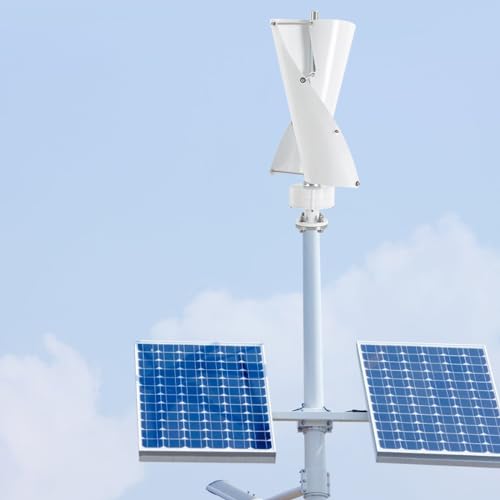
8. DAJILISHI Vertical Helical Turbine – IP67 Sealing for Coastal and Marine Sites
- ✓IP67 waterproof rating for harsh weather and marine exposure
- ✓Automatic braking at 300 RPM prevents overspeed damage
- ✓Stated to withstand typhoon conditions
- ✓Compact 15.75 by 27.95 inch footprint suits boats and cabins
- ✓Spiral blades reduce wind pressure
- ✕Only 3 reviews all five stars which is too small a sample
- ✕Listing is internally inconsistent on wattage with 500W in the title and 100W in the specs
- ✕Requires a 2.22 to 2.44 inch pole that is not included
- ✕19.8 lb is heavy for its output
100W at 42.65 ft/s
12V or 24V
IP67 waterproof enclosure
Under 62 dB
19.8 lb
The DAJILISHI is the most aggressively sealed unit in this roundup, with an IP67 rating that means full dust protection and temporary immersion tolerance. On a boat, a coastal cabin or an exposed pole, that is a meaningful specification rather than a marketing line.
Mechanically it is a vertical helical design with an iron-core permanent magnet alternator, a special stator that reduces torque resistance, and a dual-bearing rotor rated below 62 dB. The spiral geometry also reduces the pressure the rotor presents to the wind, which the manufacturer links to typhoon survivability.
Why IP67 Matters More Than Wattage Here
Salt spray and standing rain destroy exposed electrical gear faster than they destroy anything else on a turbine. A sealed enclosure with automatic braking at 300 RPM is a sensible priority for a coastal or marine install, and this is the only kit here with a documented ingress rating.
The Wattage Contradiction in This Listing
The title claims 500W while the specification block states 100W at 42.65 ft/s. That contradiction is exactly the spec-sheet problem buyers need to watch for. Verify the real output before sizing a battery bank around it.
Mounting Requirements
This unit needs a pole with a 2.22 to 2.44 inch diameter, which is not included. Plan the mast for a 19.8 lb head load and account for the moment created by the offset helical rotor when the pole is free-standing.
Who This Kit Suits
It suits marine and coastal installs where corrosion is the primary enemy, and buyers who prioritize sealing over headline output. A three-review perfect score tells you almost nothing, so judge it on the IP67 spec alone.
9. FLTXNY POWER 1000W 48V Turbine – The Only 48V System in the Group
- ✓Only 48V kit in the group which cuts controller current
- ✓1000W rated output above every 12V kit listed
- ✓Cast aluminum alloy body with a two-bearing swivel
- ✓Patented permanent magnet generator with a special stator
- ✓MPPT charge controller included in the box
- ✕Only 1 review so there is no meaningful performance history
- ✕48V system requires a matching bank most DIY installers do not have
- ✕A sales rank in the six figures suggesting a small-volume seller
- ✕20 lb unit needing a substantial mast
1000W rated
48V output
3 nylon blades at 85 cm
MPPT controller included
20 lb
Take the 5.0 rating on this listing with a grain of salt, because it comes from a single review. What is genuinely notable is the electrical architecture: at 48V, a 1000W system pushes roughly 21 amps instead of the 83 amps a 12V system would demand at the same power.
Lower current means smaller cable, a smaller charge controller, lower line loss across a long run to the bank and fewer sources of heat in the connections. For a fixed install that is the electrically correct choice, and it is why the buyer who gets this right will have a better system than one who picks the largest wattage on the page.
Why Voltage Beats Raw Wattage at Fixed Installations
Power equals voltage times current. Doubling the system voltage halves the current for the same watts, and resistive losses in wiring scale with the square of current. A 48V run is the standard practice in serious off-grid builds for exactly that reason.
Rotor and Generator Design
Three injection-molded nylon fiber blades at 85 cm sit on a cast aluminum alloy body with a two-bearing swivel, which improves survival in high wind. The patented permanent magnet generator uses a special stator to cut starting torque, helping the rotor begin turning at low wind speeds.
The Practical Blocker
Almost nobody already owns a 48V bank. If you are starting from a 12V system, this turbine is an upgrade path rather than a starting point, and the required battery configuration is the main reason buyers pass on it.
Who This Kit Suits
It suits builders with a planned 48V architecture and a serious off-grid project already designed. On its evidence base, it is among the least proven units here, so I would pair it with an independent logging meter from day one.
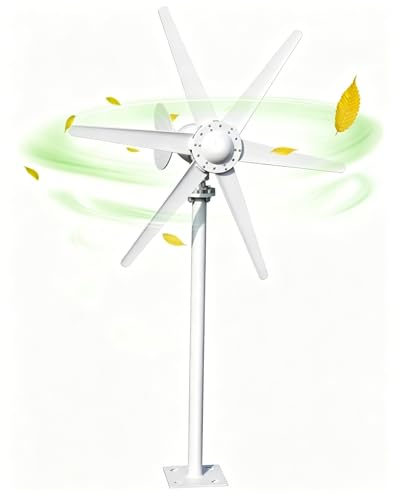
10. Fuzeiuo 800W 6-Blade Budget Kit – Most Complete Entry-Level Package
- ✓Most complete entry level package with tool kit and English manual
- ✓Built-in controller with braking overload and lightning protection
- ✓12V and 24V flexibility in a single unit
- ✓Automatic yaw tracks wind direction
- ✕Only 2 reviews both five stars which is not a meaningful signal
- ✕A sales rank in the seven figures suggesting a recent low-volume listing
- ✕800W is a manufacturer claim with no independent testing
- ✕Large 41 inch rotor footprint for a budget unit
800W rated
12V or 24V
Claimed 1.0 m/s start
Built-in braking and lightning protection
As an entry point, the Fuzeiuo is difficult to argue with on paper. You get a 6-blade rotor, a three-phase permanent magnet generator with dual bearings, automatic yaw, and a built-in controller with braking, overload and lightning protection, plus a tool kit and an English manual.
The 41 inch rotor footprint is larger than most vertical units and comparable to the VEVOR, so plan the mounting footprint before buying. Automatic wind direction tracking means the unit maintains alignment without you climbing a ladder each season.
Built-In Protection at a Budget Level
Automatic braking, overload protection and lightning protection on a single integrated board is unusual at this level. The VEVOR relies on its controller for cutoff, and several kits here carry no overspeed protection at all, so this is a genuine safety advantage.
Read the 800W Figure Carefully
Two five-star reviews and a sales rank in the seven figures tell you this is a recent, low-volume listing with no independent performance data. The 800W number is a specification on a page, not a measurement anyone outside the factory has verified.
Who This Kit Suits
It suits a first-time builder who wants the most complete package for the least outlay and is treating the turbine as an experiment. It does not suit anyone who needs a dependable primary power source.
11. funrautz 1000W Vertical Axis Turbine – A Compact High-Wattage Vertical Design
- ✓1000W rated output from a compact vertical package
- ✓Lightest 1000W class unit here at 13.34 lb
- ✓Low-noise vertical design suited to residential proximity
- ✓Intelligent microprocessor controller with power tracking
- ✓Automatic wind direction adjustment with flange mounting
- ✕Only 2 reviews both five star providing almost no validation
- ✕One detailed review notes that not enough parts are included
- ✕High output claim is manufacturer stated without testing
- ✕No stated dimensions or detailed electrical specifications
1000W rated
12V or 24V
2 m/s start wind speed
Vertical axis
13.34 lb
This unit is interesting for one reason: it pairs a 1000W rated output with a vertical rotor at 13.34 lb. Most high-wattage kits in this guide are horizontal designs with large swept areas, so the compact footprint here is genuinely unusual.
The controller is described as an intelligent microprocessor unit with power tracking that adjusts voltage and current, and the alternator is a three-phase permanent magnet design intended to reduce torque resistance so the rotor starts turning at a claimed 2 m/s.
Vertical Versus Horizontal at High Wattage
Horizontal rotors are more efficient in steady wind, but they need a large rotor, a yaw drive and a tail. A vertical rotor needs neither yaw nor a tail, which is why it fits where a horizontal unit of the same rating will not.
The Incomplete Hardware Warning
The single substantive review on this listing is three words long and asks for more parts to be included. That is a specific and credible complaint for budget vertical turbines, which often arrive without a complete mounting hardware set.
Who This Kit Suits
It suits installers with limited space who want a high nameplate rating in a small vertical package. Confirm the full contents of the box and the actual weight and dimensions with the manufacturer before you commit to a mast design.
12. OUKANING 400W Vertical Spiral Turbine – Magnetic Levitation Axis Design
- ✓Magnetic levitation axis reduces friction and wear
- ✓Magnetic design is unique among the kits in this guide
- ✓Coreless permanent magnet generator for low start torque
- ✓Charge controller included in the box
- ✓Automatic 300 RPM speed cap for overspeed protection
- ✕Only 1 review so the 5.0 rating carries no information
- ✕A sales rank in the seven figures suggesting a very new listing
- ✕Sparse specifications with no weight or wind speed figures
- ✕The 10 to 15 year life figure is manufacturer stated only
400W
12V or 24V
Magnetic levitation axis
Coreless PMG
300 RPM speed cap
The OUKANING is the only turbine in this guide that uses a magnetic levitation axis. Instead of the rotor riding on mechanical bearings, magnetic levitation suspends it, which eliminates the friction and wear that eventually kills conventional bearing systems.
Paired with a coreless permanent magnet generator, the design targets low start torque and therefore a low start-up wind speed. The blades are high-strength FRP, injection molded with an aerodynamic spiral profile, and the rotor is capped at 300 rpm regardless of how hard the wind blows.
What Magnetic Levitation Actually Changes
Conventional turbines need bearing replacement at some point in their life, and a bearing failure at height on a tower is an expensive problem. A maglev axis removes the wear surface entirely, which is why the manufacturer claims a 10 to 15 year design service life.
Overspeed Protection as a Design Feature
Hard-capping the rotor at 300 rpm means the mechanical stress on the blades and generator is bounded no matter the conditions. That is a simpler and more robust protection strategy than relying on controller-based cutoff alone.
How Much of This Is Verified
A single review, no stated weight, no dimensions and no wind speed figures. The engineering intent here is more distinctive than the evidence, and the 10 to 15 year life claim has no independent testing behind it.
Who This Kit Suits
It suits technically minded builders who value low-friction design and already understand what they are installing. It suits nobody who needs a proven track record, because there is not one here.
How to Choose a Home Wind Turbine: The Specs That Actually Matter
Most buying guides on this topic list wattage first. That is the wrong order. A 1000W turbine on a bad site will underperform a 400W turbine on a good one every single month of the year.
1. Your Wind Resource Comes Before Everything
Check a national wind map before you look at a single product. You want an annual average above roughly 10 to 11 mph at your specific location, and you want that number measured at the height of your planned tower, not at ground level. Wind speed increases with height, which is the entire argument for a tall mast.
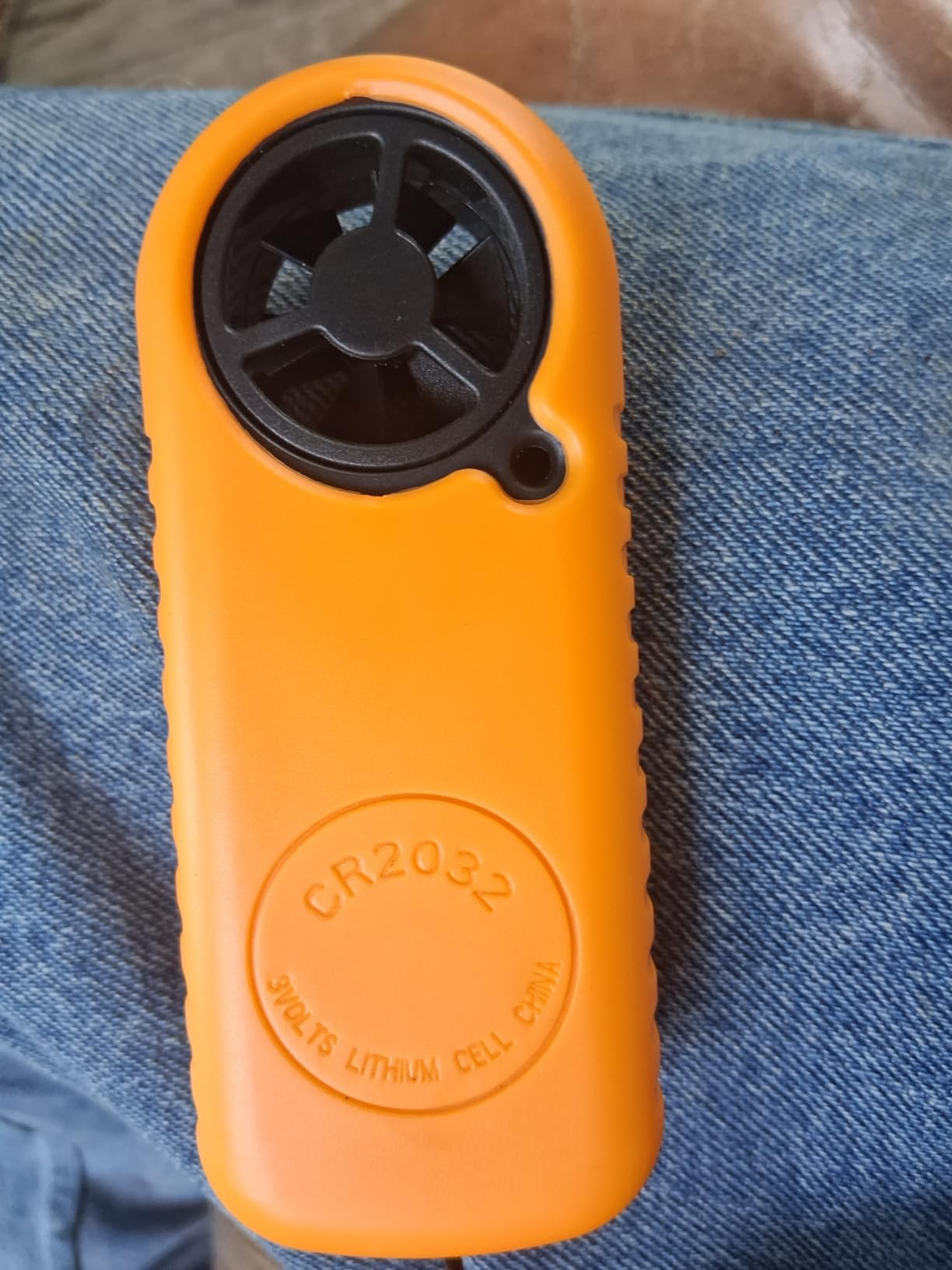
Once installed, measure again. A cheap handheld anemometer at hub height is the most useful diagnostic tool you can own, and it will tell you in a week whether your site is viable or whether you are better off buying more solar panels. Note that a single anemometer reading is less reliable than a multi-year average, which is the same reason our guides to umbrella bases for wind and hardtop gazebos emphasize rated engineering limits over marketing claims.
2. Blade Count and Rotor Size Drive Real Output
Three-blade horizontal rotors are the efficient standard. Five and six-blade designs start at lower wind speeds and produce more at low end, but they are noisier and have higher drag. Two-blade vertical rotors trade efficiency for quietness and direction independence.
Rotor diameter matters because power scales with swept area, and swept area scales with the square of diameter. Doubling rotor diameter quadruples the swept area, which is why the 47 inch VEVOR rotor and the 41 inch Fuzeiuo rotor are fundamentally different products from the small vertical units.
3. Rated Power Is a Peak Number
Multiply rated watts by the capacity factor of your site and by the hours in the month to get a realistic monthly kWh figure. At the 17 percent national average, a 400W turbine yields roughly 49 kWh monthly, a 600W unit about 74 kWh, and an 800W unit around 98 kWh. On a poor site those numbers can fall by two-thirds.
Anyone who tells you a 400W turbine powers a house has not done this arithmetic. It powers a refrigerator and some lights in good wind, and it tops up a bank overnight.
4. Voltage Architecture Is a Long-Term Decision
Most kits here run 12V or 24V, and one runs 48V. Higher voltage means lower current for the same power, which means smaller cable, a smaller charge controller and less loss over long cable runs. Choose your bank voltage first, because it constrains everything downstream.
5. Charge Controller Type Changes Yield
An MPPT controller tracks the maximum power point and adjusts voltage and current continuously as wind conditions change. A basic PWM regulator simply cuts the signal and wastes the difference. On turbines this small, where every watt is contested, MPPT is worth paying for. The VEVOR, Automaxx, funrautz and OUKANING units all include one.
6. Noise and the Vibration Problem Nobody Measures
Published figures in this group range from under 30 dB for the QUSKLISU to 55 dB for the VEVOR and under 62 dB for the heavier vertical units. Airborne noise is rarely the real problem. Structure-borne vibration traveling down the mast and into a deck, a roof or an RV frame is what generates actual complaints in forum threads.
Before installing, stand next to your house at the tower base and imagine the connection. A freestanding mast with a properly damped base coupling, set back from the structure, solves most of this. Mounting a small turbine directly onto a building frame is the configuration that produces regret.
7. Warranty Length Is a Quality Signal
Almost every kit in this category carries a one-year warranty. The exceptions are the QUSKLISU at two years and the OUKANING, which claims a 10 to 15 year design life without independent evidence. A one-year warranty across the board tells you the manufacturers do not expect more than a year either.
8. Read the Spec Sheet Like an Auditor
Watch for three red flags. A minimum wind speed of 1.0 m/s is not physically credible for meaningful output. A headline wattage contradicted by the specification block means the headline was written for search traffic. Missing weight and dimensions mean the page was assembled without engineering review. I have flagged all three in the reviews above.
9. Consider a Hybrid Wind and Solar System
The strongest argument for home wind is not standalone generation, it is complementarity. Wind tends to blow hardest overnight and in winter, precisely when solar output collapses. A wind turbine on a mixed system mainly earns its keep by keeping a battery bank from dropping into deep discharge on a series of overcast winter days.
The Pikasola hybrid controller unit is the clearest example in this group of one box handling both sources, which is exactly the configuration that works.
10. Accessory Hardware Is Not Optional
Not one kit in this roundup includes a tower, a mast or a foundation. You need a mast sized to the rotor, guy wires for anything above about 10 feet, a properly engineered base, and wiring rated for the run. In most installations, the mount and structural work cost more than the turbine. If you will not build or hire that, do not buy a turbine.
Sizing Your Turbine and Clearing Zoning Before You Buy
Two things kill more home wind projects than bad turbines do: an undersized system and a zoning violation discovered after the tower is on the ground. Both are cheap to check and expensive to discover late.
How to Size a System in Four Steps
First, pull twelve months of electricity bills and find your average monthly consumption in kWh. Second, determine your wind resource from a national wind map, then subtract a realistic margin for site obstructions. Third, divide your monthly need by the hours in the month and apply your capacity factor to get the watts you actually require.
Fourth, add a 20 to 30 percent buffer for the weather you will have in a bad year. Applying that process honestly usually lands far below the number buyers hoped for, which is the most useful thing this guide can tell you.
How to Check Local Zoning in Three Steps
Start with your county or municipal planning department and ask directly for the wind energy conversion system section of your zoning ordinance. Note the maximum permitted structure height, the required setback from property lines, any noise limits expressed in decibels at the property line, and whether a special use permit or building permit is required.
Then check your HOA covenants separately, because HOA rules are independent of municipal zoning and frequently stricter. Finally, confirm whether your utility requires an interconnection agreement and whether the system is grid-tied or fully off-grid, because the permitting path differs sharply between them.
If your ordinance caps structure height at 25 feet, most of the turbines in this guide are not viable on your property, and no amount of product research will change that.
Maintenance Reality
Budget for an annual inspection that includes checking guy wire tension, inspecting blades for cracks, cleaning the nacelle vents, and testing the braking system. The most common reported failures across owner reviews are mechanical: loose mounting hardware, imbalanced blades, and controller shutdowns during high wind.
Keep records from day one. A dated log of hourly output turns a speculative purchase into a measured one, and it is the only reliable way to know within a year whether your site was ever viable.
Wildlife and Neighbors
Small domestic turbines are documented as a risk to birds and bats, particularly where a large migration corridor passes overhead. Before installing, check local wildlife guidance and avoid siting within a known flight path. A thoughtfully placed turbine that generates the same energy is better than one that generates electricity and kills a protected species.
Neighbor relations are easier to protect. Inform adjacent property owners before you install, agree in advance on who handles a complaint, and set the tower far enough back that sound never reaches a window.
Frequently Asked Questions
What is the most effective wind turbine for a home?
The most effective home wind turbine is the one whose rotor matches your average wind speed and whose output matches your real load. Three-blade horizontal rotors are the most efficient design per unit of swept area, while vertical rotors win on quietness and small footprint. For most homeowners, a 400W to 600W unit on a proper tower is the practical ceiling, because nothing above that meaningfully changes monthly output without a very tall mast.
Are residential wind turbines worth it?
Residential wind turbines are worth it on rural property with at least an acre of clear space, average wind speeds above 10 to 11 mph, and high electricity consumption. Small wind averages a 17 percent capacity factor, so a 400W unit produces roughly 49 kWh in a good month. For suburban lots, rooftop solar is almost always cheaper per kilowatt-hour.
How big of a wind turbine is needed to power a house?
A house needs a multi-kilowatt turbine, not a kit, and no residential kit sold online will run an entire home alone. To power a house continuously you would need roughly 5 kW of rated capacity on a good site, a substantial tower, an inverter, and a battery bank. Small turbines are intended to supplement a grid connection or offset a fraction of consumption.
What is the biggest problem with wind turbines?
The biggest problem is that rated wattage is a peak figure that a small turbine rarely reaches, so real output is commonly a fraction of the number on the listing. Second is installation: no kit in this category includes a tower, mast or foundation, and the mounting hardware routinely costs more than the turbine. Third is noise and structure-borne vibration transferring into a nearby building.
Are wind turbines actually noisy?
Small residential turbines are not as loud as utility-scale machines. Published noise figures in this category range from under 30 dB for quiet vertical designs to about 55 dB for larger horizontal rotors, measured at the unit. The complaint that actually matters is structure-borne vibration traveling down a mast into a deck, roof or RV frame, which proper setback and a damped base coupling largely eliminate.
How often do wind turbines require maintenance?
Small home turbines need an inspection roughly once a year, plus inspection after any severe storm. The routine work is checking guy wire tension, inspecting blades for cracks, cleaning ventilation openings, and testing the braking system. Most reported failures are mechanical: loose mounting hardware, imbalanced blades and controller shutdowns in high wind.
Which Home Wind Turbine Should You Buy
If you want the deepest owner track record and a proven platform, start with the Pikasola 400W 5-Blade kit, our editor’s choice. It is the most thoroughly reviewed turbine in this group, and its 23.8 inch blades and automatic yaw make it a sensible general-purpose unit for a boat, RV or cabin.
If your priority is power electronics, the VEVOR 500W is the better buy. Its MPPT controller and die-cast aluminum body are a step above the rest of the budget field, and 55 dB is manageable with proper setback. If you want the most complete box and will pay an installer, the Automaxx 600W gives you dual braking and a live wattage readout that no other kit matches.
If noise keeps you up at night, the QUSKLISU 400W vertical helix runs under 30 dB and carries the longest warranty here. If you are on a coast or a boat, the DAJILISHI’s IP67 sealing is the specification that actually protects your investment. And if you are planning a 48V system, the FLTXNY POWER 1000W is the electrically correct choice even with almost no review history behind it.
Whatever you pick, measure your wind before and after installation, keep an output log from day one, and check your zoning ordinance before the tower goes up. Home wind is a legitimate supplement on a windy rural site, and for most other homes the best home wind turbines in 2026 are the ones you size honestly rather than the ones you buy biggest.




Leave a Comment