
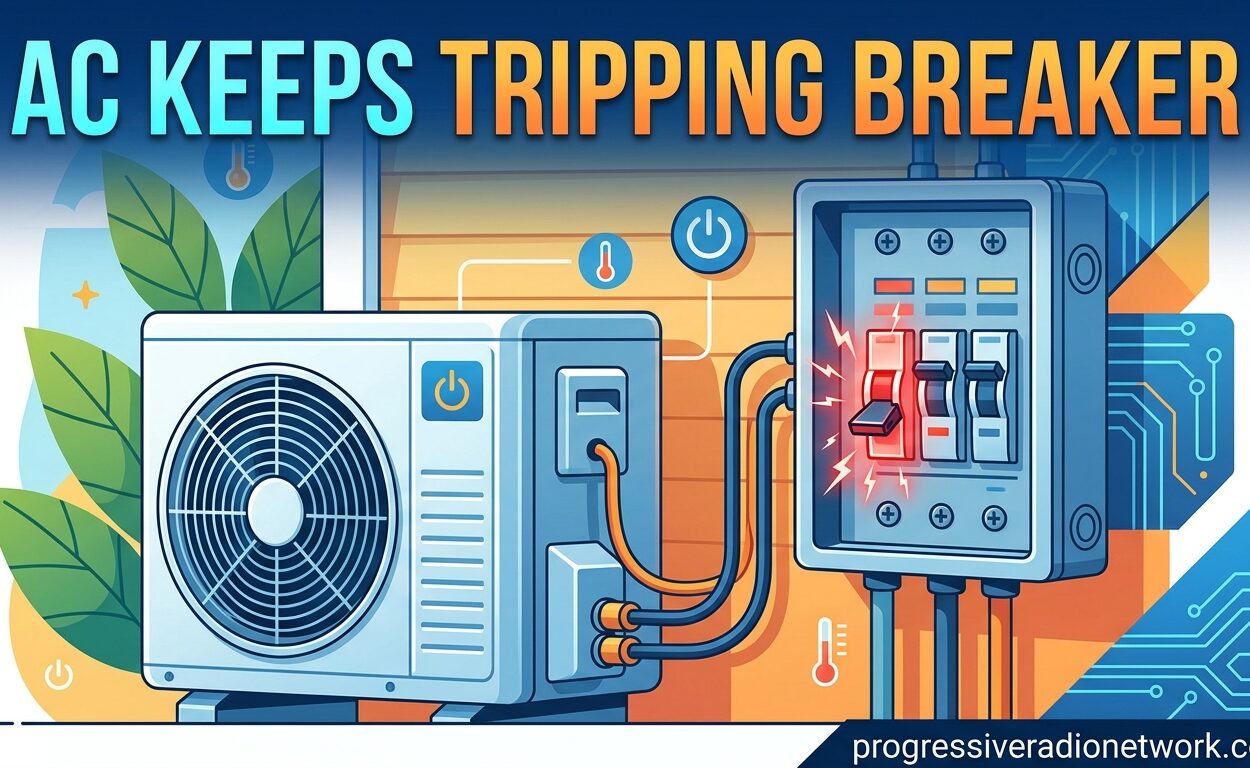
There’s nothing worse than your AC shutting down in the middle of a heatwave. When your AC keeps tripping breaker, it’s not just frustrating – it’s a warning sign that something needs attention. I’ve seen this problem hundreds of times, and in most cases, the cause is something you can fix yourself without spending a fortune.
Your circuit breaker is doing its job by protecting your home from electrical fires. When it trips, something is causing your air conditioner to draw more power than it should. Let me walk you through exactly why this happens and what you can do about it.
What Is a Circuit Breaker and Why Does It Trip?
A circuit breaker is a safety device designed to protect your home’s electrical system from damage. When too much electrical current flows through a circuit, the breaker automatically shuts off power to prevent overheating and potential fires.
There are three main reasons why a breaker trips:
- Overload: The AC is drawing more amps than the breaker can handle
- Short Circuit: A hot wire touches a neutral wire, causing a surge of current
- Ground Fault: A hot wire contacts the ground wire or metal box
When your AC keeps tripping breaker, it’s typically one of these three scenarios. The trick is figuring out which one is happening and what’s causing it.
AC Keeps Tripping Breaker? 7 Common Causes
Based on my experience working with HVAC systems, these are the seven most common reasons why your AC keeps tripping the circuit breaker. I’ll explain each one and tell you how to fix it.
Dirty Air Filter – Most Common DIY Fix
A clogged air filter is the number one cause of AC breaker trips. When your filter is dirty, your AC has to work much harder to pull air through the system. This extra effort means more electricity, which can trip your breaker.
Here’s the fix: Check your air filter every month during cooling season. If you can’t see light through it, it’s time to replace it. A clean filter can reduce your AC’s energy consumption by 5-15% and prevent those frustrating breaker trips.
Dirty Condenser Coils – Hidden Heat Buildup
Your outdoor condenser unit needs to release heat efficiently. When the coils get coated in dirt, leaves, and debris, heat builds up in the system. Your compressor works harder and harder, drawing more power until the breaker finally trips.
I’ve seen countless cases where a simple garden hose cleaning solved the problem. Turn off power to your outdoor unit, then spray the coils from the inside out. This five-minute fix can save you a service call and get your AC running properly again.
Bad Capacitor – The Silent AC Killer
The capacitor is a small component that gives your compressor and fan motors the electrical boost they need to start. When a capacitor fails, the motor struggles to start and draws excessive current.
A bad capacitor is one of the most common causes of AC breaker trips. The good news? It’s also one of the easiest and cheapest repairs – typically $50-150 if you hire a pro, or about $15-30 if you’re comfortable replacing it yourself.
Compressor Problems – When Your AC Heart Is Failing
The compressor is the heart of your air conditioning system. When it starts to fail, it can draw too much power and trip your breaker. This is especially common in older AC units (10+ years).
If your compressor is failing, you might notice the breaker trips after the AC has been running for 10-15 minutes. This happens because the compressor overheats as it struggles to operate. In some cases, a hard start kit can give an aging compressor the extra boost it needs, but eventually, replacement may be necessary.
Loose Wiring and Electrical Connections
Over time, vibrations from your AC’s operation can loosen electrical connections. A loose wire creates resistance, which generates heat and causes the breaker to trip as a safety measure.
This is a potentially dangerous situation that should be addressed by a professional. Tightening electrical connections requires shutting off power to your entire AC system and working safely inside the electrical panel.
Fan Motor Failure
Your AC has two fan motors – one in the outdoor unit and one in the indoor air handler. When either motor starts to fail, it can draw excessive current and trip the breaker.
You might notice unusual noises, slower fan speed, or the fan not running at all before the breaker trips. Fan motor replacement is typically a job for an HVAC technician, costing between $300-700 depending on the motor and your AC model.
The Breaker Itself Might Be Bad
Sometimes the problem isn’t your AC at all – it’s the breaker itself. Breakers can wear out over time and become overly sensitive, tripping even when there’s no real problem.
If you’ve ruled out all other causes and your breaker still keeps tripping, it might be time to replace it. A new breaker costs about $10-30, but this is a job best left to a licensed electrician unless you have experience working in electrical panels.
Trips Immediately vs Trips After Running: What It Means
The timing of when your breaker trips can tell you a lot about what’s wrong. This is something most guides don’t explain, but it’s crucial for diagnosing the problem correctly.
If the breaker trips immediately when you turn on the AC: You likely have a short circuit or a dead short. This means electricity is flowing where it shouldn’t – possibly a bare wire touching metal, a failed capacitor that has shorted out, or a compressor that has completely failed internally.
If the breaker trips after 5-15 minutes of running: This typically indicates an overload situation. Your AC is running but working harder than it should. Common causes include dirty filters, dirty coils, low refrigerant, or an aging compressor that’s struggling to keep up.
If the breaker trips only on very hot days (100°F+): Your AC is already working at maximum capacity, and any additional stress (like slightly dirty coils or an aging compressor) pushes it over the edge. This is often when hard start kits can help older systems make it through the hottest weather.
Step-by-Step Troubleshooting Guide
Before calling an HVAC professional, try these steps in order. Most of the time, you’ll solve the problem yourself without spending a dime.
Step 1: Change your air filter. This takes two minutes and costs about $15. It’s the most common cause of breaker trips and the easiest fix.
Step 2: Clean your outdoor condenser coils. Turn off power to the unit, then use a garden hose to spray the coils from the inside out. Remove any leaves, debris, or vegetation blocking airflow around the unit.
Step 3: Check for ice on your refrigerant lines. If you see ice buildup, you have a refrigerant leak or airflow problem. Continue to the next step.
Step 4: Let the system thaw for 4-6 hours. Turn off the AC but leave the fan on to help thaw the ice. After it’s fully thawed, try running the AC again.
Step 5: Wait 30 minutes before resetting the breaker. After a trip, the compressor needs time to cool down. Resetting too quickly can cause damage.
Step 6: If the problem persists, call a professional. You’ve likely done everything you can safely do yourself. An HVAC technician can test capacitors, check refrigerant levels, and diagnose compressor problems.
When to Call an HVAC Professional
Some AC problems are DIY-friendly, but others require professional expertise. Call an HVAC technician if you notice any of these warning signs:
- Burning smell when the AC runs
- Loud buzzing, humming, or clicking from the outdoor unit
- The breaker trips immediately upon resetting
- You see ice on the refrigerant lines
- The AC is blowing warm air
- Your energy bills have suddenly increased
These symptoms indicate serious problems that could get worse – and more expensive – if ignored. A professional diagnosis typically costs $75-150, but it’s money well spent if it prevents further damage to your AC system.
Preventive Maintenance to Avoid Future Breaker Trips
The best way to deal with AC breaker trips is to prevent them from happening in the first place. Here’s a simple maintenance schedule that will keep your AC running efficiently:
Every month during cooling season: Check your air filter and replace if dirty. This single task prevents the majority of AC problems.
Every spring: Clean your outdoor condenser coils with a garden hose. Trim back any vegetation within two feet of the unit. Clear away leaves and debris that have accumulated over winter.
Every fall: Cover your outdoor unit or at least clear away fallen leaves. This prevents debris from getting inside and causing problems next season.
Every 2-3 years: Schedule a professional tune-up. An HVAC technician will check refrigerant levels, test capacitors, clean coils thoroughly, tighten electrical connections, and identify potential problems before they cause breakdowns.
Following this maintenance schedule can extend your AC’s lifespan by 5-10 years and prevent most breaker trips before they happen.
FAQs
Why does my AC run for 10 minutes then trip the breaker?
When your AC runs for 10 minutes then trips the breaker, it typically indicates an overload situation. The compressor is working but gradually drawing more power as it struggles – often due to dirty coils, low refrigerant, or an aging compressor. As heat builds up in the system over those 10 minutes, the electrical resistance increases and the breaker finally trips to protect the system.
How do I tell if my AC circuit breaker is bad?
To test if your breaker is bad, try these steps: First, turn off all other circuits on that panel to eliminate other loads. Then reset the breaker and run only the AC. If it still trips, the problem is likely the AC itself. If you’ve ruled out all AC issues and the breaker still trips randomly or won’t stay reset, the breaker mechanism may be worn out and need replacement. A bad breaker will often feel loose or wobbly when you flip it.
Can a bad AC compressor cause the breaker to trip?
Yes, a failing compressor is one of the most common causes of AC breaker trips. When compressor bearings wear out or internal windings degrade, the motor has to work much harder and draws excessive current. You’ll typically notice the breaker trips after the AC has been running for 10-15 minutes, when the compressor has had time to heat up. In some cases, a hard start kit can help an aging compressor, but eventually replacement will be necessary.
Why does my air conditioning keep tripping?
Your AC keeps tripping because it’s drawing more electrical current than the breaker is rated to handle. This happens for several reasons: dirty air filters restrict airflow and make the system work harder; dirty condenser coils can’t release heat efficiently; a bad capacitor causes motors to draw excess power; a failing compressor struggles to operate; loose wiring creates dangerous electrical resistance; or the breaker itself has worn out and become overly sensitive.
Is it dangerous if my AC breaker keeps tripping?
A tripping breaker is actually a safety feature protecting you from danger – it’s preventing potential electrical fires. However, you shouldn’t keep resetting a breaker that repeatedly trips. This can cause wiring to overheat and creates a real fire hazard. If your breaker trips more than twice, stop resetting it and investigate the cause. If you can’t find and fix the problem yourself, call an HVAC professional or electrician.
Can I reset the breaker myself?
Yes, you can reset the breaker yourself, but follow safety precautions: First, turn off the AC thermostat. Wait at least 5 minutes for the compressor to cool down. Then flip the breaker fully to OFF, wait 30 seconds, and flip it back to ON. If it trips again immediately, stop and don’t keep resetting. Repeated resets can damage your AC compressor and create a fire hazard. Two resets is the maximum – after that, you need professional help.
Conclusion
When your AC keeps tripping breaker, it’s frustrating but solvable. Start with the easy fixes – change that air filter and clean those outdoor coils. In most cases, these simple maintenance tasks will solve the problem and have you cool again in no time.
If you’ve tried the DIY steps and your AC still keeps tripping the breaker, don’t keep forcing it. Repeated breaker trips can damage your compressor and create electrical hazards. Call a professional HVAC technician who can properly diagnose the issue and recommend the right repair.
Remember: your breaker is tripping for a reason. It’s a warning sign that something needs attention. Address it now, and you’ll prevent bigger problems – and bigger bills – down the road.


Leave a Comment