
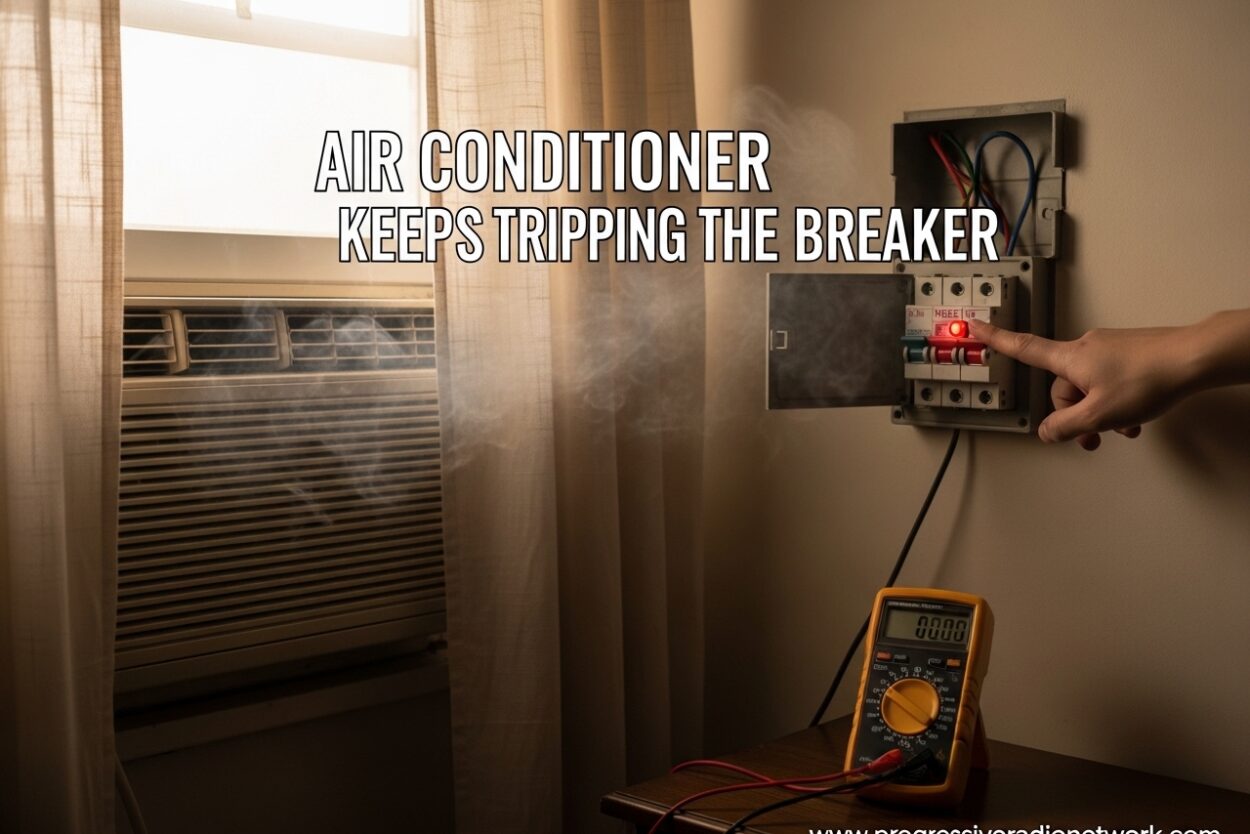
Nothing kills a summer afternoon like your air conditioner shutting down unexpectedly. When you find yourself heading to the electrical panel for the third time in a day to reset a tripped breaker, it’s more than frustrating. Your air conditioner keeps tripping the breaker because something is causing it to draw more electrical current than the circuit can safely handle.
The good news is that most causes are fixable, and many are simple DIY projects. A tripping breaker is actually a safety feature designed to prevent electrical fires and protect your equipment from permanent damage. Understanding why it happens is the first step toward solving the problem.
Why Does My Air Conditioner Keep Tripping the Breaker?
Before diving into specific causes, it helps to understand what’s actually happening when your AC trips the breaker. Circuit breakers are designed to monitor electrical current flowing through wires. When the current exceeds the breaker’s rated capacity, it trips to prevent overheating and potential fire hazards.
Your air conditioner normally draws a specific amount of amps when running properly. However, when components malfunction or become dirty, the AC works harder and pulls more electrical current than the breaker can handle. This increased amp draw triggers the breaker to trip, cutting power to the unit.
Think of it like your car’s check engine light. The tripping breaker is a symptom, not the root cause. Something else is wrong with your AC system, causing it to demand more electricity than it should.
8 Common Reasons Your AC Keeps Tripping the Breaker
After troubleshooting dozens of AC systems and consulting with HVAC professionals, I’ve identified the most common culprits behind breaker trips. Understanding these causes will help you diagnose your specific situation faster.
1. Dirty Air Filter (Most Common Cause)
A clogged air filter is the number one reason air conditioners trip breakers. When your filter is dirty, air can’t flow freely through your system. This restriction forces your AC’s fan motor to work harder to pull air through, significantly increasing electrical draw.
I’ve seen air filters so clogged that the system was drawing 30-40% more power than normal. The strain on the blower motor eventually overloads the circuit, causing the breaker to trip. This is especially common during peak cooling season when filters accumulate debris quickly.
The fix is simple: check your filter monthly and replace it when you can no longer see light through it. For most homes, this means changing filters every 1-3 months. Not only will this prevent breaker trips, but it will also improve your AC’s efficiency and indoor air quality.
2. Dirty Condenser Coils
Your outdoor unit’s condenser coils are responsible for releasing the heat absorbed from your home. When these coils become coated in dirt, grass clippings, cottonwood seeds, or other debris, they can’t effectively release heat.
This causes pressure to build up in your system, forcing the compressor to work harder and draw more amps. The increased electrical load often trips the breaker, especially on hot days when your AC is running frequently.
You can clean condenser coils yourself with a garden hose and coil cleaner available at hardware stores. Simply spray the coils from the inside out to remove debris. For best results, do this annually in spring before peak cooling season begins.
3. Faulty Capacitor
The capacitor is a small but critical component that provides the extra electrical boost your compressor and fan motors need to start. When a capacitor begins to fail, motors struggle to start and draw significantly more power during startup.
This hard starting puts tremendous strain on your electrical system. A failing capacitor can cause amp draw to spike well beyond normal levels, tripping the breaker almost immediately when your AC attempts to turn on.
Capacitors are relatively inexpensive parts, but testing and replacing them involves working with high-voltage components. This is typically a job for an HVAC professional, though experienced DIYers can handle it with proper safety precautions.
4. Low Refrigerant (Freon) Levels
Low refrigerant levels are often caused by leaks in your AC system. When refrigerant is low, your compressor has to work harder to maintain cooling pressure, increasing electrical draw.
Additionally, low refrigerant can cause your evaporator coil to freeze. When ice forms on the coil, it further restricts airflow and creates additional strain on your system, potentially tripping the breaker.
Refrigerant issues require professional diagnosis and repair. Simply adding more refrigerant without fixing the leak is illegal and ineffective. A qualified technician will locate and repair leaks, then recharge your system to the correct refrigerant level.
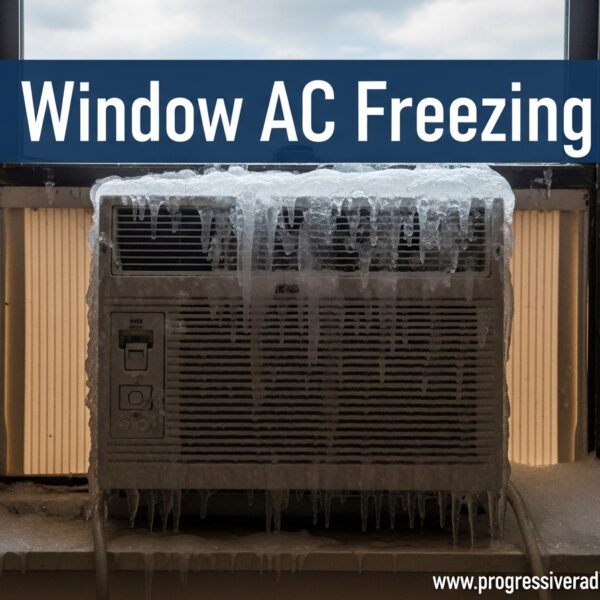
5. Frozen Evaporator Coils
Frozen evaporator coils can occur due to low refrigerant, restricted airflow from dirty filters, or blower motor problems. When ice forms on these coils, it blocks airflow completely and can cause the compressor to overheat.
The increased pressure and temperature force your compressor to draw excessive power, often tripping the breaker. If you notice ice on your refrigerant lines or inside your outdoor unit, turn off your AC immediately to prevent compressor damage.
Allow frozen coils to thaw completely before attempting to run your AC again. This typically takes 4-6 hours with the system off. Once thawed, address the root cause—whether it’s a dirty filter, low refrigerant, or blower motor issue—before restarting.
6. Fan Motor Problems
Your AC has multiple fan motors that move air through the system. When these motors begin to fail due to worn bearings, electrical shorts, or general wear and tear, they can draw excessive current or bind up completely.
A failing fan motor might run normally at first but then begin dragging as it heats up, increasing electrical draw until the breaker trips. In some cases, the motor may have an internal short that causes an immediate breaker trip when power is applied.
Fan motor replacement is typically a professional job. The technician will diagnose whether the motor can be repaired or if replacement is necessary. Costs vary depending on the motor type and whether it’s an OEM or aftermarket part.
7. Compressor Issues
The compressor is the heart of your air conditioning system, and compressor problems are among the most serious causes of breaker trips. Internal winding shorts, mechanical failures, or seized bearings can cause the compressor to draw excessive current.
Compressor issues often cause the breaker to trip immediately when the AC attempts to start. In some cases, you might hear a humming sound from the outdoor unit followed by the breaker tripping.
Compressor replacement is one of the most expensive AC repairs, often costing $1,500-$3,000 or more depending on your system. In some cases, especially on older units, complete system replacement may be more cost-effective than compressor replacement alone.
8. Electrical Wiring Problems
Loose, corroded, or damaged electrical connections can cause intermittent short circuits that trip breakers. Common issues include loose wire connections at the compressor or disconnect box, corroded wires from moisture exposure, or rodents chewing through wires.
A faulty contactor—the switch that controls power to your compressor—can also cause breaker trips. When contactor contacts become pitted or welded, they can create electrical arcing that trips the breaker.
Electrical problems require professional diagnosis and repair. Working inside your electrical panel or AC unit involves significant risk of shock or electrocution. A qualified HVAC technician can safely identify and repair wiring issues.
Time-Based Diagnosis: When Does the Breaker Trip?
Paying attention to when your breaker trips can provide valuable clues about what’s wrong. This diagnostic approach helps narrow down the potential causes and guides your troubleshooting efforts.
If your AC trips the breaker immediately upon startup, you’re likely dealing with a hard short circuit. This could be a compressor with grounded windings, a motor with an internal short, or severely damaged wiring. These are serious issues that require professional attention.
When the breaker trips after 5-10 minutes of operation, capacitor problems or partially blocked airflow are common culprits. The system starts normally but begins struggling as pressure builds or components heat up. A failing capacitor often causes these delayed trips.
Breaker trips after several hours of running typically indicate heat-related issues. Dirty condenser coils, low refrigerant, or aging compressor windings can all cause systems to run normally for a period before overheating and tripping the breaker.
Random, unpredictable breaker trips often point to loose electrical connections or an intermittent fault. These can be frustrating to diagnose because the problem doesn’t always occur when the technician is present. Documenting when trips happen can help your HVAC provider identify the issue faster.
DIY Troubleshooting Steps (What You Can Check)
Before calling a professional, there are several simple checks you can perform yourself. These steps address the most common causes of breaker trips and may resolve your problem without requiring a service call.
Check Your Air Filter
Start by locating your air filter and checking its condition. Hold it up to a light source—if you can’t see light through it, it’s time for a replacement. Note the filter size printed on the frame and purchase a replacement at your local hardware store.
This simple fix resolves a surprising number of breaker trip issues. I’ve seen countless cases where a $15 filter replacement solved what homeowners thought was a major system problem. Make filter checks part of your monthly routine, especially during peak cooling months.
Inspect Your Outdoor Unit
Walk outside and examine your condenser unit. Look for debris blocking airflow—leaves, grass clippings, cottonwood seeds, or any other material that could be restricting the coils. Clear away any vegetation within two feet of the unit.
Use a garden hose to gently wash dirt from the coils, spraying from the inside out. This simple maintenance task can dramatically improve your system’s efficiency and prevent breaker trips caused by dirty condenser coils. Perform this cleaning annually in spring before heavy AC use begins.
Look for Visible Electrical Issues
While you shouldn’t perform electrical repairs, you can visually inspect for obvious problems. Look at the disconnect box near your outdoor unit for signs of burning, melted wires, or corrosion. Check that the disconnect is fully engaged.
If you see any signs of electrical damage—burn marks, melted insulation, or corrosion—do not attempt to fix it yourself. These are clear indicators that you need professional electrical service. Document what you see with photos to share with your technician.
Check Your Thermostat Settings
While uncommon, certain thermostat settings can cause your AC to work harder than necessary. If your thermostat is set too low, your system may run continuously without adequate rest cycles, increasing the chance of overheating.
Set your thermostat to a reasonable temperature—around 74-76 degrees—and ensure it’s not set to “emergency heat” or other inappropriate modes. Programmable thermostats should be set to allow the system to cycle off periodically rather than running continuously.
When to Call a Professional HVAC Technician
While DIY troubleshooting can address some issues, many AC problems require professional diagnosis and repair. Electrical work, refrigerant handling, and component replacement involve specialized knowledge and equipment.
Call a professional immediately if you notice burning smells, see visible electrical damage, or experience repeated breaker trips despite changing your filter. These are signs of serious problems that could pose safety hazards if ignored.
Refrigerant issues always require professional service. Federal regulations prohibit homeowners from handling most refrigerants, and specialized equipment is needed to properly diagnose leaks and recharge systems to precise levels.
Compressor and motor replacements are complex repairs requiring specialized tools and knowledge. An experienced HVAC technician can accurately diagnose whether replacement is necessary and recommend the most cost-effective solution.
If you’ve performed basic troubleshooting and your AC continues tripping the breaker, it’s time to call a professional. Continuing to reset the breaker without addressing the root cause can lead to more extensive damage and higher repair bills.
Frequently Asked Questions
Why is my AC continuously tripping?
Continuous AC breaker trips typically indicate a serious electrical issue or major component failure. Common causes include a shorted compressor, faulty capacitor with hard starting, low refrigerant causing system strain, or damaged wiring. Each time the breaker trips, reset it only once—if it trips again immediately, stop trying to run the AC and call a professional. Continued attempts to operate a malfunctioning system can cause permanent damage to your compressor or create a fire hazard.
Can a bad AC breaker cause a fire?
Yes, a faulty or continuously tripping AC breaker can be a fire hazard. Breakers are designed to trip as a safety measure, but repeatedly resetting a tripping breaker without addressing the underlying cause can lead to overheated wires, melted insulation, and electrical fires. If you notice your breaker feels hot to the touch, shows signs of burning, or trips repeatedly, stop using the circuit and contact an electrician immediately. The breaker is telling you something is wrong—ignoring this warning is dangerous.
Can a dirty filter cause an AC breaker to trip?
Absolutely—dirty air filters are the #1 cause of AC breaker trips. When your filter is clogged, airflow restriction forces your blower motor to work harder, drawing significantly more electricity than normal. This increased amp draw can overload the circuit and trip the breaker. The good news is this is also the easiest problem to fix. Simply replacing your dirty filter with a fresh one will often resolve the tripping issue within a day. Check your filter monthly and replace it when you can no longer see light through it.
Will low freon cause a breaker to trip?
Yes, low refrigerant (Freon) levels can cause your AC breaker to trip. When refrigerant is low, your compressor works harder to maintain cooling pressure, increasing electrical draw beyond normal levels. Low refrigerant also causes evaporator coils to freeze, further restricting airflow and increasing system strain. The combination of these factors can overload your circuit and trip the breaker. Low refrigerant always indicates a leak—simply adding more won’t fix the problem permanently. A qualified technician must locate and repair the leak, then recharge your system to the correct level.
Conclusion
Dealing with an air conditioner that keeps tripping the breaker is frustrating, but most causes are identifiable and fixable. Start with the basics—check your air filter, clean your condenser coils, and ensure proper airflow around your outdoor unit. These simple steps resolve the majority of breaker trip issues.
Remember that your air conditioner keeps tripping the breaker as a safety mechanism. The tripping itself isn’t the problem—it’s a symptom indicating something else is wrong. Address the root cause rather than repeatedly resetting the breaker, which can lead to more extensive damage.
For electrical issues, refrigerant problems, or compressor failures, professional service is essential. These repairs require specialized knowledge and equipment, and attempting DIY fixes can be dangerous or cause further damage to your system.
Prevent future breaker trips through regular maintenance. Change filters monthly, clean condenser coils annually, and schedule professional tune-ups before peak cooling season. These simple steps keep your AC running efficiently and help you avoid unexpected breakdowns when you need cooling most.
Leave a Comment