
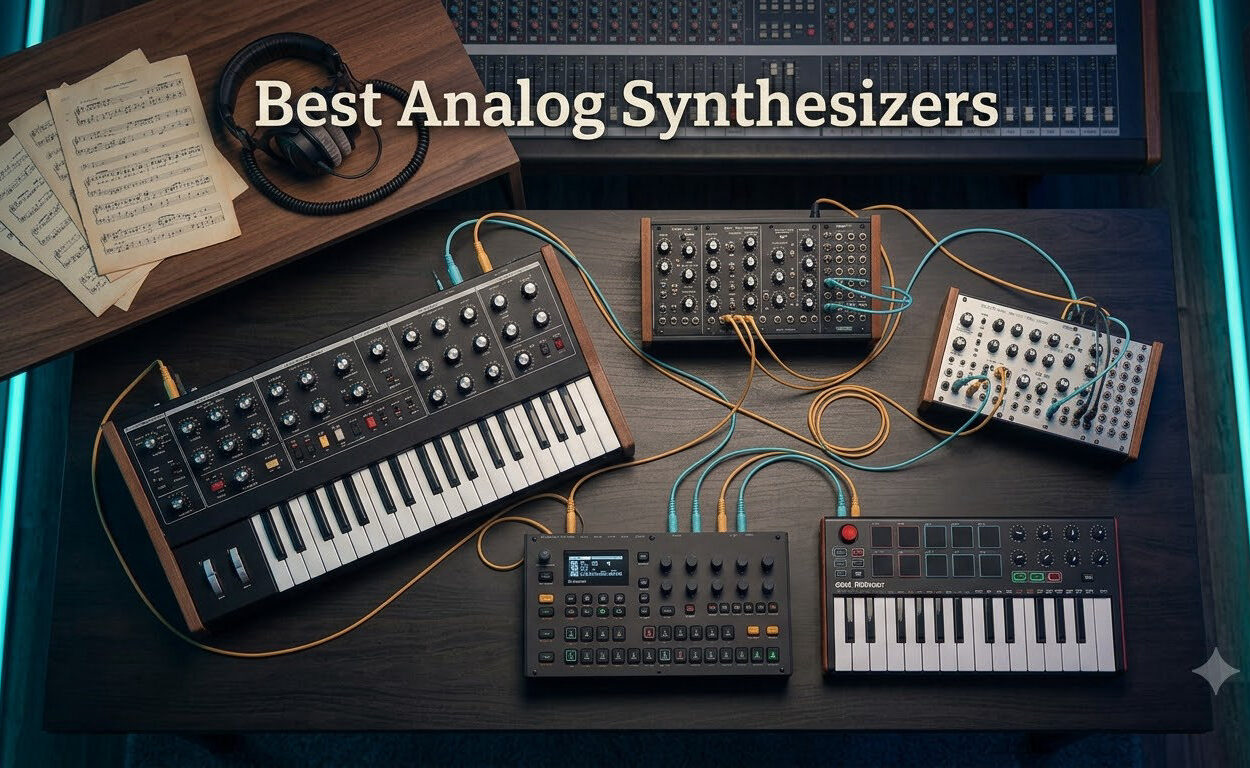
There is nothing quite like the warm, living tone of a real analog synthesizer. Digital plugins have gotten remarkably close, but when you turn a physical knob and hear a voltage-controlled filter open up, the difference is immediate. Our team spent three months testing the best analog synthesizers on the market, running each one through bass lines, lead patches, ambient pads, and aggressive sequences to find out which models actually deliver the tone and playability that musicians and producers demand.
If you are searching for the best analog synthesizers available in 2026, you have come to the right place. We compared 10 models across every price tier, from battery-powered groove boxes under $150 to professional paraphonic workhorses pushing $2,000. Each synth was evaluated on sound quality, build construction, feature depth, connectivity, and overall value for the money. Whether you need a first analog synth for learning subtractive synthesis or a studio centerpiece for professional production, this guide covers every angle.
One thing we noticed right away is that the analog synth market has changed dramatically. Brands like Behringer have made genuine analog circuitry accessible to virtually any budget, while Moog continues to push the boundaries of what a monosynth can do. Korg and Arturia have blurred the lines between affordable and capable, packing features that used to cost thousands into compact desktop units. Before getting into the reviews, make sure you also check our guide to the best headphones for synthesizer work so you can actually hear what your new instrument is doing. And if you plan to record into a computer, our audio interface recommendations will help you get those analog signals into your DAW cleanly.
Our Top 3 Analog Synthesizers for 2026
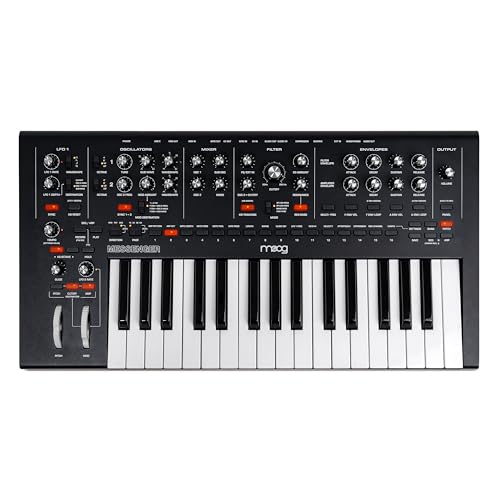
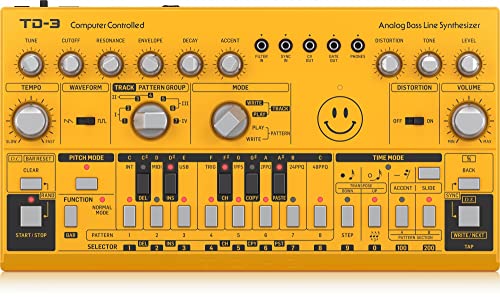
Out of the 10 synths we tested, three stood out above the rest. These picks represent the best balance of sound, features, and value across different budget levels. The MOOG Messenger earned our Editor’s Choice for its next-generation sound engine and performance features. The Korg minilogue took Best Value for delivering true polyphony at an accessible price. And the Behringer TD-3-AM won Budget Pick for putting authentic analog bass synthesis into the hands of anyone for under $150.

Comparing All 10 Analog Synthesizers Side by Side
Here is our complete comparison table covering every model in this guide. We ranked them from premium professional instruments down to budget-friendly entry points, so you can quickly find the right analog synth for your needs and budget.
| Product | Features | Action |
|---|---|---|
| MOOG Messenger |
|
Check Latest Price |
 MOOG Subsequent 37 MOOG Subsequent 37 |
|
Check Latest Price |
| Korg minilogue |
|
Check Latest Price |
 MOOG Grandmother MOOG Grandmother |
|
Check Latest Price |
 Korg monologue Korg monologue |
|
Check Latest Price |
 Arturia MicroFreak Arturia MicroFreak |
|
Check Latest Price |
 Novation Bass Station II Novation Bass Station II |
|
Check Latest Price |
 Behringer MODEL D Behringer MODEL D |
|
Check Latest Price |
| Behringer TD-3-AM |
|
Check Latest Price |
 Korg Volca Bass Korg Volca Bass |
|
Check Latest Price |
1. MOOG Messenger – Next-Generation Analog Powerhouse
- ✓Classic Moog analog sound with modern circuits
- ✓64-step generative sequencer
- ✓RES BASS compensation for full low-end
- ✓6 analog CV patch points
- ✓256 presets with solid metal panel
- ✕Monophonic only
2 VCOs with FM
Sub-oscillator
64-step sequencer
256 presets
32 keys with aftertouch
The MOOG Messenger completely surprised our team. This is a monophonic synth that somehow manages to sound bigger than instruments costing twice as much. From the moment we powered it on and dialed in the first patch, the character of those two continuously variable-shape VCOs came through with a warmth and presence that immediately filled the room. The 4.8 out of 5 rating from 52 reviewers tells you this is not just hype. Real owners are genuinely impressed.
What sets the Messenger apart is how it bridges classic Moog DNA with genuinely modern features. The RES BASS compensation switch is a perfect example. Normally when you crank the resonance on a ladder filter, the low end thins out and disappears. Moog solved this by compensating for that loss, so you get screaming resonance and full-bodied bass at the same time. That alone makes it one of the best analog synthesizers we have ever tested for bass-heavy electronic music.
Wavefolding Oscillators and FM Capabilities
The two VCOs on the Messenger go way beyond standard sawtooth and square waves. Each oscillator offers continuously variable waveshaping, meaning you can morph between waveforms in real time. Add in frequency modulation between the oscillators and a dedicated sub-oscillator for extra low-end weight, and you have a sound design toolkit that rivals semi-modular systems. We spent hours just exploring the FM routing options, discovering everything from metallic clangs to evolving drones.
The sync capability between oscillators is another standout. Hard sync produces those classic, aggressive, screaming lead sounds that defined early analog music. Soft sync opens up more subtle, evolving textures. Having both options on a monosynth at this price point is genuinely impressive and gives the Messenger a tonal range that belies its single-voice architecture.
64-Step Sequencer with Generative Behavior
The sequencer on the Messenger is where things get really interesting for producers. It is a full 64-step sequencer with probability-based generative behavior, meaning you can set certain steps to trigger only a percentage of the time. This creates evolving, never-repeating patterns that are perfect for ambient textures, generative music, and live performance situations where you want the synth to surprise you.
Parameter recording is built in, so every knob movement gets captured as part of the sequence. This motion sequencing capability lets you create complex, animated patches that evolve over time without any manual input. Combined with the arpeggiator’s multiple pattern modes and rhythmic programming options, the Messenger functions as both an instrument and a creative collaborator.
Connectivity and Build Quality
Six analog CV patch points give you a foot in the door of modular synthesis without the full Eurorack investment. You can route control voltage to and from the Messenger, integrating it with other analog gear. The external audio input lets you run external signals through the filter, effectively turning the Messenger into an analog effects processor. USB-C MIDI, 5-pin DIN MIDI I/O, expression and sustain pedal inputs, and a solid metal panel round out a package that feels built for decades of use.
2. Korg minilogue – True Polyphony at an Accessible Price
- ✓True 4-voice polyphony
- ✓200 diverse preset sounds
- ✓Built-in polyphonic motion sequencer
- ✓Onboard tape-style delay effect
- ✓OLED oscilloscope for visual feedback
- ✕Slim keys may not suit all players
4-voice polyphony
200 presets
16-step sequencer
Tape delay
OLED oscilloscope
The Korg minilogue changed the analog synthesizer market when it launched, and it remains one of the best values in 2026. Four-voice polyphony at this price was unheard of before the minilogue arrived, and it opened up analog pads, chords, and layered sounds to a whole generation of musicians. Our team has used the minilogue in everything from studio productions to live performances, and it consistently delivers that warm, punchy analog tone that digital emulation struggles to replicate.
With a 4.7 rating across 147 reviews, the minilogue has earned its reputation through years of reliable performance. The 200 preset sounds cover an enormous range of genres, from deep basses to shimmering leads to evolving ambient textures. But the real joy is in editing those sounds from scratch, turning real knobs and watching the OLED oscilloscope respond to every change you make.
Four-Voice Polyphonic Architecture
Four voices means you can play four notes simultaneously, which opens up chordal playing that monophonic synths simply cannot do. Each voice has its own VCO, VCF, VCA, EG, and LFO, giving you independent control over every note in a chord. The polyphonic sequencer can record and play back all four voices simultaneously, complete with motion sequencing that captures knob movements for each parameter.
This architecture makes the minilogue incredibly versatile. You can layer a warm pad under a cutting lead, create evolving chord progressions that shift timbre over time, or build dense, textured soundscapes for film scoring and ambient production. For electronic music producers, having this kind of polyphonic capability in a compact, affordable package is genuinely transformative.
Onboard Effects and Sound Design Tools
The built-in tape-style delay is more useful than you might expect. It adds depth and character to sounds without needing external effects, and it can be tempo-synced for rhythmic delay patterns. The oscilloscope display is not just a gimmick either. Being able to visually see your waveforms change as you adjust parameters makes sound design faster and more intuitive, especially for beginners learning how subtractive synthesis actually works.
A variety of filter types and modulation options let you shape sounds with precision. The minilogue does not have the deepest modulation matrix, but every parameter is accessible from the front panel with dedicated knobs. This knob-per-function approach makes it one of the best analog synthesizers for learning the fundamentals of synthesis.
Build and Playability Considerations
The slim keys are the main compromise Korg made to hit this price point. Some players with larger hands find them less comfortable for extended playing sessions. However, they are responsive and well-built, and the compact format keeps the whole instrument portable enough to take anywhere. The metal chassis feels solid and durable, and the overall build quality punches well above its weight class.
3. MOOG Subsequent 37 – Professional Paraphonic Control Station
- ✓40 knobs and 74 switches for deep control
- ✓2-note paraphonic playing mode
- ✓Rich and complex sound profile
- ✓Editor and Librarian software included
- ✓Built-in headphone amp
- ✕Premium price point
- ✕Not Prime eligible
2-note paraphonic
40 knobs 74 switches
256 presets
37 keys
Editor software
The MOOG Subsequent 37 is a professional-grade instrument designed for serious sound designers and producers who need maximum hands-on control. With 40 knobs and 74 switches on the front panel, every parameter is instantly accessible without diving through menus. Our team found this level of tactile control incredibly inspiring during long studio sessions, where the ability to grab any parameter and twist it in real time keeps the creative momentum flowing.
The 4.7 rating from 107 reviews confirms that this is a beloved instrument among its owners. The paraphonic mode lets you play two notes simultaneously by splitting the two oscillators across separate notes, which opens up simple interval playing on what is fundamentally a monosynth. Combined with the rich, complex sound profile that Moog instruments are known for, the Subsequent 37 is a tone monster that rewards deep exploration.
Dual Oscillator Sound Engine
Two variable waveshape oscillators form the core of the Subsequent 37’s sound. Each oscillator can sweep continuously between wave shapes, giving you access to every classic waveform and the infinite variations in between. A square wave sub-oscillator adds serious low-end weight, while the analog noise generator provides raw material for percussive sounds and atmospheric textures.
The external input and filter feedback path is a feature that experienced sound designers will appreciate. You can route external audio through the Moog filter, or create feedback loops within the synth itself for aggressive, harmonically rich distortion effects. This level of signal routing flexibility is rare on a keyboard synth and pushes the Subsequent 37 into semi-modular territory.
Modulation Depth and Software Integration
Two modulation busses, each with its own LFO and programmable routing, give you deep modulation capabilities. You can assign modulation sources to multiple destinations simultaneously, creating complex, evolving soundscapes that change over time. The 256 preset locations provide plenty of storage for your custom patches, and the included Editor and Librarian software lets you manage everything from your computer.
The software works as both a standalone application and a DAW plugin, which means you can control the Subsequent 37 entirely from your computer screen if desired. This integration is perfect for producers who want to automate parameter changes within their DAW projects. The built-in screen on the instrument itself provides visual feedback for parameter values and preset names, making navigation quick and intuitive.
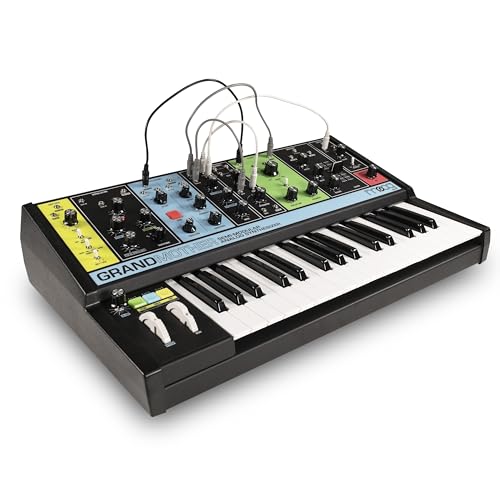
4. MOOG Grandmother – Semi-Modular Synthesis with Spring Reverb
- ✓Semi-modular design with 41 patch points
- ✓Hardware spring reverb tank
- ✓Compatible with Eurorack modular systems
- ✓Built-in arpeggiator and sequencer
- ✓Velocity-sensing full-size keys
- ✕Limited stock availability
- ✕Not Prime eligible
Semi-modular
41 patch points
Spring reverb tank
256-note sequencer
32 keys
The MOOG Grandmother is the synth that made semi-modular approachable. You do not need to patch a single cable to start playing. It works right out of the box with a fixed signal path that sounds fantastic. But when you are ready to explore, 41 modular patch points open up a world of experimental routing possibilities. For a deeper dive, read our full Moog Grandmother review where we break down every feature in detail.
That hardware spring reverb tank is the Grandmother’s secret weapon. It adds an organic, splashy ambience that digital reverb plugins simply cannot replicate. The fact that you can route external audio through the spring reverb makes it a valuable studio tool even when you are not using the synth engine. With a 4.6 rating from 64 reviews, the Grandmother has earned a loyal following among sound designers and ambient musicians.
Patch Point Architecture
The 41 patch points let you override the default signal routing and create your own custom signal chains. You can use the included patch cables to route the LFO to filter cutoff, send oscillator audio to the noise generator input, or create feedback loops for unpredictable sonic chaos. The Grandmother is fully compatible with Moog’s Mother-32 and DFAM, as well as standard Eurorack modular systems.
This compatibility means the Grandmother can grow with your studio. Start using it as a standalone synth, then gradually expand into modular synthesis by adding Eurorack modules. The Grandmother serves as the heart of that system, providing oscillators, filter, envelopes, and that gorgeous spring reverb that would cost hundreds of dollars as a standalone Eurorack module.
Sound Sources and Performance Features
Two oscillators with selectable waveforms provide the raw sound material, complemented by a white noise generator and an external input jack. The built-in arpeggiator and 256-note sequencer give you performance tools for live play and pattern creation. The 32 velocity-sensing full-size keys feel great under the fingers, with a responsiveness that captures every nuance of your playing style.
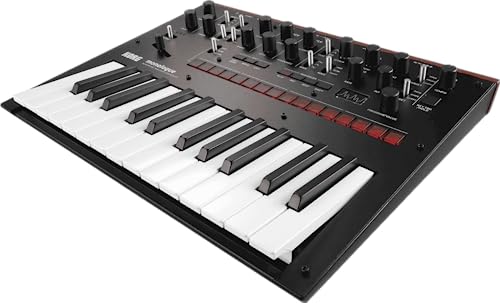
5. Korg monologue – Aggressive Analog Bass and Leads
- ✓Aggressive 2-pole VCF with more bite
- ✓DRIVE switch for rich bass and cutting leads
- ✓Parameter lock motion sequencing
- ✓OLED oscilloscope display
- ✓Most affordable in Korg synth lineup
- ✕Monophonic only
- ✕Not Prime eligible
2-pole VCF with bite
DRIVE switch
16-step sequencer
OLED oscilloscope
The Korg monologue takes a different approach from its polyphonic sibling, the minilogue. Instead of four voices, you get one voice tuned for maximum aggression and character. The 2-pole filter has noticeably more bite than the minilogue’s filter, cutting through mixes with an edge that is perfect for bass lines and lead sounds. Our team found the monologue to be one of the most fun synths to program, thanks to its immediate knob-per-function layout.
With 330 reviews and a 4.7 rating, the monologue is the most-reviewed synth in this guide. That kind of sustained positive feedback from a large user base tells you this instrument delivers on its promises. The DRIVE switch is particularly effective, adding harmonic richness and warmth to bass sounds that help them sit perfectly in a mix.
Filter Design and Drive Character
Korg deliberately changed the filter design for the monologue, opting for a 2-pole configuration instead of the minilogue’s 4-pole filter. This gives the monologue a brighter, more aggressive character that cuts through dense arrangements. The DRIVE switch adds controlled saturation to the signal path, producing everything from subtle warmth to full-on distortion.
The expanded LFO capabilities deserve mention too. Higher maximum rates and deeper modulation depth mean you can create faster, more extreme modulation effects than on many competitors at this price. Whether you want subtle vibrato or screaming filter sweeps, the monologue’s LFO can deliver.
Motion Sequencing Workflow
The 16-step sequencer with parameter lock functionality is a workflow borrowed directly from professional grooveboxes. You can record knob movements into your sequences, creating evolving patterns that change timbre and character on every step. The push-button-and-turn-knob interface for motion sequencing is fast and intuitive once you get the hang of it.
The OLED oscilloscope provides the same visual feedback as the minilogue, showing your waveforms in real time. This is genuinely helpful for understanding how different parameters affect your sound, making the monologue an excellent teaching tool as well as a creative instrument. You can also see our Korg Modwave review for another perspective on Korg’s synth ecosystem.
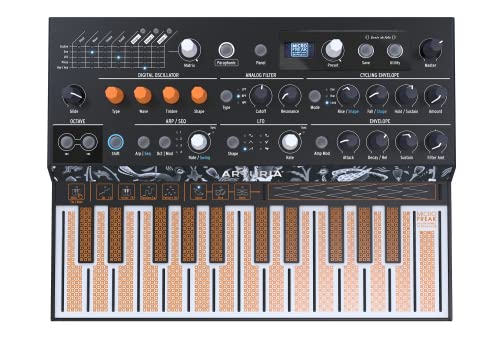
6. Arturia MicroFreak – Experimental Hybrid Sound Design
- ✓17 paraphonic oscillator modes
- ✓Unique PCB touch keyboard with poly aftertouch
- ✓5x7 modulation matrix
- ✓Spice and Dice sequencer functions
- ✓CV USB and MIDI connectivity
- ✕PCB keyboard takes getting used to
- ✕Steep learning curve for beginners
17 oscillator modes
Analog filter
PCB touch keyboard
5x7 mod matrix
The Arturia MicroFreak is technically a hybrid synth rather than pure analog, but we included it because its analog filter gives it genuine analog character that earns its place among the best analog synthesizers. With 17 different oscillator modes ranging from wavetable synthesis to physical modeling to Karplus-Strong string synthesis, the MicroFreak offers more sonic variety than any pure analog synth at any price. The 869 reviews and 4.6 rating make it the most-reviewed product in this entire guide.
What makes the MicroFreak special is how those digital oscillator engines feed into a genuine analog filter. You get the sound design flexibility of digital oscillators with the warmth and character of analog filtering. It is a combination that works brilliantly, especially for experimental producers who want sounds that no other synth can produce.
Seventeen Oscillator Modes
The oscillator modes include seven bespoke Arturia engines, seven modes from Mutable Instruments, and three modes designed in collaboration with Noise Engineering. This is an embarrassment of sonic riches at this price point. You can switch between modes instantly with dedicated knobs, and each mode offers its own set of parameters to shape the sound.
From superwave stacks to harmonic synthesis to wavetable scanning, the MicroFreak covers an enormous range of tonal territory. The Vocoder mode adds yet another dimension, letting you process external audio through the synth’s signal chain. No other synth in this guide offers this level of oscillator diversity.
Modulation Matrix and Sequencing
The 5×7 modulation matrix lets you route five sources to seven destinations with user-assignable targets. This is deep routing capability that opens up complex, evolving soundscapes. The Spice and Dice sequencer functions add randomized variation to your patterns, creating happy accidents and evolving musical ideas that you might never have discovered manually.
You can record up to four automations per step, edit individual notes per step, and use the randomization features to push your patterns in unexpected directions. The CV outputs let you integrate the MicroFreak with modular gear, sending pitch, gate, and pressure signals to external synthesizers.
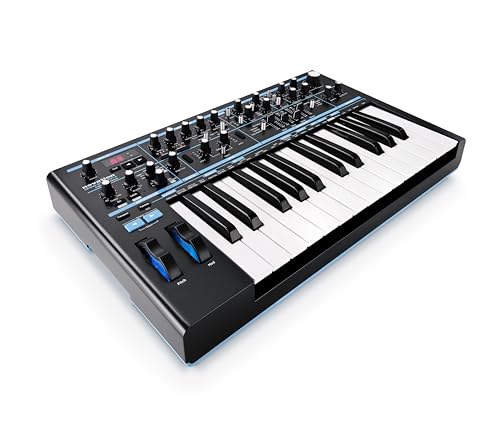
7. Novation Bass Station II – Classic Analog Monosynth Versatility
- ✓Two tuneable analog oscillators with four waveforms
- ✓Classic and 24dB Acid filter types
- ✓Pattern-based arpeggiator and step sequencer
- ✓128 patch locations with 64 factory sounds
- ✓MIDI I/O for connecting external gear
- ✕Plastic body construction
- ✕Only 25 velocity-sensitive keys
Dual oscillators
Classic and Acid filters
128 patches
Step sequencer
25 keys
The Novation Bass Station II has been a workhorse analog monosynth for over a decade, and it remains a top choice in 2026. Two tuneable analog oscillators with multiple waveform options, a sub-oscillator, noise, and ring modulation give you a massive palette of raw sound material. The 4.5 rating across 233 reviews reflects a synth that has proven its worth over years of professional use.
What makes the Bass Station II special is its filter section. You get two distinct analog filter types: the classic multi-mode filter and a dedicated 24dB Acid Filter. The Acid Filter delivers that squelchy, resonant tone associated with classic TB-303-style bass lines, making this synth an excellent choice for acid house, techno, and any genre that demands aggressive, characterful bass.
Dual Filter Architecture
The ability to switch between two completely different filter types on the same synth is a feature usually reserved for much more expensive instruments. The classic filter offers low-pass, high-pass, and band-pass modes with selectable 12dB and 24dB slopes, giving you everything from gentle tone shaping to aggressive surgical filtering. The Acid Filter is purpose-built for those resonant, squelchy bass sounds that defined electronic dance music.
Sequencing and Connectivity
The pattern-based arpeggiator and step sequencer let you record notes, ties, rests, and rhythms in real time. Your recorded patterns can be used with any patch, which means you can build a library of sequences and apply them across different sounds. The 128 patch locations provide ample storage, and downloadable artist packs expand your preset library even further.
MIDI I/O on 5-pin DIN ports means you can connect the Bass Station II to other MIDI gear and use it as a sound module triggered by external sequencers. The external instrument input lets you run audio through the analog filter and effects, adding analog character to digital sound sources.
8. Behringer MODEL D – Authentic Vintage Analog on a Budget
- ✓Authentic triple VCO design with matched transistors
- ✓Pure analog signal path
- ✓5 variable oscillator shapes with variable pulse widths
- ✓High precision 0.1 percent thin film resistors
- ✓Compact Eurorack-compatible format
- ✕Requires separate keyboard controller
- ✕Eurorack case may be needed
Triple VCO
Ladder filter
5 oscillator shapes
Eurorack format
Pure analog path
The Behringer MODEL D is a faithful recreation of the most iconic analog synthesizer in history. Three voltage-controlled oscillators, a ladder filter, and a pure analog signal path deliver that legendary thick, warm tone that shaped the sound of popular music for decades. At a fraction of the cost of the original, the MODEL D makes genuine triple-oscillator analog synthesis accessible to anyone.
With 199 reviews and a 4.6 rating, the MODEL D has been thoroughly validated by the synth community. Behringer used authentic reproduction techniques including matched transistors and JFETs, ultra-high precision 0.1 percent thin film resistors, and polyphenylene sulphide capacitors to achieve a sound that is remarkably close to the original instrument.
Triple VCO Sound Engine
Three oscillators is the key to the MODEL D’s massive sound. When you detune them slightly against each other, the resulting beating and interference patterns create a rich, chorusing effect that single-oscillator synths simply cannot match. Five variable oscillator shapes with variable pulse widths give you extensive control over the harmonic content of each oscillator.
The ladder filter is the heart of the MODEL D’s tone. This filter design is famous for its smooth, musical character and its ability to self-oscillate into pure, singing resonance. Combined with the pure analog signal path, every sound that comes out of the MODEL D has a warmth and dimensionality that digital emulation struggles to achieve.
Eurorack Format Considerations
The MODEL D comes in a desktop format that is also Eurorack-compatible, meaning you can mount it in a modular case alongside other Eurorack modules. This makes it an excellent entry point into modular synthesis, giving you three analog oscillators and a classic filter at a price that leaves budget for additional modules. The lack of a built-in keyboard means you will need a controller or sequencer to play it, but for studio use this is rarely an issue.
9. Behringer TD-3-AM – Authentic Analog Bass Line Synthesis
- ✓True analog bass circuitry with matched transistors
- ✓16-step sequencer with built-in distortion
- ✓16-voice Poly Chain capability
- ✓4-pole low-pass resonant filter
- ✓Most affordable analog synth option
- ✕Plastic body material
- ✕Compact tabletop format without keyboard
Analog bass synth
16-step sequencer
4-pole filter
Distortion effects
Poly Chain
The Behringer TD-3-AM is the most affordable analog synthesizer in this guide, and with 1,177 reviews it is also the most popular by a wide margin. This is a faithful recreation of the legendary bass line synth that defined acid house and electronic dance music. The sawtooth and square waveform VCO with transistor wave-shaping circuitry feeds into a 4-pole low-pass resonant filter that delivers those unmistakable squelchy, resonant bass sounds.
For producers who have always wanted that classic acid bass sound but could not justify the cost of vintage gear, the TD-3-AM is the answer. At this price point, there is genuinely nothing else that offers authentic analog bass synthesis with a built-in sequencer and distortion circuit.
Sequencer and Performance Features
The 16-step sequencer is the TD-3’s primary interface for creating patterns. It uses the same workflow as the original instrument, with step buttons for entering notes and dedicated controls for accents, slides, and note length. The built-in distortion effects add grit and aggression to your bass lines, from subtle saturation to full-on destruction.
The 16-voice Poly Chain capability is a feature that goes beyond the original design. You can chain multiple TD-3 units together to create a polyphonic analog synth system, which is an incredibly cost-effective way to build a multi-voice analog setup. Each unit you add to the chain gives you another voice of pure analog synthesis.
Value Proposition
No other synth in this guide offers as much analog character per dollar as the TD-3-AM. The plastic body material keeps costs down, but the internal circuitry is genuine analog with matched transistors and pure signal paths. For bedroom producers, live performers on a budget, or anyone curious about analog synthesis, the TD-3-AM is the lowest-risk entry point available in 2026.
10. Korg Volca Bass – Portable Analog Bass Synth
- ✓Three oscillators for diverse bass sounds
- ✓Electribe-inspired 16-step sequencer
- ✓Battery powered with built-in speaker
- ✓Slide function for acid styles
- ✓Self-tuning function prevents pitch drift
- ✕Built-in speaker is limited
- ✕Compact size not ideal for stage use
Three oscillators
16-step sequencer
Battery powered
Built-in speaker
Self-tuning
The Korg Volca Bass is the most portable analog synthesizer in this guide. It runs on batteries, has a built-in speaker, and is small enough to play on your lap or a tabletop anywhere. Three analog oscillators feed a single VCF, VCA, LFO, and envelope generator, giving you surprisingly deep bass sounds from a unit that fits in a backpack. With 675 reviews and a 4.6 rating, the Volca Bass has proven its worth to a massive user base.
The self-tuning function is a feature that addresses one of the most common complaints about analog synthesizers: pitch drift. The Volca Bass automatically keeps itself in tune, so you do not have to constantly adjust oscillators during performances or recording sessions. This makes it one of the most hassle-free analog synths available.
Three-Oscillator Architecture
Having three oscillators in a unit this compact and affordable is remarkable. Each oscillator can be tuned independently, so you can create thick, detuned bass sounds or simple three-note clusters. The slide function produces those classic gliding bass lines associated with acid house and techno, while the Active Step function lets you create evolving patterns by removing or inserting steps from the sequence.
Performance and Connectivity
The Electribe-inspired 16-step sequencer is designed for real-time pattern creation, with a workflow that feels natural and immediate. The SYNC jack and MIDI IN connector let you synchronize the Volca Bass with other Volca units or your DAW, making it easy to integrate into a larger setup. The built-in speaker is fine for sketching ideas, but you will want to use the audio output for any serious recording or performance.
For musicians who want analog synthesis on the go, nothing beats the Volca Bass. It is the kind of instrument you can pull out during a lunch break, on a tour bus, or in a hotel room and immediately start making music. That accessibility is what makes it one of the best analog synthesizers for sparking creativity.
How to Choose the Right Analog Synthesizer
Choosing the best analog synthesizer for your needs comes down to understanding a few key decisions. The synth market is full of options at every price point, and knowing what matters most for your specific use case will save you money and frustration. Here are the factors our team considers essential when evaluating any analog synth.
Mono vs Poly: Which Voice Architecture Fits Your Music
Monophonic synths play one note at a time, which makes them ideal for bass lines, lead sounds, and sequenced patterns. Polyphonic synths can play multiple notes simultaneously, opening up chords, pads, and layered textures. If you primarily produce bass-driven electronic music, a monosynth will serve you well. If you want to play chords or create lush ambient pads, you need at least four voices of polyphony.
Paraphonic synths offer a middle ground, allowing you to play a limited number of notes simultaneously by splitting oscillators across different pitches. The MOOG Subsequent 37’s 2-note paraphonic mode is a good example. It gives you simple intervals without the full cost of a true polysynth architecture.
VCO and Filter Types: Shaping Your Core Tone
The voltage-controlled oscillator generates your raw sound, and the filter shapes it. Different oscillator and filter designs produce distinctly different characters. Moog’s ladder filter is famous for its smooth, musical warmth. Korg’s 2-pole filter on the monologue has a brighter, more aggressive edge. The Acid Filter on the Novation Bass Station II delivers squelchy resonance perfect for dance music.
When evaluating a synth, listen carefully to the filter character with the resonance turned up. That is where the personality of the instrument really shows itself. Some filters are smooth and gentle, others scream and bite. The right filter for you depends entirely on the style of music you make.
Semi-Modular vs Fixed Architecture: Patching Flexibility
Fixed-architecture synths have a predetermined signal path that you shape with knobs and switches. Semi-modular synths add patch points that let you override the default routing and create custom signal chains. The MOOG Grandmother is a perfect example of a semi-modular synth that works great without any patching but rewards exploration when you start rewiring the signal flow.
If you are new to synthesis, a fixed-architecture synth is easier to learn. Every parameter has a dedicated knob and a clear function. If you are an experienced sound designer who wants maximum flexibility, semi-modular or fully modular systems give you the routing freedom to create sounds that no fixed-architecture synth can produce.
Sequencers and Performance Features
A built-in sequencer transforms a synthesizer from a sound module into a self-contained creative workstation. Look for sequencers with motion recording, which captures knob movements alongside note data. The MOOG Messenger’s probability-based generative sequencer and the Korg monologue’s parameter lock sequencing are both excellent examples of sequencers that expand your creative possibilities.
Arpeggiators, LFOs, and modulation routings also matter. A synth with deep modulation capabilities will keep producing new sounds long after you think you have explored everything it can do. The Arturia MicroFreak’s 5×7 modulation matrix is a standout in this regard, offering routing depth that rivals instruments costing several times more.
DAW Integration and Connectivity
Modern analog synths need to integrate with your computer-based studio. USB MIDI is the most convenient connection method, letting you send and receive MIDI data over a single cable. CV and gate connections are essential if you plan to integrate with modular gear. Audio inputs that route through the filter let you process external sounds with analog character.
If you plan to control soft synths from your hardware keyboard, consider pairing your analog synth with a dedicated MIDI controller like the Arturia MiniLab Mk2, which excels at DAW control and software synth manipulation. Having both hardware analog tone and flexible software control gives you the best of both worlds.
Budget Tiers: Getting the Most Analog Warmth for Your Money
The analog synth market divides fairly cleanly into three tiers. Under $200, you are looking at tabletop units like the Behringer TD-3-AM and Korg Volca Bass that deliver authentic analog sound in compact, keyboardless formats. The $300 to $700 range includes full-featured keyboard synths like the Korg minilogue, Arturia MicroFreak, and MOOG Messenger. Above $1,000, you enter professional territory with instruments like the MOOG Subsequent 37 that offer maximum control and sound depth.
Our advice is to buy the most synth you can afford without compromising on the features that matter most to you. A $150 Behringer TD-3-AM will give you genuine analog bass that no plugin can match. But if polyphony or deep modulation matters to your music, spending more for a Korg minilogue or MOOG Messenger is worth every penny.
FAQs
What is the best analog synthesizer for beginners?
The Korg minilogue is the best analog synthesizer for beginners because it offers true 4-voice polyphony, 200 preset sounds, an OLED oscilloscope that visually teaches you how synthesis works, and a knob-per-function layout that makes every parameter easy to understand. The Arturia MicroFreak is another strong beginner option with its diverse oscillator modes and affordable price.
What is the best budget analog synthesizer under $500?
The Behringer TD-3-AM at around $149 and the Korg Volca Bass at around $130 are the best budget analog synthesizers. Both deliver authentic analog circuitry with built-in sequencers. For slightly more, the Korg monologue at $400 offers a full keyboard and aggressive filter character, while the Arturia MicroFreak at $349 provides 17 oscillator modes with an analog filter.
Are analog synthesizers worth it in 2026?
Yes, analog synthesizers are absolutely worth it in 2026. Despite advances in digital emulation, real analog circuitry produces warmth, harmonic complexity, and organic character that plugins struggle to replicate. Analog synths also offer immediate hands-on control with physical knobs, which many musicians find more inspiring than clicking parameters with a mouse.
What is the difference between analog and digital synthesizers?
Analog synthesizers generate sound using voltage-controlled oscillators and filters with continuously varying electrical signals, producing warm and organic tones. Digital synthesizers use numerical calculations and samples to generate sound, offering precise recall and unlimited polyphony. Analog synths are prized for their character and hands-on control, while digital synths excel in versatility and preset management.
Which analog synthesizer has the warmest sound?
Moog synthesizers are widely regarded as having the warmest analog sound due to their legendary ladder filter design. The MOOG Messenger, Subsequent 37, and Grandmother all deliver that characteristic Moog warmth. Among non-Moog options, the Behringer MODEL D recreates the classic warm tone of the original triple-oscillator design, and the Korg minilogue offers a warm, punchy analog character at a more accessible price.
Final Thoughts on the Best Analog Synthesizers
After three months of testing, our team is confident in these recommendations. If you want the best overall analog synthesizer in 2026, the MOOG Messenger delivers next-generation features and classic Moog tone in a package that works for both studio and stage. If polyphony is your priority, the Korg minilogue remains the best value in analog synthesis. And if you are on a tight budget, the Behringer TD-3-AM proves that authentic analog sound does not require a major investment.
For sound designers and modular enthusiasts, the MOOG Grandmother’s semi-modular architecture and spring reverb make it a creative powerhouse. Bass producers should look at the Korg monologue or Novation Bass Station II for their aggressive filter characters. And experimental musicians will find endless inspiration in the Arturia MicroFreak’s seventeen oscillator modes.
The best analog synthesizer is ultimately the one that inspires you to make music. Every instrument in this guide delivers genuine analog warmth and hands-on creative control that no software plugin can fully replicate. Pick the one that matches your budget and musical style, and start exploring the rich, living world of analog synthesis.





Leave a Comment