
A boost pedal raises the level of your guitar signal into the amplifier without adding distortion of its own, so you can push a clean amp into breakup, lift a solo above a band mix, or drive a second gain stage harder. For most players the best boost pedals for guitar do one thing very quietly and very repeatably, and that simplicity is exactly what the category hides badly.
I have spent the last few months swapping every pedal in this list through the same rig: a Strat into a tube combo on the clean channel, a Les Paul into a Marshall-style head on the edge of breakup, and a semi-hollow acoustic into a small valve amp for quieter rooms. Each one was judged on three things: how much usable gain it added, what it did to the noise floor, and whether I could recall the sound the next morning without a manual.
My overall winner is the TC Electronic SPARK MINI BOOSTER. It is the smallest box here, it adds 20 dB of clean level, and its PrimeTime footswitch lets you pick latched or momentary behaviour without thinking about it. That combination of transparency, footprint and switch logic is why it takes first place here for 2026.
What makes this category confusing is that almost every manufacturer uses the word boost for a different circuit. Some add pure volume, some cut the bass and lift the top end, some push midrange into a tube preamp, and some are really low-gain overdrive pedals that happen to clean up well at the bottom of the gain sweep. The six archetypes section further down maps each one to a player situation, so you can narrow the field before you read a single review.
If you are still building out the rest of the board, our [12 Best Guitar Effects Pedals](https://progressiveradionetwork.com/best-guitar-effects-pedals/) covers the wider signal chain, and the [10 Best Compressor Pedals For Any Guitar Tone](https://progressiveradionetwork.com/best-compressor-pedals/) guide explains the other half of the gain-staging puzzle most players run into first.
Our Top 3 Tested Boost Pedals for 2026

TC Electronic SPARK…
- ✓20 dB clean analog boost
- ✓PrimeTime latched or momentary footswitch
- ✓Ultra-compact die-cast housing
- ✓True bypass

Electro-Harmonix Soul…
- ✓Up to 20 dB boost at low gain
- ✓Boosted power rails for headroom
- ✓Switchable true or buffered bypass
- ✓Single knob control
MXR Micro Amp
- ✓Up to 20 dB of gain and volume
- ✓Single level knob
- ✓True bypass with no added noise
- ✓Runs on 9V battery or adapter
Best Boost Pedals at a Glance
Every pedal in the table below appears in the numbered reviews, in the same order, with its own boost range, bypass type and best-fit situation.
| Product | Features | Action |
|---|---|---|
| TC Electronic SPARK MINI BOOSTER |
|
Check Latest Price |
| Electro-Harmonix Soul Food |
|
Check Latest Price |
| MXR Micro Amp |
|
Check Latest Price |
 Wampler Tumnus V2 Wampler Tumnus V2 |
|
Check Latest Price |
 AZOR Pure Boost AZOR Pure Boost |
|
Check Latest Price |
 Electro-Harmonix LPB-1 Electro-Harmonix LPB-1 |
|
Check Latest Price |
 SONICAKE Sonic Super Master SONICAKE Sonic Super Master |
|
Check Latest Price |
 MXR CAE Boost Line Driver MXR CAE Boost Line Driver |
|
Check Latest Price |
 VSN Guitar Booster VSN Guitar Booster |
|
Check Latest Price |
 J. Rockett Archer Overdrive and Boost J. Rockett Archer Overdrive and Boost |
|
Check Latest Price |
 Laney TI-BOOST Signature Boost Laney TI-BOOST Signature Boost |
|
Check Latest Price |
 MXR Booster Mini MXR Booster Mini |
|
Check Latest Price |
1. TC Electronic SPARK MINI BOOSTER – The Clear Overall Winner
- ✓Genuinely transparent clean boost with 20 dB of headroom
- ✓PrimeTime footswitch switches between latched and momentary modes
- ✓Ultra-compact enclosure fits any crowded board
- ✓Silent low-noise footswitch operation
- ✓Single-knob simplicity
- ✕Not truly transparent - applies a fixed mid and high tilt that cannot be adjusted
- ✕Unbuffered so long cable runs can lose high end
- ✕Side-mounted 9V jack crowds the patch bay
20 dB analog boost
PrimeTime latched or momentary switch
True bypass
Single level knob
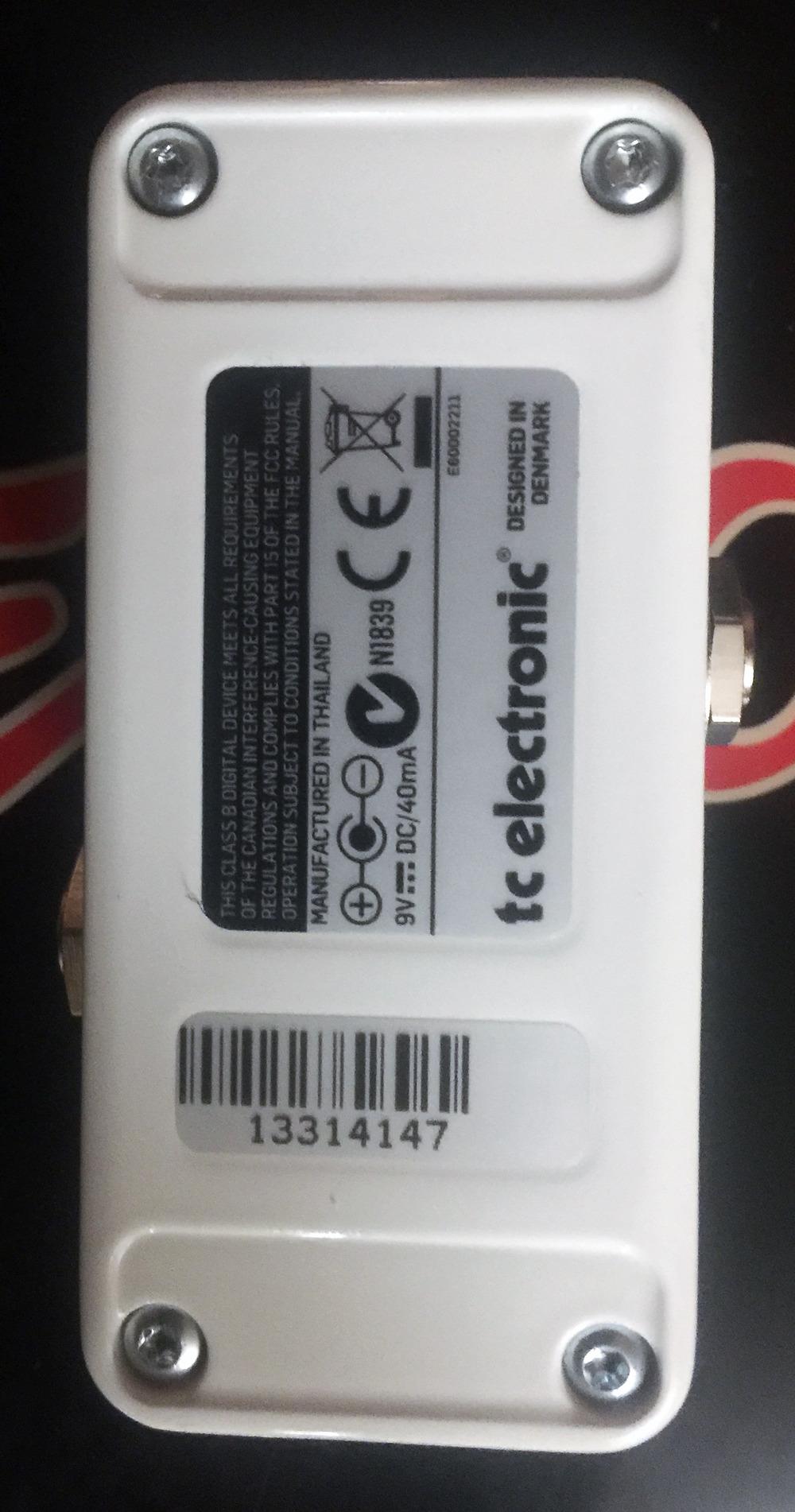
The SPARK MINI BOOSTER measures 3.66 by 2.01 inches and weighs a little over three ounces, which is why it never moved on my board once I fitted it. Everything else in this roundup had to earn its footprint. This one took the slot in front of everything else before I even started comparing tone.
Set the level knob to about two o’clock in front of a clean tube combo and the amp moved from polite to saturated without any change in the pedal’s own character. It is not perfectly flat: there is a gentle tilt toward the top end that reviewers consistently describe as pleasant rather than corrective, and it cannot be dialled out because there is only one knob. If you need EQ shaping, this is the wrong box.
20 dB of Clean Gain in a Very Small Box
Twenty decibels is more than most players ever use in one go, which is the useful part. It means the pedal can sit permanently in front of an amp as a preamp push and still leave headroom to lift a solo without redialing anything. On my Strat I set it around 9V and used the top half of the sweep only when a solo needed to sit above the rhythm guitar.
The circuit is fully analog and discrete, and the published current draw is 0.04 milliamps. That figure matters more than it sounds: on a shared pedalboard power supply this pedal will not be the reason anything hums.
The PrimeTime Footswitch Is the Feature That Sells It
Hold the footswitch down and the boost is momentary, the way a stomp on a wah behaves. Tap it and the boost latches on. Players who switch between rhythm and lead mid-song without looking down will feel this more than they expect, because it removes the guesswork about whether the pedal stayed engaged after a quick heel lift.
Where the Fixed EQ Shows Up
The tilt is mild enough that I stopped noticing it after a few rehearsals, but it does mean the pedal is not a neutral volume control. If your amp is already bright and you want a truly colourless lift, look at the MXR Micro Amp or the MXR CAE instead, both of which add level without adding an EQ opinion.
Because the pedal is unbuffered, a long cable run to a wireless system can roll off the top end, and that is exactly the situation the SONICAKE Sonic Super Master and the MXR CAE were built to solve.
Who It Suits and Who It Does Not
This is the first pedal I would hand to someone whose board is already full and whose amp has clean headroom. It is also the first pedal I would hand to a player who wants a momentary lead lift without dedicating a switch to it permanently.
Skip it if you rely on a boost for tone shaping, if you run a very long cable to an amp in another room, or if you want to dial the character out entirely. For any of those cases, spend the extra attention on a pedal with EQ controls or an active line driver.
2. Electro-Harmonix Soul Food – Best Value Overdrive That Doubles as a Boost
- ✓Doubles as a clean boost at low gain with plenty of output headroom
- ✓Exceptionally responsive to picking dynamics and volume roll-back
- ✓Boosted power rails add clarity to an already-loud amp
- ✓Switchable true and buffered bypass
- ✓Compact and rugged build
- ✕Overdrive character is brisker than Klon-style circuits
- ✕Buffered mode slightly colours the tone compared with true bypass
- ✕Single knob gives little tonal shaping while boosting
Up to 20 dB boost at low gain
Boosted power rails
Selectable true or buffered bypass
Single knob
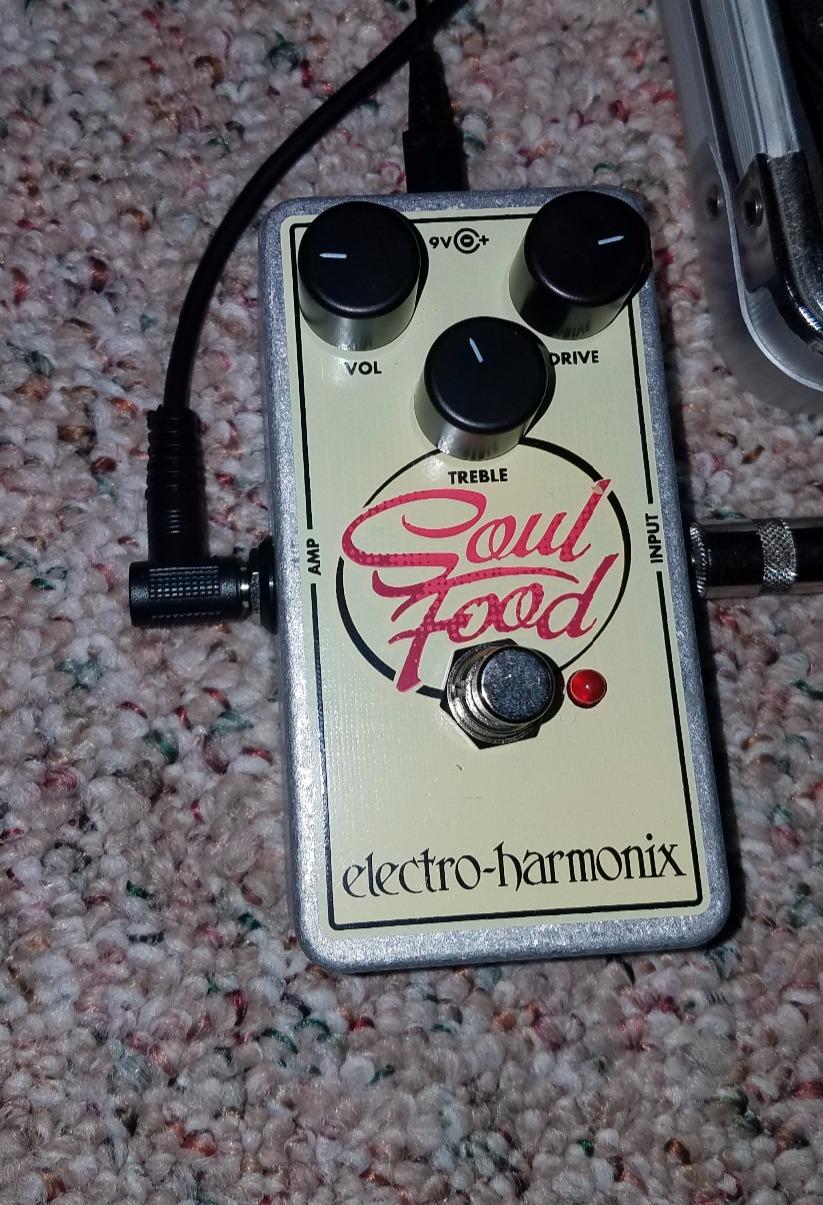
The Soul Food is not a dedicated boost, and treating it as one undersells it. At the bottom of the gain range it delivers clean boost with more output headroom than most pedals in this list, and by halfway up it is a fast, articulate overdrive that responds immediately to picking dynamics.
What makes it unusual is the boosted power rails. The circuit runs its internal voltage higher than a standard pedal, which is why it stays clear and defined when everything around it is already loud. When I stacked it in front of a tube amp that was already at the edge of breakup, it added definition instead of mush, which is the behaviour you actually want from a boost.
Boosted Power Rails and Headroom
Headroom is the reason this pedal can sit at the end of a long chain without turning to mush. Draws 40 milliamps, so it needs a supply that can handle it, but on a modern pedalboard brick that is rarely an issue. The gain at low settings produces around 20 dB of boost, enough to push a clean platform amp over its own threshold of clipping.
True or Buffered Bypass on a Toggle
Few pedals at this level give you both. With true bypass selected the circuit disappears completely, which preserves your amp’s own character. With buffered bypass selected the pedal stays in the path as a unity buffer, holding the signal level steady across a long cable run or a crowded board. On my board I flip to buffered whenever the wireless transmitter is more than a few metres away.
Where It Sits Against a Klon-Style Overdrive
Compared with a dedicated overdrive such as the Wampler Tumnus V2 or the J. Rockett Archer, the Soul Food is brisker and less smooth. It does not have the mid-forward singing sustain of those circuits. What it does have is speed and clarity, which makes it the better choice for players who play with the volume knob and want the note to respond instantly rather than bloom.
Who It Suits and Who It Does Not
Buy it if you want one pedal to cover a clean lead boost and a working overdrive, and if your board has room for a single-knob box with a bypass toggle. It is also a good first pedal for someone who has never owned a drive unit and wants to hear what gain feels like without losing their clean channel.
Pass on it if you want the low-gain-overdrive-sweetness sound specifically. The Archer and Tumnus cover that territory better, and this pedal is not trying to.
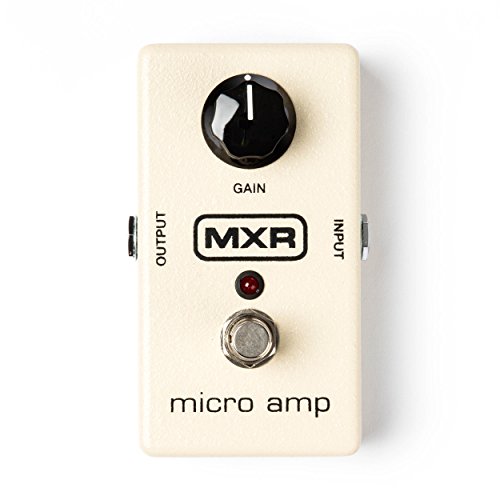
3. MXR Micro Amp – The Most Transparent Boost on the Board
- ✓Completely colourless boost that preserves amp and guitar tone
- ✓One knob gives repeatable instantly recallable levels
- ✓Adds real gain as well as volume so it can push a tube amp into breakup
- ✓No added noise or hum even on 9V battery power
- ✓Rugged die-cast build
- ✓Excellent for matching output between single-coil and humbucker guitars
- ✕No tone controls at all so there is no EQ shaping
- ✕At lower settings on Fender-style amps it mostly just makes the amp louder
- ✕Boost effect diminishes on already high-gain settings
Up to 20 dB of gain and volume
Single level knob
True bypass with no added noise
9V battery or adapter
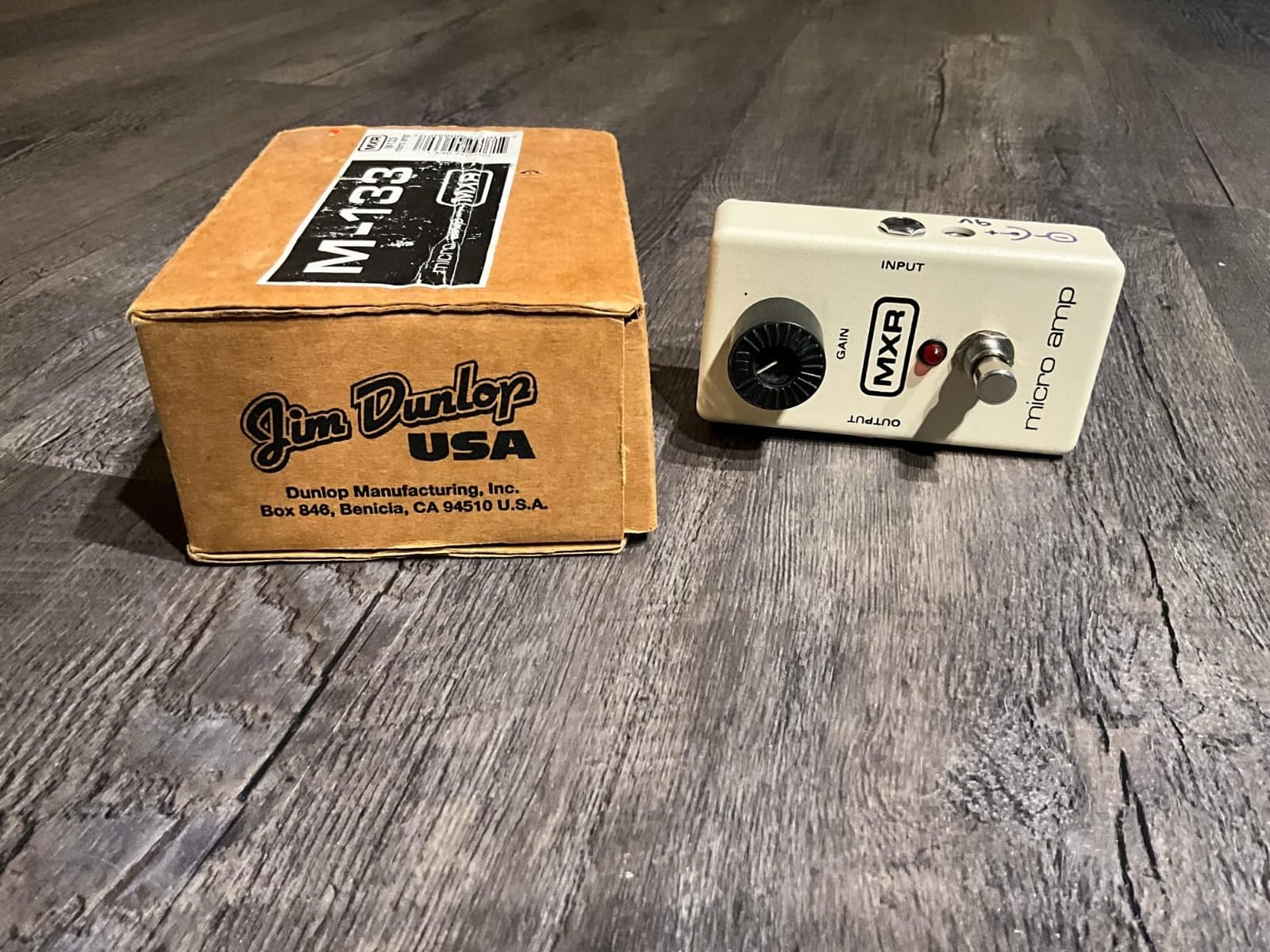
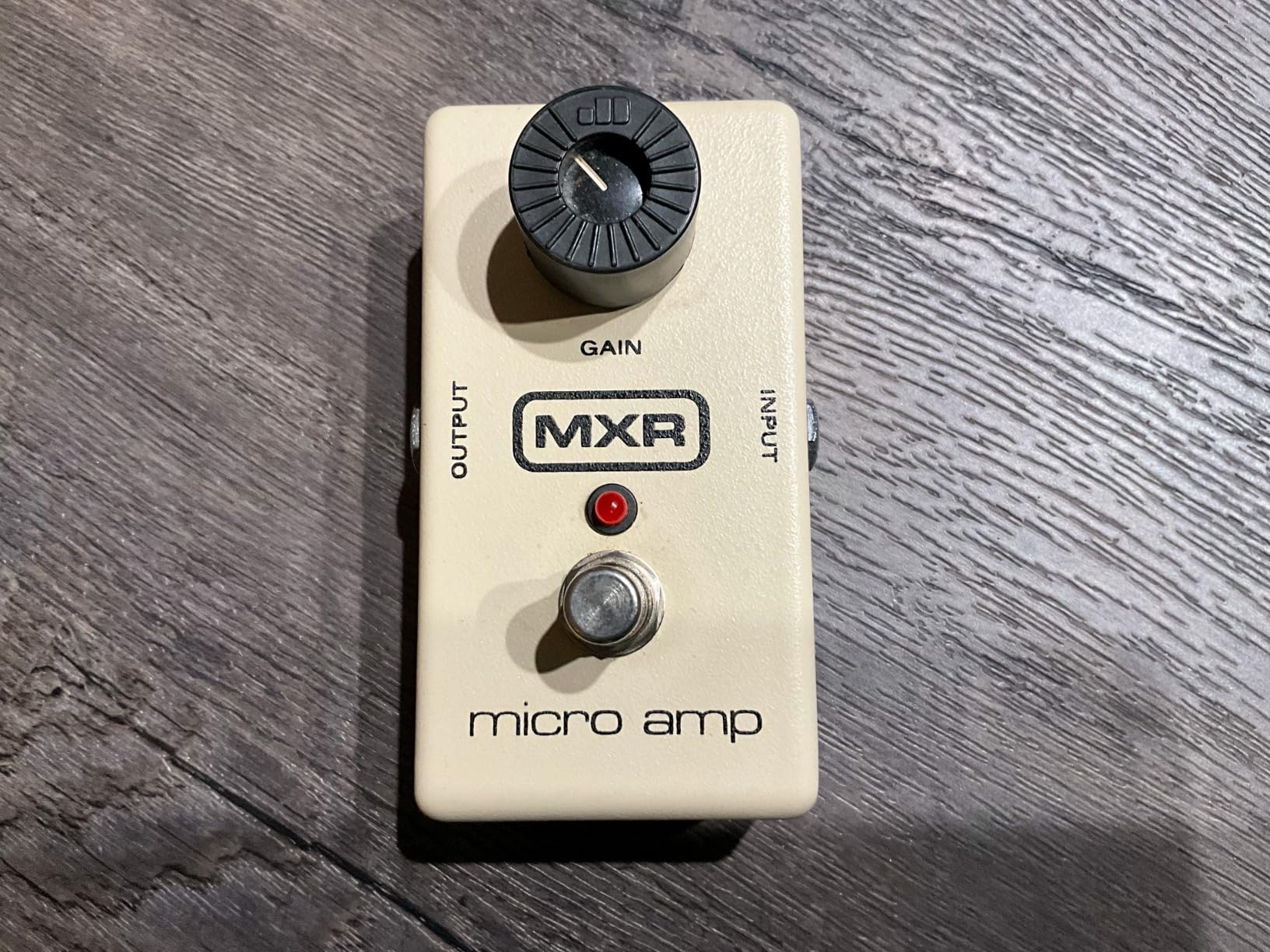
The Micro Amp has been doing one job since the late 1970s: adding level and gain to a guitar signal without changing what that signal sounds like. It scores the highest rating of anything in this roundup, and after using it as an always-on end-of-chain leveler for weeks I understand why. It disappears completely, which is exactly what a boost pedal should do.
Against a clean tube amp it behaves the way most players expect a boost to behave. Turning the knob up pushed the amp into real breakup, added compression and warmth, and did not colour the result. That is a different job from the SPARK MINI BOOSTER, which adds level more politely and leaves the amp’s own dynamics alone.
Colourless Gain From a Single Knob
There is no tone control and that is the design. Everything about the Micro Amp is aimed at one measurement: does the output sound like the input, only louder? Draws 9 milliamps and runs off a 9V battery or a Dunlop ECB003 adapter, so it is one of the friendliest pedals here on a shared supply.
Matching Two Guitars With Different Outputs
This is the use that quietly solves a real problem. A Strat with single-coil pickups and a Les Paul with humbuckers rarely send the same level to the amp, and the workaround most players reach for is turning the guitar volume down, which dulls the tone with it. The Micro Amp lets you match output levels instead, which keeps both instruments sounding like themselves.
Why It Disappears on a High-Gain Amp
Boosting a signal that has no headroom left does very little except make it louder, and that limitation is worth stating plainly. If your amp is running into the high-gain territory, a treble booster or a midrange push will do more for you than extra volume. Reviewers report exactly this: the effect is strong on clean and moderate gain settings and minimal once the preamp is saturated.
Who It Suits and Who It Does Not
This is the pedal for players with one clean or edge-of-breakup amp who want a predictable volume pedal and refuse to accept any tonal opinion from a stompbox. It also works as a permanent fixture at the end of the chain for players who switch between instruments with very different output levels.
It is the wrong choice if you want shape rather than level, if you play exclusively on a heavily saturated amp, or if you want a momentary switch behaviour, since it has a standard latched footswitch.
4. Wampler Tumnus V2 – Most Range Per Square Inch
- ✓Rich sweet Klon-style mid-forward overdrive with strong sustain
- ✓Three knobs give far more tonal shaping than a mini boost
- ✓Very small footprint for the range of gain it covers
- ✓Buffered bypass doubles as a tone-preserving buffer
- ✓Works well as a warm dirty boost at the low end of the gain range
- ✓Solid construction with a 5-year warranty
- ✕Very high output so amp and pedal volumes need to sit low
- ✕Buffered bypass rather than true bypass may not suit purists
- ✕Not the pedal for metal crunch or Marshall-stack tones
- ✕Priced noticeably higher than simple dedicated boosts
Klon-style overdrive and boost
Volume Gain and Tone controls
Buffered bypass doubles as a buffer
Slim enclosure
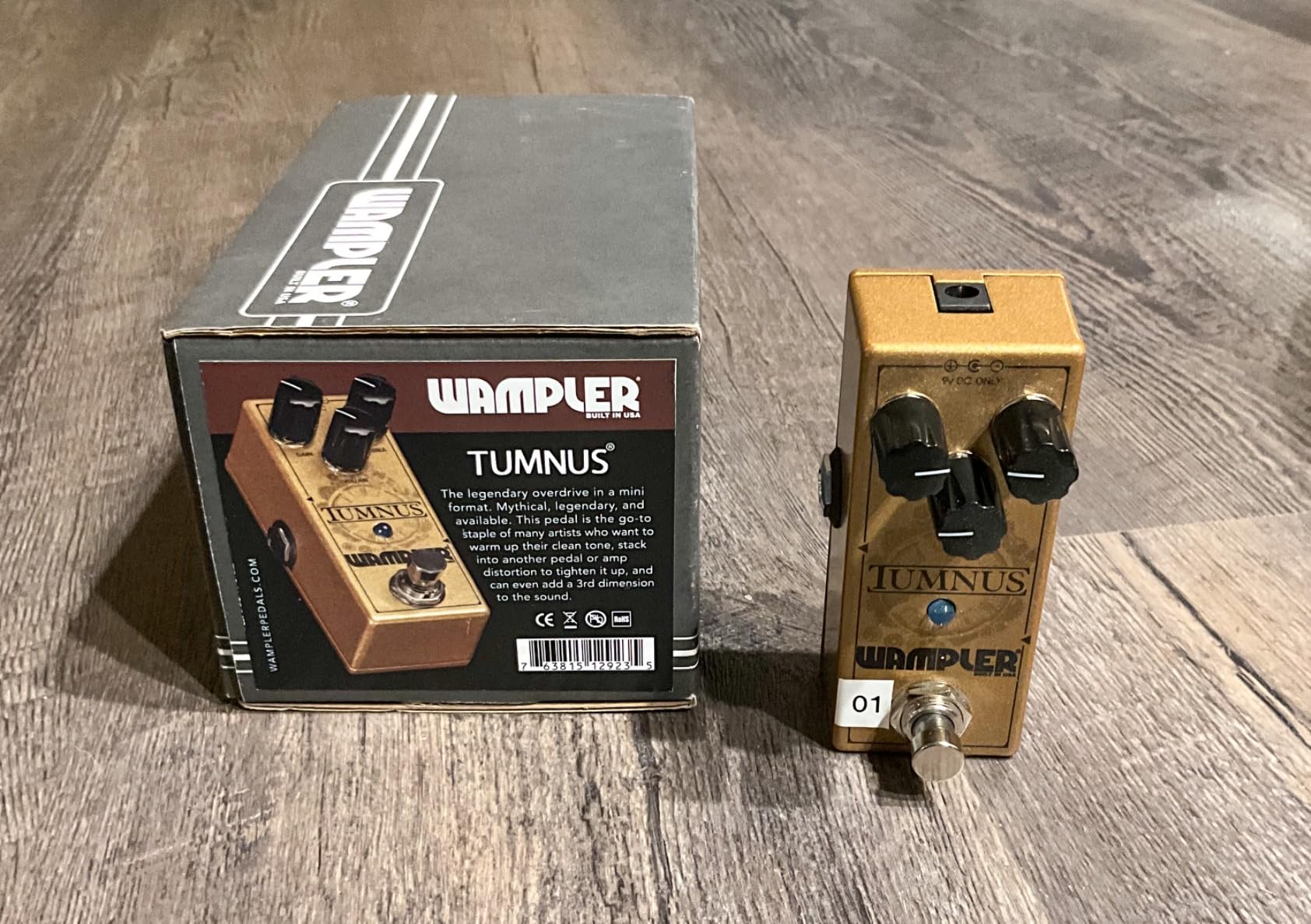
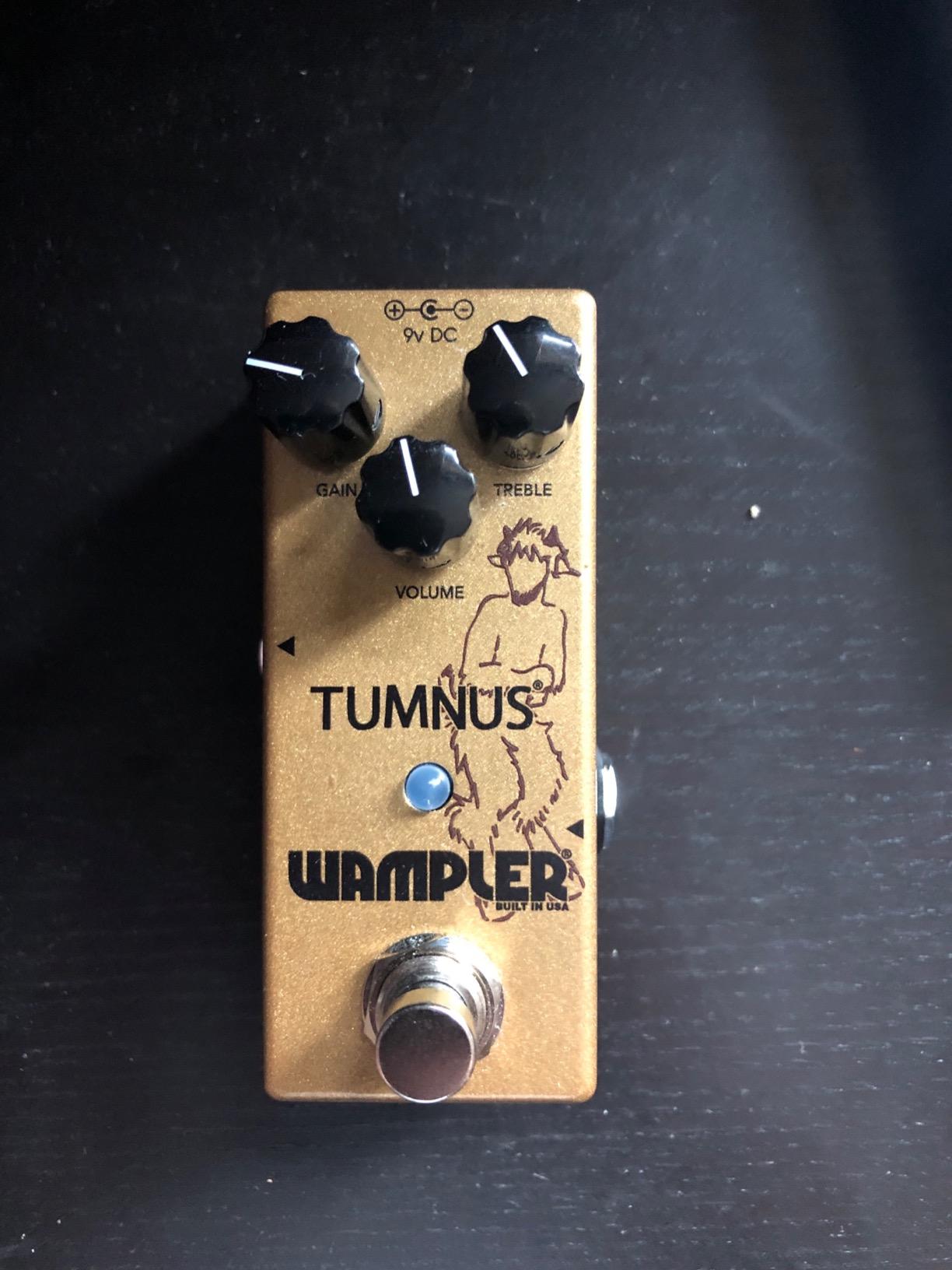
The Tumnus V2 covers the most ground of any pedal here. At the very bottom of the gain range it is a warm, slightly dirty boost; through the middle it is a singing, mid-forward overdrive; and at the top it is a lead tone with plenty of sustain. Three knobs for volume, gain and tone means you can set it for any of those jobs and know the settings will hold.
The catch is volume. This pedal runs hot, and the first week with one almost always involves turning every knob on the board down further than feels normal. Once it is dialled in it is an exceptionally useful tool, particularly if you already like Klon-style circuits and want one pedal to cover boost and drive.
A Klon-Style Sweep From Boost to Overdrive
The Tumnus traces the same family of sounds as the original Klon Centaur, which is the circuit a generation of players treats as the reference for this kind of low-gain overdrive. On my clean channel with the gain knob barely open it added a pleasant grit that pushed the amp nicely; with the gain up past midday it became a proper bluesy overdrive that sang on sustained notes.
Buffered Bypass That Doubles as a Utility Buffer
This is not true bypass, and Wampler treats that as a feature rather than a compromise. The buffered path holds the signal steady across long cable runs and keeps high end from rolling off, so the pedal can sit anywhere on a crowded board and still act as a line driver for whatever follows it. Draws 20 milliamps and comes with a power supply in the box.
The Volume Surprise and How to Solve It
Because the output is so high, the practical fix is to set the pedal volume low and control level from the guitar. That approach gives you more dynamic range than fighting with the pedal knob, and it is how I run it live. It also makes the boost feel more like a second guitar volume than a switch you turn on and off.
Who It Suits and Who It Does Not
Buy it if you want a boost and an overdrive in one enclosure and you like the mid-forward Klon voicing. The buffered bypass is a genuine asset on any large board, and the five-year warranty is longer than most in this category.
Skip it if you are shopping for a transparent clean boost or a high-gain lead sound. It is also the wrong choice if you are building a strictly effects-loop rig with a loop amp and you want the boost to bypass completely.
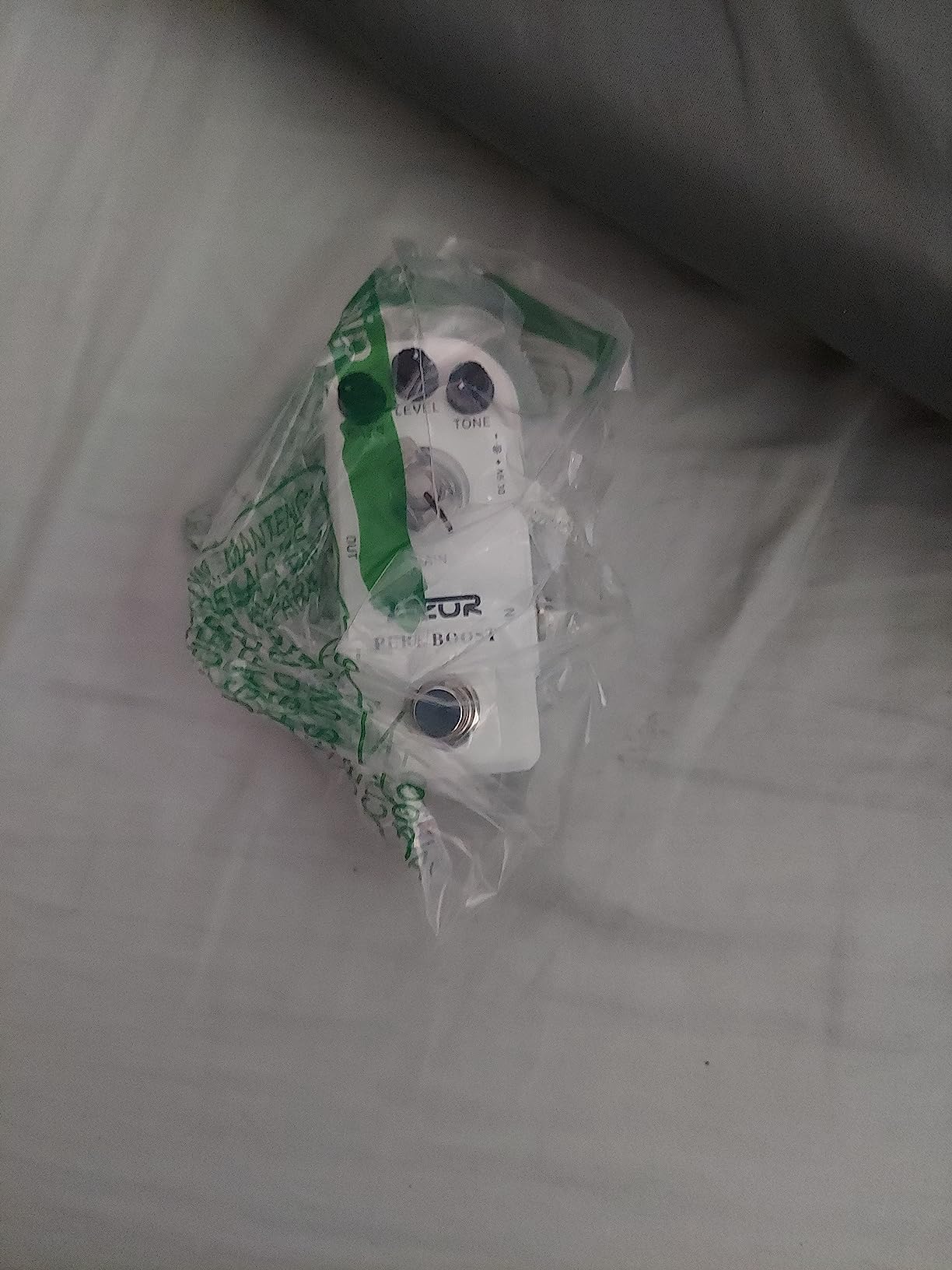
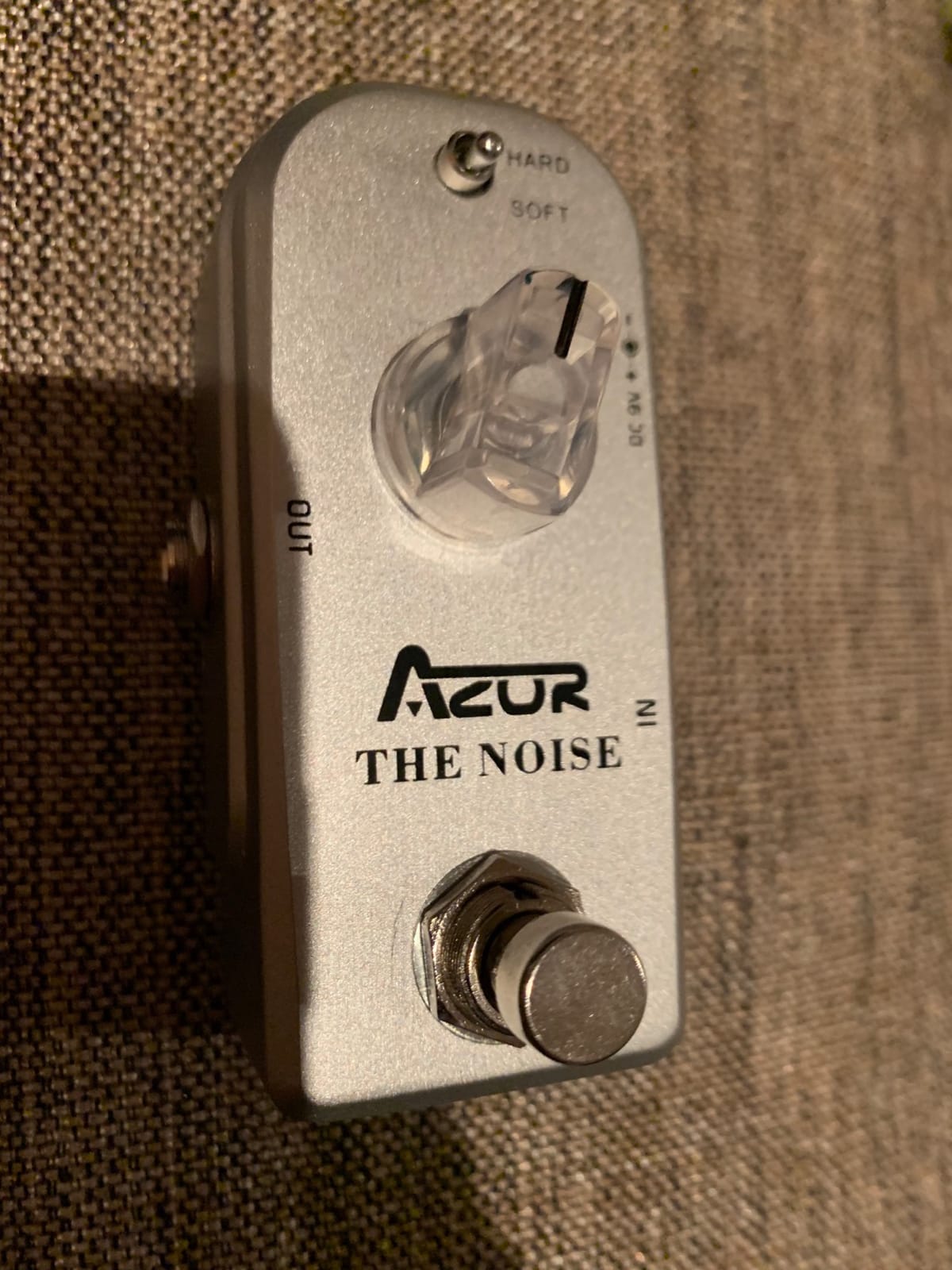
5. AZOR Pure Boost – Most Boost and EQ for the Least Money
- ✓20 dB plus of clean boost at a very low price point
- ✓Bass and tone knobs add EQ control that bare-minimum boosts lack
- ✓True bypass keeps the base signal intact when disengaged
- ✓Very small lightweight aluminum housing that saves board space
- ✓Hook-and-loop mounting pad included
- ✕Build quality and component weight are below boutique equivalents
- ✕Less headroom-friendly so it can clip an already hot signal
- ✕EQ is two-band only compared with fuller tone stacks
- ✕100 mA draw is high for a boost pedal and may need its own supply
20 dB plus clean boost
15 dB two-band EQ
True bypass
Three knobs
The Pure Boost does something no pedal in this list does at this level of build quality: it gives you a two-band EQ alongside a 20 dB clean boost. Bass and tone controls sit next to volume, so you can fatten or brighten the boost itself rather than accepting whatever the circuit hands you.
That is a genuinely useful feature set, and for a first boost pedal or a practice-room board it is hard to argue with. The compromises are honest ones. The chassis is light aluminium rather than die-cast steel, the headroom is modest, and the 100 milliamp draw is the highest in this roundup by a wide margin.
20 dB Plus a Two-Band EQ
Fifteen decibels of cut and boost on both bass and tone is more shaping than most dedicated clean boosts offer at all. I used the tone control to shave the top end when boosting a bright amp and the bass control to add weight to single notes, which is far more flexible than reaching for the guitar volume. The EQ shapes the boost circuit, not the guitar signal directly, so the effect is audible only when the pedal is engaged.
True Bypass and Board Real Estate
The switch is a proper true bypass, so with the pedal off the signal path is genuinely interrupted rather than routed through a buffer. At 3.7 by 1.7 inches it takes up almost nothing, which matters if you already have a compressor and an overdrive on the board. A hook-and-loop pad is included for mounting.
Where the Headroom Runs Out
This is the pedal’s real limitation and the main reason its rating sits below the others. With a hot signal already entering the pedal, the boost stage clips rather than adding clean level, which turns a clean boost into a compressed one. Give it a clean or lightly driven amp and it behaves; chain it after a heavily overdriven pedal and it will not.
The 100 milliamp draw also means it may need its own power supply on a board where everything else shares one low-capacity brick. Check your supply’s total current before committing.
Who It Suits and Who It Does Not
Choose it if you want the most control per dollar, if your board space is tight, or if you are buying a first boost and want something that can shape as well as lift. The one-year warranty is the shortest commitment here, so treat it as a step up rather than an end state.
Pass on it if you play into a heavily saturated amp, if your board power supply cannot spare 100 milliamps, or if you want a pedal that will still look and feel the same in fifteen years.
6. Electro-Harmonix LPB-1 – Warmth and Saturation Instead of Neutrality
- ✓Adds noticeable gain and saturation to a tube preamp without acting like a distortion pedal
- ✓Warm fuller character than modern transparent boosts on bright amps
- ✓Extremely simple single-knob operation with a bright LED
- ✓No audible pop or click when engaged
- ✓Compact die-cast chassis with battery included
- ✓Very inexpensive for a pedal with this pedigree
- ✕Not fully transparent - boosts low end and lower mids noticeably
- ✕Needs amp headroom since without it the volume change is minimal
- ✕Single knob means no tone shaping
- ✕Less useful on already bass-heavy or saturated amps
Single-knob linear gain boost
Adds saturation to a tube gain stage
9V battery included
Compact die-cast chassis
The LPB-1 is the oldest design in this roundup and still one of the most frequently recommended boosts in gear forums. On r/Guitar threads it keeps turning up alongside boutique options in lists of lower-cost recommendations, and the reason is consistent: it adds musical gain and warmth rather than pure volume.
Set it in front of a bright tube combo and it thickens the sound usefully, adding saturation and definition to the preamp without turning into a distortion pedal. Set it in front of an amp that is already saturated and it does almost nothing except get louder, because there is no headroom left to use.
Warmth Rather Than Neutrality
Unlike the SPARK MINI BOOSTER or the MXR Micro Amp, this pedal has an opinion about the low end and the lower mids. Many players treat that as the feature rather than a fault, particularly on amps that sound thin in the room. If you want the boost to be invisible, choose a different pedal; if you want the boost to fatten the note, this is a very efficient way to do it.
Control is a single knob and the LED is bright enough to see on a dark stage. Engaged, it produces no audible pop, which sounds trivial and is not when you are switching between songs.
Adding Saturation to a Tube Gain Stage
This is the LPB-1’s real strength. Thirty milliamps of draw, nine volts, and a compact 5.75 by 2.75 inch chassis that has not changed in decades. Because it operates on gain rather than only level, it pushes a tube preamp into a more saturated state, which is why players use it to move an amp’s character without changing channels.
When the Amp Has No Headroom
The failure mode is straightforward and worth stating before you buy. On an already-overdriven amp, or into a heavily saturated pedal, turning the knob up mostly increases volume rather than adding usable gain or clarity. If your amp is permanently on the edge or beyond, look at a treble booster or a midrange push instead, since those shape the signal without asking for more preamp headroom.
Who It Suits and Who It Does Not
It suits players with a tube amp that has clean headroom to spare, particularly on bright or thin-sounding amps, and anyone who wants their boost to add grit rather than nothing. A nine-volt battery in the box means it works immediately.
It does not suit bass players working through a bass rig, players whose amp is permanently saturated, or anyone who needs to dial the tone shaping in and out. For an acoustic guitarist wanting more projection and headroom, it works, but a cleaner boost will preserve more of the instrument’s character.
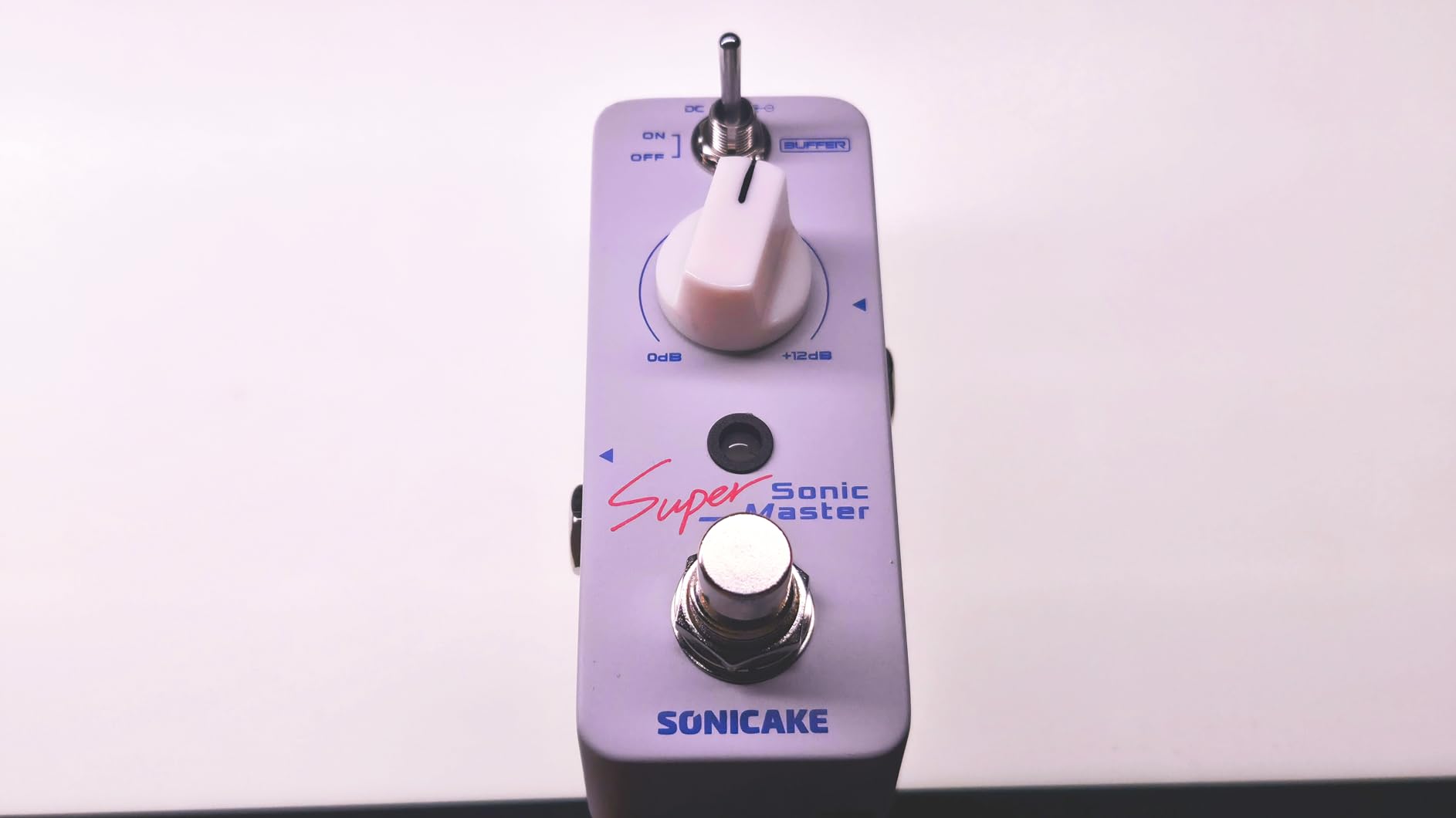
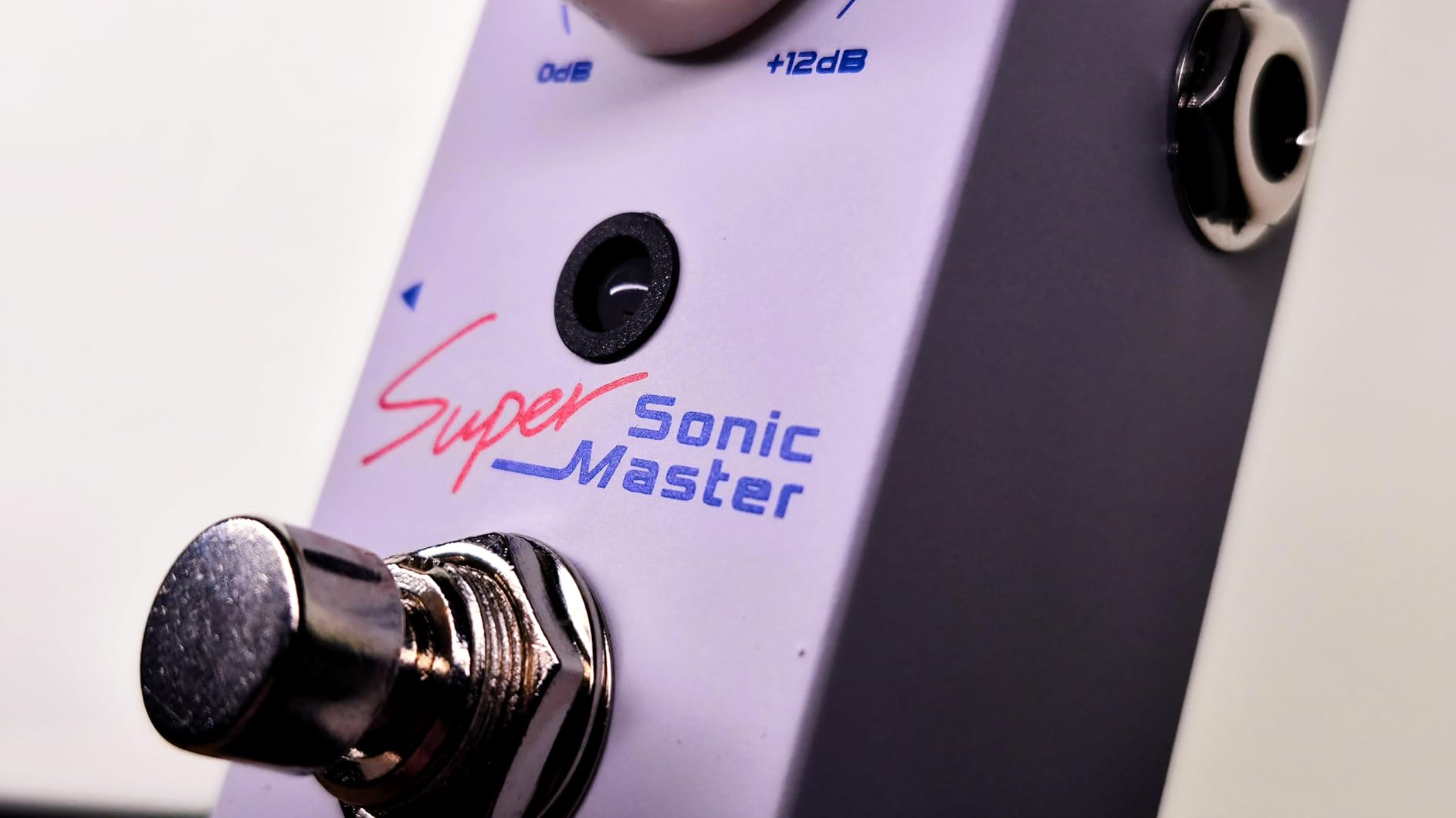
7. SONICAKE Sonic Super Master – A Buffer You Can Leave Engaged
- ✓Clean transparent boost of up to 12 dB with no added coloration
- ✓Built-in buffer can be switched in while bypassed to keep the signal intact over long cable runs
- ✓Adjustable gain from 0 to 12 dB
- ✓Red LED clearly shows engagement state
- ✓Very compact and lightweight
- ✓Low 6 mA draw is friendly on shared pedalboard power
- ✕12 dB ceiling is modest compared with 20 dB boosters
- ✕Power supply not included
- ✕No tone or EQ controls
- ✕Only a 90-day warranty
0 to 12 dB adjustable clean boost
Switchable integrated buffer
Red LED indicator
6 mA current draw
Most unbuffered boosts fail in one specific situation: a long cable run to a distant amp or a wireless system, where high frequency content rolls off and the guitar sounds dull. This pedal has a dedicated answer. A toggle puts its buffer into the signal path even when the boost is bypassed, so the boost is off but the signal is still actively driven.
The boost itself is unremarkable in the best sense. Twelve decibels of clean, transparent gain with no reported coloration, adjustable rather than fixed, from a pedal that draws 6 milliamps, among the lowest current draws in this roundup.
Adjustable Gain From Zero to 12 dB
A real gain knob rather than a fixed circuit means you can dial in as little as a fraction of a decibel for a lead lift, or push the full 12 for an amp that needs more. On a clean platform amp I rarely used more than 6 dB, but on a semi-hollow acoustic through a small valve amp the full range was genuinely useful for pushing closer to the edge.
The Buffer Function in Bypass
This is the feature that separates it from every other budget boost. Set the buffer toggle to on and the pedal’s output stage stays in circuit with the boost off, actively restoring level lost through capacitance in long cables. Players who run a board with several pedals and a wireless transmitter will recognise the difference immediately; a guitar that sounds dull when you kick on the boost and bright when you turn it off is the classic symptom this solves.
Power Draw and Practical Limits
At 6 milliamps this is the friendliest pedal here for a crowded board with a small power supply. The trade-offs are that 12 dB is not enough boost for some amps, the power supply is not included, and the warranty runs 90 days, so the case and footswitch are worth inspecting on arrival.
Who It Suits and Who It Does Not
Choose it if your signal path is long, if you run a wireless system, or if your board has enough pedals that passive level loss is already audible. It is also a sensible low-draw option for a shared supply with several other pedals.
Pass on it if you need a full 20 dB of push into a tube amp, if you want any tone shaping, or if a 90-day warranty is not enough reassurance for your taste.
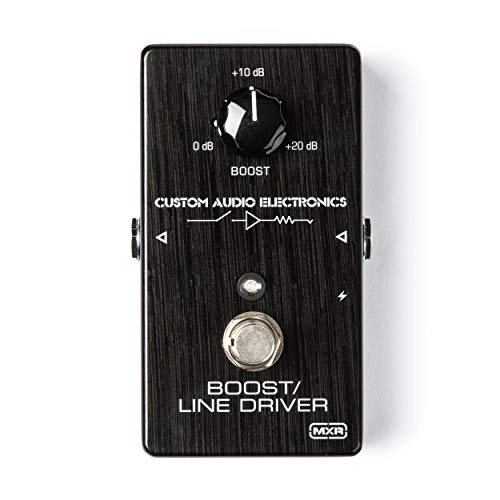
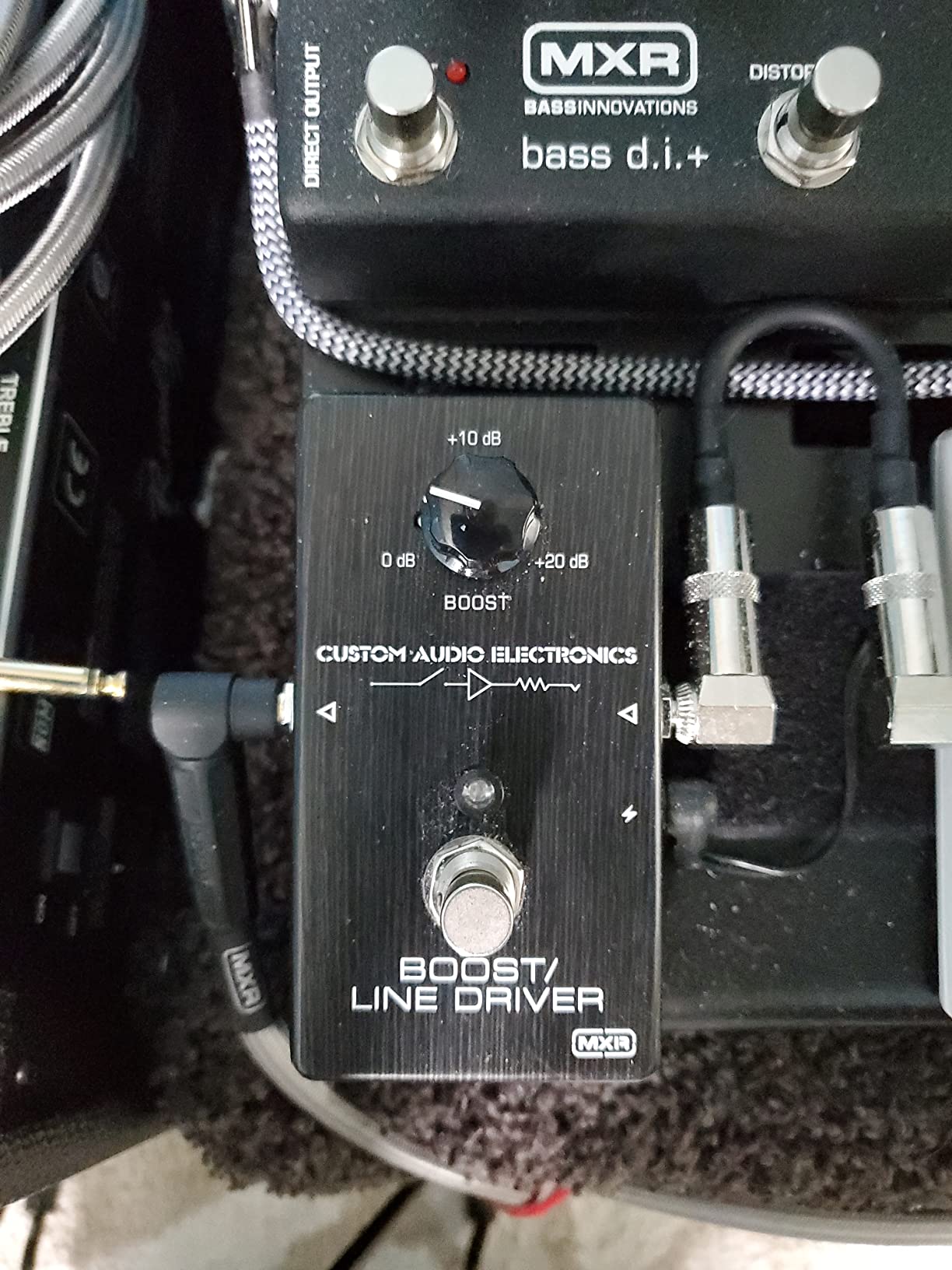
8. MXR CAE Boost and Line Driver – Built for Effects Loops and Long Runs
- ✓Up to 20 dB of genuinely clean uncolored boost with no added noise
- ✓Active line driver restores level loss over long cables or large boards
- ✓Cleans up smoothly as you roll the guitar volume down
- ✓Works as a lead boost and to push a tube amp or drive pedal
- ✓Heavy-duty build with a metal stomp switch
- ✓One knob makes levels instantly repeatable
- ✕Boost is minimal when applied to an already high-gain signal with no headroom
- ✕Some tonal coloration noticeable in an amp effects loop
- ✕DC power jack placement next to the input jack can clash with right-angle patch cables
- ✕Higher price than most entry-level boost pedals
0 to 20 dB of clean boost
Active line driver for long cable runs
True bypass
Designed by Bob Bradshaw
The MC401 was developed with Custom Audio Electronics founder Bob Bradshaw, and it is the most deliberately engineered boost in this list. The active line driver is the point. Rather than merely adding gain, the output stage actively restores level that passive cabling and long signal paths have already lost, which is why owners use it in large rigs and wireless setups as readily as for lead volume.
It also cleans up beautifully. Rolling the guitar volume back while the pedal is engaged behaves the way a good preamp should, thinning less than most boosts and staying responsive to picking dynamics.
An Active Line Driver for Long Signal Paths
On a pedalboard-setup discussion in the research for this guide, an MXR MC401 in the amp effects loop was described as the best placement for a midrange boost pedal. That sentiment matches what the circuit is built for. Because it can drive a load rather than only source a signal, it holds level and clarity in exactly the two places that defeat passive boosts: a long effects loop send and a long cable run.
Clean-Up With the Guitar Volume Knob
Rolling the guitar volume down is the standard way to get a soft lead tone, and a boost pedal that fights you here is frustrating. The MC401 cleans up without thinning the tone the way some smaller boosts do. On my rig, turning the guitar volume back with the pedal engaged produced a natural, compressed lead tone rather than a dull one, which is what makes it pleasant as a permanent fixture.
Effects Loop Placement and Its Caveats
In a loop the pedal sees a signal that is already amplified, so set the level low and use it as a shape and push control rather than a raw volume lift. Reviewers do report some added coloration in the loop, more noticeable than the pedal is in the front of the chain, which is worth knowing before you commit the board layout.
The DC jack sits next to the input jack, so right-angle patch cables in the same corner can be awkward to route. Plan the position accordingly.
Who It Suits and Who It Does Not
It suits players with long cable runs, wireless systems, an amp with a well-behaved effects loop, or a large board where passive level loss has become obvious. It is also the pedal to buy if you want a permanently installed boost that never changes the character of your signal when it is off.
Skip it if your amp is already running at high gain with no headroom, or if you are building a first pedalboard on a tight budget.
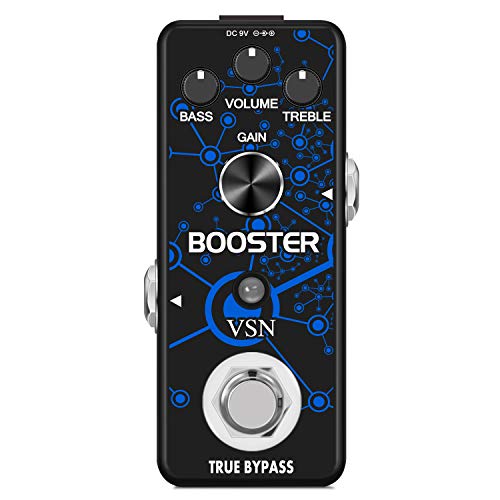
9. VSN Guitar Booster – The Simplest Possible First Pedal
- ✓Very inexpensive mini boost with true bypass switching
- ✓Small lightweight housing that fits easily on a crowded board
- ✓Adds enough output to cut through a band without amp volume changes
- ✓Simple single-knob layout with no learning curve
- ✓Low 7 mA draw suits shared pedalboard power
- ✕Uses 3.5 mm jacks which is unusual for a guitar pedal and may need adapters
- ✕Clean boost range is modest compared with dedicated 20 dB boosters
- ✕Build and hardware feel basic relative to boutique options
- ✕No meaningful EQ control for the boost
Clean boost with true bypass
Compact mini enclosure
Single control knob
7 mA current draw
The VSN Booster is the pedal to buy when you need something to be true bypass, small, and immediately understandable. One knob, one colour, one job: add enough output to be heard over a band without reaching for the amp’s volume control.
True Bypass in a Mini Enclosure
At 3.74 by 1.73 inches and under eight ounces, this is one of the smallest boxes in the roundup, and the true bypass switching means the circuit leaves the path entirely when you turn it off. Draws 7 milliamps and runs on nine volts, so power supply planning is a non-issue on any reasonable board.
The 3.5 mm Jack Question
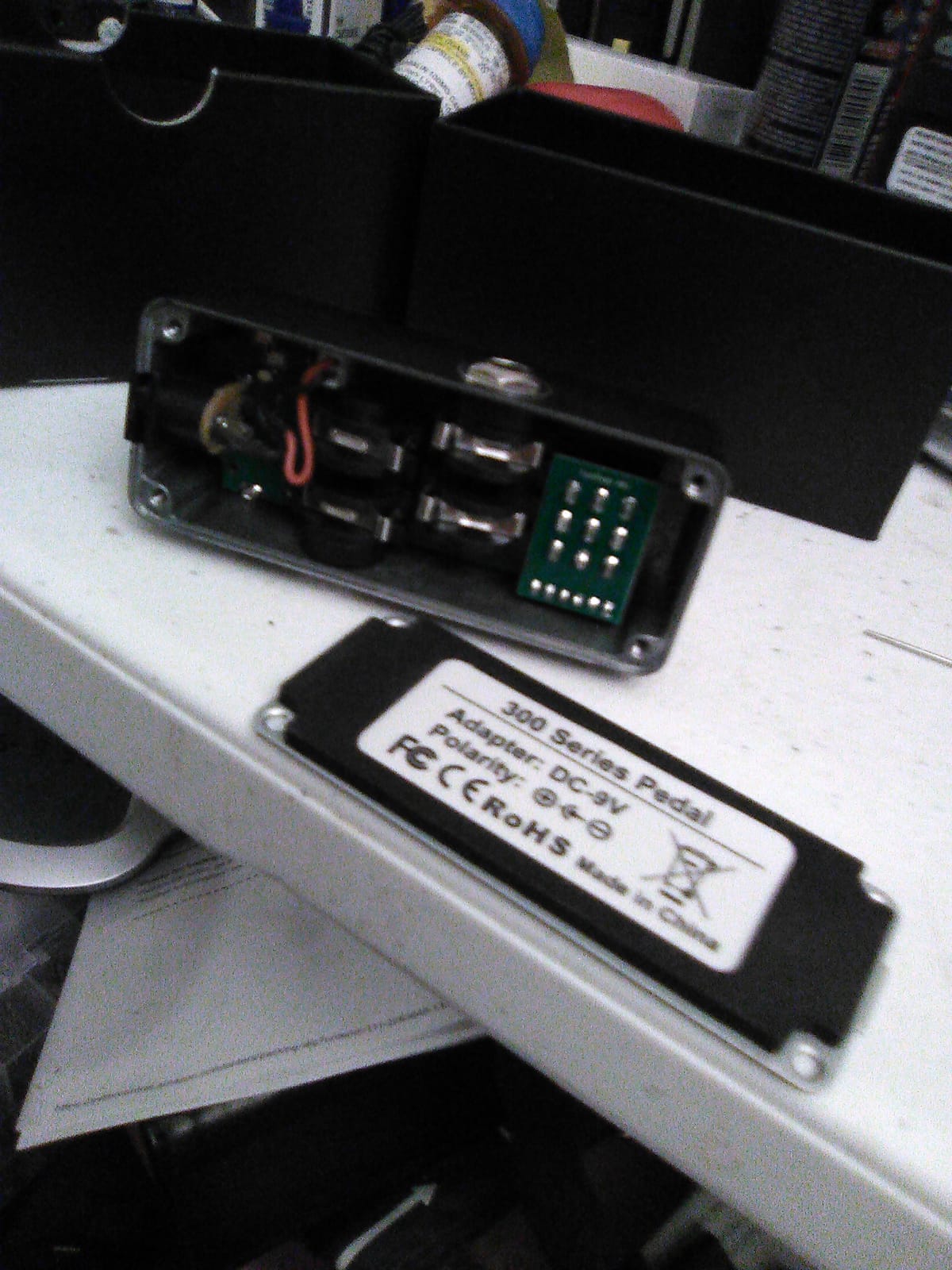
The unusual feature here is the connector type. It uses 3.5 mm jacks rather than the standard quarter-inch guitar connection, which means your existing patch cables will not fit. Depending on your setup you may need adapters, and that is a real consideration for a pedal whose entire appeal is simplicity.
Where the Modest Boost Range Shows
The clean boost range is smaller than the 20 dB designs here. On a Fender-style clean channel that already has plenty of level, the pedal adds less than players sometimes expect and mostly functions as a solo-lift switch. If you want to push a tube amp into breakup, one of the 20 dB pedals will do it more convincingly.
Who It Suits and Who It Does Not
Buy it if you are playing in a practice room or a small band, if you need a true-bypass boost and nothing else, and if you can live with the connector type. It is a sensible first pedal for someone who has never owned anything.
Pass on it if you plan to build a serious board, if your rig uses wireless or a long cable run and needs buffering, or if you want any control over tone.
10. J. Rockett Archer – The Best Clean End of an Overdrive Sweep
- ✓Excellent all-round Klon-style overdrive with rich organic natural gain
- ✓Gain control sweeps cleanly from transparent boost to medium overdrive
- ✓Volume and treble controls shape the tone rather than acting as blunt switches
- ✓Works beautifully stacked in front of another overdrive or distortion pedal
- ✓Cuts through a mix and adds girth to clean notes
- ✓Often compared favourably to boutique Klon-style circuits at a lower cost
- ✕Noticeable noise when the footswitch engages
- ✕Tone darkens and loses some articulation as the overdrive is turned up
- ✕Buffered bypass thins the tone and can sound harsh when off on bright amps
- ✕Highest price point among the boost and overdrive options here
- ✕Small number of reports of mismatched serial numbers or faulty units
Klon Centaur-style circuit
Gain volume and treble controls
Boost to organic overdrive
9V operation at 5 mA
The Archer is a recreation of the Klon Centaur circuit, and the value of that lineage is not just nostalgia. A Klon-style overdrive behaves as a boost at low gain because the clipping only begins once the signal passes a threshold, which means the bottom of the range stays playable and clean enough to push an amp without turning into mush.
That makes it a strong choice for players who will use the pedal as a permanent front-of-chain gain stage and adjust the gain knob by feel. Set it low for a boost, higher for a lead tone, and the same footswitch covers both jobs.
The Clean End of the Gain Sweep
With the gain control turned all the way down the Archer functions as a clean boost, and the useful part is what happens in the first quarter turn. It adds a slight edge before it adds grit, so a small increase in the knob gives you a noticeable tonal lift without the volume doubling that a dedicated boost would produce. That middle ground is where most players end up living with this pedal.
Treble and Volume as Shaping Tools
Three controls mean the tone can genuinely be shaped while boosting. Turning the treble down as the gain comes up counteracts the natural darkening of a heavily clipped circuit, which is how you keep a lead tone articulate. Draws just 5 milliamps and runs off a nine-volt battery, though the battery is not included in the box.
Stacking and the Buffered State
Stacked in front of another overdrive or a distortion pedal, the Archer gives the second circuit a hotter, more compressed input, which is exactly how gain staging is meant to work. One caveat: the buffered bypass can thin the tone and sound harsh when the pedal is off on a bright amp, so check how it behaves disengaged before you commit it to the front of the chain permanently.
Reviewers also report an audible click when the footswitch engages and a small number of units arriving faulty, so inspect the pedal on arrival and test all three controls.
Who It Suits and Who It Does Not
Choose it if you already like Klon-style overdrives, want one pedal for boost and lead, and prefer shaping over volume. It is a better fit for blues and rock than for high-gain metal, which is outside what this circuit does.
Pass on it if you need a purely transparent boost, if your board cannot accommodate a slightly thinned bypass state, or if you want the lowest possible noise floor.
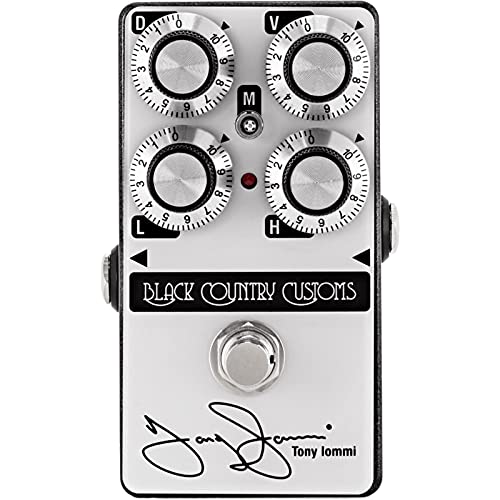
11. Laney TI-BOOST – A Signature Pedal Built for the Stage
- ✓Tony Iommi signature voicing for a classically styled boost
- ✓Solid metal chassis built for stage use
- ✓Runs on battery or external power supply with low consumption
- ✓Battery supplied in the box
- ✕Larger and heavier than mini-format boost pedals
- ✕Single-knob control gives limited tonal adjustment
Tony Iommi signature voicing
Solid metal chassis
9V battery at 20 mA
Battery included
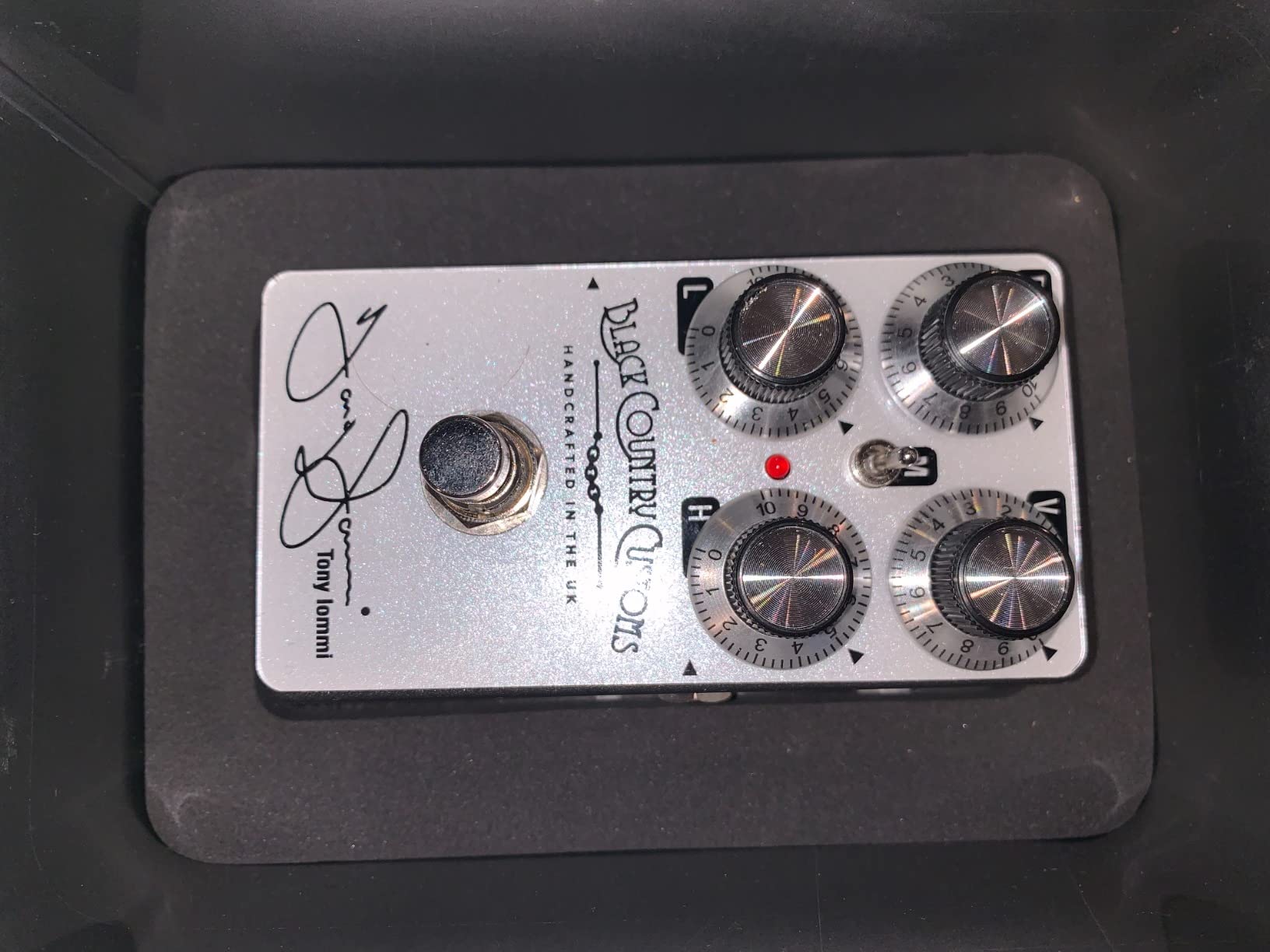
The TI-BOOST is built around a specific player’s needs. Tony Iommi’s guitar tone has always leaned on a clean boost to drive an amp into a particular kind of saturation, and this pedal packages that voicing in a chassis that can survive being thrown in a van on a weekend tour.
A Signature Voicing Rather Than a Blank Slate
Signature pedals tend to divide opinion, usually because they impose a sound. This one is simpler than that: a single knob controlling gain, with a voicing chosen to work with the kind of mid-forward sustain that style of guitar playing relies on. If you are playing in that register, the preset voicing is a reasonable starting point rather than something to fight.
Metal Chassis and Battery Power
The solid metal chassis is the reason this pedal weighs half a kilogram, roughly twice what a die-cast mini pedal in this list manages. That mass is a liability on a crowded board and a benefit in a case. It runs on nine volts at 20 milliamps with low consumption, and a battery is supplied in the box, so it works immediately with no power supply purchase.
Single-Knob Limits
With one control there is no way to shape the boost beyond its set character, and no momentary switching behaviour. If you want the pedal to work as an always-on gain stage with a single click, that is a feature. If you want to lift a solo with a heel tap and no commitment, a pedal with a dual-mode footswitch will serve you better.
Who It Suits and Who It Does Not
Choose it if you play in the classic heavy-rock register this circuit was voiced for, if your board has room, and if you want a pedal that shrugs off being transported. The warranty is longer than most here, which matters for a permanently installed pedal.
Pass on it if board space is tight, if you want tonal flexibility, or if you play modern high-gain music where a cleaner boost or a dedicated overdrive serves you better.
12. MXR Booster Mini – Echoplex Grit in a Mini Case
- ✓Combines Echoplex preamp character with Micro Amp boosting power
- ✓Up to 25 dB of boost with an internal grit control
- ✓Compact lightweight housing fits tight pedalboards
- ✓Very low 9 mA current draw
- ✕Small housing limits top-panel control options
- ✕Single knob means EQ shaping has to come from the amp
Echoplex-style preamp boost
Up to 25 dB
Internal preamp grit control
Mini enclosure at 9 mA
The Booster Mini takes the idea behind the classic Echoplex preamp style of boost and compresses it into a small enclosure. Where most clean boosts promise to add nothing but level, this one adds a controlled amount of preamp grit as well, controlled by an internal trimmer you set once and forget.
Up to 25 decibels makes it the largest boost range in this roundup, which is useful for pushing a tube amp hard or for matching a quiet instrument against a loud one. The internal control lets you choose how much character comes with that level.
Echoplex Character in a Mini Case
The preamp-style boost adds more harmonic content than a purely clean circuit, and that is a deliberate trade. You get a slightly compressed, more saturated signal that can push an amp into a satisfying edge, but you do not get a perfectly transparent volume lift. If your goal is neutrality, the MXR Micro Amp is the better tool for the same brand.
Up to 25 dB With an Internal Grit Control
Twenty-five decibels is more range than any other pedal here, and combined with the internal preamp level control you can set a fairly aggressive character that still has the boost to drive an amp. Draws 9 milliamps and runs on nine volts DC through a 2.1mm barrel plug, which is worth noting since it is not the standard centre-negative arrangement used by many other pedals.
One Knob and a Small Case
At 3.56 by 1.62 inches and eight ounces, the enclosure is genuinely tiny, and that size is the reason there is only one top-panel control with the character trimmed internally. If you want visible EQ or multiple voices on the pedal face, this is not it. If you want a small box with a lot of boost and a bit of warmth, it is exactly what you asked for.
Who It Suits and Who It Does Not
Choose it if you have limited board space, if you want more boost range than any other pedal here, and if you like a little preamp grit with your level. It works well in front of a tube amp on the edge of cleanliness.
Pass on it if you need a truly invisible boost, if you want to change character on the fly, or if your power supply does not provide a 2.1mm barrel connection.
Which Type of Boost Pedal Do You Actually Need?
Most of the confusion in this category comes from six different circuits all being sold under the same name. Here is how they differ, what they do to the signal, and which situation each one fits.
Transparent clean boost
A clean boost adds level and gain and changes as little as possible. It is the right choice for players with a tube amp that has clean headroom, because the boost’s job is simply to push the amp over its own threshold. The MXR Micro Amp is the reference point here, with the TC Electronic SPARK MINI BOOSTER a step to one side due to its gentle fixed tilt. Choose this when your amp sounds good already and you just need more of it.
Treble booster
A treble booster is mostly a low-cut filter with gain attached. It tightens the low end and opens the top so the note cuts through a band, which sounds thin with a single coil at low volume and enormous in a mix. The Laney TI-BOOST is the signature-voicing option in this list, and the AZOR Pure Boost gives you a tone control to dial the effect in and out. Two caveats: these circuits behave very differently on bass, where removing low end can hollow out the fundamental entirely, and they are often described as hissy.
Midrange or mid-scout boost
A mid-scout pushes the middle of the spectrum, where guitar tone lives, and it is the reason a mid-heavy boost sounds louder than a volume boost at the same perceived level. This is the most argued-over category in the forums, because a scooped midrange boost sounds immediately modern while some players consider the scoop a flaw. The Electro-Harmonix LPB-1 is the warmest option in this roundup, and the MXR CAE is the cleanest.
Harmonic and preamp-style boost
These add harmonics and mild saturation rather than pure level, so they interact with an amp the way a preamp does rather than the way a volume knob does. The MXR Booster Mini is the clearest example, with an internal preamp control adding grit alongside its 25 dB of boost. This archetype rewards a tube amp with headroom and is less useful into a modern high-gain stage.
Low-gain overdrive doubling as a boost
A Klon-style overdrive cleaned up by lowering its gain is the most musically flexible option and the most argued about on forums. The Wampler Tumnus V2, the J. Rockett Archer and the Electro-Harmonix Soul Food all cover this ground with different voices. The trade is always the same: more tone shaping and more range, at the cost of never being perfectly transparent.
Boost with a built-in buffer or EQ
Two additions solve specific problems rather than changing the sound. A buffer fixes level loss over long cable runs, which is why the SONICAKE Sonic Super Master lets you keep its buffer engaged while the boost is bypassed. A two-band EQ lets you shape the boost itself, which is what the AZOR Pure Boost offers. If your board is crowded, a pedal with a buffer can also reduce the number of true-bypass pedals fighting each other for impedance.
Where a Boost Pedal Belongs in the Signal Chain
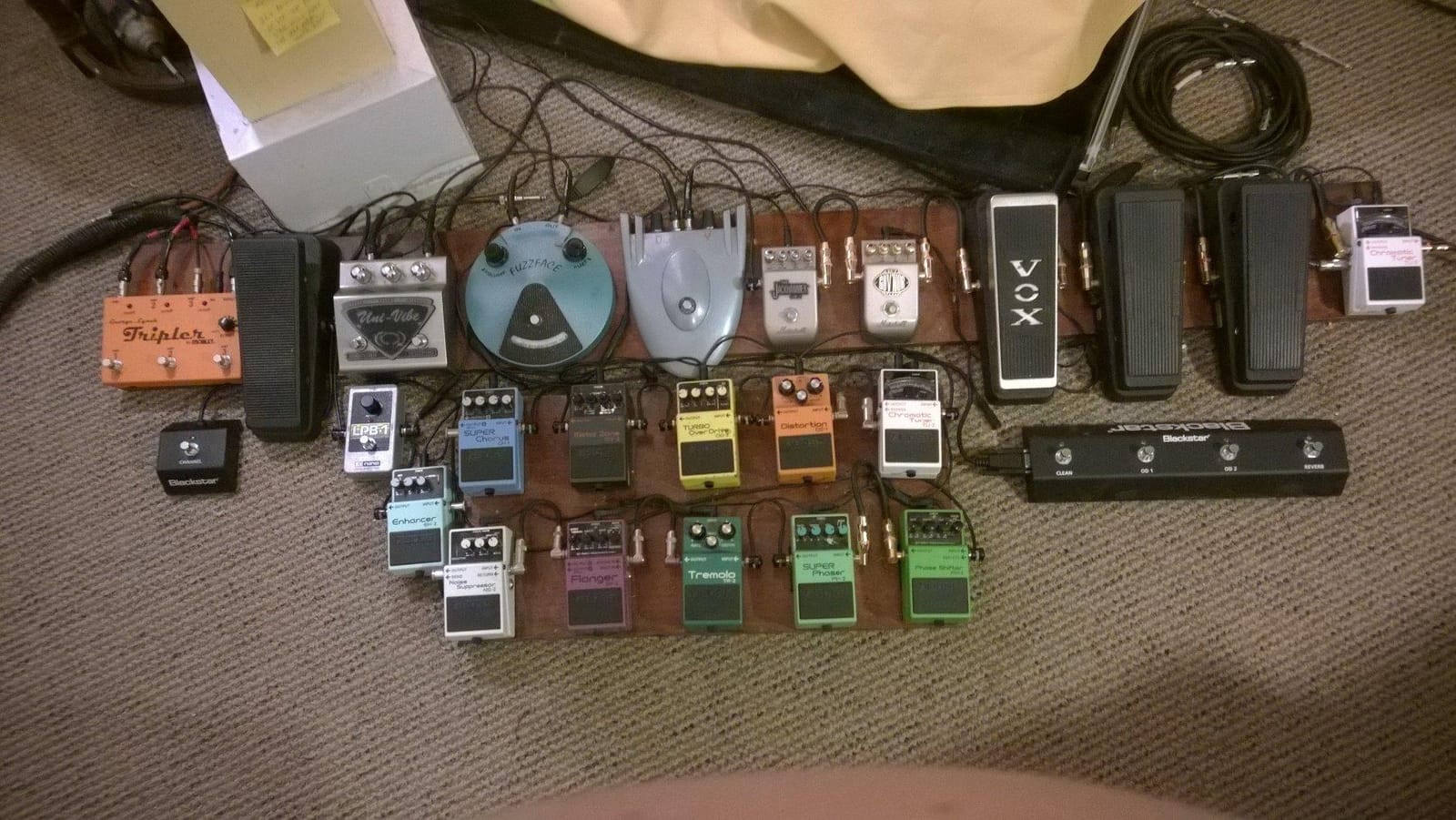
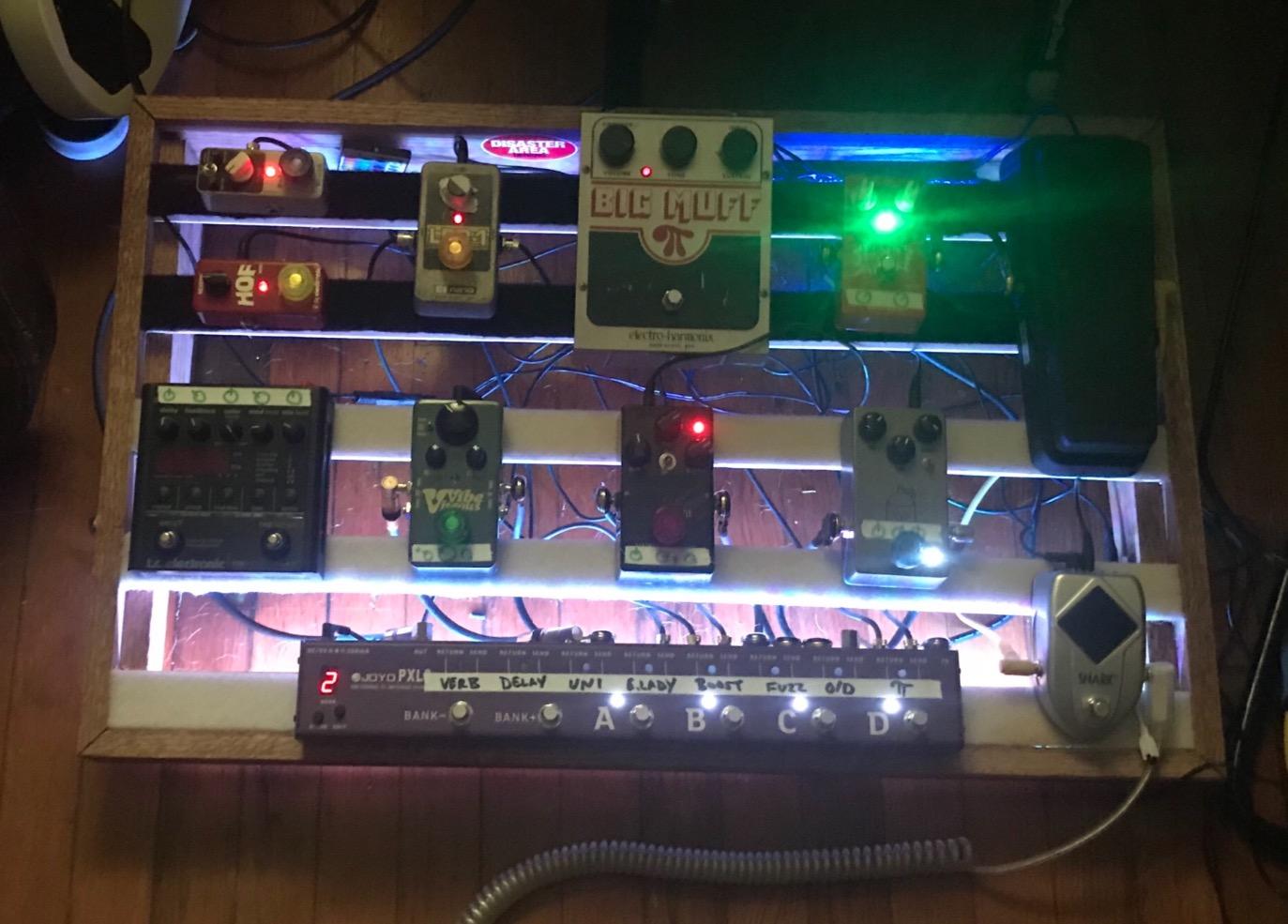
Placement changes the pedal’s job more than any other decision you will make, and it is the question forum readers ask most often.
Front of the chain for amp pushing
A clean boost belongs at the front of the chain when its job is to drive your amplifier into breakup. Nothing else loads the amp the same way, and a boost placed after a drive pedal cannot generate the headroom pressure needed to saturate a tube preamp. The Micro Amp, the SPARK MINI BOOSTER and the LPB-1 all assume this position.
After overdrives for solo volume
When the boost’s job is solo level rather than amp saturation, placing it after your drive pedals is the better choice. The overdrive keeps its character, and the boost simply raises the whole thing, which on a Strat into a clean amp is the classic clean solo sound. Pedals with a character of their own, such as the Archer, often work better here than perfectly clean boosts, because a boost that adds nothing to a pedal that is already colouring the tone makes the colouring more obvious.
Inside the amp effects loop
The effects loop sits between the preamp and power section, which changes what a boost is doing. In a loop the signal is already amplified, so volume knobs and the pedal’s own level control stop behaving normally. Use a boost in a loop as a shape and push control set low, and expect less transparency than the same pedal in front of the chain. A pedal with an active line driver, such as the MXR CAE, is the practical choice here, and one pedalboard-setup discussion in the research for this guide singled out an MC401 in the loop as the best pairing for a midrange boost.
If your loop is preamp-style rather than a true series loop, a boost placed inside it behaves very differently from one outside it. Check what the amp manufacturer says the loop is for before building a board around it.
Acoustic guitar and bass
Acoustic players usually want a clean boost to raise the signal into an amp or preamp that is already at its limit, and the transparent designs serve best because they preserve the instrument’s own character. Bass players should be more careful: circuits that cut the low end, which includes most treble-boosting designs, remove the fundamental a bass line is built on.
True Bypass vs Buffered Bypass Explained
True bypass means the footswitch physically connects the input straight to the output when the pedal is off, so the circuit is removed from the path entirely and your guitar sees nothing but the cable. The result is the most natural off-state tone and zero power consumption when bypassed, and the drawback is that every true-bypass pedal you add introduces a switching pop, and multiple passive pedals in a chain can load each other and dull the signal.
Buffered bypass means the pedal’s output stage stays in the circuit when it is bypassed, actively restoring signal level. The off-state tone is slightly coloured, and the pedal keeps drawing current, but the signal stays strong across long cable runs and large boards. Pedals such as the Wampler Tumnus V2 and the J. Rockett Archer use buffered bypass deliberately, and the Electro-Harmonix Soul Food lets you choose between the two with a toggle.
Noise is the other half of this conversation, and it is the most repeated concern in forum threads about this category. A pedal that boosts the signal also boosts whatever hiss the circuit generates, so a boost placed late in the chain behind a noisy overdrive will sound noisier than the same pedal placed early. If your boost hums or hisses, the power supply is the first thing to check: an isolated supply, or simply powering that one pedal from its own adapter, resolves most reported cases. The SONICAKE Sonic Super Master takes the opposite approach and makes its buffer selectable so the signal stays strong even when the boost is off.
Matching a Boost to Your Amp
Clean platform amps with headroom
A Fender-style or British-style clean platform has plenty of preamp headroom, so a transparent boost of 12 to 20 dB will push it into real breakup. This is the easiest match and the one where the Micro Amp or the SPARK MINI BOOSTER behave exactly as advertised. Start at a low setting and increase until the amp compresses, rather than going to maximum and pulling back with the pedal volume.
Amps already sitting at the edge of breakup
Here the boost adds a little saturation and clarity but not a great deal of level, because there is little headroom to spend. A modest clean boost still helps, and pedals with more character, such as the LPB-1, do more for the sound than a 20 dB clean unit will. The useful adjustment here is small, and the biggest gains come from the guitar volume knob rather than the pedal.
High-gain amps with no headroom
Boosting a saturated amp mostly makes it louder. What actually helps a high-gain rig is tonal shaping: a treble booster for definition, a mid push for note definition in a dense mix, or a preamp-style pedal that adds harmonic content the amp cannot. This is the case where a dedicated boost is the wrong tool and an EQ pedal is the right one, and it is worth being honest about it before buying.
When an Overdrive Pedal Is the Better Boost
This is the most argued topic in the pedal community and the one most editorial roundups skip, so here is the practical answer.
A boost raises level while leaving tone alone. An overdrive pedal turned down raises level and adds a controlled amount of clipping, harmonics and compression. When you want more volume without changing anything, take the boost. When you want more volume and a thicker, more compressed, more present note, take the overdrive set low.
The second scenario is more common than beginners expect. Pushing a clean amp with a boost and then adding an overdrive afterwards gives a result that sounds thinner than pushing the amp with a low-gain overdrive, because the overdrive is reacting to a signal the amp has already compressed.
The counterargument, which is also correct, is that overdrive pedals are noisier at the moment of switching, colour the signal even at low settings, and behave badly when you roll the guitar volume down. If you play with dynamics and want a pedal that never adds anything, a clean boost is the right answer. The Electro-Harmonix Soul Food, the Wampler Tumnus V2 and the J. Rockett Archer all sit across this line and can be used either way.
Frequently Asked Questions
What is the best boost pedal for guitars?
The TC Electronic SPARK MINI BOOSTER takes our top spot for 2026. It adds up to 20 dB of clean analog boost, occupies almost no board space, and its PrimeTime footswitch switches between latched and momentary operation depending on how long you hold it. If you want a boost that adds no tonal colour at all, the MXR Micro Amp is the alternative.
What do boost guitar pedals do?
A boost pedal raises the level of your guitar signal before it reaches the amplifier, usually without adding distortion of its own. That extra level lets a clean amp be pushed into overdrive, makes a solo sit above the band mix, or drives a second gain stage such as an overdrive pedal harder. Many boost circuits are built to be transparent, adding level with almost no change to tone.
Is the Xotic EP Booster worth it?
The Xotic EP Booster is the pedal most frequently praised across the gear forum threads we studied for this guide, where players describe it as adding a pleasing midrange push that makes an average amp sound better and works both before and after other pedals. It is not in our tested group, so we make no measured claim about it here. In the same midrange-emphasis role, the Electro-Harmonix LPB-1 and the MXR CAE are the two pedals from this roundup worth comparing.
What boost pedal does John Mayer use?
John Mayer is most closely associated with the Klon Centaur and the Klon-style overdrive circuits that followed it, more than with a dedicated clean boost. Players usually replicate his approach with a Klon-style pedal set low as a gain stage in front of a tube amplifier. Of the pedals we tested, the Wampler Tumnus V2 and the J. Rockett Archer both trace that circuit family, while the Electro-Harmonix Soul Food is the option if you want a brighter, faster response.
Should a boost pedal go before or after overdrive?
Put it before your overdrive pedals when you want to drive the amp harder into breakup, because nothing else loads the amplifier the same way. Put it after your overdrives when you simply want a solo louder with the same character. One exception is an amp effects loop, where the pedal sees an already-amplified signal and works best set low as a shape and push control.
Why is my boost pedal noisy?
The most common causes are the power supply, the position in the chain and the circuit type. An unisolated shared supply is the first thing to rule out, and powering the pedal from its own adapter resolves most cases. A boost also amplifies the noise of everything before it, so moving it earlier in the chain or after a noisy overdrive changes what you hear. Germanium and treble-boosting circuits are inherently hissy and will never be silent.
What 5 pedals should every guitarist have?
A practical starter board is a tuner, a compressor, an overdrive, a delay and a reverb, with a boost slot sixth if you play live. The compressor evens out your playing, the overdrive provides gain, and the time-based pedals fill out the sound. If you only have budget for five, the boost and the compressor do more for a clean amp than either time-based pedal. Our guides to the best compressor pedals and the best EQ pedals cover the rest.
Which Boost Pedal Should You Buy?
For most players the simplest answer wins, and that is why the TC Electronic SPARK MINI BOOSTER comes out on top of these best boost pedals for guitar. It adds real clean level, takes up almost no room, and its momentary switching option removes the most common practical annoyance of owning a boost.
If your priorities are specific, match them like this. If you want a boost that adds nothing at all to your amp’s voice, take the MXR Micro Amp. If you want one pedal to cover both clean boost and overdrive, take the Electro-Harmonix Soul Food or the Wampler Tumnus V2. If you want EQ control on the boost itself, take the AZOR Pure Boost. If you want warmth and preamp saturation, take the Electro-Harmonix LPB-1. If you run long cables, a wireless system, or an amp effects loop, take the MXR CAE, or the SONICAKE Sonic Super Master if your budget is tighter.
Two more for specific boards. On a crowded board where footprint is the deciding factor, the MXR Booster Mini delivers the largest boost range in this roundup from a very small case. On a stage where the pedal gets thrown in a van every weekend, the Laney TI-BOOST is built for the abuse and carries a longer warranty than the others here.
As for a starter board, five pedals is a compressor, an overdrive, a delay, a reverb and a tuner, with a boost added whenever you next have budget. Our guides to the 10 Best Fuzz Pedals and the 8 Best EQ Pedals for Guitar, Bass and Live Use cover the two effects most often added next, and the 8 Best Synth Pedals cover the ones that come after that.






Leave a Comment