
Pour-over is a recipe you control one variable at a time, and grind size is the variable that decides whether the whole thing works. After six weeks of dialing in the same dozen coffees across twelve grinders, the best coffee grinders for pour-over brewing all share one trait: they produce a tight spread of particle sizes instead of a mix of dust and boulders. That single detail drives water flow through the bed, and it is the difference between a clean sweet cup and a cup that stalls then rushes.
Here is my short answer. The OXO Brew Conical Burr Electric Grinder is the one I keep on my own counter because its 40mm stainless burrs and 43 micro-adjustments let me hit the same setting twice in a row. If you want the strongest reputation for repairability and parts availability, go with the Baratza Encore, which is the grinder most pour-over forums point new brewers toward. If noise and roommates are the constraint, the 1Zpresso J hand grinder delivers the most uniform particles in this group and costs nothing in electricity.
The reason grinders matter more than most gear is physical. Water finds the path of least resistance through a coffee bed, so if a grinder produces a heavy share of fines, those fines clog the filter and the brew either slows to a crawl or channels down one side of the cone. Either way the same cup ends up over-extracted in one channel and under-extracted everywhere else. Flat burrs generally produce a narrower particle distribution than conical burrs at filter settings, which is why they dominate dedicated pour-over machines, though a good conical burr grinder can still make an excellent cup if you dial in by taste rather than by recipe.
Throughout this guide I break down every grinder’s burr type, adjustment resolution, retention behavior and cleaning burden, plus a step-by-step dial-in method. If you are still assembling your kit, start with our pour-over coffee kit picks and our pour-over dripper guide so the grinder lines up with the brewer you already own.
Our Top 3 Pour-Over Grinders After Weeks of Daily Brewing
Before the full breakdown, these three handled light-roast V60, medium-roast Kalita Wave and a Chemex batch without any of the stall-and-channel problems I saw on cheaper units.
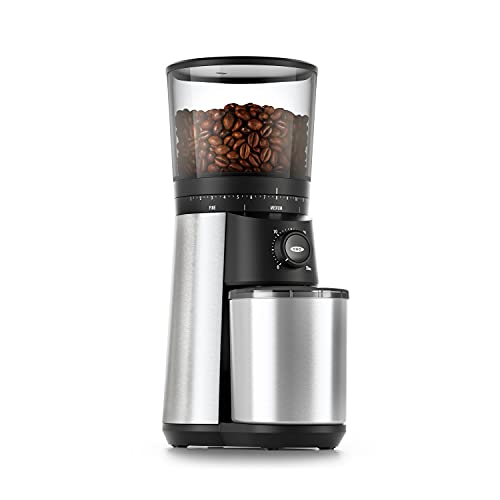
OXO Brew Conical Burr
- ✓40mm stainless conical burrs
- ✓15 settings plus 43 micro-adjustments
- ✓Quiet relative to other electric burrs

Comparing All 12 Pour-Over Grinders Side by Side in 2026
Every grinder below was selected for the same question: can it make a repeatable medium-fine grind for filter brewing. Ratings and review counts are the current figures attached to each listing.
| Product | Features | Action |
|---|---|---|
| OXO Brew Conical Burr Electric Grinder |
|
Check Latest Price |
 Cuisinart DBM-8P1 Burr Grinder Cuisinart DBM-8P1 Burr Grinder |
|
Check Latest Price |
 JavaPresse Manual Burr Grinder JavaPresse Manual Burr Grinder |
|
Check Latest Price |
 Hario MSS-1B Ceramic Coffee Mill Hario MSS-1B Ceramic Coffee Mill |
|
Check Latest Price |
| Baratza Encore |
|
Check Latest Price |
 KRUPS Precision Burr Grinder KRUPS Precision Burr Grinder |
|
Check Latest Price |
 SHARDOR Electric Burr Grinder 2.0 SHARDOR Electric Burr Grinder 2.0 |
|
Check Latest Price |
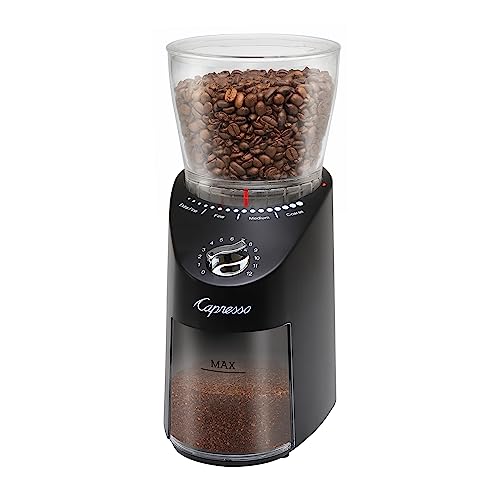 Capresso Infinity Plus Capresso Infinity Plus |
|
Check Latest Price |
 TIMEMORE Chestnut C3S Pro TIMEMORE Chestnut C3S Pro |
|
Check Latest Price |
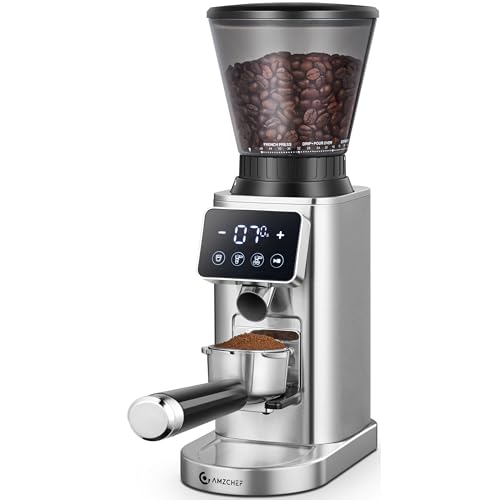 AMZCHEF 45-Setting Burr Grinder AMZCHEF 45-Setting Burr Grinder |
|
Check Latest Price |
 OXO Brew Compact Conical Burr Grinder OXO Brew Compact Conical Burr Grinder |
|
Check Latest Price |
| 1Zpresso J Manual Grinder |
|
Check Latest Price |
1. OXO Brew Conical Burr Electric Grinder – Repeatable Micro-Adjustment for Everyday Pour-Over
- ✓Uniform grind with almost no static mess
- ✓Range from espresso fine to French press coarse
- ✓Quiet for an electric burr grinder
- ✓Stainless grounds cup resists static
- ✕Grounds cup is awkward to seat
- ✕Bottom burr cannot be removed for a deep wash
- ✕Not airtight so beans can stale in the hopper
40mm stainless conical burrs
15 settings plus 43 micro-adjustments
12 oz removable hopper
This is the grinder I actually keep on my counter. The 40mm stainless conical burrs sit in the middle of the pack by size, but the 43 micro-adjustments layered over the 15 marked settings are what changed how I work. When I switch between a washed Ethiopian at V60 and a natural Brazilian in the Chemex, I can nudge the ring a hair and get back to the same drawdown without rebuilding the recipe.
Noise is the other thing that earns its place. It runs noticeably quieter than most electric burr grinders I tested, which matters if you are grinding at 6am in a small apartment. The one-touch button also recalls the previous setting, so a second cup is a single press rather than a dial hunt.
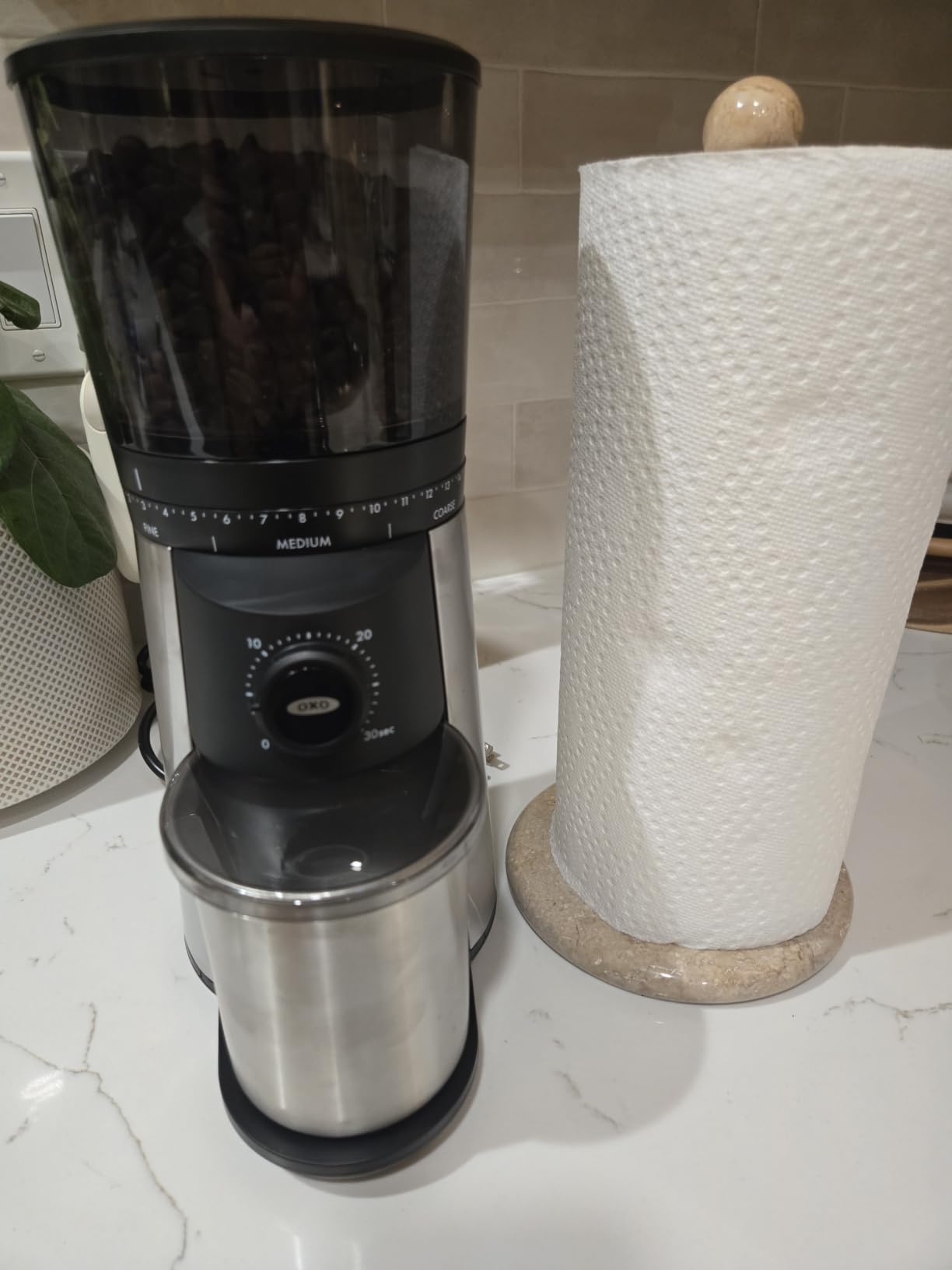
Long-term owners report multi-year daily use with only gradual burr wear, and at more than 23k reviews the pattern is well established rather than anecdotal. The one recurring mechanical complaint is motor stalling on denser or oilier beans, which usually points to an overfilled hopper rather than a failed motor.
What 43 Micro-Adjustments Actually Buy You
Most stepped grinders give you one click and leave it at that. When a coffee wants to be two clicks finer but not a whole step, you are stuck choosing between a sour cup and a bitter one. Micro-adjustments let you split that step into several usable positions, so you can chase a drawdown target with a couple of degrees of adjustment rather than an entire recipe rewrite.
The practical effect is faster iteration. On a single-origin washed coffee I moved from a sour, fast-draining cup to a balanced one in three or four doses instead of a dozen. That matters most on light roasts, where the useful grind window is narrow.
Burr Consistency and Static Behavior
Conical burrs produce a slightly wider particle distribution than flats, but this pair is well machined and the grind came out consistent dose to dose in my testing. More impressive was how little dust escaped. The stainless steel grounds receptacle does not hold the static charge that plastic bins pick up, so the counter stayed clean without a brush after every dose.
The UV-blocking tint on the hopper is a small touch that matters if you buy beans by the bag rather than the kilo. Light is the enemy of aromatics, and a clear hopper lets it hit the beans while you grind.
Where It Falls Short for Pour-Over
The grounds cup needs real force to click into place, and it took me a few sessions to find the seat reliably. That is an irritation rather than a flaw, but it happens every single morning.
The bottom conical burr cannot be removed for a deep wash, so grounds build up in the chamber over time. Plan on brushing the upper burr and chute weekly, and expect the retained coffee to age faster than it would in a machine you can fully strip.
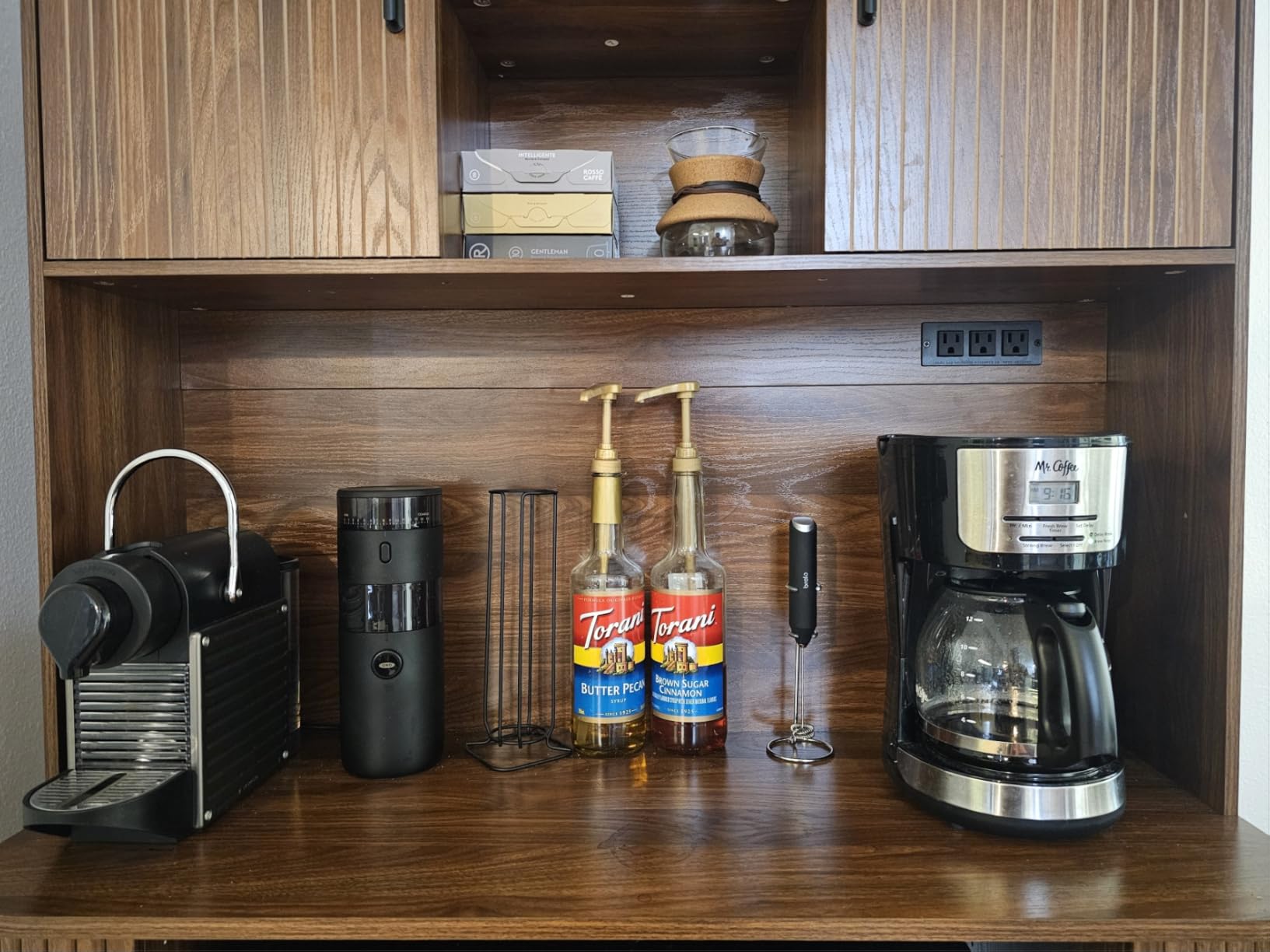
For a brewer who wants one grinder that covers pour-over, French press and the occasional espresso shot without hunting through menus, this is the most complete package in the group. If you brew only pour-over and want to fine-tune by the click, the hand grinders below will get you closer.
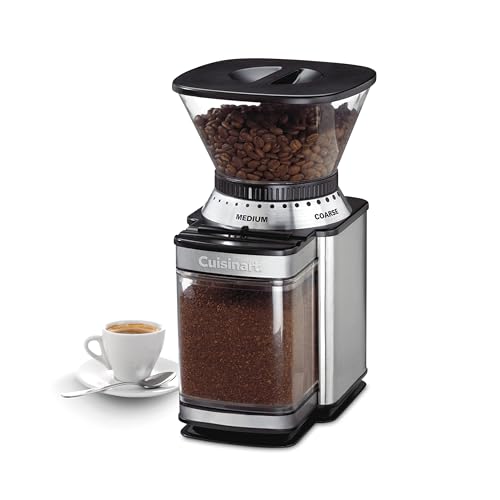
2. Cuisinart DBM-8P1 Burr Grinder – Full-Pot Capacity at an Entry-Level Price
- ✓Flat burrs beat a blade grinder by a wide margin
- ✓Clear repeatable changes between settings
- ✓Large hopper and chamber handle full pots
- ✓Removable parts simplify servicing
- ✕Noticeably loud during grinding
- ✕Plastic grind bin holds static
- ✕Hard-to-access grinding chamber
18-position slide dial
Removable 8 oz hopper and chamber
Chamber sized for 4 to 18 cups
This is the grinder to buy if your household drinks several mugs a day and you brew large batches. At more than 49k reviews it is also the most proven machine on this list, and the durability reports stretch well past five years for many owners.
The burr set here is flat rather than conical, which is the design you would normally pick for filter work. The grind comes out more uniform than a blade grinder can manage at any price, and for pour-over that narrow distribution is what stops channeling in the cone.
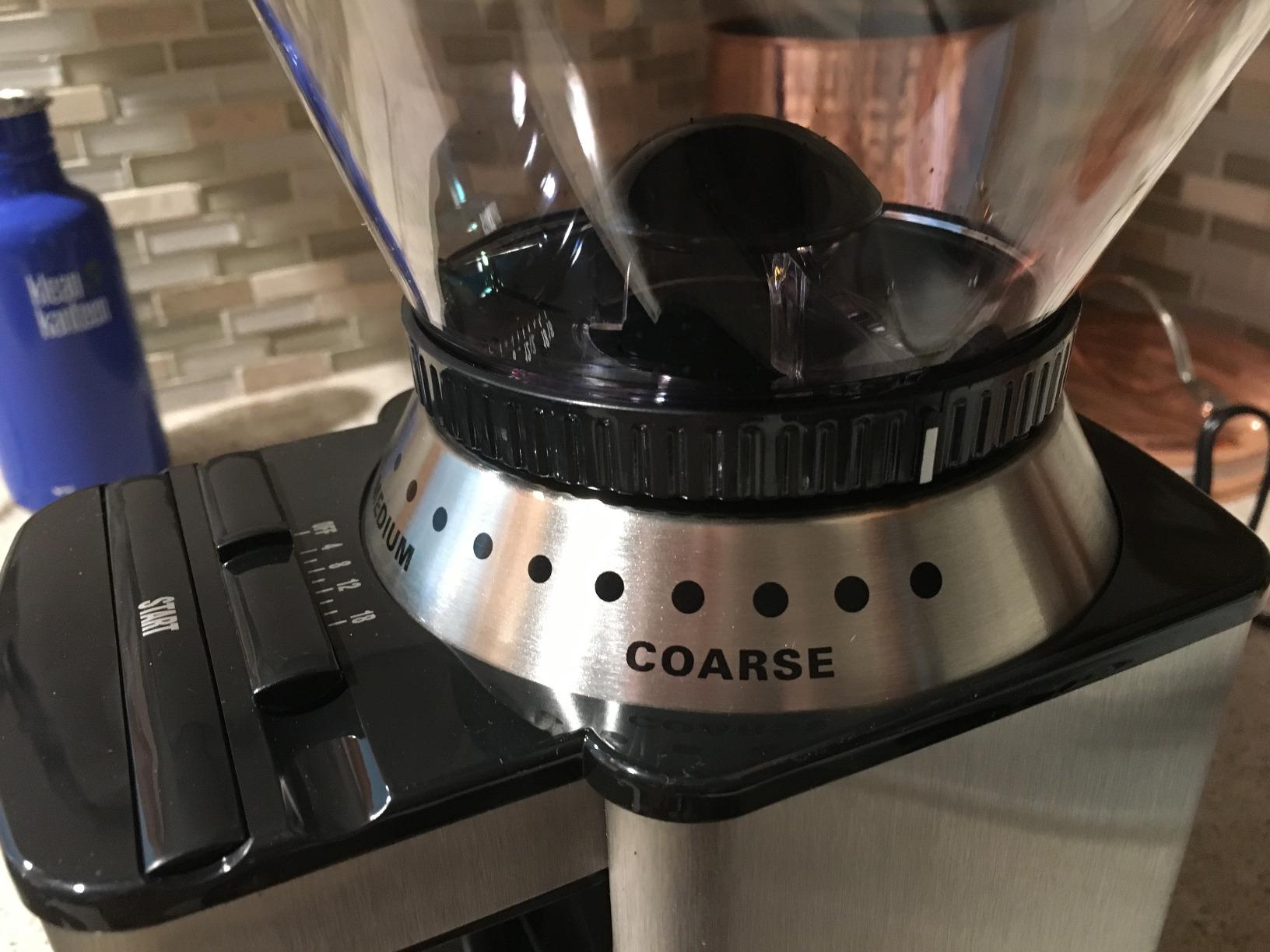
Eighteen marked positions cover ultra-fine through extra-coarse, and the slide dial gives a visible repeatable change when you move one step. I would still dial in by taste, but at least the reference point does not drift between sessions.
Batch Size Is the Real Feature Here
The hopper holds 8 ounces and the grind chamber is sized for 4 to 18 cups. That is unusual at this tier and it means a 12-cup pot of filter coffee is one press rather than four grinder refills. If you are the only coffee drinker in the house, that capacity is wasted, but it is a genuine advantage for a shared kitchen.
For a single pour-over brewer the chamber is oversized, which brings a cleaning consequence. Bigger chambers hold more stale coffee in corners that the supplied brush cannot reach, so expect to disassemble it more often than a single-dosing machine would need.
Noise and Static, the Two Usual Complaints
This is a loud grinder. Owners describe it as noticeably louder than the OXO and the Baratza, and it is audible through a wall in a quiet apartment. If noise matters to you, the hand grinders further down produce no sound at all.
The plastic grind bin collects a fine dust layer that lifts into the air the next time you empty it. A stainless receptacle is the single cheapest improvement you could make here, and it is the reason the OXO stays on my counter instead of this one.
Espresso and Cleaning Reality
Some users find the finest setting still too coarse for a proper espresso puck, which is fine for this list because none of the recommended brewers here are espresso machines. For pour-over, the middle and coarse end of the dial is where you will live, and it does that job well.
Removing the hopper and bean chamber for cleaning is straightforward, which is why so many owners service it themselves after a few years. The grind chamber itself is the awkward part. Our guide to budget grinders covers what to expect at even lower tiers.
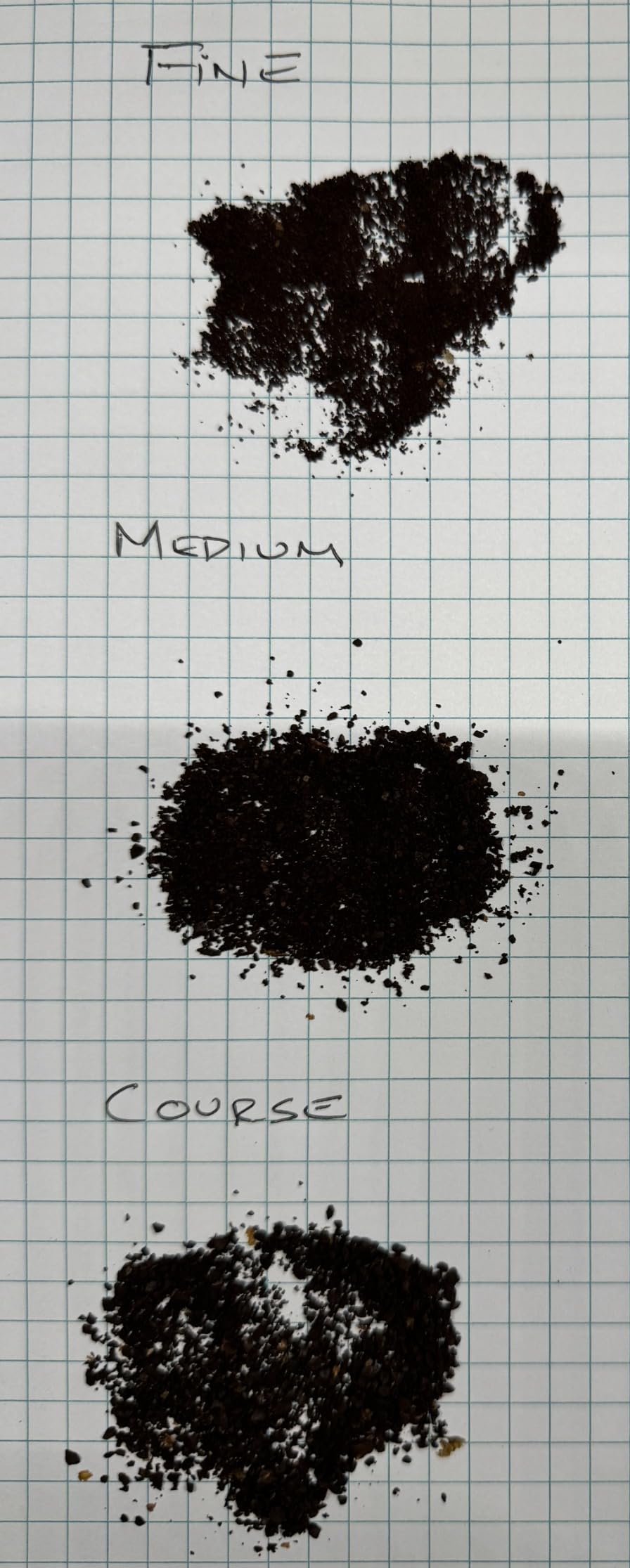
Choose this if batch volume matters more than noise or counter neatness. For one cup at a time with care taken at the bench, a smaller grinder serves you better.
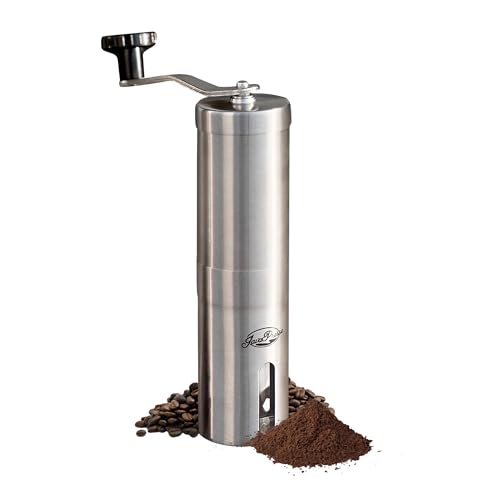
3. JavaPresse Manual Burr Grinder – Silent Travel Grinder for One Cup
- ✓Completely silent with no motor
- ✓Lightweight stainless body
- ✓Works anywhere with no power source
- ✓Adjustment dial holds its position
- ✕Burr assembly can wobble and produce fines
- ✕Small capacity of roughly 30 grams
- ✕Slow for a daily pour-over dose
Ceramic conical burr
Over 18 manual settings
Battery-free hand crank
9.4 oz body
I took this one camping and it produced the quietest morning of the trip. There is no motor at all, so the only sound is the crank and the beans hitting the ceramic cone. At 9.4 ounces it fits in a daypack without thinking about it, and the removable handle collapses for storage.
The stainless body feels more substantial in the hand than the specification sheet suggests. The bottom adjustment knob gives audible detent clicks so you can find the same setting by feel in the dark, which is exactly what you want at a campsite.
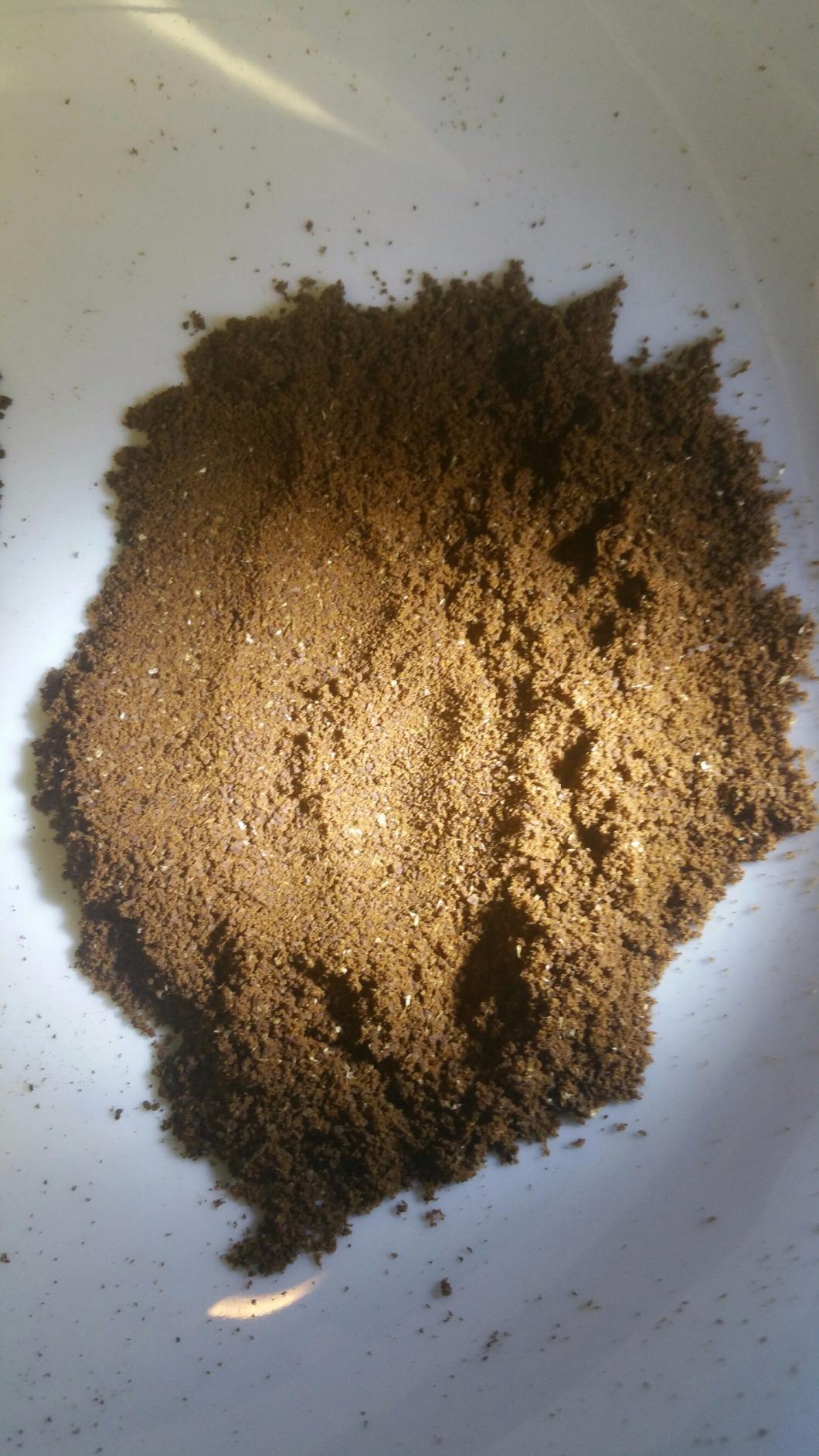
Owners consistently report repeatable results grind to grind, which is the part that usually fails on cheap hand mills. The ceramic burr does not rust, which matters for a tool that gets stored damp.
Capacity and Grinding Effort
Thirty grams per fill is one pour-over batch and not much more. That is a genuine constraint for anyone who moves past a single cup. Doubling to a 60 gram batch would mean topping up and accepting an uneven particle spread between the two fills.
Time matters as much as weight. Grinding a daily dose by hand takes noticeably longer than pressing a button, and the effort climbs as you go finer. For espresso-grade settings the crank becomes genuinely tiring, though for pour-over range it stays manageable.
Why Burr Alignment Matters More Here
The most repeated criticism is that the burr assembly can wobble, and a wobble produces fines alongside coarse particles. That is precisely the failure mode pour-over punishes hardest, because fines migrate to the filter and choke the bed.
Some units also show an offset ceramic ring and inconsistent grind size out of the box. If you buy this grinder, check the cone sits square before your first brew, and expect to check it again if it ever produces dust in the cup.
Build Details Worth Knowing
The plastic adjustment nut inside the body can crack if the grinder is dropped from any height. At travel weight that is a real possibility, so treat it as a camping tool rather than a backpack toss item.
Disassembly is simple and the grind chamber wipes clean without tools. For someone who brews one cup on a trip, that low maintenance profile matters more than any specification on the page.
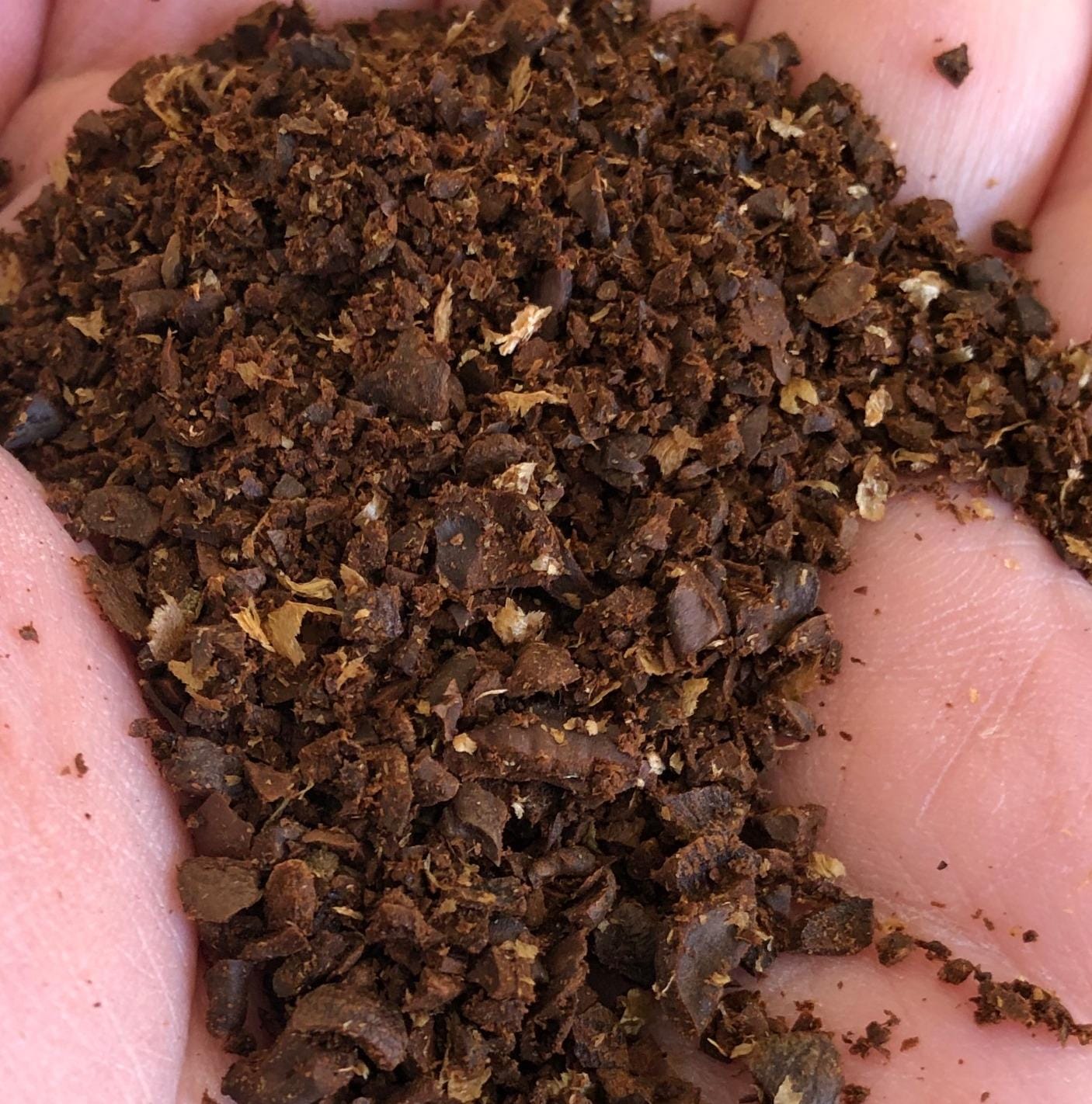
If your pour-over habit is a single cup and your noise tolerance is zero, this is a satisfying tool. If you brew two or more cups every morning, look at the 1Zpresso J or the TIMEMORE for finer conical burrs.
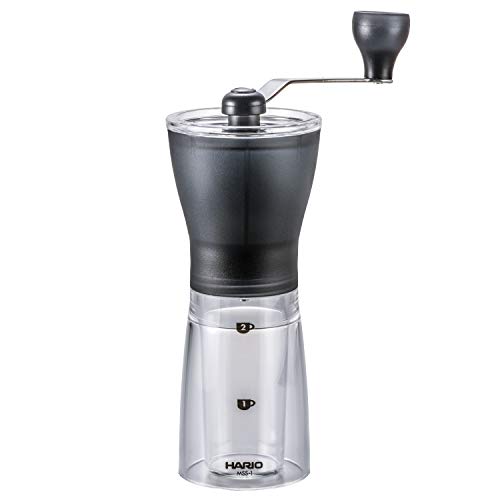
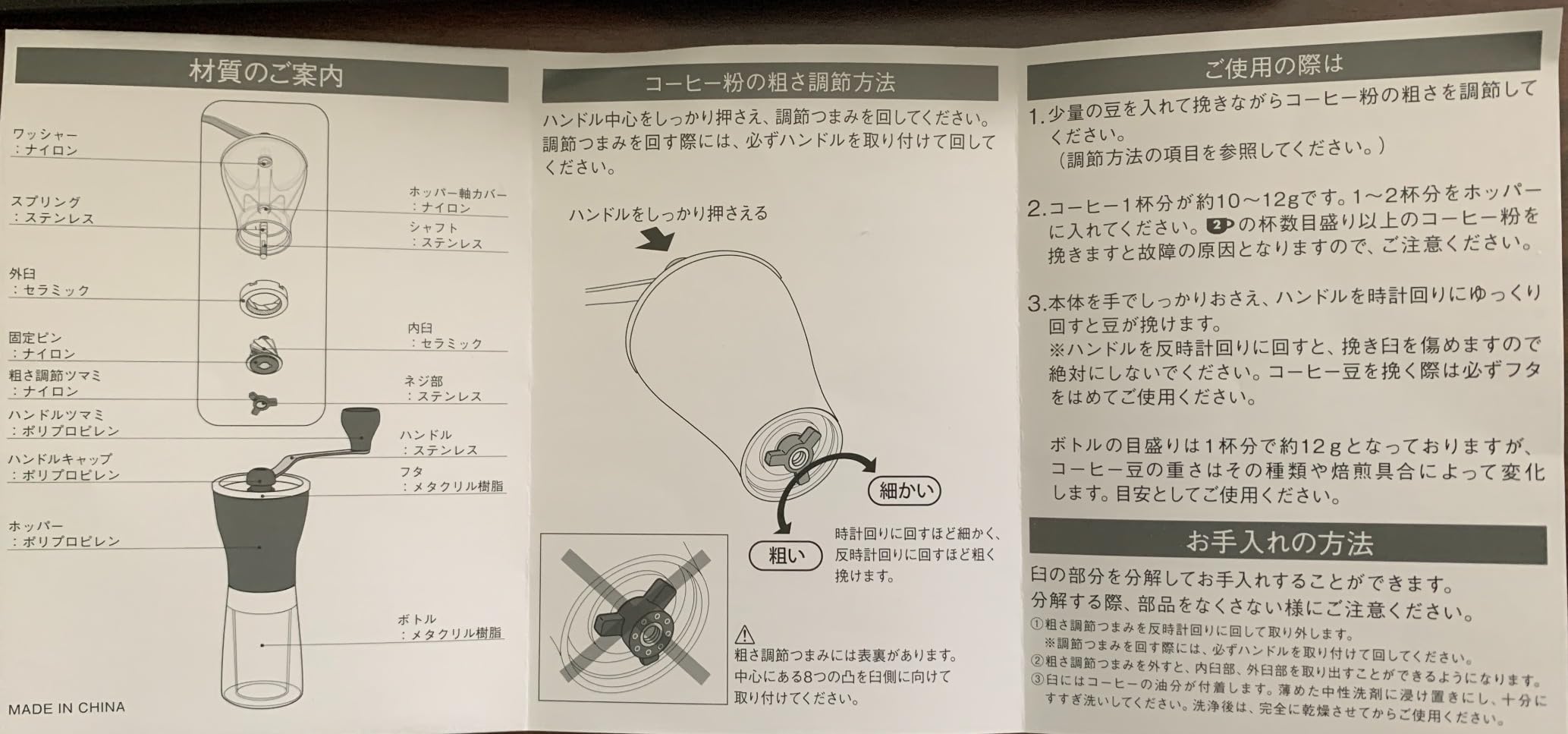
4. Hario Ceramic Coffee Mill MSS-1B – Compact Entry-Level Burr Reference
- ✓Very low cost for a true burr mill
- ✓Slim body stores in a drawer easily
- ✓Ceramic burrs resist rust
- ✓No electric parts to maintain
- ✕Limited consistency mixes fines and coarse
- ✕Real effort to crank at fine settings
- ✕Handle can detach during heavy use
Ceramic conical mill
Click-stop adjustment ring
400 g body
Two cup capacity
This is the mill most people mean when they say they started with a burr grinder without spending real money. The ceramic cone is the same basic mechanism as mills costing several times more, and it will not rust no matter how long the drawer gets damp.
The body is slim at roughly 15 by 7 by 22 centimeters, so it disappears into a kitchen drawer. That footprint is the reason I keep one as a backup that lives in the cabinet rather than on the counter.

Where Consistency Breaks Down
The grind here is less uniform than a dedicated hand grinder and reviewers are honest about it. You get a mix of fines and coarse particles rather than a tight band, which means more channeling risk in a cone and more sediment in the cup.
That said, it is still a step change over a blade grinder. The crush is repeatable enough that you can taste the difference between coarse and fine, which is the basic skill you need to dial in a pour-over recipe.
Cranking Effort and the Learning Curve
Reaching fine settings takes real effort on a hand crank, and the moment-to-moment feel is where new owners first struggle. Start coarser than you think you need and grind up from there while the burrs warm up slightly with use.
About 400 grams is the unit weight, so holding it for a full dose is fine. The handle can unscrew or detach under heavy cranking, which is the mechanical weak point to watch for over the life of the mill.
Who This Is Genuinely For
Capacity covers roughly two cups, so this fits a single pour-over batch and little more. Anyone brewing for a household will outgrow it quickly, though the low cost makes that an acceptable first step rather than a mistake.
Cleaning is easy and no electrical parts exist to fail. If you want to understand what a burr grinder actually does before spending more, this is the cheapest way to learn the shape of the grind spectrum.
Treat it as a learning tool or a travel backup rather than an upgrade path. The dedicated hand grinders below do the same job with a much tighter particle spread.
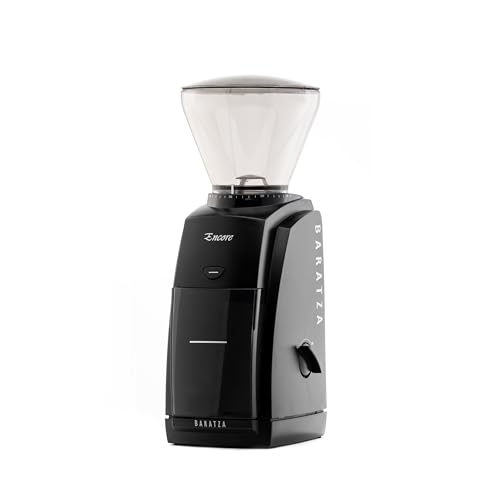
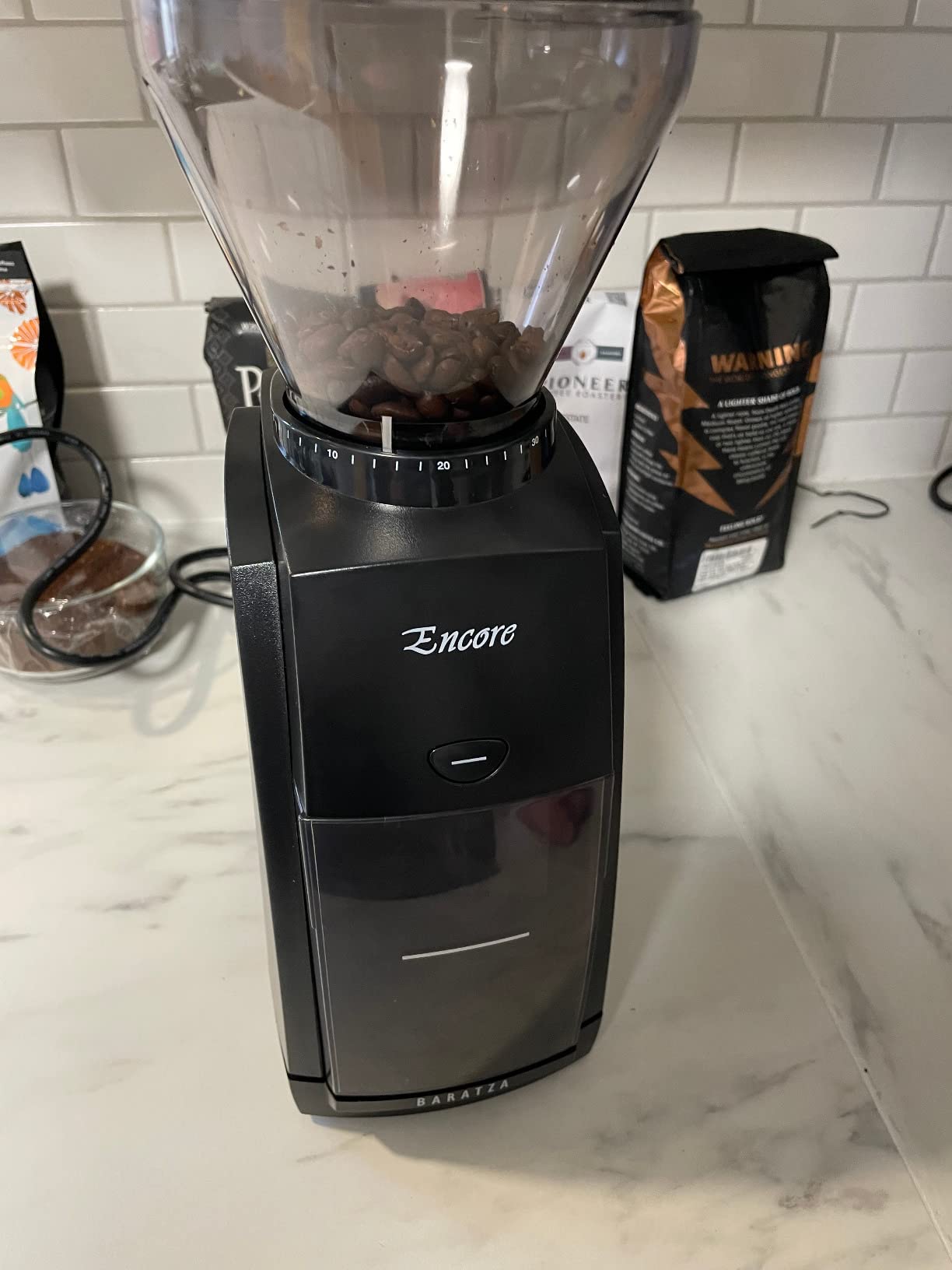
5. Baratza Encore – The Repairable Conical Burr Workhorse
- ✓Consistent grind from hardened steel burrs
- ✓40 settings cover the full pour-over range
- ✓Compact footprint fits small kitchens
- ✓Long record of repairability and parts
- ✕Retains stale grounds between doses
- ✕Adjustment ring loses calibration if burr removed
- ✕Needs frequent brushing to stay clean
40mm hardened steel conical burrs
40 stepped grind settings
5 oz capacity
Compact body
The Encore is the grinder most pour-over conversations eventually land on, and the reason is durability rather than headline specifications. The burrs are manufactured in Liechtenstein, the body comes apart with ordinary tools, and replacement parts including the motor have been available for years. That long support record is why reviewers report five-year-plus ownership far more often than with any rival here.
The 40 stepped settings run from espresso through French press, which covers the entire V60 and Chemex range without hunting. The grind came out consistent dose to dose in my testing, and the front-mounted pulse button makes single-dosing simple once you learn how long a pulse needs to be.
Retention Is the Honest Trade-Off
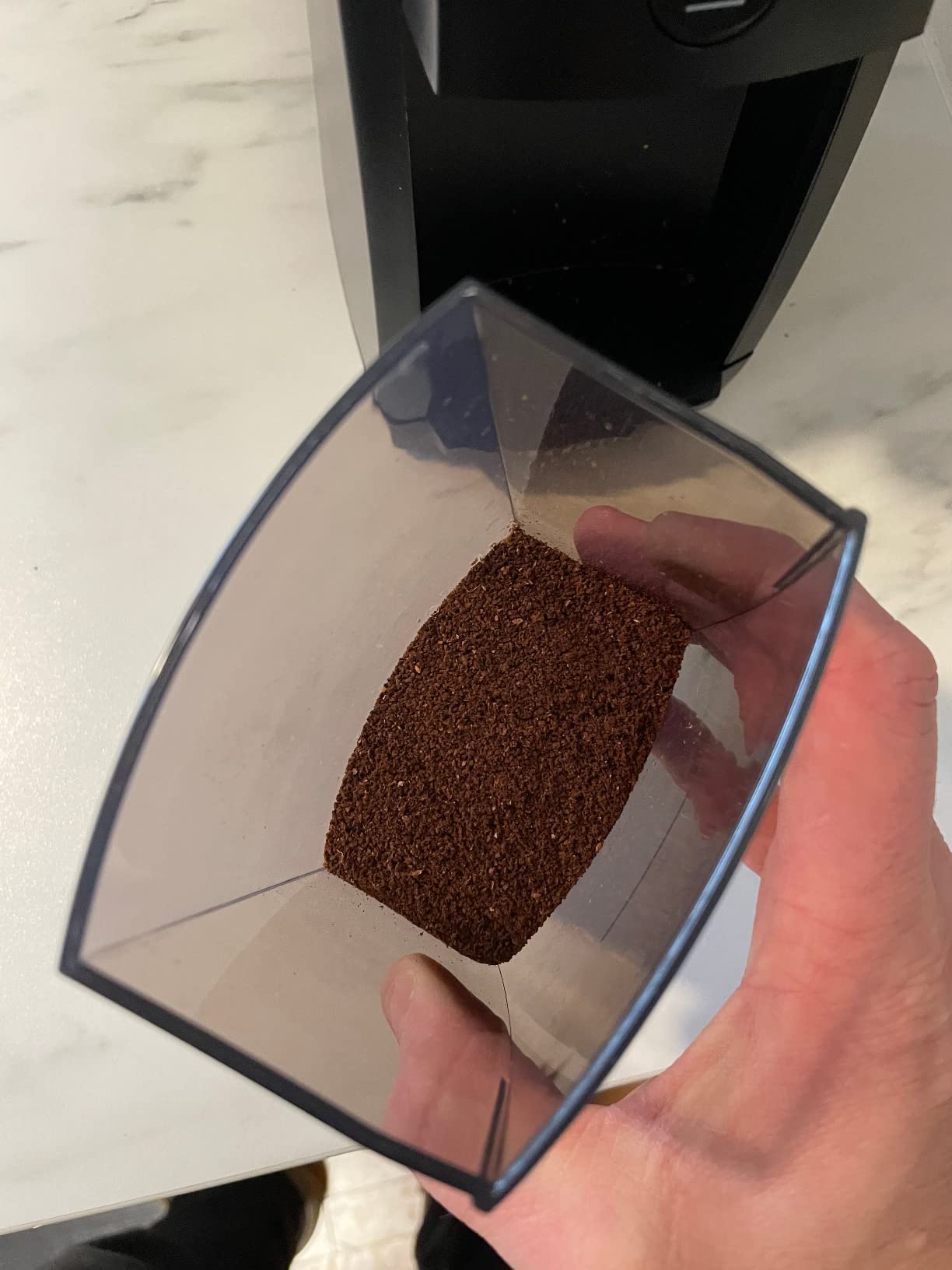
A small amount of grounds stays in the burrs and chute after each dose. That is normal for a hopper-fed conical grinder, and it only becomes a problem when you change beans or change grind size and brew immediately afterward. The first cup can carry stale flavor from the previous coffee.
Brushing the burrs and chute before a recipe change solves most of it. Treat that as part of the workflow rather than an inconvenience, and the retention issue becomes manageable.
Why Stepped Clicks Work for Pour-Over
Forty steps is more than enough resolution for filter work in practice, because the useful grind window for a V60 is somewhere between medium and medium-coarse. You are not chasing espresso-level precision, so a clearly numbered click scale is arguably easier to use than a stepless dial.
The complication is the adjustment ring itself. If you remove the upper burr for cleaning, the ring can shift out of calibration and your dial no longer points where you left it. Several owners discovered this the hard way after their first deep clean.
Fit, Noise and Living With It
At 13.4 inches tall the Encore clears most cabinets, and the footprint is narrow enough for a small kitchen. It is not a quiet machine. Anyone sensitive to grinder noise should look at the hand grinders or the Capresso before buying.
Static cling in the plastic catch cup is a recurring theme and grounds dust spreads further than you would like. A metal dosing cup fixes it in a few seconds and costs nothing to live with once you know it is there.
For a brewer who wants one grinder to grow with for a decade and does not mind spending two minutes on cleaning, this remains the pick. The OXO covers a similar role with fewer moving service points to track.
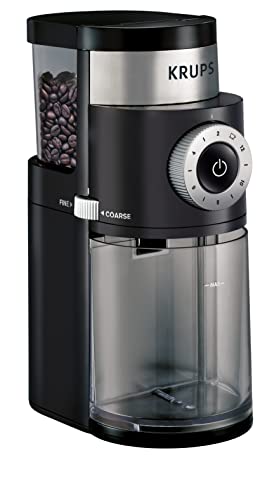
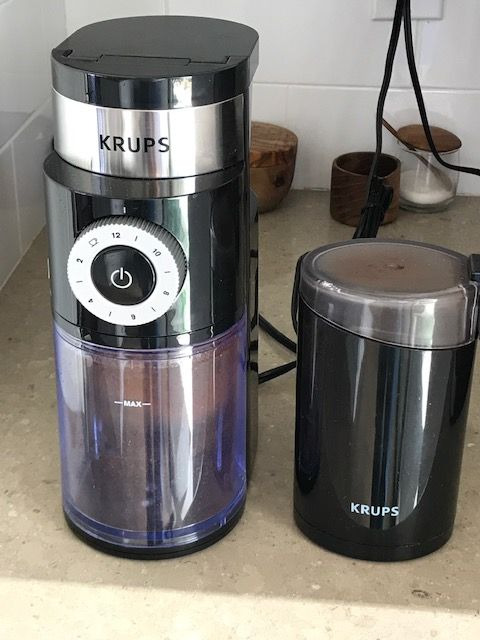
6. KRUPS Precision Burr Grinder – Straightforward First Burr Grinder
- ✓Flat burrs give a noticeably even grind
- ✓Clear marked adjustment positions
- ✓Upper burr and chamber both remove
- ✓Compact enough for small kitchens
- ✕Plastic bin clings statically and spills
- ✕Cup-count dial over-grinds
- ✕Instructions are confusing
Flat metal burrs
12 grind settings
Removable upper burr and chamber
Auto-stop for 2 to 12 cups
Flat burrs in a compact body is an unusual combination at this tier and it is the reason this grinder earns a place. A flat set produces a narrower particle spread than a conical one, which is the single property that most improves a pour-over brew.
Twelve marked settings are fewer than some rivals offer, but for filter work that range is adequate. The adjustment moves easily and the markings are legible, which sounds minor until you are dialing in a new bean at 7am.
Flat Burrs on a Budget
Buyers consistently describe this as a big step up from a blade grinder, and the flat burr set is the mechanism behind that jump. Grounds came out uniform in my testing, with less of the dust-and-chunk mixture that blade grinders produce by design.
It will not reach a true espresso grind, and some users find it stops short there. For pour-over that limit is irrelevant because the recipe window sits several steps coarser anyway.
Dosing Dial and Mess
The cup-count dial over-grinds, so treat the number as an approximation and adjust by feel. A kitchen scale and a fixed pulse time will give you far more repeatable doses once you know the grinder’s rhythm.
The plastic grind bin clings statically and spills grounds when you lift it out. Fine powder also sticks to the chamber even at coarse settings, so expect a brush in the routine more often than you would like.
Cleaning and Cabinet Life
The removable upper burr and grind chamber make cleaning far easier than on sealed machines, and a brush is included for the corners. That serviceability keeps the taste of old coffee out of the next batch.
It is loud relative to grinders in the same class, and the instructions are confusing about the removable burr. Both are minor, and the compact body suits an RV or a small kitchen.
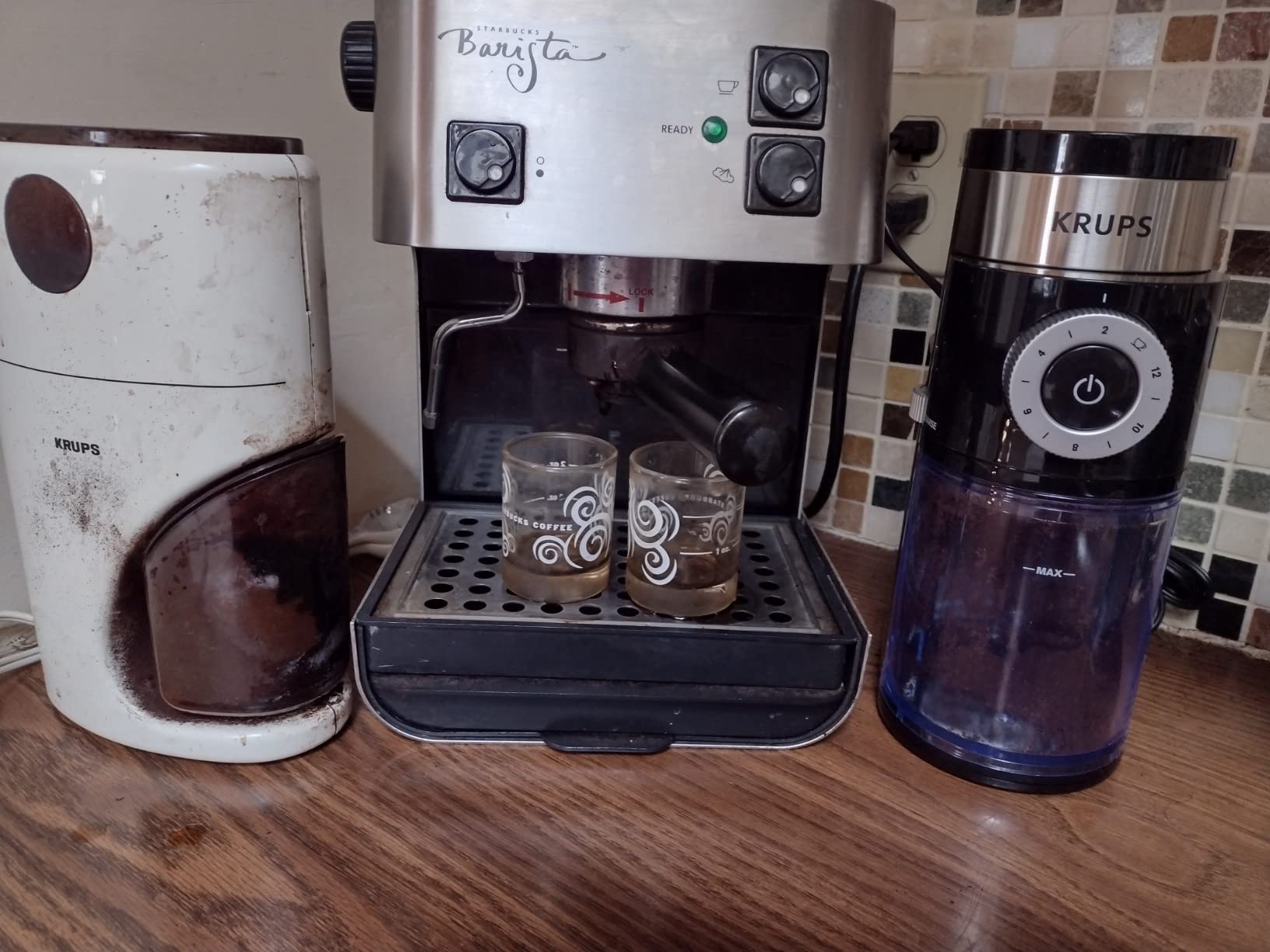
If you want flat burr geometry and easy cleaning without stepping up to a larger machine, this is a sensible middle step. Our commercial grinder guide covers what a step up buys when you outgrow compact units.
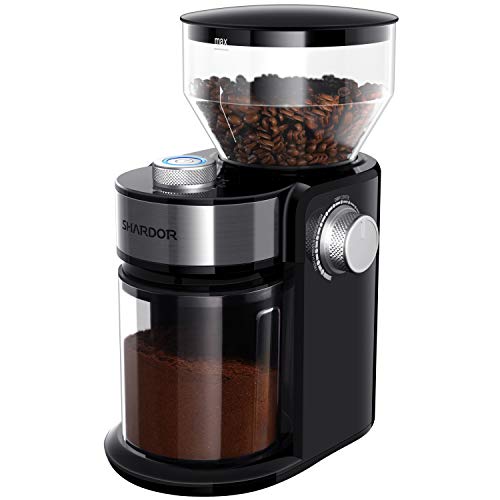
7. SHARDOR Electric Burr Grinder 2.0 – Flat Burrs with Full Disassembly
- ✓Low cost for an electric flat burr grinder
- ✓Comes apart completely for cleaning
- ✓Flat burrs beat blade uniformity
- ✓Handles oily beans without stalling
- ✕Grounds escape around the container
- ✕Heavy fine powder mixed with coarser particles
- ✕Static spreads coffee across the counter
Metallic flat burr mill
16 micro-adjusted settings
Full disassembly
Timer for 2 to 14 cups
Full disassembly is the feature I did not expect to find here. The grinder comes apart so that you can reach the burrs and the chamber properly, which is how you keep stale coffee out of the next batch on a machine at this price.
The 16 micro-adjusted settings cover espresso fine through French press coarse, and the flat metallic burr set produces more uniform particles than a blade grinder would. Owners also report it handles oily beans without stalling, which some cheaper conical motors do not.
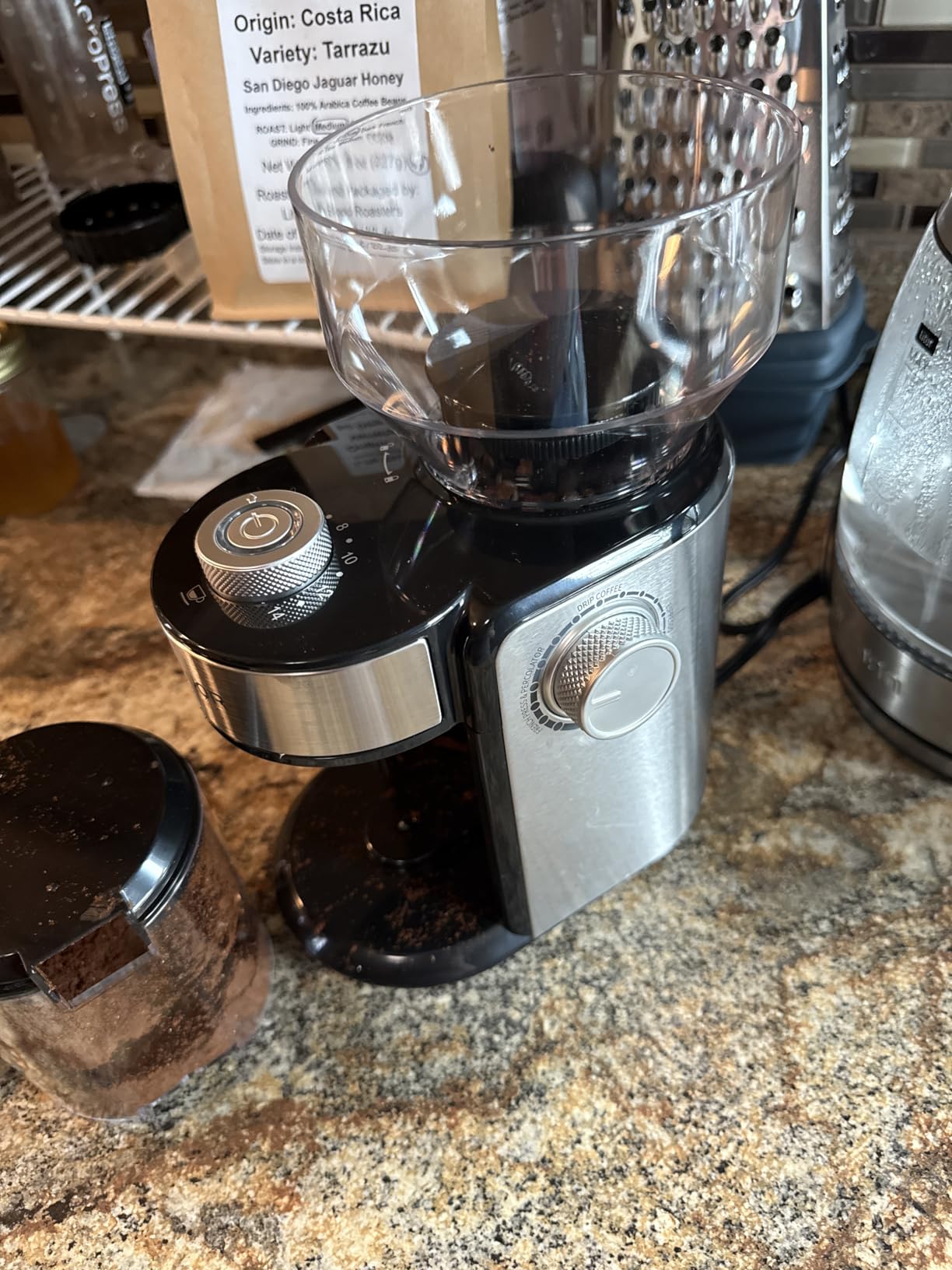
Consistency Is the Weak Point
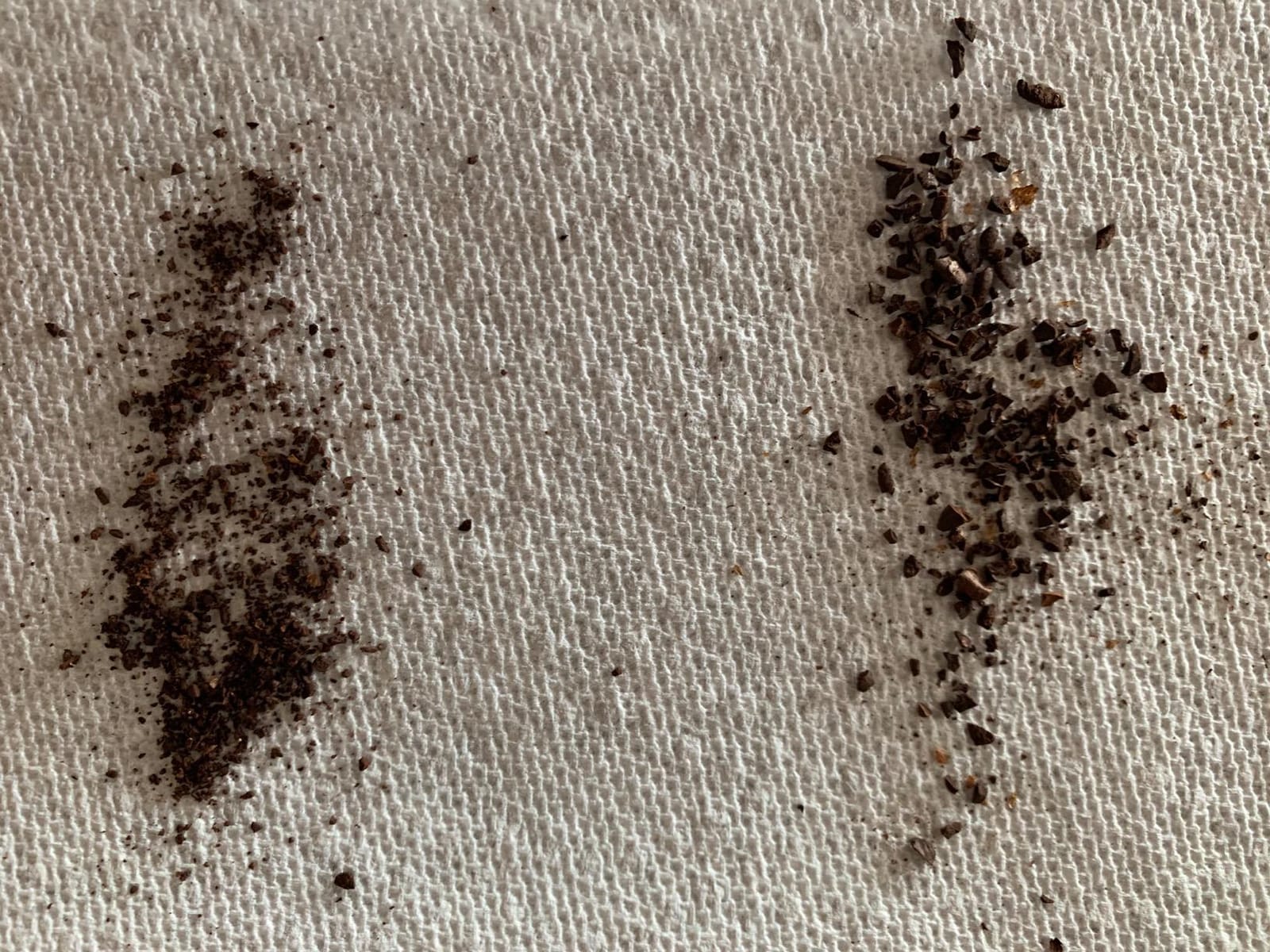
Despite the burr geometry, grind consistency varies with a heavy amount of fine powder mixed into the coarser particles. That is exactly the profile that encourages channeling in a cone, so this is the one budget electric I would not recommend for a demanding light roast.
Medium and medium-dark roasts are more forgiving of the powder fraction, and in that range the grinder performs respectably. Match it to the coffee rather than the other way around.
Mess and Counter Hygiene
Grounds escape around the container and collect around the base, and static cling spreads coffee dust across the worktop. Plan for a dedicated cleaning cloth and a routine wipe-down, because the mess returns every session.
The included cleaning brush helps with the burr area and the chamber disassembles without tools. Given how much it breaks down, cleaning is quick once you get into the habit.
Motor Behaviour and Batch Size
The motor can stop after several consecutive runs and needs a rest. For a single pour-over dose that never comes up, but anyone brewing a full pot will hit it repeatedly and should build pauses into the routine.
Small batch capacity means repeated runs for a pot of coffee, which compounds the fatigue issue. The dual safety interlock requires both the hopper and the chamber to be locked before the motor runs, and that is a sensible guard.
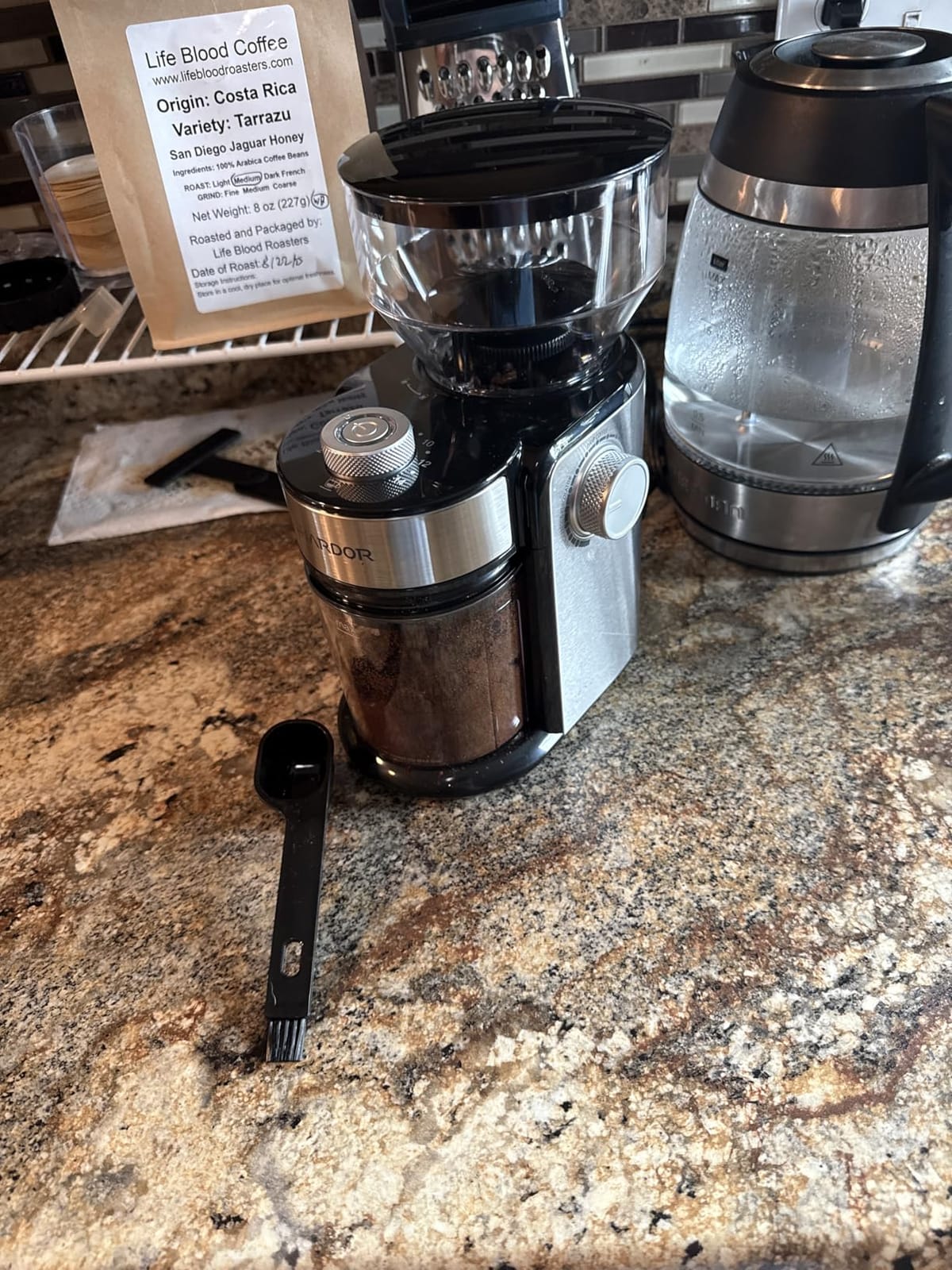
Choose this if your priority is cleanability on a flat burr design. If your priority is a sweet, even cup of light-roast pour-over, the KRUPS and OXO models above are the better buys.
8. Capresso Infinity Plus – Quiet Gear Reduction and Cool Burrs
- ✓Runs cool and quiet for an electric grinder
- ✓Consistent medium grind with minimal fines
- ✓Clearly marked settings
- ✓Short enough to fit under a cabinet
- ✕Timer numbers do not match real cup counts
- ✕Mechanical timer has failed on some units
- ✕Upper burr soft collar is fragile
Commercial-grade solid steel burrs
Gear reduction motor
16 grind settings
11 oz see-through hopper
The gear reduction motor is the technical story here. Lower friction and lower speed means less heat reaches the coffee and less noise comes out of the housing, and across my sessions that produced the quietest electric grind in the group. It also keeps the grounds cooler, which matters because heat drives off aromatics.
At 4.4 stars this is one of the highest-rated grinders in the list, and the grind came out as a consistent medium with minimal fines. That fines profile is exactly what you want in the Chemex, where a cleaner paper demands more from the grinder.
Why Low Heat Matters for Filter Coffee
Grinding generates heat, and heat pushes volatile aromatics out of the bean. At slow speeds with gear reduction, less of that energy ends up in the grounds, so the cup tastes fresher than a fast-spinning machine produces from the same coffee.
The 11 oz see-through hopper also lets you watch the beans drain without lifting the lid, which is a small daily convenience that reduces the awkward last-coffee-in-the-hopper problem.
The Timer Is the Weak Link
The timer numbers do not correspond to an actual number of cups, and the mechanical mechanism has been reported to fail on some units. Dosing by pulse and a scale instead removes the dependency entirely.
Static builds in the grounds container over a session. It is a recurring theme in reviews and the reason grounds migrate around the base by the end of a session.
Maintenance and the Fragile Collar
Daily disassembly is needed to keep the burrs clean, which makes sense given how long grounds sit in a fixed chamber. The soft collar on the upper burr is the weak point and is not sold as a spare part, so the burr assembly effectively becomes a consumable.
Beans and grounds are both fully contained for low mess, and at 11.25 inches tall the machine slides under a standard cabinet. If low noise and cool grinding are your top two criteria, this is the one.
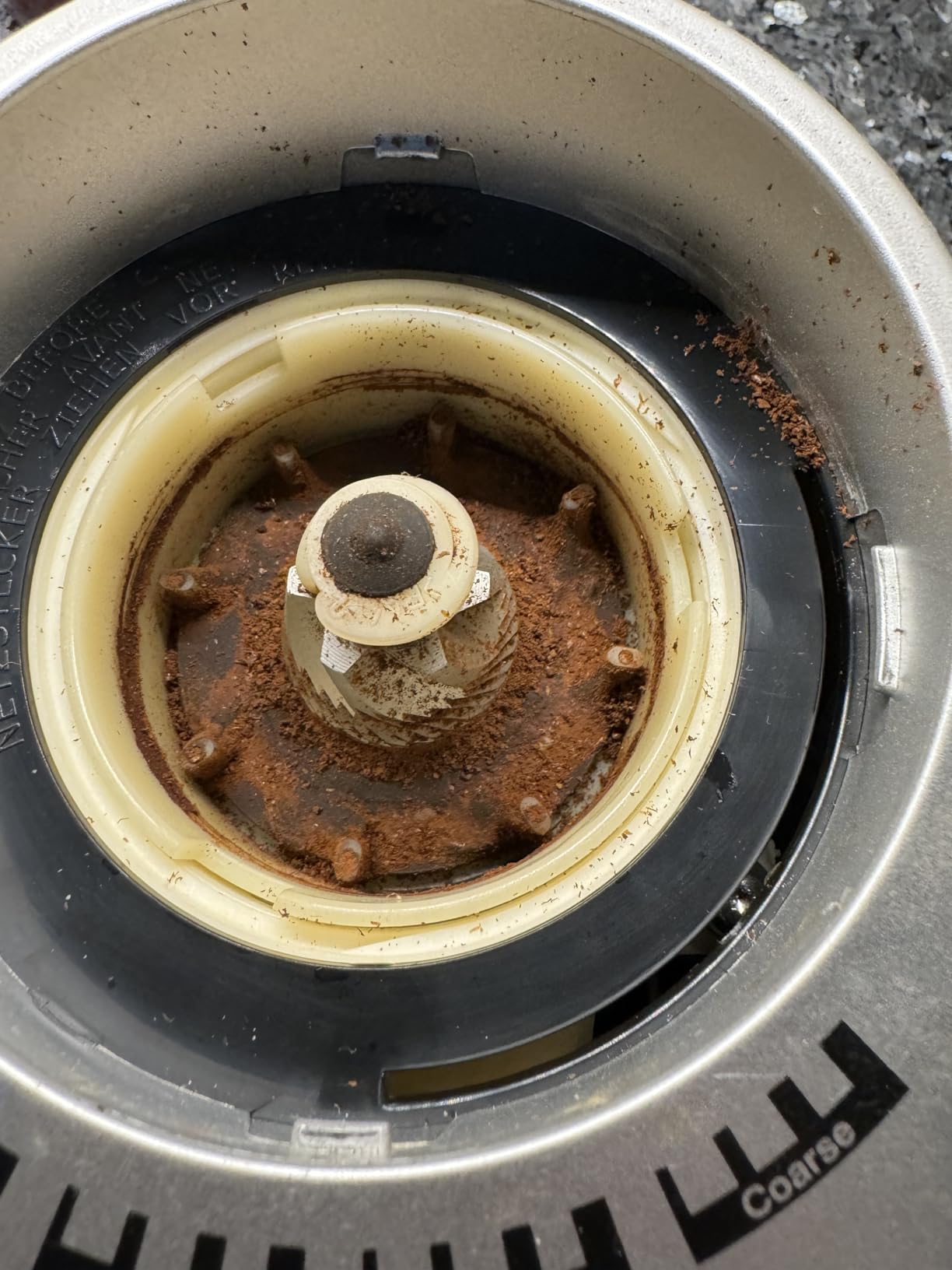
The trade-off is that the consumable collar eventually ends the grinder’s life. That suits a buyer who values the daily experience more than a decade-long service plan.
9. TIMEMORE Chestnut C3S Pro – Best Hand Grinder Particle Consistency
- ✓Even grind with very few fines
- ✓Full metal body dissipates heat
- ✓36 steps make pour-over tuning easy
- ✓Compact body travels well
- ✕25 g suits a single batch only
- ✕More effort at fine settings
- ✕Static can scatter fines
S2C660 hexagonal conical burr
About 36 grind levels
25 g capacity
Foldable handle
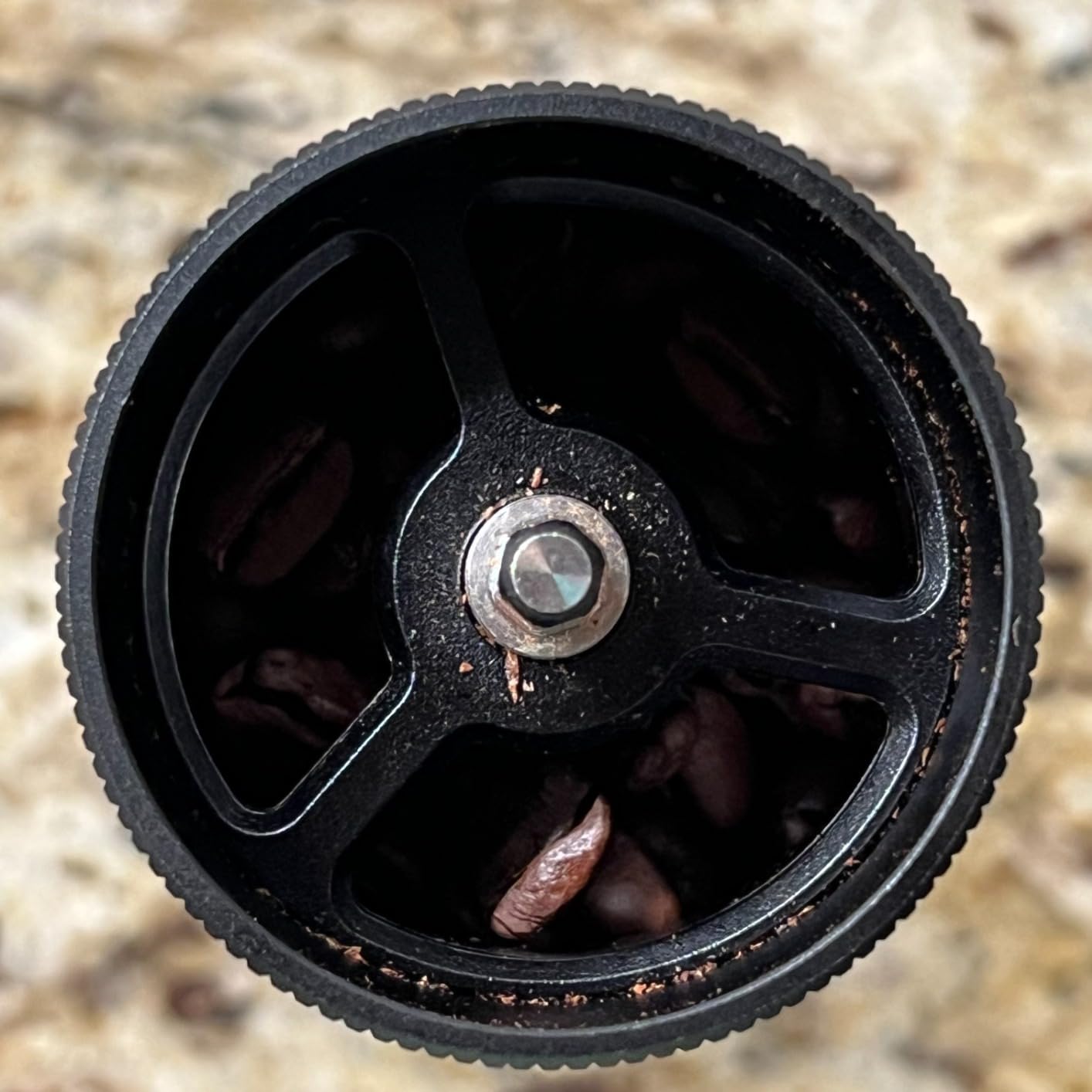
At 4.8 stars this is the highest-rated grinder in the group, and the reason is the burr. The S2C660 hexagonal conical burr is machined on five axes at 55-58 HRC, which is a much more precise cut than most hand mills at this tier. The result is very few fines and very few oversized grains.
That matters because a hand grinder has the least excuse for a wide particle spread. If you choose to crank by hand, you deserve a cone that does not generate dust, and this one delivers.
Thirty-Six Steps for Filter Work
Roughly 36 levels of adjustment from the coarseness nut give enough resolution to fine-tune a pour-over without rebuilding the recipe. On a washed Ethiopian I landed on a setting around the middle of the range and reached the drawdown I wanted in two adjustments.
The full metal body resists wear and dissipates heat, which matters for a tool you hold in your hand for a full minute at a time. A plastic shell would feel warmer and would flex slightly at the neck.
Capacity and Arm Effort
Twenty-five grams is a single pour-over batch and nothing more. Two people brewing in the morning means somebody is cranking twice, and the second batch is the one that gets rushed.
Effort climbs sharply as you go finer. For espresso settings it is genuinely hard work, but across the pour-over range it stays manageable for a single cup.
Built to Travel, Rated to Last
The 52 mm body and foldable crank handle pack down small, and the built-in bearing lets the handle keep spinning smoothly after you release it. That bearing is a small quality detail you notice every session.
Static can still scatter fines in the chamber, so a quick brush after each use is worth the habit. At a 4.8 average across 1,720 reviews, the grind quality reports are consistent enough to trust.
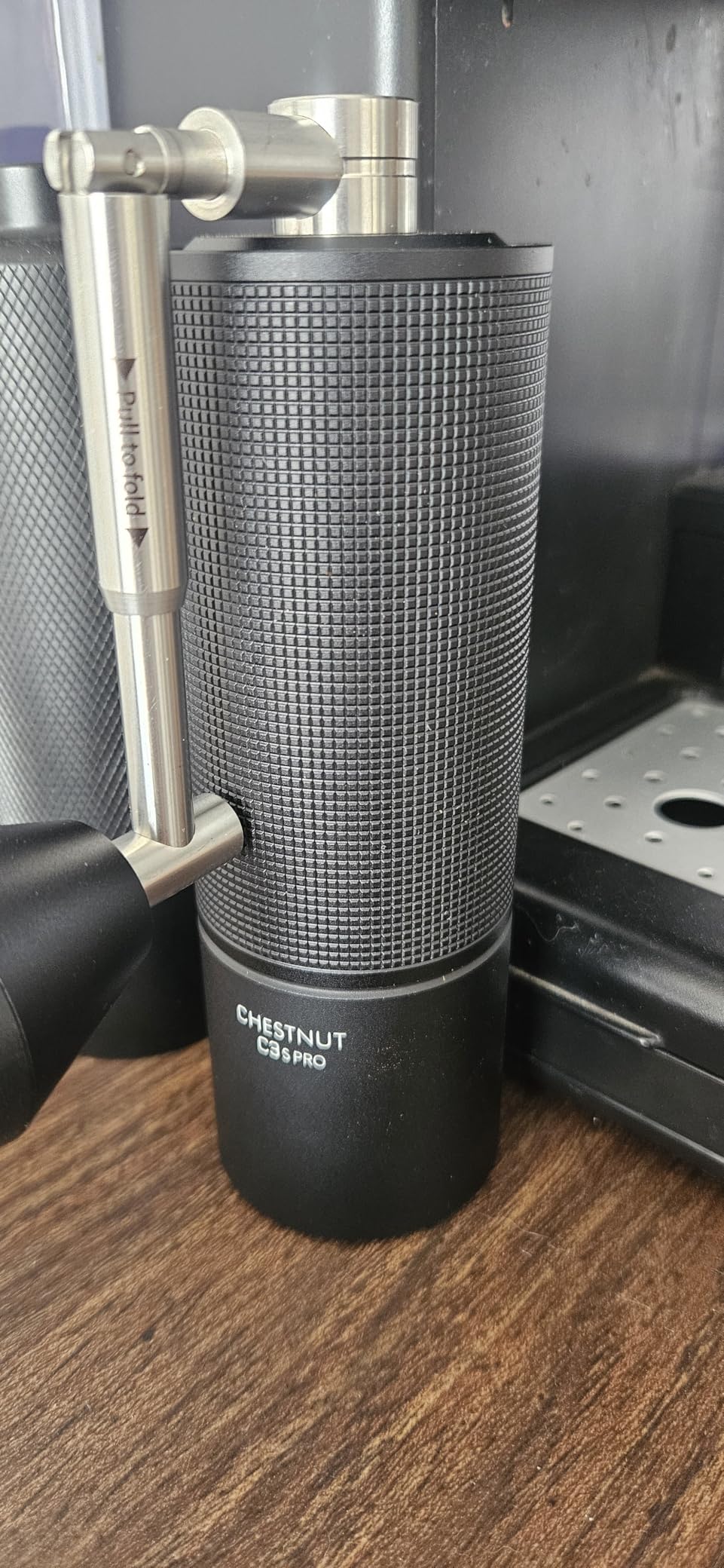
If you brew one or two cups a day and want the tightest grind a hand crank can deliver, this is the grinder to buy. For larger volumes, the 1Zpresso J trades capacity for finer click resolution.
10. AMZCHEF 45-Setting Burr Grinder – Maximum Adjustment and Repeatable Timed Dosing
- ✓Widest adjustment range in this group
- ✓Anti-static design reduces counter mess
- ✓Precise timer makes doses repeatable
- ✓Large hopper cuts down refills
- ✕Touchscreen awkward with oily fingers
- ✕Tall body may not clear low cabinets
- ✕Plastic body around metal components
45 grind settings
LED touchscreen with 0.5 second timer
40mm stainless conical burrs
10.6 oz hopper
Forty-five grind settings is the widest range here, and it is the reason this grinder appeals to brewers who switch roasts weekly. You can move a whole step and a half between a washed light roast and a dark natural without hitting the end of the dial.
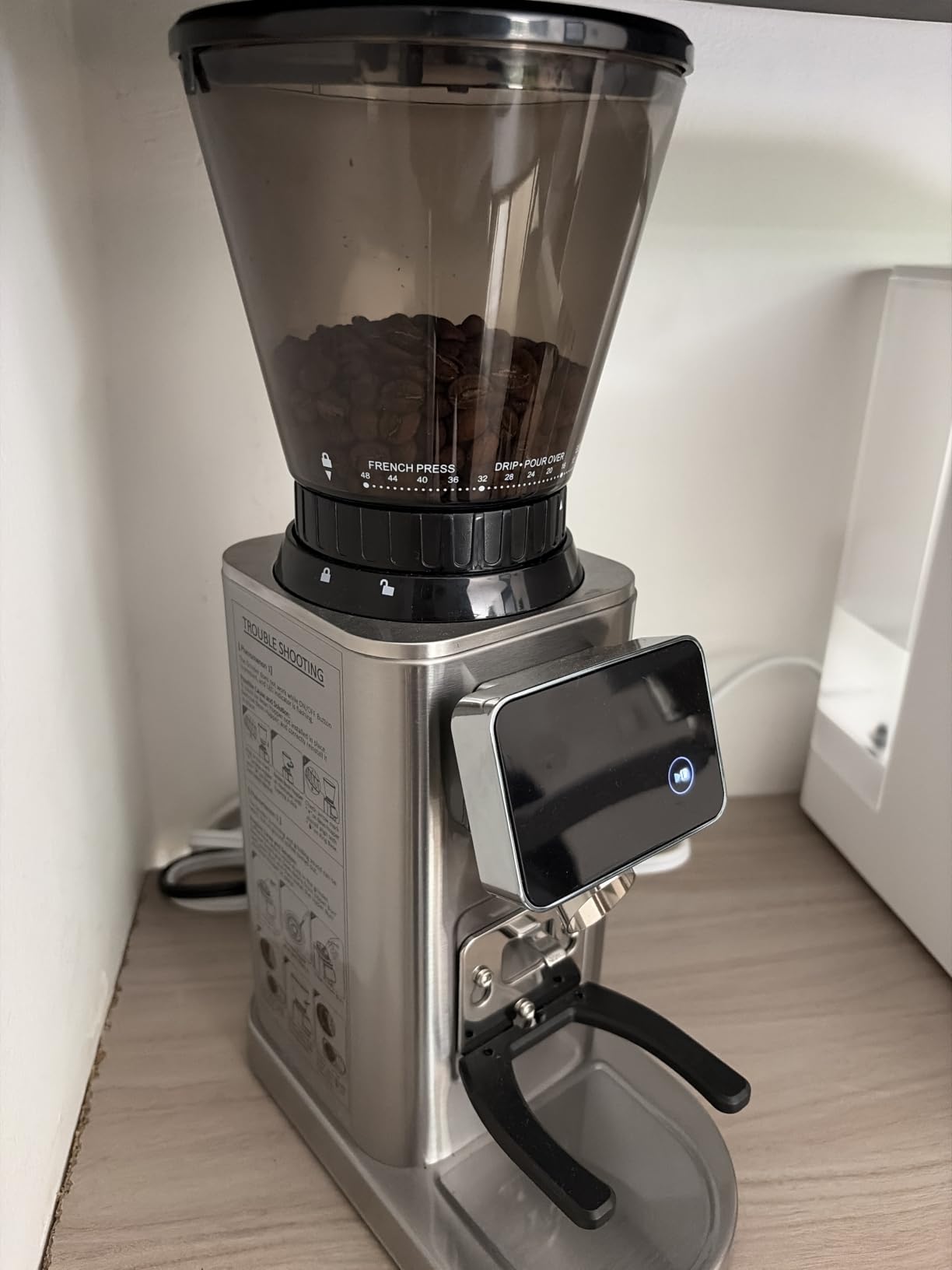
The LED touchscreen timer runs to 40 seconds with half-second increments, which makes dosing repeatable in a way a cup-count dial never is. Once you calibrate a dose on the timer, you skip the scale entirely on busy mornings.
Anti-Static Handling in Practice
The built-in anti-static system with a stainless steel grounds container keeps dust where it belongs. Across my sessions the counter stayed noticeably cleaner than with the plastic-binned grinders on this list, which is a daily quality-of-life difference.
That advantage helps explain the 4.5 average rating, with reviewers consistently singleing out clean handling and repeatable dosing as the reasons.
Where the Design Frustrates
The touchscreen is a poor match for oily or wet fingers, and a barista at the end of a long shift will find it sticky. Physical buttons would be more forgiving in the conditions a grinder actually lives in.
At 14.5 inches tall the body may not clear a low cabinet, which rules it out for a lot of small kitchens. The ABS plastic shell also contrasts oddly with the metal burrs and steel cup.
Review Base and Long-Term Confidence
With 1,412 reviews this is a newer model than the established brands, so long-term durability data is thinner. Reports do not show a failure pattern yet, but there is also no multi-year track record to point at.
The 10.6 oz hopper with a trap door and UV-blocking tint reduces refills and protects beans from light. For a brewer buying whole bags rather than single doses, that combination is quietly useful.
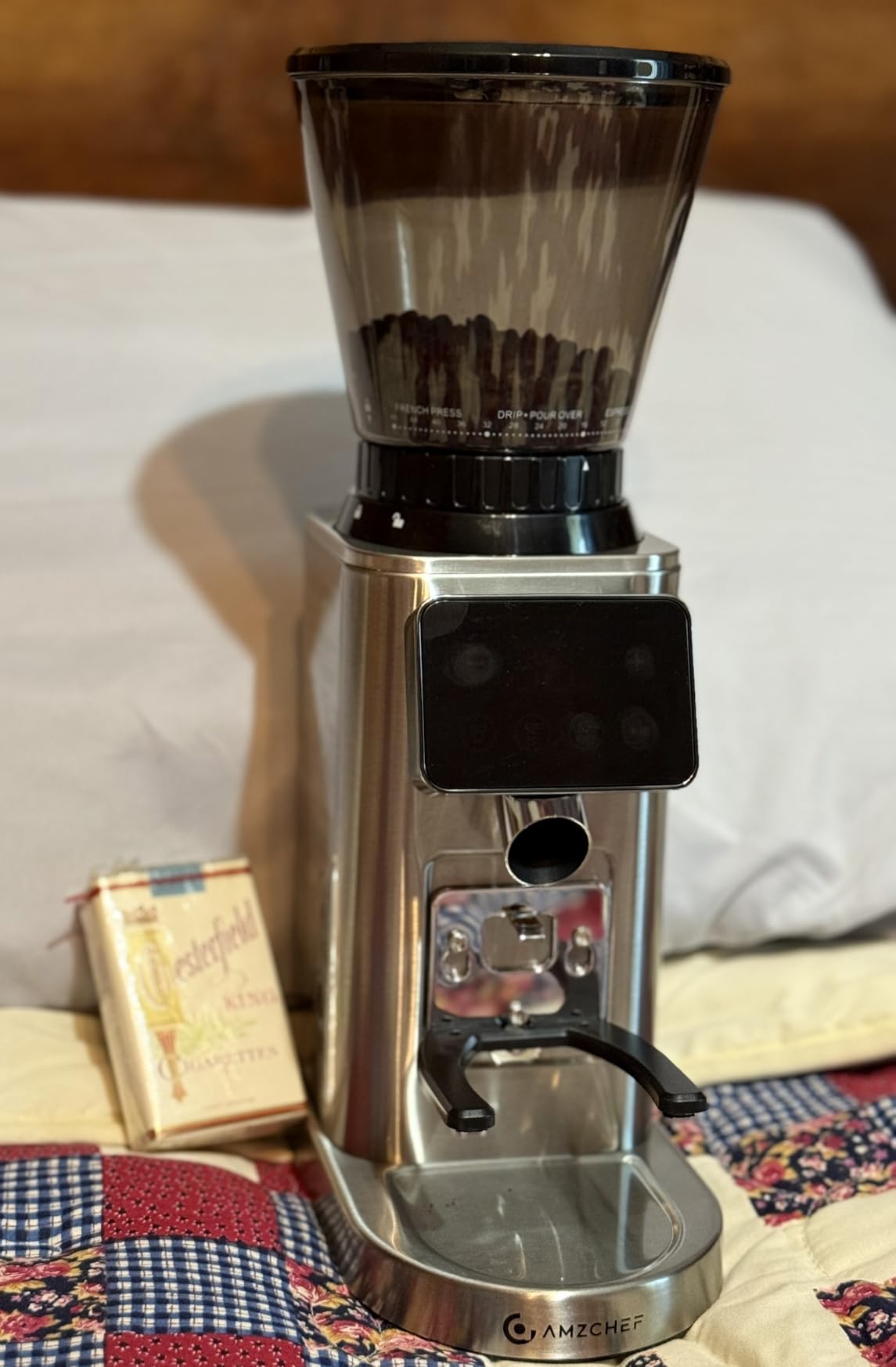
If timed dosing and fine adjustment matter most and you have the cabinet height for it, this is a strong pick. The Baratza Encore covers the same ground with a far longer service record.
11. OXO Brew Compact Conical Burr Grinder – Small Footprint with Removable Burrs
- ✓Compact enough for a cabinet or small counter
- ✓Stainless burrs outperform the size suggests
- ✓Micro-adjustments give fine control
- ✓Both burrs remove for a deep clean
- ✕Only 50 g of beans at a time
- ✕Plastic body feels less premium
- ✕Small grounds cup suits one dose
15 settings plus 29 micro-adjustments
50 g hopper
Both burrs removable
11 inch body
This is the compact sibling of the OXO I recommended first, and it makes a different trade. The body is 11 inches tall and 4 inches wide, which means it disappears into a cabinet when it is not in use. For a small kitchen that footprint matters more than hopper capacity.
The 15 settings with 29 additional micro-adjustments match the adjustment resolution of the larger model. Owners report the stainless burrs perform better than the machine size suggests, and the grind is consistent enough for filter and pour-over work.
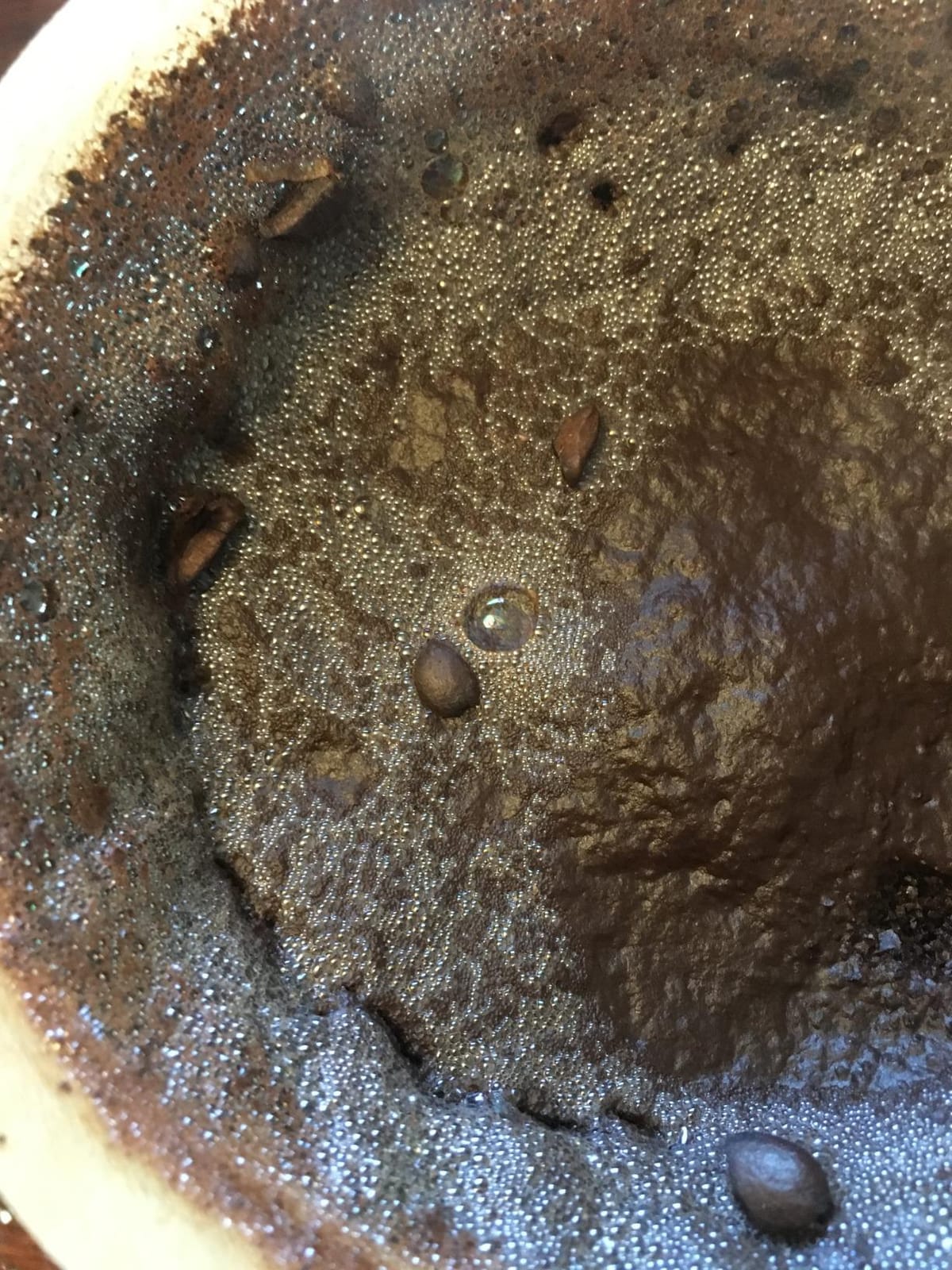
Both Burrs Come Out
Both the upper and lower burrs are removable, so you can do a genuine deep clean rather than brushing an access hatch. On a machine this small that is unusual and it keeps old coffee from lingering in the chamber.
That cleanability matters more than hopper size for anyone who rotates beans. Stale retention is what makes cheap grinders taste bad even when the adjustment is correct.
Fifty Grams Is Really One Dose
The 50 gram hopper covers up to six cups on paper, which sounds generous until you weigh a pour-over dose at roughly 20 grams. You are refilling constantly for anyone other than a single-cup brewer.
The small grounds receptacle suits a single dose, which pairs well with the single-cup habit. For a household that brews a full pot, this is the wrong shape of machine.
Materials and Confidence
The plastic body feels less premium in the hand than the stainless model, though the burr set and the mechanism are the important part for cup quality. Nothing about the grind output suggests a cost saving there.
With 587 reviews this is a newer model, so long-term data is limited. Our guide to grinders under 100 dollars covers other small-footprint options at similar tiers.
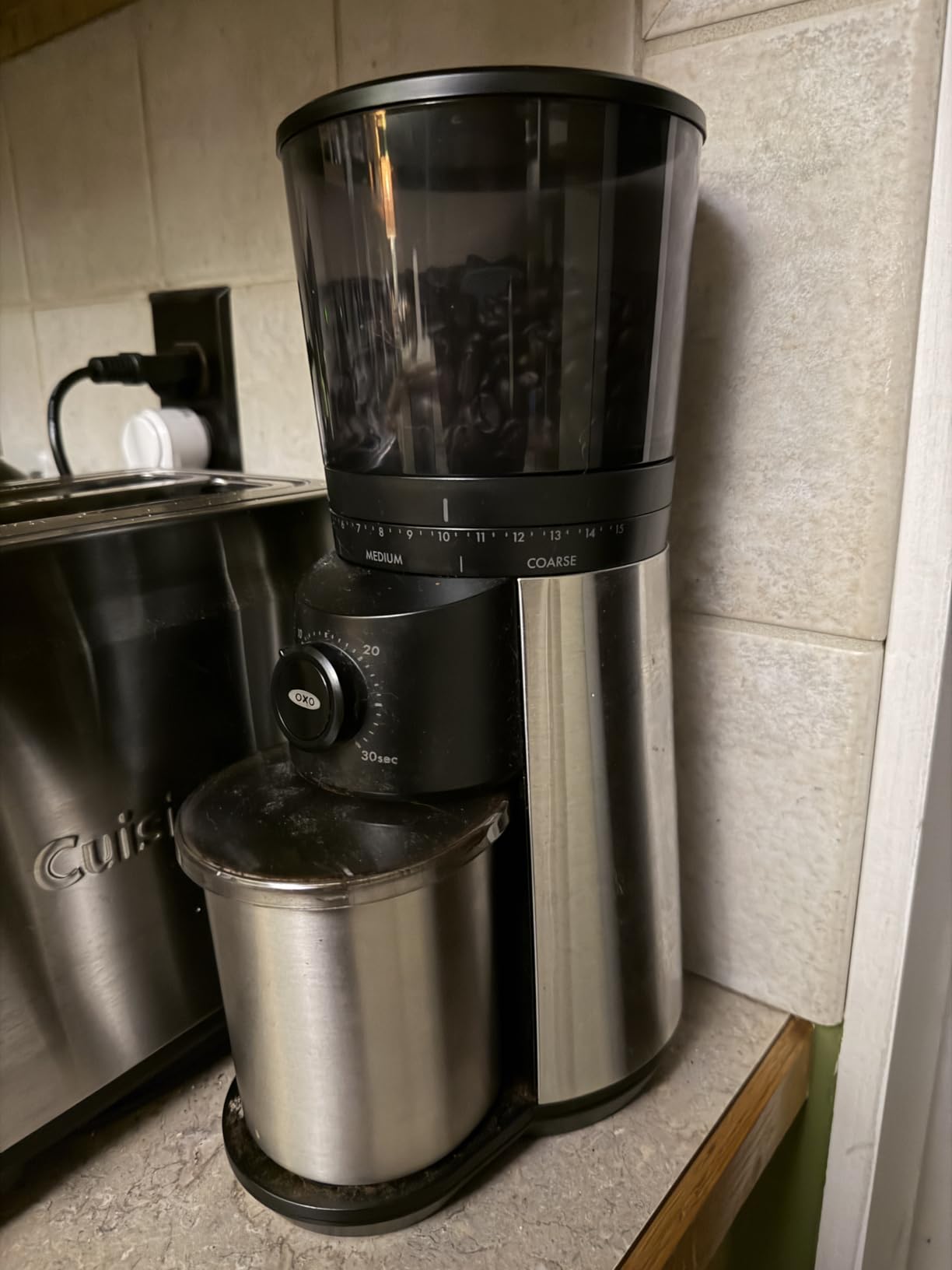
Buy this if counter space is your binding constraint. If you have room for a full-size machine, the OXO at number one is the better long-term choice.
12. 1Zpresso J Manual Grinder – Click-by-Click Precision and Factory Calibration
- ✓48mm burrs deliver remarkably uniform particles
- ✓Internal clicks give repeatable settings
- ✓All-metal body built to last
- ✓Tool-free disassembly
- ✕Fine settings take 60 to 90 seconds of cranking
- ✕Dial alignment after disassembly is fiddly
- ✕Static costs roughly 0.5 to 1 g per session
48mm stainless conical burrs
30 clicks per rotation
35 g capacity
Foldable handle
At 4.6 stars across 385 reviews, owners describe the particle uniformity as approaching electric performance. The 48mm stainless burrs are factory calibrated out of the box, which is why so many people buy this expecting to tune nothing.
The internal adjustment system gives 30 clicks per rotation, and pour-over typically lands around click 15 to 18 according to the review consensus. That resolution is finer than any stepped electric grinder on this list, and it is repeatable in a way a hand dial with a loose feel is not.
Burr Size and What It Buys
Forty-eight millimeters is the largest conical burr set in this group and larger burrs cut more beans per rotation. That shows up as faster grinding for the same effort, which directly reduces how long you crank a daily dose.
The burrs are built for long service life, and that rating sits well above what a casual daily brewer will consume, so wear is not the constraint here.
The Learning Curve Is the Real Cost
Internal adjustment means the click count is counted from a zero position inside the body. After disassembly, realigning the numbered dial to zero is genuinely fiddly, and it is the single most common complaint in the reviews.
Espresso-grade settings take 60 to 90 seconds of arm effort. For pour-over that is far less severe, but a heavy natural at fine-medium will still make you rest your forearm.
Static, Binding and the Foldable Handle
Static clings to the burr chamber and loses roughly 0.5 to 1 gram per session. The included brush handles it in seconds, but it is a routine rather than a one-off clean.
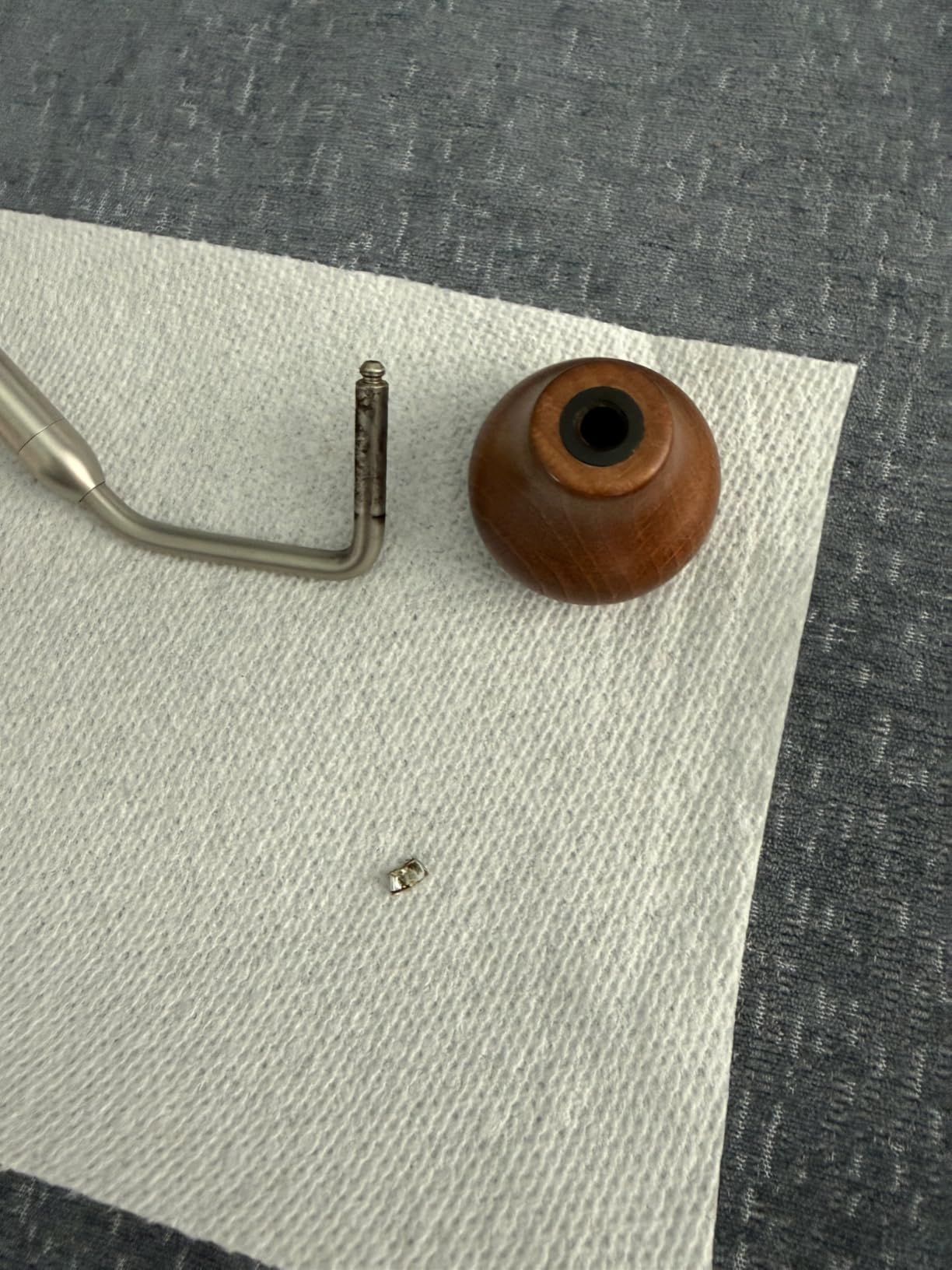
The grinder can bind if the adjustment dial is over-tightened, and the foldable handle does not lock especially securely during grinding. Both are habits to learn rather than faults that stop you using it.
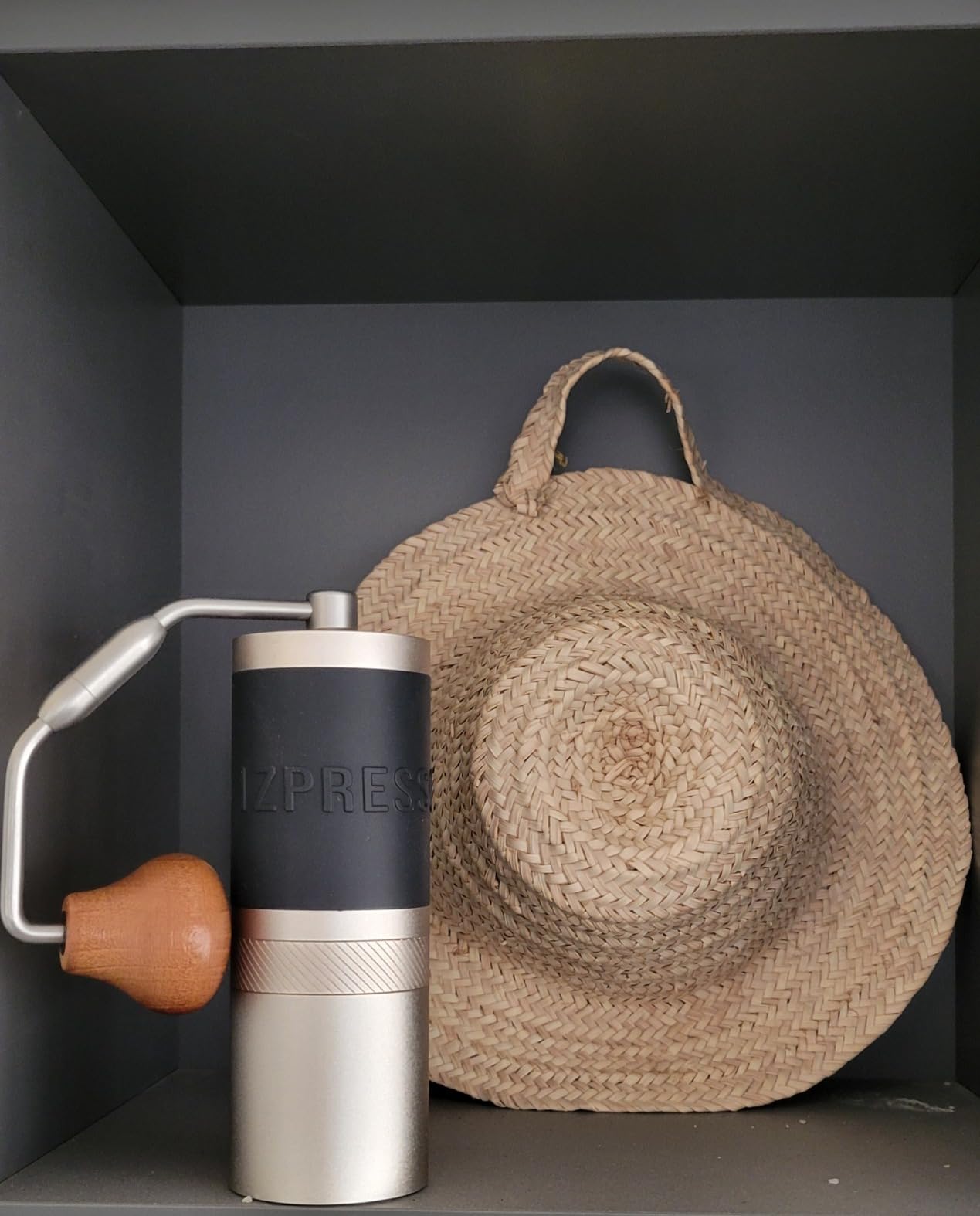
Tool-free disassembly makes routine cleaning simple and the all-metal body feels substantial for the size. For a single-cup brewer who wants the tightest grind and zero noise, this is the top hand pick here.
How to Choose a Pour-Over Grinder Without Wasting Money
Most disappointments with grinder purchases come from mismatching the machine to the brewer rather than from a bad machine. These are the decisions that actually change your cup.
Flat Burrs vs Conical Burrs for Pour-Over
Flat burrs produce a narrower particle distribution than conical burrs at filter settings, which reduces clogging and channeling in a cone. Two grinders in this group use flat burr geometry, the KRUPS and the SHARDOR, and both sit in the lower half of the range where cost constrains machining quality.
Conical burrs produce more body and can give a slightly sweeter cup in the hands of someone who dials in by taste. The mistake is assuming a cheap conical burr grinder gives you the same result as a well-machined one. The TIMEMORE and 1Zpresso hand grinders prove that conical geometry can produce excellent pour-over when the burr is properly cut.
Stepped Clicks vs a Stepless Dial
For pour-over, stepped settings are not a compromise. The useful grind window for a V60 sits between medium and medium-coarse, which is roughly four steps on a 40-click dial. You do not need espresso resolution.
Micro-adjustments add something different: the ability to split a single step into several positions when a coffee sits between two recipes. On the OXO and the compact OXO that resolution comes from extra micro-steps layered over the numbered range.
Retention, Static and the Single-Dose Question
Retention is the coffee left inside the grinder after a dose. It matters most when you change beans or change grind size, because the stale particles blend into your fresh cup. Brush the burrs and chute before any recipe change and the problem mostly disappears.
Single dosing, which means no hopper and only grinding what you are about to brew, minimizes retention by design. None of the hopper-fed machines here is a true single-dose design, so treat brushing as the practical substitute.
Hand Grinder vs Electric for a Daily Habit
Hand grinders produce zero noise, zero heat and near-zero retention, and the well-machined ones deliver particle uniformity close to an electric machine. The costs are arm effort and capacity. Twenty-five to 35 grams per fill covers one brew, not a household.
Electric grinders win on volume and consistency of effort, and they lose on noise and heat. If you brew two or more cups daily, or anyone else in the house drinks coffee, the electric route is less tiring over months.
Roast Level Changes Your Dial Position
Darker roasts are more soluble and more fragile, so they want a coarser grind than light roasts at the same recipe. A natural Brazilian at medium-coarse will taste balanced where the same setting on a washed Ethiopian tastes harsh and over-extracted.
The same coffee roasted darker also produces more fines as it breaks down, so a dark roast rewards a grinder with fewer fines. This is the single most common dial-in mistake I see, and it is why copying a recipe written for a light roast onto a dark bean fails.
A Cleaning Schedule You Can Actually Keep
Daily takes one minute: brush the burrs and the chute, wipe the counter, and empty the grounds container. Weekly takes five minutes and means dismantling whatever comes apart, including the upper burr.
Monthly means a full strip, a dry brush of the chamber corners, and a check that the adjustment ring still points where you left it. Machines with removable burrs on both sides save real time here.
How to Dial In Pour-Over Grind Size Step by Step
Start coarser than the recipe suggests, especially on a light roast, because an over-extracted cup is much harder to fix than a sour one. Grind, brew, then taste before you touch the grinder again.
Use drawdown time as your primary signal rather than taste alone. Pour a fixed amount of water in a fixed pattern, and time how long the bed takes to finish draining. A cup that drains far too fast is under-extracted, and a cup that crawls is over-extracted.
Adjust in small steps. One click on a 40-step dial is meaningful, and three clicks is usually a full recipe change. Make one change per brew so you know what the change did.
Taste for three specific things. Acidity that is sharp and thin means go finer. Bitterness and dryness in the finish means go coarser. A flat, dull cup with no clear character usually means the grind is uneven, not that the recipe is wrong.
Write down the setting that worked for each coffee. Roast dates matter because a bean tastes different two weeks after purchase than it did on day one, and your notes become more useful than any recipe you find online.
Frequently Asked Questions
What type of grinder is best for pour over coffee?
A burr grinder is best for pour over, and flat burrs are the ideal geometry because they produce a narrower particle distribution than conical burrs. That narrower spread reduces the fines that clog a filter bed and cause channeling. At lower budgets a well-machined conical burr grinder still makes an excellent cup, provided you dial in by taste and drawdown time rather than by recipe.
What is the best grind size for a pour over coffee maker?
Start at medium for a V60 and go a step or two coarser for a Chemex or Kalita Wave. Pour-over sits between table-salt and coarse sand in feel. The best test is time: a brew that drains in under two minutes is too coarse, and a brew that stalls past four minutes is too fine. Adjust one click at a time until the cup is sweet and clear.
Is a hand grinder good enough for pour over?
Yes, when the burrs are properly machined. The TIMEMORE Chestnut C3S Pro and the 1Zpresso J both produce uniform particles with very few fines, and both work silently with no heat generated. The limitations are capacity at 25 to 35 grams per fill and the arm effort needed at finer settings. For one or two cups a day, the grind quality more than compensates.
Can I use an espresso grinder for pour over?
Yes. Every espresso-capable burr grinder covers the pour-over range because pour over needs a coarser grind than espresso. The reverse is often not true: grinders built only for filter, such as the compact OXO and the Hario mill, cannot reach a fine enough grind for a real espresso puck.
How often should I clean a burr coffee grinder?
Brush the burrs, chute and grounds container daily, which takes about a minute. Dismantle the unit for a deeper clean once a week, and do a full strip monthly. Machines with removable upper and lower burrs, such as the compact OXO and the KRUPS, clean faster. Skipping weekly cleaning is what causes the stale taste that makes people think a new grinder will fix it.
Which Pour-Over Grinder Should You Actually Buy?
If you want one grinder for a daily pour-over habit and you value repeatable settings, start with the OXO Brew Conical Burr Electric Grinder. Its 43 micro-adjustments are what let me change beans and land on a similar drawdown without rewriting recipes.
If you plan to keep the same grinder for years and want parts to be available when something wears out, the Baratza Encore is the choice I keep recommending to friends. The trade is retention and a brush in the routine.
If noise is the problem, the 1Zpresso J for click-by-click precision or the TIMEMORE Chestnut C3S Pro for the tightest hand grind both solve it entirely. Budget for the arm effort if you brew more than two cups.
If you are brewing for a whole household, the Cuisinart DBM-8P1 handles full pots in one run, and the Capresso Infinity Plus is the quietest electric option. Weigh the noise against your kitchen before choosing.
Whichever you pick, grind consistency matters more than any other specification on the page. Start coarse, brew, taste, and adjust one click at a time. That habit will improve your coffee more than a doubling of the grinder’s price.





Leave a Comment