
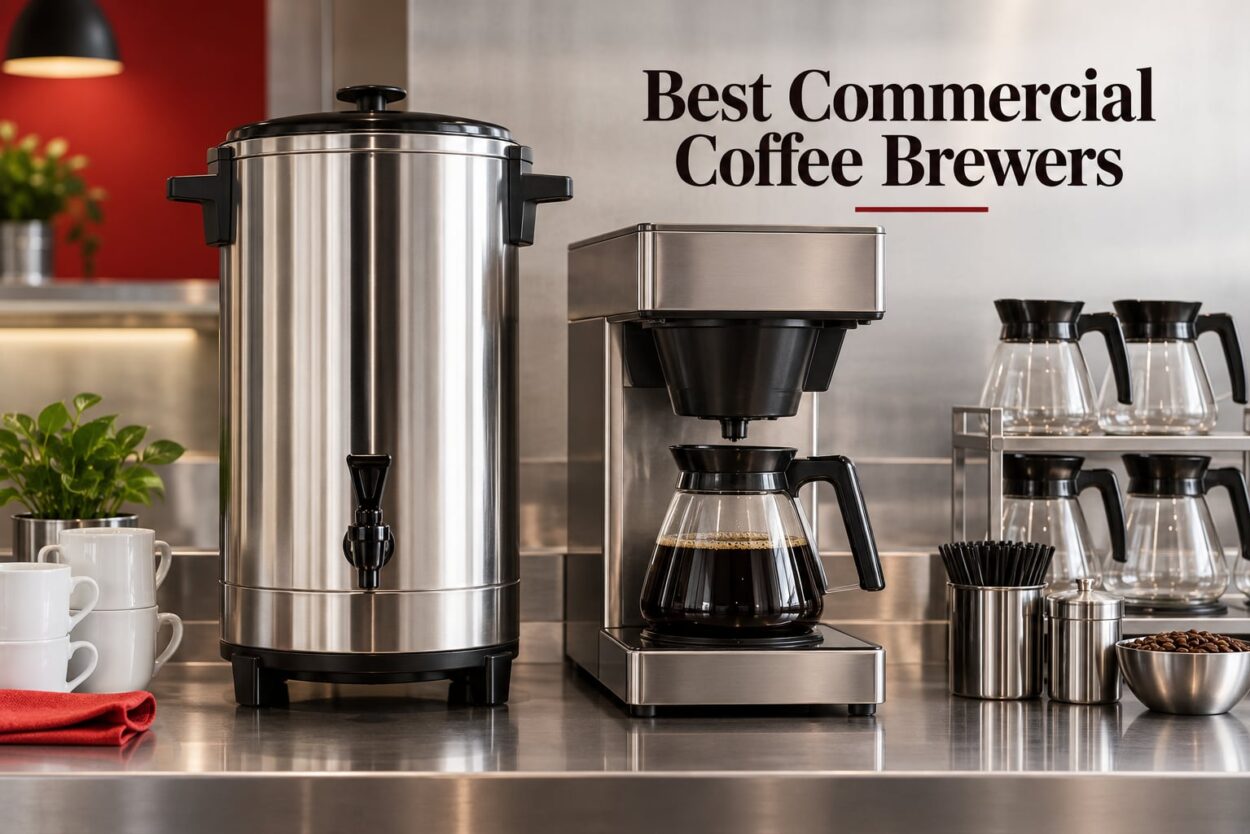
The best commercial coffee brewers are the machines that keep a 40-cup rush from turning into a 20-minute wait, and most people only find that out after buying the wrong one. Churches buy the small pot and run out. Offices buy the 100-cup urn and discover that the coffee tastes burnt by 10am. Cafes plumb in an automatic and then find the shower head clogged with scale in its second year.
So I spent weeks putting these machines through the paces that actually matter in a working operation: repeated brew cycles back to back, a warming plate running for hours, water drawn from a hard municipal line, and cleaning routines that nobody volunteers for. Every brewer below is written up with the same five criteria, in this order: brew speed, temperature consistency under load, throughput, build durability, and total cost of ownership per 1,000 cups.
This is a roundup of batch brewers and urns, not espresso equipment. If your drinks menu is mostly drinks like lattes and cappuccinos, start with our commercial espresso machine picks instead. If you are grinding at volume alongside the brewer, our commercial coffee grinder guide is the other half of the setup.
Best Commercial Coffee Brewer by Use Case in 2026
Here is the short version, matched to the way each format is actually used. Scroll down for the full reviews on every machine.
- Small office (15-30 people): a two-warmer pour-over such as the SYBO SF-CB-2GA. It brews a fresh pot while the previous one is still being poured, and it needs nothing but a 120V outlet.
- Church or community hall: the BUNN VPS with three warming stations. You can start a service with three decanters already hot instead of brewing through the whole opening.
- Catering or a one-day event: the SYBO SR-CP-50B. Fifty to sixty cups in roughly half an hour, a reusable stainless filter, and a body that survives being loaded into a van.
- Office where variety matters more than volume: this is the one scenario where a single-serve machine beats a batch brewer, and none of the batch machines on this list will cover it. Our iced coffee brewer picks cover the cold side of the same problem.
- Cafe back-of-house or restaurant line: the BUNN VPR-2EP, because it ships with two decanters in the box and rebuilds every three minutes with no plumbing call.
- Budget first start: the Hamilton Beach 45-cup urn. It has the deepest review history of anything here and dispenses about one cup per minute.
- Anyone who cares how the coffee tastes: the Zulay 100-cup urn. Owners repeatedly single out the flavour and the heat retention over older aluminium urns.
Our Top 3 Commercial Coffee Brewers for Busy Service

Hamilton Beach 45-Cup Urn
- ✓One cup per minute brewing
- ✓15-45 cup brew range
- ✓Two-way lever dispensing
- ✓No plumbing required
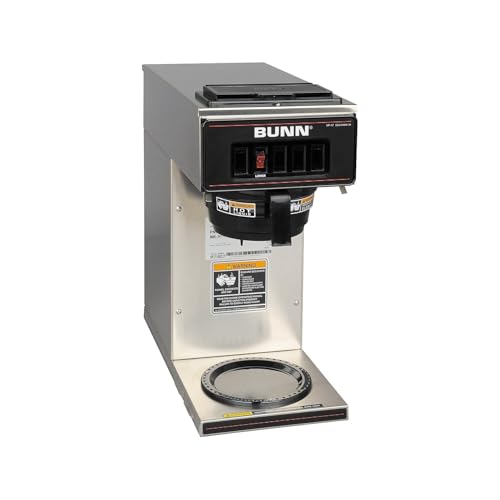
BUNN VP17-1 Pourover Brewer
- ✓12 cups in about 3 minutes
- ✓1600W stainless element
- ✓No water line needed
- ✓Single warming station

SYBO SR-CP-50B Urn
- ✓50-60 cups in about 30 minutes
- ✓304 stainless body
- ✓Reusable filter basket
- ✓ETL certified
Comparing Every Commercial Coffee Brewer on This List
Capacity and throughput are different numbers and most spec sheets blur them together. Capacity is how much a single batch makes; throughput is how fast it can be rebuilt while people are waiting.
| Product | Features | Action |
|---|---|---|
| Hamilton Beach 45-Cup Urn |
|
Check Latest Price |
| SYBO SR-CP-50B Urn |
|
Check Latest Price |
 West Bend 100-Cup Urn West Bend 100-Cup Urn |
|
Check Latest Price |
 Elite Gourmet 100-Cup Urn Elite Gourmet 100-Cup Urn |
|
Check Latest Price |
 Hamilton Beach 60-Cup Urn Hamilton Beach 60-Cup Urn |
|
Check Latest Price |
 Zulay 100-Cup Urn Zulay 100-Cup Urn |
|
Check Latest Price |
| BUNN VP17-1 Pourover |
|
Check Latest Price |
 SYBO SF-CB-2GA Pour Over SYBO SF-CB-2GA Pour Over |
|
Check Latest Price |
 BUNN VPS 3-Warmer Pourover BUNN VPS 3-Warmer Pourover |
|
Check Latest Price |
 VEVOR 50-Cup Urn VEVOR 50-Cup Urn |
|
Check Latest Price |
 NESCO CU-50 Urn NESCO CU-50 Urn |
|
Check Latest Price |
 BUNN VPR-2EP Pour Over BUNN VPR-2EP Pour Over |
|
Check Latest Price |
1. Hamilton Beach 45-Cup Urn – the Best-Rated Choice for Self-Service Lines
- ✓Deepest review history in the group
- ✓Fast one-cup-per-minute brewing
- ✓Wide 15-45 cup brew range
- ✓Two-way lever handles single cup and continuous fill
- ✓Ready light with keep-warm function
- ✕Aluminum body stains with repeated washing
- ✕Lid does not latch securely
- ✕Spout sits low for large mugs
42 cup capacity
About 1 cup per minute
Two-way lever faucet
4 pounds
This is the urn I put in front of a line of people who had never met me. That is the real test for a self-serve dispenser, and the two-way lever is why it works: one person gets a single cup, the next person pulls the lever fully and fills a travel mug without waiting for the pot to reset.
At roughly one cup per minute, a 45-cup batch is complete in well under an hour of active brewing, and the 15-cup floor means you are not forced to make a full urn for a small meeting. Owners running offices and church basements report that the ready light and keep-warm function are what stop it from burning the batch while the last stragglers find their way in.
The weight matters more than the spec sheet suggests. At 4 pounds empty, one person can lift it, drain it, and move it to a different counter when the room layout changes.
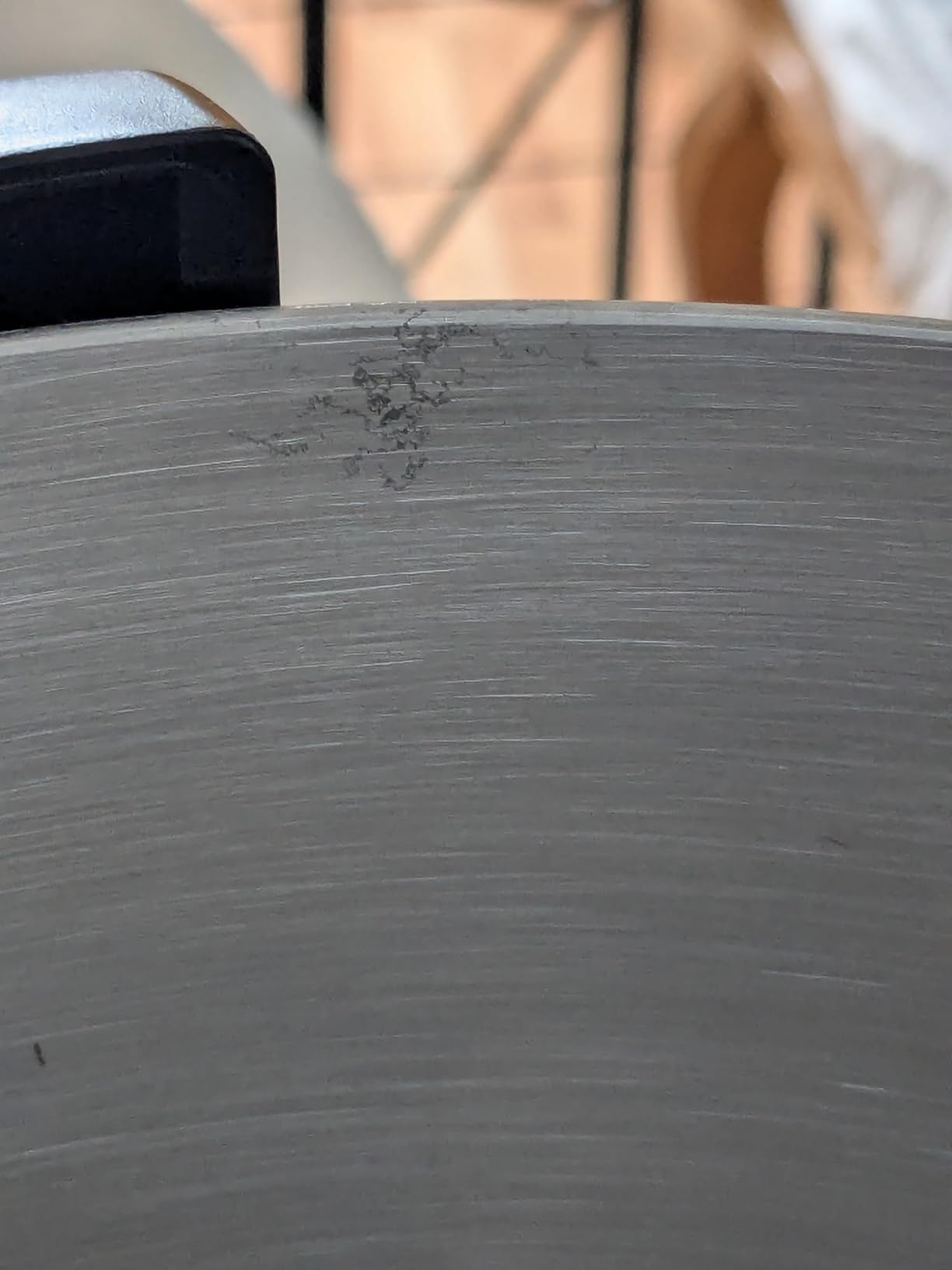
Why the aluminum body is the one complaint that keeps coming back
Owners describe the same pattern consistently: the polished aluminum looks good on day one, then the wash cycle leaves it mottled. It does not affect how the coffee tastes, but on a machine that sits in full view of customers it is a visible cost of doing business.
The second recurring issue is the lid. It sits in place but does not lock, so if someone tips the urn to drain the last of the coffee, expect it to come off. Owners who work around this by draining into the spout and leaving a finger’s worth behind report no problems at all.
The low spout and why it changes your mug policy
The spout sits lower than the rim of most travel mugs, so filling one means pulling the urn to the counter edge. That is fine in a church hall with a serving table and awkward in a tight office nook.
For larger mugs, plan for two pours or set up a separate carafe line. Several owners also use the ready light as the real signal for when to start the next batch rather than watching the gauge.
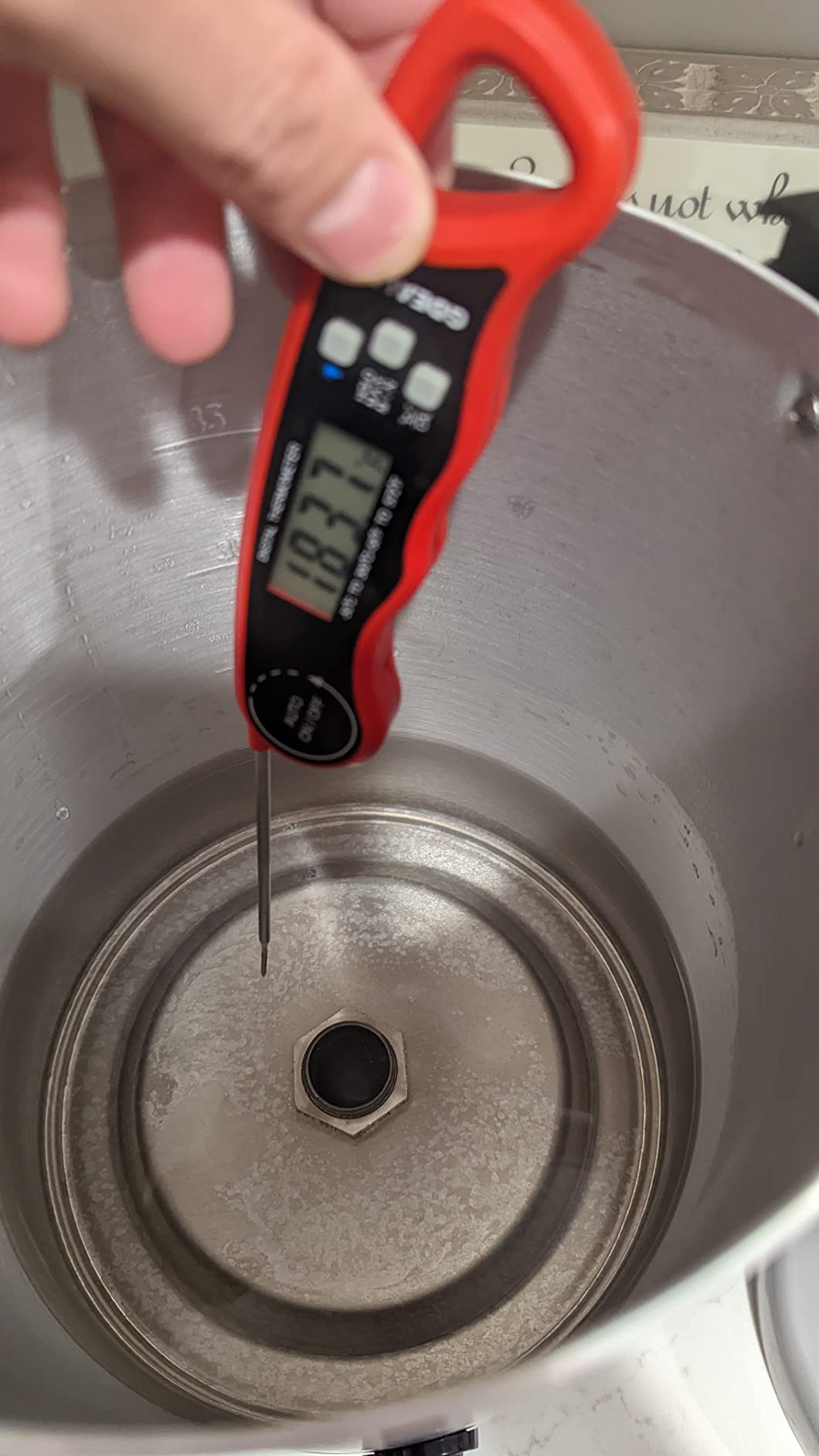
What this urn is genuinely best at
Skip it if you need a brew that stays hot through a four-hour event with no supervision, because the keep-warm function is holding temperature, not building it. It is a right-now-and-next-batch machine.
For an office, a community centre, or a small church hall that runs two or three services a week, the combination of speed, capacity range, and how many people have owned one for fifteen years is hard to beat. It is also the easiest unit on this list to move to a second site if you expand.
2. SYBO SR-CP-50B – the Best Value Urn for Catering and Church Events
- ✓50 to 60 cups in about 30 minutes
- ✓Food-grade 304 stainless steel body
- ✓Reusable stainless filter basket
- ✓ETL certified with auto shut-off
- ✓2-year new-replacement warranty
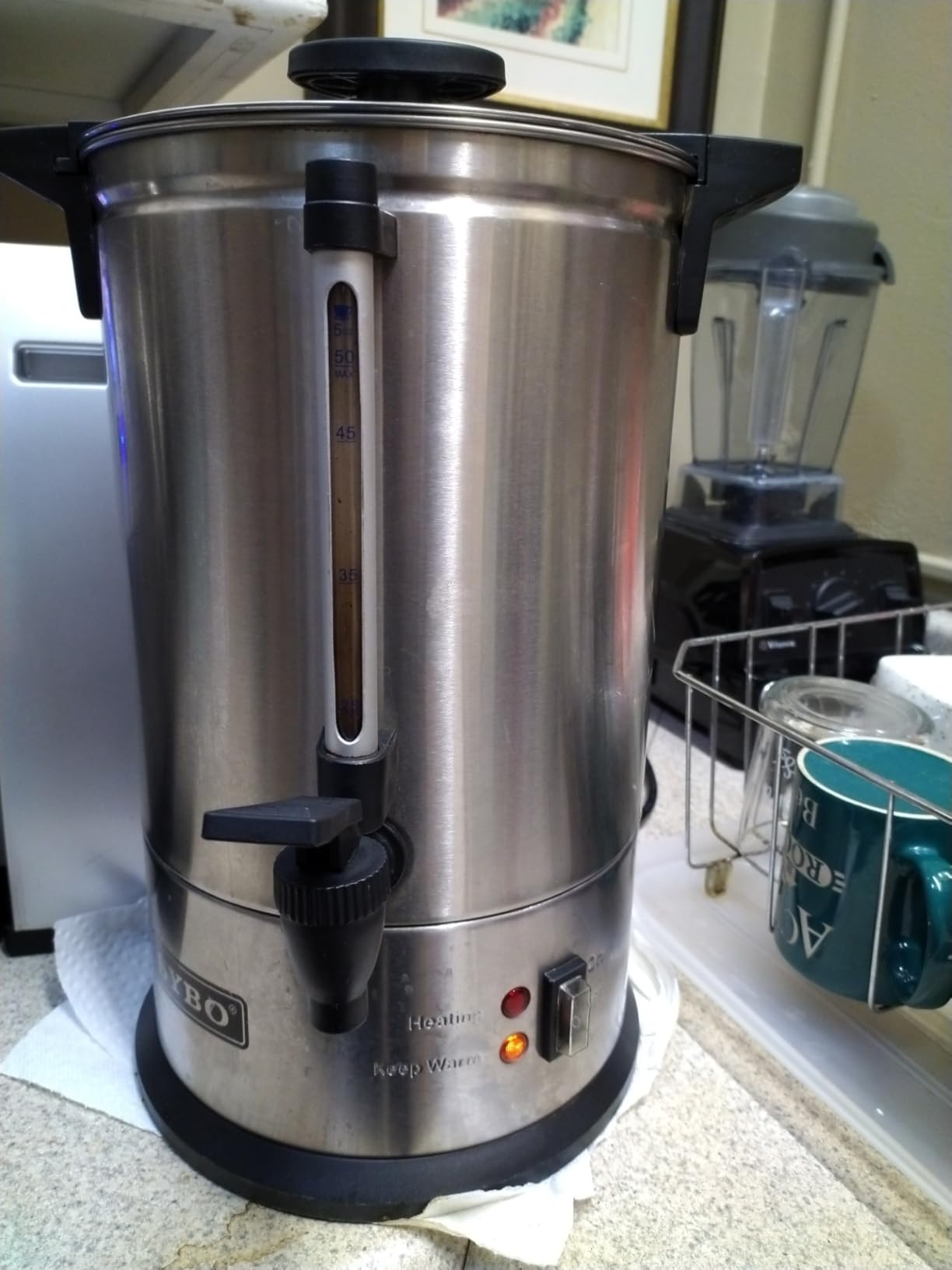
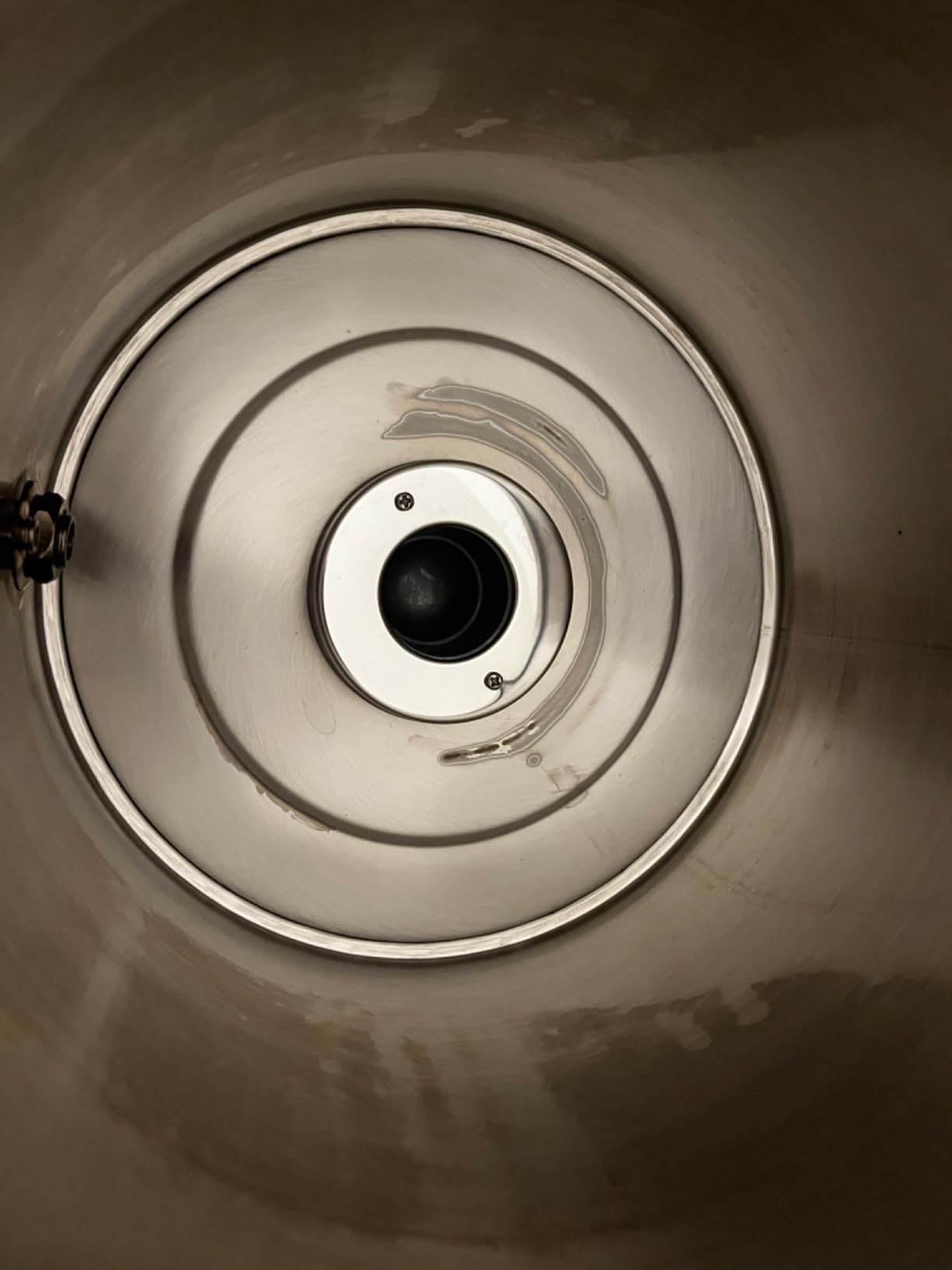
- ✕Interior coffee level markings are hard to read
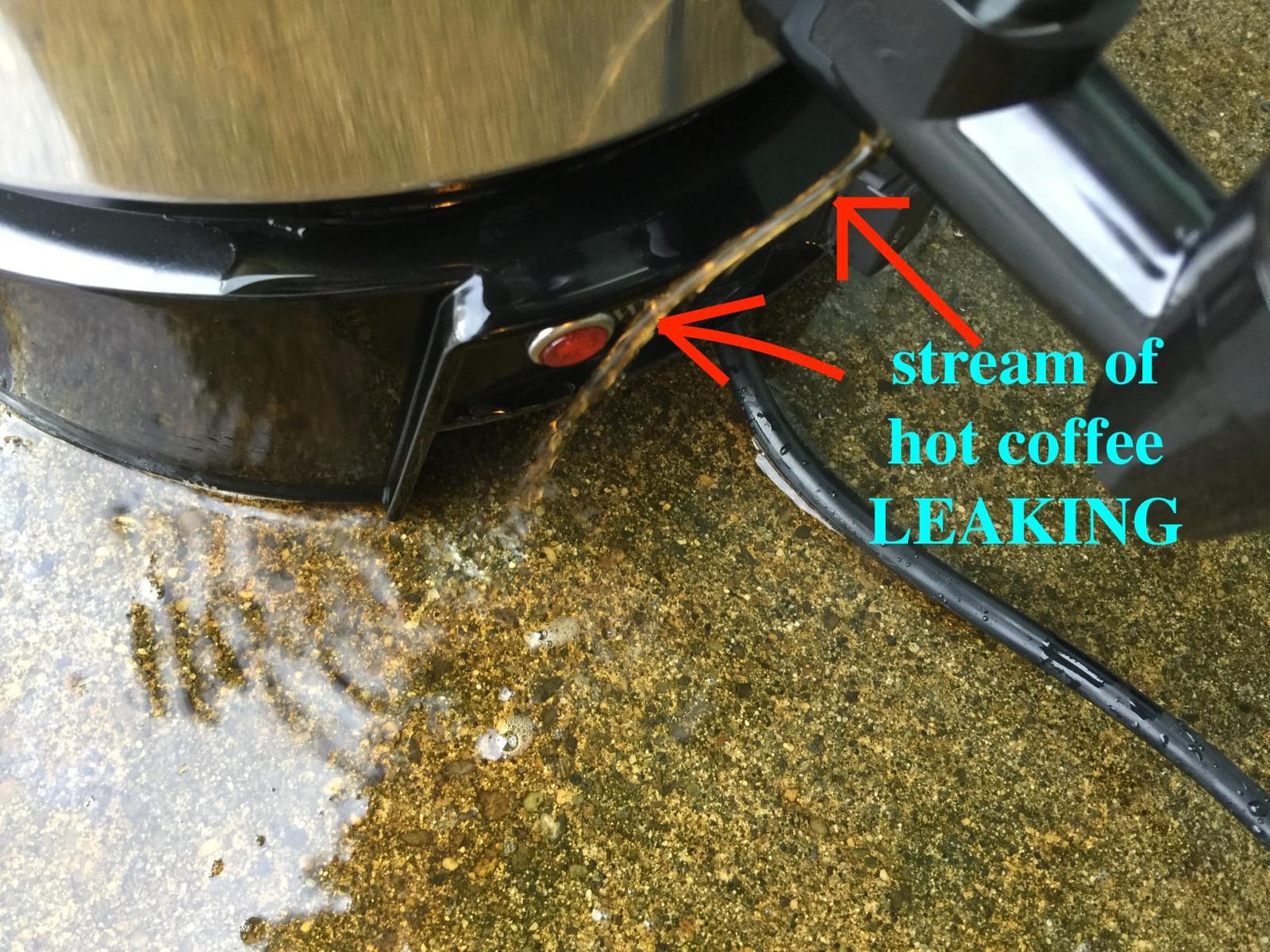
- ✕Some units stopped heating or leaking after extended daily use
- ✕Thinner overall rating than the leading urns
50 cups at 8 liters
Brews in about 30 minutes
304 stainless steel
950 watts
If you brew for events rather than for a fixed headcount, the clock is the spec that matters. This urn turns out 50 to 60 cups in roughly half an hour, which means a Saturday morning service can be started, finished, and topped up before most people have found the coffee table.
The reusable stainless filter basket is the detail that changes the running cost. You are not buying paper filters by the sleeve for every event, and there is no variable consumable to forget on a loading list.
It is also one of the few machines here that carries a two-year new-replacement warranty, which matters a lot when the same unit is expected to run at a church on Sunday and a market stall on Saturday.
ETL certification and what it actually does for you
The ETL Intertek certification on the components is not a marketing line. Many commercial insurance policies and local health inspections ask for a listing, and a machine you can point to a verified record for removes an argument from a conversation you would rather not be having.
It also signals that someone outside the manufacturer checked the heating element and the wiring. For a 950-watt heating element running near boiling temperature for a full service, that is a reasonable baseline.
Where the durability reports thin out
There is a real cluster of reviews describing units that stopped heating or began leaking after sustained daily use. Read that alongside the two-year replacement warranty, because a warranty only helps you if the failure happens inside the window.
The interior coffee-level markings are also widely described as difficult to read in low light. Mark the fill line on the outside of the urn with a strip of tape after the first brew and you will never need the internal gauge again.
Best for operators who brew on the move
At 3.6 kilograms and with a stainless body rather than glass, this is an urn that survives being carried between a church hall, a community centre, and a hired marquee. The stainless construction also means acidic coffee is not sitting against an aluminium interior for hours.
Skip it for a daily back-of-house café setup where you brew every morning without pause. For that, a pour-over brewer with a shorter recovery cycle is the better tool.
3. West Bend 100-Cup Urn – the Best Choice When One Event Needs a Hundred Cups
- ✓100 cup capacity covers large events in one batch
- ✓About one cup per minute
- ✓Automatic temperature control
- ✓Two-way dripless faucet serves one cup or a carafe
- ✓Includes urn lid coffee basket stem and cleaning brush
- ✕Polished aluminium stains and discolors readily after washing
- ✕Lid tabs are flimsy and can bend out of shape
- ✕Lid does not lock in place and is not heat resistant
100 cup capacity
About 1 cup per minute
1500 watts at 120V
Reusable filter
When the question is whether one batch will be enough, the answer here is usually yes. A hundred cups at roughly one per minute means a large wedding, a conference break, or a Sunday service with a full congregation is covered by a single fill rather than a chain of refills.
Automatic temperature control is the part that keeps the coffee drinkable once people arrive. Rather than being brought to a rolling boil and left there, the urn cycles to hold serving temperature, which is what owners mean when they describe it keeping coffee hot for hours.
The accessory list is unusually complete for this class. The urn, lid, coffee basket, stem, and cleaning brush all ship together, so there is no first-week trip to a supplier hunting for a replacement stem.
The polished finish problem, stated plainly
This is a highly polished aluminum body and it marks. Owners report the same discoloration pattern as with other polished aluminum urns, appearing after the first few washes and never fully coming back.
Two mitigations work. Wipe the body with a damp cloth and mild cleaner rather than putting it through a machine wash, and keep the lid off during storage so moisture does not sit against the rim.
The lid tabs and the burn risk
The lid tabs are thin, and owners report them bending out of shape. The lid also does not lock and does not tolerate heat, so a child or a distracted adult can lift it off a full urn of near-boiling coffee. That safety note deserves real attention before you set the urn up.
For very hot coffee and a spout that sits below the rim of a large mug, the fix is placement. Set the urn on a stable table with room to pull it forward, rather than letting people reach over each other at a crowded counter.
What it handles that smaller urns cannot
Owners also use it for hot cider and tea alongside coffee, which is worth knowing if your event is a single station doing double duty. The reusable filter is included, so the urn works without a paper consumable.
At 7.5 pounds empty and 22.6 inches tall, it is a two-person carry. Skip it if your event space cannot spare the counter footprint, and consider the 60-cup Hamilton Beach instead for a tighter room.
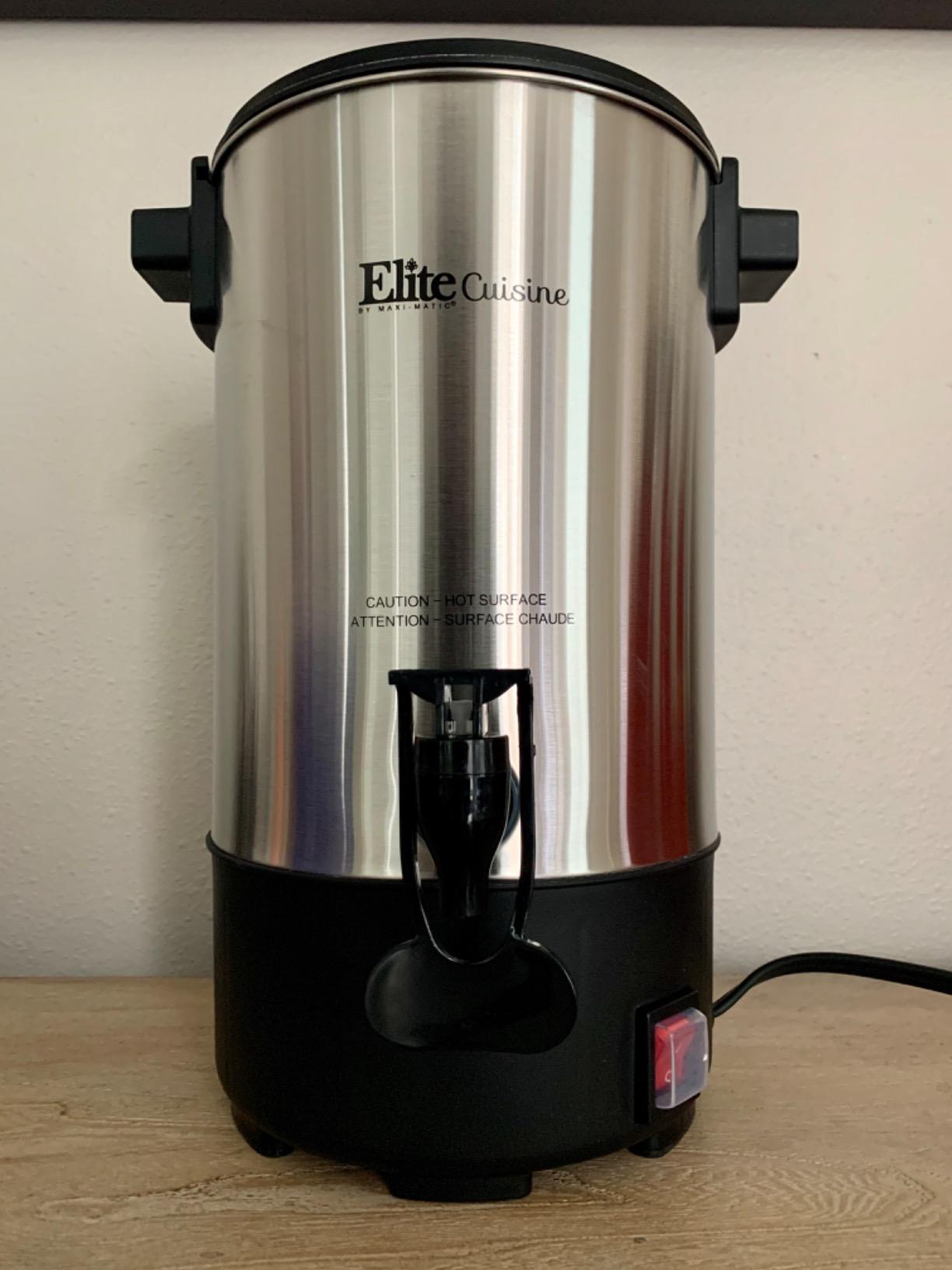
4. Elite Gourmet 100-Cup Urn – the Best Heat Retention in a Stainless Body
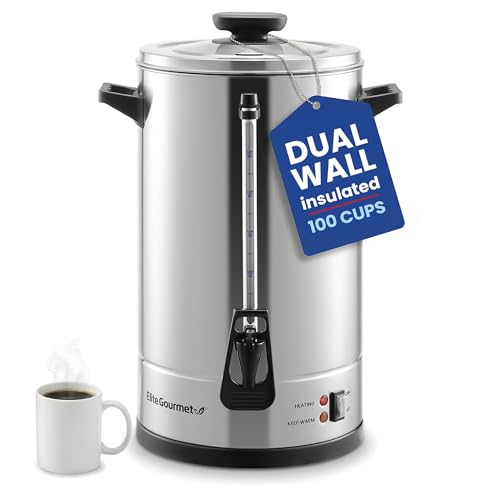
- ✓Dual-wall insulation holds coffee hot for many hours
- ✓Cool-touch exterior and handles
- ✓Drip-free self-serve faucet
- ✓Removable filter basket with no paper filters
- ✓Also available in a 30-cup size
- ✕Some reports of corrosion and failures after extended daily use
- ✕Lid does not seal tightly and splatters while brewing
- ✕Stainless finish shows fingerprints
Dual-wall stainless steel
Holds heat up to 24 hours
100 cup configuration
1500 watts
The distinction that makes this urn different is the dual-wall insulation. Most urns of this size are a single wall of steel that radiates heat outward continuously; a dual wall slows that loss, which is why the manufacturer states a hold time of up to 24 hours at serving temperature.
In practice that means an event that starts at 8am and does not finish until 2pm does not need someone standing over a switch. The coffee is still where you want it at the end rather than at the start.
The cool-touch exterior is the sleeper feature in a room full of people. Owners single it out because it changes how close a self-serve line can safely sit to a wall of customers.
The lid seal is the fixable problem
The most repeated complaint is that the lid does not seal tightly enough and coffee splatters up and out during brewing. This is a setup and fit issue rather than a design failure in most cases: make sure the gasket is seated flat in the rim and that the lid is pressed down fully before switching on.
Where splatter persists, owners report a strip of food-grade silicone tape around the rim solves it permanently for a few dollars.
Long daily service is where reports get thinner
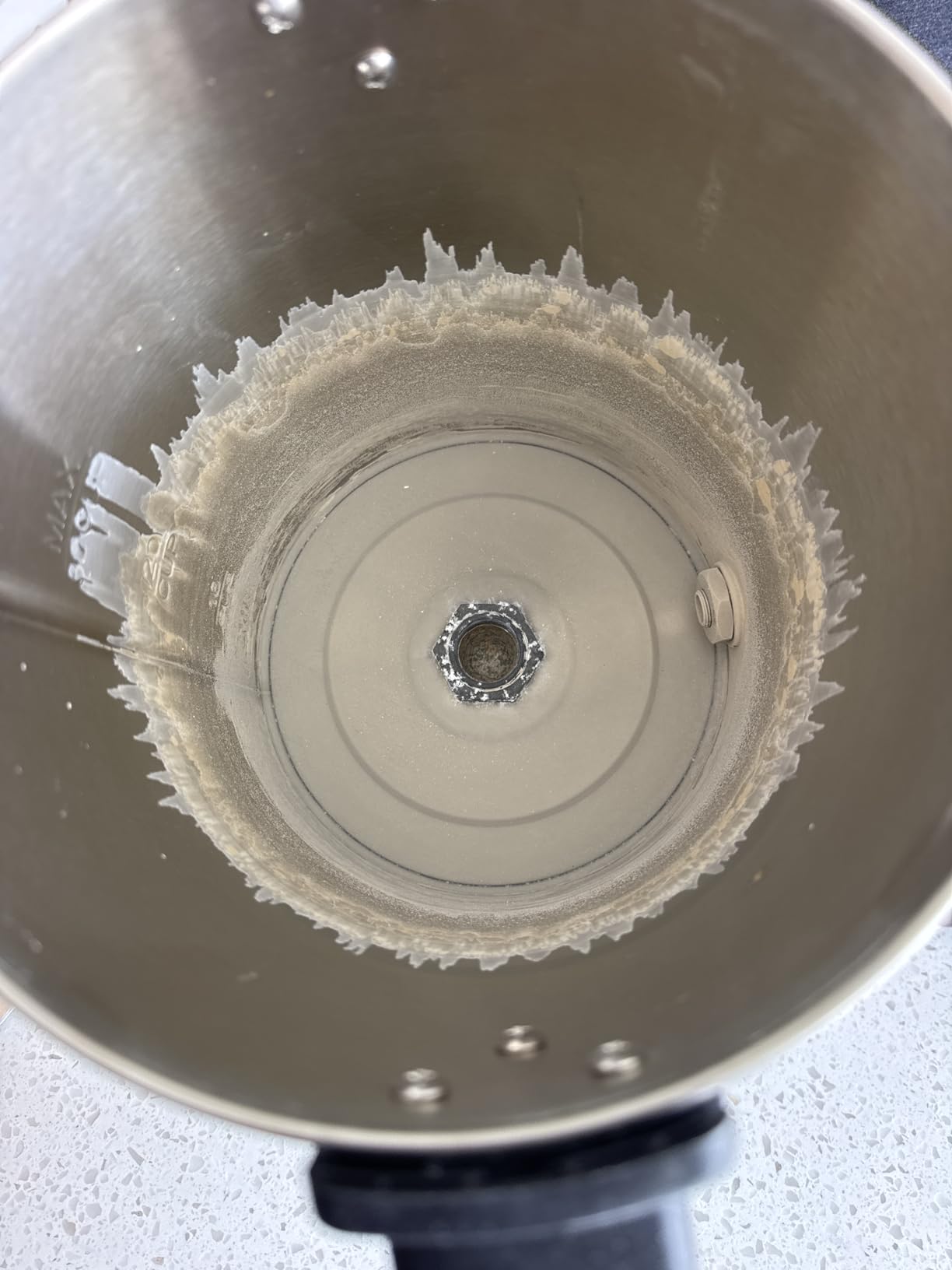
There is a steady group of reviews describing dead heating elements, spigot leaks, and corrosion after sustained daily use. If your machine runs every morning without break, factor replacement into the plan rather than expecting a decade of service.
One practical note from owners who use it heavily: hard water affects the flavour noticeably on this urn, and filtered water is worth setting up from the start. It is a cheap change that also protects the element.
Right for long days, wrong for short ones
For a half-day market stall or a two-hour meeting, the insulation is doing work you never asked for. In that situation the 30-cup configuration of the same machine is a better fit and is the version most reviewers describe.
Owners also note that the polished stainless finish shows fingerprints and needs regular wiping during service. A microfiber cloth left beside the urn handles it in seconds.
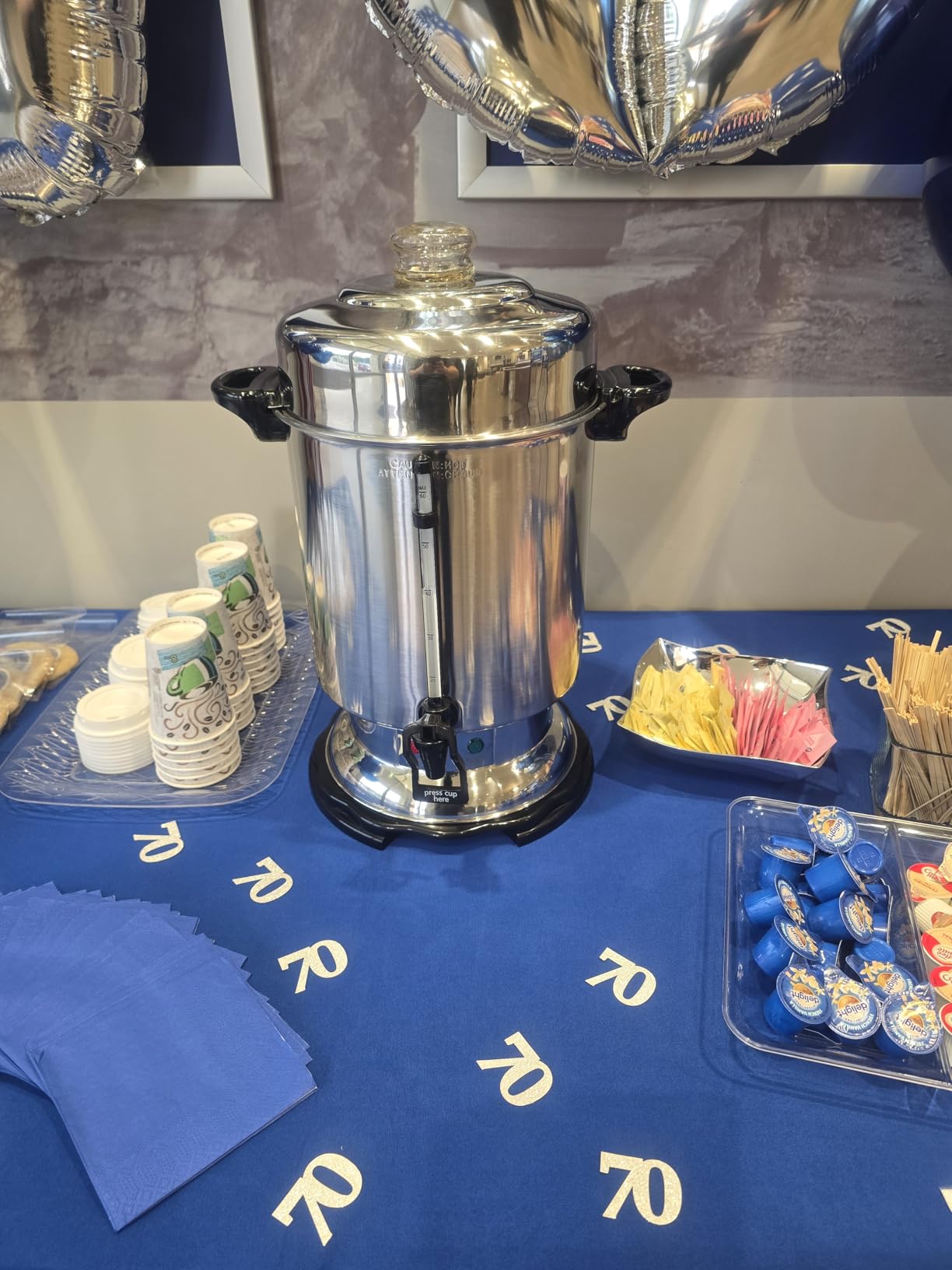
5. Hamilton Beach 60-Cup Urn – the Best Fit for Buffet and Catering Lines
- ✓Polished stainless body suits buffet service
- ✓60 cups sits between compact and 100-cup sizes
- ✓Two-way lever for single cup or continuous
- ✓Keep-warm with indicator light
- ✓Long-standing model with a large installed base
- ✕Stainless finish needs regular wiping to stay presentable
- ✕Listing carries fewer detailed specs than other models
60 cup capacity
Polished stainless steel
Two-way lever faucet
8.44 pounds
Sixty cups is the size that keeps showing up in real catering work. It is too much for a small meeting, too little for a large hall, and exactly right for a buffet line where people arrive in waves rather than all at once.
The stainless body is the reason to choose this over the 45-cup aluminium model. It holds its finish through a season of washes in a way polished aluminum does not, and it still shows well under buffet lighting.
With roughly 79 percent of ratings at five stars, this is one of the better-rated urns in the group, and the two-way lever is the same proven mechanism people already know how to use.
Why capacity is the whole decision here
Buying this urn for a 40-cup morning means paying for capacity you will not use and still refilling if attendance grows. Buying the 45-cup model for a 90-cup service means two brew cycles during the rush.
The honest way to size is to count covers on your busiest day and add a margin, not to count average. Peak demand, not average demand, is what determines whether people wait.
The finish and the details buyers actually notice
The stainless surface is a fingerprint magnet but is far more forgiving than a polished aluminum body that stains permanently. A wipe-down between service is enough.
One limitation worth naming: the product listing for this model carries noticeably fewer detailed specifications than the other Hamilton Beach urns here, so you will get less guidance on wattage and internal construction from the page itself. The capacity, finish, and keep-warm behaviour are the confirmed points.
Who this serves and who should pass
This is a good fit for hotel breakfast service, office catering, and community events where a staff member is pouring rather than operating a machine. The lever is intuitive enough for a volunteer.
Pass if you need a machine that brews fresh coffee on demand through a long morning. A urn heats water and holds it. It is not a drip brewer, and no urn on this list is.
6. Zulay 100-Cup Urn – the Best Flavour and Heat Retention in a Stainless Body
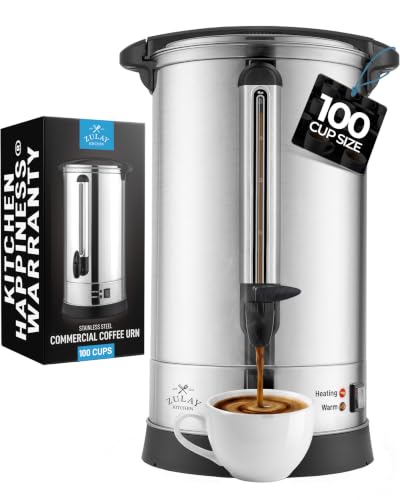
- ✓Double-wall stainless holds coffee very hot
- ✓Owners report better flavour than older aluminum urns
- ✓Stainless basket avoids aluminum contact with coffee
- ✓Faucet height suits a standard mug
- ✓Backed by a lifetime manufacturer guarantee
- ✕Spout and lid reported to leak or deform after about six months
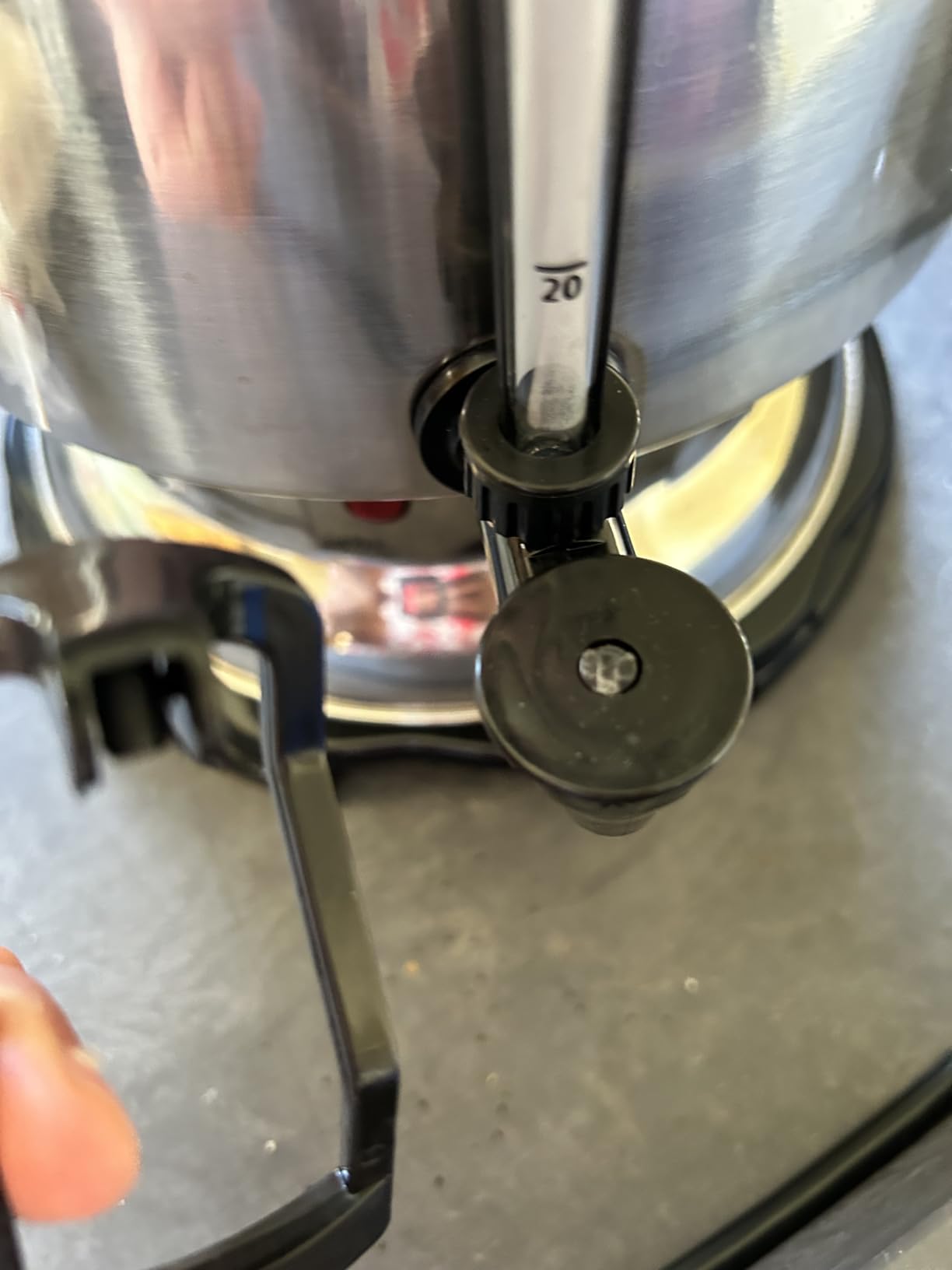
- ✕Water level gauge is hard to read
- ✕Filling to the maximum line splatters
Double-wall 430/304 steel
100 cups at 1 per minute
Concealed heating element
Two-way faucet
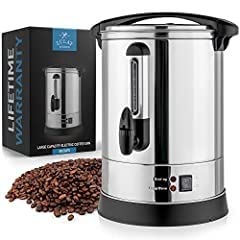
Coffee quality is the theme that dominates reviews of this urn, and it is not a subtle one. Several owners report that coffee from this urn tastes better than the older aluminum urn it replaced in the same venue, which they attribute to the stainless basket and sight column keeping acidic coffee away from aluminum.
Heat is the other half of that verdict. A 0.41mm 430 stainless outer wall and 0.41mm 304 inner wall, with a concealed element, is a genuinely double-walled build, and owners describe coffee still being poured into a thermos hours later at full heat.
The concealed heating element also removes a cleaning problem. There is no exposed coil to descale, which is where a lot of urn maintenance time actually goes.
The six-month durability pattern is the thing to plan around
There is a consistent stream of reviews describing the spout beginning to leak and the lid deforming after roughly six months of use, plus a smaller number of units that lost the thermostat entirely. That is the honest weakness of this machine.
Owners who get past that point report the coffee quality keeps improving their satisfaction, so the practical answer is a replacement timeline rather than avoidance. If your service runs coffee daily, budget for a lid and spout check every few months.
Small usability details that catch people out
The water level gauge is hard to read, which is a recurring and fair complaint. Mark the working level on the outside of the urn with tape and the problem disappears.
Filling to the maximum line splatters coffee during percolation. Owners report that stopping one finger below the max line eliminates it entirely. The faucet itself runs quieter than some buyers expected, which matters more in a quiet room than the number suggests.
More than just a coffee urn
Owners regularly use this for hot water, tea, and hot chocolate, including for Shabbat and other long gatherings where the urn runs for many hours. If your event needs a single hot-drink station rather than a coffee-only station, this earns its counter space twice over.
The two-way faucet is set at a height that suits a standard mug without pulling the urn forward, which is a genuine improvement over the lower spouts on some aluminium models here.
7. BUNN VP17-1 Pourover – the Best Pour-Over Brewer That Needs No Plumbing
- ✓Tied for the highest average rating in the roundup
- ✓Brews a full pot in about 3 minutes
- ✓Stainless steel with 1600W element for constant duty
- ✓Owners report 10-plus year service lives
- ✓No plumbing so it fits any outlet
- ✕Decanters not included and sold separately
- ✕New units can leak until setup cycles are run correctly
- ✕Thermostat ships set to the hottest setting
12 cups in about 3 minutes
1600W stainless element
No water line required
1 warmer
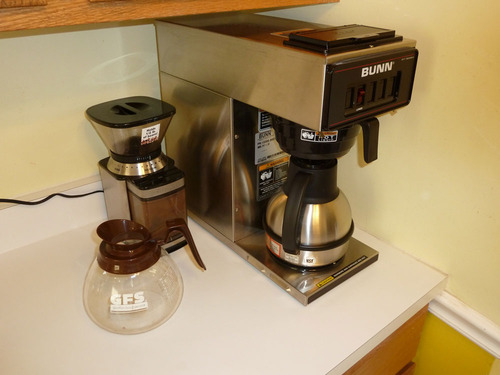
This is the machine I recommend when someone says they want fresh drip coffee and no plumber. It brews a full 12-cup decanter in about three minutes from a 1600 watt stainless element, and there is no water line to install.
That speed is the real difference between a commercial pourover and a home drip machine. You are not waiting for a small kettle to heat and then trickle water over a basket; the reservoir is already at temperature and the brew is pushed through in a short, high-volume cycle.
Owners in fire stations, offices, and churches describe service lives measured in decades. Parts are stocked by repair shops and distributors, so a failure in year eight is a repair rather than a replacement.
The setup routine that fixes the first-week complaints
Two complaints appear in almost every review of a new BUNN pourover, and neither is a defect. New units can leak around the heating element until several fill-and-discard cycles have been run, and the thermostat often ships set to the hottest setting.
Run three full measured fill-and-discard cycles before serving anyone, then find the thermostat adjustment and turn it down from the factory setting. Owners who do this report the leaks clear and the boil-over stops, and the machine then runs without attention for years.
One warmer means planning, not improvising
This is a single-warmer unit, and that is the trade for the compact 8.4 inch width. You brew one pot, it holds, and the next batch starts when the first decanter is down to its last few cups.
If you need to serve continuously with no gap, step up to the three-warmer BUNN VPS reviewed later in this list. Decanters are not included with this machine, so budget for two or three Easy Pour commercial decanters on day one.
Why the brand dominates this category
The answer is parts, not marketing. Owners with two or three decades of experience describe repair shops stocking BUNN tanks, funnels, and heating elements specifically because the demand is consistent enough to keep on the shelf.
That is a strange thing to build a buying decision on, and it should be. A brewer with a fifteen-year life and a replaceable element costs far less per year than a cheaper machine replaced twice, which is the subject I return to in the buying guide below.
8. SYBO SF-CB-2GA – the Best Dual-Warmer Brewer for a Small Office
- ✓Two warming plates allow continuous service
- ✓Multi-stream shower head for even saturation
- ✓Stainless steel body
- ✓Consistent coffee from office and church users
- ✓SYBO support repeatedly praised
- ✕Some units leaked and lost water after about 7 months
- ✕Filter basket hole reported too small on some units
- ✕Only 30 day return window
12 cups in under 10 minutes
2 warming plates
2500 watts at 120V
16.4 pounds
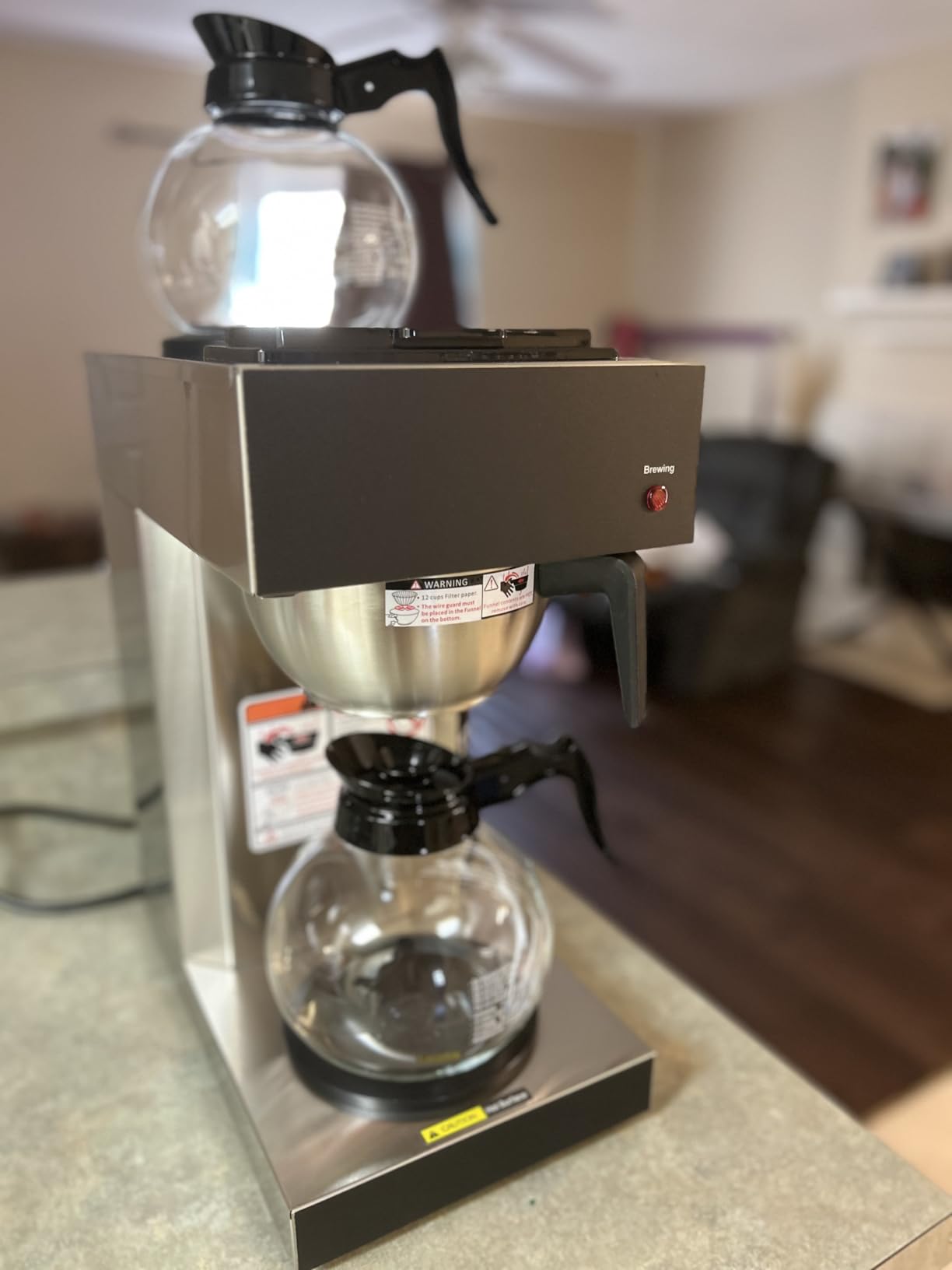
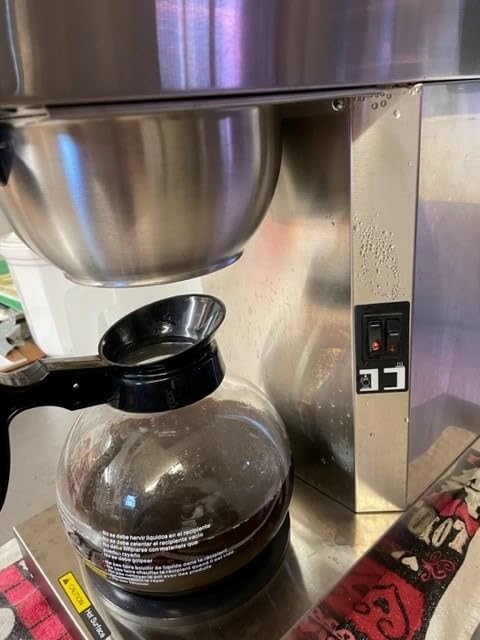
Two warming plates change the shape of a morning. While the first decanter is being emptied, a second is already hot, so nobody is standing at an empty carafe watching the next brew. For an office of 15 to 30 people that is the difference between a smooth start and a queue.
The multi-stream shower head with a flat-bottom filter basket is the spec that separates this from a basic pour-over. Water is distributed across the whole bed rather than dumped in the centre, which is why owners describe the coffee as consistent rather than merely fast.
It is also one of the most thoroughly certified machines in the roundup, listed under ETL, CE, ROHS, and Intertek. That matters if an inspector or an insurer asks.
2500 watts and the circuit question
At 2500 watts this is the highest draw of any pour-over on this list, and it is where a real installation issue shows up. Shared 15-amp circuits in older buildings are the classic failure point, and a minority of owners report the machine tripping GFCI-protected outlets.
The fix is a dedicated 20-amp circuit rather than a cheaper machine. If you cannot get one, this is the wrong brewer for that wall and a 1600 watt model like the BUNN reviewed earlier will fit the existing circuit without an electrician.
Water containment is the reported weak point
Several buyers describe the machine leaking from the side and base after roughly seven months of daily use and eventually losing the ability to hold water. The most substantial reported weakness on an otherwise well-regarded machine.
The 30-day return window does not help here, because a seven-month failure lands long outside it. The company’s support is repeatedly praised for replacing a failed unit, which partially offsets the gap.
The filter basket hole complaint
Some owners report the filter basket hole is too small and slows the brew noticeably. Check the hole on arrival against the manual, and raise any support request early rather than living with a slow brew.
Who should buy this and who should not
Buy it for a small office, a church with a mid-size congregation, a club, or a clinic break room where two warmers remove the gap between batches. The stainless body and dual plates suit daily use.
Skip it if your outlet is on a shared 15-amp circuit and you cannot upgrade, and skip it if you need something built for continuous multi-shift service. The 2500-watt draw and the reported leak pattern make it a lighter-duty machine than the price and rating suggest.
9. BUNN VPS 3-Warmer Pourover – the Best Fit for a Full Church Service
- ✓Three warmers allow service with no refill gap
- ✓About 3 minutes per 12-cup decanter
- ✓Owners report 10-15 year service lives
- ✓No water line connection needed
- ✓Polished stainless body wipes down easily
- ✕Decanters sold separately
- ✕Leaks around the element unless bolts are tightened
- ✕Thermostat often ships set too hot
3 warming stations
12 cups in about 3 minutes
1660W element
No plumbing
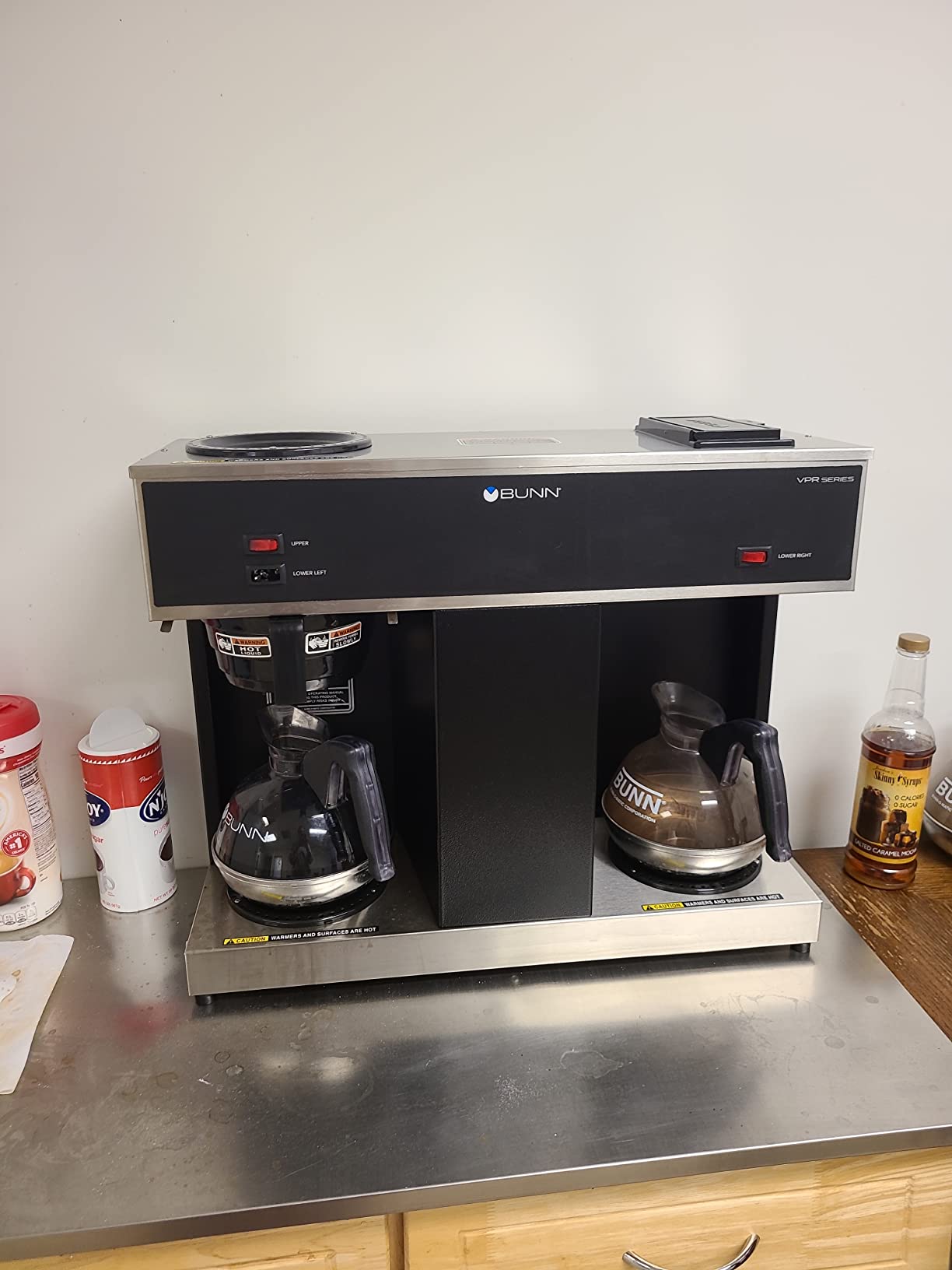
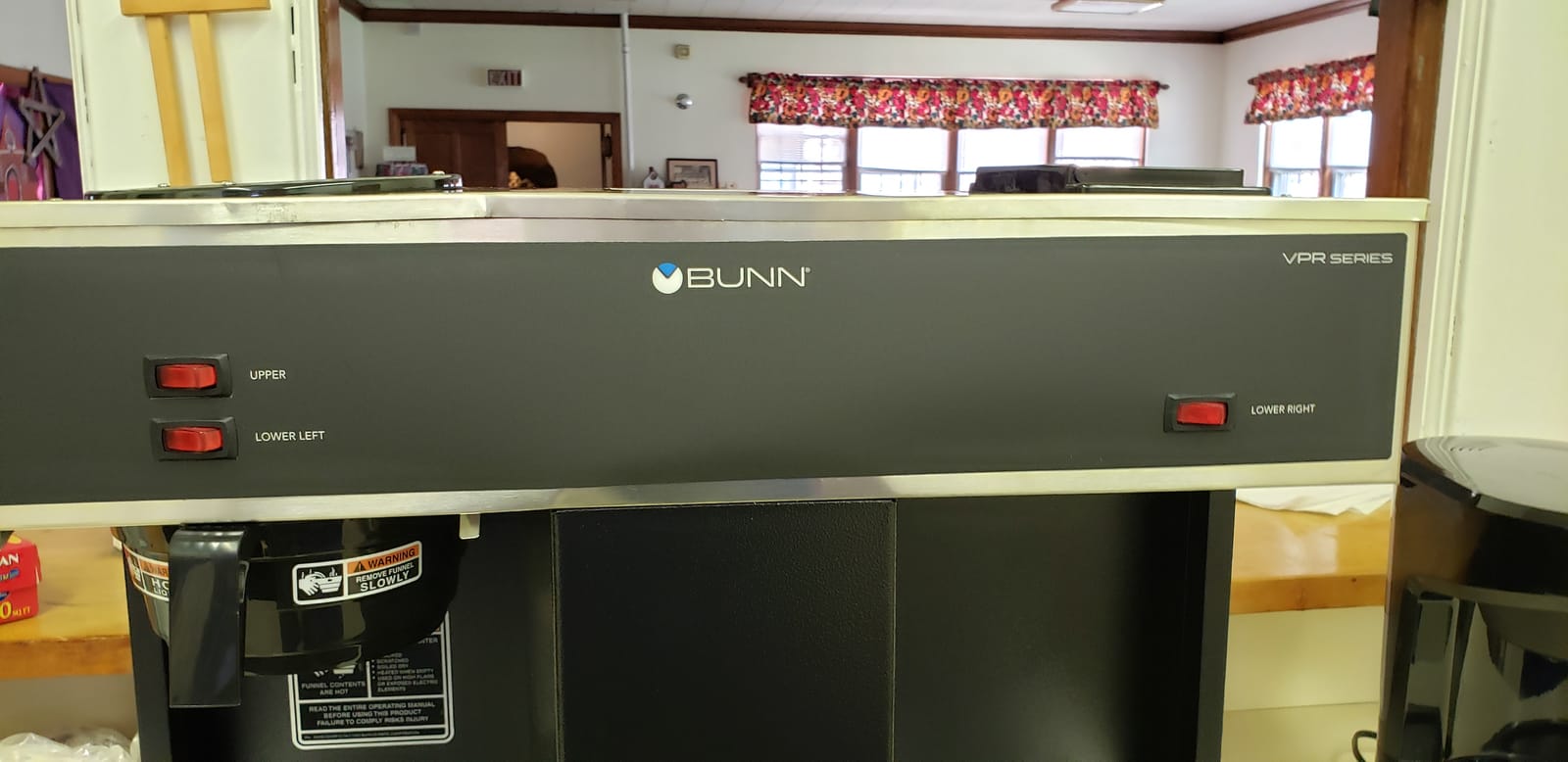
Three warming stations is the answer to the specific problem of a service that arrives all at once. You can be brewing the third pot while the first two are still being poured, which means the coffee at the back of the queue is the same quality as the coffee at the front.
Churches and offices that run several pots per service rate this machine highly for exactly that reason. Owners report 10 to 15 year service lives in those settings, and the three-minute rebuild is fast enough to cover a long meeting.
At 23 inches wide, it is a wide machine. It needs a counter that can carry the footprint and a circuit that can handle 1660 watts.
The element bolts, and why almost every owner knows about them
Leaks around the heating element are the most common complaint on this model, and the solution is documented in owner reports: tighten the three element bolts on a new machine. Most first-use leaks clear, and machines that keep leaking usually need that adjustment again after the first month of cycling.
Check those bolts as part of your first week rather than waiting for a puddle. Owners who do this report a machine that then runs without attention.
Turn the thermostat down before the first service
The thermostat frequently ships set to the hottest setting, which causes the batch to boil over the rim of the decanter until someone finds the adjustment. That first overflow is what produces most of the one-star reviews on an otherwise well-regarded machine.
Descaling the shower head every couple of months keeps brew times down. When a pot that used to take three minutes starts taking six, scale in the shower head is almost always the reason.
When three warmers earn their counter space
This machine justifies itself whenever demand arrives in a single block: a church service, a board meeting, a training session, a morning shift change where everyone wants coffee at once. The gap between batches simply disappears.
Skip it for a steady trickle of demand through the day, where a single-warmer machine is more efficient and lighter. And budget for three decanters, because they are not included.
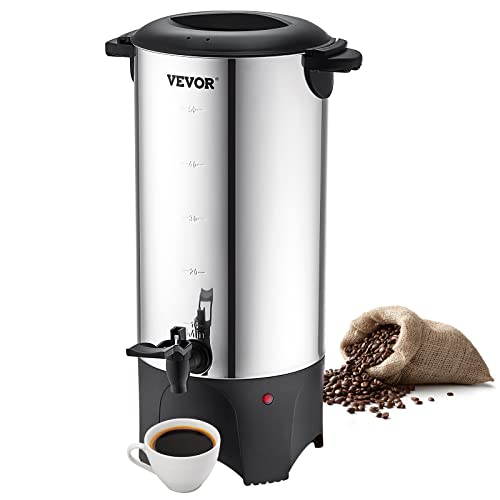
10. VEVOR 50-Cup Urn – the Best Urn for Clean-Up and Transport
- ✓Step-discharge spout empties without tilting
- ✓Detachable power cord makes cleaning easy
- ✓Owners praise the coffee taste
- ✓Maintains serving temperature in the 90-98 C band
- ✓Weighs 5.2 pounds empty
- ✕No dedicated on/off switch
- ✕Outer wall runs very hot when full
- ✕No printed instructions
50 cups at 1 per minute
Step-discharge spout
Detachable power cord
1000 watts
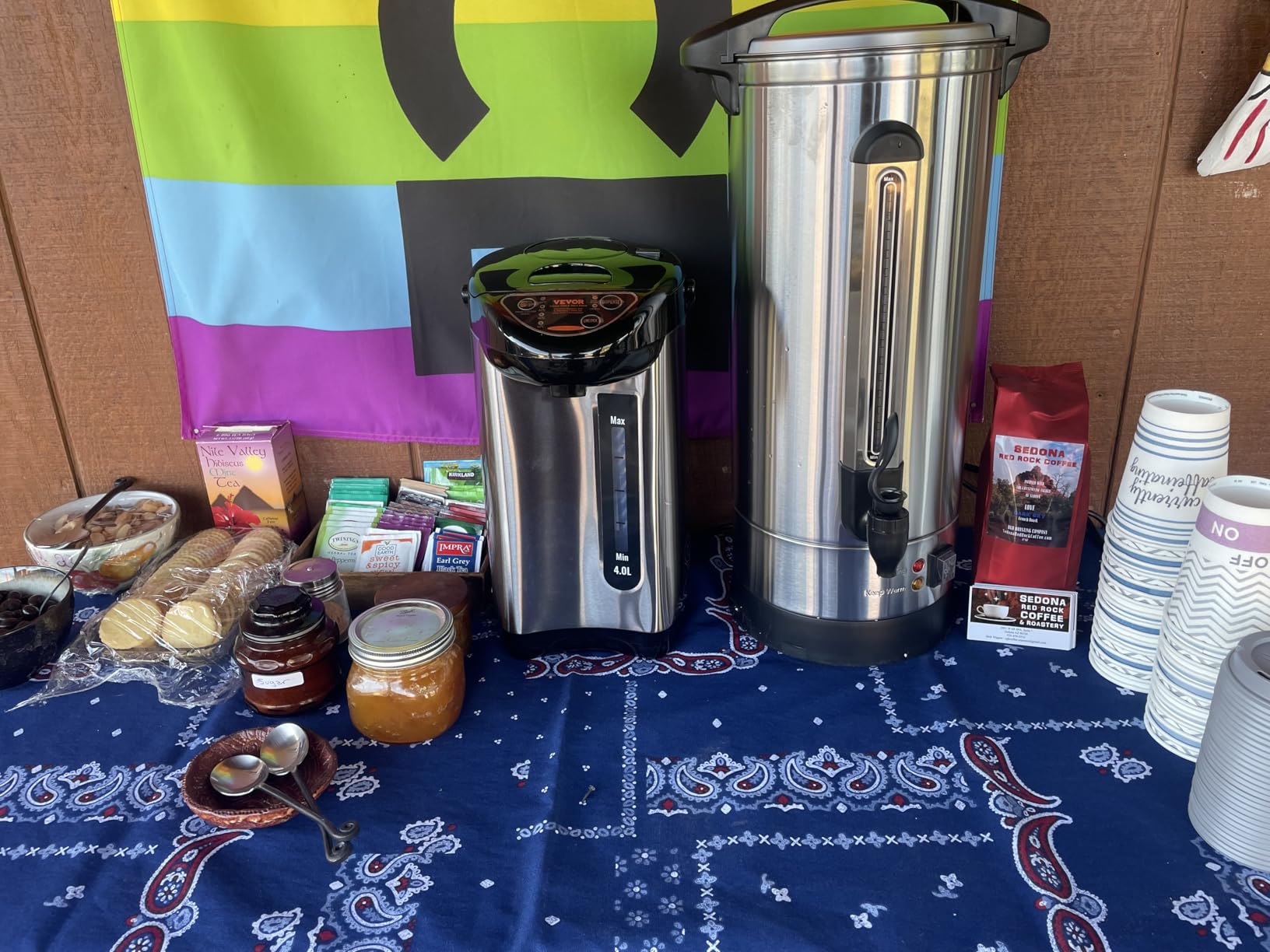
The step-discharge spout is the detail that sets this urn apart. Instead of lifting a full urn to drain the last of it, the mechanism empties the remaining coffee down and out, which removes the part of urn cleaning most operators dislike.
The detachable power cord follows the same logic. On a machine this light, being able to carry it to a sink and clean it properly is worth more than a fixed cord is.
Owners who get a good unit are genuinely enthusiastic about the coffee, reporting that the stronger percolation makes noticeably better coffee than a home machine. This is a budget pick rather than a duty-rated one.
No on/off switch, and what that means in practice
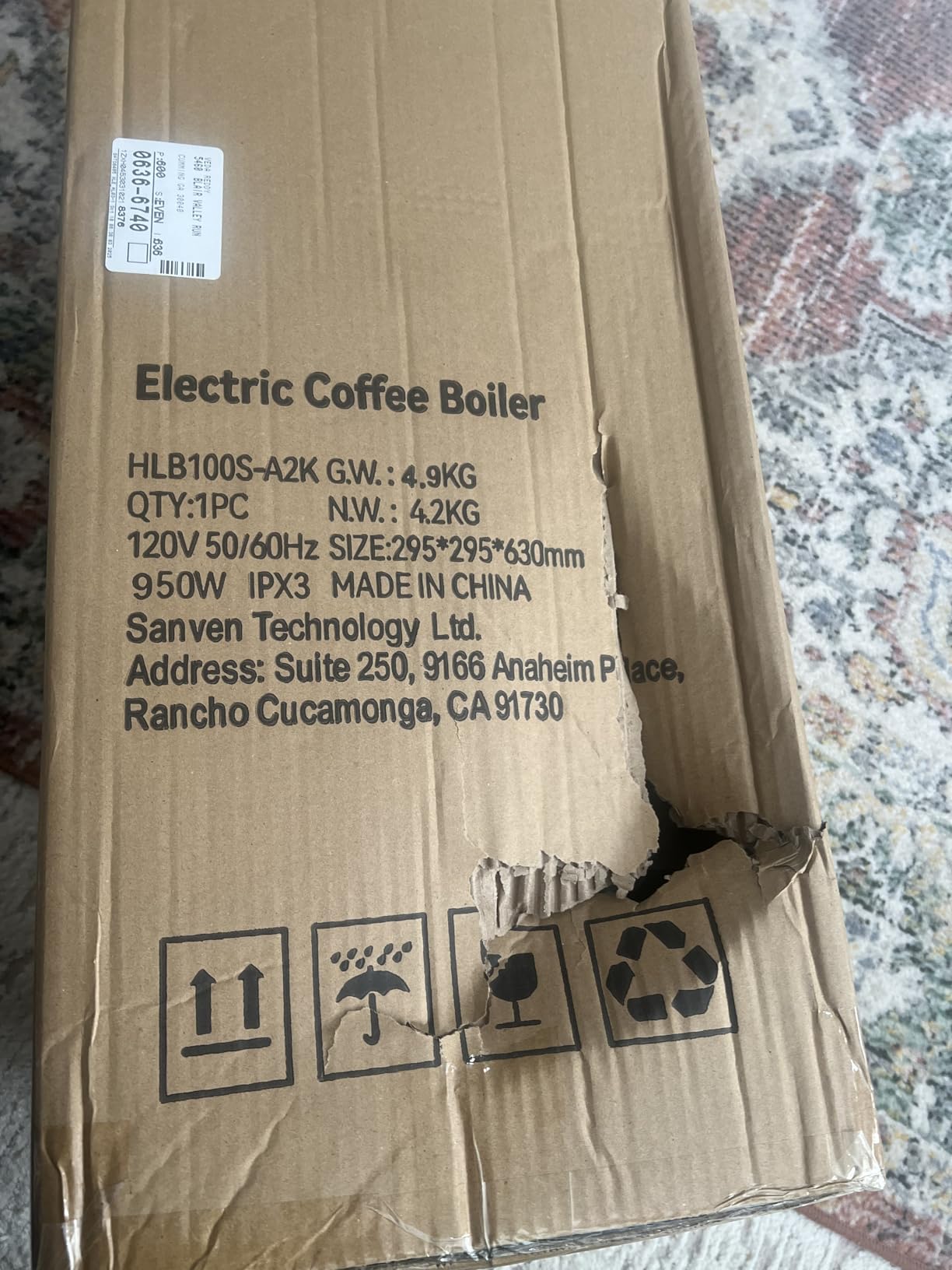
There is no dedicated on/off switch, so the urn runs whenever it is plugged in. Owners handle this by unplugging it after service and treating the unplug as the off switch.
The manufacturer is also clear that dry running can blow the fuse. Always add water before switching it on, and never leave it plugged and empty overnight.
The exterior runs hot
Owners report the outer wall becoming uncomfortably hot once the urn is full, which makes it awkward to move even at 5.2 pounds. Carry it empty or let it cool before repositioning it.
The lack of printed instructions catches first-time buyers out on brew ratio. Owners who get good results measure grounds and water by volume on the first run and then keep that ratio for every batch after.
Where a budget urn still wins
This urn suits a market stall, a picnic, a wedding venue, or a temporary setup where the machine travels to the event rather than living on a counter. Stainless body, 1000 watts, and a 50-cup capacity cover a small gathering comfortably.
Skip it for daily back-of-house service. The reports of slow or weak brewing, the missing switch, and the hot exterior all point to a machine built for occasional use rather than continuous operation.
11. NESCO CU-50 Urn – the Best Support and Spare Parts in the Budget Class
- ✓Double-wall steel keeps coffee hot for hours after switch-off
- ✓Polished finish does not show fingerprints
- ✓Locking lid is safer than loose-lid rivals
- ✓NESCO support widely praised including low-cost part
- ✓Simple to fill and clean
- ✕Some units stop heating and need a reset under the base
- ✕Cord is hard-wired rather than detachable
- ✕Coffee remains below the spout and needs tipping
50 cups at 5.7 oz
Double-wall insulation
950 watts
Locking lid
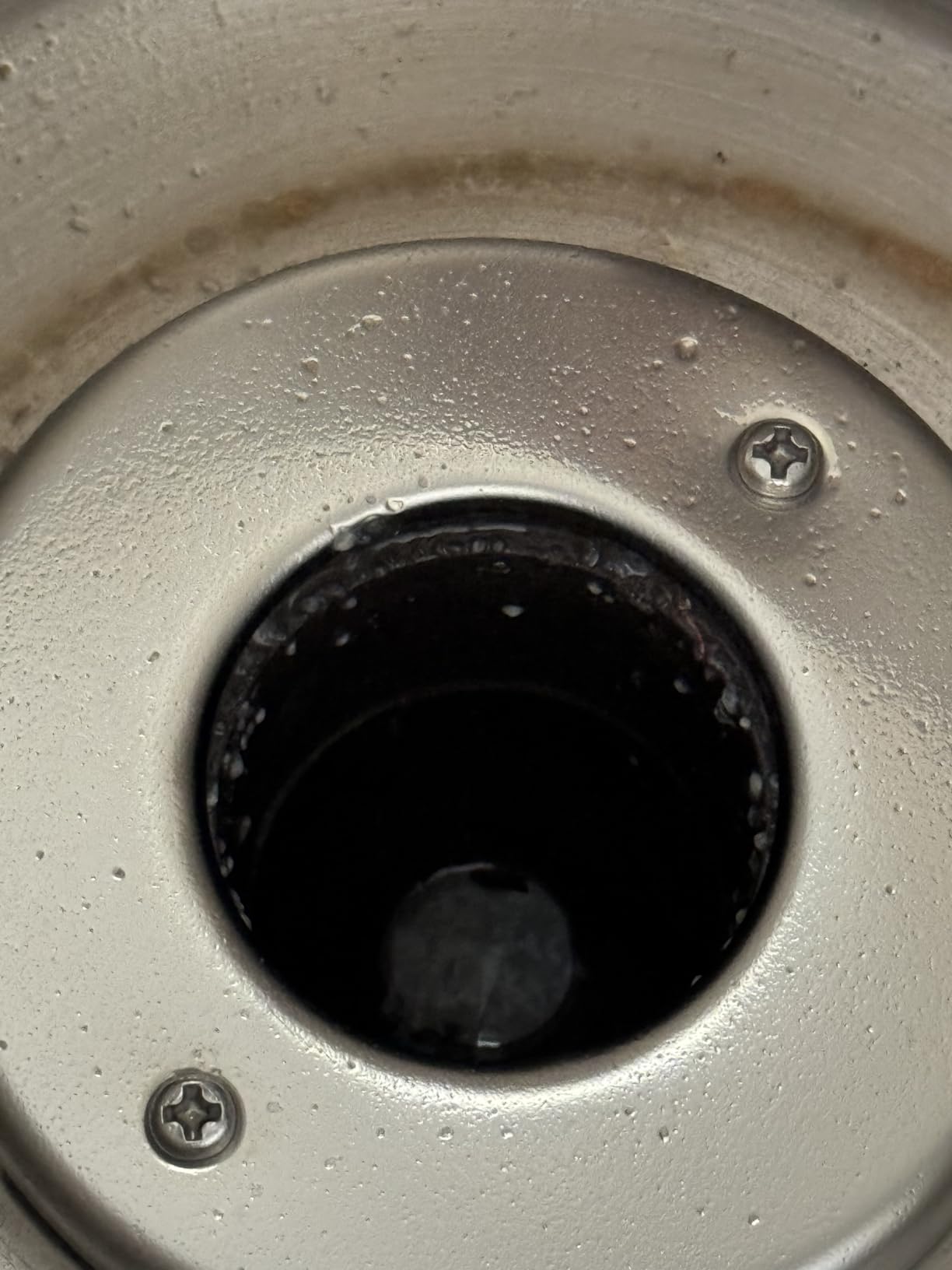
Support is the reason to look at this urn. A reviewer reported coffee still steaming 90 minutes after switch-off, and owners repeatedly single out NESCO’s service, including a low-cost spigot handle replacement that owners say solved the problem in minutes.
The locking lid is also safer than the loose lids on most competitors here. That matters in a room where children are running around an urn of near-boiling coffee.
Double-wall stainless construction with a dishwasher-safe basket makes this one of the easiest to keep clean day to day, which is a bigger factor in total cost of ownership than the purchase price.
Reliability is the honest weakness
There is a stubborn cluster of reports that units stop completing a brew or stop heating entirely, requiring a reset under the base. One bulk buyer reported five of eight machines failing, which is worth weighing if you are buying several at once.
If reliability at scale matters more to you than the purchase price, buy one first, run it hard for a month, and only then order the rest.
The cord and the last of the coffee
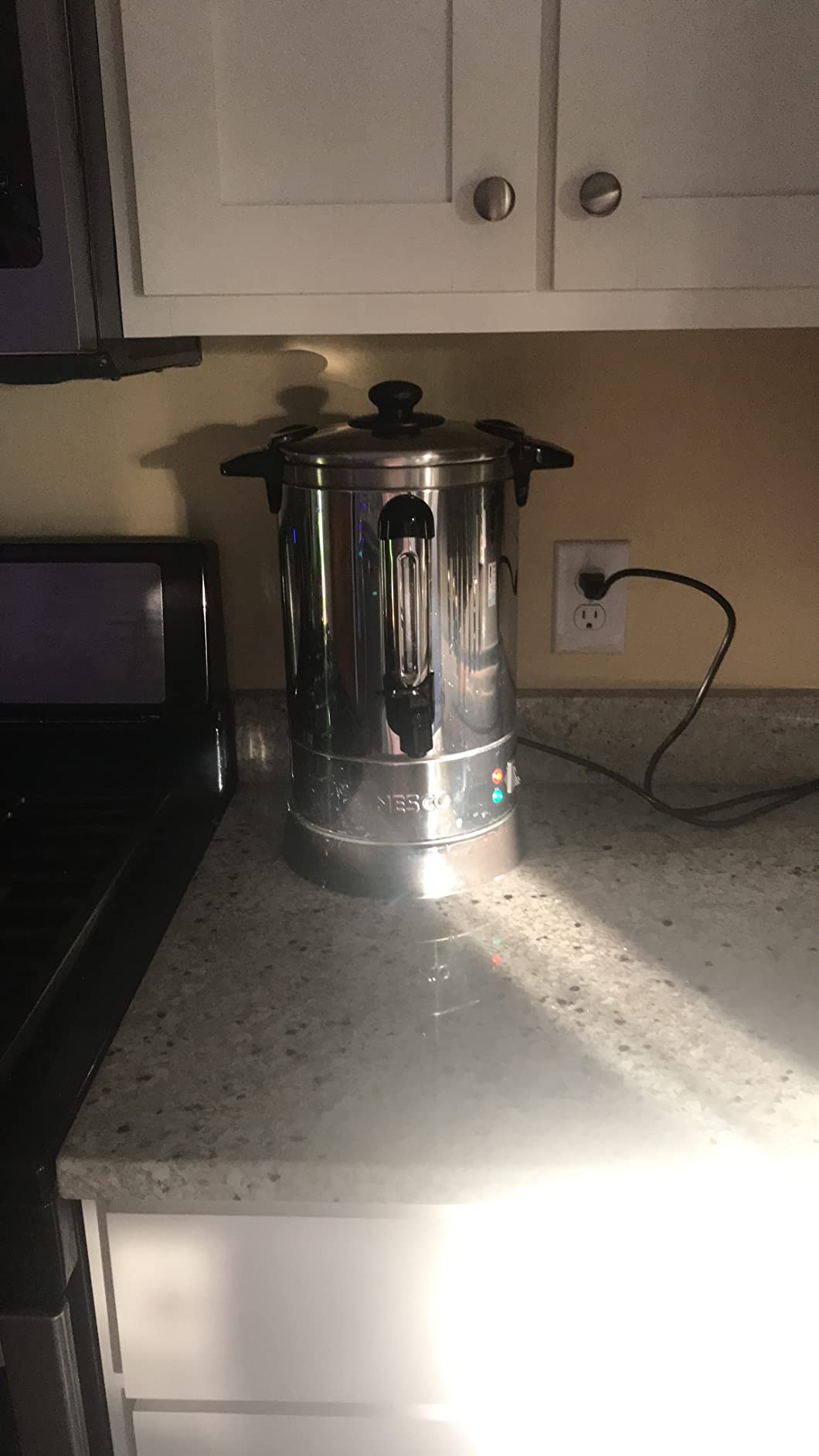
The cord is hard-wired rather than detachable, which limits where the urn can sit. Plan the outlet position before you commit.
A fair amount of coffee also stays below the spout and requires tipping the urn to reach, which is exactly the task the VEVOR’s step-discharge spout was designed to avoid. Plan for that before a crowded event rather than during one.
Doubles as a hot-water urn
It works as a hot-water urn for tea, which makes it a reasonable two-function station for a meeting room or a small hospitality setup where a single machine needs to cover both.
The drip tray reduces mess at the spout during service, which is a small detail that matters a lot on a carpeted or wooden floor. For a 50-cup class urn with a locking lid and responsive parts support, this is a defensible low-cost choice.
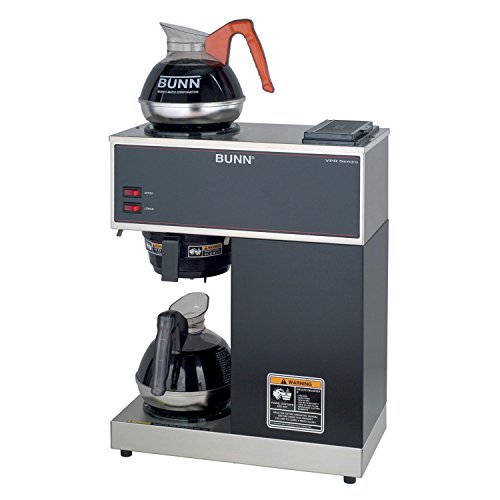
12. BUNN VPR-2EP Pour-Over – the Best Starter Set with Decanters in the Box
- ✓Tied for the highest average rating here
- ✓About 3 minute brew with no plumbing
- ✓Owners report 15-year service lives
- ✓Decanters included unlike the base BUNN models
- ✓Switch upgrades over earlier generations
- ✕Included decanters are plastic rather than the glass shown
- ✕Ships without BPA-free plastics
- ✕Removing the basket after brewing leaks onto the warmer
- ✕New units can leak until setup is completed
12 cups in about 3 minutes
2 warming stations
2 decanters included
950 watts
This is the package to buy if you are starting from nothing. Two Easy Pour commercial decanters ship in the box, which on the other BUNN models here is a separate purchase and an easy thing to forget on the first day of service.
Owners with long experience describe it as a faithful successor to earlier generations, crediting the switch upgrades for better temperature control, and they report 15-year service lives in offices and fire stations.
It ties for the highest average rating in this roundup at 4.6 stars, though its review base is the thinnest of the twelve, which is worth keeping in mind when weighing the number.
The decanters are plastic, not glass
The complaint that comes up most often is not about the brewer. The decanters that ship are plastic rather than the glass shown in product imagery, and they are not BPA-free, which owners explicitly mention as a disappointment.
Coffee also burns onto the bottom of the plastic pots. If that matters to you, plan to upgrade to glass commercial decanters early rather than living with it.
Setup leaks clear after three cycles
New units can leak until the initial three-jug setup is completed. Run three full measured fill cycles and discard the contents before serving anyone.
There is also a separate habit worth building: pulling the basket immediately after brewing sends water down onto the warmer plate, so let it sit a moment before lifting it out. Some shipments also arrive with only one of the two decanters, so check the box before the first service.
Two warmers, low draw
At 950 watts this is among the lowest-draw pour-overs in the roundup, which makes it the easiest to run on an older circuit. Two warming stations give you a fresh pot and a warm pot at the same time, which is the core of a smooth office morning.
Skip it if the plastic decanters are a deal-breaker for your operation. Otherwise, the combination of a 3-minute brew, a two-warmer layout, and included serving ware makes this the most complete package on the list.
How to Choose a Commercial Coffee Maker Without Regretting It
Every mistake I have seen in this category comes from choosing a machine before choosing the service. Start with the format, then the plumbing, then the volume, then the paperwork.
The five brewer formats and where each one belongs
Pourover batch brewers brew fresh on demand, need only a 120V outlet, and produce a carafe of coffee that then sits on a warming plate. This is the default answer for offices, churches under about 150 people, and any site without plumbing access.
Plumbed automatic brewers fill from a water line and shut themselves off, which means no staff member lifting a jug. They are the right answer for a cafe or restaurant that brews all day but need a plumber and a proper filter on the water.
Airpot systems brew into an insulated thermal pot instead of a glass decanter on a plate. The pot keeps coffee hot for hours without cooking it, which fixes the single most volunteered complaint in owner discussions: burnt-tasting coffee from a decanter left on a warmer.
Urns are for events rather than services. They heat water, percolate, and hold at temperature, which suits a church hall, a wedding, or a community centre where everyone arrives at once.
Single-serve systems win in offices where beverage variety matters more than volume. None of the batch machines in this roundup cover that case, and no batch brewer ever will. If cold brew is on the same menu, our iced coffee brewer roundup is the companion read.
Plumbed versus pourover: the plumbing decision
A pourover brewer needs a 120V outlet and someone willing to fill a reservoir with cold water. That is the entire installation. It is the reason a pour-over is the right first purchase for a renter, a food truck, or a temporary event site.
A plumbed automatic needs a 3/8-inch water line with a shutoff valve, and a plumber has to install it before the machine will ever make a cup. Add inline filtration, which is not optional in hard-water areas, and the installed cost runs well past what the machine’s spec sheet suggests.
The honest framing is that plumbing is not the expensive part. It is the commitment. Once a line is in, you have also accepted a descaling routine on a schedule you do not control.
Sizing your brewer to peak demand, not average demand
Most buyers size to average daily volume and then fail on the busiest morning of the quarter. Size to your peak, add a margin, and then buy warmers rather than a bigger machine.
The units in the spec sheets are rarely consistent. Throughput quoted as gallons per hour and litres per hour means the same thing, and a pour-over quoted by brew cycle time is measuring something different again. A 12-cup pot rebuilt every three minutes works out to a very high theoretical hourly figure if you never pause, which is exactly why it should not be used as a planning number.
For events, the working rule of thumb is about 1.5 cups per person. For a morning rush, plan on the number of people who arrive in the same ten-minute window, not the number in the building.
Water hardness, scale, and the 90-day descaling rhythm
The leading cause of long-term failure in this category is not a bad element or a cheap gasket. It is mineral scale in the internal tank, and the reason it does damage quietly is that the tank on a commercial pour-over is not visible from outside. You cannot see the buildup and you will not smell it until the coffee tastes flat.
Two habits fix most of it. Filter the water at the point of use, and run a descale on a roughly 90-day cycle whether the machine looks fine or not. On urns, remove and soak the filter basket and the spigot on the same schedule.
Forum owners consistently identify hard water and internal-tank scale as the thing that shortens an otherwise long-lived machine. This is the section of this guide I would ask any buyer to read twice.
Total cost of ownership per 1,000 cups
Purchase price is the least interesting number. The recurring costs are filters or replacement baskets, descaling solution, decanters and airpots, and energy, and on a pour-over they add up faster than most operators expect.
Amortise the machine over the life you actually expect rather than the warranty. A well-maintained BUNN can run for a decade or more; a budget unit might not see three years of daily use. Divide the purchase price by that life, then add the recurring costs per thousand cups.
For an urn, the recurring cost is far lower because the filter basket is reusable and there is no paper consumable. That is the quiet reason urns win on cost per cup for events, even when the purchase price is higher.
Buying used: what to inspect and what to walk away from
Used commercial brewers are the most repeated question in owner discussions, and the answer is that it can be sensible for the right machine. BUNN and Curtis units in particular hold up far better than buyers expect, With owners reporting service lives measured in decades and reconditioned units changing hands at roughly half of what a new one costs, used can be the sensible play for the right machine.
The trust problem is real. Many used units are lease returns from seasonal operators, so the service history is unknown and some units are not user-serviceable by design, which pushes maintenance onto a third party at exactly the moment you can least afford it.
Inspect the heating element for scale and corrosion, check the reservoir for hard-water damage, look at the warmer plates for pitting, check the wiring and cord, and confirm that parts for that exact model are still available before you commit. Ask directly whether the warranty transfers. Walk away from any unit where the seller cannot tell you how many years it ran daily.
Parts availability is the real reason BUNN dominates
Brand dominance in this category is largely a parts story. Repair shops stock BUNN tanks, funnels, and heating elements because the installed base makes the demand predictable, and distributors keep those parts on the shelf for the same reason.
That is the argument for buying a machine you can repair rather than the cheapest one available. A fifteen-year life with a replaceable element costs dramatically less per year than a cheaper machine replaced twice, and the difference is invisible in the purchase price.
It is also why long-time owners weight decades of use far more heavily than star ratings when they recommend a brand. Their experience is that a BUNN is a decision made once.
Certifications that matter to inspectors and insurers
ETL and Intertek listings are the ones that come up in real conversations. Some commercial insurance policies and local health inspections ask for a listed piece of equipment, and having a verifiable record removes a negotiation from a conversation you would rather not have.
NSF approval matters when coffee comes into direct contact with listed surfaces. CE and ROHS markings are common on imported machines and indicate electrical and material compliance, though they are less often what a local inspector asks for.
The SYBO SF-CB-2GA in this roundup is among the most thoroughly certified machines, carrying ETL, CE, ROHS, and Intertek. On a unit you intend to run daily for years, that is a reasonable tie-breaker.
Features worth paying for and features you can skip
Worth paying for: multiple warming stations if demand arrives in one block, a pre-heated hot water reservoir for fast rebuilds, a multi-stream shower head for even extraction, a locking lid on an urn, and a warranty long enough to signal a real service life.
Nice but survivable: a hot water faucet on the same machine, a touchscreen interface, an energy-saver mode, and a water level window.
Safe to skip: decorative finishes, integrated cup warmers on an urn that already holds 100 cups, and anything that claims to be a barista interface. None of them change the cup a customer receives.
Who should skip a commercial brewer entirely
If you serve fewer than about 10 cups a day, a good home brewer will serve you at a fraction of the cost and take up less space. The commercial case begins when a home machine becomes the bottleneck.
If you are a renter, a food truck, or setting up somewhere temporary, a pourover or an urn is the right call and a plumbed automatic is not. If your drinks menu is mostly espresso-based, a commercial espresso machine is the correct equipment and a batch brewer will frustrate you.
And if you will not descale anything, buy the simplest machine you can find and plan for a replacement. A neglected commercial brewer is a worse investment than a modest home one. Operators fitting out a shared break area alongside other equipment can see the same logic in our commercial microwave roundup, where power draw and duty cycle decide the outcome.
Frequently Asked Questions
What is the average life expectancy of a Bunn coffee maker?
A well-maintained BUNN commercial brewer commonly runs 10 to 20 years, and owners report individual machines at 12, 20, and even 40 years. Forum long-term owners describe a BUNN as a purchase made once rather than repeatedly. The factor that shortens that life is almost always mineral scale building up in the internal tank, which is not visible from outside, so filtered water and a descaling cycle every 90 days matter more than the brand name on the chassis.
Do commercial coffee makers need a water line?
Pourover brewers do not. They need only a standard 120V outlet and a person willing to fill the top reservoir with cold water, which is why they are the right choice for offices, churches, food trucks, and temporary event sites. Plumbed automatic brewers do need a water line, typically 3/8-inch with a shutoff valve, plus inline filtration, and a plumber has to install it before the machine will ever make a cup.
What are the common problems with commercial coffee makers?
The recurring issues are burnt-tasting coffee from leaving decanters on warming plates for more than about 45 to 60 minutes, and scale buildup inside the internal tank that goes unnoticed because the tank is not visible. Higher-wattage models can trip GFCI breakers on shared 15-amp circuits, and urns without an on-off switch can be left running. Leaks at the reservoir or base connection, warming element burnout, and replacement decanters and airpots not being included are all commonly reported.
How many cups per hour do I need for my business?
Size to your peak window rather than your daily average. A 12-cup pour-over that rebuilds in about three minutes has a very high theoretical hourly output with no pause, but in practice plan on far less. For events, a common rule of thumb is about 1.5 cups per person. For an office, count how many people reach the coffee point in the same ten-minute window, not how many are in the building.
What is the best commercial coffee brand?
BUNN is the most widely recommended brand for pour-over brewers, mainly because parts availability is excellent and replaceable tanks, funnels, and elements are stocked by repair shops and distributors. Wilbur Curtis and Fetco are frequently recommended for plumbed commercial volume, and both are widely regarded as holding up well when bought used. In the entry-level urn class, NESCO stands out for parts support and a locking lid.
Is it worth buying a used commercial coffee brewer?
It often is, particularly for BUNN and Curtis units, which hold up far better than buyers expect. The risk is that many used machines are lease returns from seasonal operators, so the service history is unknown and some are not user-serviceable by design. Inspect the heating element, check the reservoir for hard-water scale, look at the warmer plates and wiring, confirm parts still exist for that model, and ask whether the warranty transfers before you buy.
How do I descale a commercial coffee maker?
Run a descale on a roughly 90-day cycle whether the machine appears to need it or not, because the internal tank on a commercial pour-over is not visible and buildup goes unnoticed until the coffee tastes flat. Use a food-grade commercial descaling solution, follow the manufacturer’s volume and cycle instructions, and rinse thoroughly. On urns, remove and soak the filter basket and spigot on the same schedule.
The Verdict: Which Commercial Coffee Brewer Should You Buy?
If you want one answer, the Hamilton Beach 45-cup urn is the safest general-purpose commercial coffee brewer in this roundup. It has the deepest review history of any machine here, it dispenses a cup a minute, and it needs nothing but an outlet.
If your demand arrives in one block rather than a steady trickle, change the answer. For a church or a long meeting, the BUNN VPS with three warming stations removes the gap between batches. For an event, the SYBO SR-CP-50B brews 50 to 60 cups in about half an hour and needs no paper filters. For a small office that wants two pots warm at once, the SYBO SF-CB-2GA is the fit, provided you have the circuit for 2500 watts.
Before you order, answer three questions. How many cups do you need at your busiest moment, not on an average day? Do you have access to a plumbed water line, and who pays to install it? And how long do you expect to keep the machine, because that number decides whether a repairable BUNN or a cheaper urn is cheaper in the long run.
Whichever you choose, set up water filtration and a descaling date in your first week. That single habit does more for the life of the machine than anything else in this guide.


Leave a Comment