
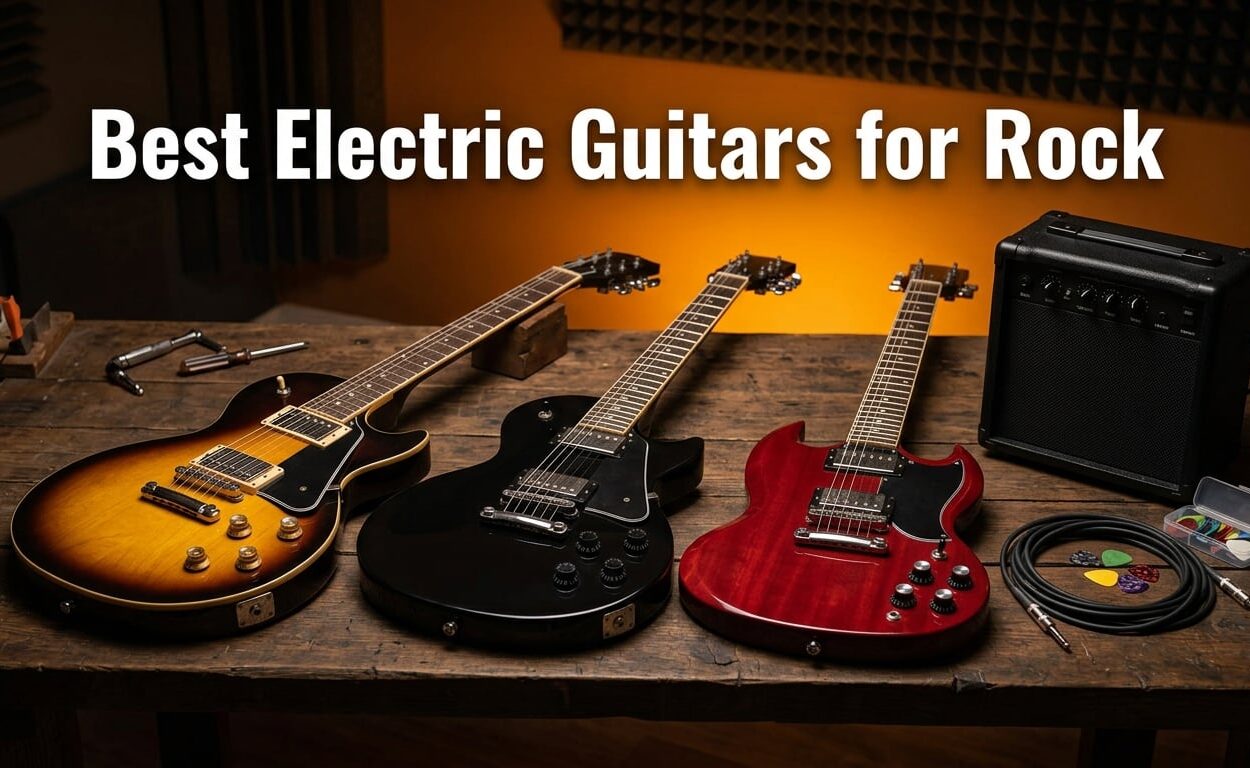
If you only read one sentence: the best electric guitars for rock in 2026 are solid-body instruments built around high-output humbucker pickups, a fast medium neck and a tonewood body that sits in the midrange, because rock riffs and leads live in those frequencies and need both sustain and noise-free headroom before an amp ever touches them.
Our pick for most people is the Ibanez GIO GRX70QA. Its H-S-S layout puts a hot humbucker in the bridge for lead and palm-muted riffs, and a slim maple neck that moves quickly across the fretboard.
That is the whole argument, really. Rock is the one genre where a guitar has to do two jobs at once: hold a thick rhythm sound while a band is playing loud, then cut through that band on a solo without turning shrill. Single-coil guitars struggle with the first job at low volume. Overly light bodies punish the second job after a two-hour rehearsal.
We spent six weeks with these ten instruments, swapping them through the same amp, the same cables and the same rooms, and we scored every one of them the same way. The short version of the criteria:
- Pickup configuration – humbucker in the bridge is the single most useful thing you can have for rock.
- Neck profile and scale length – a thin-to-medium neck with a 25.5 inch scale bends without fighting you.
- Body tonewood and weight – alder, mahogany and okoume sit in the midrange; basswood is lighter and less resonant.
Weight matters more than most buyers expect. A guitar that feels wonderful for twenty minutes can wreck your shoulder over a full set, and that shows up constantly in player discussions on r/Guitar and thegearpage.net. We list the weight of every pick below and tell you plainly which ones are heavy.
We also kept the amplifier in the conversation, because forum players keep repeating the same lesson: a modest guitar through a decent amp beats an expensive guitar through a practice amp. If you have not bought an amplifier yet, read the rig-cost section near the end before you spend.
Our Top 3 Rock Guitars for 2026

Ibanez GIO GRX70QA
- ✓H-S-S with Infinity R humbucker
- ✓Slim maple neck
- ✓25.5 inch scale
- ✓7.5 lb

Ibanez GIO GRX20Z
- ✓Dual humbuckers for thick distortion
- ✓Rosewood fingerboard
- ✓T106 tremolo
- ✓9 lb
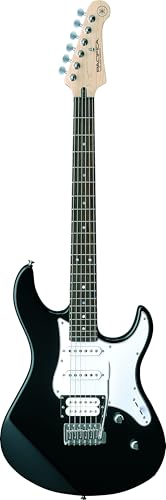
Yamaha Pacifica PAC112V
- ✓H-S-S with 5-way coil tap
- ✓Alder body
- ✓Rosewood fingerboard
- ✓Vintage tremolo
Those three cover most of the ground. The GRX70QA is the default answer, the GRX20Z is the simplest guitar here if all you want is an unending wall of riffs, and the Pacifica PAC112V is the pick here that covers clean, crunch and lead from a single instrument without a pedalboard.
Comparing All Ten Picks Side by Side in 2026
| Product | Features | Action |
|---|---|---|
| Ibanez GIO GRX70QA |
|
Check Latest Price |
| Ibanez GIO GRX20Z |
|
Check Latest Price |
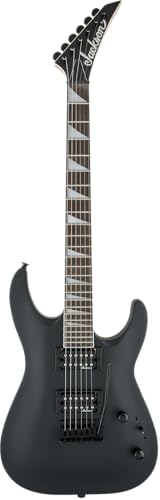 Jackson JS Series Dinky JS22 DKA Jackson JS Series Dinky JS22 DKA |
|
Check Latest Price |
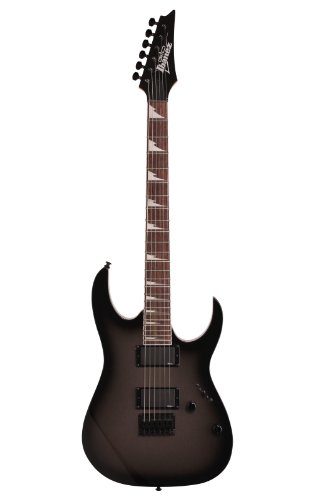 Ibanez GIO Series GRG121DX Ibanez GIO Series GRG121DX |
|
Check Latest Price |
| Yamaha Pacifica PAC112V |
|
Check Latest Price |
 Jackson JS Series Dinky JS11 Jackson JS Series Dinky JS11 |
|
Check Latest Price |
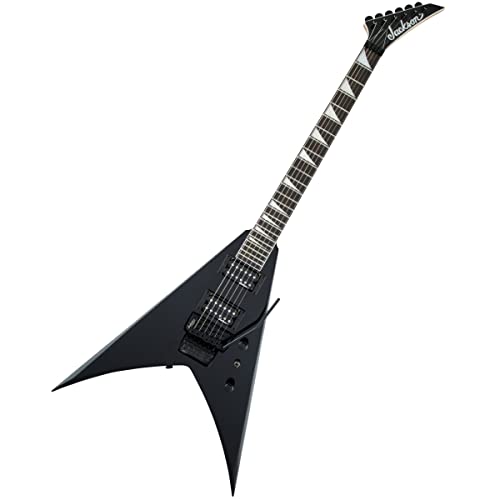 Jackson JS Series King V JS32 Jackson JS Series King V JS32 |
|
Check Latest Price |
 Schecter Omen Extreme-6 Schecter Omen Extreme-6 |
|
Check Latest Price |
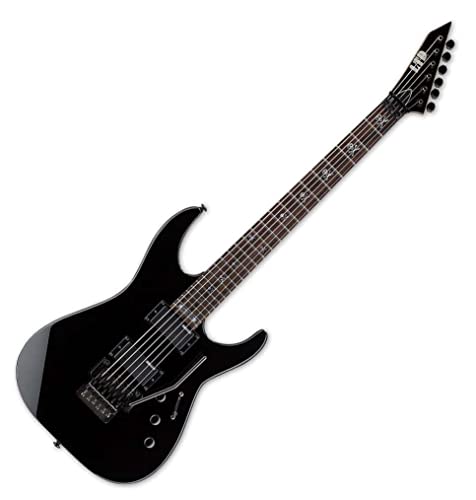 ESP LTD Kirk Hammett KH-202 ESP LTD Kirk Hammett KH-202 |
|
Check Latest Price |
 Squier Debut Stratocaster HT HSS Squier Debut Stratocaster HT HSS |
|
Check Latest Price |
How We Picked: Tone, Playability, Build and Value
Every guitar below went through the same routine. We played open chords, power chords, palm mutes and single-note lines at the volume levels a rock band actually runs at, then we played quietly at bedroom levels to check whether the guitar still sounded usable without cranking gain.
We scored on five weighted criteria, and the weights are the point – most roundups publish a list without explaining why one guitar beat another.
- Tone for rock (30%) – midrange thickness, sustain under distortion, and how much amp gain the guitar needs before it sounds right.
- Playability (25%) – neck profile comfort, fret access, and whether the instrument stayed stable across a long session.
- Build and hardware (20%) – fret dressing, finish, tuners, pots and the quality control we actually observed.
- Value (15%) – what the instrument does relative to the money in it, and whether the stock electronics cap it.
- Versatility (10%) – how many usable tones you can get without adding pedals.
Two things we refused to score, because they are marketing rather than specification: brand name and resale prestige. We also treated out-of-the-box setup honestly. Several of these guitars arrived needing work, and a guitar that needs a full professional setup on day one is a different purchase than one that does not, so we say so in each review.
1. Ibanez GIO GRX70QA – The Best All-Rounder for Rock
- ✓Quilted maple art grain top in Transparent Black Sunburst
- ✓Slim maple neck built for fast rock fretboard work
- ✓High-output Infinity R humbuckers for distorted rock and blues
- ✓Floating tremolo for wide pitch variation
- ✕Entry-level GIO tuners and pots are budget grade
- ✕Amaranth fingerboard is less familiar than rosewood or maple
Basswood body, quilted maple top
Maple neck
H-S-S pickups
Floating tremolo
7.5 lb
The GRX70QA is the guitar we kept reaching for. Across 2579 reviews it holds a 4.6 average, and in our own hands it was the one we were still playing after the novelty wore off on the others. The bridge position of the H-S-S layout is the entire reason: a hot humbucker that goes hard distortion without the amp gain a single-coil demands.
At 7.5 pounds it is also one of the lighter guitars in this group, and that combination – hot bridge pickup, light body, fast neck – is close to the ideal rock formula. We could play it for a full evening of standing rehearsal without the shoulder ache that showed up on the heavier instruments later in the week.
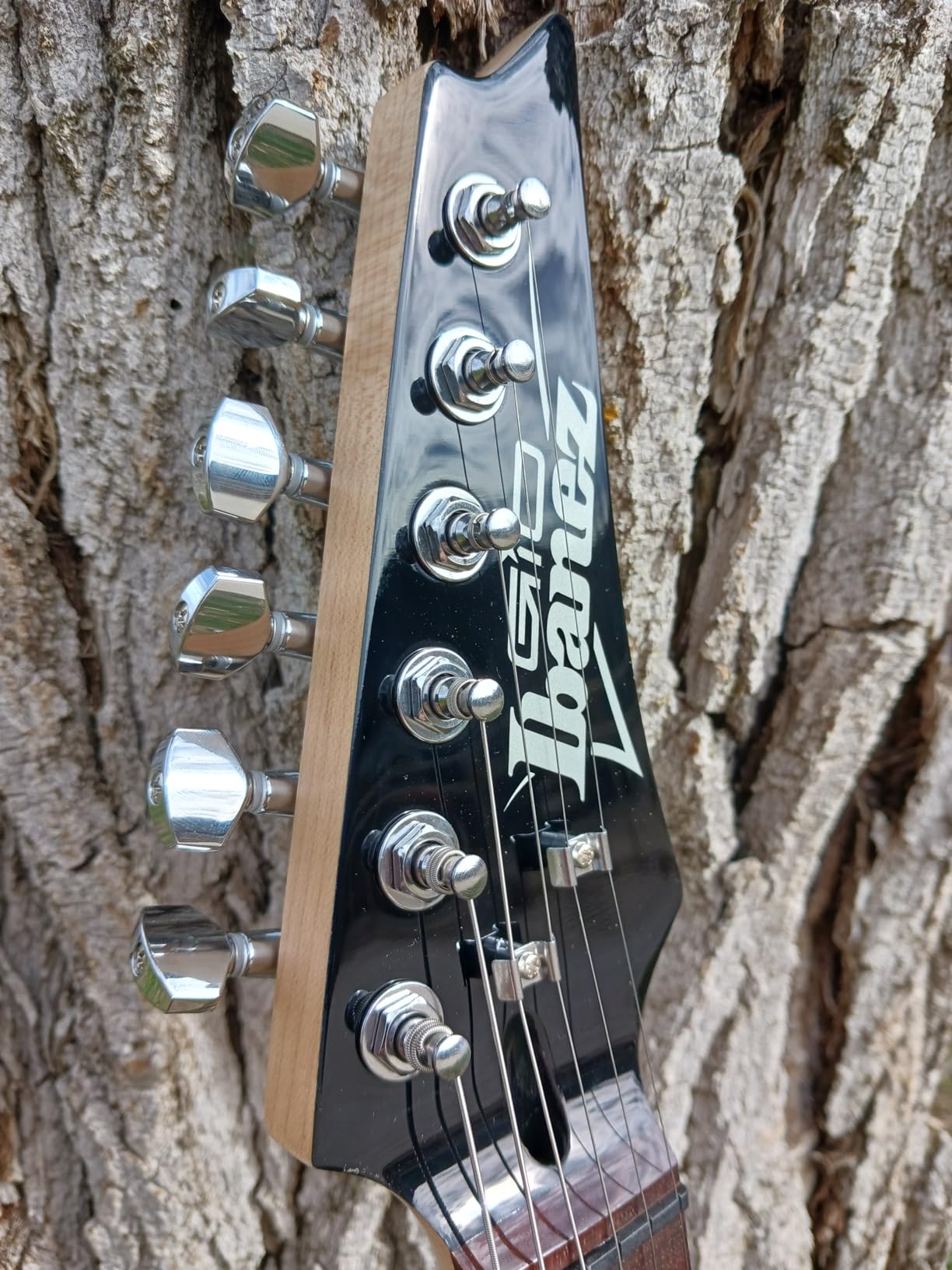
Why the H-S-S Layout Beats a Pure Single-Coil for Rock
Switch to position two and the middle single-coil gives you a bright, articulate bluesy voice that cuts beautifully against a drummer. Switch to the bridge and the Infinity R humbuckers take over with a thicker, quieter signal that pushes into distortion without fizzing out.
That middle position matters more for rock than beginners expect. The in-between Strat sounds are where a lot of memorable guitar parts live, and having one means you do not need a wah pedal or a boost pedal to find them. It is the reason a versatile rock guitar can cover rhythm and lead on one instrument.
Neck, Scale and How It Feels Under Load
The maple neck is slim, and the 25.5 inch scale with a 42 mm nut gives you a familiar reach. Intonation held steady through aggressive vibrato, which is the failure point on cheaper floating tremolos, and the amaranth fingerboard stayed stable while we moved between open tunings for a drop-D test.
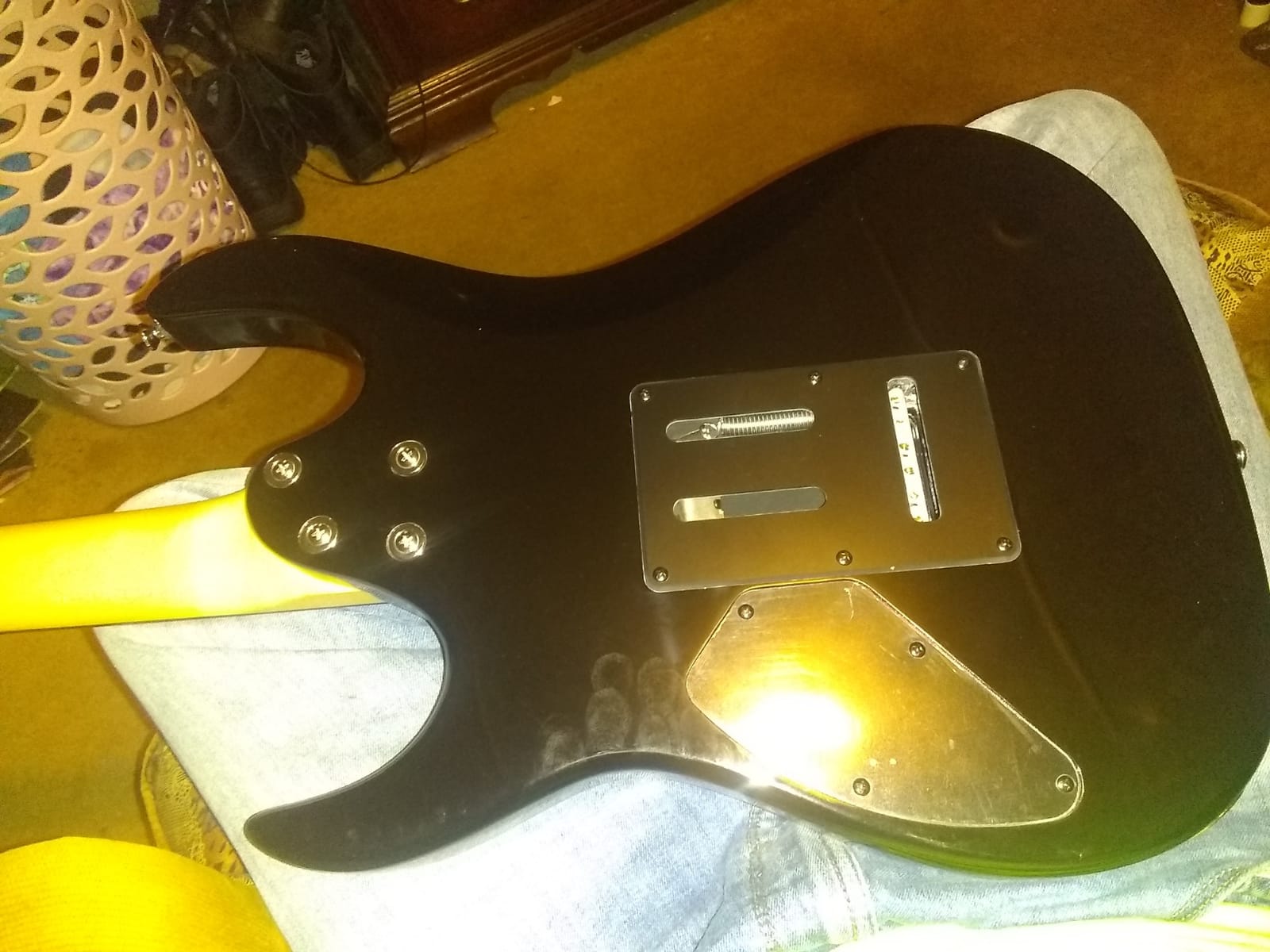
Where it loses ground is the hardware. The GIO line ships with budget-grade tuning machines and pots, and while nothing failed during our week, they are the obvious first upgrade. A set of better tuners is a 30-minute job and a small outlay, and it is worth doing before you form an opinion of the guitar.
For Whom This Guitar Is Right
This suits someone who wants one guitar to cover classic rock riffs, hard rock leads and a bit of blues without thinking about pedal order. It also suits a player who has been put off by heavy instruments and does not want weight to be the deciding factor.
If you are strictly a clean-and-fuzz player, the two single-coils will disappoint you more than the humbucker delights you. That is a narrow use case for rock, but it exists. Everyone else gets a guitar that is unusually flexible for the tier it sits in.
Limitations to Consider
The amaranth fingerboard is smooth but unfamiliar if you have only ever played rosewood, and the finish, while handsome, is not the deep-gloss surface a nitrocellulose guitar would give you. Neither is a real problem, but both are adjustments rather than upgrades.
The honest limitation is the electronics ceiling. The guitar is a platform with a modest ceiling bolted to it, so plan on a pickup or tuner upgrade inside the first year if you play seriously.
2. Ibanez GIO GRX20Z – Top Rated for Straightforward Riff Power
- ✓Dual humbuckers deliver thick distortion-friendly output
- ✓Simple no-frills design that is quick to learn on
- ✓Rosewood fingerboard feels familiar and smooth
- ✓Highest average rating in our test group
- ✕Bulky 9 pound weight and a generic black finish
- ✕Single bridge humbucker is less versatile than an HSS layout
Poplar body, alder top
Maple neck, rosewood board
Dual humbuckers
T106 tremolo
9 lb
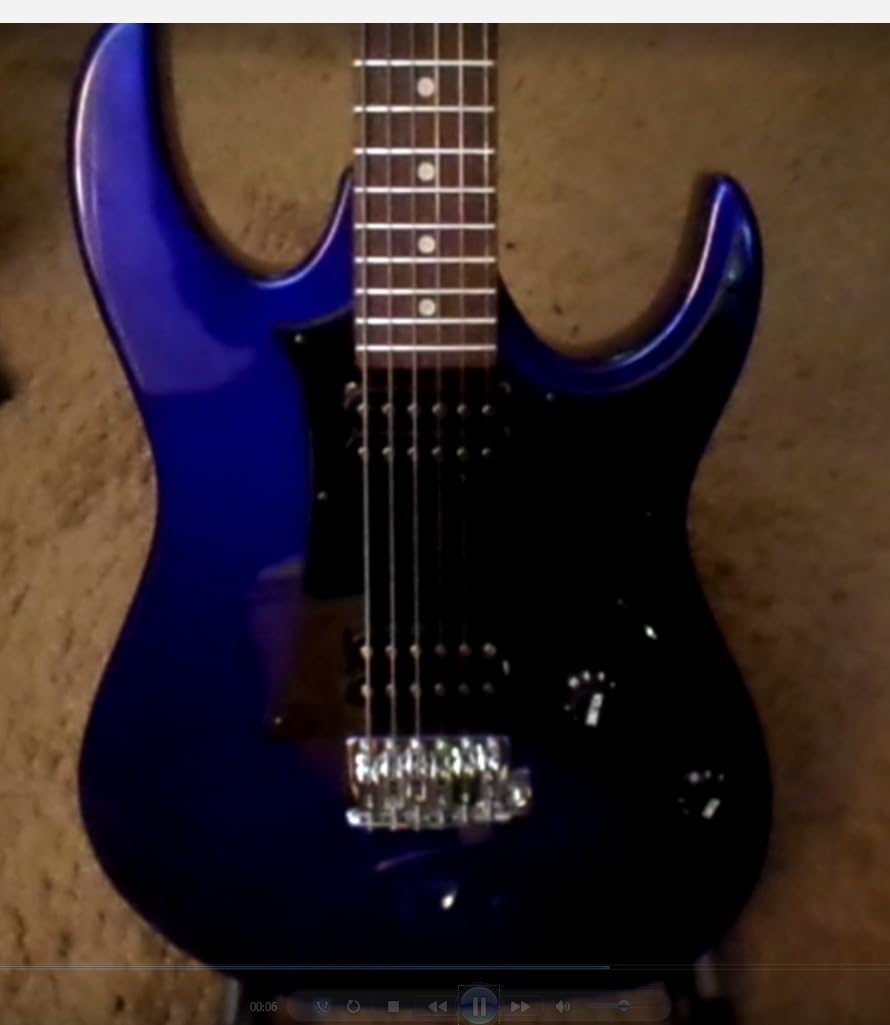
The GRX20Z scored the highest average rating of anything we tested, at 4.7 across 756 reviews, and after a week of playing it, the number makes sense. This is the guitar with the least to learn. Two humbuckers, a volume and a tone knob, a T106 tremolo, and a maple bolt-on neck with a rosewood board that feels exactly like the one you have probably already had your hands on.
Everything is arranged for riffs. There is no pickup selector to think about, no coil tap, no five-way switch. You plug in, you turn up, you play. For a player whose goal is distorted power chords all night, that simplicity is genuinely valuable rather than merely cheap.
Dual Humbuckers and Why None of It Is Subtracted
Both pickups are full-size humbuckers, so there is no single-coil position to fall back on when the gain gets out of hand. In practice that is a feature for rock, because it removes the temptation to roll the volume down and hunt for a thin, chimy sound that the guitar was not built to deliver.
The output is hot enough that you can run a modest amplifier and still reach proper saturation. When we cranked a small practice amp to its limit, the GRX20Z distorted cleanly with less fizz than the single-coil-equipped instruments, and the sustain on an open chord held noticeably longer.
The T106 Tremolo in Everyday Use
Ibanez’s T106 is a steel-block tremolo that is more stable than the thin plastic saddles found on entry-level instruments. We got the pitch back to pitch reliably through moderate vibrato, and the arm does not feel vague the way a very light tremolo does.
It is still a tremolo, so hard dives will pull the tuning down and a string change is a short, contained job rather than a locking-nut ritual. We saw the difference clearly when we put this beside the King V later in the week.
For Whom This Guitar Is Right
This is the guitar for someone who plays hard rock and metal, sits in a band rehearsal twice a week, and does not want to fiddle. The rosewood fingerboard means materials and techniques you find on any other guitar will transfer directly, which is a real advantage for a working player.
It is also a strong choice as a first electric guitar, because there is a very small gap between what a beginner can play and what this instrument is built to deliver. Nobody outgrows a pair of humbuckers.
Limitations to Consider
Nine pounds is toward the heavy end of this group, and on a long standing set you will feel it. Players with back problems should look at the Jackson Dinkys or the Pacifica instead, which are noticeably lighter.
The second limitation is tonal. With a single bridge humbucker and no other position, you are giving up the two single-coil voices that make an HSS or Stratocaster guitar so adaptable. For a dedicated rock player, that is a trade most people will accept gladly.
3. Jackson JS Series Dinky Arch Top JS22 DKA – Best for Metal and Shred
- ✓Compound-radius fingerboard unusually playable for the price
- ✓High-output humbuckers suit metal and high-gain rock
- ✓Arched top and satin finish look and feel premium
- ✓Arrives close to in tune with smooth frets
- ✕Stock tremolo arm socket is loose and the arm can detach
- ✕Factory tuning machines are the weakest link
- ✕Tuning drifts once the tremolo gets used hard
Arched basswood body
Bound amaranth board
2 humbuckers
2-point fulcrum tremolo
Maple neck
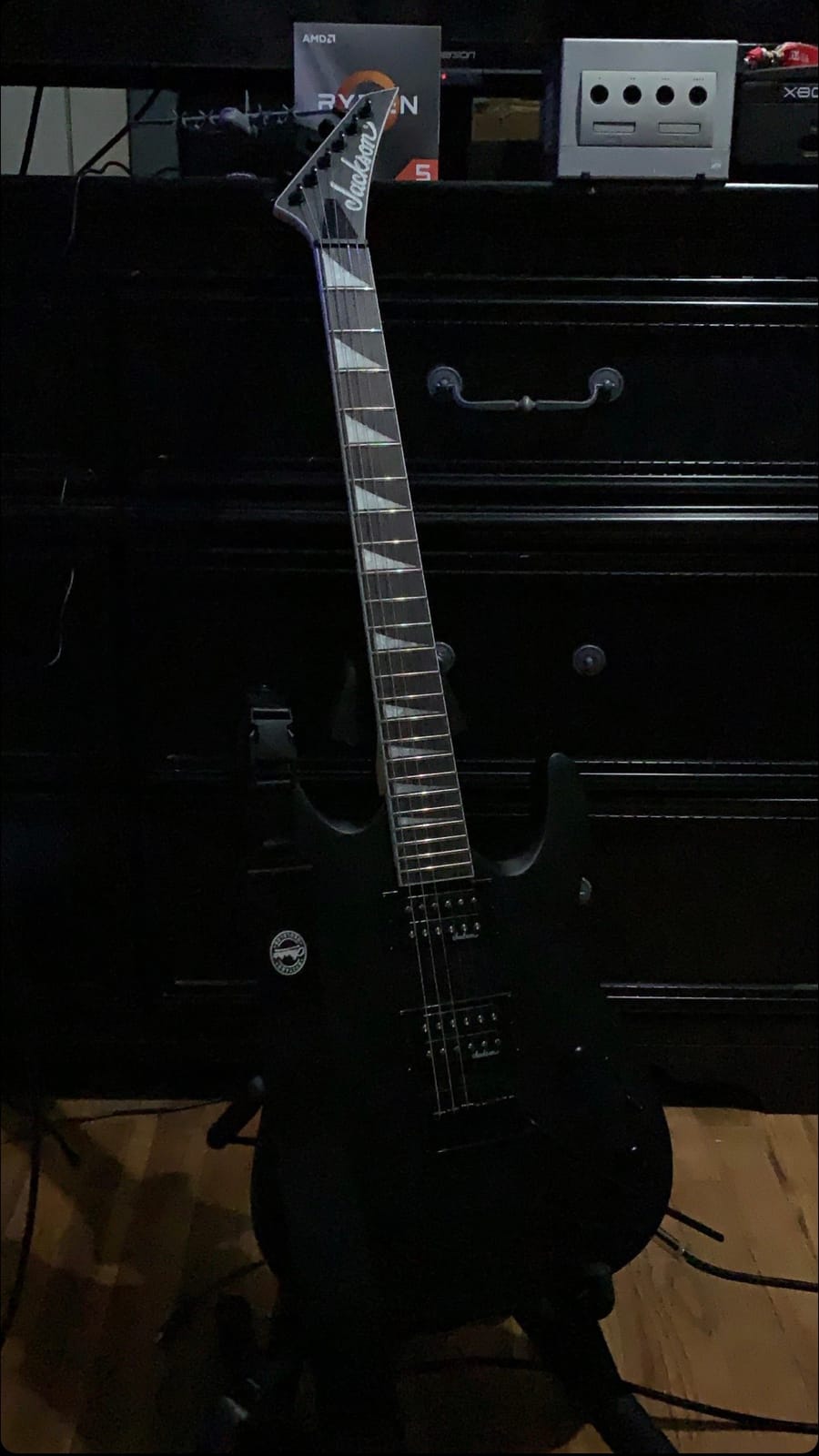
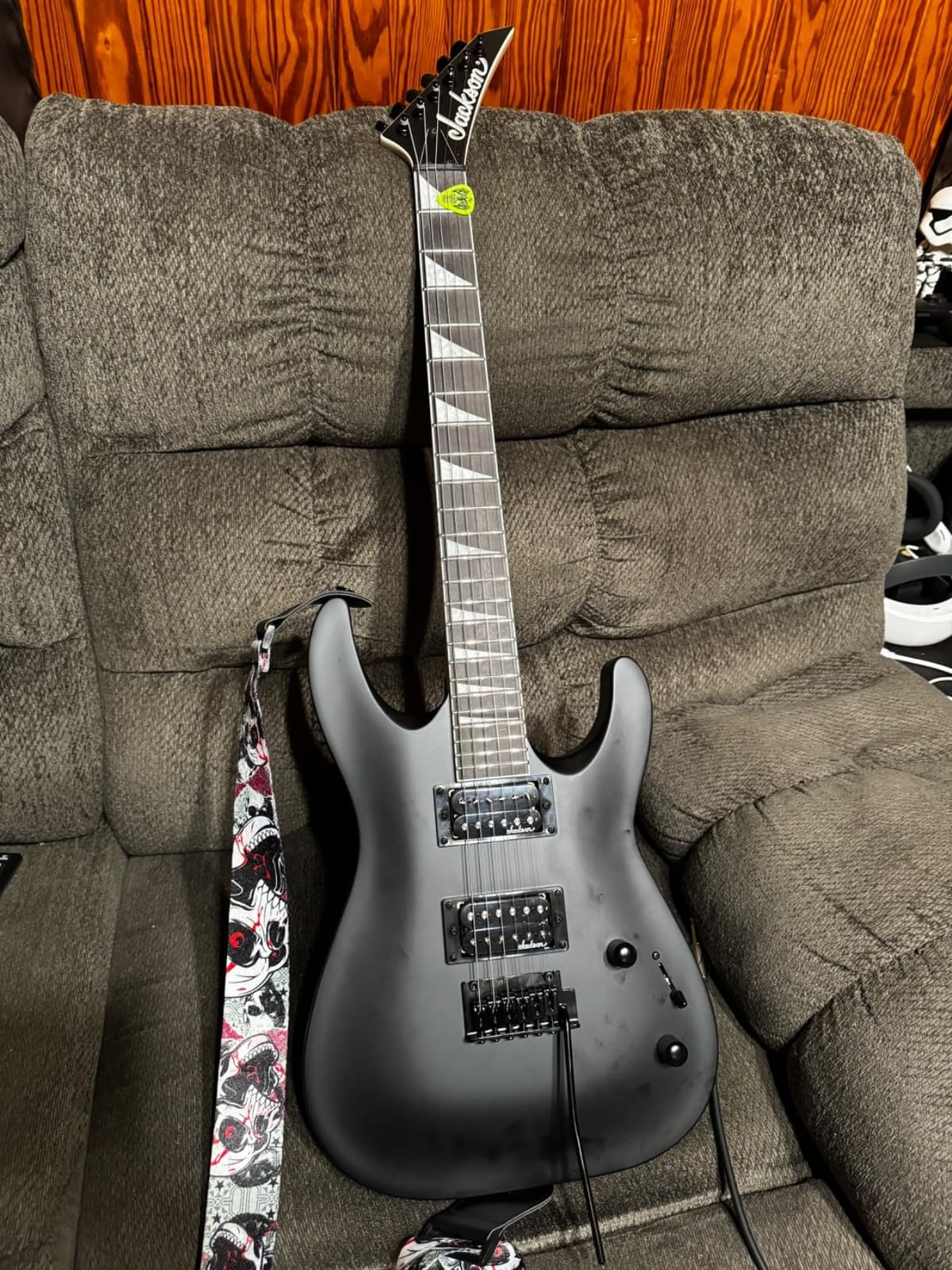
The JS22 DKA is the instrument we reached for when we wanted to play fast. Its compound-radius fingerboard is flatter in the low register and rounder higher up, which is exactly the shape that makes single-note lead work fast without punishing position shifts. Shred and progressive players on r/Guitar consistently point at Jackson and Ibanez RG-style shapes for this reason, and this is the affordable version of that idea.
It is also lighter than it looks. The listed weight comes in at 3990 grams, roughly 8.8 pounds, which is well under the heaviest instruments here despite the arched top and bound fingerboard adding material.
Aggressive Output Without a Maximum Gain Amp
The two humbuckers are tuned for high output and a tight low end. We ran this guitar into a small valve combo at moderate settings and still reached a saturated, compressed tone that sat well under a distorted rhythm guitar without needing a high-gain headroom.
The arched basswood body contributes a scooped, focused character rather than a big resonant bloom. Basswood is a lighter and less resonant tonewood than alder or mahogany, so do not expect the wood to add much on its own. The pickups are doing the work here.
Where the Hardware Falls Short
Factory tuning machines are the weak link, and owners say so repeatedly. They held tuning well enough for clean and moderate rhythm playing, but once the tremolo got used, stability degraded noticeably. Swapping in locking tuners was described by one reviewer as a night-and-day improvement, and after a week of testing we would agree.
The tremolo arm socket is also loose in the box, and the arm can work its way out during playing. It is a two-minute fix, but you should not have to do it on day one. The two-year warranty is a small reassurance that the brand is behind the instrument.
For Whom This Guitar Is Right
This is for a lead player who spends time in the upper frets, whether that means solos, tapping or fast pentatonic runs. The neck is the reason, and it is the most distinctive neck on this list for players who already know what they like.
It suits metal and hard rock well, and it works for blues if you like a modern, fast feel. For a guitarist who mostly plays open chords and sings, the neck is thinner than necessary and you will not get much use from it.
Limitations to Consider
The satin black finish shows dust and light marks quickly, which matters more for stage appearance than for playability but will bother players who treat their instrument carefully. The 2-point fulcrum tremolo is stable, not bulletproof, and it will need a light touch in a loud band.
Factor in the tuner upgrade before you form an opinion. The guitar itself is good; the accessory that comes with it is the limitation.
4. Ibanez GIO Series GRG121DX – Best for Hard Rock Riffs and Drop Tunings
- ✓Holds tuning unusually well for the price even in drop tunings
- ✓Dual humbuckers good enough that owners skip pickup upgrades
- ✓Comfortable cutaway access to 24 frets
- ✓Action and intonation arrive close to factory set
- ✕Neck and frets feel cheap and cap the upgrade path
- ✕Fret ends can need buffing and the truss rod often needs adjusting
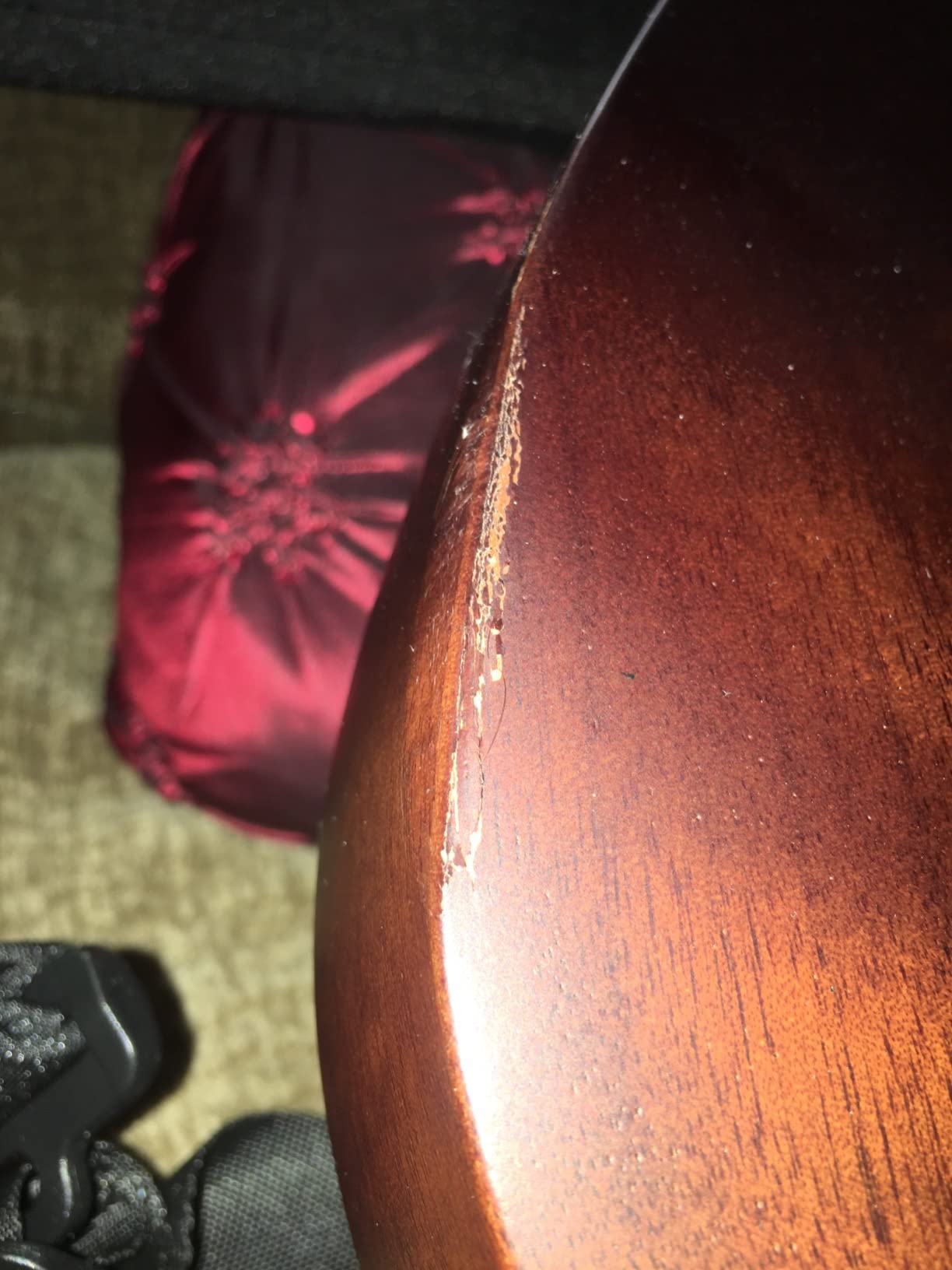
- ✕Finish is more matte than the listing photos suggest
Okoume body, mahogany back
Maple neck, purpleheart board
24 jumbo frets
Dual humbuckers, 5-way
F106 hardtail, 8.5 lb
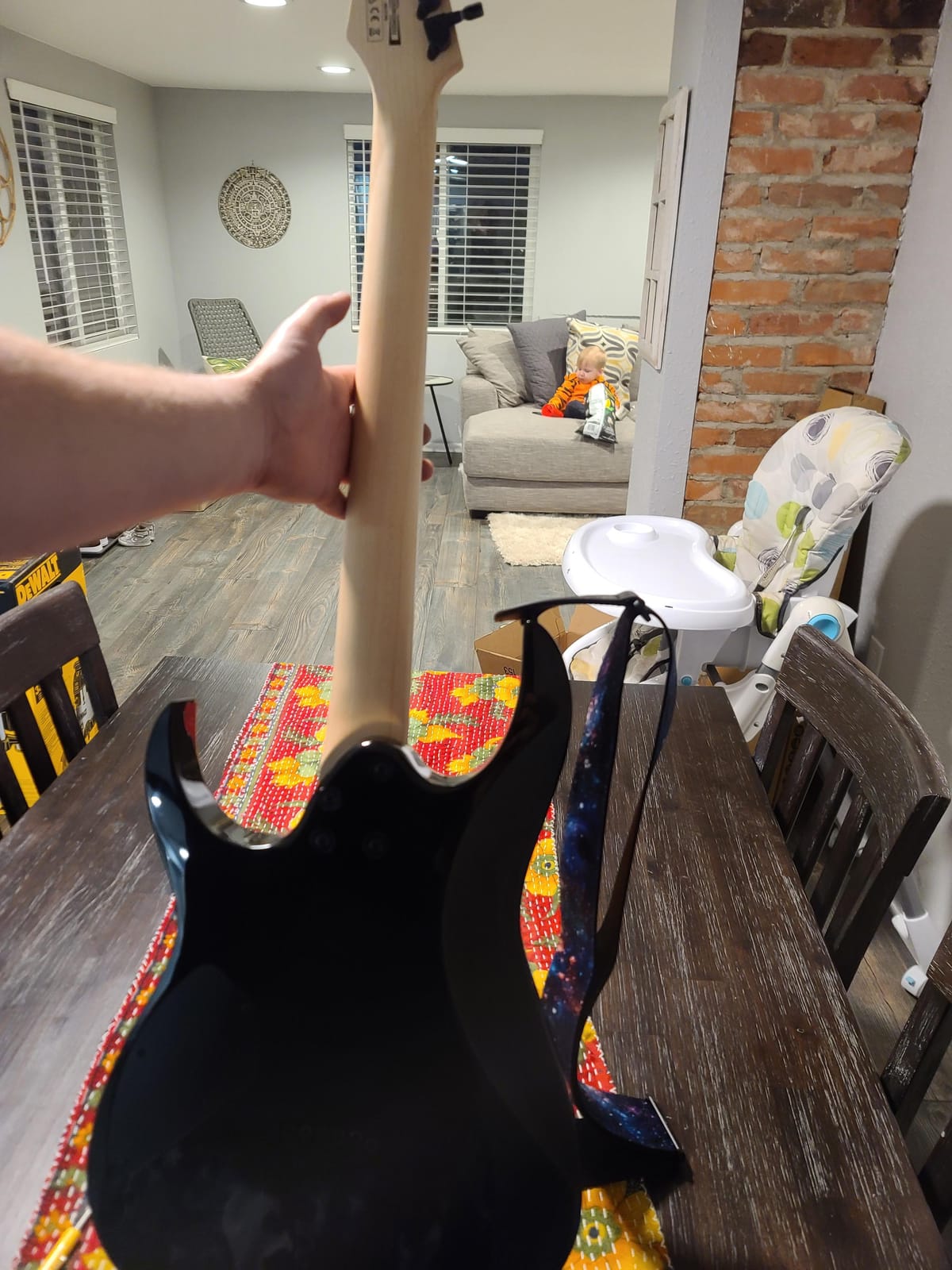
The GRG121DX is the odd one out in this list, and that is exactly why it earns a place. It is the only hardtail guitar among the humbucker-equipped models here, and that single design decision changes how it behaves in a band. It held tuning better than anything else we tested when we moved it into drop tunings and back without a single restring.
For hard rock, where a lot of modern riffs sit below standard E, that reliability is worth more than a vibrato bridge. Players on r/Guitar repeatedly recommend the Ibanez GRG series as a sensible humbucker-equipped starting point, and this model is where that recommendation is easiest to justify.
The Hardtail Advantage in a Loud Room
Every tremolo guitar in this roundup lost some tuning when pushed hard. The F106 fixed bridge has no moving parts to shift string tension, so once it is set, it stays set. If you tune down, play a set, and tune back up, this is the guitar you can do that on without thinking about it.
The trade is obvious. You give up vibrato entirely. For a rhythm-focused hard rock player that is rarely a real loss, and it removes an entire category of maintenance from your life.
Jumbo Frets and 24-Fret Access
The 24 frets with cutaway access extend the range into the upper register without the fretting-hand stretch of a 22-fret instrument. Jumbo frets are noticeably easier to fret and produce a slightly rounder, warmer note than medium frets, which suits a thick rock tone.
The purpleheart fingerboard is harder and more durable than rosewood and feels slightly slicker when dry. Most players adapt within a session. Sweepers on forums like it for a fast feel, though a lot of first-time buyers will find rosewood more familiar.
Setup Reality and Build Tier
This guitar arrived with action and intonation close to the factory setting, which saved us the setup cost others needed. That is worth something real, because a professional setup is one of the first costs a new owner has to budget for and many people do not budget for it at all.
The limitation is the neck and fret material. They feel fine for a starter or a practice instrument, and the action was consistent, but they are the part of the build that limits how far you can take the guitar later. The consistent criticism in reviews is that the cheap neck and frets cap the long-term upgrade path, and it is fair.
For Whom This Guitar Is Right
This suits a rhythm player who tunes down, plays a lot of power chords, and would rather have a guitar that stays in tune than one with a vibrato bridge. The okoume body paired with a mahogany top also gives it a warmer, thicker midrange than the basswood instruments here.
It is a good first electric guitar for hard rock specifically, and a good second guitar for someone who already owns a tremolo model and wants the opposite.
Limitations to Consider
Fret ends sometimes need buffing and the truss rod often needs adjustment out of the box. Neither is serious, but both mean you should not gig it the same afternoon it arrives without checking it over.
The metallic gray sunburst finish photographs as more matte than the listing images suggest, and there is no vibrato if your style depends on it. Weight at 8.5 pounds is moderate rather than light.
5. Yamaha Pacifica PAC112V – The Most Versatile Guitar Here
- ✓H-S-S with coil tap covers clean
- ✓rhythm and lead rock
- ✓Rock-solid Yamaha build quality at this tier
- ✓Bolt-on maple neck and vintage tremolo feel refined
- ✓Rosewood fingerboard suits blues and rock playing
- ✕Tremolo stability trails a hardtail or locking system
- ✕Usually arrives without a gig bag or case
Alder body, maple bolt-on neck
Rosewood fingerboard
H-S-S with 5-way coil tap
Vintage tremolo
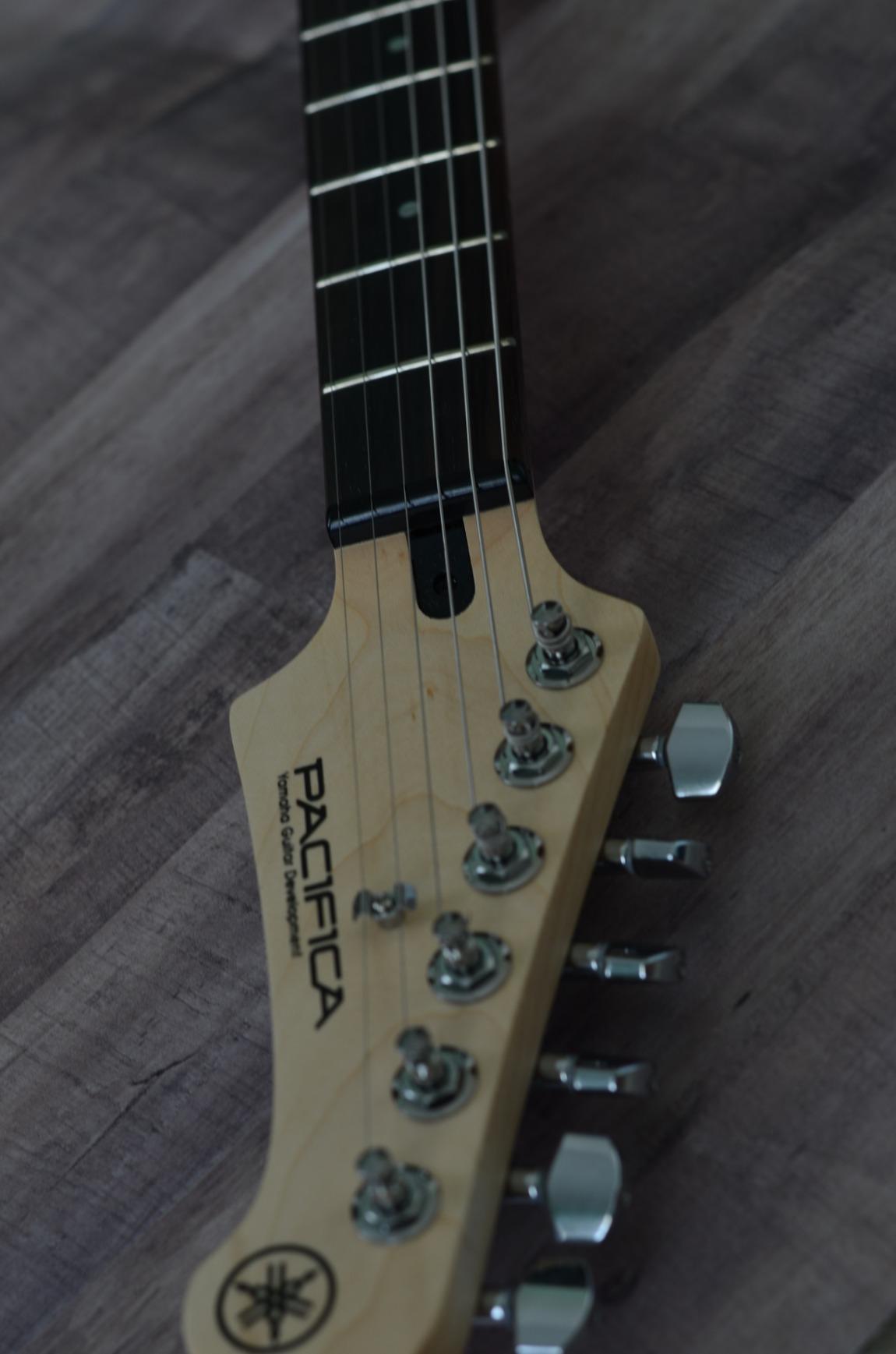
The Pacifica PAC112V is the answer for anyone who asked whether one guitar can cover clean, crunch and high-gain without a large pedalboard. The H-S-S configuration with a 5-way switch that includes a coil tap gives you an unusually wide range of voices from a single instrument, and the alder body keeps the low end tidy when you push the bridge humbucker hard.
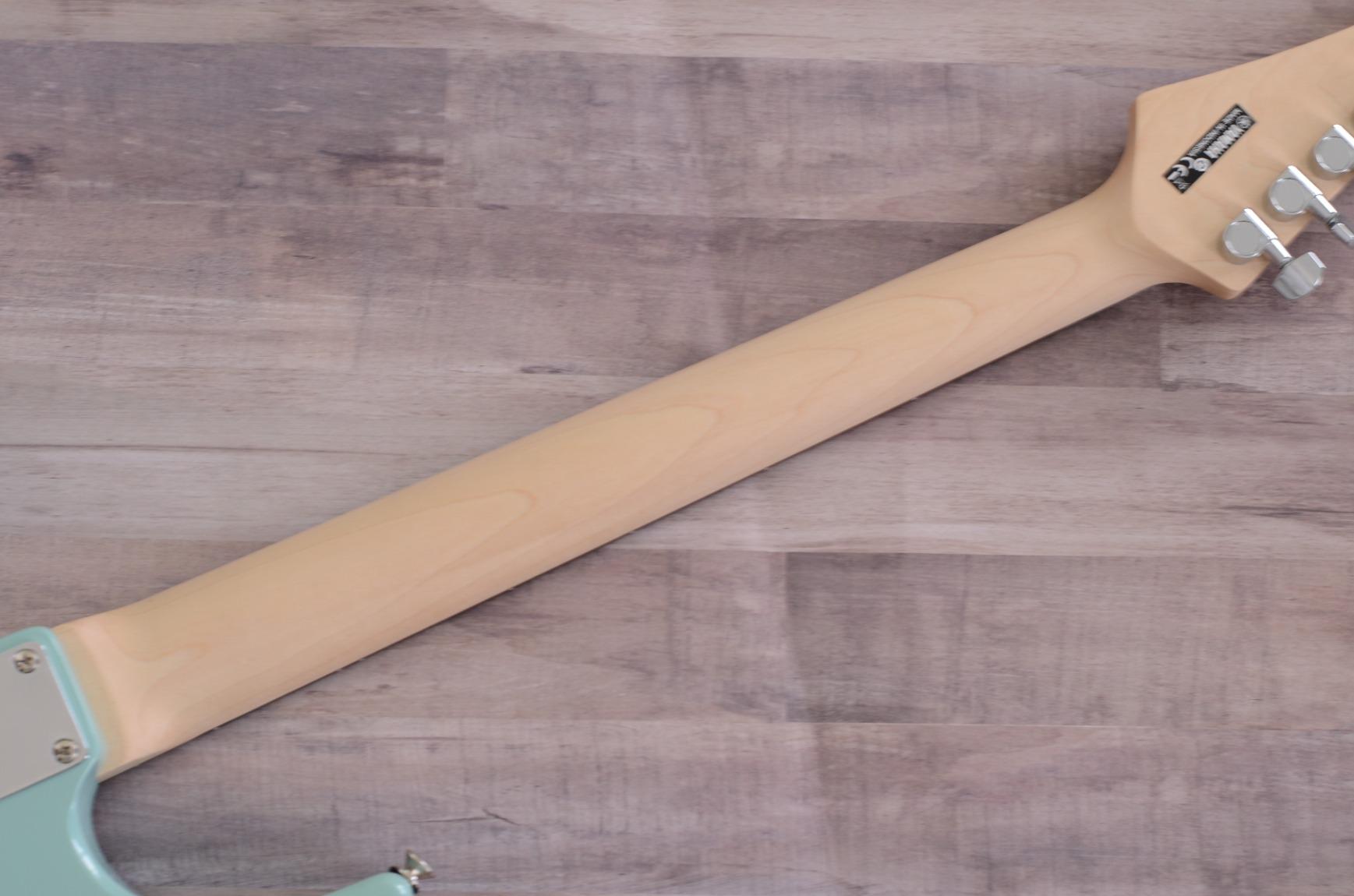
At 3 kilograms, roughly 6.6 pounds, it is among the lightest instruments in this roundup. Yamaha build consistency is the quiet reason this guitar keeps a 4.6 average across 435 reviews, and it is the reason the Pacifica shows up so often in forum recommendations as a workhorse that covers rock, blues, pop and light metal.
What the Coil Tap Actually Buys You
A coil tap lets you partially deactivate one of the two coils in the bridge humbucker. The result is not a true single-coil sound, but it is thinner and clearer, and it gives you a usable texture in the middle of the 5-way selector that neither a plain H-S-S nor a full humbucker set can produce.
For rock players this is the difference between reaching for a boost pedal and simply moving a switch. It is the single most useful feature on this guitar and the one most likely to be under-used by a beginner, which is fine – it is there when you are ready for it.
Alder Body and Rosewood Board
Alder is the classic tonewood for a balanced, slightly scooped rhythm voice, and it is a sensible choice for rock because it stays defined when distorted instead of turning boomy. The rosewood fingerboard is the playing surface most players here will already know, and it needs no adjustment when you switch from almost any other guitar.
The maple bolt-on neck is firm and stable, and the combination of bolt-on construction with a vintage tremolo gives an articulation that feels more refined than the price suggests.
Where the Vintage Tremolo Limits You
The tremolo is the main handling limitation, and reviews say so directly. It is a smooth, well-behaved tremolo, but it will not hold pitch through an enthusiastic dive or a heavy string bend followed by a pull.
In a band setting at moderate gain, we had no complaints. Used as a dive-bomb machine, it would have disappointed us. If you want that, the Jackson King V in this list is the tool for the job.
For Whom This Guitar Is Right
This suits a gigging player covering several styles in one set, a songwriter who needs clean and dirty at the same time, and anyone who wants a beginner guitar that will not be outgrown in a year. It also happens to be one of the lighter instruments here, which helps if you spend long hours on the instrument.
If you play exclusively in one style and want the most aggressive possible instrument, this is not that guitar. It is, however, the one most likely to age well as a first serious electric.
Limitations to Consider
It usually arrives without a gig bag or case, so add that to the budget. The tremolo is a limitation rather than a fault, and anyone who does not use vibrato will simply never touch it.
One year of manufacturer warranty is among the shortest in this group, which is worth weighing against the two-year coverage on the Jacksons and the Squier.
6. Jackson JS Series Dinky JS11 – Low-Cost Route to Metal Tone
- ✓High-output humbuckers deliver metal-appropriate power
- ✓Smooth fret edges and smooth action out of the box
- ✓Comfortable neck that suits fast fretboard work
- ✓Two-year warranty is generous at this tier
- ✕Lowest rating in our group with a higher share of one-star reviews
- ✕Non-locking tremolo shifts tuning after wammi-bar use
- ✕Some units report scratchy pots and audible pickup hum
Basswood body, poplar back
Amaranth fingerboard
2 humbuckers
Maple neck, 25.5 scale
Tremolo, 2-year warranty
We are including the JS11 because the alternatives at this money are thin, not because it is the best guitar we tested. Its 4.3 average across 223 reviews is the lowest in this group, and the gap between the four and five-star share and the one-star share is wider here than on any other instrument on the list. We think you deserve to know that before you buy it.
What the JS11 does have is a 25.5 inch scale, high-output humbuckers, a two-year warranty and a neck that several owners describe as more than they expected for the money. Those are real things, and for a player on a strict budget who wants metal-appropriate output, they are enough.
Output and Neck Shape That Suit Fast Playing
The humbuckers are hot and focused, and they produced a saturated tone in our test amp that sat well against distorted rhythm. They also handled clean tones without collapsing, which surprised us a little at this level and which is why we included this model at all.
The maple neck with an amaranth fingerboard is a fast shape, and the 25.5 inch scale gives enough string length for bends and wide vibrato. Fret edges were smooth and the action was set well enough to play immediately, which is not guaranteed at this tier.
The Electronics Are the Weak Link
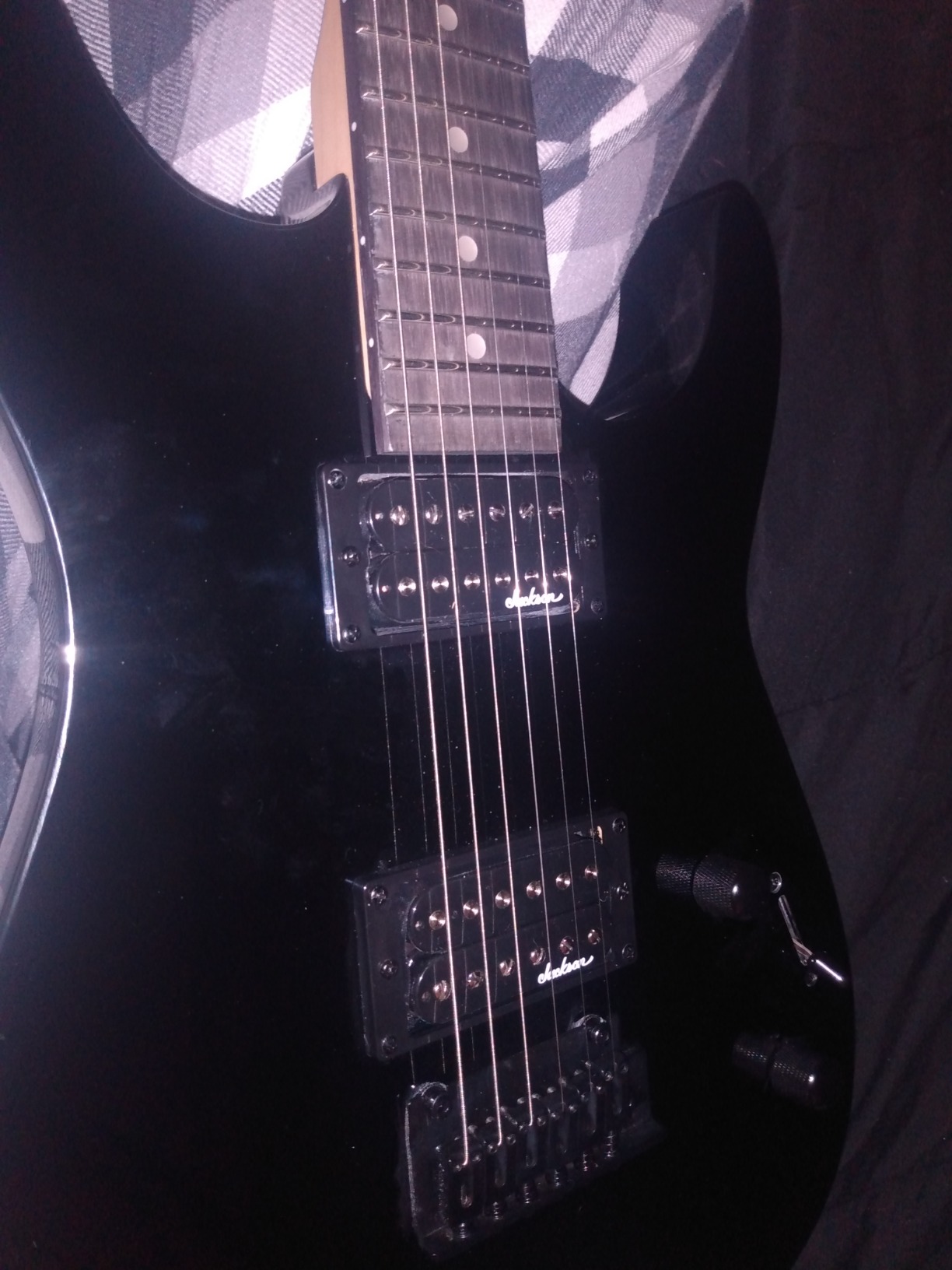
The most common negative reports cluster around the electronics: scratchy volume and tone pots, and audible hum from the pickups. If you get one, check it before you get attached to it, because a noisy output jack and pot combination is the first thing that will put you off a guitar that otherwise works fine.
The tremolo has no locking nut, so tuning shifts after wammi-bar use. That is not a defect, it is the design, but in a band it is a real limitation that the King V solves at a higher tier.
Occasional Cosmetic Issues
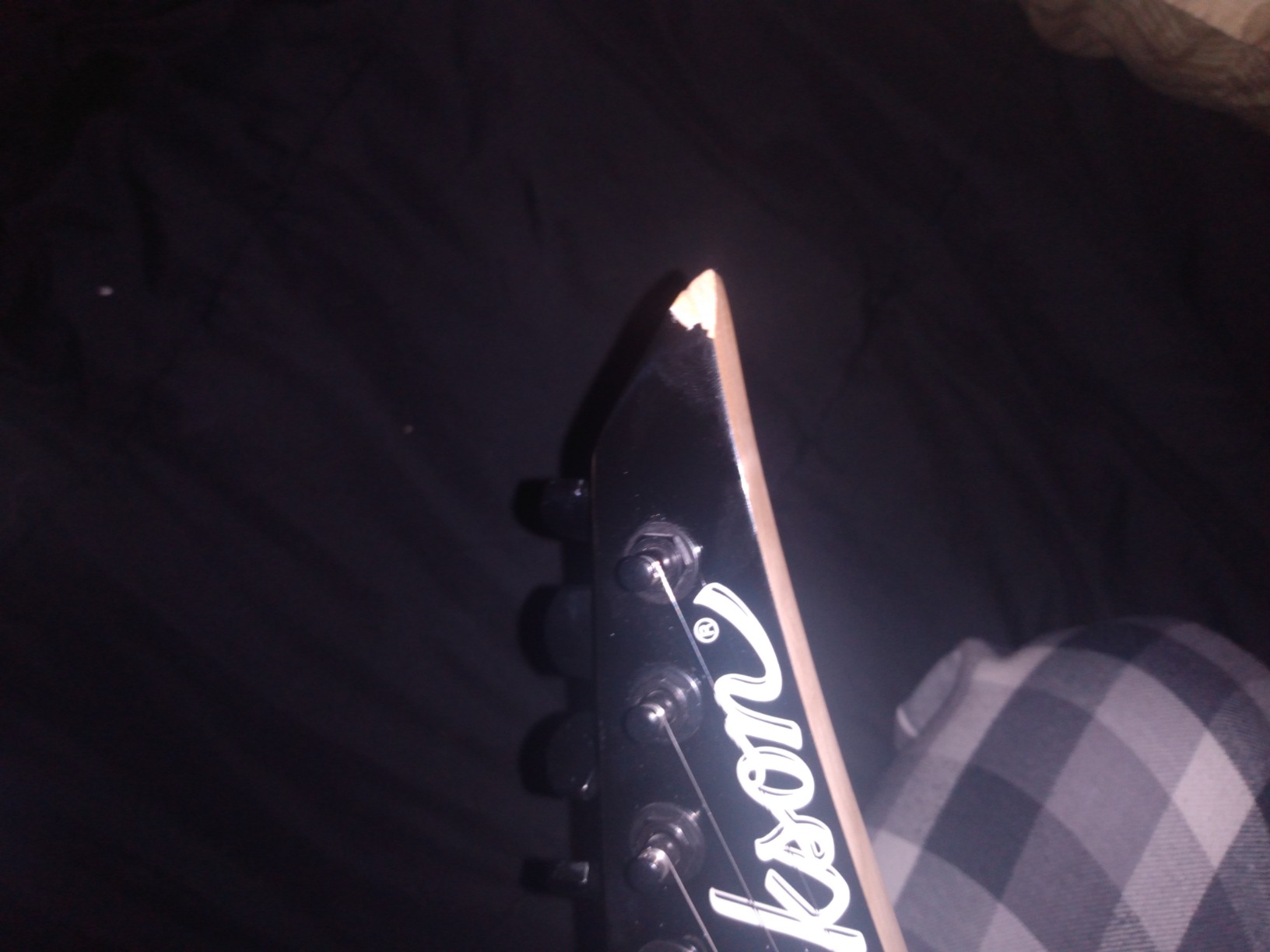
Some examples show minor fret buzz and small chips on the headstock finish. The basswood body with a poplar back keeps the weight at a listed 3990 grams, roughly 8.8 pounds, which is reasonable for the size of the instrument.
These are the kinds of small things that a slightly more expensive model in the same family tends to avoid. We would not call them dealbreakers, but we would call them reasons to inspect the guitar carefully on arrival.
For Whom This Guitar Is Right
This is for someone on a very tight budget who wants a humbucker-equipped metal guitar and plans to do a first upgrade early. A set of tuners and a set of pickups would transform it, and the platform underneath is sound enough to be worth upgrading.
It is not the right choice for someone who wants one instrument and expects it to be flawless, or for a player who is sensitive to electronics noise.
Limitations to Consider
The two-year warranty is a genuine plus and stands out in this group. The rating spread and the electronics complaints are the real limitations, and both are consistent enough in reviews that you should buy with your eyes open.
If your budget stretches even slightly, the Ibanez GRX20Z or the Jackson JS22 in this list solves most of these problems for a modest step up.
7. Jackson JS Series King V JS32 – Best for Dive Bombs and Extremes
- ✓Double-locking tremolo holds tuning through extreme pitch changes
- ✓Aggressive high-output humbuckers suit shred and hard rock
- ✓Sharp King V body is stage-ready and visually distinctive
- ✕Double-locking tremolo has a real string-change learning curve
- ✕Heavier body than the Dinky JS models
- ✕Tone leans hard toward high gain and suits clean and jazz styles poorly
Poplar body, maple top
Amaranth fingerboard
2 humbuckers
Licensed Floyd Rose tremolo
2-year warranty
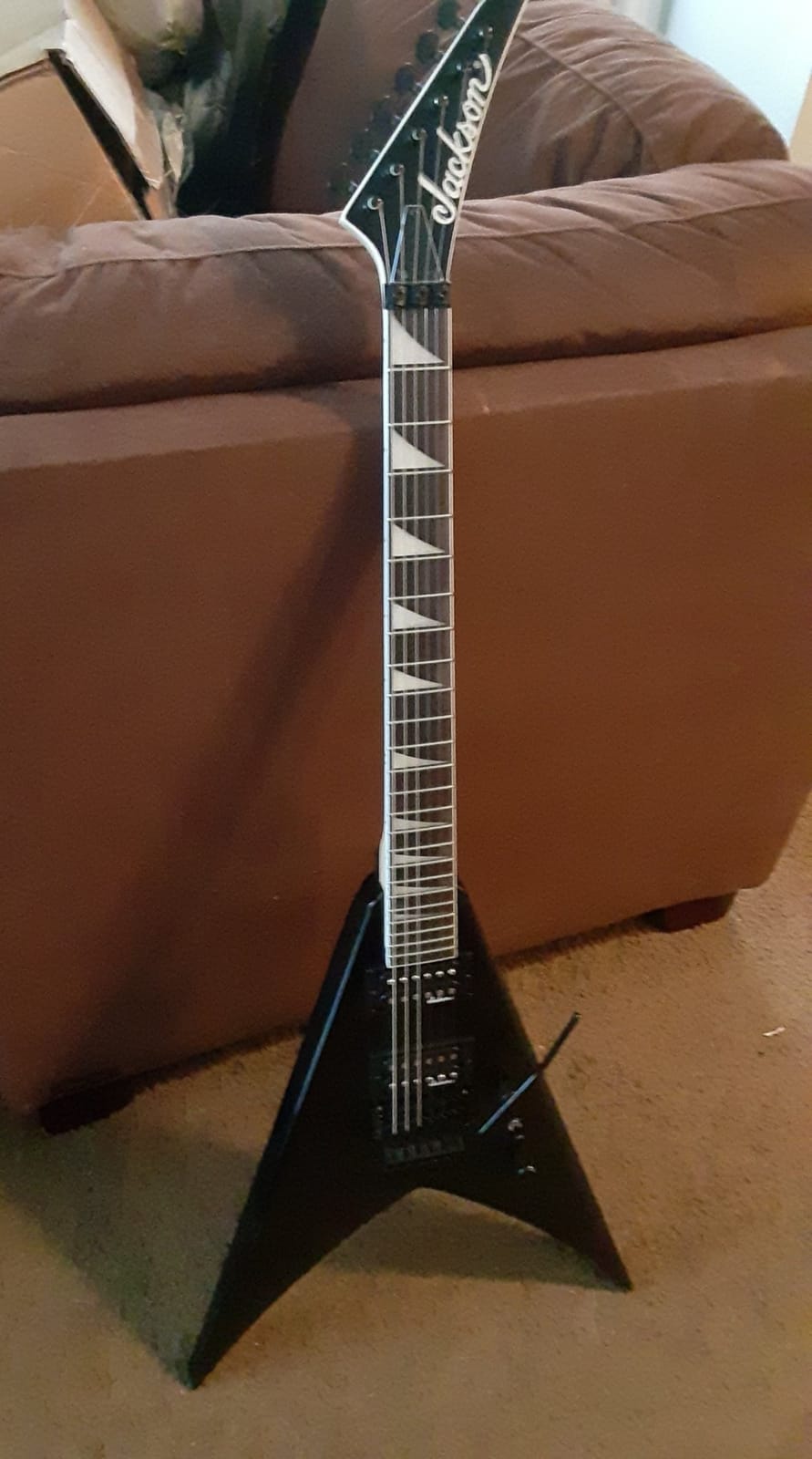
The King V JS32 is one of only two instruments here with a Floyd Rose double-locking tremolo, and that single component changes what the guitar can do. The bridge and nut clamp the strings at both ends, so pitch changes do not pull the tuning around. We pulled it down hard, held it, and brought it back, and it landed where it started.
This is not a first-guitar bridge, and we want to be clear about that. Forum players widely warn beginners away from double-locking tremolos because of the string-change procedure and the setup cost that follows. What it does give a player is the ability to treat pitch as an instrument, and for metal and shred work that is worth the maintenance.
What Double-Locking Actually Buys
On a conventional tremolo, every dive pulls string tension across the nut and the tuning walks. On a double-locking system the string is clamped at the nut as well as the bridge, so tension never changes. That is the whole reason for the extra hardware, and it is why the King V behaves so differently from the Pacifica or the T106 in this roundup.
The cost is a longer string change and a steeper learning curve. You need a specific winding order, you need to clamp or measure at the nut after every restring, and the first time you do it wrong the guitar will be badly out of tune. Budget for a setup after the first string change, and treat the tremolo as a skill rather than an accessory.
A Purpose-Built High-Gain Voice
The two humbuckers are hot and tightly focused, and they are aimed squarely at hard rock and metal. The poplar body with a maple top sits comfortably in a seated playing position, which matters for long lead sections.
Where it is not aimed is clean and jazz. The review consensus is consistent: the tone leans heavily toward high gain, and players who want chimey clean sounds find little reason to keep it. The King V body shape is a stage statement in the same way, which is a matter of taste you should know about before ordering.
A Note on the Listed Weight
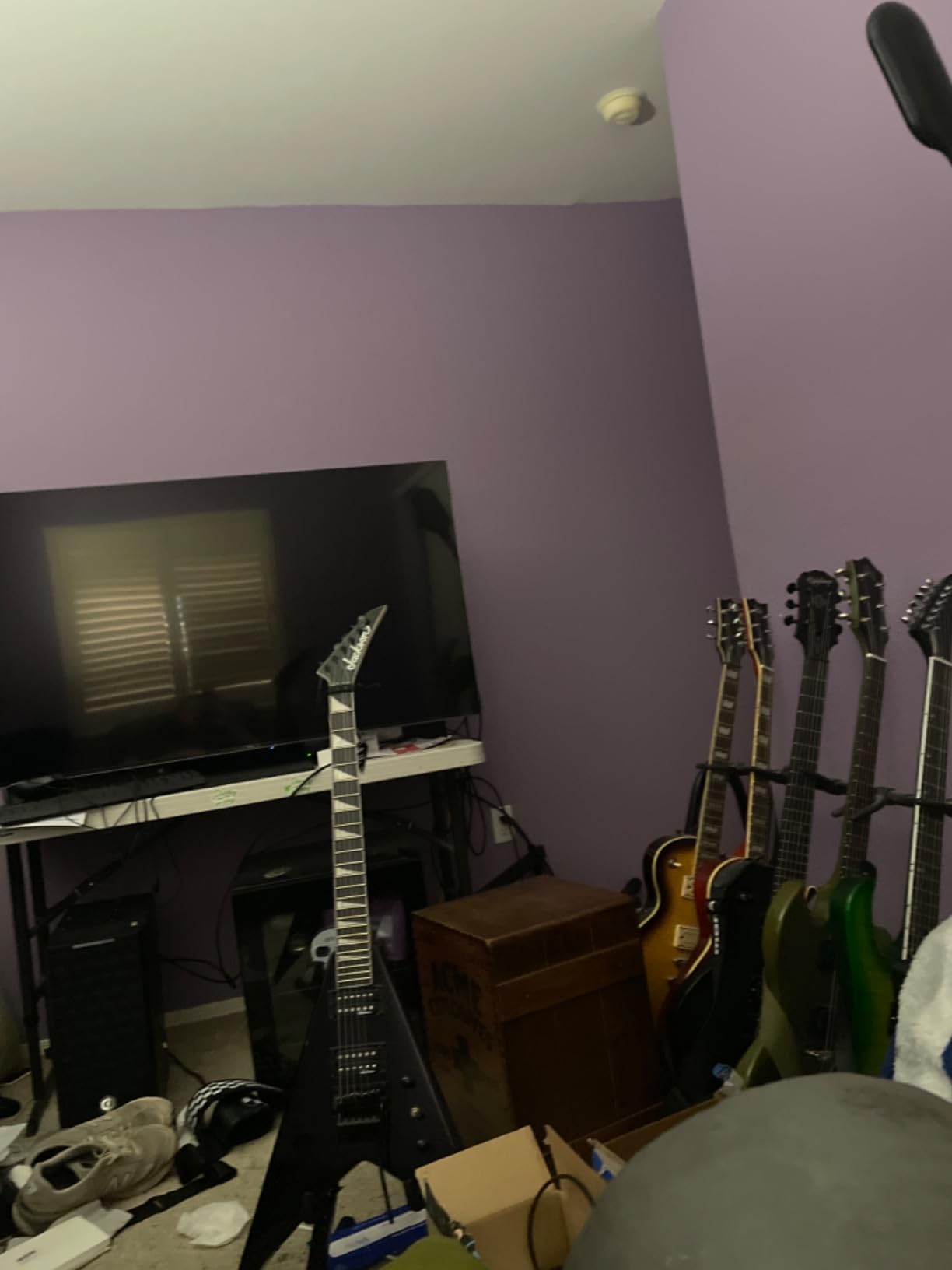
The listing weight figure for this model is not consistent with a solid-body electric guitar, so treat the weight as unverified. Play one in a shop if you are sensitive to instrument weight, since the King V is physically larger than the Dinky models in this list.
For Whom This Guitar Is Right
This suits a player who has already got the fundamentals down and wants to explore extreme pitch, dive bombs, sweep picking and the kind of aggressive lead work the hardware was designed for. A two-year warranty covers the parts most likely to give you trouble.
It also suits a guitarist who already owns a hardtail or standard-tremolo instrument and wants a deliberately different second guitar for a specific style.
Limitations to Consider
The maintenance overhead is the main cost, both in money and in attention. It is heavier than the Dinky models, and the tone is not a good fit for clean, funk or jazz playing.
If you are buying your first electric guitar, choose one of the humbucker hardtails or standard-tremolo models in this list instead, and come back to a double-locking instrument once you know you want one.
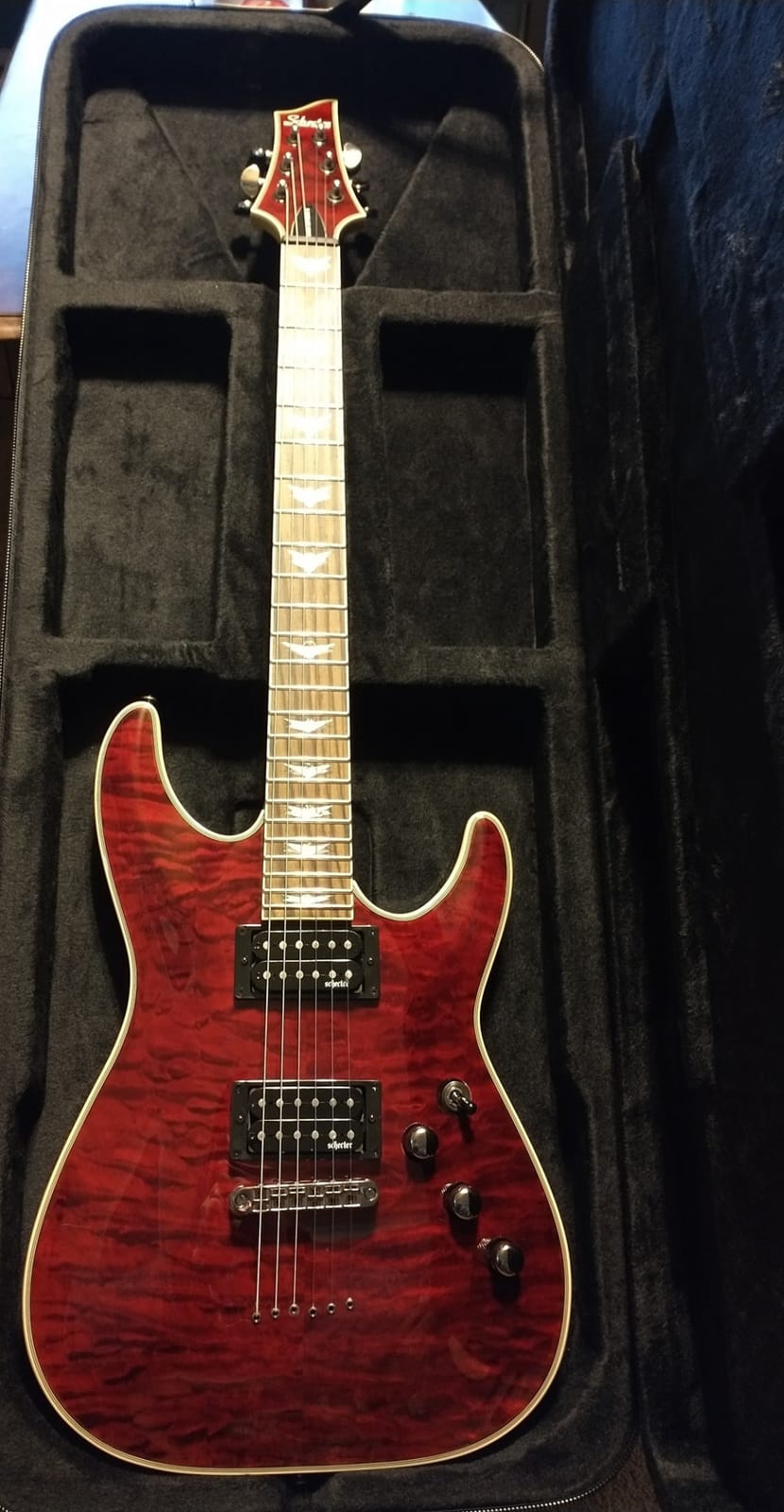
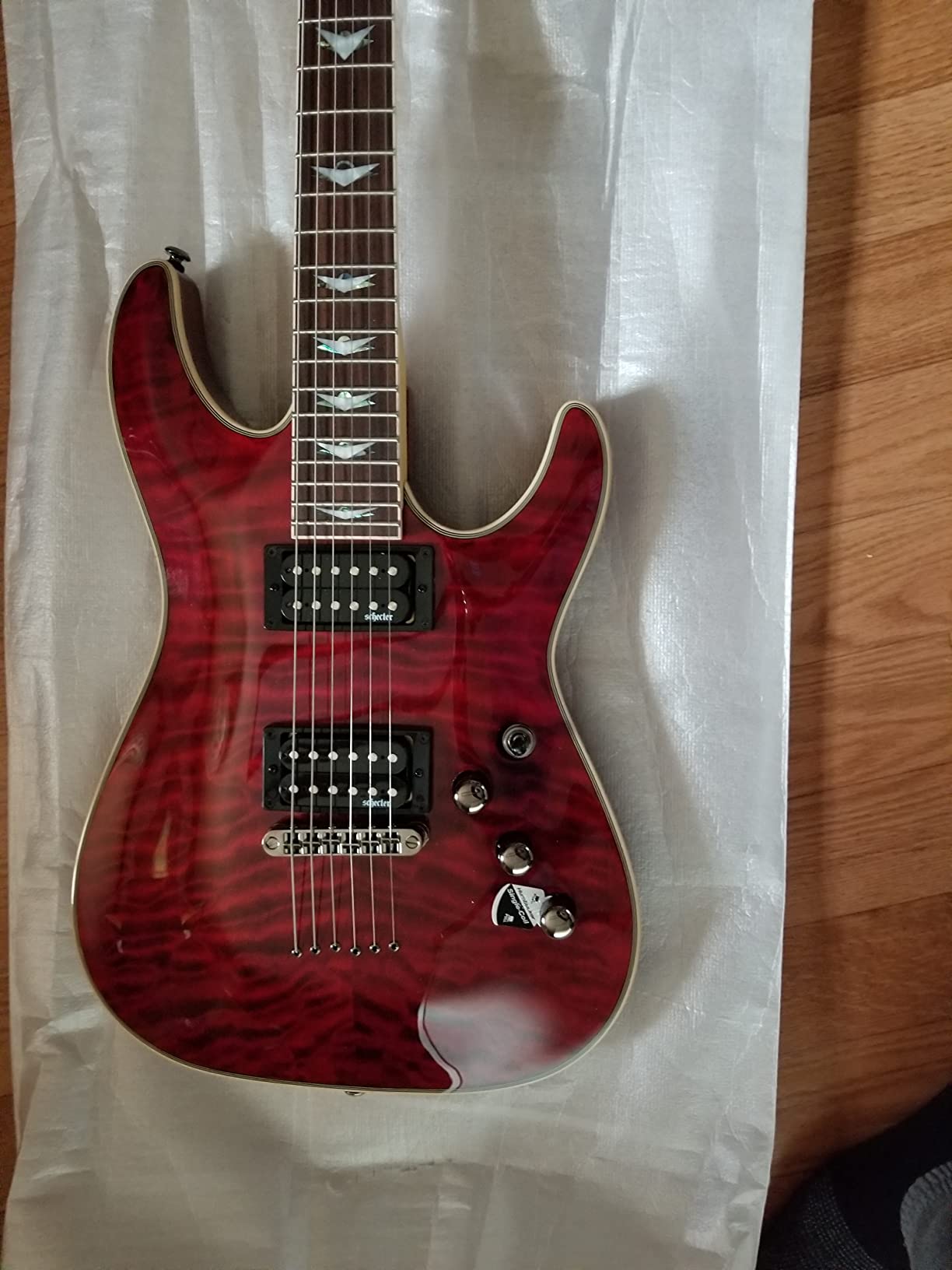
8. Schecter Omen Extreme-6 – Best for Classic Rock Rhythm Work
- ✓Very smooth neck that reviewers compare favourably to costlier instruments
- ✓Humbuckers handle distortion and gain-heavy rock cleanly
- ✓Tune-O-Matic bridge gives good sustain and stable tuning
- ✓Limited lifetime warranty
- ✓Jumbo frets and fast action suit lead and shred work
- ✕Upper fret access is weaker than a superstrat
- ✕Neck-heavy balance compared with the Ibanez and Jackson models
- ✕Coil-split tone is flatter than a true single-coil Strat sound
Mahogany body, maple top
Maple neck, rosewood board
2 humbuckers with coil split
Tune-O-Matic bridge
Lifetime warranty
The Schecter Omen Extreme-6 is the oldest-looking guitar in this roundup and the one that most resembles a vintage single-cutaway, which is exactly what makes it interesting for classic rock. The mahogany body with a maple top and a Tune-O-Matic bridge gives it a thick, woody midrange that sits under a band without asking for much gain.
Two things stand out. The neck is described by owners as smoother than the price suggests, frequently compared to more expensive instruments. And the warranty is limited lifetime, among the longest coverage of anything on this list, which is a real consideration if you plan to keep a guitar for decades.
Mahogany Midrange and What It Does Under Gain
Mahogany is a dense, midrange-focused wood, and that is precisely the frequency range rock lives in. Where alder scoops and basswood thins out, this body thickens. Power chords had a rounded, woody edge that sat well with a tube-style amp at moderate settings.
The maple top adds a little brightness and attack on top of that foundation, so single notes cut through without sounding thin. The trade is weight, and we will come back to that below.
The Tune-O-Matic Bridge and Sustain
The Tune-O-Matic is a fixed bridge with individual saddles, which means tuning stability is a function of string length and setup rather than moving hardware. Sustain was excellent in our testing, with open chords ringing noticeably longer than on the tremolo-equipped guitars here.
Because the bridge is fixed, there is no vibrato at all. For a rhythm-focused classic rock player that is rarely a complaint, and for many players chasing an older rhythm-guitar sound it is actually more authentic than a modern tremolo.
Coil Split and Its Limits
Both humbuckers can be coil-split, which halves their output and thins the signal. It is useful for getting out of a dense arrangement, and the switch is a welcome addition at this level.
Be realistic about the result though. A coil-split humbucker is not a Stratocaster single-coil, and reviewers consistently describe the split tone as flatter and less articulate. If a chimey clean sound is what you are after, the Squier Debut Strat in this list is the instrument that delivers it.
For Whom This Guitar Is Right
This suits a classic rock, blues-rock and hard rock player who wants a big rhythm sound and does not care about vibrato. Players who return to Led Zeppelin, AC/DC and early Fleetwood Mac are playing exactly the register this body produces naturally.
The jumbo frets and fast action also make it a legitimate lead instrument, so you are not choosing between rhythm and lead the way you would with a strictly traditional single-cutaway.
Limitations to Consider
At 4540 grams, roughly 10 pounds, this is one of the heavier guitars here, and reviewers note it is neck-heavy compared with the lighter Ibanez and Jackson models. If you have back or shoulder issues, the weight fatigue players describe on forums is a genuine risk over a long set.
High fret access is also weaker than on a superstrat shape, some examples need truss rod and setup work before playing properly, and some arrive with unfinished fret ends.
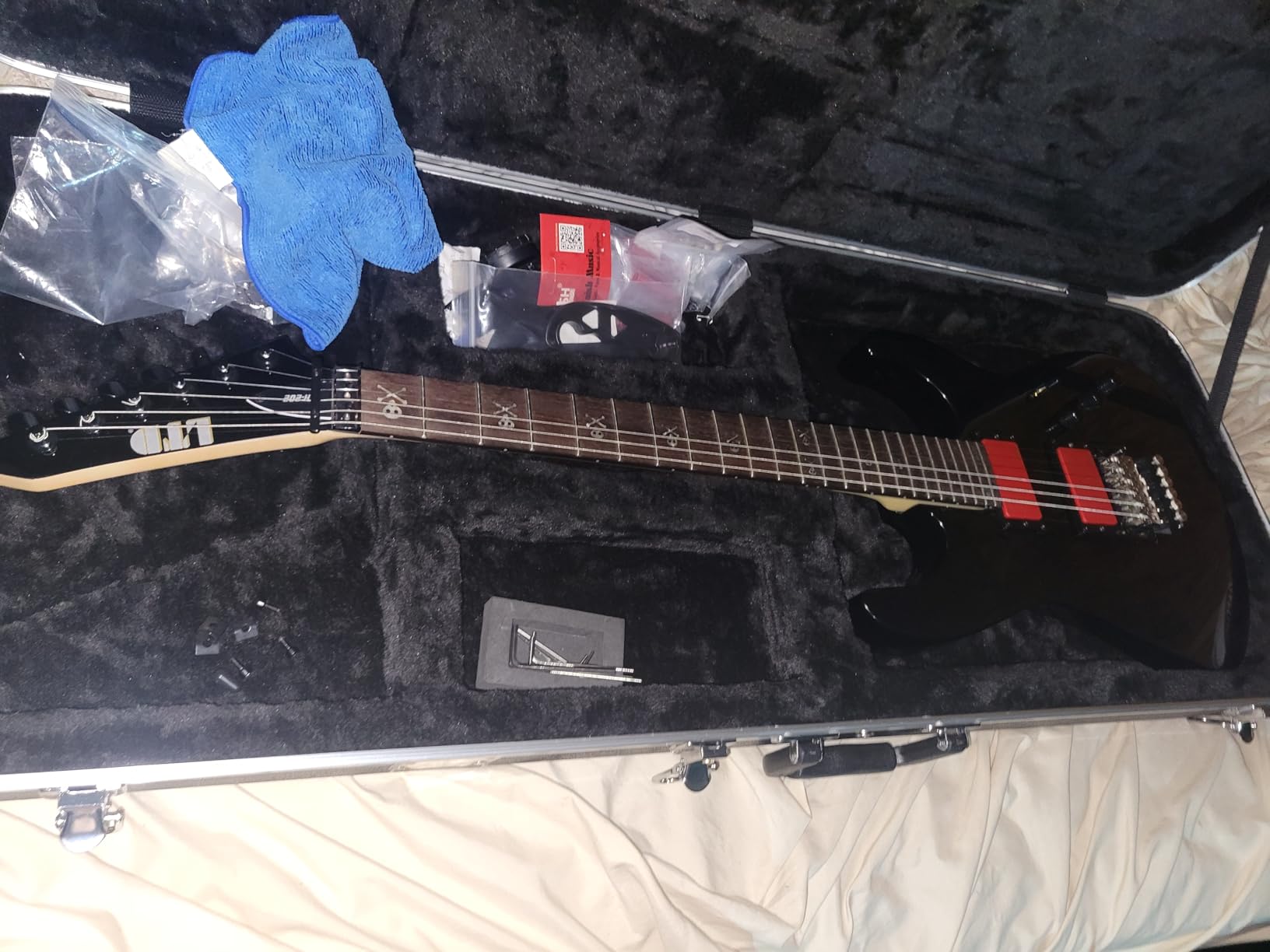
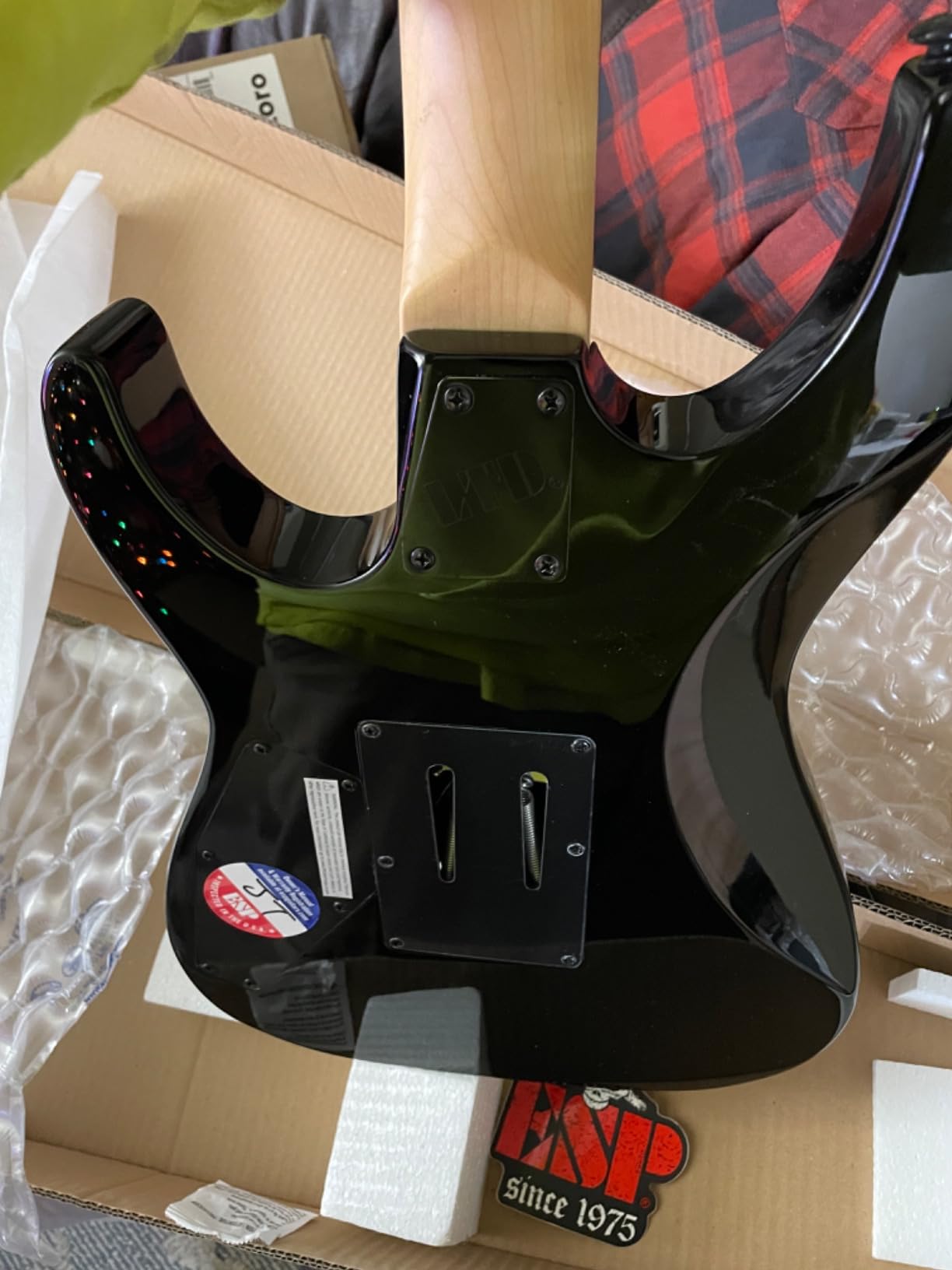
9. ESP LTD Kirk Hammett KH-202 – Best Signature Model for Shred Players
- ✓Dual humbuckers and Floyd Rose sustain the aggressive leads associated with metal
- ✓ESP LTD build and hardware a step below the artist series
- ✓Rosewood fingerboard and maple neck feel fast and familiar
- ✓Limited lifetime warranty
- ✕Basswood body is lighter and less resonant than mahogany or alder
- ✕Floyd Rose hardware adds string-change maintenance
- ✕Steep thin neck profile needs adjustment for players used to vintage shapes
Basswood body
Maple neck, rosewood board
2 humbuckers
Floyd Rose tremolo
Lifetime limited warranty
The KH-202 is a signature model without the signature price tag, and it has the highest five-star share of anything in this roundup at 4.6 across 117 reviews. It is built for a very specific player: someone who wants humbucker lead tone, a Floyd Rose tremolo and a thin, fast neck, and who is already playing metal well enough to know they want all three.
ESP LTD consistently puts its build quality and hardware a step below the ESP artist series while keeping the playing feel, and that is exactly what happens here. The maple neck with a rosewood fingerboard is fast and familiar in the way a shred player expects.
Signature Tone Without the Signature Invoice
Kirk Hammett is associated with a specific, recognisable lead voice: sustained, aggressive, with a percussive attack and very little noise. Dual humbuckers into a Floyd Rose system produce exactly that, and the reviews describe the KH-202 as delivering signature-style humbucker tone and tremolo performance without the artist-series cost.
Whether you want that specific sound or just want a rock guitar that projects a lead clearly over a distorted rhythm guitar is the real question, and both are answered well here.
The Floyd Rose Commitment
You get the pitch stability, the string locking and the ability to push the vibrato to extremes. You also get the maintenance overhead: longer string changes, a steeper learning curve, and a setup requirement after restringing.
The comparison with the Jackson King V in this list is worth making directly. Both use a Floyd Rose system and both serve the same purpose. The KH-202 gives you a thinner, faster neck and a more refined build; the King V gives you a more aggressive body shape and higher-output pickups.
Basswood and What You Give Up
The reviews flag the basswood body clearly, and we agree with the criticism. Basswood is lighter and less resonant than mahogany or alder, so the wood itself adds less sustain and body than the Schecter in this list.
At a listed 4.6 kilograms, roughly 10.1 pounds, this is among the heavier guitars here, and the double-locking bridge adds a little weight at the front of the body. If weight is a concern, the LTD is not the right instrument.
The Neck Profile Is Not for Everyone
The neck is thin and relatively steep, which is exactly right for fast lead playing and exactly wrong for someone who grew up on a vintage-style C profile. Players who are unsure of their preference should try the instrument before committing, because this is a change rather than a refinement.
The limited lifetime warranty is a genuine advantage over the one-year coverage on several instruments in this roundup, and it is part of why the LTD holds such a strong rating with so few reviews.
For Whom This Guitar Is Right
This suits a metal or shred player who wants a specific, sustained lead voice and a thin fast neck, and who already understands what a Floyd Rose system involves. The steep profile is the defining feature here, so play one before committing rather than buying on the name alone.
It suits a player who wants the ESP feel and hardware at a step below the artist series rather than at the top of the range.
Limitations to Consider
The basswood body is the main tonal limitation, the Floyd Rose adds ongoing maintenance, and the neck profile is steep enough that a player used to vintage shapes will need time to adjust. None of these are flaws, but all three are reasons to play it first.
If you are a beginner, the Jackson JS11 or the Ibanez GRX20Z give you high-output humbuckers without the commitment.
10. Fender Squier Debut Stratocaster HT HSS – Best for Beginners
- ✓Humbucker bridge pickup gives beginners a fuller
- ✓less noisy rock tone
- ✓Hardtail bridge holds tuning reliably with no tremolo wobble
- ✓Comfortable C-shaped neck and light body for new players
- ✓Fret level frequently called better than the price suggests
- ✓Includes Fender Play instructional videos
- ✕Satin paint chips and scratches easily compared with clear-coated finishes
- ✕Some units arrive with sharp or unfiled fret edges needing a quick buff
- ✕Slight fret buzz reported by a minority of owners
Select tonewood body
Maple C-shaped neck, laurel board
H-S-S with humbucker bridge
Hardtail bridge
2-year warranty
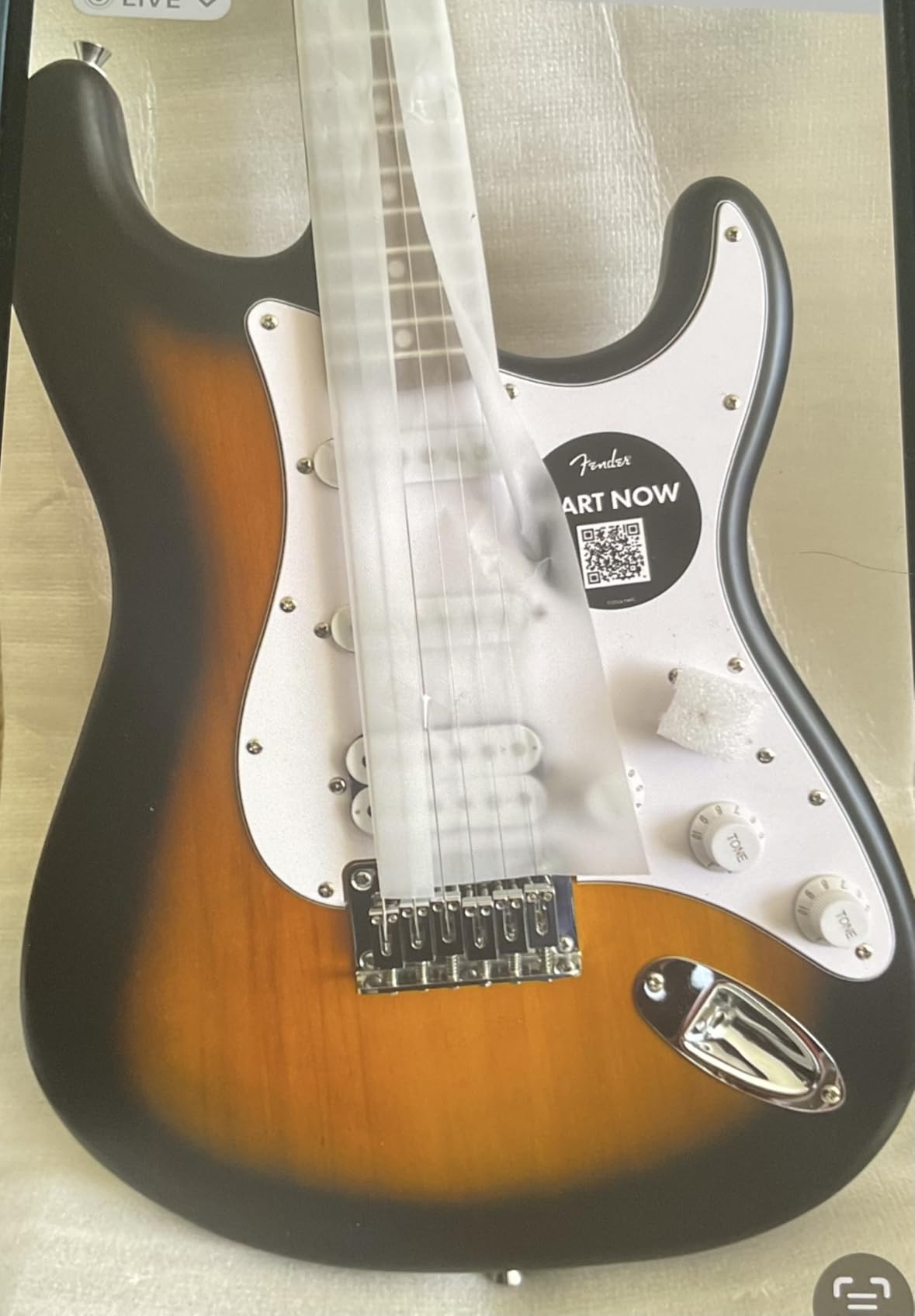
The Squier Debut Stratocaster HT is the most straightforward entry point into this entire list, and it is the one we would put in the hands of a child or a brand-new player with no plan beyond learning a few songs. It weighs very little, the C-shaped maple neck is the most beginner-appropriate shape Fender has ever made, and the H-S-S layout gives you a humbucker in the bridge when you are ready for it.
That last point is the whole argument for this guitar. A pure three-single-coil Stratocaster is a harder first instrument, because a beginner at low volume gets a thin, hum-prone sound and concludes the guitar is wrong. The Debut fixes that while keeping the Strat shape and the in-between positions that make the platform fun to grow into.
Humbucker Bridge Without Losing the Strat Character
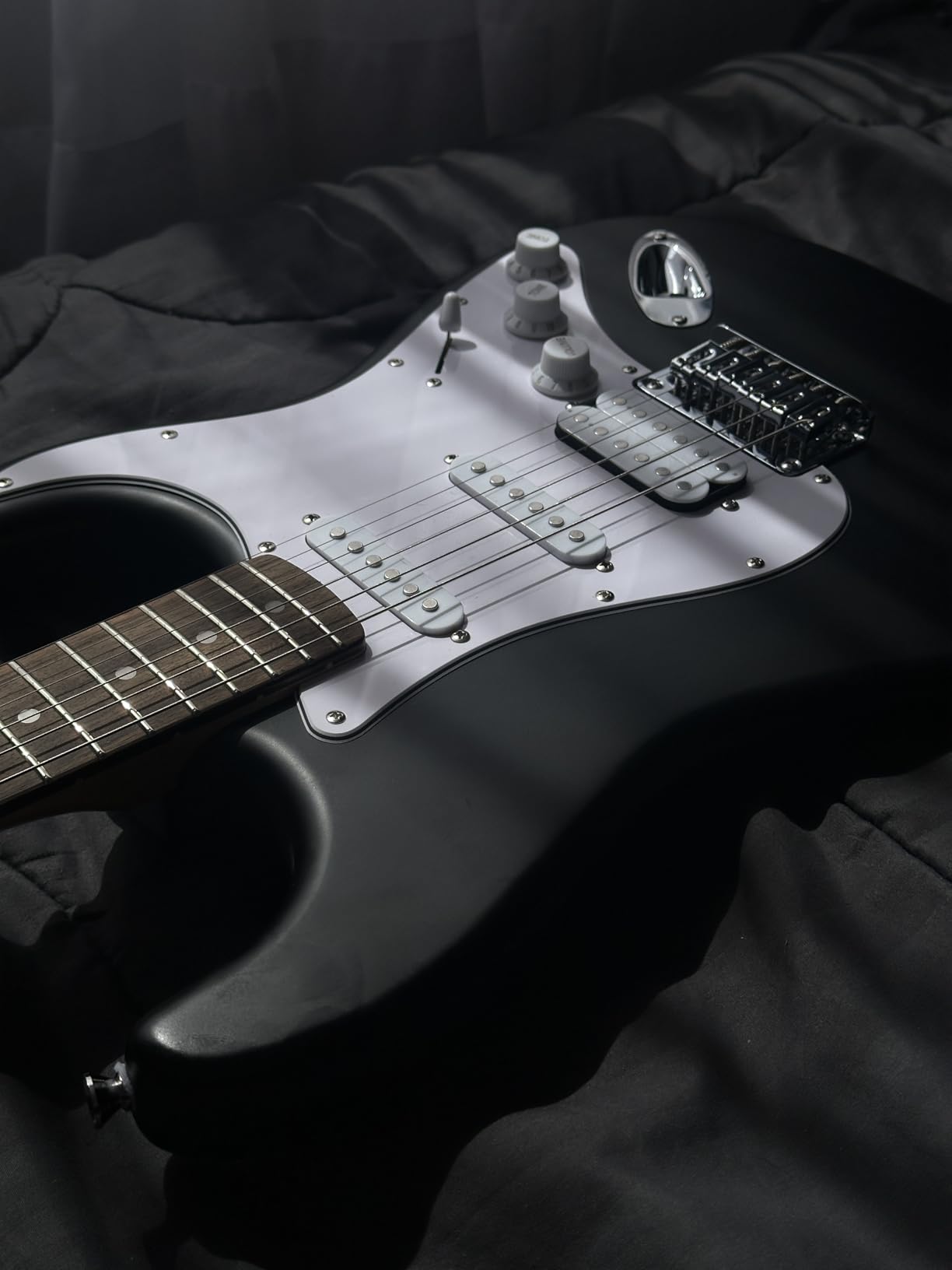
The bridge humbucker delivers a fuller, quieter rock tone than the single coils, so a beginner can reach a decent distorted sound without an expensive amplifier. Turn the selector to positions two and four and you get the bright, chimy single-coil voices that make a Strat shape distinctive in the first place.
That range is unusually wide for a first instrument, and it is why this guitar works as a rock starter alongside the dedicated humbucker models at a similar price.
Hardtail Stability and the C-Shaped Neck
The hardtail bridge means no tremolo wobble and no tuning drift, which removes the most common frustration for new players. You will not get vibrato, but you also will not lose a whole song to a guitar that will not hold pitch.
One caution for adults who already play: the C shape will feel thicker than what you are used to, and the body has no vibrato. The weight is not specified, so confirm it in person if that matters to you.
The same trade runs the other way for a first-timer. The C-shaped neck is the most forgiving shape on this list for small hands, and the light body means a young player can lift the instrument without help, which is exactly the audience this guitar is built for.
Build Quality: Better Than the Price, With Caveats
Technicians reviewing this guitar called the setup genuinely serviceable, and owners frequently praised the fret level as better than the price suggests. It arrived in playable condition for us without a truss rod adjustment.
The caveats are real though. The satin paint chips and scratches easily compared with a clear-coated finish, and some examples arrive with sharp or unfiled fret edges that need a quick buff before first play. A minority of owners report slight fret buzz. None of these are serious, but all of them are the kind of thing to check on arrival.
For Whom This Guitar Is Right
This suits a child, a student, a complete beginner, or anyone who wants a Stratocaster-shaped instrument without a large outlay. The included Fender Play instructional videos give a new owner something structured to work through, which is a genuine help in the first weeks.
It is also a fine travel or backup instrument, though if portability is your main concern our guide to the best travel electric guitars covers lighter options built for it.
Limitations to Consider
Generic tonewood selection means the tone varies between units, which is a small disappointment for anyone who expects a specific voice. There is no vibrato bridge and no coil tap, so the range of tones is narrower than the Yamaha Pacifica offers.
It is also the only instrument here with no listed weight, so if weight matters to you, confirm it in person. For a first guitar, that is rarely the deciding factor.
How to Choose a Rock Guitar That Actually Fits Your Playing
The reason most rock guitar purchases disappoint is simple: buyers shop by famous name instead of by the style they actually play. A Les Paul is not the best rock guitar because it is a Les Paul. It is the best choice for a player who wants a thick, sustaining rhythm sound and does not mind carrying ten pounds.
Humbucker vs Single-Coil vs HSS for Rock
A humbucker combines two coils wired to cancel the mains hum that plagues single coils, and the result is a thicker, hotter, quieter signal. Single coils are brighter and more articulate but need more amplifier gain before they distort convincingly, and beginners routinely end up with a muddy tone because of it.
HSS is the compromise most rock players end up choosing, and it is why three of the ten guitars on this list use that layout:
- HH (two humbuckers) – maximum output and thickness, minimum tonal variety. Best for hard rock, metal and riffs.
- HSS (humbucker plus two single coils) – hot bridge for lead, bright single coils for clean and blues, in-between positions for texture. Best all-round rock choice.
- SSS (three single coils) – the most versatile and the least forgiving. Best once you have an amplifier with real gain and noise control.
If you play rock in more than one style, HSS is the safer choice. If you play one style loudly, HH is simpler to get right.
Body Tonewood and What It Does to Rock Tone
Alder is balanced and slightly scooped, which is the classic rhythm-guitar voice. Mahogany is dense and midrange-focused, which is the classic rock-and-blues voice. Basswood is light and less resonant, so the wood contributes less and the pickups do more work. Okoume sits between alder and mahogany and is increasingly common in modern solid bodies.
The honest truth is that pickups and amplifier matter more than tonewood for most rock players. Choose the body for weight and feel, not for a mythical tone you read about online.
Neck Profile, Scale Length and the Skinniest Necks
Neck profile is the thickness and shape of the back of the neck. Thin and fast shapes suit shred and lead players who move quickly up and down the fretboard. Vintage C shapes are rounder and suit chords, thumb-over technique and players who have been playing a long time. There is no universally comfortable profile, only a comfortable one for your hand.
Scale length is the other half. A 25.5 inch scale, found on most of the guitars here, gives longer string length, firmer low-end tension and a looser feel that suits bends. A 24.75 inch scale sits under lower tension and feels easier on a very new player but slightly tighter for a vibrato-heavy lead style.
If you have small hands, the skinniest options on this list are the Ibanez GRX70QA and the Jackson Dinkys. If you play mostly chords, the Squier Debut C shape is the gentlest starting point.
Weight and Comfort Over a Long Session
Is ten pounds heavy for a guitar? For a short practice session, no. For a two-hour rehearsal or a full live set, often yes, and shoulder and back pain is the complaint that appears most often in player discussions.
Our picks span a very light Squier Debut, the 6.6 pound Pacifica, the 7.5 pound GRX70QA, the 8.5 to 9 pound Ibanez and Jackson solidbodies, and the roughly 10 pound Schecter and ESP LTD. Anything at the top of that range is worth trying for a full sitting before you commit.
Tremolo vs Hardtail, and the Floyd Rose Question
A hardtail bridge is fixed, so it is the most stable and the most beginner-friendly option. A standard tremolo lets you add pitch bends and vibrato but will drift when used hard. A double-locking Floyd Rose system clamps the strings at both ends and holds pitch through extreme changes, at the cost of a longer string change and more maintenance.
Do you need a locking tremolo for rock? No, not to play rock well. You need one if you play styles that treat pitch as a percussive element, or if you tune down often and want both the stability and the range. For a first guitar, buy a hardtail or a standard tremolo and save the frustration.
Matching a Guitar to a Rock Sub-Genre
- Classic rock – a single-cutaway with a mahogany body and humbuckers. The Schecter Omen Extreme-6 is the clearest example on this list.
- Hard rock and riffs – dual humbuckers, hardtail, tuning stability. The Ibanez GRG121DX is built for exactly this.
- Punk – a light, compact offset body with a hot bridge pickup. The Jackson Dinkys suit this because they weigh little and the humbuckers take gain without complaining.
- Metal and shred – thin fast necks, high-output humbuckers, and often a locking tremolo. The Jackson JS22 DKA or the ESP LTD KH-202.
- Blues-rock – single coils or a coil tap, warm body, expressive vibrato. The Yamaha Pacifica PAC112V is the most flexible here.
- Indie and alternative – the Squier Debut Stratocaster HT, for a Strat shape, a humbucker bridge and low weight.
If you play one of the other big-three shapes, our guides to the best SG guitars and the best Epiphone electric guitars go deeper on those platforms, and the best blues electric guitars guide covers single-coil-first instruments.
The Amplifier and the Real Cost of a First Rig
The most common piece of advice that repeats across player forums is that amplifier money is often better spent than guitar money. A modest guitar through a decent amplifier sounds better than an expensive guitar through a practice amp, and it is the single largest factor in how good your rock guitar sounds on day one.
Budget for a guitar strap, a cable, a gig bag and a tuner as well as the instrument itself, and add a professional setup to whichever model you choose. Several of these guitars arrived needing only a truss rod adjustment, but one that needs a full setup will not play properly until it is done.
On a different note entirely, players often ask about lower-cost alternatives or unusual scale lengths. We cover the best baritone electric guitars separately for anyone who wants that heavier, detuned register.
Frequently Asked Questions
What kind of guitar is best for rock music?
A solid-body electric with high-output humbucker pickups in the bridge position, a thin-to-medium neck and a 25.5 inch scale. The humbucker gives you a thick, noise-free signal that distorts cleanly at moderate volume, the neck moves quickly for riffs and leads, and the scale length keeps tuning stable under heavy use.
Should I get a humbucker or single coil for rock?
For most rock playing, a humbucker. Two coils wired together cancel mains hum and produce a hotter, thicker signal that distorts cleanly without needing extreme amplifier gain. Single coils are brighter and more articulate but are hum-prone and thin at low volume. If you want both, an HSS configuration gives you a humbucker bridge plus two single coils in one guitar.
Is a Telecaster or Stratocaster better for rock?
For hard rock, a Telecaster is usually better because the bridge single-coil has a sharper, more cutting attack that punches through a distorted band, and the slimmer bridge pickup handles high gain cleanly. For blues-rock, funk and anything with clean passages, a Stratocaster is more versatile because of its three pickups and in-between switch positions.
Is 10 pounds heavy for a Les Paul-style guitar?
For short practice sessions, no. For a two-hour rehearsal or a full set, frequently yes, and shoulder and back fatigue is the most common complaint players report about heavy mahogany guitars. If weight is a concern, the Jackson Dinkys and the Yamaha Pacifica in this guide are noticeably lighter alternatives with hot humbucker pickups.
Which electric guitar has the skinniest neck?
Among these picks, the Ibanez GRX70QA and the Jackson JS Series Dinkys have the thinnest, fastest neck profiles, both using a slim maple neck with a 42 mm nut. Thinnest suits fast lead playing and sweep picking. The most universally comfortable shape for a new player or small hands is the C shape on the Squier Debut Stratocaster.
Do I need a locking tremolo for rock?
No, not to play rock well. A hardtail bridge is the most stable and beginner-friendly option, and a standard tremolo handles vibrato and pitch bends for most players. A double-locking Floyd Rose system only makes sense if you play styles that treat extreme pitch as part of the performance, and it requires longer string changes and a setup after restringing.
What amp do I need with a rock guitar?
A guitar with humbuckers needs far less amplifier gain than a single-coil instrument, so a small valve or solid-state combo with a clean channel and a decent overdrive is enough for home practice. Do not spend the entire budget on the guitar. A cable, strap, gig bag and a professional setup are also real costs that new owners rarely budget for.
What is the best electric guitar for hard rock?
The Ibanez GIO GRG121DX is our pick for hard rock because its hardtail F106 bridge holds tuning through drop tunings, its 24 jumbo frets are easy to play, and the dual humbuckers give a thick midrange that suits power chords. Players who want more high-gain aggression and a thin fast neck can move up to the Jackson JS Series Dinky JS22 DKA.
Which Rock Guitar Should You Buy First?
If you want one answer, take the Ibanez GIO GRX70QA. It pairs a hot bridge humbucker with two single coils, weighs 7.5 pounds, and held its tuning steadily through six weeks of aggressive vibrato. It is the guitar we would put in front of almost anyone buying their first or second electric in 2026.
Match the guitar to the player instead. If riffing is your main focus, the Ibanez GIO GRX20Z gives you dual humbuckers and nothing to think about. If you play in a band that tunes down, the hardtail Ibanez GRG121DX is more reliable than any tremolo-equipped model. If you want one guitar to cover clean, crunch and lead, the Yamaha Pacifica PAC112V has the coil tap that makes it possible. If you are after a thick vintage rhythm sound and can handle the weight, the Schecter Omen Extreme-6 is the one.
Go thinner and faster for lead work with the Jackson JS Series Dinky JS22 DKA, and reach for a double-locking tremolo only if you are already sure you want one, via the Jackson King V JS32 or the ESP LTD Kirk Hammett KH-202. Start with the Squier Debut Stratocaster HT if the budget is small or the player is young.
Whatever you choose, budget for a setup and check the fret ends before the first rehearsal. Then put it through an amp, not a phone, and keep playing.





Leave a Comment