
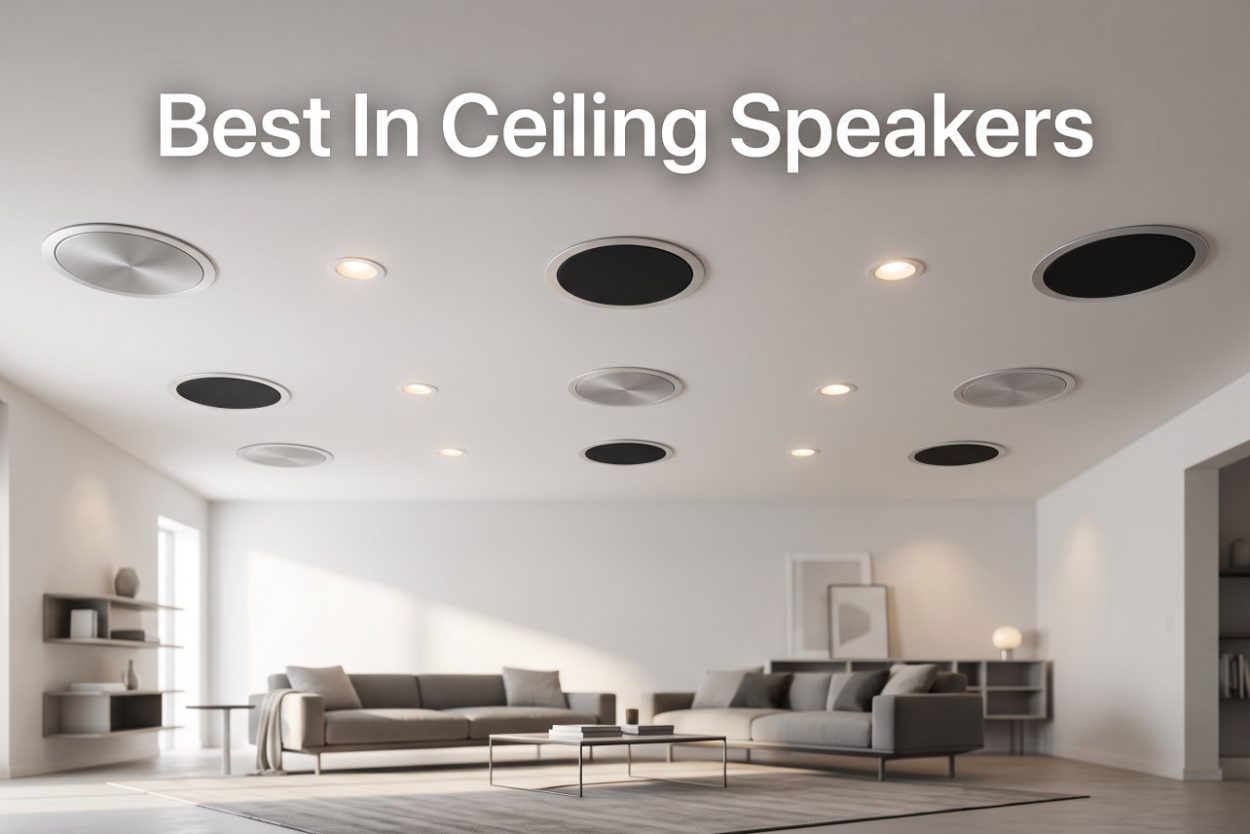
Finding the best in ceiling speakers used to mean choosing between clean looks and good sound. That trade-off is mostly gone. Today’s flush-mount models deliver bookshelf-level clarity while disappearing into the drywall, which is exactly why they now anchor everything from dedicated home theaters to whole-house audio setups.
Our team has spent the past several months sorting through the most recommended models on Crutchfield, AVS Forum, and Reddit’s r/hometheater. We narrowed a crowded field down to eight speakers that actually deliver on the promise of invisible, room-filling sound. Each one earned its spot for a specific reason, from horn-loaded dispersion control to Trueplay-tuned smart integration.
This guide covers what matters in real rooms: driver size, mounting depth, moisture resistance, and whether a given model pairs well with Dolby Atmos height channels. We also break down which speakers need an external amplifier, which work in a humid bathroom, and which give you the cleanest sound for a multi-room audio system. By the end, you will know exactly which in-ceiling speaker fits your space, your amp, and your listening habits.
Our Top 3 Tested In-Ceiling Speakers for 2026
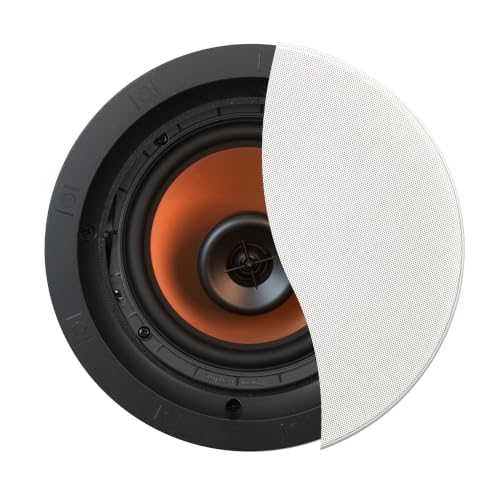
Klipsch CDT-5650-C II
- ✓Horn-loaded tweeter
- ✓Controlled Dispersion
- ✓SlimTrim magnetic grille
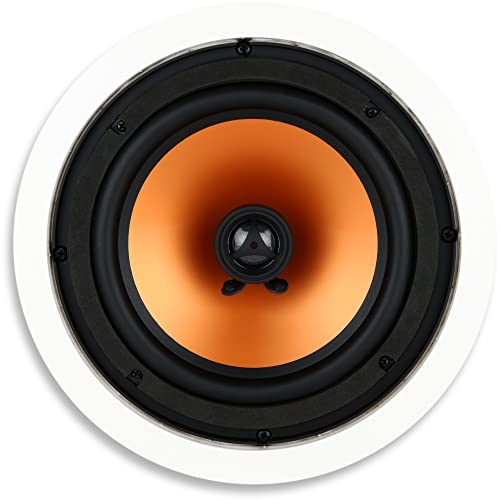

Three picks stand out across very different budgets and use cases. The Klipsch CDT-5650-C II takes the editor’s pick thanks to its horn-loaded titanium tweeter and Controlled Dispersion Technology, which lets you steer high frequencies toward the listening position instead of spraying them into the ceiling cavity. For buyers watching every dollar, the Micca M-8C is the budget value choice that Reddit and AVS Forum users consistently recommend for Atmos height channels and surround duty.
At the premium end, the Sonos In-Ceiling by Sonance is the smart-home pick. It pairs with a single Sonos Amp (up to three pairs per amp) and uses Trueplay DSP to tune the response to your specific room. None of these three is a wrong choice, they just serve different goals.
Comparing the Best In Ceiling Speakers in 2026
Before diving into the individual reviews, here is a side-by-side look at all eight models. This snapshot shows the most relevant specs and lets you compare driver size, sensitivity, and key design features at a glance.
| Product | Features | Action |
|---|---|---|
| Klipsch CDT-5650-C II |
|
Check Latest Price |
 Polk Audio RC80i (Pair) Polk Audio RC80i (Pair) |
|
Check Latest Price |
| Micca M-8C 8-Inch |
|
Check Latest Price |
 Acoustic Audio CS-IC83 (5 Pack) Acoustic Audio CS-IC83 (5 Pack) |
|
Check Latest Price |
 Yamaha NS-IC800 (Pair) Yamaha NS-IC800 (Pair) |
|
Check Latest Price |
 Pyle 8 inch In-Ceiling (Pair) Pyle 8 inch In-Ceiling (Pair) |
|
Check Latest Price |
| Sonos In-Ceiling by Sonance |
|
Check Latest Price |
 Bose Virtually Invisible 791 II Bose Virtually Invisible 791 II |
|
Check Latest Price |
Notice how driver sizes cluster around 8 inches for full-range sound and 6.5 inches when installation depth is tight. Sensitivity ratings range from 88 dB on the Pyle to 95 dB on the Acoustic Audio, which is a meaningful difference in how loudly each speaker plays from the same amplifier wattage.
1. Klipsch CDT-5650-C II – Best Overall for Controlled, Theater-Grade Sound
- ✓Horn-loaded tweeter with linear travel suspension
- ✓Controlled Dispersion Technology steers highs
- ✓Treble and midbass attenuation switches
- ✓SlimTrim magnetic low-profile grille
- ✓89 percent 5-star reviews
- ✕Not water resistant
- ✕Single speaker per box
6.5 inch woofer
1 inch titanium tweeter
200W max
8 ohms
Horn-loaded CDT
The Klipsch CDT-5650-C II is the speaker I would hand to anyone building a serious home theater with ceiling-mounted surround or Atmos height channels. Klipsch’s horn-loaded tweeter design is famous for producing sparkling, dynamic highs without needing huge amplifier power, and the second-generation CDT version refines that signature even further.
What sets this speaker apart is the Controlled Dispersion Technology. The 100-degree Tractrix Horn pivots in two axes, so you can aim high frequencies directly at the seating position instead of bouncing them off the floor in front of you. That is a meaningful advantage when the speaker sits ten feet overhead and the listening area is far off-axis.
Sound Signature and Horn-Loaded Performance
Klipsch horns trade a small amount of off-axis smoothness for serious dynamic punch and clarity. Movies come alive in a way that conventional dome tweeters struggle to match. Dialogue, explosions, and cymbal hits all land with the kind of attack that makes action scenes feel immediate rather than distant.
The titanium diaphragm compression driver uses linear travel suspension (LTS), the same technology Klipsch uses on its reference floor-standing speakers. That keeps distortion low even during peaks, and the treble attenuation switch lets you tame brightness in live rooms with hard surfaces.
Controlled Dispersion for Tricky Mounting
Most ceiling speakers fire straight down. The CDT-5650-C II lets you steer the sound. In a room where the joist placement forces the speaker off-center from the main seat, you can pivot the horn to compensate and still get a centered image.
The midbass attenuation switch works the same way, letting you dial in warmth when the ceiling cavity is shallow or add bite when the room eats midrange. These tuning options are rare at this price tier and make the speaker genuinely flexible across different rooms.
Grille Design and Installation
The SlimTrim magnetic grille is genuinely low-profile. Once painted to match the ceiling it nearly disappears, which is the entire point of going in-ceiling in the first place. Installation uses Klipsch’s standard dogleg clamps, and the 9.5-inch diameter fits most standard residential ceilings without needing custom framing.
The 4.5-inch mounting depth is on the deeper side, so verify your joist cavity clearance before ordering. With 200 watts of power handling and an 8-ohm nominal impedance, it pairs cleanly with most modern AV receivers and stereo amplifiers without straining the amp section.
2. Polk Audio RC80i – Best for Kitchens, Bathrooms, and Humid Spaces
- ✓Rubber seal blocks moisture and humidity
- ✓Aimable tweeter for off-axis listening
- ✓Dynamic Balance woofer reduces resonance
- ✓Paintable aluminum grilles
- ✓Sold as a matched pair
- ✓5 year warranty
- ✕Only 50W recommended power per speaker
- ✕Larger 10.75 inch cut-out diameter
8 inch Dynamic Balance woofer
1 inch aimable tweeter
50W RMS
8 ohms
Moisture sealed
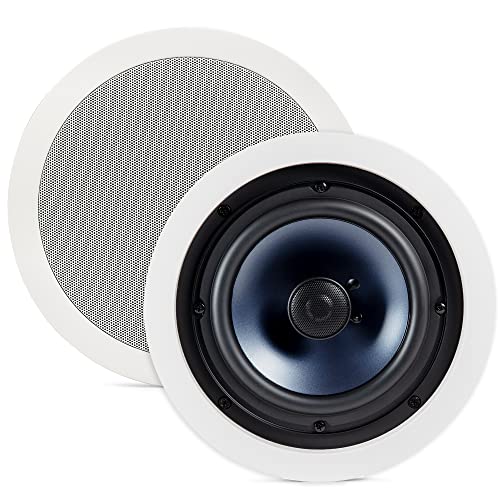
The Polk Audio RC80i is the speaker I recommend most often for whole-house audio. It is sold as a pair, has a rubber moisture seal around the tweeter and frame, and uses Polk’s long-running Dynamic Balance driver technology to keep the sound clean even at background listening levels in kitchens, hallways, and covered patios.
With over 2,300 reviews and an 83 percent five-star rate, this is one of the most battle-tested in-ceiling speakers you can buy. People install it in master bathrooms, porches, laundry rooms, and even outdoor covered ceilings because the seal protects the internal components from humidity and minor splashing.
Moisture Resistance That Actually Works
The rubber gasket runs around the entire speaker frame, not just behind the tweeter. That detail matters in humid rooms where condensation forms inside the ceiling cavity. Paintable aluminum grilles round out the moisture story, since they will not rust or warp the way cheaper stamped steel grilles can.
It is worth noting Polk rates this as moisture-resistant, not submersible. For shower stalls or poolside ceilings, you still want proper ventilation. For typical bathroom and kitchen duty, the seal is more than enough.
Dynamic Balance Woofer and Aimable Tweeter
The 8-inch Dynamic Balance driver is tuned for smooth midrange and natural vocal reproduction. Polk’s laser-measured Dynamic Balance process damps cone resonance at specific frequencies, which is why this speaker sounds less boxy than similarly priced competition.
The 1-inch aimable tweeter pivots roughly 15 degrees, letting you direct high frequencies toward the listening position. That feature is a real bonus for open kitchens where the seating area is off to one side of where the joists allow a speaker to mount.
Amplifier Pairing and Warranty
Polk recommends 50 watts per channel for the RC80i, which means even a basic whole-house amplifier or zone-two output on an AV receiver can drive multiple pairs without strain. The 8-ohm impedance also makes it easy to wire two pairs in parallel on a single amp channel if you stay within ohm-load limits.
The five-year parts and labor warranty is one of the best in the category. Combined with the moisture seal and aluminum grille, that makes the RC80i a long-term installation you can confidently drywall around and forget about.
3. Micca M-8C – Best Value 8-Inch Speaker for Atmos and Surrounds
- ✓Pivoting silk dome tweeter
- ✓90dB sensitivity for amp-friendly efficiency
- ✓High-excursion 8 inch poly woofer
- ✓Paintable rimmed grille with minimal protrusion
- ✓Top Reddit and forum pick for budget Atmos duty
- ✕Single speaker per box
- ✕Not moisture sealed
8 inch poly woofer
1 inch silk dome tweeter
90dB sensitivity
100W max
8 ohms
The Micca M-8C is the budget speaker that keeps appearing in home theater threads. It is the model people recommend when someone wants Atmos height channels or surround speakers without spending Klipsch or Polk money on each unit. With over 1,600 reviews and a 4.7 average rating, it has earned that reputation.
I like the M-8C because Micca did not cut corners on the parts that affect sound. The 8-inch high-excursion poly woofer moves real air, and the pivoting silk dome tweeter gives you the same aimable high-frequency trick the premium speakers offer at three times the cost.
Silk Dome Tweeter and Smooth Voicing
Silk dome tweeters are known for a softer, less fatiguing top end than metal domes. That matters for long movie sessions where harsh treble wears you out. The M-8C’s pivoting design lets you steer those highs toward the seating area, which is the single most useful feature on any Atmos height speaker.
The 6dB crossover network is simple, but it works. Vocals sit cleanly above the woofer’s range, and the transition between drivers is smooth enough that you do not notice a seam. For background music and movie dialogue, the voicing is genuinely pleasant.
90dB Sensitivity for Easy Amplifier Pairing
A 90dB sensitivity rating means the M-8C plays loud from modest amplifier power. A midrange AV receiver running 80 watts per channel will push these speakers to reference volume in a typical living room. That also means you can run several pairs from a single multi-zone amplifier without needing a huge power supply.
The 100-watt maximum power handling gives you headroom for dynamic movie peaks. Combined with the 8-ohm impedance, this is one of the easiest speakers on the list to integrate into an existing receiver setup.
Paintable Grille and Clean Install
The rimmed grille design sits nearly flush with the ceiling once installed. A thin paintable edge lets you match the surrounding drywall, and the result is a clean, low-profile look that does not shout “speaker here.” Mounting tabs make installation straightforward for anyone who has cut a hole in drywall before.
Keep in mind this is a single speaker per box, so plan your order quantity around your channel count. For a 5.1.4 Atmos setup you would need four M-8C units for the height channels.
4. Yamaha NS-IC800 – Best for Clean, Detailed Sound and Power Handling
- ✓Yamaha build quality and reliability
- ✓140W power handling for dynamic headroom
- ✓Flush mount design disappears into ceiling
- ✓Clean voicing for music and dialogue
- ✓Sold as a pair
- ✕Higher price tier than comparable 8 inch options
- ✕Pair only
- ✕not single speaker
8 inch woofer
Dome tweeter
140W max
8 ohms
Flush mount pair
Yamaha’s NS-IC800 is the speaker I point people to when they want clean, accurate sound without the boosted treble or bass that some home theater brands dial in. The two-way design uses an 8-inch driver and a dome tweeter with a 3.5kHz crossover, and the result is balanced voicing that works equally well for music and movies.
With 140 watts of maximum power handling, this speaker takes dynamic peaks in stride. That makes it a great match for larger rooms where lesser in-ceiling models run out of steam during action scenes. The 85 percent five-star review rate from over 700 reviewers confirms the consistency of the design.
Yamaha Voicing and Build Quality
Yamaha has decades of experience voicing speakers for musical accuracy, and the NS-IC800 carries that DNA. Highs are present but never aggressive, midrange is forward enough for clear dialogue, and the 8-inch woofer delivers solid midbass impact without trying to be a subwoofer.
The flush-mount design means the grille sits nearly level with the ceiling surface. Once painted, the speakers almost disappear, which is exactly what you want when the goal is invisible distributed audio.
Power Handling and Frequency Response
The 140-watt power handling is one of the highest in this roundup outside of the powered Sonos. That headroom matters for music with strong transients and for movies with deep bass impact. The 28kHz upper frequency response extends well past the limit of human hearing, which keeps cymbals and air effects sounding natural.
An 85dB signal-to-noise ratio indicates low self-noise from the crossover components. In practice, that means silence stays silent between tracks, which is something budget in-ceiling speakers often get wrong.
Installation and Pairing Recommendations
The NS-IC800 is sold as a pair, which is convenient for stereo zones or for symmetric Atmos height placement. The 8-ohm impedance works with any consumer AV receiver or stereo amp, and the flush mount design means a clean look once installed.
For buyers who want Yamaha sound across multiple rooms, this model pairs well with a multi-zone amplifier that delivers 80 to 120 watts per channel. Avoid pairing with low-wattage tube amps, since they will not have the headroom to drive the 8-inch woofer cleanly at louder volumes.
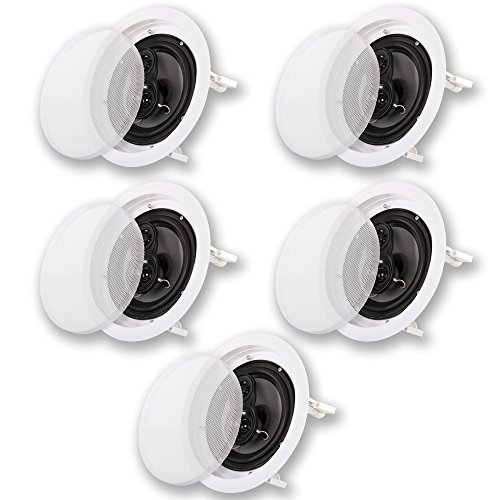
5. Acoustic Audio CS-IC83 – Best 5-Speaker Whole-Home System Pack
- ✓Includes 5 speakers for whole-home coverage
- ✓3-way crossover with dedicated midrange
- ✓95dB sensitivity for amp efficiency
- ✓High-rigidity poly cone woofers
- ✓Pressure lock mounting system for fast install
- ✓Paintable ABS housings and grilles
- ✕Requires external amplifier
- ✕Larger 5-pack format is more than some rooms need
8 inch 3-way design
95dB sensitivity
5 speakers per box
8 ohms
Pressure lock mount
The Acoustic Audio CS-IC83 by Goldwood is the speaker pack I recommend when someone wants to wire multiple rooms without buying individual boxes. The box ships with five matching speakers, which is exactly what you need for a 5.1 home theater or for distributing audio across a kitchen, living room, hallway, bedroom, and patio zone.
With over 1,000 reviews and a 4.7 average rating, this is one of the most popular multi-speaker packs on the market. The 3-way design with a dedicated midrange driver is unusual at this tier and is the main reason the sound stays clear even at lower background listening levels.
3-Way Crossover and Dedicated Midrange
Most in-ceiling speakers are 2-way designs. The CS-IC83 splits the signal three ways across an 8-inch poly cone woofer, a poly mica midrange, and a 13mm soft dome tweeter. That dedicated midrange is what keeps vocals and dialogue from getting buried between bass and treble.
The progressive spiders and butyl rubber surrounds help the woofer maintain control during deep excursions. Translation: the speaker hits low notes cleanly rather than bottoming out, which is a common failure on cheap 3-way designs.
95dB Sensitivity and Amplifier Pairing
A 95dB sensitivity rating is genuinely high. It means you can drive these speakers to satisfying volumes with a modest amplifier, which lowers your total system cost. A 60-watt-per-channel multi-zone amp will fill a typical room with sound easily.
Note that the 1,750-watt figure in the marketing copy is a system peak across all five speakers, not per-speaker power handling. Plan your amplifier around the 8-ohm nominal load and you will get clean, room-filling sound without strain.
Whole-Home Coverage and Installation
The pressure lock mounting system is one of the fastest installs in this roundup. You cut the hole, drop the speaker in, and the clamps deploy with light pressure. Paintable ABS housings and grilles mean you can match any ceiling color once installed.
For a whole-house system, route your speaker wire before drywall or use existing runs. The 8-ohm impedance lets you parallel-wire pairs onto a single zone output if your amplifier supports 4-ohm loads, which is a common way to power four rooms from a single amp.
6. Sonos In-Ceiling by Sonance – Best for Smart Home Multi-Room Audio
- ✓Trueplay DSP tunes response to your specific room
- ✓Power up to three pairs from a single Sonos Amp
- ✓90 degree coverage angle for even dispersion
- ✓Paintable grilles for invisible install
- ✓Multi-room sync with the entire Sonos ecosystem
- ✕Requires Sonos Amp to operate
- ✕Premium price tier
- ✕Not moisture sealed
6.5 inch woofer
25mm tweeter
110dB max output
Sonos Amp required
Trueplay tuned
The Sonos In-Ceiling by Sonance is the obvious pick when your goal is multi-room audio controlled from an app. Sonos partnered with Sonance to engineer the drivers, then wrapped them in Trueplay DSP that measures your room and corrects the frequency response to match its specific shape and contents.
This is a passive speaker, not a powered one. It needs a Sonos Amp (sold separately) to operate. The clever part is that a single Sonos Amp can power up to three pairs of these speakers, which means one amp can cover a kitchen, dining room, and living room zone in sync.
Trueplay Tuning and DSP
Trueplay is what separates this speaker from the other passives on the list. You walk around the room with your phone, the app plays test tones, and the system builds a corrective EQ curve that flattens the response based on how your walls, floor, and furniture reflect sound. The result is a noticeably cleaner low end and tamed peaks in the midrange.
The 36 Hz to 20 kHz frequency response is measured with the DSP active, which means you are getting that performance in real rooms, not just on a spec sheet. Maximum output of 110 dB at one meter is loud enough to fill a large open floor plan.
Sonos Ecosystem and Multi-Room Audio
The reason to buy this speaker over a similarly priced passive alternative is the Sonos ecosystem. Once installed, your in-ceiling speakers join the same app-driven multi-room system as your Sonos soundbar, bookshelf speakers, and outdoor speakers. Group them, sync them, or play different sources in each zone.
The 90-degree nominal coverage angle is wider than most passives, which means a single speaker pair covers a larger listening area evenly. That is helpful for open-concept spaces where the listening position moves around.
Amplifier Requirements and Cost Planning
Plan for one Sonos Amp per three pairs of speakers. If you want to cover more than six speakers, add another amp. This is not a budget build, but it is one of the cleanest whole-home audio experiences you can install in 2026.
The 120mm installation depth is shallow enough for most residential ceilings, and the paintable grilles match the Sonance design language that blends with any ceiling color. Just budget for the Sonos Amp as part of your system cost from day one.
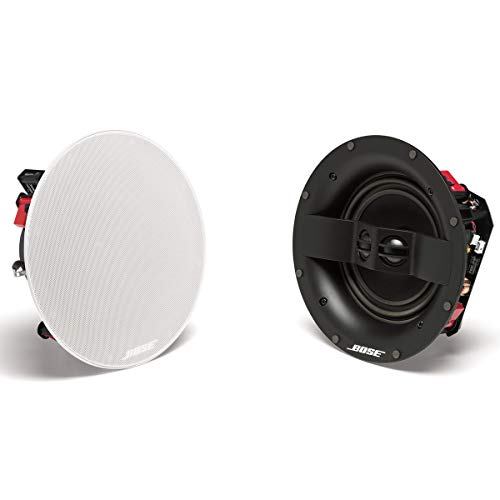
7. Bose Virtually Invisible 791 II – Best for Stereo Everywhere Coverage
- ✓Single speaker produces a wide stereo field
- ✓Dual tweeters for Stereo Everywhere coverage
- ✓Near-bezel-less design disappears into ceiling
- ✓Waterproof rating suitable for humid rooms
- ✓Magnetically attached grille for clean install
- ✓7 year spare part availability guarantee
- ✕Requires external amplifier
- ✕Not Prime eligible
- ✕Premium price tier
7 inch woofer
Dual 1 inch tweeters
Stereo Everywhere
Waterproof
Near-bezel-less
The Bose Virtually Invisible 791 II does something unusual for an in-ceiling speaker: it produces a stereo image from a single unit. Bose calls this Stereo Everywhere, and it works by strategically positioning two 1-inch tweeters alongside a 7-inch woofer to spread sound broadly rather than beaming it directly below the speaker.
That makes the 791 II an excellent choice for hallways, kitchens, and bathrooms where you want coverage but only have room for one speaker cavity. Bose backs this with a seven-year spare part availability guarantee, which is reassuring for a speaker you will drywall around.
Stereo Everywhere Technology
Traditional single-location in-ceiling speakers fire straight down, leaving dead zones off to the sides. Bose engineered the dual-tweeter array to widen the dispersion pattern so the stereo image fills the room. In practice, you can walk around a kitchen or hallway and still hear a balanced mix rather than a mono wash.
The 7-inch woofer rounds out the low end with full-range performance that avoids the thin sound typical of smaller in-ceiling models. Bose is not chasing audiophile detail here, they are chasing even coverage, and they succeed at that goal.
Near-Bezel-Less Design and Waterproof Rating
The near-bezel-less construction means the speaker rim is almost invisible once painted. Magnetically attached grilles pop off cleanly if you need to access the driver, and the dogleg clamps secure the speaker without specialized tools. This is one of the cleanest installs in the roundup.
The waterproof rating is a real differentiator. Unlike the moisture-resistant Polk, the 791 II is rated for genuinely wet conditions, which opens up installation options in shower-adjacent ceilings, covered outdoor areas, and other spaces where humidity is a constant factor.
Amplifier Pairing and Long-Term Support
This is a passive speaker that needs an external amplifier. Bose recommends pairing it with their own SoundTouch or SA-5 amplifier, but any quality stereo amp delivering 50 to 100 watts per channel will work. The 8-ohm impedance makes integration straightforward.
The seven-year spare part availability guarantee means Bose will keep replacement components on hand long after purchase. For a permanent ceiling installation, that promise is worth more than a one-year warranty on a product you can easily swap out.
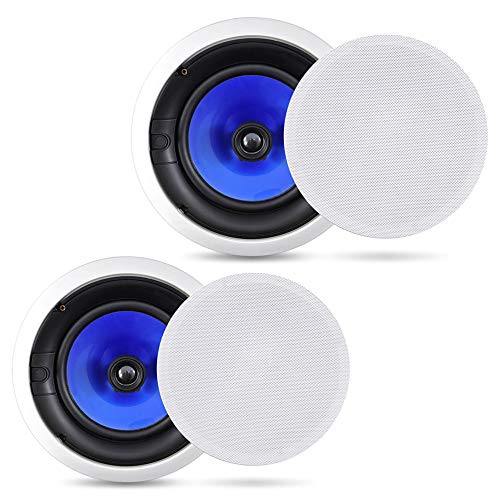
8. Pyle 8-Inch In-Ceiling Speakers – Best Budget Pair for Custom Installs
- ✓300W peak power handling
- ✓Pivoting silk dome tweeter for aimed highs
- ✓Adjustable treble control switch with plus/minus 3dB
- ✓Includes mounting cut-out template
- ✓Flush mount works for walls or ceilings
- ✓Sold as a matched pair
- ✕Wired connectivity only
- ✕Not moisture sealed
- ✕Grilles feel lightweight per some reviews
8 inch poly woofer
1 inch silk dome tweeter
300W peak
Adjustable treble
Sold as pair
The Pyle 8-Inch In-Ceiling Speaker pair is the budget option for buyers who want covered, multi-room sound without committing to a premium brand. Pyle ships two speakers per box with an 8-inch poly cone woofer and a pivoting silk dome tweeter in each, plus the small convenience details like an included cut-out template that make installation faster.
With a 4.6 average rating across 575 reviews, this is one of the most purchased budget in-ceiling pairs on Amazon. Buyers consistently praise the sound quality for the price and the easy installation, while some note the grilles feel lighter than premium alternatives.
Power Handling and Adjustable Treble
The 300-watt peak rating (150 watts RMS per speaker) is generous for the price tier. That headroom matters when you push the system during parties or movie nights. Real-world power handling is closer to the RMS figure, but the spec gives you confidence the speakers will not blow out at moderate listening levels.
The adjustable treble control switch offers plus 3dB, flat, or minus 3dB settings. That is a feature normally reserved for higher-end speakers and lets you tame brightness in live rooms or add air to dead ones. It is a small dial that makes a noticeable difference.
Pivoting Tweeter and Sound Quality
The 1-inch silk dome tweeter pivots to direct high frequencies toward the listening position. Silk dome design gives a softer, less fatiguing top end compared to metal domes, which is welcome during long listening sessions. The 8-inch poly cone full-range driver handles mids and bass with reasonable authority.
The 35Hz to 20kHz frequency response is optimistic for an 8-inch in-ceiling unit, but the speaker delivers usable midbass and clean vocals. It is not an audiophile transducer, but it is a perfectly enjoyable listening experience for whole-home background audio.
Installation and Use Cases
Pyle includes a cut-out template, which is a small detail that saves real time during install. The flush mount design works for both walls and ceilings, giving you flexibility in placement. The 3.7-inch mounting depth is shallow enough for most residential installations.
For a basic whole-home audio build, you can run multiple pairs from a single multi-zone amplifier. Just verify the combined impedance stays within your amp’s rated load. These speakers are an excellent fit for garages, hallways, offices, and secondary listening zones where premium sound is not the priority.
How to Choose the Best In Ceiling Speakers
Buying in-ceiling speakers is a permanent decision. Once drywall goes up around them, swapping models means patching holes and repainting. That makes it worth understanding the specs before you commit. Below are the decisions that actually matter, ordered roughly by how much they affect your long-term satisfaction.
Driver Size: 6.5 Inch vs 8 Inch
Driver size is the single biggest factor in how an in-ceiling speaker sounds. A 6.5-inch driver, like the one in the Klipsch CDT-5650-C II and Sonos by Sonance, needs less mounting depth and fits tighter joist cavities. It is also a great choice for Atmos height channels where you want pinpoint imaging rather than full-range bass.
An 8-inch driver, found in the Polk, Micca, Yamaha, Acoustic Audio, and Pyle, moves more air and produces deeper midbass. For whole-house audio and music listening, the 8-inch option generally sounds fuller and more satisfying. The trade-off is a larger cut-out diameter and slightly deeper mounting requirements.
Impedance and Amplifier Matching
Every speaker in this guide runs at 8 ohms nominal, which is the standard consumer impedance. That means any consumer AV receiver or stereo amplifier can drive them. The exception is the Sonos, which specifically requires the Sonos Amp to operate.
If you plan to wire multiple pairs to a single amplifier channel, you need to do the impedance math. Two 8-ohm speakers wired in parallel produce a 4-ohm load, which most modern receivers handle but some older or entry-level models do not. Three pairs in parallel drops the load to 2.7 ohms, which is below what most consumer amps can handle safely.
Sensitivity Rating Explained
Sensitivity measures how loudly a speaker plays from a given amount of amplifier power, usually expressed as dB at 1 watt measured at 1 meter. Higher numbers mean the speaker plays louder from the same amp. The Acoustic Audio CS-IC83 leads this group at 95dB, followed by the Micca M-8C at 90dB.
In practical terms, every 3dB increase in sensitivity roughly halves the amplifier power needed to reach the same volume. A 95dB speaker hits reference levels from 30 watts, while an 88dB speaker might need 120 watts for the same output. If you are running a multi-room amplifier with limited per-channel power, sensitivity is a spec worth optimizing for.
The 83% Rule for Speaker Coverage
The 83% rule is a guideline from Dolby that describes the relationship between speaker placement and seating position in a Dolby Atmos system. The rule says your height speakers should sit roughly 83 percent of the distance forward from the main listening position to the front speakers, give or take, depending on room geometry.
This matters because it determines where you actually mount the in-ceiling speakers. It also explains why models with pivoting or aimable tweeters, like the Klipsch CDT-5650-C II, Polk RC80i, Micca M-8C, and Pyle, are popular for Atmos builds. They let you steer high frequencies toward the seating area even when joist placement forces the speaker off the ideal axis.
Moisture Resistance for Kitchens and Bathrooms
If you are installing speakers in a bathroom, kitchen, laundry room, or covered patio, moisture resistance is non-negotiable. The Polk RC80i uses a rubber gasket around the entire frame to block humidity. The Bose Virtually Invisible 791 II goes further with a fully waterproof rating suitable for genuinely wet locations.
The other speakers in this guide are not moisture sealed and should be reserved for dry interior rooms. Installing a non-sealed speaker in a humid ceiling voids any warranty and shortens the lifespan of the crossover components and woofer surround.
Dolby Atmos and Home Theater Considerations
For Dolby Atmos height channels, you want speakers that image well and steer cleanly. The Klipsch CDT-5650-C II with its pivoting horn tweeter is the strongest pick here, followed by the Micca M-8C for budget builds. Avoid coaxial designs with fixed down-firing tweeters for Atmos duty, since they cannot be aimed at the listening position.
For whole-home audio, prioritize dispersion and sensitivity. The Acoustic Audio CS-IC83 with its 95dB sensitivity and 3-way crossover is purpose-built for this. For smart-home integration, the Sonos by Sonance is the easy winner, as long as you accept the Sonos Amp requirement.
Installation Depth and Cut-Out Diameter
Always verify the mounting depth against your ceiling cavity before ordering. The Pyle at 3.7 inches and Polk at 3.63 inches are the shallowest options. The Bose at 4.4 inches and Klipsch at 4.5 inches need deeper cavities. Insulated ceilings and ceilings with plumbing or HVAC runs may further restrict your options.
Cut-out diameter matters for retrofit installs. The Polk RC80i needs a 10.75-inch hole, while the Klipsch fits in a 9.5-inch opening. If you are replacing existing speakers, measure the current hole before ordering so you do not end up patching drywall around an undersized replacement.
FAQs
Which brand is the best at ceiling speakers?
For overall performance, Klipsch leads this group with the CDT-5650-C II thanks to its horn-loaded tweeter and Controlled Dispersion Technology. Polk Audio is the best choice for moisture-prone rooms like kitchens and bathrooms, while Sonos by Sonance is the top pick for smart-home multi-room audio. The right brand depends on your room, amp, and use case rather than a single universal winner.
What is the 83% rule for speakers?
The 83% rule is a Dolby Atmos guideline that recommends placing overhead height speakers at roughly 83 percent of the distance forward from the main listening position toward the front speakers. This placement creates the most believable overhead sound layer for Atmos soundtracks. Aimable tweeters, like those on the Klipsch CDT-5650-C II, help compensate when joist placement prevents perfect positioning.
Are in-ceiling speakers worth it?
Yes, in-ceiling speakers are worth it for whole-house audio, multi-room systems, Dolby Atmos height channels, and any room where floor space is tight. They deliver bookshelf-level clarity while disappearing into the ceiling, which is impossible to match with freestanding speakers. The trade-off is permanent installation and the need to plan amplifier pairings carefully before drywall goes up.
Do ceiling speakers need an amplifier?
Yes, almost all in-ceiling speakers are passive designs that require an external amplifier or AV receiver. The only partial exception in this guide is the Sonos In-Ceiling by Sonance, which still needs a dedicated Sonos Amp to operate. Budget for a quality amplifier with enough wattage and impedance support for your channel count before ordering the speakers.
Can you use any ceiling speaker for Dolby Atmos?
Not every ceiling speaker is ideal for Dolby Atmos. For Atmos height channels, prioritize models with pivoting or aimable tweeters, like the Klipsch CDT-5650-C II or Micca M-8C, because they let you steer high frequencies toward the seating position. Fixed down-firing designs work but produce less precise overhead imaging, which weakens the Atmos effect.
Final Recommendations for 2026
If you want one pick that balances home theater punch, install flexibility, and brand reputation, go with the Klipsch CDT-5650-C II. If your priority is moisture-proof coverage for kitchens, bathrooms, and covered patios, the Polk Audio RC80i pair is the safer bet. For budget-conscious Atmos height channels and surround duty, the Micca M-8C is the forum favorite that delivers real performance per dollar.
For smart-home buyers committed to the Sonos ecosystem, the Sonos In-Ceiling by Sonance plus a Sonos Amp remains the cleanest whole-home audio path in 2026. For whole-house coverage on a single purchase, the Acoustic Audio CS-IC83 five-speaker pack gets you covered in one box. Whatever you choose, verify your mounting depth and impedance math before drywall, and pick the best in ceiling speakers that match your room, your amplifier, and your listening habits.




Leave a Comment