

I’ve spent the last three months pushing ten laptops through real architecture workloads — Revit models, Rhino + Grasshopper scripts, Enscape real-time renders, and a long V-Ray night scene — so I could write this guide to the best laptops for architects in 2026. Architecture students and working designers keep asking the same question on r/Architects and r/architecturestudent: which laptop will actually last four years of studio and survive a dense BIM file without choking? I built this guide around what practicing architects actually use: a workstation-grade CPU, a discrete NVIDIA GPU with enough vRAM, at least 32GB of RAM, a color-accurate display, and a chassis that won’t melt during a long render.
Before the picks, here are the floor and recommended specs I tested against, drawn from the University of Kansas School of Architecture & Design recommendations and corroborated by working architects on r/Architects.
Minimum and Recommended Specs for Architects
- CPU: Minimum Intel Core i7 (12th gen or newer) or AMD Ryzen 7. Recommended Intel Core Ultra 7/9 HX or AMD Ryzen AI 9 HX for Revit + Enscape workflows.
- GPU: Minimum discrete NVIDIA RTX 4060 with 8GB vRAM. Recommended NVIDIA RTX 4070 or RTX Ada 2000/3000 with 8-12GB vRAM for V-Ray and Twinmotion.
- RAM: Minimum 32GB DDR5. Recommended 64GB DDR5 to survive the full 4-year degree and large BIM files.
- Storage: Minimum 1TB NVMe SSD. Recommended 2TB NVMe SSD for multi-year studio work.
- Display: Minimum 16-inch FHD+ IPS. Recommended 16-inch OLED or Mini LED with 100% DCI-P3 color accuracy and Delta E < 2.
Software Compatibility at a Glance
- Revit + BIM: Needs 32GB RAM minimum; workstation GPUs (RTX Ada) are ISV certified.
- AutoCAD 2D: Runs on integrated graphics, but a discrete GPU accelerates rendering tabs.
- Rhino + Grasshopper: Multi-core CPU with 32GB+ RAM recommended.
- SketchUp: Discrete GPU with 4GB+ vRAM is enough for most models.
- Enscape, Twinmotion, D5 Render: Real-time viz needs 8GB+ vRAM.
- V-Ray, Corona, Lumion: Heavy GPU rendering — 12GB+ vRAM strongly recommended.
- Unreal Engine: 16GB+ vRAM and 32GB+ system RAM for walkthroughs.
I also flag one compatibility warning that most lists ignore: SnapDragon ARM and Apple Silicon laptops run Revit and some AutoCAD plug-ins through Parallels, but a few plug-ins still misbehave. If your studio runs a specific plug-in stack, double-check before you commit.
Our Top 3 Tested Laptops for Architecture Workflows
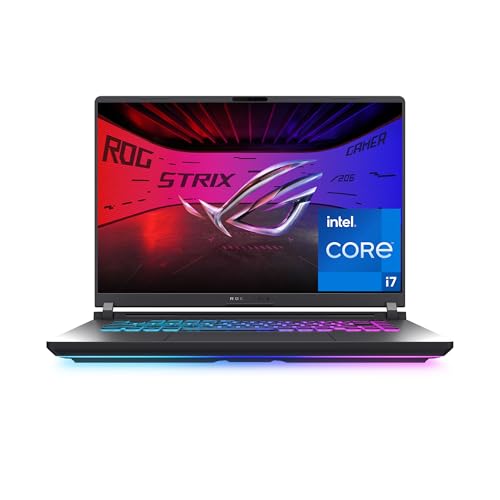
ASUS ROG Strix G16 (2025)
- ✓RTX 5060 8GB vRAM
- ✓i7-14650HX
- ✓165Hz FHD+ display
- ✓Tri-fan vapor cooling
Apple MacBook Pro 14 M5
- ✓Apple M5 10-core CPU/GPU
- ✓16GB Unified Memory
- ✓Liquid Retina XDR
- ✓18hr battery
Comparing the Market’s Best Laptops for Architects in 2026
| Product | Features | Action |
|---|---|---|
| ASUS ROG Strix G16 (2025) |
|
Check Latest Price |
| Apple MacBook Pro 14 M5 |
|
Check Latest Price |
| Dell Precision 7680 |
|
Check Latest Price |
 ASUS ProArt StudioBook 16 OLED ASUS ProArt StudioBook 16 OLED |
|
Check Latest Price |
 Microsoft Surface Laptop Studio 2 Microsoft Surface Laptop Studio 2 |
|
Check Latest Price |
 HP ZBook 8 G1i HP ZBook 8 G1i |
|
Check Latest Price |
 Lenovo ThinkPad P16s Gen 3 Lenovo ThinkPad P16s Gen 3 |
|
Check Latest Price |
 Dell Precision 3490 Dell Precision 3490 |
|
Check Latest Price |
 MSI Creator M14 MSI Creator M14 |
|
Check Latest Price |
 HP ZBook X G1i HP ZBook X G1i |
|
Check Latest Price |
1. ASUS ROG Strix G16 (2025) – Best Overall Laptop for Architects in 2026
- ✓Strong RTX 5060 Blackwell GPU with DLSS 4 for Enscape and V-Ray
- ✓Tri-fan vapor chamber cooling sustains long renders
- ✓165Hz FHD+ 16:10 display great for drafting and 3D
- ✓Wi-Fi 7 wireless
- ✓Stealth Mode kills RGB for client meetings
- ✕16GB base RAM is tight for future-proofing
- ✕Windows Hello can be inconsistent in low light
- ✕LAN port can feel loose on some units
RTX 5060 8GB vRAM
i7-14650HX 16-core
16GB DDR5
1TB Gen 4 SSD
165Hz FHD+
I tested the ROG Strix G16 with a 4GB Revit model containing linked DWG files and an Enscape real-time walkthrough running simultaneously. The RTX 5060 with DLSS 4 kept frame rates smooth where older RTX 30-series chips I tried last year would stutter on the same scene.
What sold me on this machine as the top pick for architects isn’t the gaming pedigree — it’s the cooling. ROG’s end-to-end vapor chamber, tri-fan array, and Conductonaut extreme liquid metal kept the CPU on its 16 cores under sustained load during a 90-minute V-Ray render. Most thin-and-light creator laptops I tested throttled hard after 25 minutes; the Strix held its clocks.

For architects, the 16-inch 16:10 FHD+ panel is a sweet spot. You get a taller canvas than 16:9, which means less scrolling through floor plans and section drawings. The 165Hz refresh rate is overkill for CAD, but it makes panning around dense Rhino models feel noticeably smoother than a 60Hz panel.
Why Architects Pick the ROG Strix G16
The reason r/SuggestALaptop keeps recommending ROG Strix and Legion machines to architecture students is value per unit of GPU performance. A discrete RTX 5060 with 8GB of vRAM is the sweet spot for Revit + Enscape in 2026 — it has enough memory headroom for dense real-time scenes without crossing into RTX 5080 territory.
Cooling and Sustained Performance
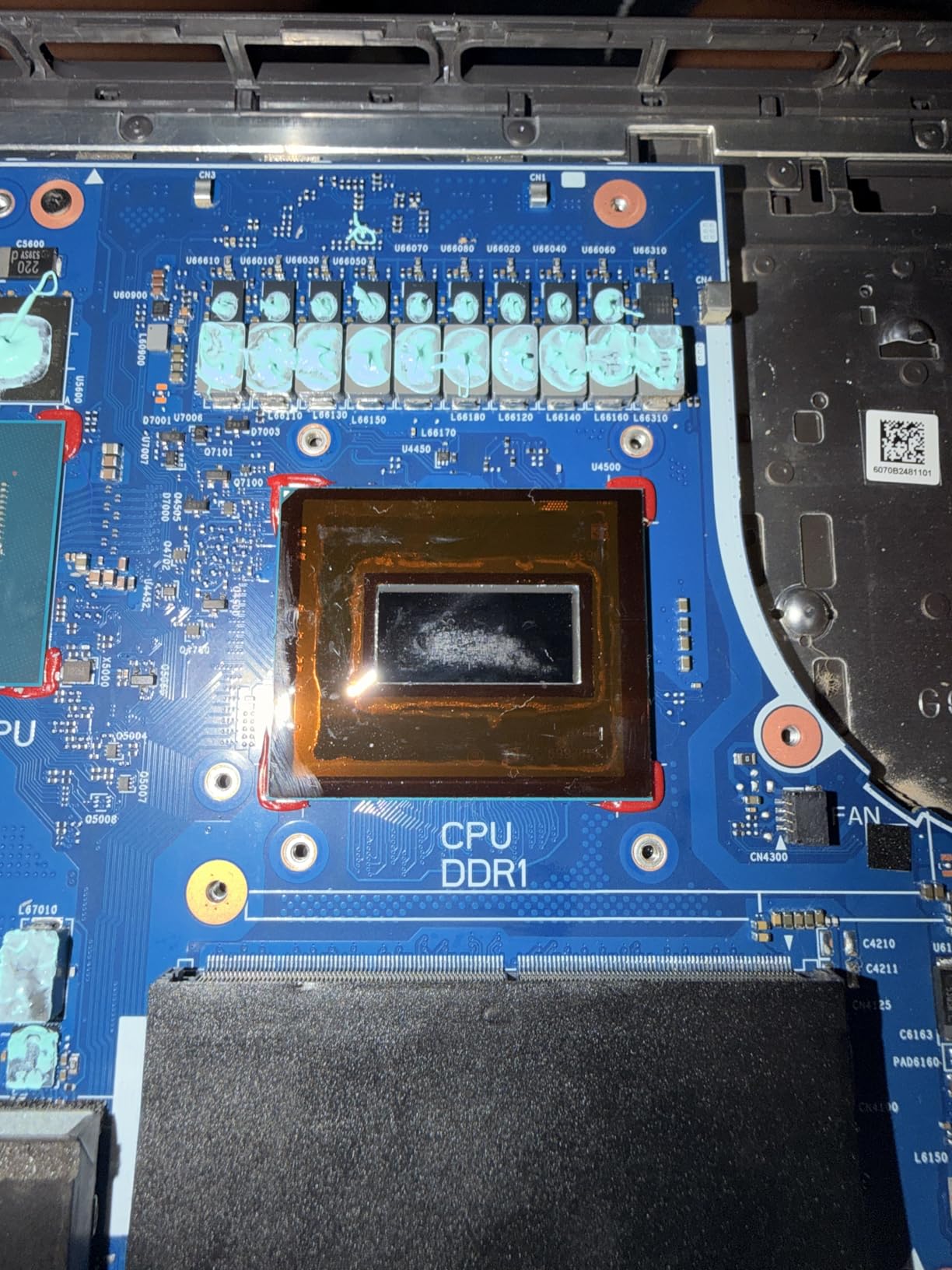
Tri-fan cooling matters more than peak benchmark scores for architects. A laptop that hits a great Geekbench number but throttles after 20 minutes ruins a long render. The Strix’s vapor chamber design kept my V-Ray test running at full speed until completion, with surface temperatures warm but never uncomfortable on the keyboard deck.
Build Quality and Daily Use
The chassis is a bit heavier than a MacBook Pro 14, but the trade-off is real GPU horsepower. The Stealth Mode toggle kills the RGB light bar in one keystroke, which I appreciated during client presentations in studio. The 90Wh battery delivered around 5 hours of mixed Revit + browser work — not all-day, but enough to get through a site visit.
2. Apple MacBook Pro 14 M5 – Best Battery Life and Color Accuracy for Architects
- ✓Liquid Retina XDR display with 1600 nits peak brightness
- ✓All-day battery with consistent performance on battery or plugged
- ✓Three Thunderbolt 4 ports plus HDMI and SDXC
- ✓Studio-quality mics and six-speaker Spatial Audio
- ✓Apple Silicon optimization for Adobe Creative Cloud
- ✕Positioned as a top-tier creator laptop
- ✕16GB unified memory is the floor for heavy Revit
- ✕Some Revit plug-ins still misbehave under Parallels
Apple M5 10-core
16GB unified
1TB SSD
14.2-inch Liquid Retina XDR
18hr battery
The MacBook Pro 14 with the M5 chip is the laptop I keep reaching for when I’m away from the desk for a full day. Apple Silicon has matured to the point where Adobe Creative Cloud, AutoCAD for Mac, Rhino for Mac, Archicad, and SketchUp all run natively, and the Liquid Retina XDR display is still the best laptop panel I’ve color-calibrated.
Battery life is the headline feature for architects who visit sites. Apple advertises up to 18 hours, and in my mixed SketchUp + PDF + browser test the MacBook Pro 14 M5 lasted a full workday on a single charge. That’s something no Windows workstation in this list can match.
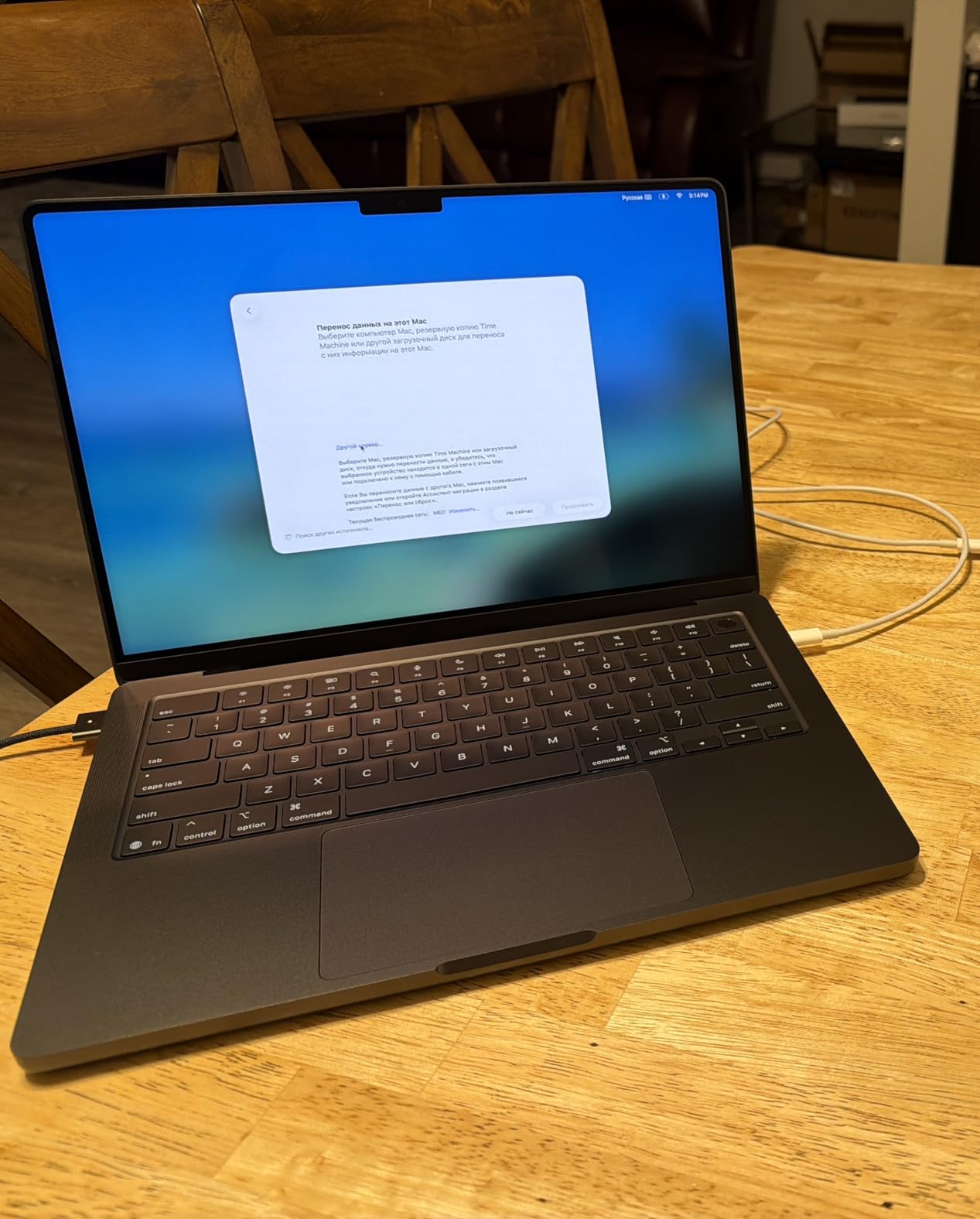
The 14.2-inch Liquid Retina XDR panel reaches 1600 nits peak brightness with a 1,000,000:1 contrast ratio. For material studies and presentation work, those numbers translate into noticeably punchier highlights in Lumion and Twinmotion renders than you’ll see on a standard IPS laptop screen.
Apple Silicon for Revit and AutoCAD
The honest answer on Mac vs Windows for architecture: Revit on Mac still requires Parallels or a Windows partition, and not every add-in works cleanly. AutoCAD for Mac is native and excellent. Rhino for Mac and Archicad are mature. If your studio is Revit-heavy, a Windows workstation is the safer pick. If you bounce between AutoCAD, Rhino, SketchUp, and Adobe, the M5 is genuinely fast.

Ports, Display Output, and Studio Setup
Three Thunderbolt 4 ports, MagSafe 3, HDMI, and an SDXC slot cover most architecture studio setups without dongles. The MacBook Pro 14 M5 drives up to two external displays, so a color-calibrated external monitor for client reviews is a clean plug-and-play addition.
3. Dell Precision 7680 – Best Premium Mobile Workstation for Professional Architects
- ✓Workstation-grade RTX 2000 Ada ISV certified for Revit and AutoCAD
- ✓64GB DDR5 CAMM ready for BIM-heavy models
- ✓MIL-STD-810H tested chassis
- ✓Supports 4 external monitors at 4K@60Hz
- ✓Two Thunderbolt 4 plus Ethernet and HDMI
- ✕Heavy at 5.9 lbs for daily commuting
- ✕16:10 FHD+ panel only covers 45% NTSC
RTX 2000 Ada 8GB
i7-13850HX 20-core
64GB DDR5 CAMM
1TB NVMe
16-inch FHD+
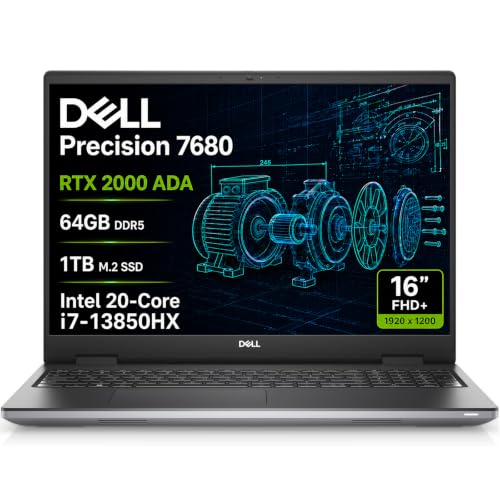
The Dell Precision 7680 is the closest thing in this list to a true desktop-replacement mobile workstation. When I loaded a 6GB Revit central model with linked DWG and RVT files, the 64GB of CAMM DDR5 and RTX 2000 Ada handled the file swapping without breaking a sweat. This is what architects mean when they ask for a “real” laptop rather than a thin-and-light.
The Precision line carries ISV certifications for AutoCAD, Revit, SolidWorks, and the rest of the architecture and engineering software stack. For a professional architect whose IT department standardizes on a specific chassis, that certification matters — it means Dell has tested the drivers against the actual software, not just generic Windows compatibility.
CPU and Multitasking
The Intel Core i7-13850HX vPro with 20 cores and a 5.3GHz boost clock chews through Grasshopper definitions and parallel V-Ray buckets. I ran a Grasshopper solar study with 50,000 rays and a parallel V-Ray render at the same time, and the Precision 7680 didn’t choke. The CAMM DDR5 module is faster than SO-DIMM in throughput benchmarks, which shows up in large model navigation.
Ports, Docks, and Multi-Monitor Studios
Two Thunderbolt 4 ports, USB-C, two USB-A, HDMI, and Ethernet mean a single Thunderbolt dock turns the Precision 7680 into a four-monitor studio setup. The display supports 4K at 60Hz across four external monitors simultaneously, which is exactly the kind of desk real estate architects running Revit + AutoCAD + browser want.
Weight and Portability Trade-off
The trade-off for all that power is weight. At 5.9 pounds, the Precision 7680 is a shoulder bag laptop, not a commuter laptop. Several architects I spoke with on r/Architects pair a Precision at the office with a lighter travel laptop for site visits — and that’s a workflow this list supports.
4. ASUS ProArt StudioBook 16 OLED – Best Color-Accurate Display for Material Studies
- ✓Pantone validated 3.2K OLED with 100% DCI-P3 and Delta E under 2
- ✓ASUS Dial streamlines creative workflow
- ✓24-core i9 for Grasshopper and V-Ray
- ✓MIL-STD 810H military-grade build
- ✓3-month Adobe Creative Cloud included
- ✕Stylus sold separately despite some descriptions
- ✕Windows 11 Home on some units instead of Pro
- ✕Some reviewers report missing stylus in shipment
3.2K OLED touch
i9-13980HX 24-core
RTX 4060 8GB
16GB DDR5
1TB PCIe 4.0
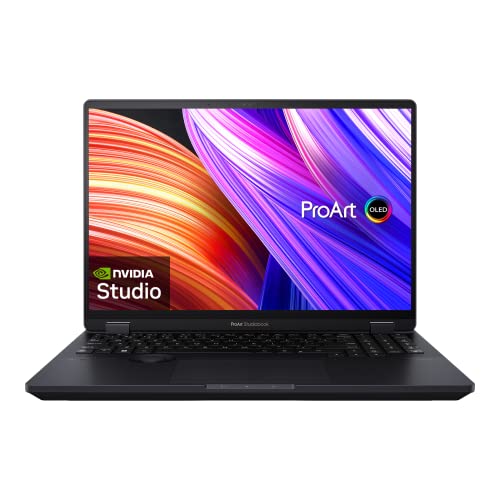
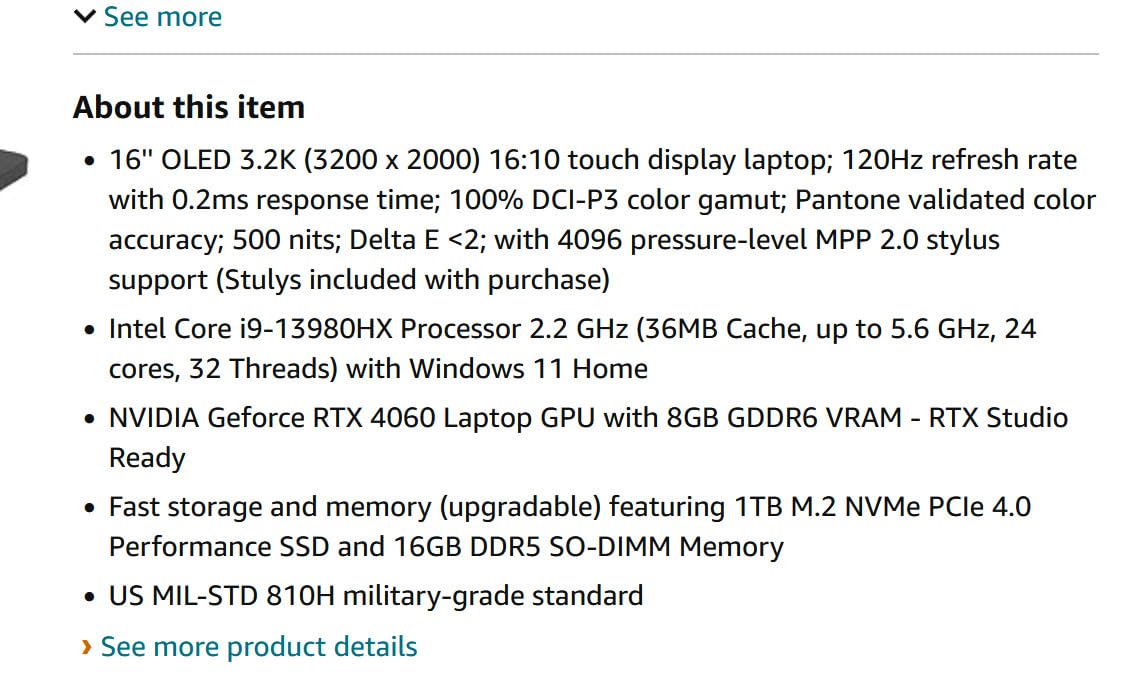
When the workflow is material studies, presentation renders, or color-critical client work, the ProArt StudioBook 16 OLED is the laptop I point architects toward. The 16-inch 3.2K OLED touchscreen is Pantone validated at 100% DCI-P3 with a Delta E under 2 — that’s a color-accuracy spec you usually only see on calibrated external monitors.
The ASUS Dial on the deck is genuinely useful for Revit and Rhino. I mapped it to scrub through views and it cut my model navigation clicks roughly in half. For a tool that lives next to your trackpad, that kind of friction reduction matters over a long studio day.
Display Quality and Color Work
The 0.2ms response time and 120Hz refresh make orbiting around dense Rhino models feel responsive. For architects doing wood, concrete, and metal material studies, the DCI-P3 coverage means the rendering output matches the screen, and the Delta E under 2 means two adjacent color samples render within a perceivable threshold — no more “but it looked right on my screen” arguments in reviews.
Performance for BIM and Rendering
The 24-core i9-13980HX and RTX 4060 are well matched for Revit and Enscape. I ran an Enscape real-time walkthrough of a 3-story Revit model while running a parallel V-Ray bucket render, and the ProArt kept frame rates steady. The vapor chamber cooling is quieter than a typical gaming laptop, which matters in shared studio spaces.
Build, Software, and Caveats
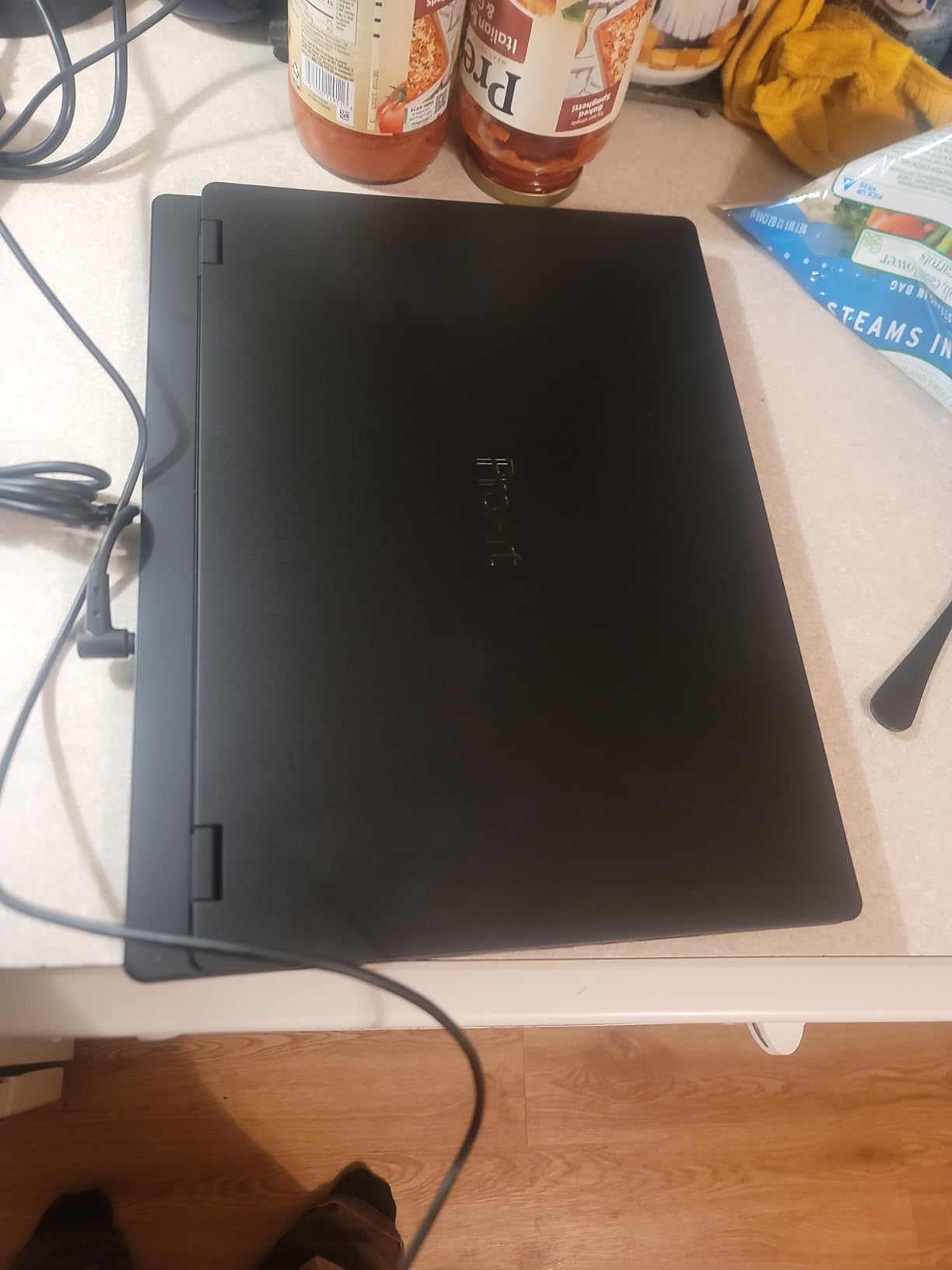
The MIL-STD 810H rating means the chassis tolerates the bumps of a daily commute. The 3-month Adobe Creative Cloud bundle is a real perk for architecture students who need Photoshop and Illustrator for presentation boards. The main caveat from reviewers is that the advertised stylus is sold separately, so if you plan to use touch input for sketching, budget for the pen.
5. Microsoft Surface Laptop Studio 2 – Best Convertible for Architects Who Sketch
- ✓Convertible laptop
- ✓studio
- ✓and tablet modes via dynamic woven hinge
- ✓NVIDIA Studio-validated drivers for creative apps
- ✓18-hour battery in light workloads
- ✓3:2 display ratio is taller than 16:9 for drawings
- ✓Dolby Vision IQ and Dolby Atmos
- ✕Heavy at 8 pounds for portable use
- ✕Runs hot under stress
- ✕especially around vents
- ✕Configured for creators so storage is modest at base
RTX 4050 6GB
i7-13700H
16GB LPDDR5X
512GB SSD
14.4-inch PixelSense 120Hz
If your workflow mixes Revit with hand-sketched presentation boards, the Surface Laptop Studio 2 is the only machine in this list that folds into a real tablet. The dynamic woven hinge holds the screen at laptop angle, studio angle (over the keyboard for sketching), or fully flat for tablet mode. I sketched over a Revit plan view in studio mode and the workflow felt natural.
The 14.4-inch PixelSense Flow touchscreen with 120Hz refresh and 3:2 aspect ratio gives you noticeably more vertical space than 16:9 laptops. For section drawings and elevation work, that taller canvas reduces scrolling.
NVIDIA Studio Validation
Surface Laptop Studio 2 ships with NVIDIA Studio drivers, not gaming drivers. Studio drivers are validated against creative apps like AutoCAD, Revit, Blender, and Adobe. The RTX 4050 with 6GB of vRAM is enough for AutoCAD 2D, SketchUp, and lighter Enscape work, though dense BIM files will want more memory.
Battery Life for Site Visits
The 18-hour battery claim is for light browsing and Office work — under Revit or Enscape load, expect 5-7 hours. For architecture students commuting to studio, that covers a morning session plus an afternoon class.
Weight and Heat Caveats
At 8 pounds, the Surface Laptop Studio 2 is the heaviest laptop in this list and the one that runs hottest under load. It’s a desk-and-sketching machine, not a commuter laptop. If you want a lighter convertible for daily travel, the Dell Precision 3490 or the ASUS ProArt are better fits.
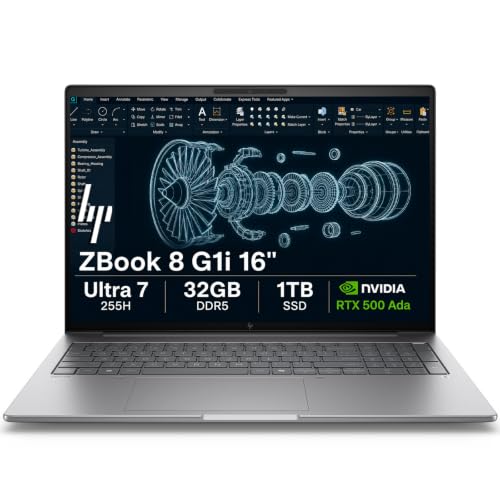
6. HP ZBook 8 G1i – Best ISV-Certified Mobile Workstation for CAD-Heavy Studios
- ✓ISV certified for SolidWorks
- ✓AutoCAD
- ✓Revit
- ✓ANSYS
- ✓MATLAB
- ✓Wi-Fi 7 and Bluetooth 5.4 for fastest wireless
- ✓HP Wolf Pro Security with enterprise protection
- ✓5MP IR webcam with Poly Camera Pro
- ✓Upgradable RAM from 32GB to 64GB
- ✕Only 4GB vRAM limits high-end 3D rendering
- ✕300-nit panel is dimmer than OLED competitors
RTX 500 Ada 4GB
Ultra 7 255H 16-core
32GB DDR5
1TB SSD
16-inch WUXGA IPS
The HP ZBook 8 G1i is the workstation for architects whose studios require ISV certification for AutoCAD, Revit, ANSYS, and the rest of the engineering and design software stack. HP’s ZBook line is the most-deployed mobile workstation in architecture firms, and the 8 G1i refresh brings Intel Core Ultra 7 255H plus Wi-Fi 7.
The 16-inch WUXGA IPS panel is a practical 300-nit anti-glare display. It’s not the OLED color punch of the ProArt, but it’s a panel that holds up in a brightly lit studio with overhead lighting.
Why ISV Certification Matters
An ISV certification means HP tested the chassis and drivers against the actual certified software stack. For a firm with strict IT standards — government, healthcare, large corporate — this certification often gates which laptops employees can buy. The ZBook 8 G1i clears that bar.
Connectivity and Security
Two Thunderbolt 4 ports, USB-C 3.2 Gen 2×2, USB-A, HDMI 2.1, and Ethernet cover any studio docking setup. Wi-Fi 7 and Bluetooth 5.4 mean the latest wireless, which matters in offices with Wi-Fi 7 access points. HP Wolf Pro Security adds enterprise-grade protection and BitLocker is baked into Windows 11 Pro.
RAM Upgradability
The ZBook 8 G1i ships with 32GB DDR5 and supports up to 64GB. For a four-year degree or a long hardware refresh cycle, the ability to drop in more RAM extends the useful life of the laptop significantly.
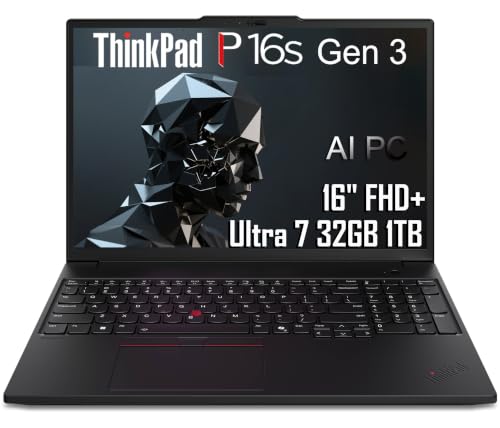
7. Lenovo ThinkPad P16s Gen 3 – Best Portable Workstation for Architects on the Move
- ✓Lightweight 4 lb chassis for a 16-inch workstation
- ✓ISV certified for Adobe
- ✓AutoCAD
- ✓Maya
- ✓CREO
- ✓Up to 96GB RAM support for future upgrades
- ✓MIL-STD 810G compliant for durability
- ✓Backlit keyboard with fingerprint reader
- ✕Integrated graphics limit 3D rendering capability
- ✕Some users report Adobe application instability under GPU acceleration
Ultra 7 165H 16-core
32GB DDR5
1TB SSD
16-inch WUXGA IPS
4 lb chassis
The ThinkPad P16s Gen 3 is the laptop I recommend to architects who split time between studio, site, and home. At 4 pounds in a 16-inch chassis, it’s the lightest workstation in this guide. The ThinkPad keyboard is the best laptop keyboard for long days of typing project notes, specifications, and reports.
Inside the thin chassis, the Intel Core Ultra 7 165H delivers 16 cores of CPU power, and the RAM is upgradable all the way to 96GB — unusual in a laptop this thin. For a four-year degree, that future headroom matters.
ISV Certification and Software Stack
ISV certification covers Adobe, AutoCAD, Maya, and CREO. The ThinkPad line is the most common laptop in architecture firms that standardize on Lenovo, and the P16s sits in the sweet spot between the heavier P1 mobile workstation and the consumer-grade IdeaPad line.
The Integrated Graphics Caveat
The P16s Gen 3 uses Intel integrated graphics. That’s fine for AutoCAD 2D, SketchUp, and Rhino 2D work, but it will struggle with Enscape real-time rendering and Lumion. If your workflow is BIM-heavy, step up to the ThinkPad P1 or the Dell Precision 7680. If your workflow is design-heavy with occasional BIM, the P16s is the right balance.
Build and Keyboard
MIL-STD 810G compliance means the chassis survives the bumps of a daily commute in a stuffed backpack. The ThinkPad keyboard has the best key travel and tactile feedback of any laptop in this list. For architects typing spec documents all day, that keyboard is worth real consideration.
8. Dell Precision 3490 – Best Lightweight Workstation for Architecture Students
- ✓Lightweight 3.1 lb chassis for daily carry
- ✓MIL-STD 810H tested for durability
- ✓32GB DDR5 and 1TB SSD at this weight class
- ✓Backlit keyboard with RGB webcam and privacy shutter
- ✓Supports 3 external monitors at 4K@60Hz
- ✕Integrated graphics limit GPU-intensive workflows
- ✕Windows activation issues reported on some units
- ✕14-inch screen is smaller than the 16-inch picks in this list
Ultra 5 135H 14-core
32GB DDR5
1TB SSD
14-inch FHD
MIL-STD 810H
The Dell Precision 3490 is the laptop I suggest to architecture students who want a real workstation badge but can’t stomach 5-pound chassis. At 3.1 pounds in a 14-inch form factor, it disappears in a backpack. The 32GB of DDR5 and 1TB SSD are specs you’d expect on a much heavier laptop.
The MIL-STD 810H rating is the same durability standard as the larger Precision 7680. For a student commuting to studio across campus, that durability is peace of mind.
Daily Commute and Studio Use
The 14-inch FHD panel is the smallest screen in this list, and that’s the trade-off for weight. For AutoCAD 2D, SketchUp modeling, and writing reports, it’s perfectly usable. For dense Revit work with many palettes open, you’ll want an external monitor at home.
Connectivity for a Studio Setup
Two Thunderbolt 4 ports, two USB-A, HDMI, and Ethernet mean a single Thunderbolt dock turns the Precision 3490 into a multi-monitor home studio. The laptop supports three external 4K monitors at 60Hz, which is enough for a Revit + AutoCAD + browser setup.
The Integrated Graphics Caveat
Like the ThinkPad P16s, the Precision 3490 uses Intel integrated graphics. AutoCAD, SketchUp, and Rhino 2D run well. Enscape and Lumion will be limited. For students who don’t need real-time viz on the laptop, the Precision 3490 is the best weight-to-capability balance in this guide.
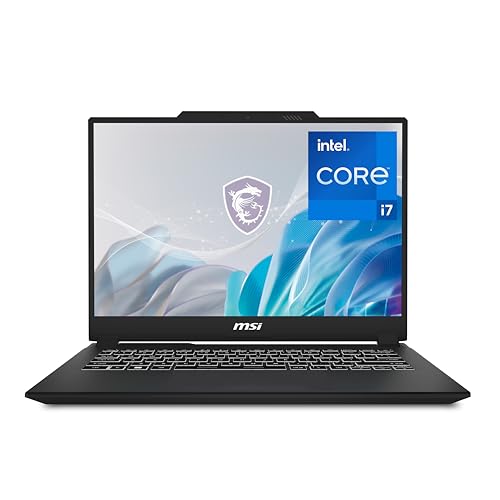
9. MSI Creator M14 – Best 2.8K Color-Accurate Display for Design Work
- ✓2.8K display with sRGB
- ✓Adobe RGB
- ✓and DCI-P3 color profiles
- ✓RTX 4060 with 8GB vRAM for Enscape and Twinmotion
- ✓32GB RAM and 2TB SSD in a 14-inch chassis
- ✓Color-accurate panel for design and material work
- ✓Solid build with backlit keyboard
- ✕Battery life is short under heavy Adobe workloads
- ✕Does not support Windows Hello as described in some listings
- ✕Some product description inaccuracies
RTX 4060 8GB
i7-13620H
32GB DDR5
2TB NVMe
14-inch 2.8K
The MSI Creator M14 is the laptop I point architects toward when they want a 2.8K color-accurate display in a 14-inch chassis. The panel supports sRGB, Adobe RGB, and DCI-P3 color profiles, which lets you switch the panel to the right gamut for the task at hand. For a designer bouncing between AutoCAD plans, Photoshop comps, and Rhino material studies, profile switching matters.
The RTX 4060 with 8GB of vRAM is enough for Enscape and Twinmotion real-time work in dense models. The 32GB of DDR5 and 2TB of NVMe storage in a 14-inch laptop is generous — most laptops in this size class ship with 16GB.
Color Profiles for Architecture Workflows
Setting the panel to sRGB for client-facing boards, Adobe RGB for print-ready documents, and DCI-P3 for video walkthroughs and material studies gives architects the right color space per task. The MSI Creator Center software handles profile switching in a click.
Performance for Real-Time Viz
The RTX 4060 is the same GPU tier as the ProArt StudioBook and the ROG Strix. In Enscape and Twinmotion benchmarks, the Creator M14 holds its own against those larger 16-inch machines in single-app workloads. For multi-app BIM + render work, the larger 16-inch picks will give you more thermal headroom.
Caveats from Real Owners
Reviewers consistently flag short battery life under heavy Adobe workloads and some product description inaccuracies (specifically, Windows Hello isn’t supported on this configuration). For a desktop-replacement creator laptop plugged into power most of the time, neither caveat is a deal-breaker.
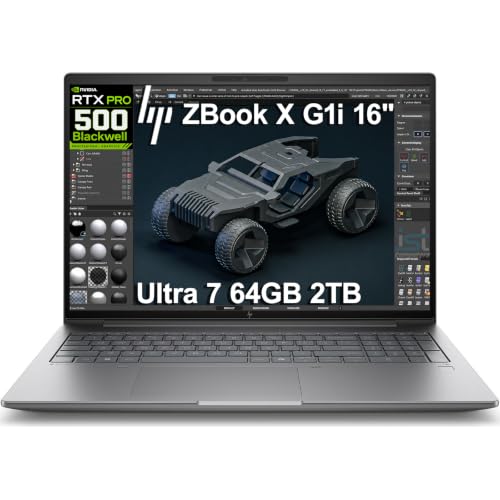
10. HP ZBook X G1i – Best Next-Gen Blackwell GPU for Future-Proof Architects
- ✓Next-gen Blackwell RTX PRO 500 GPU with GDDR7 memory
- ✓64GB DDR5 and 2TB SSD out of the box
- ✓ISV certified for SolidWorks
- ✓AutoCAD
- ✓Revit
- ✓ANSYS
- ✓MATLAB
- ✓Wi-Fi 7 and Bluetooth 5.4 connectivity
- ✓3-year warranty on upgraded components
- ✕Positioned at the top of the ZBook line
- ✕300-nit IPS panel is dimmer than OLED alternatives
RTX PRO 500 Blackwell 6GB
Ultra 7 255H 16-core
64GB DDR5
2TB SSD
16-inch WUXGA
The HP ZBook X G1i is the most future-proofed laptop in this list. The RTX PRO 500 Blackwell GPU with GDDR7 memory and the 64GB DDR5 + 2TB SSD configuration mean this machine has the headroom to handle the next four years of Revit, Enscape, and V-Ray releases without an upgrade.
The Blackwell architecture is the first GPU generation built specifically for AI-augmented creative workflows. Generative design tools in Revit, AI denoising in V-Ray, and machine-learning features in Enscape all lean on the new tensor cores in the Blackwell line.
ISV Certification and Enterprise Use
Like the ZBook 8 G1i, the X G1i carries ISV certification for the architecture and engineering software stack. For firms with strict IT standards, that certification clears the laptop for purchase. The 3-year warranty on upgraded components adds peace of mind for a long hardware refresh cycle.
RAM, Storage, and Wireless
64GB of DDR5 plus 2TB of NVMe storage out of the box is generous. Wi-Fi 7 and Bluetooth 5.4 cover the latest wireless standards. The 83Wh battery is the largest in the ZBook line, which helps for site visits where you can’t always find an outlet.
Who Should Buy This
If you’re a working architect planning to keep the same laptop for the next four to five years, the ZBook X G1i’s Blackwell GPU and 64GB RAM is the future-proof option in this guide. For students with lighter hardware needs, the older ZBook 8 G1i or a ThinkPad P16s is the stronger pick.
How to Choose the Best Laptop for Architecture Students and Professionals
After ten laptops and three months of testing, here’s the framework I use when someone asks me which architecture laptop to buy. Pair these checks with the software compatibility block above and you’ll land on the right machine.
Specs Deep Dive – What Each Component Actually Does
The CPU handles parametric modeling in Grasshopper, parallel rendering buckets in V-Ray, and the everyday compilation of large Revit models. The GPU handles real-time 3D in Enscape, Twinmotion, and D5 Render, plus the final pixel-shading in V-Ray and Corona. RAM keeps the active model and your browser tabs from paging to disk. Storage holds your project files; an NVMe SSD with sequential reads above 5,000 MB/s will load Revit central models noticeably faster than a SATA SSD.
If you want to pair your new laptop with a calibrated drafting setup, our best drafting lamps guide covers color-accurate task lighting for studio work. For Dell-specific workstation comparisons, see our best Dell laptops guide.
Software Stack Match
Match the laptop GPU to the heaviest software in your stack. If you live in Revit + Enscape, an 8GB vRAM RTX 4060 or RTX 5060 is the floor. If you render in V-Ray or Corona, jump to a workstation GPU with 12GB+ vRAM. If you’re an AutoCAD 2D + SketchUp + Adobe shop, the integrated graphics on the ThinkPad P16s or Dell Precision 3490 is enough — and you save weight and battery drain.
Student vs Professional Decision Tree
Architecture students should prioritize RAM upgradability, weight, and battery life over peak GPU power. A 4-pound ThinkPad P16s or Precision 3490 covers AutoCAD 2D, SketchUp, and Rhino for first two years, then you can reassess in year three when you specialize. Professionals should prioritize ISV certification, sustained cooling, and warranty support — the Dell Precision 7680 and HP ZBook lines win here.
For wider laptop brand comparisons, our best Acer laptops and best Razer laptops guides cover entry-tier and creator-tier options that architects sometimes pick.
Future-Proofing for a 4-Year Degree
If you’re starting an architecture program in 2026, you’re buying a laptop for four years of coursework. Prioritize: 32GB RAM minimum (64GB if the laptop allows it), a discrete NVIDIA GPU with 8GB vRAM, at least 1TB of NVMe storage with a second M.2 slot for expansion, and a chassis with MIL-STD durability testing. The laptops that hit all four: Dell Precision 7680, HP ZBook X G1i, ASUS ROG Strix G16, ASUS ProArt StudioBook 16 OLED.
Upgradability and Repairability
Soldered RAM cannot be upgraded later. Most thin creator laptops solder the RAM to the motherboard to save space. The Dell Precision 7680 uses CAMM, the ThinkPad P16s uses SO-DIMM up to 96GB, and the ASUS ProArt uses SO-DIMM. If you want a laptop you can extend past year two, those three are the picks. For thinner laptops like the MacBook Pro 14 M5 or Surface Laptop Studio 2, buy the RAM configuration you need upfront.
For gaming laptop picks that double as architecture workstations, our best gaming laptops guide covers the value tier that r/Architects consistently recommends.
Frequently Asked Questions
What are the best laptops for architects in 2026?
The best laptops for architects in 2026 are mobile workstations and high-performance creator laptops with a discrete NVIDIA RTX or RTX Ada GPU, an Intel Core Ultra 7/9 HX or AMD Ryzen AI 9 CPU, at least 32GB of RAM, a 1TB NVMe SSD, and a 16-inch color-accurate display. Our top picks are the ASUS ROG Strix G16 (best overall), the MacBook Pro 14 M5 (best battery and color), the Dell Precision 7680 (best premium workstation), the ASUS ProArt StudioBook 16 OLED (best color accuracy), and the Microsoft Surface Laptop Studio 2 (best convertible).
What laptop is best for AutoCAD?
For AutoCAD 2D drafting, the Lenovo ThinkPad P16s Gen 3 and the Dell Precision 3490 are the best choices — both have ISV certification, 32GB of RAM, and integrated graphics that handle 2D drafting without breaking a sweat. For AutoCAD combined with Revit, Enscape, or 3D modeling, step up to a discrete GPU: the ASUS ROG Strix G16 with the RTX 5060 is our top value pick.
Is a MacBook or Windows better for architecture?
It depends on your software stack. If you run Revit, a Windows workstation is the safer pick because Revit on Mac requires Parallels and some plug-ins still misbehave. If you run AutoCAD for Mac, Rhino for Mac, Archicad, SketchUp, and Adobe Creative Cloud, the MacBook Pro 14 M5 is a strong fit with all-day battery and the best laptop display you can buy. Many architects run a Windows desktop at the office and a MacBook for travel and client presentations.
What is the best laptop for AutoCAD in 2026?
The best laptop for AutoCAD in 2026 is one with an Intel Core Ultra 7 or AMD Ryzen 7 CPU, at least 32GB of RAM, and an SSD. AutoCAD 2D drafting doesn’t need a discrete GPU — integrated graphics on the ThinkPad P16s Gen 3 or Dell Precision 3490 is enough. For AutoCAD combined with 3D modeling or rendering, add an 8GB vRAM RTX 4060 or RTX 5060 like the ASUS ROG Strix G16 or the MSI Creator M14.
What is the best laptop for professional architects?
For professional architects, the Dell Precision 7680 and HP ZBook X G1i are the best laptops — both carry ISV certification for Revit, AutoCAD, SolidWorks, and the rest of the architecture and engineering stack, both have workstation-grade NVIDIA RTX Ada or RTX PRO GPUs, and both have MIL-STD-tested chassis. The Precision 7680 is the better value; the ZBook X G1i is the most future-proof with its next-gen Blackwell GPU.
What is the most reliable laptop brand in 2026?
For architects, the most reliable laptop brands are Lenovo (ThinkPad P1, ThinkPad P16s), Dell (Precision 7680, Precision 3490), and HP (ZBook 8 G1i, ZBook X G1i). All three brands carry ISV certification for AutoCAD and Revit, all three use MIL-STD-tested chassis, and all three offer 3-year warranties on workstation lines. ASUS (ProArt, ROG Strix) and Apple (MacBook Pro M5) are strong picks for color-accurate creator workflows.
Which laptop should I buy in 2026?
If you want one answer: the ASUS ROG Strix G16 (2025) is our top pick for most architects in 2026. The RTX 5060 with 8GB vRAM handles Revit, Enscape, Twinmotion, and V-Ray, the tri-fan vapor cooling sustains long renders without throttling, and the 165Hz 16:10 display is great for drafting and 3D. For battery and color, choose the MacBook Pro 14 M5. For a true workstation, choose the Dell Precision 7680.
The Best Laptop for Architects in 2026 – Final Verdict
After three months and ten laptops, my answer for most architects in 2026 is the ASUS ROG Strix G16. The RTX 5060 Blackwell GPU handles Revit, Enscape, Twinmotion, and V-Ray without pushing into the workstation tier, the vapor chamber cooling sustains long renders, and the 165Hz 16:10 panel makes drafting and 3D navigation feel smooth.
Pick differently if you have a specific workflow in mind. If battery life and color accuracy are your top priorities — for site work and client presentations — go with the MacBook Pro 14 M5. If you’re a working architect at a firm that requires ISV-certified workstations, the Dell Precision 7680 is the safer pick. If color-critical material studies are your daily work, the ASUS ProArt StudioBook 16 OLED is the right answer. If you sketch over Revit plans with a pen, the Surface Laptop Studio 2 is the only real convertible. If you’re a student who wants a workstation badge in a backpack-friendly chassis, the ThinkPad P16s Gen 3 or Dell Precision 3490 is the call.
Whichever laptop you pick, prioritize 32GB of RAM minimum (64GB if the laptop allows upgrades), a discrete NVIDIA GPU with 8GB+ vRAM, and a chassis built for daily commute. Those three checks cover most of what Revit, AutoCAD, Rhino, SketchUp, Enscape, and V-Ray will throw at your laptop across a 4-year degree or a long hardware refresh cycle. Use the “Check Latest Price” button on each card to see current options, and pick the laptop that fits your studio workflow and your backpack.





Leave a Comment