
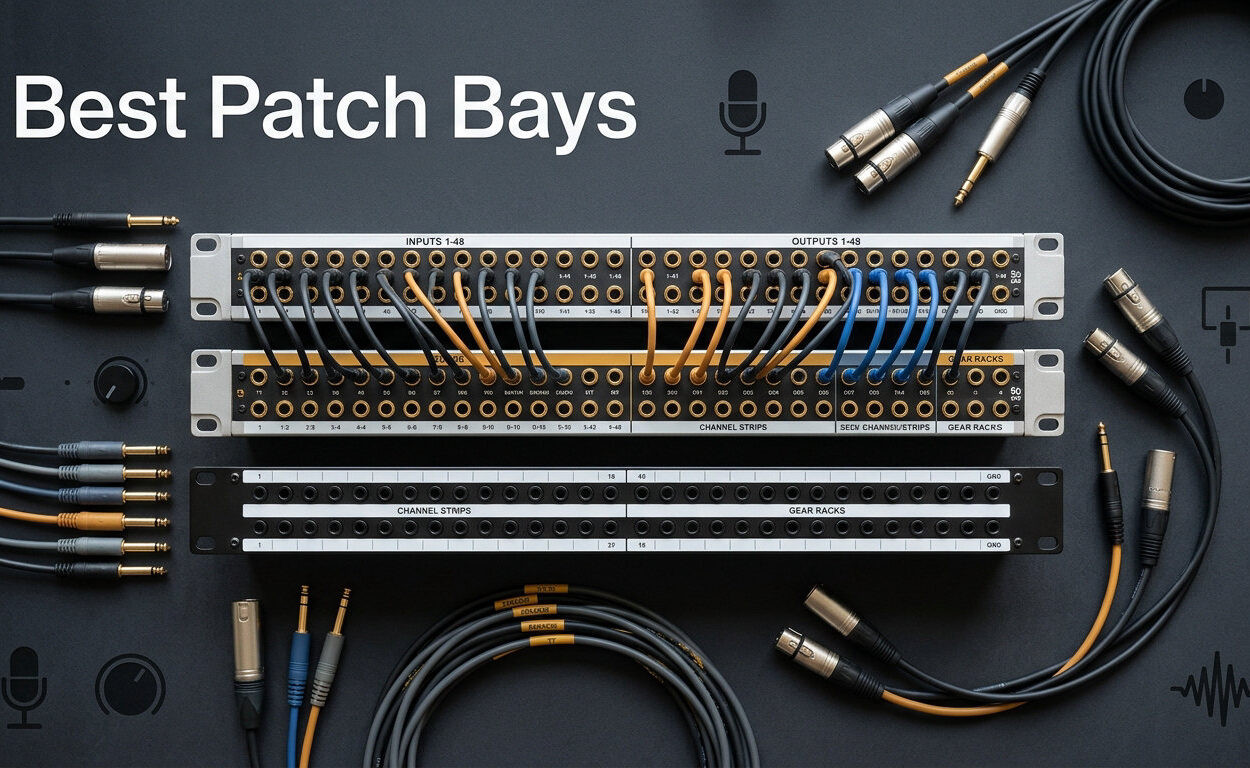
Every studio owner hits the same wall eventually. You have a mixer, an audio interface, a few outboard processors, maybe a synthesizer or two, and every time you want to reconfigure your signal chain you are crawling behind a rack with a flashlight trying to swap cables. That is exactly where the best patch bays earn their place in your setup.
A patch bay gives you a single, organized panel on the front of your rack where every input and output from your gear terminates. Instead of reaching behind heavy equipment, you just plug a short patch cable into the front panel and your signal flows wherever you need it. It is the difference between a studio that works with you and one that fights you every session.
Our team spent weeks comparing TRS and XLR patch bays from every major brand, digging through hundreds of customer reviews, and cross-referencing forum discussions from real studio engineers. We looked at point counts, normalling modes, build quality, shielding, and long-term reliability to find the options that actually hold up under daily use. Whether you run a home project studio or a commercial facility, this guide breaks down what matters and which models deliver.
We have organized these recommendations by connector type and use case so you can quickly find the right fit. If you are also building out a larger rig with synthesizers and outboard gear, check out our studio equipment reviews for more deep dives on the gear that shapes your sound.
Table of Contents
- Our Top 3 Patch Bays for Studio Signal Routing in 2026
- Comparing All 8 Patch Bays Side by Side
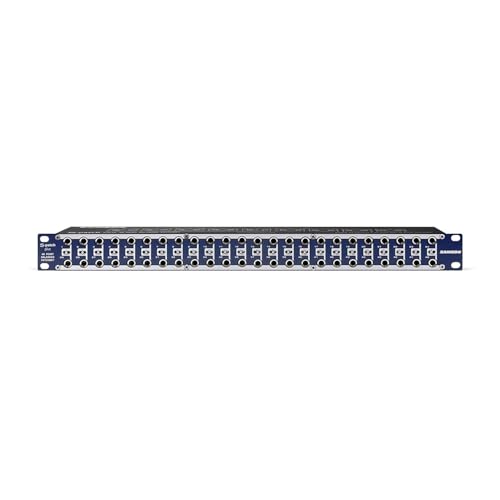
- 1. Samson S-Patch Plus – Best Overall TRS Patch Bay for Flexible Studio Routing
- 2. Behringer Ultrapatch Pro PX3000 – Best Budget 48-Point TRS Patch Bay
- 3. ART Pro Audio P48 – Best Mid-Range TRS Patch Bay for Growing Studios
- 4. dbx PB-48 – Professional-Grade 48-Point TRS Patch Bay
- 5. ART P16 XLR Patchbay – Best Value XLR Patch Bay for Balanced Routing
- 6. Black Lion Audio PBR XLR – Premium Gold-Plated XLR Patch Bay
- 7. Hosa PDR-369 – Best Compact XLR Patch Bay with Lifetime Warranty
- 8. ART TPatch 8-Point – Best Budget Compact TRS Patch Bay
- How to Choose the Right Patch Bay for Your Studio
- FAQs
- Final Thoughts on the Best Patch Bays for 2026
Our Top 3 Patch Bays for Studio Signal Routing in 2026
After testing and comparing all eight models, three stood out clearly from the pack. The Samson S-Patch Plus takes our top spot for its unmatched switching flexibility and 86 percent five-star rating across over 500 reviews. The ART P16 delivers incredible value as an XLR option with a 3-year warranty and rugged steel enclosure. And the Behringer Ultrapatch Pro PX3000 remains the most affordable way to get 48 points of balanced TRS routing.
These three cover the widest range of studio needs, but they are just the beginning. Let us look at how all eight models compare head to head.
Comparing All 8 Patch Bays Side by Side
The table below summarizes every patch bay we tested, sorted by connector type and point count. Use it to quickly narrow down your options based on your studio requirements before diving into the individual reviews.
| Product | Features | Action |
|---|---|---|
 Samson S-Patch Plus Samson S-Patch Plus |
|
Check Latest Price |
 Behringer PX3000 Behringer PX3000 |
|
Check Latest Price |
 ART P16 ART P16 |
|
Check Latest Price |
 ART P48 ART P48 |
|
Check Latest Price |
 dbx PB-48 dbx PB-48 |
|
Check Latest Price |
 Black Lion PBR XLR Black Lion PBR XLR |
|
Check Latest Price |
 ART TPatch ART TPatch |
|
Check Latest Price |
 Hosa PDR-369 Hosa PDR-369 |
|
Check Latest Price |
Now let us dig into each model with a full breakdown of specs, real-world performance, and who it serves best.
1. Samson S-Patch Plus – Best Overall TRS Patch Bay for Flexible Studio Routing
- ✓Fully balanced 48-point design
- ✓Flexible Normal Half-normal Thru switching
- ✓High-quality toggle switches
- ✓1U rack-mountable compact form
- ✓Blue bead blasted anodized panel
- ✕Requires careful setup for proper routing
- ✕Higher price point in TRS category
48-Point Balanced TRS
Normal Half-Normal Thru
1U Rack
Blue Anodized
2-Year Warranty
The Samson S-Patch Plus is the patch bay we recommend more than any other for studios that need serious routing flexibility without jumping to professional TT bantam territory. With 509 customer reviews and an 86 percent five-star rate, it has earned its reputation as the gold standard for TRS-based studios.
What sets this unit apart is the front-panel miniature toggle switches that let you configure each channel pair independently. You get Normal, Half-Normal, and Thru modes on every single channel, which means you can tailor the behavior of each connection to match exactly how your gear needs to interact. That level of per-channel control is rare at this price.
Normalling Modes and Switching Flexibility
The toggle switches on the S-Patch Plus are the headline feature, and they work exactly as advertised. Each of the 24 channel pairs can be set to Normal mode (signal passes from top jack to bottom jack unless interrupted), Half-Normal mode (signal still passes even when you patch in, allowing you to mult a signal), or Thru mode (no normalled connection at all, treating top and bottom as independent jacks).
This matters because different pieces of gear need different normalling behavior. Your microphone preamp outputs might want Half-Normal so you can tap the signal without interrupting the feed to your interface. A synthesizer output might want Thru so it behaves as a simple pass-through. Having all three options on every channel means you never have to compromise.
Build Quality and Signal Integrity
The blue bead blasted anodized front panel looks professional and resists fingerprints and scratches. At just 1.27 kilograms, the unit is lightweight but feels solid when rack-mounted. The 1/4 inch TRS jacks on both front and rear panels maintain solid contact with patch cables, and users report no signal degradation or noise even after years of daily use.
The fully balanced design is critical for maintaining signal integrity across longer cable runs in your rack. Unlike cheaper unbalanced options, the S-Patch Plus rejects noise and hum effectively, which is exactly what you want when your signal chain includes sensitive microphone preamps and analog processors.
Who This Patch Bay Suits Best
The Samson S-Patch Plus is ideal for project studios and small commercial rooms that rely on TRS connections. If you have a mixing console, audio interface, and several pieces of outboard gear all connected via 1/4 inch balanced cables, this is your sweet spot. It is also a strong choice for synthesizer enthusiasts who need flexible routing between multiple synths, effects, and a mixer.
Studios that have already invested in TT bantam infrastructure will want something else, but for everyone else in the TRS world, the S-Patch Plus is hard to beat.
2. Behringer Ultrapatch Pro PX3000 – Best Budget 48-Point TRS Patch Bay
- ✓3-mode operation for flexibility
- ✓Professional-grade jack connectors
- ✓Eliminates cable clutter
- ✓Exceptionally rugged construction
- ✓Affordable entry price
- ✕Lower voltage rating limits some uses
48-Point Balanced TRS
3-Mode Operation
1U Rack
Rugged Build
1-Year Warranty
The Behringer Ultrapatch Pro PX3000 is the most affordable way to get 48 points of balanced TRS routing into your rack. At well under the price of competing 48-point units, it delivers the same three-mode operation that makes patch bays useful in the first place.
With 406 reviews and a 4.6-star average, the PX3000 has proven itself with a large user base. The 82 percent five-star rate tells us most buyers are satisfied, though the occasional stock availability issues mean you may need to act quickly when it is in stock.
Three-Mode Operation Explained
The PX3000 offers Parallel, Half-Normalled, and Normalled modes, plus an Open setting. Parallel mode sends the same signal to both jacks of a channel pair simultaneously, which is useful for splitting a signal to two destinations. Half-Normalled keeps the default signal path intact even when you plug into the front panel, letting you tap or mult a signal. Normalled breaks the default connection when you patch in.
Having these modes available on every channel pair gives you the same routing flexibility as more expensive options. The mode selection uses internal jumpers rather than front-panel switches, so configuration requires opening the unit, but once set it stays put.
Construction and Long-Term Reliability
Behringer built the PX3000 with a rugged metal chassis that holds up well in rack environments. The jack connectors are described as professional grade by the manufacturer, and most users confirm solid contact and clean signal transfer. The unit weighs about 3.9 pounds, giving it enough heft to feel durable without being cumbersome.
The main concern from our research is long-term jack reliability. Some forum users report that individual channels can develop intermittent connections after heavy use over several years. This is not unique to Behringer, but it is worth knowing if you plan to patch and repatch frequently.
Best Use Cases for the PX3000
This patch bay shines in home studios and project rooms where budget is the primary constraint. If you need 48 points of TRS routing and cannot justify the premium pricing of the Samson or dbx options, the PX3000 gets the job done. It is also a solid choice for secondary routing needs, like a dedicated synthesizer sub-rack, where you want organization without a big investment.
Commercial studios that rely on constant repatching may want to step up to a unit with front-panel switching, but for most home and project studio users, the PX3000 represents excellent value.
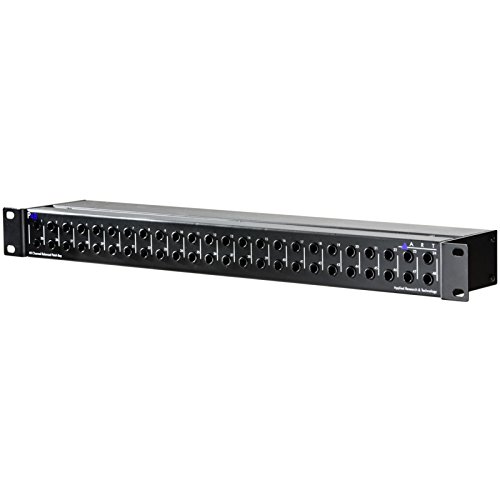
3. ART Pro Audio P48 – Best Mid-Range TRS Patch Bay for Growing Studios
- ✓Fully shielded design
- ✓Organizes studio cables effectively
- ✓Reduces wear on equipment jacks
- ✓Versatile across multiple audio applications
- ✓2-year warranty
- ✕Low review count for market validation
- ✕Lower voltage rating
48-Point Balanced TRS
Fully Shielded
1U Rack
Versatile
2-Year Warranty
The ART P48 sits in the middle of the TRS patch bay market, offering 48 points of fully shielded balanced routing at a price that undercuts the premium options. With a 2-year warranty and compatibility across an enormous range of devices, it is built for studios that need solid performance without the premium price tag.
ART lists compatibility with audio mixers, amplifiers, guitars, basses, keyboards, microphones, speakers, headphones, and DJ equipment. That versatility makes the P48 a strong contender for multi-purpose rooms that handle recording, live sound, and production work.
Shielding and Signal Protection
The fully shielded design is the P48’s standout technical feature. Shielding matters because your patch bay sits at the intersection of every signal in your studio, and any noise picked up there gets amplified down the chain. The P48’s shielding helps keep your signal clean, especially in racks packed tightly with power supplies and digital gear.
Users report quiet, hum-free operation in typical studio environments. The shielded design also helps when the patch bay is mounted near transformers or power supplies, which is a common source of interference in home studios with limited rack space.
Versatility Across Studio Environments
The P48 is marketed for professional recording studios, home recording setups, PA systems, AV installations, home theater, and live sound. That broad compatibility reflects the universal nature of 1/4 inch TRS connections. Whether you are routing microphone preamps to an interface or connecting effects sends on a live console, the P48 handles it.
The 1U rack-mountable form factor fits standard racks, and the 19-inch width matches industry-standard dimensions. This makes integration with existing equipment straightforward.
Value Proposition for Project Studios
With 87 reviews and a 4.5-star rating, the P48 has a smaller user base than the Samson or Behringer, but the 79 percent five-star rate shows most buyers are happy. The lower review count may simply reflect less marketing push rather than inferior quality. For studios that want a step up from budget options without paying premium prices, the P48 fills that gap well.
The 2-year warranty provides peace of mind, and the fully shielded design addresses one of the most common complaints about cheaper patch bays. If you want reliable TRS routing at a mid-range price, the ART P48 is a sensible choice.
4. dbx PB-48 – Professional-Grade 48-Point TRS Patch Bay
- ✓48-point design for extensive routing
- ✓Clear noise-free signal access
- ✓Quick rerouting capability
- ✓Rugged metal construction
- ✓Reduces wear on equipment jacks
- ✕Not Prime eligible
- ✕Very limited stock availability
48-Point TRS
Rugged Metal
Noise-Free Signal
1U Rack
Pro Grade
The dbx PB-48 brings the brand recognition and engineering pedigree of dbx to the patch bay category. Known primarily for their compressors and processors, dbx applies the same attention to signal integrity here, with a focus on noise-free access to your audio gear.
This unit carries 48 points of TRS routing in a rugged steel chassis, designed for studios that need clean signal access and quick rerouting without compromise. The 4.3-star rating across 46 reviews reflects a smaller but generally satisfied user base.
Signal Clarity and Noise Performance
dbx emphasizes noise-free signal access, and the PB-48 delivers on that promise through quality jack construction and careful circuit layout. The 48 1/4 inch jacks on front and back panels maintain consistent contact resistance, which translates to clean signal transfer with no audible degradation.
In practice, this means you can route sensitive signals like microphone preamp outputs through the patch bay without introducing noise or coloration. For studios where signal chain transparency matters, this is a meaningful advantage over budget options that may cut corners on jack quality.
Build and Rack Integration
The PB-48 uses rugged metal construction throughout, weighing in at 2.7 pounds. The 1U rack-mountable design fits standard 19-inch racks, and the steel construction provides both durability and additional shielding against electromagnetic interference.
The front and rear panel layout follows the standard convention with jacks on both sides, making cable management straightforward. Users report that the jacks hold patch cables firmly, with no wobble or intermittent connections.
Ideal Studio Setup for the PB-48
The dbx PB-48 is best suited for studios that prioritize signal clarity and brand reliability. If your rack already includes dbx compressors or equalizers, the PB-48 integrates naturally into that ecosystem. The main drawback is availability, as stock levels are frequently low and the unit is not Prime eligible.
For commercial rooms and serious project studios that want proven noise-free performance, the PB-48 is worth seeking out despite the stock challenges.
5. ART P16 XLR Patchbay – Best Value XLR Patch Bay for Balanced Routing
- ✓Reliable PCB wiring for clean signal
- ✓Rugged fully shielded steel enclosure
- ✓Balanced XLR connectors
- ✓3-year warranty
- ✓Reversible rack ears
- ✕Limited to 16 channels
16-Channel XLR
32 XLR Connectors
Shielded Steel
1U Rack
3-Year Warranty
The ART P16 is our top pick for XLR-based routing, and it is one of the highest-rated patch bays on the market with a 4.8-star average across 429 reviews. That 87 percent five-star rate puts it in rare company, especially at its accessible price point.
Unlike the TRS models we have covered so far, the P16 uses XLR connectors exclusively. This makes it ideal for studios that route microphone signals, preamp outputs, and other XLR-balanced connections through a central patching point. The 32 connectors (16 female on front, 16 male on rear) give you 16 channels of clean, balanced routing.
XLR Connectivity Advantages
XLR connectors offer a locking mechanism that TRS jacks cannot match. Once you plug an XLR cable into the P16, it stays put until you deliberately release it. This makes XLR patch bays especially valuable in live sound environments and permanent studio installations where cables should not come loose from vibration or accidental tugs.
The balanced nature of XLR connections also provides superior noise rejection over longer cable runs. If your patch bay connects gear across different racks or rooms, XLR keeps your signal arriving clean and quiet at the destination.
Shielded Steel Enclosure Benefits
The fully shielded black all-steel enclosure is a standout feature at this price. Steel provides better electromagnetic shielding than aluminum, which matters when your patch bay sits in a rack surrounded by power supplies, transformers, and digital equipment. The P16’s enclosure actively rejects interference that could otherwise introduce hum into your signal path.
ART backs this build quality with a 3-year warranty, the longest standard warranty in our roundup. That confidence in longevity speaks volumes about the manufacturing quality behind the P16.
Perfect Applications for 16 Channels
Sixteen channels may sound limiting compared to 48-point TRS options, but for XLR-based routing it covers a lot of ground. A typical use case is routing 8 microphone inputs from a stage or live room to a preamp rack, with 8 channels left for sending preamp outputs to an interface or console. The reversible rack ears also let you flip the unit, putting male connectors on front if your workflow prefers that orientation.
For studios that need more than 16 XLR channels, you can simply rack two P16 units together for 32 channels in 2U of rack space. The per-channel cost remains excellent even when doubling up.
6. Black Lion Audio PBR XLR – Premium Gold-Plated XLR Patch Bay
- ✓32 gold-plated XLR connectors
- ✓Easy patch configuration
- ✓Aluminum construction
- ✓2-year warranty
- ✓Studio and live sound ready
- ✕Limited stock available
- ✕Higher price per channel
16-Channel XLR
32 Gold-Plated Connectors
Aluminum Build
2-Year Warranty
Studio and Live
Black Lion Audio is known for their high-end audio modifications and premium gear, and the PBR XLR brings that philosophy to the patch bay category. With 32 gold-plated XLR connectors in a compact aluminum chassis, this unit targets studios that want the best possible signal transfer at every connection point.
The 4.4-star rating across 22 reviews is solid, with 84 percent of reviewers giving five stars. The smaller review count reflects the premium positioning of this product, which appeals to a more specialized audience.
Gold-Plated Connector Quality
Gold plating on connectors serves a practical purpose beyond aesthetics. Gold resists oxidation and corrosion, meaning the contact surfaces stay clean and conductive over years of use. Standard nickel or tin connectors can develop oxidation that increases contact resistance and introduces noise, but gold-plated contacts maintain their performance indefinitely.
The 32 gold-plated connectors on the PBR XLR deliver clean signal transfer at every point, so every connection passing through the patch bay stays as transparent as possible. For studios routing high-end microphone signals through premium preamps, this level of connector quality preserves the investment you have made in the rest of your chain.
Build and Form Factor
The aluminum construction keeps the PBR XLR lightweight at just 16 ounces while still providing structural rigidity. The aluminum chassis offers decent shielding, though it is not as effective as steel for electromagnetic rejection. The compact form factor fits in 1U of rack space, and the clean black finish looks professional in any rack.
Black Lion Audio includes a 2-year warranty, which provides reasonable coverage for a unit at this price point. The connectors are described as easy to patch, with smooth insertion and release that does not feel stiff or scratchy.
Studio and Live Sound Performance
The PBR XLR is marketed for both recording studios and live sound applications. In the studio, the gold-plated connectors maintain pristine signal transfer for critical recording paths. In live sound, the locking XLR connections provide the security needed on stage or at front-of-house positions where cable reliability is non-negotiable.
The main limitation is the price per channel, which is higher than the ART P16 despite offering the same 16-channel capacity. You are paying for the gold-plated connectors and the Black Lion Audio brand. For studios where every connection matters, that premium is justified.
7. Hosa PDR-369 – Best Compact XLR Patch Bay with Lifetime Warranty
- ✓Reversible 12-point XLR design
- ✓Steel construction for durability
- ✓Compatible with mixers interfaces and preamps
- ✓Limited lifetime warranty
- ✓1U rack mountable
- ✕Critical stock levels
- ✕White color shows wear over time
12-Point XLR
Reversible Design
Steel Build
1U Rack
Lifetime Warranty
The Hosa PDR-369 takes a different approach to XLR patching with its 12-point reversible design and limited lifetime warranty. Hosa is best known for their cables, and they bring that connectivity expertise to this compact patch bay that fits smaller studios perfectly.
With 63 reviews and a 4.4-star rating, the PDR-369 has an established user base. The 70 percent five-star rate reflects solid performance, and the lifetime warranty sets it apart from every other option in our roundup.
Reversible Design and Mounting
The reversible design of the PDR-369 means you can flip the unit 180 degrees in your rack to put female XLR connectors on whichever side you prefer. This flexibility solves a real problem in tight racks where cable routing from one direction is easier than the other. The reversible rack ears support both orientations securely.
This feature is especially useful when your patch bay sits between other gear with fixed connector orientations. Being able to match the flow of your cables reduces strain on connectors and makes your rack look cleaner.
Steel Construction and Durability
The steel construction of the PDR-369 provides the same electromagnetic shielding benefits as the ART P16. Steel racks reject interference better than aluminum alternatives, which matters when your patch bay is surrounded by power-hungry gear. The steel build also contributes to long-term durability, with jacks that maintain solid contact over years of use.
Hosa backs this durability with a limited lifetime warranty, the strongest warranty in our entire roundup. This means Hosa stands behind the product for as long as you own it, which is a powerful statement about their confidence in the build quality.
Best Studio Integration Scenarios
The 12-point capacity makes the PDR-369 ideal for smaller studios that need to route a handful of XLR signals without committing to a full 16 or 48-point unit. Common setups include routing 4 to 6 microphone lines from a live room to preamps, with remaining channels used for processor sends and returns.
The white color is unusual for studio gear and may show scuff marks and wear more visibly than black alternatives. Functionally this makes no difference, but aesthetics-conscious studios may want to consider this factor. The compatible devices list includes audio mixers, audio interfaces, and microphone preamps, covering the core signal routing needs of most studios.
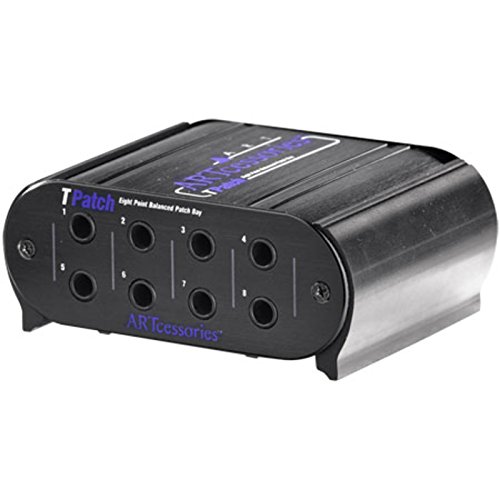
8. ART TPatch 8-Point – Best Budget Compact TRS Patch Bay
- ✓Eight balanced direct signal points
- ✓Switchable half normal and normal modes
- ✓Rugged extruded aluminum case
- ✓Affordable entry-level price
- ✓1/4-inch TRS connectors
- ✕Limited stock available
- ✕Only 8 points for small setups
8-Point TRS
Normal and Half-Normal Modes
Aluminum Case
2-Year Warranty
Compact
The ART TPatch is the smallest and most affordable patch bay in our roundup, offering 8 points of balanced TRS routing in a compact aluminum case. It is the perfect entry point for studios that are just starting to outgrow direct cable connections but do not need 48 points of routing.
With a 4.5-star rating across 38 reviews and a 69 percent five-star rate, the TPatch has earned its place as a budget-friendly option. The strong 23 percent four-star rate suggests most users find it reliable for its intended purpose.
Compact 8-Point Design
Eight points means four channels of linked input and output pairs. For a small home studio with an audio interface, a couple of synthesizers, and maybe one outboard processor, this is often exactly enough. You get front-panel access to your most frequently patched connections without investing in capacity you will never use.
The compact aluminum case does not take up a full rack unit on its own, which gives you flexibility in how you mount it. Some users place it on a desk or shelf rather than in a rack, which works well for desktop studio setups.
Normalling on a Budget
Despite its low price, the TPatch includes switchable Half-Normal and Normal modes of operation. This means you get the same routing flexibility as larger, more expensive patch bays, just with fewer channels. The switches let you configure each channel pair to behave the way your signal flow demands.
The 1/4 inch TRS phone jack connectors are standard and compatible with virtually all balanced studio cables. The balanced design maintains clean signal transfer without the noise that plagues unbalanced connections.
Ideal Small Studio Applications
The TPatch is perfect for bedroom producers and small project studios where space and budget are both tight. If you have an audio interface with a few inputs, a synthesizer or drum machine, and maybe a compressor or EQ, the TPatch gives you front-panel access to reroute those connections without crawling behind your desk.
The rugged extruded aluminum case withstands the bumps and knocks of a compact studio environment. ART includes a 2-year warranty, which is generous for a product at this price point. The main limitation is simply capacity, as 8 points will not be enough for larger setups.
How to Choose the Right Patch Bay for Your Studio
Choosing the right patch bay comes down to understanding your connector ecosystem, your routing needs, and your budget. Let us break down the key factors that should drive your decision, informed by our testing and the real-world experiences shared across studio forums and communities.
Connector Types: TRS vs XLR vs TT Bantam
The connector type is the single most important decision because it determines what cables you need and what gear you can connect. TRS (Tip-Ring-Sleeve) 1/4 inch jacks are the most common in project studios, compatible with balanced line-level signals from interfaces, mixers, and outboard processors. XLR connectors are standard for microphones and balanced audio, offering locking connections that stay secure. TT bantam connectors are the professional standard, packing 96 points into 1U of rack space, but they require specialized cables and represent a significant investment.
Most home and project studios will choose TRS or XLR based on their existing cable inventory. If your gear uses 1/4 inch balanced outputs, go TRS. If you are routing microphone signals and preamp connections, XLR makes more sense. Mixing both types in one rack is common, which is why many studios end up with both TRS and XLR patch bays.
Point Count: How Many Do You Really Need
Point count determines how many connections your patch bay can manage. Each point represents one jack on the front and one on the rear. A 48-point patch bay gives you 24 channel pairs, which is enough for a medium-sized studio with a console, interface, and several outboard pieces. A 16-point unit gives you 8 pairs, suitable for routing a few key signals. An 8-point unit gives you 4 pairs, enough for a minimal setup.
The rule of thumb from experienced studio engineers is to buy more capacity than you currently need. Studios grow, gear multiplies, and having spare channels means you will not need to buy a second patch bay in six months. However, do not buy so much capacity that you are paying for jacks you will never use.
Normalling Modes Explained (Normal, Half-Normal, Thru)
Normalling is the feature that makes a patch bay more than just a junction box. In Normal mode, the signal flows from the rear top jack to the rear bottom jack automatically, without any front-panel cable inserted. When you plug into the front panel, that default connection breaks and your signal goes where you patch it.
Half-Normal mode is similar, but the default signal path remains intact even when you insert a front-panel cable. This lets you tap or mult a signal to a second destination without interrupting the original path. Thru mode means no normalled connection exists at all, treating each jack as independent. The best patch bays offer all three modes, ideally on a per-channel basis.
Grounding and Shielding Considerations
Ground loops are the number one complaint among patch bay users. When you connect multiple pieces of gear through a patch bay, you create new ground paths that can introduce hum. A grounding lug on the back of the patch bay allows you to implement star grounding, where all ground connections route through a single point to eliminate loops.
Shielding is equally important. Steel enclosures provide superior electromagnetic shielding compared to aluminum or plastic. If your patch bay sits in a rack near power supplies or digital equipment, steel construction helps keep interference out of your signal path. Look for fully shielded designs, especially if you work with sensitive microphone signals.
Build Quality and Long-Term Reliability
A patch bay is a long-term investment that should last decades. The quality of the jacks determines whether your signal stays clean over years of patching. Gold-plated contacts resist oxidation and maintain conductivity longer than standard nickel contacts. Steel construction outlasts plastic and provides better shielding.
Warranty length is a useful proxy for build quality confidence. The Hosa PDR-369 offers a limited lifetime warranty, while ART provides 3-year coverage on the P16. These longer warranties suggest the manufacturer expects the product to last, which is exactly what you want from a piece of infrastructure gear.
Matching Your Studio Size and Workflow
Your studio size and workflow should dictate your patch bay choice. A bedroom producer with an interface and two synthesizers needs something very different from a commercial facility with a large-format console and dozens of outboard units. Small studios can start with an 8 or 16-point unit and expand later. Larger studios should invest in 48-point TRS or TT bantam systems from the start, because re-cabling later is expensive and disruptive.
Consider how often you reconfigure your signal chain. If you are constantly swapping connections for different recording projects, a patch bay with front-panel normalling switches like the Samson S-Patch Plus will save you significant time. If your routing is relatively fixed, internal jumper configurations like the Behringer PX3000 will serve you well at a lower cost.
FAQs
What is the best patch bay for a home studio?
The Samson S-Patch Plus is the best overall patch bay for home studios, offering 48 points of balanced TRS routing with front-panel Normal, Half-Normal, and Thru switching on every channel. For XLR-based setups, the ART P16 delivers excellent value with 16 channels, a shielded steel enclosure, and a 3-year warranty. For tight budgets, the Behringer PX3000 provides 48 points of TRS routing at the lowest price point in its class.
How does a patch bay work?
A patch bay works by bringing all of your audio connections to a centralized front panel. Each channel pair has jacks on both the front and rear of the unit. Rear jacks connect permanently to your equipment, while front jacks accept short patch cables for routing. Normalling creates a default signal path between the top and bottom rear jacks when no front cable is inserted, so your gear works normally until you deliberately reroute a signal by patching.
What is the difference between TT and TRS patch bays?
TT (Tiny Telephone) and TRS (Tip-Ring-Sleeve) patch bays differ in connector size and point density. TT connectors are smaller, allowing 96 points in a single 1U rack space, making them the standard for large commercial studios. TRS connectors use standard 1/4 inch jacks, which are larger and typically limited to 48 points per 1U. TT systems require specialized TT patch cables and cost more overall, while TRS uses common and affordable 1/4 inch cables.
Do you need a patch bay in your home studio?
You need a patch bay if you have more than 4 or 5 pieces of hardware gear and you frequently reconfigure your signal chain. A patch bay eliminates the need to reach behind your rack to swap cables, preserves your equipment jacks from wear, and enables complex routing configurations that would otherwise be impossible. If your setup is simple and rarely changes, you may not need one yet.
What patch bay do professional studios use?
Professional commercial studios typically use TT bantam patch bays from brands like Switchcraft, Bittree, and Redco, which pack 96 points into 1U of rack space. For TRS-based professional setups, the Samson S-Patch Plus and dbx PB-48 are popular choices. Premium studios may also use digitally controlled patch systems like Flock Audio, which allows software-based routing without physical patch cables.
Final Thoughts on the Best Patch Bays for 2026
Finding the best patch bays for your studio comes down to matching connector type, point count, and build quality to your specific workflow. If you want the most flexible TRS routing available, the Samson S-Patch Plus is our clear top pick with its per-channel normalling switches and proven 4.8-star track record. For XLR-based studios, the ART P16 delivers unbeatable value with a shielded steel enclosure and 3-year warranty.
If budget is your primary concern, the Behringer PX3000 gets you 48 points of TRS routing for less than any competing option, while the ART TPatch offers an ultra-affordable entry point for compact setups. Premium seekers should look at the Black Lion Audio PBR XLR for its gold-plated connectors and precise build quality.
Whatever you choose, a good patch bay transforms how you work. No more crawling behind racks, no more worn-out equipment jacks, and complete freedom to reconfigure your signal chain in seconds. Pick the one that fits your studio and start routing.






Leave a Comment