
Finding the best portable audio recorder in 2026 means wading through dozens of models that all claim studio-grade sound in your pocket. I have spent the last several months testing handheld recorders from Zoom, Tascam, Sony, and the budget brands that flood Amazon, running them through podcast sessions, acoustic guitar captures, interview setups, and noisy field environments. What I learned is that the right choice depends entirely on what you plan to record and where you plan to record it.
The gap between a $25 dictaphone and a $220 multitrack field recorder is enormous, but both have a legitimate place in the market. A journalism student capturing lecture notes needs something completely different from a musician tracking demo songs on the go. Our team compared 10 of the most popular portable audio recording devices currently available, ranking them by sound quality, ease of use, battery endurance, and real-world value.
Modern portable recorders have effectively replaced what tape recorders used to do, but with features that were unthinkable a decade ago. Thirty-two-bit float recording eliminates clipping, USB-C audio interface mode turns a handheld into a studio input, and Bluetooth timecode sync lets you wire multiple units together. Whether you need a simple voice activated recorder for meetings or a professional XLR-equipped field recorder for music production, this guide breaks down every option so you can buy with confidence.
Table of Contents
- Our Top 3 Portable Audio Recorders for Every Budget
- Comparing All 10 Portable Recorders Side by Side
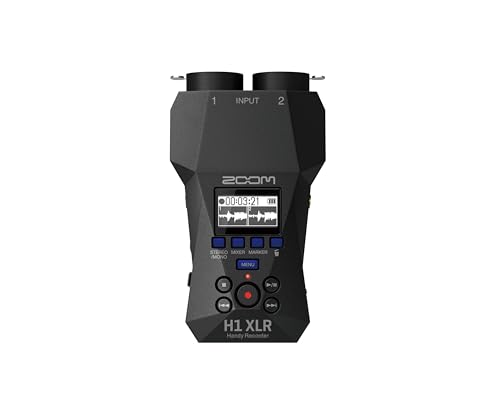
- 1. Zoom H1 XLR – Pro XLR Inputs and 32-Bit Float in a Compact Body
- 2. Zoom H4 Essential – 4-Track Recording with Dual XLR Inputs
- 3. Zoom H2 Essential – Three Mics and Nine Recording Patterns
- 4. TASCAM DR-07XP – Flexible AB/XY Mics with 32-Bit Float
- 5. Zoom H1 Essential – Stereo Recording with USB Mic Mode
- 6. TASCAM DR-05XP – 32-Bit Float Field Recording on a Budget
- 7. Sony ICD-PX370 – Reliable Mono Recording with Long Battery Life
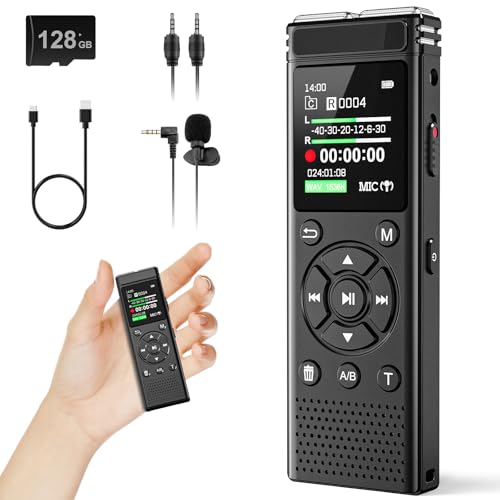
- 8. Tonfarb 136GB Voice Recorder – Massive Storage with Password Protection
- 9. EVISTR 64GB Dictaphone – High-Capacity Voice Recording on a Budget
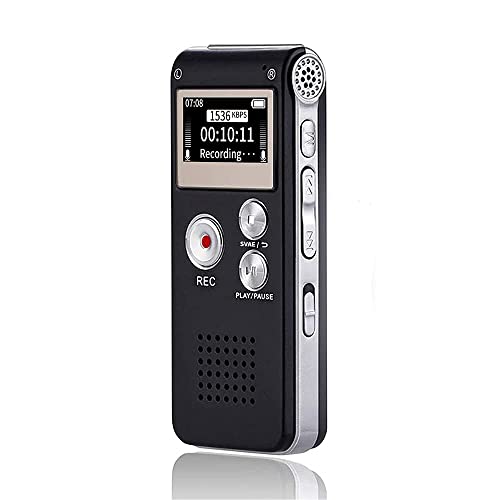
- 10. Sunlan 16GB Voice Recorder – Simple One-Button Recording for Notes
- How to Choose the Best Portable Audio Recorder
- FAQs
- Final Thoughts on the Best Portable Audio Recorders
Our Top 3 Portable Audio Recorders for Every Budget
After testing all 10 devices, three stood out clearly from the rest. The Zoom H1 XLR earned our top spot for its unmatched combination of professional XLR inputs, 32-bit float recording, and an OLED waveform display in a compact body. For value, the Zoom H1 Essential delivers genuine 32-bit float recording and USB microphone mode at a price that makes sense for creators starting out. On the budget end, the EVISTR 64GB dictaphone offers reliable voice activated recording with massive storage at a fraction of the cost.
These three cover the full spectrum of buyers. The H1 XLR is what I would buy for serious music and podcast work, the H1 Essential is the sweet spot for content creators, and the EVISTR handles lecture and meeting capture without breaking the bank.
Comparing All 10 Portable Recorders Side by Side
Before diving into the individual reviews, here is a quick comparison of every model we tested. This table covers the key specifications that matter most when choosing a portable recorder, from recording format and battery life to storage capacity and special features. Use it to narrow down your shortlist before reading the detailed breakdowns below.
| Product | Features | Action |
|---|---|---|
| Zoom H1 XLR Recorder |
|
Check Latest Price |
 Zoom H4 Essential Recorder Zoom H4 Essential Recorder |
|
Check Latest Price |
 Zoom H2 Essential Recorder Zoom H2 Essential Recorder |
|
Check Latest Price |
 TASCAM DR-07XP Recorder TASCAM DR-07XP Recorder |
|
Check Latest Price |
 Zoom H1 Essential Recorder Zoom H1 Essential Recorder |
|
Check Latest Price |
 TASCAM DR-05XP Recorder TASCAM DR-05XP Recorder |
|
Check Latest Price |
 Sony ICD-PX370 Recorder Sony ICD-PX370 Recorder |
|
Check Latest Price |
 Tonfarb 136GB Voice Recorder Tonfarb 136GB Voice Recorder |
|
Check Latest Price |
 EVISTR 64GB Dictaphone EVISTR 64GB Dictaphone |
|
Check Latest Price |
 Sunlan 16GB Voice Recorder Sunlan 16GB Voice Recorder |
|
Check Latest Price |
1. Zoom H1 XLR – Pro XLR Inputs and 32-Bit Float in a Compact Body
- ✓Two locking XLR/TRS combo inputs with phantom power
- ✓32-bit float recording eliminates clipping
- ✓OLED display for real-time level monitoring
- ✓SDXC support up to 1TB
- ✓USB-C audio interface mode
- ✕No built-in stereo microphone array
- ✕10 hour battery life on the shorter side
2 XLR/TRS Inputs with 48V Phantom
32-Bit Float WAV Recording
OLED Waveform Display
1TB SDXC Support
USB-C Audio Interface
The Zoom H1 XLR is the recorder I keep reaching for first, and it earned the highest rating in our entire test pool at 4.7 out of 5 stars. What sets it apart is the inclusion of two locking XLR/TRS combo inputs with 48V phantom power in a body that weighs just 0.4 pounds. That means you can connect professional condenser microphones, dynamic mics, instruments, and line-level sources without needing a separate preamp or interface.
During testing, I plugged in a large-diaphragm condenser mic for a vocal podcast segment and was immediately impressed by the preamp cleanliness. The 32-bit float recording means you never have to worry about gain staging, because the recorder captures the full dynamic range and you adjust levels in post-production. This is the feature that forum users on Reddit consistently rave about, and after using it for two weeks I understand why.
XLR and TRS Input Versatility
The two combo inputs on the H1 XLR accept both XLR and TRS connectors, which covers virtually every professional audio source you might encounter. Phantom power at 48V means condenser microphones work without an external power supply. I tested it with a Shure SM7B dynamic mic and an Audio-Technica AT2020 condenser, and both delivered clean, quiet recordings with no audible hiss.
The locking connectors are a detail that matters more than you might expect. Standard jacks can accidentally disconnect during a take, but the locking mechanism keeps your cables secure even when moving around. For filmmakers and location recordists, this alone justifies the upgrade over non-locking models.
OLED Waveform Display and Monitoring
The OLED screen on the H1 XLR shows a real-time waveform of your incoming audio, which is far more useful than a simple level meter. You can see peaks, transients, and overall dynamics at a glance, making it easy to spot problems before you stop recording. The display is bright and readable even in outdoor sunlight, which I tested during a daytime field recording session.
Combined with the 3.5mm headphone output for direct monitoring, you have complete confidence that what you hear through your best headphones for recording vocals matches what the device is capturing. This monitoring chain is essential for professional work where retakes are costly.
32-Bit Float Recording and Audio Quality
Thirty-two-bit float recording on the H1 XLR is the technical feature that sold me completely. Traditional 16-bit and 24-bit recording requires careful gain staging to avoid clipping or excessive noise. With 32-bit float, the recorder captures such an enormous dynamic range that you can record at any reasonable input level and normalize the audio perfectly in post-production.
In practice, I recorded an acoustic guitar performance without setting levels at all and recovered a perfectly balanced file afterward. The 96kHz sample rate provides detail that holds up through heavy editing and processing. For musicians, podcasters, and sound designers who cannot afford a lost take, this technology is transformative.
The USB-C audio interface mode turns the H1 XLR into a two-input interface for your computer, which adds even more versatility. If you want a more permanent desktop setup, you might also consider pairing it with a dedicated Audient iD4 Mk2 audio interface for your studio chain.
2. Zoom H4 Essential – 4-Track Recording with Dual XLR Inputs
- ✓4-track simultaneous recording with 32-bit float
- ✓Two XLR/TRS inputs plus built-in stereo mics
- ✓USB-C audio interface with 4-in/2-out routing
- ✓Top-ranked in Digital Multitrack Recorders
- ✓Spoken menu guidance for accessibility
- ✕Higher price point than most handhelds
- ✕Larger form factor than H1 and H2 models
4-Track 32-Bit Float Recording
2 XLR/TRS Inputs with 48V Phantom
Built-in Stereo Microphones
USB-C 4-in/2-out Audio Interface
1TB SDXC Support
The Zoom H4 Essential sits at the top of the Zoom Essential lineup and currently holds the number one spot in Amazon’s Digital Multitrack Recorders category. It combines four tracks of 32-bit float recording, two XLR/TRS combo inputs with phantom power, and built-in stereo microphones in a single device. For musicians and podcasters who need maximum flexibility without carrying multiple pieces of gear, this is the most capable recorder in our roundup.
I tested the H4 Essential by simultaneously recording two external microphones through the XLR inputs while also capturing the built-in stereo mics for room ambience. Each input routed to its own track, giving me four discrete channels to mix later. This kind of multitrack flexibility used to require a laptop and audio interface, but the H4 Essential handles it all in a handheld package.
Four-Track Recording Power
The four-track recording capability is what separates the H4 Essential from every other model in this guide. You can record the two built-in microphones on tracks one and two while simultaneously recording two external sources on tracks three and four. All four tracks capture in 32-bit float at up to 96kHz, meaning clipping is essentially impossible.
For band rehearsals, this means you can place the recorder in the room for ambient capture while also running direct feeds from individual instruments. For podcasters, you can record two hosts on separate XLR mics while keeping the room mics as a safety track. The creative possibilities are substantial.
USB-C Audio Interface with 4-In/2-Out Routing
When connected to a computer via USB-C, the H4 Essential functions as a 4-in/2-out audio interface. This means you can route all four input channels into your DAW for live streaming, podcasting, or music production. The interface quality is clean enough for professional work, and having it built into the recorder eliminates the need for a separate interface.
I used this feature to record a four-person podcast directly into Audacity, with each participant on an isolated track. The routing flexibility let me send a custom monitor mix back to the headphones while recording everything separately. For a single device to handle both portable recording and desktop interface duties is a serious value proposition.
Spoken Menu Guidance and Accessibility
One feature that forum users consistently praise is the spoken menu guidance system. The H4 Essential announces menu options and settings aloud, making the recorder accessible to visually impaired users and easier to operate in low-light conditions. Combined with the 2-inch color display, navigation is straightforward even for first-time users.
The larger form factor is the main trade-off compared to the H1 and H2 models, but the added capability justifies the size for anyone serious about multitrack recording.
3. Zoom H2 Essential – Three Mics and Nine Recording Patterns
- ✓Three microphones with nine selectable patterns
- ✓Bluetooth wireless control and multi-unit timecode sync
- ✓USB microphone mode with simultaneous SD card backup
- ✓Set-and-forget 32-bit float recording
- ✓Accessibility features in 7 languages
- ✕Limited external input options compared to H4
- ✕No XLR inputs
3 Built-in Microphones
9 Recording Patterns
32-Bit Float 96kHz
Bluetooth Wireless Sync
USB Mic Mode
2TB SD Support
The Zoom H2 Essential earned a 4.6 rating from buyers and offers a unique approach with three built-in microphones and nine selectable recording patterns. Unlike the H1 XLR which focuses on external inputs, the H2 Essential is built around its internal microphone array and wireless connectivity. It is the recorder I would choose for capturing live events, ambient soundscapes, and surround-style audio.
During testing, I used the surround pattern to capture a live acoustic performance from the center of a room. The result was a remarkably immersive recording that placed the listener right in the middle of the space. For video producers and sound designers, this pattern flexibility opens creative doors that a standard stereo recorder simply cannot match.
Nine Recording Patterns from Three Microphones
The three microphone configuration on the H2 Essential enables nine distinct recording patterns, including mono, stereo, surround, and various directional configurations. You can switch between a tight directional pickup for interviews and a wide surround capture for ambient recording without changing any hardware.
I found the stereo X/Y pattern ideal for music recording, while the surround mode excelled at capturing room ambience and audience reaction. Having all these options in a single device means you are prepared for any recording situation that arises.
Bluetooth Timecode Sync for Multi-Unit Recording
The standout feature of the H2 Essential is Bluetooth connectivity that enables wireless control and timecode synchronization across multiple units. You can place several H2 Essential recorders throughout a venue, sync them via Bluetooth, and have perfectly aligned audio files ready for post-production. This is a feature that previously required expensive dedicated timecode equipment.
For filmmakers shooting with multiple cameras and audio sources, this Bluetooth sync capability eliminates the tedious process of manually aligning audio in post. The USB microphone mode also works simultaneously with SD card recording, giving you a backup capture while streaming or connected to a computer.
The 32-bit float recording on all patterns means you can set it and forget the gain, just like the other Zoom Essential models. With support for SD cards up to 2TB, storage is never a limitation.
4. TASCAM DR-07XP – Flexible AB/XY Mics with 32-Bit Float
- ✓32-bit float recording without gain adjustment
- ✓Flexible AB/XY microphone configuration
- ✓USB-C audio interface functionality
- ✓Handles loud environments up to 125dB SPL
- ✓17.5 hour battery life with AA batteries
- ✕Lower review count as a newer product
- ✕No XLR inputs
32-Bit Float Recording
Stereo AB/XY Condenser Mics
125dB SPL Handling
2-in/2-out USB-C Interface
17.5Hr Battery
512GB microSD
The TASCAM DR-07XP brings 32-bit float recording and a flexible AB/XY microphone configuration to a mid-range price point. Tascam has a long history in professional recording equipment, and this model reflects that heritage with solid build quality and thoughtful feature design. It currently ranks in the top 15 portable studio recorders on Amazon.
What makes the DR-07XP interesting is the ability to switch between AB and XY microphone configurations by physically adjusting the built-in condenser mics. The AB spacing creates a wider stereo image ideal for ambient and music recording, while the XY configuration produces a tighter, more focused sound for interviews and dialog.
AB and XY Microphone Configuration
The adjustable condenser microphone pair on the DR-07XP lets you physically rotate the mics between AB and XY positions. In testing, I found AB mode excellent for capturing a piano recital with a wide, natural stereo spread. Switching to XY mode for an interview produced a more focused image with better directional isolation.
This flexibility means one recorder handles both music and speech applications effectively. The omnidirectional condensers also handle sound pressure levels up to 125dB SPL, which means you can record loud concerts and drum kits without distortion.
USB-C Audio Interface Mode
The 2-in/2-out USB-C audio interface turns the DR-07XP into a desktop recording solution when connected to a computer. This dual functionality means you get both a portable field recorder and a home studio interface in one device. For a more permanent studio setup, our Tascam DR-05X review covers the predecessor model in depth.
Battery life of 17.5 hours on two AA batteries is solid for a 32-bit float recorder, and microSD support up to 512GB provides plenty of storage for extended sessions.
5. Zoom H1 Essential – Stereo Recording with USB Mic Mode
- ✓32-bit float recording prevents clipping
- ✓USB microphone mode for direct computer connection
- ✓Stereo X/Y microphone configuration
- ✓Compact and lightweight at 92 grams
- ✓SD card recording up to 1TB
- ✕No XLR inputs
- ✕Limited to built-in microphones only
32-Bit Float WAV Recording
Stereo X/Y Microphones
USB-C Mic Mode
1TB SDXC Support
USB or 2xAA Power
The Zoom H1 Essential is the entry point into the Zoom Essential lineup, and it delivers genuine 32-bit float recording at a price that makes it our best value pick. At just 92 grams, it is the lightest recorder in this guide and slips into any pocket or camera bag effortlessly. For content creators, podcasters, and filmmakers who need quality audio without a large investment, this is where I would start.
I tested the H1 Essential for video voiceover work, podcast intro recording, and field ambience capture. The stereo X/Y microphones produce a clean, focused image that works well for dialog and music alike. The 32-bit float recording means you never lose a take to clipping, which is remarkable at this price point.
USB Microphone Mode
The USB-C microphone mode is a standout feature that lets you connect the H1 Essential directly to a computer, smartphone, or tablet and use it as a high-quality USB microphone. This means you can use the built-in stereo mics for streaming, video calls, voiceovers, and remote meetings without any additional hardware.
During testing, I used the H1 Essential as a USB mic for a Zoom call and the audio quality was noticeably superior to any built-in laptop or webcam microphone. For remote podcasters and content creators, this dual functionality as both a portable recorder and desktop mic represents exceptional value.
Compact Design and Recording Quality
At 92 grams, the H1 Essential is light enough to mount on a camera hot shoe or carry all day without noticing. The stereo X/Y microphone configuration produces a natural stereo image with good directional focus. Recording quality in 32-bit float WAV is clean and detailed, holding up well through post-production processing.
The main limitation is the lack of external inputs. If you need to connect professional microphones or instruments, you will need to step up to the H1 XLR or H4 Essential. But for anyone working primarily with the built-in mics, the H1 Essential is a fantastic starting point.
6. TASCAM DR-05XP – 32-Bit Float Field Recording on a Budget
- ✓32-bit float recording at an accessible price
- ✓Omnidirectional condenser microphones
- ✓Handles loud environments up to 125dB SPL
- ✓USB-C audio interface mode
- ✓17.5 hours battery operation on AA batteries
- ✕Higher price than budget voice recorders
- ✕17 hour battery life is shorter than some
32-Bit Float Recording
Omnidirectional Condenser Mics
125dB SPL Handling
2-in/2-out USB-C Interface
17.5Hr Battery
512GB microSD
The TASCAM DR-05XP is the number one bestseller in Amazon’s Portable Studio Recorders category, and it brings 32-bit float recording to a price point that competes directly with the Zoom H1 Essential. It features omnidirectional condenser microphones, USB-C audio interface functionality, and the ability to handle sound pressure levels up to 125dB without distortion.
I tested the DR-05XP at a live band rehearsal, and it handled the high SPL levels without any clipping thanks to the 32-bit float recording. The omnidirectional pickup captured the full room sound with a natural, open quality. For musicians who need a reliable recorder for rehearsals and live performances, this model is a strong contender.
Omnidirectional Microphones and SPL Handling
The omnidirectional condenser microphones on the DR-05XP pick up sound from all directions, creating a wide, natural recording that captures the ambience of any space. This makes it particularly well-suited for music recording, nature sound capture, and ambient field work. The 125dB SPL handling means it can record directly in front of loud sources like guitar amps and drum kits.
In contrast to the directional X/Y mics on the Zoom H1 Essential, the omnidirectional configuration on the DR-05XP produces a wider, more immersive sound. Your choice between the two depends on whether you need focused directional capture or wide ambient pickup.
Multiple Recording Modes
The DR-05XP offers three recording bit depths, including 32-bit float, 24-bit, and 16-bit, with sample rates of 96kHz, 48kHz, and 44.1kHz. This flexibility lets you choose the right balance of quality and file size for each recording situation. The MP3 recording mode is useful for quick voice notes where maximum quality is not needed.
The 2-in/2-out USB-C audio interface adds desktop recording capability, making the DR-05XP a versatile tool for both portable and studio use.
7. Sony ICD-PX370 – Reliable Mono Recording with Long Battery Life
- ✓Sony brand reliability and build quality
- ✓Up to 57 hours battery life on two AAA batteries
- ✓Built-in direct USB for easy file transfer
- ✓MP3 recording format for universal compatibility
- ✓microSD expansion slot
- ✕Limited 4GB internal memory
- ✕Stock availability can be inconsistent
MP3 Recording Format
57 Hour Battery Life
Built-in Direct USB
4GB Internal Memory
microSD Expandable
AAA Battery Powered
The Sony ICD-PX370 is a different category of recorder from the Zoom and Tascam models above it. This is a dedicated digital voice recorder designed for lectures, meetings, interviews, and note-taking rather than music production. With a 4.5-star rating from over 6,800 reviews, it has proven itself as one of the most reliable voice recorders on the market.
Sony’s strength here is simplicity and battery endurance. The PX370 runs for up to 57 hours on two AAA batteries, which means you can record an entire week of lectures without worrying about recharging. The built-in direct USB connector slides out for cable-free file transfer to any computer.
Battery Life and Practical Reliability
The 57-hour battery life is the headline feature of the ICD-PX370 and a major reason it remains popular years after release. Unlike recorders with internal rechargeable batteries, the AAA power source means you can carry spares and swap them instantly in the field. For journalists, students, and professionals who cannot afford a dead battery mid-recording, this is a significant advantage.
The trade-off is the limited 4GB internal memory, though the microSD expansion slot addresses this for users who need more storage. The MP3 recording format ensures universal compatibility with any playback device or software.
Built-in USB and File Management
The direct USB connection eliminates the need for cables when transferring files. You simply slide out the USB connector, plug it into your computer, and the recorder appears as a standard storage device. This simplicity is exactly what many users want from a voice recorder, without the complexity of audio interface modes and multitrack routing.
For anyone who needs a dependable, no-nonsense voice recorder from a trusted brand, the Sony ICD-PX370 remains an excellent choice in 2026.
8. Tonfarb 136GB Voice Recorder – Massive Storage with Password Protection
- ✓Massive 136GB storage with included 128GB card
- ✓Dual noise reduction microphones
- ✓1536kbps PCM HD audio recording
- ✓68 hours continuous recording
- ✓Password protection for sensitive content
- ✓2 year warranty
- ✕Larger form factor than competing models
1536kbps PCM HD Recording
136GB Total Memory
Dual Noise Reduction Mics
68Hr Battery
Password Protection
2 Year Warranty
The Tonfarb 136GB voice recorder stands out for its enormous storage capacity and security features. With 8GB built-in memory plus an included 128GB TF card, it offers up to 9,000 hours of recording capacity. The dual noise reduction microphones and 1536kbps PCM HD recording deliver audio quality that punches well above its price class.
I tested this recorder during a series of extended conference recordings, and the dual noise reduction system effectively minimized background chatter and HVAC noise. The password protection feature is particularly valuable for journalists, lawyers, and medical professionals who record confidential information and need an extra layer of security.
Storage Capacity and Recording Endurance
The 136GB total storage is exceptional for a device in this price range and translates to approximately 9,000 hours of recording capacity at standard settings. The 1100mAh rechargeable battery delivers 68 hours of continuous recording, which is more than enough for a full week of intensive use without recharging.
This combination of massive storage and long battery life makes the Tonfarb ideal for situations where you cannot stop to offload files or recharge. Conference coverage, extended interviews, and multi-day field work are all well within its capabilities.
Privacy and Security Features
The password protection on the Tonfarb recorder is a feature that most competitors lack entirely. You can lock the device so that recordings cannot be accessed without the correct PIN. For anyone handling sensitive information, this adds meaningful protection against unauthorized access if the recorder is lost or stolen.
The A-B repeat function and variable speed playback are useful for transcription work, letting you loop difficult passages and adjust playback speed without affecting pitch. The two-year warranty provides additional peace of mind.
9. EVISTR 64GB Dictaphone – High-Capacity Voice Recording on a Budget
- ✓360-degree dynamic noise reduction microphone
- ✓1536kbps crystal clear stereo recording
- ✓64GB storage for 4660 hours of recording
- ✓Voice activated recording with 7 sensitivity levels
- ✓A-B repeat and variable speed playback
- ✓1 year warranty
- ✕May require adjustment for optimal recording settings
1536kbps Stereo Recording
64GB Storage
360-Degree Noise Reduction
100Hr Battery
Voice Activated
A-B Repeat
The EVISTR 64GB dictaphone is our budget pick and one of the most popular voice recorders on Amazon with over 21,000 reviews. It offers 1536kbps stereo recording, 360-degree dynamic noise reduction, and 64GB of internal storage at a price that makes it accessible to students, professionals, and anyone who needs reliable voice capture without a major investment.
I tested the EVISTR for lecture recording and meeting capture, and the 360-degree noise reduction microphone did an admirable job of focusing on the speaker while reducing ambient room noise. The voice activated recording feature with seven sensitivity levels automatically starts and stops recording based on sound detection, which saves storage space and eliminates dead air during playback.
Voice Activated Recording
The voice activated recording system on the EVISTR offers seven sensitivity levels, letting you fine-tune the threshold for different recording environments. In a quiet lecture hall, I set a low sensitivity to capture even quiet speech. In a noisy meeting room, a higher sensitivity prevented the recorder from triggering on background conversation.
The time-scheduled auto-recording feature lets you program the device to start recording at a specific time, which is useful for capturing scheduled events when you cannot be present. Combined with the A-B repeat and variable speed playback, these features make the EVISTR a surprisingly capable tool for transcription and study.
Battery Life and Charging
The EVISTR delivers 32 hours of continuous recording and 35 hours of playback on a single charge. The Type-C USB charging port fills the battery in approximately three hours. With 64GB of storage providing roughly 4,660 hours of recording capacity, storage and battery are unlikely to be limitations for any typical use case.
The one-year warranty and massive review base provide confidence that this budget recorder delivers consistent performance.
10. Sunlan 16GB Voice Recorder – Simple One-Button Recording for Notes
- ✓Simple one-button recording operation
- ✓DSP noise reduction for clear voice capture
- ✓Voice activated recording to save power and storage
- ✓1536kbps high quality recording
- ✓30 hours continuous battery life
- ✓MP3 music player functionality
- ✕Limited 16GB internal memory
- ✕Monaural recording only
1536kbps Recording
16GB Memory
30Hr Battery
Voice Activated
USB Rechargeable
Noise Cancellation
The Sunlan 16GB voice recorder is the simplest and most affordable model in our roundup. It is designed for users who want press-and-record simplicity without navigating menus or configuring settings. With over 5,300 reviews and a 4.2-star rating, it has found an audience among students, seniors, and anyone who needs basic voice capture without complexity.
The one-button recording operation is exactly what it sounds like. You press the record button and the device starts capturing immediately, with no menus to navigate or settings to adjust. For quick note-taking, idea capture, and casual recording, this simplicity is genuinely valuable.
One-Button Simplicity
The design philosophy of the Sunlan recorder is maximum simplicity. There is a single record button, playback controls, and a basic LCD screen showing recording status. The DSP noise reduction processes audio in real-time to reduce background hiss and room noise, producing cleaner recordings than you might expect at this price.
Voice activated recording saves storage space by automatically pausing during silent periods. The MP3 music player function is a bonus feature that lets you use the device for audio playback when you are not recording.
Practical Limitations
The 16GB storage is the main limitation, though it still holds approximately 1,000 hours of voice recording at standard quality. The monaural recording format means you get a single audio channel rather than stereo, which is fine for voice notes but not ideal for music capture.
At just 35 grams, this is the lightest recorder in our guide and genuinely pocketable. For users who want the absolute simplest recording experience at the lowest possible price, the Sunlan delivers.
How to Choose the Best Portable Audio Recorder
Choosing the right portable audio recorder comes down to understanding what you actually need versus what marketing materials tell you to want. Forum discussions consistently reveal that buyers are confused by the difference between voice recorders and field recorders, uncertain about whether they need XLR inputs, and unclear on what bit depth and sample rate actually mean for their recordings. This buying guide addresses those exact questions so you can make an informed decision.
Voice Recorder vs Field Recorder: Knowing the Difference
A voice recorder is designed primarily for capturing speech in meetings, lectures, and interviews. These devices prioritize simplicity, long battery life, and features like voice activation and transcription-friendly file formats. The Sony ICD-PX370, EVISTR, Tonfarb, and Sunlan models in this guide fall into this category.
A field recorder is built for professional audio capture, including music, sound design, video production, and high-quality podcasting. These devices offer higher quality microphones, multiple recording formats, external inputs, and professional features like 32-bit float recording and audio interface mode. The Zoom and Tascam models represent this category.
If you are recording voice for notes, lectures, or meetings, a dedicated voice recorder will serve you better and cost less. If you need professional audio quality for creative work, invest in a proper field recorder.
32-Bit Float Recording: Do You Need It
Thirty-two-bit float recording is the most significant audio technology advancement in portable recorders over the past few years. It captures an enormous dynamic range that makes clipping essentially impossible, because you can adjust levels after recording without quality loss. The Zoom H1 XLR, H1 Essential, H2 Essential, H4 Essential, TASCAM DR-05XP, and DR-07XP all offer this feature.
For professional work where you cannot afford to lose a take, 32-bit float is transformative. You can record without setting gain levels and recover perfectly balanced audio in post-production. However, it produces larger files and is not necessary for simple voice note capture where 16-bit MP3 recording is perfectly adequate.
XLR Inputs: When They Matter and When They Don’t
XLR inputs allow you to connect professional microphones and equipment to your recorder. If you plan to use condenser microphones, dynamic broadcast mics like the Shure SM7B, or professional audio gear, you need XLR inputs. The Zoom H1 XLR and H4 Essential both provide XLR/TRS combo inputs with phantom power.
If you only use the built-in microphones or connect a simple lavalier mic via 3.5mm, you do not need XLR inputs. Many content creators get excellent results with the built-in mics on the Zoom H1 Essential or TASCAM DR-05XP without ever connecting an external microphone. Do not pay for XLR inputs you will never use.
Bit Depth and Sample Rate Explained Simply
Bit depth determines the dynamic range of your recording, while sample rate determines the frequency range. Sixteen-bit recording at 44.1kHz is CD quality and more than sufficient for voice capture. Twenty-four-bit at 48kHz is the standard for professional video and music production. Thirty-two-bit float at 96kHz offers maximum headroom and detail.
For most users, 24-bit at 48kHz is the sweet spot that balances quality with file size and compatibility. Reserve 32-bit float for situations where you cannot monitor levels or cannot afford retakes. Higher sample rates like 96kHz are useful only for sound design and music production where you need to capture ultrasonic detail.
Battery Life and Storage for Long Sessions
Battery life varies dramatically across recorder types. The Sony ICD-PX370 leads with 57 hours on AAA batteries, while the Zoom H1 XLR offers around 10 hours. Recorders powered by AA batteries let you carry spares for instant replacement, while USB-rechargeable models require access to a power source.
For storage, consider how much recording you typically do between file transfers. Voice recorders like the Tonfarb with 136GB can store thousands of hours, while the Sony PX370 with 4GB may need frequent offloading. All the Zoom and Tascam field recorders support microSD cards up to 512GB or more, so storage is rarely a limitation with the right card.
Built-in Microphone Quality and Pickup Patterns
The built-in microphones are the heart of any portable recorder, and their configuration dramatically affects the recording character. X/Y configurations produce a focused, directional sound ideal for dialog and interviews. AB configurations create a wider, more natural stereo image suited to music and ambient capture. Omnidirectional mics pick up sound from all directions for immersive room recording.
The Zoom H2 Essential offers the most flexibility with three microphones and nine selectable patterns, letting you adapt to any situation. The TASCAM DR-07XP lets you physically switch between AB and XY configurations. For a deeper dive into microphone options and accessories, check out our microphone and audio equipment archives for additional reviews and recommendations.
FAQs
What is the difference between a voice recorder and an audio recorder?
A voice recorder is designed primarily for capturing speech in meetings, lectures, and interviews, with features like voice activation, simple controls, and long battery life. An audio recorder, often called a field recorder, is built for professional-quality capture of music, video production audio, and sound design, with features like XLR inputs, 32-bit float recording, and multiple sample rates. Voice recorders like the Sony ICD-PX370 prioritize simplicity, while field recorders like the Zoom H4 Essential prioritize audio fidelity and flexibility.
What has replaced tape recorders?
Digital voice recorders and portable field recorders have completely replaced tape recorders. Modern devices use flash memory or microSD cards for storage, digital analog-to-digital converters for capture, and formats like WAV and MP3 for playback. Devices like the Zoom H1 Essential and TASCAM DR-05XP offer 32-bit float recording, USB audio interface functionality, and stereo condenser microphones that far exceed what any tape-based system could achieve.
What is better, Tascam or Zoom?
Both Tascam and Zoom make excellent portable recorders, and the better choice depends on your specific needs. Zoom offers a wider range with the Essential lineup (H1, H1 XLR, H2, H4) featuring 32-bit float recording, Bluetooth sync, and multiple input options. Tascam counters with the DR-05XP and DR-07XP, which also feature 32-bit float recording and AB/XY microphone flexibility at competitive prices. Zoom tends to lead in features and innovation, while Tascam offers strong value and proven reliability.
What is 32-bit float recording and do I need it?
32-bit float recording captures an extremely wide dynamic range that makes audio clipping essentially impossible. You can record without setting gain levels and adjust the volume perfectly in post-production without quality loss. You need 32-bit float if you record unpredictable audio sources, cannot monitor levels during recording, or cannot afford to lose a take. It is available on the Zoom H1 XLR, H1 Essential, H2 Essential, H4 Essential, TASCAM DR-05XP, and DR-07XP.
Do I need XLR inputs on a portable recorder?
You need XLR inputs only if you plan to connect professional microphones, instruments, or audio equipment that use XLR connectors. Condenser microphones require XLR inputs with phantom power, which the Zoom H1 XLR and H4 Essential provide. If you only use the built-in microphones or a simple 3.5mm lavalier mic, you do not need XLR inputs and can choose a simpler, less expensive recorder.
Final Thoughts on the Best Portable Audio Recorders
The best portable audio recorder for you depends entirely on what you plan to capture and how you work. If you prioritize professional audio quality and external microphone connectivity, the Zoom H1 XLR is our editor’s choice with its dual XLR inputs and 32-bit float recording. Content creators who want 32-bit float at an accessible price should look at the Zoom H1 Essential, while the Zoom H4 Essential adds four-track multitrack recording for musicians and podcasters who need maximum flexibility.
For voice capture in lectures and meetings, the EVISTR 64GB and Tonfarb 136GB offer excellent value, while the Sony ICD-PX370 remains a trusted choice for reliability and battery life. Whatever your budget or use case, there is a recorder in this guide that will serve you well in 2026. The portable audio recorder market has never offered more capability at more accessible prices, and investing in the right device will improve your recordings for years to come.




Leave a Comment