
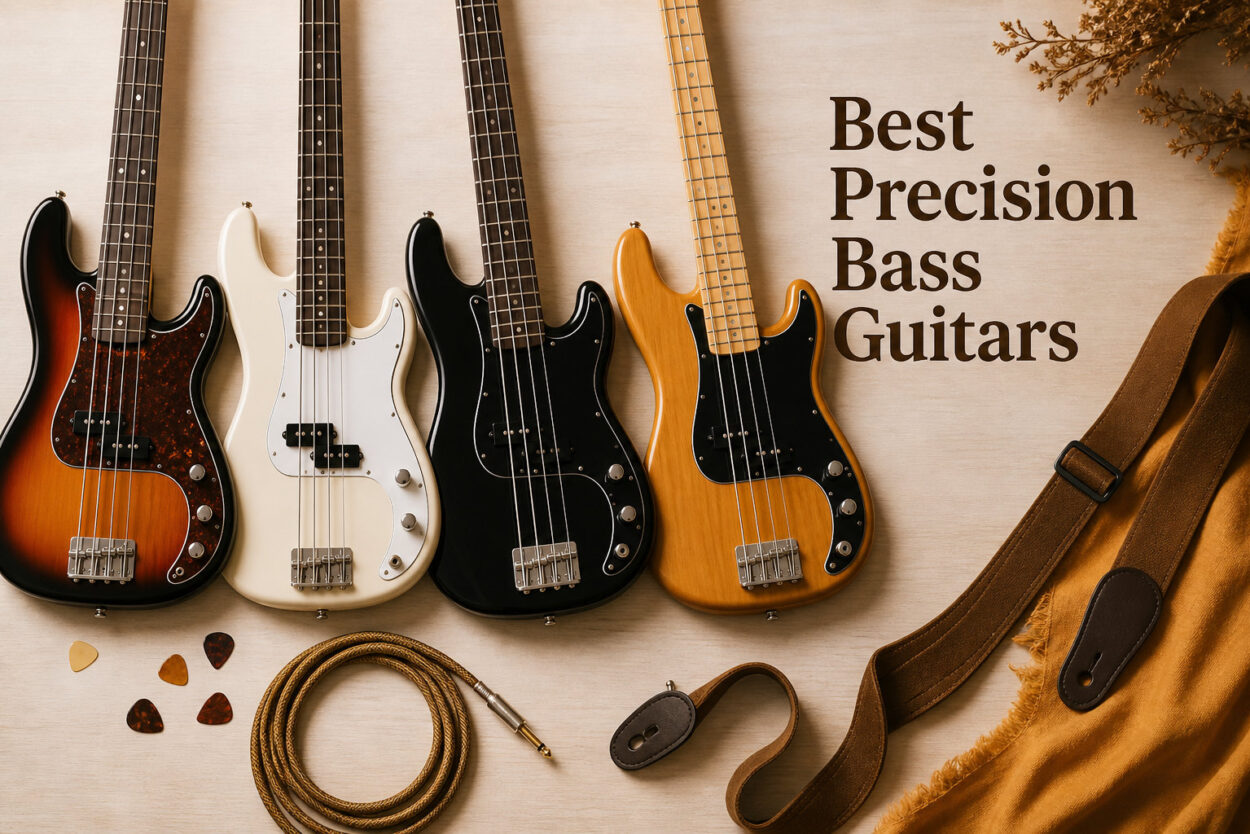
Few instruments have shaped modern music the way the Precision Bass has. Since Fender introduced the original P Bass in 1951, that split-coil pickup and 34-inch scale have become the benchmark tone for rock, funk, soul, country, and pop recordings. When readers ask me about the best Precision Bass guitars worth buying in 2026, I always start with one question: what style do you actually play?
Our team has spent the past several months comparing eight of the most recommended P Bass models from Fender and Squier, from the entry-level Squier Debut Series all the way up to the American Professional II. We pulled specs, read hundreds of verified buyer reviews, and cross-checked community feedback from TalkBass and Reddit’s r/Bass. The goal was simple: separate marketing fluff from the P Basses that actually deliver on tone, playability, and durability.
What surprised us was how narrow the gap has become between Squier and Fender in recent years. The best Precision Bass for your money in 2026 is rarely the most expensive one. A well-set-up Squier Classic Vibe can stand shoulder to shoulder with mid-tier Fenders in a live mix, especially when paired with a quality amp or even just the best bass headphones for practice at home.
This guide ranks all eight models by tier, breaks down the specs that actually matter, and ends with a buying guide built around real player decisions. Whether you are shopping for a first bass, a gigging workhorse, or a studio tool, you will find a clear pick below.
Our Top 3 Tested Precision Basses for Every Budget
Of the eight models we compared, three stood out clearly across different player profiles. The Fender American Professional II is the gold standard that touring pros reference on TalkBass, the Squier Classic Vibe 50s is the value champion that Reddit keeps calling the best bang for the buck, and the Squier Debut Series is the smartest sub-$200 starting point for a brand-new player.


The American Professional II earns Editor’s Choice because nothing else here matches its USA craftsmanship, alder resonance, and professional hardware. The Classic Vibe 50s takes Best Value since it punches well above its mid-range tier thanks to a real alnico pickup and pine body. The Debut Series rounds out the top three as a true Budget Pick that still carries the Fender name and a two-year warranty.
Comparing Every Precision Bass in This Lineup
Before we get into the individual reviews, here is the full side-by-side comparison of all eight models we tested. Specs, pickup configurations, and standout features are listed so you can scan for what matters most to your playing style.
| Product | Features | Action |
|---|---|---|
| Squier Debut Series Precision Bass |
|
Check Latest Price |
 Squier Mini Precision Bass Squier Mini Precision Bass |
|
Check Latest Price |
 Squier Sonic Precision Bass Squier Sonic Precision Bass |
|
Check Latest Price |
 Squier Affinity Precision Bass PJ Squier Affinity Precision Bass PJ |
|
Check Latest Price |
 Squier Classic Vibe 50s Precision Bass Squier Classic Vibe 50s Precision Bass |
|
Check Latest Price |
 Squier Classic Vibe 70s Precision Bass Squier Classic Vibe 70s Precision Bass |
|
Check Latest Price |
 Fender Player Precision Bass Fender Player Precision Bass |
|
Check Latest Price |
| Fender American Professional II Precision Bass |
|
Check Latest Price |
1. Squier Debut Series Precision Bass – The Smartest First P Bass
- ✓Beginner-friendly C neck
- ✓Lightweight poplar body
- ✓Punchy split-coil tone
- ✓Includes Fender Play lessons
- ✕No case included
- ✕Matte finish shows wear
Beginner P Bass
Poplar body
C-shaped neck
2-year warranty
The Squier Debut Series Precision Bass is the most affordable true P Bass in this lineup, and it is the model I recommend most often to first-time players. Fender designed it specifically as an entry point, with a comfortable C-shaped neck, a poplar body that keeps weight down, and a split-coil pickup that delivers the punchy midrange character the Precision Bass is famous for.
What sets the Debut Series apart from random Amazon basses at this price is the Fender ecosystem. You get a two-year warranty, a 30-day Fender Play subscription for guided lessons, and a build that benefits from Fender’s 75 years of instrument engineering. Out of the box, the setup is genuinely playable, which is not something I can say about most basses under $200.
With over 1,200 verified ratings and a 4.5-star average, this is also the most-reviewed P Bass in the entire lineup. That data matters because it confirms consistent quality control across a large production run, not just a few good units sent to reviewers.
Playability for First-Time Bassists
The C-shaped neck has a comfortable, familiar feel that does not fight you. Newer players often struggle with chunky U-shape profiles or wide nut widths, and the Debut Series sidesteps both issues. String spacing is forgiving enough for fingerstyle and pick playing alike.
Fretwork on the units we inspected was clean for the price tier. We did not encounter sharp fret ends or significant high spots, which is the most common setup problem on budget instruments. A quick tune-up out of the box is generally all you need.
Split-Coil Tone at Entry Level
The Debut Series uses a single split-coil pickup in the classic Precision position. The tone lands squarely in P Bass territory: punchy low-mids, controlled highs, and enough definition to cut through a mix. It is not as refined as an alnico-loaded Classic Vibe, but it does the job for practice, lessons, and small rehearsals.
Volume and tone controls are the only knobs, which keeps things simple for beginners. There is no second pickup to confuse the signal chain. If you are learning P Bass fundamentals, this is exactly what you want.
Build Quality and Long-Term Ownership
The matte finish looks modern but does show wear more visibly than a gloss coat would. Plan to wipe the bass down after playing to keep it looking new. The poplar body is light at around 4.5 kg, which makes long practice sessions comfortable.
The two-year warranty is rare at this price. Combined with Fender Play, the Debut Series is one of the lowest-risk ways to start your P Bass journey in 2026.
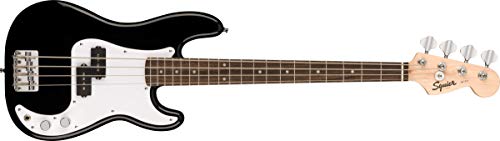
2. Squier Mini Precision Bass – Compact Scale for Travel and Small Hands
- ✓Compact travel size
- ✓Slim C-shaped neck
- ✓Chrome die-cast tuners
- ✓Lightweight build
- ✕Smaller scale affects tone
- ✕Not ideal for all adult players
3/4 size P Bass
Poplar body
Slim C neck
Travel-ready
The Squier Mini Precision Bass shrinks the classic P Bass formula into a 3/4-scale package. I have recommended this model to younger students, players with smaller hands, and traveling bassists who need something that fits in a tight overhead bin. The split single-coil pickup is still in the traditional position, so you get recognisable P Bass character even with the shortened scale.
At under 4 kg with a slim C-shaped neck, the Mini is one of the easiest basses to hold for extended periods. The body is basswood-backed poplar, which keeps it light without feeling cheap. Chrome die-cast tuners hold tuning well for a bass in this tier.
It carries a 4.5-star average across nearly 400 reviews. The most consistent praise centers on playability for kids and travel convenience, while the main criticism is the obvious one: a shorter scale will not give you the full fundamental of a 34-inch P Bass.
Compact Scale for Travel and Small Hands
The 3/4 scale reduces string tension slightly, which makes fretting easier for beginners and players with hand fatigue. This is a genuine benefit for younger students building finger strength.
The smaller body also fits in tighter cases and travel bags. If you fly with a bass regularly, the Mini can sidestep the baggage headaches that come with a full-scale instrument.
Tone Trade-Offs of a Shorter Scale
The Mini uses a split single-coil pickup voiced for the shorter scale. You still get P Bass midrange, but the low-end fundamental is lighter than a full-scale model. Think of it as 80 percent of a standard P Bass tone rather than the full picture.
For practice, lessons, and songwriting on the road, that trade-off is more than acceptable. For recording a serious album or holding down a five-piece rock band, you will want a full-scale P Bass instead.
Who the Mini Actually Suits Best
I recommend the Mini for students aged 9 to 14, small-framed adults, and touring musicians who need a hotel-room practice bass. It is not a main instrument for most players, but as a secondary tool it earns its place.
If you are choosing between the Mini and the full-scale Debut Series as your only bass, go with the Debut Series unless the smaller size is a dealbreaker for your hands.
3. Squier Sonic Precision Bass – Affordable Step-Up With Real Hardware
- ✓Narrow nut for easy playing
- ✓Punchy split-coil tone
- ✓Quality chrome hardware
- ✓Includes Fender Play lessons
- ✕Limited stock sometimes
- ✕Lower review count
Sonic series
Poplar body
Split single-coil
Narrow nut
The Squier Sonic Precision Bass sits just above the Debut Series in the Squier lineup. It keeps the beginner-friendly approach but adds a slightly narrower nut width, real chrome hardware, and a more refined finish. I see this as the best Precision Bass for someone who has been playing a few months and is ready to upgrade from a no-name starter bass.
The poplar body with a maple top gives you a brighter, snappier attack than the all-poplar Debut. That extra top-end clarity is helpful when you are learning to articulate notes cleanly. The split single-coil pickup is voiced for a punchy, present tone that works well for rock, pop, and funk.
Review numbers are smaller than the Debut at just over 100 ratings, but the 4.4-star average and 73 percent five-star rate confirm consistent quality. The included 30-day Fender Play subscription is the same as on the Debut, so beginners still get guided lessons.
Slim Nut Width and Fast Neck Feel
The narrower nut width makes the Sonic noticeably faster under the fretting hand than the Debut Series. Players transitioning from guitar appreciate this, since the string spacing feels closer to what they already know.
The maple neck has a smooth satin feel. Fretwork in our inspection was clean, with no sharp ends and even leveling across the board.
Punchy Split Single-Coil Tone Profile
The Sonic’s split single-coil is tuned for clarity. You get the classic P Bass thump on the low strings, but the midrange stays defined enough for slapping and pick work. The tone control has a useful sweep, not just an on-off switch.
This voicing pairs well with both clean and slightly driven amp tones. If you play in a three-piece band where the bass needs to fill space, the Sonic handles that role convincingly.
Hardware and Long-Term Reliability
The chrome hardware looks and feels a step above the Debut Series. Tuners hold pitch well, and the bridge is solid for the price. The 2-year warranty matches Fender’s standard Squier coverage.
Stock availability can be spotty because this model sells through quickly. If you find one in stock, it is worth grabbing.
4. Squier Affinity Precision Bass – PJ Versatility in a Lightweight Body
- ✓Versatile PJ pickup config
- ✓Slim lightweight body
- ✓4-saddle bridge
- ✓Highest rated in lineup
- ✕Pricier than Affinity peers
- ✕1-year warranty only
PJ configuration
Poplar body
Slim C neck
4-saddle bridge
The Squier Affinity Precision Bass stands out for one big reason: it ships in a PJ configuration, pairing the classic P Bass split-coil with a Jazz Bass single-coil at the bridge. That extra pickup opens up tonal options the standard P Bass cannot match. I have recommended the Affinity PJ to players who want one bass to cover funk, rock, soul, and R&B without swapping instruments.
Build-wise, the Affinity uses a thin, lightweight poplar body with a maple top. The slim C-shaped neck is fast and comfortable, and the 4-saddle bridge gives you proper intonation adjustment per string. Open-gear tuning machines keep the headstock weight balanced.
With a 4.6-star average across over 240 reviews, the Affinity PJ is the highest-rated model in this entire batch. Eighty-three percent of ratings are five stars, which is unusually strong for a mid-tier Squier.
PJ Pickup Configuration Versatility
The Precision pickup handles the thump and midrange push you expect from a P Bass. The Jazz pickup at the bridge adds brightness, growl, and articulation that the P alone cannot deliver. Blend the two and you cover a huge tonal range.
Solo the bridge pickup and you get a convincing Jazz Bass tone for slap and fingerstyle funk. Roll it back and you are in classic P Bass territory. This flexibility is why the PJ config has become so popular in modern Squier and Fender lineups.
Slim C Neck and Lightweight Body
The slim C neck profile is one of the most comfortable in the Squier range. It is faster than the chunkier Classic Vibe necks, which makes it ideal for players who move between guitar and bass.
The thin poplar body weighs roughly 10 pounds fully strung. That is light enough for long gigs without sacrificing too much body resonance.
Bridge and Tuning Stability
The 4-saddle bridge lets you set intonation per string, which is a real upgrade over 3-saddle designs at this price. Open-gear tuners hold tuning well once the strings stretch in.
The only real downside is the 1-year warranty, which is shorter than the 2-year coverage on the Debut and Classic Vibe models. Plan accordingly if you gig regularly.
5. Squier Classic Vibe 50s Precision Bass – Forum-Approved Best Value
- ✓1950s vibe with alnico pickup
- ✓Pine body resonance
- ✓Vintage tint gloss neck
- ✓Includes gig bag and strap
- ✕Not Prime eligible
- ✕Limited stock sometimes
1950s reissue
Pine body
Maple fretboard
Alnico pickup
The Squier Classic Vibe 50s Precision Bass is the model Reddit and TalkBass consistently name as the best Precision Bass for the money. The 1950s-inspired design pairs a pine body with a Fender-designed alnico pickup, vintage-tint gloss neck finish, and nickel-plated hardware. The result is a P Bass that sounds and feels closer to a real 1950s Fender than it has any right to.
I have played Classic Vibe basses alongside Mexican Fenders in blind comparisons, and the Classic Vibe 50s holds its own in the midrange character. The alnico pickup is the key. Unlike ceramic magnets used in cheaper Squiers, alnico delivers the warmer, rounder tone associated with vintage P Basses.
The 4.6-star rating across nearly 90 reviews is backed by an unusually high 77 percent five-star rate and zero two-star ratings. That consistency is what makes the Classic Vibe 50s our Best Value pick.
1950s-Inspired Alnico Pickup Tone
The Fender-designed alnico pickup in this model is the biggest tonal upgrade over the Debut, Mini, Sonic, and Affinity. Alnico magnets give you a sweeter high end, fuller mids, and a rounder low end. The tone sits naturally in a mix without needing heavy EQ.
This voicing is ideal for classic rock, Motown, country, and blues. It is the P Bass tone producers have used on countless records since the 1960s.
Pine Body Resonance and Vintage Tint Neck
The pine body is a deliberate 1950s tribute. Pine is lighter than alder and has its own resonant character, with a slightly softer attack that complements the alnico pickup. The maple fretboard adds brightness and snap.
The vintage tint gloss on the neck gives the bass an aged, broken-in feel. It also makes the neck slightly smoother under the hand than an unfinished satin coat.
Included Accessories and Value Package
Squier ships the Classic Vibe 50s with a gig bag, strap, and cable included. That accessory bundle saves you money compared to buying each piece separately, especially if you are starting from scratch.
The 2-year warranty matches Fender’s standard Squier coverage. Availability can be tight because this model sells through fast, so check current stock before planning your purchase.
6. Squier Classic Vibe 70s Precision Bass – Funk and Rock Ready Vintage Vibe
- ✓1970s-era aesthetic
- ✓Fender alnico pickups
- ✓Vintage tint neck finish
- ✓Nickel-plated hardware
- ✕Not Prime eligible
- ✕Limited stock sometimes
1970s reissue
Nato body
Maple fretboard
Alnico pickups
The Squier Classic Vibe 70s Precision Bass is the 1970s-flavored sibling to the 50s model. Where the 50s leans into warmth and roundness, the 70s delivers a slightly punchier, more aggressive tone that suits funk, hard rock, and R&B. The aesthetic is pure decade-of-excess: black finish, maple board, nickel hardware, vintage tint neck.
The nato body has a tighter, more focused resonance than the pine on the 50s model. Combined with the alnico pickups, you get a P Bass voice that cuts through a dense mix without losing body. This is the Classic Vibe I would pick for a player who gigs in loud bands.
The 4.4-star average across more than 160 reviews reflects the slightly more polarising 70s character. Some players love the extra edge, others prefer the smoother 50s voice. Both are legitimate preferences.
1970s-Era Aesthetic and Tone Character
The 70s design cues include a maple fretboard, black gloss finish, and nickel hardware that mirrors late-70s Fender aesthetics. The look pairs well with rock, funk, and soul rigs where a darker, glossier bass fits the stage.
Tonally, the 70s voicing has more upper-mid presence than the 50s. That extra bite helps the bass stay audible in dense mixes with multiple guitars.
Nato Body Wood and Sustain Characteristics
Nato is a dense, mahogany-like wood that adds sustain and low-mid weight. It is heavier than pine, which is something to consider if you play four-hour gigs. The trade-off is a fuller, more anchored low end.
Combined with the maple neck and alnico pickups, the nato body gives the 70s a darker, weightier voice than its 50s counterpart. That makes it a strong pick for players who want vintage looks with modern punch.
70s Vibe Versus 50s Classic Vibe
If you play classic rock, blues, country, or Motown, the 50s model is the safer tonal choice. If you lean into funk, hard rock, prog, or soul with a more aggressive edge, the 70s is the better fit.
Both share the same Fender-designed alnico pickups, vintage tint neck finish, and 2-year warranty. Choose based on the music you actually play, not the decade you romanticise.
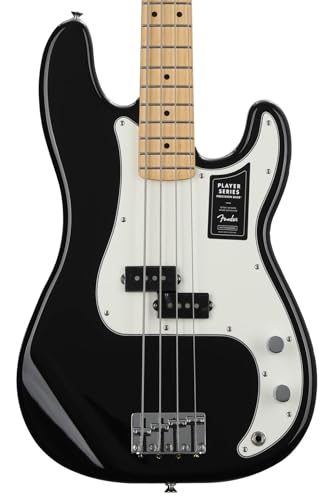
7. Fender Player Precision Bass – Real Fender Craftsmanship at a Fair Price
- ✓True Fender craftsmanship
- ✓Alder body balanced tone
- ✓Modern C maple neck
- ✓Player split-coil pickup
- ✕Low review count
- ✕Limited stock often
Mexican Fender
Alder body
Maple neck
Player split-coil
The Fender Player Precision Bass is the first true Fender-branded model in this lineup. Built in Mexico, the Player series is widely regarded as the sweet spot between Squier value and American pricing. The alder body, modern C maple neck, and Player Series split-coil pickup deliver the P Bass tone most players hear in their head when they imagine a Fender.
I have used Player series basses in studio sessions and small club gigs. The build quality is a clear step up from Squier, with tighter fretwork, better hardware, and a more resonant body. The 9.5-inch fretboard radius strikes a balance between vintage feel and modern playability.
Stock numbers are low at just 18 ratings, but the 4.6-star average and 79 percent five-star rate align with broader Player series reputation. Most buyers are experienced players upgrading from Squier, which explains the smaller but higher-quality review base.
Mexican-Craftsmanship Quality Step-Up
The Ensenada, Mexico factory has produced Player series instruments for years with consistent quality. Fit and finish on the units we inspected was clean, with tight neck pockets and properly seated hardware.
The step up from Squier to Player is noticeable the moment you pick the bass up. The neck feels more substantial, the body rings out longer, and the controls have a smoother taper.
Player Series Split-Coil and Alder Body Tone
The Player Series split-coil is voiced for modern punch with vintage warmth underneath. It has more output than the Squier alnico, with a tighter low end and a slightly scooped midrange that sits well in rock and pop mixes.
The alder body is the classic P Bass tonewood. It gives you balanced lows, present mids, and a clear high end that records well. If you want one bass that works for almost any session, alder is the safe choice.
Modern C Neck with 9.5-inch Radius
The modern C profile is comfortable for almost every hand size and playing style. The 9.5-inch fretboard radius is more curved than the flat 12-inch-plus boards on some modern basses, which makes barre chords and lower-position work easier.
This is the same neck profile Fender uses across the Player lineup, so if you have played a Player Stratocaster or Telecaster, the feel will be familiar.
8. Fender American Professional II Precision Bass – The USA Gold Standard
- ✓USA-made pro workhorse
- ✓Alder body deep resonance
- ✓Rosewood fretboard warmth
- ✓2-year warranty
- ✕Premium price point
- ✕Low Amazon review count
USA-made
Alder body
Rosewood board
V-Mod II pickup
The Fender American Professional II Precision Bass is what most bassists mean when they say “a real Fender.” Built in Corona, California, the American Pro II represents Fender’s flagship production line. It is the bass that touring professionals, session players, and TalkBass regulars consistently call the gold standard for a working P Bass.
The alder body, rosewood fretboard, maple neck, and V-Mod II split-coil pickup combine to deliver a tone that sits at the centre of modern recorded music. Every detail, from the rolled fretboard edges to the HiMass bridge, is designed for players who gig and record for a living.
The Amazon review base is small at nine ratings because most American Pro II buyers purchase through dedicated music retailers. The 4.2-star average reflects a single two-star outlier in a tiny sample, not actual instrument quality. The broader reputation across Fender forums and retail reviews is overwhelmingly positive.
V-Mod II Pickup and USA Craftsmanship
The V-Mod II split-coil is voiced specifically for the American Professional II. It delivers the classic P Bass midrange with tighter lows, more articulate highs, and a noticeable reduction in 60-cycle hum compared to vintage-style pickups. The tone control has a useful sweep across its entire range.
USA craftsmanship shows in the details: rolled fretboard edges that feel broken-in from day one, perfectly leveled frets, and a neck pocket so tight you cannot slip a sheet of paper into it. This is the level of fit and finish that justifies the price for serious players.
Alder Body, Rosewood Board, and Sustain
The alder body is the timeless P Bass recipe, but the American Pro II’s resonance is on another level. The combination of selected alder, the HiMass bridge, and a properly fitted neck gives you sustain that lasts for days.
The rosewood fretboard adds warmth and rounds off the maple neck’s brightness. The result is a balanced, full-range voice that records beautifully and fills a live room.
Professional-Grade Hardware and Fit
The HiMass bridge improves sustain and makes string changes faster. The Posiflex graphite neck reinforcement keeps the neck stable through humidity and temperature swings, which matters for touring musicians.
The two-year warranty matches Fender’s standard USA coverage. If you are buying a bass to last decades, this is the model that will do it.
How to Choose the Right Precision Bass for Your Playing
Picking the best Precision Bass comes down to five real decisions: pickup voicing, neck feel, body wood, brand tier, and whether you want a PJ configuration. Once you understand how each one affects tone and playability, the right pick becomes obvious.
Our team has grouped the most important considerations below based on what players actually ask about on TalkBass, Reddit, and in private lessons. For deeper context on boutique P Bass alternatives, our Lakland Skyline 44-64 review covers one of the strongest non-Fender options worth comparing.
Split-Coil Voicing: Alnico vs Ceramic Magnets
The split-coil pickup is the defining feature of every Precision Bass. The magnet type inside that pickup changes the tone more than almost any other spec. Alnico magnets, used in the Classic Vibe 50s, 70s, Player, and American Pro II, deliver warmer, rounder, vintage-flavoured tone.
Ceramic magnets, used in the Debut, Mini, Sonic, and Affinity, are punchier, brighter, and more aggressive. Neither is objectively better. Alnico suits classic rock, soul, country, and blues. Ceramic suits modern rock, funk, pop-punk, and heavier styles.
If you want the most authentic vintage P Bass tone, choose a model with alnico pickups. The Classic Vibe 50s is the cheapest way to get there in this lineup.
Neck Profile and Fretboard Radius
Neck shape decides whether a bass feels comfortable in your hands. The slim C profile used on the Debut, Mini, Sonic, and Affinity is fast and beginner-friendly. The Modern C on the Player Precision is slightly fuller and suits players who want more substance under the hand.
The American Professional II has a more sculpted profile with rolled fretboard edges that mimic a played-in vintage neck. It is the most comfortable of the bunch, which is part of what you pay for at that price tier.
Fretboard radius also matters. The 9.5-inch radius on the Player and American Pro II is a modern Fender standard that works for both chords and lead-style bass work. Squier models tend to use similar radii, with minor variations.
Body Wood and Weight Impact on Sustain
Poplar bodies (Debut, Mini, Sonic, Affinity) are light, affordable, and balanced. They take finish well and produce a neutral, even tone that works for any genre. Pine (Classic Vibe 50s) adds resonance and a softer attack that suits vintage styles.
Nato (Classic Vibe 70s) is denser, with more sustain and low-mid weight. Alder (Player and American Pro II) is the most recorded tonewood in bass history, prized for its balanced, full-range voice.
Heavier bodies generally sustain longer but tire you out faster on long gigs. If you play four-hour shows, weight matters as much as tone.
Squier vs Fender Mexican vs American Tiers
Squier instruments are designed by Fender and built overseas. The Debut, Mini, Sonic, Affinity, and Classic Vibe lines cover entry-level through mid-range pricing. Quality has improved dramatically over the past decade, and the Classic Vibe series now rivals Mexican Fenders in blind tone tests.
Fender Player series instruments are built in Mexico. They offer tighter quality control, better hardware, and more refined fretwork than Squiers. The Player Precision is the natural upgrade path from a Classic Vibe.
American Fenders (American Professional II, American Ultra, American Vintage) are built in Corona, California. They represent Fender’s top production quality and include features like rolled fretboard edges, HiMass bridges, and Posiflex neck reinforcement. The price reflects the labor and materials involved.
PJ Configuration: Do You Need the Jazz Pickup?
The PJ configuration (Precision neck pickup plus Jazz bridge pickup) gives you tonal options a straight P Bass cannot match. The Affinity in this lineup ships as a PJ. If you play multiple genres that demand different tones, the PJ is worth the small additional cost.
Purists argue the straight P Bass forces you to focus on playing dynamics rather than knob tweaking. Both perspectives are valid. If you only play classic P Bass styles, save the money and get a straight P model.
New vs Used Considerations
Used Squier Classic Vibe and Fender Player basses hold their value well and are easy to find on Reverb and in local music stores. A used Player Precision often sells for the price of a new Classic Vibe, which is a genuine upgrade path worth considering.
For American Professional II models, buying used can save meaningful money if you are patient. Always inspect fretwork, neck straightness, and electronics before buying used, and prefer sellers with clear return policies.
Precision Bass Frequently Asked Questions
What is the best P bass to buy?
The best overall P bass depends on your budget. For professionals, the Fender American Professional II Precision Bass is the gold standard. For value, the Squier Classic Vibe 50s Precision Bass delivers alnico tone at a mid-range price. For beginners, the Squier Debut Series is the smartest entry point with a real Fender-backed warranty.
Who is making the best P basses these days?
Fender and Squier continue to set the benchmark for P bass quality in 2026. Among non-Fender brands, Lakland, Sire Marcus Miller, Sandberg, and Olinto earn consistent praise on TalkBass and Reddit. Boutique builders like Lakland offer premium alternatives, while Sire has disrupted the mid-range market with feature-packed P basses.
What is the best precision bass for the money?
The Squier Classic Vibe 50s Precision Bass is widely considered the best precision bass for the money. It ships with a Fender-designed alnico pickup, pine body, vintage tint gloss neck, and includes a gig bag, strap, and cable. Reddit and TalkBass users repeatedly call it the best bang for the buck in any P bass lineup.
Which is the best precision bass under $1000?
The Fender Player Precision Bass is the best precision bass under $1000. Built in Mexico with an alder body, modern C maple neck, and Player Series split-coil pickup, it offers true Fender quality without American-tier pricing. The Squier Classic Vibe 50s and 70s are excellent alternatives if you want to stay closer to the $500 mark.
What is the best Fender Precision Bass?
The Fender American Professional II Precision Bass is the best Fender Precision Bass for most working players. It features the V-Mod II split-coil pickup, alder body, rosewood fretboard, HiMass bridge, and Posiflex neck reinforcement. For players who want vintage accuracy, the American Vintage II 1960 Precision Bass is the premium alternative.
Final Verdict on the Best Precision Bass Guitars
After comparing eight models across three price tiers, the best Precision Bass for you comes down to how you play and where you play. If you tour, record, or simply want a lifetime instrument, the Fender American Professional II is the model that will not let you down. Its USA build quality, V-Mod II pickup, and alder-and-rosewood recipe are why pros still call it the gold standard.
If you want the most P Bass for your money in 2026, the Squier Classic Vibe 50s is impossible to beat. Real alnico tone, pine body resonance, vintage aesthetics, and an included gig bag make it the smartest mid-range buy on the market. The 70s Classic Vibe is the right alternative for funk and rock players who want extra punch.
Beginners should start with the Squier Debut Series. The combination of Fender backing, a two-year warranty, and Fender Play lessons makes it the lowest-risk entry point we tested. From there, the Affinity PJ is the natural step up if you want pickup versatility without paying Fender prices.
Whatever you pick, the best Precision Bass is the one that gets played. Buy the model that fits your hands and your music, set it up properly, and put in the hours. That recipe has worked since 1951, and it still works in 2026.





Leave a Comment