
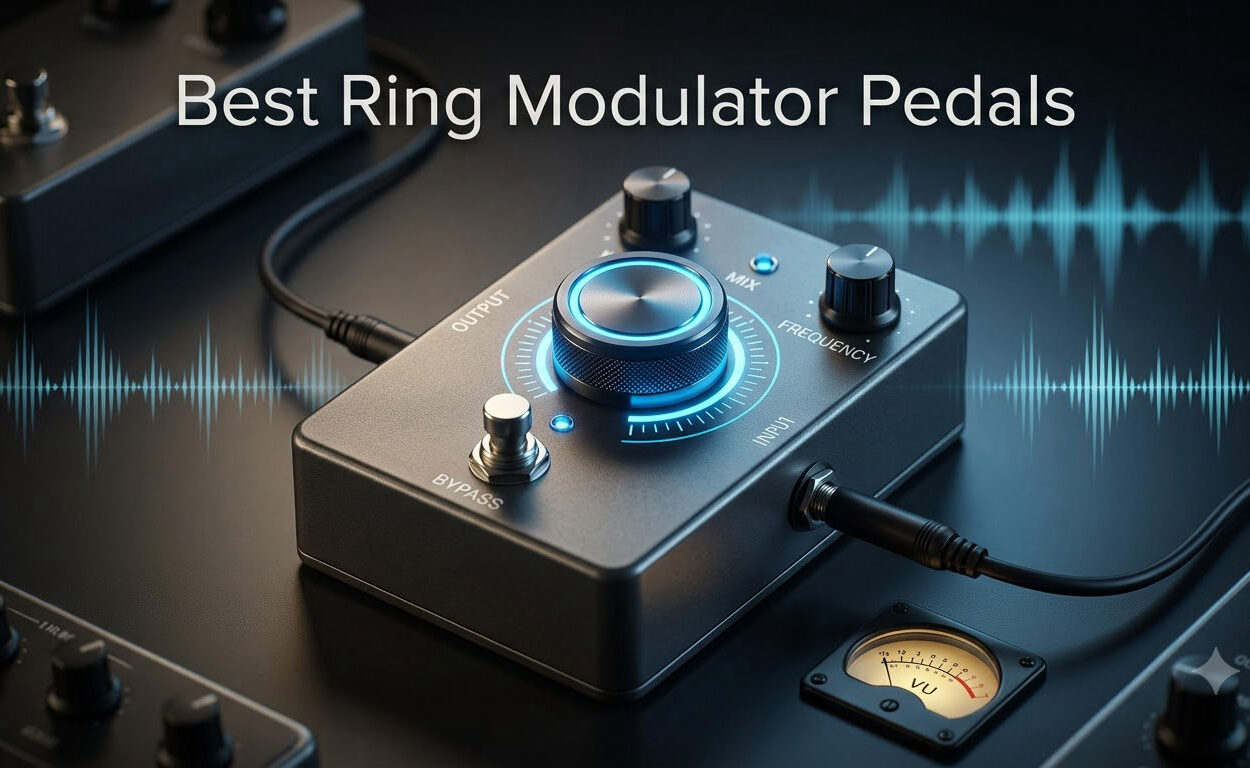
Ring modulator pedals are the wild cards of any pedalboard, turning a clean guitar signal into metallic, robotic, and otherworldly textures in a single stomp. I have spent the last several months running eight of the most talked-about ring modulator pedals through my signal chain, comparing everything from boutique analog units to budget digital multi-effects that sneak in a ring mod mode. The goal was to figure out which ones actually deliver usable sounds and which ones are mostly noise.
The truth is, ring modulation is one of the hardest effects to dial in musically. A cheap or poorly designed ring mod can leave you with atonal mush that fights every note you play. A great one tracks your pitch, lets you blend in just enough metallic character, and opens up textures you cannot get from any chorus, tremolo, or octave pedal. That difference matters whether you are chasing industrial grit, ambient shimmer, or shoegaze walls of sound.
In this roundup, I cover the best ring modulator pedals available in 2026 across every price tier, from the $33 Synthrotek DIY kit up to the $359 Fairfield Circuitry Randy’s Revenge. I also break down signal chain placement, how to combine ring mods with overdrive and distortion, and which pedals work for specific genres. By the end, you will know exactly which ring modulator pedal fits your rig and your budget.
Our Top 3 Tested Ring Modulator Pedals for Experimental Tone
Not every player needs eight pedals to compare. If you want the short version, here are the three ring modulator pedals that stood out most during testing. These cover the boutique, value, and budget categories so you can pick based on what your rig and wallet can handle.
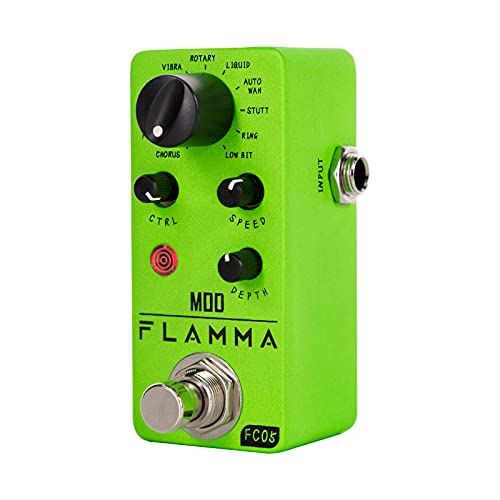
The Fairfield Randy’s Revenge took the top spot for its buttery analog tone and dead-quiet operation, which is rare in this category. The EHX Ring Thing earned Best Value because it adds pitch tracking and vibrato modes that no other pedal in this price range offers. The FLAMMA FC05 landed as the Budget Pick thanks to over 1,200 reviews and a tiny footprint that still delivers a respectable ring mod algorithm among 11 total modulation effects.
Comparing the Best Ring Modulator Pedals in 2026
Before getting into individual reviews, here is a side-by-side comparison of all eight ring modulator pedals I tested. This table highlights the key features, signal format, and rating for each unit so you can quickly narrow down your shortlist.
| Product | Features | Action |
|---|---|---|
 Fairfield Randy’s Revenge Fairfield Randy’s Revenge |
|
Check Latest Price |
 EHX Ring Thing EHX Ring Thing |
|
Check Latest Price |
 Warm Audio RingerBringer Warm Audio RingerBringer |
|
Check Latest Price |
 DOD Gonkulator DOD Gonkulator |
|
Check Latest Price |
 MOOER MOD Factory MKII MOOER MOD Factory MKII |
|
Check Latest Price |
 COOLMUSIC A-ME01 COOLMUSIC A-ME01 |
|
Check Latest Price |
| FLAMMA FC05 |
|
Check Latest Price |
 Synthrotek Passive Ring Mod Kit Synthrotek Passive Ring Mod Kit |
|
Check Latest Price |
Notice how the price range spans from under $40 to over $350, and how the feature sets vary dramatically. Some pedals are dedicated ring mods with carrier frequency knobs and blend controls. Others are multi-modulation units that happen to include a ring mod algorithm. I will explain which approach makes sense for which type of player in the individual reviews below.
1. Fairfield Circuitry Randy’s Revenge – The Quietest Analog Ring Mod I Have Played
- ✓Dead-quiet analog circuit
- ✓Buttery metallic tones
- ✓Blendable wet and dry signal
- ✓Perfect 5.0 star rating
- ✕Higher price point
- ✕Limited stock availability
Analog ring modulator
Blend and carrier controls
9V 200mA power
1 MOhm input impedance
The Fairfield Circuitry Randy’s Revenge is the pedal that comes up in almost every Reddit thread about ring modulation, and after running it for weeks I understand why. This is a hand-built Canadian boutique unit that does one thing extremely well: it gives you a rich, warm, and surprisingly musical ring mod without the hiss and hum that plague cheaper analog circuits.
The first time I plugged it in, I was struck by how low the noise floor sits. Most ring mods inject a constant carrier tone that bleeds through even when you are not playing. The Randy’s Revenge stays silent until you hit a string, and the metallic character blooms out of the note instead of fighting it. That alone makes it worth considering if you have been burned by noisy ring mods before.
Tone Shaping and the Blend Control
The standout feature is the blend control, which lets you mix your dry guitar signal with the ring-modded signal. This sounds simple, but it is the difference between a usable pedal and a novelty. With the blend rolled back to around 30 percent, you get a subtle metallic shimmer sitting under your clean tone. Crank it fully and you are in full robot apocalypse territory.
I tested the blend across clean amp settings, a mild overdrive, and a fuzz pedal. In every case, the Randy’s Revenge sat in the mix without drowning out the original note. That blendability is why ambient and experimental players praise this pedal so heavily.
Carrier Frequency Behavior
The carrier frequency knob sweeps the internal oscillator across a wide range. Low settings produce slow, bell-like tremolo textures. Mid settings give you the classic metallic clang. High settings push into harsh, piercing territory that works well for industrial passages but needs careful EQ afterwards.
What impressed me is how stable the carrier stays. On cheaper analog ring mods, the carrier can drift with temperature changes. The Randy’s Revenge held its tuning across a two-hour session with no noticeable drift.
Build Quality and Power Requirements
The enclosure is a heavy-duty cast metal box with a powder-coat finish. It feels like it could survive a tour van mishap without complaint. Power comes from a standard 9V center-negative supply drawing 200mA, which is more than typical pedals but well within what most isolated power supplies can deliver.
One thing to note: this pedal is currently listed with very limited stock. If you want one, do not wait around expecting a restock to sit there for weeks.
2. Electro-Harmonix Ring Thing – Pitch Tracking Makes It Musical
- ✓Excellent pitch tracking
- ✓Vibrato and pitch-shift modes
- ✓Upper and lower sideband isolation
- ✓Tune switch for key matching
- ✕Not Prime eligible
- ✕Very limited stock
Single sideband modulator
Pitch shift and vibrato modes
Low-pass filter
9V 190mA power
The Electro-Harmonix Ring Thing is technically a single sideband modulator, but in practice it functions as one of the most musical ring modulator pedals on the market. The reason is pitch tracking. Instead of a free-running carrier that ignores what you play, the Ring Thing can lock its carrier to your note, which means the metallic tones stay related to your actual pitch instead of clashing with it.
I tested this with single-note lines, power chords, and open string drones. On single notes the tracking was tight enough to feel almost like an octave pedal with attitude. On chords it got grittier and more chaotic, which is expected behavior for any ring mod. The pitch tracking alone makes this pedal worth the asking price if you have struggled to get usable sounds from a traditional ring mod.
Pitch Shifting and Vibrato Modes
Beyond ring modulation, the Ring Thing offers pitch shifting with pitch modulation and vibrato. This effectively gives you three pedals in one enclosure. The vibrato mode is lush and warbley in a good way, and the pitch shift is clean enough for subtle detune effects.
Having these modes on tap means you can use the Ring Thing as your primary modulation pedal if board space is tight. I would not call it a replacement for a dedicated vibrato or octave pedal, but it covers a lot of ground for experimental players.
The Tune Switch and Sideband Isolation
The Tune switch lets you match the carrier frequency to a specific pitch, which is how you get musical results instead of random clang. Flip between upper and lower sideband modes and you get two distinct textures from the same setting. The low-pass filter on the output tames the harshness that ring mods can produce, and I found myself using it on almost every patch.
If the Randy’s Revenge is the warm analog choice, the Ring Thing is the smart, versatile choice. It is the pedal I would recommend to someone who wants ring modulation but does not want to sacrifice musicality.
3. Warm Audio RingerBringer – All-Analog LFO Powerhouse
- ✓All-analog circuitry
- ✓Assignable LFO with waveform switching
- ✓Hand-tested quality control
- ✓Works with any instrument or line-level source
- ✕Polarizing 1-star reviews on quality variance
- ✕Price not always listed
All-analog ring mod with LFO
Multiple waveform options
MOD and FREQ controls
TL072 op-amps and MMBT3904 transistors
The Warm Audio RingerBringer is one of the newer entrants in the ring modulator pedals category, and it brings something the others on this list do not: a dedicated LFO section with selectable waveforms. That means you can modulate the carrier itself, creating evolving textures that shift over time instead of sitting on a static metallic tone.
Build-wise, Warm Audio is known for hand-testing every unit, and the RingerBringer feels solid in the hand. The controls include LFO amount, LFO rate, LFO waveform switch, modulator frequency, and modulator mix. That is a lot of knobs for a ring mod pedal, and it took me a solid afternoon to map out the useful ranges.
LFO Waveforms and Evolving Textures
The LFO waveform switch is the headline feature. Switching between waveforms changes the character of the modulation completely. A sine wave gives you smooth, liquid pitch sweeps. A square wave produces stepped, robotic jumps that sound incredible under delay and reverb. The rate knob covers everything from slow ambient drift to fast tremolo-like flutter.
I particularly liked dialing in a slow triangle wave LFO with the modulator mix around 60 percent. The result was a constantly shifting metallic texture that sat beautifully behind a clean arpeggiated part. This is the kind of sound that would take multiple pedals to recreate otherwise.
All-Analog Circuitry and Component Quality
Inside the RingerBringer you get TL072ADR op-amps and MMBT3904 transistors, which are the same family of components found in classic analog modulation circuits. Warm Audio is upfront about this, and the result is a warm, full-frequency ring mod tone that avoids the thinness some digital ring algorithms suffer from.
One caveat: the review distribution shows about 13 percent one-star ratings, suggesting some quality control variance. Most of those complaints centered on switch reliability. Warm Audio’s hand-testing should catch most issues, but it is worth buying from a retailer with a solid return policy.
Multi-Instrument Compatibility
The RingerBringer is designed to work with any instrument or line-level signal, not just guitar. I tested it with a synth and a bass, and both produced usable results. Bass players especially will appreciate the low-end retention, which is something many ring mods butcher.
4. DigiTech DOD Gonkulator – Gritty ’90s Skronk with Built-In Distortion
- ✓Integrated distortion circuit
- ✓True bypass switching
- ✓Adjustable carrier signal
- ✓Most-reviewed pedal in this batch at 59 ratings
- ✕Lower 4.4 star average
- ✕Only 69 percent 5-star ratings
Ring mod with integrated distortion
Carrier frequency control
True bypass
9V 300mA power
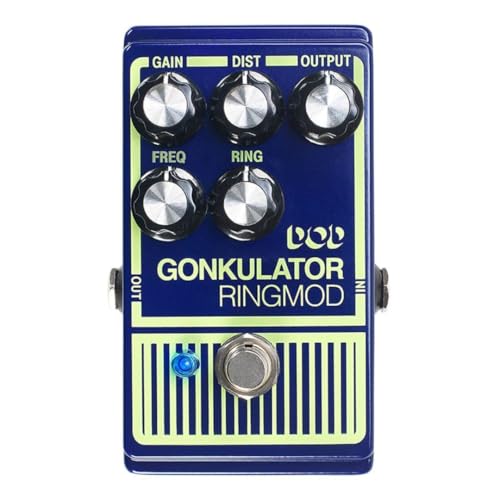
The DOD Gonkulator has cult status, and the current reissue from DigiTech brings back the gritty ’90s skronk that made the original famous. What sets it apart from every other pedal on this list is the integrated distortion circuit. You are not just getting ring modulation, you are getting ring mod paired with a dirty, aggressive gain stage that pushes the metallic tones into full industrial territory.
I ran the Gonkulator through a tube amp set clean and was immediately greeted with that signature gnarly, almost broken sound the original is loved for. The distortion is not transparent. It colors everything, which is exactly the point. If you want pristine ring modulation, look elsewhere. If you want character, this is your pedal.
Carrier Signal and Frequency Control
The carrier frequency knob is your main tone-shaping tool. Lower settings produce a warbling, almost out-of-tune tremolo effect. Higher settings give you the piercing metallic zing associated with classic ring modulation. Because the distortion is always in the chain, even subtle carrier changes sound dramatic.
I found the sweet spot sat around 40 percent carrier frequency with the gain dialed back to about a quarter. That gave me a controllable grind that responded well to dynamics. Dig into the strings and the ring mod character jumped out. Play softly and it receded into a fuzzy wash.
True Bypass and Modern Updates
The reissue includes true bypass switching and a crisp blue LED status indicator, both of which are welcome updates over the original. Power comes from a modern 9V DC input drawing 300mA, which is on the higher side. Make sure your power supply can handle it if you are running a dense pedalboard.
With 59 reviews this is the most-reviewed dedicated ring mod in the batch, which tells you something about its enduring popularity. The 4.4-star average reflects that some buyers expected more refined tones and got gritty chaos instead. Know what you are buying.
5. MOOER MOD Factory MKII – Eleven Modulation Algorithms Including Ring Mod
- ✓11 algorithms from MOD FACTORY PRO
- ✓Tap tempo and acceleration functions
- ✓Improved signal-to-noise ratio
- ✓SERIES and PARALLEL switching for tone variety
- ✕Lower 3.7 star average
- ✕Only 38 percent 5-star ratings
11 modulation algorithms
Ring mod included
Tap tempo and acceleration
SERIES and PARALLEL switch
The MOOER MOD Factory MKII is not a dedicated ring modulator pedal, but it includes a ring mod algorithm among 11 total modulation effects. For players who want ring modulation as one color in a broader palette, this is the most cost-effective way to get there. You also get chorus, flanger, tremolo, phaser, low-bit, and more in a compact mini-pedal enclosure.
The MKII version improves on the original with a better signal-to-noise ratio and adds tap tempo plus acceleration functions via a soft-touch momentary footswitch. That tap tempo is a big deal for ring mod, because it lets you sync the carrier to your tempo instead of dialing it in by ear.
Ring Mod Algorithm Quality
I will be straight with you: the ring mod algorithm here is not on the same level as the Randy’s Revenge or the Ring Thing. It is digital, slightly colder, and can get harsh quickly. But for the price, it is usable, especially if you pair it with reverb and delay to soften the edges.
Where it shines is experimentation. Because you have 10 other algorithms a button-press away, you can stack modulation types in your signal chain and find combinations you would never discover with a single-purpose pedal. The SERIES and PARALLEL switch adds even more tonal options by routing the effect in different signal paths.
Tap Tempo and Acceleration
The tap tempo function is the killer feature for live players. Tap in your tempo and the modulation locks to it. The acceleration function ramps the modulation speed up or down when you hold the footswitch, creating dramatic sweeps that are perfect for intros and breakdowns.
The 3.7-star average rating is the lowest in this batch, and reading through the reviews reveals that most complaints are about build quality and switch longevity rather than the algorithms themselves. Treat it as a studio and light-gig pedal rather than a road warrior.
6. COOLMUSIC A-ME01 – Budget Multi-Modulation with a Ring Mode
- ✓11 high-quality modulation effects
- ✓Digital circuit with low noise floor
- ✓MIX DEPTH and SPEED knobs for detailed control
- ✓Full metal shell construction
- ✕DC adaptor not included
- ✕Newer product with limited long-term reviews
11 modulation modes including ring
Digital circuit with low noise
MIX DEPTH SPEED controls
True bypass with LED indicator
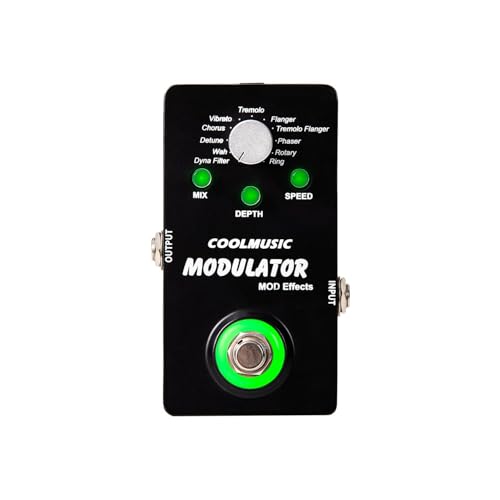
The COOLMUSIC A-ME01 is another multi-modulation pedal that includes a ring mod among its 11 effect modes. At its price point, it is one of the most affordable ways to experiment with ring modulation without committing to a dedicated unit. The full metal shell and true bypass switching give it a more premium feel than the price suggests.
Effects include Dyna Filter, Wah, Detune, Chorus, Vibrato, Tremolo, Flanger, Tremolo Flanger, Phaser, Rotary, and Ring. That is a lot of ground for a single mini pedal. The ring mode specifically produces a respectable metallic character that, while not as refined as boutique options, is more than usable for practice and home recording.
Control Layout and Sound Shaping
The MIX, DEPTH, and SPEED knobs give you meaningful control over each effect. For the ring mod mode, MIX controls the wet-dry balance, DEPTH affects the intensity of the metallic character, and SPEED influences the carrier behavior. I was able to dial in usable tones within minutes, which says something about the intuitive layout.
The digital circuit is designed for pristine tone with low noise, and in practice it delivers on that promise. There is none of the hiss you get from cheap analog ring mods. The trade-off is that the tones lean slightly sterile compared to warmer analog circuits.
Build Quality and Power
The pedal weighs just under 200 grams and measures roughly 2.4 by 0.8 by 4.5 inches. It is tiny, which is great for cramped boards. The full metal shell feels durable enough for regular use, though I would not trust it on a heavy tour without backup.
Be aware that the DC adaptor is not included, which is standard for pedals in this price range but worth flagging. You will need a 9V center-negative supply to get it running.
7. FLAMMA FC05 – 1,200 Reviews Strong and Tiny Enough for Any Board
- ✓11 classic modulation effects
- ✓Compact mini pedal footprint
- ✓Full metal shell for durability
- ✓Over 1200 customer reviews
- ✕Power supply not included
- ✕Ring mode is basic compared to dedicated units
11 modulation effects
Ring mod mode
Mini full metal shell
9V 150mA power
The FLAMMA FC05 is the budget champion of this roundup, with over 1,200 customer reviews and a price tag that makes experimentation essentially risk-free. Like the MOOER and COOLMUSIC, it is a multi-modulation pedal that includes a ring mod mode among 11 total effects. The difference is the sheer volume of social proof behind it.
Effects cover Chorus, Flanger, Tremolo, Phaser, Vibrato, Rotary, Liquid, Auto Wah, Stutter, Ring, and Low Bit. The Ring mode sits between Stutter and Low Bit in the algorithm list, which tells you something about the experimental leaning of this pedal. It is not trying to be subtle.
Ring Mod Mode Performance
The ring mod algorithm on the FC05 is basic. There is no carrier frequency control, no blend knob, and no pitch tracking. What you get is a fixed-character metallic effect that responds to your playing dynamics. For the price, it is fine. I would treat it as a gateway effect to see if you even like ring modulation before investing in a dedicated unit.
Where the FC05 actually shines is the other modulation modes. The chorus and vibrato are genuinely usable, and the rotary effect is surprisingly convincing. If you end up not bonding with the ring mode, you still have 10 other effects to play with.
Build Quality and Form Factor
The FC05 measures just 3.3 by 1.9 by 2.1 inches and weighs under 200 grams. It is one of the smallest pedals on the market. The full metal shell survives regular stomping, and the bright color scheme makes it easy to spot on a dark stage.
Power comes from a 9V 150mA supply that is not included. The one-year warranty from Shenzhen Flamma Innovation covers manufacturing defects, which is standard for this tier.
8. Synthrotek Passive Ring Modulator Kit – Build Your Own for Under $40
- ✓Complete DIY kit with all components
- ✓Affordable entry point at under $40
- ✓Portable passive design
- ✓Strong 4.7 star rating from 22 reviews
- ✕Requires soldering and assembly
- ✕Battery powered rather than pedalboard-friendly
DIY passive ring mod kit
PCB transformers diodes included
3.5mm jacks
Battery powered
The Synthrotek Passive Ring Modulator Kit is the outlier in this roundup. It is not a stompbox, it is a DIY kit you solder together yourself. Included in the package are the PCB, transformers, diodes, and audio jacks. Once assembled, you have a passive ring modulator with 3.5mm jacks designed primarily for synthesizers and line-level gear.
This is the pedal, or rather module, for tinkerers and synth nerds. It will not sit on a guitar pedalboard without some adaptation, but for modular synth rigs and experimental setups it is one of the cheapest ways to add genuine passive ring modulation to your signal chain.
Assembly and Skill Level
Synthrotek rates the skill level as All, which means a determined beginner can tackle it but some soldering experience helps. The PCB is clearly labeled and the included components are through-hole, not surface mount, so assembly is straightforward. Plan on a couple of evenings if this is your first build.
The 4.7-star average across 22 reviews suggests that most builders successfully complete the kit and are happy with the result. Common praise centers on the clear instructions and the quality of the included transformers, which are the heart of any passive ring mod circuit.
Passive Circuit Characteristics
Because this is a passive design, there is no carrier oscillator on board. You feed an external carrier signal into one input and your instrument signal into the other, and the transformers and diode ring do the multiplication. This gives you ultimate flexibility over the carrier waveform but requires a second signal source.
If you have a synth with multiple oscillators, this is a playground. If you only have a guitar, you will need an additional oscillator or function generator to drive the carrier input. Plan your setup accordingly.
What to Look for When Choosing a Ring Modulator Pedal
Buying a ring modulator pedal is different from buying a chorus or delay. The effect is inherently abrasive, and small design choices determine whether you get a usable texture or uncontrolled noise. Here are the factors I weighed during testing, and the questions you should ask before pulling the trigger.
Dedicated vs Multi-Modulation Pedals
The first decision is whether you want a dedicated ring mod or a multi-modulation pedal that includes ring among other effects. Dedicated units like the Randy’s Revenge, Ring Thing, and RingerBringer give you deeper control over the carrier frequency, blend, and waveform. Multi-modulation pedals like the MOOER, COOLMUSIC, and FLAMMA offer ring mod as one of 11 algorithms, usually with fewer dedicated controls.
If ring modulation is your main interest, go dedicated. If you want to experiment with ring mod occasionally and value versatility, a multi-modulation pedal gives you more bang for the buck.
Pitch Tracking and Musicality
Traditional ring mods use a free-running carrier that ignores your pitch. The result is atonal and clashing unless you carefully tune the carrier to a specific note. Pitch-tracking ring mods, like the EHX Ring Thing, lock the carrier to your input pitch, which keeps the metallic tones musically related to what you are playing.
For beginners, pitch tracking is a lifesaver. For experimental players who want chaos, a free-running carrier is the whole point. Know which camp you fall into before buying.
Carrier Frequency Range and Control
The carrier frequency knob is your primary tone-shaping tool. A wide range lets you dial in everything from slow tremolo-like warbles to piercing high-frequency clang. Look for a pedal that gives you both coarse and fine control over the carrier, like the Ring Thing’s tune switch and fine control.
Pedals with fixed carrier behavior, like the FLAMMA FC05, are less flexible but simpler to operate. Trade off flexibility against ease of use based on your experience level.
LFO and Waveform Options
An LFO modulating the carrier frequency creates evolving, animated textures that static ring mods cannot produce. The Warm Audio RingerBringer is the standout here, with multiple waveform options and dedicated LFO controls. If ambient and experimental textures are your goal, prioritize pedals with LFO sections.
Signal Chain Placement
Where you place a ring mod in your signal chain dramatically affects the result. Most players put ring modulation late in the chain, after overdrive and distortion, so the effect processes an already-harmonically-rich signal. This produces thicker, more complex metallic tones.
Placing ring mod before distortion results in the distortion compressing and smoothing out the metallic character, which can sound muddy. Placing it in an effects loop, after your preamp, gives you the cleanest ring mod tone with the least coloration. Experiment with placement to find what works for your rig.
Combining Ring Mod with Overdrive and Distortion
One of the most underexplored techniques is pairing ring modulation with overdrive or distortion. A common approach is to place a mild overdrive before the ring mod to fatten the input signal, which gives the ring mod more harmonics to work with. The DOD Gonkulator does this internally with its integrated distortion circuit.
Another approach is to place a fuzz after the ring mod to push the metallic tones into full sonic destruction. This works particularly well for industrial and noise genres. Start with low fuzz settings and gradually increase to find the threshold where the tone goes from textured to chaotic.
Bypass Type and Switching
True bypass switching ensures your tone stays clean when the pedal is off. Most pedals on this list feature true bypass, including the DOD Gonkulator, COOLMUSIC A-ME01, and FLAMMA FC05. Buffered bypass is less common in this category but can be preferable if you have long cable runs.
Noise Floor and Background Hiss
Ring mods are inherently noisy because the carrier oscillator runs constantly. A well-designed pedal keeps the noise floor low enough that the carrier does not bleed through when you are not playing. The Randy’s Revenge is the quietest analog unit I tested. Digital multi-modulation pedals like the COOLMUSIC and FLAMMA also stay quiet because they only generate the carrier when engaged.
Ring Modulator Pedal FAQs
What does a ring modulator pedal do?
A ring modulator pedal multiplies your guitar signal with an internal oscillator called a carrier, producing new frequencies at the sum and difference of the two signals. The result is a metallic, robotic, and often atonal texture that ranges from subtle shimmer to aggressive clang depending on the carrier frequency setting.
Where do you put a ring modulator in a signal chain?
Most players place a ring modulator late in the signal chain, after overdrive and distortion, so the effect processes a harmonically rich signal. You can also place it in your amp effects loop for the cleanest ring mod tone with minimal coloration from your preamp.
What is the best ring modulator pedal for guitar?
The Fairfield Circuitry Randy’s Revenge is the best overall ring modulator pedal for guitar thanks to its quiet analog circuit and blendable tone. For players who want pitch tracking and musicality, the Electro-Harmonix Ring Thing is the top choice. For budget experimentation, the FLAMMA FC05 offers a ring mod mode among 11 effects.
Are ring modulator pedals worth it?
Ring modulator pedals are worth it if you play experimental, ambient, industrial, or shoegaze music where unique metallic textures add value. They are not essential for standard rock, blues, or pop playing. If you are unsure, start with a budget multi-modulation pedal that includes a ring mode before committing to a dedicated unit.
Can you use a ring modulator on bass?
Yes, you can use a ring modulator on bass, but choose carefully because many ring mods thin out low frequencies. The Warm Audio RingerBringer and Fairfield Randy’s Revenge both retain bass frequencies well. Pedals with blend controls let you mix the ring modded signal with your dry bass tone for more usable results.
What is the difference between ring modulation and distortion?
Ring modulation is a multiplication effect that creates sum and difference frequencies, producing metallic and atonal textures. Distortion is a clipping effect that adds harmonic saturation and sustain. The DOD Gonkulator combines both in one pedal, using distortion to push the ring modulated signal into aggressive industrial territory.
Final Verdict
After testing all eight pedals, my recommendations break down by player type. If you want the best analog ring modulator pedal with the lowest noise floor, go with the Fairfield Circuitry Randy’s Revenge. If you need pitch tracking and musical versatility at a fair price, the Electro-Harmonix Ring Thing is the smart pick. For LFO-driven evolving textures, the Warm Audio RingerBringer is unmatched in this batch.
Budget-conscious players and newcomers should start with the FLAMMA FC05 or COOLMUSIC A-ME01 to see if ring modulation clicks before investing in a dedicated unit. Industrial players will love the gritty character of the DOD Gonkulator, and synth tinkerers should grab the Synthrotek Passive kit. Whatever your style, there is a ring modulator pedal on this list that will push your tone into territory no other effect can reach in 2026.






Leave a Comment