
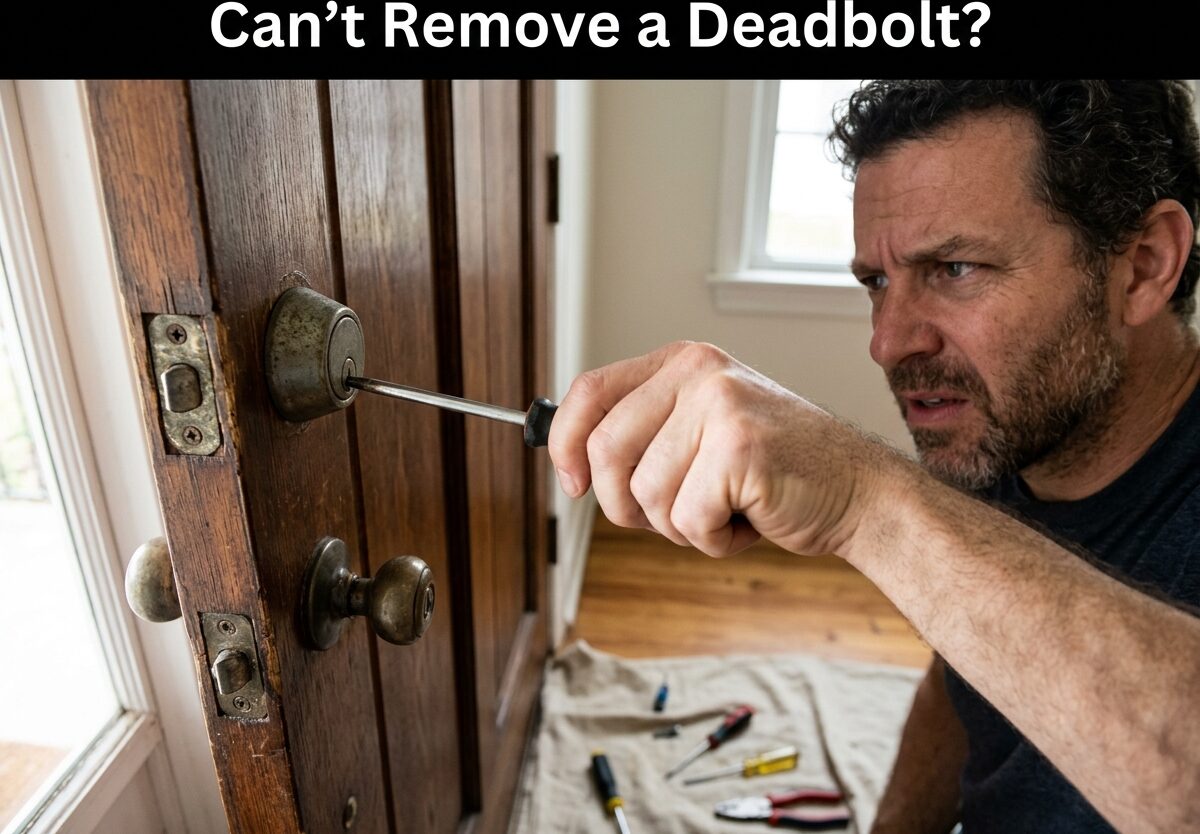
If you can’t remove a deadbolt that’s stuck, jammed, or frozen in place, you’re not alone. Thousands of homeowners deal with this exact problem every year, and the good news is that most stuck deadbolts come out without needing a professional locksmith.
This guide walks you through every method I’ve tested and researched, from simple lubrication fixes to the “implode” technique used on severely jammed locks. Whether your deadbolt has hidden screws, no key, or a painted-over faceplate, you’ll find the solution here.
I’ve combed through locksmith forums, manufacturer guides, and real homeowner experiences to compile the most complete troubleshooting resource for deadbolt removal in 2026. Let’s get that lock off your door.
Table of Contents
- Why Your Deadbolt Won’t Budge: Common Causes
- Tools You’ll Need to Remove a Stuck Deadbolt
- How to Remove a Deadbolt: Step-by-Step Guide
- How to Remove a Deadbolt With No Visible Screws
- How to Remove a Deadbolt Without a Key
- Troubleshooting: When the Deadbolt Still Won’t Come Out
- Prevention: Keeping Your Deadbolt Working Smoothly
- When to Call a Locksmith
- FAQs
- Conclusion
Why Your Deadbolt Won’t Budge: Common Causes
A deadbolt gets stuck for a handful of predictable reasons. Understanding which one applies to your situation saves you time and frustration.
Door misalignment is the most common culprit. When a door sags or shifts, the bolt presses against the strike plate instead of sliding freely into the door frame. This binding makes the bolt feel welded in place.
Lack of lubrication causes the internal pin tumbler mechanism and latch bolt to seize up. If your deadbolt has been installed for years without maintenance, dry friction builds up inside the cylinder.
Paint or debris can physically lock the faceplate to the door surface. Many homeowners discover their deadbolt is stuck because layers of paint have essentially glued it in position.
Internal mechanism failure happens when springs break or pins inside the cylinder jam. This usually means the lock needs full replacement rather than repair.
Tools You’ll Need to Remove a Stuck Deadbolt
Gather these tools before starting. Most are standard household items.
Phillips-head screwdriver (the #2 size fits most deadbolt screws)
Flat-head screwdriver (for prying and manual retraction)
Putty knife or painter’s tool (for painted-over faceplates)
Needle-nose pliers
Lubricant: dry Teflon spray, graphite powder, or silicone spray
Hammer (for the implode method as a last resort)
Flashlight
Allen wrench set (some brands use set screws)
A magnet can also help if you suspect hidden screws beneath a metal cover plate.
How to Remove a Deadbolt: Step-by-Step Guide
If you can’t remove a deadbolt using normal methods, follow this step-by-step process. I’ve arranged these from simplest to most aggressive so you can stop as soon as the lock comes free.
Step 1: Lubricate the Lock Cylinder First
Before removing anything, try lubricating the stuck deadbolt mechanism. This single step fixes about 60% of jammed locks according to locksmiths on Reddit’s r/AskALocksmith.
Spray dry Teflon spray or puff graphite powder into the key way. Insert the key and work it gently back and forth without forcing it. The lubricant spreads through the pin tumbler mechanism and can free a bolt that’s seized from friction.
Avoid standard WD-40 as a permanent fix. It attracts dust and grime over time, which makes the problem worse. If you only have WD-40, use it to get unstuck, then follow up with dry Teflon spray or graphite.
Step 2: Check Door Alignment
Push or pull the door while turning the key or thumb turn. If the bolt retracts when you apply pressure to the door, your problem is alignment, not the lock itself.
Tighten the hinges with a screwdriver to lift a sagging door. You can also file the strike plate hole slightly wider so the bolt clears it without binding.
Step 3: Remove the Interior Screws
Open the door and locate the two mounting screws on the interior faceplate. Most deadbolts use standard Phillips-head screws. Unscrew both completely.
Pull the interior thumb turn assembly straight out. Then pull the exterior cylinder from the outside. If either side sticks, tap gently with the handle of your screwdriver.
Step 4: Remove the Bolt Mechanism
With both cylinders removed, you’ll see the bolt mechanism held by two screws on the door edge. Remove those screws and slide the bolt assembly out of the cross-bore.
If the bolt is stuck in the locked position and won’t slide out, use needle-nose pliers to grip the bolt tip and pull while wiggling gently.
How to Remove a Deadbolt With No Visible Screws
Many modern deadbolts, especially from Kwikset and Schlage, hide their mounting screws behind a decorative cover plate. If you see no screws on the interior side, here’s how to access them.
Look for a small slot or recessed hole on the side or bottom of the interior trim ring. Insert a flat-head screwdriver or Allen wrench into this slot and pry the cover plate off. It’s usually a friction-fit retainer that pops off with moderate pressure.
For Kwikset SmartKey deadbolts, the interior rose (the round plate against the door) snaps off. Slide a putty knife under the edge and pry gently around the perimeter until it releases.
For Schlage deadbolts, look for a small pinhole on the bottom of the interior knob or thumb turn. Insert a paperclip or Allen wrench into the hole, push the retention pin, and pull the assembly off.
If the faceplate is painted over, run a putty knife around the edge to break the paint seal before prying. This prevents chunks of paint from tearing off your door.
How to Remove a Deadbolt Without a Key
If you’re locked out or the key won’t turn, you can still remove the deadbolt from the inside if the door is open on one side.
Remove the interior assembly by following the steps above. Once the interior thumb turn is off, you’ll see the tailpiece that connects to the bolt mechanism. Use pliers to grip the tailpiece and rotate it manually to retract the bolt.
If the door is closed and you’re locked out with no key, your options narrow significantly. You can try a screwdriver in the key way as a makeshift key, but this risks damaging the cylinder permanently. In most cases, calling a locksmith is the safest path when locked out without a key.
Troubleshooting: When the Deadbolt Still Won’t Come Out
Sometimes the standard steps aren’t enough. Here are advanced techniques for stubborn locks.
The Implode Method
Schlage’s own support documentation recommends the “implode” technique for severely stuck deadbolts. Remove the interior screws and push the interior assembly inward toward the door cavity. This releases tension on the bolt mechanism, allowing you to retract the bolt manually through the cross-bore.
This method works when internal components have shifted and created pressure that locks the bolt in place.
Prying a Painted-Over Faceplate
A putty knife or painter’s tool is your best friend here. Score the paint line around the faceplate with a utility knife first. Then wedge the putty knife under the edge and work around the perimeter slowly.
Reddit users on r/DIY report that patience here prevents door damage. Rushing this step tears off large paint sections.
Last Resort: Claw Hammer Extraction
If the deadbolt is completely non-functional and you’re replacing it anyway, some homeowners use a claw hammer to physically pull the assembly from the door. This destroys the lock and may damage the door. Only use this approach if you’ve exhausted all other methods and are committed to replacing the deadbolt and possibly refinishing the door.
Prevention: Keeping Your Deadbolt Working Smoothly
A few minutes of maintenance per year prevents most stuck deadbolt problems.
Apply graphite powder or dry Teflon spray to the key way every 6 months. Insert and remove the key several times to distribute the lubricant through the pin tumblers.
Check door alignment annually. If the deadbolt scrapes against the strike plate when you turn it, address the alignment before it worsens.
Never paint over a deadbolt faceplate without removing the lock first. Paint locks the mechanism to the door and creates a removal nightmare down the road.
When to Call a Locksmith
Call a professional if the deadbolt is your only entry point and you’re locked out, if the lock contains a high-security restricted keyway, or if you’ve tried all the methods above without success. A locksmith can drill out a frozen cylinder and install a replacement without damaging your door.
Most locksmith service calls run between $75 and $150, which is often cheaper than replacing a door you damaged with aggressive DIY removal.
FAQs
How to take a deadbolt off with no visible screws?
Look for a small slot or pinhole on the interior trim ring. Pry the decorative cover plate off with a flat-head screwdriver to expose the mounting screws underneath. Kwikset deadbolts have snap-off roses, while Schlage models use a pinhole release on the thumb turn.
Can a magnet unlock a deadbolt?
No, a standard magnet cannot unlock a deadbolt. Deadbolts use a pin tumbler mechanism that requires the correct key cuts to align internal pins. A magnet has no effect on brass or steel lock pins. Some smart locks use magnetic keys, but standard residential deadbolts do not.
How to remove a door lock that is stuck?
Start by lubricating the key way with graphite or Teflon spray. If that doesn’t work, remove the interior mounting screws, pull off the thumb turn assembly, and use pliers on the tailpiece to manually retract the bolt. For severely stuck locks, use the implode method by pushing the interior assembly into the door cavity.
Why won’t my deadbolt come out?
The most common reasons are door misalignment causing the bolt to bind against the strike plate, lack of lubrication inside the cylinder, paint sealing the faceplate to the door, or internal mechanism failure where springs or pins have broken inside the lock.
Can I use WD-40 on a stuck deadbolt?
WD-40 can free a stuck deadbolt temporarily, but it is not recommended for long-term use because it attracts dust and creates sticky buildup inside the lock. Use dry Teflon spray or graphite powder instead for lasting lubrication that won’t gum up the pin tumbler mechanism.
Conclusion
When you can’t remove a deadbolt, the key is to start with the least aggressive method and work your way up. Lubricate first, check alignment second, then proceed to disassembly. Most stuck deadbolts respond to these basic steps without needing professional help.
If all else fails, a locksmith can resolve the problem quickly and protect your door from damage. Either way, that stuck deadbolt doesn’t have to stay stuck for long.


Leave a Comment