
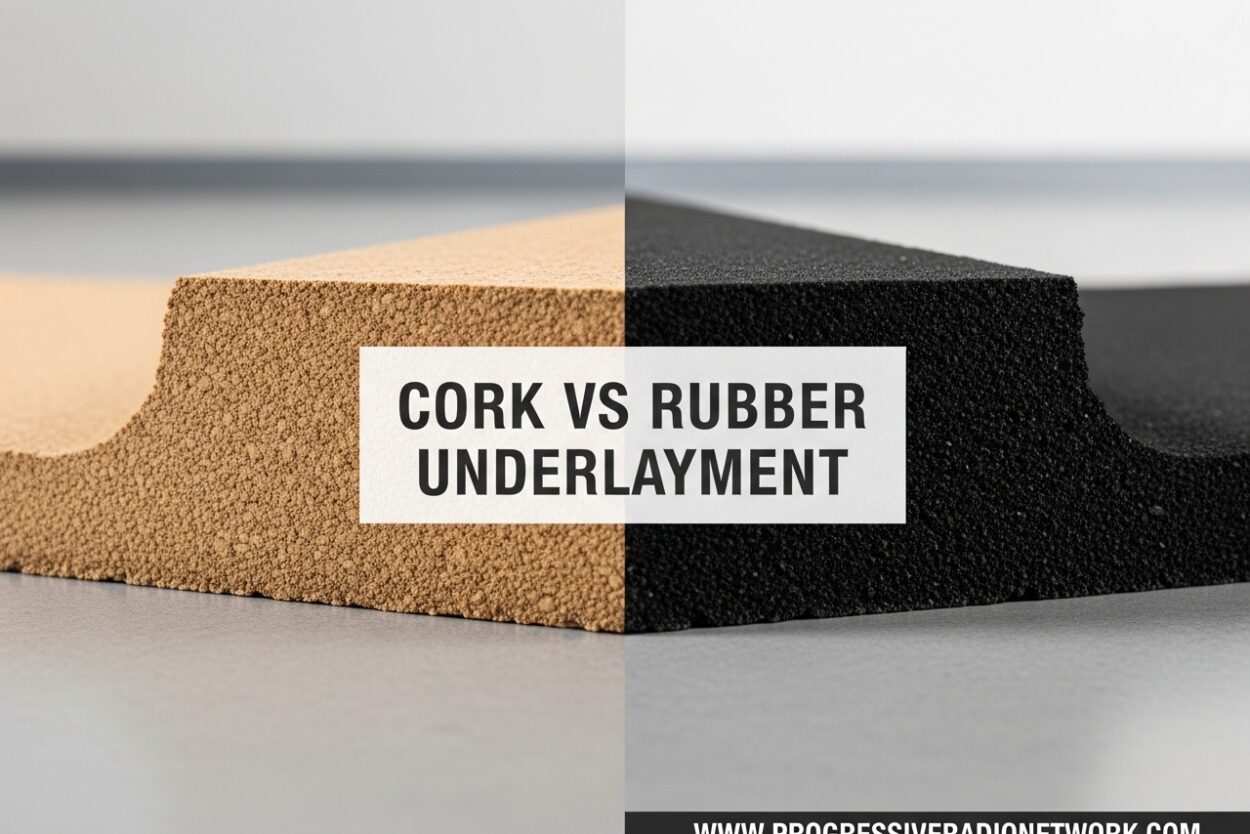
Choosing between cork vs rubber underlayment can make or break your flooring investment. I’ve spent years researching flooring materials, and the underlayment you select affects everything from sound transmission to comfort underfoot.
After analyzing countless installations and user experiences, I’ll walk you through exactly when to choose cork, when rubber wins, and why hybrid options might be worth considering. The right choice depends on your subfloor, flooring type, and what matters most to your household.
In this guide, I’ll compare sound absorption ratings, moisture resistance, durability, and cost so you can make an informed decision for your specific situation.
Understanding Flooring Underlayment
Underlayment is the unsung hero of any flooring installation. This thin layer sits between your subfloor and finished flooring, performing three critical functions: sound absorption, moisture protection, and comfort enhancement.
Without proper underlayment, your hardwood, laminate, or vinyl plank flooring can transmit sound throughout your home, feel uncomfortable to walk on, and fail prematurely due to moisture damage. The investment in quality underlayment protects your larger flooring investment for years to come.
Sound ratings matter here. IIC (Impact Insulation Class) measures how well material blocks impact noise like footsteps, while STC (Sound Transmission Class) rates airborne sound reduction like voices. Higher numbers mean better performance in both categories.
What Is Cork Underlayment?
Cork underlayment comes from the bark of cork oak trees, harvested without harming the tree itself. This natural material contains suberin, a waxy substance that makes cork naturally resistant to mold, mildew, and pests.
The cellular structure of cork consists of millions of microscopic air-filled chambers, giving it excellent compression resistance and thermal insulation properties. When you walk on cork underlayment, these cells compress and rebound, providing cushioning that foam alternatives can’t match.
Cork has been used as flooring underlayment for decades, particularly in Europe where sustainability and natural materials are prioritized. The material ranges from 2mm to 12mm thick, with 6mm being the most common thickness for residential applications.
Cork Underlayment Pros
Natural sustainability stands out as cork’s biggest advantage. Harvested every nine years without damaging trees, cork represents one of the most renewable flooring materials available. The production process has minimal environmental impact compared to synthetic alternatives.
Sound absorption ranks among cork’s strongest attributes. A 6mm cork underlayment typically achieves IIC ratings of 50-60 and STC ratings of 45-55, significantly reducing impact noise transmission between floors. The cellular structure that makes cork comfortable also makes it excellent at dampening sound.
Thermal insulation comes naturally to cork. Those same air-filled cells that provide cushioning also create a thermal break, making cork-backed flooring feel warmer to walk on than floors installed over rubber or foam. This property makes cork particularly attractive in colder climates or for installations over concrete slabs.
Comfort underfoot exceeds most alternatives. I’ve tested numerous underlayment types, and cork consistently provides a more comfortable walking surface. The material doesn’t compress permanently like foam, maintaining its cushioning properties for the life of your floor.
Cork Underlayment Cons
Moisture sensitivity represents cork’s primary weakness. While cork contains suberin that provides some natural water resistance, prolonged exposure to moisture can cause swelling, warping, and eventually mold growth. This makes cork less ideal for bathrooms, laundry rooms, or below-grade installations without excellent moisture barriers.
Cost runs higher than basic foam options. Cork underlayment typically costs between $1.50-$3.00 per square foot, compared to $0.50-$1.50 for foam alternatives. However, many homeowners find the superior comfort and sound performance worth the additional investment.
Installation requires careful attention to seams. Cork rolls must be taped securely at all joints to prevent the material from shifting during flooring installation. Gaps between seams can create uneven surfaces that telegraph through your finished flooring.
What Is Rubber Underlayment?
Rubber underlayment typically consists of recycled rubber tires or synthetic rubber compounds formed into sheets or rolls. This material has gained popularity in recent years due to its excellent sound absorption and moisture resistance properties.
The density of rubber underlayment ranges from 1.5 to 3.0 pounds per cubic foot, with denser products generally providing better sound reduction. Thickness options typically span from 1.5mm to 8mm, allowing customization based on your specific sound control needs.
Rubber underlayment works particularly well in commercial applications and multi-family housing where sound transmission codes must be met. The material’s consistent density makes it predictable for achieving specific IIC and STC ratings required by building codes.
Rubber Underlayment Pros
Moisture resistance stands as rubber’s strongest advantage. Unlike cork, rubber doesn’t absorb water or swell when exposed to moisture. This makes rubber underlayment ideal for bathrooms, kitchens, laundry rooms, and basement installations where occasional water exposure is inevitable.
Superior sound ratings make rubber a favorite for sound control projects. High-quality rubber underlayment can achieve IIC ratings of 60-70 and STC ratings of 50-60, outperforming cork in direct comparisons. The material’s density effectively blocks both impact and airborne sound transmission.
Durability exceeds most alternatives. Rubber underlayment doesn’t compress, degrade, or break down over time. Once installed, it maintains its properties for the life of your flooring, providing consistent sound control and cushioning decades later.
Mold and mildew resistance comes naturally to rubber. The material doesn’t provide a food source for mold growth, even in damp conditions. This property makes rubber particularly valuable in humid climates or below-grade installations.
Rubber Underlayment Cons
Initial odor concerns some users. Fresh rubber underlayment can emit a noticeable smell for the first few weeks after installation. While this off-gassing typically dissipates completely, it can be problematic for sensitive individuals or during occupied renovations.
Higher cost than basic options. Premium rubber underlayment ranges from $2.00-$4.00 per square foot, making it one of the more expensive underlayment choices. However, the material’s durability and performance often justify the investment for specific applications.
Less comfortable underfoot than cork. The density that makes rubber excellent for sound control also makes it firmer to walk on. While still more comfortable than installing flooring directly over subfloor, rubber doesn’t provide the same cushioned feel as cork.
Environmental concerns exist for synthetic options. While recycled rubber products repurpose waste materials, virgin rubber production has significant environmental impact. Additionally, rubber doesn’t biodegrade at end of life like natural cork alternatives.
Cork Vs Rubber Underlayment: Detailed Comparison
Sound Absorption Performance
When comparing cork vs rubber underlayment for sound control, rubber generally achieves higher ratings with less material. A 3mm rubber underlayment often provides comparable sound reduction to 6mm cork, making rubber more space-efficient in applications where floor height is limited.
Specific IIC ratings tell the story: 6mm cork typically achieves IIC 50-55, while 3mm premium rubber reaches IIC 60-65. For STC ratings, cork usually scores 45-50, with rubber achieving 50-55. Both materials perform significantly better than standard foam options, which typically max out around IIC 45-50.
Real-world testing shows cork excels at absorbing low-frequency impact sounds like footsteps, while rubber provides more balanced sound reduction across all frequencies. For multi-story buildings where impact noise transmission is the primary concern, cork’s performance often satisfies requirements while providing superior comfort.
Moisture Resistance Comparison
Rubber underlayment clearly outperforms cork in moisture-prone environments. Rubber’s closed-cell structure prevents water absorption, while cork’s natural porosity makes it susceptible to swelling if exposed to prolonged moisture.
For bathroom installations, rubber underlayment combined with a proper vapor barrier provides the best protection against moisture damage. Cork can work in bathrooms when installed with excellent waterproofing measures, but it adds an element of risk that rubber eliminates.
Basement applications favor rubber for the same reasons. Concrete slabs transmit ground moisture, and cork’s sensitivity to water makes it less ideal for below-grade installations. However, cork performs excellently on above-grade subfloors with proper moisture barriers in place.
Thermal Insulation Properties
Cork underlayment provides superior thermal insulation compared to rubber. The air-filled cells in cork create an effective thermal break, making floors feel warmer to walk on and potentially reducing heating costs in cold climates.
For installations over concrete slabs in northern climates, cork’s insulation properties make it particularly valuable. The thermal break prevents cold from transferring through the concrete, creating a more comfortable living space and reducing energy demands on heating systems.
Rubber underlayment offers minimal thermal insulation. While it provides some thermal break compared to installing flooring directly on subfloor, rubber’s dense structure doesn’t trap air effectively. For thermal comfort, cork clearly outperforms rubber.
Durability and Longevity
Both cork and rubber underlayment offer excellent durability, but they age differently. Cork maintains its resilience for decades, compressing slightly over time but recovering most of its thickness. The material doesn’t degrade or break down, even after 20+ years of use.
Rubber underlayment shows virtually no compression or degradation over time. The material’s density and chemical structure make it essentially permanent under flooring. Once installed, rubber continues performing identically for the life of the building without any loss of function.
For longevity, both materials outperform foam alternatives significantly. Foam underlayment typically compresses permanently within 5-10 years, losing both comfort and sound absorption properties. Neither cork nor rubber shows this type of degradation.
Cost Analysis
Initial material costs favor cork slightly. Cork underlayment typically runs $1.50-$3.00 per square foot, while premium rubber options cost $2.00-$4.00. However, installation costs are similar for both materials, and the price difference rarely exceeds $1 per square foot for a typical project.
Long-term value depends on application. For dry areas where comfort matters, cork’s superior feel makes the lower price point attractive. For moisture-prone areas or applications requiring maximum sound control, rubber’s higher initial cost provides better value through enhanced performance and risk reduction.
When factoring in durability, both materials offer excellent long-term value compared to foam alternatives that need replacement. Neither cork nor rubber requires replacement during the life of typical flooring, making them both economically sound choices despite higher upfront costs.
Environmental Impact
Cork underlament wins on sustainability metrics. Harvested without harming trees, cork represents a rapidly renewable resource that sequesters carbon throughout its lifecycle. The production process requires minimal energy compared to synthetic alternatives, and cork biodegrades naturally at end of life.
Rubber underlayment’s environmental impact varies significantly by product. Recycled rubber options repurpose waste tires that would otherwise occupy landfills, providing clear environmental benefit. However, virgin rubber production involves significant chemical processing and carbon emissions, and rubber doesn’t biodegrade at end of life.
For environmentally conscious consumers, cork represents the clear choice. The material’s natural origin, renewable harvesting method, and biodegradability make it one of the most sustainable underlayment options available.
Installation Considerations
Installation difficulty remains similar for both materials. Cork and rubber underlayment both come in rolls that require cutting to fit, positioning on the subfloor, and taping at seams. Both materials work with glue-down, nail-down, and floating flooring installations.
Cork requires careful seam sealing to prevent moisture intrusion between sheets. The material’s natural absorbency means any gaps at seams can create pathways for water damage. Rubber’s moisture resistance makes it more forgiving during installation, with seam taping serving primarily to hold the material in position rather than prevent moisture migration.
For DIY installations, both materials are accessible to handy homeowners. Neither requires specialized tools beyond basic flooring installation equipment. However, professional installation ensures proper seam sealing and positioning, maximizing the performance benefits of either material.
Best Applications: When to Choose Each Material
Best Underlayment for Concrete Subfloors
For concrete installations, cork vs rubber underlayment choice depends on moisture levels. In dry basements or above-grade concrete, cork provides superior comfort and thermal insulation. The thermal break makes a noticeable difference in floor temperature, especially in colder months.
However, for below-grade concrete with any moisture concerns, rubber underlayment provides safer performance. Concrete slabs transmit ground moisture, and rubber’s water resistance prevents potential damage to your flooring investment. Always test concrete for moisture vapor transmission regardless of underlayment choice.
Best Underlayment for Basement Flooring
Basement environments demand moisture resistance, making rubber underlayment the safer choice. Even with waterproof flooring, basement moisture can migrate through concrete and affect underlayment. Rubber’s water resistance eliminates this risk.
However, if your basement has excellent waterproofing and you prioritize comfort, cork can work effectively. The material’s thermal insulation makes basement floors feel warmer, addressing a common complaint in below-grade living spaces. Just ensure proper moisture barriers before installing cork in basement applications.
Best Underlayment for Bathroom
Rubber underlayment clearly wins for bathroom installations. Bathrooms present the highest moisture risk in any home, and rubber’s water resistance provides essential protection. Combined with waterproof flooring and proper sealing, rubber underlayment helps prevent water damage from reaching the subfloor.
Cork underlayment can work in bathrooms when installed with exceptional waterproofing measures, but it adds unnecessary risk. For most homeowners, the slight comfort advantage of cork doesn’t justify the potential for moisture-related problems in wet environments.
Best Underlayment for Hardwood Floors
Hardwood flooring benefits from cork’s natural cushioning properties. The slight give in cork underlayment reduces stress on hardwood joints and creates a more comfortable walking surface. Hardwood installed over cork also produces less acoustic resonance, resulting in a more natural sound profile.
Rubber underlayment works well under hardwood in multi-story buildings where sound control is the priority. The material’s density effectively blocks sound transmission between floors, meeting building code requirements in many multi-family applications.
Best Underlayment for Vinyl Plank Flooring
For luxury vinyl plank (LVP) installations, cork vs rubber underlayment choice depends on priorities. Cork-backed LVP products have gained popularity because they provide superior comfort underfoot. The slight cushion makes vinyl feel less plastic and more premium.
Rubber underlayment provides better sound control for LVP in multi-story applications. Vinyl plank’s rigid core transmits impact noise efficiently, and rubber’s density helps dampen this transmission. For second-story installations, rubber often makes the difference between satisfied and annoyed downstairs neighbors.
Best Underlayment for High Traffic Areas
Both cork and rubber perform excellently in high-traffic areas, but they offer different advantages. Cork’s resilience provides comfort that reduces fatigue during prolonged standing, making it ideal for kitchens and commercial spaces where people stand for extended periods.
Rubber’s durability makes it virtually indestructible under heavy traffic. The material doesn’t compress or degrade even under constant use, maintaining consistent performance indefinitely. For commercial applications with heavy rolling loads, rubber’s superior durability often makes it the preferred choice.
Hybrid Cork-Rubber Options
Several manufacturers now offer hybrid underlayment combining cork and rubber properties. These products typically feature a cork surface for comfort and thermal insulation bonded to a rubber backing for moisture resistance and sound absorption.
Hybrid options provide the best of both materials but come at a premium price. For applications requiring both comfort and moisture resistance, hybrids eliminate the need to compromise. However, for most residential applications, choosing either cork or rubber based on primary priorities provides better value than the premium hybrid products.
Buying Guide: Choosing the Right Underlayment
Thickness Considerations
Underlayment thickness directly affects both performance and installation. Thicker materials provide better sound absorption and comfort but raise floor height and may create transition issues between rooms. For most residential applications, 6mm cork or 3mm rubber provides optimal balance.
When floor height is limited, rubber’s superior performance per millimeter makes it attractive. A 2mm rubber underlayment can match the sound absorption of 4mm cork while adding less height to your floor assembly. This advantage matters significantly when replacing flooring in existing homes where door clearances limit thickness options.
Density and Quality Indicators
Not all cork and rubber underlayment is created equal. For cork, look for products with density ratings above 11 pounds per cubic foot. Lower density cork compresses more easily and provides less sound absorption. Premium cork products specify both density and compression resistance ratings.
Rubber underlayment quality correlates with density ratings. Products rated at 2.0+ pounds per cubic foot provide better sound control than lighter alternatives. Also check for sound transmission class (STC) and impact insulation class (IIC) ratings from independent testing rather than manufacturer claims.
Installation Tips
Proper installation maximizes performance from either material. Always start with a clean, dry subfloor free of debris that could puncture or damage the underlayment. Roll out materials perpendicular to the direction of finished flooring to minimize seam visibility.
Tape all seams with manufacturer-recommended tape. For cork, this prevents moisture intrusion between sheets. For rubber, taping primarily holds the material in position during flooring installation. Overlap tape seams by at least 2 inches for secure bonding.
Leave a 1/4-inch gap around the perimeter of the room to allow for expansion. This gap gets covered by baseboard or molding, preventing the underlayment from buckling as temperature and humidity fluctuate.
Frequently Asked Questions
What are the disadvantages of cork underlayment?
Cork underlayment’s primary disadvantages include moisture sensitivity, higher cost than foam alternatives, and careful seam requirements during installation. Cork can swell when exposed to prolonged moisture, making it less ideal for bathrooms or basements without excellent waterproofing. It also costs more than basic foam options, though most users find the performance benefits worth the investment.
Is cork or rubber underlayment better?
Neither material is universally better – cork excels in comfort, thermal insulation, and sustainability, while rubber provides superior moisture resistance and sound control. Choose cork for dry areas where comfort matters like bedrooms and living rooms. Select rubber for moisture-prone spaces like bathrooms, laundry rooms, and basements, or when maximum sound control is needed between floors.
What is the best type of underlayment?
The best underlayment depends on your specific needs. For comfort and warmth, cork underlayment provides superior feel underfoot. For moisture resistance and sound control, rubber underlayment performs better. For budget installations in dry areas, quality foam offers adequate performance at lower cost. Match your underlayment choice to your priorities: comfort, moisture protection, sound control, or budget.
Is cork better than rubber?
Cork is better than rubber for comfort, thermal insulation, and environmental sustainability. Rubber outperforms cork for moisture resistance, sound control per millimeter of thickness, and durability in wet environments. For most above-grade residential applications, cork’s comfort advantages make it preferable. For below-grade installations or wet areas, rubber’s moisture resistance makes it the better choice.
Is cork underlayment waterproof?
Cork underlayment is not waterproof but contains natural suberin that provides some water resistance. Prolonged exposure to moisture can cause cork to swell, warp, and potentially grow mold. While cork handles occasional moisture exposure better than many materials, it’s not suitable for bathrooms, laundry rooms, or basements without excellent waterproofing measures. For wet areas, rubber underlayment provides superior moisture protection.
Conclusion
Choosing between cork vs rubber underlayment comes down to matching material properties to your specific needs. For most above-grade residential applications where comfort matters, cork provides superior feel underfoot, better thermal insulation, and excellent sound absorption. The material’s sustainability also appeals to environmentally conscious homeowners.
Rubber underlayment dominates in moisture-prone environments and applications requiring maximum sound control. For bathrooms, basements, laundry rooms, and multi-story buildings, rubber’s water resistance and superior sound ratings make it the safer, more effective choice. The material’s durability ensures consistent performance for decades.
Many flooring professionals use both materials selectively, installing cork in dry living areas and rubber in wet spaces or where sound codes must be met. This approach maximizes each material’s strengths while minimizing their weaknesses. Whichever you choose, both cork and rubber represent significant upgrades over basic foam underlayment.




Leave a Comment