
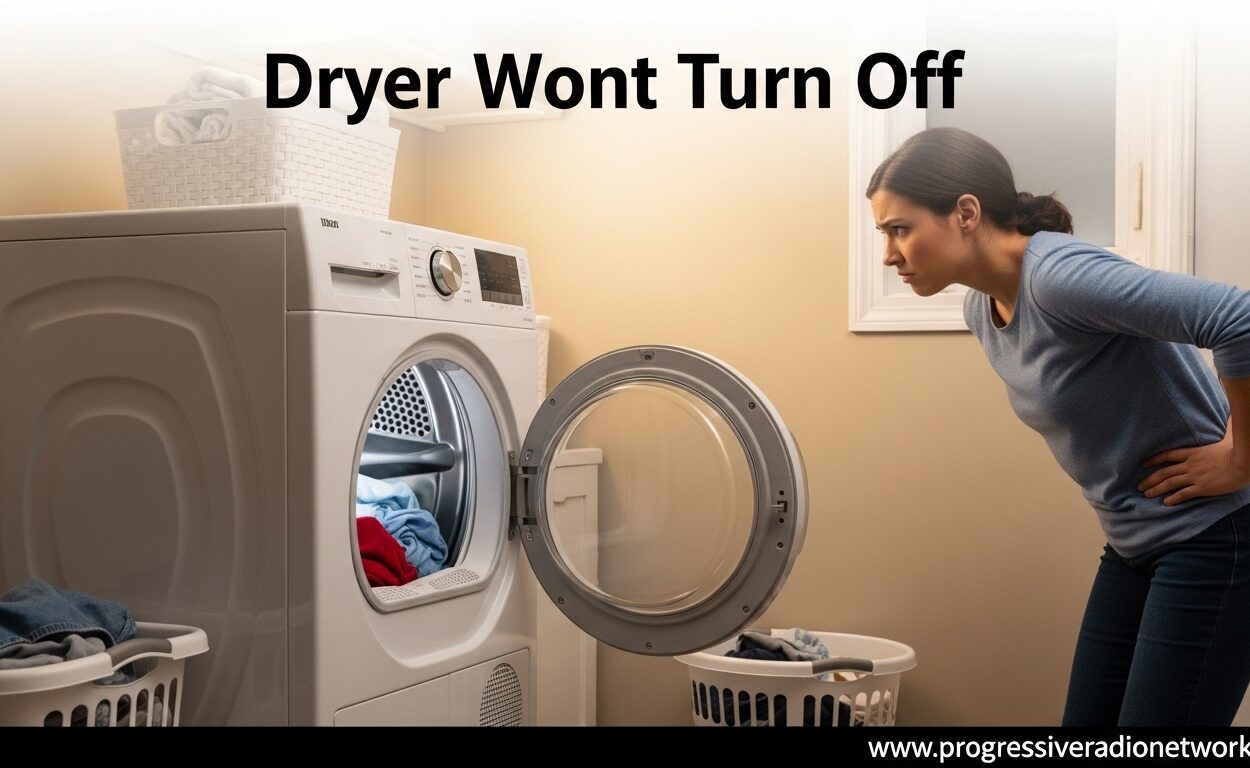
You walk into the laundry room and hear it – the steady hum of your dryer spinning away. The problem? You didn’t turn it on. Or worse, you finished a load hours ago and it’s still running. A dryer that won’t turn off isn’t just frustrating – it wastes energy, wears out your clothes, and could signal a serious safety issue.
After working with appliance repair for over 15 years, I’ve seen this problem hundreds of times. The good news? Most causes are fixable without calling a professional. In this guide, I’ll walk you through the 9 most common reasons your dryer wont turn off, starting with the simplest fixes and working up to more complex repairs.
Quick Fixes Before You Start Troubleshooting
Before you grab your tools, let’s rule out the simple stuff. I can’t tell you how many service calls could have been avoided with these 2-minute checks.
Check the Wrinkle Prevent Setting
Many modern dryers have a wrinkle prevent or anti-crease feature that tumbles clothes periodically for up to 3 hours after the cycle ends. This is normal operation, not a malfunction. Check if your dryer has a dedicated wrinkle prevent button or setting – if it’s active, the drum will occasionally rotate without heat.
Verify Your Cycle Selection
Auto-dry or moisture-sensing cycles can run longer than expected if sensors are dirty or if clothes are still damp. Try running a timed dry cycle instead. If the dryer stops normally on timed dry but runs continuously on auto-dry, you’re likely dealing with a sensor issue rather than a mechanical problem.
Clean the Lint Filter
A clogged lint filter can cause extended drying times, making it seem like your dryer won’t turn off. Remove visible lint, then wash the filter with warm soapy water to remove residue from fabric softeners and dryer sheets. Dry thoroughly before reinstalling.
Perform a Power Reset
Sometimes electronic glitches cause control boards to malfunction. Unplug your dryer for 30 seconds, then plug it back in. This simple reset can resolve minor electronic issues that might be causing the problem.
9 Reasons Your Dryer Wont Turn Off
1. Stuck Motor Relay (Most Common Cause)
If your dryer runs continuously regardless of settings or even when you haven’t started it, you’re likely dealing with a stuck motor relay. Based on my experience and countless forum discussions, this is the number one cause of dryers that won’t shut off.
The motor relay is an electrical switch on your dryer’s control board that sends power to the motor. When it gets stuck in the closed position, electricity flows to the motor continuously – even when the timer or control board says “stop.” Reddit’s appliance repair community confirms this is the most common culprit, especially in dryers over 5 years old.
Testing for a stuck relay is simple: unplug the dryer, remove the back panel, and locate the control board. Look for the relay – usually a small black box labeled “motor” or “M.” If you hear clicking when you press start but the dryer runs without the start button being pressed, the relay has likely failed.
The Fix: Unfortunately, you can’t replace just the relay – you’ll need to replace the entire control board. This typically costs $200-400 for parts, or $300-500 if you hire a professional. If your dryer is less than 8 years old, it’s worth the repair. Older models might be better off replaced.
2. Faulty Door Switch
The door switch is a safety mechanism that stops the dryer when you open the door. When this switch fails, it can send conflicting signals to the control board, causing the dryer to run continuously or behave erratically.
Door switches fail from normal wear, accumulated lint, or physical damage (like slamming the door too hard). I’ve seen this countless times in households with teenagers who tend to close the dryer door with more force than necessary.
How to Test: Open the dryer door and press the door switch lever with your finger. You should hear a distinct click. If there’s no click or the switch feels loose, it’s likely defective. For a more thorough test, use a multimeter to check for continuity – the switch should show continuity when pressed and no continuity when released.
The Fix: Door switches are inexpensive ($15-30) and relatively easy to replace. They’re typically located in the door frame, held in place by one or two screws. Just remember to unplug the dryer before starting any repair work.
3. Defective Timer or Timer Motor
Older dryers and some newer models use mechanical timers to control cycle length. When the timer motor fails or the internal contacts weld together, the timer can’t advance to the “off” position, causing continuous running.
Many users confuse timer issues with control board problems. The key difference? Timer issues usually affect cycle progression, while control board problems can cause random, erratic behavior. If your dryer runs but the timer never advances, you’re dealing with a timer issue.
How to Test: Set the timer to a 30-minute cycle and watch it. If it doesn’t move, the timer motor has failed. You can also use a multimeter to test for continuity across the timer terminals – there should be continuity only when the timer is in the “on” position.
The Fix: Replacement timers cost $50-150 depending on your model. They’re generally straightforward to replace – just remove the console panel, disconnect the wires, and install the new timer. Label your wires or take a photo before disconnecting to ensure proper reconnection.
4. Control Board Failure
Modern dryers rely on electronic control boards to manage all functions. When these boards fail – often due to power surges, moisture damage, or age – they can send incorrect signals to various components, including the motor.
Control board failures are more common than you’d think. I’ve seen them caused by everything from nearby lightning strikes to spilled laundry detergent seeping into the console. Symptoms include random operation, displays showing error codes, or the dryer running without being turned on.
Testing: Visual inspection is your first step. Look for burn marks, bulging capacitors, or corrosion on the circuit board. However, many control board issues aren’t visible – you may need a professional diagnostic to confirm the problem.
The Fix: Control board replacement is one of the more expensive repairs, typically costing $200-400 for parts alone. Labor adds another $100-150 if you hire a professional. For dryers under 5 years old, this is usually worth it. For older machines, you might want to consider replacement instead.
5. Dirty Moisture Sensors
Moisture-sensing dryers use metal bars inside the drum to detect dampness and adjust drying time automatically. When these sensors get coated with residue from fabric softeners or dryer sheets, they can’t accurately detect moisture levels.
The result? Your dryer thinks clothes are still wet and continues running indefinitely. I’ve seen this cause dryers to run for 4+ hours on a single load.
Easy Test: Locate the moisture sensor bars – usually two curved metal strips inside the drum near the door. Wipe them down with a clean, damp cloth and mild detergent. If this solves the problem, you’ve found your culprit.
Prevention: Clean your moisture sensors monthly with rubbing alcohol. Avoid using dryer sheets on every load – they leave behind a waxy residue that builds up over time. Liquid fabric softener used in the washer is a better alternative for sensor-equipped dryers.
6. Clogged Venting System
Your dryer needs proper airflow to function correctly. When vents become clogged with lint, the dryer can’t expel moisture efficiently, causing sensors to think clothes are still wet. This leads to extended drying times and potentially continuous running.
But here’s the real concern – clogged vents are a major fire hazard. The U.S. Fire Administration reports that dryer fires cause $35 million in property loss annually, and failure to clean dryers and vents is the leading cause.
Warning Signs: Clothes take longer than 50 minutes to dry, the dryer feels unusually hot to the touch, or you notice a burning smell during operation. These are all red flags that your venting system needs attention.
The Fix: Disconnect the vent hose from the back of the dryer and clean out any visible lint. Use a vacuum with a hose attachment or a specialized dryer vent cleaning kit. For thorough cleaning, especially for long vent runs, consider hiring a professional dryer vent cleaning service ($100-150).
7. Cycling Thermostat Malfunction
The cycling thermostat regulates temperature inside the dryer by turning the heating element on and off. When it fails, the dryer can overheat, causing safety mechanisms to malfunction or the control system to behave erratically.
A faulty cycling thermostat can cause the dryer to run continuously without producing heat, or it can prevent the dryer from reaching proper temperatures, extending cycle times indefinitely.
How to Test: Use a multimeter to test for continuity. The thermostat should show continuity at room temperature. If there’s no continuity, the thermostat has failed and needs replacement.
The Fix: Cycling thermostats are relatively inexpensive ($20-50) and usually accessible by removing the dryer’s back panel. They’re typically located on the blower housing or near the heating element. Just remember to unplug the dryer before attempting any repair.
8. Start Switch Failure
It seems counterintuitive, but a defective start switch can actually cause your dryer to run continuously. When the start switch contacts weld together (which can happen due to electrical arcing), the switch gets stuck in the “on” position.
You’ll usually notice this issue when the dryer starts running as soon as you plug it in, without pressing the start button. The start switch has essentially become a permanent “on” switch.
How to Test: With the dryer unplugged, use a multimeter to test for continuity. The start switch should only show continuity when pressed. If it shows continuity continuously, it’s defective.
The Fix: Start switches are inexpensive ($15-40) and typically located behind the dryer’s console panel. Replacement is straightforward – just remove the old switch and install the new one, making sure to reconnect wires correctly.
9. Wrinkle Prevent Feature Extended
Sometimes what seems like a malfunction is actually normal operation. Many dryers offer wrinkle prevent or extended tumble features that periodically rotate the drum for 1-3 hours after the cycle ends.
This feature is designed to prevent wrinkles from setting in if you can’t remove clothes immediately. The drum will intermittently tumble without heat, which can make it seem like the dryer won’t turn off.
How to Verify: Check your dryer’s manual for wrinkle prevent operation details. Look for indicator lights on the control panel. If the feature is active, you’ll typically see a dedicated icon or light.
Disable If Desired: Most wrinkle prevent features can be turned off by pressing a dedicated button or through the settings menu. Consult your owner’s manual for model-specific instructions.
Fire Hazard Warning Signs & Safety Precautions
I need to be direct with you – a dryer that won’t turn off can create serious safety risks. While most causes are relatively benign, some indicate problems that could lead to fires or other hazards.
Immediate Red Flags:
If your dryer exhibits any of these symptoms, stop using it immediately and unplug it:
- Burning smell – especially rubber or plastic odors
- Excessive heat on the exterior cabinet
- Smoke visible anywhere on or near the dryer
- Scorched marks on clothing
- Loud grinding or squealing noises
- Sparks visible through vent openings
Gas Dryer Specific Warnings:
Gas dryers have additional risks. If you smell gas (which often smells like rotten eggs due to added odorants), evacuate your home immediately and call your gas company from outside. Don’t use any electrical switches or create any sparks.
When DIY Is Safe:
You can safely diagnose and fix door switches, moisture sensors, lint filters, and venting issues. These repairs don’t require specialized knowledge beyond basic safety precautions.
When to Call a Pro:
Control board replacement, gas line repairs, and complex electrical issues should always be handled by licensed professionals. The risk of injury or creating new problems outweighs the potential savings.
Brand-Specific Troubleshooting Notes
While most dryers share common components, some brands have unique quirks and common issues worth noting.
Samsung Dryers: Samsung models are prone to control board failures due to their complex electronic systems. If your Samsung dryer runs continuously, try a hard reset first by unplugging for 5 minutes. Many Samsung models also have a diagnostic mode you can access by pressing specific button combinations – check your manual for details.
LG Dryers: LG dryers often experience moisture sensor issues more frequently than other brands. The sensor bars are particularly sensitive to fabric softener residue. LG also uses a unique “smart diagnosis” feature on many models – hold the remote call button for 3 seconds to hear error codes through your phone.
Whirlpool/Kenmore: These brands share many components and are known for durable mechanical timers. However, Whirlpool models from 2010-2015 had a known issue with motor relay failures in certain control board models. Check if your model is affected by any recalls before attempting repairs.
Check for Recalls: Before spending money on repairs, visit the Consumer Product Safety Commission website and search for your dryer model. Several manufacturers have issued recalls for control board and fire hazard issues over the years.
When to Call a Professional
Sometimes professional help is the safest and most economical choice. Here’s when to pick up the phone instead of your toolbox.
Control Board Repairs: As mentioned earlier, control board replacement typically costs $300-500 when done professionally. If your dryer is less than 5 years old, this is usually worth the investment. For units over 8-10 years old, you might want to consider replacement instead – especially if repair costs exceed 50% of a new dryer’s price.
Gas Dryer Issues: Any problem involving gas lines, burners, or ignition systems should only be handled by certified technicians. The risks of gas leaks or carbon monoxide exposure aren’t worth the potential savings.
Complex Electrical Problems: If you’re uncomfortable working with electricity or don’t have experience with appliance repair, there’s no shame in calling a professional. One mistake can create bigger problems – or dangerous situations.
Warranty Considerations: If your dryer is still under warranty (many have 1-2 years full coverage, with some parts covered for 5-10 years), DIY repairs will void your coverage. Check your warranty status before attempting any repairs.
Frequently Asked Questions
How do you fix a dryer that won’t turn off?
Start with quick fixes: check if wrinkle prevent is active, clean moisture sensors with rubbing alcohol, and perform a power reset by unplugging for 30 seconds. If these don’t work, the most common causes are a stuck motor relay ($200-400 repair), faulty door switch ($15-30 replacement), or defective timer. Unplug the dryer before attempting any repairs and consider professional help for control board issues.
Why is my dryer running continuously?
Continuous running is most often caused by a stuck motor relay on the control board, which keeps power flowing to the motor even when the dryer should be off. Other common causes include a faulty door switch that can’t detect when the door is open, or a defective timer that won’t advance to the off position. Moisture sensors clogged with fabric softener residue can also cause extended drying times that seem like continuous running.
What are the warning signs of a dryer fire?
Critical warning signs include burning smells (especially rubber or plastic), excessive heat on the dryer exterior, smoke visible anywhere near the unit, or scorched marks on clothing. Unusual sounds like grinding or squealing, visible sparks through vents, or clothes taking much longer than normal to dry also indicate fire hazards. If you notice any of these signs, stop using the dryer immediately and unplug it.
How do I manually reset my dryer?
To perform a hard reset on your dryer, first unplug it from the electrical outlet. If it’s a gas dryer, also turn off the gas supply. Wait at least 30 seconds to 1 minute, then plug it back in. For gas dryers, relight the pilot if applicable. This reset can clear minor electronic glitches causing control board issues. Some models also have a reset button near the power cord or on the control panel – consult your manual for model-specific instructions.
Why does my dryer keep running when the power is off?
This symptom typically indicates a stuck motor relay that’s keeping the electrical circuit closed even without input from controls. The relay has essentially welded itself in the on position. This is a safety hazard and requires immediate attention – unplug the dryer and don’t use it until the control board is replaced. In rare cases, it could also indicate wiring problems that are bypassing the control system.
How to fix a dryer that won’t stop spinning?
First determine if the drum spins with heat (drying issue) or without heat (control issue). If spinning without heat, check the wrinkle prevent setting and ensure you’re not on an auto-dry cycle with dirty sensors. For continuous spinning regardless of settings, test the door switch for continuity, inspect the timer for advancement issues, or check for a stuck motor relay on the control board. Always unplug before testing components.
Conclusion
A dryer that won’t turn off is frustrating, but in most cases, it’s also fixable. Start with the simple checks – wrinkle prevent settings, dirty sensors, clogged vents – before moving to more complex repairs like door switches, timers, or control boards.
Remember that safety comes first. If you notice burning smells, excessive heat, or any fire hazard signs, unplug immediately and call a professional. For straightforward repairs like door switches and moisture sensors, DIY can save you hundreds in service calls.
The most likely culprit? A stuck motor relay, especially if your dryer is over 5 years old. This repair isn’t cheap, but it’s almost always more economical than replacing a quality dryer. Check your warranty status, look for recalls, and get multiple quotes before committing to expensive repairs.
With the right approach and this troubleshooting guide, you’ll have your dryer shutting off properly again – and get back to doing laundry on your schedule, not your dryer’s.



Leave a Comment