
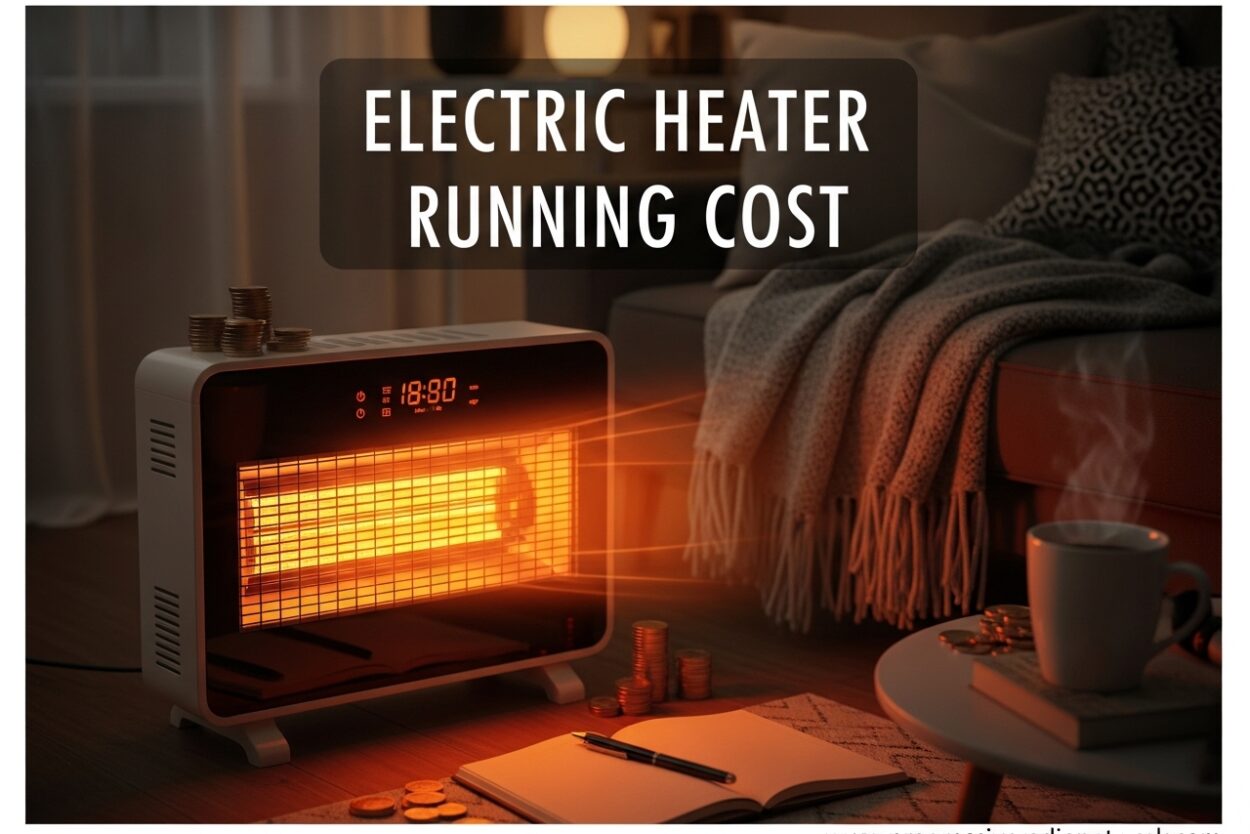
If you’re wondering about your electric heater running cost this winter, you’re not alone. Thousands of homeowners search for this information every month when temperatures drop and electricity bills start climbing. Understanding how much it costs to run an electric heater helps you budget effectively and decide whether supplemental heating makes sense for your situation.
The real impact on your electricity bill depends on several factors: your heater’s wattage, local electricity rates, how long you run it each day, and how often it cycles on and off. I’ve researched the actual costs across different U.S. regions and compiled real user experiences from electricity forums to give you accurate, practical information you can use right now.
Understanding Electric Heater Power Consumption
Electric heaters are remarkably simple devices. They convert electricity into heat with nearly 100% efficiency, which means almost every watt of power they consume becomes warmth in your room. This efficiency is why electric heaters are popular for supplemental heating, but it also means understanding your electric heater running cost requires knowing how electricity billing works.
Most portable electric space heaters operate between 750 and 1,500 watts. Smaller personal heaters might use 400-750 watts, while larger models designed for whole-room heating can reach 2,000 watts. The wattage determines how much power the heater draws when running at full capacity, but not how much it costs to run.
Here’s the key distinction: watts measure power consumption at any moment, but electricity companies charge by kilowatt-hours (kWh). A kilowatt-hour equals 1,000 watts used for one hour. This means a 1,500-watt heater uses 1.5 kWh per hour of continuous operation.
Electric Heater Running Cost: The Simple Formula
Calculating your electric heater running cost is straightforward once you know the formula. Here’s the exact calculation you need:
(Watts ÷ 1,000) × Cost per kWh = Cost per hour
For example, a 1,500-watt heater at the national average electricity rate of $0.17 per kWh costs approximately $0.26 per hour to run continuously. At lower rates of $0.12 per kWh (common in some Midwestern states), that same heater costs about $0.18 hourly. In high-cost areas like California or New England where rates exceed $0.30 per kWh, you’ll pay roughly $0.45 or more per hour.
This formula works for any heater wattage. A 750-watt heater at $0.17 per kWh costs about $0.13 hourly, while a 2,000-watt model costs approximately $0.34 per hour at the same rate. The key is knowing your local electricity rate, which you can find on your utility bill or your power company’s website.
Real-World Cost Calculations for Common Heaters
Let’s look at practical costs for typical usage scenarios. A 1,500-watt electric heater running continuously would cost about $6.24 per day at $0.17 per kWh (24 hours × $0.26). That’s roughly $187 per month if running 24/7, which explains why some forum users report dramatic bill increases during cold months.
However, real-world usage is different from continuous operation. Most people run their heaters for specific periods—perhaps 4 hours in the morning and 4 hours in the evening. At 8 hours daily, that same 1,500-watt heater costs about $2.08 daily ($0.26 × 8), or approximately $62 per month at average electricity rates.
Lower-wattage heaters offer proportionally lower costs. A 750-watt heater running 8 hours daily at $0.17 per kWh costs about $1.04 daily or $31 monthly. Many forum users report oil-filled heaters running at 750-1,000 watts with 50-75% duty cycles in well-insulated rooms, resulting in actual costs closer to $40-50 per month for typical evening use.
For overnight use (8 hours while sleeping), a 1,500-watt heater costs the same as daytime use—about $2.08 per night at average rates. However, many users set their thermostats lower at night, which reduces the duty cycle and actual cost. A common pattern is running a heater at full power for 1-2 hours to warm the room, then letting it cycle on and off at a lower setting, which can reduce effective runtime by 30-50%.
What is Duty Cycle and Why It Matters
The duty cycle is the percentage of time your heater actually runs compared to how long it’s turned on. This is one of the most misunderstood factors in electric heater running cost calculations. When you set your heater’s thermostat to a specific temperature, it doesn’t run continuously—it cycles on and off to maintain that temperature.
In a well-insulated room with moderate temperature differences, a heater might run only 30-40% of the time even though it’s switched “on” for hours. This means your actual costs could be significantly lower than calculations based on continuous operation suggest. Real users report oil-filled heaters in insulated bedrooms typically running at 50-75% duty cycles, while fan-forced heaters in drafty rooms might run 80-100% of the time.
The duty cycle depends on several factors: how warm you set the thermostat, how cold it is outside, your room’s insulation, and whether doors or windows are letting in cold air. Understanding this concept explains why two people with identical heaters in the same city can have dramatically different electricity bills—one might run their heater in a small, well-insulated room with a moderate thermostat setting (40% duty cycle), while the other heats a large, drafty space with the thermostat set high (90% duty cycle).
Regional Electricity Rates and Their Impact
Your location dramatically affects your electric heater running cost because electricity rates vary significantly across the United States. As of 2026, residential electricity rates range from under $0.10 per kWh in some states to over $0.35 per kWh in others.
In the Pacific Northwest and parts of the Midwest where rates hover around $0.12-$0.15 per kWh, running a 1,500-watt heater for 8 hours daily costs roughly $1.44-$1.80 per day. At these rates, monthly costs for evening-only use typically fall between $43 and $54.
However, in high-cost regions like California, New England, and New York where rates exceed $0.30 per kWh, that same usage pattern costs $3.60 or more per day—over $100 monthly for 8 hours of evening use. This explains why forum users from California frequently report shockingly high bills after using space heaters, while Midwestern users often find the costs quite manageable.
Hawaii represents the extreme case with rates over $0.40 per kWh. There, running a 1,500-watt heater for 8 hours daily costs about $4.80 per day or $145 monthly. At these prices, electric heating becomes extremely expensive, which is why many Hawaiian households rely on other heating methods.
The regional variation also affects whether space heaters make financial sense compared to central heating. In low-rate areas, electric space heaters can compete with gas heating costs. In high-rate regions, gas central heating (where available) typically costs significantly less per unit of heat delivered, making space heaters economical only for very targeted, short-duration use.
Factors That Affect Your Electric Heater Running Cost
Beyond wattage and electricity rates, several practical factors determine your actual costs. Room size matters tremendously—larger spaces require more energy to heat and lose heat faster. A general rule is that you need approximately 10 watts of heating power per square foot of space in a well-insulated room. This means a 150-square-foot bedroom needs about 1,500 watts, while a 300-square-foot living area might require 2,000 watts or multiple heaters.
Insulation quality dramatically affects the duty cycle and therefore your costs. Well-insulated rooms with weatherstripped doors and windows retain heat much better, allowing heaters to cycle less frequently. Drafty rooms with single-pane windows or poor wall insulation cause heaters to run almost continuously to maintain temperature. One forum user reported their heating costs dropping by nearly 40% after adding weatherstripping to drafty windows and door frames.
Thermostat settings directly impact both comfort and cost. Each degree you lower the setting can reduce energy consumption by 5-10%. Setting your heater to 68°F instead of 75°F can significantly lower your electric heater running cost by reducing the duty cycle and runtime.
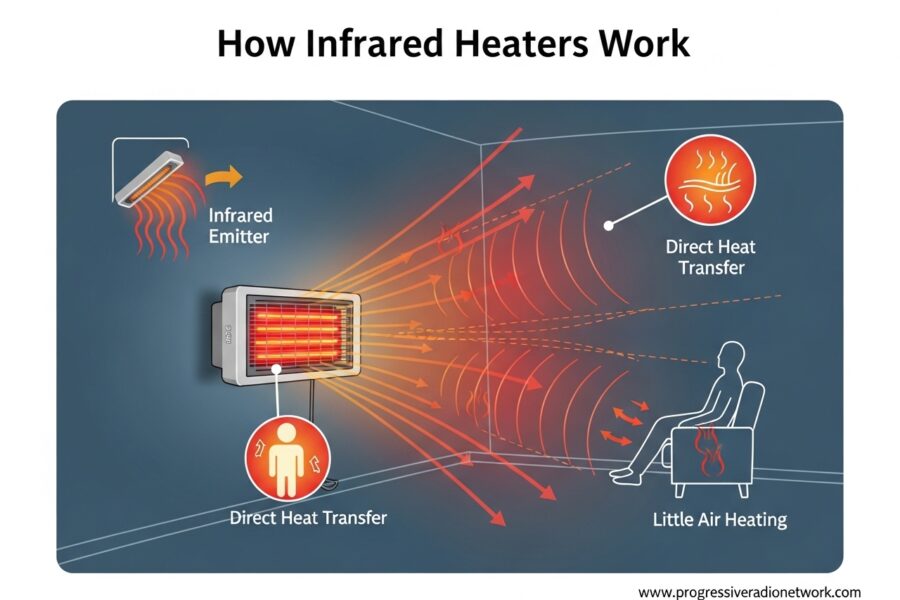
The type of heater also matters. Oil-filled radiators retain heat well and continue warming the air even after cycling off, which can reduce overall runtime compared to fan-forced models that cool immediately when they turn off. Ceramic heaters offer quick heating but may cycle more frequently. Infrared heaters warm objects directly rather than the air, which some users find more efficient for spot heating.
Electric Heater vs Central Heating: Cost Comparison
Whether using an electric heater saves money compared to central heating depends on your heating system, climate, and usage patterns. If you have gas or oil central heating, the cost per unit of heat is typically lower than electric resistance heating. However, central heating often warms your entire house, including unused rooms, which wastes energy.
The savings potential comes from zone heating—using electric heaters only in rooms you’re actually occupying while lowering your central thermostat. This strategy can save money if you lower your central heat by 5-10 degrees and use electric heaters in just 1-2 rooms for a few hours daily. Forum users commonly report saving $30-50 monthly by lowering central heat and using a space heater in their home office or living room during evening hours.
The break-even point depends on your local electricity and gas rates. In areas with very cheap electricity and expensive gas, electric heating can be competitive. In most regions, gas heating costs about half as much as electric heating per unit of warmth. However, if you’re heating just one room instead of your whole house, the total cost can still be lower with an electric heater despite the higher per-unit cost.
For all-electric homes with heat pumps, the calculation differs. Heat pumps are 2-3 times more efficient than electric resistance heaters, so using your heat pump (if it works effectively in your climate) typically costs less than space heaters. However, some heat pumps struggle in very cold temperatures, making supplemental electric heat necessary in certain conditions.
Types of Electric Heaters and Their Running Costs
Different heater types have the same basic electricity consumption—their costs depend primarily on wattage, not technology. A 1,500-watt ceramic heater and a 1,500-watt oil-filled radiator cost roughly the same to operate per hour at the same electricity rate.
However, heater type affects the duty cycle and therefore actual costs. Oil-filled radiators retain heat after cycling off, which can reduce overall runtime by 10-20% compared to fan-forced models that cool immediately. Several users report their oil-filled heaters running at lower duty cycles than ceramic models in identical rooms, resulting in modest savings over time.
Ceramic heaters with fans heat rooms quickly but cool rapidly when cycling off. This frequent cycling can increase effective runtime in poorly insulated spaces. However, their quick heating means you can run them for shorter periods to achieve comfort, potentially reducing costs if you’re diligent about turning them off when leaving the room.
Infrared heaters work differently by warming objects and people directly rather than the air. Some users find this more efficient for targeted heating—you feel warm immediately without waiting for the air to heat up. However, their efficiency advantage is situational and depends on your specific usage patterns and room configuration.
How to Reduce Your Electric Heater Running Costs
Reducing your heating costs doesn’t require sacrificing comfort. I’ve compiled these proven strategies based on real user experiences and energy efficiency principles.
Use your heater’s timer function. Most modern heaters include timers that let you schedule operation times. Set your heater to turn on 30 minutes before you wake up or return home, then automatically shut off when you typically leave or go to bed. This prevents heating empty rooms while ensuring comfort when you need it.
Lower the thermostat setting. Each degree reduction can save 5-10% on heating costs. Try setting your heater to 68°F instead of 72°F or higher. Wear warmer clothing indoors and use blankets if needed. Most people adjust quickly to slightly cooler temperatures, and the savings accumulate month after month.
Heat only the room you’re using. Close doors to unoccupied rooms and focus your heating efforts where you actually spend time. There’s no point heating a guest bedroom or formal dining area when you’re working in your home office. This zone heating approach is one of the most effective cost-reduction strategies available.
Improve your room’s insulation. Simple weatherstripping around doors and windows can reduce heat loss dramatically. Thermal curtains also help retain warmth. One forum user reported their heating costs dropped nearly 40% after adding weatherstripping to drafty windows—an investment of less than $20 that paid for itself in the first month.
Use your heater’s ECO mode or automatic thermostat. These settings optimize energy usage by maintaining temperature efficiently rather than running at full power continuously. The thermostat cycles the heater on and off as needed, which is far more efficient than manual control where you might leave it running on high unnecessarily.
Consider a programmable outlet timer for heaters without built-in timers. These inexpensive devices plug into your wall outlet and let you schedule when your heater receives power. You can set them to match your daily routine, ensuring the heater runs only when needed.
Reduce heat loss through your windows. Windows are a major source of heat loss. Close curtains at night to retain warmth, and open them during sunny days to let solar heat in. For particularly drafty windows, plastic window film kits create an insulating air barrier that significantly reduces heat loss for just a few dollars per window.
Safety Considerations When Running Electric Heaters
Safety should always come before savings. Electric heaters draw significant power and create fire hazards if used improperly. Never use extension cords with high-wattage heaters—most extension cords cannot safely handle the 12-15 amps that 1,500-watt heaters require. This is a leading cause of electrical fires. Always plug heaters directly into wall outlets.
Check your electrical capacity before running multiple heaters. Most residential circuits are rated for 15-20 amps, which means a single circuit can safely handle only one 1,500-watt heater at a time. Running two heaters on the same circuit will trip the breaker or, worse, create a fire hazard. Spread heaters across different circuits if you must use multiple units.
Keep heaters away from flammable materials including curtains, furniture, bedding, and papers. Maintain at least three feet of clearance around all sides of the heater. Never place heaters on furniture or unstable surfaces where they could tip over.
Look for heaters with automatic shut-off features that activate if the unit tips over or overheats. These safety features are essential for peace of mind, especially if you’ll be sleeping while the heater operates. Modern UL-certified heaters include these protections, but older or uncertified models might not.
Never leave heaters running unattended or while sleeping unless they’re specifically designed for safe overnight use and include proper safety certifications. Even then, ensure smoke detectors are functioning throughout your home as an extra layer of protection.
FAQ
How much does it cost to run an electric heater for 5 hours?
At the national average electricity rate of $0.17 per kWh, running a 1,500-watt electric heater for 5 hours costs approximately $1.30 (1.5 kW × $0.17 × 5 hours). Your actual cost will vary based on your local electricity rate. At lower rates of $0.12 per kWh, the same usage costs about $0.90. In high-cost areas with rates over $0.30 per kWh, expect to pay around $2.25 for 5 hours of operation.
Do electric heaters run up your electric bill?
Yes, electric heaters can significantly increase your electricity bill, but the impact varies widely based on usage patterns and local rates. A 1,500-watt heater running 8 hours daily at average rates adds approximately $62 monthly to your bill. However, many users report much lower increases ($20-40 monthly) when using heaters efficiently with thermostats, timers, and duty cycles of 30-50%. The key factors are your heater’s wattage, how many hours it runs daily, your electricity rate, and whether you’re using zone heating to offset central heating costs.
How much does it cost to run a 1500 watt heater for 5 hours?
A 1,500-watt heater uses 1.5 kilowatts of power. At the national average electricity rate of $0.17 per kWh, running it for 5 hours costs $1.27 (1.5 kW × $0.17 × 5 hours). At lower rates of $0.12 per kWh, the cost is about $0.90 for 5 hours. In high-cost electricity regions with rates of $0.30 per kWh, expect to pay approximately $2.25 for 5 hours of operation. Remember that actual costs may be lower if your heater cycles on and off rather than running continuously.
How much does it cost to run a space heater 24/7?
Running a 1,500-watt space heater continuously 24/7 at the national average electricity rate of $0.17 per kWh costs approximately $6.24 per day or $187 per month. At lower rates of $0.12 per kWh, this drops to about $4.32 daily or $130 monthly. In high-cost areas with rates over $0.30 per kWh, continuous operation costs over $10 daily or $300+ monthly. However, real-world costs are typically lower because heaters cycle on and off to maintain temperature rather than running continuously. Most users report actual monthly costs of $80-150 for extended daily use.
Is it cheaper to use a space heater or central heating?
It depends on your central heating fuel type and your usage pattern. Gas and oil central heating typically cost 50-70% less per unit of heat than electric resistance heating. However, central heating warms your entire house while space heaters target specific rooms. If you lower your central thermostat by 5-10 degrees and use space heaters only in occupied rooms for a few hours daily, total costs can be lower than heating the whole house. This zone heating strategy saves many users $30-50 monthly. In all-electric homes with heat pumps, the heat pump is usually more efficient than space heaters except in very cold weather when supplemental heat may be needed.
Conclusion
Understanding your electric heater running cost empowers you to make informed decisions about winter heating. The formula is simple: (Watts ÷ 1,000) × Cost per kWh = Cost per hour. A typical 1,500-watt heater at average rates costs about $0.26 per hour to run continuously, or roughly $2.08 for 8 hours of operation.
Your actual costs depend on your local electricity rate, how long you run the heater, and the duty cycle in your specific space. By using timers, thermostats, zone heating strategies, and simple insulation improvements, you can reduce these costs by 30-50% while staying comfortable all winter.
Leave a Comment