
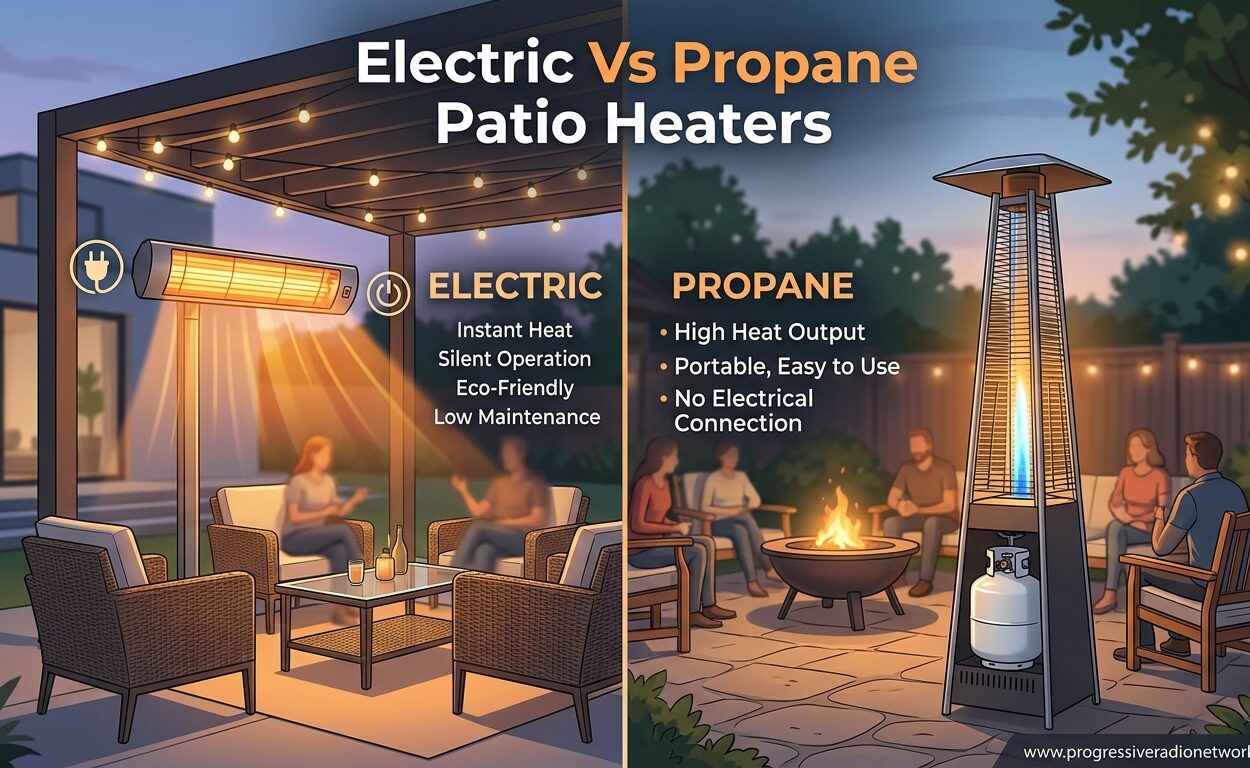
Choosing between electric and propane patio heaters affects your comfort, your budget, and how you use your outdoor space. Propane patio heaters generate more heat, with some models reaching up to 45,000 BTU, making them ideal for large open-air spaces. Electric patio heaters produce less than half as much heat but are quieter, more compact, and better suited for enclosed or semi-covered patios.
This guide breaks down everything you need to know about Electric Vs Propane Patio Heaters. We cover heat output, operating costs, safety requirements, installation, maintenance, environmental impact, and design considerations. By the end, you will know which type best fits your patio setup, climate, and usage patterns.
How Electric and Propane Patio Heaters Work
Electric patio heaters use infrared technology to produce instant radiant heat. An electrical current passes through heating elements, typically halogen tubes, carbon fiber, or ceramic panels, which emit infrared radiation. This radiation heats objects directly rather than warming the surrounding air, which means you feel warmth almost immediately after turning the unit on. The technology is similar to how sunlight warms the earth, with infrared waves transferring heat energy to whatever they encounter.
Most electric patio heaters require either a standard 120V outlet or a dedicated 240V circuit for higher-powered models. The power consumption typically ranges from 1,500 to 6,000 watts depending on the unit size and heat settings. Wall-mounted, ceiling-mounted, freestanding, and table-top options are all available, giving you flexibility in how you integrate heating into your outdoor living space.
The absence of combustion means no harmful emissions inside your home, which is particularly important for covered patios where airflow may be limited. Electric heaters also operate quietly, without the humming or clicking sounds that some propane units produce during ignition and operation.
Propane patio heaters work by burning propane fuel from an attached tank to generate heat. The propane passes through a regulator and into the burner assembly, where it combusts and heats a metal emitter or reflector. This infrared radiation then spreads outward to warm people and objects in the surrounding area. The flame ignition is typically handled by a piezo igniter or electronic ignition system.
Propane heaters are completely portable since they do not require an electrical connection, though they do need a propane tank that must be refilled or exchanged when empty. Tank sizes range from small 1-pound portable canisters to large 100-pound tanks for extended use. Most residential patio heaters use standard 20-pound tanks that are widely available.
Heat Output Comparison: BTU and Coverage Area
Heat output is measured in British Thermal Units, or BTU. One BTU represents the energy needed to raise the temperature of one pound of water by one degree Fahrenheit. Higher BTU ratings mean more heat generation, which translates to faster warming and larger coverage areas.
Propane patio heaters typically range from 10,000 to 48,000 BTU, with most residential models falling between 35,000 and 45,000 BTU. Electric patio heaters usually produce 1,500 to 15,000 BTU, with most standard models generating around 5,000 to 10,000 BTU. To put this in perspective, a typical residential room heater might produce 10,000 to 15,000 BTU, so propane patio heaters can output several times that amount.
In practical terms, a propane heater with 40,000 BTU can warm an area of approximately 200 to 300 square feet in calm conditions. Under ideal circumstances with no wind and moderate ambient temperatures, some high-output units can extend coverage to 400 square feet or more. Electric heaters in the 5,000 to 10,000 BTU range typically cover 100 to 150 square feet effectively, with some premium models reaching 200 square feet.
Actual coverage depends heavily on environmental factors. Wind is the primary enemy of patio heating efficiency, as it carries away radiated heat and creates cold spots. In exposed locations with frequent wind, both types lose effectiveness. Cold ambient temperatures also reduce effective coverage, requiring higher BTU output to achieve the same warmth.
One common complaint from forum users is that electric heaters do not produce enough heat for large open areas. Reddit users have reported that “electric heaters require minimum 800 watts and provide a fraction of propane heat” in open-air settings. If you have a sprawling deck or open backyard patio, a propane unit will likely deliver the warmth you need. For enclosed porches, covered decks, or small patios under 150 square feet, electric heaters often prove sufficient while offering quieter operation and lower operating costs.
Operating Costs: Electric Vs Propane Running Expenses
Understanding the ongoing costs helps you budget for seasonal patio heating. Operating costs differ significantly between the two types, and the difference compounds over extended use throughout the heating season.
Electric patio heaters cost approximately $0.20 per hour to run at medium settings. This figure assumes an average electricity rate of $0.12 to $0.15 per kilowatt-hour. At higher heat settings, costs scale proportionally, with maximum-output electric heaters potentially reaching $0.50 to $0.80 per hour in areas with higher utility rates.
Propane patio heaters cost around $0.80 per hour at typical usage levels. This calculation assumes a 40,000 BTU heater running at full output with propane priced at approximately $3.00 per gallon. The actual cost varies based on local propane prices, which fluctuate seasonally and regionally, and how hard your heater works to maintain desired temperatures.
A standard 20-pound propane tank holds approximately 4.7 gallons of propane and provides roughly 10 hours of heating at typical usage. Forum users have confirmed this duration, with one restaurateur noting they need to “switch tanks every couple of days” with regular evening use. At current propane prices, running a propane patio heater for one season can cost significantly more than running an electric model for the same period.
However, comparing costs requires considering efficiency. Electric heaters convert nearly 100% of the energy they consume into usable heat. Propane combustion is efficient but not perfectly so, with some heat loss through the venting process and exhaust. When factoring in the convenience of not changing tanks and the consistent electricity rates in many areas, electric heaters often prove more economical over extended daily use.
Initial equipment costs also differ. Electric heaters generally range from $150 to $800 depending on power output and features. Propane heaters typically cost $200 to $1,000 for the unit itself, plus the ongoing expense of propane tanks and refills. Both types have similar lifespans when properly maintained, so the total cost of ownership analysis should factor in several years of seasonal operation.
Safety and Ventilation Requirements
Safety considerations differ substantially between the two types, and understanding these differences helps you use your heater responsibly. Propane heaters produce a small amount of carbon monoxide and other combustion byproducts, requiring adequate ventilation to prevent buildup.
Never use a propane patio heater indoors or in tightly sealed enclosed areas without proper ventilation systems. Even in semi-covered spaces, ensure at least two sides remain open to allow fresh air circulation. Carbon monoxide accumulation poses serious health risks, and symptoms of exposure include headache, dizziness, and nausea.
Clearance requirements for propane heaters are typically 3 to 4 feet from walls and combustible materials. Many modern propane heaters include tip-over protection that automatically shuts off the gas supply if the unit falls. Overheat protection is also common on newer models, preventing dangerous temperature buildup. Always maintain the recommended clearance even if your heater has these safety features.
Propane tank safety is another consideration. Tanks should be inspected regularly for rust, damage, or leaks. Store spare tanks outdoors in well-ventilated areas away from ignition sources. When connecting and disconnecting tanks, follow manufacturer guidelines carefully to prevent gas leaks.
Electric patio heaters carry fewer ventilation requirements since they produce no combustion byproducts. However, they still require safe clearance from flammable materials and should be mounted securely to prevent falling. Electrical safety involves ensuring your outlet can handle the heater’s power draw, using GFCI-protected outlets outdoors, and checking that all wiring is properly installed.
For covered patios, electric heaters are generally the safer choice. They produce no emissions that could accumulate under a roof, and the lack of an open flame reduces fire risk in enclosed spaces. The absence of combustion also eliminates the risk of carbon monoxide poisoning, which is particularly important for covered structures where family members might gather for extended periods.
Installation and Setup Differences
Installing an electric patio heater ranges from simple to moderately complex depending on the model and your desired setup. Plug-in freestanding units require nothing more than an appropriate outdoor outlet, making them the easiest option for temporary or flexible heating solutions.
Wall-mounted or ceiling-mounted units need secure installation to wall studs or ceiling joists, requiring basic tools and some DIY experience. Hardwired models that connect directly to your electrical panel require professional installation by a licensed electrician, particularly for 240V circuits that power high-output heaters.
The electrical requirements matter significantly. A 120V electric heater drawing 1,500 watts can operate on a standard household circuit, but running multiple heaters or high-powered 240V units requires dedicated circuits. Before purchasing, assess your outdoor electrical infrastructure to avoid costly upgrades.
Propane patio heaters offer true plug-and-play functionality. Once you connect the propane tank, which typically takes just a few minutes using the included regulator and hose, the heater is ready to use. The piezo ignition system starts the flame immediately, and adjustable heat settings let you control output level.
Many propane heater models come with wheels for easy repositioning, allowing you to move the heater around your patio as needed for different seating arrangements or to follow the sun during cooler evenings. This portability is a significant advantage for those who want flexible heating options without electrical infrastructure considerations.
The tradeoff is ongoing tank management with propane. You must monitor fuel levels regularly, schedule refills or exchanges with local suppliers, and have backup tanks on hand for extended use. Running out of propane mid-gathering is inconvenient, so many users keep a spare tank on hand. Tank exchange programs at hardware stores and gas stations simplify this process, though they typically cost more per gallon than bulk delivery.
For permanent installations where you want the heat output of propane without tank management, natural gas heaters offer an alternative. These connect directly to a gas line for continuous fuel supply. While beyond our main comparison scope, natural gas heaters combine propane’s high heat output with electric’s convenience, though installation requires professional gas line work and permanently fixes the heater’s location.
Maintenance and Durability
Regular maintenance extends your heater’s lifespan and ensures safe operation throughout its service life. The maintenance requirements differ significantly between electric and propane models, which should factor into your purchasing decision.
Electric patio heaters require minimal maintenance. The primary tasks involve keeping the heating elements clean from dust and debris, which can accumulate over time and affect efficiency. A soft brush or compressed air works well for this cleaning. You should also periodically check electrical connections to ensure they remain secure and inspect the power cord for any damage.
Infrared bulbs may need replacement after several thousand hours of use, though this is an infrequent expense. Replacement bulbs are typically $30 to $80 depending on the heater model, and changing them is usually a straightforward process described in the owner’s manual. Some newer models use long-life carbon fiber elements that can last 10,000 hours or more before requiring replacement.
Propane heaters require more attention due to their combustion nature. Forum users frequently mention pilot light and ignition problems, often caused by a faulty thermocouple. The thermocouple is a safety device that detects whether the pilot flame is lit and allows gas to flow only when appropriate. If your heater’s pilot keeps going out or the ignition fails to spark properly, the thermocouple may need cleaning or replacement.
Spider webs and debris can accumulate in burners, affecting performance and potentially creating fire hazards. A Reddit user mentioned that “spider webs and debris blocking burners on propane heaters” is a common issue requiring regular attention. Inspecting and cleaning the burner assembly and reflector every few weeks during heavy use helps maintain efficient operation and prevents potential hazards.
Both types benefit from being stored indoors during off-seasons to protect against weather damage. Snow, rain, and freezing temperatures can damage external components, particularly on budget models with lesser weatherproofing. Investing in a quality cover during the season also extends your heater’s lifespan by protecting against UV damage and moisture infiltration.
Expected lifespan varies by build quality, usage frequency, and maintenance adherence. A well-maintained propane heater typically lasts 5 to 10 years before components begin wearing out or performance degrades noticeably. Electric heaters often exceed 10 years with proper care since they have fewer mechanical components subject to wear. Models with stainless steel or powder-coated housings typically outlast those with standard painted finishes, particularly in coastal areas where salt air accelerates corrosion.
Environmental Impact and Emissions
Understanding the environmental implications helps you make a more informed decision aligned with your sustainability values. Both heater types have distinct environmental profiles that extend beyond their direct operation.
Electric patio heaters produce zero direct emissions at the point of use, making them preferable for air quality in enclosed or semi-enclosed spaces. However, the environmental impact depends on how your electricity is generated. If your regional grid relies heavily on coal or natural gas power plants, the indirect emissions associated with generating that electricity may approach or exceed those of propane over the full energy lifecycle.
In areas with renewable-heavy electrical grids featuring solar, wind, or hydroelectric power, electric heaters offer a significantly cleaner profile. Some homeowners with solar panel installations effectively run their patio heaters with zero net emissions, making electric the environmentally optimal choice in those situations.
Propane burns cleaner than many other fossil fuels, producing less carbon dioxide per unit of heat generated than coal, oil, or wood. It contains no lead, has relatively low greenhouse gas emissions in production and transport, and is non-toxic to soil or water if spilled. Propane is considered a bridge fuel in the transition to renewable energy, offering lower emissions than gasoline or diesel for applications where electric alternatives are impractical.
For off-grid locations where renewable electricity is unavailable and where diesel generators might otherwise power heating, propane often represents a cleaner choice. The efficiency of propane combustion means less fuel is required to produce the same heat output compared to electric resistance heating from diesel-generated electricity.
If environmental sustainability is a primary concern, consider pairing electric heaters with solar panels, choosing a green electricity plan from your utility, or selecting a propane model for the efficiency advantage over electric resistance heating in areas with fossil-fuel-heavy grids. The optimal choice depends on your specific circumstances and local energy infrastructure.
Design, Aesthetics, and Portability
The visual impact of your patio heater affects your outdoor living space’s overall aesthetic. Modern patio heaters come in diverse styles to match various outdoor decors, from contemporary minimalist to traditional classic.
Electric heaters typically feature sleek, compact designs that blend well with contemporary architecture. Many wall-mounted models are nearly invisible from below, maintaining clean sight lines in design-focused spaces. The absence of visible flames and bulky propane tanks contributes to a more streamlined appearance that many homeowners prefer for modern outdoor living areas.
Some electric heaters incorporate smart features like smartphone apps, voice control compatibility, and programmable schedules. These technological integrations appeal to tech-savvy homeowners building connected home ecosystems. Temperature controls and multiple heat settings are standard across most electric models, with higher-end units offering precise digital thermostatic control.
Propane heaters often make more of a visual statement in outdoor spaces. Classic pyramid heaters with their open-flame glass tubes create a distinctive ambiance reminiscent of outdoor fire pits. Mushroom-style units offer a more traditional look that fits various outdoor decors, from casual backyard patios to upscale restaurant terraces.
Many users appreciate the ambient glow of a propane heater’s flame, which adds atmosphere to evening gatherings. The warm orange light creates a cozy ambiance that electric heaters cannot replicate, as electric models typically produce heat without visible light output beyond a small indicator lamp.
Portability favors propane heaters for most use cases. Wheels allow easy repositioning across your property, and the lack of power cord constraints means you can place them anywhere in your yard without concern for outlet proximity. This flexibility proves particularly valuable for those who entertain in different areas of their property or want to target heat precisely where needed for various activities.
Electric heaters tied to outlets offer less flexibility unless you invest in weatherproof extension cords, which introduce their own safety and aesthetic considerations. Heavy-duty outdoor extension cords can be tripping hazards and may degrade over time when exposed to weather, requiring periodic replacement.
When to Choose Electric or Propane Patio Heaters
Making the right choice depends on your specific circumstances. Consider these scenarios and recommendations based on common use cases and user experiences from forums and real-world testing.
Choose electric patio heaters if you have a covered or enclosed patio, prefer quiet operation during conversations and relaxation, want minimal ongoing maintenance without tank management, have convenient outlet access or are willing to install electrical infrastructure, or prioritize safety in enclosed spaces where combustion emissions are a concern. Electric heaters work best for areas under 200 square feet and in temperate climates where temperatures rarely drop significantly below freezing.
Choose propane patio heaters if you need to heat large open-air spaces exceeding 200 square feet, want maximum heat output for cold evenings, prefer complete placement flexibility without outlet constraints, need consistent warmth in windy or cold conditions that would overwhelm electric units, or lack convenient electrical access in your outdoor area. Propane heaters excel for exposed locations where wind would dissipate electric heat and in regions with colder climates where you want to extend outdoor dining into late fall and early spring.
Consider your primary use patterns when deciding. If you entertain frequently on your patio during autumn evenings, the higher heat output and portability of propane may justify the extra operating costs and tank management. If you use your patio casually for morning coffee, afternoon reading, or quiet evening relaxation, the convenience and quiet operation of electric may prove more valuable despite lower heat output.
Climate matters significantly in this decision. In temperate climates with mild winters where patio heating is occasional rather than essential, electric heaters handle most residential needs adequately. In colder regions where you want to extend outdoor dining into late fall and early spring, or where evening temperatures regularly drop below 50 degrees Fahrenheit, the superior heat output of propane often proves necessary for comfortable extended use.
Some homeowners end up with both types for different situations, using an electric heater for covered patio use on mild evenings and keeping a propane heater for open-air entertaining when conditions demand more heat output. This approach maximizes flexibility but requires the investment in and storage of two heating systems.
FAQ
Is propane or electric heater better for patio?
Propane heaters are better for large open-air spaces because they produce more heat (up to 45,000 BTU) and offer complete placement flexibility. Electric heaters are better for covered, enclosed, or smaller patios where quieter operation and lower maintenance are priorities. The choice depends on your space size, climate, and usage patterns.
How long will a 20 lb propane tank last on a patio heater?
A standard 20-pound propane tank provides approximately 10 hours of heating at typical usage levels. This duration varies based on the heater’s BTU output and the specific heat settings used. Users report needing to switch tanks every couple of days with regular evening use.
Which is cheaper to run a gas or electric patio heater?
Electric patio heaters are generally cheaper to run, costing approximately $0.20 per hour compared to $0.80 per hour for propane heaters. However, total cost depends on local utility rates, usage frequency, and whether you factor in the initial equipment investment and ongoing tank maintenance.
Is it worth switching from electric to propane?
Switching from electric to propane is worth considering if you have a large open patio, live in a cold climate, or need more heat output than your electric heater provides. Propane offers significantly higher BTU output but requires tank management and produces emissions. For covered or small spaces, electric remains the simpler choice.
Conclusion
Electric Vs Propane Patio Heaters comes down to understanding your specific needs and priorities. Propane heaters deliver superior heat output for large open-air spaces but require tank management, ventilation considerations, and produce combustion emissions. Electric heaters offer quieter operation, lower operating costs, easier maintenance, and no emissions concerns, but provide less heat and require electrical infrastructure.
Evaluate your space size, climate, typical weather conditions, usage patterns, and convenience preferences before making a decision. The right choice enhances your outdoor experience rather than creating additional work or expense. Consider whether you prioritize raw heat output and placement flexibility (choose propane) or convenience, quiet operation, and maintenance simplicity (choose electric).
Whether you select electric or propane patio heating, investing in a quality heater extends your patio enjoyment well beyond summer months into the shoulder seasons when warm evenings make outdoor living particularly pleasant. Take time to assess your specific situation honestly, and you will find the heating solution that best fits your lifestyle and outdoor living goals.
Leave a Comment