
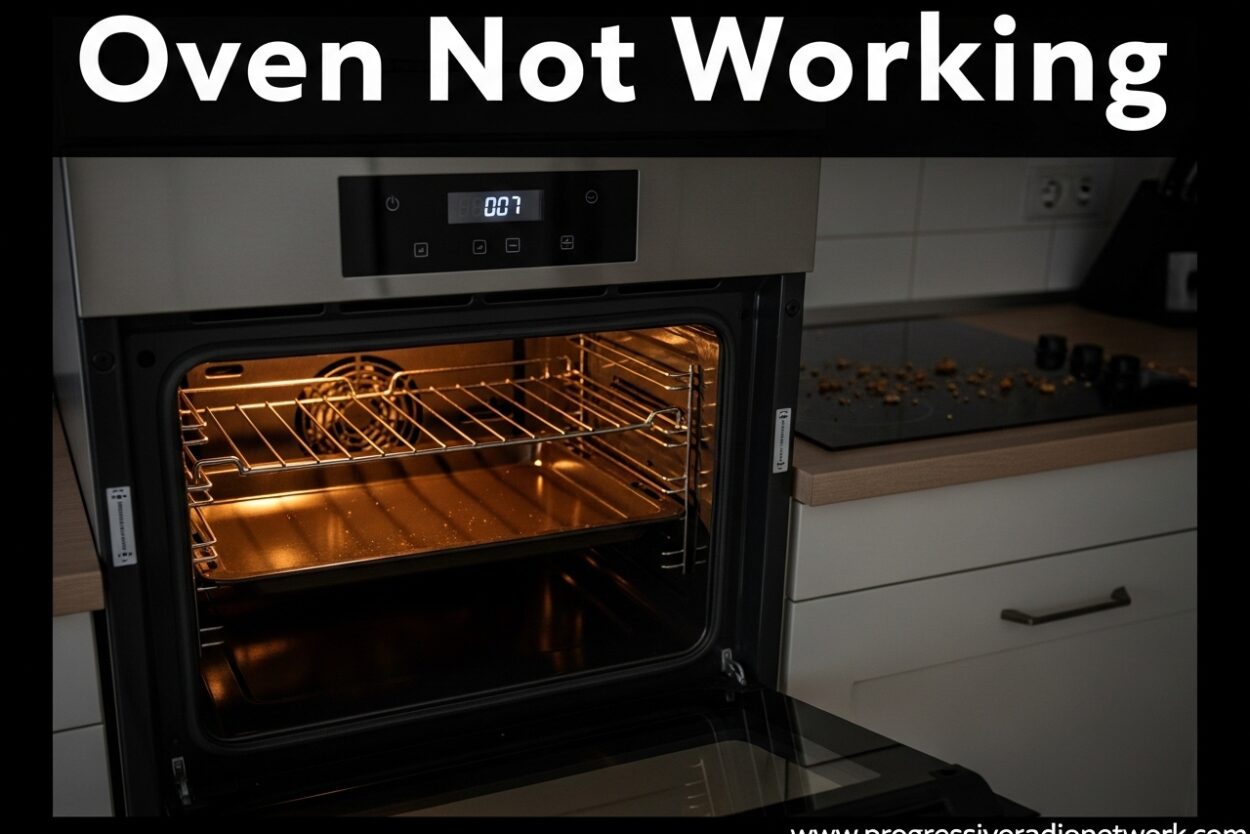
When your oven stops working, it throws your entire kitchen routine into chaos. Whether you’re preparing a weeknight dinner or hosting a special gathering, a malfunctioning oven is frustrating and stressful. I’ve helped troubleshoot hundreds of oven issues over the years, and most problems fall into a few predictable categories you can diagnose yourself.
In this guide, I’ll walk you through the most common reasons your oven isn’t working and show you exactly how to identify the problem. You’ll learn which issues you can fix safely at home and when it’s time to call a professional. Let’s get your kitchen back up and running.
Oven Not Working: Quick Diagnosis Checklist
Before diving into specific problems, let’s narrow down what’s happening with your oven. This quick diagnosis will save you time and help pinpoint the issue faster.
First, determine your symptom:
1. Completely dead oven – No display, no lights, nothing works
2. Display works, no heat – Control panel responds but oven won’t heat
3. Stove works, oven doesn’t – Burners function but oven won’t heat
4. Intermittent problems – Oven works sometimes but not always
Your symptom points us toward specific causes. A completely dead oven usually indicates power supply issues. A working display with no heat suggests component failure. And when the stove works but the oven doesn’t, we’re likely looking at oven-specific components like heating elements or igniters.
Quick visual inspection: Check for obvious problems first. Look for damage to heating elements (burns, blisters, breaks), verify the oven door closes completely, and listen for any unusual sounds when you try to operate it. These simple observations can reveal the problem immediately.
Electric Oven Not Working: Common Causes
Electric ovens have specific failure points that are different from gas models. Understanding these will help you diagnose the problem quickly.
Heating Element Failure
The most common cause of an electric oven not working is a failed heating element. Your oven has two heating elements – the bake element at the bottom and the broil element at the top. Either can fail, though the bake element goes bad more often due to constant use.
Signs of a bad heating element:
• Element doesn’t glow red when activated
• Visible damage like blisters, cracks, or breaks in the coil
• Oven takes longer than normal to preheat
• Uneven cooking or baking results
To test your heating element, set your oven to bake and watch the element. It should glow red within a few minutes. If it stays dark or only partially heats up, the element has failed. Heating elements typically cost $30-60 and are straightforward to replace yourself.
Blown Thermal Fuse
Many electric ovens have a thermal fuse that protects against overheating. If this fuse blows, your oven won’t heat at all. The thermal fuse is a common failure point, especially after the self-cleaning cycle which generates extreme temperatures.
Testing a thermal fuse requires a multimeter. Set your multimeter to continuity mode and test the fuse. If there’s no continuity, the fuse has blown and needs replacement. Thermal fuses cost around $15-30 and are usually accessible from the back of the oven.
Control Board Problems
The electronic control board manages all oven functions. When it fails, you might see error codes, an unresponsive display, or the oven simply won’t heat despite appearing to work otherwise. Control board issues are more common in newer digital ovens.
Symptoms of control board failure:
• Display shows error codes
• Buttons don’t respond
• Oven beeps randomly
• Clock resets frequently
Control board repairs typically cost $200-400 if you hire a professional. The part itself costs $100-250, but replacement requires significant electrical knowledge.
Temperature Sensor Issues
Your oven’s temperature sensor tells the control board when the desired temperature is reached. If this sensor fails, your oven might not heat at all or might heat erratically. The sensor is a thin metal probe located in the upper rear of the oven cavity.
Test the sensor with a multimeter – it should read around 1,100 ohms at room temperature. If the reading is significantly off or shows no continuity, the sensor needs replacement. Temperature sensors cost $20-50 and are relatively easy to replace.
Gas Oven Not Working: Common Causes
Gas ovens have different components than electric models, though the symptoms can be similar. Let’s look at the most common gas oven problems.
Faulty Igniter
The igniter is the most common failure point in gas ovens. Even if your igniter glows, it may not be drawing enough current to open the safety valve. This is a tricky problem because the glowing igniter makes it seem like everything is working.
How to test your igniter:
• Watch the igniter when you start the oven
• It should glow brightly within 30-60 seconds
• If it glows for more than 90 seconds without ignition, it’s weak
• Gas ovens need a specific amperage draw (2.5-3.0 amps) to open the gas valve
A weak igniter will glow but won’t open the gas valve. Replacing the igniter costs $40-80 and is a DIY-friendly repair. Most modern gas ovens use a flat-style igniter that’s accessible from inside the oven.
Safety Valve Problems
The gas safety valve opens when the igniter reaches proper temperature. If this valve fails, gas won’t flow to the burner even if the igniter is working. Safety valve failures are less common than igniter problems but do happen.
Testing a safety valve requires specialized equipment. If you’ve replaced the igniter and your oven still won’t heat, the safety valve might be the culprit. Safety valve replacement costs $80-150 and I recommend professional installation due to the gas connection.
Gas Supply Issues
Sometimes the problem isn’t your oven at all – it’s the gas supply. Check that your gas shut-off valve is fully open (the handle should be parallel to the gas line). If other gas appliances in your home are also having problems, contact your gas company immediately.
Another issue can be insufficient gas pressure. This typically requires a professional to diagnose and fix. Low gas pressure might cause your oven to light but not reach proper temperature.
Spark Electrode Problems
Some gas ovens use a spark ignition system instead of a glow bar igniter. If you hear clicking but don’t see a spark, or if sparking is inconsistent, the electrode may be dirty or damaged. Clean the electrode with a soft cloth and ensure proper alignment with the burner.
Power Supply and Electrical Issues
Before assuming your oven has a component failure, check the power supply. Many “broken” ovens simply have electrical issues that are easy to fix.
Circuit Breaker Problems
Electric ovens require a dedicated 240-volt circuit with two circuit breakers. Sometimes one breaker trips while the other remains on. This can cause the display to work while the oven won’t heat, or create other confusing symptoms.
Check your electrical panel and look for any tripped breakers. Even if they don’t appear tripped, try flipping them off and back on. This simple step fixes many “oven not working” problems. If breakers trip repeatedly, you may have a wiring issue that requires professional attention.
Outlet Testing
Test the outlet your oven plugs into. You can use a multimeter or outlet tester to verify proper voltage. For gas ovens with electronic controls, check that the 120-volt outlet is working. A faulty outlet can cause the oven’s electronics to fail even if gas supply is fine.
Power Cord Damage
Inspect your oven’s power cord for any visible damage. Rodents, moving the oven, or age can cause cord problems. A damaged power cord is a serious fire hazard and must be replaced. Power cords cost $30-60 and should be installed by a qualified electrician.
How to Reset Your Oven
Sometimes your oven simply needs a reset. This is especially common after power surges or outages. To reset most ovens:
1. Turn off the oven at the control panel
2. Unplug the oven or turn off the circuit breaker
3. Wait 5-10 minutes
4. Restore power and turn on the oven
This reset can clear electronic glitches and error codes. If the problem persists after resetting, you’re likely dealing with a hardware issue.
Stove Works But Oven Doesn’t: What This Means
This is one of the most common oven problems I encounter. When your stove burners work fine but the oven won’t heat, it tells us something specific about the problem.
For electric ranges: This symptom usually indicates a failed bake element or a wiring issue specific to the oven circuit. Since the burners work, we know power is reaching the appliance. The problem is isolated to the oven components.
For gas ranges: When burners work but the oven doesn’t, we’re typically looking at a failed igniter or safety valve. The burners have their own ignition system, so they operate independently from the oven.
This is actually good news because it narrows down the problem significantly. Focus your troubleshooting on oven-specific components rather than the entire appliance.
Temperature Sensor and Thermostat Problems
If your oven heats but not to the correct temperature, or if temperature is inconsistent, the problem likely lies with the temperature sensor or thermostat.
Testing with a multimeter: Set your multimeter to the ohms setting. At room temperature, a working temperature sensor should read approximately 1,080-1,100 ohms. Place the sensor in ice water – it should read around 1,000 ohms. In boiling water, it should read approximately 1,300 ohms.
If readings are outside these ranges, replace the sensor. Temperature sensors are inexpensive ($20-50) and simple to replace – usually just two screws and a wire connector.
For older ovens with mechanical thermostats, the issue might be thermostat calibration. Some thermostats have an adjustment screw that can be turned to recalibrate. However, this requires an accurate oven thermometer to do correctly.
Oven Door Problems That Prevent Heating
Your oven door has safety mechanisms that prevent operation if not properly closed. If your oven won’t heat, the door might be the culprit.
Door Latch Issues
Many ovens won’t heat if the door latch isn’t fully engaged. Check that the door closes completely and latches securely. If the latch feels loose or doesn’t catch, the mechanism may need adjustment or replacement.
Door Gasket Seal
The rubber gasket around your oven door creates a seal that retains heat. If this gasket is damaged, torn, or compressed, heat escapes and your oven may not reach proper temperature. Inspect the gasket all around the door frame and replace if damaged. Door gaskets cost $20-40 and are easy to install.
Door Switch Problems
Most ovens have a door switch that signals when the door is closed. If this switch fails, the oven might not heat or the light might stay on when the door is shut. Test the door switch with a multimeter for continuity. Door switches cost $10-30 and are straightforward to replace.
DIY Safety: What You Need to Know
WARNING: Working on appliances involves risks. Follow these safety guidelines:
• Always disconnect power before working on electric ovens
• For gas ovens, turn off the gas supply before attempting repairs
• Never bypass safety features or attempt unsafe modifications
• Use proper tools and replacement parts designed for your specific oven model
• If you’re unsure about any repair, call a professional
Gas appliances require extra caution. If you smell gas at any point, leave your home immediately and call your gas company from outside. Gas leaks are extremely dangerous and require professional attention.
Electric ovens carry high voltage even when turned off. Always verify power is disconnected with a multimeter before touching any electrical components. If you’re not comfortable working with electricity, don’t risk it – call a professional.
Repair vs Replace: Making the Right Choice
When facing oven problems, deciding whether to repair or replace can be difficult. Here’s a framework to help you decide.
Consider repair if:
• Your oven is less than 10 years old
• The repair cost is less than half the cost of a new oven
• Your oven is a high-end model with features you value
• The problem is a simple component like an element or igniter
Consider replacement if:
• Your oven is over 15 years old
• Multiple components have failed
• Repair costs exceed 50% of replacement cost
• You want upgraded features or better energy efficiency
Typical repair costs:
• Heating element: $50-150 (DIY) or $100-250 (professional)
• Igniter: $60-150 (DIY) or $150-300 (professional)
• Control board: $150-400 (professional repair)
• Temperature sensor: $50-150 (professional)
Consider your oven’s original cost, age, and how long you plan to stay in your home. These factors should influence your repair vs replace decision.
Preventive Maintenance Tips
Regular maintenance can prevent many common oven problems. Here’s what I recommend:
• Clean spills promptly to prevent buildup that can affect components
• Avoid the self-cleaning cycle before important events (it can stress components)
• Check door gaskets annually and replace if worn
• Inspect heating elements for damage periodically
• Schedule professional maintenance every 2-3 years
The self-cleaning cycle is particularly hard on ovens. The extreme temperatures can blow thermal fuses and stress electronic components. If you must use it, do so sparingly and never right before a major cooking event.
Frequently Asked Questions
How do I reset my oven?
Turn off the oven at the control panel, then unplug it or turn off the circuit breaker. Wait 5-10 minutes, then restore power. This resets the electronics and can clear error codes caused by power surges or glitches.
Why is my stove working but not the oven?
This usually means the problem is isolated to oven-specific components. For electric ranges, it’s typically a failed bake element or oven wiring issue. For gas ranges, it’s most often a faulty igniter or safety valve. The stove and oven operate on separate circuits.
Is it worth fixing an electric oven?
Yes, if the repair cost is less than half the cost of a new oven and the oven is less than 10 years old. Simple repairs like heating elements cost $50-150 DIY. Control board repairs cost $200-400 but are still cheaper than buying new.
How do I fix my oven not heating up?
Start by checking power supply and circuit breakers. For electric ovens, inspect heating elements for visible damage. Test components with a multimeter – heating elements should show 14-25 ohms, temperature sensors around 1,100 ohms. For gas ovens, check the igniter glows properly.
What causes a thermal fuse to blow?
Thermal fuses typically blow due to overheating, often caused by the self-cleaning cycle. Running the oven too long, blocked ventilation, or failing components can also cause overheating. Replacing the thermal fuse fixes the symptom, but you should identify what caused the overheating.
How much does professional oven repair cost?
Professional oven repair typically costs $150-400 depending on the problem. Service calls alone cost $75-150. Simple repairs like replacing elements or igniters cost $100-250. Control board replacement can cost $300-500. Get multiple quotes for expensive repairs.
Conclusion
When your oven isn’t working, start with the basics: check power supply, inspect for obvious damage, and determine whether you have an electric or gas model. Most oven problems fall into predictable categories – heating elements and igniters for electric models, igniters and safety valves for gas models.
Simple repairs like replacing heating elements or igniters are DIY-friendly and cost $50-150. More complex issues like control board failure or gas valve problems typically require professional service. Always prioritize safety, especially with gas appliances and high-voltage electrical components.
If you’re unsure about any repair or the problem seems complex, there’s no shame in calling a professional. A qualified appliance repair technician can quickly diagnose the issue and provide an accurate repair estimate. Sometimes the peace of mind and guaranteed results are worth the extra cost.




Leave a Comment