
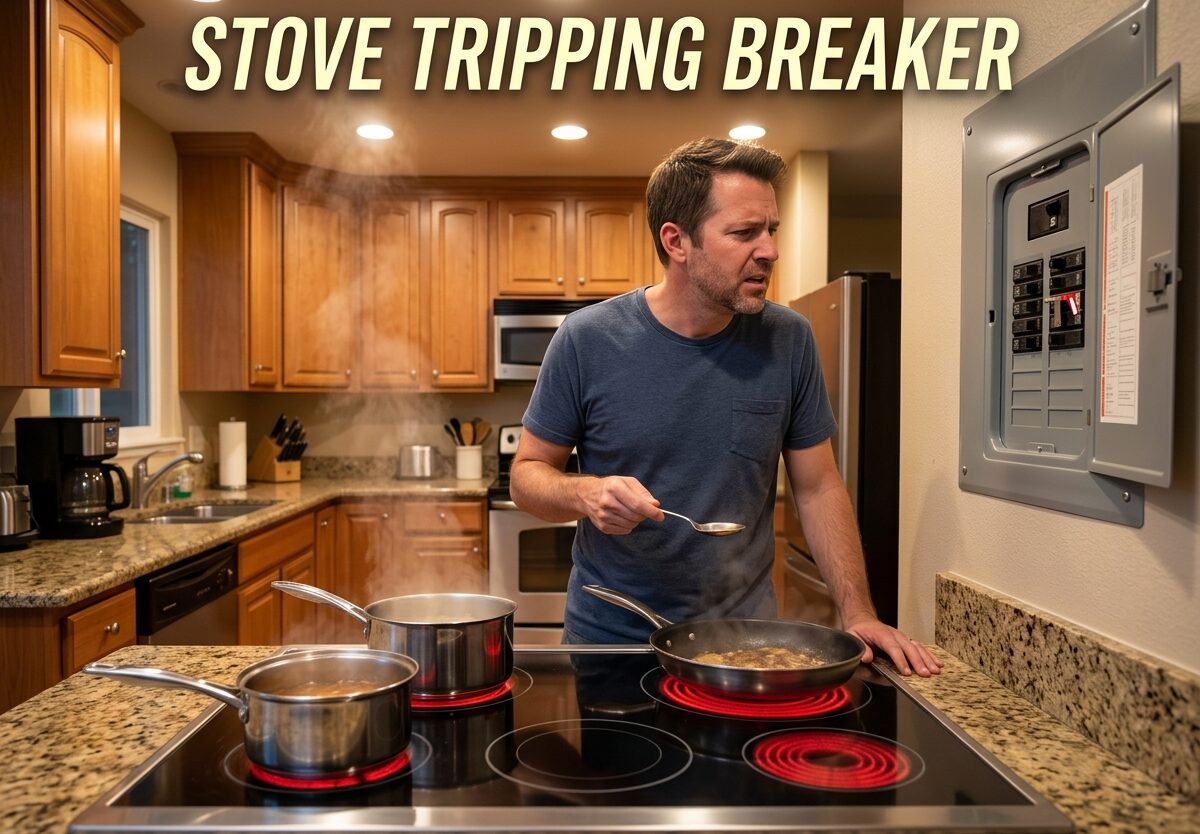
A stove tripping breaker is one of the most frustrating kitchen problems. You’re in the middle of cooking dinner, suddenly the power cuts out, and you’re left with half-cooked food and a dark kitchen. I’ve dealt with this issue countless times, and I understand how disruptive it can be to your daily routine.
The frustrating part is that the problem isn’t always obvious. Your stove might work fine for weeks, then suddenly start tripping the breaker without warning. Or it might trip only when you use specific burners or the oven. This inconsistency makes diagnosis difficult, and many homeowners waste money on unnecessary service calls.
What many people don’t realize is that a stove tripping breaker is actually a safety feature working correctly. The breaker is doing its job by shutting off power before electrical damage or fire can occur. The real question is: why is your stove drawing too much power or creating unsafe conditions?
Let me walk you through everything I’ve learned about diagnosing and fixing stove breaker issues. I’ll explain the difference between normal operation and dangerous situations, when you can safely troubleshoot yourself, and when you need to call a professional.
Why Is My Stove Tripping the Breaker?
Your stove trips the breaker when it draws more electrical current than the circuit can safely handle, or when there’s a dangerous electrical fault. The three main culprits are circuit overload (too many appliances on one circuit), short circuits (wiring problems causing direct contact), and ground faults (current flowing where it shouldn’t, like through moisture or damaged insulation).
Electric stoves require significant power. Most models need a dedicated 40-50 amp circuit with 8-gauge wiring. If your electrical system can’t deliver this consistently, or if components within the stove are failing, the breaker trips to protect your home from electrical fires. The frustrating part is that the symptoms can vary wildly – from immediate tripping when you turn on the stove to random trips after 30 minutes of cooking.
Understanding the Three Types of Breaker Trips
Before diving into specific causes, it’s important to understand what’s actually happening when your breaker trips. Not all breaker trips are the same, and identifying which type you’re experiencing can help pinpoint the problem faster.
Circuit Overload Explained
Circuit overload happens when too much current flows through a wire. Think of it like a highway with too many cars – when traffic exceeds capacity, everything comes to a stop. In electrical terms, when your stove, microwave, and other appliances all draw power simultaneously, the total current can exceed what the circuit breaker is rated to handle.
Most older homes have electrical systems designed for lower power demands than modern appliances require. If your stove is on the same circuit as other major appliances, simply turning on the wrong combination can cause an overload. This is especially common during holiday cooking when multiple appliances run simultaneously.
The telltale sign of overload is that the trip happens predictably – when you turn on specific burner combinations or run the oven alongside other appliances. The breaker will typically feel warm to the touch after tripping, and it won’t show signs of physical damage.
Short Circuit Explained
A short circuit is more serious than overload. This occurs when the hot wire touches another hot wire or a neutral wire, creating a path of almost no resistance. Electricity takes the path of least resistance, so a massive current surge occurs instantly.
In stoves, short circuits often develop when wire insulation deteriorates from heat exposure over time. The constant heating and cooling cycles inside your oven can cause wire coatings to become brittle and crack. Once the bare metal contacts another wire or metal surface, current flows uncontrolled.
Short circuits typically cause the breaker to trip immediately when power is applied, often with a noticeable pop or burning smell. The breaker may show physical damage like blackening around the switch. This is a serious condition that requires immediate attention – continued use can cause electrical fires.
Ground Fault Explained
A ground fault occurs when current flows through an unintended path to ground. This often happens when live wires contact metal parts of the stove that should be grounded, or when moisture creates a conductive path where there shouldn’t be one.
In stoves, ground faults commonly develop around heating elements where moisture from spills or cleaning can penetrate connections. They can also occur when wiring insulation is damaged and bare wires contact the stove chassis. Modern GFCI breakers are designed specifically to detect these conditions and trip faster than standard breakers.
Ground faults can be intermittent – sometimes they trip immediately, other times they only trip under specific conditions like when the oven reaches a certain temperature. This inconsistency makes them particularly frustrating to diagnose without proper testing equipment.
7 Common Causes of Stove Tripping Breaker
Now that you understand the types of breaker trips, let’s look at the specific components that typically fail in stoves. These seven causes account for the vast majority of breaker trip issues I’ve encountered.
1. Faulty Heating Element
Heating elements are the most common culprit behind stove breaker trips. Over time, these metal coils develop hairline cracks that allow current to leak or create short circuits. The bake element at the bottom of your oven and the broil element at the top are both susceptible.
What makes heating element failure tricky is that it often develops gradually. You might notice your oven taking longer to preheat or cooking unevenly before the breaker starts tripping. Sometimes the element works fine at lower temperatures but shorts out when it reaches full heat – making the problem seem random.
Visually inspect your heating elements for any visible damage, blistering, or separation in the coil. Even if they look fine, they can fail internally. The good news is that heating elements are relatively inexpensive and straightforward to replace – most homeowners can handle this repair themselves.
2. Damaged or Frayed Wiring
The intense heat inside your oven takes a toll on wiring insulation over time. Wires running near heating elements, especially those connecting to the terminal block where power enters the stove, are particularly vulnerable. As insulation breaks down, bare wires can contact each other or metal surfaces, causing short circuits.
Symptoms of wiring damage often correlate with temperature. Your stove might work fine when cold but trip the breaker after it heats up, as expanded metal makes contact. Sometimes the trip happens only when the oven door is opened or closed, suggesting wires are shifting and making contact.
DIY wiring repair is possible for those comfortable working with electricity, but it requires caution. Always disconnect power completely before opening any panels. If you’re not confident in your abilities, this is definitely a job for a professional electrician.
3. Defective Terminal Block
The terminal block is where the power cord from your house connects to the internal wiring of your stove. Located at the back of the appliance, these connection points can loosen over time due to vibration and heating cycles. Loose connections create electrical resistance, which generates heat and can cause arcing.
Terminal block issues often produce visible signs. You might notice burning marks around the connection points, melted plastic, or discoloration on the wiring. Sometimes you can even smell the distinctive ozone-like odor of electrical arcing before the breaker trips.
This is a serious issue that should be addressed promptly. A failing terminal block can cause electrical fires, and the damage tends to accelerate – once arcing begins, it creates carbon deposits that make future arcing more likely. Terminal block replacement is a straightforward repair, but it requires working with your home’s main power supply.
4. Broken Oven Fan
Many modern ovens use convection fans to circulate hot air for even cooking. These motors have their own electrical windings that can short out over time. When a fan motor fails, it can create a direct short circuit that immediately trips the breaker.
The tricky part about fan failure is that the symptoms can be subtle. Your oven might work perfectly when you’re not using convection mode, but trip the breaker as soon as you turn on the fan. Some models have fans that run automatically during certain cooking cycles, making the connection between the fan and breaker trip less obvious.
Diagnosing fan issues often requires accessing the back of the oven to test the motor independently. If your breaker only trips when convection mode is active, the fan motor is your most likely suspect. Replacement motors are available for most major brands.
5. Selector Switch Failure
The burner selector switches on your cooktop control which heating elements receive power and at what level. These switches contain electrical contacts that can wear out, arc, and eventually fail. When a switch fails internally, it can create a short circuit path that trips the breaker.
Selector switch failure typically affects specific burners. If your breaker only trips when you turn on a particular burner or set it to a specific heat level, the corresponding selector switch is probably the culprit. Sometimes the switch will feel different – perhaps sticking, not clicking properly, or showing signs of heat damage on the control panel.
Replacing a selector switch involves removing the control panel and disconnecting the old switch. It’s a manageable DIY repair for those comfortable with basic electrical work, but you’ll need to ensure you get the exact replacement part for your specific stove model.
6. Moisture or Water Damage
Water and electricity don’t mix, and stoves are surprisingly susceptible to moisture problems. Spills that seep into burner assemblies, cleaning liquid that penetrates control panels, or even high humidity can create conductive paths where there shouldn’t be any.
Moisture-related breaker trips often happen after cleaning or cooking particularly messy foods. The trip might occur immediately or develop over several hours as moisture spreads. Sometimes the problem resolves on its own as everything dries out, which can make diagnosis difficult.
If you suspect moisture issues, unplug your stove and let it dry completely for at least 24 hours with the oven door open. If the problem persists after drying, you may have water damage to electrical components that requires professional repair.
7. Undersized Circuit Breaker
Sometimes the problem isn’t with your stove at all – it’s with your electrical system. If you’ve recently upgraded to a more powerful stove or added other appliances to the same circuit, your existing breaker might be undersized for the actual power demand.
Most modern electric stoves require a 40 or 50 amp dedicated circuit. If your stove is on a 30 amp breaker, or if it’s sharing a circuit with other appliances, the breaker will trip whenever power demand exceeds its rating. This is especially common when older homes get modern appliance upgrades.
The fix here isn’t to replace the breaker with a larger one – that could create a fire hazard if your wiring isn’t sized appropriately. Instead, you may need to run a new dedicated circuit with properly sized wiring. This is definitely a job for a licensed electrician who can assess your entire electrical system.
Gas vs Electric Stove Breaker Issues
While electric stoves are the most common offenders when it comes to breaker trips, gas stoves aren’t immune from electrical problems. Even though gas stoves use fuel for cooking, they still require electricity for ignition, controls, displays, and safety systems.
Gas stove electrical issues are typically related to the igniter system, control board, or safety valves. A failing igniter can draw excessive current as it struggles to spark. Control boards can develop short circuits from power surges or component failure. Safety valves that won’t open properly can cause the igniter to run continuously, eventually tripping the breaker.
The good news is that gas stove electrical issues are usually less dramatic than electric stove problems. Because the electrical load is smaller, breaker trips often happen during ignition attempts rather than during cooking. If your gas stove trips the breaker when you try to light a burner but works fine once lit, the igniter system is your likely culprit.
Step-by-Step Troubleshooting Guide
Before you call a professional, try this systematic approach to narrow down the problem. These steps can help you identify the cause and determine whether this is a DIY fix or time to call an electrician.
Safety First: Always turn off the breaker serving your stove before performing any inspection or testing. Never work on electrical components with power connected. If you’re uncomfortable with any step, it’s better to call a professional than risk injury or further damage.
Step 1: Identify the pattern. When does the breaker trip? Immediately when you turn the stove on? After 30 minutes of cooking? Only when using specific burners? Only when the oven is on? The pattern is your biggest clue.
Step 2: Perform a visual inspection. Remove burner elements and inspect the connections underneath. Look at the visible wiring in the back of the oven (accessible through panels). Check for any signs of burning, melting, or damage. Heating elements should be uniform without cracks or breaks.
Step 3: Test components individually. If the breaker trips when the oven is on but not the cooktop, focus on oven components. If it trips only with specific burners, test each burner individually. Isolate the problem to a specific component or circuit.
Step 4: Check for moisture issues. If the problem started after cleaning or a spill, unplug the stove and let it dry completely for 24 hours. If the problem resolves, you’ve found your culprit.
Step 5: Test in a different outlet. If possible, plug another high-draw appliance into the same outlet to see if the breaker trips. This can help determine if the issue is with your stove or your home’s electrical system.
Step 6: Consult your manual. Many stove manufacturers include troubleshooting guides specific to your model. Some common issues have model-specific quirks that aren’t widely known.
When to Call a Professional Electrician
Some stove electrical issues are straightforward DIY repairs, but others require professional expertise. Knowing the difference can save you money and keep you safe. Here’s my rule of thumb for when to call a professional.
Call an electrician if you see any signs of burning or melting in your electrical panel, if multiple breakers trip simultaneously, if you’ve already attempted DIY repairs without success, or if the breaker feels hot to the touch when it trips. These symptoms suggest serious electrical issues that require professional assessment.
Also consider calling a professional if your home has older wiring (particularly aluminum wiring common in homes built before 1975), if you’re not comfortable working with electricity, or if the problem seems to be in your home’s electrical system rather than the stove itself. Professional assessment is cheaper than emergency fire department calls.
Expect to pay $100-200 for a diagnostic visit from an electrician, with additional costs for repairs depending on what’s needed. While this might seem expensive, it’s significantly less than the cost of electrical damage or a house fire.
FAQ
Why would my stove be tripping my breaker?
A stove trips the breaker when it draws more electrical current than the circuit can safely handle, or when there’s an electrical fault like a short circuit or ground fault. Common causes include faulty heating elements, damaged wiring, defective terminal blocks, moisture issues, or an undersized circuit breaker for your home’s electrical system.
How to fix a stove that trips electricity?
Start by identifying when the breaker trips – immediately when turned on, after heating up, or only with specific burners. Visually inspect heating elements for damage, check for loose connections at the terminal block, and look for signs of moisture. Unplug and dry the stove for 24 hours if moisture is suspected. If problems persist after basic troubleshooting, consult a professional electrician.
Is it a fire hazard if the breaker keeps tripping?
A properly functioning breaker tripping is actually preventing fire hazards by shutting off power before dangerous conditions develop. However, the underlying cause of repeated trips – such as damaged wiring, short circuits, or overheating components – can absolutely be a fire hazard if ignored. Address the root cause promptly rather than repeatedly resetting the breaker.
How to tell if an oven fuse is blown?
If your oven has no power but the breaker hasn’t tripped, check for a blown thermal fuse or household fuse. A thermal fuse is typically located near the heating elements or control panel and can be tested with a multimeter for continuity. If your home uses older fuse-based panels rather than circuit breakers, a blown household fuse will show a broken metal strip inside the glass window.
Conclusion
A stove tripping breaker is your home’s electrical system telling you something needs attention. While frustrating, this safety feature protects you from more serious problems like electrical fires. By understanding the difference between circuit overload, short circuits, and ground faults, you can better diagnose what’s causing your specific issue.
The most common causes – faulty heating elements, damaged wiring, and terminal block problems – are often repairable. Start with basic troubleshooting to isolate the problem, then decide whether it’s a DIY fix or time to call a professional. When in doubt, professional assessment is always the safer choice for electrical issues.
Prevent future problems by keeping your stove clean and dry, avoiding running too many high-power appliances simultaneously, and addressing any electrical issues promptly rather than repeatedly resetting a tripping breaker. Your stove breaker tripping is inconvenient, but taking the time to properly diagnose and fix the underlying cause will keep your kitchen running safely for years to come.

Leave a Comment