
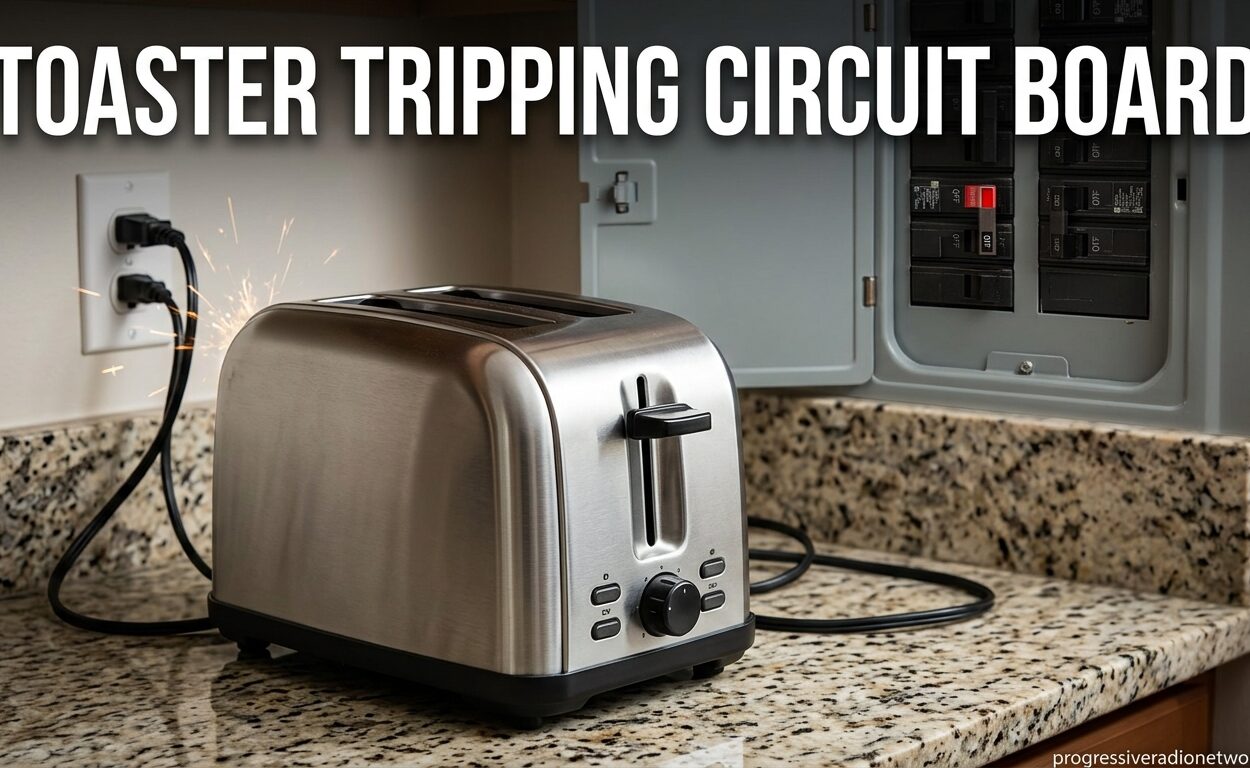
There’s nothing more frustrating than pressing down your toaster lever, waiting for breakfast, and suddenly being plunged into darkness. Your toaster tripping circuit board is a common household problem that affects thousands of homeowners each year. This issue occurs when your toaster causes a circuit breaker, RCD (Residual Current Device), or GFCI (Ground Fault Circuit Interrupter) to cut power unexpectedly, leaving you wondering what went wrong.
A tripping toaster isn’t just annoying—it’s often a warning sign of electrical problems that could pose fire hazards or damage your home’s electrical system if ignored. The most common causes include faulty heating elements, circuit overload, short circuits from accumulated crumbs, damaged power cords, and even issues with your circuit breaker panel itself.
I’ve researched real experiences from electricians and homeowners on forums like Reddit’s AskElectricians and Screwfix community to bring you the most comprehensive troubleshooting guide for toaster tripping circuit board issues. Let’s dive into the seven most common causes and exactly how to identify and fix them.
How to Identify If Your Toaster is Tripping Circuit Board
Before diagnosing the problem, it’s important to confirm your toaster is actually causing the circuit trip. The clearest sign is timing—does the breaker trip immediately when you plug in the toaster, or does it happen when you press the lever down? Immediate tripping suggests a short circuit, while tripping during operation often points to heating element failure or circuit overload.
Understanding which type of circuit protection device has tripped can also help diagnose the issue. A standard circuit breaker (MCB) trips when there’s an overload or short circuit. An RCD or GFCI trips when it detects current leakage to ground, which is more sensitive and often caused by moisture or insulation breakdown in your toaster’s heating element.
Try testing your toaster in a different outlet, preferably on a different circuit if possible. If it works fine elsewhere, the problem likely lies with your home’s electrical system rather than the toaster itself. This simple test can save you hours of unnecessary troubleshooting.
Faulty Heating Element: The Most Common Cause
The heating element is the heart of your toaster, and it’s also the most common culprit behind toaster tripping circuit board issues. Inside those glowing coils you see when toasting lies nichrome wire—a resistance wire that heats up when electricity flows through it. Over time, this wire can degrade, develop hot spots, or even break, causing electrical faults that trip your circuit breaker.
When a heating element fails, it can cause a short circuit by allowing current to flow where it shouldn’t—often to the metal casing of the toaster itself. This creates a direct path to ground, which RCDs and GFCIs detect instantly, tripping the power to protect you from electric shock.
Testing a heating element requires a multimeter set to measure resistance (ohms). A healthy element should show some resistance—typically between 10-30 ohms depending on your toaster’s wattage. If your meter shows zero resistance (short circuit) or infinite resistance (open circuit), the element has failed and needs replacement.
Real-world experiences from electricians confirm this is the number one cause. One forum user described exactly this scenario: “The element was visibly damaged with burnt spots, and sure enough, that was what kept tripping the RCD every morning.”
Circuit Overload: Too Many Appliances on One Circuit
Kitchen circuits are often shared among multiple outlets and appliances, which can lead to overload situations. Your toaster draws significant power—typically 800-1500 watts depending on whether it’s a 2-slice or 4-slice model. When combined with other high-draw appliances like kettles, microwaves, or refrigerators on the same circuit, you can easily exceed the circuit’s capacity.
Most kitchen circuits are rated for 15-20 amps. A 1500-watt toaster draws about 12.5 amps alone, leaving little room for other appliances. If you’re running your toaster and coffee maker simultaneously on the same circuit, the combined draw can trip the breaker even if neither appliance is faulty.
The solution is simple but often overlooked: identify which outlets share a circuit by noting which ones lose power when the breaker trips. Then redistribute your appliances so high-draw devices like toasters, kettles, and microwave ovens aren’t operating simultaneously on the same circuit.
In older homes with limited kitchen circuits, consider having an electrician install a dedicated circuit for your toaster. This is a permanent solution that prevents overload issues and is often required by modern electrical codes for fixed appliances.
Short Circuit Diagnosis: What to Check
Short circuits occur when electricity finds an unintended path to ground, bypassing the normal resistance of the heating element. In toasters, the most common cause of short circuits is something conductive bridging the gap between the heating element and the toaster’s metal casing.
Burnt toast crumbs are surprisingly conductive when they accumulate at the bottom of your toaster. As Reddit users have discovered, “The most common reason for toasters tripping an RCD is burnt toast crumbs bridging the element to the case.” These carbonized crumbs create a path for current to flow directly to ground, triggering your RCD or GFCI instantly.
But crumbs aren’t the only culprit. Moisture from cleaning or from foods like frozen waffles can cause temporary short circuits. One memorable forum post described finding an Oxo cube (a stock cube) inside the toaster that had fallen from bread above, causing a persistent short circuit that tripped the RCD every time.
To diagnose short circuits, start with a thorough cleaning. Remove the crumb tray and empty it completely. Turn the toaster upside down and shake out any loose debris. Use compressed air to blow out crumbs from around the heating elements if accessible. If cleaning doesn’t solve the problem, the short circuit may be internal, requiring professional repair or replacement.
Power Cord and Plug Damage: Often Overlooked
While most toaster problems originate inside the unit, the power cord and plug are frequently overlooked sources of tripping issues. Cords can become damaged from regular use, being pinched against walls, or from pets chewing on them. The damage might not be visible externally, as internal wires can break while the outer insulation appears intact.
Inspect your toaster’s entire cord length carefully, feeling for any soft spots, kinks, or areas that feel unusually stiff. Pay special attention to where the cord enters the toaster body and near the plug—these are high-stress points where damage commonly occurs.
Plug damage is equally problematic. Bent or burnt plug pins can cause poor contact in outlets, leading to arcing that trips AFCI (Arc Fault Circuit Interrupter) breakers. If your plug shows signs of overheating—discoloration, melting, or a burnt smell—the plug itself may be the source of your tripping issues.
Forum electricians emphasize that cord and plug problems are often intermittent: “It could be that they are just close and any movement, such as plugging/unplugging, could cause them to make intermittent contact.” This explains why some toasters trip only occasionally, making diagnosis particularly frustrating.
Circuit Breaker Panel Issues: Not Always the Toaster
Sometimes the problem isn’t your toaster at all—it’s your electrical panel. Circuit breakers can fail after years of service, becoming overly sensitive and tripping at currents well below their rated capacity. If your toaster trips the breaker but works fine on other circuits, the breaker itself may be faulty.
Loose wiring connections in your electrical panel can also cause intermittent tripping. As current flows through loose connections, heat builds up, which can cause the breaker to trip even when the actual load is within limits. This is a potentially dangerous situation that should be addressed by a licensed electrician.
Aging electrical infrastructure in older homes is another consideration. Homes built before the 1960s may have knob-and-tube wiring or aluminum wiring, both of which can cause compatibility issues with modern appliances like toasters. If you live in an older home and experience frequent tripping across multiple appliances, your electrical system may need an upgrade.
Before calling an electrician, try this simple test: plug your toaster into an outlet on a different circuit (ideally one on a different floor). If it works without tripping, you’ve confirmed the problem is with the original circuit, not the toaster. This information will be valuable when you consult with an electrical professional.
Toaster Tripping Circuit Board: Crumb Tray and Maintenance
Prevention is always better than cure, and regular maintenance can prevent most toaster tripping circuit board issues. The crumb tray is your first line of defense—empty it after every few uses, not just when it’s overflowing. Even small amounts of crumbs can accumulate over time and create the conductive bridge that causes RCD trips.
Deep cleaning your toaster monthly prevents the buildup that leads to short circuits. Unplug the toaster and let it cool completely before cleaning. Remove and wash the crumb tray with warm soapy water. Turn the toaster upside down over a trash can and shake gently to dislodge loose crumbs.
For stubborn crumbs stuck near heating elements, use a soft brush or compressed air. Never insert metal utensils into your toaster—this is a major cause of short circuits and electric shock. One forum user shared a scary story: “I used a fork to get stuck bagel out and saw sparks fly before the breaker tripped. Learned my lesson.”
Pay attention to your toaster’s performance as it ages. Most toasters last 5-10 years with proper maintenance. If your toaster is approaching or past this age and showing signs of problems, replacement may be more cost-effective than repair. Newer models also include improved safety features like automatic shut-off and better insulation.
RCD and GFCI Specific Issues
RCDs and GFCIs are designed to trip more easily than standard circuit breakers because they’re protecting against electric shock, not just fire. They detect tiny imbalances in current flow—as little as 30mA for RCDs—which means they’ll trip even from minor faults that a standard breaker would ignore.
This explains why your toaster might work fine on a standard circuit but trip an RCD-protected circuit. The RCD is detecting current leakage that’s probably harmless but technically indicates a fault. This is actually a safety feature working as intended, alerting you to a problem before it becomes dangerous.
Ground faults occur when current escapes the intended path and flows to ground through an unintended route—like through the toaster casing to your hand if you touch it while it’s faulting. RCDs and GFCIs detect this instantly and cut power, potentially saving you from serious electric shock.
One important note from electrical forums: if your toaster only trips the RCD and not the main breaker, the fault is likely a minor current leak rather than a dead short. This doesn’t mean it’s safe to use—you still need to identify and fix the problem. But it does suggest the issue is more likely insulation breakdown or moisture rather than a catastrophic failure.
Step-by-Step Troubleshooting Guide
Before diving into any troubleshooting, safety comes first. Always unplug your toaster before performing any inspection or testing. Never attempt to disassemble a toaster while it’s plugged in, and never insert metal objects into the toaster—even when unplugged, heating elements can hold residual charge.
Step 1: Test on a Different Outlet
Plug your toaster into an outlet on a different circuit, ideally on a different floor of your home. If it works without tripping, your toaster is likely fine and the problem is with the original circuit or breaker.
Step 2: Visual Inspection
Examine the power cord for damage, check the plug for bent or burnt pins, and look into the toaster slots for visible element damage or accumulated debris. Look for any signs of melting, burning, or discoloration on the toaster’s exterior.
Step 3: Clean Thoroughly
Remove and empty the crumb tray completely. Turn the toaster upside down and shake out loose crumbs. Use compressed air to blow debris away from heating elements if accessible. A thorough cleaning resolves many tripping issues caused by crumbs bridging elements.
Step 4: Test with Multimeter (Advanced)
If you’re comfortable with electrical testing, use a multimeter to check the heating element’s resistance. Disconnect the toaster, set your multimeter to ohms, and test across the element terminals. A reading near zero indicates a short circuit, while infinite resistance indicates an open circuit—both mean the element needs replacement.
Step 5: When to Call a Professional
Stop troubleshooting and call a licensed electrician if: multiple appliances trip the same circuit, you notice burning smells or see sparks, your electrical panel feels warm to touch, or you’re uncomfortable with any step in this process. Electrical problems can escalate quickly and professional help is safer than DIY when in doubt.
Repair vs Replace: Cost-Benefit Analysis
The average toaster lasts between 5-10 years with proper maintenance. If your toaster is less than 3 years old and experiencing tripping issues, repair is often worth considering—especially if it’s a high-end model or has features that are important to you.
Professional repair typically costs between $50-150 depending on the problem and your location. Heating element replacement is usually on the lower end of this range, while circuit board repairs or complex electrical issues can cost more. If your toaster cost less than $100 new, replacement usually makes more financial sense.
Consider the safety implications too. If your toaster has been tripping circuits repeatedly, there may be hidden damage that could cause problems even after a repair. Modern toasters include improved safety features that older models lack, which might justify upgrading rather than repairing.
For toasters over 7 years old, replacement is almost always the better choice. Beyond repair costs, you’re dealing with an appliance that may have other aging issues and lacks modern safety standards. Plus, new energy-efficient models can actually save you money on electricity over time.
When to Stop Using Your Toaster Immediately
Stop using your toaster and unplug it if you notice: visible sparks or arcing when in use, burning plastic smells, the breaker trips repeatedly even after cleaning, the toaster feels hot to touch when not in use, or you see any visible damage to cords, plugs, or casing. These are all signs of serious electrical problems that pose fire or shock hazards.
FAQs
Why does my toaster keep tripping the circuit?
Your toaster keeps tripping the circuit due to electrical faults like a faulty heating element, short circuits from crumbs bridging the element to the case, circuit overload from running too many appliances, damaged power cords, or moisture inside the toaster. The most common cause is a degraded heating element that allows current to leak to ground, triggering your RCD, GFCI, or circuit breaker to protect you from potential electric shock or fire.
What is the average life expectancy of a toaster?
The average toaster lasts 5-10 years with proper maintenance. Higher-end models may last up to 15 years, while budget toasters typically need replacement after 3-5 years. Regular cleaning of the crumb tray and avoiding moisture can extend your toaster’s lifespan. If your toaster is over 7 years old and experiencing tripping issues, replacement is usually more cost-effective than repair.
What to do if an appliance keeps tripping the breaker?
First, unplug the appliance immediately. Test it on a different circuit to determine if the problem is the appliance or your electrical system. Clean the appliance thoroughly and check for visible damage to cords or plugs. If the appliance trips multiple circuits or shows signs of burning, sparks, or unusual heat, stop using it and either replace it or call a licensed electrician for professional diagnosis and repair.
How to find out what’s tripping the electric?
To identify what’s tripping your electric, note which appliances were in use when the breaker tripped. Reset the breaker and plug in appliances one at a time, turning each on to see which causes the trip. Check your electrical panel to see which breaker tripped and which outlets it controls. If a specific appliance always causes the trip, that appliance has a fault. If different appliances cause trips on the same circuit, the problem is likely with your electrical system, not the appliances.
Why would a toaster trip RCD?
A toaster trips RCD when there’s current leakage to ground, often caused by insulation breakdown in the heating element, moisture inside the toaster, or crumbs bridging the heating element to the metal casing. RCDs are more sensitive than standard breakers and detect imbalances as small as 30mA, so they’ll trip from minor faults that other breakers might miss. This is actually a safety feature alerting you to a problem before it becomes dangerous.
Is it safe to use a toaster after it trips?
No, it’s not safe to continue using a toaster that has tripped your circuit without first identifying and fixing the problem. The tripping indicates an electrical fault that could pose fire or shock hazards. Try cleaning the toaster and testing on a different outlet first. If it continues to trip, stop using it immediately. Using a faulty toaster risks electric shock, electrical fire, or damage to your home’s electrical system.
Can a faulty toaster damage your electrical system?
Yes, a faulty toaster can damage your electrical system, though it’s rare. Persistent short circuits can damage wiring, cause heat buildup in outlets, and stress circuit breakers potentially leading to premature failure. In severe cases, ongoing faults can cause electrical fires. The real danger is to you—electric shock and fire are serious risks. That’s why circuit protection devices exist, and when they trip, you should take it as a warning sign to address the problem before continuing use.
Conclusion: Don’t Ignore Toaster Tripping Circuit Board Issues
A toaster tripping circuit board is more than a morning inconvenience—it’s a warning sign that deserves attention. Whether the cause is a faulty heating element, accumulated crumbs causing short circuits, circuit overload from too many appliances, or problems with your electrical panel itself, identifying and addressing the issue is essential for your safety.
Start with simple troubleshooting: test on a different outlet, clean thoroughly, inspect cords and plugs for damage, and pay attention to when the tripping occurs. If basic steps don’t resolve the problem, consider the age of your toaster and the cost-benefit of repair versus replacement. For persistent issues or problems affecting multiple appliances, don’t hesitate to call a licensed electrician.
Remember, your circuit breaker, RCD, or GFCI is tripping for a reason—to protect you from potentially serious electrical hazards. Taking the time to properly diagnose and fix toaster tripping circuit board issues ensures you can enjoy your morning toast safely and reliably for years to come.







Leave a Comment