
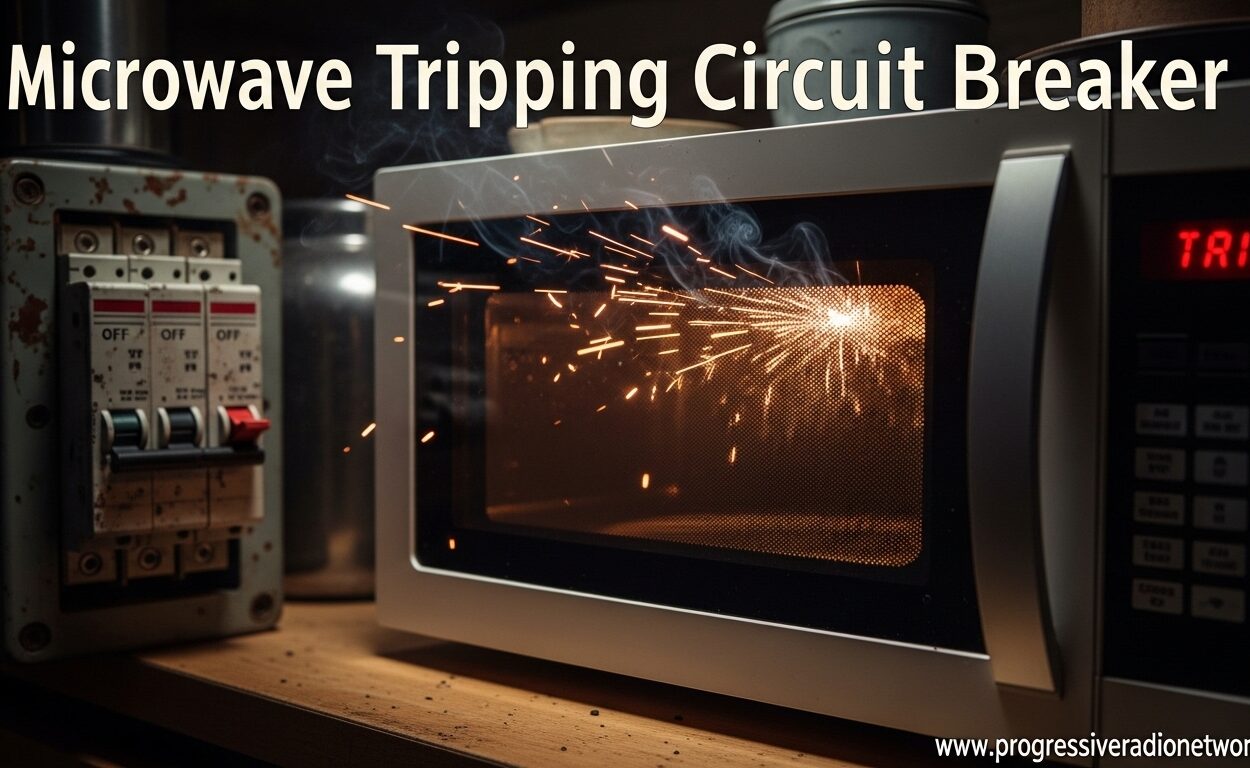
Is your microwave tripping circuit breaker every time you try to heat up leftovers? You’re not alone. This frustrating problem affects thousands of homeowners, and the causes range from simple overloaded circuits to serious electrical faults that need immediate attention.
I’ve researched this issue extensively, consulting with electricians and analyzing real user experiences across appliance forums. In this guide, I’ll walk you through exactly why your microwave keeps tripping the breaker, how to safely diagnose the problem, and what steps you need to take to fix it.
Safety First: Read This Before Proceeding
A tripping circuit breaker is a safety device doing its job – it’s cutting power to prevent electrical fires, damage to your home’s wiring, or potential electrocution. Never ignore a repeatedly tripping breaker, and never try to bypass or disable the breaker to make your microwave work.
If you smell burning, see sparks, or notice the breaker feels hot to the touch, stop immediately and call a certified electrician. These are red flags that indicate a dangerous electrical condition.
Microwave Tripping Circuit Breaker: Quick Diagnosis
Before diving into repairs, you need to determine whether the problem is your microwave or your electrical circuit. This simple diagnosis will save you time and potentially hundreds of dollars in unnecessary repairs.
The Microwave Problem Test: Unplug your microwave and try plugging it into a different outlet on a different circuit (preferably one in another room). If the microwave works without tripping that breaker, your microwave is likely fine, and you have an overloaded or faulty circuit in the original location.
The Circuit Problem Test: If plugging the microwave into different outlets still causes breakers to trip, the issue is almost certainly inside your microwave. This typically means a faulty component like the door switch, magnetron, or high-voltage capacitor.
7 Common Causes of Microwave Tripping Circuit Breaker
1. Overloaded Circuit (Most Common)
Most kitchens have multiple high-powered appliances competing for limited electrical capacity. Your microwave typically draws 12-15 amps when operating at full power. If you’re running it on a 15-amp circuit that also powers a refrigerator, toaster, or coffee maker, you’ll exceed the circuit’s capacity and trip the breaker.
Solution: Check what else is plugged into the same circuit. Turn off other appliances while using the microwave, or ideally, have a certified electrician install a dedicated 20-amp circuit specifically for your microwave.
2. Faulty Door Switch (Immediate Trip)
If your breaker trips the moment you press start, or immediately when you open the door, you likely have a defective door switch. Microwaves have multiple safety switches that prevent operation when the door is open. When these switches fail, they can cause a short circuit that trips the breaker instantly.
Door switches are the #1 cause of microwave breaker trips according to appliance repair professionals. The good news? They’re relatively inexpensive to replace (typically $15-30 for the part) if you’re comfortable with DIY repairs.
3. Defective Magnetron (Trips After 30 Seconds – 2 Minutes)
The magnetron is the component that generates the microwave energy. When a magnetron begins to fail, it may work initially but then draw excessive current as it heats up, causing the breaker to trip after 30 seconds to 2 minutes of operation.
Replacing a magnetron is a significant repair (typically $150-300 for parts alone) and requires working with high-voltage components even when the microwave is unplugged. For microwaves over 5 years old, replacement is often more cost-effective than repair.
4. High-Voltage Capacitor Failure
The high-voltage capacitor stores electricity to power the magnetron. When capacitors fail, they can create electrical shorts that trip circuit breakers. Unlike magnetron failure, capacitor issues can cause intermittent tripping that seems random rather than time-based.
Warning: Microwave capacitors can hold lethal electrical charges even when unplugged. Testing and replacing capacitors should only be performed by qualified technicians or experienced DIYers who properly discharge the capacitor first.
5. Short Circuit or Ground Fault
A short circuit occurs when electrical current flows outside its intended path, while a ground fault happens when current escapes to the ground wire. Both conditions cause dangerous current spikes that trip breakers immediately.
Signs of a short circuit include burning smells, visible damage to the power cord, or sparks when plugging in the microwave. If you notice any of these signs, stop using the microwave immediately and have it professionally inspected or replaced.
6. AFCI vs GFCI Breaker Issues
Modern homes often use Arc Fault Circuit Interrupter (AFCI) breakers in kitchen circuits. These sensitive breakers detect dangerous electrical arcs that standard breakers miss. Some microwave models – particularly Samsung units – produce electrical noise that can trigger AFCI breakers even when there’s no actual fault.
If you have an AFCI breaker and your microwave is new, try plugging it into a non-AFCI circuit to test. If it works fine there, you may need to consult an electrician about breaker options, though safety should never be compromised for convenience.
7. Circuit Breaker Failure
Sometimes the problem isn’t your microwave at all – it’s a faulty circuit breaker. Breakers can weaken over time, especially if they’ve tripped repeatedly. A weakened breaker may trip at currents well below its rated capacity.
Test this by trying different appliances on the same circuit. If a simple lamp or fan causes trips, your breaker likely needs replacement. This is a job for a licensed electrician – replacing breakers involves working inside your electrical panel with live power.
Brand-Specific Issues: Samsung, Whirlpool, and GE
Based on user reports across appliance forums, certain brands show specific patterns:
Samsung Microwaves: Multiple users report AFCI breaker sensitivity issues with Samsung models. If you have a Samsung microwave on an AFCI breaker and experience tripping, this known compatibility issue may be the cause rather than a faulty unit.
Whirlpool Microwaves: Door switch failures appear more frequently in older Whirlpool over-the-range models. If your Whirlpool trips immediately when pressing start, the door switch assembly is the likely culprit.
GE Microwaves: Magnetron failures are commonly reported in GE units 5+ years old, typically manifesting as tripping after 1-2 minutes of heating time.
Step-by-Step Troubleshooting Guide
Step 1: Isolate the Problem
As described in the quick diagnosis section, determine whether your microwave or your circuit is the issue by testing on a different circuit. This single step will focus your entire troubleshooting approach.
Step 2: Check the Circuit Load
List everything plugged into outlets on the same circuit. If your microwave shares a circuit with major appliances, you’ve likely found your culprit. Calculate the total amp draw – if it exceeds 80% of your circuit’s capacity (12 amps on a 15-amp circuit, 16 amps on a 20-amp circuit), you need to redistribute the load.
Step 3: Inspect the Power Cord
Examine your microwave’s power cord for any visible damage, fraying, or burn marks. A damaged cord can cause short circuits that trip breakers. If you find any damage, replace the cord or the entire microwave.
Step 3: Test the Door Switch
Listen carefully when opening and closing your microwave door. You should hear audible clicks from the door switches. No clicks could indicate switch failure. For confident DIYers, door switches can be tested with a multimeter for continuity – infinite resistance when open, near-zero when closed.
Step 4: Evaluate Age and Condition
Microwaves typically last 7-10 years. If yours is over 8 years old and experiencing internal component failure, replacement is usually more economical than repair. Newer units also offer better energy efficiency and updated safety features.
Step 5: Consult a Professional
If you’ve completed these steps without identifying the problem, or if you’re uncomfortable with any DIY electrical work, it’s time to call a certified electrician or appliance repair technician. They have specialized tools like thermal imaging cameras and insulation resistance testers that can pinpoint issues safely.
Repair vs Replace: Making the Right Decision
When facing a faulty microwave, the repair-or-replace decision comes down to three factors:
Age: Under 5 years? Usually worth repairing. Over 8 years? Probably replace. Between 5-8 years? Consider the repair cost relative to a new microwave (typically $200-400 for mid-range models).
Repair Cost: Door switches ($15-30 DIY, $100-150 professional) and some capacitors are worth fixing. Magnetron replacement ($300-400 installed) approaches or exceeds the cost of replacement.
Safety Concerns: Any microwave with a history of arcing, burning smells, or repeated tripping should be replaced rather than repaired. These symptoms often indicate multiple failing components.
When to Call a Professional Electrician
Safety should always come first. Call a licensed electrician immediately if:
- The breaker feels hot to the touch
- You notice burning smells or see sparks/discoloration around outlets
- The breaker won’t reset after tripping
- Multiple breakers trip simultaneously
- Your home lacks a dedicated circuit for the microwave
- You’re uncomfortable working with electrical systems
Electricians typically charge $75-150 for diagnostic visits, but this investment protects your safety and prevents more costly damage to your home’s electrical system.
Prevention Tips for the Future
Once you’ve resolved your tripping issue, these preventive measures will help avoid future problems:
- Install a dedicated 20-amp circuit for your microwave if you don’t already have one
- Avoid running other major appliances on the same circuit while using the microwave
- Clean door switches and door edges regularly to prevent sticky residue from interfering with proper operation
- Use surge protectors rated for major appliances (not all surge protectors handle microwave power levels)
- Replace microwaves showing signs of wear like unusual noises, longer heating times, or door issues
- FAQs
Why would my microwave keep tripping the breaker?
Your microwave keeps tripping the breaker due to electrical overload, short circuits, or faulty internal components. The most common causes include overloaded circuits (sharing power with other appliances), faulty door switches that cause immediate trips when starting, defective magnetrons that fail after heating up, or high-voltage capacitor failures. The breaker trips to protect your home from electrical fires and should never be ignored or bypassed.
How do you fix an appliance that trips the power?
First, unplug the appliance and reset the breaker. Test the appliance on a different circuit to isolate whether the problem is the appliance or your electrical system. If it works elsewhere, your original circuit is overloaded or faulty. If it trips on every circuit, the appliance has an internal fault. For microwaves, common DIY fixes include replacing faulty door switches ($15-30) or redistributing circuit load. Internal component failures like magnetron or capacitor issues typically require professional repair or appliance replacement.
What are the signs that a microwave is going bad?
Warning signs your microwave is failing include unusual buzzing or humming sounds, longer heating times than normal, sparks or arcing inside the unit, burning smells during operation, the door not closing properly, the turntable not rotating, or the unit tripping circuit breakers. Microwaves over 8-10 years old showing these symptoms should typically be replaced rather than repaired, as repair costs often approach or exceed the price of a new unit with better efficiency and safety features.
Will a microwave trip a 15 amp breaker?
A typical microwave draws 12-15 amps at full power. On a 15-amp circuit, a microwave alone should theoretically work, but it leaves no capacity for anything else plugged into the same circuit. This is why microwave tripping circuit breaker problems are so common on 15-amp kitchen circuits that also power refrigerators, toasters, or other appliances. The National Electrical Code recommends a dedicated 20-amp circuit for microwaves to prevent overload issues and ensure safe operation.
Conclusion: Next Steps for Your Microwave Tripping Circuit Breaker
Microwave tripping circuit breaker issues range from simple overloaded circuits to serious component failures. Start by isolating whether the problem is your microwave or your electrical system using the quick diagnosis method outlined above. This single step will focus your entire approach and prevent unnecessary repairs or expenses.
Remember that a tripping breaker is always a safety warning, not an inconvenience to work around. Whether the solution is as simple as redistributing circuit load or as significant as replacing an aging microwave, addressing the problem promptly protects your home from electrical hazards and ensures your kitchen operates safely.
If you’re uncertain about any step in this troubleshooting process, there’s no shame in calling a professional. Electrical safety isn’t worth risking for the cost of a service call. Your microwave should serve you safely, not become a source of frustration and potential danger.



Leave a Comment