
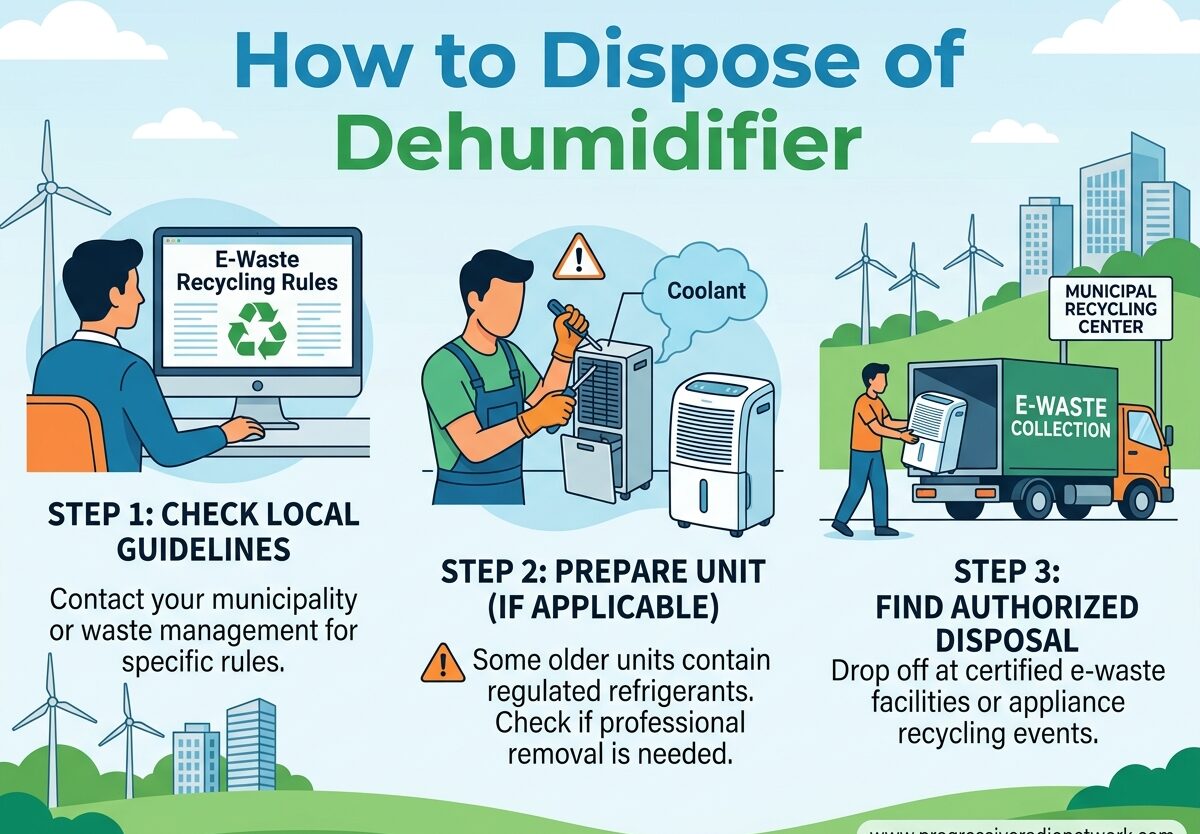
When your dehumidifier stops working or you’re upgrading to a newer model, you might be wondering about the proper way to get rid of it. You can’t just toss it in the trash like regular household waste. Dehumidifiers contain refrigerants, electronic components, and other materials that require special handling. I’ve researched all the legal and environmentally responsible disposal methods available in 2026, and I’m sharing everything you need to know.
Why Dehumidifiers Need Special Disposal
Dehumidifiers are classified as electronic waste (e-waste) due to their electronic components and potentially hazardous materials. The most significant concern is the refrigerant used in the cooling system. Many older models contain Freon (R-22) or other hydrofluorocarbons that are harmful to the ozone layer and regulated by the EPA under the Clean Air Act. Releasing these refrigerants into the atmosphere is illegal and can result in fines up to $44,539 per day.
Beyond the refrigerant, dehumidifiers contain valuable materials like copper, aluminum, and steel that can be recovered through recycling. The electronic components may include trace amounts of heavy metals that shouldn’t enter landfills. Many states have specific laws prohibiting appliances with refrigerants from being disposed of in regular trash, curbside pickup, or landfills.
Proper disposal ensures these materials are handled safely, refrigerants are recovered by certified technicians, and valuable metals are recycled instead of wasted. The good news is you have several convenient options for responsible disposal.
How to Prepare Your Dehumidifier for Disposal
Before taking your dehumidifier to any disposal location, follow these preparation steps to make the process smoother:
Step 1: Empty the water tank completely. Pour the water down a sink or drain. The water collected by dehumidifiers is typically distilled and safe to drain, though it’s not recommended for drinking.
Step 2: Clean the unit thoroughly. Remove any dust from the filter, coils, and exterior. This prevents mold growth during transport and makes the unit more acceptable for donation if it’s still working.
Step 3: Check if the dehumidifier still works. Plug it in and test it. Working units can be donated or sold, while non-working units must go to recycling centers or junk removal services.
Step 4: Gather any documentation. If you have the owner’s manual or original receipt, keep them handy. Some recycling programs require proof of ownership or age documentation.
Step 5: Measure the dimensions and weight if possible. This helps when determining transportation requirements or scheduling pickup services.
How to Dispose of Dehumidifier: Your Complete Guide
Understanding how to properly dispose of a dehumidifier is essential for both environmental protection and legal compliance. Below are the five most reliable methods available, each with specific requirements and considerations.
Option 1: E-Waste Recycling Centers
Certified e-waste recycling centers are specifically designed to handle electronic appliances like dehumidifiers. These facilities have the proper equipment and certified technicians to safely recover refrigerants before dismantling the unit for material recovery. The refrigerant extraction process requires EPA Section 608 certification, which all legitimate e-waste recyclers employ.
To find a certified electronics recycler near you, visit the EPA’s Sustainable Materials Management Electronics Challenge website or use Earth911’s recycling search tool. Enter your zip code and “dehumidifier” to see local options. Many recycling centers accept dehumidifiers for free, though some charge a small fee (typically $5-$20) to cover refrigerant recovery costs.
When you arrive, staff will typically inspect the unit, verify it contains refrigerant, and direct you to the proper drop-off area. Some facilities may ask you to complete a brief form documenting the appliance type and age. The entire process usually takes less than 15 minutes.
Option 2: Retailer Take-Back Programs
Several major retailers offer dehumidifier recycling programs, making disposal convenient when you’re already shopping for a replacement. These programs are particularly useful because they’re often integrated with purchase incentives.
Best Buy: Best Buy accepts dehumidifiers for recycling through their Geek Squad program. They charge a $29.99 fee for most dehumidifiers, but this fee is waived when you purchase a new dehumidifier from them. Simply bring your old unit to the customer service counter or Geek Squad desk. No purchase is necessary if you’re willing to pay the fee. They accept up to three appliances per household per day.
Home Depot: Home Depot’s appliance recycling program varies by location. Some stores participate in the Retail Take-Back Program for appliances, but dehumidifier acceptance isn’t guaranteed at all locations. Call your local store directly to confirm. The typical recycling fee is around $25 when purchasing a new dehumidifier.
Lowe’s: Similar to Home Depot, Lowe’s offers haul-away and recycling services when you purchase a new dehumidifier. The service typically costs $29-$59 depending on your location and whether they’re removing the old unit from your home. Contact your local Lowe’s for specific program details and availability.
Local Appliance Retailers: Many local appliance stores offer recycling services, especially independent retailers who may provide more personalized service than big-box chains. It’s worth calling local HVAC or appliance specialists in your area to ask about disposal options.
Option 3: Municipal Drop-Off Sites
Many local governments operate special disposal facilities for appliances containing refrigerants. These municipal drop-off sites are often the most economical option for dehumidifier disposal, though they may have limited operating hours.
Contact your city’s waste management department or visit their website to find designated drop-off locations. Some municipalities offer special collection events throughout the year where you can bring appliances for free or reduced-cost recycling. Others have permanent facilities that accept refrigerant-containing appliances year-round.
Be prepared to pay a “special handling fee” at municipal sites. This fee covers the cost of EPA-certified refrigerant recovery and typically ranges from $10-$40 depending on your location. Some cities offer this service free to residents, funded by waste management taxes or environmental programs.
When visiting a municipal site, bring proof of residency such as a driver’s license or utility bill. Many facilities restrict services to local residents only. Call ahead to confirm hours, fees, and whether an appointment is required.
Option 4: Junk Removal Services
For those unable to transport their dehumidifier, professional junk removal services offer convenient pickup options. These services are particularly valuable for larger units, basement dehumidifiers that are difficult to move, or situations where you have multiple items to dispose of.
1-800-GOT-JUNK: This national franchise specializes in appliance removal and will pick up your dehumidifier from anywhere in your home. They charge based on truck space used, typically $129-$199 for a single appliance pickup. The advantage is they do all the heavy lifting and ensure proper recycling through certified partners.
Local Junk Haulers: Many local companies offer similar services at competitive rates. Search online for “appliance removal near me” or check local classifieds. Local haulers may offer lower pricing than national franchises, especially if you’re flexible with pickup timing.
Curbside Pickup Services: Some waste management companies offer special curbside collection for appliances. This service usually requires scheduling in advance and paying an additional fee ($25-$75). Contact your waste hauler to ask about bulk item pickup options for appliances containing refrigerants.
Option 5: Donate Working Dehumidifiers
If your dehumidifier still functions properly, donation is an excellent option that extends the product’s lifecycle and helps someone in need. Working dehumidifiers can be valuable to organizations serving low-income households, disaster relief efforts, or community improvement projects.
Habitat for Humanity ReStore: Many Habitat ReStore locations accept working appliances, including dehumidifiers. Call your local ReStore to confirm they accept dehumidifiers and learn about any specific requirements. They may ask about the unit’s age, condition, and energy efficiency rating.
Goodwill and Salvation Army: Some locations accept small appliances, but policies vary widely. Call ahead before bringing your dehumidifier. They typically require units to be clean, in working condition, and less than 5-7 years old.
Local Charities and Thrift Stores: Community organizations, veterans’ groups, and religious charities often accept appliance donations. These groups may serve populations in need of humidity control for health reasons, making your donation especially valuable.
Online Marketplaces: If you’re willing to handle the transaction yourself, platforms like Craigslist, Facebook Marketplace, or Freecycle allow you to give away or sell working dehumidifiers. This option puts money in your pocket or directly helps a local community member.
What NOT to Do When Disposing of a Dehumidifier
Knowing what to avoid is just as important as knowing the right disposal methods. Improper disposal can harm the environment, violate laws, and potentially result in significant fines.
Never Put in Regular Trash: Dehumidifiers cannot legally be disposed of in household garbage, dumpsters, or regular trash pickup. The refrigerants must be recovered by certified professionals. Violating EPA regulations on refrigerant release can result in fines up to $44,539 per day.
Avoid Dumping or Abandoning: Leaving your dehumidifier on the curb, in vacant lots, or at illegal dump sites creates environmental hazards and may result in littering fines ranging from $50-$500 depending on your municipality. Abandoned appliances also become safety hazards and eyesores in your community.
Don’t Attempt DIY Refrigerant Removal: Unless you’re EPA Section 608 certified, do not attempt to recover refrigerant yourself. Improper venting releases greenhouse gases and violates federal law. The specialized equipment required for proper recovery makes DIY attempts dangerous and illegal.
Avoid Landfill Disposal: Most landfills will not accept appliances containing refrigerants. Even if a facility accepts your dehumidifier, the refrigerant will eventually leak, contributing to ozone depletion and climate change. Modern compressors can hold 50-200 grams of refrigerant, which has a global warming potential thousands of times greater than carbon dioxide.
Don’t Forget About Data: While most dehumidifiers don’t store personal data, smart dehumidifiers with Wi-Fi connectivity may have your network information saved. Perform a factory reset before donating or recycling to protect your privacy.
Frequently Asked Questions
Can you throw a dehumidifier in the trash?
Does Best Buy accept dehumidifiers for recycling?
Can I recycle a dehumidifier at Home Depot?
How much does it cost to dispose of a dehumidifier?
Where can I get rid of an old dehumidifier?
Do I need to remove Freon before disposal?
Conclusion
Learning how to dispose of a dehumidifier responsibly is straightforward once you understand your options. Whether you choose a free recycling center, convenient retailer take-back program, or professional junk removal service, you’re protecting the environment and complying with federal regulations. The key is to avoid the trash can entirely and choose a method that ensures proper refrigerant recovery and material recycling.
Before making your final decision, consider whether your dehumidifier still works. A functioning unit could help someone in need through donation, extending its useful life and benefiting your community. For non-working units, recycling centers and retailer programs offer the most environmentally responsible disposal path.
Take the time to research local options and prepare your unit properly. The small effort required for responsible disposal makes a significant difference in reducing e-waste and protecting our atmosphere from harmful refrigerants. With the convenient options available in 2026, there’s no reason to resort to illegal dumping or improper disposal methods.





Leave a Comment