
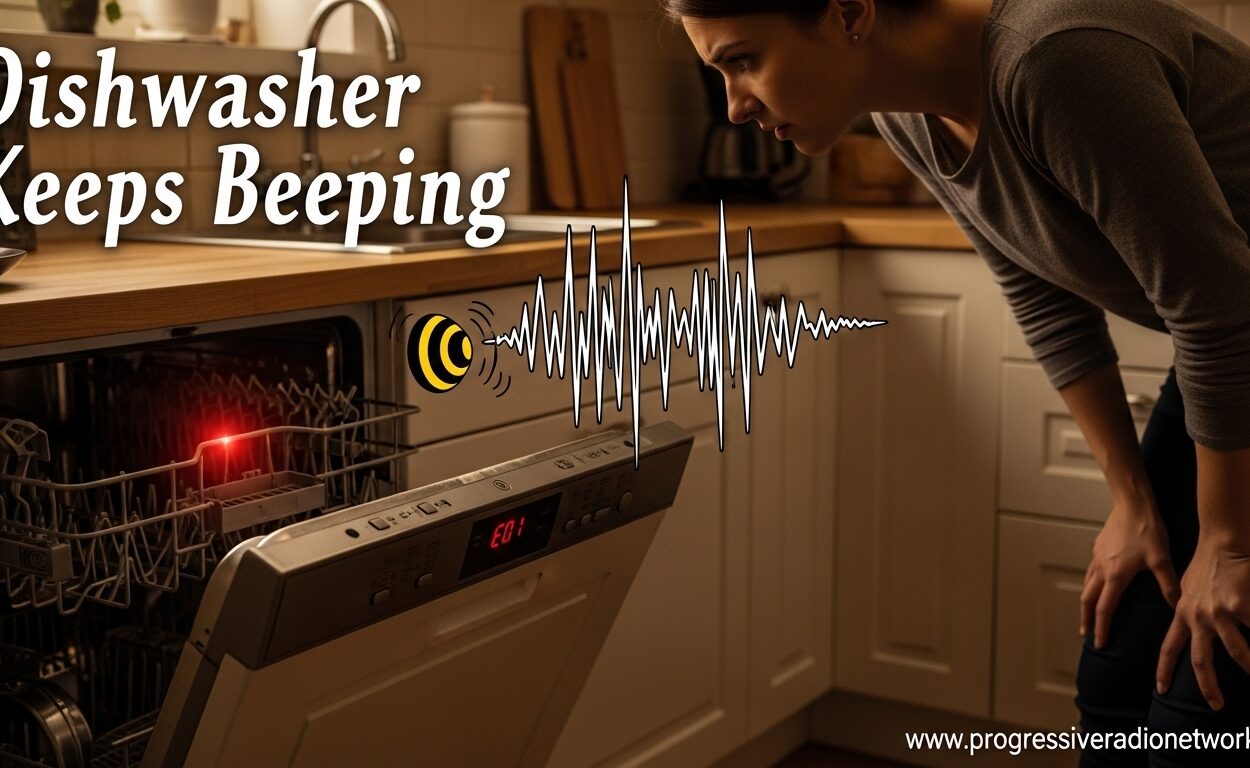
Your dishwasher beeping in the middle of the night or refusing to start a cycle is frustrating. That constant beeping is your dishwasher’s warning system telling you something needs attention. Whether it’s beeping every 30 seconds, flashing lights, or making three quick beeps, each pattern means something specific.
I’ve researched the most common causes of dishwasher beeping and compiled this troubleshooting guide to help you diagnose and fix the issue quickly. Most beeping problems are simple fixes you can handle yourself without calling a professional.
Why Does My Dishwasher Keep Beeping? 6 Common Causes
Dishwasher beeping usually indicates one of these six issues:
1. Door Latch Problem – The door isn’t properly closed or the latch sensor is malfunctioning. This is the most common cause, especially if your dishwasher beeps every 30 seconds.
2. Power Surge or Outage – Recent power fluctuations can trigger the control panel’s warning system and cause beeping.
3. Anti-Flood Device Activated – Water in the base pan indicates a leak or drainage issue.
4. Control Panel Glitch – Sticky buttons, moisture damage, or electronic failure can cause false beeping signals.
5. Sensor or Filter Issues – Clogged filters or malfunctioning water level sensors trigger warning beeps.
6. Cycle Interruption – Opening the door mid-cycle or pressing buttons accidentally can trigger beeping.
Dishwasher Beeping Every 30 Seconds? Check the Door Latch First
If your dishwasher beeps consistently every 30 seconds or every minute, the door latch is the most likely culprit. This pattern specifically means the dishwasher thinks the door is unlatched, which is a safety feature to prevent water from leaking during operation.
Step 1: Open and close the door firmly. Listen for the click that indicates the latch has engaged. Sometimes the door just wasn’t closed completely.
Step 2: Inspect the door gasket for any debris or damage. A dirty or damaged gasket can prevent proper sealing, which the latch sensor detects as an “open door” condition.
Step 3: Check for obstructions. Large utensils or dishes sticking out can prevent the door from closing fully. Rearrange items if needed.
Step 4: Test the latch mechanism manually. With the door open, press the latch with your finger. It should spring back smoothly. If it sticks or feels loose, the latch assembly may need replacement.
Step 5: If the latch appears broken or doesn’t click into place properly, you’ll need to replace the door latch assembly. This is a relatively simple DIY repair that usually costs $20-$50 for the part.
Power Surge or Outage? Here’s How to Reset Your Dishwasher
Power surges and outages can confuse your dishwasher’s electronic control board, causing it to beep continuously or flash lights. The good news is a simple reset often fixes this issue.
Method 1: Hard Reset (Best Method)
Turn off the dishwasher using the control panel. Then, locate your home’s electrical panel and find the circuit breaker that controls the dishwasher. Flip the breaker off, wait 60 seconds, then flip it back on. This completely cuts power and allows the control board to reset.
Method 2: Power Cord Unplug
If your dishwasher has a accessible power plug (most built-in models don’t), simply unplug it for 60 seconds, then plug it back in.
Method 3: Control Panel Reset
Many modern dishwashers have a reset sequence. Try pressing and holding the “Start” or “Reset” button for 3-5 seconds. For some models, it’s the “Heated Dry” button followed by “Normal Wash” in quick succession. Check your owner’s manual for the specific sequence.
If the beeping continues after a reset, the power surge may have damaged the control board. This typically requires professional repair or replacement.
Anti-Flood Device Activated? What This Means
Most modern dishwashers have an anti-flood device designed to detect water leaks. When water accumulates in the base pan beneath the tub, the float switch triggers and the dishwasher beeps continuously to warn you of potential flooding.
How to Check:
Turn off the dishwasher and remove the bottom kick plate. Use a flashlight to look inside the base pan. If you see water standing in the pan, the anti-float device has been activated.
What to Do:
First, soak up any water in the base pan using towels or a wet/dry vacuum. Then, determine where the leak is coming from. Common sources include:
– Loose hose connections
– Damaged door gasket
– Cracked spray arm
– Failed water inlet valve
After removing the water and fixing the leak source, let the dishwasher sit for 24 hours to dry completely before attempting to run it again.
Control Panel Glitches and Button Issues
Sometimes the beeping isn’t caused by an actual problem but by a malfunction in the control panel itself. Sticky buttons from spills, moisture damage, or just wear and tear can cause the panel to send false signals.
Quick Test:
Run your fingers lightly over all buttons. If any feel sticky, stuck, or unresponsive, the panel may need cleaning or replacement.
How to Clean:
Mix a solution of warm water and mild dish soap. Dampen a soft cloth (not soaking wet) and gently wipe the control panel. Avoid spraying liquid directly on the panel as moisture can seep into the electronics.
When to Replace:
If cleaning doesn’t help or buttons are physically damaged, you may need to replace the control panel. This is a more advanced repair typically costing $150-$300 if you hire a professional.
Sensor and Filter Issues That Cause Beeping
Your dishwasher has multiple sensors that monitor operation. When these sensors detect problems, they trigger beeping to alert you.
Clogged Filter:
A dirty filter restricts water flow and can trigger sensor warnings. Most filters are located at the bottom of the tub. Remove the bottom rack, twist the filter counterclockwise, and rinse it under running water. Do this monthly to prevent issues.
Water Level Sensor:
This sensor monitors proper water filling. If it malfunctions, your dishwasher may beep and not fill properly. Test by running a short cycle and observing water level. It should reach just below the heating element.
Rinse Aid Indicator:
Some dishwashers beep when rinse aid is low. Check your rinse aid dispenser and refill if needed. The beeping should stop once you acknowledge the low level or refill the dispenser.
Brand-Specific Beeping Issues (GE, Whirlpool, Bosch, KitchenAid)
Different brands have unique beep patterns and meanings. Understanding your specific brand can help pinpoint the problem faster.
GE Dishwashers:
GE models are known for the “3 beeps every 30 minutes” pattern. This typically indicates a door latch issue even if the door appears closed. Try opening and firmly closing the door. If that doesn’t work, the door latch switch often needs replacement. GE dishwashers may also beep if the start button is flashing, indicating a need to reset the control board.
Whirlpool Dishwashers:
Whirlpool models often beep in combination with a flashing “Clean” light. This usually means the dishwasher didn’t complete the last cycle properly. Try resetting by pressing the “Heated Dry” button, then “Normal Wash,” then “Heated Dry” again, then “Normal Wash” again within 5 seconds. This should reset the control board.
Bosch Dishwashers:
Bosch models typically use error codes displayed on the panel along with beeping. Common codes include E15 (water in base pan – anti-flood activated) and E22 (drain pump issue). For E15, remove water from the base pan. For E22, check the drain hose for clogs and ensure the drain hose isn’t kinked.
KitchenAid Dishwashers:
KitchenAid models may beep continuously if the control lock is engaged. Look for a button with a padlock icon or hold the “4 Hour Delay” button for 3 seconds to disengage. Some KitchenAid models also beep if the water temperature is too low, indicating a possible heating element issue.
When to Call a Professional (and What It Will Cost)
While many dishwasher beeping issues are DIY-friendly, some problems require professional expertise. Here’s when to call a technician:
Call a Pro If:
– The control board needs replacement (typically $200-$400)
– The anti-flood device repeatedly activates (indicates hidden leak)
– Multiple error codes appear simultaneously
– You’ve tried all troubleshooting steps and beeping continues
– The dishwasher is under warranty (DIY repairs can void coverage)
Professional Repair Cost Estimates:
– Diagnostic fee: $80-$120
– Door latch replacement: $120-$180 (parts + labor)
– Control board replacement: $250-$450
– Water pump replacement: $200-$350
– Complete seal replacement: $150-$250
If your dishwasher is over 8-10 years old and the repair estimate exceeds 50% of the cost of a new unit, replacement may be more economical than repair.
Preventing Future Beeping Issues
Maintenance can prevent most dishwasher beeping problems:
– Clean the filter monthly
– Inspect the door gasket regularly for damage
– Don’t overload the dishwasher
– Use the correct amount of detergent
– Run hot water at the sink before starting the dishwasher
– Check spray arms for clogs monthly
A dishwasher that keeps beeping is almost always trying to tell you something specific. By understanding the patterns and following these troubleshooting steps, you can usually identify and fix the problem yourself without expensive service calls.
Remember to always disconnect power before attempting any repairs beyond simple cleaning. If you’re uncomfortable with any troubleshooting step, it’s better to call a professional than risk damage to your dishwasher or injury to yourself.
FAQ’s
How do I reset my dishwasher when it keeps beeping?
Turn off the dishwasher and flip the circuit breaker off for 60 seconds. This performs a hard reset of the control board. For many models, you can also press and hold the Start or Reset button for 3-5 seconds. If the beeping continues after reset, there may be an underlying issue requiring further troubleshooting.
Why does my dishwasher beep 3 times?
Three beeps typically indicate a door latch issue on many dishwasher brands, especially GE models. The dishwasher thinks the door is unlatched even when closed. Try opening and firmly closing the door. If that doesn’t work, the door latch assembly may need replacement. This is one of the most common causes of repetitive dishwasher beeping.
Why does my GE dishwasher keep beeping when the door is closed?
GE dishwashers often beep 3 times every 30 minutes when the door latch sensor malfunctions. Even if the door appears closed, the sensor isn’t detecting the latch engagement. Try cleaning the latch area with a damp cloth to remove any debris. If the problem persists, the door latch switch typically needs replacement. This is a common issue with GE models and the part usually costs $20-$50.
How do I permanently turn off the beep sound on my dishwasher?
Many dishwashers have a control lock or sound mute feature in the settings menu. Check your owner’s manual for the specific button combination to access settings. Some models require holding a specific button for 3-5 seconds to toggle sounds on or off. Note that disabling beeps will also silence legitimate warning sounds for leaks or malfunctions.
Why is my dishwasher beeping and flashing lights?
Beeping combined with flashing lights indicates a specific error code. Three beeps with flashing usually means door latch problems. Continuous beeping with all lights flashing often means the anti-flood device activated due to water in the base pan. Check your owner’s manual or manufacturer website to decode the specific light pattern for your model. Error codes vary by brand.
What does it mean when my dishwasher beeps every 30 minutes?
Beeping every 30 minutes or every minute is the universal signal for a door latch issue. Your dishwasher thinks the door is unlatched as a safety measure. First, open and firmly close the door. If that doesn’t work, check for obstructions preventing full closure. A faulty door latch switch is the most common cause and typically requires replacement to permanently fix the issue.



Leave a Comment