
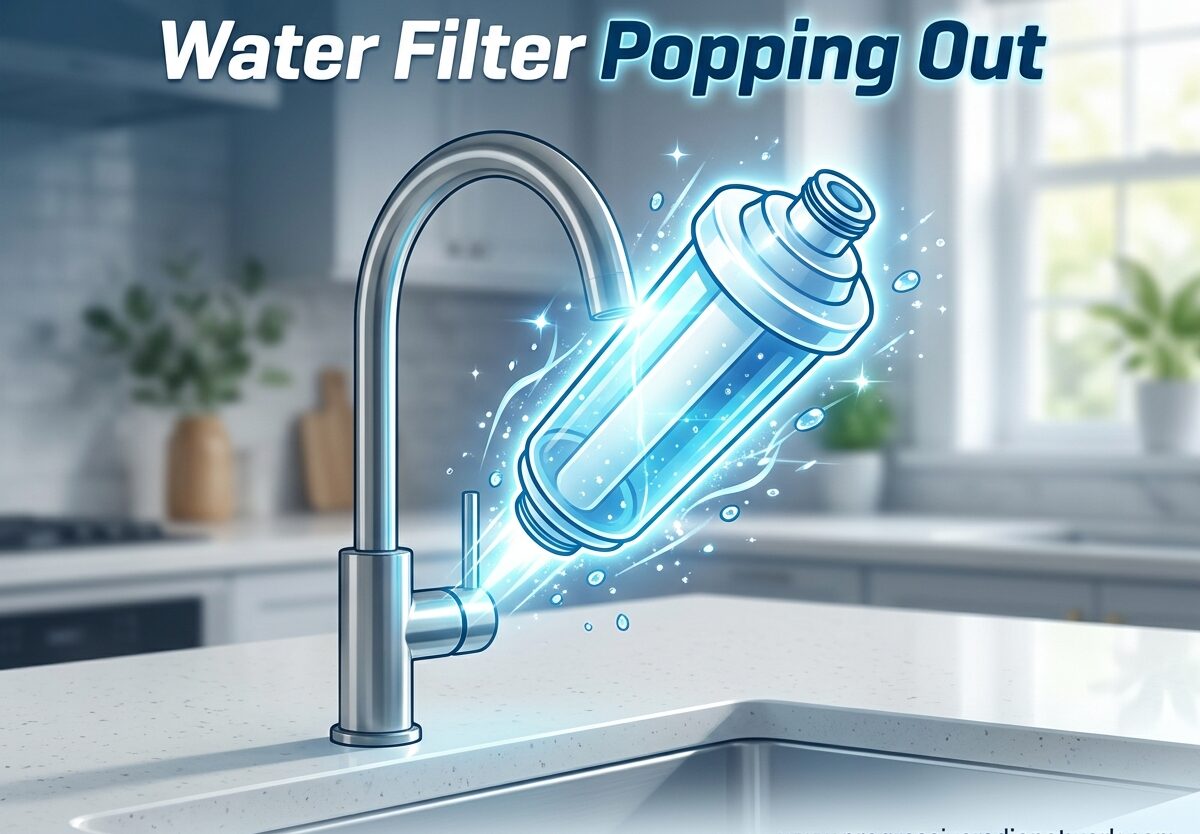
Dealing with water filter popping out of your refrigerator or filtration system is frustrating and can lead to water damage or reduced water quality. I’ve researched this issue extensively and found that the most common causes are high water pressure, incorrect installation, or worn seals. Understanding why your water filter keeps ejecting is the first step toward fixing it permanently.
In this guide, I’ll walk you through every possible cause of water filter popping out and provide practical solutions you can try at home before calling a professional.
Why Is My Water Filter Popping Out?
Water filter popping out occurs when the filter cartridge is forcibly ejected from its housing due to excessive water pressure overwhelming the sealing mechanism, or when the filter is not properly seated during installation. The filter relies on friction and a locking mechanism to stay in place, but when water pressure exceeds the holding force or the seal is compromised, the filter can be pushed out unexpectedly.
This issue most commonly affects refrigerator water filters, but it can also happen with under-sink systems and whole-house filtration units. The good news is that most causes are fixable without replacing expensive parts.
High Water Pressure Is the Most Common Cause
Excessive water pressure is the leading cause of water filter popping out. Normal household water pressure should range between 60-80 PSI. When pressure exceeds 80 PSI, the force can overwhelm the filter’s locking mechanism and push the cartridge out of its housing.
I’ve seen cases where water pressure spikes to 100+ PSI during high-demand periods or due to a faulty pressure-reducing valve. This creates hydraulic force that the filter housing simply cannot contain.
Water hammer is another pressure-related issue. This phenomenon occurs when fast-closing valves suddenly stop water flow, creating pressure spikes that travel through your pipes and can dislodge the filter. If your pipes bang when you turn off faucets, you likely have water hammer affecting your filter.
To check your water pressure, you can buy a simple pressure gauge that attaches to an outdoor spigot. If readings consistently exceed 80 PSI, installing a pressure-reducing valve (PRV) will protect not just your filter but all your plumbing fixtures and appliances.
Incorrect Installation and Alignment Issues
Many water filter popping out problems stem from improper installation. The filter cartridge must align precisely with the housing’s locking mechanism. Even a slight misalignment can prevent the filter from engaging properly, making it prone to ejection when water pressure increases.
Most refrigerator filters have alignment markers or arrows that must match up with indicators on the filter housing. I’ve found that rushing through installation or failing to push the filter in completely until it clicks are common mistakes.
The locking mechanism typically involves a twist-and-lock or push-and-click design. If you don’t hear or feel the distinct engagement when installing, the filter isn’t fully seated. Some models require you to turn the filter 90 degrees after insertion to lock it in place.
Before assuming you have a pressure problem, try removing and reinstalling the filter carefully. Listen for the click, check alignment markers, and ensure the filter is fully inserted. This simple fix resolves many cases of filter ejection.
Worn or Damaged O-Rings and Seals
The O-ring is a small rubber seal that creates a watertight connection between the filter cartridge and housing. Over time, O-rings can become cracked, flattened, or deteriorated, compromising the seal and making it easier for water pressure to push the filter out.
I recommend inspecting your O-ring whenever you change filters. Look for cracks, flattening, or distortion. A damaged O-ring won’t create the necessary friction to hold the filter in place under pressure.
Some filters include a replacement O-ring with each new cartridge. If yours doesn’t, you can buy replacement O-rings at hardware stores or appliance parts suppliers. Applying a small amount of food-grade silicone grease can help maintain the seal and prevent the O-ring from drying out.
Even if the O-ring looks intact, it may have lost elasticity due to age. O-rings typically last 2-3 years before needing replacement. If your filter is several years old, replacing the O-ring might solve your ejection problem.
Wrong Filter or Compatibility Problems
Using an incompatible filter is a surprisingly common cause of water filter popping out. Different refrigerator brands and models require specific filter cartridges with unique dimensions and locking mechanisms. Installing a filter that’s even slightly different can prevent proper seating.
Generic or third-party filters may claim compatibility but have subtle differences in length, diameter, or locking tab placement. I’ve seen numerous forum posts from users who experienced chronic ejection problems until they switched to OEM filters.
Whirlpool, Frigidaire, Samsung, and LG refrigerators each have proprietary filter designs. Even within the same brand, different model years use different filters. Always verify compatibility using your refrigerator’s model number, not just the brand name.
If you recently started using a generic filter and began experiencing ejection issues, try switching to the manufacturer’s recommended filter. The slightly higher cost is often worth it for reliable performance.
Filter Age and Internal Damage
Old filters can develop internal issues that cause popping out. As filters age, the cartridge housing may warp or crack, especially if exposed to repeated pressure cycles. This internal damage prevents the filter from maintaining a secure connection.
Most manufacturers recommend replacing refrigerator water filters every 6 months. Beyond this timeframe, the filter becomes less effective and more prone to mechanical failure. I’ve seen filters that were left in for years become brittle and develop hairline cracks that compromise structural integrity.
If your filter is overdue for replacement, install a fresh one before troubleshooting further. The old filter may simply be unable to withstand normal water pressure due to age-related deterioration.
Internal damage can also occur from manufacturing defects or physical impact during installation. If a new filter pops out immediately, you may have received a defective unit. Contact the manufacturer for a replacement.
How to Fix Water Filter Popping Out
Now that you understand the causes, let’s walk through the solutions step by step. I recommend trying these fixes in order, starting with the simplest and most common solutions.
Check Your Water Pressure
Attach a water pressure gauge to an outdoor faucet or the connection behind your refrigerator. Turn on the water and note the reading. Normal household pressure is 60-80 PSI. If it’s above 80 PSI, you need a pressure-reducing valve.
Installing a PRV is a job best left to a professional plumber unless you have experience with soldering copper pipes. The valve typically installs near your main water shutoff and will protect all your fixtures, not just your filter.
If you suspect water hammer, install water hammer arrestors near quick-closing valves like washing machines and dishwashers. These small devices absorb pressure spikes and prevent the banging that can dislodge your filter.
Reinstall the Filter Correctly
Remove the filter completely and inspect both the cartridge and housing for debris or damage. Look for the alignment markers on both pieces—usually arrows or dots that must line up.
Insert the filter firmly until you feel resistance, then continue pushing until you hear or feel it click into place. For twist-lock designs, push in first, then rotate 90 degrees clockwise until it stops.
Test the installation by dispensing water through the door dispenser. If the filter stays in place, the problem was incorrect installation. If it pops out again, move to the next solution.
Inspect and Replace O-Rings
Remove the O-ring from the filter housing or cartridge and inspect it closely under good light. Look for cracks, splits, flattening, or distortion. If you see any damage, replace the O-ring.
Clean the O-ring groove with a soft cloth to remove any debris that could prevent proper sealing. Apply a thin film of food-grade silicone grease to the new O-ring before installation—this helps it seat properly and prevents future drying.
Reinstall the filter and test it. A fresh O-ring often resolves ejection issues caused by seal deterioration.
Use Compatible Replacement Filters
Check your refrigerator’s model number, usually found on a sticker inside the fridge door or on the back panel. Use this number to find the exact filter recommended by the manufacturer.
Avoid generic filters that claim “universal fit”—these rarely match OEM specifications precisely. While they may install, subtle dimensional differences can prevent proper locking.
Stick with manufacturer-approved filters from Everydrop, Whirlpool, Samsung, LG, or other reputable brands. The slightly higher cost ensures proper fit and reliable performance.
When to Call a Professional
If you’ve tried all the above solutions and your filter still pops out, the issue may be with the filter housing itself. Cracks, warping, or internal damage to the housing require professional repair or replacement.
A qualified appliance technician can diagnose housing issues and determine if repair is possible. In some cases, replacing the entire filter head assembly is necessary.
Also consider calling a professional if you suspect widespread plumbing issues like consistently high water pressure throughout your home. A plumber can assess your entire system and recommend appropriate solutions.
FAQs
Why is my water filter popping out?
Water filter popping out is typically caused by excessive water pressure (above 80 PSI), incorrect installation preventing proper locking, worn O-rings compromising the seal, or using an incompatible filter cartridge. The filter relies on friction and a locking mechanism to stay in place, and any factor that reduces this grip allows water pressure to push it out.
Why does my Whirlpool filter keep popping out?
Whirlpool refrigerator filters commonly pop out due to high water pressure overwhelming the locking mechanism, or because the filter isn’t fully twisted into the locked position. Whirlpool filters require a specific installation sequence—push in firmly until resistance, then rotate 90 degrees clockwise until you hear a click. If skipping the rotation step, the filter appears installed but will eject when water pressure increases.
Can I use my refrigerator without the water filter?
Yes, you can use your refrigerator without the water filter by installing a bypass plug. Most refrigerators come with a bypass cap in the filter compartment—remove the filter and insert the bypass plug in its place. This allows water to flow unfiltered to the ice maker and dispenser. However, water will not be filtered, so consider this a temporary solution until you replace the filter.
How do you know if a water filter has gone bad?
Signs a water filter has gone bad include slow water flow from the dispenser, unusual taste or odor in ice or water, cloudy water appearing clear when filtered, the filter indicator light turning on (if equipped), or the filter being over 6 months old. Physical signs include cracks in the cartridge housing or a saturated, discolored filter material visible through the casing.
What is water hammer and how does it affect my filter?
Water hammer is a pressure surge that occurs when fast-closing valves suddenly stop water flow, creating a shock wave that travels through pipes. This pressure spike can exceed 100 PSI momentarily, enough to force a water filter out of its housing. Signs include banging pipes when faucets turn off. Installing water hammer arrestors near quick-closing valves prevents these spikes and protects your filter.
Conclusion
Water filter popping out is almost always fixable without major repairs. Start by checking your water pressure with a gauge—readings above 80 PSI indicate you need a pressure-reducing valve. If pressure is normal, reinstall the filter carefully, ensuring proper alignment and a firm click. Inspect and replace worn O-rings, and always use manufacturer-approved filters for your specific refrigerator model.
By systematically working through these causes, most people can resolve the issue themselves. However, if the problem persists after trying all solutions, contact a professional to inspect the filter housing for damage that may require repair or replacement.

Leave a Comment